Ana y Jose Tulum Hotel & Beach Club
★★★★★
★ 8.9/10 (85 reviews)
2.2 km away as the crow flies
Dive centre · Tulum · Mexico
4.9670 Google reviewsExplore the labyrinthine cenotes of the Yucatan and the vibrant reefs of Cozumel with an eco-responsible dive team.
For subtitles in English: start the video firstthen click the gearat the top right of the video, select “Subtitles/CC”, then “Auto-translate” and choose “English”.
Agua Clara Diving has been operating in the Riviera Maya since 2012, establishing itself as a specialised centre for both cenote and reef diving. Located in Tulum, they provide access to the incredible freshwater systems of the Yucatan Peninsula alongside the marine biodiversity of the Cozumel National Park.
Their approach is rooted in eco-responsibility, designing excursions that respect the delicate balance of the local ecosystems. Whether you are looking to explore the cavernous halls of the Sac Aktun system or drift along the coral reefs of Cozumel, the centre organises personalised trips tailored to your experience level.
The team consists of certified guides who are experts in the local waters of the Yucatan Peninsula. They operate in both English and Spanish, ensuring clear communication for international divers during technical cavern entries or reef explorations.
As an eco-conscious operator, the centre focuses on minimising environmental impact during every excursion. This commitment extends from their training methods to the way they manage their presence in the protected natural parks surrounding Tulum.
Agua Clara Diving provides a comprehensive range of SSI certifications for all levels of experience. You can begin your journey with Discover Scuba Diving or work through the Open Water Diver and Advanced Open Water Diver courses.
For those looking to professionalise their skills, the centre offers Rescue Diver and Divemaster training programmes. Their curriculum is designed to build confidence in various environments, from the shallow reef flats to more complex underwater landscapes.
The centre invests heavily in the maintenance and acquisition of high-quality equipment, ensuring that your kit is both reliable and comfortable for long sessions in the water.
For those travelling without their own setup, a range of rental equipment is available on-site. This includes wetsuits, regulators, and fins, allowing you to focus on the dive rather than the logistics of your gear.
Dos Ojos Cenote: A classic cavern dive featuring stunning rock formations and expansive spaces through crystal-clear water. This site is accessible to Open Water certified divers.
Cenote Calavera: An adventurous cavern within the Sac Aktun system where you can witness a spectacular halocline where fresh and salt water meet. It requires an advanced level of experience due to the light conditions and the unique entry through the 'mouth' of the skull.
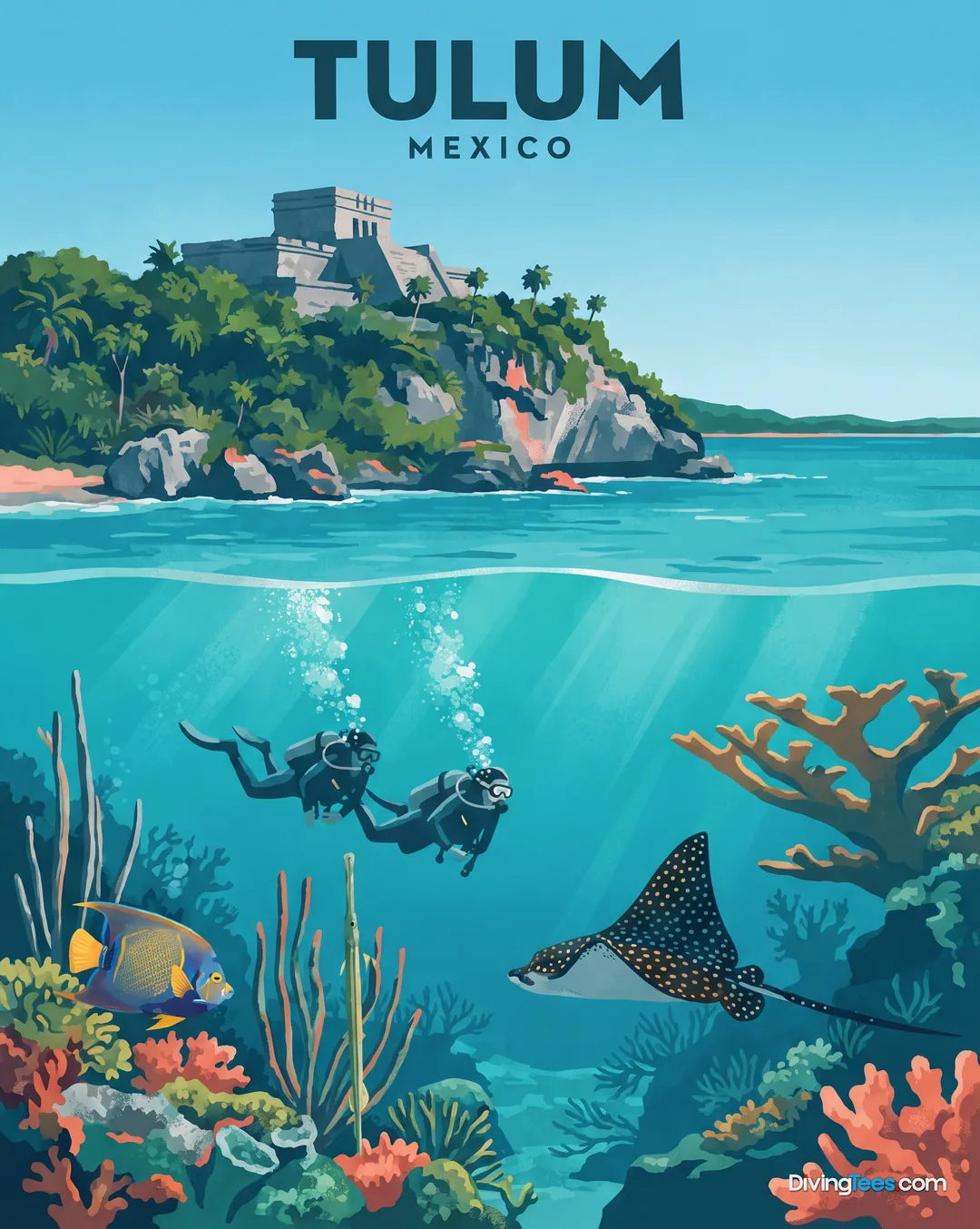
Tulum Reef: A coral reef environment featuring sand-bottom canyons and rich biodiversity. It is an ideal location for Open Water divers to explore common coral configurations and encounter turtles.
Angelita Cenote: This site is known for the unique 'clouds' that form in the depths, creating a surreal atmosphere. It is recommended for Advanced Open Water divers.
And some of the dive sites the centre runs.
The marine life in the region is diverse, ranging from the reef top to the deeper cavern systems. On the reefs, you will regularly encounter turtles, snapper schools, and various juvenile reef fish. You may also spot parrotfish, surgeonfish, and angelfish navigating the coral structures.
In the deeper or more open areas, larger pelagics make appearances, including the annual migration of the bullshark. You might also see reef sharks, rays (Batoidea), and moray eels (Muraenidae) amongst the rocks.
Macro life and smaller inhabitants are abundant throughout the cenotes and reefs. Keep an eye out for crabs (Brachyura), lobsters (Homaridae), and various cave-adapted crustaceans. The sandy bottoms and crevices often hide smaller tropical fish and baby fish.
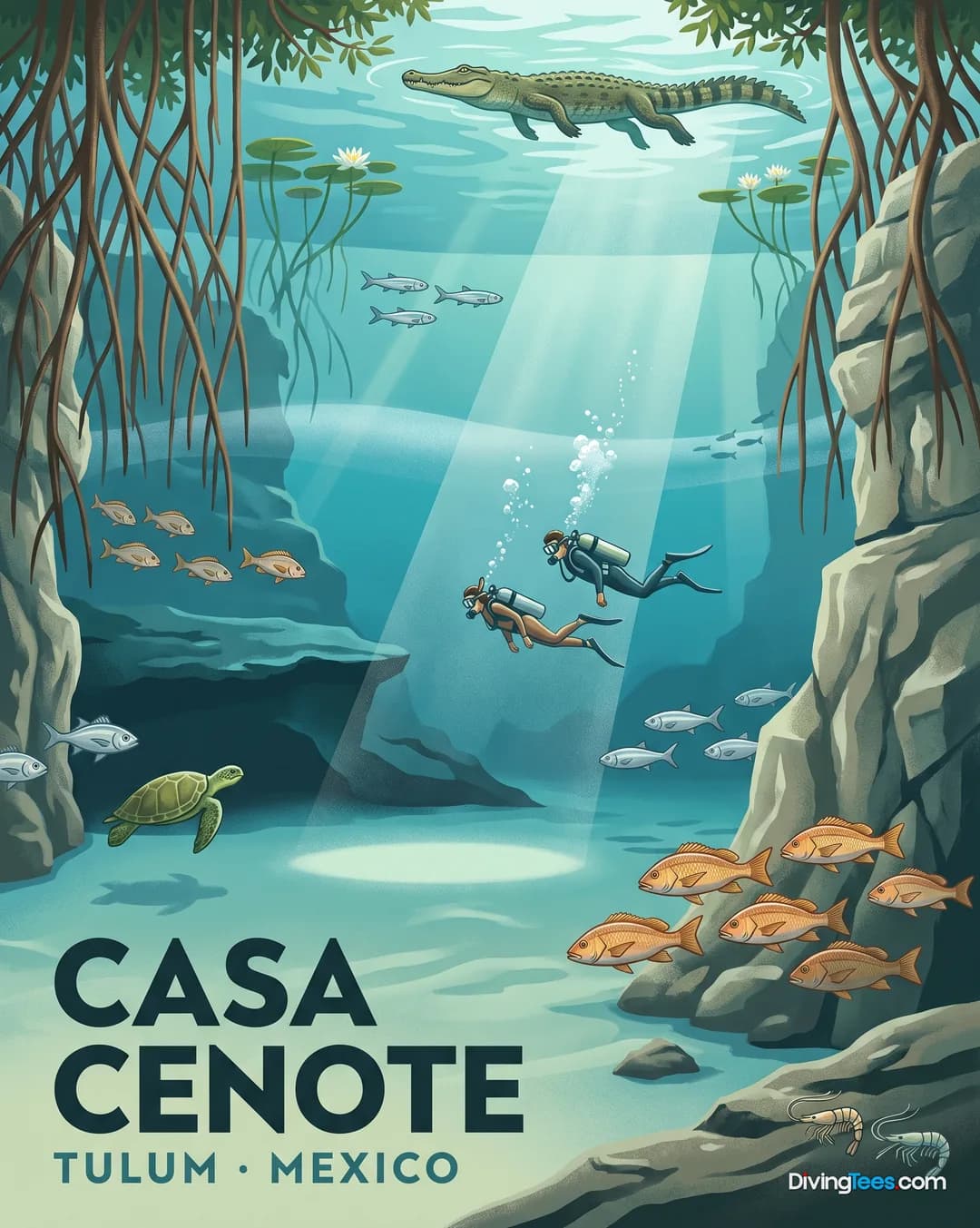
In the freshwater cenote environments, the ecosystem is distinct, featuring freshwater crabs and a different array of small fish species that thrive in the filtered light of the cavern ceilings.
Diving in the cenotes typically involves very calm conditions with little to no current, making them ideal for practicing buoyancy and cavern navigation. However, certain sites like Calavera can become dark and visually complex due to the halocline effect.
Reef diving in Cozumel and the Tulum coast can involve different dynamics depending on the location. While many reef sections are sheltered, divers should be prepared for the open ocean environment when heading to Cozumel's National Park.
Hello, I'm Marina, DivingDeal.com's AI assistant. I answer in detail about hotels, dive centres and liveaboards.

Thinking about the whole trip and the flights? Talk it over with Edith →
Marina is an AI. Some links are affiliate links: DivingDeal may earn a commission, at no extra cost to you. Bookings are made with the partner.
Your last day stays dry: no diving in the 18-24 hours before a flight the perfect window to see the destination from another angle.
 Culture
⏱ 5 h · ★ 5.0 (237 reviews)
from €261
see on Viator ↗
 Culture
⏱ 5 h · ★ 5.0 (123 reviews)
from €105
see on Viator ↗
 Nature
⏱ 4 h · ★ 5.0 (19 reviews)
from €57
see on Viator ↗
 Desert
⏱ 3 h · ★ 5.0 (15 reviews)
from €57
see on Viator ↗
Ratings and reviews collected by Viator and Tripadvisor.