
Selayar Scuba School, Belajar Diving Selayar
Google 4.8/5 (14 reviews)
Indonesia · Asia
Limestone drop-offs, eagle rays, turtles and barracuda banks define Selayar, where exposed walls and shifting currents reward divers who plan around the weather.
For subtitles in English: start the video firstthen click the gearat the top right of the video, select “Subtitles/CC”, then “Auto-translate” and choose “English”.
Limestone walls drop into blue water around Selayar, where a boat carries you from sheltered reef slopes to exposed caps and deep vertical faces. This is Indonesian diving for people who enjoy reading current, holding a steady position on a wall, and letting a drift dive do the travelling. Turtles, reef sharks, eagle rays, sea snakes and pelagic fish are the draw. The trade-off is a ferry crossing, a weather-dependent programme and enough time to absorb both.
Selayar is primarily boat diving along limestone drop-offs, walls and sloping reefs. Some sites are calm or carry little current, but headlands and meeting points between moving water can turn a straightforward descent into a fast drift dive, with direction and strength changing during the outing. Several walls descend well beyond ordinary recreational depths, so a shallow reef tour is not the default character of the place. Visibility is commonly around 10 to 40 metres from October to May, although swell and current can reduce it. The practical rhythm is simple: ride out from the coast, descend where the local team judges conditions suitable, follow the wall or slope, then leave the water with enough gas and space for a proper safety stop. A nearby site is not automatically an easy one.
The animal life matches the exposed terrain. Turtles move over the reef, reef sharks pass along the walls, and eagle rays can appear where current runs across the site. Sea snakes add a quieter encounter among the reef, while barracuda banks, tuna and trevallies bring the open-water feel that draws experienced divers to Selayar. Other reef fish and healthy-looking coral growth fill the background, with gorgonians contributing colour on the deeper faces. These encounters are possible rather than scheduled, and the tides and moon can influence both current and the likelihood of meeting larger fish. October to May is the useful period for reaching the more exposed coast, not a guaranteed calendar for any particular animal.
Go between October and May, when Selayar’s dive operations function most consistently and the protected sectors are more likely to offer calmer water. June to September brings strong easterly winds and heavier swell to the eastern coast, making several exposed areas difficult or impossible to reach. That monsoon pattern affects more than comfort: it can remove the very walls and caps that make the destination worthwhile. Visibility is generally more dependable in the October to May window, though current, swell and local conditions still matter. Keep the programme flexible rather than treating the season as a promise of flat water every day.
Selayar suits an experienced diver comfortable with boat entries, deep walls and changing current. Advanced Open Water is useful for the deeper and more exposed dives, while Drift Diver training is particularly relevant where the water starts moving strongly. A newly qualified diver may find calm, low-current sites, but should rely on the local briefing to select them rather than assuming every nearby reef is gentle. Strong buoyancy, current awareness and the discipline to end a dive before the wall becomes a problem matter more here than collecting another qualification.
From London Heathrow, Gatwick or Manchester, the journey is built around reaching Sulawesi, travelling by road to Bira, then crossing by ferry or boat to Selayar. That sea crossing is compulsory, followed by a local road transfer towards Benteng or the coastal area where the dive accommodation is based. Treat the ferry as the fixed constraint in the itinerary, not as a minor final connection. Leave generous time between the road journey and the crossing, and keep a buffer at either end because swell or a delayed boat can disrupt the plan. Once on Selayar, local roads connect the island’s settlements and coastal diving areas, but the practical arrangement is usually tied to the accommodation and its boat operations.
Build the trip around the crossing, not around a tightly connected arrival day. Keep a spare day at the beginning or end for a delayed ferry, and do not assume that a short boat ride means a simple dive. Before travelling, ask which east-coast outings are operating during your dates, especially if they fall between June and September, then leave the programme flexible enough to switch sectors when easterly swell arrives. Ask how the tides and moon affect the planned sites, since both can alter current and the chances of seeing larger fish. Bring a practical payment option and replacement diving consumables, as local resupply on an isolated island should not be taken for granted. If a briefing mentions strong, unpredictable current or a possible downcurrent, treat it as a reason to change the dive, not a challenge to be won. Allow for any local marine conservation contribution when planning the stay.
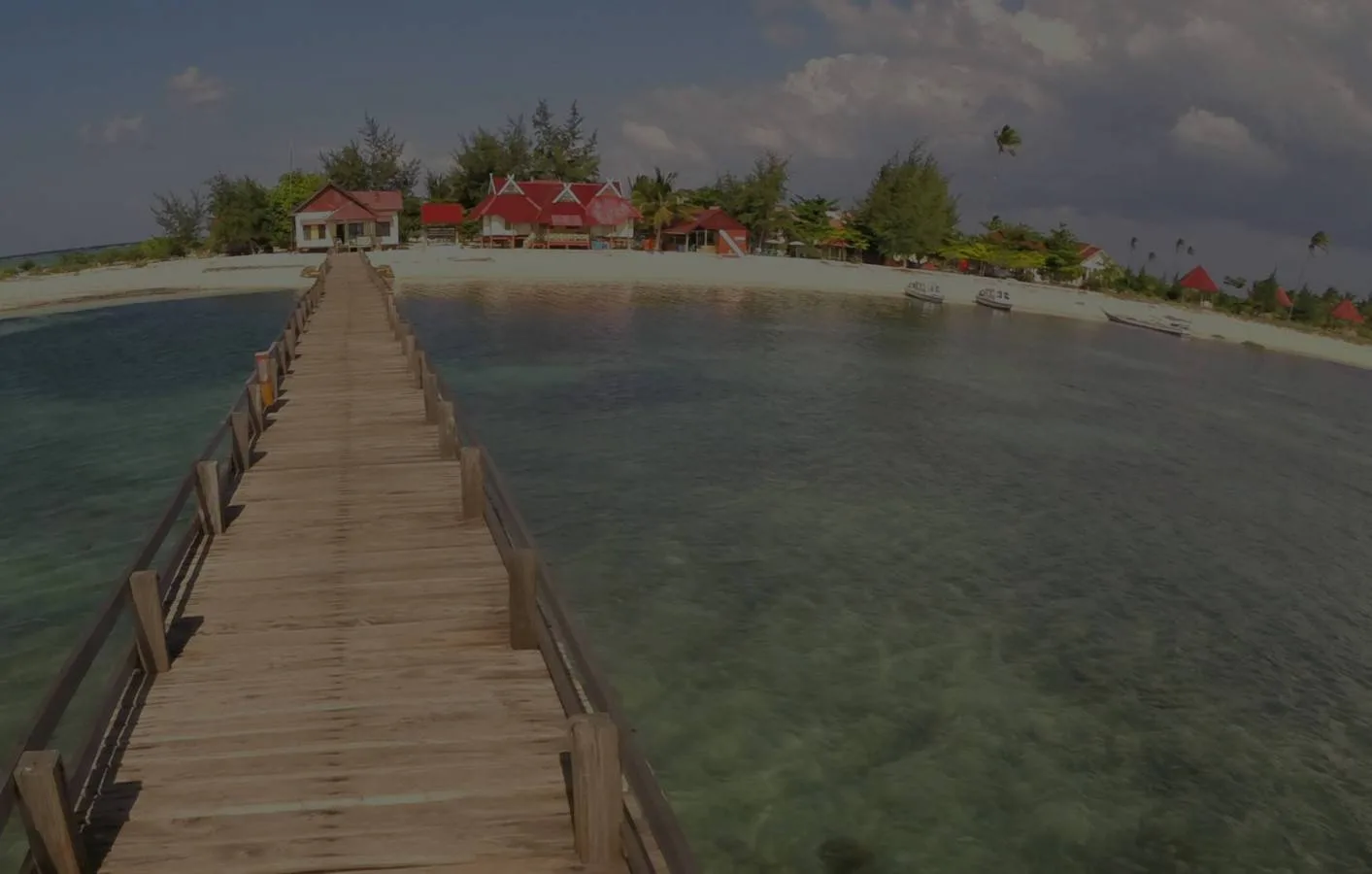
A seven- to ten-day land-based stay makes the most sense, giving the ferry, weather and sea state room to disrupt a day without consuming the whole trip. The main routine is accommodation, short boat runs to the walls and reef slopes, and a return to the same coastal base. A house reef is available, but boat diving is the norm. Non-divers have beaches, coastal scenery, village visits and boat excursions, with Taka Bonerate’s atoll landscapes possible when conditions allow.
Hello, I'm Marina, DivingDeal.com's AI assistant. I guide you through destinations, areas and countries.
Thinking about the whole trip and the flights? Talk it over with Edith →
Marina is an AI. Some links are affiliate links: DivingDeal may earn a commission, at no extra cost to you. Bookings are made with the partner.
Visit Kepulauan Selayar from October to May, when dive operations function most consistently and visibility is generally more dependable. June to September brings strong easterly winds and heavier swell to the eastern coast, which can make exposed walls and caps difficult or impossible to reach. Keep your schedule flexible because conditions can still change.
Kepulauan Selayar suits you if you are comfortable with boat entries, deep walls and changing currents. Advanced Open Water experience is useful for deeper, exposed dives, while Drift Diver training is relevant where water moves strongly. Strong buoyancy, current awareness and the discipline to end a dive early matter more than collecting another qualification.
Diving in Kepulauan Selayar can bring turtles, reef sharks, eagle rays and sea snakes around limestone walls, sloping reefs and current-swept edges. Barracuda banks, tuna and trevallies add an open-water feel, while reef fish, coral growth and gorgonians fill the background. Tides and moon phases can influence currents and larger-fish encounters.
Plan Kepulauan Selayar around the road journey to Bira, the compulsory ferry or boat crossing, and a local transfer to your coastal accommodation. Leave generous travel buffers and keep diving flexible around weather, swell, tides and moon phases. A land-based stay lets you absorb disruptions, while beaches, villages, scenery and boat excursions suit non-divers.