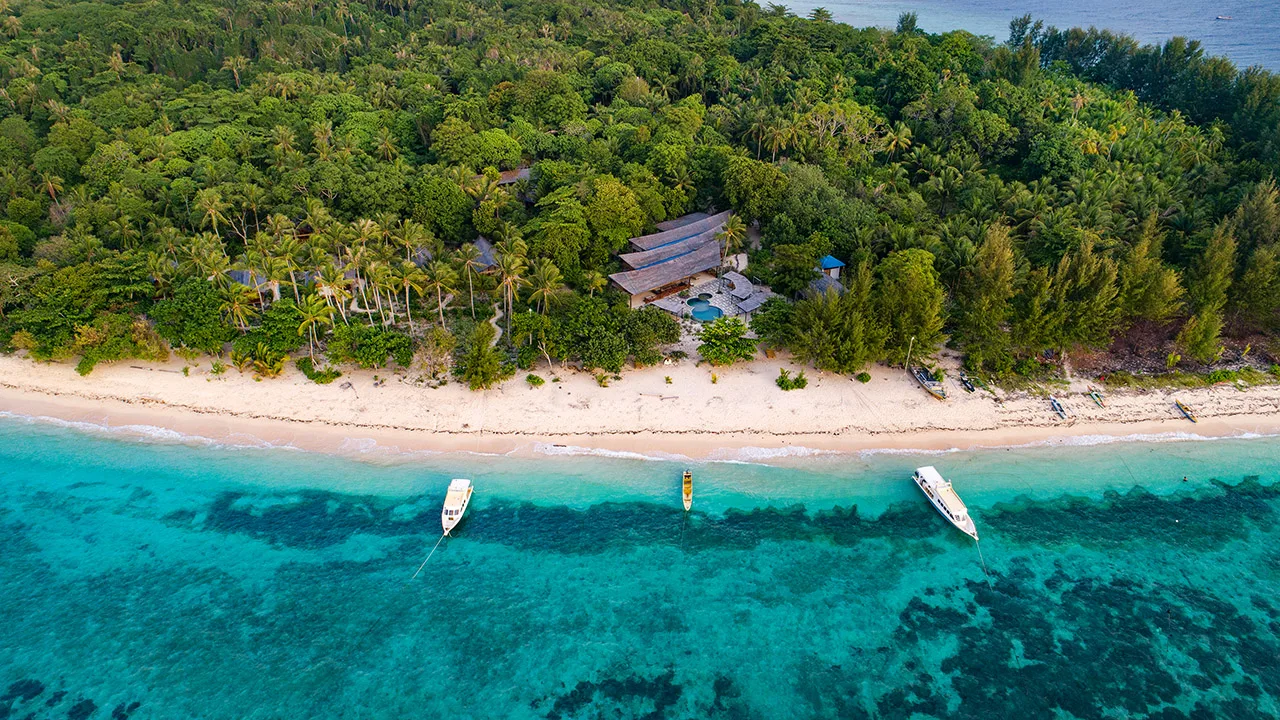

Metita Beach & Dive Resort
Google 4.5/5 (41 reviews)
Indonesia · Asia
Blacktip reef sharks, coral gardens, mobula rays and Second World War aircraft give Morotai its distinctly remote eastern Indonesian character.
For subtitles in English: start the video firstthen click the gearat the top right of the video, select “Subtitles/CC”, then “Auto-translate” and choose “English”.
Morotai's coral gardens, sloping reefs and Second World War aircraft make it a destination for divers who want more than a straightforward resort week. The underwater setting shifts from shallow coral scenery and macro subjects to exposed shark sites, deeper walls and historic debris scattered around the former Pacific campaign area. Much of the appeal lies in reaching outlying islands and neighbouring sectors by boat, then accepting that the day's plan follows the sea. It is Indonesian diving with a strong sense of place, rather than a polished beach break.
Diving is predominantly from boats, around Morotai, the south-western islands and, on some itineraries, the coast of Halmahera. Expect coral gardens, reef slopes and drop-offs, with macro life on the quieter sections and more open water around the shark sites. Currents are variable. Some shark dives are exposed enough to require confident positioning, and a downcurrent can turn a planned descent into a drift dive rather than a leisurely circuit. The historic sites range from military debris to aircraft at considerable depth, so not every wreck outing is ordinary recreational diving. Visibility is not something to build the whole trip around, because conditions can change with local sea state and the day's boat route. Surface intervals, a safety stop and the return journey all need to fit the local schedule, not an inflexible list of planned sites.
Blacktip reef sharks and grey reef sharks are regular possibilities on several Morotai sites, although the sea never guarantees an encounter. They are part of the destination's character, particularly where current and open water make the diving more exposed. Mobula rays are the seasonal draw: around Galo Galo, February to May is the period to target, with sightings described as occasional rather than assured. Macro subjects occupy the coral gardens and reef slopes between the larger-animal dives. Dugongs are possible but rare, so they belong in the category of fortunate bonus rather than a reason to construct the whole itinerary. The underwater picture also includes aircraft, military debris and other remnants of the Pacific campaign, giving some dives a historical focus alongside the living reef.
February to May is the clearest choice when mobula rays around Galo Galo are the priority. The sightings are occasional, so the sensible approach is to allow several days rather than expect one guaranteed encounter. For the rest of the year, Morotai remains a boat-led destination with sharks, coral and wartime remains, but the best dates depend more on the operator's route and the sea on the day than on a simple calendar promise. Keep the itinerary flexible around the monsoon and passing weather, and leave room for a missed or altered boat outing rather than treating one seasonal target as the whole trip.
Morotai suits an experienced diver comfortable with boat diving, variable current and a destination where plans may change. Advanced Open Water is useful for deeper, exposed sites, while a Wreck Diver qualification or technical training is appropriate for the deeper aircraft. Some shallow coral sites can suit less experienced divers, but the shark encounters and open-water conditions are not where a newly qualified diver should be tested. Divers should be able to manage current, maintain a calm ascent and complete a safety stop without relying on a fixed reef route.
From London Heathrow, Gatwick or Manchester, the journey starts with international connections to Ternate. From Ternate, Morotai is reached either by a domestic flight to Morotai's airport or overland to Tobelo on Halmahera, followed by the ferry to Daruba. The Tobelo to Daruba crossing takes about two hours, depending on conditions. Air services and connecting patterns can change, so allow space between legs rather than planning a same-day chain with no margin. Once on Morotai, diving is organised around boat departures, and the dispersed sectors mean that local transport arrangements need confirming with the chosen trip plan. Do not assume that a standard taxi or shuttle will link every accommodation, harbour and dive departure.
Treat Morotai as a flexible boat journey, not a destination built around one shark site. Ask before travelling which sectors the boat can actually reach, since Morotai, the western islands and Halmahera may belong to very different itineraries. If mobula rays matter, put Galo Galo forward for a February to May trip. Keep reserve days for sea conditions and altered departures, and avoid a tight flight connection immediately after the final dives. For deep aircraft, confirm the planned depth, the guide's qualification and the decompression profile, rather than accepting the word wreck as shorthand for a normal recreational dive. Bring any specialised equipment that the route requires, especially for technical or deep wreck work. A liveaboard berth or a suitable local boat should be secured early, because improvising a vessel after arrival may not work. Use land days for Dodola, beaches and wartime sites when the boat cannot run.
A seven- to ten-day stay makes sense, allowing for the regional journey, boat logistics and a few weather or operational reserve days. A liveaboard is the practical way to connect remote sectors and the south-western islands. A land-based stay can work in southern Morotai when a local operator has the right boat and equipment, but it will not offer the same reach. Non-divers have beaches, lagoons, snorkelling, villages and Pacific War history, although the land-based tourist infrastructure remains limited.
Hello, I'm Marina, DivingDeal.com's AI assistant. I guide you through destinations, areas and countries.
Thinking about the whole trip and the flights? Talk it over with Edith →
Marina is an AI. Some links are affiliate links: DivingDeal may earn a commission, at no extra cost to you. Bookings are made with the partner.
Visit Morotai from February to May if mobula rays around Galo Galo are your priority, while allowing several days because sightings are occasional, not assured. Outside that period, sharks, coral and wartime remains remain available, but conditions and routes depend on the monsoon, passing weather, sea state and the operator’s daily plan.
Morotai suits experienced divers comfortable with boat diving and variable current. Advanced Open Water is useful for deeper, exposed sites, while deeper aircraft require Wreck Diver training or technical qualifications. Some shallow coral gardens suit less experienced divers, but shark sites and open-water conditions demand calm ascents, current management and reliable safety stops.
Morotai offers coral gardens, reef slopes, sheer drop-offs, macro subjects, blacktip reef sharks and grey reef sharks. Around Galo Galo, mobula rays are a seasonal possibility. Dives can also feature Second World War aircraft, military debris and other Pacific campaign remnants, creating a mix of living reef and historical underwater sites.
Plan Morotai as a flexible boat journey, with reserve days for weather, altered departures and the regional journey. A liveaboard can connect remote sectors and south-western islands, while a land-based stay needs a suitable local operator, boat and equipment. Confirm reachable sectors, deep-wreck requirements and transport between accommodation, harbour and departure points.