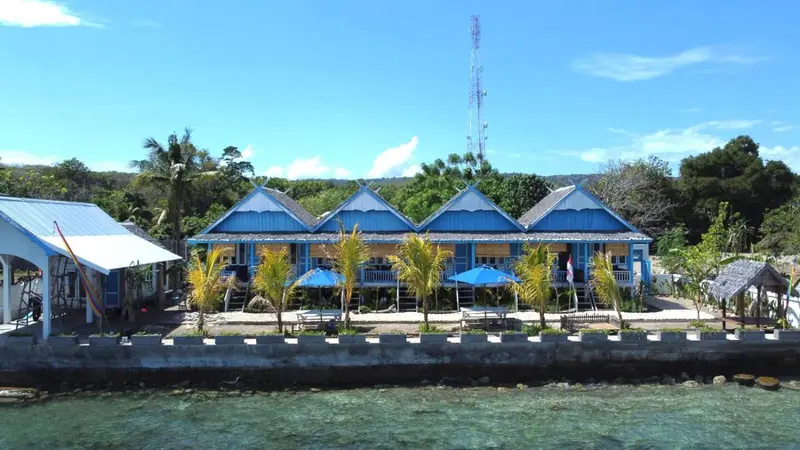
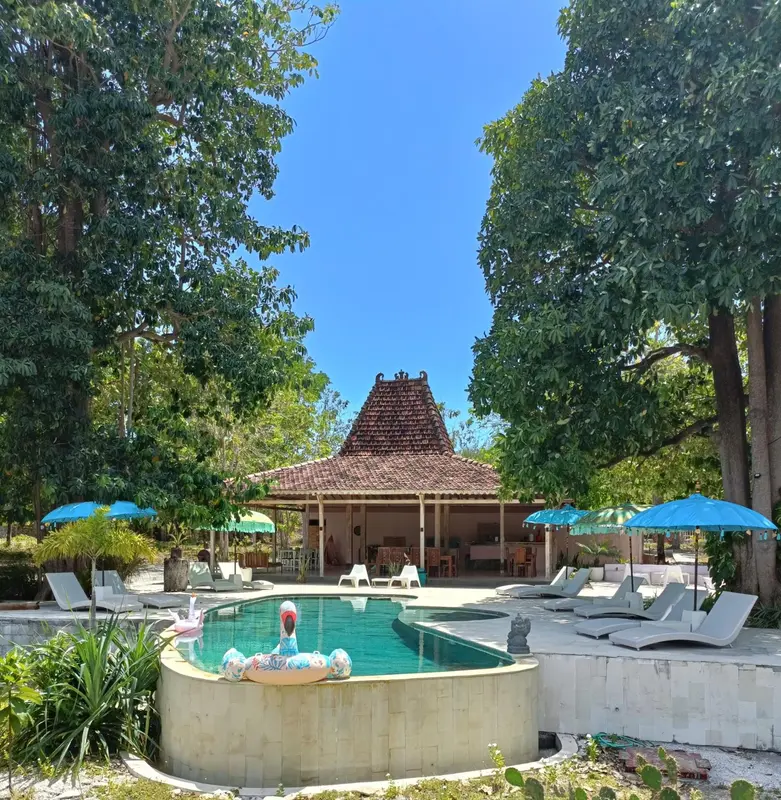
 Dive centre in the hotel
Maleo Moyo Hotel & Dive Resort
Google 4.7/5 (150 reviews)
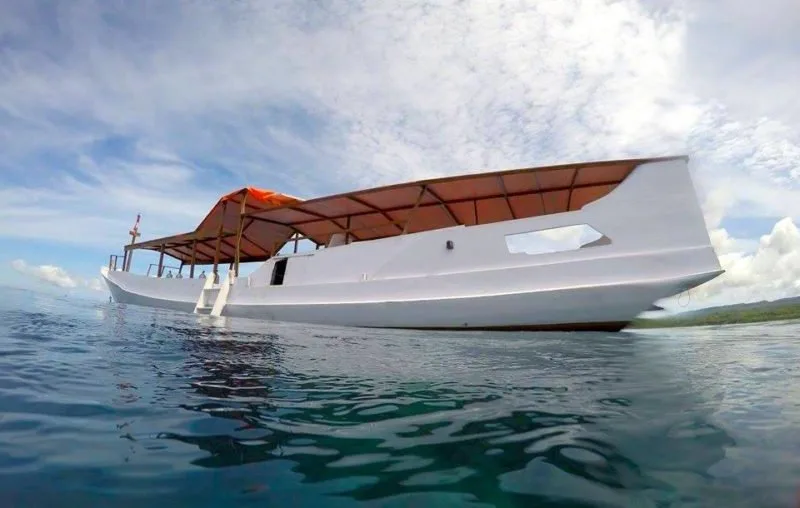
The dive centre
Maleo Moyo Diving
SDI
Google 4.7/5 (157 reviews)
Dives: House Reef, Sumbawa Wall, Raja Sua
Indonesia · Asia
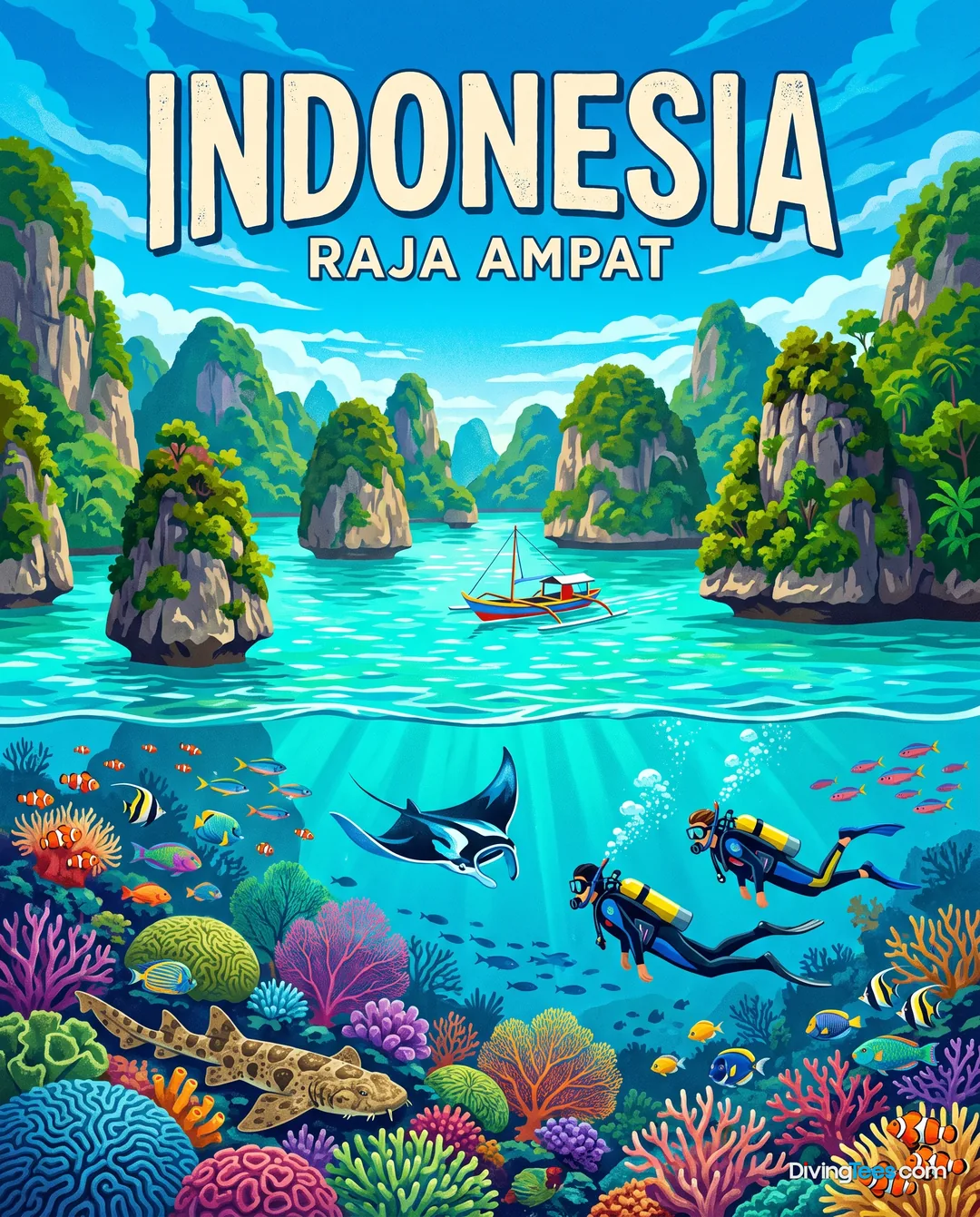
Hard-coral gardens, steep drop-offs, sea turtles and reef sharks frame boat dives around a forested Indonesian island reached through Sumbawa Besar
Hard-coral gardens give way to drop-offs around Moyo Island, where a typical day means boarding a boat rather than walking into a developed resort harbour. Sea turtles, reef sharks and moving schools of fish are part of the appeal, but the island’s real character is its quiet, forested setting and unhurried pace. This suits divers who are happy to trade extensive facilities and easy shopping for organised outings, beaches, waterfalls and a genuinely rural base on Sumbawa’s coast.
Most diving is by boat along Moyo’s coast, with hard-coral gardens, sloping reef and drop-offs providing the main scenery. Brang Sedo, Angle Reef, also known as Takat Sagele, and Tanjung Menangis are names to discuss during planning, because exposure and tidal movement affect the character of each outing. Currents are generally weak to moderate, but can strengthen around spring tides, particularly where a drop-off catches the flow. Visibility is commonly around fifteen to thirty metres and is usually clearest from June to October, although rain and local conditions can change that quickly. Expect conventional boat dives rather than a shore-diving routine, with the boat handling the return and a proper safety stop part of the plan. Advanced Open Water training is useful for deeper drop-offs and stronger tidal conditions.
Sea turtles can be encountered underwater throughout the year, making them one of Moyo’s most dependable encounters rather than a narrowly timed seasonal attraction. Reef sharks are also present year-round, although sightings remain occasional and should be treated as a bonus rather than a guarantee. Large schools of fish gather where current moves across the reef, with tuna and trevally adding faster, more purposeful movement to the scene. The exact mix depends on the site, tide and exposure on the day. Turtle nesting is reported from December to April, giving non-divers a separate reason to learn about local conservation work, while underwater turtle sightings are possible in every season.
May, June, September and October offer the most sensible balance for Moyo: the dry season normally brings more settled boat conditions, June to October generally brings clearer water, and these months are quieter than July and August. The rainy season and monsoon period, roughly December to March, make visibility and crossings more changeable, so the island is less predictable for a tightly packed diving itinerary. July and August remain workable, but greater demand makes early arrangements more important. May and the September to October window are particularly attractive when you want a calmer stay without giving up the usual dry-season advantages.
Moyo suits beginners as well as experienced divers, provided each dive starts with a local briefing on the tide and the site’s exposure. The generally weak to moderate current is not a reason to dismiss it, but conditions can build around spring tides and should be respected at drop-offs. Advanced Open Water is useful for deeper profiles and more exposed sites. BSAC, PADI and SSI divers should find the range familiar, while Nitrox can be worthwhile for repetitive days if it is available locally.
From London Heathrow or Gatwick, or from Manchester, the journey begins with an internal flight towards Sumbawa Besar, followed by the transfer to Muara Kali near the town. Moyo Island has no direct air access, so the final leg is compulsory by boat. A fast crossing takes roughly thirty to forty-five minutes, while public services take their timing from local schedules and conditions. Travellers routing through Lombok face a longer overland alternative, including the Kayangan to Poto Tano ferry and several hours on the road to Sumbawa Besar. Allow generously for flight connections, waiting at the harbour and the crossing itself. Once on Moyo, diving is organised from island accommodation and boat jetties, not through a dense network of local taxis or shops.
Build the itinerary around the crossing, not around the flight timetable. Do not arrange a boat arrival and an onward flight on the same day, and keep a spare day before flying home in case wind, tide or a delayed local boat breaks the connection. Reserve the crossing or dedicated boat well ahead, particularly for July and August, when accommodation and public boats are busier. Before each dive, ask whether the site is exposed to the tidal current and how that affects the descent, the return and the safety stop. This matters most at drop-offs and around spring tides. Bring personal items that would be awkward to replace, because Moyo is not a full-service diving hub and local equipment availability is limited. A base with its own pontoon simplifies departures. Pack for a nature stay, not an urban resort, and leave room for a day when diving is replaced by a waterfall walk, forest outing or beach.
Allow seven to ten days so the maritime transfer has breathing space and the stay is not reduced to a sequence of boat departures. A land-based visit is the natural arrangement, with diving organised from island accommodation and non-diving time divided between snorkeling, beaches, forest walks, waterfalls and wildlife. Sea-turtle conservation sites can add interest when local rules permit. Moyo can also appear on a liveaboard itinerary, but staying ashore gives more time to experience the island itself and suits companions who prefer nature to a full week on a boat.
Hello, I'm Marina, DivingDeal.com's AI assistant. I guide you through destinations, areas and countries.
Thinking about the whole trip and the flights? Talk it over with Edith →
Marina is an AI. Some links are affiliate links: DivingDeal may earn a commission, at no extra cost to you. Bookings are made with the partner.
In each one, the dive centre is inside the hotel: step out of your room and go diving.
Dive centre in the hotelGoogle 4.7/5 (150 reviews)
The dive centre
Maleo Moyo Diving
SDI
Google 4.7/5 (157 reviews)
Dives: House Reef, Sumbawa Wall, Raja Sua
Choose May, June, September or October for a sensible balance of drier weather, clearer water and quieter conditions than July and August. June through October is generally clearest, but rain and local conditions can change visibility. December through March brings more changeable crossings and visibility, making tightly planned diving less predictable.
Moyo Island suits beginners and experienced divers when you follow a local briefing on tide and exposure. Currents are generally weak to moderate, though spring tides can strengthen them around drop-offs. Advanced Open Water training is useful for deeper profiles and exposed sites. Familiarity with BSAC, PADI or SSI fits the diving available.
Expect boat dives over hard-coral gardens, sloping reefs and steep drop-offs, with sea turtles possible throughout the year. Reef sharks occur year-round but are occasional. Current-moving reefs can hold large fish schools, tuna and trevally. Visibility is commonly fifteen to thirty metres, with the exact experience shaped by site, tide and exposure.
Plan around the boat crossing from Muara Kali to Moyo Island, allowing time for flights, harbour waits and changing local conditions. Stay ashore and organise dives from island accommodation or a pontoon. Keep a spare day before your flight home, reserve busy-season crossings early, and bring personal items because equipment and shops are limited.