
Air Dive Alor
★ 4.9/5 (104 reviews)
11 km away as the crow flies
Alor · Indonesia · Asia
Max. depth · 40 mDescend Bama Wall, a vibrant drop-off in Alor where nutrient-rich currents fuel a dense ecosystem of corals and schooling fish.
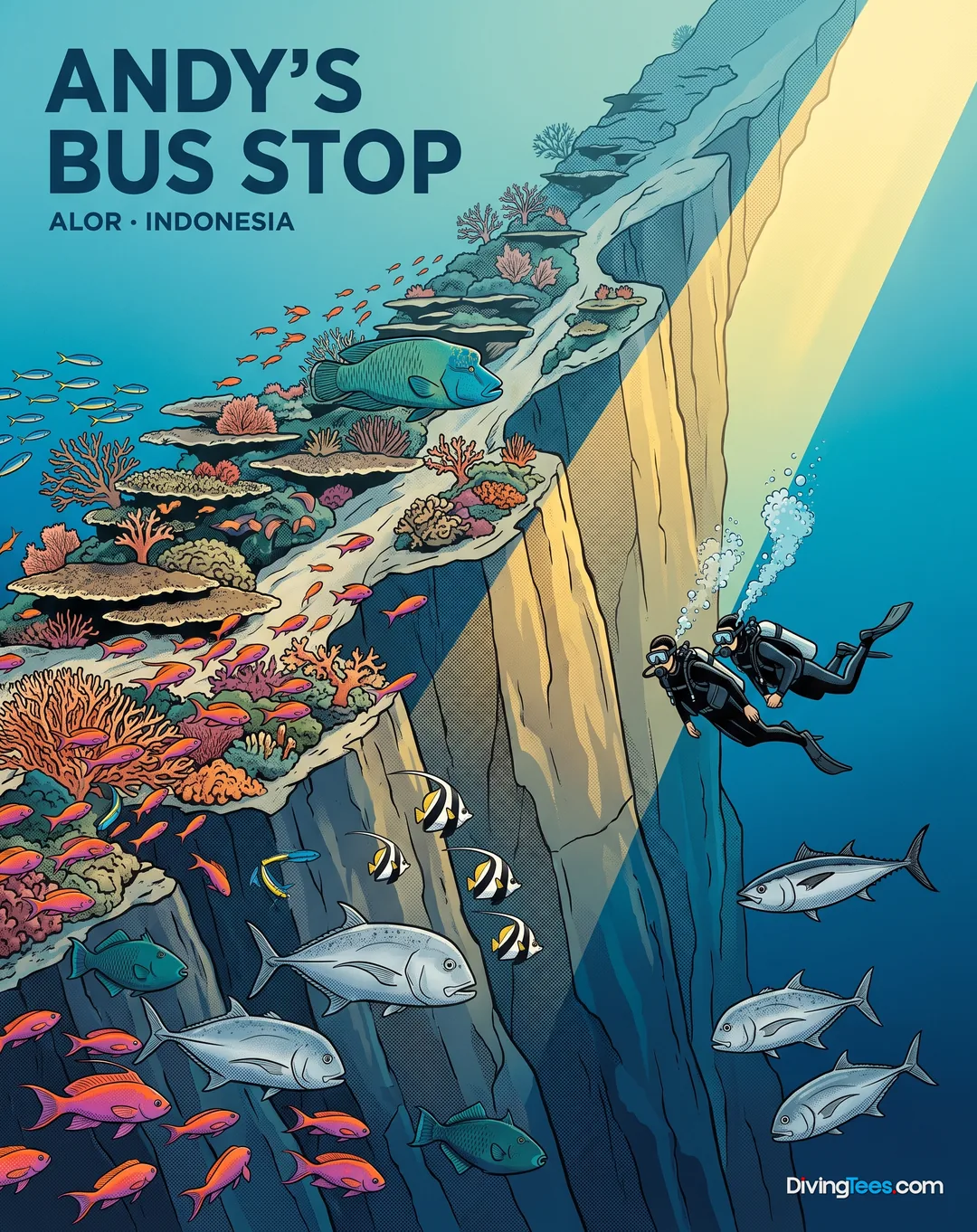
As you approach Bama Wall, facing Pantar Island from Alor, the sheer scale of this underwater landscape becomes immediately apparent. The dive begins on a steep drop-off, a vertical canvas of life that plunges into the depths, its surface densely packed with healthy and vividly coloured corals. This initial descent immediately immerses you in a vibrant ecosystem, where every crack and overhang offers a hiding place or a feeding ground, setting the tone for a dynamic underwater exploration.
Following the wall downwards, the topography gradually transitions from a sheer face to a sloping reef. This change in angle brings with it a noticeable shift in the marine population. Here, the energetic buzz of anthias forms a living cloud against the coral, constantly darting and weaving. Butterfly fish (Chaetodon spp.) flit gracefully along the coral face, meticulously picking at polyps, their movements adding a delicate rhythm to the scene.
The slope of Bama Wall is a crucial zone for observing the behaviour of larger schooling fish. It's common to witness a lively feeding frenzy, with various species converging to capitalise on the nutrient-rich waters. Amidst this activity, you might encounter impressive schools of humphead parrotfish (Bolbometopon muricatum), their massive forms moving in unison, navigating the reef with a purposeful grace. Snappers (Lutjanidae spp.) can also be seen gathering in groups, their silvery bodies flashing as they move through the water column, adding to the sense of abundance.
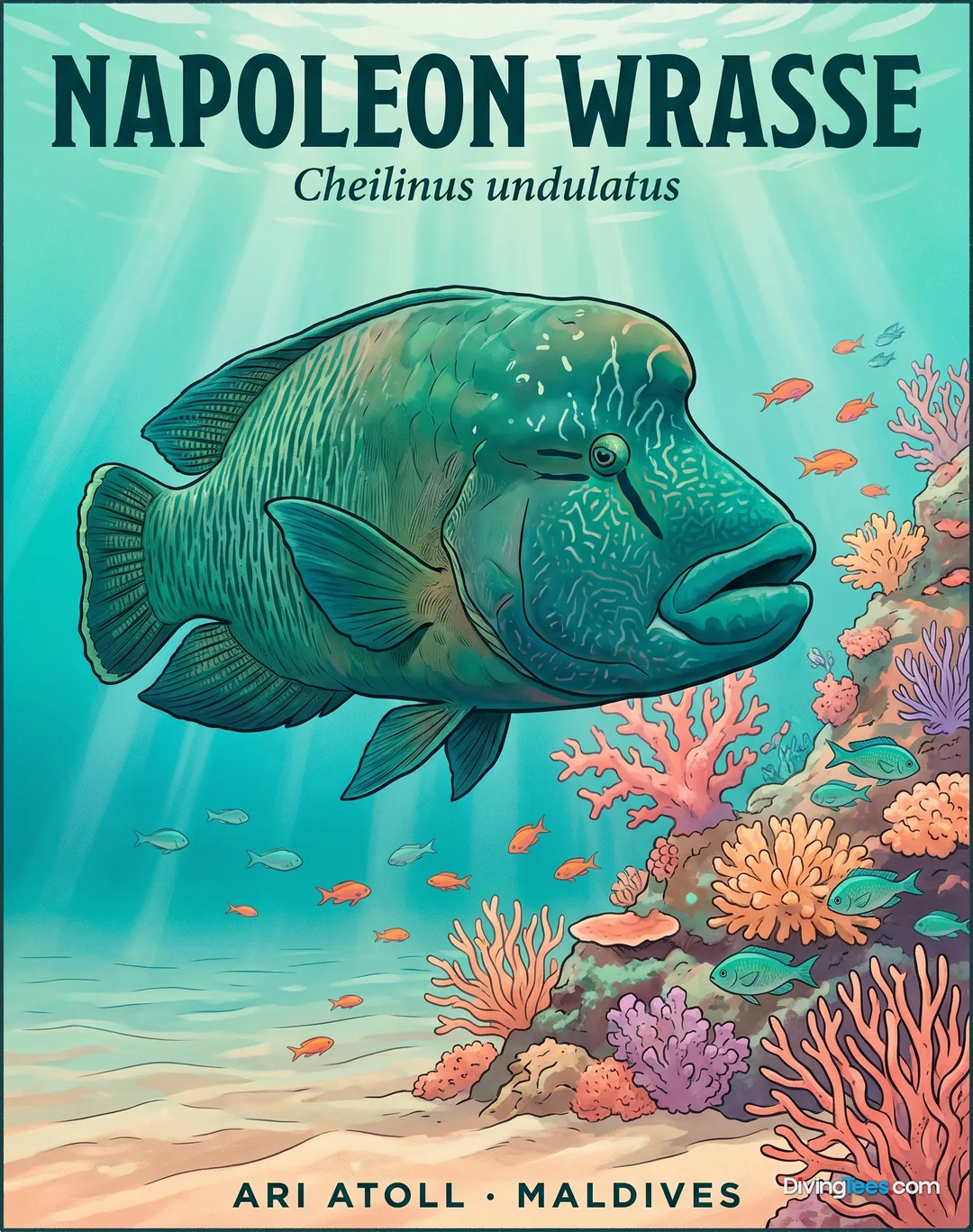
Beyond the immediate reef, the open water adjacent to Bama Wall frequently hosts larger predatory fish and pelagic species. Napoleon wrasse (Cheilinus undulatus), easily identified by their distinct hump and often inquisitive nature, patrol the deeper sections, while powerful trevally (Caranx spp.) are often seen cruising the currents, ready to strike at passing prey. These encounters underscore the productive nature of this site, driven by the strong currents characteristic of the region, which bring in a steady supply of food for the entire food chain.
Bama Wall is a driftable site, meaning you'll move with the current along its length. The wall itself is adorned with dense hard and soft coral cover, creating a rich habitat from the shallower sections down to 40 metres. Overhangs and faults in the wall provide additional structure and shelter, contributing to the site's biodiversity and offering varied points of interest as you drift past.
The currents at Bama Wall are a defining feature, often strong and capable of changing direction quickly, including upcurrents and downcurrents. This variability, while demanding, is precisely what concentrates the schooling fish and pelagics that make this site so dynamic. Local guidance is essential to navigate these conditions safely and to position yourself for the best encounters.
Visibility at Bama Wall is typically very clear, especially during the dry season, often ranging from 15 to 40 metres. This allows for expansive views of the wall's vibrant coral tapestry and the abundant marine life. The clear water, combined with the strong currents, creates an environment where you can observe the full scale of the ecosystem, from the smallest reef inhabitants to larger open-water predators.
Diving Bama Wall requires an Advanced Open Water certification or equivalent experience, given the potential for strong and variable currents, including upcurrents and downcurrents. Depths range from 15 metres to 40 metres. Visibility typically holds between 15 and 40 metres. The best time to dive Bama Wall is during the dry season, from March to December, with optimal conditions and clearest water often found between June and October. Planning your dive during the half-moon phase can offer a more relaxed drift experience due to typically milder tidal exchanges.
2 liveaboards depart from Alor another way to explore the region, over several days at sea.