Diving Padang Bai: Bay diving, macro and current-swept channels
Blue Lagoon’s sheltered water, sandy macro ground, reef sharks and the current-swept channels of Mimpang and Tepekong share one compact base.
What makes this destination special
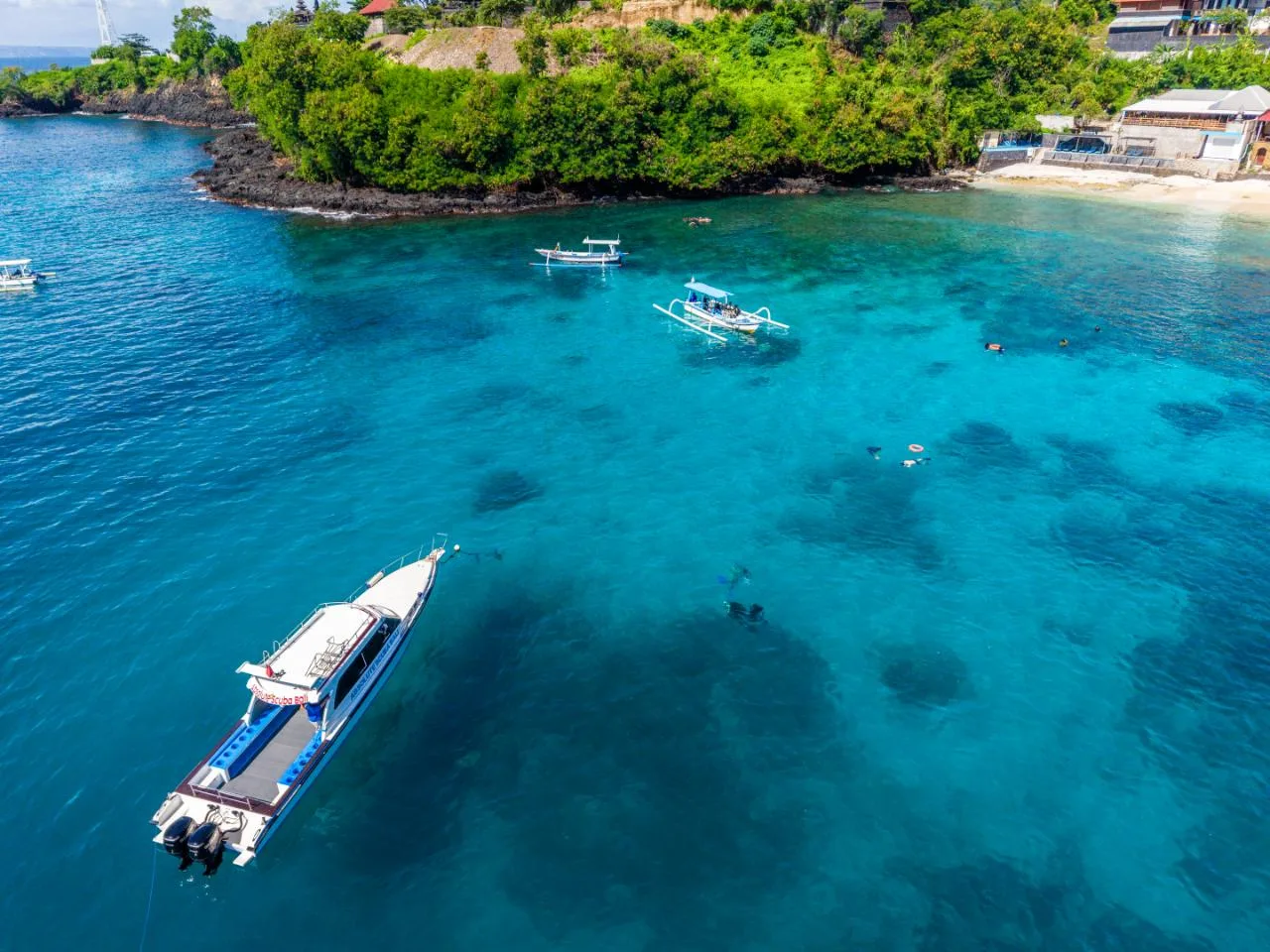
Blue Lagoon’s sheltered training water
Macro life across sandy bottoms and small walls
Mimpang and Tepekong’s demanding current channels
Occasional reef sharks throughout the year
Mola mola sightings from July to October
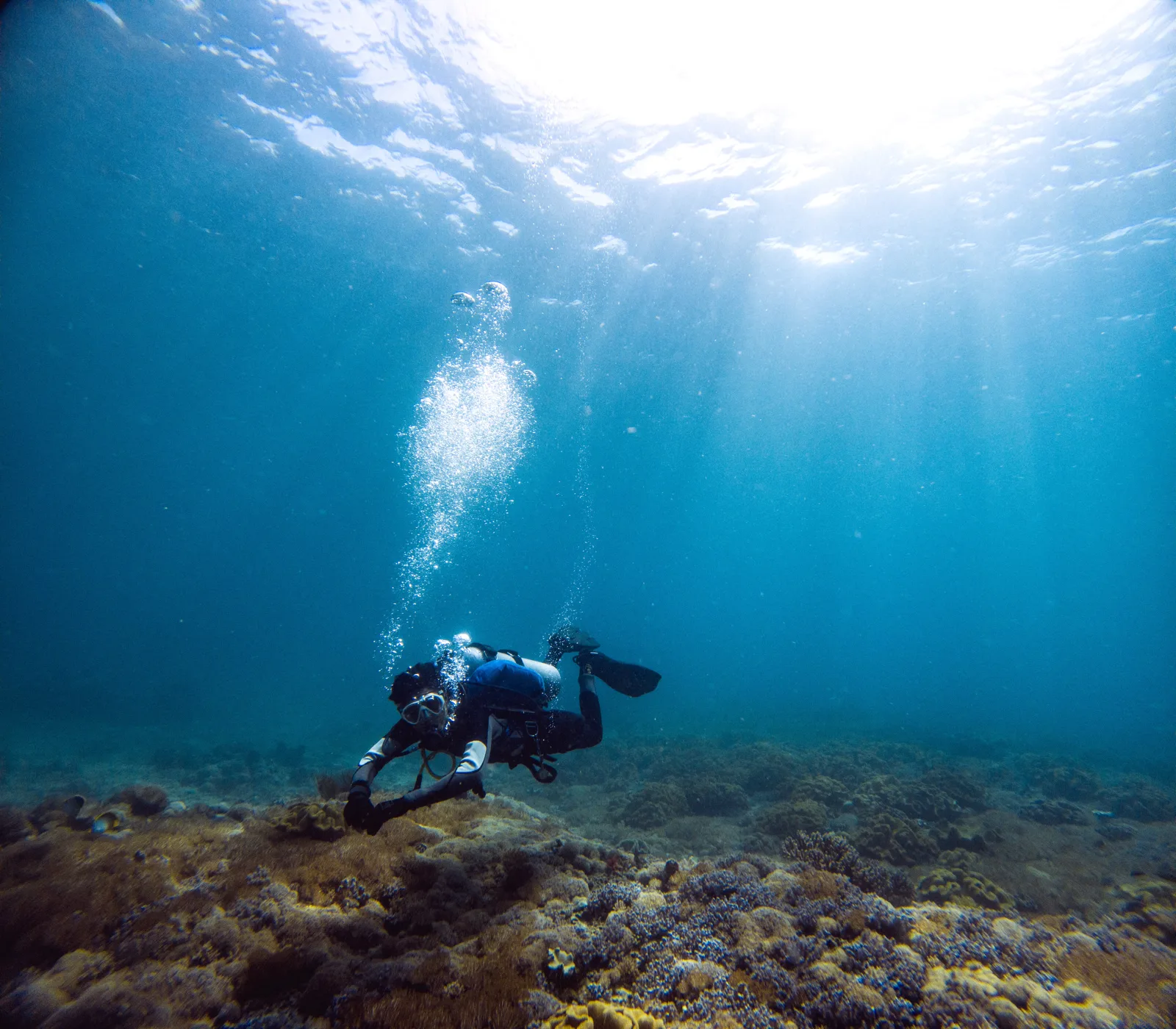
Fifteen to thirty metres’ visibility in clearer months
Short jukung journeys from Padang Bai harbour
For subtitles in English: start the video firstthen click the gearat the top right of the video, select “Subtitles/CC”, then “Auto-translate” and choose “English”.
01
Overview
Blue Lagoon’s sheltered water makes Padang Bai an easy place to settle into Bali diving, but the sandy bottoms and small walls reward slow searching rather than a hurried lap of the reef. From the same harbour, short jukung trips reach Shark Point, Ferry Channel, Gili Mimpang and Gili Tepekong, where the character changes to exposed reefs and moving water. That contrast is the point: straightforward dives for building a rhythm, proper current diving when conditions and experience allow, and macro almost everywhere you look closely.
02
Diving here
The diving moves between sheltered bay sites, sandy muck ground, small drop-offs and more exposed reef around the offshore islands. Blue Lagoon and Jepun can suit beginners and training, with current generally absent or moderate, while Ferry Channel, Shark Point, Gili Mimpang and Gili Tepekong may bring strong flow, downcurrent movement and turbulent water. Treat those outings as conditional, not as automatic add-ons to a calm morning in the bay. Visibility is often around 15 to 30 metres from April to October, but rain, swell, runoff and sediment can change the picture quickly. Most dives involve a short boat ride from the harbour, although some coastal areas can be reached from the beach. Expect the guide to adjust the plan to the tide and the day’s current, rather than follow a fixed list of sites.
03
The underwater wildlife
Padang Bai earns much of its reputation from small creatures rather than from a guarantee of large-animal encounters. Search the sandy patches, rubble and the edges of small walls slowly for nudibranchs, scorpionfish and other well-camouflaged life. Reef sharks occur throughout the year, depending on the site and conditions, but sightings are occasional rather than something to build every dive around. Turtles are also part of the possible reef life. From July to October, mola mola may pass through, though these encounters remain occasional. The practical lesson is to leave time for close observation: racing across the reef in search of a shark or mola mola can mean missing the nudibranchs and scorpionfish sitting in plain sight.
04
When to go
April to June and September to November are the most useful months for combining clearer water with manageable planning. The dry season usually brings better visibility, while the rainy season and monsoon runoff can cloud coastal sites with sediment. Visibility is generally strongest from April to October, although local conditions still matter. July and August can be busier on the boats and in the bay, so early departures are worthwhile. The same period may also bring mola mola, usually between July and October. December to February is less attractive for a dedicated Padang Bai trip because rain and runoff more often compromise the coastal view.
05
Level required
Padang Bai works for a mixed group. Beginners can start in Blue Lagoon or Jepun, where the water is often sheltered, while experienced divers can request the more exposed channels only when the local assessment supports it. Advanced Open Water is useful for deeper, current-affected dives, and Drift Diver training makes sense for moving water and drift dives. A calm bay dive does not qualify anyone for Mimpang or Tepekong: those sites can produce strong current and vertical movement, so previous experience with changing conditions matters more than simply having completed a certain number of dives.
06
On the ground
From London or Manchester, fly to Bali’s Ngurah Rai International Airport, then continue by road to Padang Bai. The overland journey usually takes about one and a half to two and a half hours, but Bali traffic can make it longer, particularly around this working ferry harbour. There is no domestic flight or compulsory ferry for the journey from the airport. Ferries from Padang Bai serve Lombok and the Gili Islands, but they are separate from reaching the dive base. Once in the village, the centre is compact, with several accommodation and diving areas walkable. Places farther out depend on a shuttle or local transport arranged through the accommodation.
07
Local tips
Start with Blue Lagoon or Jepun before committing to Mimpang, Tepekong, Ferry Channel or Shark Point. That first dive tells you more about the day’s visibility, buoyancy and water movement than the appearance of the bay from shore. Ask for the local current assessment on the morning itself, especially for Mimpang and Tepekong, and keep the schedule flexible enough to replace an exposed site. Book several diving days if those islands matter, because tide and conditions can remove them from the plan. Early departures usually mean calmer water and fewer day groups. After heavy rain, expect poorer visibility near runoff-affected coastlines rather than assuming the dry-season pattern still applies. For macro, carry the camera and small accessories you rely on, then slow down over sand, rubble and little walls. Leave a proper gap before flying, since sea conditions or port traffic can delay the return.
08
Planning your stay
Three to five diving days fit Padang Bai well, while five to seven days on the island leaves room for sheltered dives, macro, a possible Mimpang or Tepekong outing and a weather buffer. Staying in the village keeps the harbour, accommodation and several dive operations within walking distance. Non-divers have beaches, sheltered-water snorkelling and road excursions towards eastern Bali’s temples, rice fields, villages and volcanic landscapes. A recovery day before flying works particularly well as a cultural or inland excursion rather than another fixed boat schedule.
A question about this destination?
Hello, I'm Marina, DivingDeal.com's AI assistant.
I guide you through destinations, areas and countries.
April to June and September to November help combine clearer water with manageable planning. Visibility is generally strongest from April to October, while rain, swell, runoff and sediment can reduce it. July and August may be busier, and mola mola can appear from July to October. December to February is less attractive for dedicated diving.
What diving experience do you need for Padang Bai?
You can begin in Blue Lagoon or Jepun, where water is often sheltered and current is absent or moderate. Experienced divers can consider Ferry Channel, Shark Point, Mimpang and Tepekong after a local assessment. These exposed sites may have strong flow, downcurrent movement and turbulence, so experience with changing conditions matters.
What can you see while diving in Padang Bai?
Padang Bai rewards slow searches across sandy patches, rubble and small walls, where you may find nudibranchs, scorpionfish and other camouflaged creatures. Turtles and occasional reef sharks are possible throughout the year. Mola mola may pass from July to October, while clearer months can bring visibility around fifteen to thirty metres.
How should you plan your stay in Padang Bai?
Start with Blue Lagoon or Jepun, then ask for the morning current assessment before considering exposed sites. Keep plans flexible because tides and conditions can cancel outings, and book several diving days if Mimpang or Tepekong matters. Staying in the compact village keeps accommodation, the harbour and dive operations within walking distance.


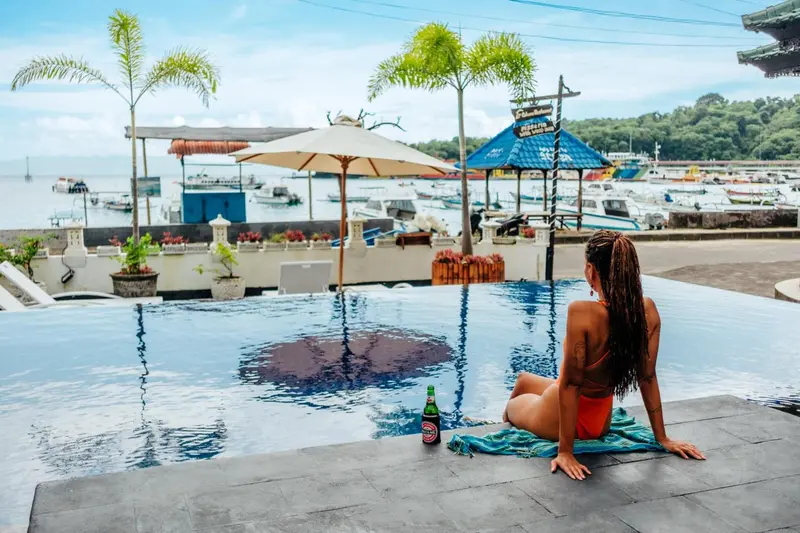 Dive centre in the hotel