
Wakatobi Dive Center
Google 4.6/5 (277 reviews)
Indonesia · Asia
Coral reefs, turtles, rays and close-up macro life meet on boat dives from Waha, with Tomia’s coastal villages and islets above water.
For subtitles in English: start the video firstthen click the gearat the top right of the video, select “Subtitles/CC”, then “Auto-translate” and choose “English”.
Waha is a village and harbour on Tomia, used as a land base for diving in Wakatobi National Park. The appeal is straightforward: step out from a local settlement, board a boat, and spend the day among coral reefs, turtles, rays and small marine life. This is not a fly-in resort bubble. It suits divers who enjoy a more independent Indonesian island journey, and who are prepared to make the sea crossing worthwhile by staying long enough to explore beyond the nearest reefs.
Diving around Waha is predominantly boat-based, with reefs close enough for shorter runs and other sites farther around Tomia. The underwater character is coral rather than wreck-led, with colourful reef structure and macro life providing the detail for slow looking. Conditions are often gentle, but the tide matters. Some exposed sites can develop a strong current on the flood, turning a relaxed reef dive into a more demanding drift dive. Visibility is commonly around twenty to thirty metres, particularly from May to October, although rain and rougher crossings can reduce it. The day is normally organised around boat departures from the village or harbour, rather than repeated entries from a house reef. Divers should expect a mixture of easy sites and more exposed choices, with the guide matching the plan to the current and the group.
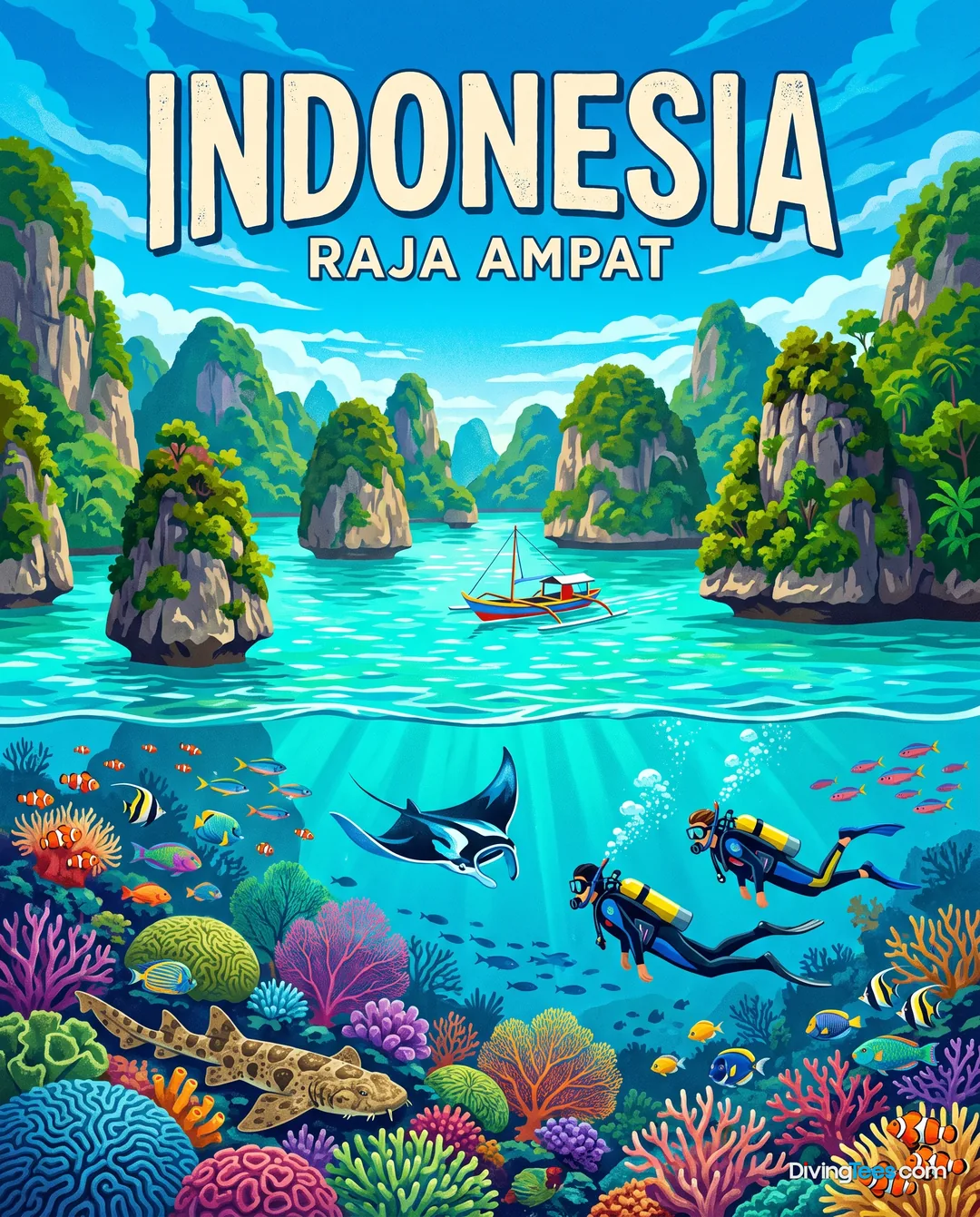
Tomia’s reefs bring the broad tropical attractions without requiring a search for a single headline animal. Turtles and rays are part of the expected picture, while macro life rewards a slower pace and a close inspection of coral surfaces. The reefs are described as rich, colourful and healthy, so the diving is as much about living structure as about passing encounters. May to October is the clearest window for seeing that structure, when visibility is generally at its strongest. Rain and a moving sea can soften the view at other times. There is no fixed wildlife calendar to plan around, making the reefs, the changing light and the guide’s choice of site more important than chasing a particular seasonal species.
May to October is the practical choice for Waha. The south-east monsoon generally brings a drier spell, calmer seas and better visibility, which matters here because reaching Tomia already involves a substantial boat journey and many dives are made from moving boats. The rainy season can still be diveable, but showers and a more changeable sea may reduce visibility or make the crossing less comfortable. Conditions can also vary locally, so the dry-season advantage is not a guarantee of flat water. Outside those months, allow more flexibility in the programme rather than building a short trip around fixed boat connections.
Waha can suit beginners when the day’s site is sheltered and the current is mild. It is not an exclusively novice area, however. Some reefs are deeper or exposed to a strong flood-tide current, and those dives call for calm buoyancy, sensible gas planning and experience in moving water. Advanced Open Water is useful for deeper or current-affected sites, whether the diver arrives through PADI, SSI or BSAC training. A guide should be able to keep the day accessible by selecting conditions rather than treating Tomia as one uniform level of diving.
From London Heathrow, London Gatwick or Manchester, the public route is through Wangi-Wangi. On arrival, travel from the airport to the port, then take a public or fast boat towards Waha or Jabal Harbour on Tomia. The crossing usually takes around two to four hours, depending on the boat and conditions. Timetables are shaped by tides and are not guaranteed to connect neatly with regional flights, so an overnight stop in Wanci may be necessary. Do not treat Maranggo airport as a normal public-flight alternative, as it is principally tied to resort charter transfers. Check which Tomia harbour your boat uses before arranging the final local transfer. In Waha, the village, quays and dive arrangements are generally close enough to reach on foot; elsewhere, allow for local transport.
Treat the Wangi-Wangi connection as a proper transit, not as an airport-to-dive transfer. Leave enough time for the tide and for a boat running late, and avoid booking the first Tomia dive on the same day as a regional flight. Public and fast boats do not form a guaranteed daily timetable, so reaching Waha before the diving programme is the safer arrangement. Confirm whether the boat lands at Waha or Jabal Harbour, since that changes the final journey and where you should stay. Do not book Maranggo on the assumption that it is a public airport for independent travellers. Once diving, ask specifically about the flood tide before accepting an exposed site, and keep a more sheltered option in reserve. Bring thermal protection suitable for repeated dives, as the south-east monsoon period can feel cooler. A week to ten days makes better sense than a brief stop, because the sea crossing can otherwise consume much of the visit.
Stay in or close to Waha village, where the harbour and diving arrangements are generally nearby. Most days revolve around boat departures, with shorter runs to reefs around Tomia and longer outings when conditions allow. Keep a little flexibility for weather, tides and the public-boat timetable. Non-diving days can be spent visiting coastal villages, beaches and nearby islets, or snorkelling from a boat. Plan the final day around rest and the return crossing to Wangi-Wangi rather than a last-minute dive.
Hello, I'm Marina, DivingDeal.com's AI assistant. I guide you through destinations, areas and countries.
Thinking about the whole trip and the flights? Talk it over with Edith →
Marina is an AI. Some links are affiliate links: DivingDeal may earn a commission, at no extra cost to you. Bookings are made with the partner.
May to October is the practical choice for Waha, with a generally drier spell, calmer seas and visibility commonly around twenty to thirty metres. The rainy season can remain diveable, but showers and rougher crossings may reduce visibility or comfort. Conditions vary locally, so keep flexibility rather than relying on guaranteed flat water.
Waha can suit beginners when the selected site is sheltered and the current is mild. Other reefs are deeper or exposed to strong incoming-tide currents, requiring calm buoyancy, sensible gas planning and experience in moving water. Advanced Open Water training is useful for deeper or current-affected sites, with guides matching conditions to the group.
Diving in Waha focuses on colourful, healthy coral reefs around Tomia, with turtles and rays often part of the underwater picture. Sheltered and current-affected reefs also offer macro life for close inspection. Visibility is commonly around twenty to thirty metres from May to October, although rain and rougher seas can soften the view.
Stay in or near Waha village, close to the harbour and diving arrangements. Travel through Wangi-Wangi, then allow for the boat crossing to Waha or Jabal Harbour, with tide and timetable flexibility. A week to ten days allows time for diving, weather changes and local exploring. Keep the final day for rest and the return crossing.