
Wicked Squid Divers - Boracay
Google 5/5 (471 reviews)
2.4 km away as the crow flies
Boracay · Philippines · Asia
Max. depth · 25 mCrocodile Island offers a distinctive sloping wall and reef topology, often revealing schools of fish drawn by its dynamic currents.
For subtitles in English: start the video firstthen click the gearat the top right of the video, select “Subtitles/CC”, then “Auto-translate” and choose “English”.
From a distance, Crocodile Island’s unique profile gives it its name, resembling a crocodile’s head emerging from the sea. Subsurface, this small, uninhabited island forms an extensive reef system that transitions into a distinct sloping wall. Located southeast of Boracay, close to the channel separating the main island, its position exposes it to dynamic water movement, shaping the marine environment and influencing the dive experience. The topography features several small canyons and overhangs that offer shelter to a variety of marine life.
The dive profile at Crocodile Island typically explores depths between 5 and 25 meters, with the most productive zone often found in the 12 to 20 meter range for maximizing bottom time. The site’s gently sloping wall provides a continuous descent, allowing for exploration of varying depths in a single dive. As you move along, the transition from shallow reef to deeper wall reveals different coral formations and fish communities. This gradual slope also makes it accessible for a range of diver experience levels, depending on the day’s current conditions.
The reefs here are home to a vibrant collection of both soft and hard corals, which carpet the sloping surfaces and fill the canyons. These coral gardens attract a consistent population of reef fish, including various butterflyfish, angelfish, snappers, and sweetlips. Macro organisms are also present, adding another layer of detail for those who take their time to observe closely. Look into the crevices and under the ledges for nudibranchs and sea snakes, which occasionally make an appearance.
Currents at Crocodile Island are a significant factor, known to be strong, particularly during tidal changes. While these currents can create a more challenging environment, they are also responsible for the rich biodiversity and the frequent schooling behavior of fish. During periods of slack tide, the current lessens, allowing for a more relaxed drift along the wall and closer inspection of the reef’s intricate details. It’s during these calmer moments that the density of coral and its associated fauna truly becomes apparent.
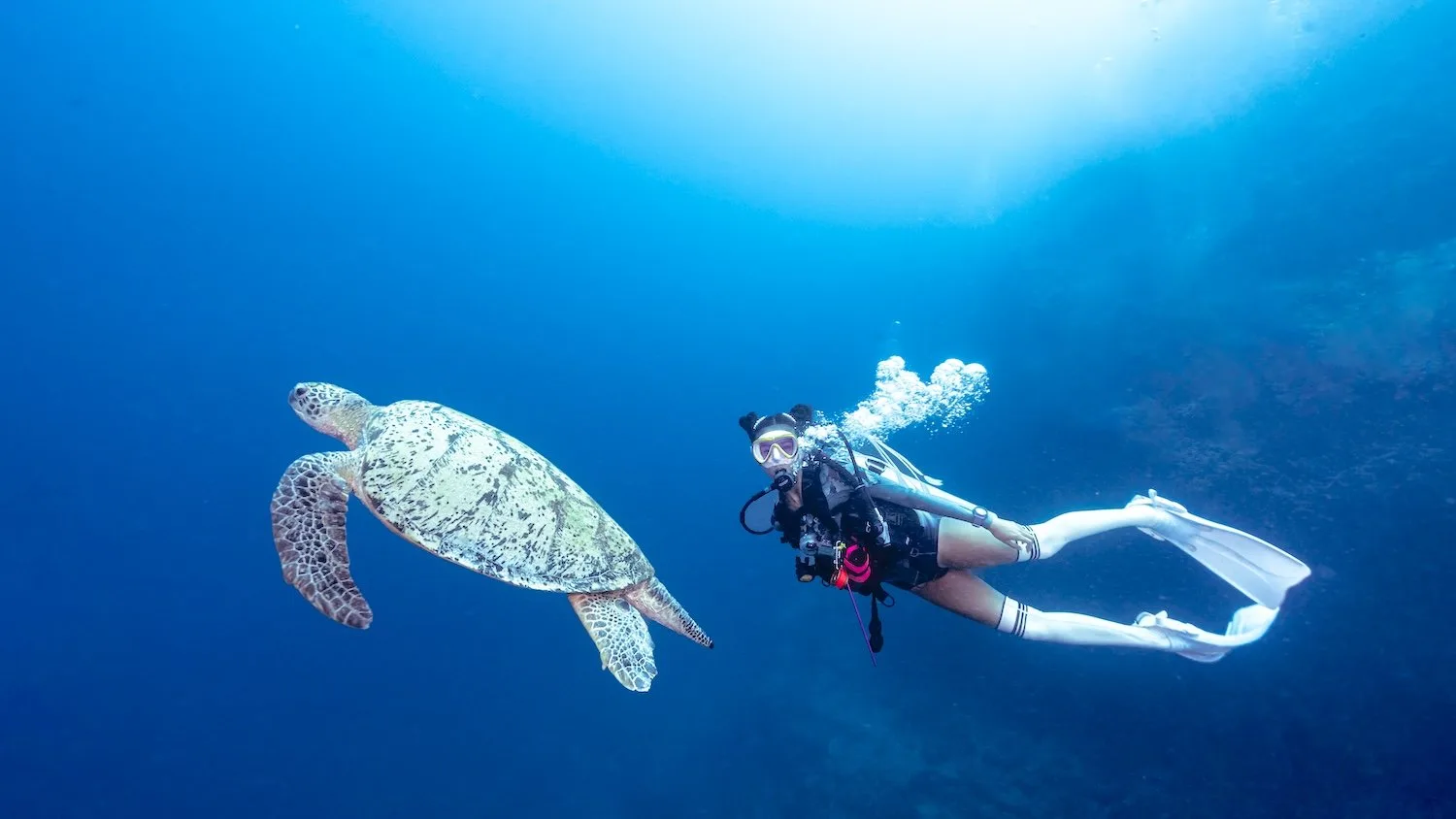
The site hosts a diverse array of marine life characteristic of a healthy Philippine reef system. Alongside the reef residents, you can expect to encounter large schools of fish moving in tighter formations under the influence of the current. The richer areas of soft corals and sponges provide shelter and feeding grounds for smaller species, while the open water above the wall can sometimes reveal larger pelagic visitors drawn by the nutrient-rich waters. The site functions as a marine sanctuary, contributing to the abundance observed.
Visibility at Crocodile Island is generally good, often described as excellent, which enhances the experience, particularly when exploring the deeper sections of the wall. This allows for clear views of the vibrant coral structures and distant schools of fish. The interaction of current with the island's topology creates distinct zones within the dive site, each offering a slightly different encounter. Understanding these patterns helps in planning your dive and anticipating what you will encounter at each point along the reef.
The presence of canyons and small caves within the reef structure provides additional interest and opportunities for exploration. These features often harbor different species of fish seeking refuge or presenting unique photographic opportunities. Moving through these formations gives a sense of flying, especially when there’s a mild current aiding your progress. This dynamic environment, combining architectural features with active marine life, contributes to Crocodile Island’s reputation as an iconic Boracay dive site for adventurous divers.
Crocodile Island is generally accessible from Open Water Diver certification for the shallower sections, but the dynamic and often strong currents during tidal changes mean that intermediate experience or a minimum of 30 logged dives is advisable, particularly for deeper exploration. Depths range from 5 meters to 25 meters, providing a varied profile for different experience levels. Visibility is typically good, allowing for clear views of the extensive reef and associated fauna.
You can dive Crocodile Island year-round, with generally good visibility for viewing the reef and fish. For a more relaxed drift and closer inspection of coral details, plan your dive during slack tide, when the current lessens. Tidal changes can bring stronger water movement and a more demanding experience.
You can explore the shallower sections of Crocodile Island with an Open Water Diver certification. Because currents can be dynamic and often strong during tidal changes, intermediate experience or at least 30 logged dives is advisable for deeper exploration. Your suitable route also depends on the current conditions that day.
You can dive Crocodile Island from 5 to 25 meters, following a gently sloping wall that allows a continuous descent. The reef offers different depths in one dive, while the 12 to 20 meter zone is often productive for maximizing bottom time. Shallow and deeper sections suit varied experience levels.
You should expect strong currents, especially during tidal changes, although slack tide can bring calmer drift conditions. These waters support soft and hard coral gardens, reef fish, schooling fish, butterflyfish, angelfish, snappers, sweetlips, nudibranchs, sea snakes, and occasional larger pelagic visitors around the wall, canyons, and caves.