
200 Bar Diving Center
Google 5/5 (1,711 reviews)
Philippines · Asia
Bacuit Bay brings limestone islands, coral reefs, pinnacles, caves and tropical fish together with lagoons, beaches and boat journeys.
For subtitles in English: start the video firstthen click the gearat the top right of the video, select “Subtitles/CC”, then “Auto-translate” and choose “English”.
El Nido is a shore-based island diving destination built around Bacuit Bay, where boats leave the town for reefs, drop-offs, pinnacles, rock passages and caves. The underwater scenery is only half the reason to come. Above the surface, limestone islands, hidden lagoons and beaches turn each non-diving day into an outing rather than a day spent waiting at the hotel. It suits divers who want tropical diving with plenty to do between dives, and travelling companions have a genuine choice of kayak, snorkelling, boat trips and walks.
Diving is mainly from boats, with the route shaped by the tide, wind and visibility on the day. Expect a mixture of coral reefs, walls, pinnacles, rocky passages and caves rather than a single signature underwater habitat. Currents are variable. Some areas remain suitable for less experienced divers, while exposed sites can involve stronger tidal flow and are better approached as drift dives by divers comfortable with changing conditions. Visibility can range from five to thirty metres, and the difference between a clear reef and a muted one may be caused by rain, run-off, swell or plankton. Early departures generally mean less competition from the daytime excursion boats. A sensible trip therefore leaves the guide room to move between sheltered parts of Bacuit Bay and more exposed sites, rather than treating a published itinerary as fixed.
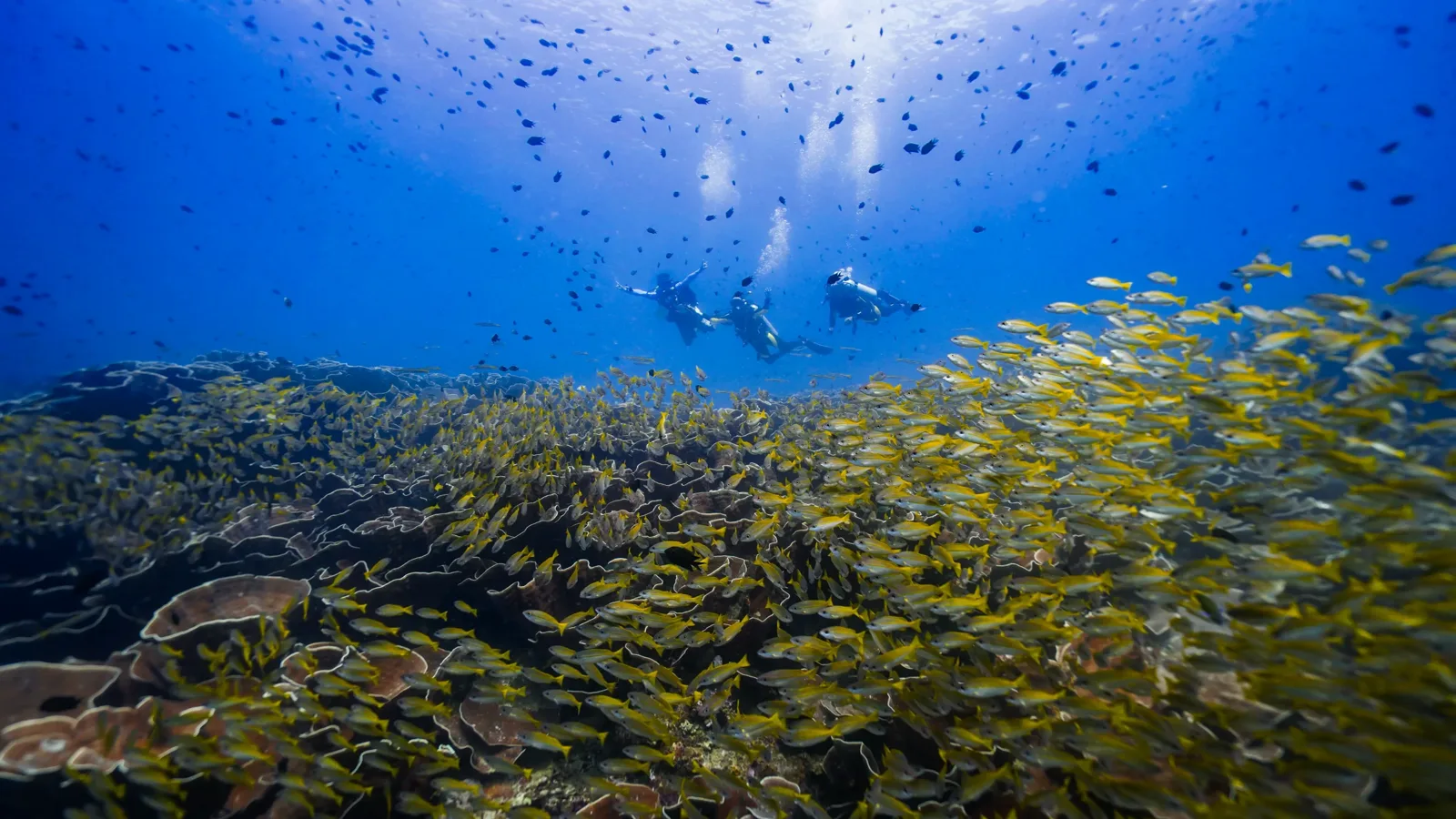
The wildlife is tropical, with fish and invertebrates becoming particularly relevant when plankton is in the water. From December to February, plankton blooms can reduce visibility markedly, sometimes to only a few metres, but they also attract feeding fish and invertebrates. Manta rays and whale sharks are occasional visitors between December and April, so they are a possible bonus rather than the reason to build the whole trip around a sighting. The more dependable experience is the combination of reef life with the bay’s underwater rock scenery. Look beyond the open-water possibilities too: passages, walls, pinnacles and caves give the dives their character even when visibility is modest.
April to June is generally the most dependable window, because the sea is often calmer and visibility more consistent. From June into October, the south-west monsoon brings rain, run-off and swell that can make boat trips uncomfortable, cancel exposed routes or force the day’s plan to change. August, September and October are the least attractive months for a diving holiday. December to February can still offer worthwhile diving, but plankton blooms may cloud the water. January and February may also justify a light extra layer, while December to April carries the occasional possibility of manta rays or whale sharks.
El Nido can suit beginners if their first dives are kept to sheltered sites and the guide accounts for variable currents. More exposed or deeper terrain is better matched to divers with experience in moving water. An Advanced Open Water qualification is useful for deeper sites and changing conditions, while a drift-diving speciality helps if the itinerary includes tidal currents. BSAC, PADI and SSI divers should find the key distinction is experience and site choice, not one particular training system.
From London Heathrow, Gatwick or Manchester, the journey starts with an international flight to Manila or Cebu, followed by a domestic flight to El Nido. The alternative is a domestic flight to Puerto Princesa and a road transfer of roughly five to six hours, a long final leg that can be tiring and eats into diving time. El Nido can also be reached by ferry from Coron, with the crossing duration dependent on the boat and sea conditions. Once in town, accommodation near the harbour and dive departures can often be reached on foot. Further-out accommodation needs a tricycle, arranged transfer or local vehicle before the boat journey begins.
Build in spare days. A rough bay can cancel a boat trip, and a fixed sequence of dives leaves little room when the monsoon shifts the plan. Ask for a sheltered first dive if you are new to the area, then let the day’s tide, wind and visibility decide whether the route stays inside Bacuit Bay or reaches more exposed water. Do not assume December to February means clear water, because plankton can reduce visibility sharply. Early starts help avoid the heaviest overlap with lagoon and island excursions. Bring your own mask, computer and light thermal protection if fit and familiarity matter to you. Treat lagoon outings separately from dive days: access, permits, movement and behaviour are managed differently. In the protected area, do not stand on coral, touch wildlife, feed animals, drop anything or ignore noise and access restrictions. If travelling overland from Puerto Princesa, allow for the full transfer rather than squeezing it between planned dives.
Five to seven days gives the trip some resilience, with room to replace a weather-affected boat day and still explore above water. Staying in El Nido town keeps the harbour and dive departures within walking distance, while outlying accommodation adds a tricycle or arranged transfer. Alternate boat diving with lagoon trips, beaches, kayak outings or walks around the limestone landscape. Keep the final day light and respect the required surface interval before flying.
Hello, I'm Marina, DivingDeal.com's AI assistant. I guide you through destinations, areas and countries.
Thinking about the whole trip and the flights? Talk it over with Edith →
Marina is an AI. Some links are affiliate links: DivingDeal may earn a commission, at no extra cost to you. Bookings are made with the partner.
April to June is generally a dependable period, with calmer seas and more consistent visibility. June through October brings the south-west monsoon, rain, run-off and swell, which can disrupt boat trips. December to February may bring plankton blooms and reduced visibility, while December through April offers occasional manta rays or whale sharks.
El Nido can suit beginners when their first dives stay in sheltered sites and guides account for variable currents. Exposed or deeper terrain is better for divers comfortable in moving water. Advanced Open Water training is useful for deeper sites and changing conditions, while drift-diving experience helps when tidal currents form part of the itinerary.
Diving in El Nido combines coral reefs, walls, pinnacles, rocky passages and caves beneath Bacuit Bay’s limestone islands. Tropical fish and invertebrates are common parts of the experience. Plankton blooms can attract feeding fish and invertebrates, while manta rays and whale sharks are occasional visitors rather than dependable sightings.
Stay near town if you want the harbour and dive departures within walking distance, and build in spare days because weather can cancel boat trips. Alternate diving with lagoons, beaches, kayaking or walks. Early departures reduce overlap with excursion boats, and keep your final day light for the required surface interval before flying.