Tubbataha · Philippines · Asia
Max. depth · 40 mAmos Rock, Tubbataha: diving a vibrant pelagic wall
Descend along Amos Rock's vertical face, where dense corals meet schooling fish and pelagic action.
What makes this site special
- Vertical wall dropping beyond 40 metres
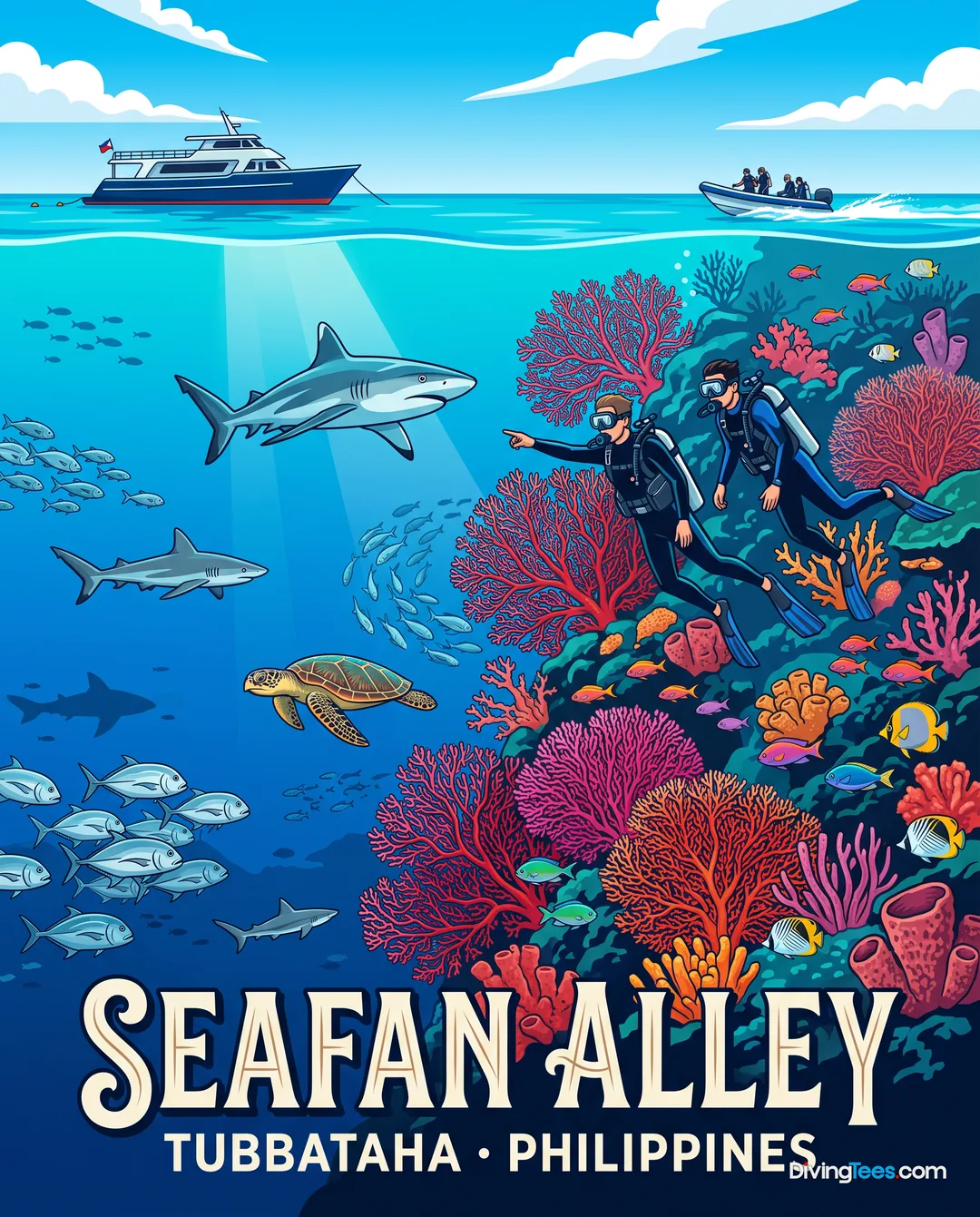
- Dense coverage of hard corals, soft corals, gorgonian sea fans
- Regular encounters with grey reef sharks and whitetip reef sharks
- Large schools of midnight snapper, trevally, and barracuda
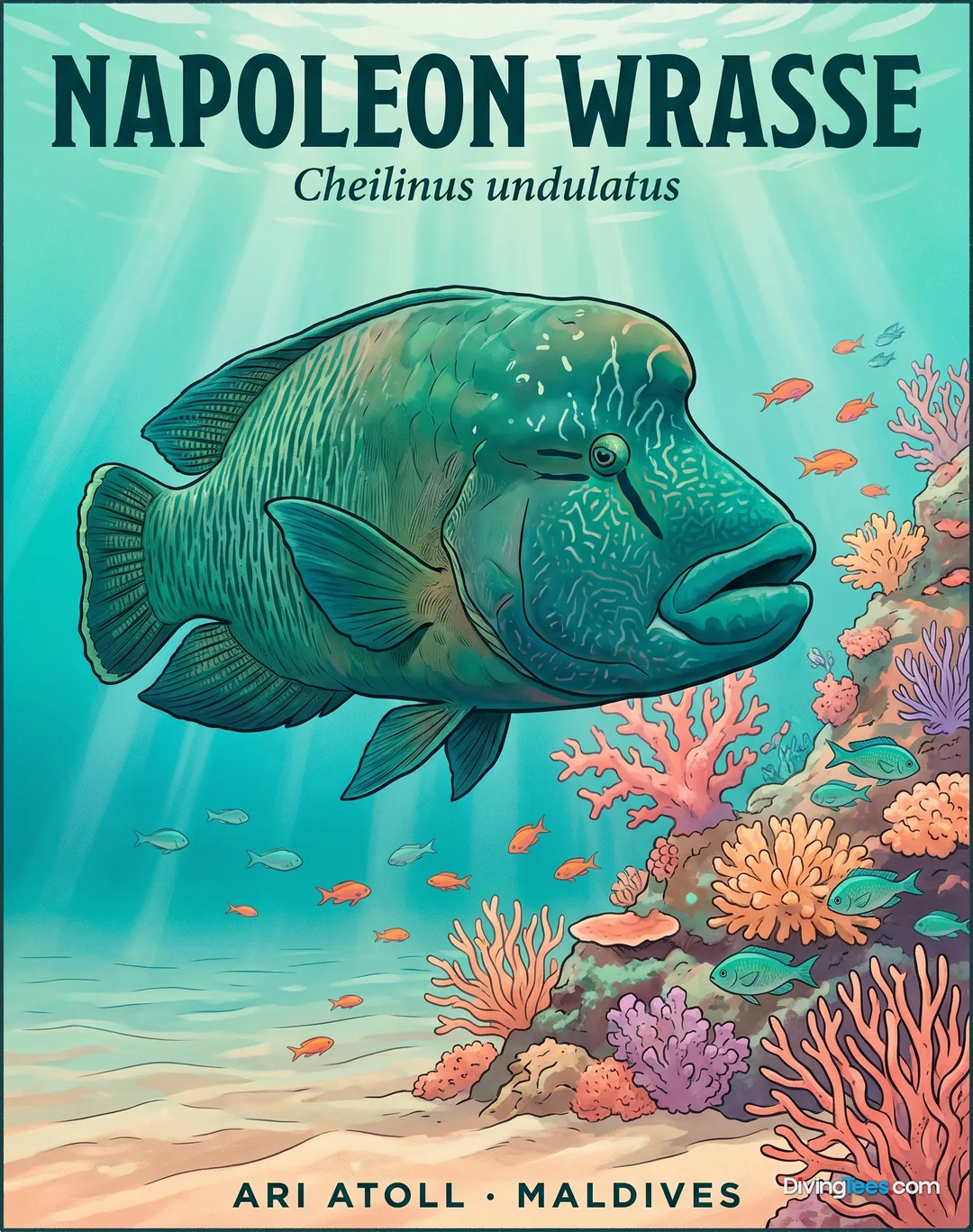
- Opportunities to see dogtooth tuna and Napoleon wrasse
- Distinctive shallow rock formation for safety stops
For subtitles in English: start the video firstthen click the gearat the top right of the video, select “Subtitles/CC”, then “Auto-translate” and choose “English”.
Amos Rock about the site
Amos Rock presents a classic Tubbataha wall dive, beginning on a shallow reef cap at 5 to 6 metres, defined by a distinct rock formation. This feature is more than just a landmark; it's a focal point where schools of midnight snapper gather, offering a vibrant starting point for the dive. From this shallow cap, the topography quickly transforms into a near-vertical wall, plunging well beyond recreational dive limits, creating a dramatic backdrop for the entire dive.
The wall itself is a canvas of marine growth, densely encrusted with a diverse array of hard and soft corals. You'll navigate past large gorgonian sea fans and whip corals that project into the blue, providing shelter and hunting grounds for a myriad of reef inhabitants. Along its face, the wall is punctuated by terraces, overhangs, and crevices, which add complexity to the dive profile and serve as habitats for both schooling fish and smaller, more cryptic reef life.
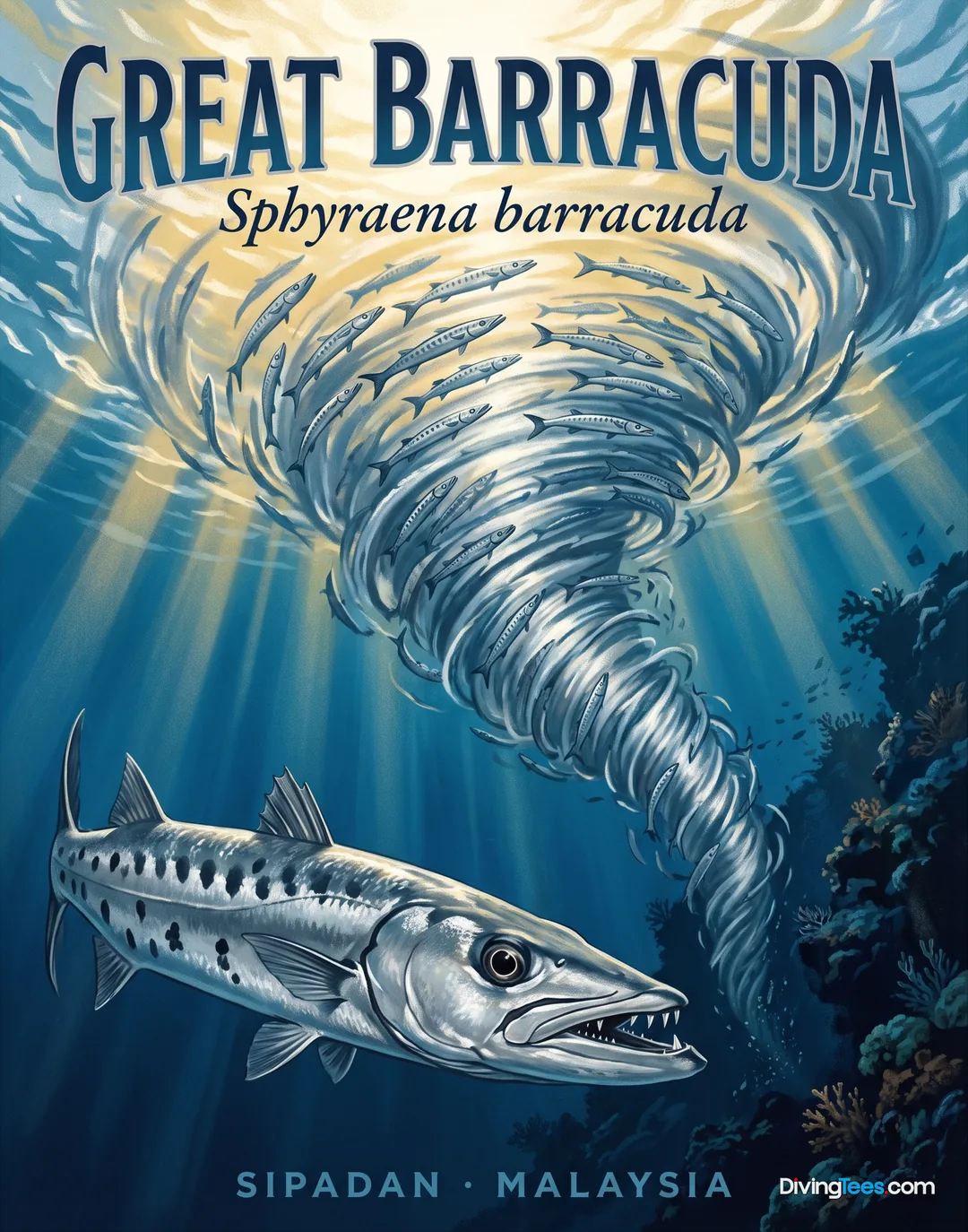
This site is renowned for its pelagic encounters, with constant activity in the blue water off the wall. You can expect to see large schools of midnight snapper, along with larger predators such as dogtooth tuna, giant trevally, and various barracuda species, including pickhandle and great barracuda. These larger fish often patrol the wall's edge, interacting with the prevailing currents that bring nutrient-rich water through the area.
Beyond the schooling fish, Amos Rock offers regular sightings of iconic pelagic species. Grey reef sharks and whitetip reef sharks are common inhabitants, cruising the depths, while sea turtles glide along the wall or rest on its ledges. The site's position within Tubbataha Reefs Natural Park ensures a rich and diverse ecosystem, supporting a healthy population of both resident and transient marine life.
The current at Amos Rock is a defining feature, often strong and sometimes unpredictable, making this a drift-style dive suited for those comfortable in moving water. These currents vary with tidal movements and seasonal winds, such as the Amihan. When conditions are particularly strong, or during specific weather patterns, Amos Rock can serve as an alternative to other, more exposed eastern sites within the park, testament to its unique characteristics.
Visibility here is consistently good, often ranging between 20 to 40 metres, allowing for clear views of the extensive wall structure and the active pelagic environment. This clarity, combined with the site's vertical drop and the abundance of marine life, creates an engaging underwater landscape. The light penetrates effectively to significant depths, highlighting the vibrant coral colours on the upper sections of the wall.
The distinctive rock formation at 5 metres on the shallow reef cap, which gives Amos Rock its name, doubles as an ideal location for a safety stop. This area, vibrant with schooling midnight snapper, offers a memorable place to decompress, contrasting with the sheer drop of the main wall. It provides a final opportunity to observe reef life in a relatively protected environment before ascending.
Diving Amos Rock: the marine life you’ll meet
Diving conditions
Amos Rock is a wall dive with depths ranging from 5 to 40 metres, typically explored as a drift dive. Due to strong, sometimes unpredictable currents that can vary with tides and seasonal winds, this site requires an Advanced certification and significant experience with strong current drift dives and deep walls. Visibility is generally excellent, often between 20 and 40 metres. Diving in Tubbataha, including Amos Rock, is exclusively by liveaboard between March and June.