Liveaboards · Thailand
Dolphin Queen — a working wooden liveaboard built around the diving
What makes this boat unique
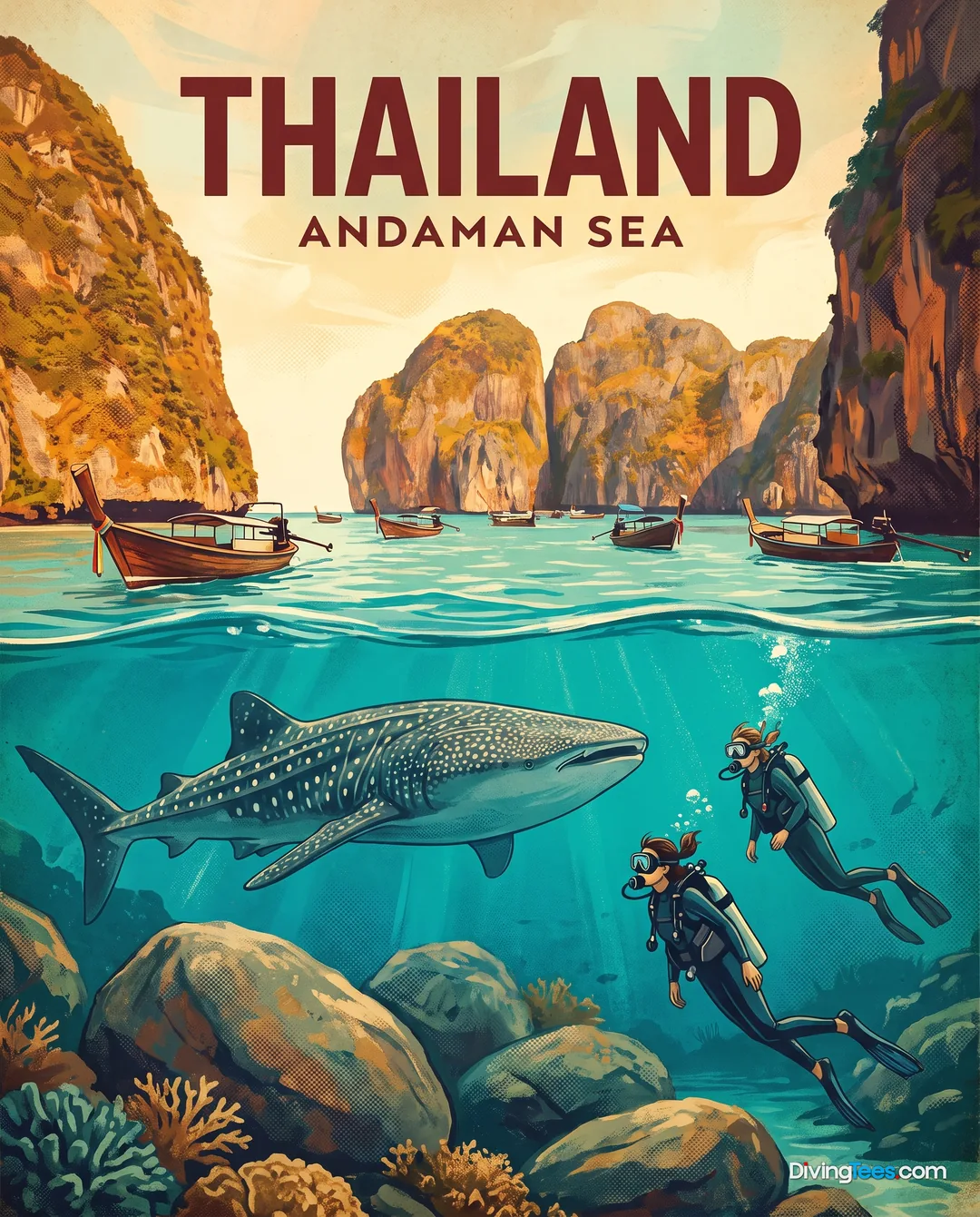
- The Dolphin Queen runs 4-day/3-night and 6-day/5-night safaris from Khao Lak through the Similan Islands, Koh Bon, Koh Tachai, Surin and Richelieu Rock.
- Her 18-dive itinerary uses small groups of four divers with one professional guide and includes dusk or night dives.
- The dive deck has DIN connections, 12-litre Luxfer tanks, two Bauer compressors, a tender, deck showers and a separate camera rinse area.
- All cabins have private air conditioning, opening sea-view windows and 220V sockets.
- Fresh Thai and Western food, vegetarian meals and dietary requests are handled aboard.
For subtitles in English: start the video firstthen click the gearat the top right of the video, select “Subtitles/CC”, then “Auto-translate” and choose “English”.
The invitation
The Dolphin Queen suits divers who want the Similan route in its proper form: from a boat that stays on the sites, not a day boat that spends the day crossing back and forth. The shorter safari reaches the Similans, Koh Bon, Koh Tachai and Richelieu Rock; the longer version adds Surin and gives the route more time underwater. The appeal is practical rather than polished. Small dive groups, guides who know these sites closely and a crew that helps with the heavy work leave the diver to concentrate on currents, granite formations, cleaning stations and the small life tucked into the reef. The boat is best chosen for the diving and the people running it. Food scores particularly strongly, and the crew and diving experience outscore the older hull. That balance matters after several days at sea: the vessel has working character, while the operation around it is attentive and dive-focused.
Boarding
The first impression is of a wooden mono-hull with the purposeful layout of a boat that has spent its life carrying divers rather than posing as a resort. Built in 1999 and renovated in 2008, the Dolphin Queen is no longer new, but it is maintained as working equipment: the hull, engines, generators, compressors, tanks and dive gear are overhauled or serviced before the season. Boarding leads straight into the practical life of the boat. The dining area is open-sided at the stern, the dive platform occupies the rear of the main deck, and stairs connect the cabins, salon and sundeck. There is no long hotel corridor to disappear into. The wheelhouse sits forward, while the crew works close to the gearing-up area and tender. By the second day, the layout is familiar and the people are too. The boat feels compact, busy and made for repeated entries into the water.
The atmosphere on board
The atmosphere comes from a crew that stays close to the diving. Local and international staff speak English and Thai, and the guides work across the major Similan and Surin sites rather than treating the briefing as a script. They help divers gear up, fill tanks and manage entries and exits, then look for the animals people ask about, from nudibranchs and ghost pipefish to larger pelagics. That leaves the guests with less lifting and more attention for the dive itself. The group is small enough that the same faces return at meals, on the platform and at the next briefing. In the evening, the open dining area becomes the common room: dinner, footage review, fish books and conversation, with no need to dress the boat up as something it is not. The Dolphin Queen's hull is older than its crew's reputation. The gain is a personal, dive-centred week rather than a polished hotel experience.
The sites you’ll dive
The route combines granite, limestone, coral gardens and wrecks, with 4-day/3-night and 6-day/5-night departures from Khao Lak. The Similan Islands bring boulder landscapes, channels and swim-throughs: Elephant Head Rock reaches -60m, with arches, tunnels and caverns where reef sharks and schooling fish move through; Deep Six reaches -50m across stacked granite boulders and walls; West of Eden reaches -40m beneath soft corals and gorgonians. North Point reaches -35m, with coral-covered pinnacles and deeper sand where oceanic sharks may pass. Anita's Reef slopes to -35m over coral gardens and sand, while Shark Fin Reef reaches -40m along a granite ridge where leopard sharks may rest. Koh Bon is the manta stop, with a cleaning station on the walls. Boonsung Wreck, an old tin dredger, reaches -18m and is so dense with fish that the surface can disappear. Koh Tachai Pinnacle reaches -40m in current-swept water, and the 85-metre King Cruiser Wreck reaches -35m. Surin reaches -25m among hard coral gardens. Richelieu Rock completes the longer route.
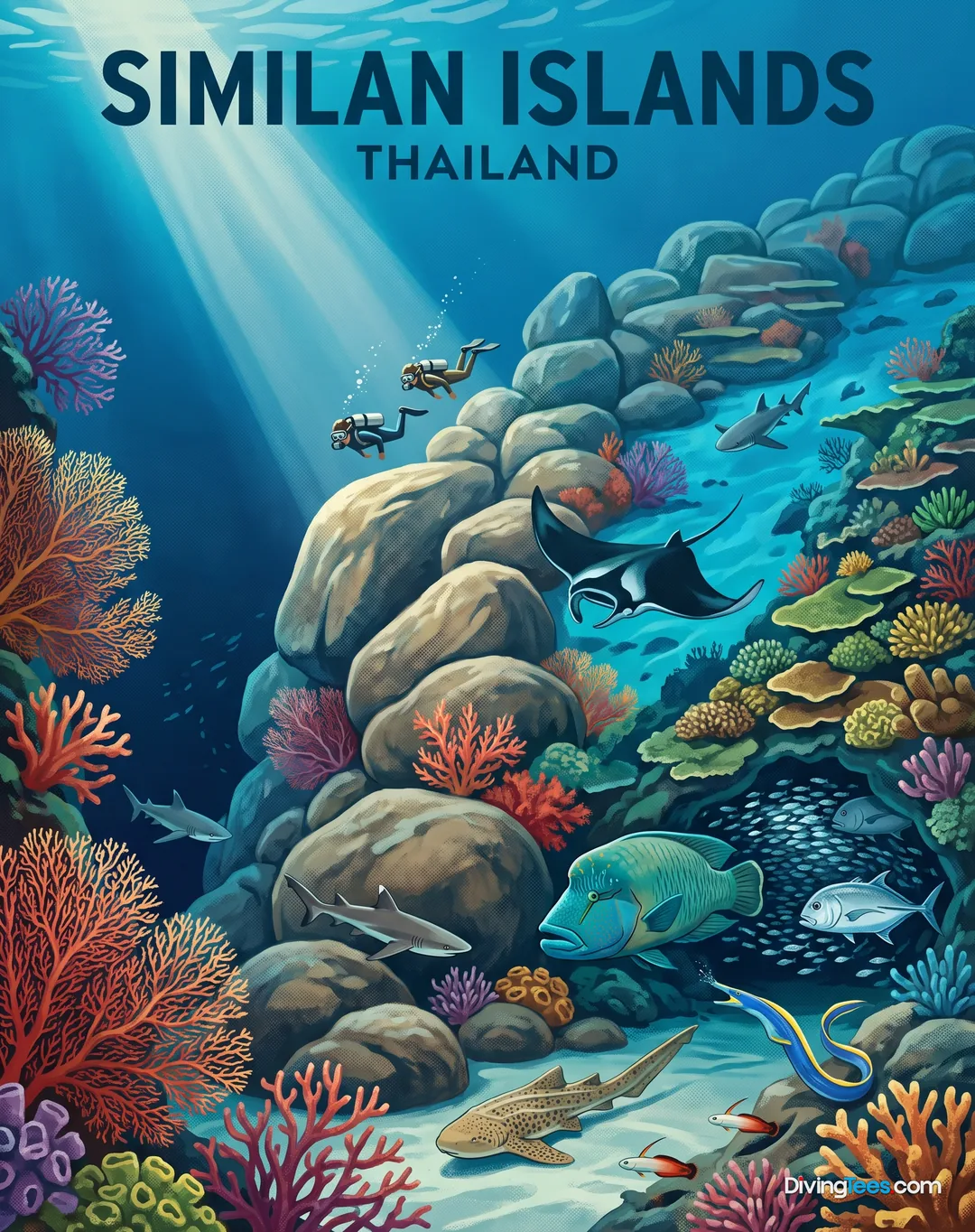
Similan Islands →
Max. depth · 40 m
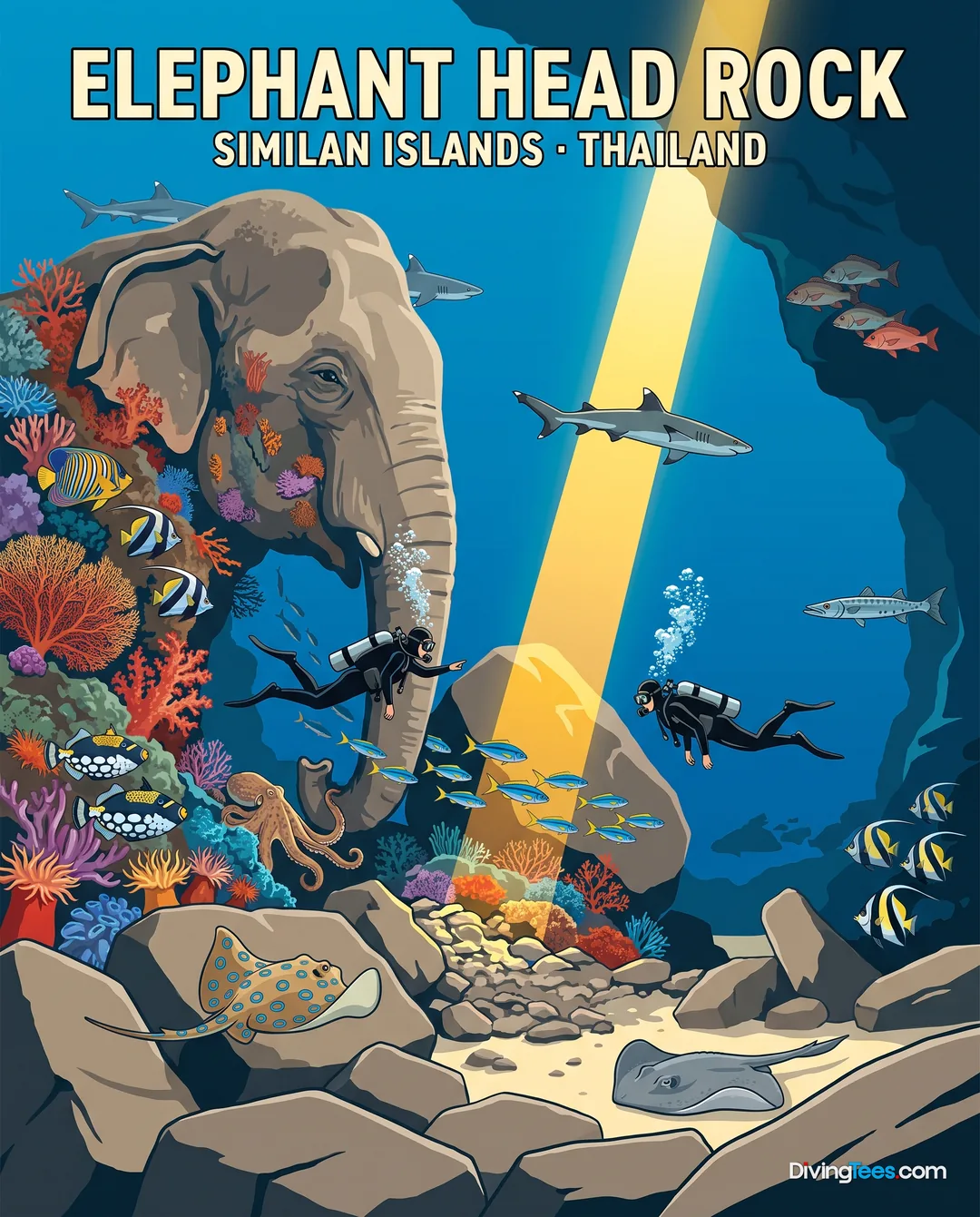
Elephant Head Rock →
Max. depth · 60 m
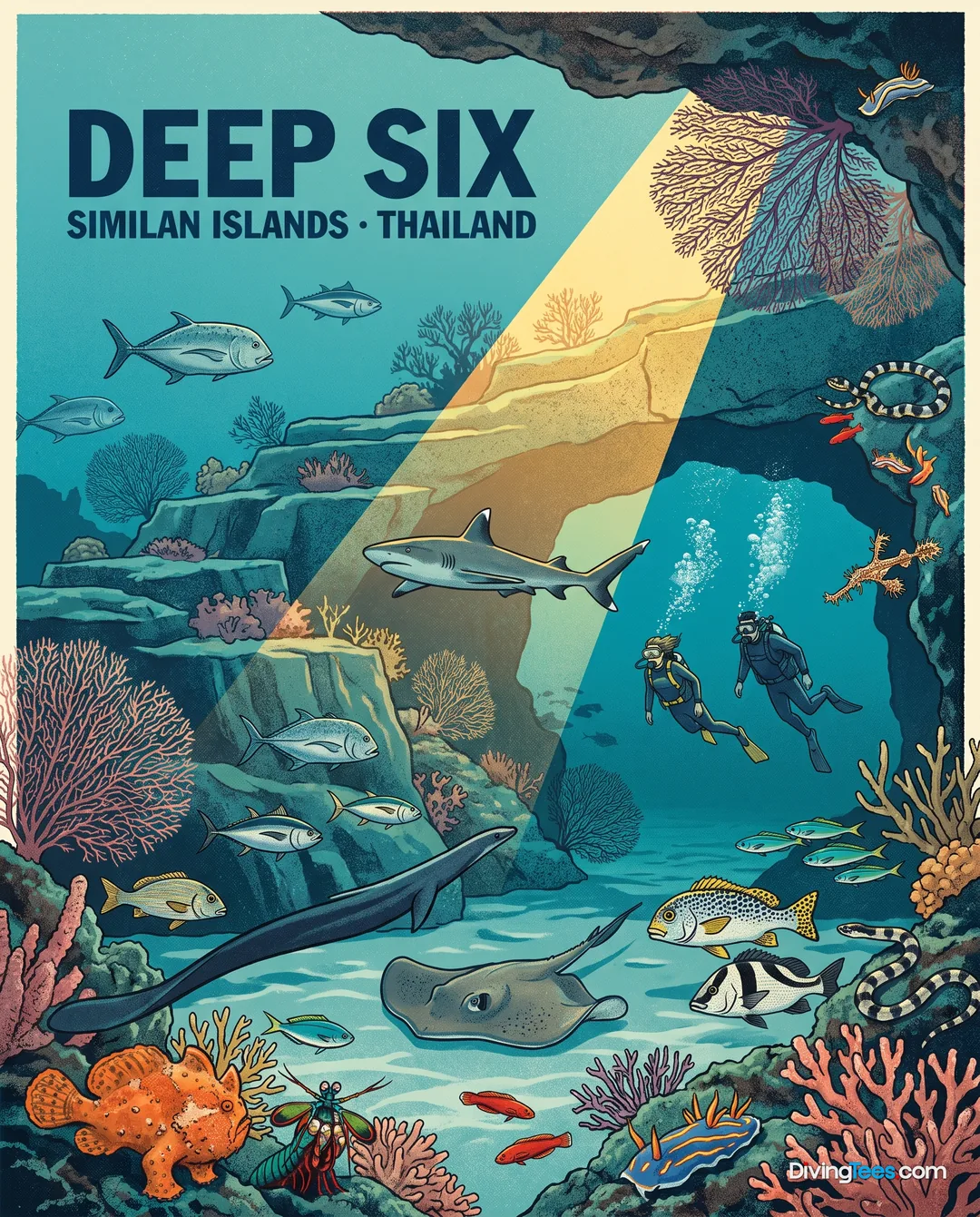
Deep Six →
Max. depth · 50 m
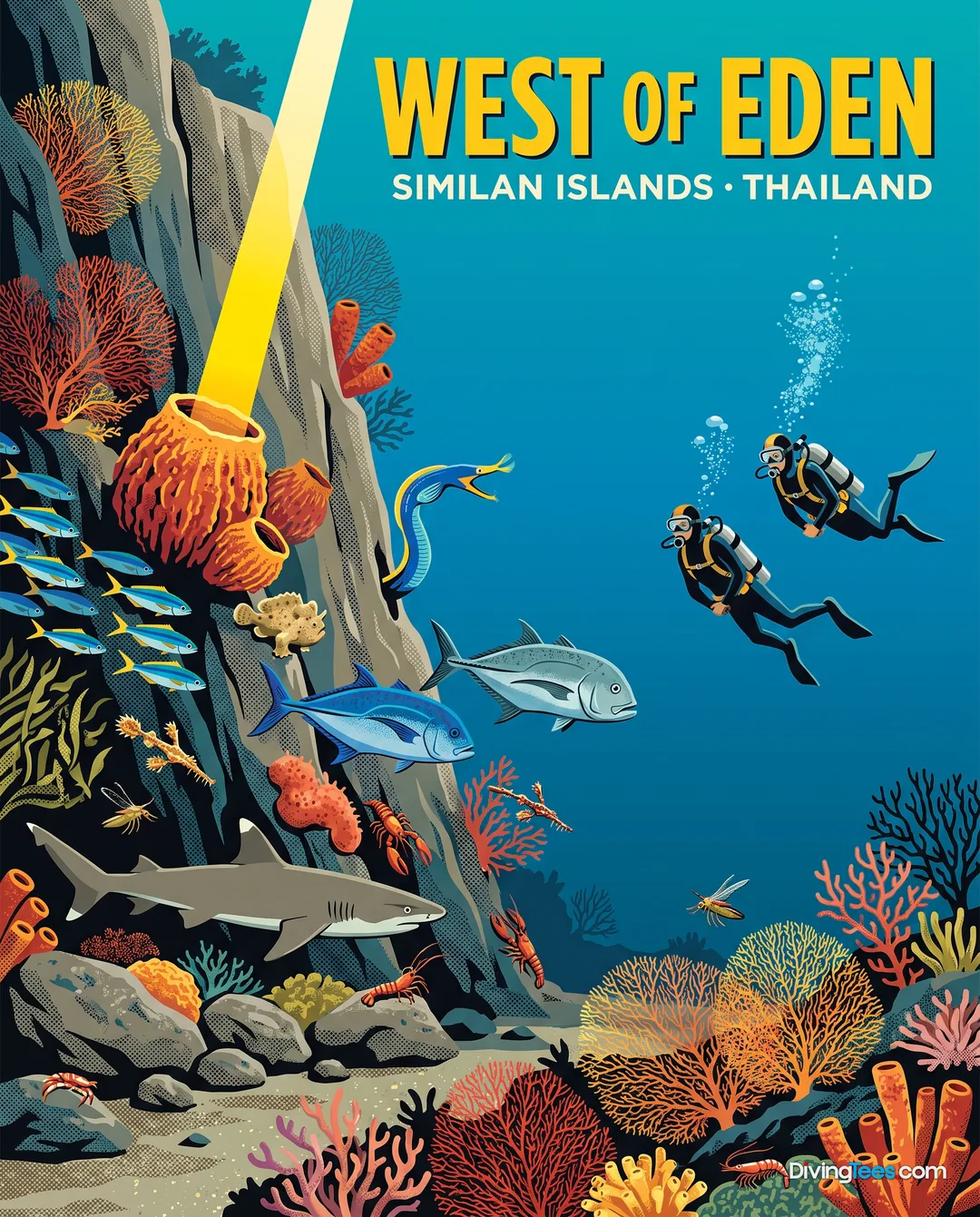
West of Eden →
Max. depth · 40 m
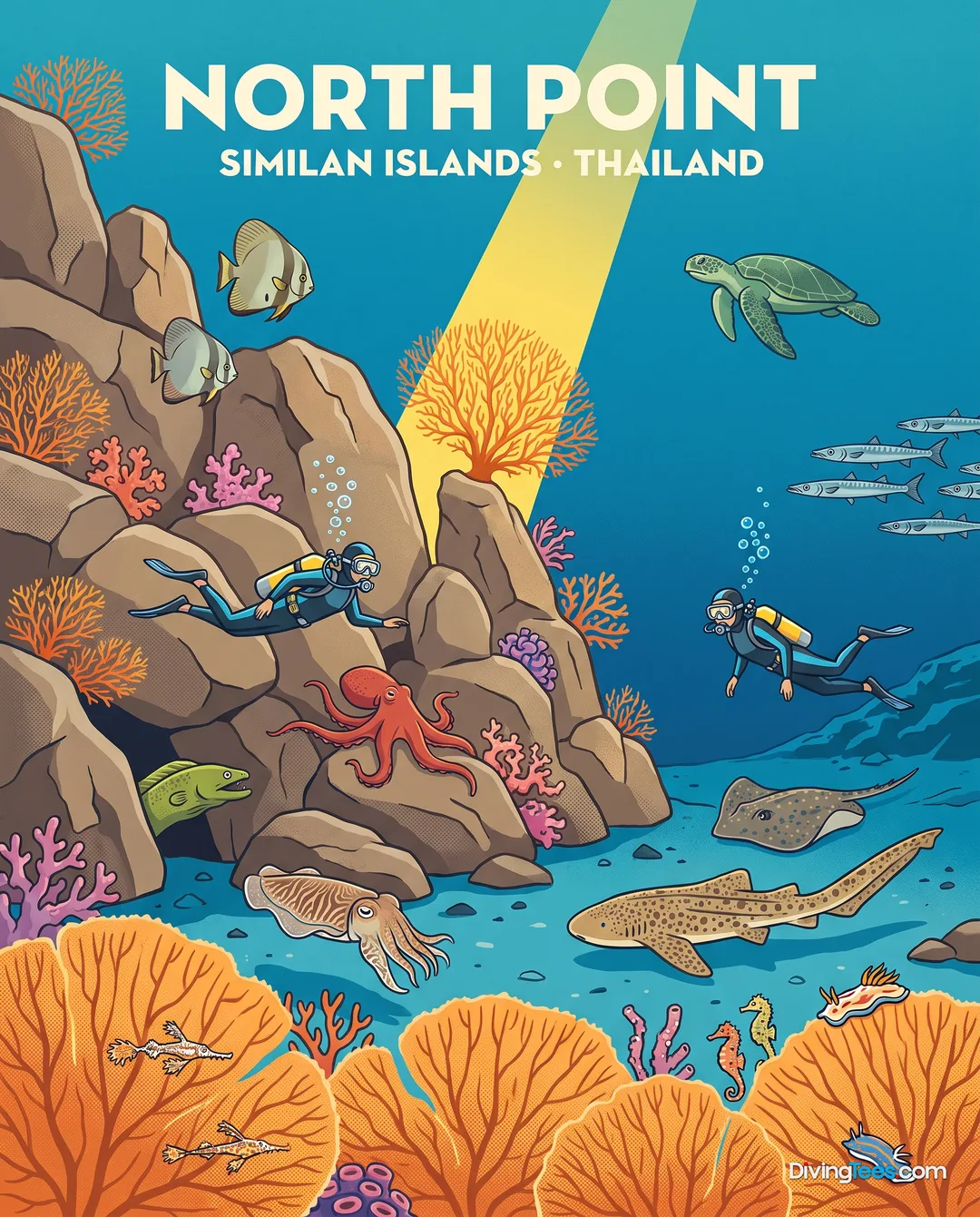
North Point →
Max. depth · 35 m
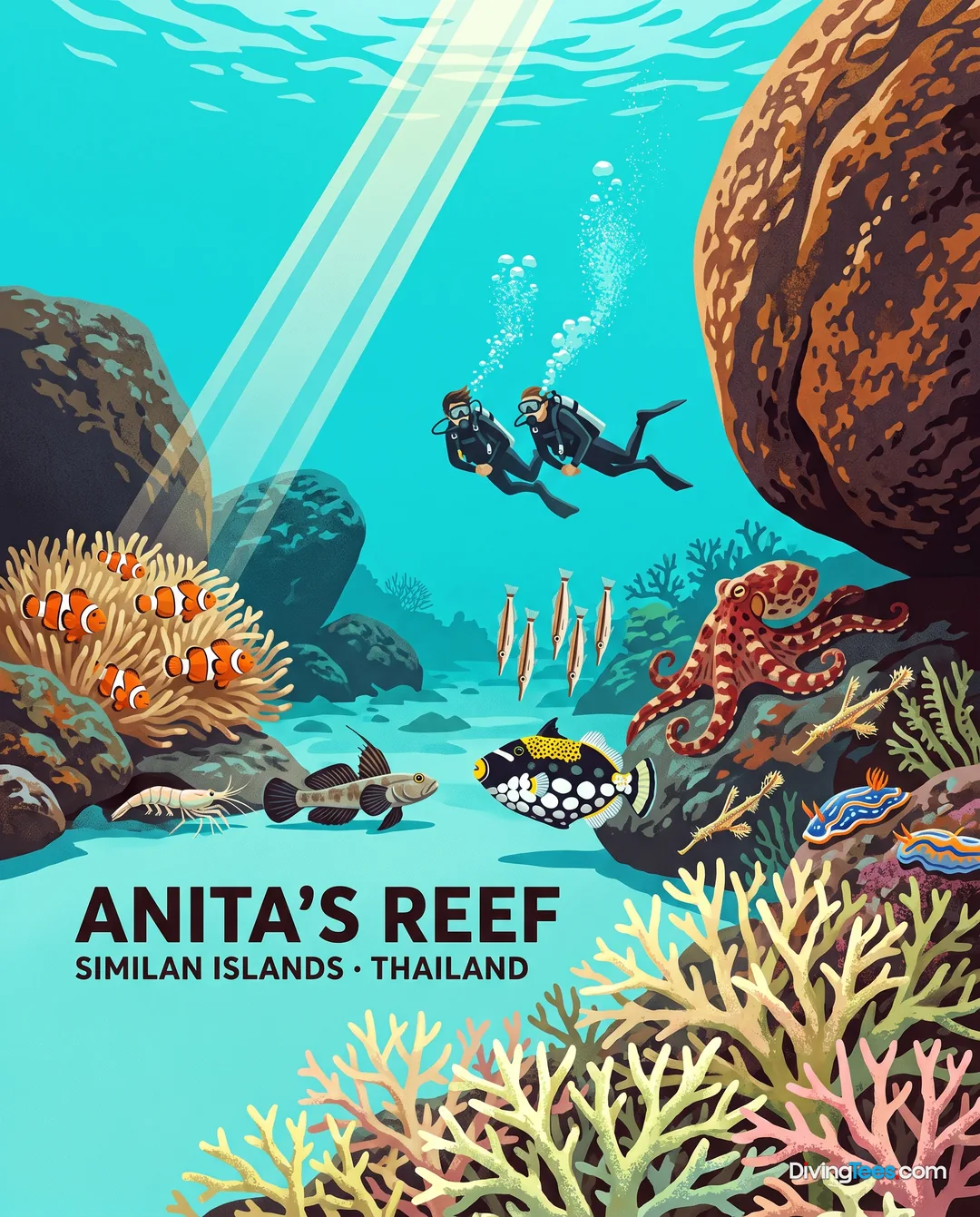
Anita's Reef →
Max. depth · 35 m
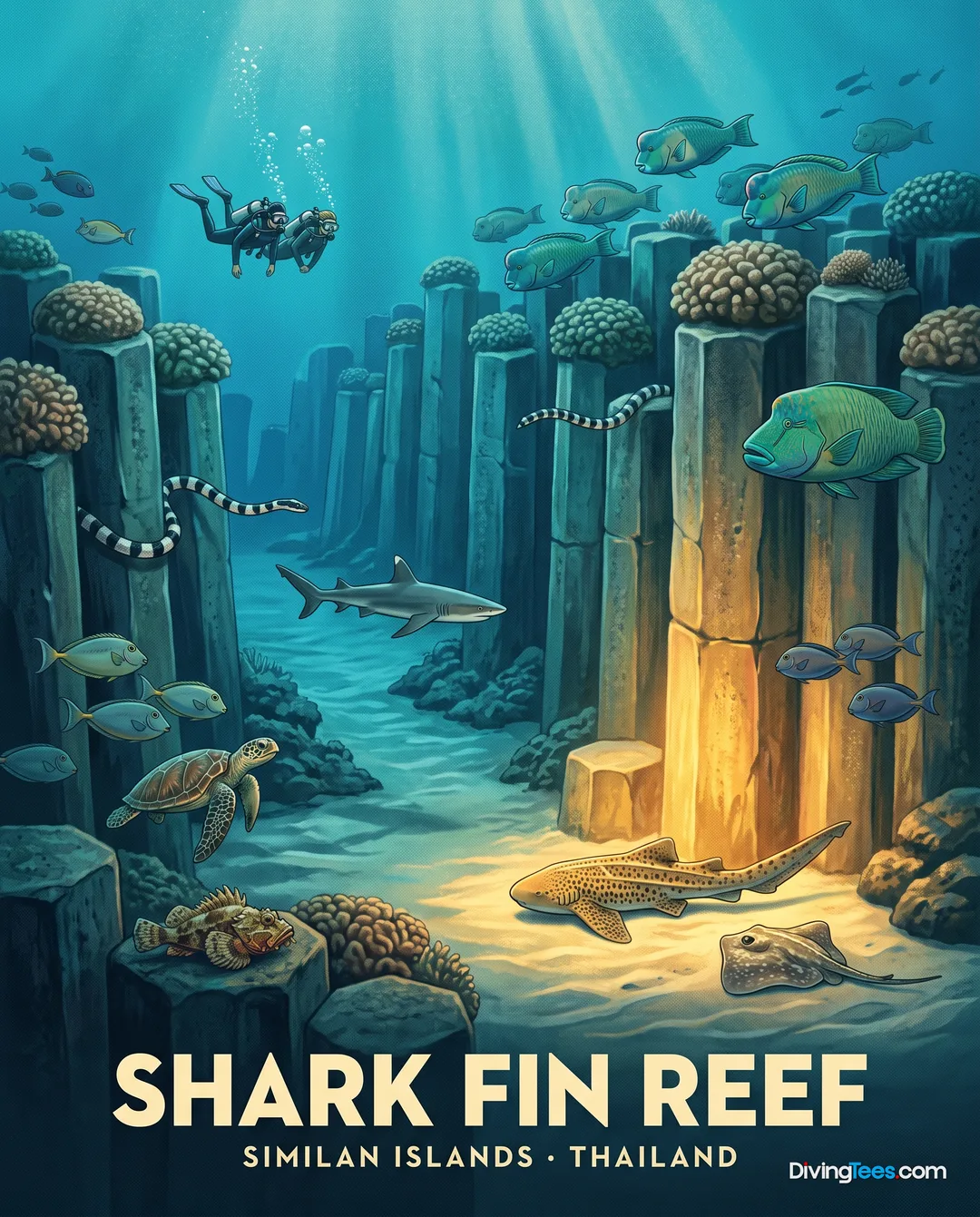
Shark Fin Reef →
Max. depth · 40 m
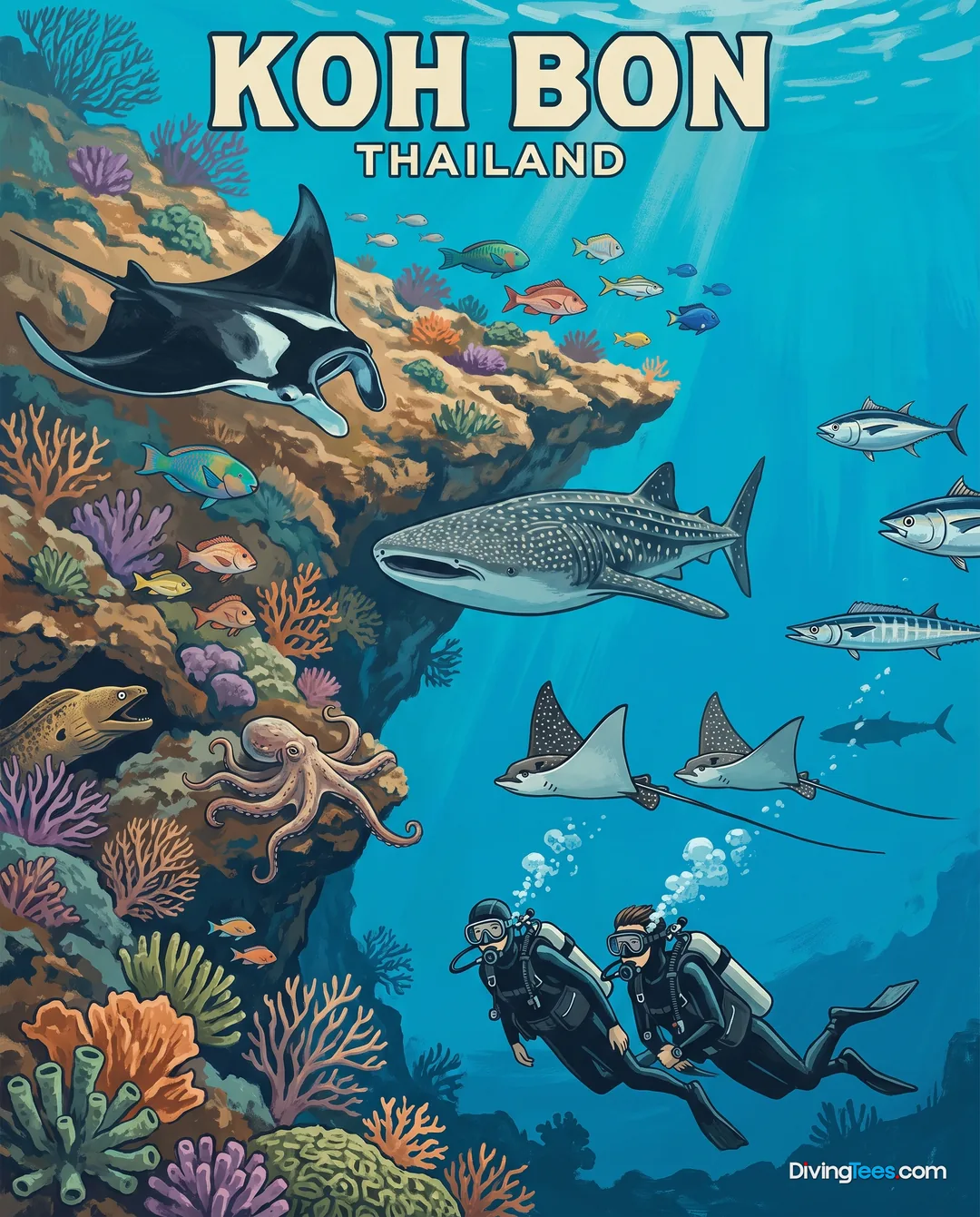
Koh Bon →
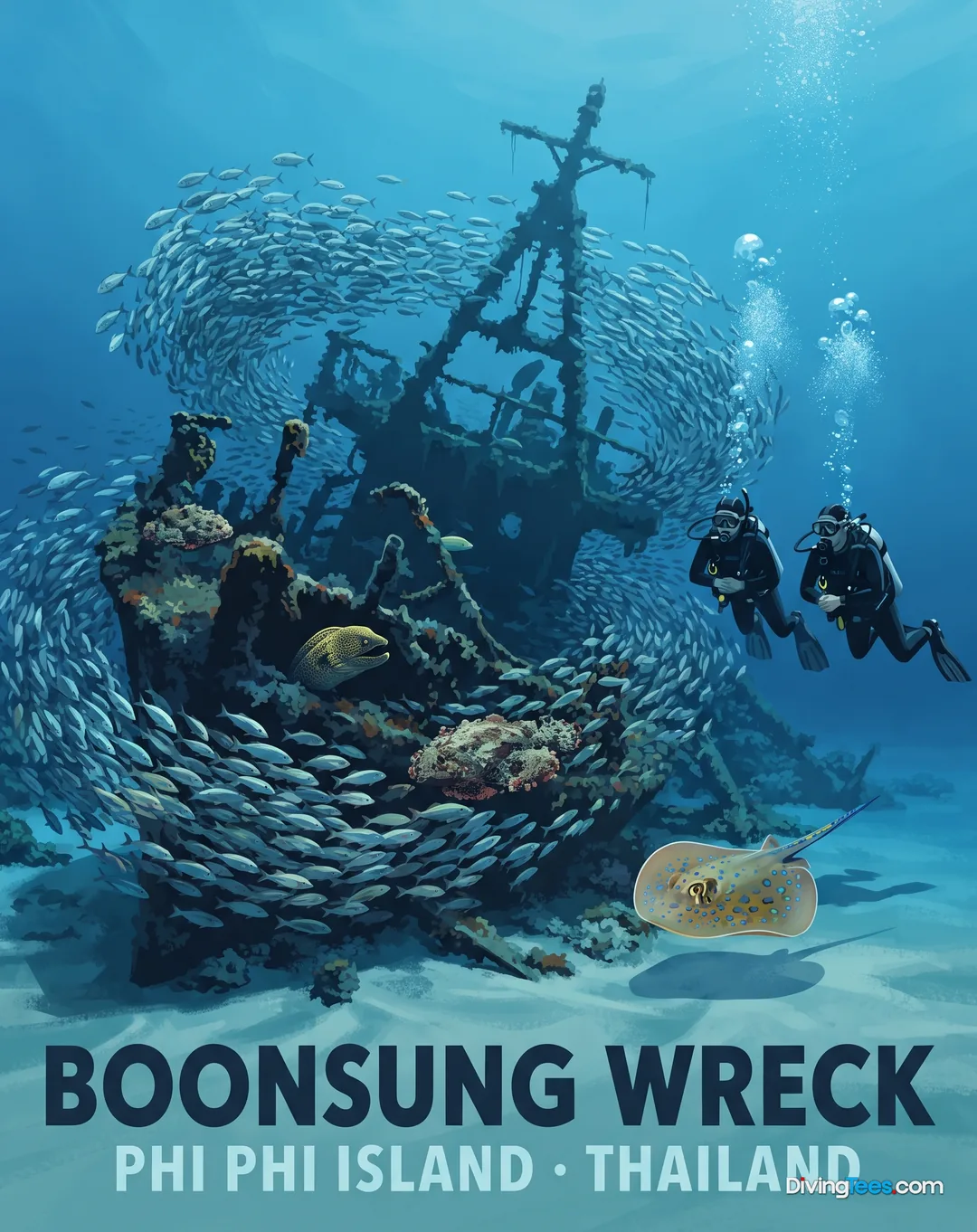
Boonsung Wreck →
Max. depth · 18 m
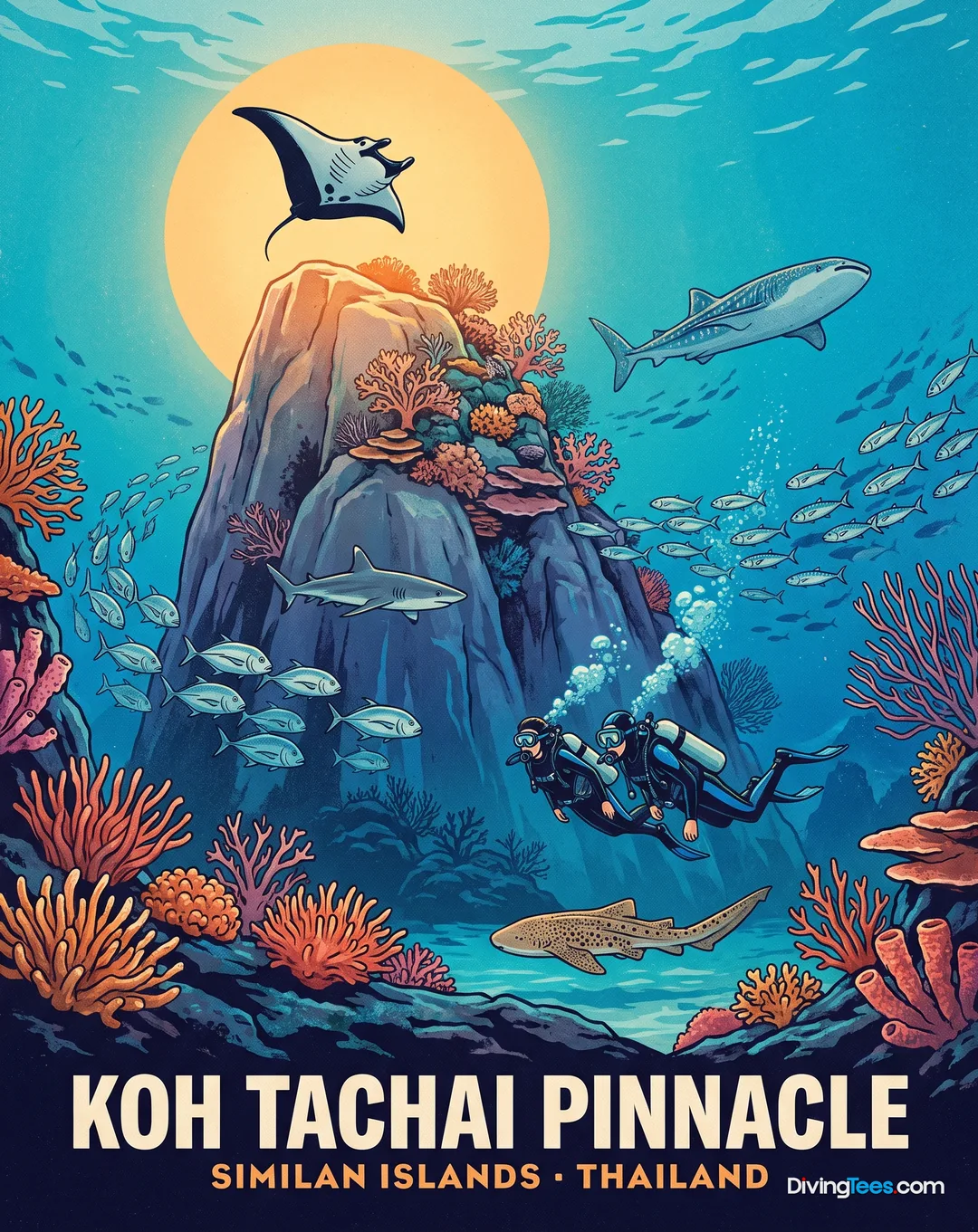
Koh Tachai Pinnacle →
Max. depth · 40 m
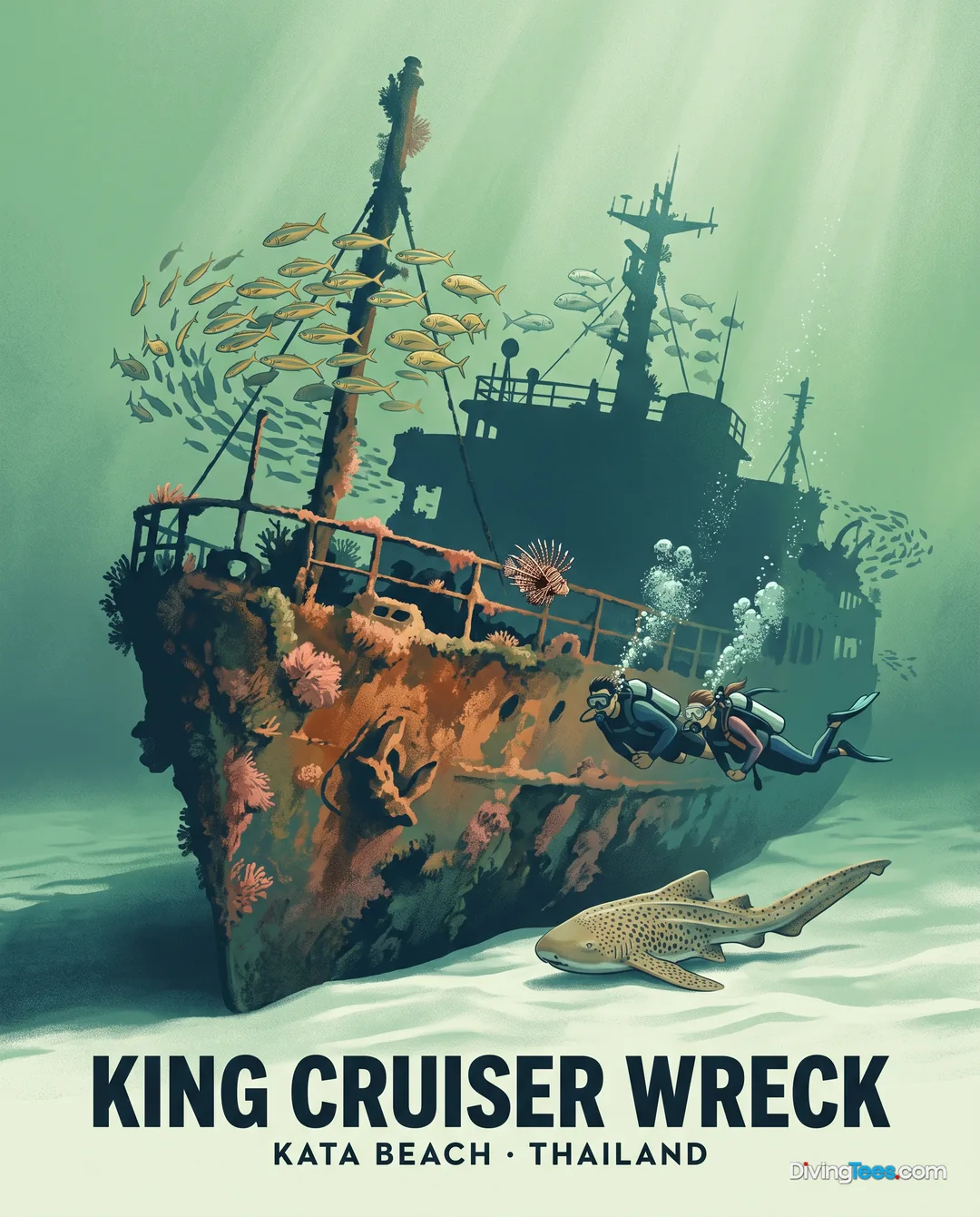
King Cruiser Wreck →
Max. depth · 35 m
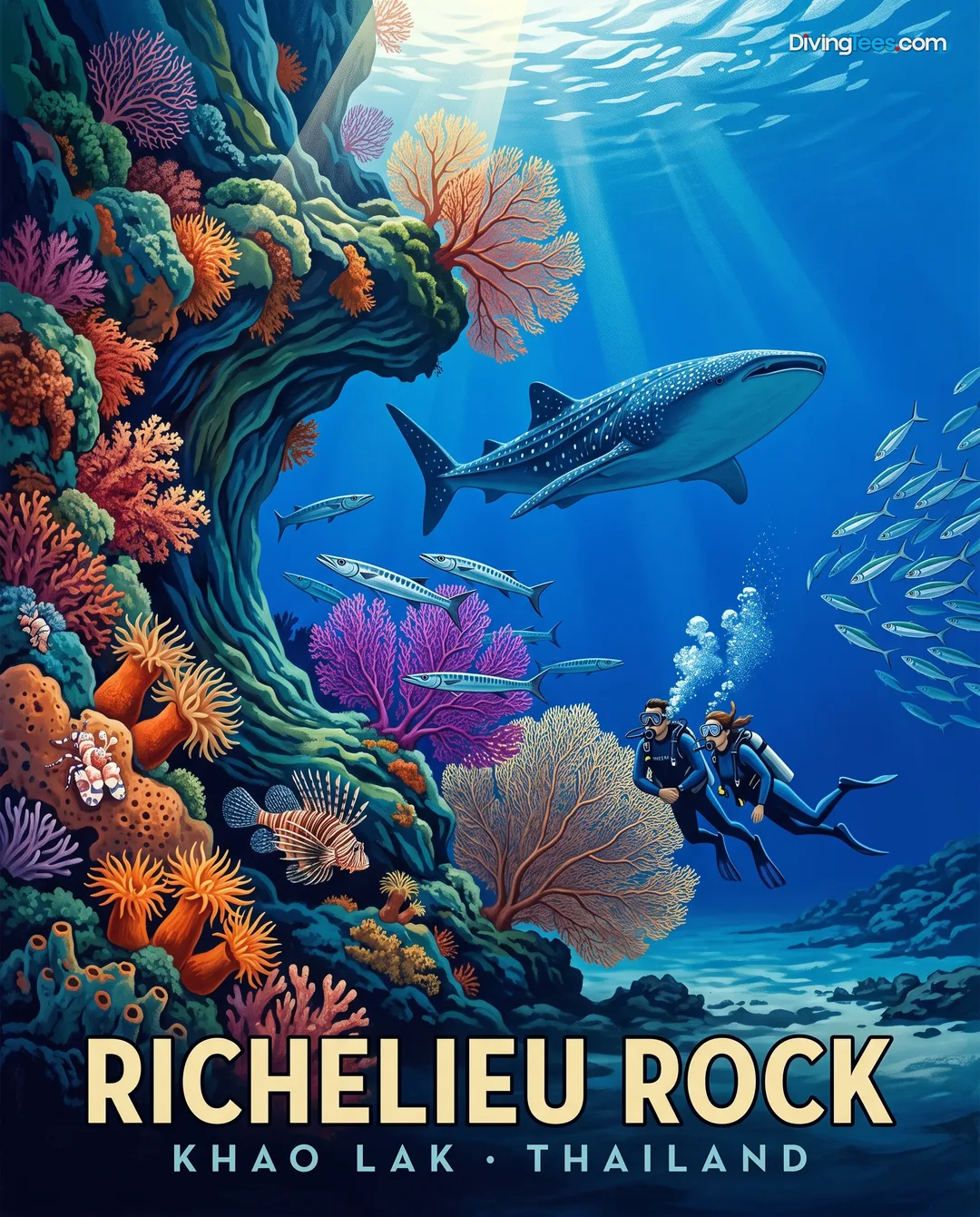
Richelieu Rock →
Max. depth · 35 m
What you’ll meet underwater
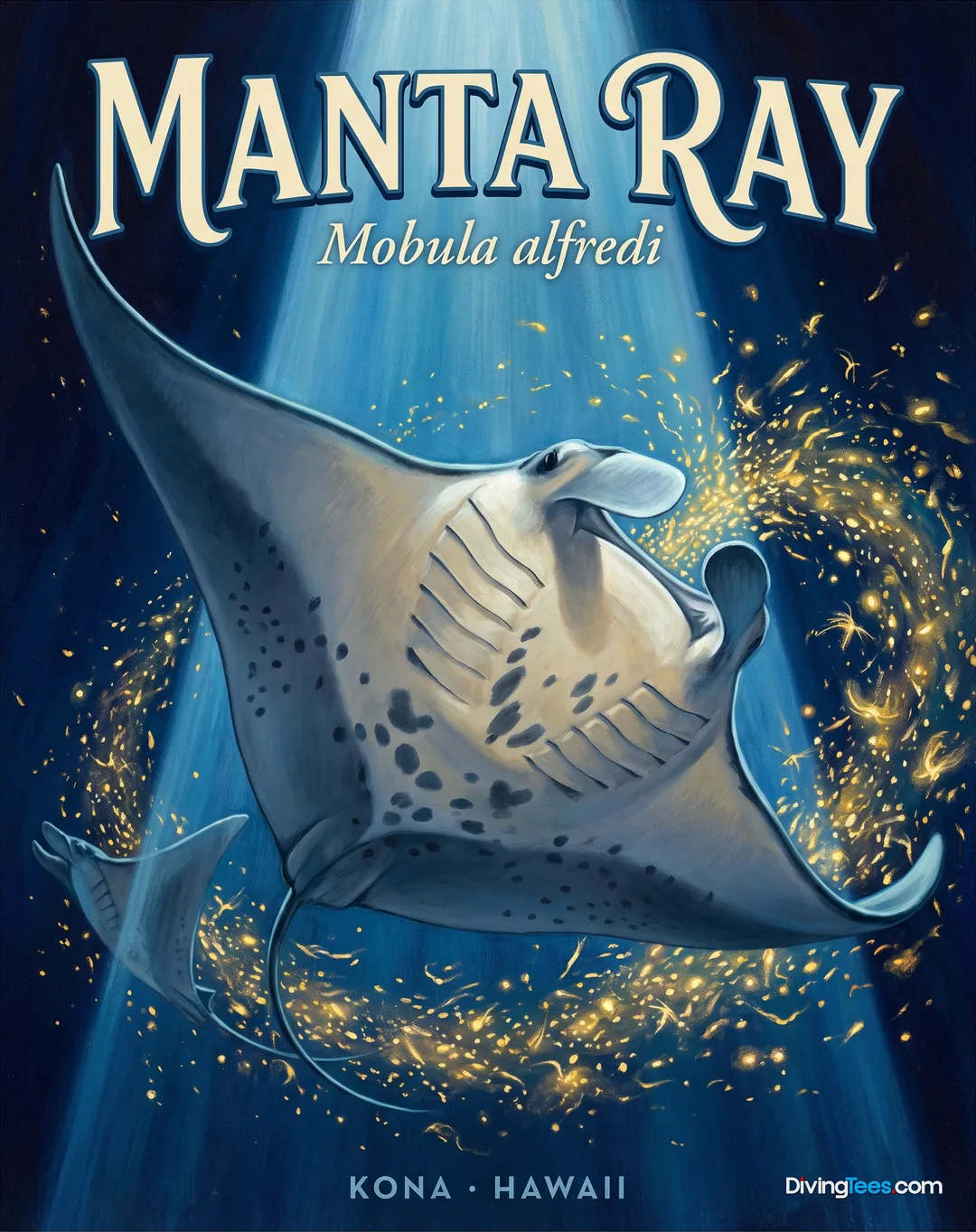
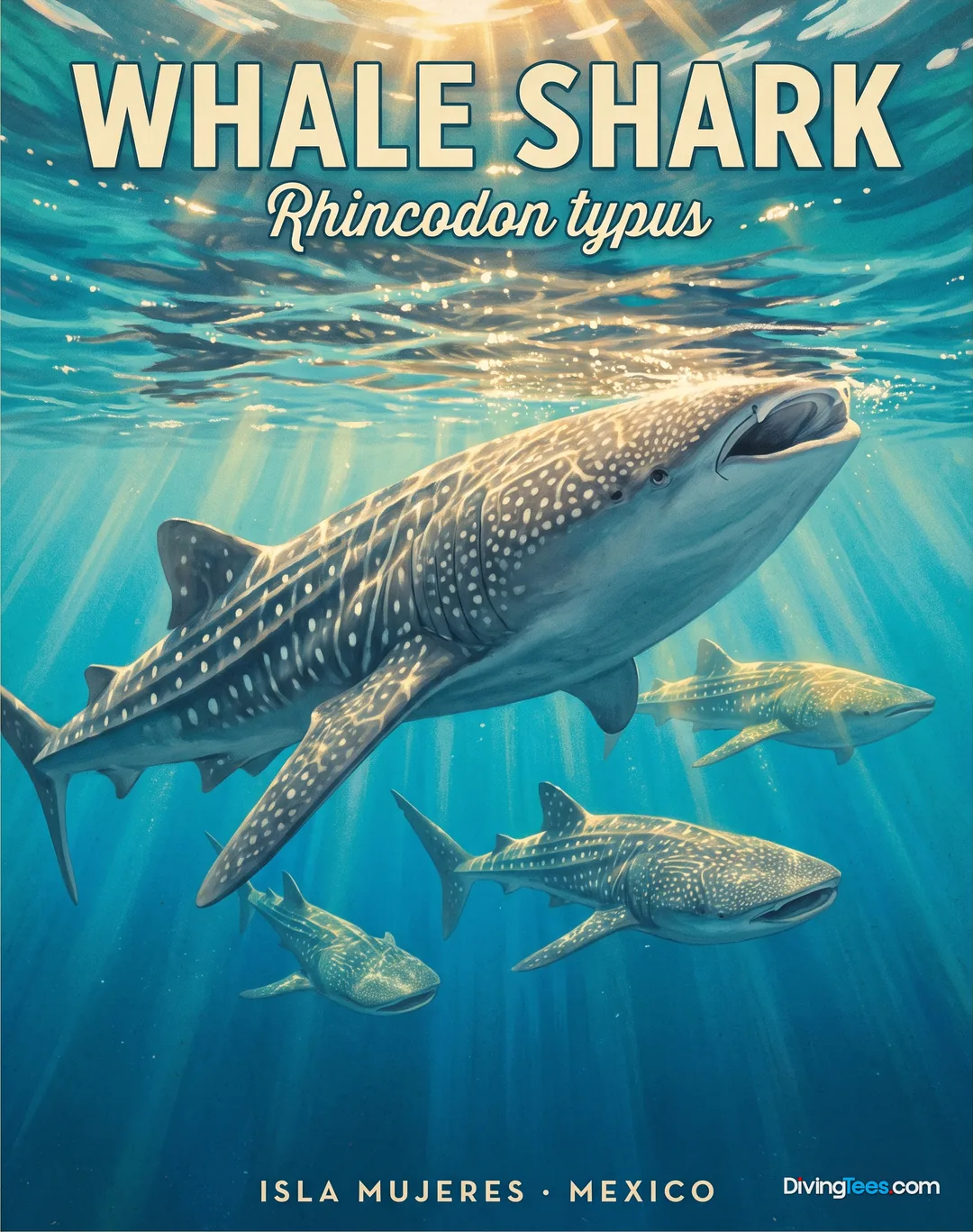
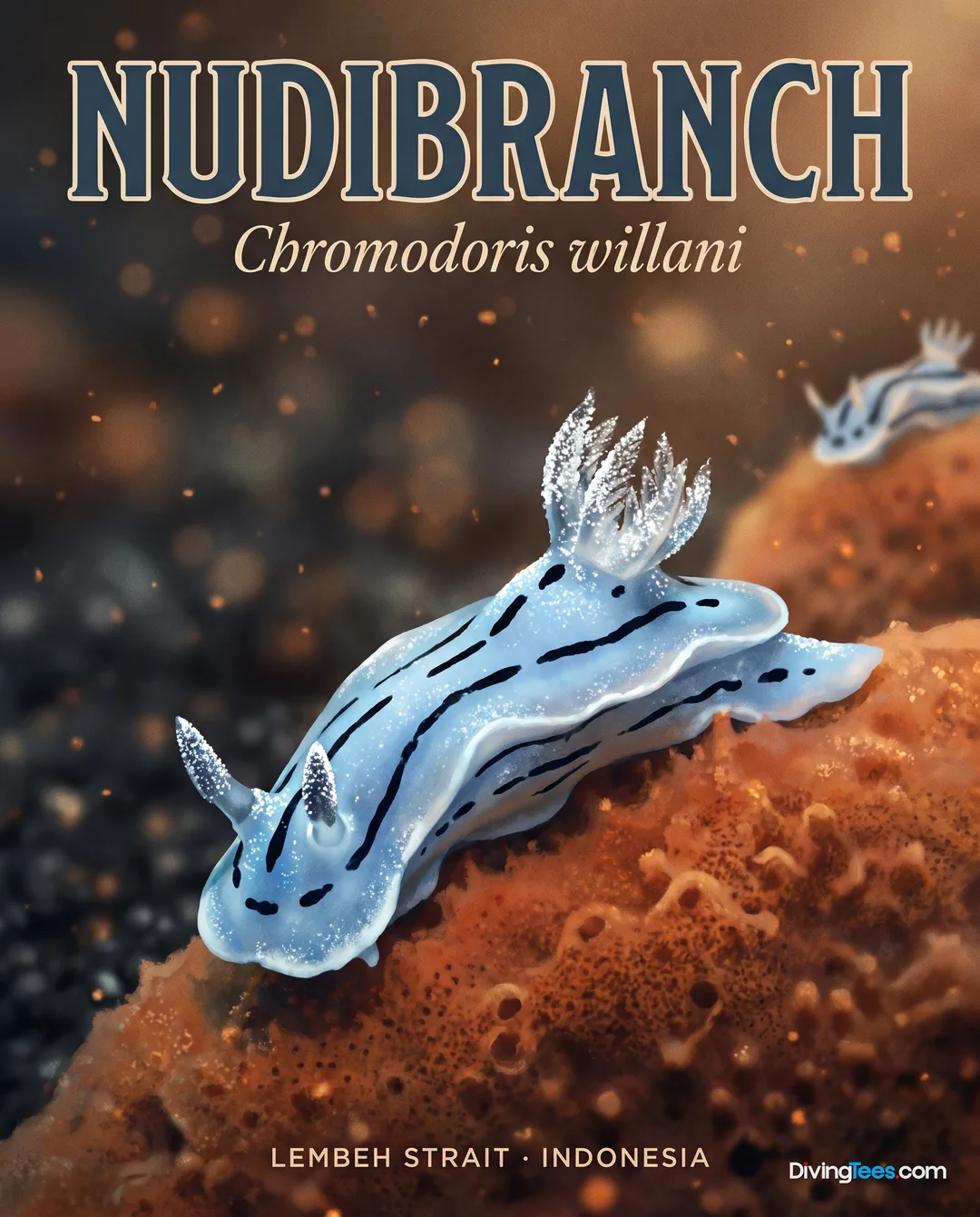
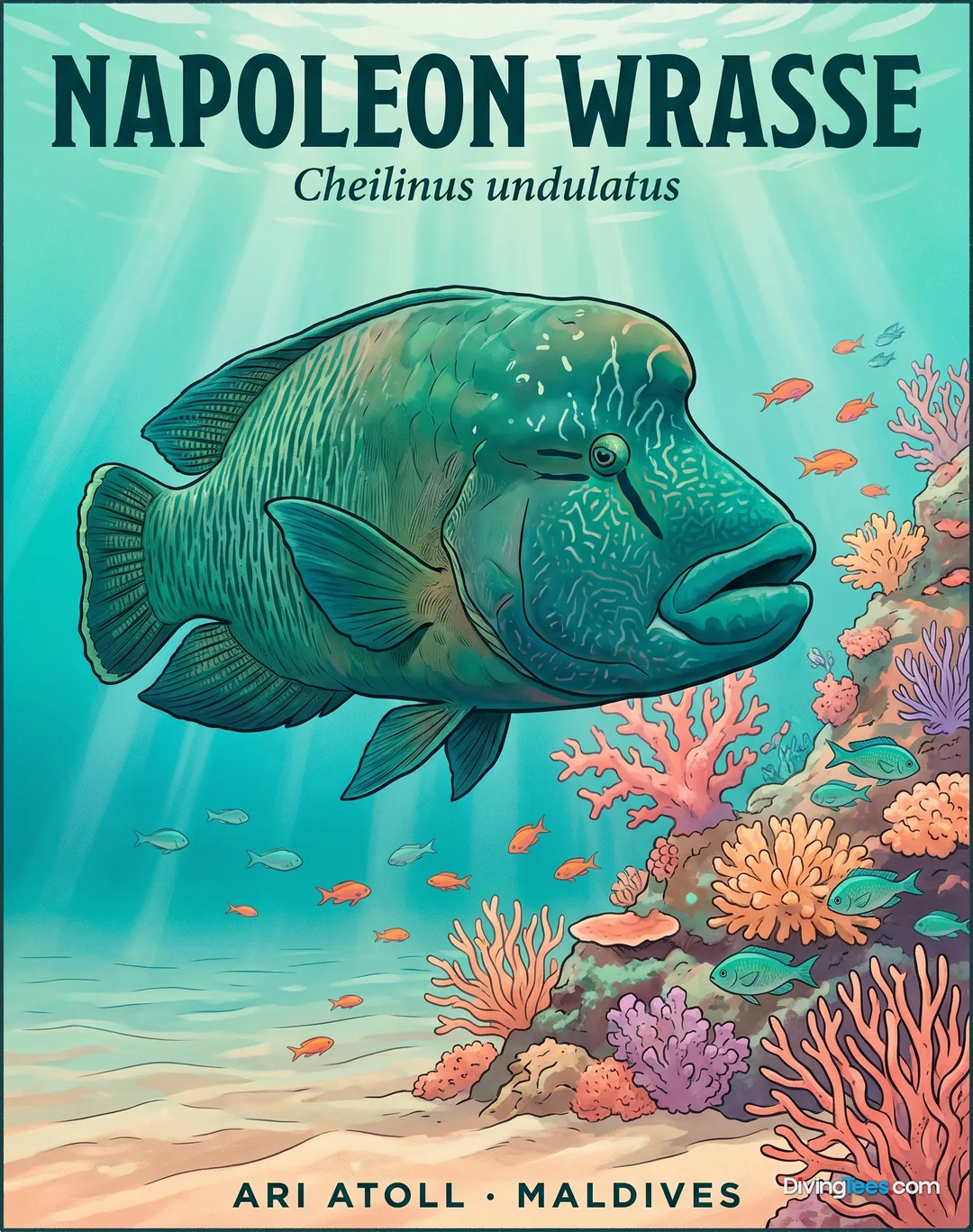
The route is built for large animals, but it rewards looking close. Barracuda and reef sharks are recorded across ten sites, white-tip reef sharks across nine, while tuna, leopard sharks and turtles appear across much of the route. Napoleon wrasse, whale sharks and manta rays are also recurring possibilities, and Koh Bon's cleaning station is the place to settle and watch a manta make repeated passes while smaller fish work over it. Currents at the pinnacles can pull in trevally, tuna and sharks, while the boulder sites give reef sharks shelter among arches and sand. Nudibranchs are recorded at twelve sites, alongside morays and octopus. The single-site sightings give certain dives a sharper purpose: Boonsung Wreck is where a stonefish and porcupinefish are recorded; Elephant Head Rock is the place for triggerfish; Deep Six for blennies; King Cruiser Wreck for bamboo sharks and eels; Christmas Point for anemones and sharks. None is guaranteed. That is why the guides' search matters.
Who puts you in the water
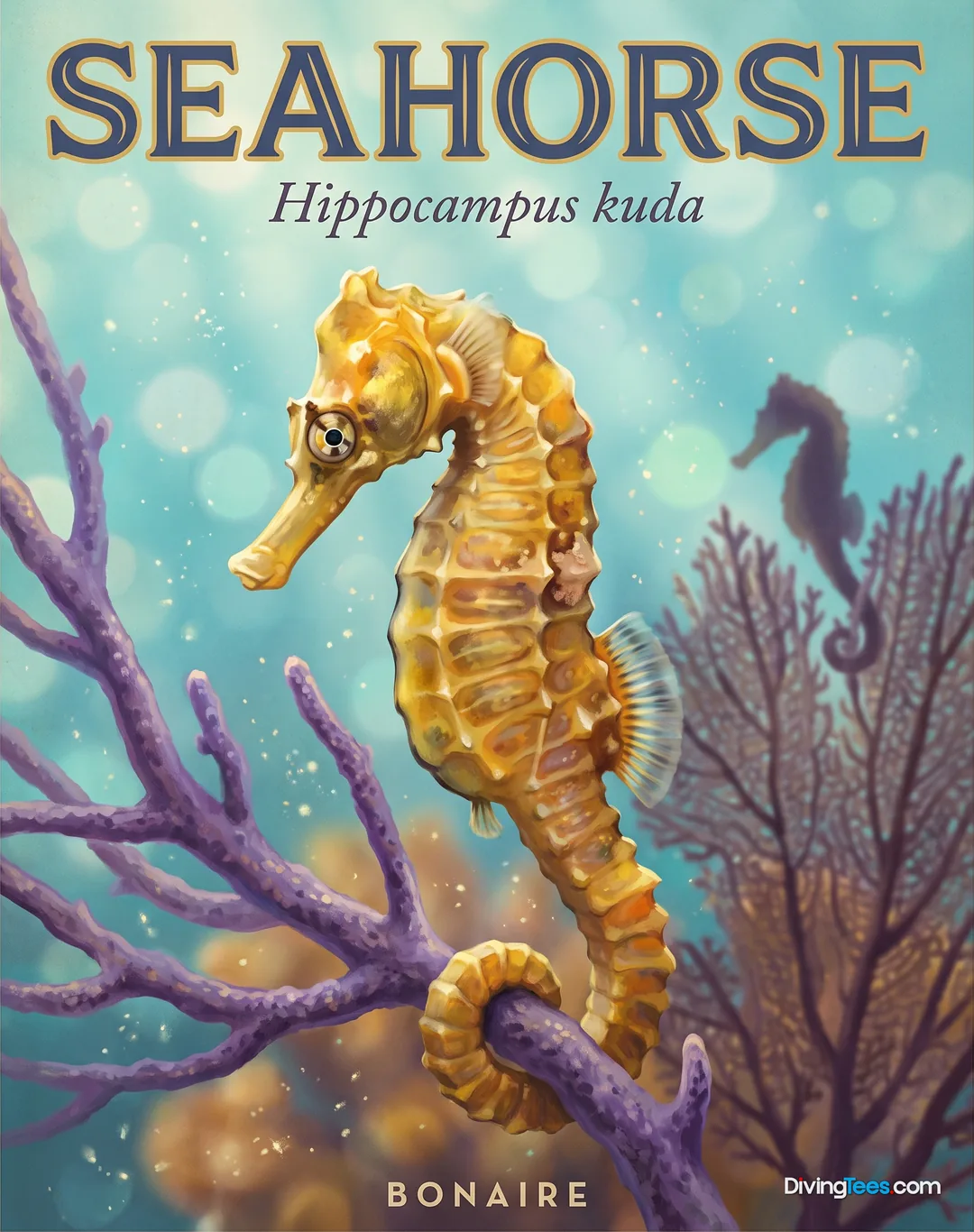
Dive groups are kept to four divers with one professional guide. Before every dive, the guide gives a site and safety briefing, and the dives are run as multilevel profiles with every diver paired with a buddy. Guides carry computers and know the route well enough to adapt the search to the request: a seahorse, ghost pipefish or nudibranch may take more attention than a passing shark. English and Thai are spoken aboard, with international instructors supporting courses in several European languages. The Dolphin Queen runs PADI Open Water, Advanced Open Water, Nitrox, Emergency First Response, Rescue Diver and Divemaster training. Open Water students work progressively to 12 metres and then 18 metres; Advanced Open Water training opens dives to 30 metres. Divemaster candidates must be at least 18, hold Rescue Diver or equivalent, have at least 40 logged dives and current CPR and first-aid training. Oxygen, first-aid kits, fire equipment, communications and trained first-aid crew are carried aboard.
The dive deck and the gear
The dive platform is arranged for repeated use, with a dedicated gearing-up area and room to store dive equipment. The standard tanks are 12-litre Luxfer cylinders using DIN connections; DIN adapters and 15-litre tanks are available to rent. Two Bauer Mariner II compressors fill the tanks, using air cooling and P41 air filters. Nitrox is available as a paid extra, and the boat has a blending station; certified divers can analyse their own tanks after the Nitrox course. The crew fills the tanks, so the diver's job is to check the set, clip in and get wet. A tender collects divers when the profile or current carries them away from the platform, while the crew assists with both entries and exits. Two deck showers make the return less salty before the next meal. Cameras have a separate rinse area, and charging is available in the cabins. Rental BCDs, regulators, dive computers, torches and other equipment are available; the boat uses DIN.
Between dives
Between dives, the best place is usually the shaded part of the sundeck or the open-sided dining area at the stern. Hammocks and deck chairs make room for a proper surface interval, while the dining tables double as a place to read, sort a camera or look through fish-identification books in several languages. The sundeck gives a wide view over the crossing, and it is the place to watch for dolphins, manta rays or whale sharks while the boat moves to its next site. The salon has a television and DVD player for reviewing footage from the trip, but the boat does not force entertainment into every quiet hour. There is also a small pleasure in the practical movement of the day: wet gear drying, tanks being filled, guides checking the next site and divers deciding whether the next interval belongs in the shade or under the sun.
A day on board
A long day starts before sunrise with the wake-up call, the first briefing and the first dive. On the main schedule, the first entry is at 7:00, followed by breakfast and a long surface interval; the second dive comes at 11:00, lunch follows, and the third dive is at 15:00. A snack bridges the afternoon interval before the fourth entry at 19:00, either a dusk or night dive depending on the day. Dinner comes after the last diver is back on deck. On alternate days, the first dive moves earlier to 6:45, with the next entries at 10:30 and 14:30, then a dusk dive at 17:30. The final day is shorter: two morning dives, breakfast between them, then the run back to Thaplamu. Tanks are filled while divers eat, rest, read or watch the water. It is a clear rhythm: briefing, dive, food, sleep, repeat.
What you eat aboard
Breakfast is built around an order list completed before the first dive, so the galley can put the right plate down after divers surface. Choices include fried, boiled or scrambled eggs, omelette, sausage, bacon, ham, French toast, pancakes and Thai rice soup, with bread, oats, muesli, cereals, coffee, tea and tropical fruit available through the day. Lunch and dinner lean into freshly cooked Thai food, with Western dishes also served during the trip. The cook and assistant prepare meals in the galley rather than relying on reheated catering. Vegetarian food and other dietary requests are accommodated, and the kitchen can adjust the chilli. Water, tea, coffee, fruit, snacks and electrolyte sachets keep appearing between dives. That matters on a four-dive day: meals arrive during short surface intervals, and the open dining area gives the group somewhere to sit without changing out of dive-trip mode.
Nights at sea
The cabins are air-conditioned, non-smoking and fitted with sea-view windows that open. That last detail changes the night: the cabin can be cooled without sealing the diver behind glass, and the sea is present as sound and air rather than only as a view. Main-deck options include double, twin and four-berth cabins; the twin and four-berth rooms have curtains around each bed. The two upper-deck double cabins face the sea and are the only rooms where the air conditioning can be switched off for the night breeze. Every cabin has a 220V socket, useful for camera batteries and torches. Space is functional rather than generous, so soft luggage is easier to live with than a hard case. Three shared bathrooms and hot-water showers serve the boat, with additional showers on the dive platform. After a night dive, the route from deck shower to bunk is short. That is the luxury here.
Quad Cabin
Main Deck Twin
Main Deck Double Cabin
Upper Deck Double
What to know before boarding
The Dolphin Queen departs from Thaplamu Pier, directly opposite the Similan Islands, and returns there. Guests must reach the dive center in Khao Lak by 16:30 on departure day for equipment fitting and the boat briefing; the vessel usually leaves at about 20:00. Return is around 16:00 at Thaplamu Pier, with the dive center drop-off taking place between 16:00 and 17:00. Transfers to and from the Khao Lak and Bang Niang areas are included; airport transfer is optional. Arriving in Khao Lak the night before is the sensible choice, leaving time for the center and the pier without turning the departure day into a race.
Deck plan
What the boat does for the ocean
The boat provides biodegradable soap and shampoo, and uses plastic-free water bottles to reduce single-use plastic on board. Biodegradable, reef-friendly sunscreen is available at the dive center and on the boat. Those are small measures, but they are directly part of the liveaboard routine rather than a general conservation claim.
- Year built
- 1999
- Year renovated
- 2008
- Length
- 24 m
- Beam
- 5.5 m
- Maximum number of passengers
- 20
- Number of cabins
- 8
- Number of bathrooms
- 3
- Engines
- 2 × 6-cylinder 315 hp Hino
- Cruising speed
- 10 knots
- Website
- similan-diving-safaris.com ↗
Hello, I'm Marina, DivingDeal.com's AI assistant. I answer in detail about hotels, dive centres and liveaboards.

Thinking about the whole trip and the flights? Talk it over with Edith →
Marina is an AI. Some links are affiliate links: DivingDeal may earn a commission, at no extra cost to you. Bookings are made with the partner.