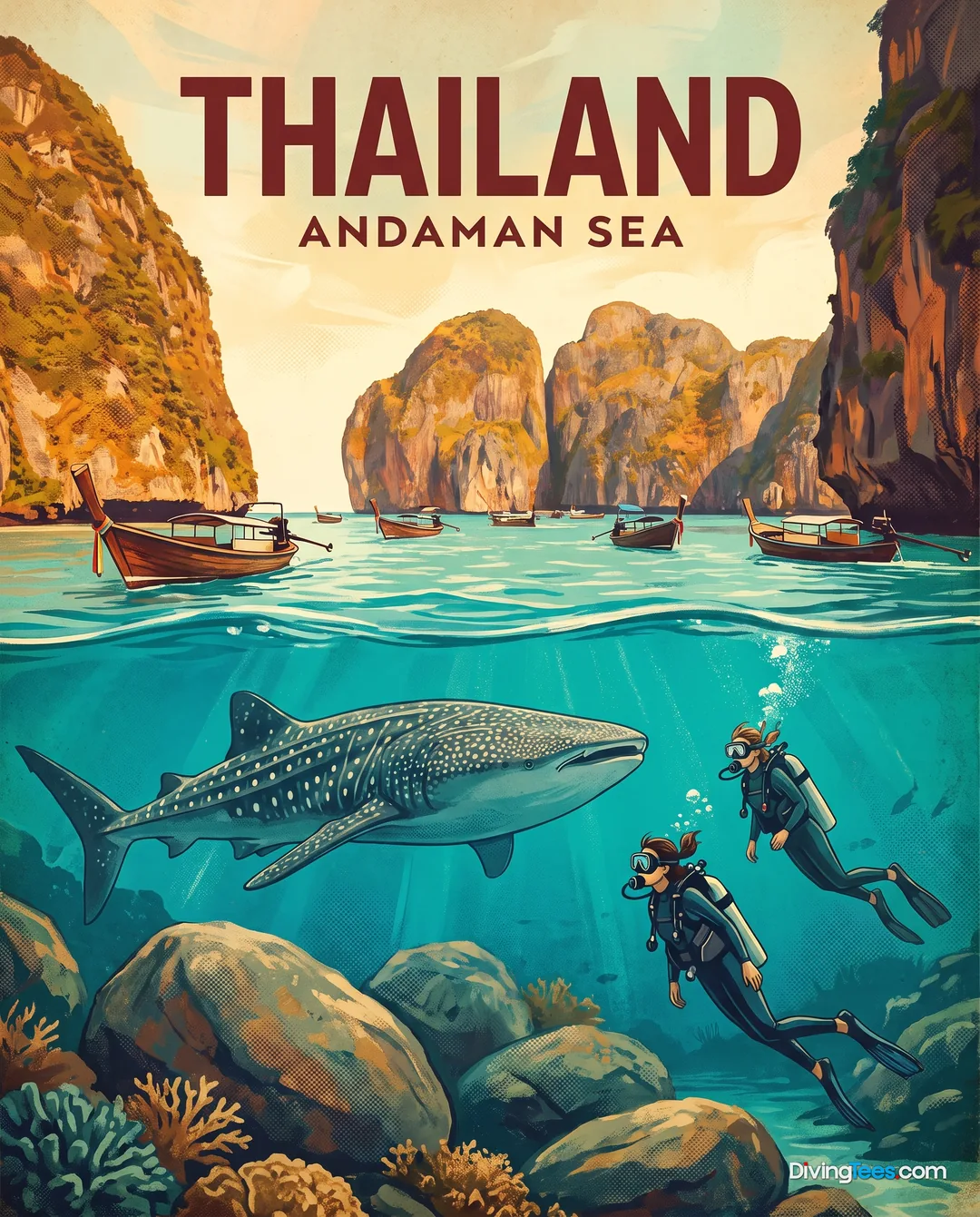
Liveaboards · Thailand
Stingray Thailand — a compact catamaran built around the diving
What makes this boat unique
- The 24-metre Stingray carries a maximum of eight passengers in four air-conditioned en-suite bunk cabins.
- Its shaded dive area has a platform, rinse tanks, DIN adapters, camera-rinse facilities and a speedboat tender.
- Nitrox, night dives, snorkeling equipment, meals, soft drinks, Wi-Fi and daily snacks are included.
- Departures run from Andaman Pier for two-day/one-night Similan trips and selected three-day/two-night routes including Koh Bon, Koh Tachai and Richelieu Rock.
The invitation
Stingray Thailand is for divers who would rather spend their trip at the sites than in a large liveaboard crowd. Only eight passengers share the boat, and the wide catamaran layout gives the diving operation room to work without turning the deck into a queue. That matters when cameras, tanks and wet kit have to be handled repeatedly over several days. The route stays in the Andaman Sea: Similan granite, Koh Bon cleaning stations, Koh Tachai pinnacles and, on selected departures, Richelieu Rock. The boat also accepts non-divers and snorkelers, so a partner who does not dive can come along without changing the character of the trip. The appeal is simple: a small group, a dive-first layout and access to the sites that make a Khao Lak safari worth the journey.
Boarding
From the dock, Stingray presents as a working dive catamaran rather than a converted hotel. Its broad layout leaves the centre of the operation open, while the shaded dive area keeps tanks and equipment out of the worst of the sun. The boat was built in 2006 and renovated in 2024, so its character comes from a long working life with a recent overhaul rather than from a brand-new hull. Boarding is straightforward: move from the pier onto the main deck, find the cabin, then return to the dive area to set up. With eight guests at most, the boat becomes familiar quickly. By the second day, there is no need to search for a seat or remember who owns which tank.
The atmosphere on board
Stingray’s small capacity changes the social shape of a trip. Eight guests share the deck, meals and briefings, while the close crew-to-passenger ratio makes it easier to ask for help without turning every request into a formal service call. The crew speaks English and German. Guides are described as willing to extend time in the water where conditions allow, and their role is practical: helping divers notice animals, keeping the groups together and adapting the plan to the people in the water. Evenings are quiet rather than staged, with dinner, conversation, the library or the indoor entertainment area before the next rest. The boat earns its strongest marks for crew, food and diving, and that combination is what makes the compact cabins worthwhile.
The sites you’ll dive
The short departures leave and return to Andaman Pier. Two-day/one-night trips cover the Similan Islands, Koh Bon and Koh Tachai in different combinations; a three-day/two-night route links the Similans with Koh Bon, Koh Tachai and Richelieu Rock. At Koh Bon, walls lead to a cleaning station where manta rays may arrive for maintenance. The Similan Islands combine coral gardens with granite boulders and reach a maximum depth of -40m. Koh Tachai and Koh Tachai Pinnacle are submerged pinnacles, both reaching -40m, where current can bring barracuda, trevally and other pelagics across the coral. Elephant Head Rock is the deeper, more intricate option, with arches, tunnels and caverns down to -60m. Boonsung Wreck is an old tin dredger and artificial reef to -18m; King Cruiser Wreck, an 85-metre twin-hulled ferry, reaches -35m. Other listed sites include Surin Islands to -25m, West of Eden to -40m, Anita’s Reef to -35m, Christmas Point to -40m, Deep Six to -50m, Shark Fin Reef to -40m and Breakfast Bend to -35m.
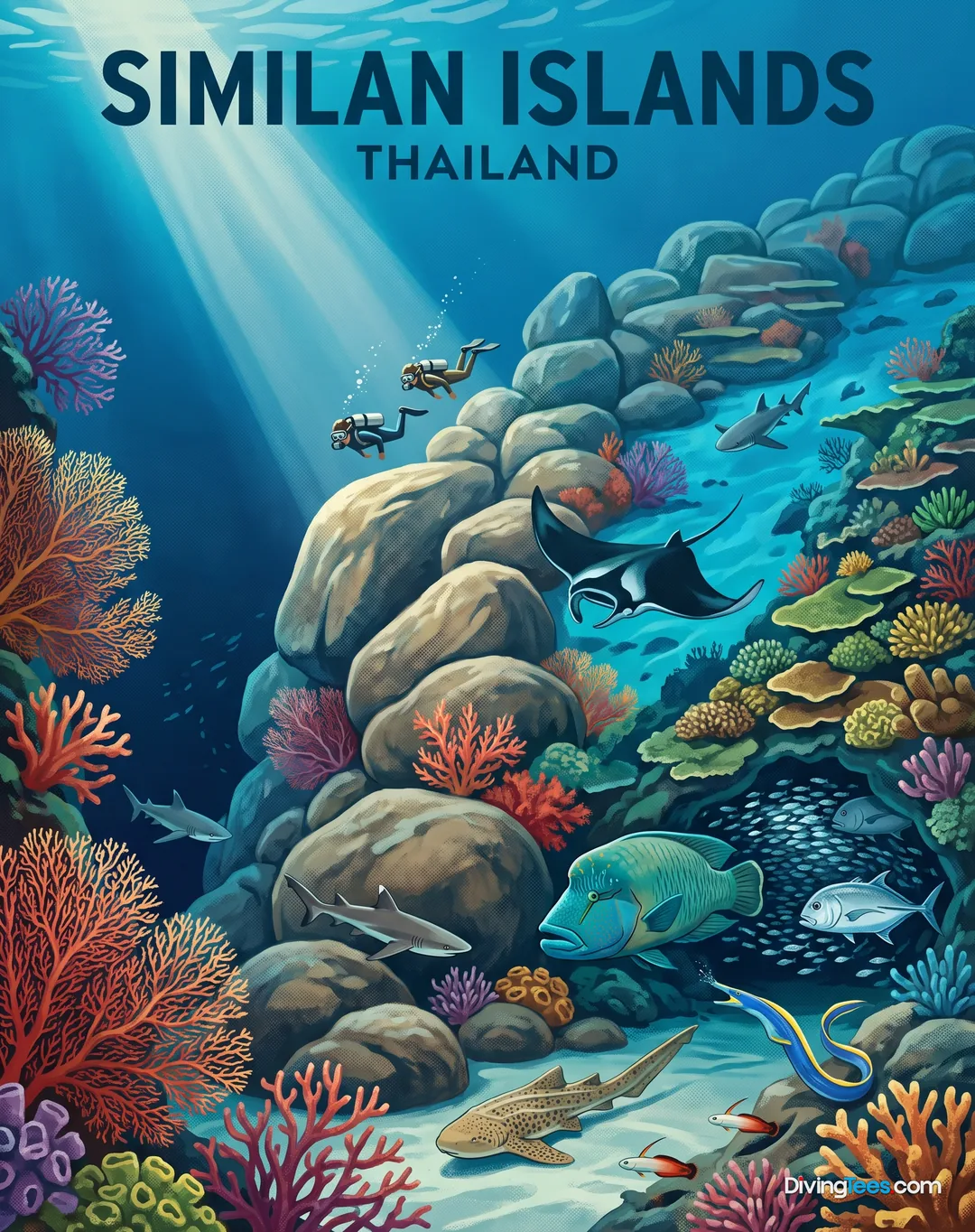
Similan Islands →
Max. depth · 40 m
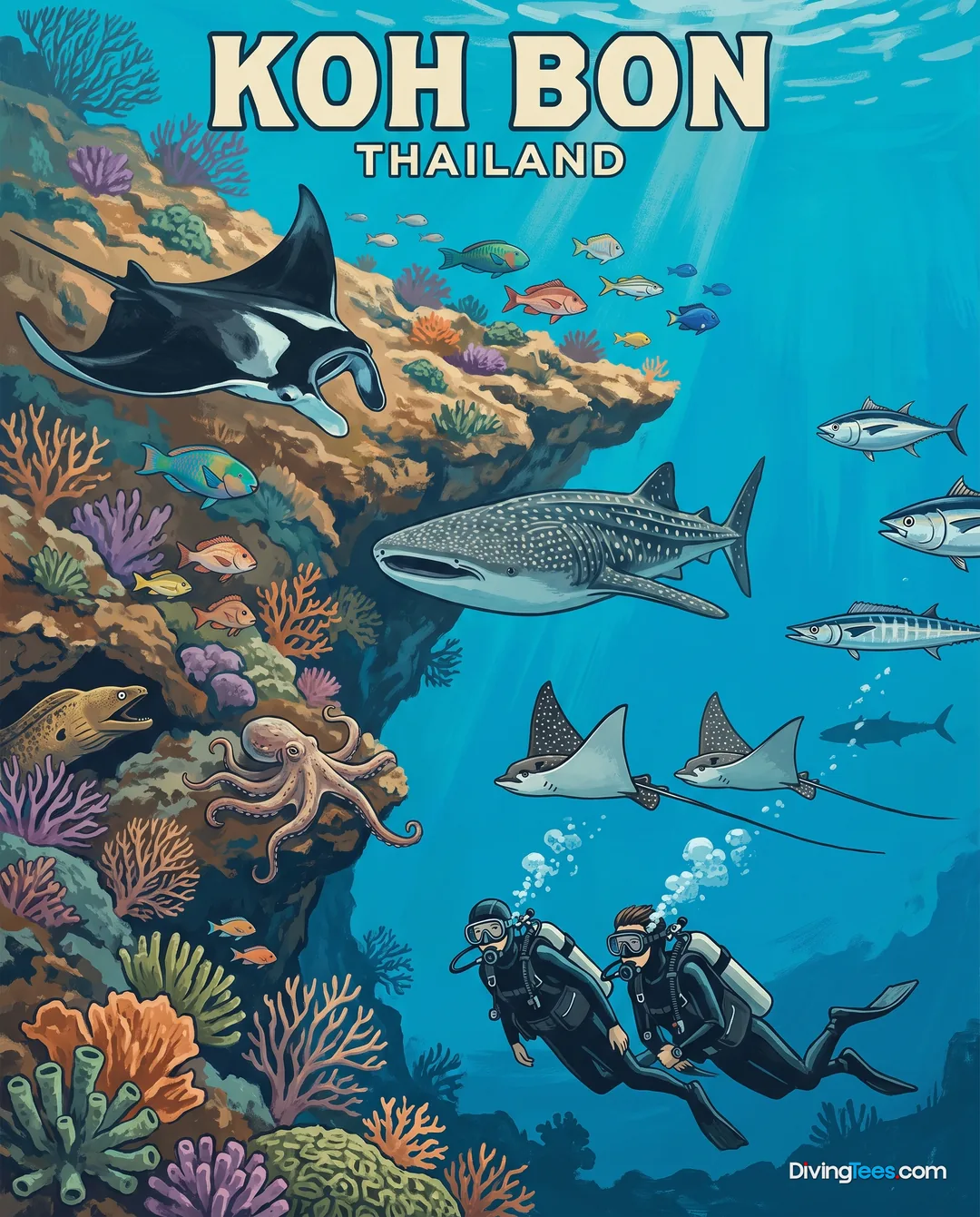
Koh Bon →
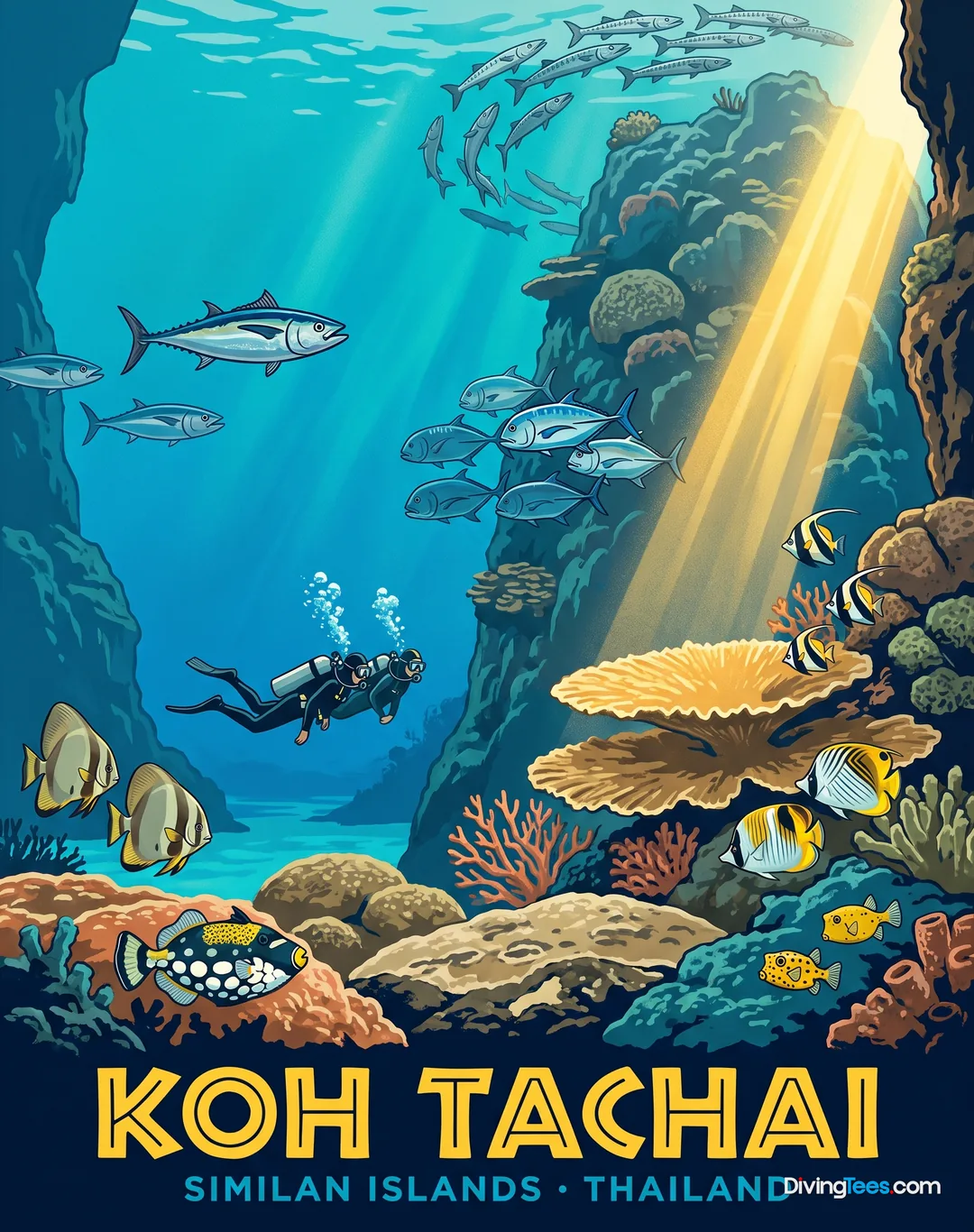
Koh Tachai →
Max. depth · 40 m
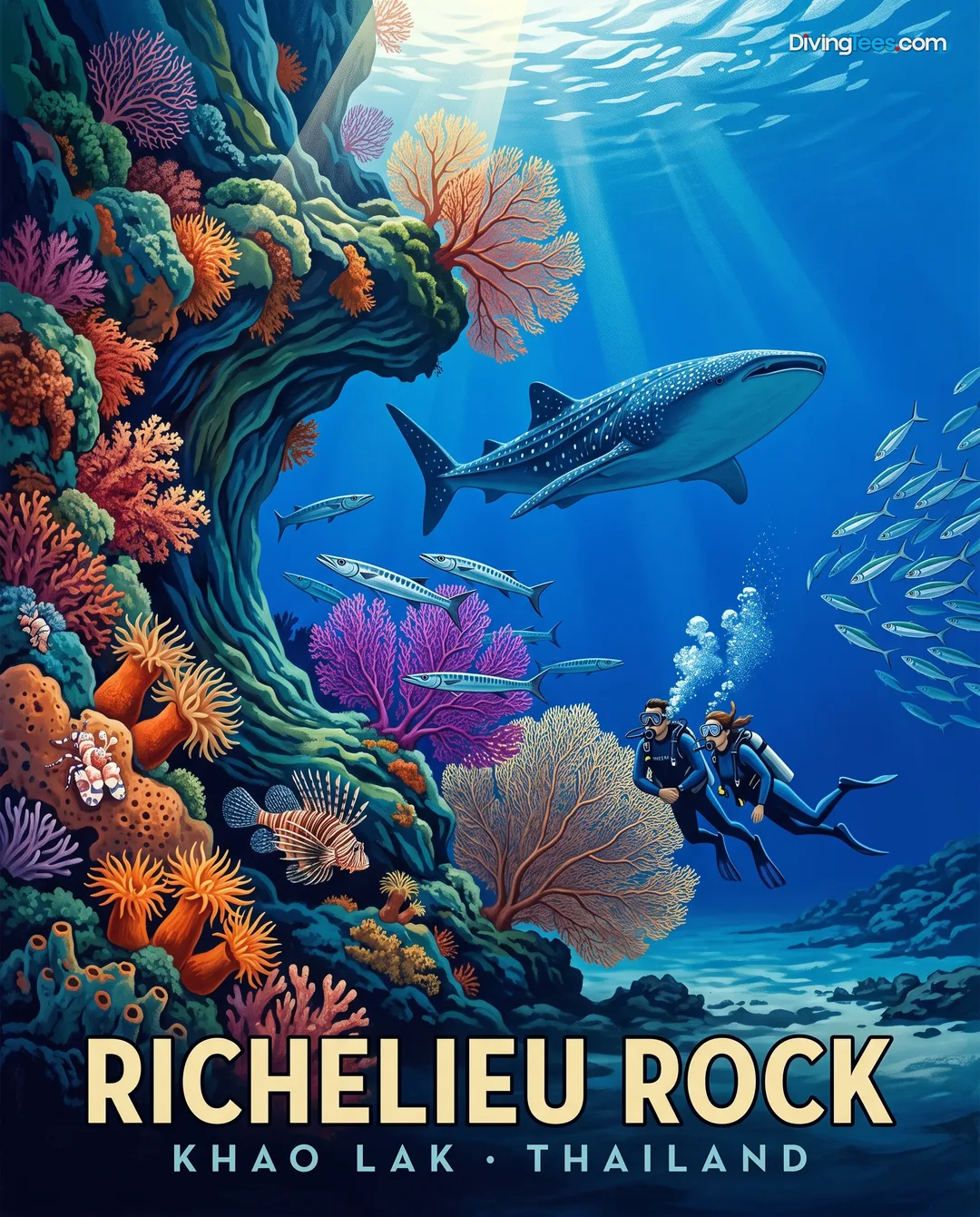
Richelieu Rock →
Max. depth · 35 m
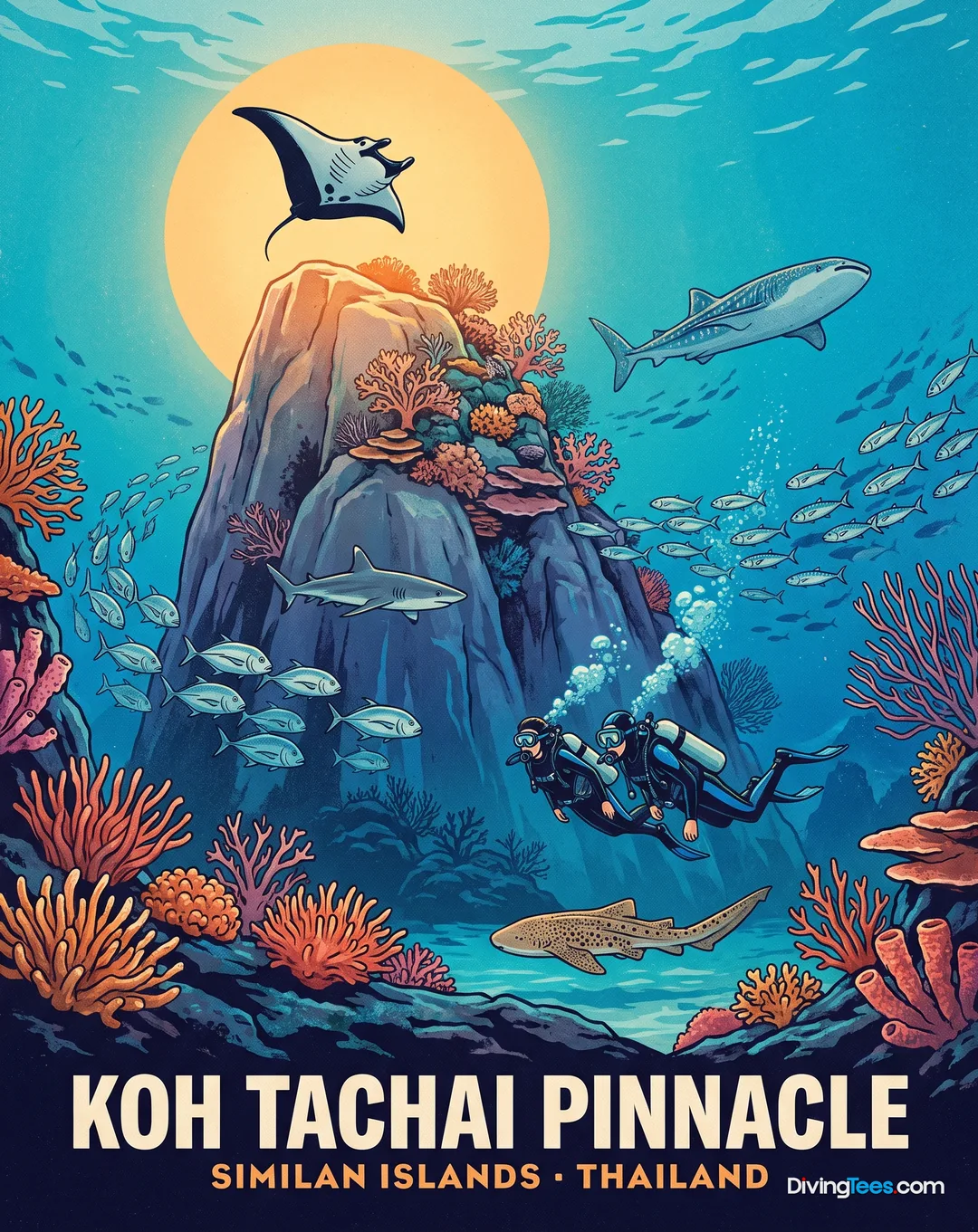
Koh Tachai Pinnacle →
Max. depth · 40 m
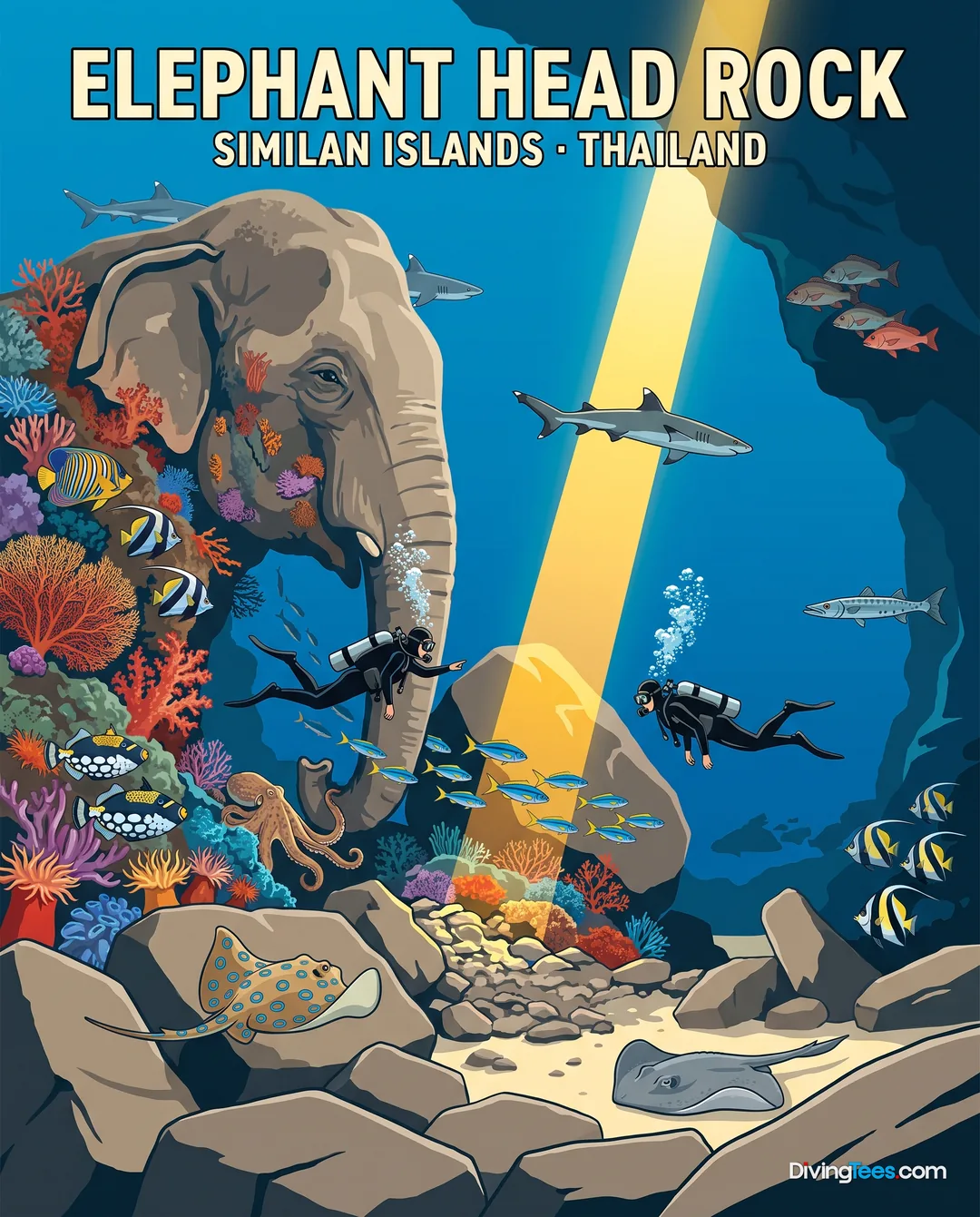
Elephant Head Rock →
Max. depth · 60 m
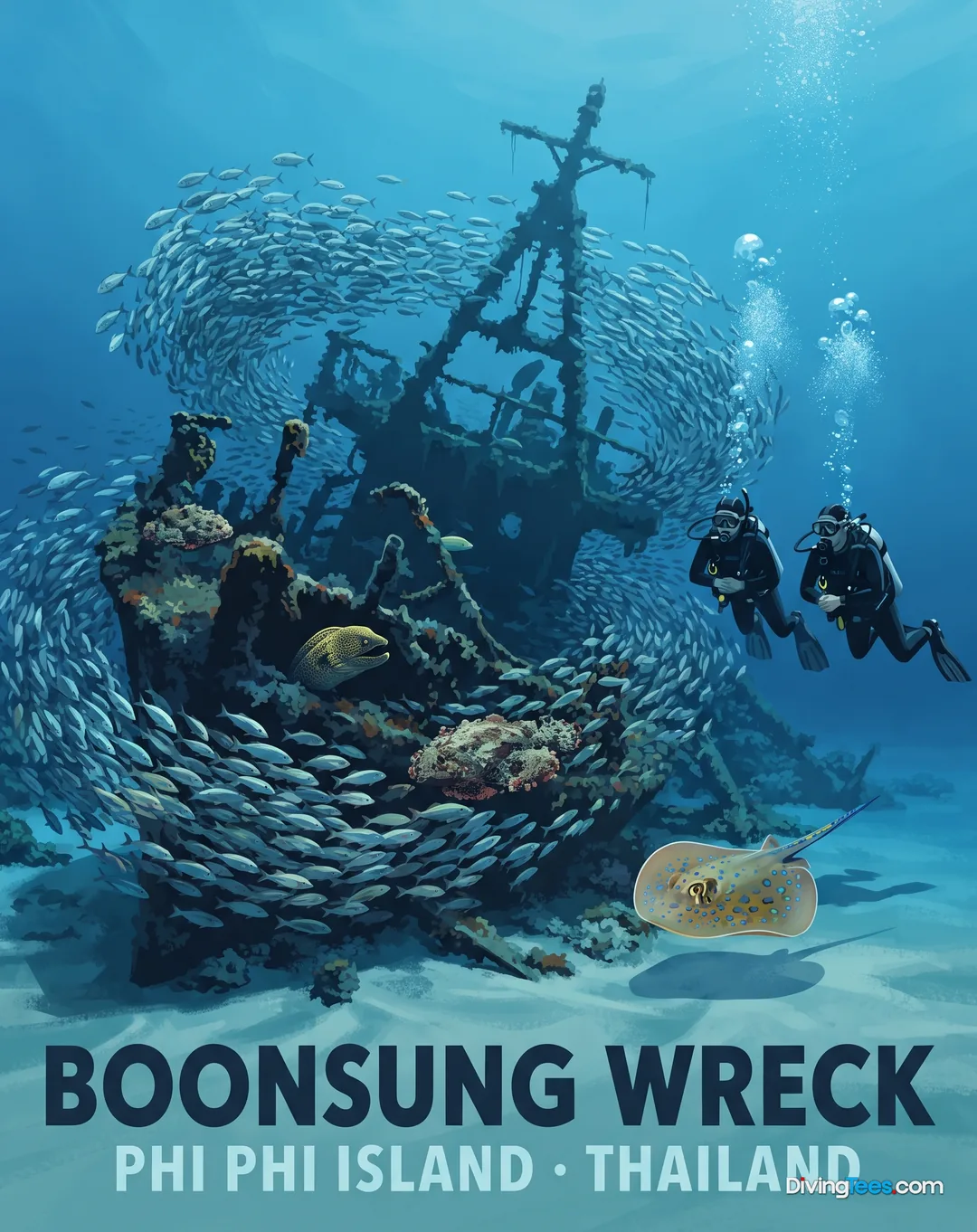
Boonsung Wreck →
Max. depth · 18 m
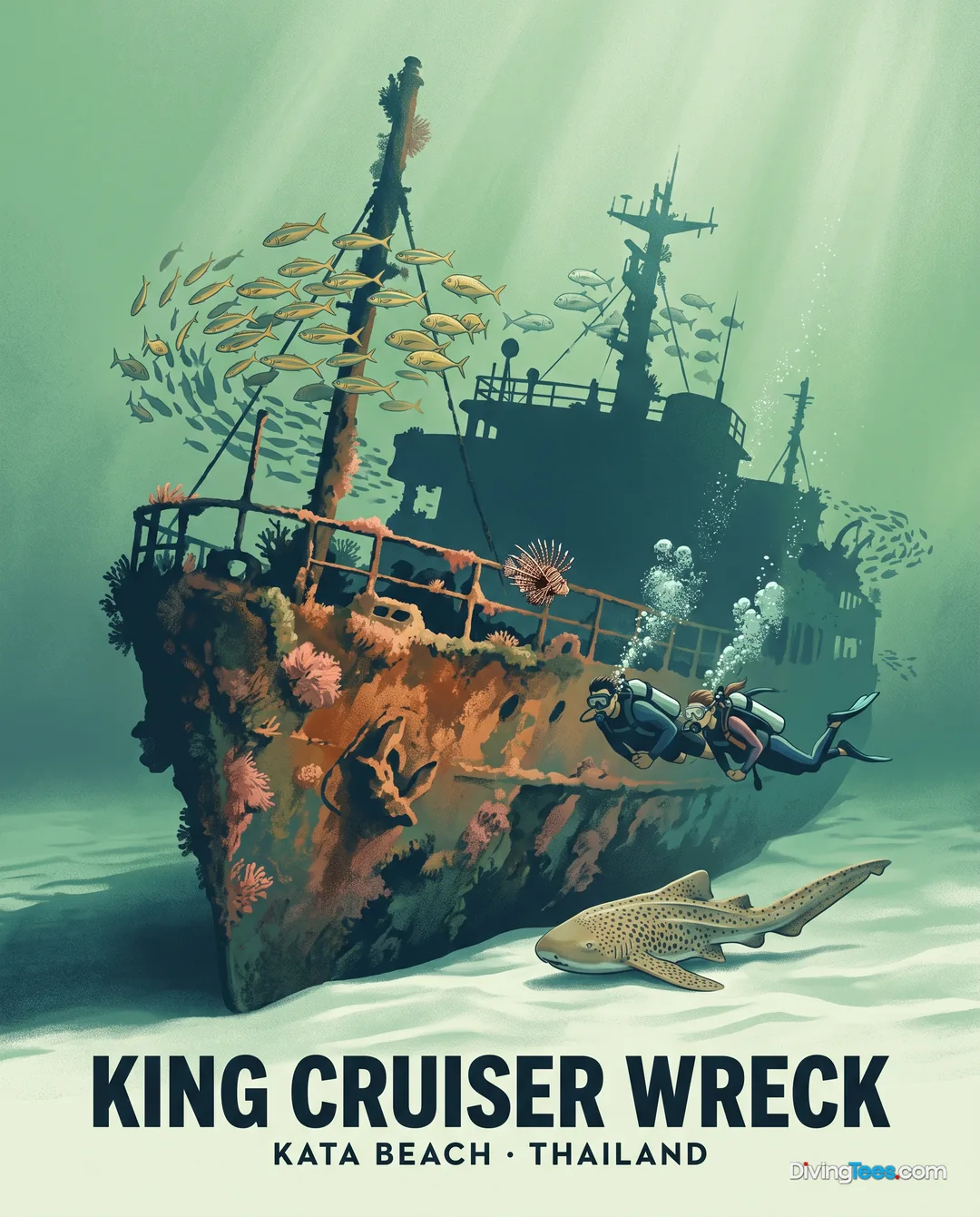
King Cruiser Wreck →
Max. depth · 35 m
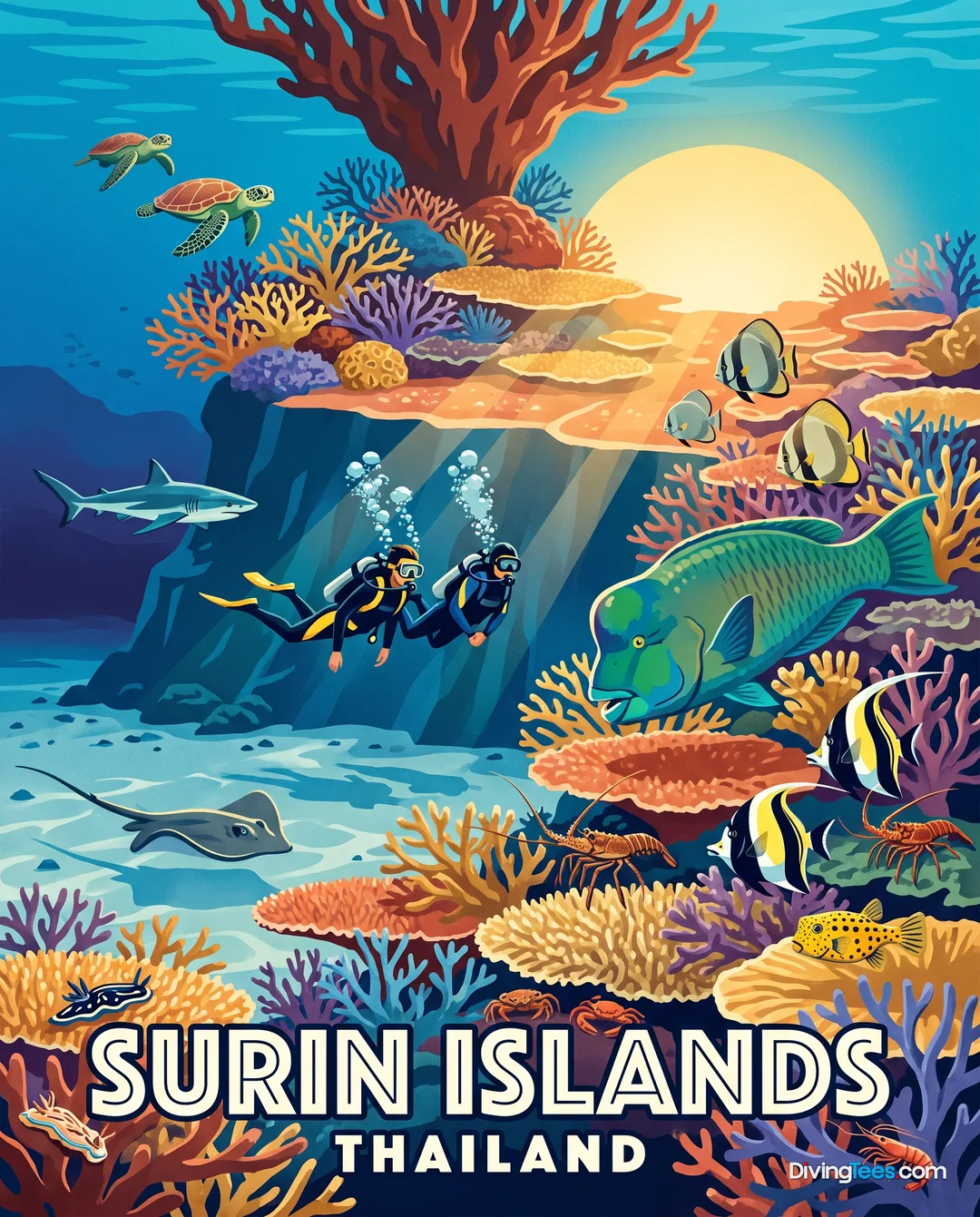
Surin Islands →
Max. depth · 25 m
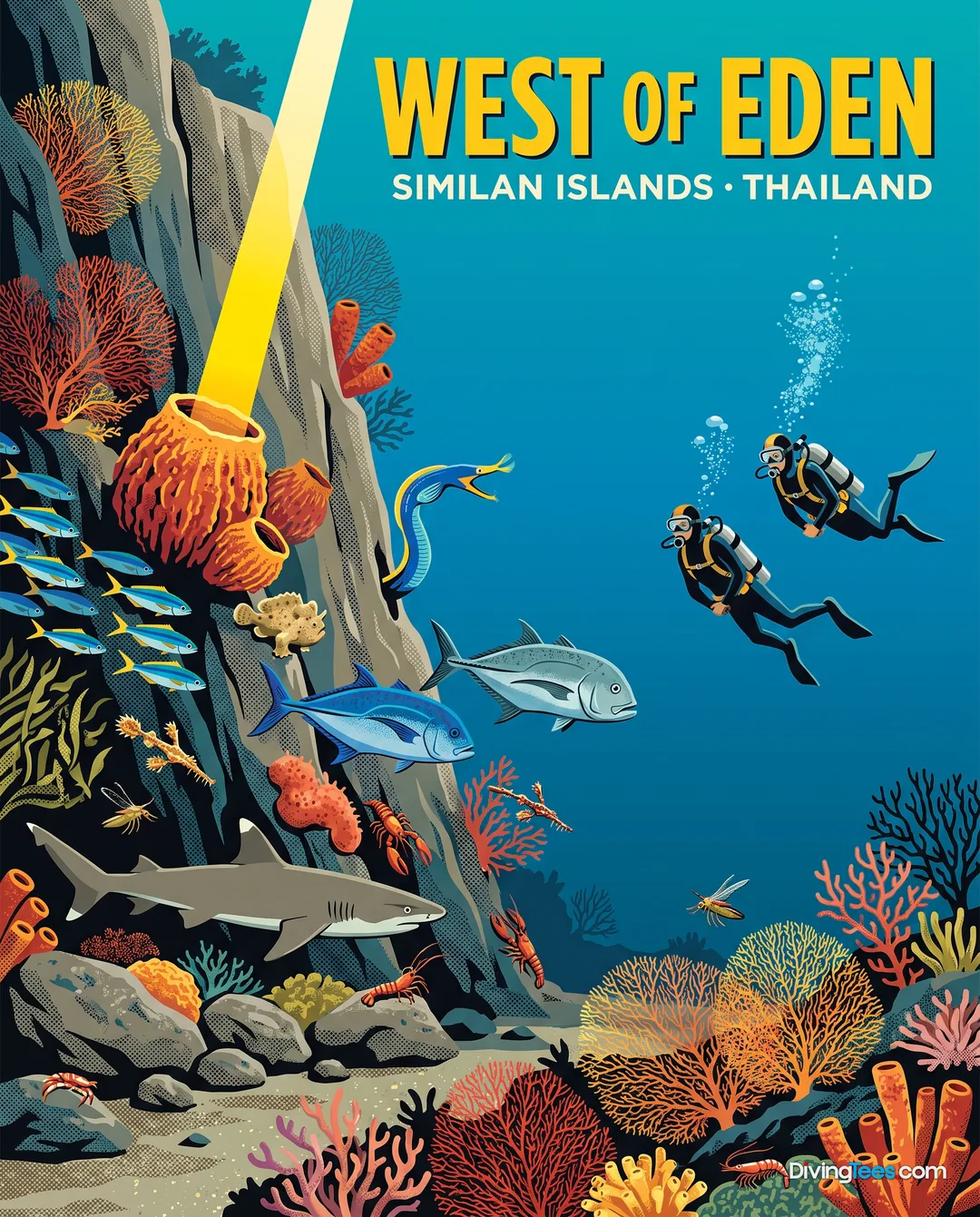
West of Eden →
Max. depth · 40 m
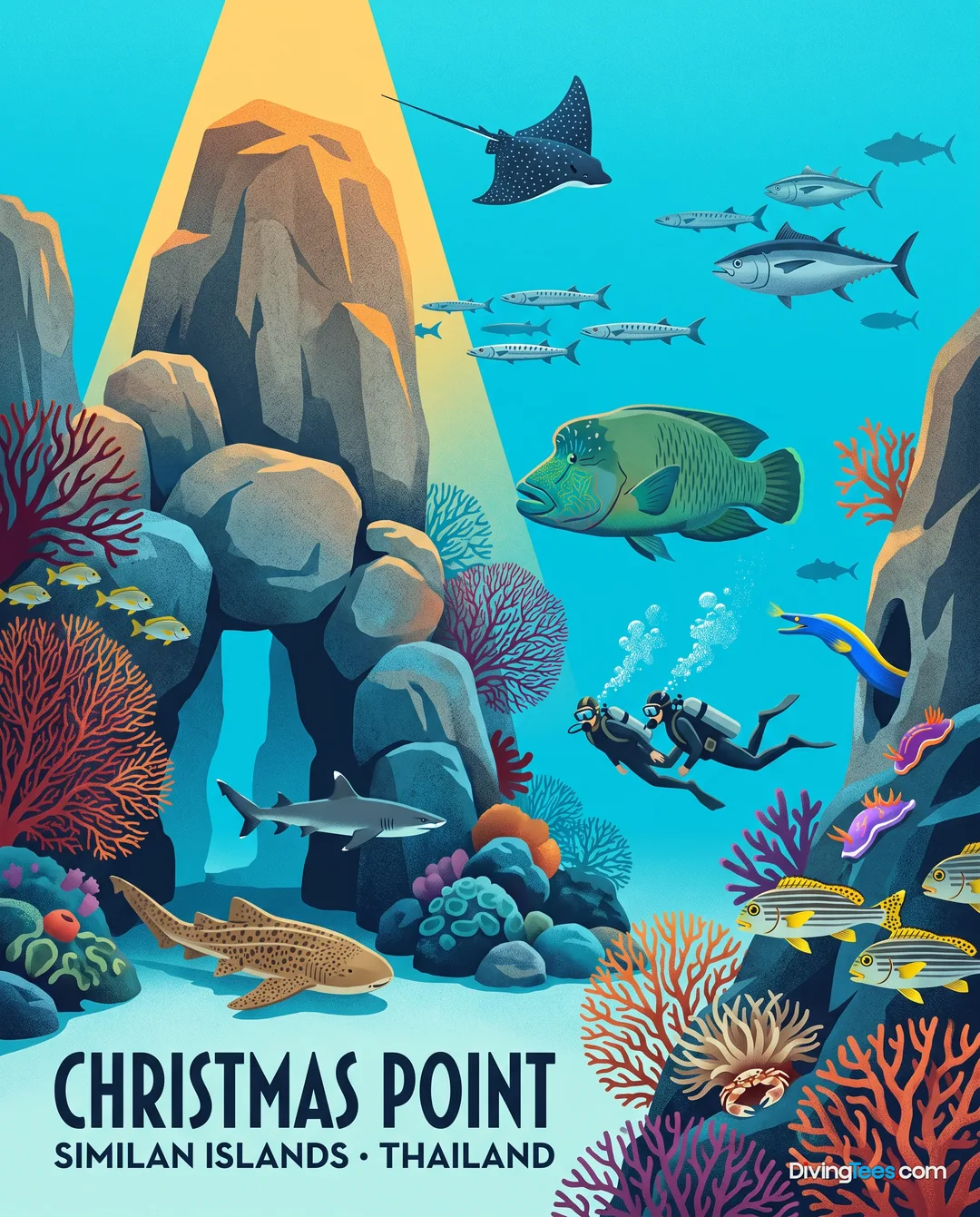
Christmas Point →
Max. depth · 40 m
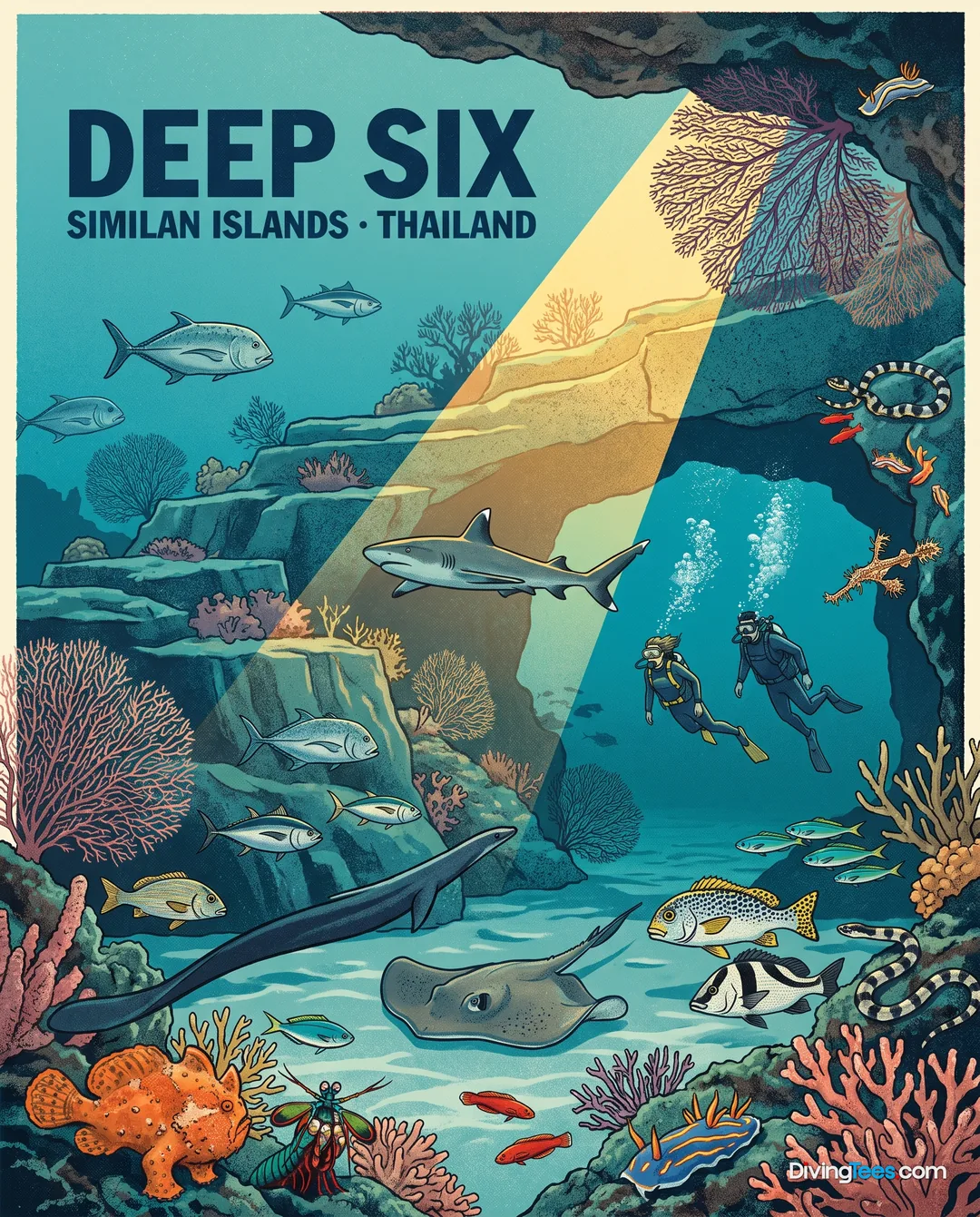
Deep Six →
Max. depth · 50 m
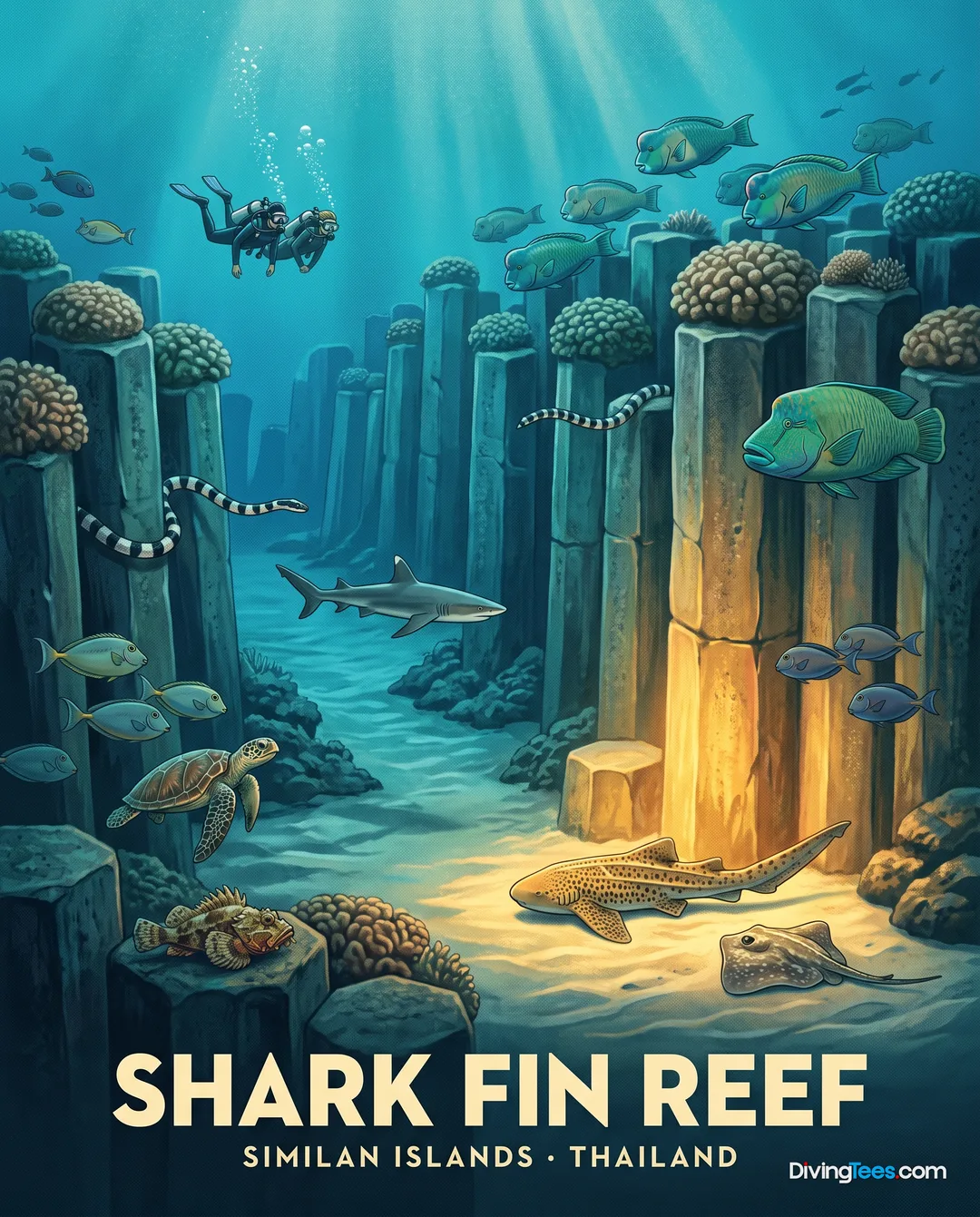
Shark Fin Reef →
Max. depth · 40 m
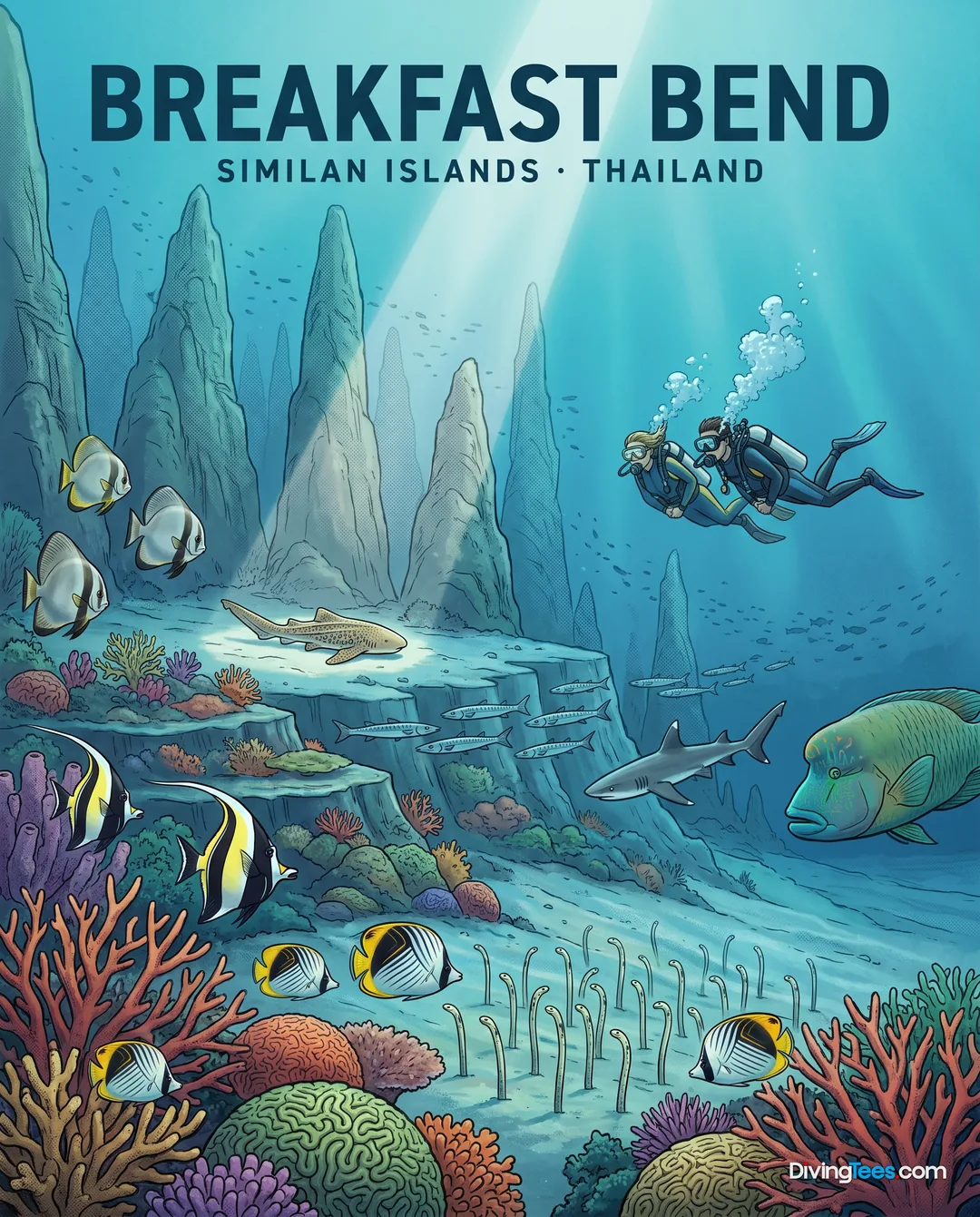
Breakfast Bend →
Max. depth · 35 m
What you’ll meet underwater
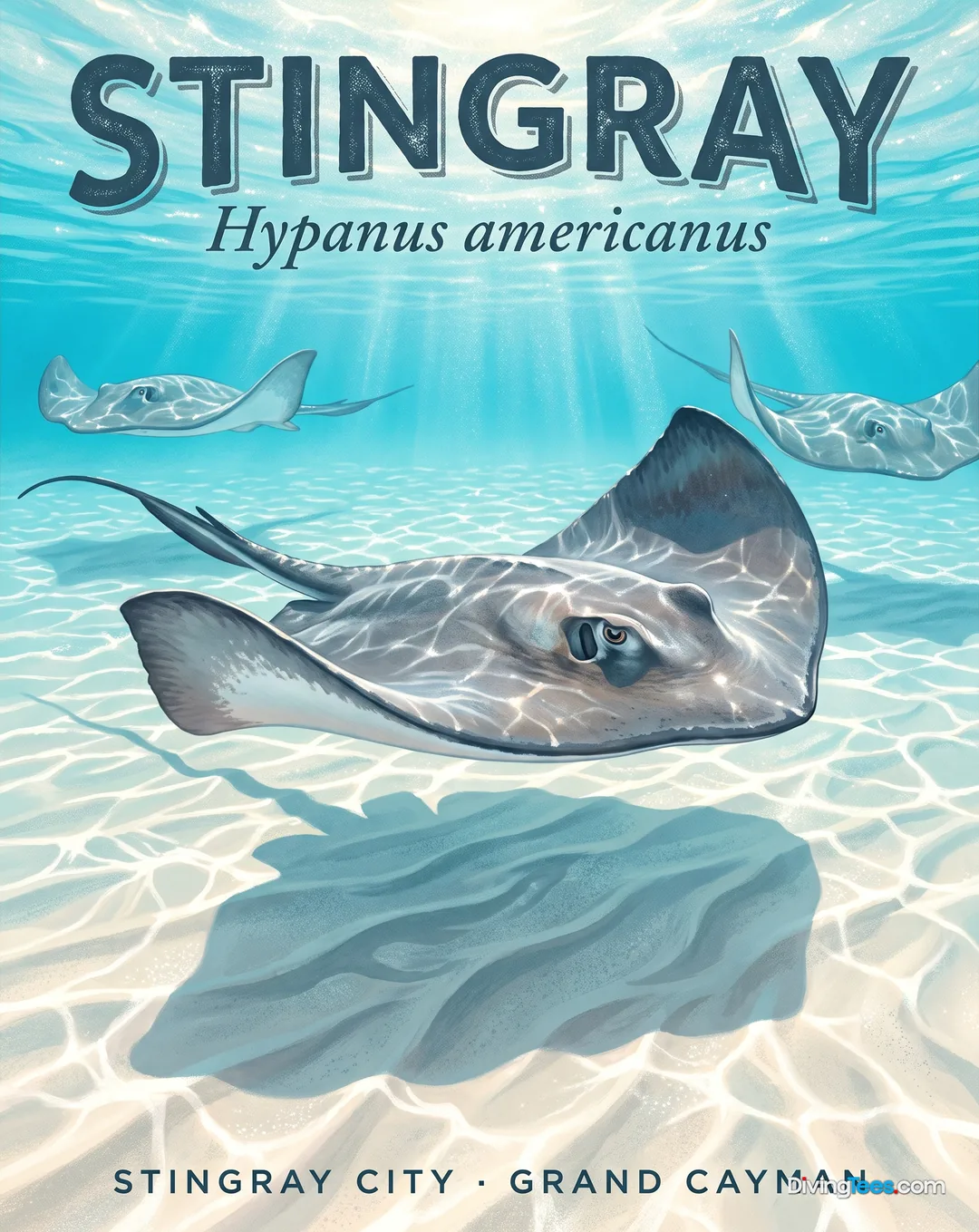
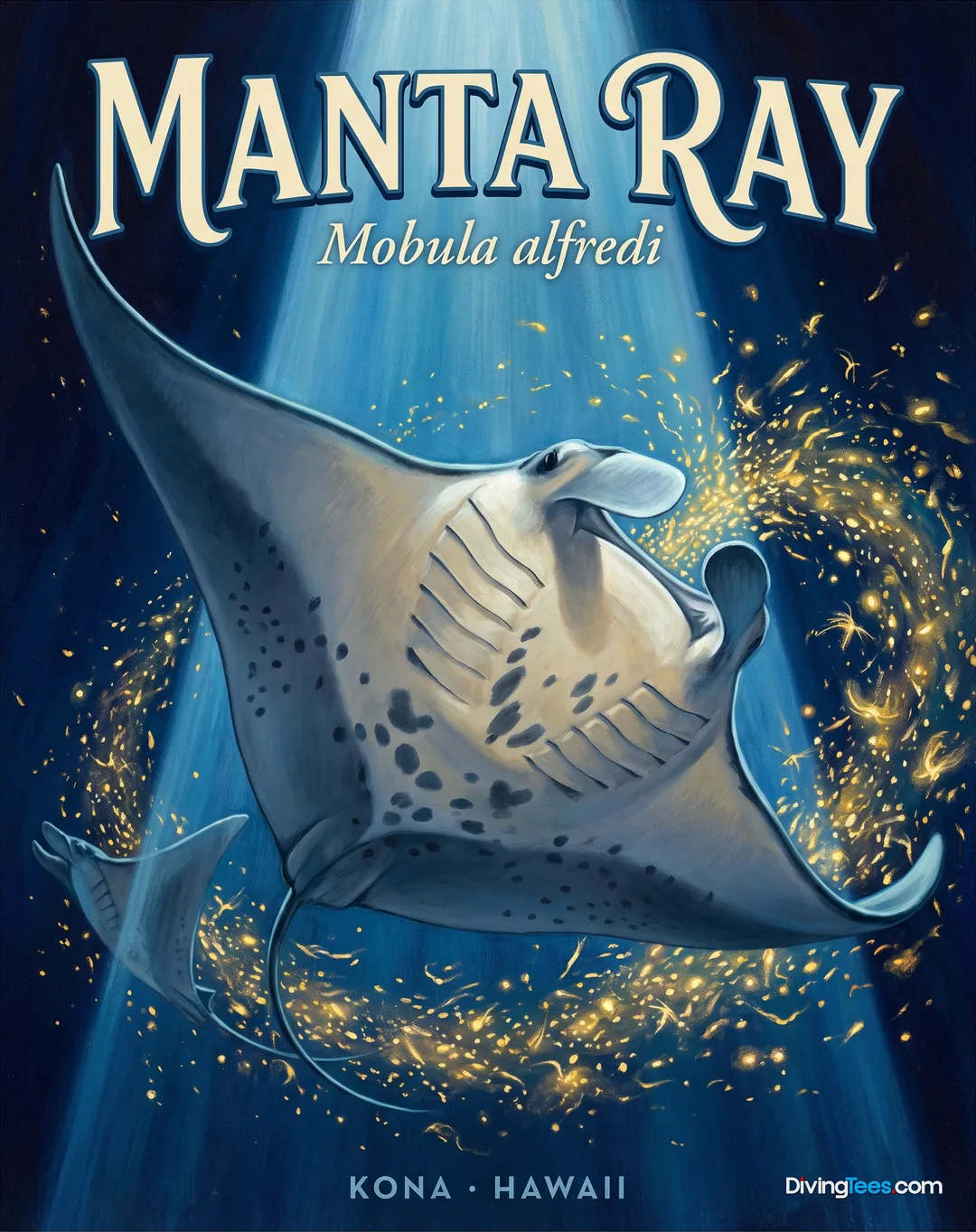
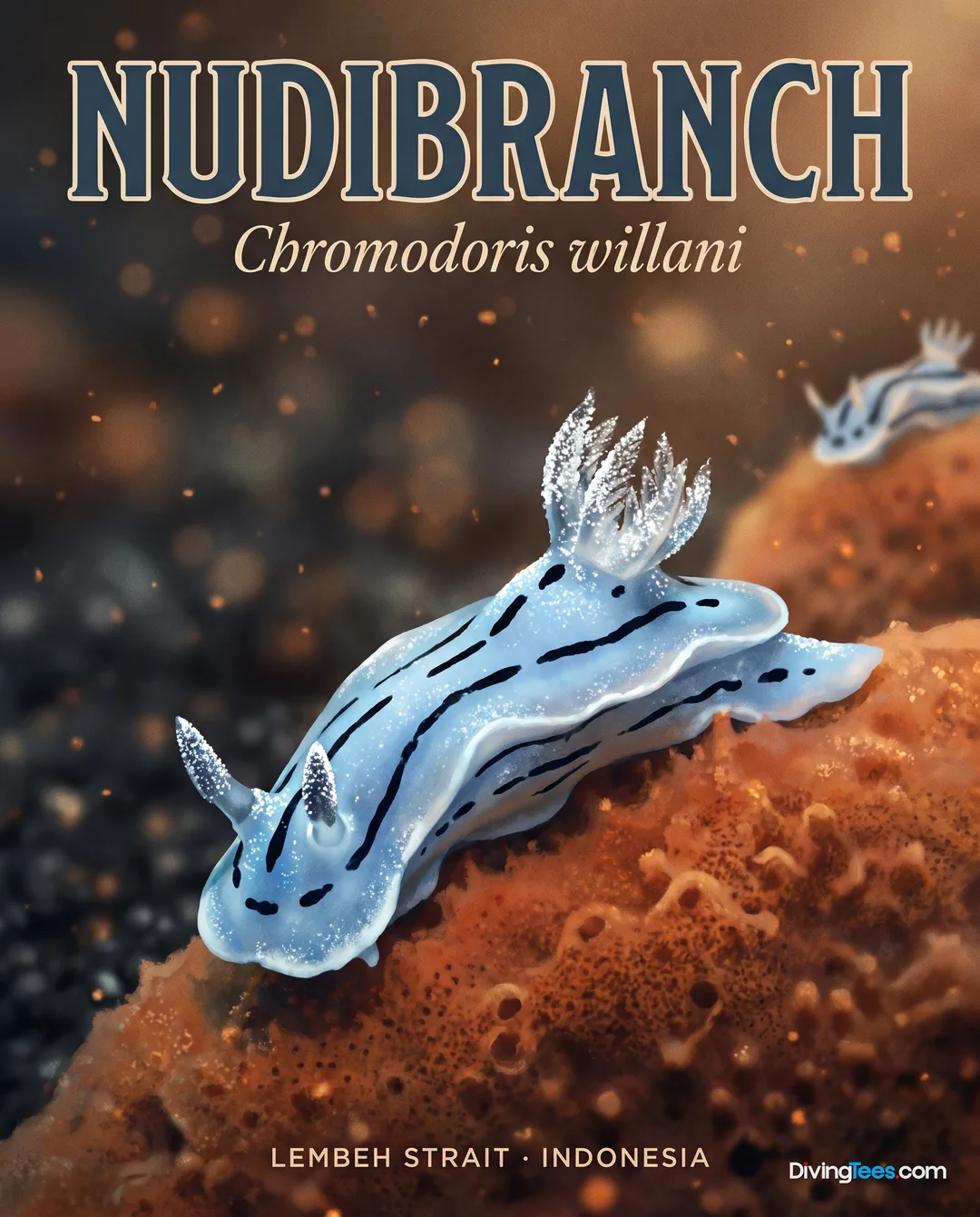
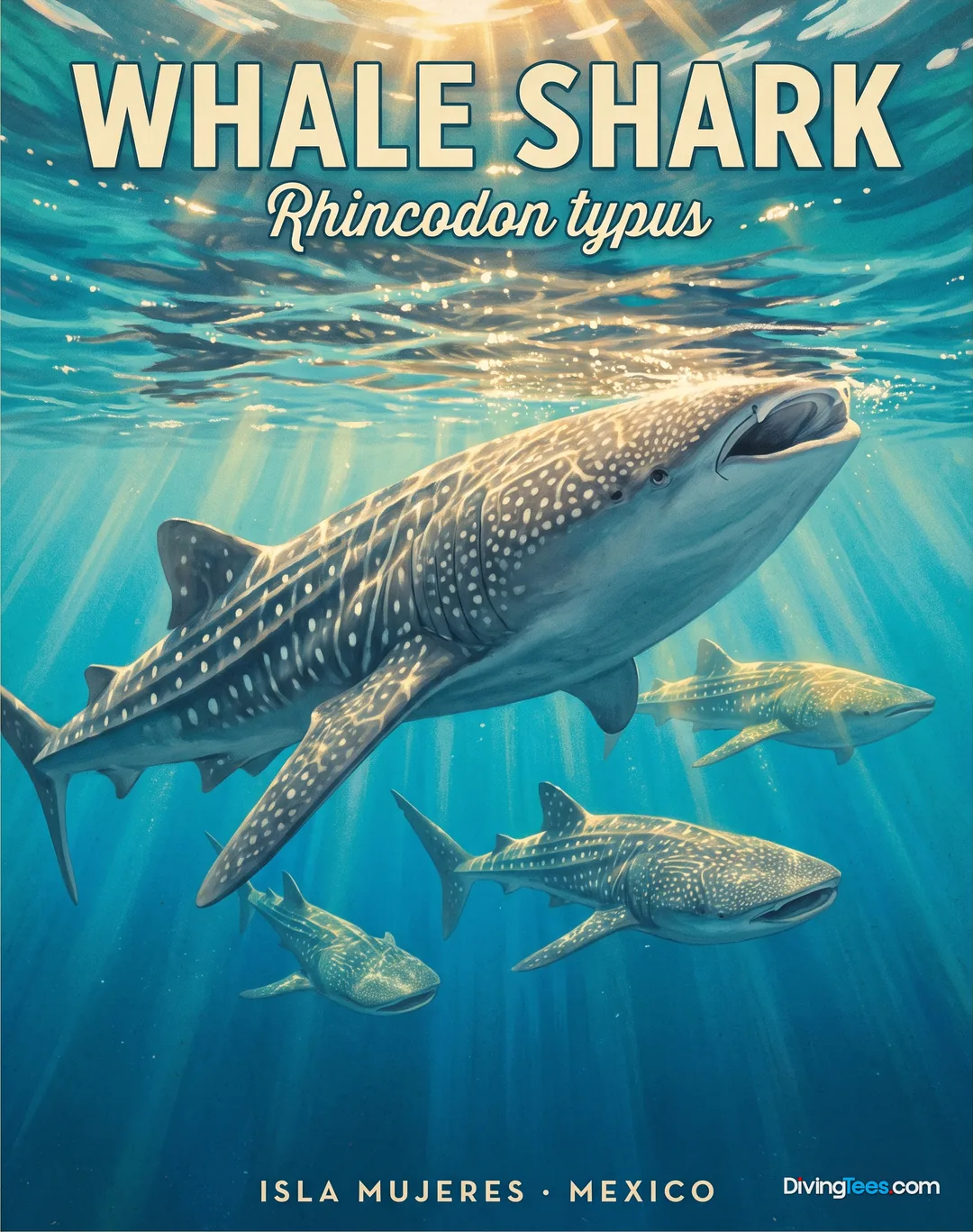
This route is built for large animals moving through open water as much as for reef detail. Reef sharks, whitetip reef sharks, barracuda, leopard sharks, tuna, giant trevally, groupers, moray eels, nudibranchs and fusiliers recur across the sites, while turtles, whale sharks and manta rays are possible encounters rather than promises. Koh Bon’s cleaning station gives manta rays a reason to pause instead of simply pass through. Pinnacles such as Koh Tachai and Koh Tachai Pinnacle concentrate current and pelagic traffic, while the granite passages of Elephant Head Rock can shelter reef sharks and schooling fish. The unusual sightings are site-specific: pipefish and stonefish at Boonsung Wreck, bamboo sharks and eels at King Cruiser Wreck, garden eels and butterflyfish at Breakfast Bend, and anemones at Christmas Point. That mix rewards both the diver watching the blue and the one searching the reef.
Who puts you in the water
English- and German-speaking crew members work with the divers, and the close crew-to-passenger ratio allows the guides to keep groups relatively intimate. The briefings lead into the practical sequence of setting up, entering from the platform or tender, and returning to the boat for the next interval. The guides are expected to respond to the group rather than run every diver through the same sighting plan, which suits sites where current and animal movement decide the dive. Oxygen and first-aid kits are carried on board, and the instructors, guides and boat staff are trained as O2 and First Aid providers. The operation welcomes certified divers, snorkelers and non-divers; private guiding is available as an option. No minimum logged-dive count or onboard course list is given.
The dive deck and the gear
The dive deck is shaded and arranged for repeated diving, with a platform, rinse tanks and separate camera-rinse facilities. Divers enter and exit through the platform, while the single speedboat tender supports transfers between the boat and the dive site. Tanks use INT valves; DIN adapters are available. Nitrox is included, while rental equipment is available for divers who do not bring their own. The listed gear is Aqualung rental equipment, with options including a full set, 15-litre tanks, dive computers and torches. A dedicated photo area and camera rinse matter more than a polished lounge if the trip is built around repeated underwater work. There is also an outdoor and indoor shower with rain-shower fittings, so salt and sand do not have to stay on the deck all day. Sidemount diving is supported.
Between dives
Between dives, the best place is the shaded outdoor area, where wet kit can dry and divers can stay close to the next briefing without retreating into a cabin. The terrace and leisure area give the boat somewhere to sit in the open air, while the indoor lounge offers a cooler change of pace with audio-visual entertainment and a library. Photographers have a dedicated area and a separate camera rinse, useful when a camera goes into the water more often than its owner. A bar, free Wi-Fi and outdoor dining fill the longer surface intervals, but the layout remains centred on the next dive rather than on elaborate resort facilities.
A day on board
A day begins with the first briefing, equipment checks and the move from the shaded deck into the water. After the first dive, breakfast and the surface interval give the group time to eat, log sightings and reset the kit before the next descent. Further dives punctuate the day, with lunch and snacks arriving between them while the boat moves or waits at the site. The tender collects divers where they surface when it is used, bringing them back to the platform rather than asking them to cover a long swim. The longer break is for a shower, a nap, the lounge or the terrace. After dinner, the boat may run a night dive included in the dive package. Then the deck quiets, cabins cool down and the process starts again with the next briefing.
What you eat aboard
Meals combine local Thai cooking with Western dishes, and vegetarian and vegan options are available. Fresh food is supported by snacks through the day, so the galley keeps pace with repeated dives rather than serving one heavy meal and leaving divers to manage the gaps. Breakfast, lunch and dinner are part of the full-board arrangement, with drinking water, tea, coffee and non-alcoholic drinks included; beer is available, while alcoholic drinks are not part of the standard board offering. The table matters here because it is where the group comes back together after a dive, compares sightings and eats before the next briefing. The food is there to keep the diving day moving.
Nights at sea
The four cabins are standard bunk cabins on the main deck, each air-conditioned and en suite. They are practical sleeping quarters for a trip organised around diving, not oversized rooms designed to keep guests indoors. Each bathroom has a rain shower, modern toilet and LED-lit mirror; hot water is available. The useful detail is the private bathroom after a full day in salt water, when nobody wants to wait for a shared shower. Air conditioning gives the cabins a controlled place to sleep, while the boat’s compact scale means the saloon and deck are close at hand. A bunk cabin suits divers who spend daylight underwater and return to the room mainly to wash, sleep and start again.
Standard Bunk Cabin
What to know before boarding
Stingray trips depart from and return to Andaman Pier in Khao Lak. Airport and hotel transfers are available as optional arrangements, rather than being included as part of the boat’s standard operation. The pier is the meeting point for boarding, so arriving in Khao Lak the night before is the sensible way to avoid making the departure depend on a same-day journey.
Deck plan
- Year built
- 2006
- Year renovated
- 2024
- Length
- 24 m
- Beam
- 7 m
- Maximum number of passengers
- 8
- Number of cabins
- 4
- Number of bathrooms
- 6
- Engines
- 2 × Nissan v10
- Cruising speed
- 10 knots
- Tenders
- 1 × speedboat
- Website
- sea-bees.com ↗
Hello, I'm Marina, DivingDeal.com's AI assistant. I answer in detail about hotels, dive centres and liveaboards.

Thinking about the whole trip and the flights? Talk it over with Edith →
Marina is an AI. Some links are affiliate links: DivingDeal may earn a commission, at no extra cost to you. Bookings are made with the partner.