Liveaboards · Thailand
Thailand Master — a traditional phinisi built around the diving
What makes this boat unique
- A 34-metre ironwood phinisi carrying up to 18 divers on Thailand and Myanmar routes.
- The lower-deck cabins all have air-conditioning, private bathrooms and hot water.
- The dive deck provides generous equipment storage, separate camera rinsing and two diver tenders.
- Similan, Surin, Koh Bon, Richelieu Rock and the Boonsung Wreck bring granite pinnacles, walls, pelagics and dense fish life.
- English-speaking guides, two compressors, DIN adaptors and nitrox are available on board.
For subtitles in English: start the video firstthen click the gearat the top right of the video, select “Subtitles/CC”, then “Auto-translate” and choose “English”.
The invitation
Thailand Master is for divers who want the route to feel tied to the sea, not delivered from a floating hotel. She is a traditional Indonesian phinisi built in ironwood, with covered outdoor dining at the stern and enough space for 18 guests to become a familiar group rather than a crowd. The reason to choose her is the combination: an authentic sailing vessel, a small passenger load, and access to Thailand's strongest northern sites. The diving is the centre of the trip, while the boat gives it a distinctly local setting. Richelieu Rock is the obvious draw, but the route also reaches granite boulders, walls, pinnacles and a tin dredger turned artificial reef. The crew and food are where this boat earns its reputation: the scores are strongest for both, with diving close behind. The hull is not the selling point for someone seeking the newest or most polished vessel. The people, the cooking and the sites are.
Boarding
From the dock, Thailand Master presents as a working wooden sailing yacht rather than a modern resort at sea. Ironwood gives the hull its character, and the phinisi design makes the boat feel connected to the traditional craft of the region. Once aboard, movement is straightforward: cabins are grouped on the lower deck, the dive deck is the practical centre of the operation, and the shaded dining area at the stern opens the trip back toward the water. The single engine and two generators belong to the boat's working life; this is a vessel with machinery, not a silent hotel. Her space is best understood in relation to the passenger load: 18 divers, two tenders and a dive deck designed to keep equipment organised. She was built in 2007, so the appeal is her established character and route rather than new-boat gloss. That suits divers who would rather spend the week in a real phinisi than in an anonymous steel-and-glass interior.
The atmosphere on board
The atmosphere is compact and easy to read. With 18 divers at most, the same people appear at breakfast, on the dive deck and around the stern table, while the English-speaking crew remains close to the practical work of the day. Passengers find enough room to set up equipment and store accessories, which removes one of the small irritations that grows over a week at sea. The crew score of 9.3 reflects more than politeness: the people on board are part of why the boat is remembered, alongside food that scores 9.7. Evenings can stay simple—dinner outside, a beer or wine, conversation, a book or a film in the saloon. The boat's character comes from that closeness. Anyone looking for privacy, silence and a highly separated service model may prefer a larger modern vessel; divers who value a crew-led liveaboard life will understand the appeal quickly.
The sites you’ll dive
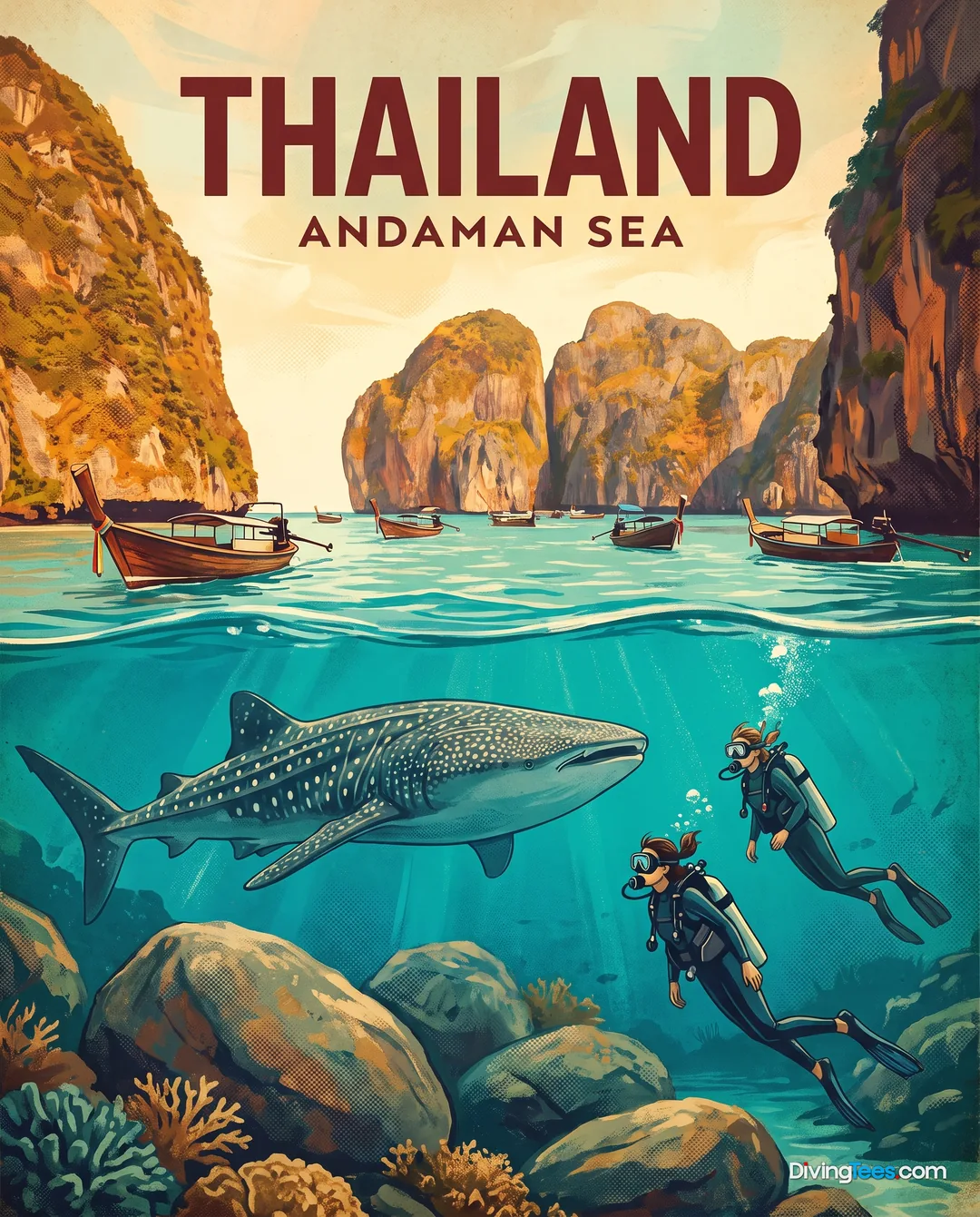
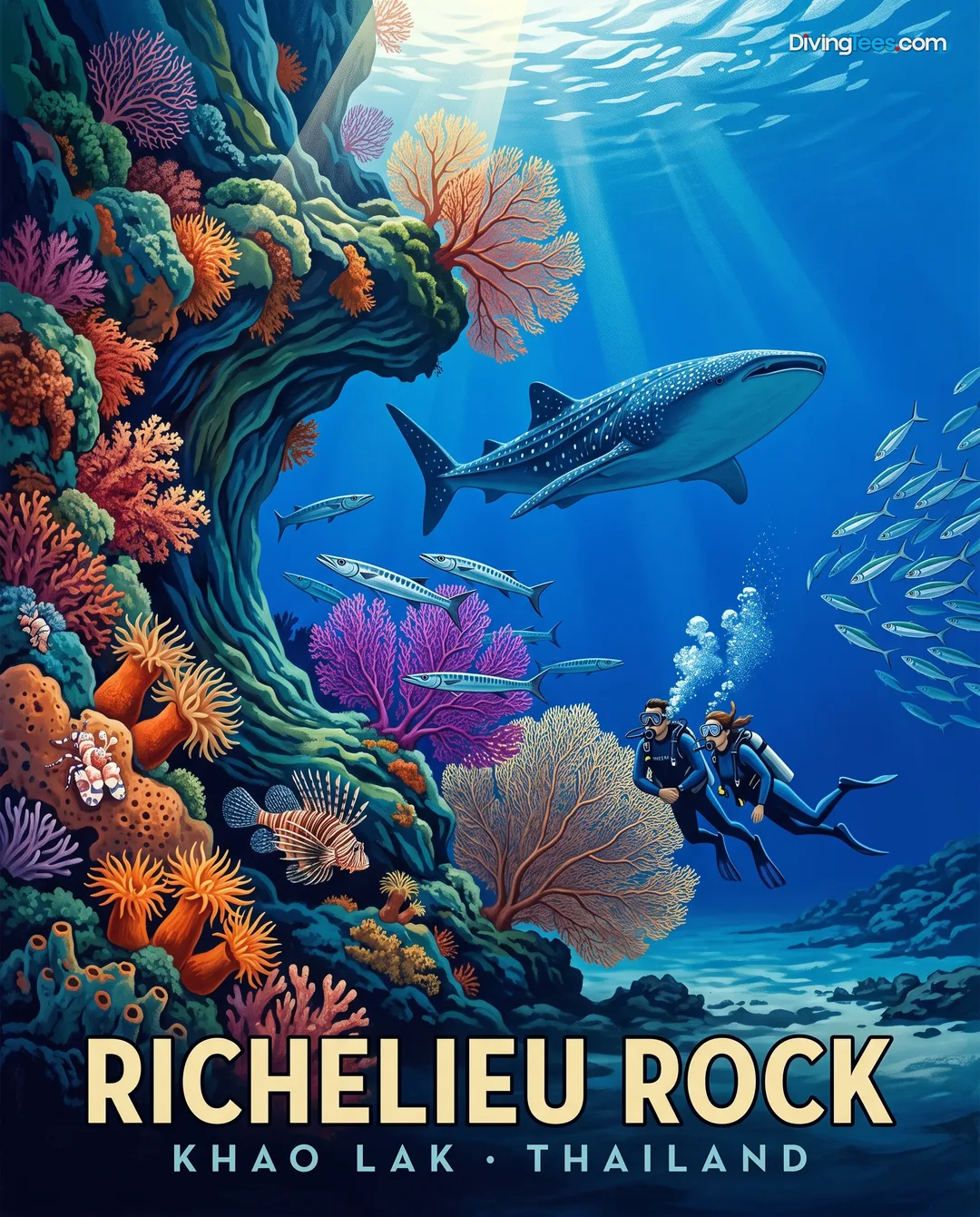
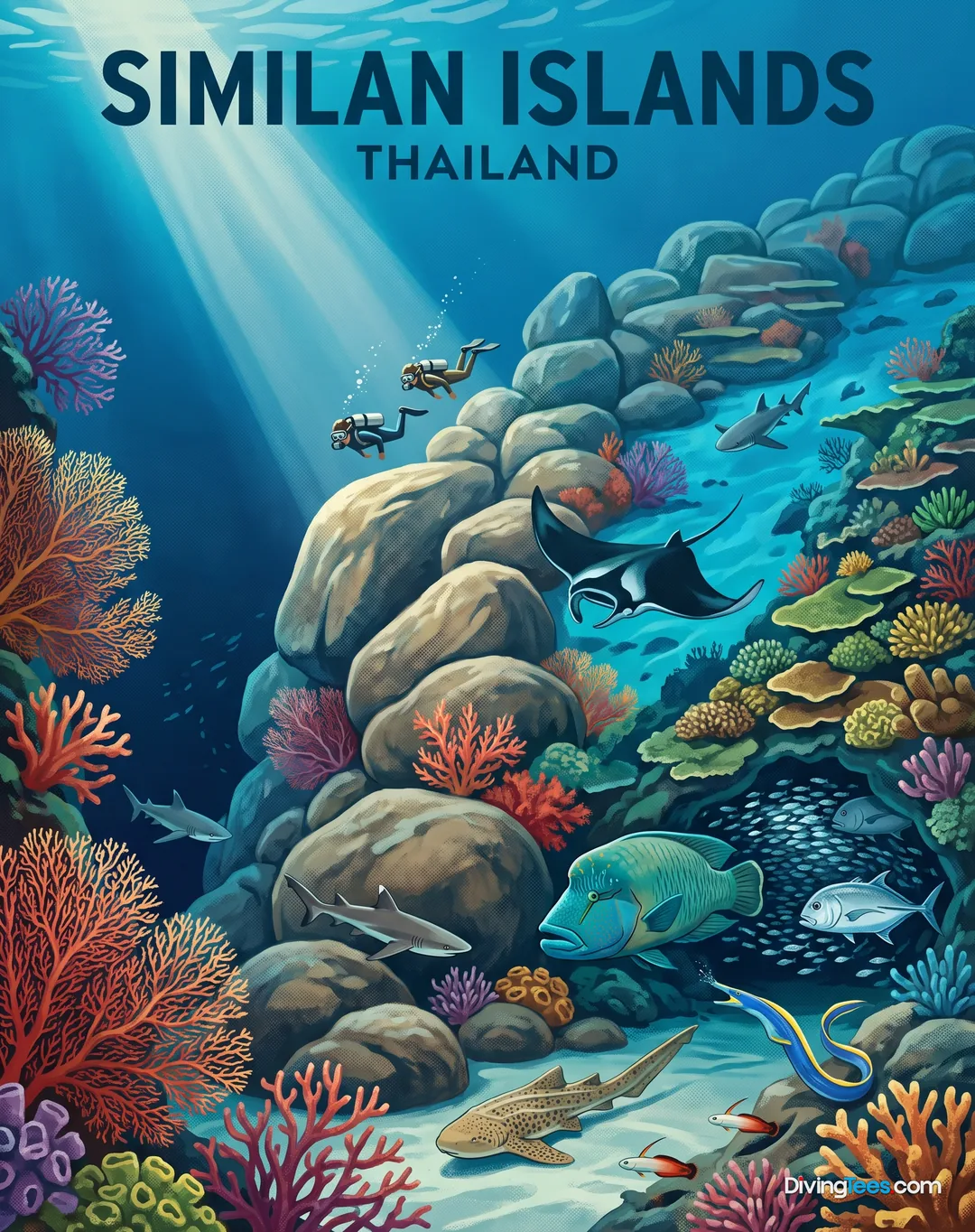
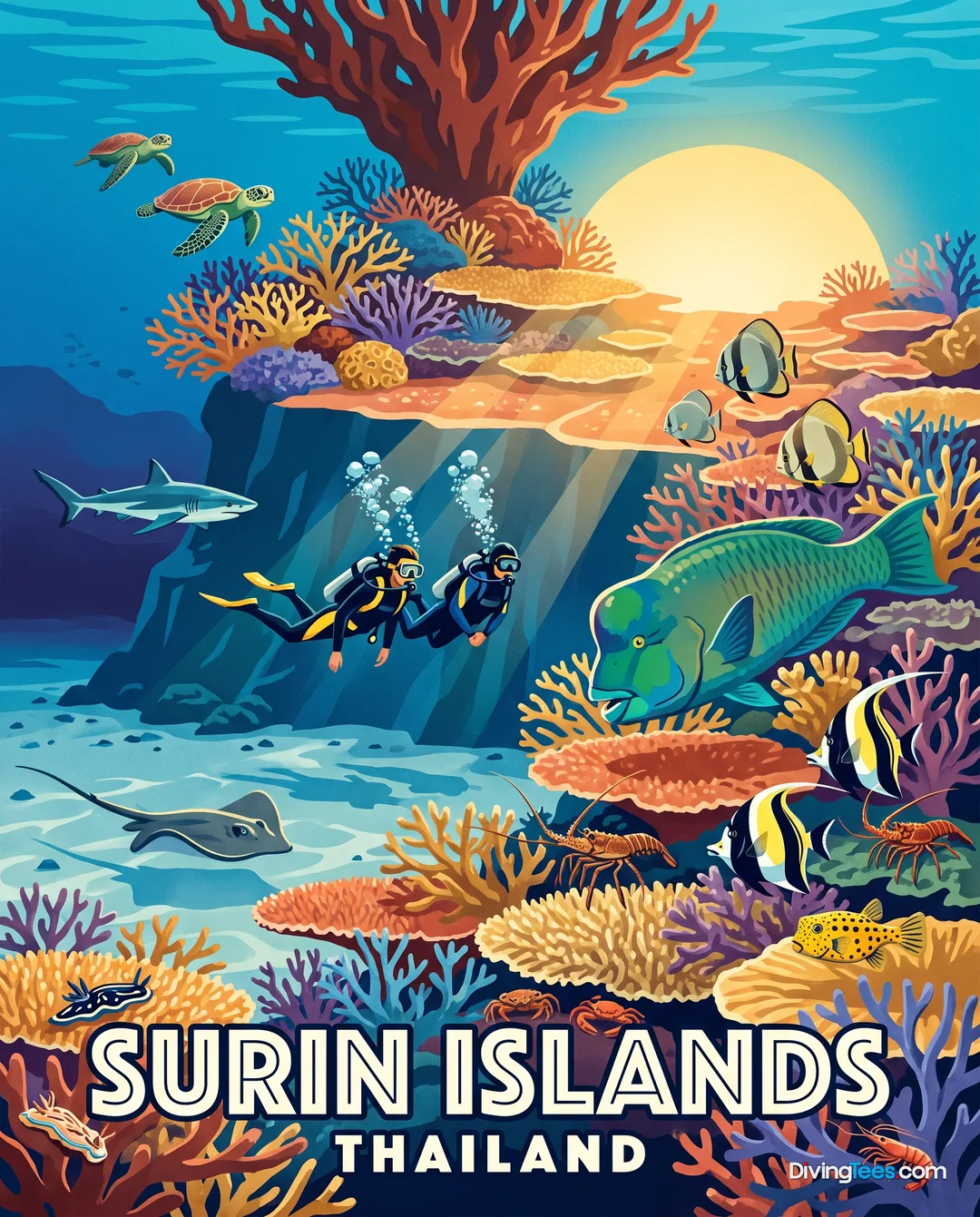
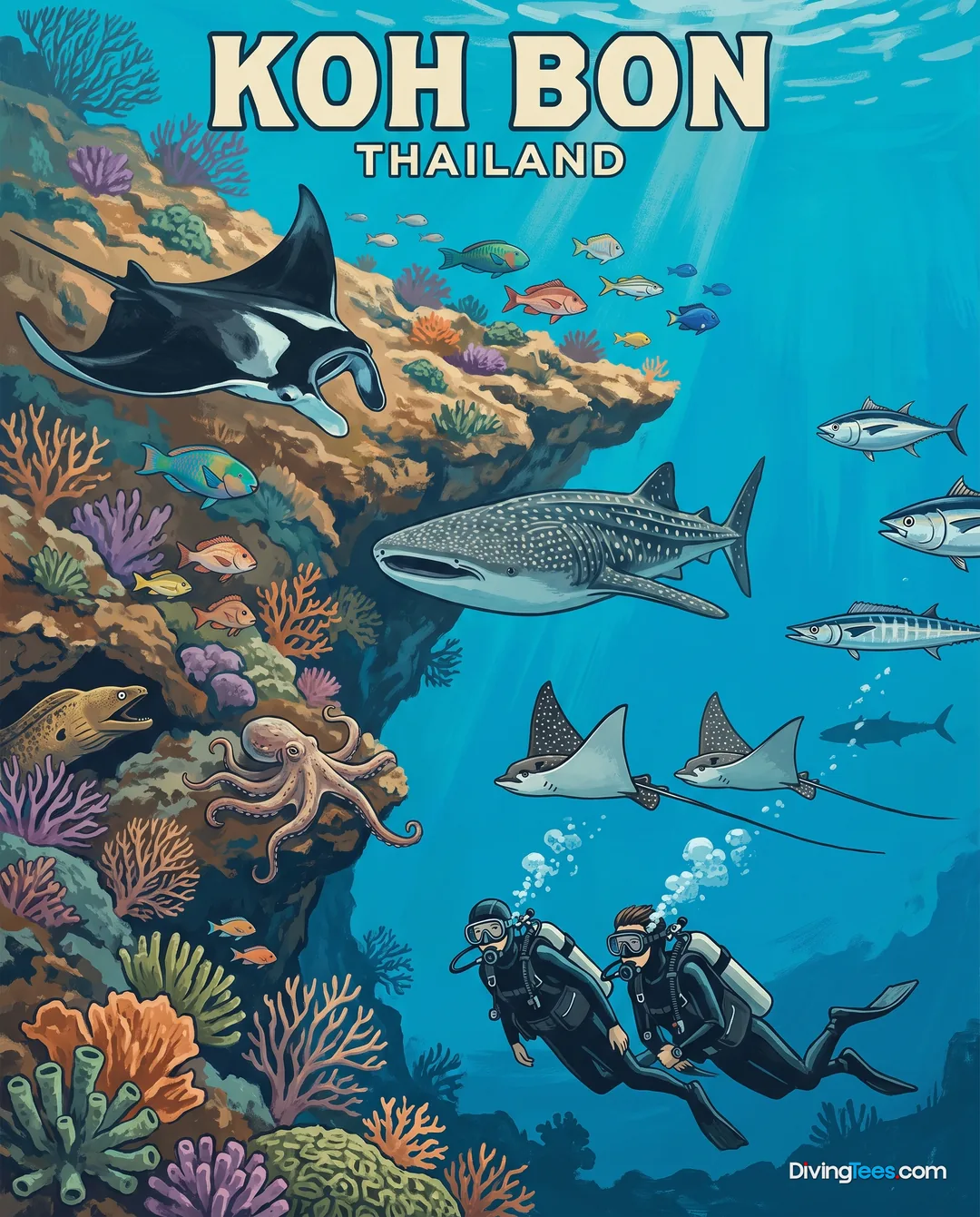
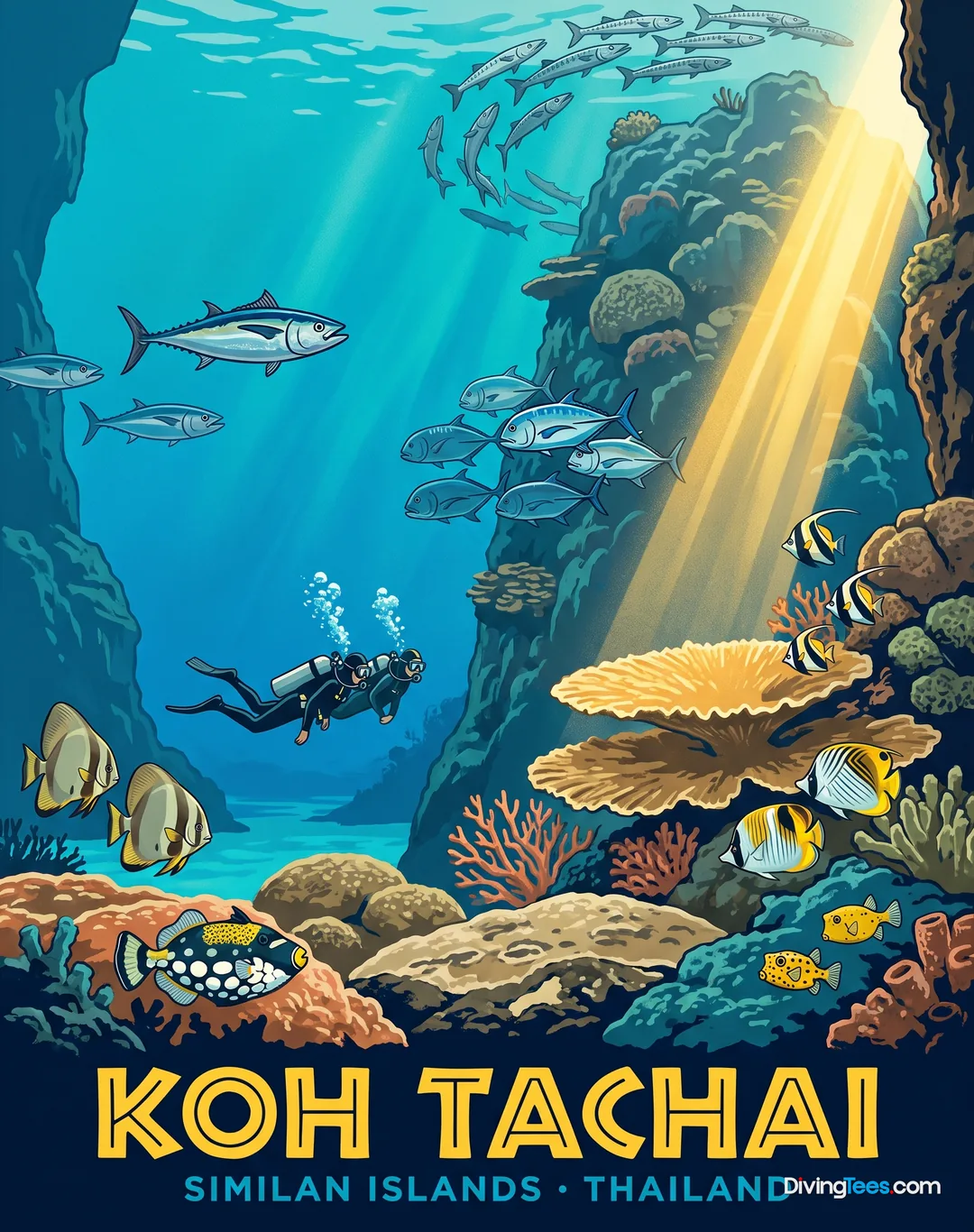
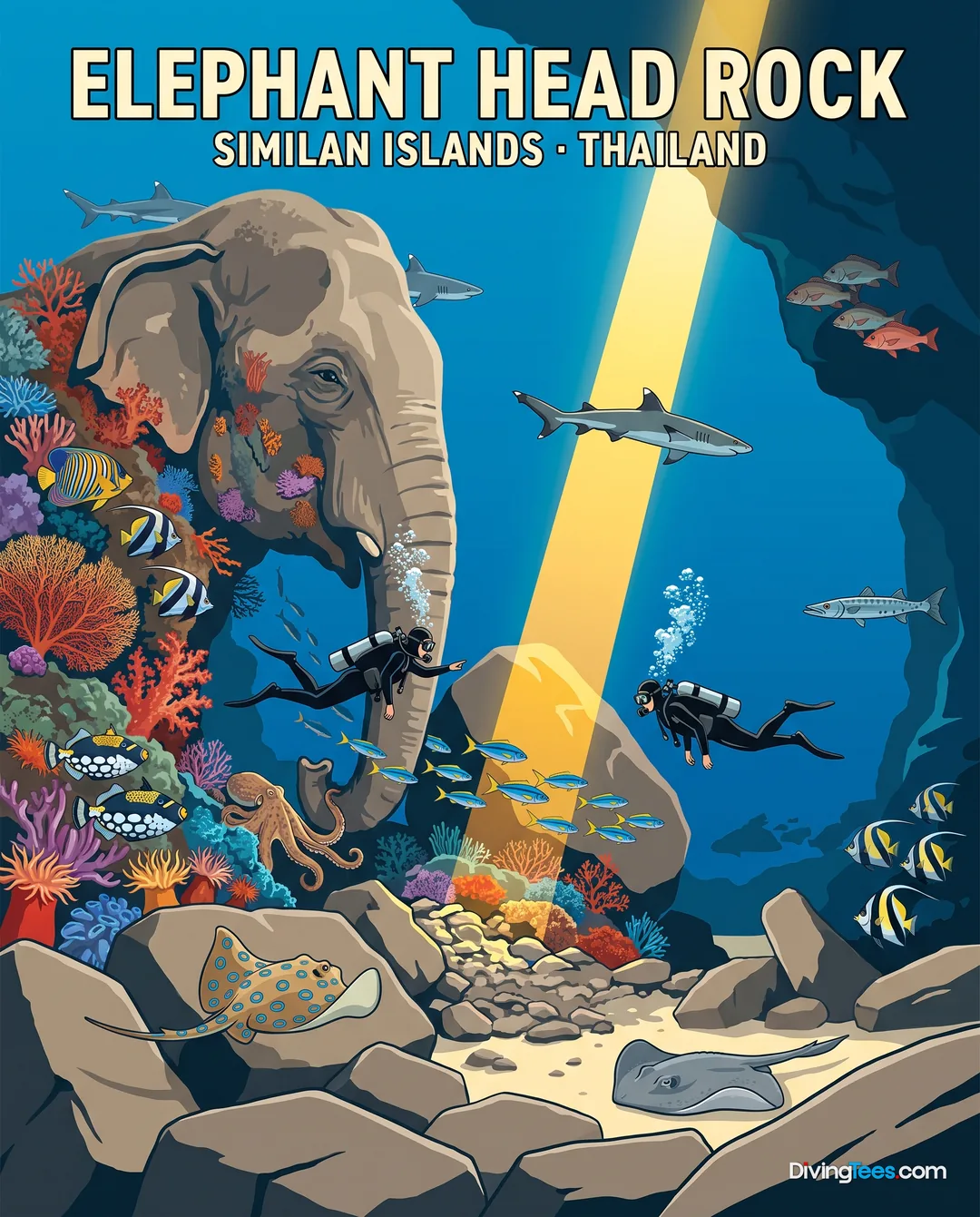
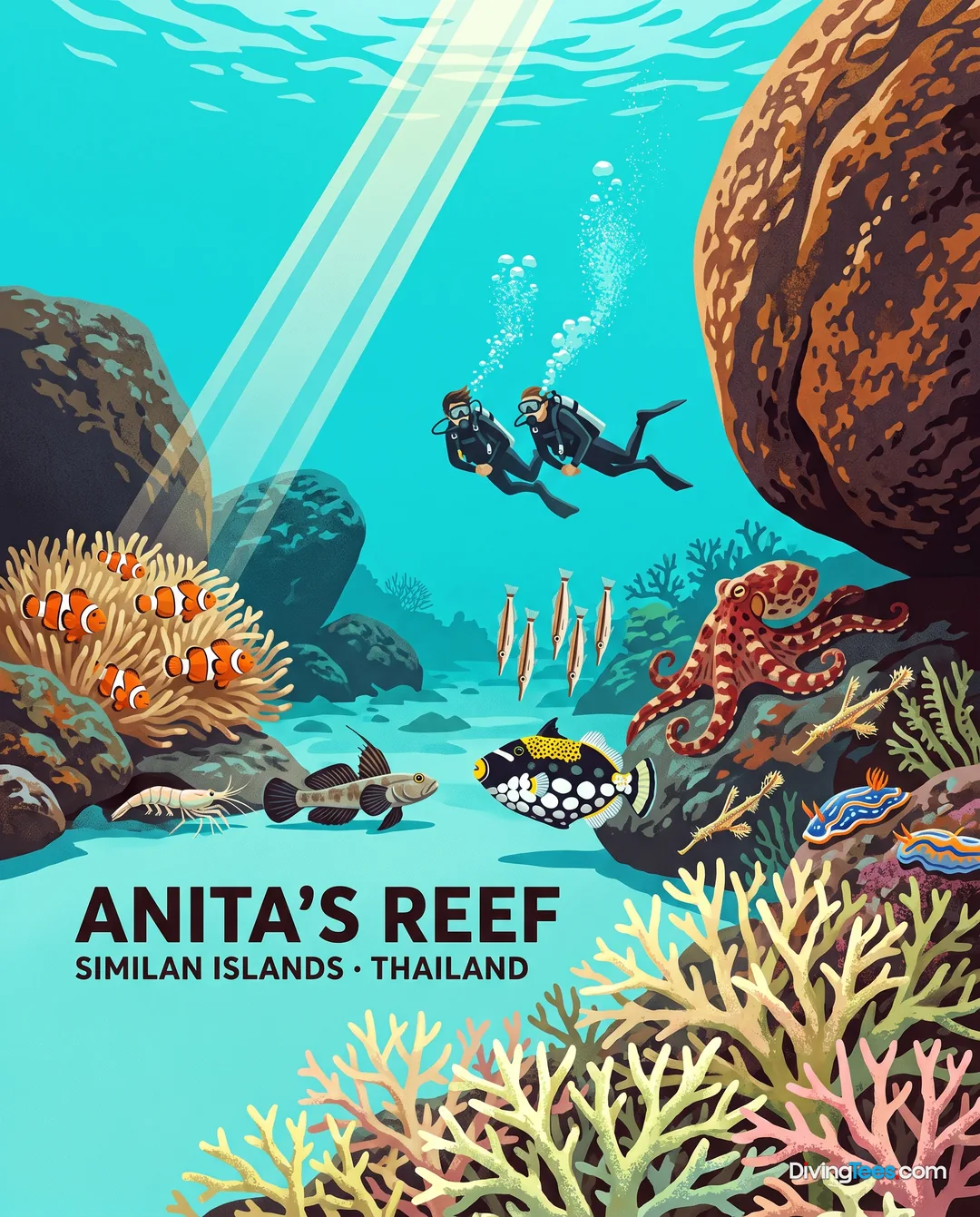
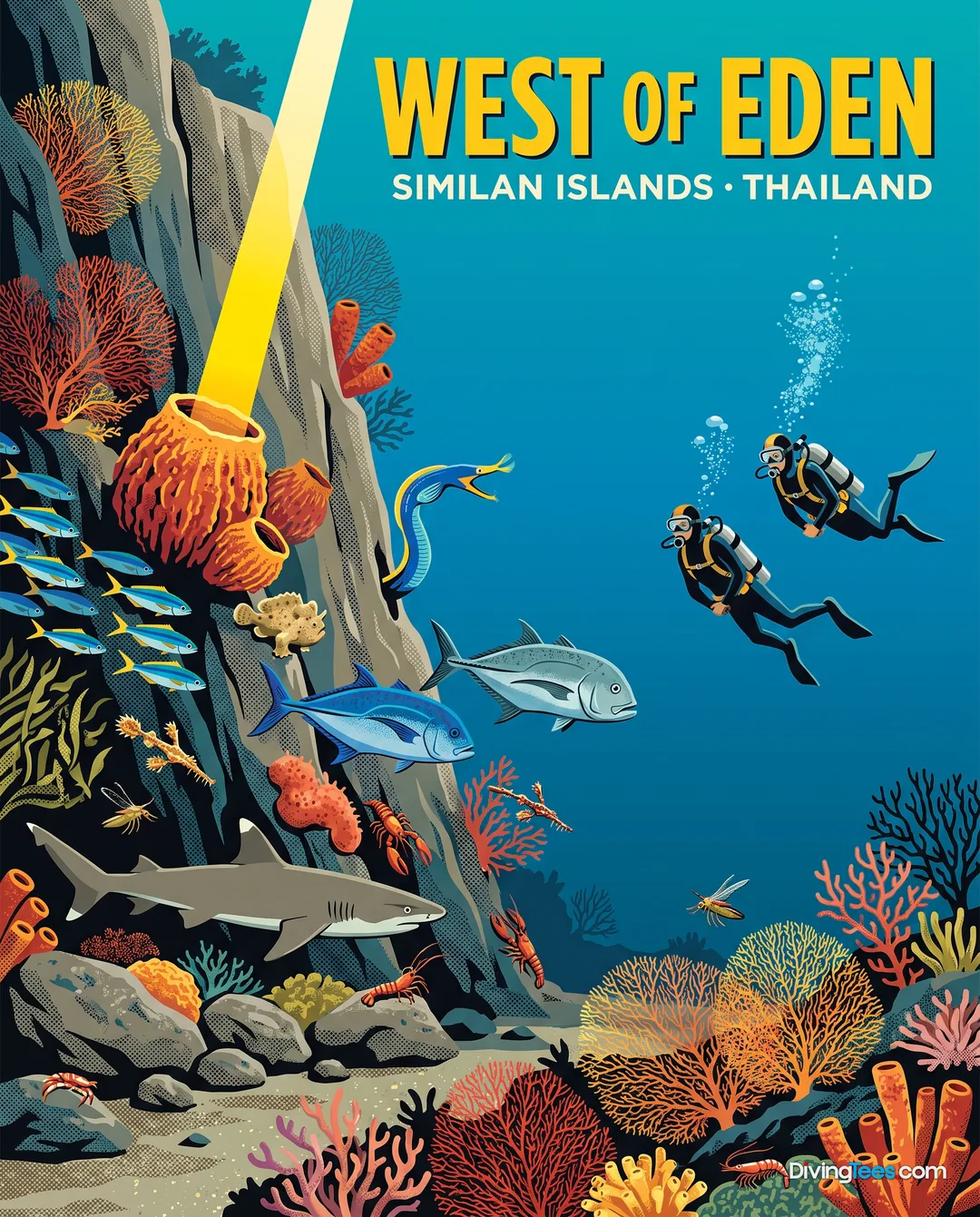
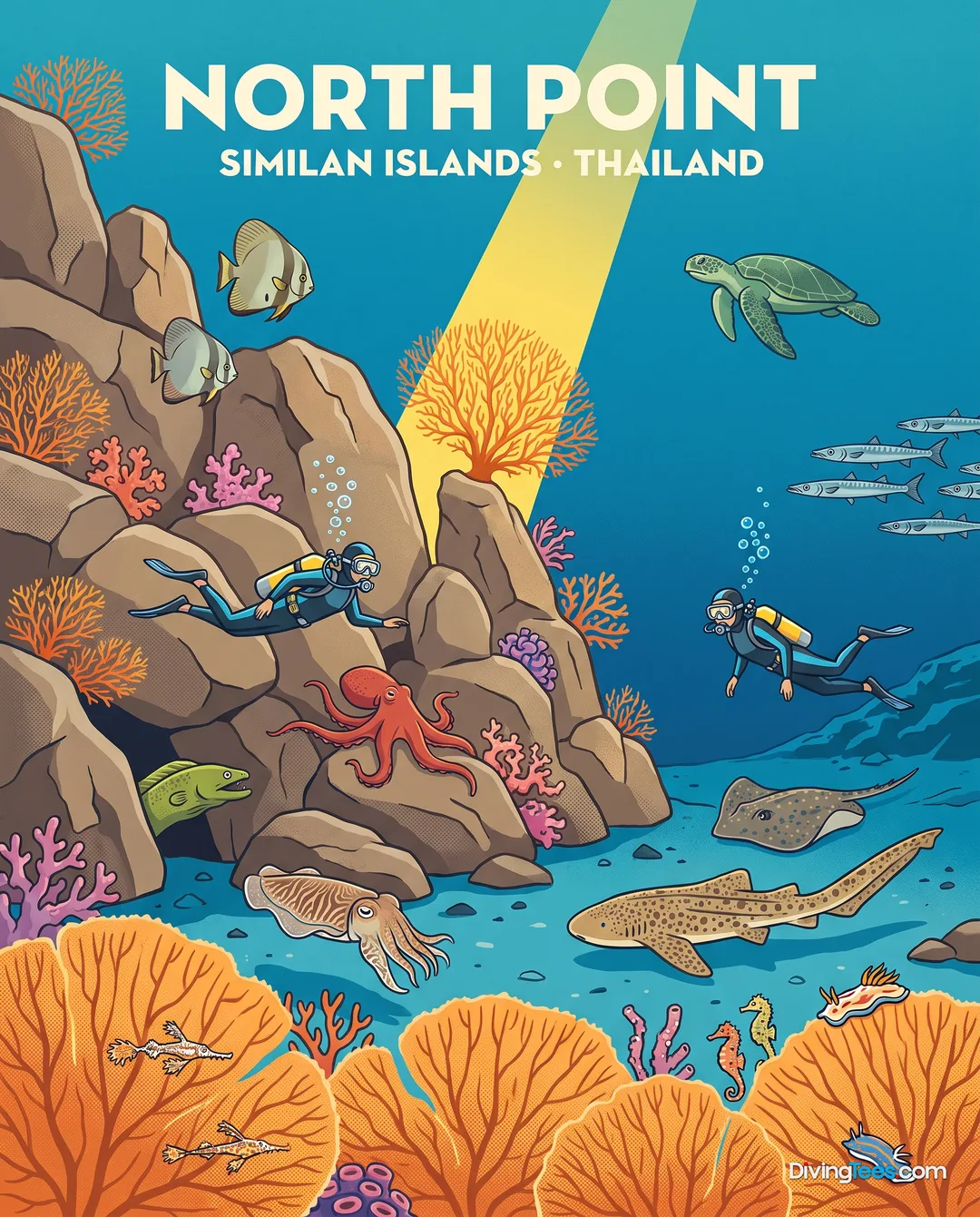
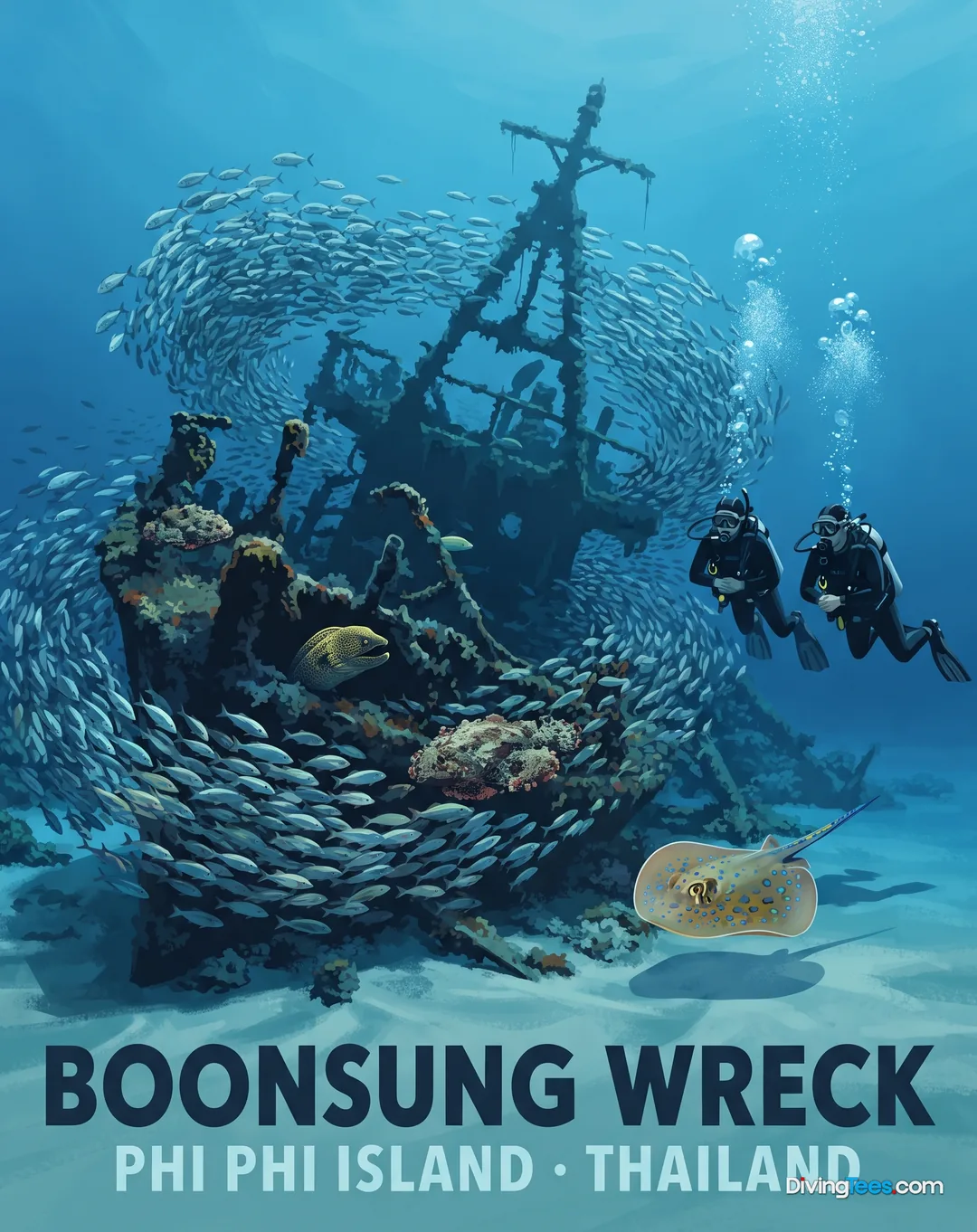
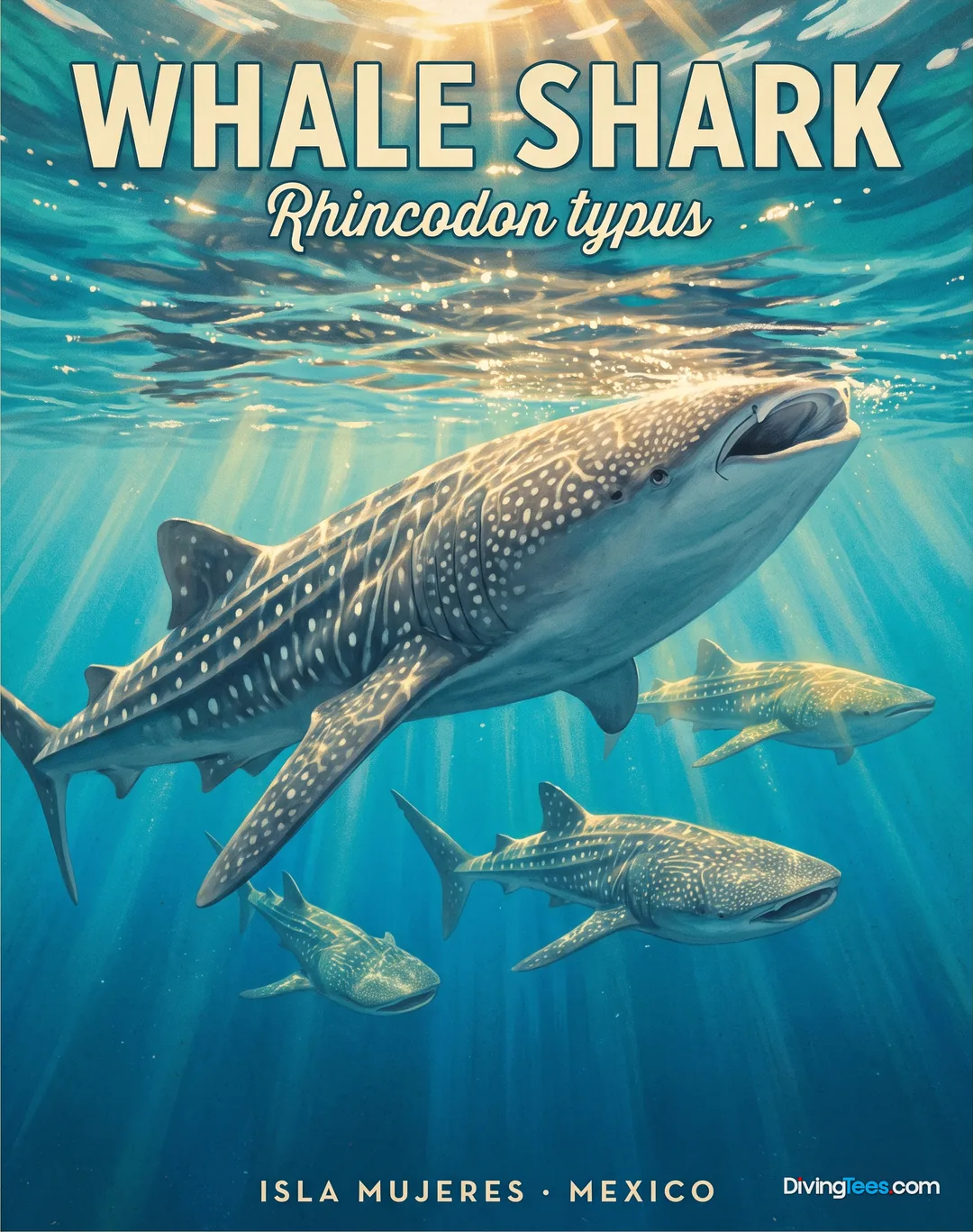
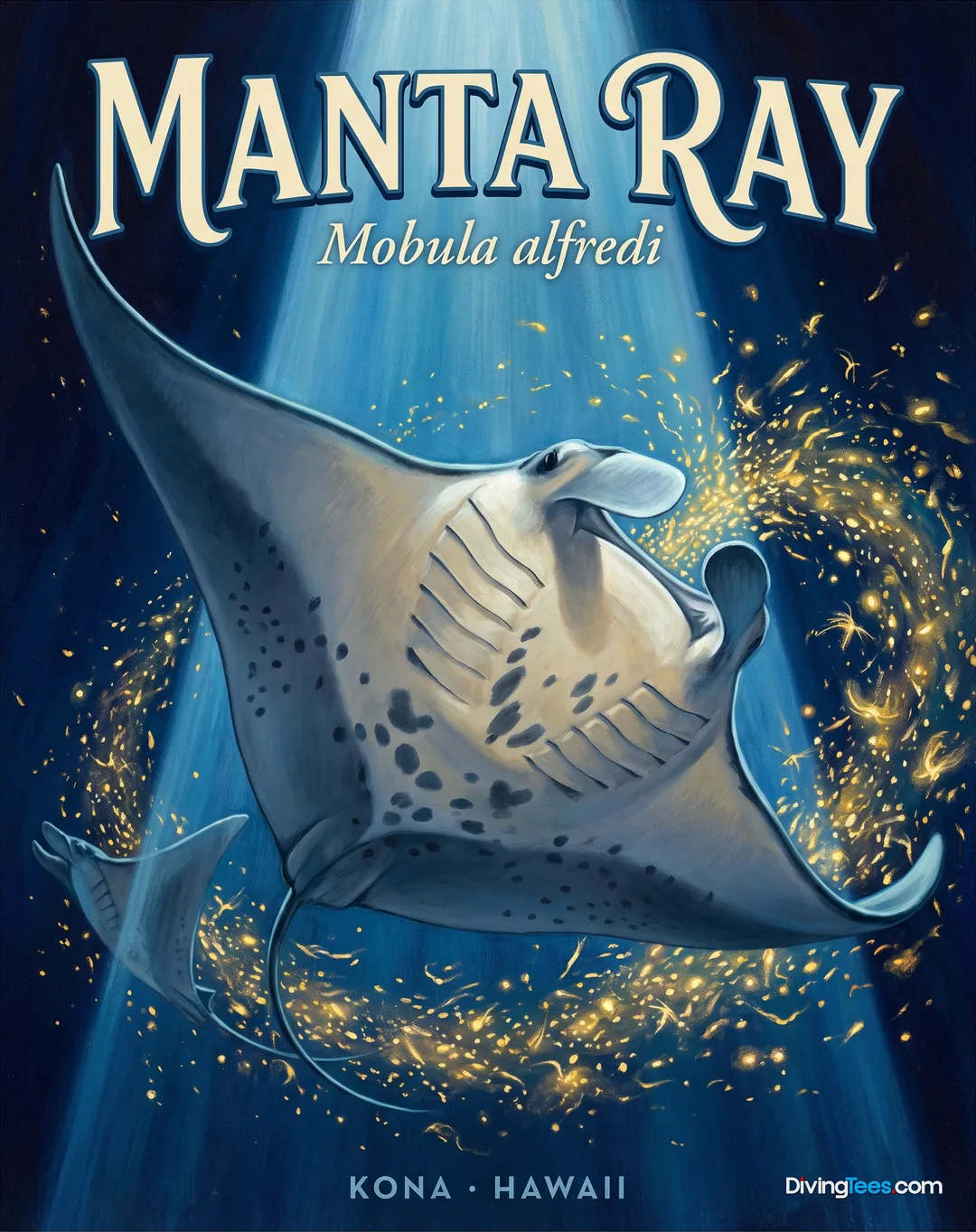
The route's centrepiece is Richelieu Rock, a submerged limestone pinnacle known for pelagic encounters and the place many divers hope will produce a whale shark. Around it, the Similan Islands reach a maximum of -40m, moving from coral reefs into granite boulder formations where manta rays, reef sharks and schools of fish can pass through the structure. Surin Islands are shallower, with hard-coral gardens and granite outcrops to -25m, and can bring manta rays, whale sharks and the distinctive humphead parrotfish. Koh Bon is about the wall and its cleaning station, where manta rays come in from the blue; no maximum depth is given for the site. Koh Tachai drops to -40m around submerged pinnacles and coral gardens. Elephant Head Rock reaches -60m through arches, tunnels and caverns. Anita's Reef slopes to -35m, West of Eden to -40m and North Point to -35m. Boonsung Wreck is the shallowest at -18m, an old tin dredger now buried in fish. Recorded departures run from 7 days/6 nights for Similan and Surin to 9 days/8 nights and 11 days/10 nights for Best of Thailand, between Chalong and Thap Lamu in either direction.
What you’ll meet underwater
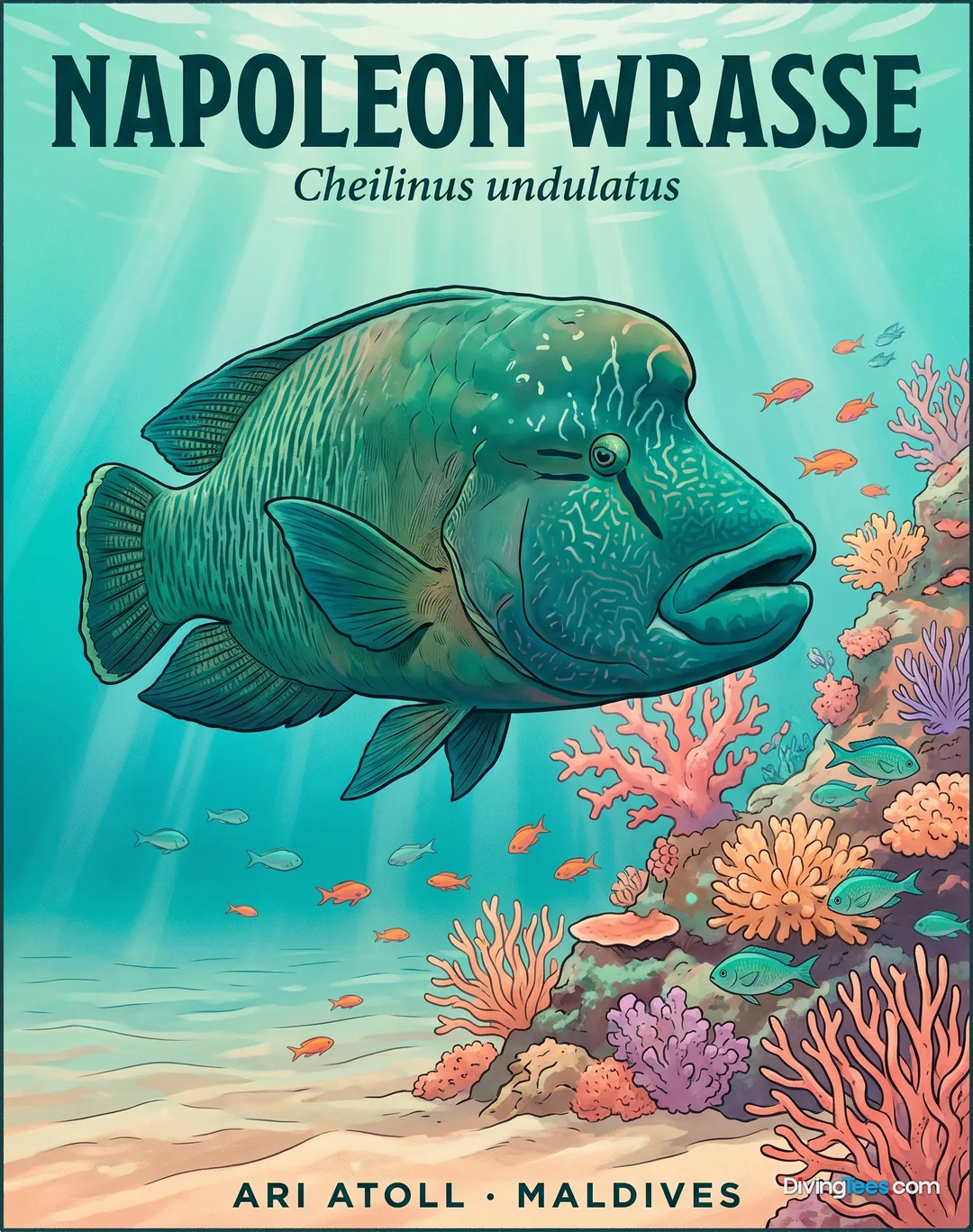
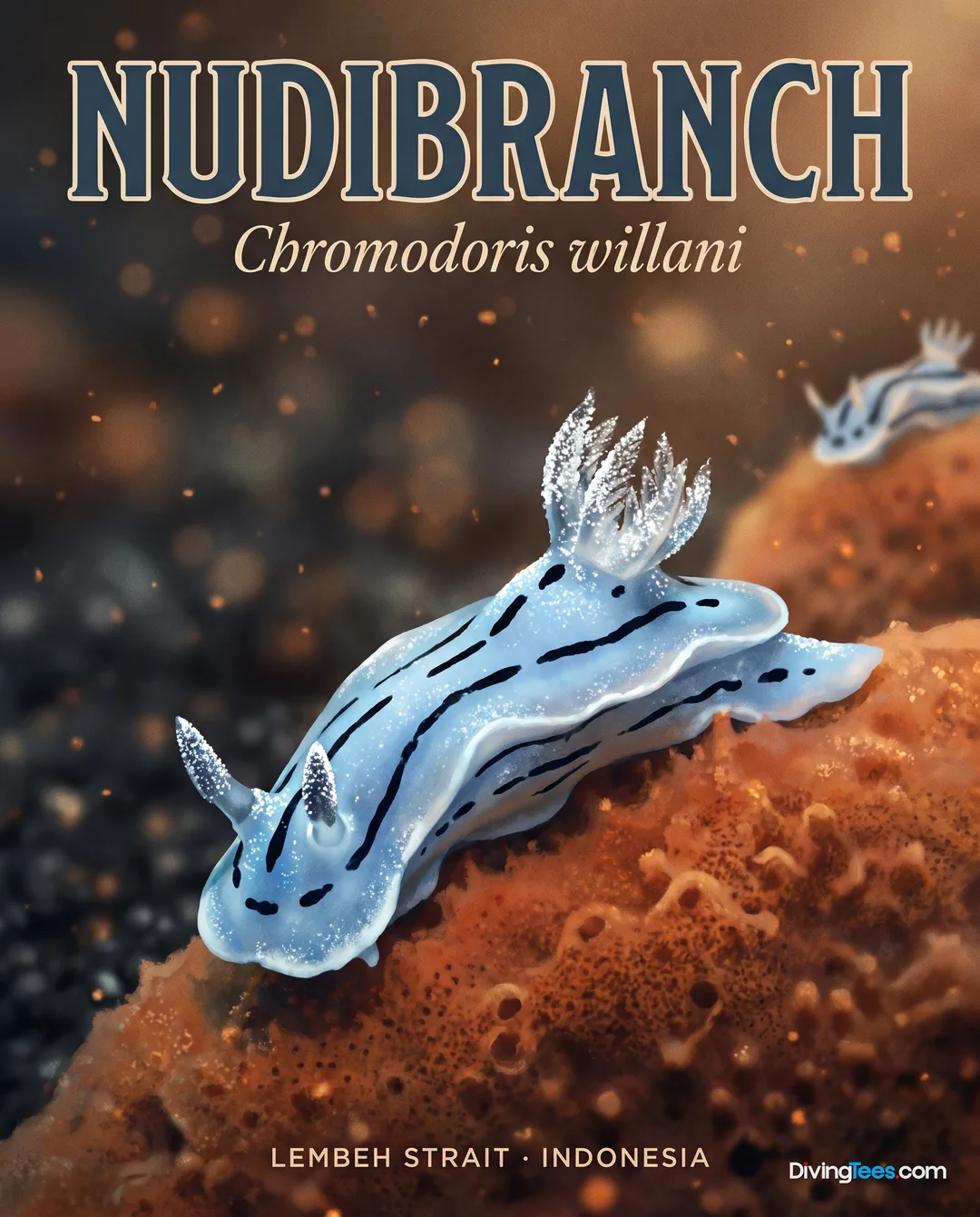
Across the route, the recurring cast is large enough to keep wide-angle and macro divers occupied: barracuda, reef sharks, whitetip reef sharks, whale sharks, sea turtles, Napoleon wrasse, manta rays and tuna are recorded across several sites. Nudibranchs, morays, trevallies and fusiliers turn up repeatedly, from reef walls to boulder fields and wreck structure. The site-specific animals give certain dives their purpose. Elephant Head Rock is the place recorded for triggerfish; Surin Islands for the humphead parrotfish; and Boonsung Wreck for stonefish and porcupinefish amid dense schools. Koh Tachai is the only listed site for gorgonians, hawksbill turtles and flatworms. At Koh Bon, the cleaning station is the reason to hold position and watch the blue: manta rays may arrive for maintenance, sometimes with tuna and other pelagic hunters nearby. These are possibilities, not guarantees. The route rewards patient observation as much as the search for one large animal.
Who puts you in the water
Four English-speaking guides work on board. Their role is direct: brief the sites, organise the entries and keep the diving operation moving between Thailand Master's deck and the two tenders. The boat's safety equipment includes emergency oxygen, first-aid kits, life rafts, life jackets, VHF and satellite communication, sonar and a locating beacon; the crew is trained in first aid. The available information does not give a guide-to-diver ratio, individual qualifications, a minimum logged-dive requirement or a recall system, and no dive courses are listed. That makes the boat a better fit for certified recreational divers who are comfortable with liveaboard procedures than for someone booking specifically for instruction. Private guiding is an optional service. Nitrox certification and other diving certifications are not part of the standard operation.
The dive deck and the gear
Thailand Master has two Coltri compressors, two diver tenders and a spacious dive deck with storage for equipment. Divers set up on the main working deck, then use the platform and tenders to reach the sites; the two boats allow the diving operation to move away from the mothership rather than making every entry directly from the hull. Nitrox is available as an optional extra, and DIN adaptors are carried on board. Rental equipment is available, including an optional upgrade to a 13-litre cylinder; the standard cylinder volume and cylinder material are not specified here, so divers bringing their own kit should check the configuration before travelling. Cameras have separate rinse facilities and a dedicated area for charging and preparation. There is no published support for rebreather or technical diving. This is a recreational setup: generous room to kit up, compressors close at hand, tenders for the sites and a deck arranged for repeated dives rather than display.
Between dives
Between dives, the best place to settle is the covered outdoor dining area at the stern, where shade, breeze and a clear view of the water replace the closed cabin. The saloon offers air-conditioning, a library and audio-video entertainment when the heat or surface interval calls for quiet. There is also a terrace and a dedicated photo area, so the gap can be spent rinsing a camera, charging batteries or leaving the equipment alone while the crew prepares the next dive. Excursions ashore are part of the included programme on the listed trips, adding a change of ground to a week otherwise organised around the sea. Thailand Master is not designed around a long list of resort distractions. Her useful luxury is the choice between shade, cool air, a meal, a book and the next dive.
A day on board
A day on Thailand Master is built around repeated preparation, entry, recovery and preparation again. The dive deck is where the cycle starts: equipment is stored at the stations, guides brief the site, and the tenders carry divers out to the reef, wall, pinnacle or wreck. Back on board, the covered stern becomes the place for food, shade and conversation before the next briefing. The listed pack includes the dives, but no fixed daily timetable or number of dives is given, so the exact rhythm follows the itinerary and site conditions rather than an invented clock. Sailing time separates the dive blocks and gives the compressors, crew and divers room to reset. Meals punctuate the day, with Thai and Western dishes arriving full-board. Ashore excursions can break the pattern on selected routes. The useful shape of the day is simple: wake, dive, eat, recover, dive again, then return to the stern as the light goes down.
What you eat aboard
The galley serves both Western food and Thai cuisine, using fresh, locally sourced ingredients. Meals are provided as full board, with buffet service and vegetarian options, and they can be taken outside beneath the covered dining area at the stern. That setting matters after a dive: wet gear is left behind, the table faces the water, and the meal becomes the reset before the next entry. Beer and wine are available for the evening, while non-alcoholic drinks, water, tea, coffee and snacks are included. The kitchen is one of the boat's strongest points, reflected in the food score of 9.7. This is not a trip built around elaborate restaurant service. It is a dive boat where Thai flavours and familiar Western dishes keep arriving at the moments when a diver is hungry, tired and ready to go back in.
Nights at sea
All seven cabins are on the lower deck, with air-conditioning and private bathrooms. The Classic Twin cabins keep two fixed single beds; the flexible twin/double cabins can be arranged for either sleeping plan, while the quad cabins use four single beds and may be assigned as mixed-gender shares when demand requires it. Hot water matters after a sequence of dives, and towels are provided. These are practical cabins, not a choice of sea-view suites: the attraction is a private bathroom and a cool place to sleep between dives, with the boat's character carried by the wood and the shared spaces outside. The smaller passenger capacity helps the lower deck feel like part of one compact liveaboard rather than a hotel corridor. Bring the right expectations. The cabins are where divers recover, dry off and sleep; the covered stern, saloon and terrace are where Thailand Master earns her atmosphere.
Classic Twin Cabins
Classic Double/Twin Cabin
Classic Quad Cabins
Classic Flexible Twin/Double Cabins
What to know before boarding
Departures and returns are recorded between Chalong and Thap Lamu, in either direction, with the exact port depending on the itinerary. Airport and hotel transfers are included. Arriving the night before is the sensible way to protect the first morning from a delayed flight or a missed connection. Check the joining instructions for the transfer details attached to the chosen departure.
Deck plan
- Year built
- 2007
- Length
- 34 m
- Maximum number of passengers
- 18
- Number of cabins
- 7
- Number of bathrooms
- 7
- Engines
- 1 × 380 hp
- Cruising speed
- 8 knots
- Tenders
- 2
- Website
- masterliveaboards.com ↗
Hello, I'm Marina, DivingDeal.com's AI assistant. I answer in detail about hotels, dive centres and liveaboards.

Thinking about the whole trip and the flights? Talk it over with Edith →
Marina is an AI. Some links are affiliate links: DivingDeal may earn a commission, at no extra cost to you. Bookings are made with the partner.