
Tagoro Dive
Google 5/5 (756 reviews)
less than 1 km away as the crow flies
El Hierro · Canary Islands · Atlantic
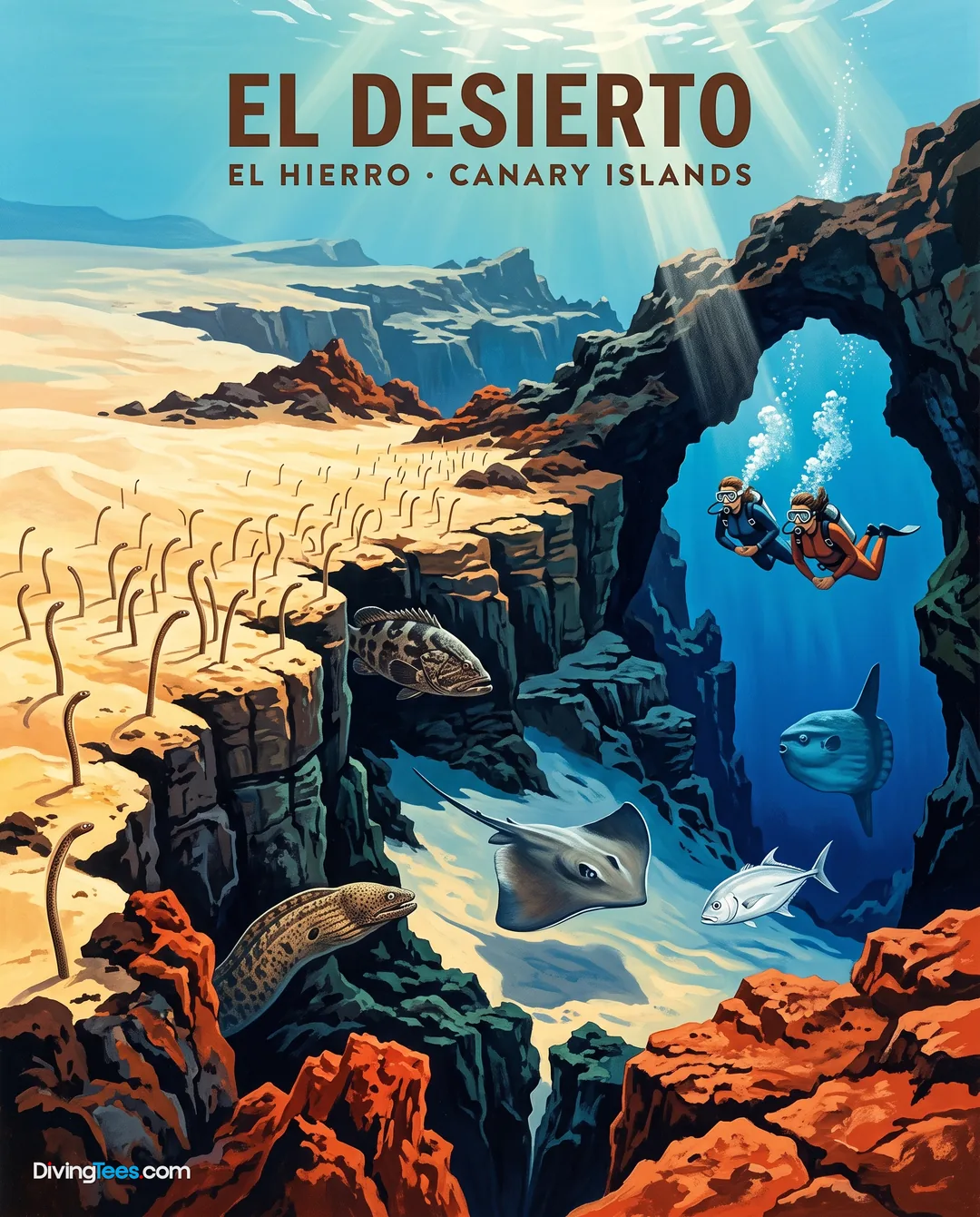
Max. depth · 20 mExplore a shallow volcanic strait where mushroom-shaped rock formations rise from golden sand in a protected marine reserve.
For subtitles in English: start the video firstthen click the gearat the top right of the video, select “Subtitles/CC”, then “Auto-translate” and choose “English”.
The El Río site is not a single point but a vast, shallow marine strait situated between the northern coast of Fuerteventura and the islet of Lobos. This channel is characterized by a sandy seabed that serves as a foundation for a complex volcanic landscape. Unlike deep wall dives, the topography here is defined by a series of rock formations that break the surface of the sand. These structures create a highly textured environment that is relatively accessible due to the moderate depths found throughout the strait.
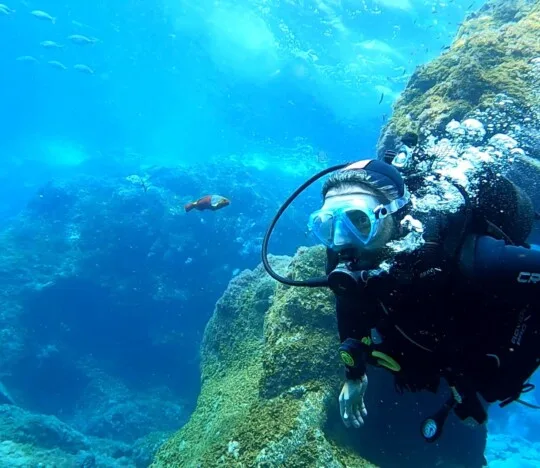
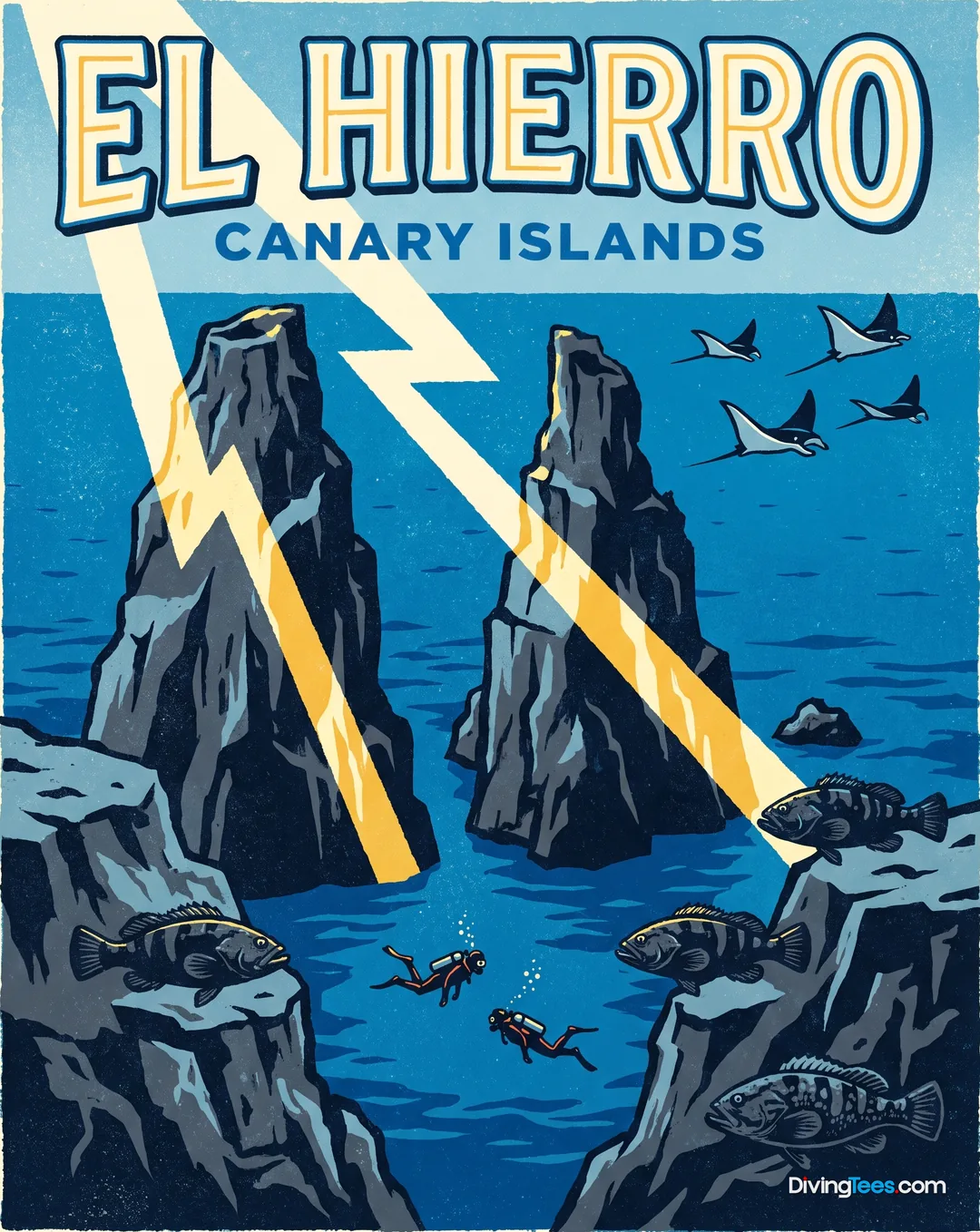
The most iconic section of the site is known as Bajón del Río, often referred to locally as Las Setas. Here, three distinct volcanic crags rise from the seabed at depths between 15 and 18 metres, resembling giant mushroom-shaped pinnacles. These formations have been sculpted over millennia by the persistent water movement within the strait. The arrangement of these rocks creates a series of natural arches and short, light-filled swim-throughs that allow you to navigate through the reef structure rather than just around it.
Navigation through El Río involves moving between these volcanic outcrops and the surrounding sandy plains. Another notable area is El Puente, a shallower shoal that sits at depths under 10 metres. The combination of these high points and lower sandy corridors provides a diverse dive profile. You can transition from open sand areas into tight, cave-like passages formed by the volcanic rock. This creates a sense of enclosure and discovery even at shallow depths where sunlight remains abundant.
The water movement is a defining characteristic of this strait. Because it acts as a narrow passage between two landmasses, the current is often persistent. The rock structures themselves show the physical evidence of this constant flow, with smooth, rounded edges shaped by the passing water. While the current is generally manageable for intermediate divers, it can strengthen depending on the tide and local wind conditions. Staying close to the rock formations helps maintain position and stability during the dive.
Marine life at El Río is closely tied to the protection status of this marine reserve. The sandy patches between the volcanic rocks are critical habitats for various species. You will frequently encounter rays and sea bream patrolling the bottom. The structure of the reef also attracts larger groups of fish, such as gilt-head bream and barracuda, which utilize the shelter of the rock pinnacles. The mix of hard volcanic substrate and soft sand ensures a high level of biological diversity.
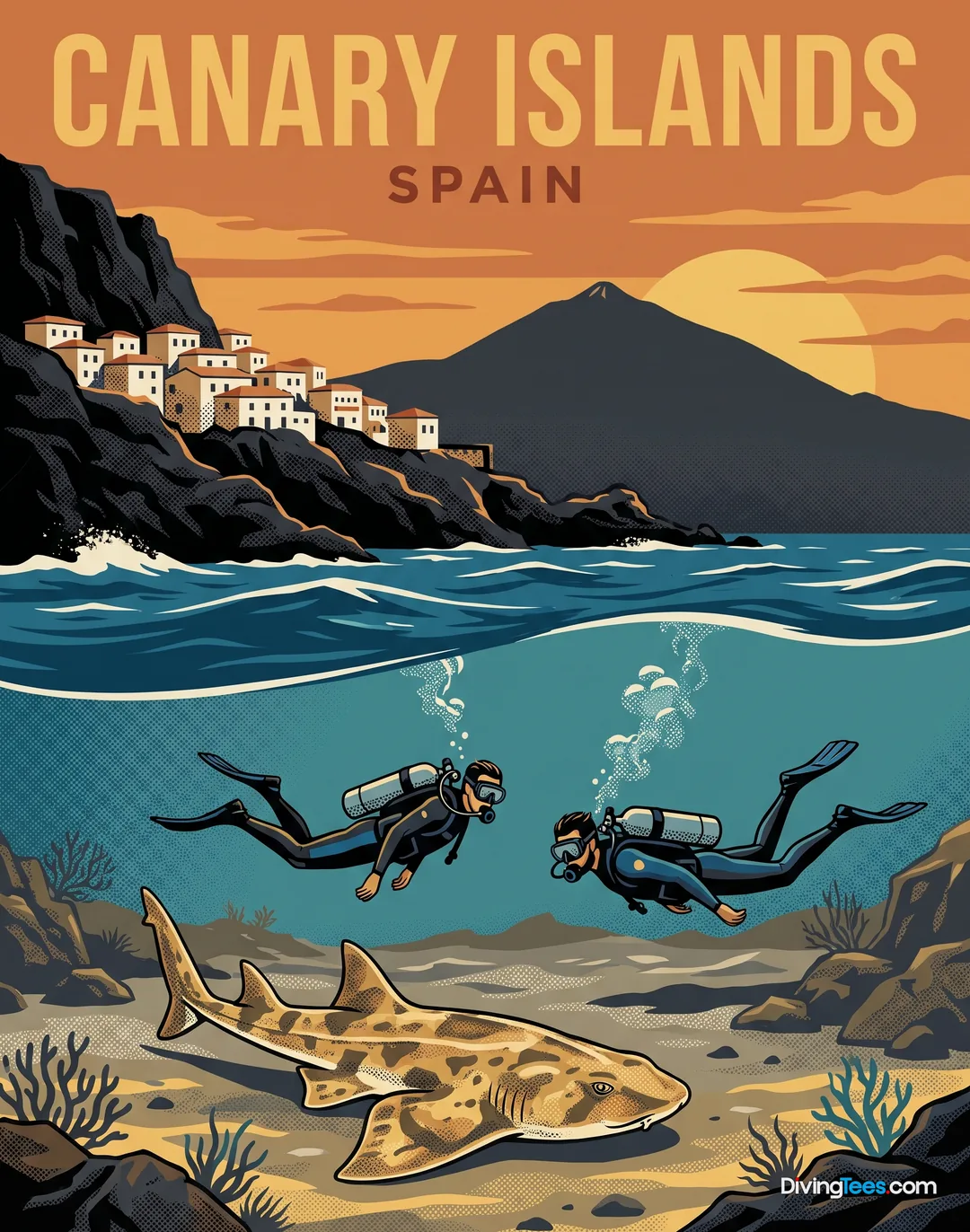
One of the primary reasons divers visit this specific area is the opportunity to encounter the critically endangered angelshark. These sharks are often found resting on the sandy floor, partially camouflaged against the seabed. Because the site is part of a protected zone, the ecosystem remains healthy enough to support these sensitive populations. Finding them requires a slow, observant approach while cruising the sandy sections between the larger rock formations like Las Setas.
Visibility in the strait is typically high, often ranging between 15 and 20 metres. This clarity is essential for appreciating the scale of the volcanic pinnacles and the intricate details of the arches. The light penetrates easily to the bottom, especially in the shallower sections of El Puente. This bright environment makes the site ideal for photography, as the interplay of light through the swim-throughs and over the golden sand creates high-contrast scenes. You can easily track the movement of schools of fish against the clear blue water.
Depths range from 8 to 20 metres. The site is suitable for Open Water Divers, though intermediate experience with current and solid buoyancy control is recommended due to the persistent water movement in the strait. Visibility is typically between 15 and 20 metres.
El Rio is suitable for Open Water Divers. Intermediate experience is recommended because water movement is persistent in the strait, and solid buoyancy control helps you remain stable around the volcanic formations, sandy corridors, arches, and swim-throughs. Staying close to the rock structures can also help you maintain position during the dive.
El Rio ranges from 8 to 20 metres. Las Setas, the site’s mushroom-shaped volcanic pinnacles, rise from the seabed at 15 to 18 metres, while El Puente is a shallower shoal under 10 metres. This varied profile lets you move between sandy areas, rock formations, arches, and short swim-throughs.
El Rio has persistent water movement because it lies in a narrow strait between two landmasses. The current is generally manageable for intermediate divers but can strengthen with the tide and local wind conditions. Staying near the rock formations helps you maintain position and stability while moving through the site.
At El Rio, you can explore mushroom-shaped volcanic pinnacles, natural arches, short light-filled swim-throughs, sandy seabed, and varied volcanic topography. The protected marine reserve habitat supports rays, sea bream, gilt-head bream, and barracuda. With a slow, observant approach over the sand, you may encounter an angelshark.