Liveaboards · Maldives
Maldives Blue Force 3 — a purpose-built liveaboard for serious atoll diving
What makes this boat unique
- A 42-metre steel liveaboard renovated in 2018, with space for up to 26 passengers in 12 air-conditioned cabins.
- Diving is carried out from a dedicated 18-metre dhoni fitted with three compressors and a membrane Nitrox system.
- The routes combine channels, thilas, manta cleaning stations, shark encounters and whale-shark areas across the central and northern atolls.
- The boat carries aluminium S80 tanks with DIN and yoke fittings; S100 tanks, Nitrox and rental equipment are available as paid extras.
For subtitles in English: start the video firstthen click the gearat the top right of the video, select “Subtitles/CC”, then “Auto-translate” and choose “English”.
The invitation
The Maldives Blue Force 3 is for divers who want the reach of a proper liveaboard without giving up the space to live well between dives. It is a purpose-built steel boat, designed around long crossings between atolls and a separate dhoni that keeps compressors, tanks and wet equipment away from the main living spaces. That matters over a full week: the dive operation stays concentrated where it belongs, while the main boat remains a place to eat, sleep and get out of the sun. The central routes leave Malé for North Malé, South Malé, Felidhoo and Ari, with northern and Hanifaru itineraries adding Baa, Raa, Lhaviyani and other atolls when conditions and park rules allow. The reason to choose this boat is the combination of serious access and a comfortable base: channels for moving water and pelagics, thilas covered in reef life, then a proper cabin and a shaded place to sit when the tanks are empty.
Boarding
At the dock, the Maldives Blue Force 3 makes the impression of a working expedition boat rather than a converted hotel. Its steel hull, broad beam and clean, functional lines are built for the long crossings that link Maldivian atolls. The 2018 renovation supports that character: the common areas are finished for use, not display, with an air-conditioned salon, dining area, bar and open deck space. Boarding leads quickly to the practical heart of the trip, the dhoni that carries the dive operation. That separation changes the first hours aboard. Divers can leave wet gear and tank handling to the working boat, then return to a main vessel that is dry, ordered and easy to move through. The boat can carry up to 26 passengers, but its 12 cabins and several distinct decks give the group places to spread out. It feels made for a week in motion, not for a single night in port.
The atmosphere on board
The atmosphere is shaped by a crew that has worked together for years and by a service style that stays close to the diving rather than becoming formal. The crew is local and international, and English and Spanish are spoken aboard. Four diving guides are on duty, giving the operation enough depth to organise groups around different skills and expectations. That professional approach shows most clearly in the ordinary moments: briefings are taken seriously, meals arrive without the boat feeling hurried, and the crew keeps the practical work moving while divers talk through the last dive. The boat's strongest scores are for food and diving, with the crew close behind; the point is not luxury language but consistency. By evening, the group usually gathers in the salon, at the bar or on deck, still discussing the manta that came through the channel or the shark that stayed just beyond the reef.
The sites you’ll dive
The 7-night Central Atolls Classical Route runs from Malé to Malé and covers North Malé, South Malé, Felidhoo and Ari, with 18 dives across six diving days. Central Atolls and Hanifaru departures also run for 8 days and 7 nights, adding the Baa Atoll area and the protected waters of Hanifaru Bay when conditions and regulations allow. At Hanifaru, hundreds of reef manta rays can gather to feed in cyclone formation. Barracuda Giri drops onto three submerged pinnacles, with a maximum depth of -30m and schooling barracudas, tunas and jacks pulled in by the current. Banana Reef is a lively reef landmark near Thulhagiri, with reef sharks, eagle rays and anemones. Mushimasmigili Marine Reserve reaches -30m and is known for grey reef sharks at the up-current pinnacle. Dhonkalo reaches -25m, where mantas gather at a cleaning station in a sandy channel. In South Ari, Maamigili, Kudarah Thila and Maamigili Beiyru reach -30m: whale sharks and mantas at the first and third, and clefts, caves and batfish schools at Kudarah. Other route sites include Guraidhoo Marine Reserve, Myaru Kandu at -30m, Foththeyo Kandu at -40m, Dhigalhi Haa at -30m, Dhonfanu at -30m and Dhigu Thila at -30m.
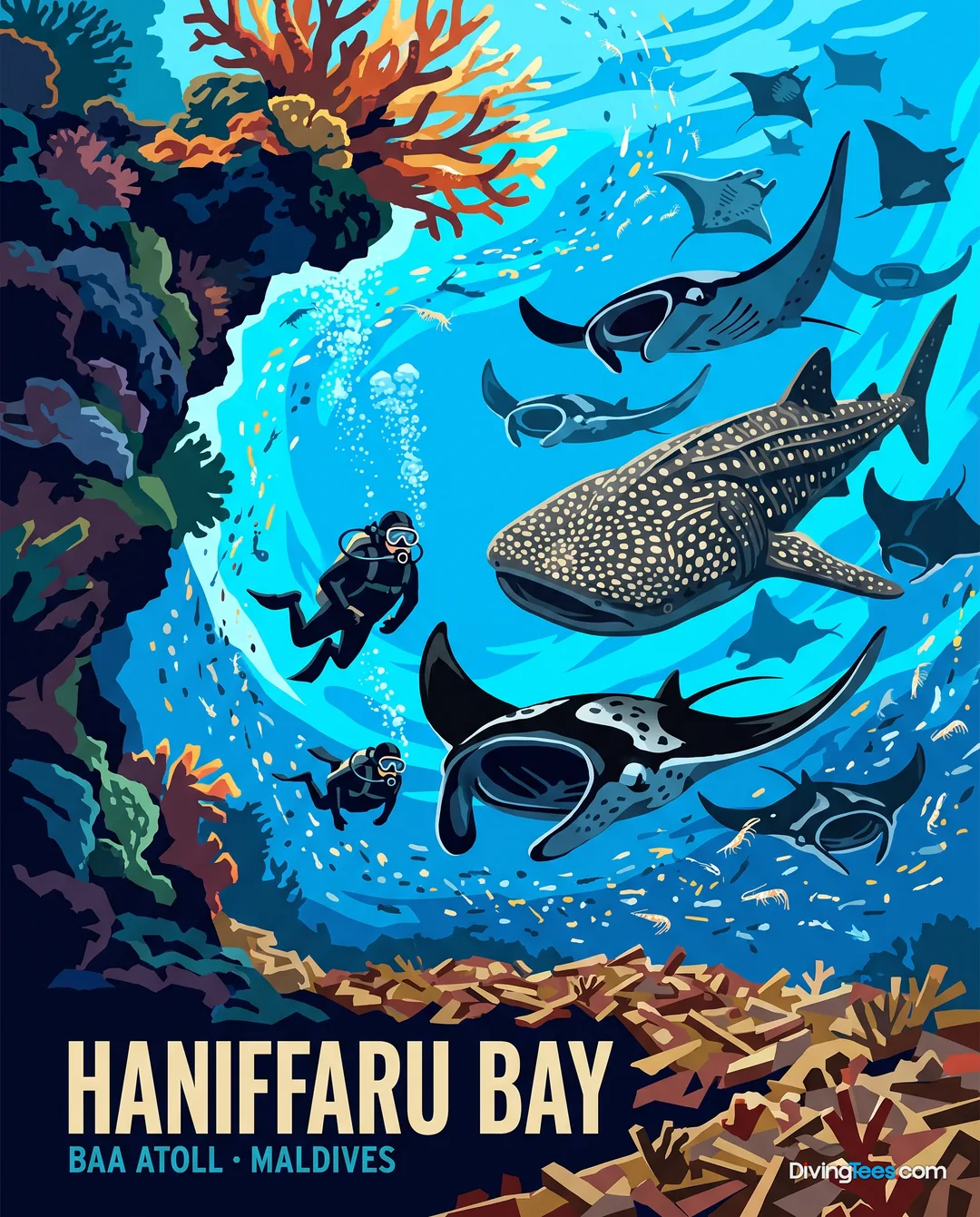
Hanifaru Bay →
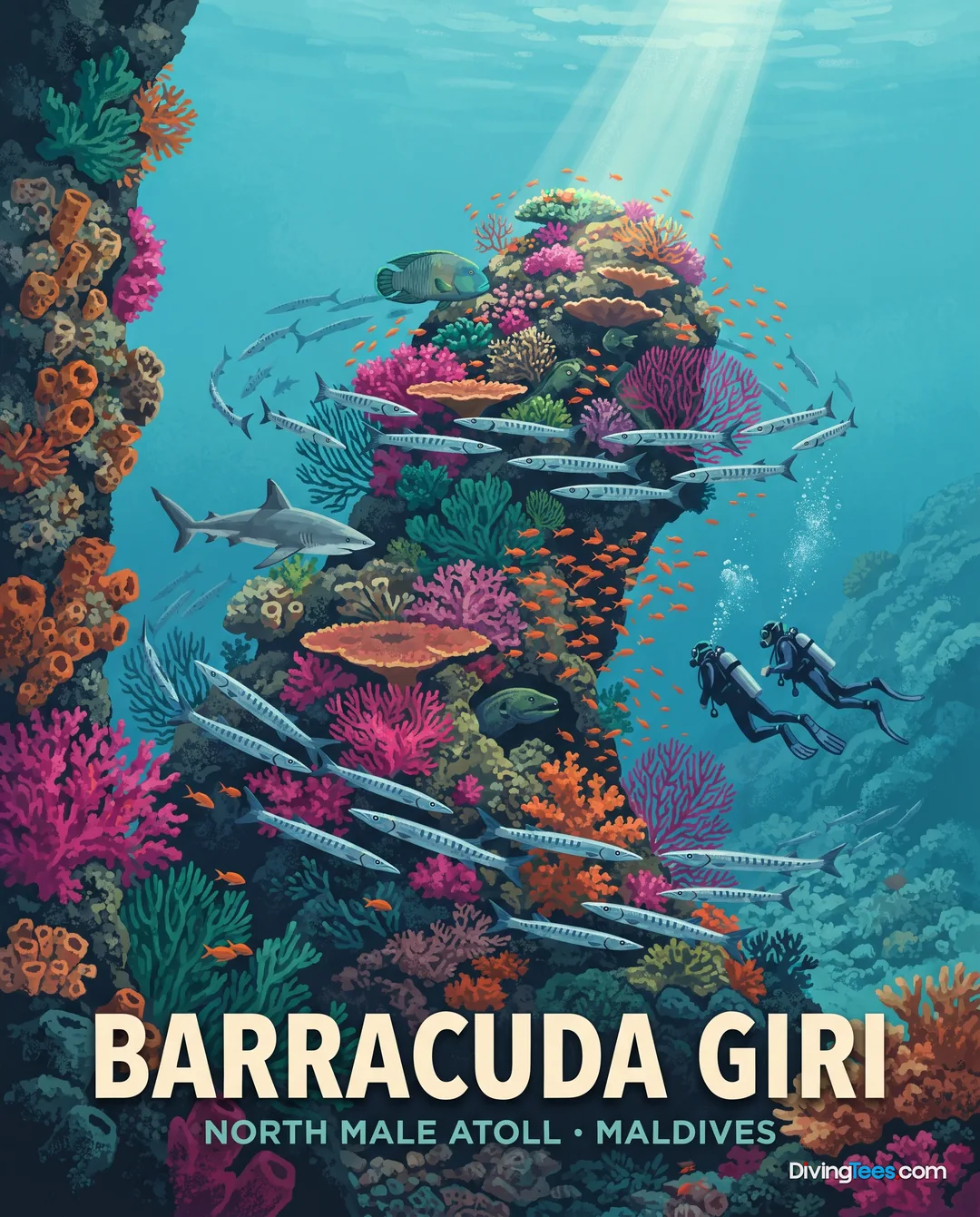
Barracuda Giri →
Max. depth · 30 m
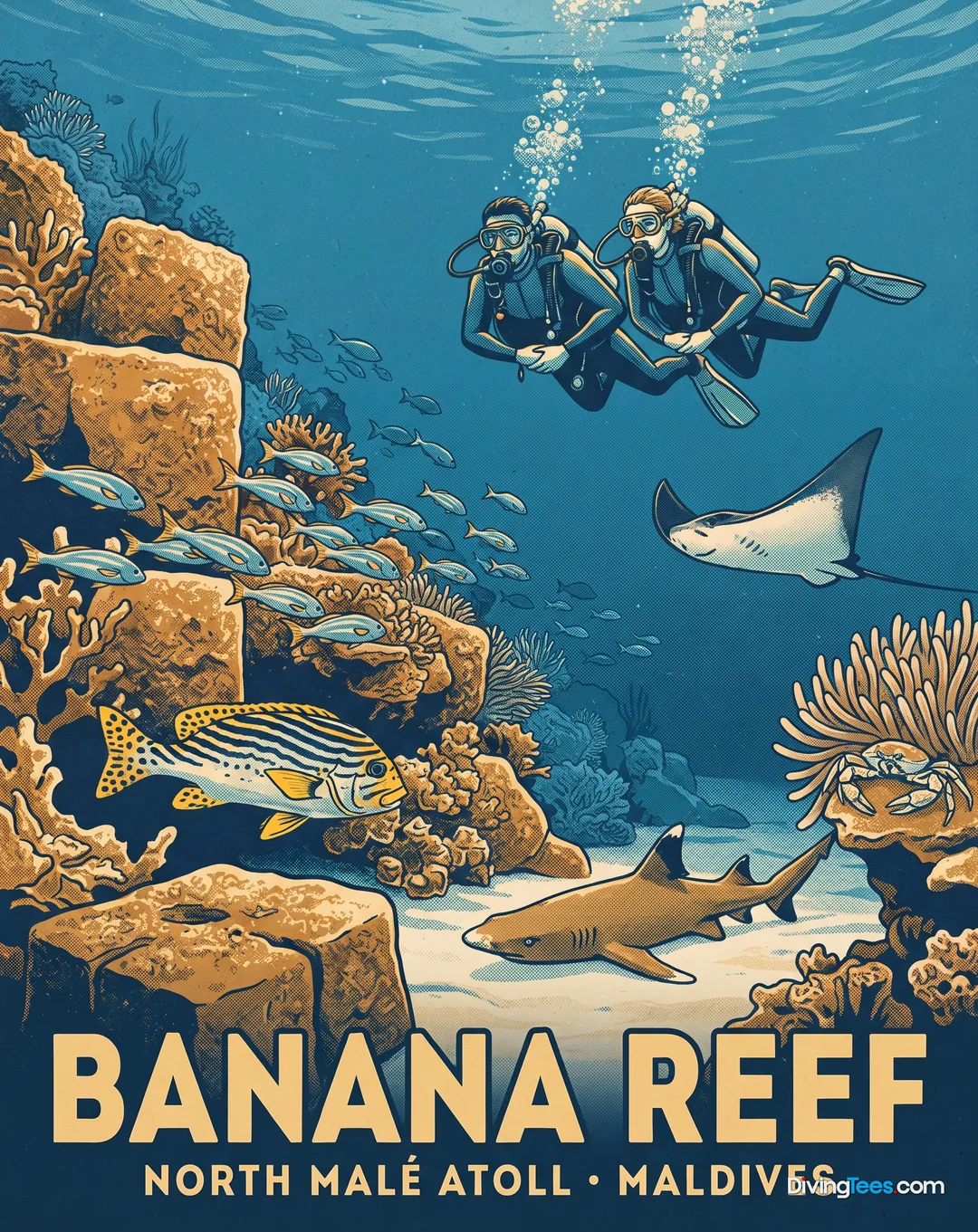
Banana Reef →
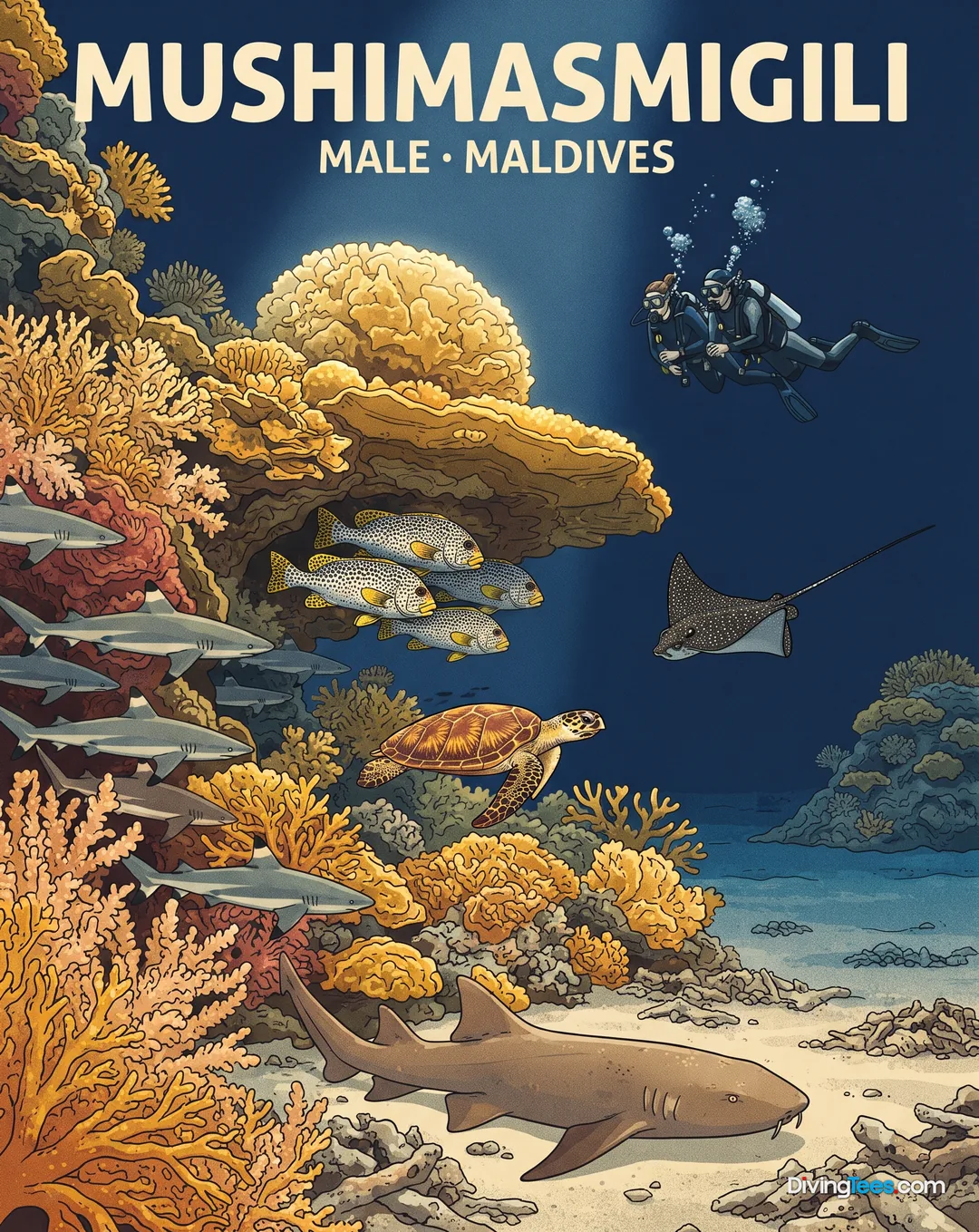
Mushimasmigili Marine Reserve →
Max. depth · 30 m
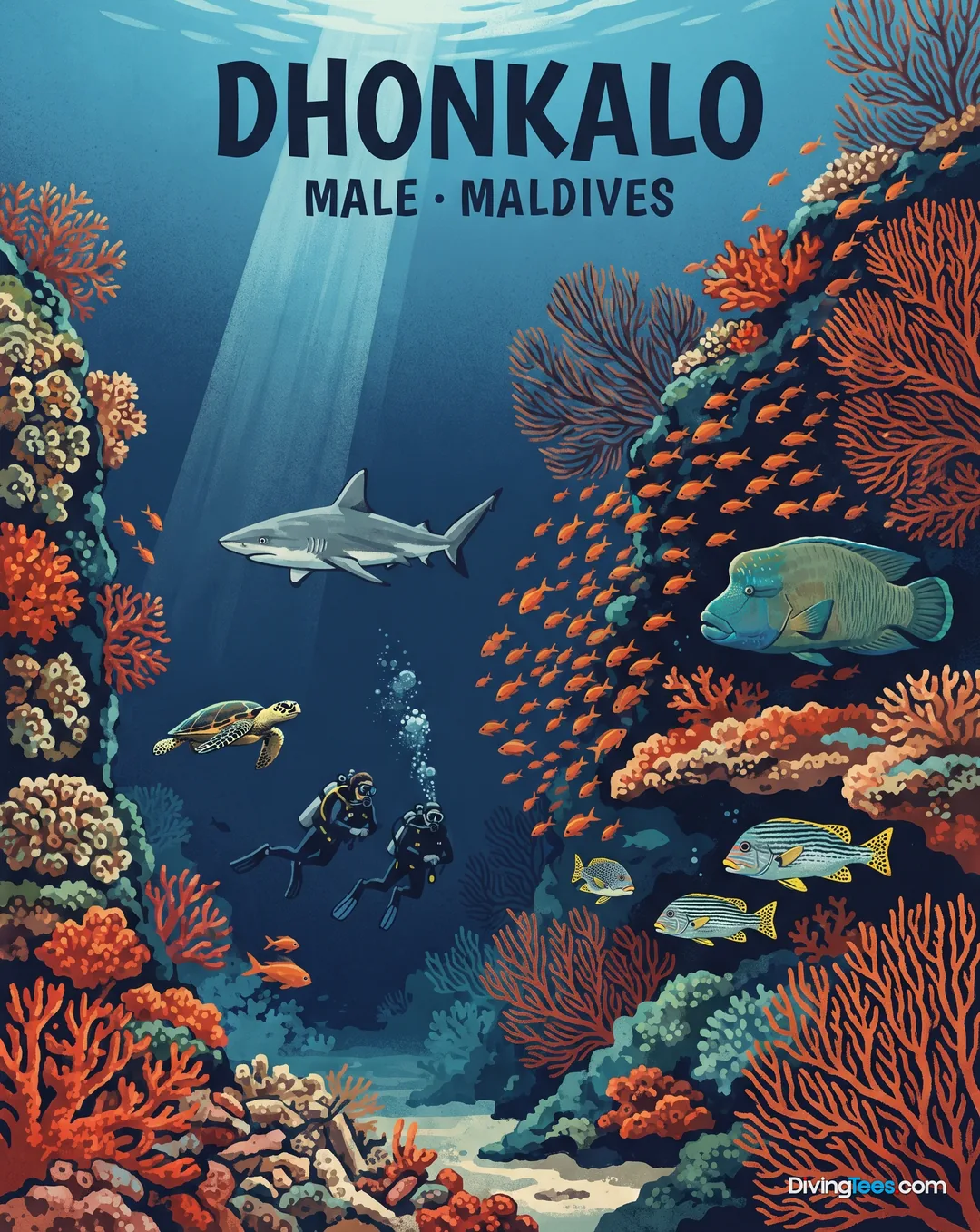
Dhonkalo →
Max. depth · 25 m
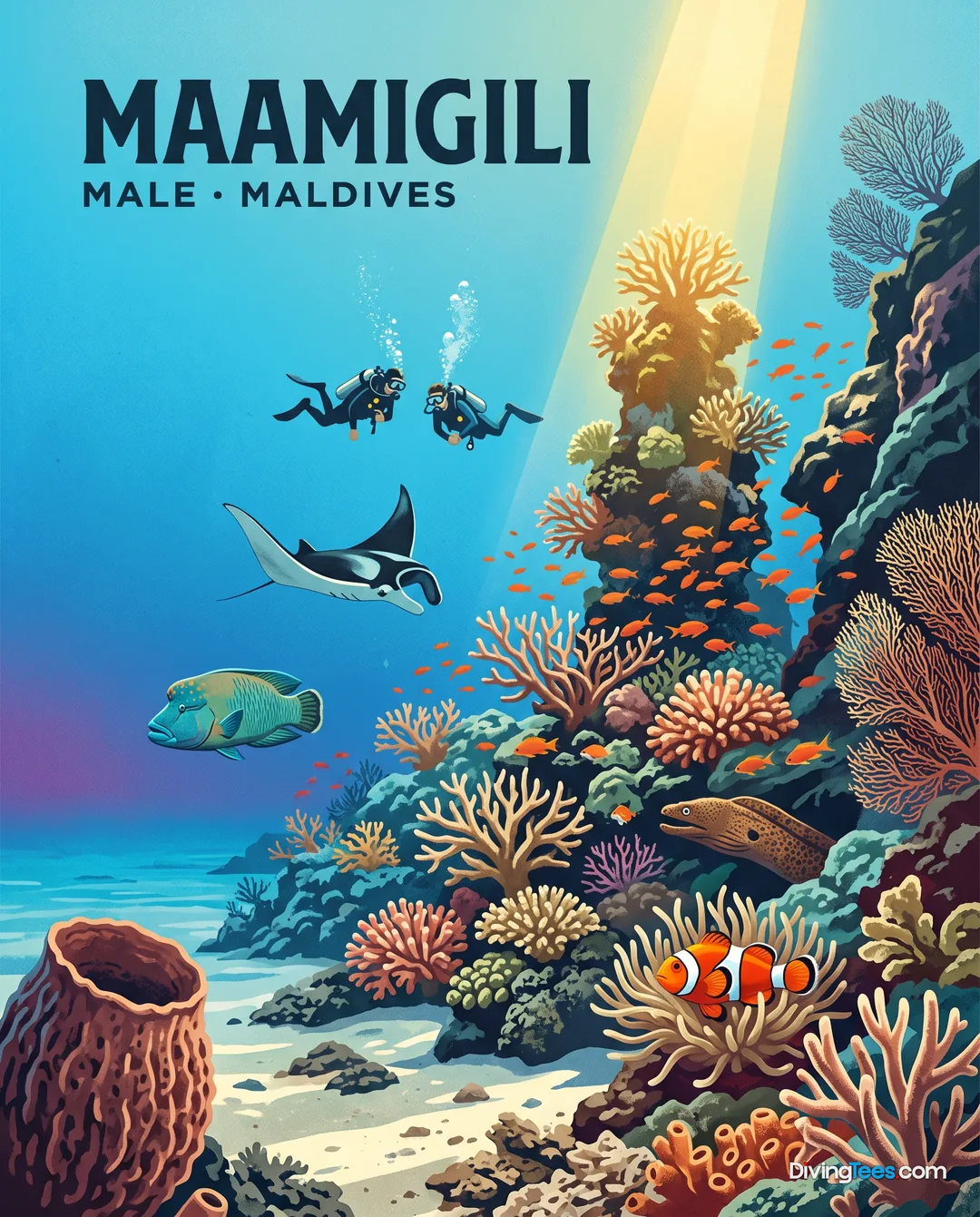
Maamigili →
Max. depth · 30 m
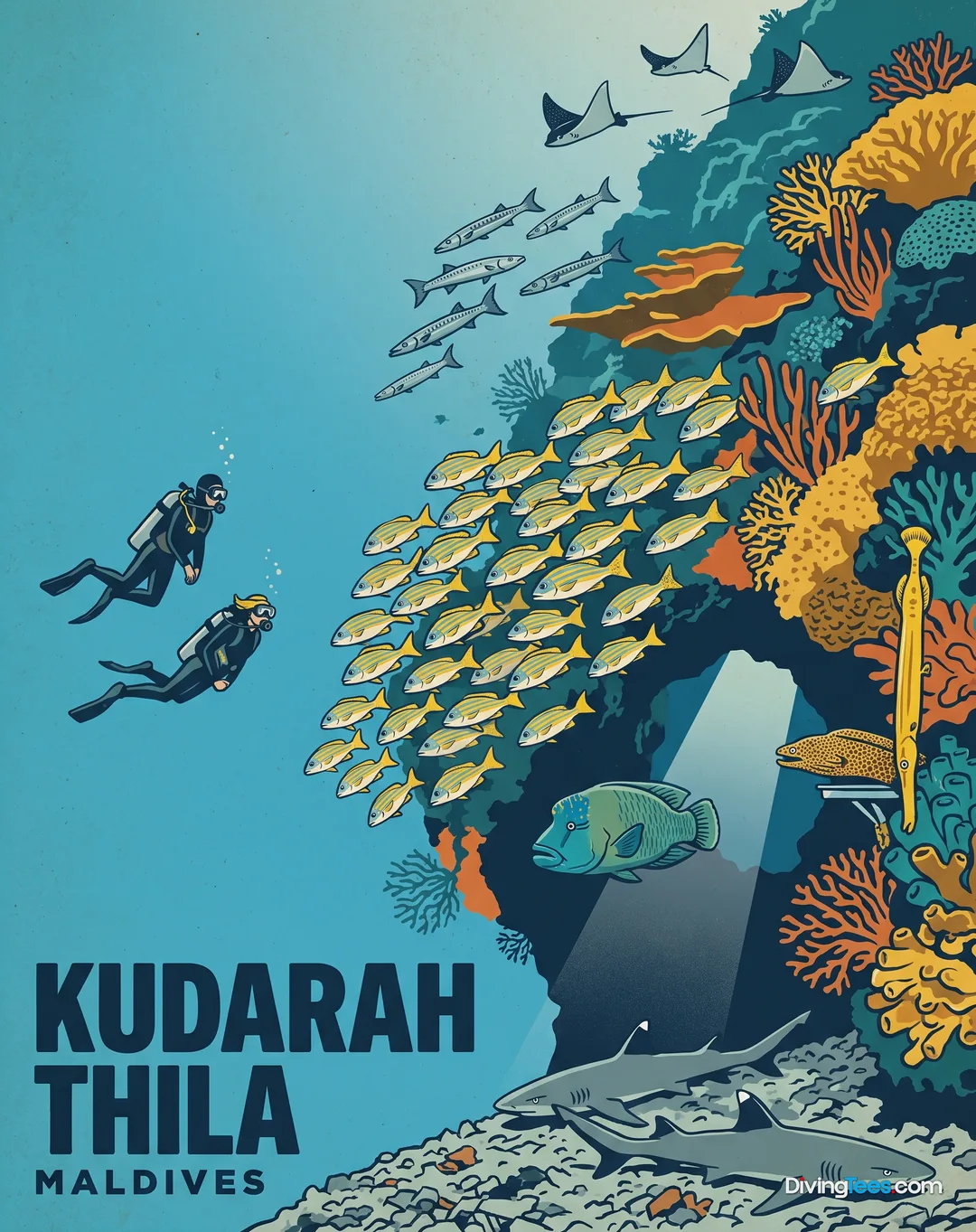
Kudarah Thila →
Max. depth · 25 m
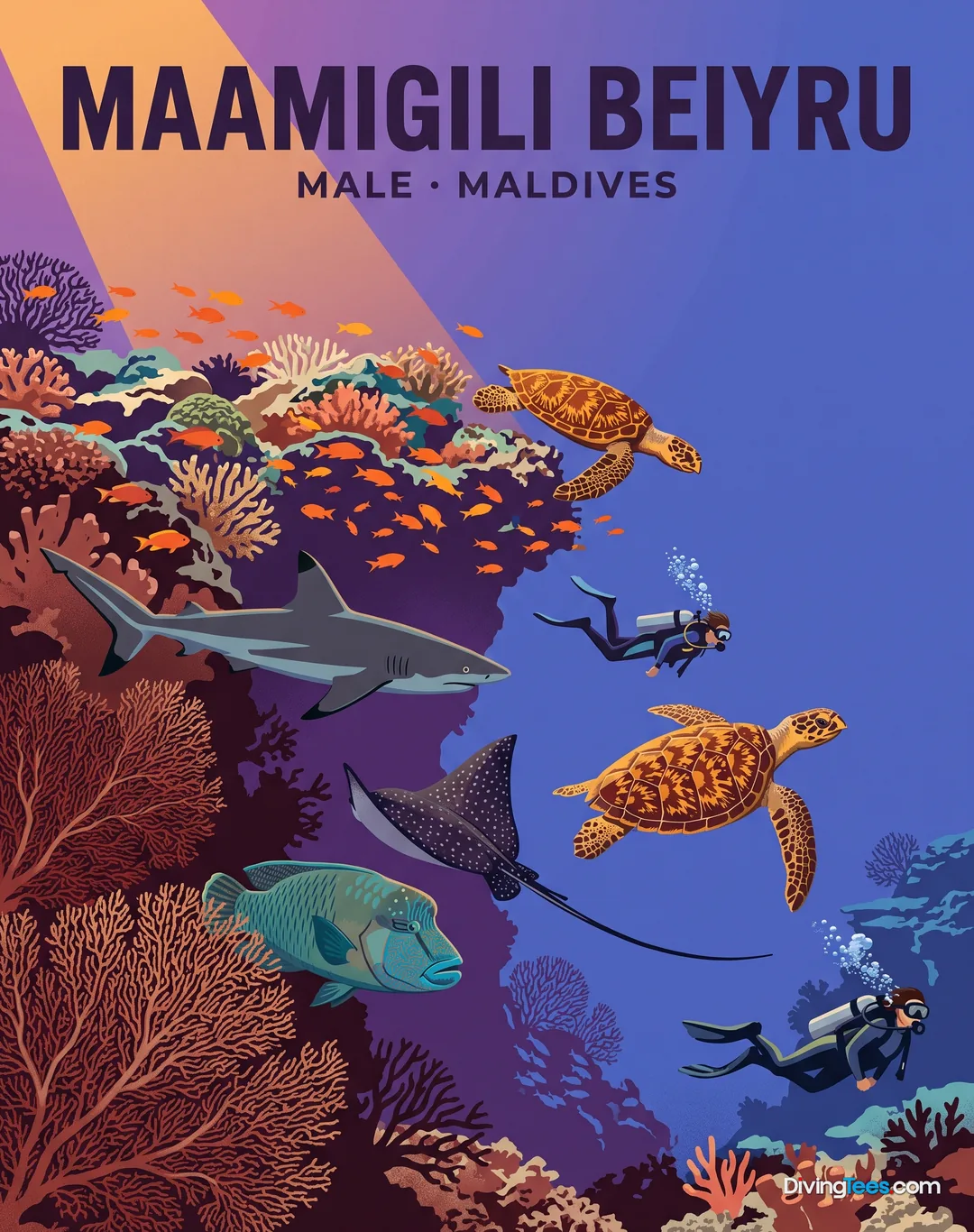
Maamigili Beiyru →
Max. depth · 30 m
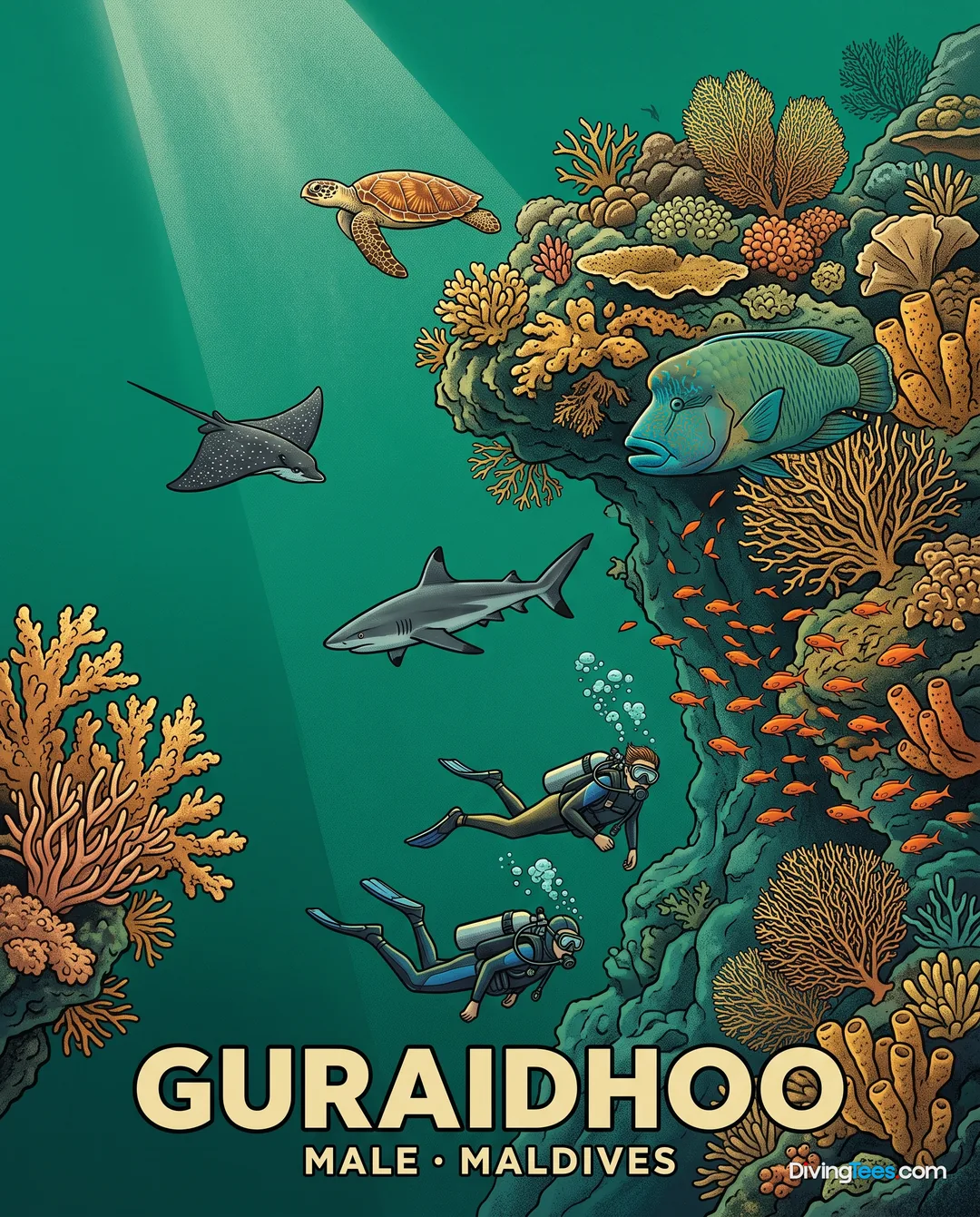
Guraidhoo Marine Reserve →
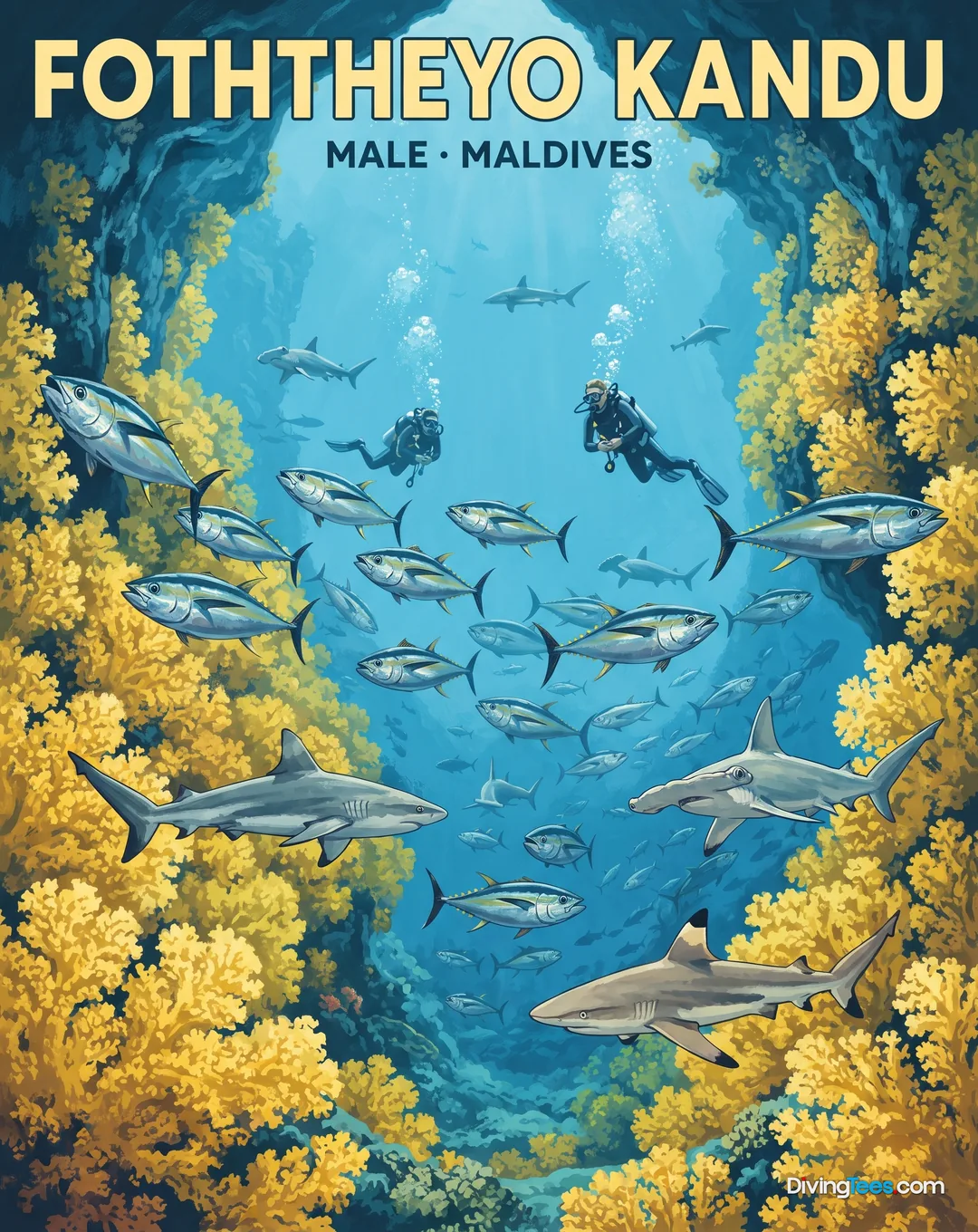
Foththeyo Kandu →
Max. depth · 40 m
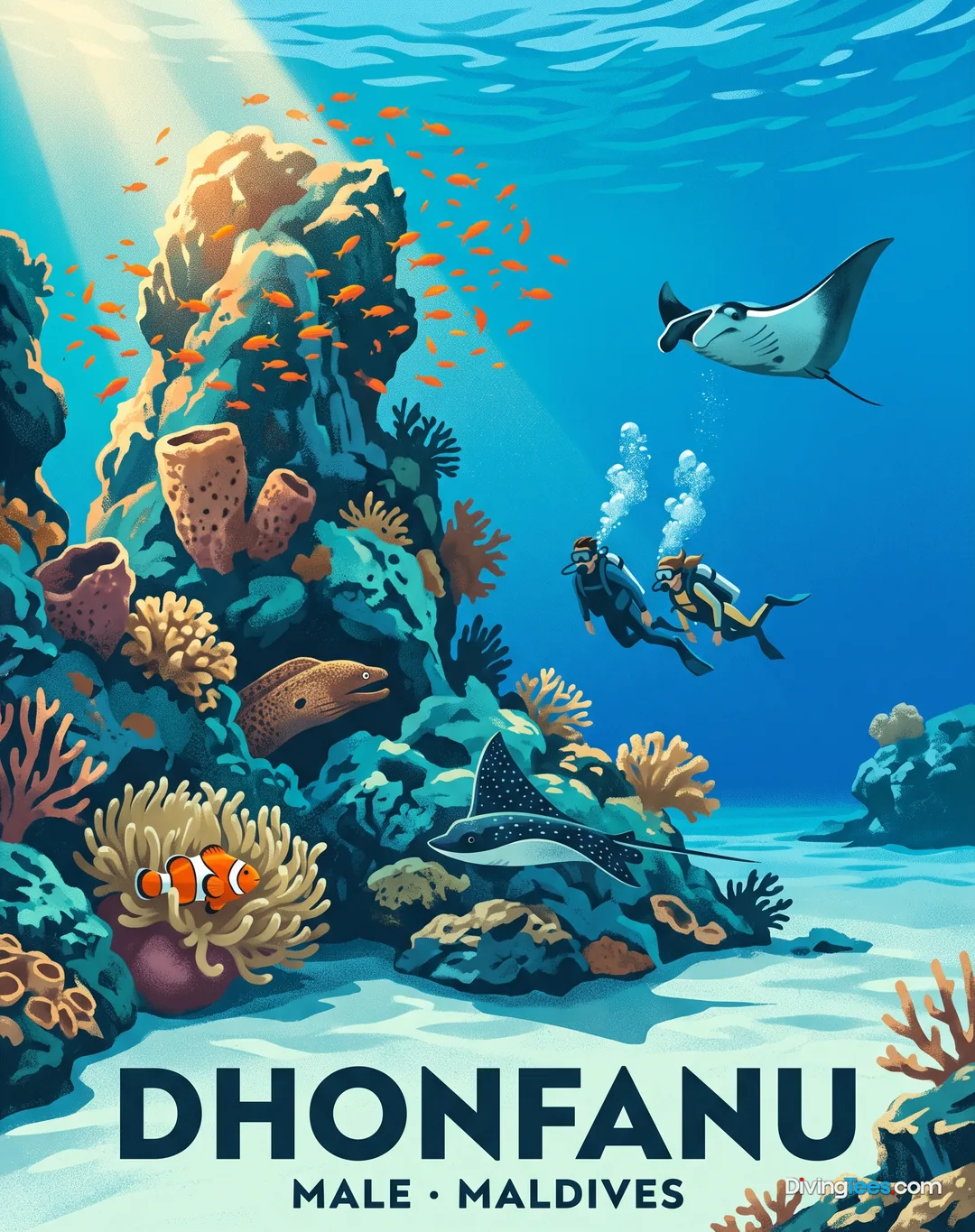
Dhonfanu →
Max. depth · 30 m
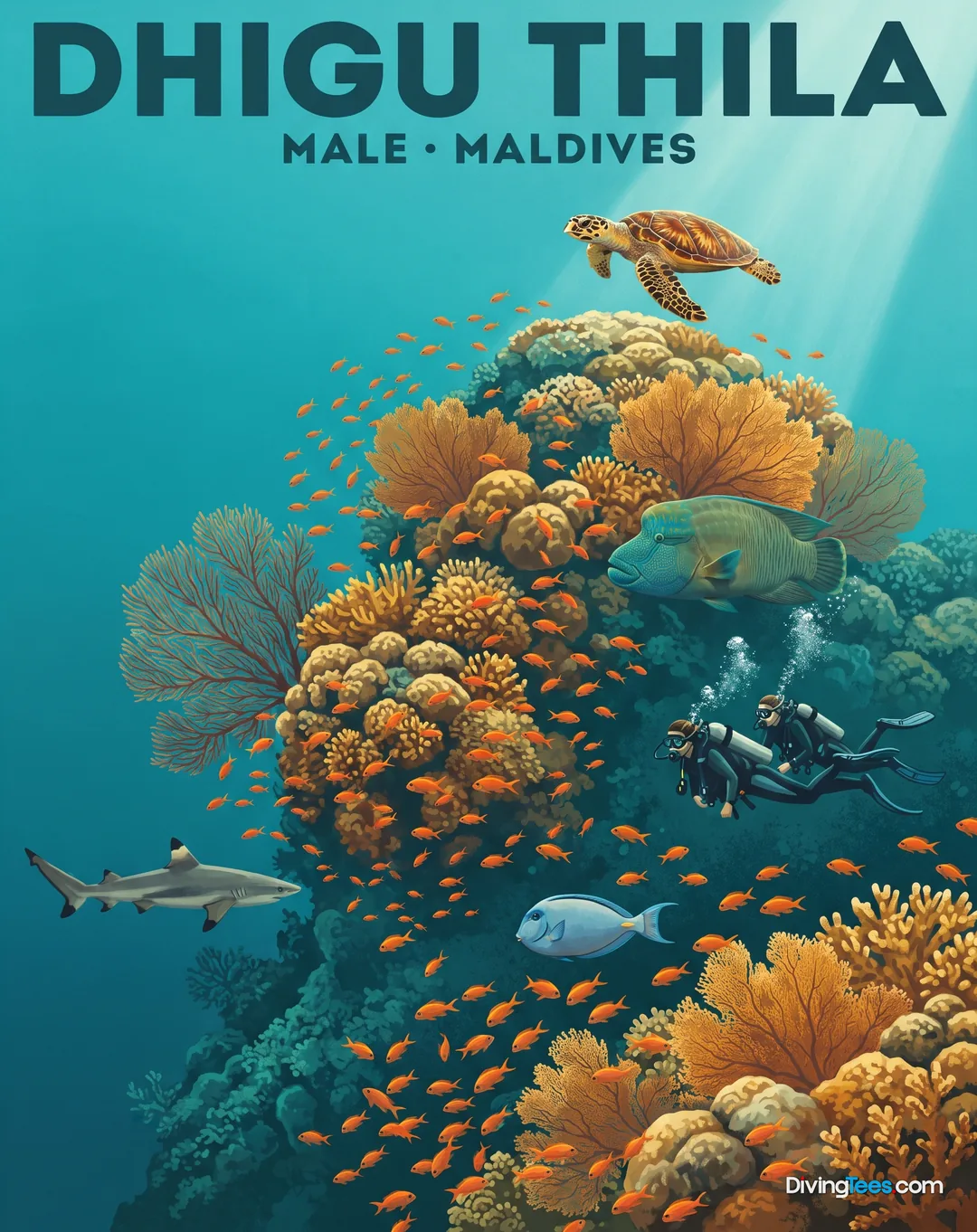
Dhigu Thila →
Max. depth · 30 m
What you’ll meet underwater
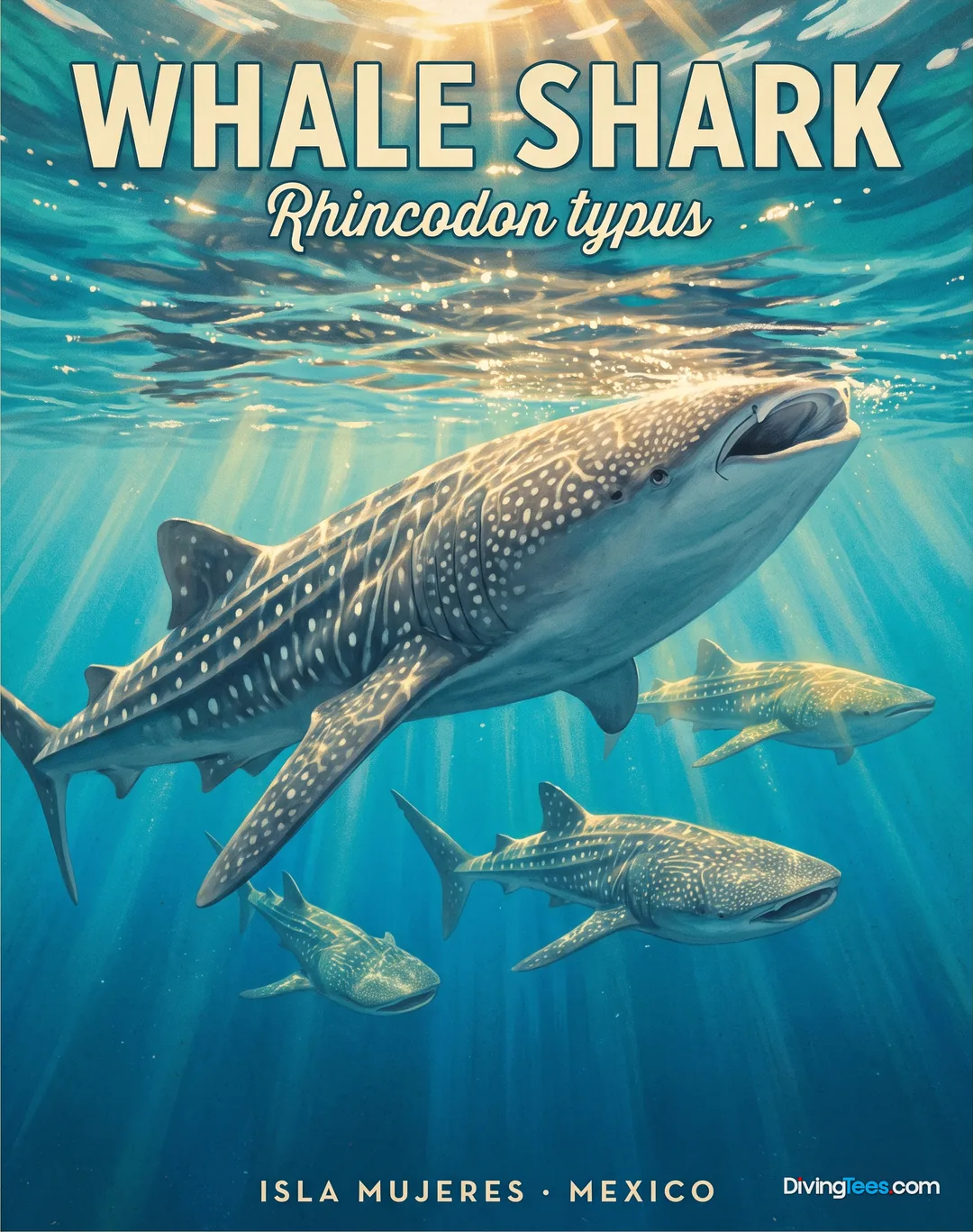
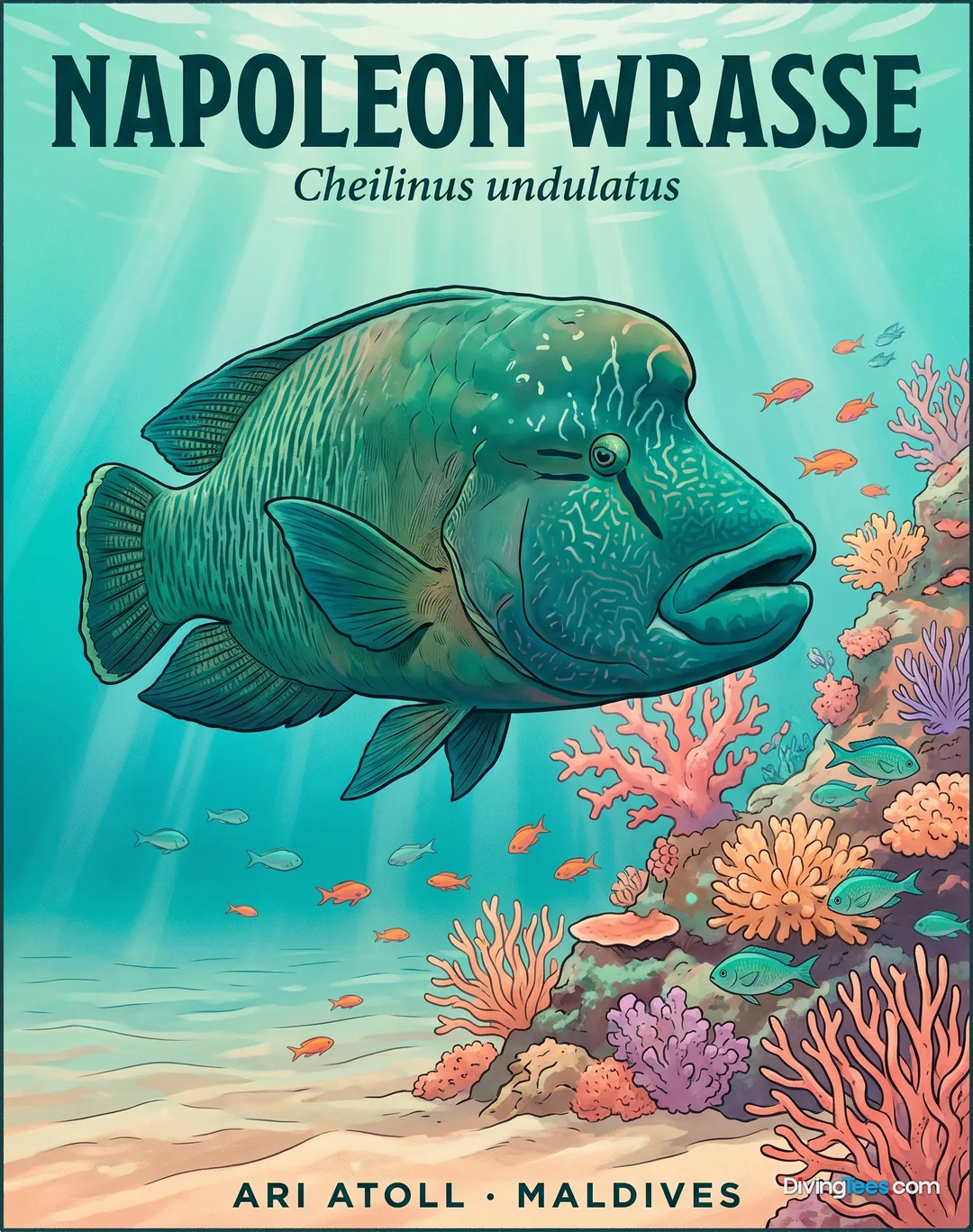
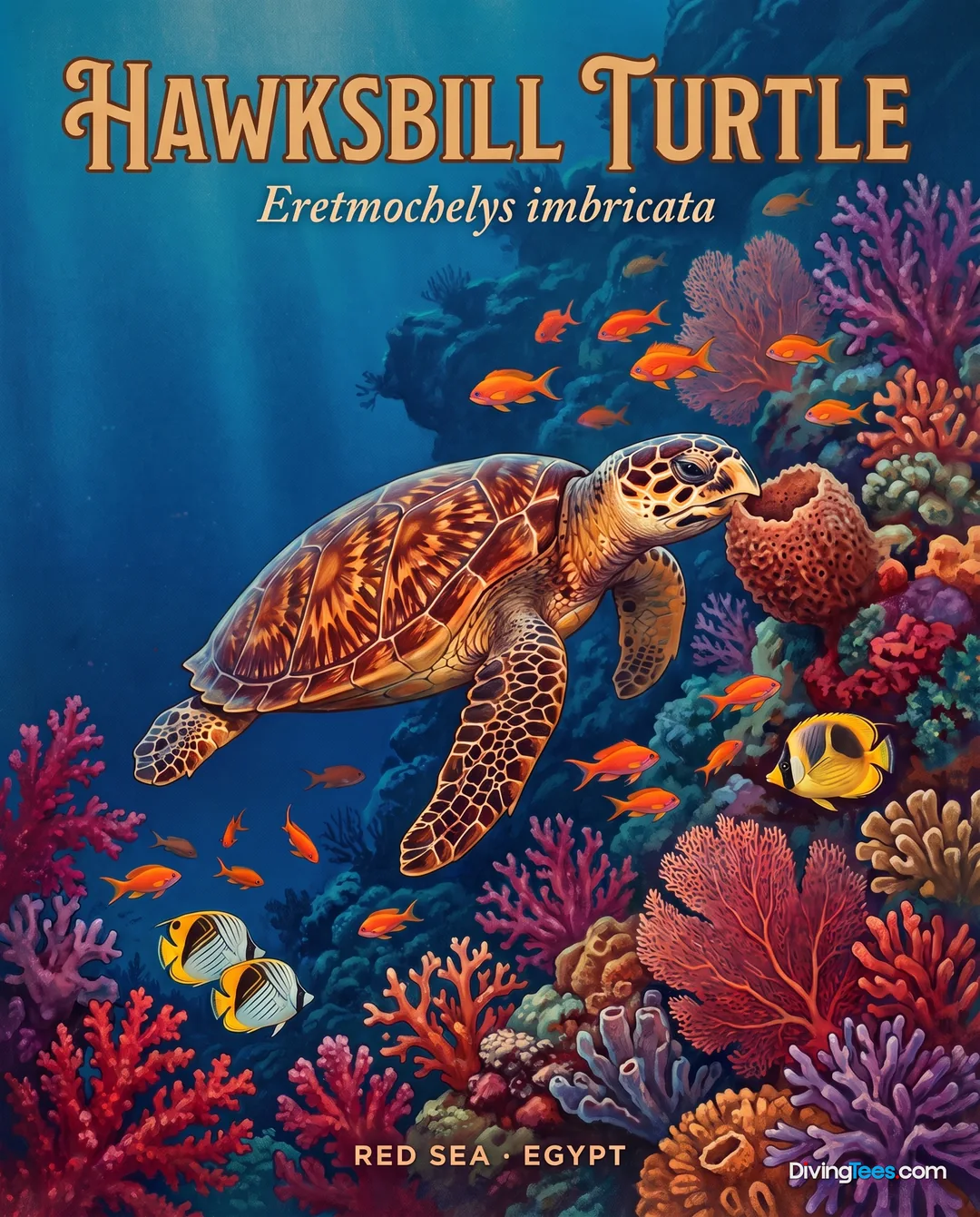
The recurring cast is large and pelagic: Napoleon wrasse, fusiliers, grey reef sharks, manta rays, tuna, sea turtles, eagle rays, barracudas and trevally appear across much of the route. White-tip reef sharks and whale sharks are less widespread but remain part of the route's attraction, especially around the protected areas of South Ari. The animals are tied to the shape of each site. Cleaning stations bring mantas to Dhonkalo and Dhonfanu, while channels such as Myaru Kandu and Foththeyo Kandu use current to concentrate sharks and open-ocean visitors. At Hanifaru Bay, plankton-rich water can bring hundreds of reef mantas together to feed. The single-site sightings give several dives a reason beyond the main cast: grouper and anthias at Barracuda Giri, anemones at Banana Reef, soft coral and gorgonians at Dhigalhi Haa Marine Reserve, and hawksbill turtles at Dhigu Thila. Maamigili is the place for gaterin and porcupinefish. None of these encounters is guaranteed.

Who puts you in the water
Four diving guides work on duty aboard the Maldives Blue Force 3, with English and Spanish spoken by the crew. Group ratios are not fixed here, so the sensible expectation is that the guides organise divers according to experience, certification and the demands of the site rather than promise one number for every entry. Open Water Diver or equivalent is the minimum level required to dive from the liveaboard. Advanced Open Water or equivalent and 50 logged dives are recommended, a sensible standard for channels, current and repeated dives. Advanced and Nitrox courses can be run onboard, and the Nitrox course is required before using Nitrox. Briefings set out the site, current and plan before the dhoni leaves the main boat. Navigation and communications equipment includes radar, GPS, VHF/DSC/SSB radio and satellite phones; fire systems and a defibrillator are carried for emergencies. Oxygen and a diver-recall system are not described.
The dive deck and the gear
The diving is done from a dedicated 18-metre dhoni, not from the main hull. Compressors, the membrane Nitrox system and the diving equipment stay on that auxiliary boat, which keeps filling noise and wet gear away from the cabins and salon. Three compressors support the operation, with spare systems and Nitrox membranes helping keep dives running if equipment needs attention. The standard tanks are aluminium S80s with DIN and yoke compatibility; S100 tanks can be arranged on request. Nitrox is available as a paid extra, and Nitrox certification is required to use it. Rental equipment is limited and must be requested during booking; it can include the full set or individual items such as BCD, regulator, wetsuit, computer, torch, fins and SMB with spool. A small dinghy is also used for transfers, island visits and water activities. The boat has a camera room, but no camera-table or rinse-tank arrangement is described.
Between dives
Between dives, the boat gives the week several ways to slow down without leaving the water behind. The terrace and solarium provide open-air space for reading, drying off or watching an atoll pass during navigation. The interior salon is air-conditioned and has audio-visual entertainment and a library, so there is a quieter option when the sun is too strong. Kayaks and stand-up paddleboards are available for the hours when the boat anchors near an island or sheltered water. A barbecue on a beach and visits to local islands are part of the route when weather and logistics allow. The useful feature is not the number of diversions but the choice: the dhoni can be busy with the next dive while the main deck stays available for anyone who wants shade, a shower and a few uninterrupted minutes.
A day on board
A standard Central Atolls week is built around 18 dives spread across six diving days, with the route combining day dives, possible night dives and surface time between them. The first briefing comes before the first entry, followed by the dhoni carrying divers to a pinnacle, channel or cleaning station. After surfacing, the useful order is familiar: rinse, eat, rest, listen for the next briefing and gear up again. Navigation happens while the main boat moves between atolls or while the dhoni operation is being reset. When conditions and logistics allow, an island visit, barbecue, kayaking or paddleboarding fills an interval rather than replacing the diving. Hanifaru departures add the possibility of manta snorkeling under park rules. On the final approach to Malé, the equipment is rinsed and the boat settles into the last evening before disembarkation the next morning. It is a diving schedule first, with the comforts arranged around it.
What you eat aboard
Full board is served as a buffet, with local cuisine alongside vegetarian and vegan options. Beer is available, and a selection of wines forms part of the onboard drinks offer; other alcoholic and non-alcoholic drinks are optional. Snacks remain available through the day, which is useful on a diving boat where breakfast is followed by a briefing, a dive and another meal before the next entry. The food is one of the boat's strongest points: meals are treated as a real part of the trip rather than fuel placed beside the tanks. That matters after a current dive, when nobody wants a complicated ceremony before eating. The table becomes the place where the group compares sightings, plans the next camera subject and gets enough food down before the next call to gear up.
Nights at sea
The cabins are arranged across the lower, main and upper decks, with double and triple options for different bookings. Every cabin has air conditioning with individual control and a private bathroom; hot-water showers are part of the setup. The upper-deck cabins sit higher in the boat, while lower-deck cabins trade that position for easier access to the interior. The standard windows keep the cabins connected to the sea without pretending that every berth is a suite with an uninterrupted view. The important thing after a day of channel dives is simpler: a private place to dry off, control the temperature and sleep without sharing a bathroom. Outside the cabin, the air-conditioned salon and the terrace give the boat two different night settings. Stay inside with a book or a film, or go up for open air and the sound of water moving past the hull.
Double Cabin - Lower Deck
Double Cabin - Main Deck
Triple Cabin - Lower Deck
Twin Cabin - Upper Deck
What to know before boarding
The Central Atolls and Central Atolls and Hanifaru routes embark and disembark at Malé Airport. Airport-to-boat and boat-to-airport transfers are included, with the transfer to the liveaboard made by dhoni. The crew handles the airport reception and directs guests through the transfer process. Arriving in Malé the night before boarding is the safer choice, leaving room for a delayed flight without putting the embarkation connection under pressure.
Deck plan
- Year renovated
- 2018
- Length
- 42 m
- Beam
- 8.7 m
- Maximum number of passengers
- 26
- Number of cabins
- 12
- Number of bathrooms
- 12
- Engines
- 2 × 850 hp Caterpillar
- Cruising speed
- 12 knots
- Website
- blueforcefleet.com ↗
Hello, I'm Marina, DivingDeal.com's AI assistant. I answer in detail about hotels, dive centres and liveaboards.

Thinking about the whole trip and the flights? Talk it over with Edith →
Marina is an AI. Some links are affiliate links: DivingDeal may earn a commission, at no extra cost to you. Bookings are made with the partner.