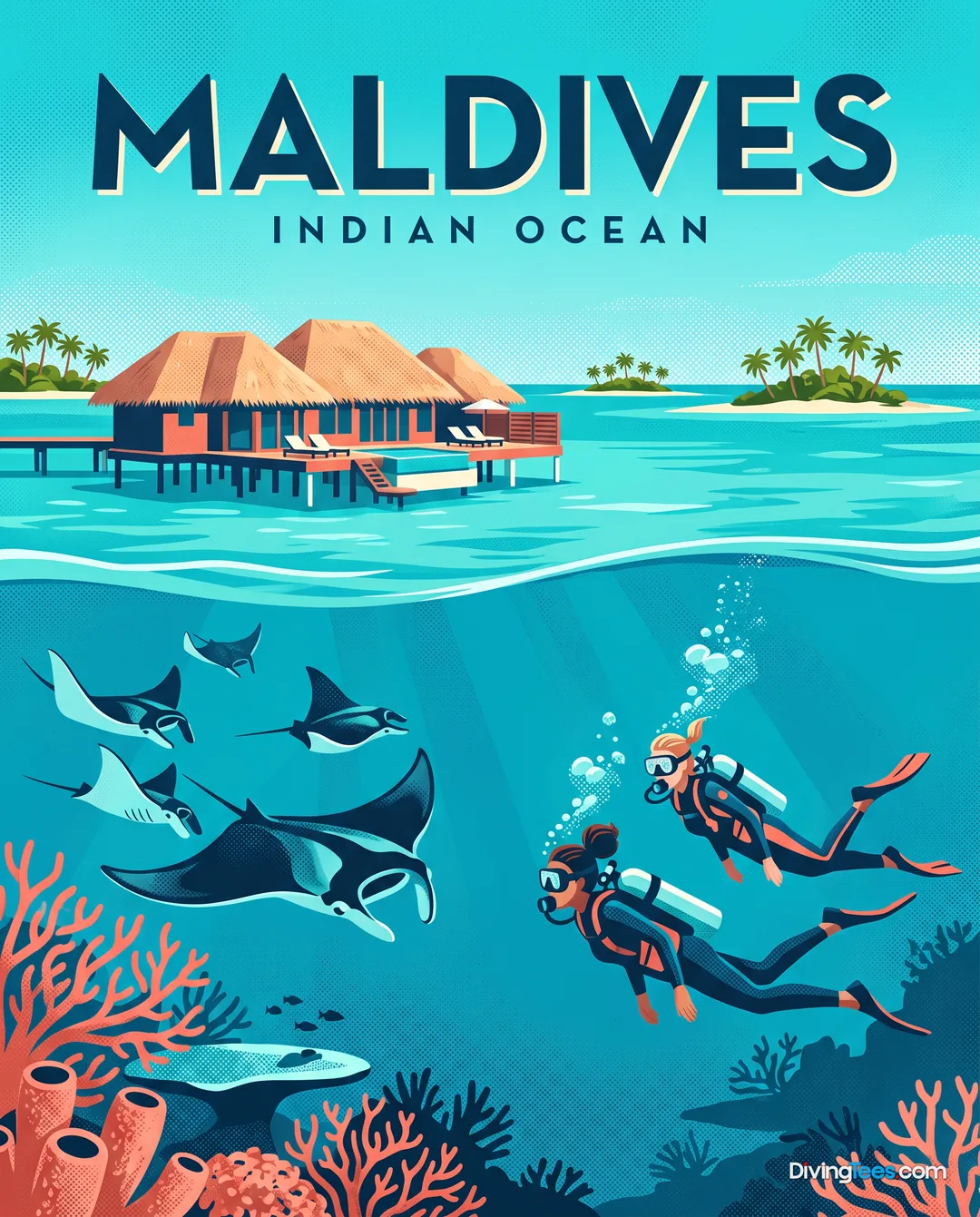
Liveaboards · Maldives
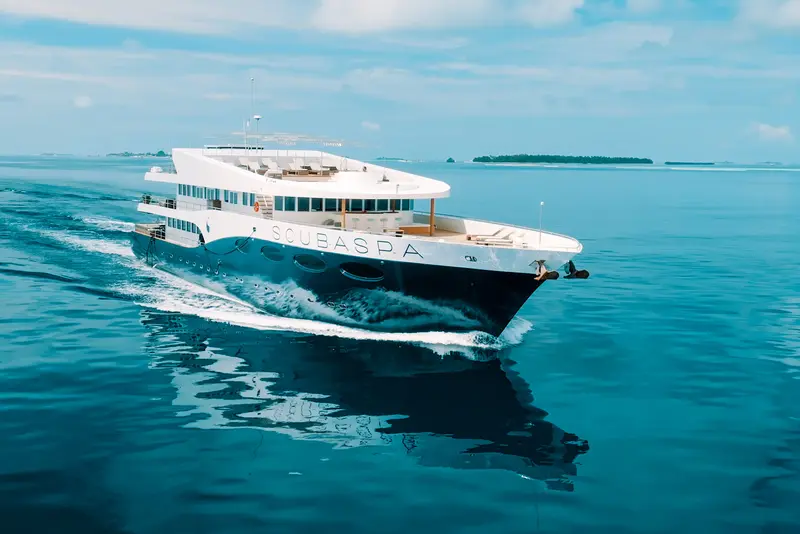
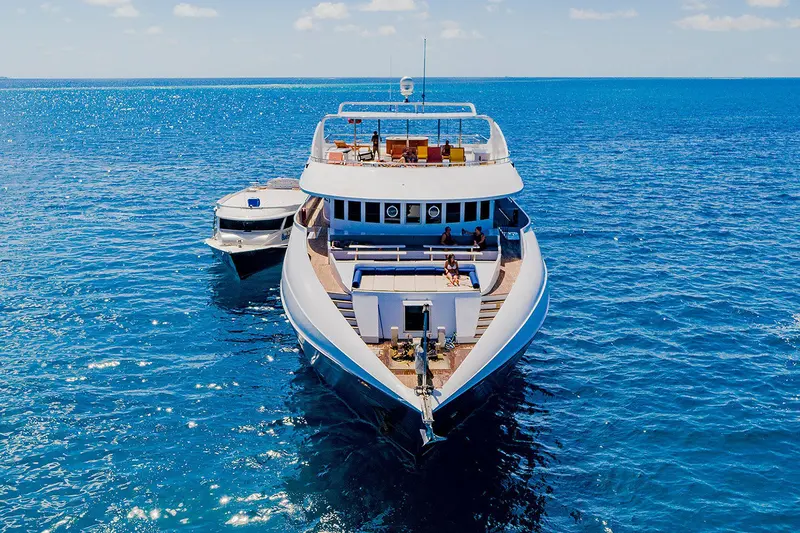
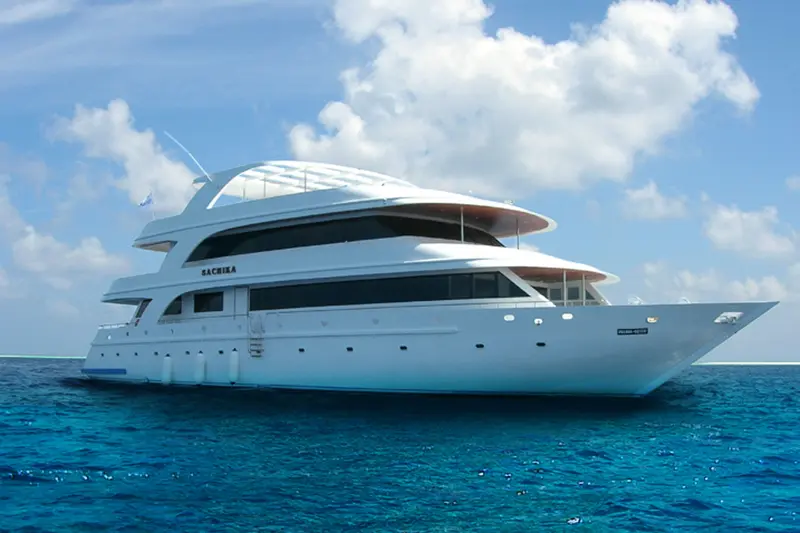
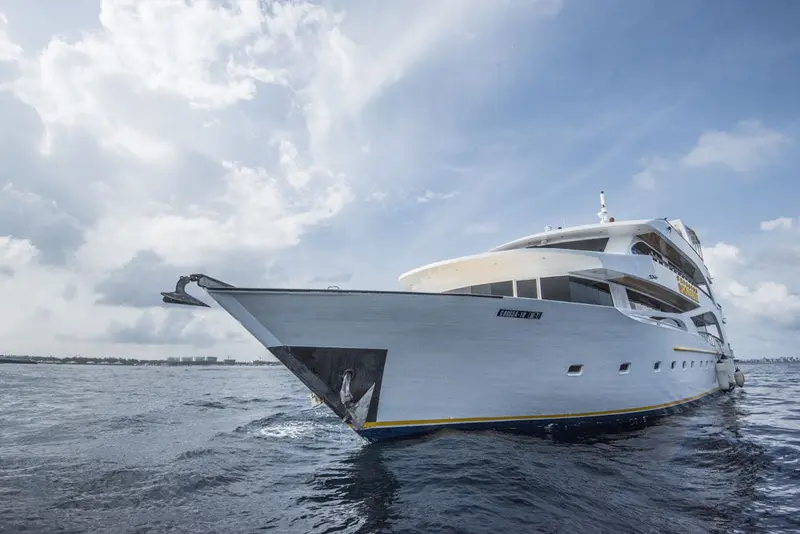
Blue Maldives — a purpose-built dive liveaboard with a separate dhoni
Deal on this boat
Per person
£1,928$2,578€2,303 £1,525$2,038€1,821
Discount calculated by us, against the boat's usual price for a trip of the same length.
See all discounted dates ↓What makes this boat unique
- Blue carries up to 20 passengers in 11 air-conditioned cabins, each with a private bathroom and shower.
- The separate dhoni stores the dive equipment and takes divers to the sites, keeping the main boat quieter and drier.
- The diving setup includes shaded stations, DIN adapters, rinse tanks, camera facilities, sidemount support and nitrox.
- Eight-day, seven-night departures run from Malé to Malé on Central and Full Maldives routes.
The invitation
Blue is for divers who want the Maldives to be the main event, not a resort stay with a few boat dives added. The separate dhoni carries the equipment and handles the site runs, so the liveaboard remains a clean place to eat, sleep and sit out between dives. That division matters over a week: wet gear, tanks and loading stay on the dive boat, while the main vessel keeps its lounge and decks available. The routes reach the places people come to the Maldives for—manta rays, whale sharks, sharks in current-swept channels and large schools on the pinnacles. The boat suits divers who value a strong food program, a close crew-to-passenger ratio and a practical dive operation more than a small, intimate yacht.
Boarding
Blue makes a broad first impression at the dock: a large, purpose-built liveaboard with enough open deck to avoid feeling trapped indoors after a dive. Built in 2019, it has the clean, functional character of a boat designed around diving rather than converted into it. Boarding leads into an air-conditioned interior lounge, then out toward the shaded sun deck and the open spaces used between dives. The dhoni sits apart from that living area, ready to take divers and their equipment to the reef. With English- and Japanese-speaking crew, the boat works for an international group without making the operation feel anonymous. It is a working dive platform first, with the comforts arranged around that fact.
The atmosphere on board
Blue’s atmosphere is shaped by the crew’s proximity to the guests. With a crew-to-passenger ratio close to one-to-one, help is near when a camera needs handling, a tank needs moving or a diver wants to understand the next current. The crew speaks English and Japanese, and the guide system breaks the group into two or three dive groups rather than sending everyone down as one mass. That leaves room for different air consumption, pace and interest while keeping the briefing common and clear. By evening, the bar and dining areas become the social centre, with audio and video entertainment available but not required. The food is a genuine part of the boat’s appeal; the vessel itself is more functional than flashy, and the people running it are what make that arrangement work over a full week.
The sites you’ll dive
The Central and Full Maldives routes run from Malé to Malé over eight days and seven nights. The sites range from current-swept channels to isolated thilas and cleaning stations. At Barracuda Giri, three submerged pinnacles drop to a maximum of -30m, where barracudas and pelagic fish gather in the current. Banana Reef is a lively reef near Thulhagiri, with reef sharks, eagle rays and a vibrant reef community. Mushimasmigili Marine Reserve reaches -30m at its up-current pinnacle, a reliable place to look for grey reef sharks. Dhonkalo is a manta cleaning station in a sandy channel; Maamigili and Maamigili Beiyru, both to -30m, sit within the South Ari Marine Protected Area and are visited for whale sharks and mantas. Kudarah Thila reaches -30m, its clefts, overhangs and caves crowded with batfish. Guraidhoo and Myaru Kandu are channel dives for sharks, while Foththeyo Kandu reaches -40m and combines caves carpeted with yellow soft corals with open-ocean pelagics. In Baa Atoll, Dhigalhi Haa and Dhonfanu reach -30m, with red coralline algae, acropora, reef mantas and a swim-through. Dhigu Thila, to -30m, and Fushifaru Thila Marine Reserve, to -35m, add strong-current pinnacles and manta cleaning stations.
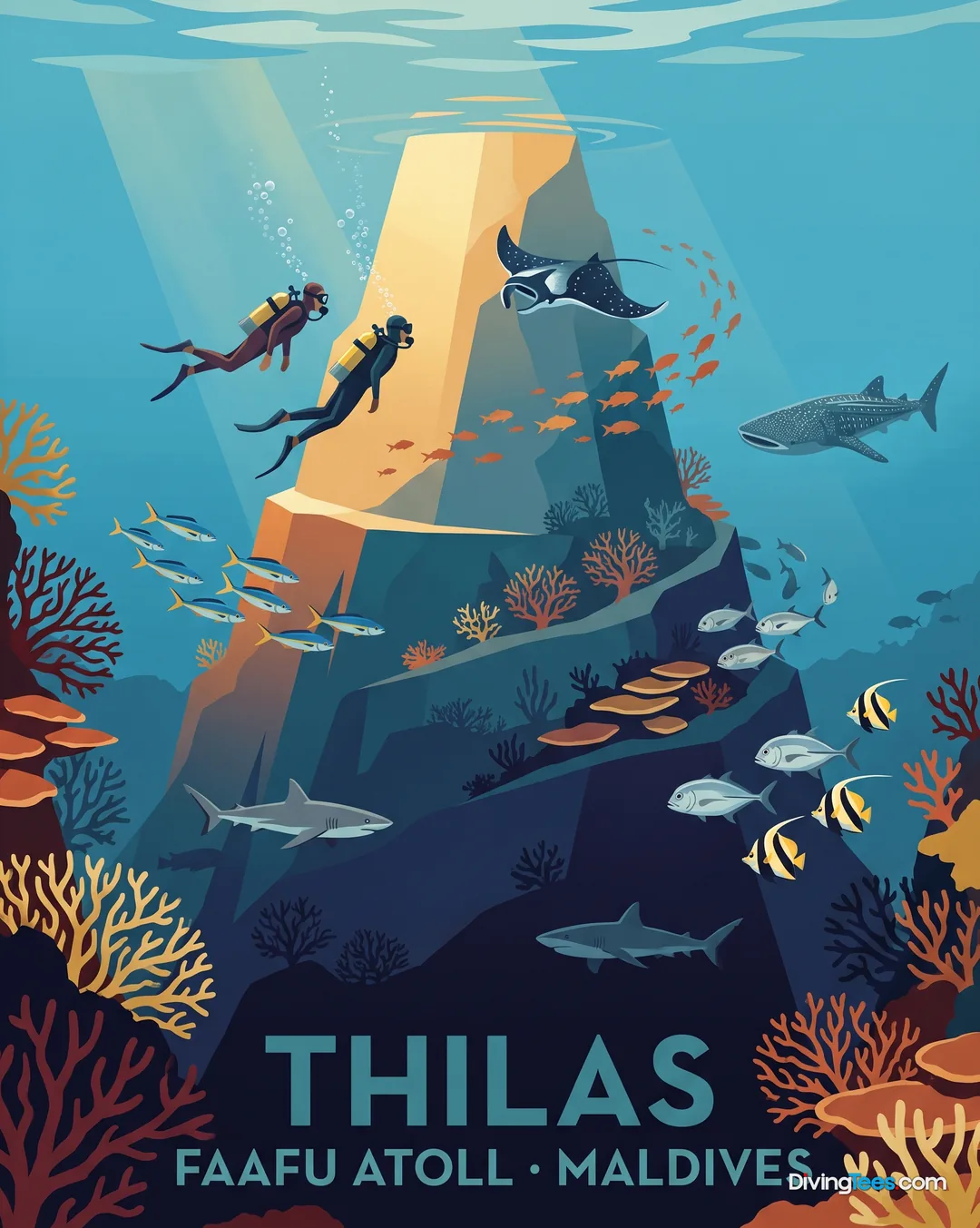
Thilas →
Max. depth · 15 m
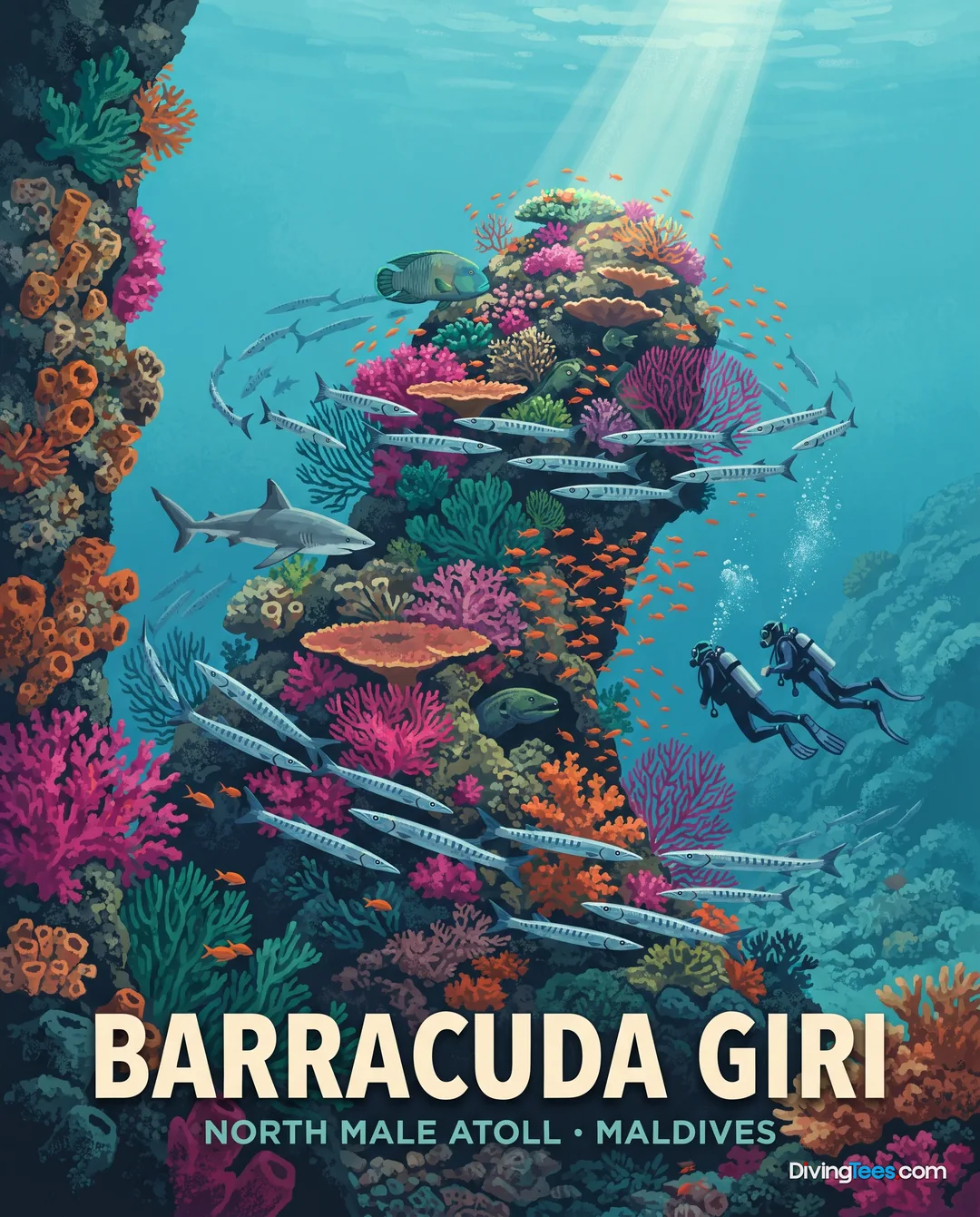
Barracuda Giri →
Max. depth · 30 m
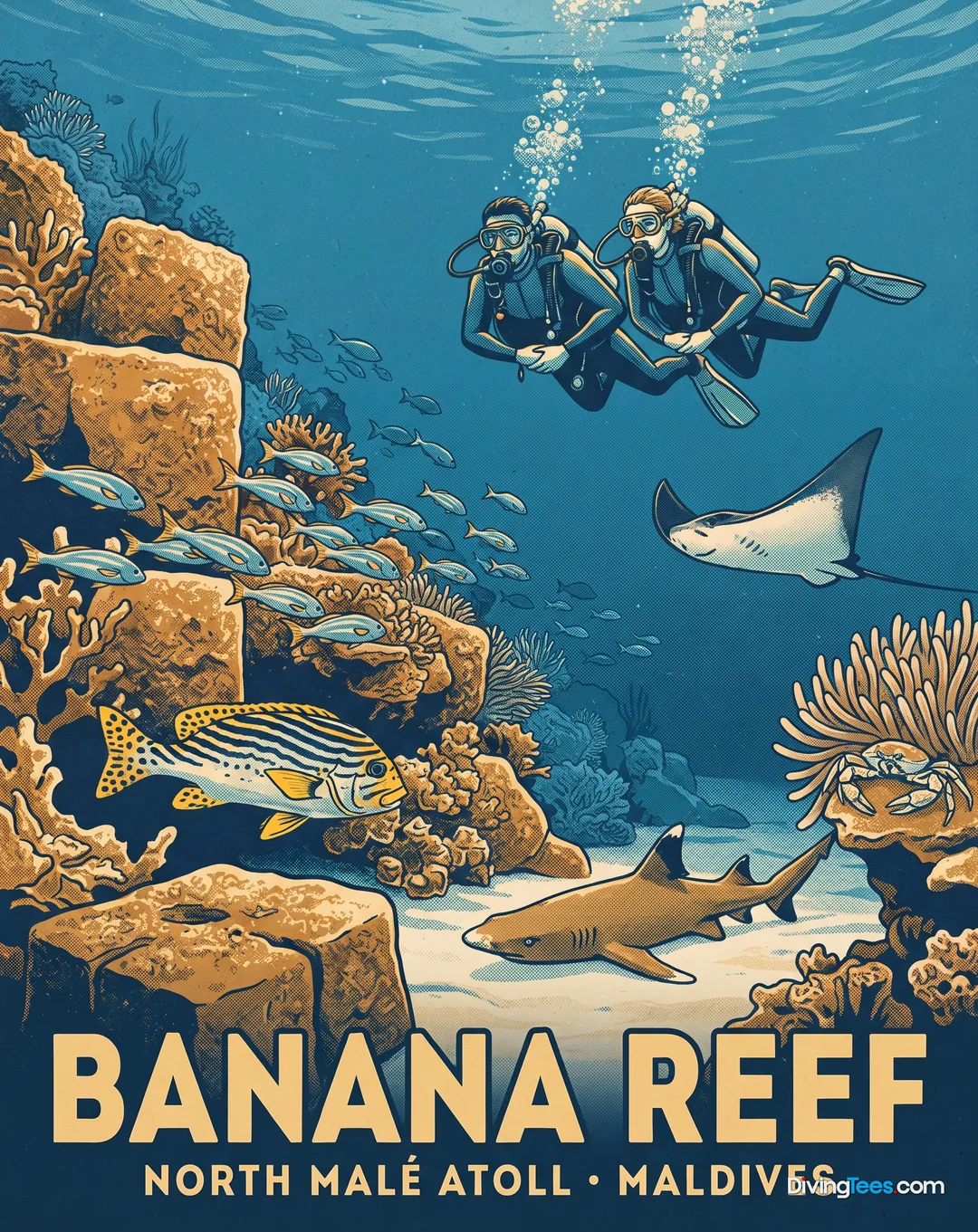
Banana Reef →
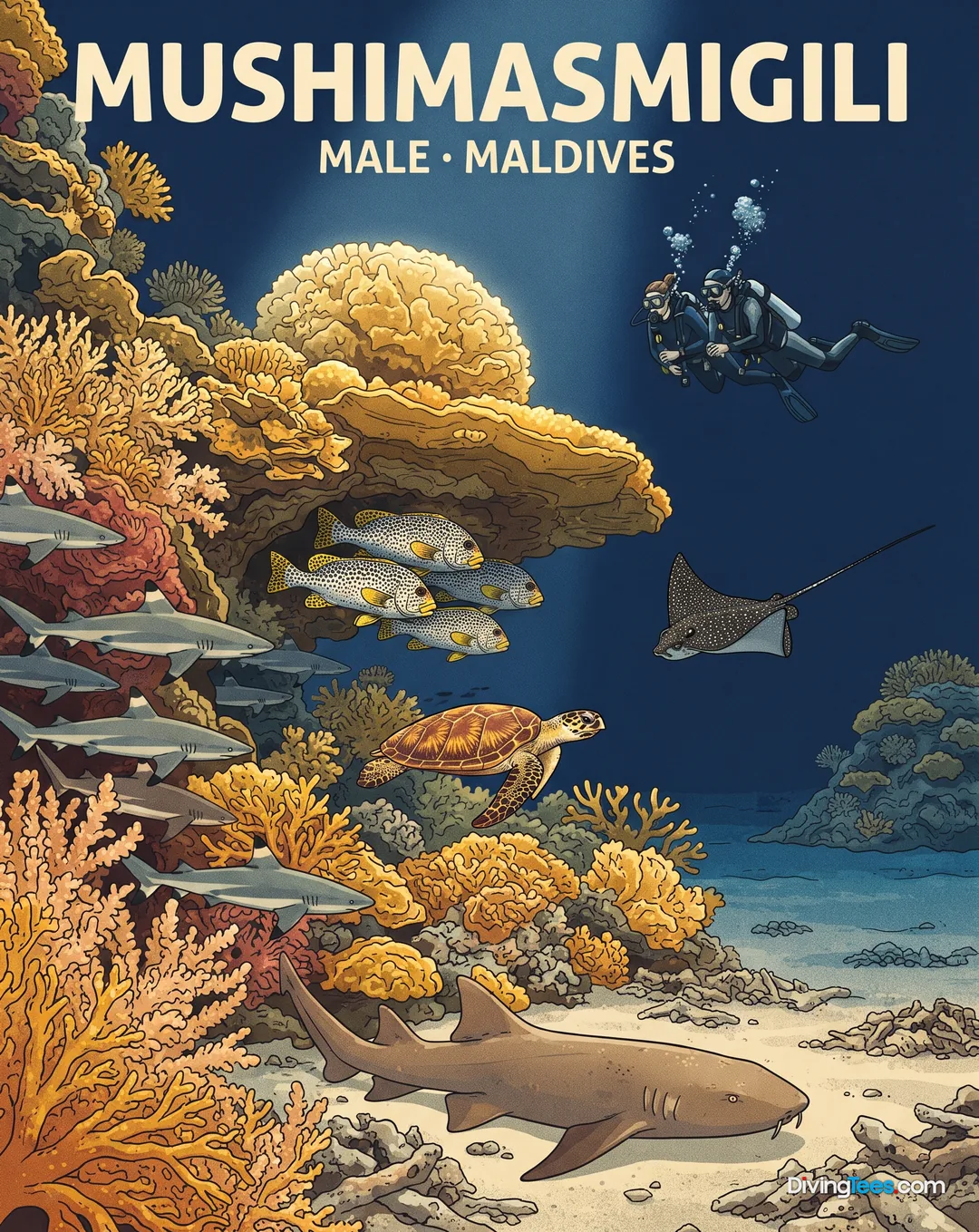
Mushimasmigili Marine Reserve →
Max. depth · 30 m
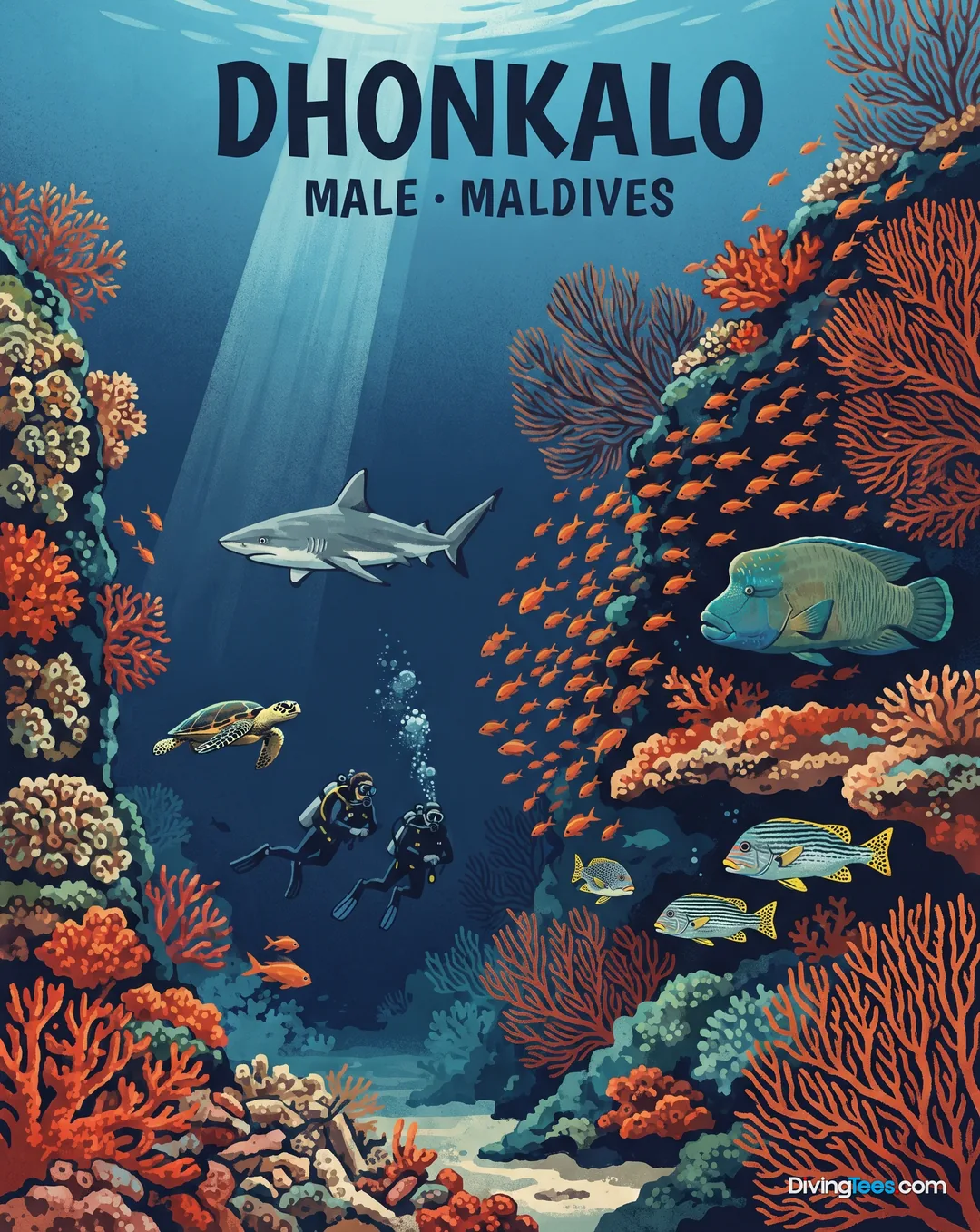
Dhonkalo →
Max. depth · 25 m
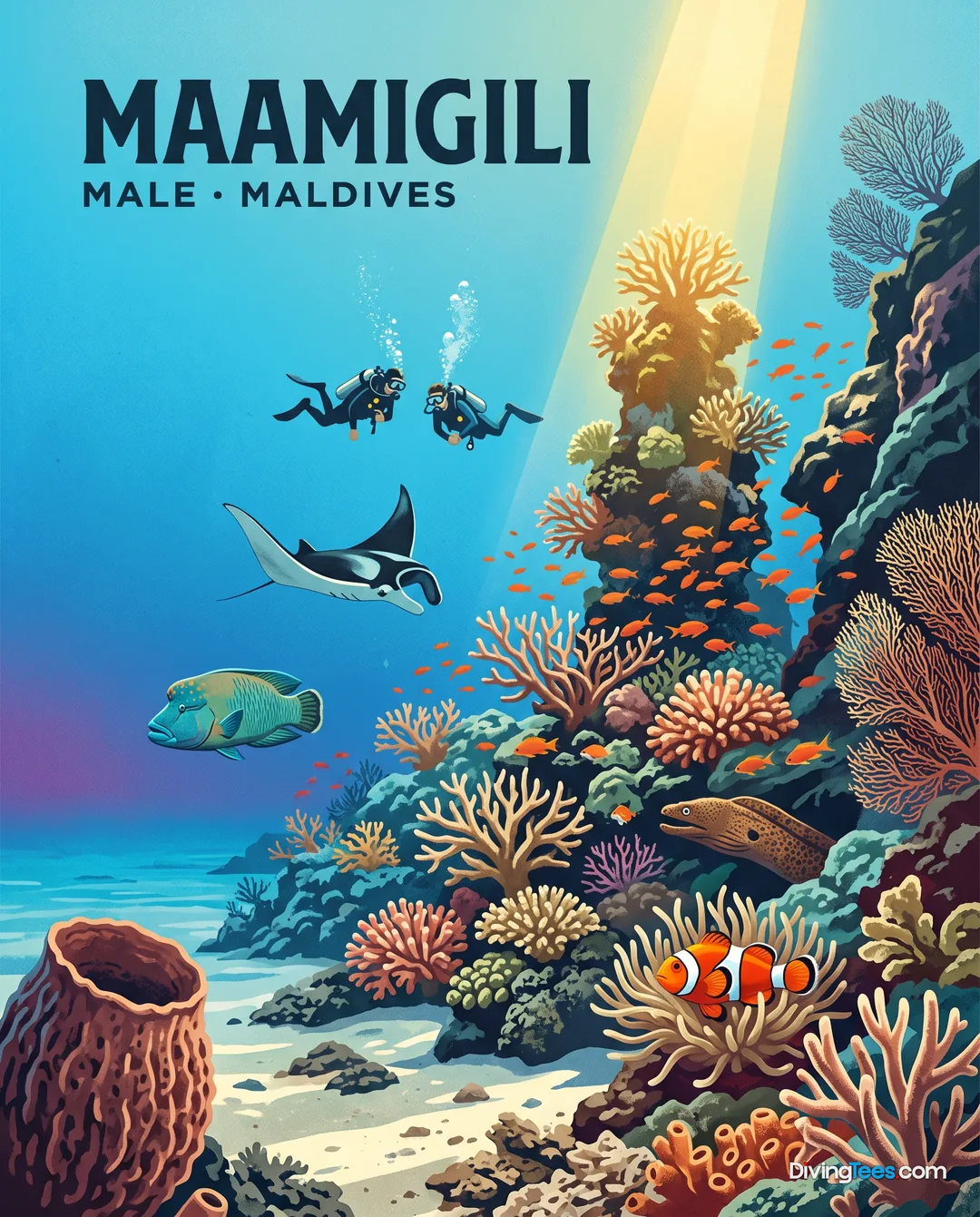
Maamigili →
Max. depth · 30 m
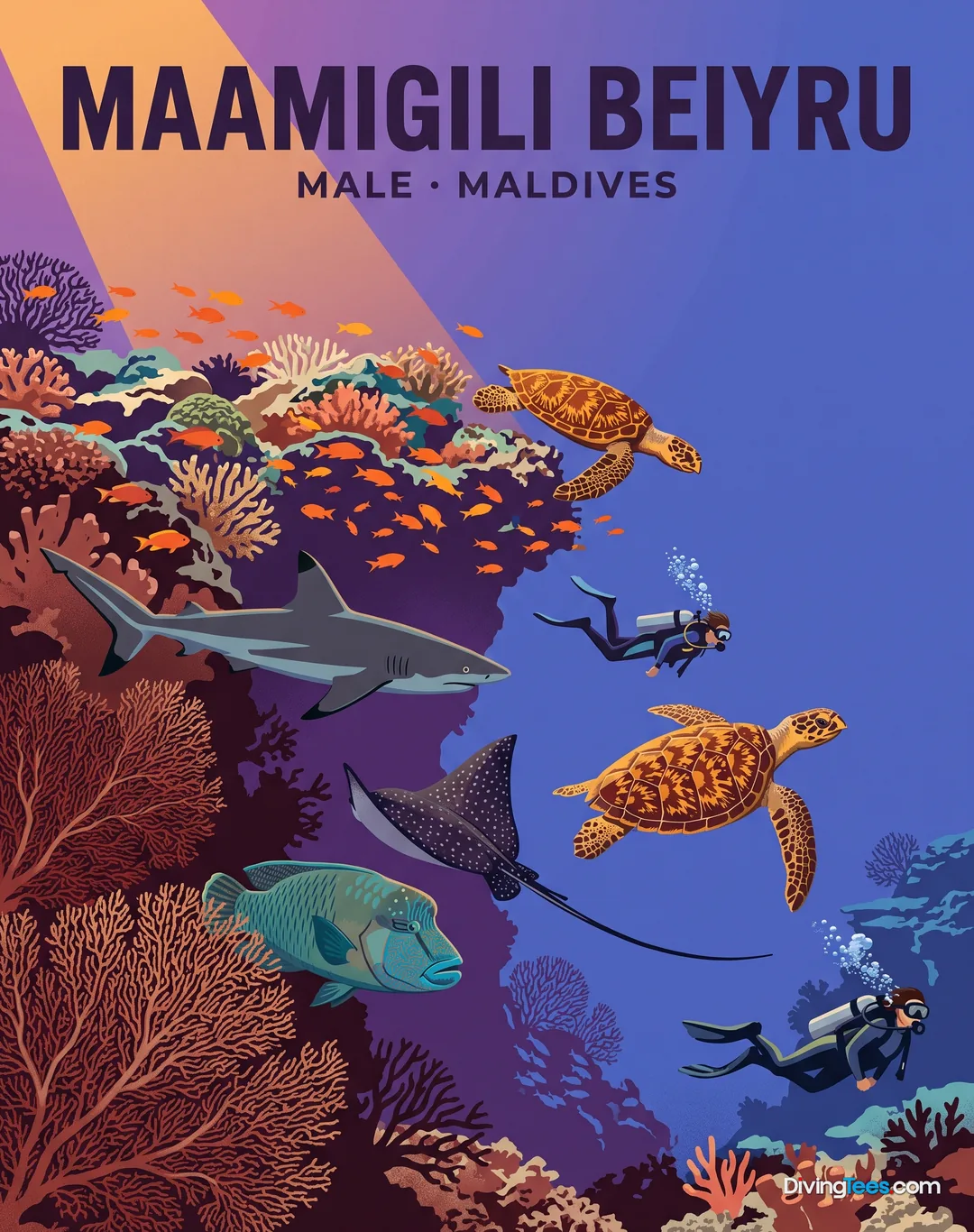
Maamigili Beiyru →
Max. depth · 30 m
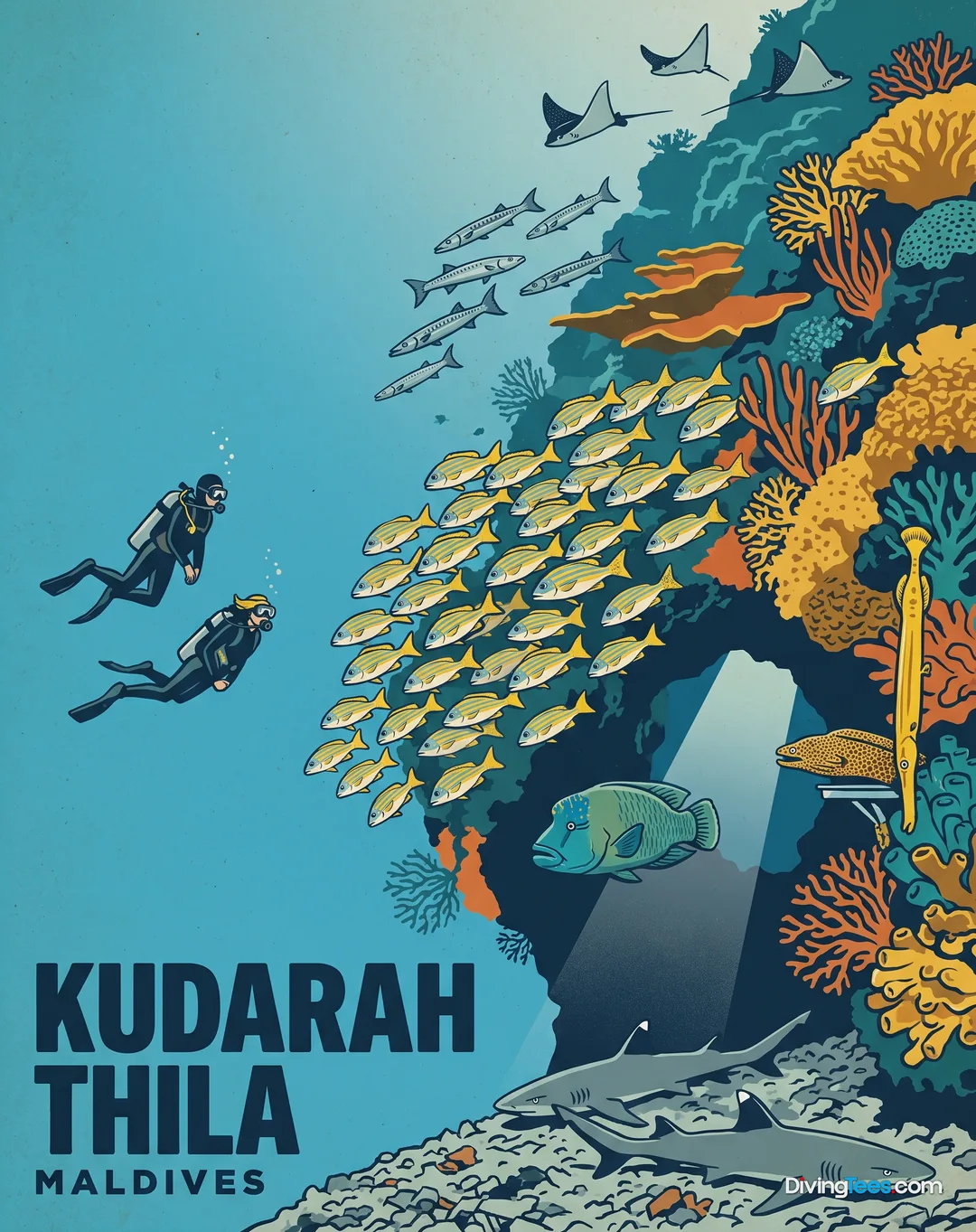
Kudarah Thila →
Max. depth · 25 m
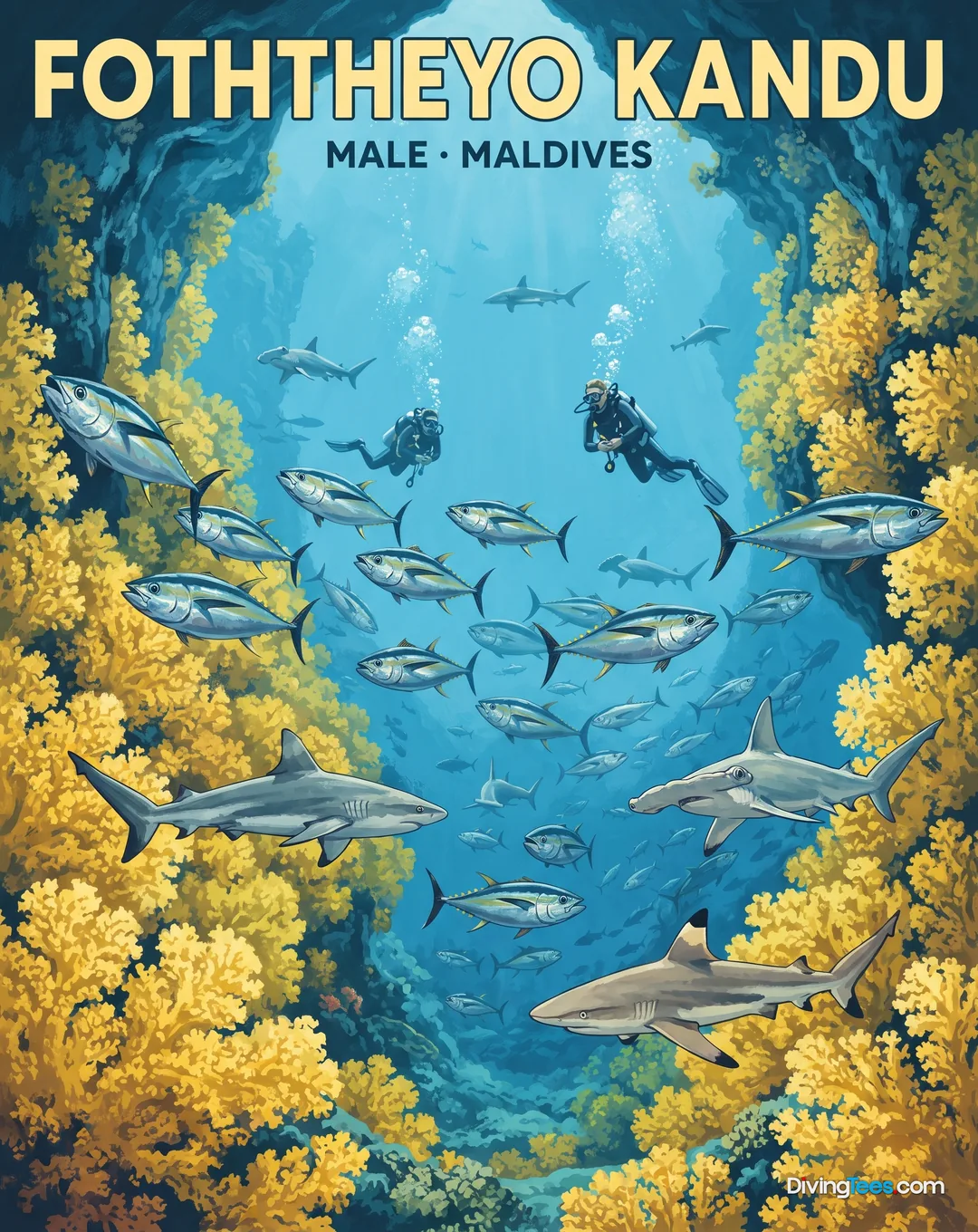
Foththeyo Kandu →
Max. depth · 40 m
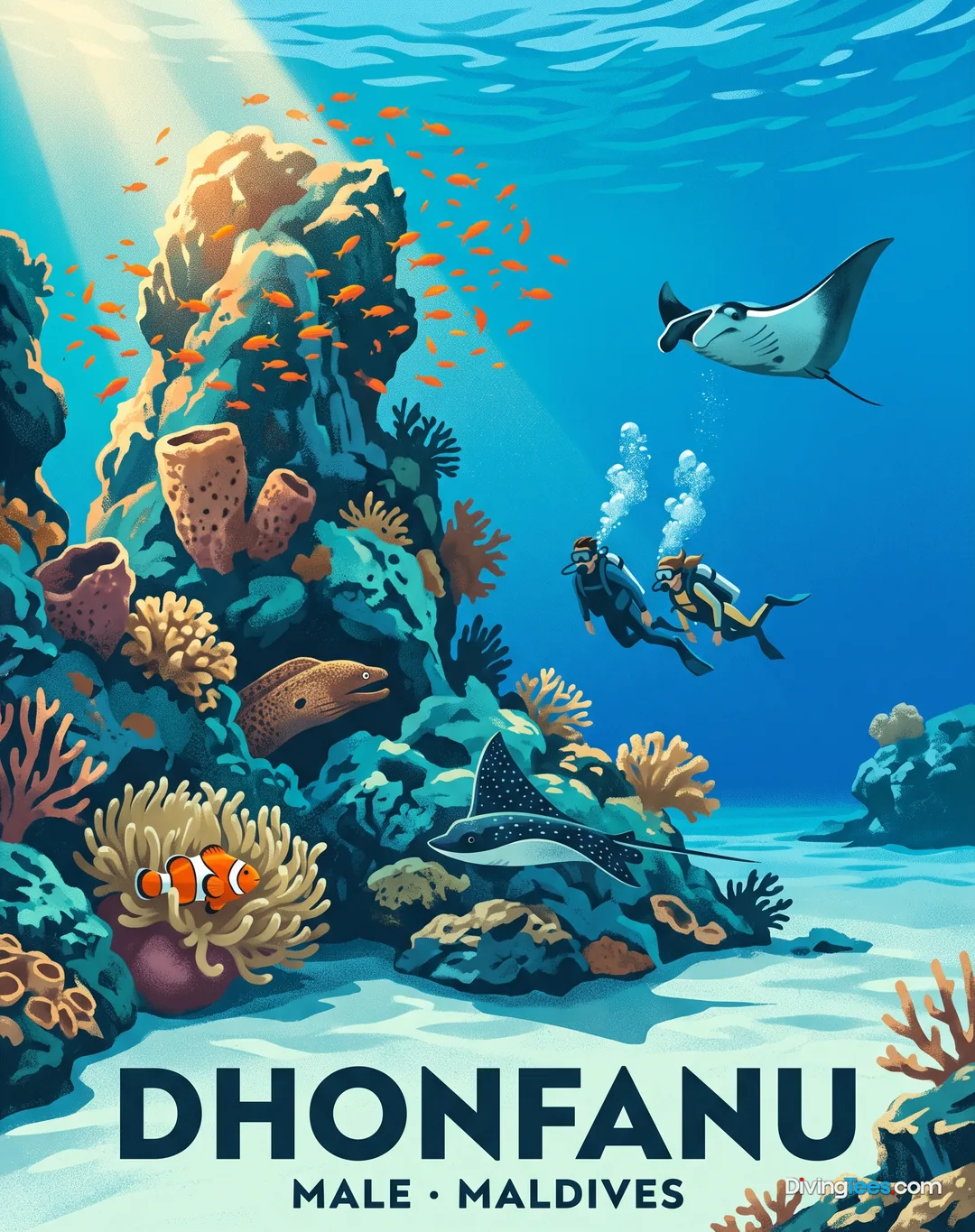
Dhonfanu →
Max. depth · 30 m
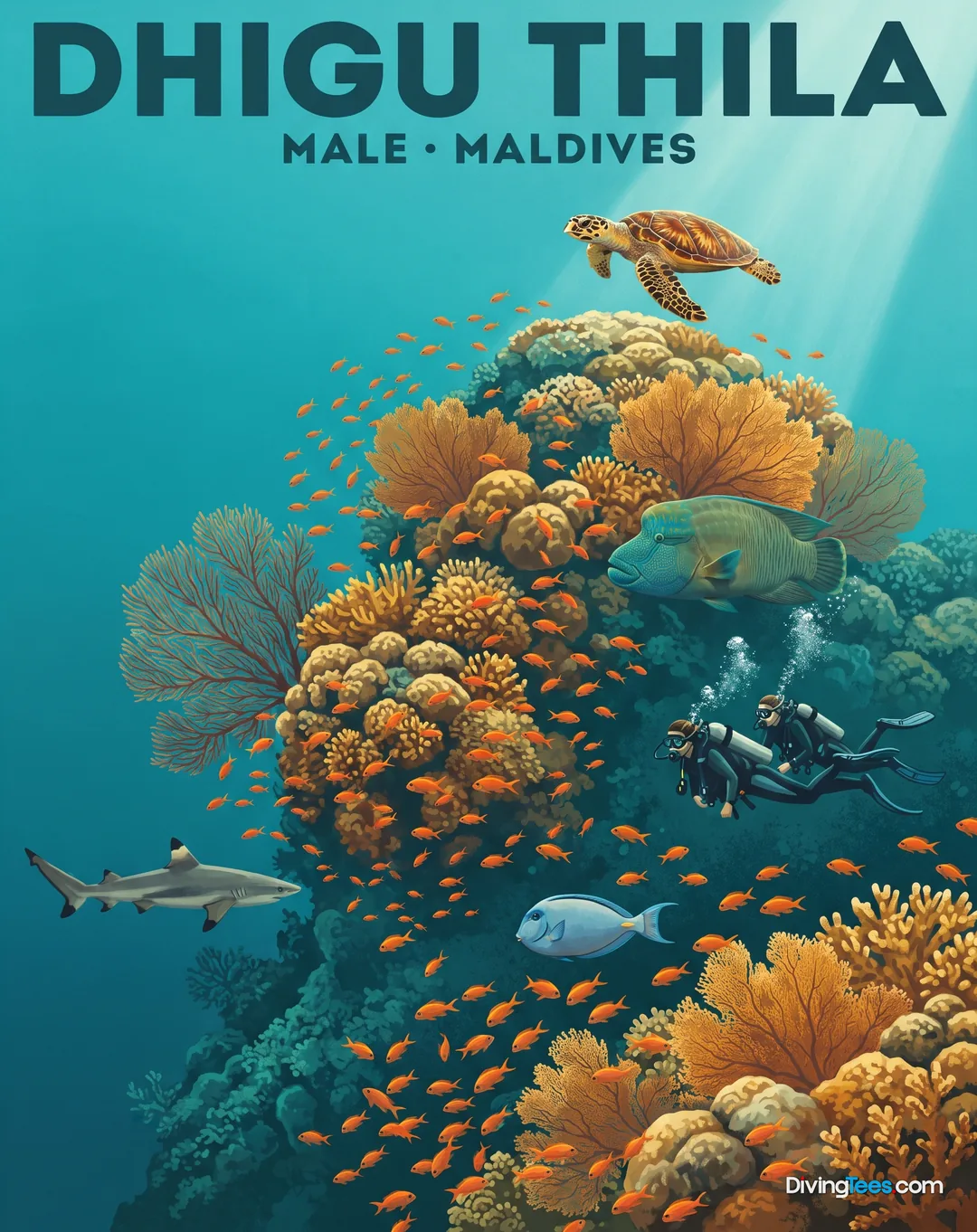
Dhigu Thila →
Max. depth · 30 m
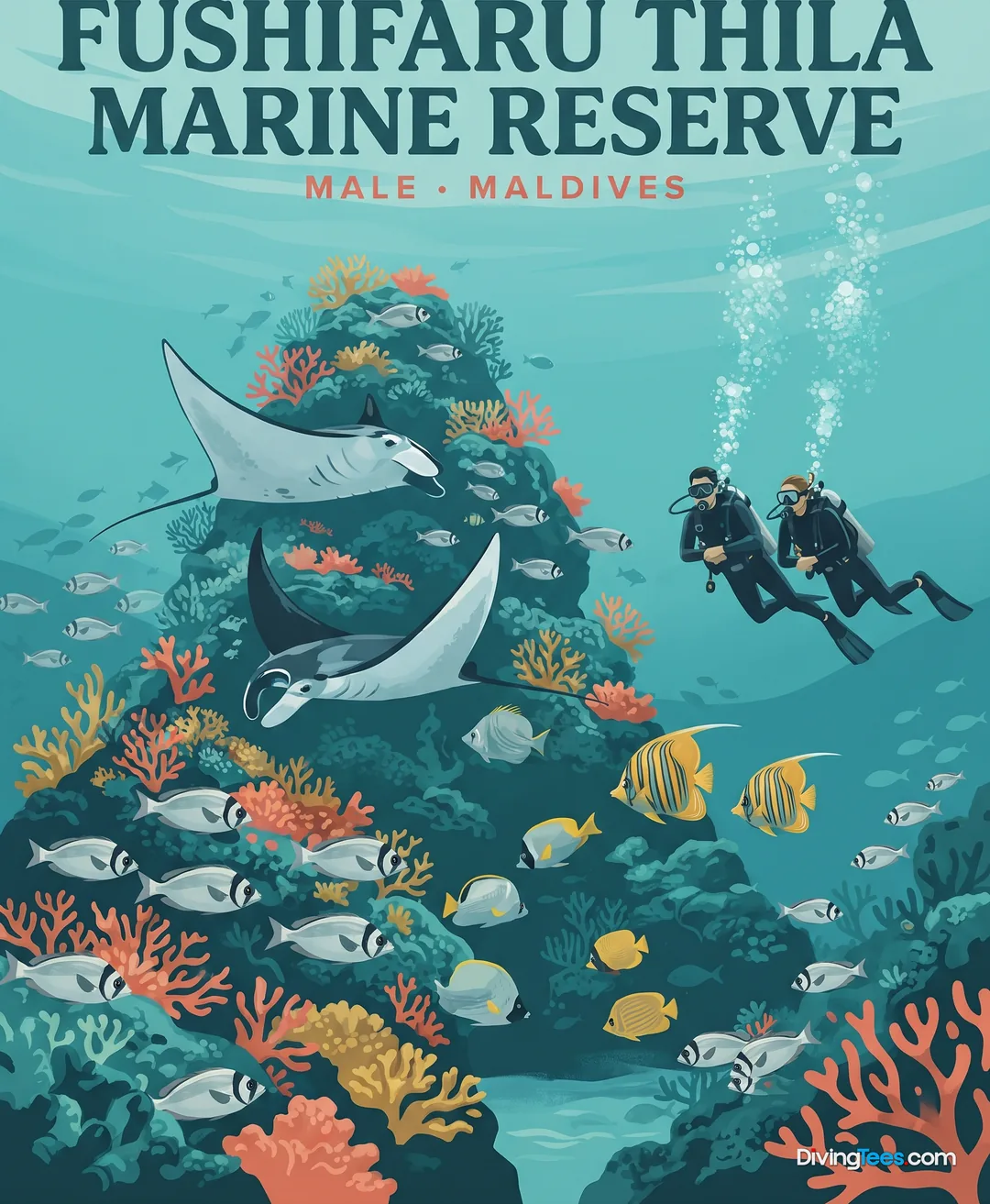
Fushifaru Thila Marine Reserve →
Max. depth · 35 m
Itineraries, dates and prices
Prices per person. Each month shows its lowest price: click a month, or pick an itinerary.
Next departures · 24 departuresfrom £1,525$2,038€1,821
November 2026
December 2026
January 2027
July 2027
Green dot: a discounted departure that month. Discount calculated by us, against the boat's usual price for a trip of the same length.
See dates and prices
If you click these links and make a purchase on the partner site, DivingDeal may earn a commission, at no extra cost to you.
Dates and prices taken from liveaboard.com, updated 26 October 2026
What you’ll meet underwater
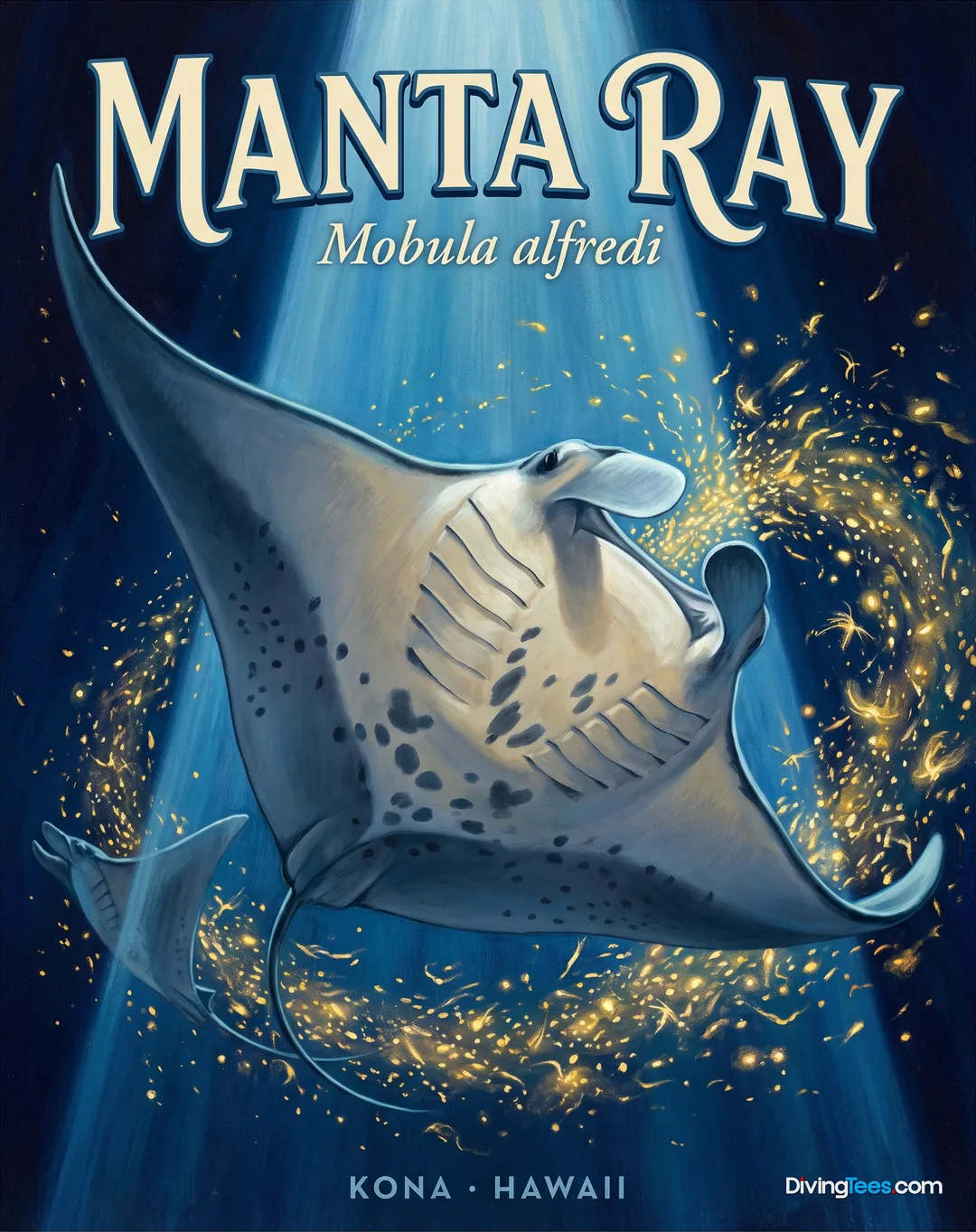
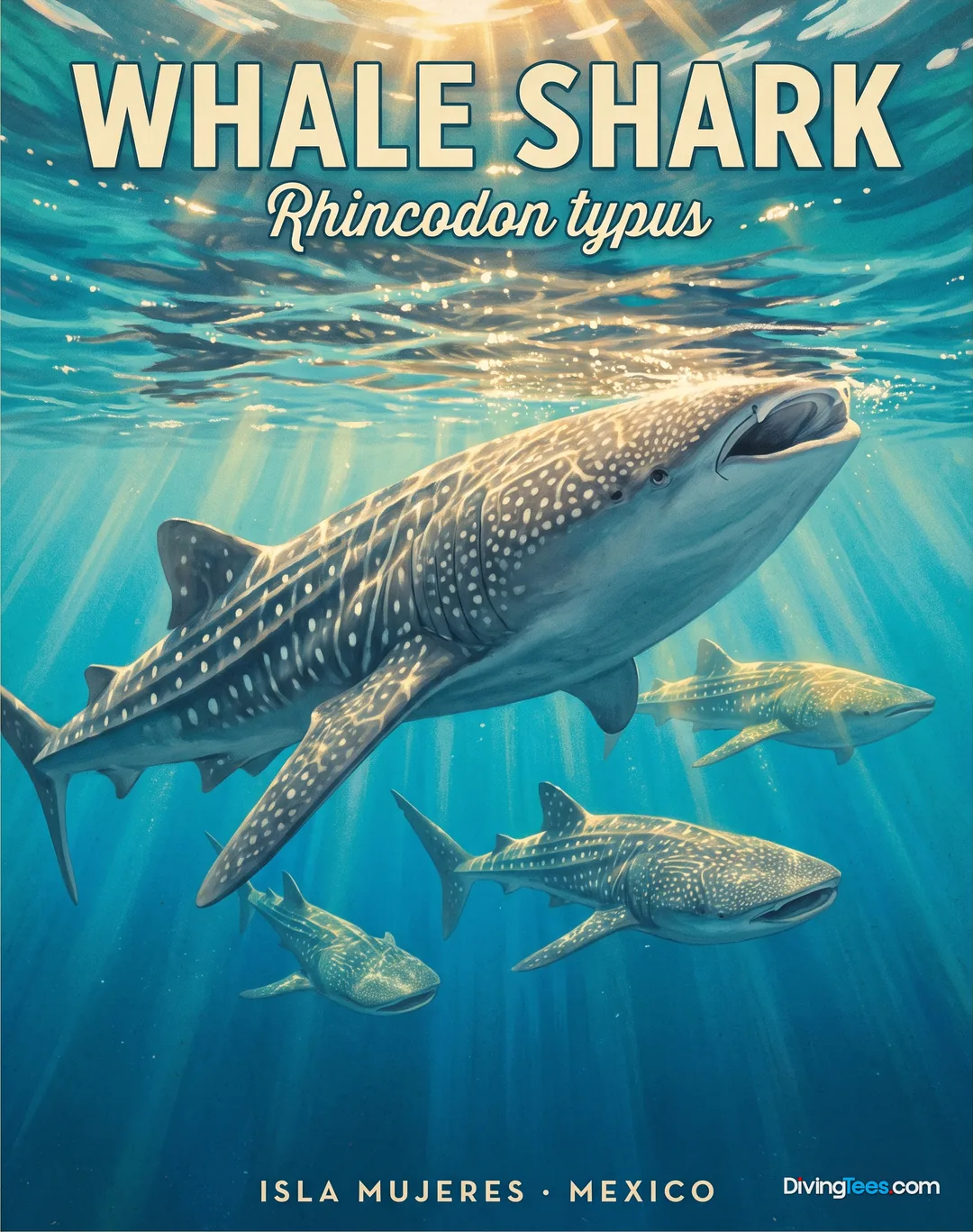
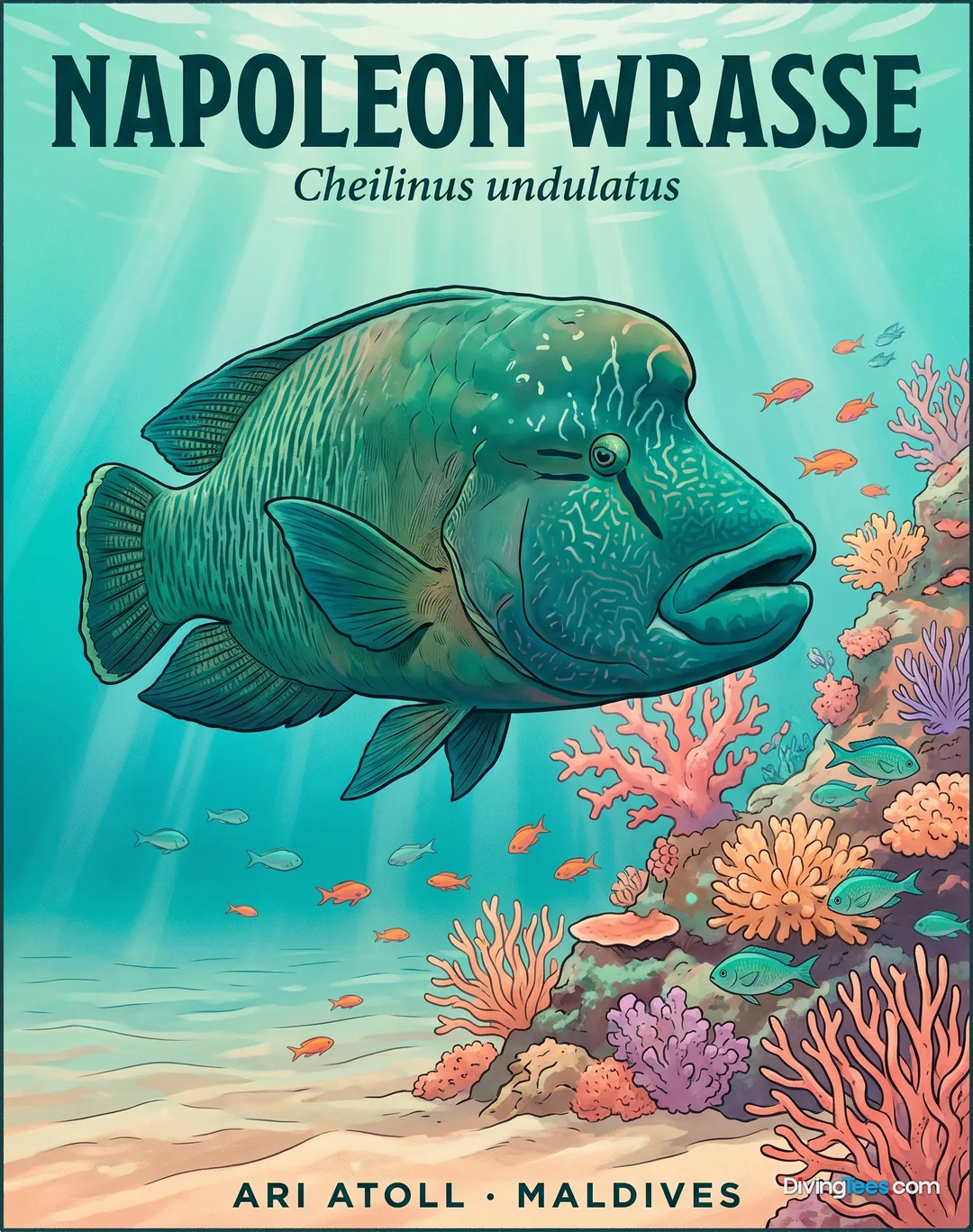
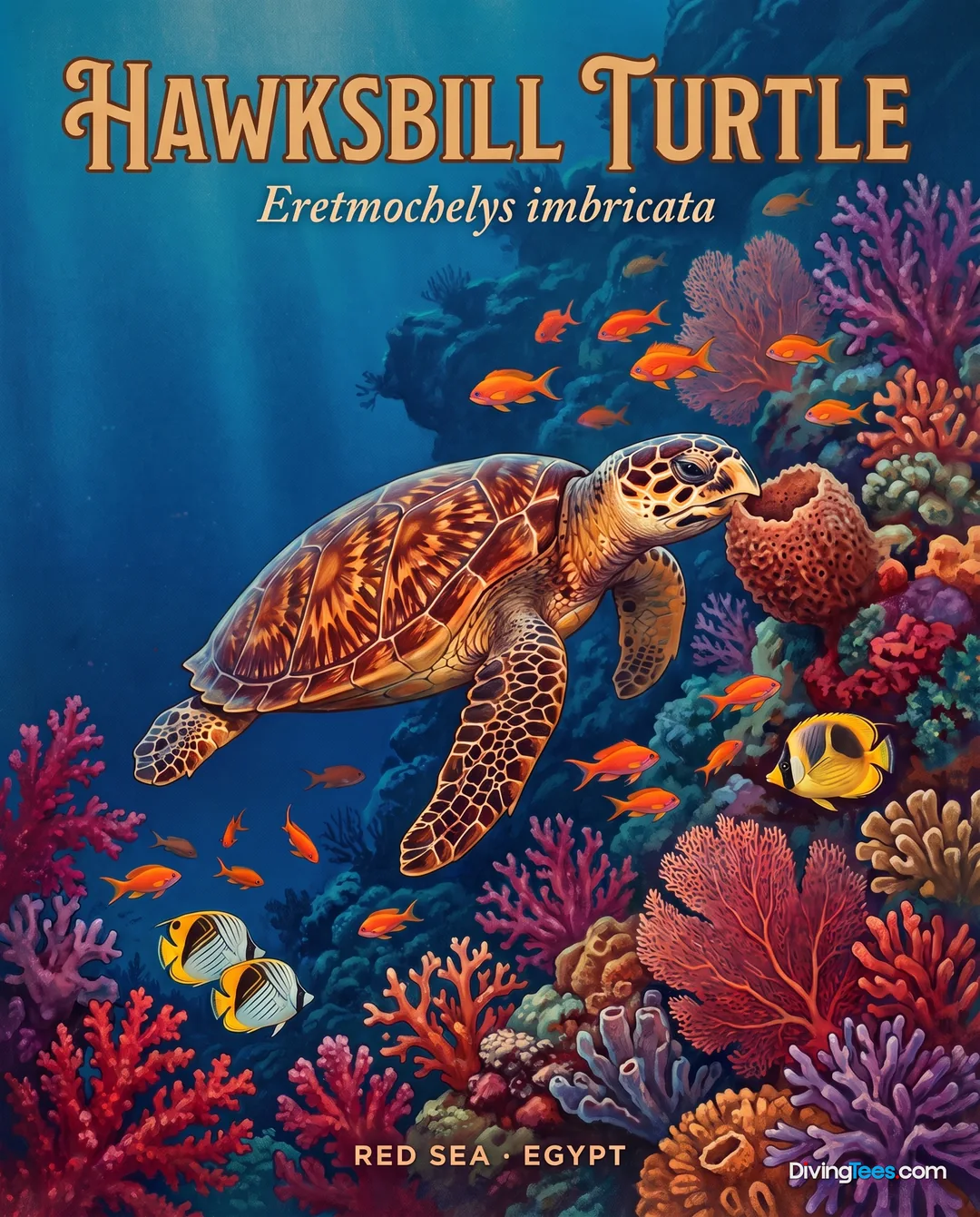
The route is built around large animals. Napoleon wrasse, fusiliers and grey reef sharks are recorded across nine sites; sea turtles occur at eight, while barracudas, manta rays and tuna appear across seven. Eagle rays are also widespread, and white-tip reef sharks, reef sharks, whale sharks, green turtles, jacks, trevally, morays and batfish add variety to the repeated dives. The particular reason to visit each site is often a behaviour rather than a species list: mantas gather at the cleaning station in Dhonkalo and Fushifaru Thila, while strong channels at Myaru Kandu and Foththeyo Kandu pull sharks and other pelagics through. Maamigili and Maamigili Beiyru are among the places to look for whale sharks and mantas in South Ari. Some encounters are site-specific: groupers and anthias at Barracuda Giri, anemones at Banana Reef, soft coral and gorgonians at Dhigalhi Haa, porcupinefish and sweetlips at Maamigili, an eagle ray at Fushifaru, and hawksbill turtles at Dhigu Thila.
Who puts you in the water
The crew guides every dive, with experienced dive guides dividing guests into two or three groups. Briefings are careful and visual, using a whiteboard to make the route and plan understandable before anyone enters the water. All divers must hold Advanced Open Water certification from a recognised agency; the operator recommends at least one logged dive within the previous 12 months, especially because Maldivian dives can involve strong currents and an advanced level of diving. Divers must use a computer, stay with a buddy and follow the briefing. Solo diving and rebreathers are not permitted. PADI and SSI courses can be arranged with advance reservation, including Advanced Open Water and Enriched Air Diver courses. English and Japanese are spoken on board. Oxygen, fire equipment, life jackets and first-aid kits are part of the safety equipment.
The dive deck and the gear
The diving is organised around a separate dhoni, so tanks and wet equipment stay off the main boat. It has shaded dive space, rinse tanks and separate camera-rinse facilities, with a dedicated camera area for photographers who need somewhere more controlled than a lounge table. DIN adapters are available, and sidemount diving is possible. Nitrox is available through the dhoni and included in the dive package. Rental equipment, extra dives and private guides are optional, so divers should arrange what they need before boarding. One tender carries divers to the sites and collects them after the dive. Oxygen and first-aid equipment are carried for emergencies.
Between dives
Between dives, Blue gives the choice that matters in the tropics: shade or open sky. The shaded dive area is on the dhoni, while the main boat offers a spacious sun deck, observation deck, lounge and terrace. Divers can spread out with a book, work on images in the photo area, sit at the bar or use the camera room and separate camera rinse. The boat moves toward the next site while guests rest, so transit is part of the recovery rather than another transfer in a small tender. Non-divers are welcome and can join snorkeling outings. A jacuzzi and water slide are available for those who want something more active than watching the atolls pass.
A day on board
The day begins with the first dive briefing, followed by a couple of morning dives while the boat or dhoni positions itself for the next site. Breakfast and lunch sit around those dives, and snacks are available whenever a diver comes back ready to eat rather than sleep. The main boat moves while guests rest, leaving the dhoni to handle the practical work of tanks, gear and entries. An afternoon dive follows, with the guides adjusting groups to the site and the current. Night dives are included in the program when the route and conditions allow. Dinner closes the working part of the day, sometimes on a beach if the weather and sea permit, and the bar or lounge takes over afterward. Then the cabins, air conditioning and the steady movement of the boat set up the same cycle again.
What you eat aboard
The galley is one of Blue’s strong points. Meals cover local Maldivian cooking alongside Asian, European and Japanese dishes, served as buffets with vegetarian and vegan choices rather than forcing the whole group into one menu. Breakfast, lunch and dinner arrive around the diving, with snacks available through the day when a diver comes back hungry rather than ready for a formal meal. Dinner includes complimentary wine, while beer, wine and other drinks are available at the bar; alcohol and non-alcoholic drinks are not all part of the standard inclusions. When sea and weather allow, the crew can move dinner onto a beach. After several dives, good food is not decoration—it is recovery, conversation and the point at which the day stops being measured in tank pressure.
Nights at sea
The cabins are on the main deck, with air conditioning, a private bathroom and shower, and standard windows; the ocean-view categories add the simple pleasure of seeing the water without leaving the room. The choices cover twin and double layouts, including Ocean View Twin and Double Rooms, Master Twin and Double Cabins, and Deluxe Twin and Double Cabins. A cabin on a Maldives liveaboard is still a compact place to sleep, dry off and stow a week’s kit, not a hotel suite. Blue’s advantage is that the living space is carried elsewhere: the air-conditioned lounge, shaded sun deck and observation areas give tired divers somewhere to go after the shower. Daily cabin cleaning and towels remove some of the small friction that accumulates after repeated dives.
Ocean View Twin Room
Master Twin Cabin
Deluxe Double Cabin
Deluxe Twin Cabins
Ocean View Double Room
Master Double Cabin
What to know before boarding
Blue departs from Malé and returns to Malé. Airport transfer is included, while domestic flights and other internal transport are not; the pickup and drop-off arrangements are provided with the trip information. Arriving in Malé the night before is the sensible choice, leaving room for a delayed flight without putting embarkation at risk.
Deck plan
- Year built
- 2019
- Length
- 41.1 m
- Beam
- 13.7 m
- Maximum number of passengers
- 20
- Number of cabins
- 11
- Number of bathrooms
- 11
- Tenders
- 1
- Website
- fun-azulfleet.net ↗
Hello, I'm Marina, DivingDeal.com's AI assistant. I answer in detail about hotels, dive centres and liveaboards.
Thinking about the whole trip and the flights? Talk it over with Edith →
Marina is an AI. Some links are affiliate links: DivingDeal may earn a commission, at no extra cost to you. Bookings are made with the partner.