
Histoire d'Eau
★ 5/5 (307 reviews)
134 km away as the crow flies
France · Mediterranean
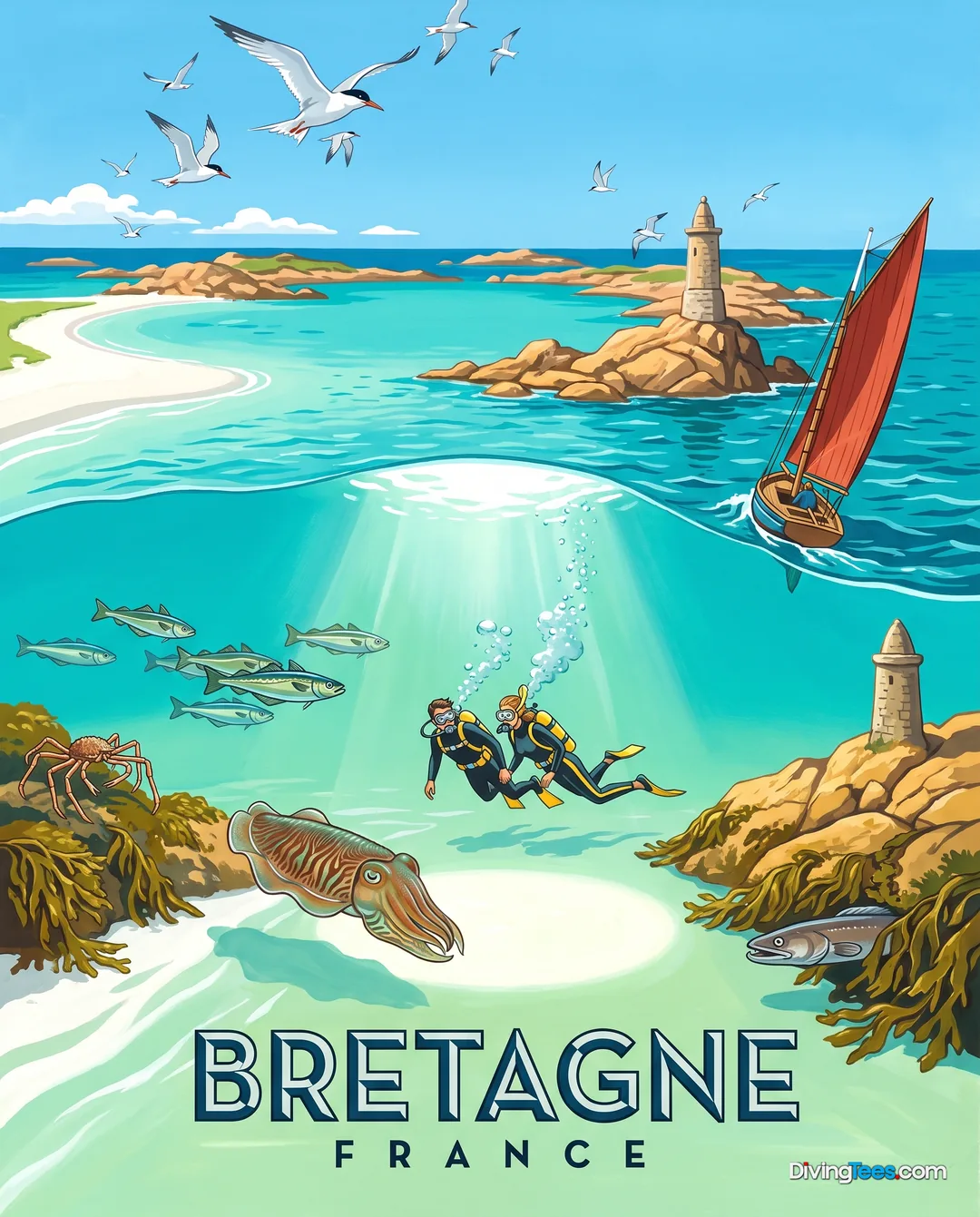
Granite pinnacles, kelp-fringed gullies, nudibranchs and the SS Swansea Vale make Brittany a serious cold-water diving base shaped by the tide.
For subtitles in English: start the video firstthen click the gearat the top right of the video, select “Subtitles/CC”, then “Auto-translate” and choose “English”.
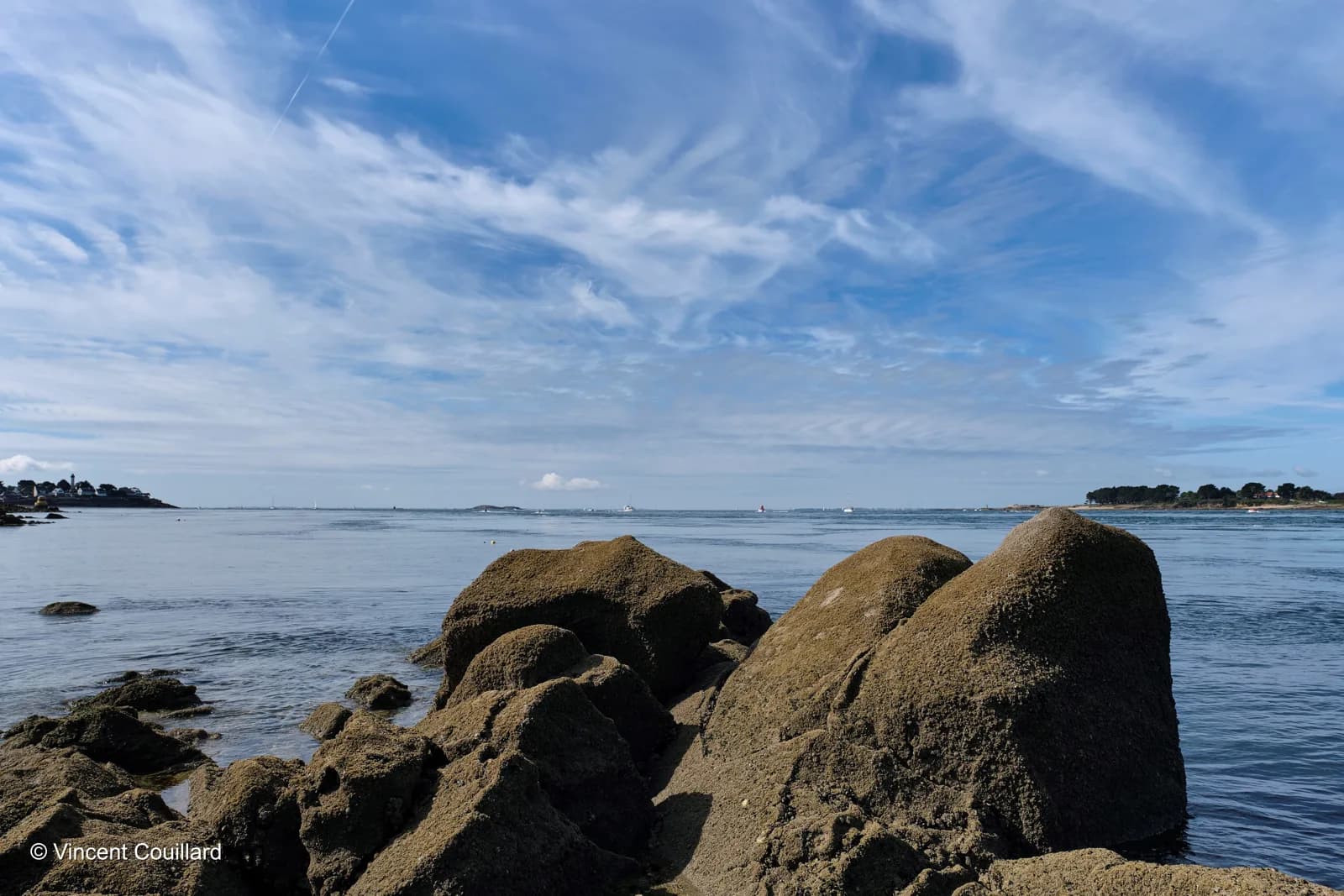
Brittany is a shore-based diving holiday built around boats, tides and a long, weather-exposed coastline. Its underwater scenery is granite rather than coral: block fields, pinnacles, walls, gullies and kelp. Camaret Le Trez Roux keeps things relatively shallow, while the SS Swansea Vale takes experienced divers down to 38 metres. Between dives, the region offers ports, coastal paths, lighthouses and maritime villages, making it a sensible choice for a mixed group rather than a liveaboard itinerary.
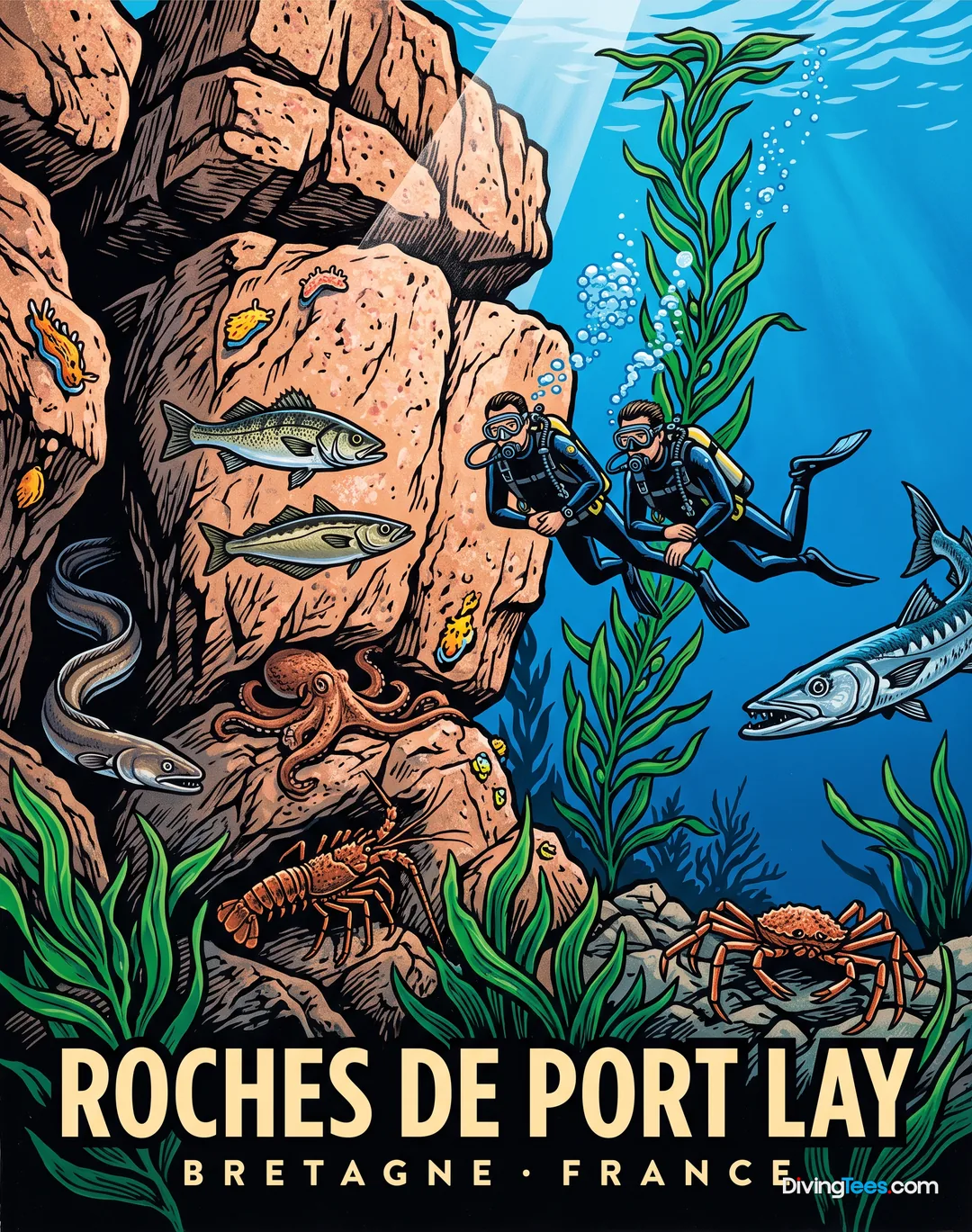
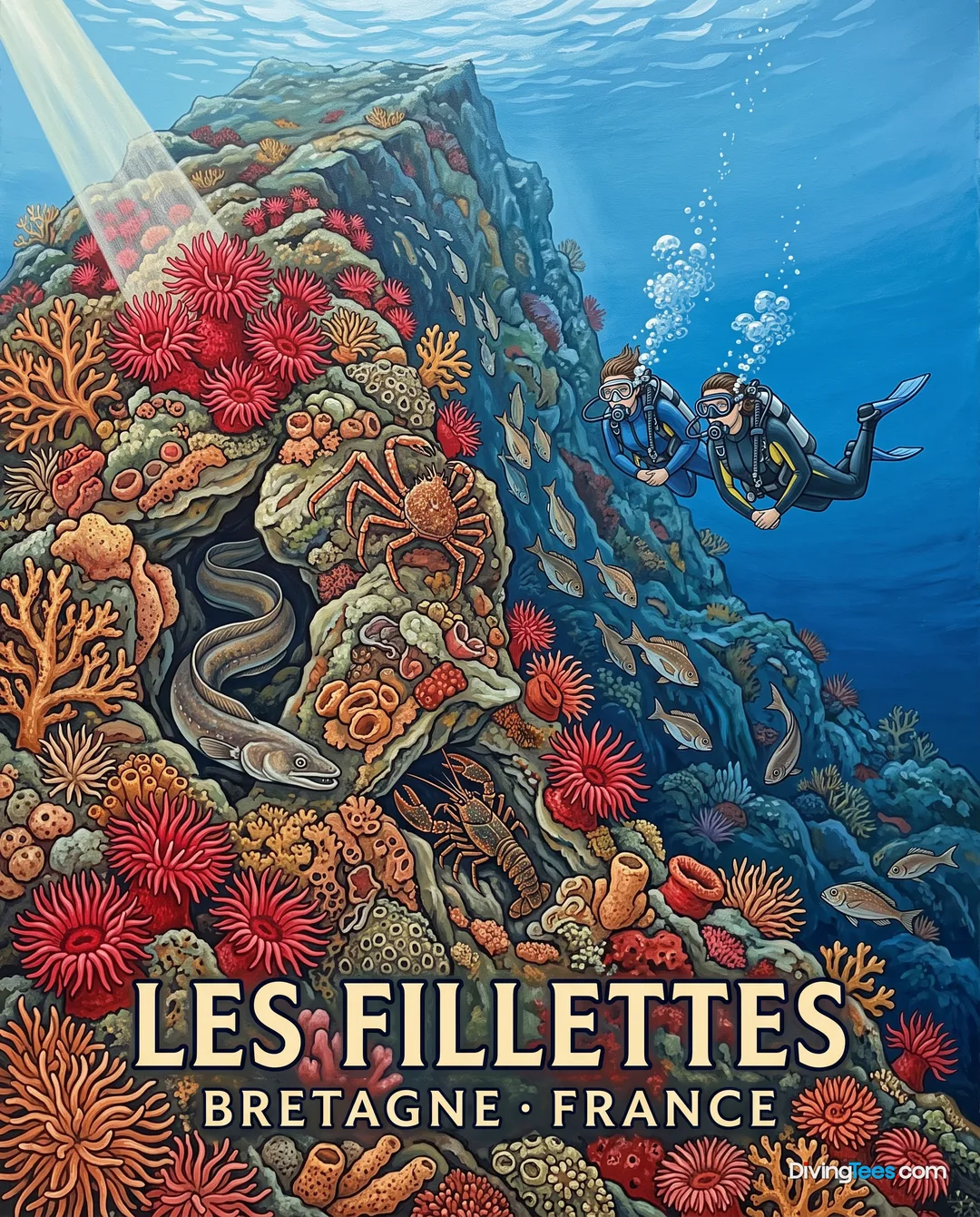
The practical character of Brittany is set by tidal movement. Some sites are comfortable only around slack water or a carefully chosen tidal turn, and apparently sheltered rock can still carry a troublesome flow. Les Fillettes rises from six metres before falling towards 28 metres in the Goulet de Brest; its anemone- and sponge-covered contours reward a slow, controlled route across the plateau. At Camaret Le Trez Roux, granite blocks and kelp create numerous cracks to search between eight and 20 metres. The SS Swansea Vale is a more committed outing, with a structured hull, marine growth and resident fish between 30 and 38 metres. Visibility is variable rather than guaranteed, affected by swell and moving water, so a torch, delayed surface marker buoy and tidy navigation matter. Boat diving is central, although selected coastal areas can be reached from shore.
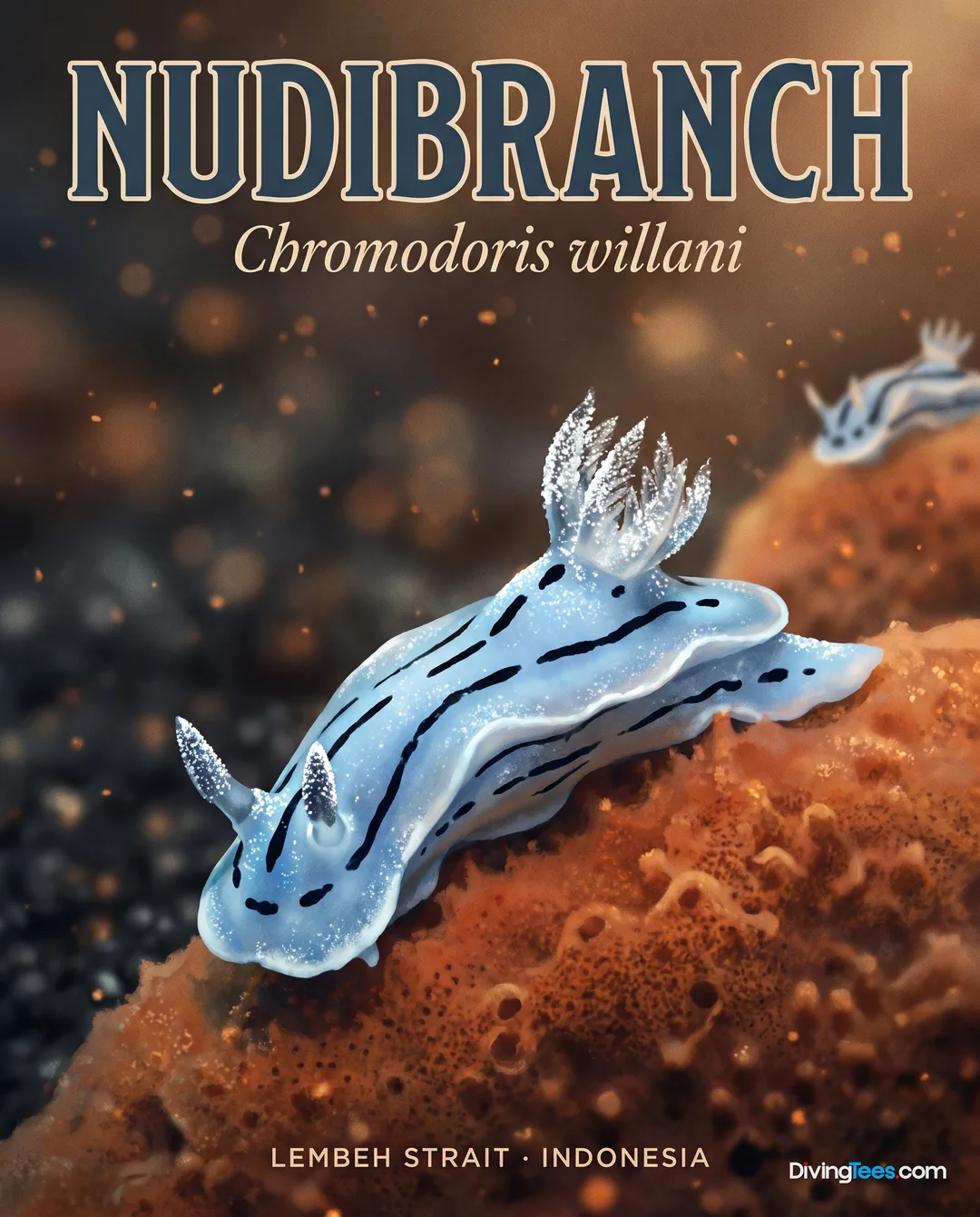
Brittany rewards close inspection rather than a hunt for tropical spectacle. Nudibranchs sit among the granite cracks and kelp, while conger eels, lobster, spider crabs and octopus occupy the darker recesses. Pollack and European seabass bring movement to the deeper sections and around the wreck. Basse Laurent is particularly suited to looking into crevices for conger eels, lobster, spiny lobster and octopus, whereas Les Roches De Port Lay offers macro life along rock faces and gullies. The SS Swansea Vale adds fish life inside and around its hull, with marine growth softening the ship’s structure. Species timing is not a reliable reason to fix the whole trip to one month; local sea state and tidal windows usually matter more. Calmer summer conditions can make the rock sites easier to appreciate.
There is no single month that works equally well across the Breton coast. The sensible approach is to favour a period when the chosen sector has calmer weather, then leave enough flexibility for swell and tidal windows. Les Roches De Port Lay is described as most rewarding from June to August, when calmer summer conditions can improve the experience. Other sites may be governed more by the day’s sea state and the coefficient of the tide than by the calendar. A four- to seven-day stay gives the schedule room to move, rather than turning one cancelled boat day into the end of the diving holiday.
Open Water divers can use the shallower rock sites, including Les Roches De Port Lay, but local familiarity is useful because currents can change with the tide. Advanced training becomes increasingly relevant for exposed reefs, deeper walls and demanding boat dives. The SS Swansea Vale is intended for advanced divers with wreck experience and, where relevant, decompression competence. Advanced, Nitrox and Wreck qualifications are useful additions for divers arriving through PADI, SSI or BSAC routes. Comfort in cold water, variable visibility and controlled ascents is more important than collecting a particular agency label.
From London Heathrow, London Gatwick or Manchester, Brittany is reached by combining the onward journey through France with road or rail travel to the selected coastal sector. Ferry links from the United Kingdom may also serve regional ports, depending on the route operating at the time. The important point is not a single arrival airport but the final transfer: ports and dive areas are spread along the coast, and some are several hours from international airports. Rail can take the traveller to a principal Breton town, but a car or local transport is then needed to reach the harbour. Accommodation close to the departure port keeps early tidal starts and equipment transfers manageable.
Build the holiday around the tide table, not around a fixed sequence of morning and afternoon dives. A missed turn of tide can make a site uncomfortable or force an early finish, while a rough-weather day may require the boat to move elsewhere. Keep at least one uncommitted day in the plan. Choose accommodation close to the port; a distant room can add unnecessary driving when departure times are set by slack water. Ask whether the intended programme centres on wrecks or rock sites, then pack accordingly. A personal torch and delayed surface marker buoy are particularly useful when exploring wreck structure or low-visibility cracks. For the SS Swansea Vale, do not treat the listed depth as the whole difficulty: current outside slack water, the 30–38 metre profile and wreck overheads all raise the workload. A windproof layer for the surface interval is practical equipment in Brittany, not an optional extra.
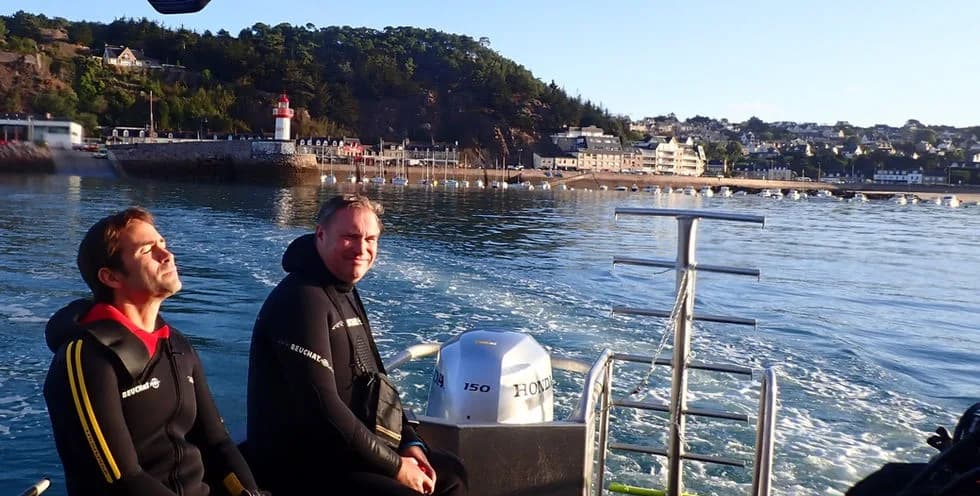
A typical stay is based ashore, with accommodation near a harbour and short daily transfers by car, taxi or on foot. Boat dives are arranged around the tide and may be shifted when swell or current changes. Keeping within one coastal sector avoids wasting the holiday on long drives. Non-divers have coastal paths, ports, lighthouses, maritime museums, aquariums, markets and boat trips to nearby islands, so the itinerary need not depend entirely on immersion days.
Hello, I'm Marina, DivingDeal.com's AI assistant. I guide you through destinations, areas and countries.

Thinking about the whole trip and the flights? Talk it over with Edith →
Marina is an AI. Some links are affiliate links: DivingDeal may earn a commission, at no extra cost to you. Bookings are made with the partner.
★★★★★
★ 9.4/10 (379 reviews)
48 km away as the crow flies

★★
★ 9.1/10 (619 reviews)
131 km away as the crow flies
★★★
★ 8.9/10 (1,793 reviews)
131 km away as the crow flies
★★★★
★ 9.2/10 (394 reviews)
131 km away as the crow flies