

Moorea Blue Diving
Google 5/5 (404 reviews)
4.9 km away as the crow flies
Moorea · French Polynesia · Pacific
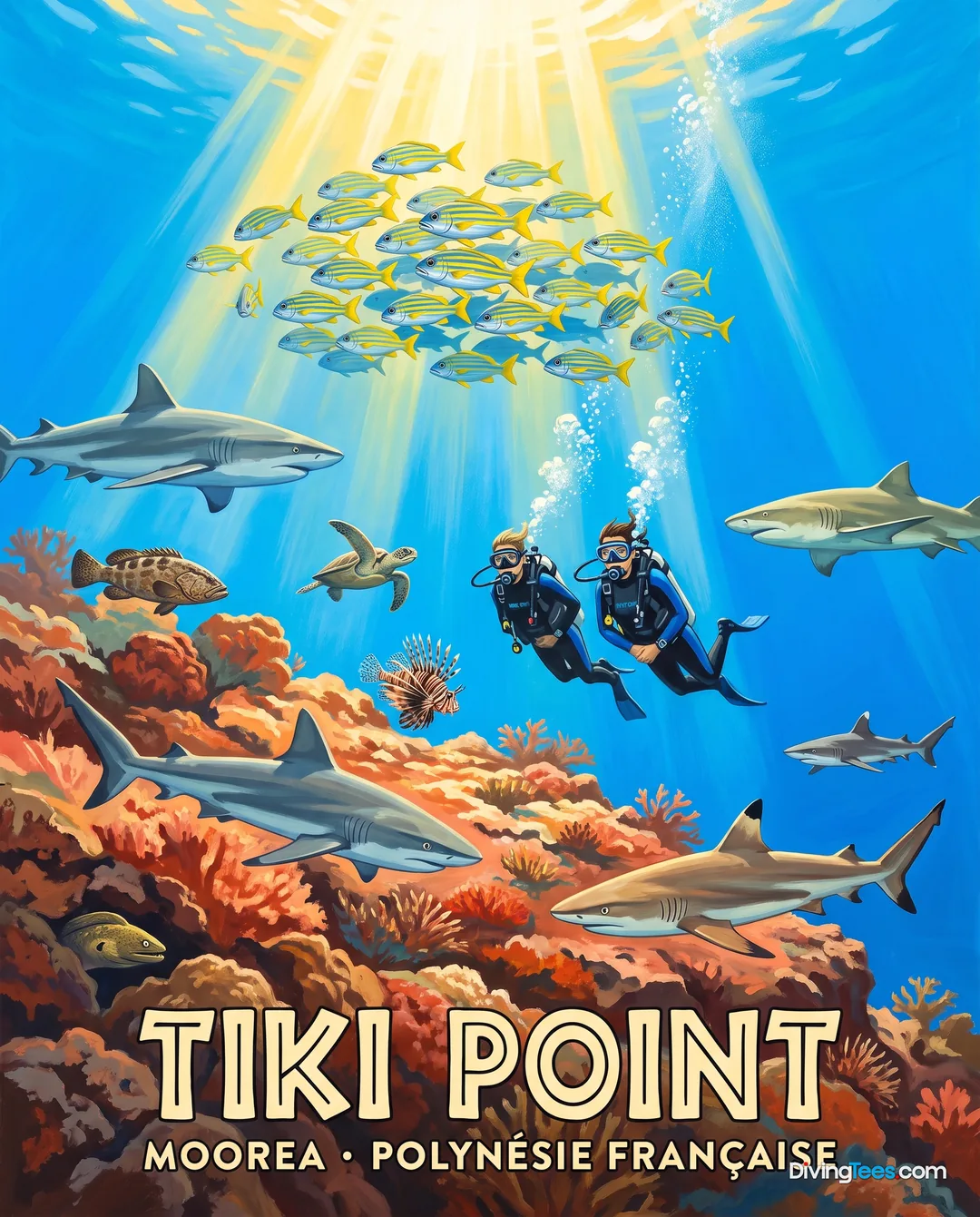
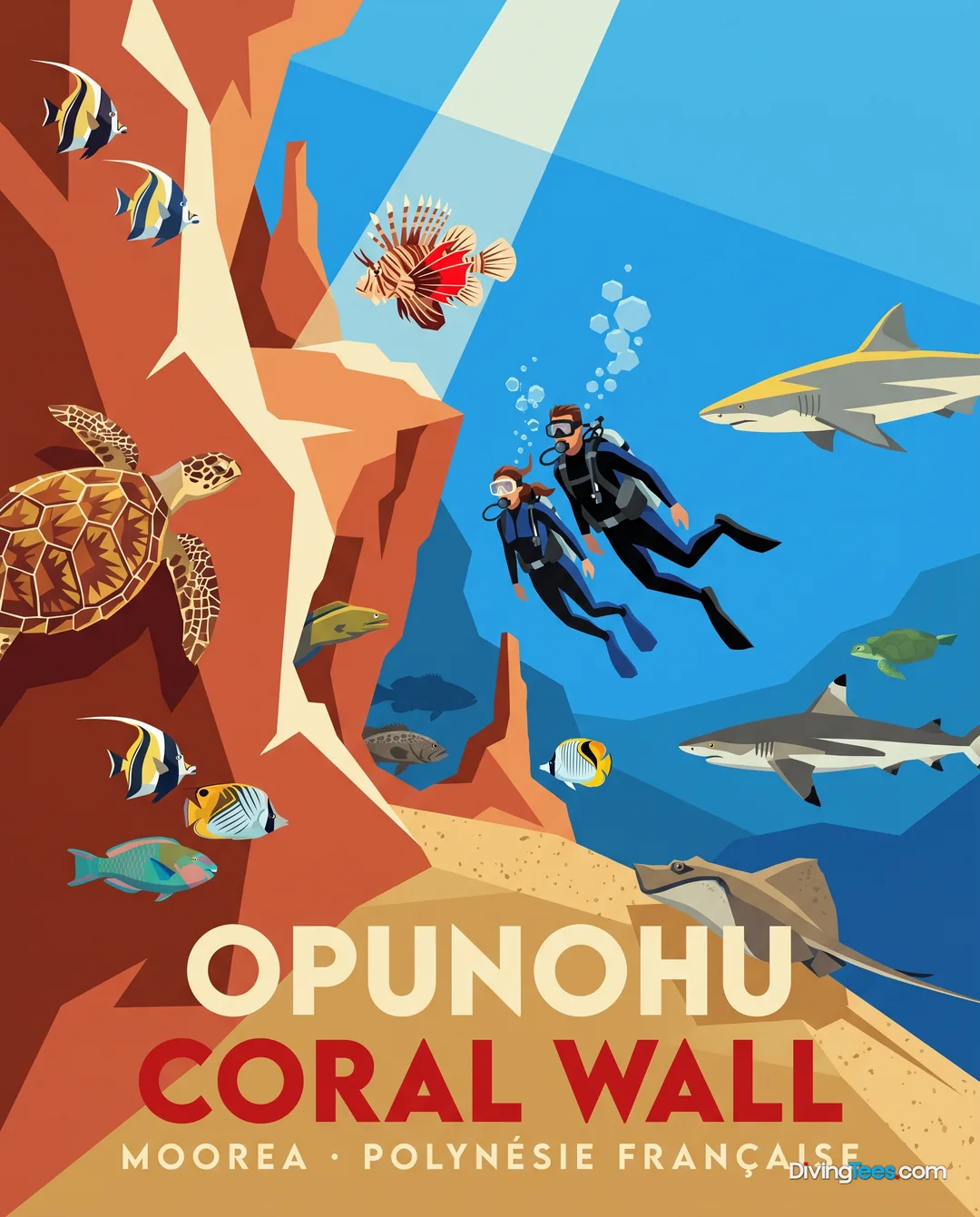
Max. depth · 35 mBegin your dive into Moorea's Canyons d'Opunohu with an immediate welcome from curious blacktip sharks, before exploring dramatic underwater formations and encountering large lemon sharks.
For subtitles in English: start the video firstthen click the gearat the top right of the video, select “Subtitles/CC”, then “Auto-translate” and choose “English”.
Dropping into Canyons d'Opunohu, you're often greeted instantly by blacktip sharks (Carcharhinus melanopterus), their sleek forms moving with an almost choreographed curiosity as you descend. This initial encounter sets the tone for a dive rich in pelagic interaction, even before you fully register the distinctive topography beneath. The water clarity in this region often feels like diving through liquid air, allowing these first interactions to unfold with an almost cinematic quality, drawing you deeper into the blue.
The underwater topography here is defined by a series of dramatic canyons, a geological spectacle that provides both shelter and hunting grounds for a diverse array of marine life. As you navigate these ancient formations, the play of light and shadow creates a constantly evolving tableau. These canyons are not just scenery; they are vibrant ecosystems, fostering dense populations of tropical fish that flit through the coral formations and crevices, making every turn a discovery.
Moving through the structure of the canyons, your attention will inevitably be drawn to the larger residents. Lemon sharks (Negaprion brevirostris) are a significant draw at this site, often observed in impressive sizes. Their calm, deliberate movements as they come to observe divers add another layer of excitement and respect to the experience. Unlike the more skittish reef sharks, the lemon sharks at Canyons d'Opunohu frequently approach with a noticeable inquisitiveness, offering extended viewing opportunities for those who remain collected and patient.
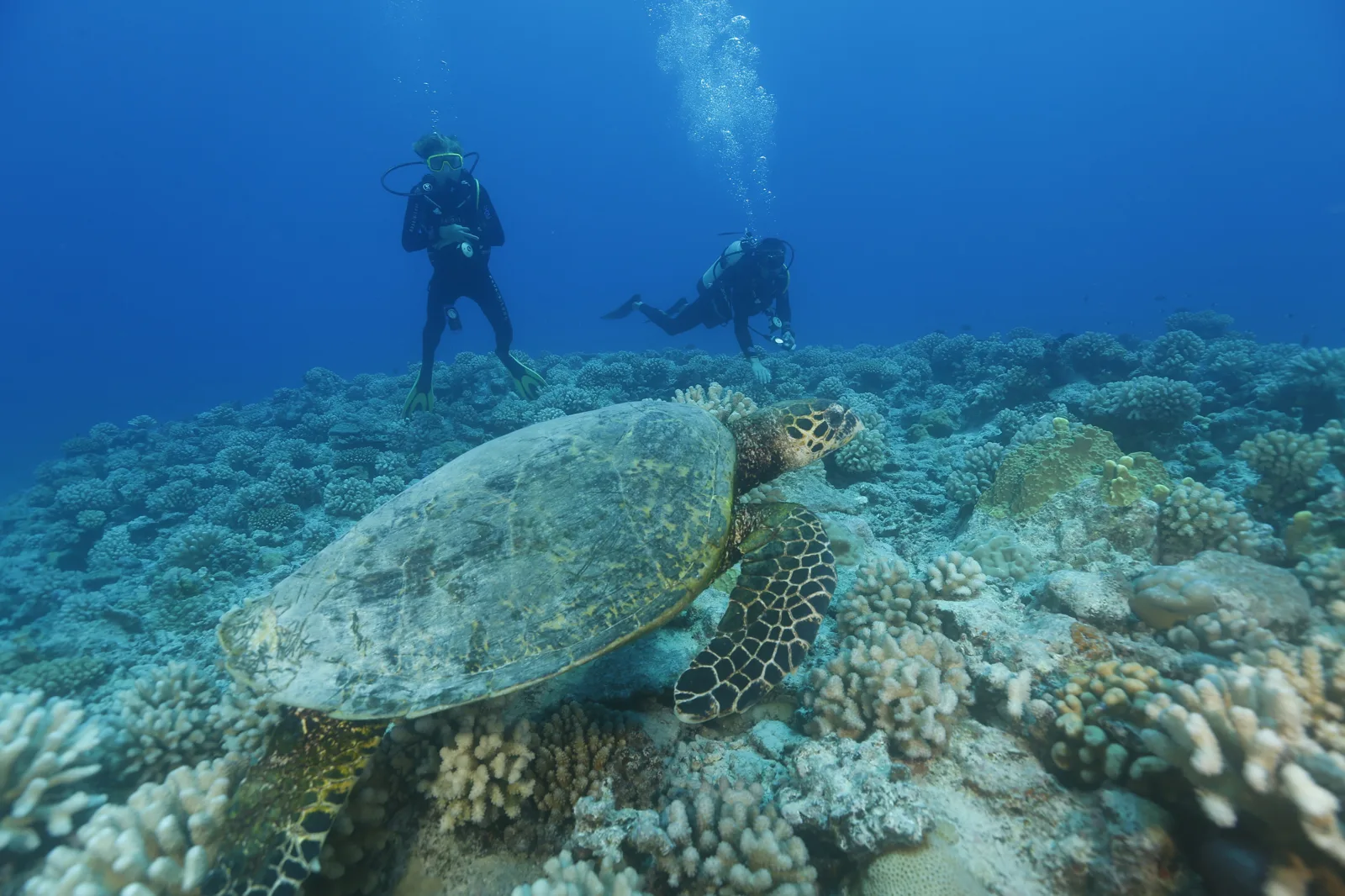
The journey through Canyons d'Opunohu isn't just about the 'big stuff'; it's about the intricate tapestry of a Polynesian reef. The walls and ledges of the canyons are adorned with various hard and soft corals, forming habitats for countless smaller species. While the sharks command attention, pausing to appreciate the usual tropical reef fish navigating their colourful world within the reef's embrace is an essential part of understanding the site's complete ecosystem. This provides a constant background hum of activity that frames the larger encounters.
This site is accessible from N1 or Open Water Padi certification, catering to a broad range of divers. You can descend to a maximum depth of 35 meters, allowing for thorough exploration of the canyons and their inhabitants. While currents are generally minimal in the regional context, always be prepared for local variations.
Canyons d’Opunohu is accessible to divers with N1 or Open Water Padi certification, making it suitable for a broad range of experience levels. You can explore the underwater canyons and their inhabitants while diving within the site’s stated maximum depth, provided your certification supports your planned dive.
At Canyons d’Opunohu, you can descend to a maximum depth of 35 meters. This depth allows you to explore the distinct underwater canyon formations and observe the marine life living within them. The canyons include coral formations, walls, ledges, crevices, and habitats supporting tropical reef fish.
Currents at Canyons d’Opunohu are generally minimal in the regional context, but local variations can occur. You should remain prepared for changing conditions while moving through the underwater canyon formations. The site’s generally limited current conditions contribute to access for divers with N1 or Open Water Padi certification.
At Canyons d’Opunohu, you may encounter blacktip sharks immediately upon entry and observe large, curious lemon sharks around the canyon formations. The canyons also contain hard and soft corals, tropical reef fish, and smaller species living among walls, ledges, coral formations, and crevices.