
Moorea Blue Diving
Google 5/5 (404 reviews)
21 km away as the crow flies
Moorea · French Polynesia · Pacific
Descend into L'Aquarium's tranquil white sand, where colourful coral bommies shelter a vibrant array of reef fish, perfect for new divers to discover Moorea's underwater world.
For subtitles in English: start the video firstthen click the gearat the top right of the video, select “Subtitles/CC”, then “Auto-translate” and choose “English”.
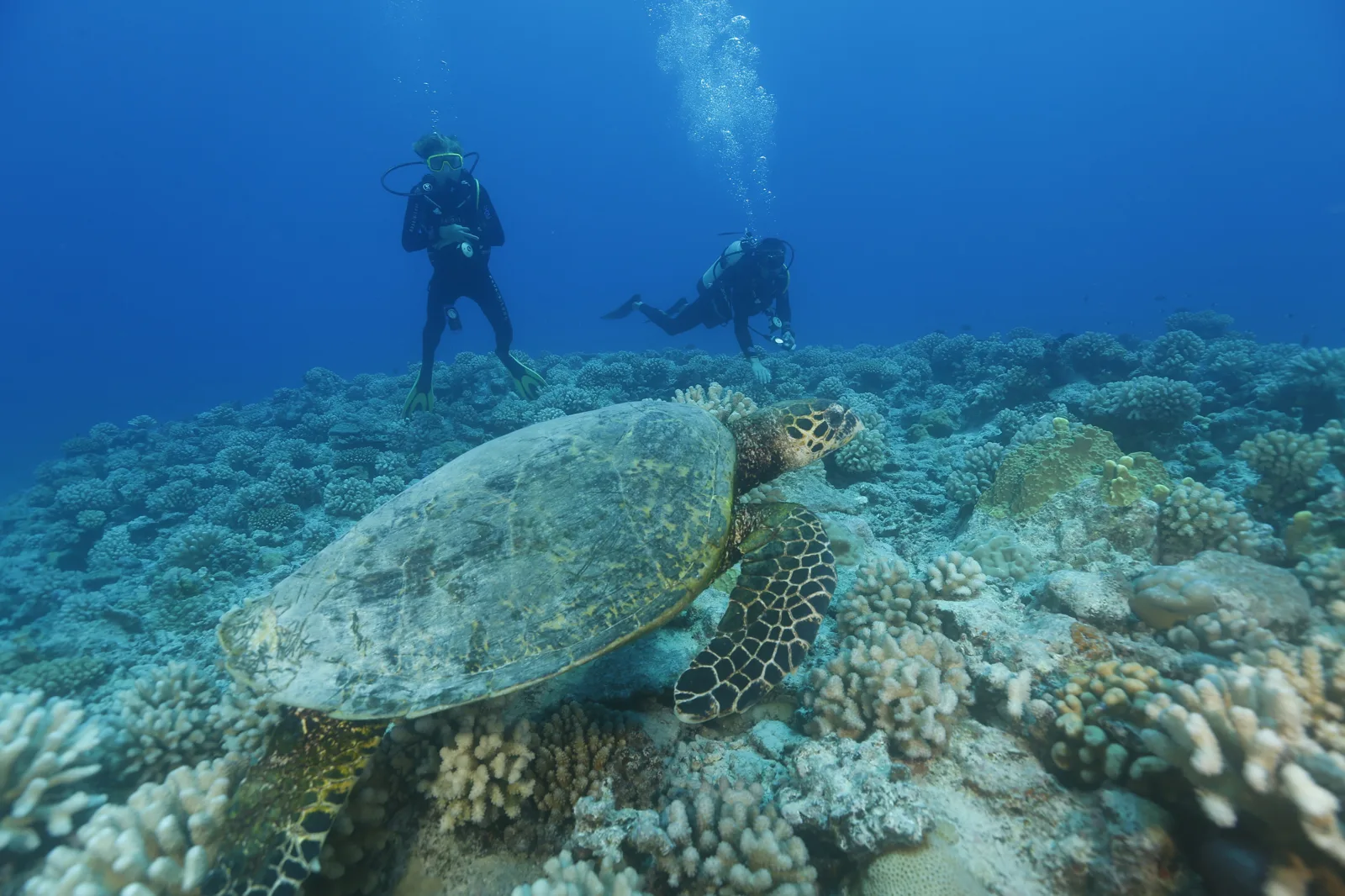
L'Aquarium in Moorea offers a gentle introduction to French Polynesian diving, characterised by its expansive white sand seafloor and scattered coral heads. As you descend into its inviting waters, the immediate impression is one of calm, with the sunlight illuminating the sandy bottom and the vibrant hues of the coral formations. This topography creates a natural habitat for a high concentration of smaller reef species, making it an ideal environment for divers to observe and interact without being overwhelmed.
The dive profile at L'Aquarium typically involves exploring these coral outcrops, known locally as 'patates de corail'. Each "patate" is a micro-ecosystem, bustling with activity. Here, you'll spend your time moving slowly between these living structures, watching for the intricate behaviors of the resident fish. The overall ambiance is serene, allowing for extended bottom time and ample opportunity to refine buoyancy and observation skills within a safe and visually rewarding setting.
Among the coral formations, you'll encounter a kaleidoscopic display of butterflyfish (Chaetodontidae) flitting through the branches, alongside the distinctively patterned bannerfish (Heniochus diphreutes) and the often-shy boxfish (Ostraciidae). These species, along with the powerful parrotfish (Scaridae), are constant residents, contributing to the site's rich biodiversity. The relative shallowness and shelter provided by the reef structure ensure a steady presence of these colourful inhabitants.
No visit to L'Aquarium would be complete without seeking out the renowned clownfish (Amphiprioninae) in their anemone homes, a classic symbol of tropical diving. These fascinating symbionts are a delight to observe, often found near the base of the larger coral bommies. Their interaction with their stinging hosts is a timeless spectacle, allowing for close and prolonged observation of their territorial antics and cleaning behaviours.
As you move slightly deeper, the sandy expanse opens up, offering the potential for encounters with larger, more transient marine life. It is in these outer sections, away from the immediate coral structures, that you might spot the elegant spotted eagle rays (Aetobatus narinari) gliding gracefully over the sand. Their distinctive pattern and fluid movement make for a memorable sighting, providing a dynamic contrast to the vibrant reef fish closer to the bommies.
This site is notably accessible, designated for beginners and those undergoing dive training. You can expect practically no current, contributing to a relaxed and comfortable dive experience.
L'AQUARIUM is suited to beginners and divers undergoing training. Its calm setting lets you practise buoyancy and observation skills while moving slowly around coral bommies. The white sand and sheltered reef structure create a straightforward environment where you can focus on becoming comfortable underwater and watching marine life closely.
At L'AQUARIUM, you can expect practically no current. This contributes to a relaxed, comfortable dive and makes it easier to move slowly between the coral bommies. The calm conditions also support training, extended observation, and time spent refining your buoyancy without being overwhelmed by water movement.
At L'AQUARIUM, you can look for butterflyfish, bannerfish, boxfish, and parrotfish among the coral formations. Clownfish live in anemones near the larger bommies, offering close viewing opportunities. Over the sandy outer sections, you might also see spotted eagle rays gliding beyond the reef.
A dive at L'AQUARIUM involves exploring an expansive white sand seafloor scattered with coral bommies, locally called patates de corail. You move gradually between these living structures, observing resident reef fish and anemonefish. The open sandy areas provide a change of scenery and may reveal rays passing nearby.