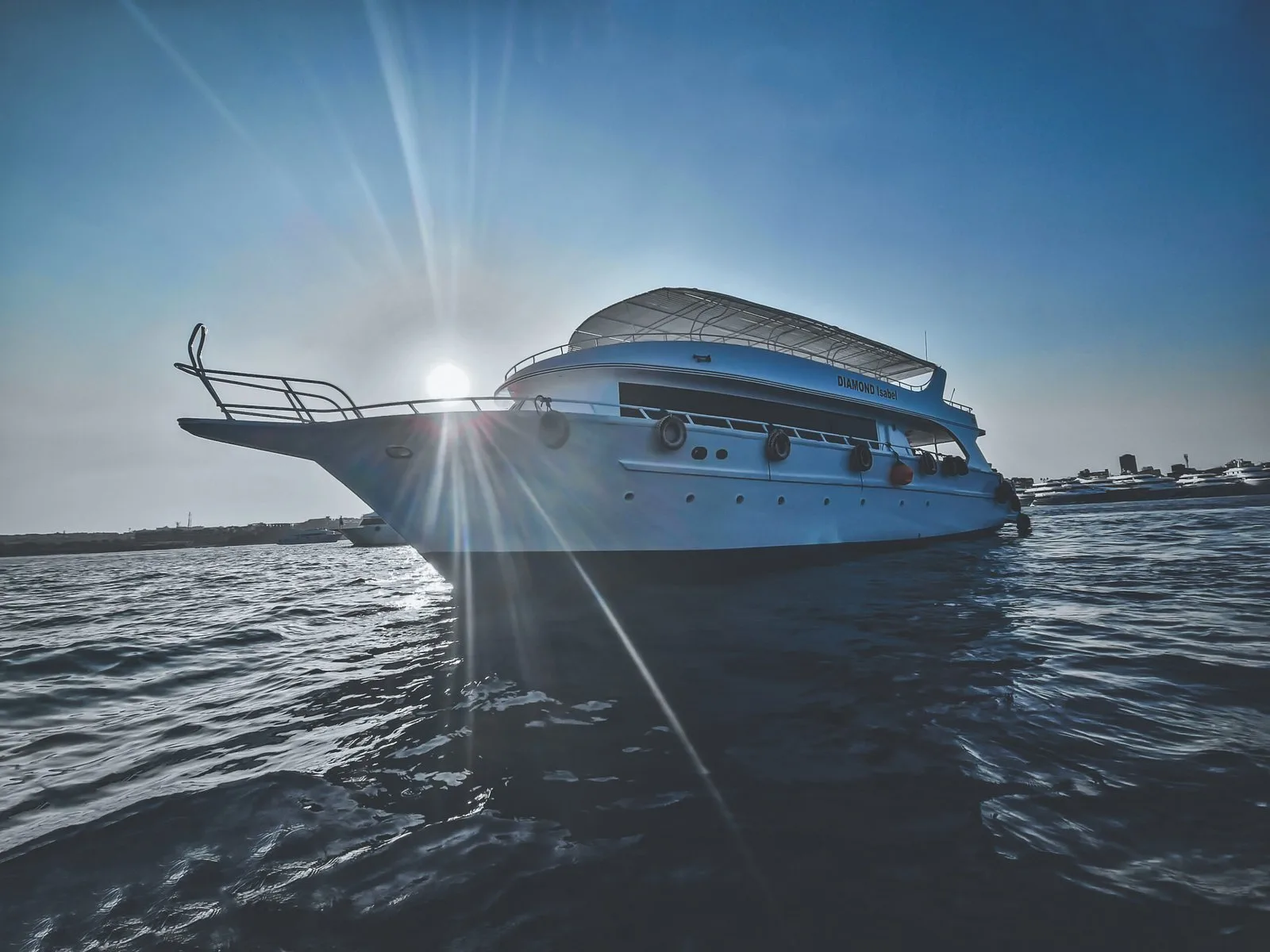

Diamond Red Sea - Diving in Hurghada
Google 5/5 (1,843 reviews)
10 km away as the crow flies
Hurghada · Egypt · Red Sea
Max. depth · 22 mDescend onto Banana Reef's crescent shape to explore coral gardens, anemone cities, and two pinnacles rising from 17 metres.
For subtitles in English: start the video firstthen click the gearat the top right of the video, select “Subtitles/CC”, then “Auto-translate” and choose “English”.
Banana Reef earns its name from its distinctive crescent form, a prominent feature shaping the dive profile. Moorings are typically set on the south side of this main reef, serving as a starting point. From here, you move into a thriving coral garden that slopes gently towards the northwest, transitioning into a sandy bottom at a maximum depth of 22 metres. The reef wall itself, while not the primary attraction, provides a reliable navigation reference, especially when drifting.
The southern corner of the reef, at a depth of 14 metres, holds an extensive anemone city. This area buzzes with life, hosting hundreds of anemonefish (Amphiprion bicinctus) guarding their territories. Nearby, two majestic pinnacles rise from depths of 14 to 17 metres, reaching close to the surface. These ergs are densely covered in soft corals and gorgonian fans, creating a vibrant ecosystem that shelters a variety of smaller reef fish.
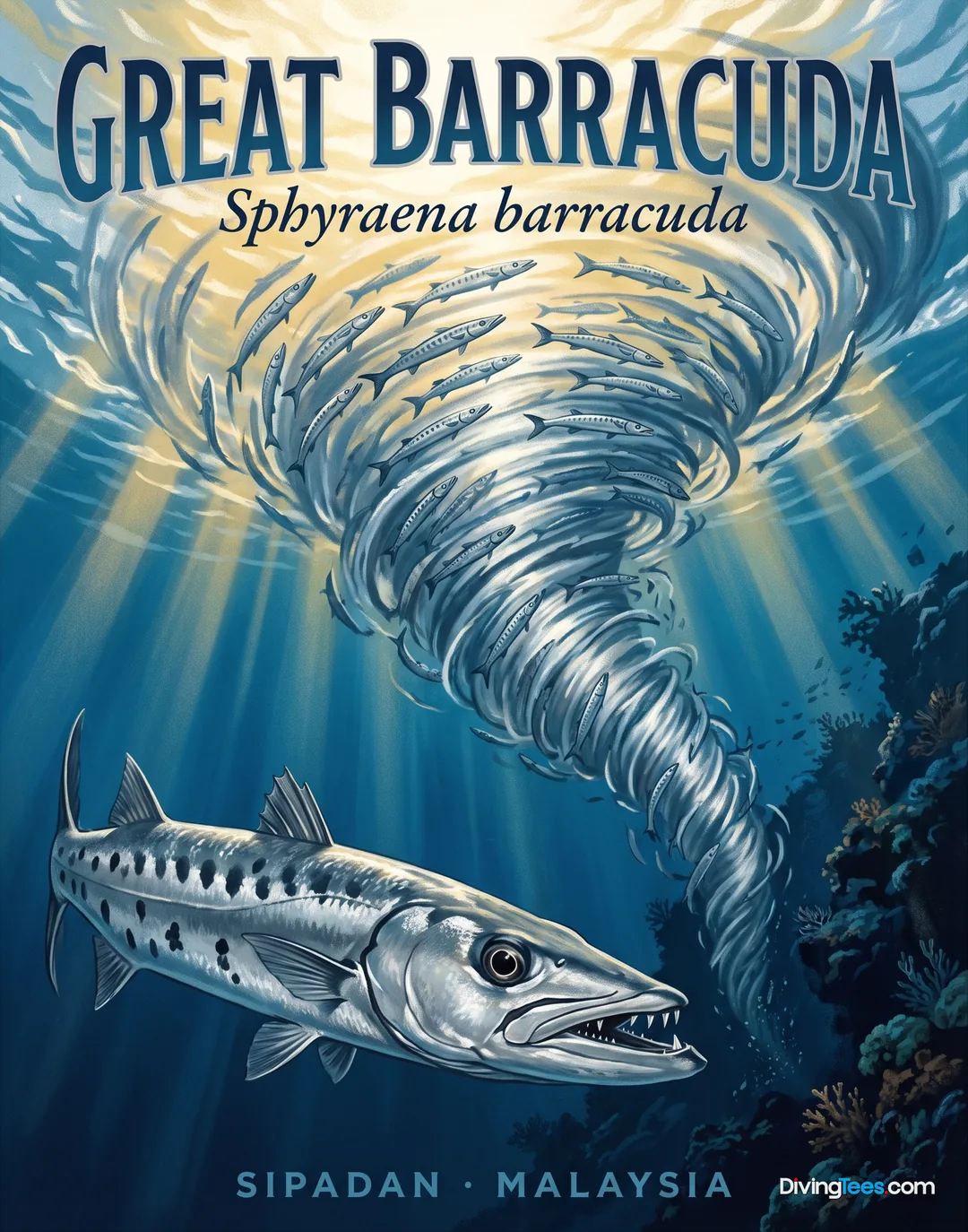
Currents at Banana Reef can be strong, often dictating a drift dive approach. This flow influences visibility, occasionally reducing it even in shallower sections. Despite this, the current brings in consistent pelagic activity. You'll likely encounter eagle rays (Aetobatus narinari) and feather-tail rays (Pastinachus sephen) gliding over the coral gardens. Barracuda (Sphyraena barracuda) and trevally (Caranx ignobilis) are also common, hunting among schools of glassfish (Parapriacanthus ransonneti) and silversides (Atherinomorus lacunosus) that congregate around the pinnacles.
Beyond the anemone city and pinnacles, the reef ecosystem supports a diverse range of marine life. Keep an eye out for turtles (Chelonia mydas) moving through the corals. Groupers (Epinephelus coioides) and scorpionfish (Scorpaenopsis venosa) are resident figures, often camouflaged against the reef structure. The site also attracts bannerfish (Heniochus acuminatus) in large colonies, particularly around a fan-shaped rock.
While the reef wall provides a good visual marker, the sloping coral gardens and the isolated pinnacles offer the most dynamic diving. The soft corals and gorgonians on these formations create micro-habitats, home to various glassfish and silversides. These schools, in turn, draw larger predators such as barracuda and trevally, offering consistent action for observant divers.
Banana Reef is accessible to all diver levels, though proficiency in drift diving is beneficial due to potentially strong currents. Depths range from 14 metres to a maximum of 22 metres. Visibility typically sits between 20 to 25 metres. The site is best dived year-round, but be aware of higher boat traffic during peak seasons from September to November and March to May.
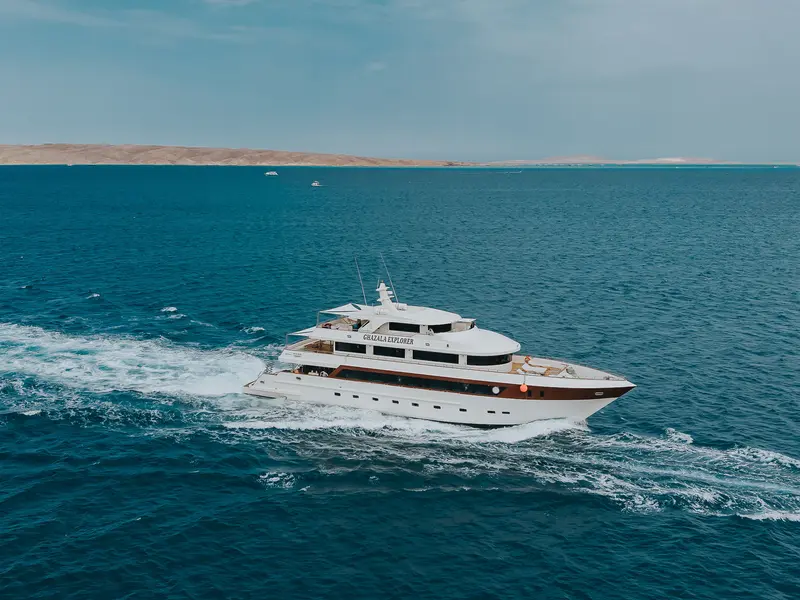
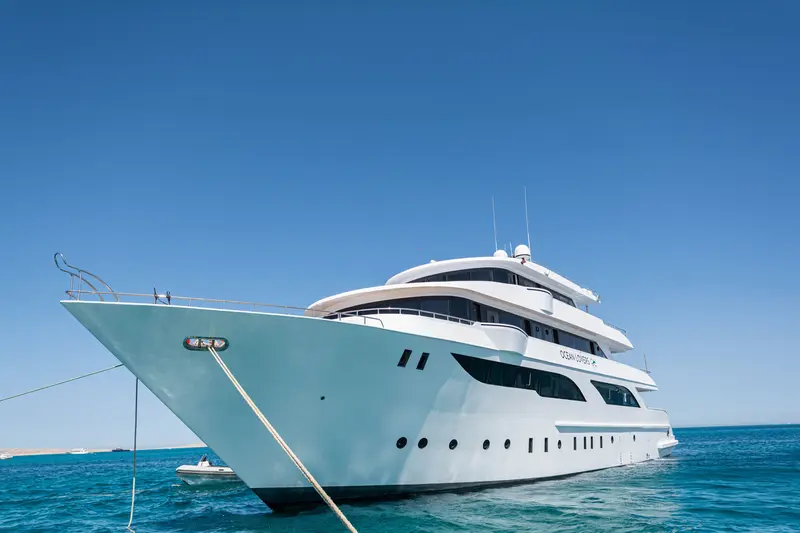
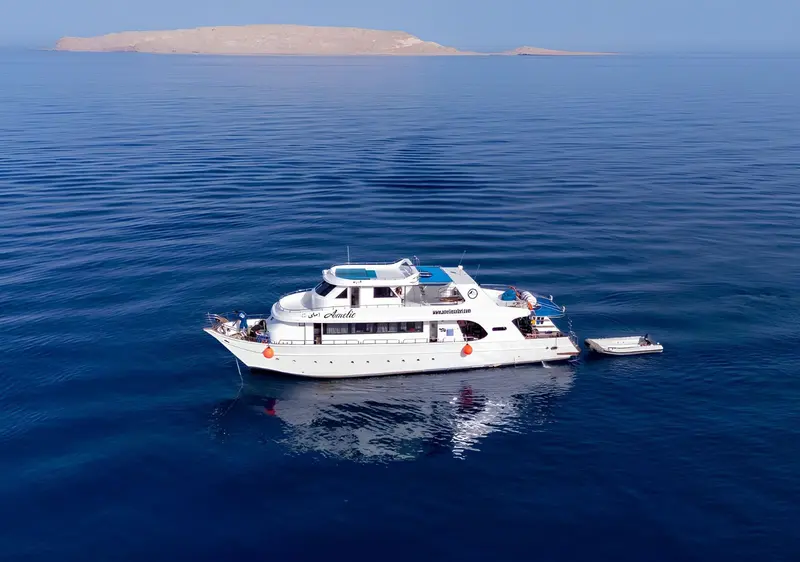
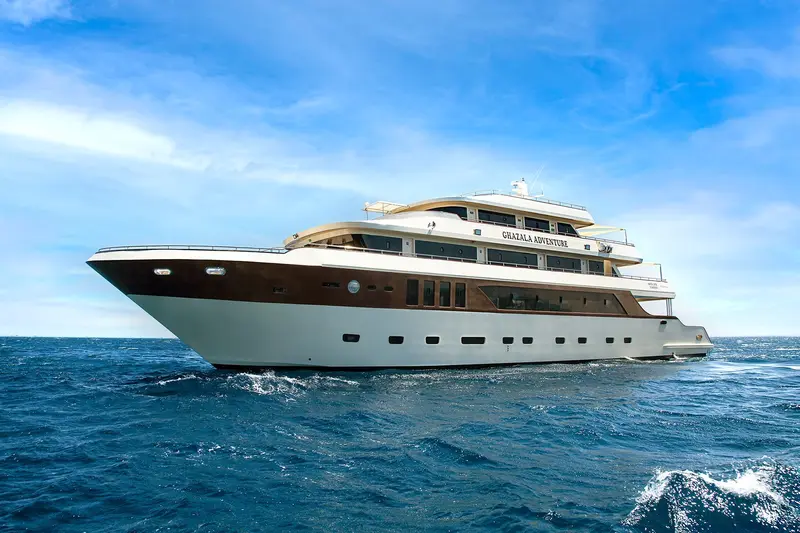
53 liveaboards depart from Hurghada another way to explore the region, over several days at sea.
You can dive Banana Reef year-round. During peak seasons from September to November and March to May, higher boat traffic may affect the experience. Currents can influence visibility, occasionally reducing it even in shallower sections, so you should consider both traffic and current conditions when planning your dive.
Banana Reef is accessible to all diver levels. You should have proficiency in drift diving because currents can be strong and often dictate a drift-dive approach. The reef wall offers a reliable navigation reference while you move through the coral gardens and around the pinnacles.
Banana Reef ranges from 14 metres to a maximum of 22 metres. Currents can be strong and commonly create a drift dive, carrying you along the crescent-shaped reef, coral gardens and pinnacles. The flow brings pelagic activity but may occasionally reduce visibility, including in shallower areas.
At Banana Reef, you can explore extensive coral gardens, two pinnacles covered in soft corals and gorgonians, and an anemone city with hundreds of anemonefish. Eagle rays, feather-tail rays, turtles, barracuda, trevally, glassfish and silversides are also found around the reef, along with groupers, scorpionfish and bannerfish.