Liveaboards · Egypt
Marselia Star — a refitted Red Sea platform for recreational, technical and CCR diving
For subtitles in English: start the video firstthen click the gearat the top right of the video, select “Subtitles/CC”, then “Auto-translate” and choose “English”.
The invitation
Marselia Star is aimed at divers who want more than a standard recreational safari. The boat combines a large working dive deck with support for technical, sidemount and CCR configurations, so one group can be chasing reef fish while another is preparing a more involved profile. The route options reach from northern wrecks and reefs to Safaga, the Brothers, Daedalus and Elphinstone. That makes the boat worth considering when the priority is access to serious Red Sea sites without giving up a private cabin, shaded outdoor space or a dive elevator. Non-divers and snorkellers can come too, but diving is clearly the centre of the operation.
Boarding
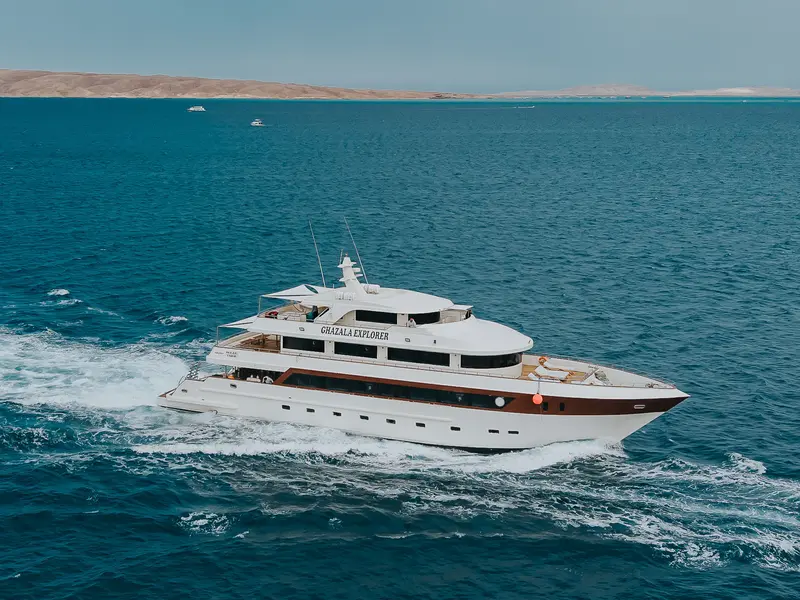
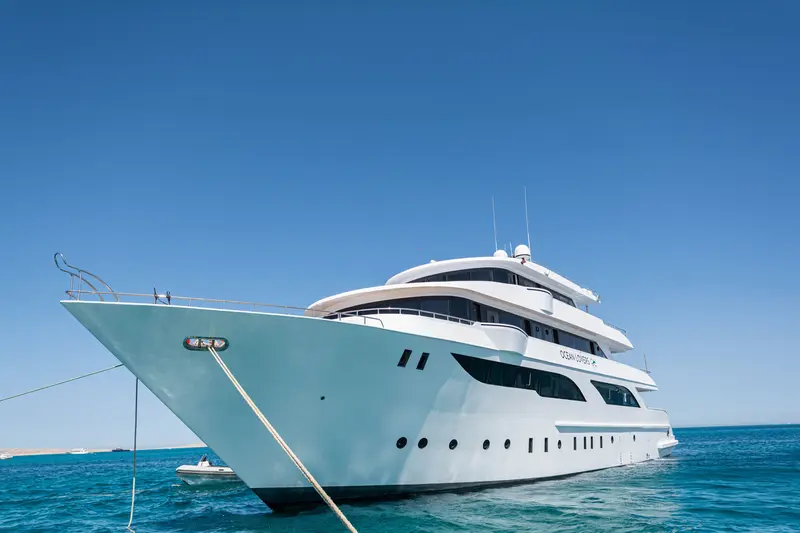
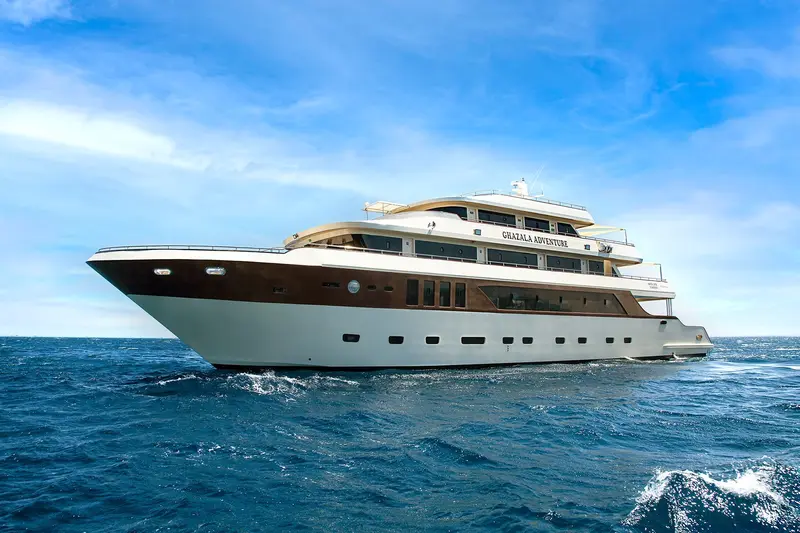
From the dock, Marselia Star presents as a substantial steel liveaboard rather than a small day boat. The 2025 renovation matters here: the boat has the infrastructure for long crossings and mixed dive teams, while its generous dive deck and several open decks keep equipment and people from competing for the same few metres. Once aboard, movement is spread across the vessel instead of concentrated in one cramped passage. The two engines will be part of the shipboard soundscape, as they are on any working liveaboard, but the layout gives divers room to get clear of the dive operation between entries. The overall impression is practical and spacious, built around repeated diving rather than a hotel-style stay.
The atmosphere on board
The atmosphere is shaped by a boat that can handle very different kinds of divers in the same week. Recreational groups have room to work, while technical and CCR divers can bring more complex equipment without turning the whole deck into a staging area. The local and international crew speak English, and the operation includes a naturalist guide as well as a dedicated local team. That mix suits a route where briefings may move from reef behaviour to current management, decompression planning or rebreather logistics. In the evening, the indoor lounge, bar and audio-video entertainment offer a place to debrief or switch off, while the observation and sun decks keep the social life outdoors. The boat’s strength is not boutique polish; it is a working dive community with enough space to function.
The sites you’ll dive
The recorded departures run for 8 days and 7 nights, with Northern Wrecks and Reef, Safaga and Brothers, Northern Wrecks and Brothers, or the longer Brothers–Daedalus–Elphinstone combinations. Some finish in Port Ghalib rather than Hurghada. Elphinstone is the headline wall dive, dropping to -60m and offering the possibility of oceanic whitetips, hammerheads and other pelagics. The Brothers reach -85m, with isolated oceanic reefs, hard and soft corals and the chance of grey sharks, hammerheads and silvertips. Carless Reef reaches -40m and is known for giant morays swimming free in the blue beside drop-offs. Abu Kafan has walls and current, while Middle Reef brings a maze of hard coral formations. Shaab Claude reaches -22m, with passages, monumental Porites and reef sharks; Shaab Ruhr Umm Gamar reaches -40m, combining an oval reef, pinnacles and the remains of at least three wrecks. In the north, El Fanadir reaches -40m and has a cleaning station on a shallow coral pinnacle, while Shaab Sabina reaches only -14m in a broad coral garden. Marsa Nakari House Reef reaches -30m in a sheltered bay. House Reef reaches -40m and may bring rays, barracudas or dugongs. Around Sharm El Sheikh, Thomas Reef reaches -90m with deep soft-coral walls and gorgonians; Woodhouse is a current-swept drift along long plateaus, and Gordon Reef reaches -30m from the Loullia wreck to its southern plateau.
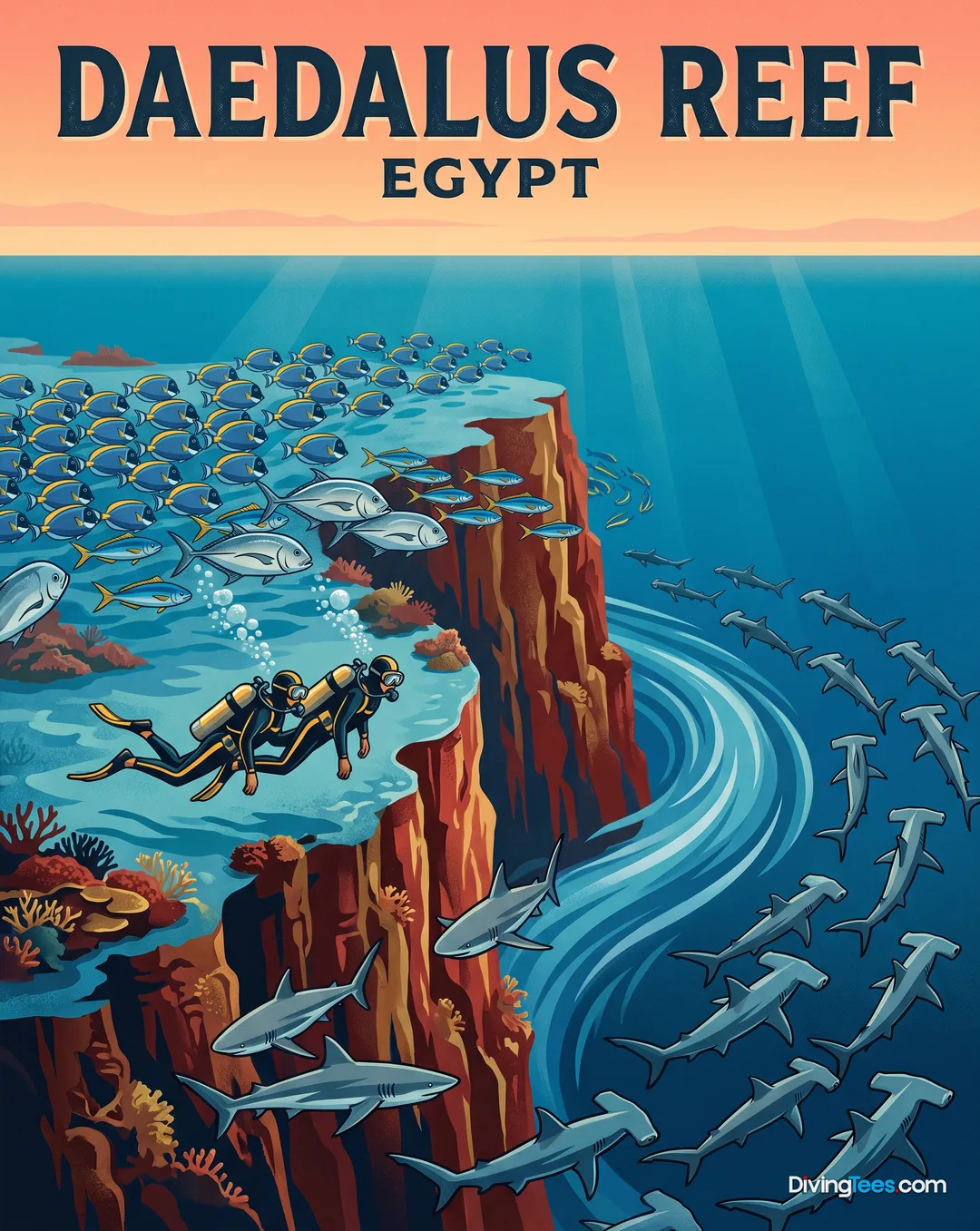
Daedalus →
Max. depth · 40 m
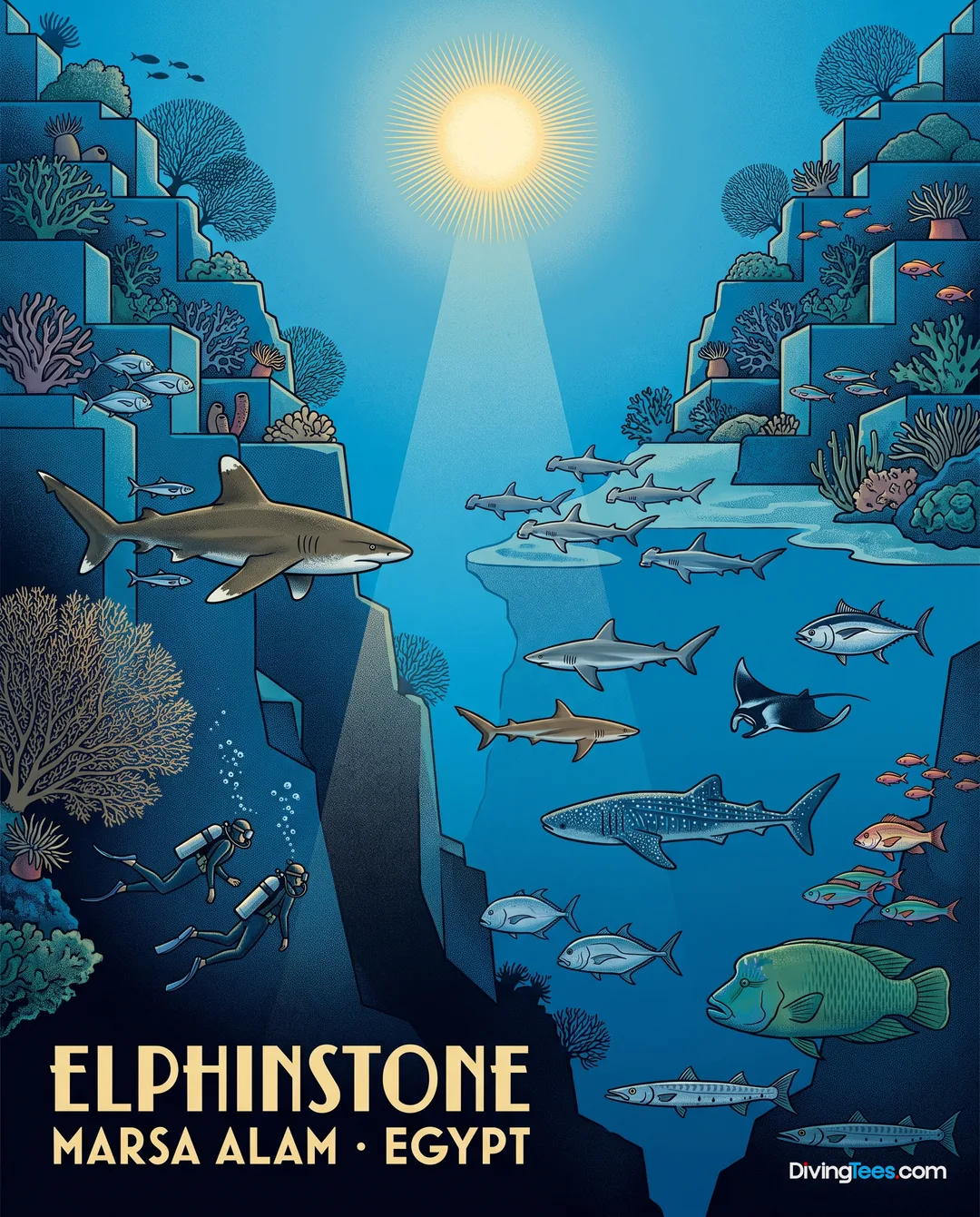
Elphinstone →
Max. depth · 60 m
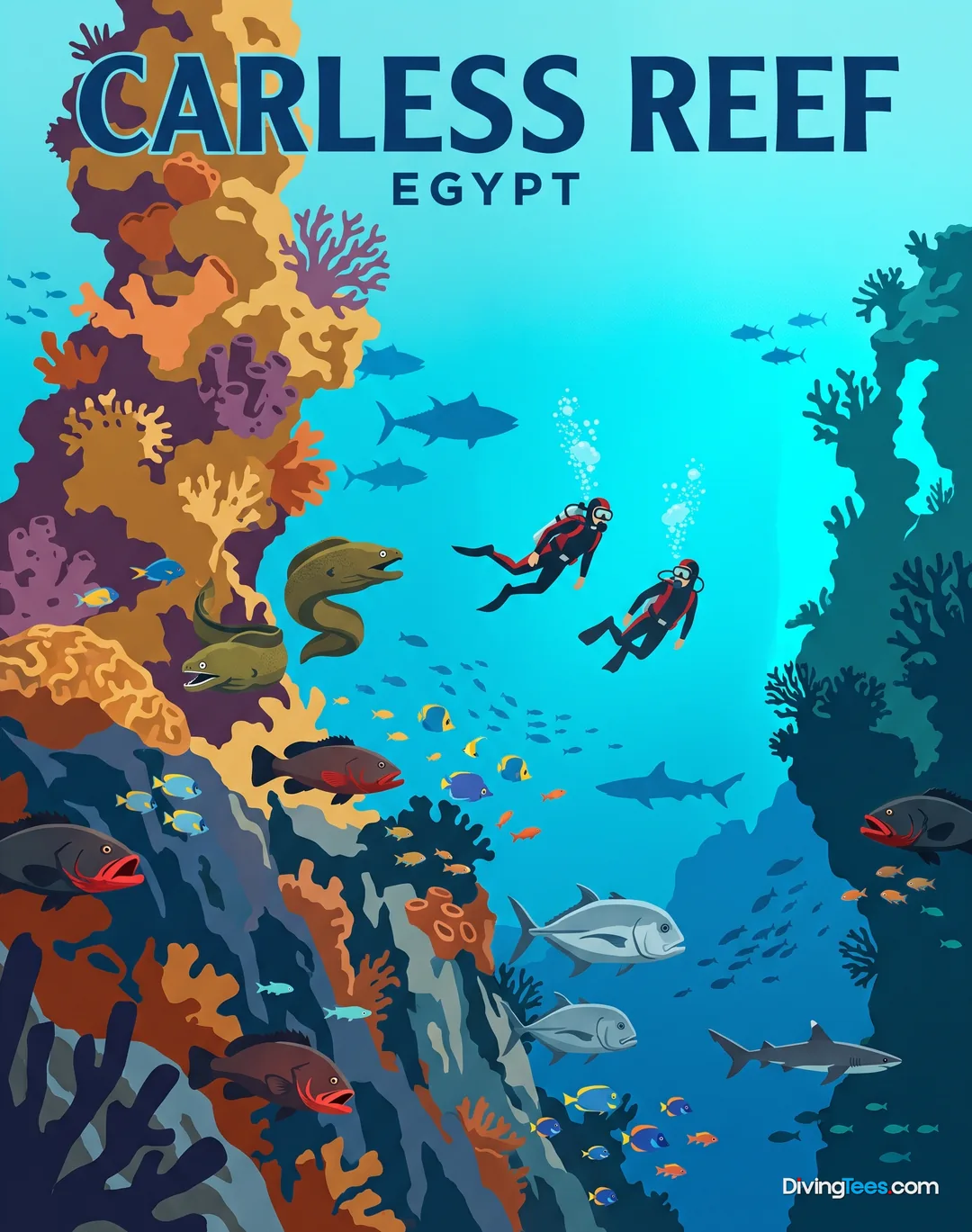
Carless Reef →
Max. depth · 40 m
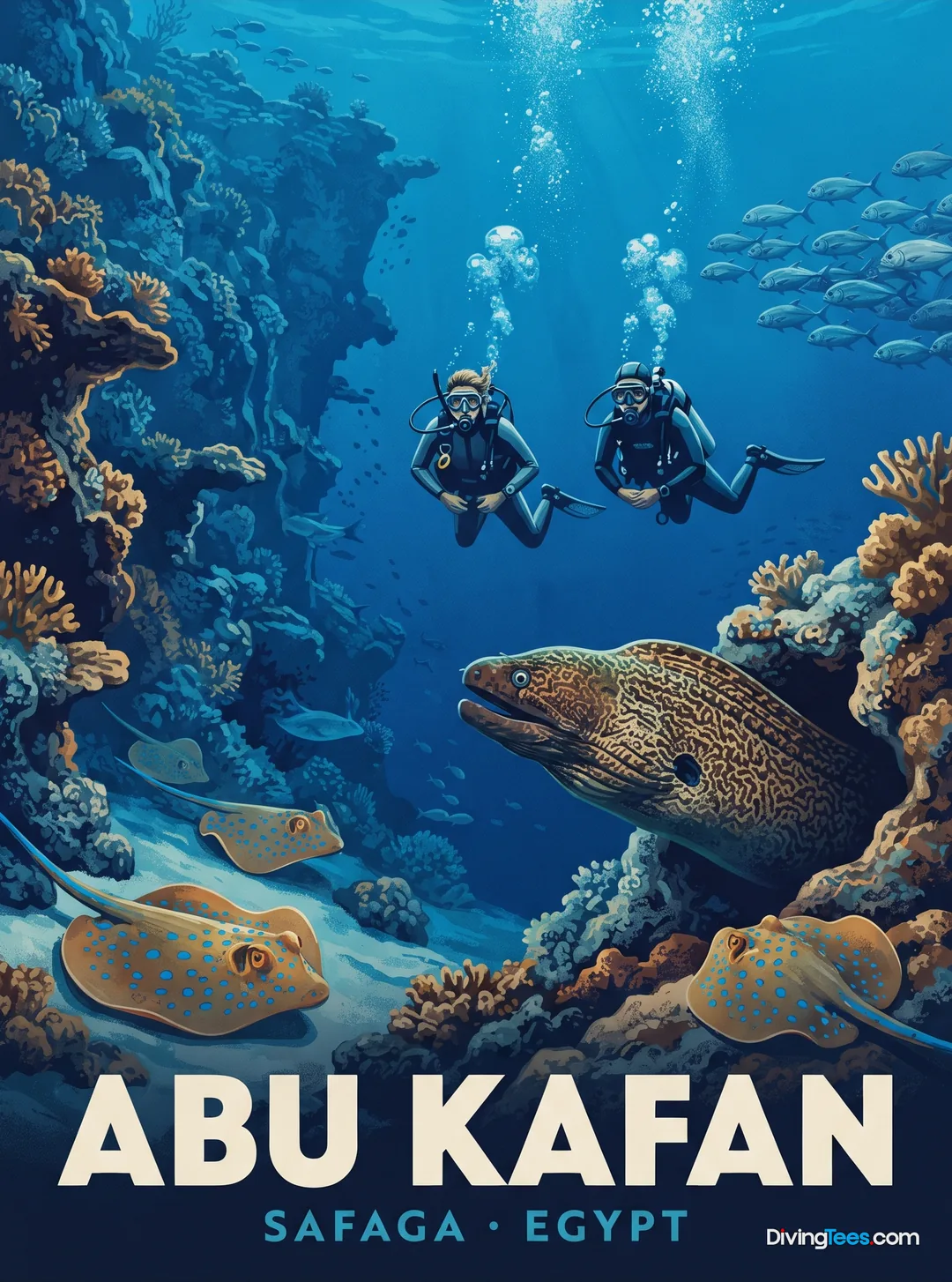
Abu Kafan →
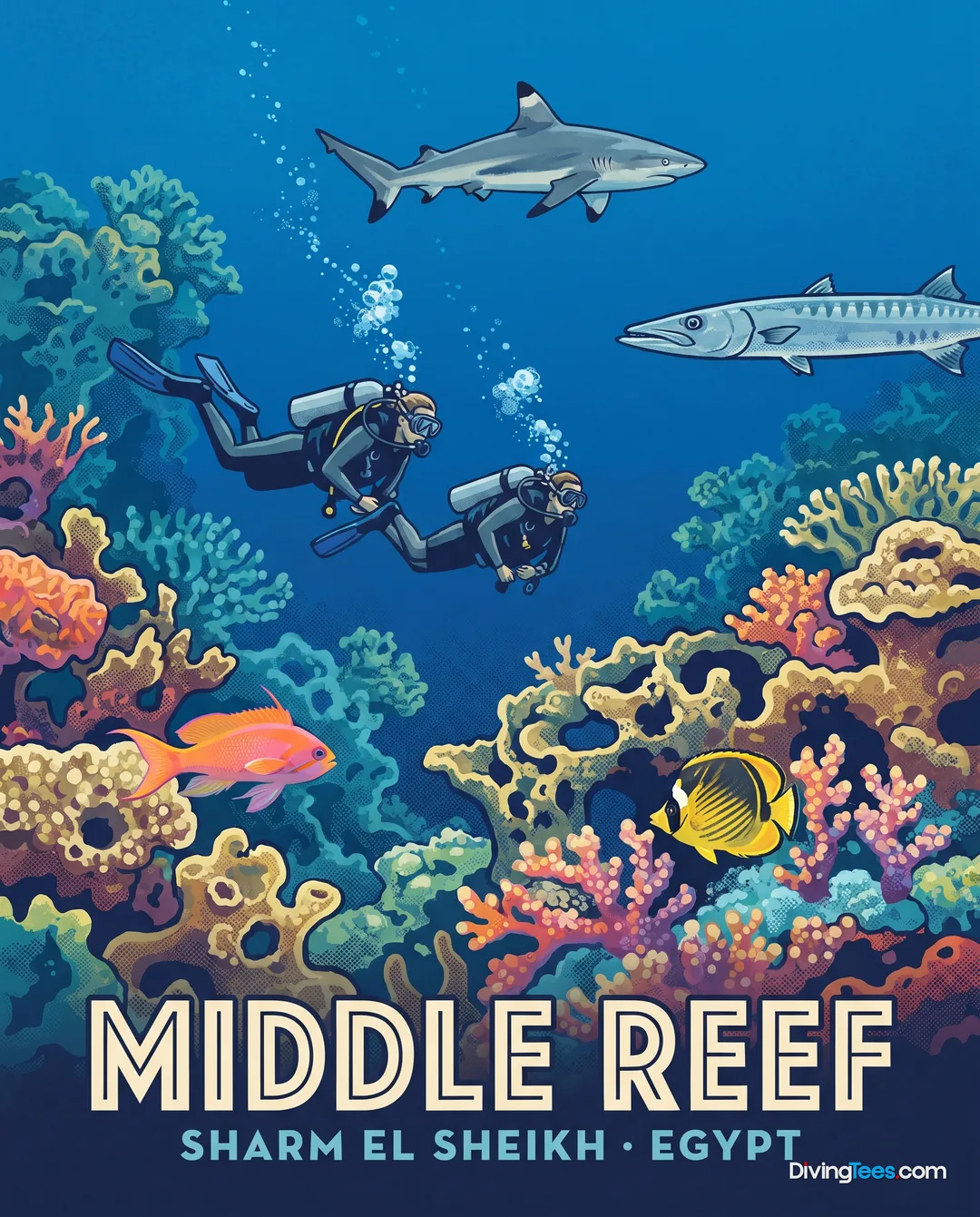
Middle Reef →
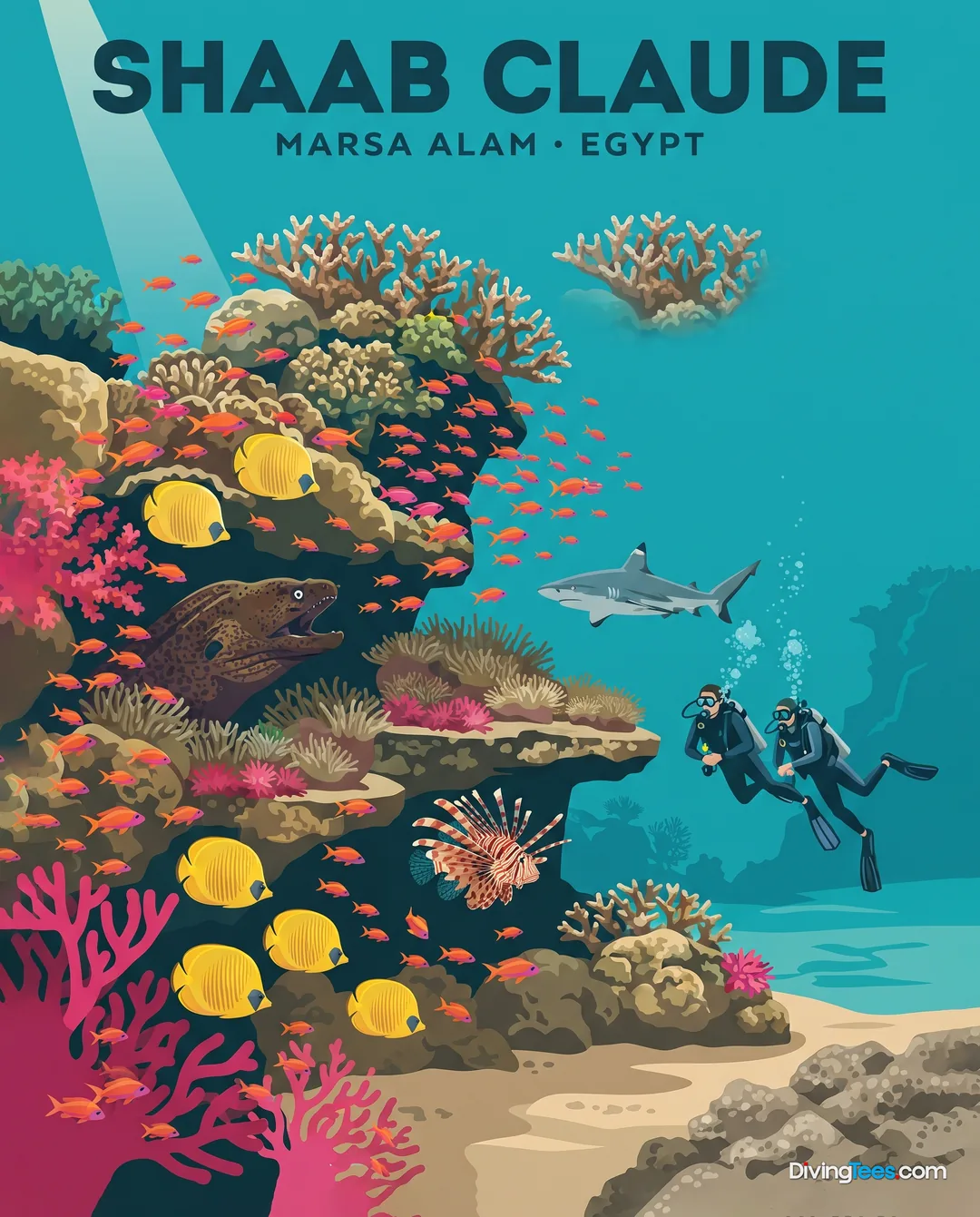
Shaab Claude →
Max. depth · 22 m
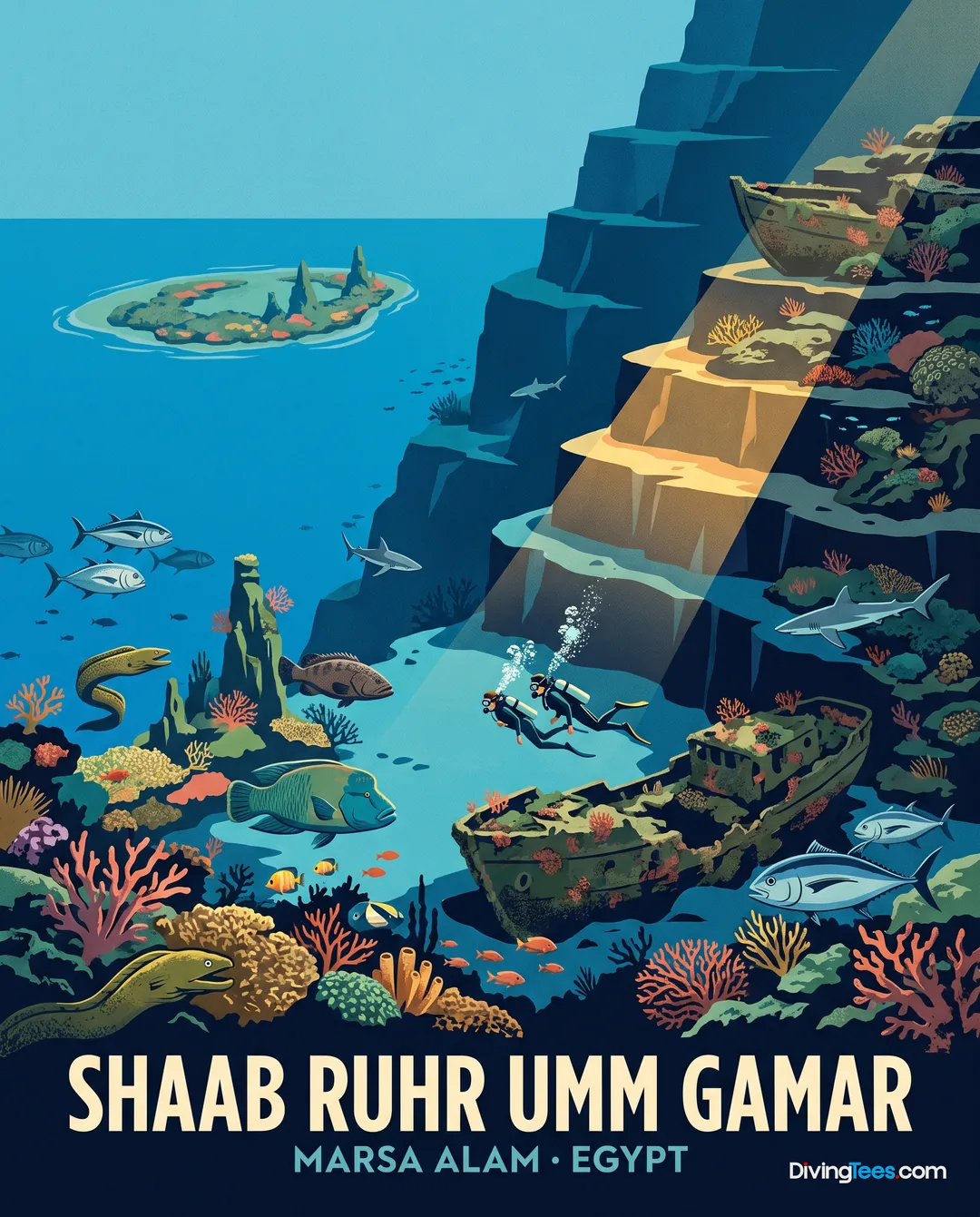
Shaab Ruhr Umm Gamar →
Max. depth · 40 m
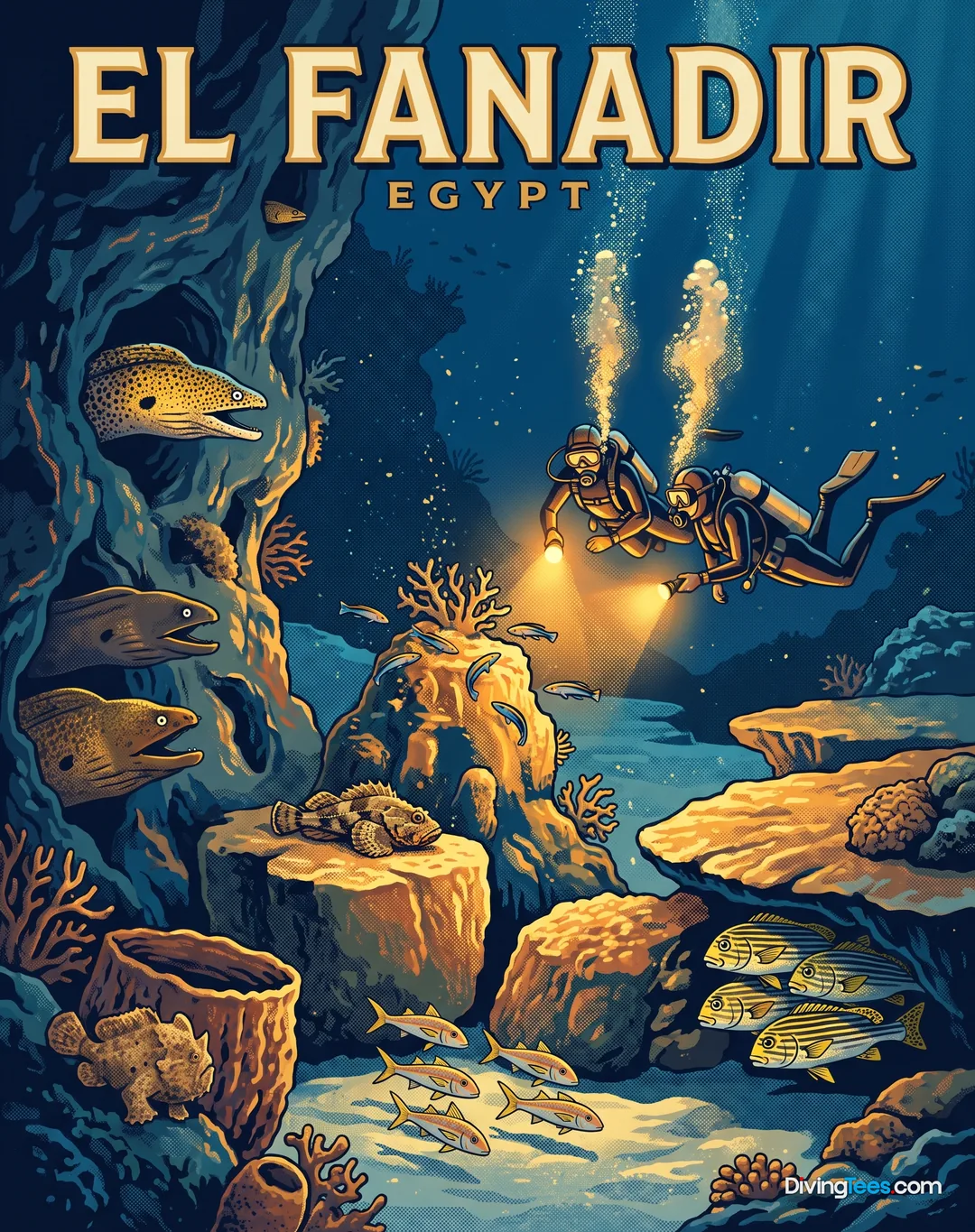
El Fanadir →
Max. depth · 40 m
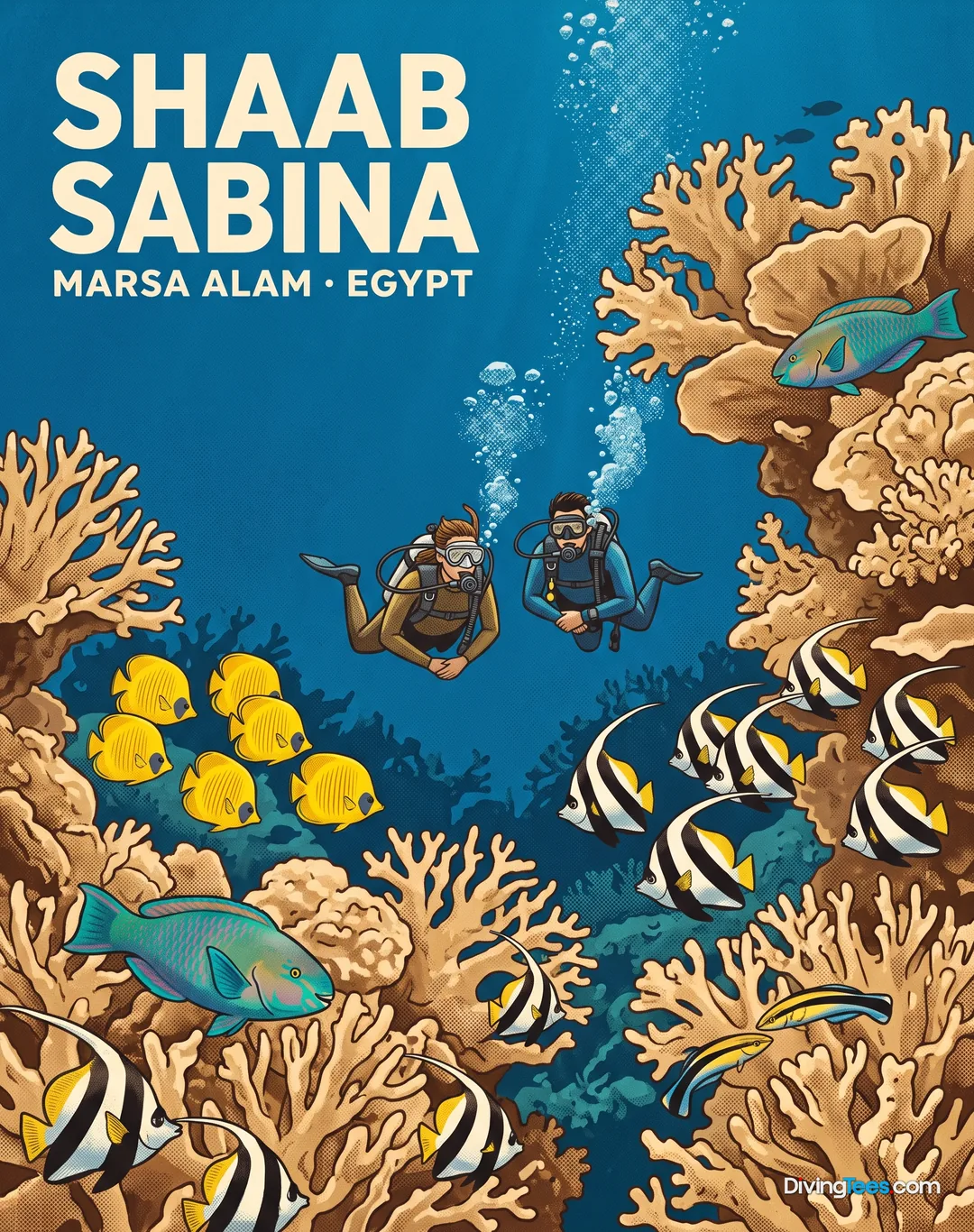
Shaab Sabina →
Max. depth · 14 m
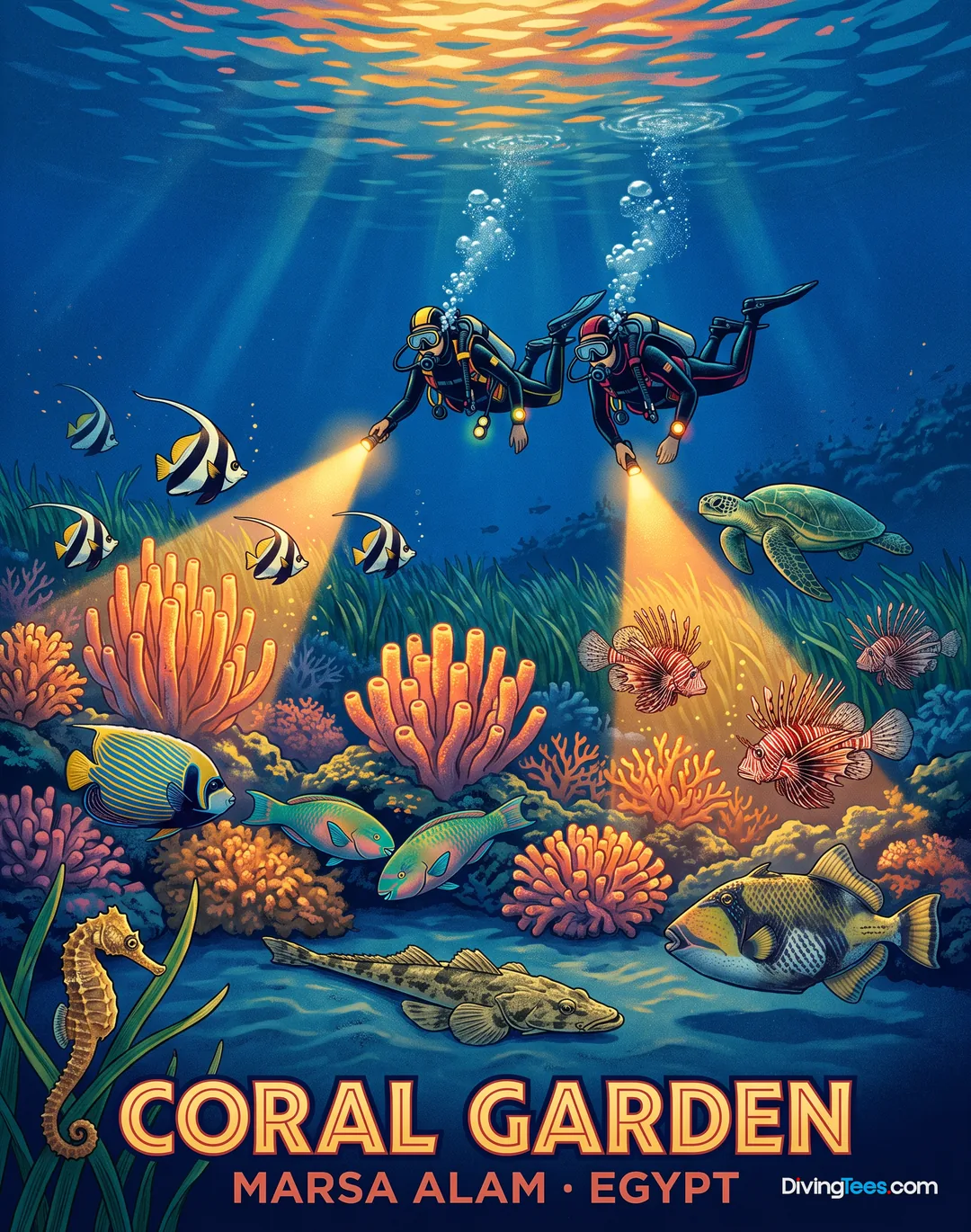
Coral Garden →
Max. depth · 20 m
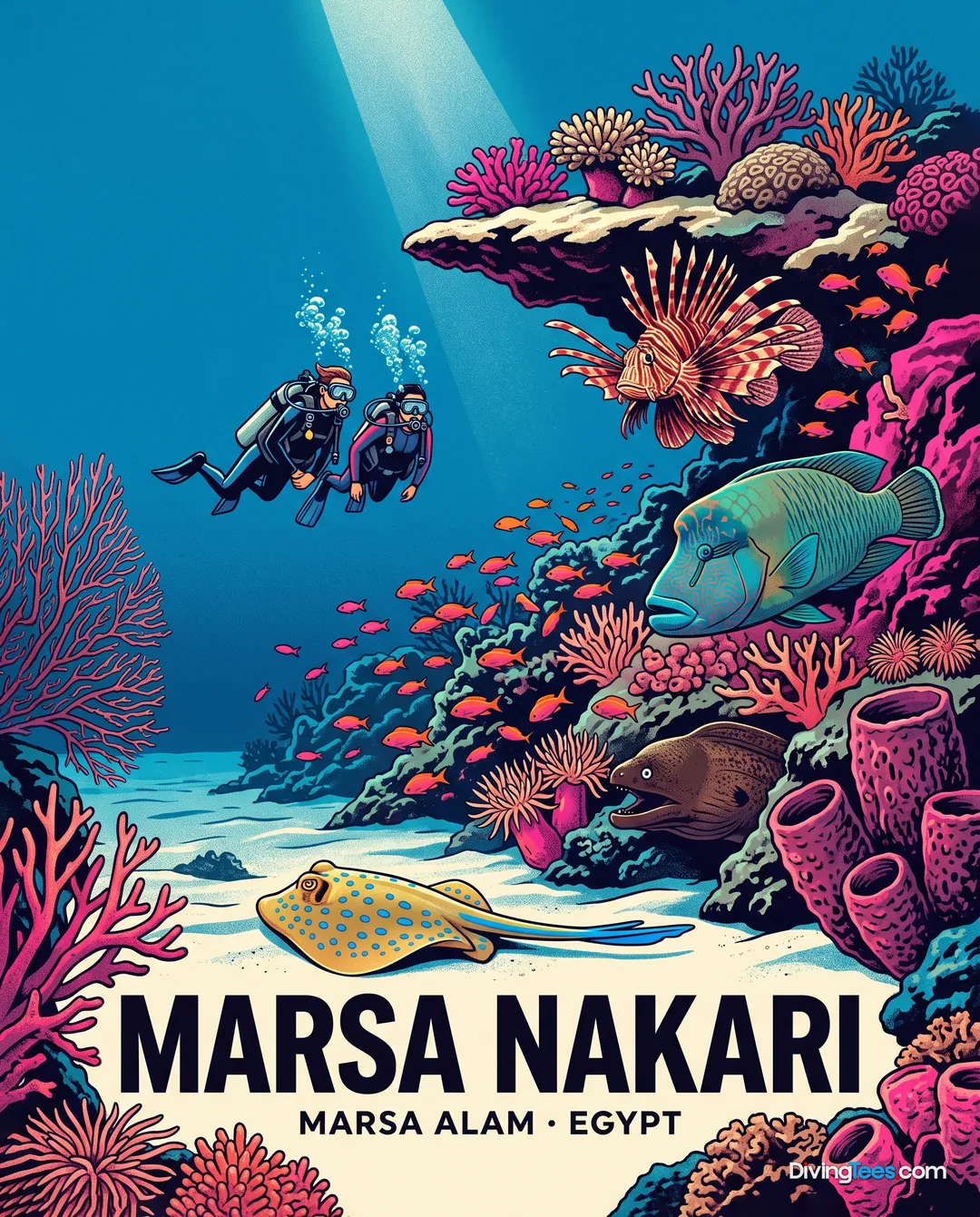
Marsa Nakari House Reef →
Max. depth · 30 m
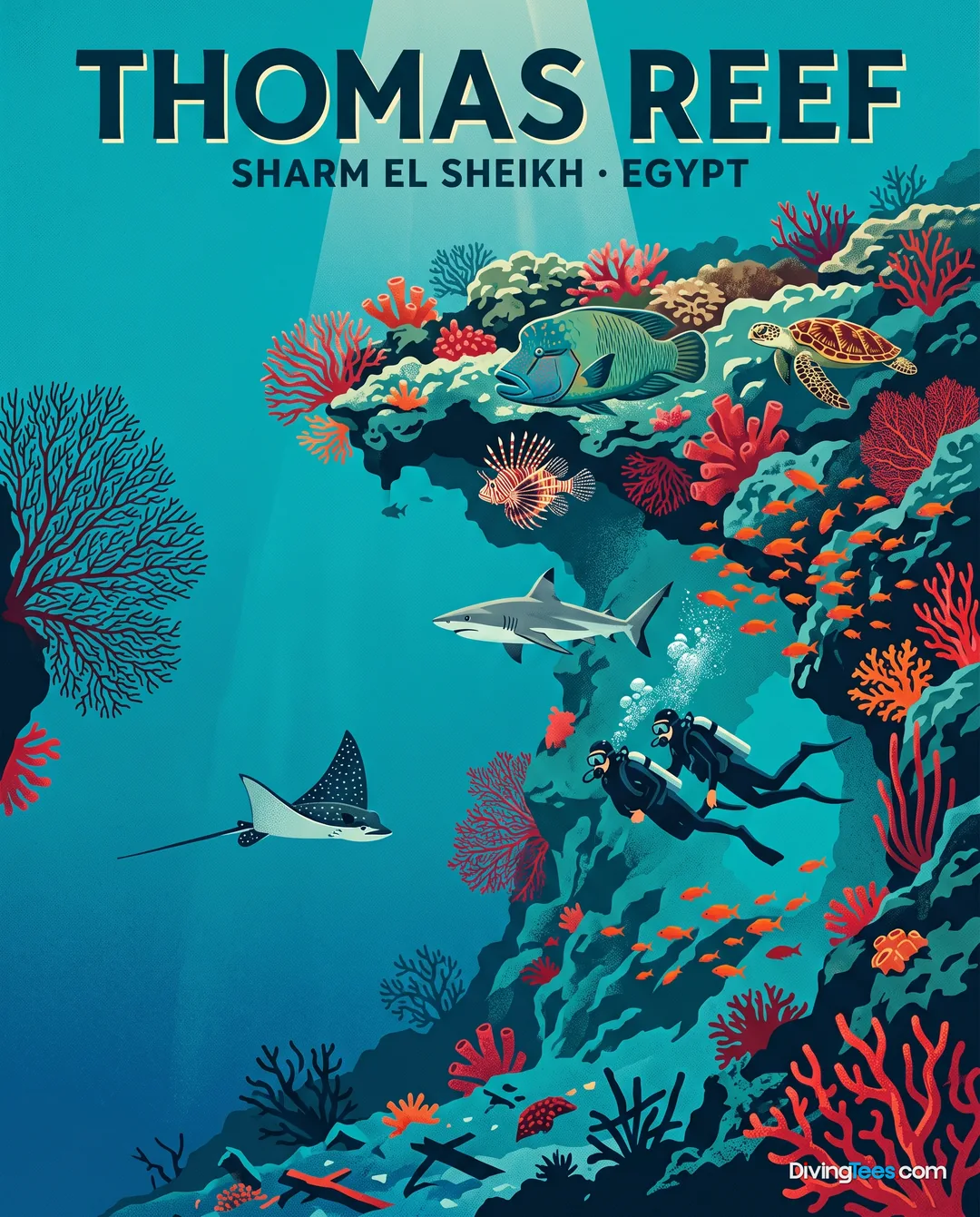
Thomas Reef →
Max. depth · 90 m
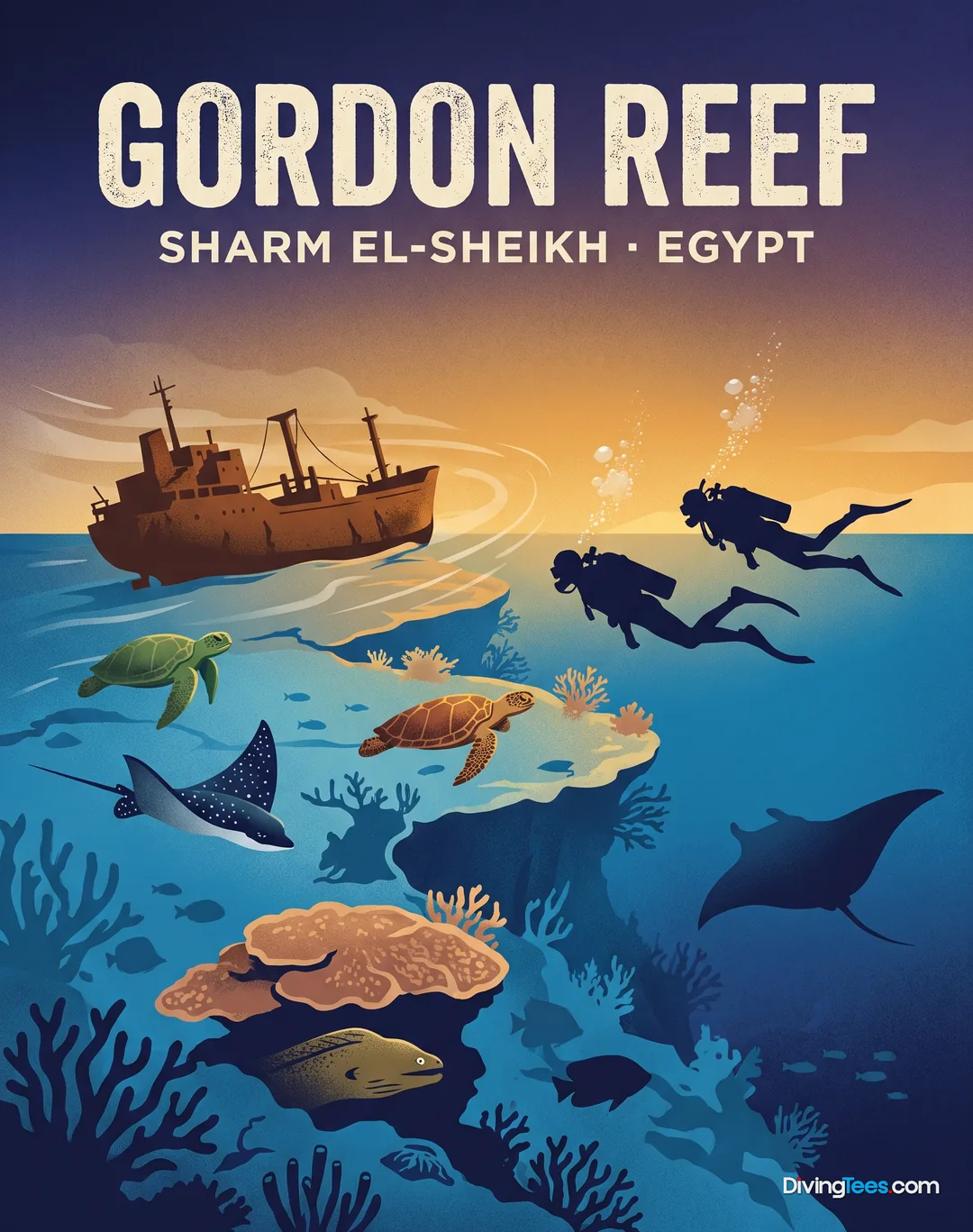
Gordon Reef →
Max. depth · 30 m
Itineraries, dates and prices
Prices per person. Each month shows its lowest price: click a month, or pick an itinerary.
Next departures · 16 departuresfrom £1,005$1,343€1,200
December 2026
March 2027
May 2027
See dates and prices
If you click these links and make a purchase on the partner site, DivingDeal may earn a commission, at no extra cost to you.
Dates and prices taken from liveaboard.com, updated 26 October 2026
What you’ll meet underwater
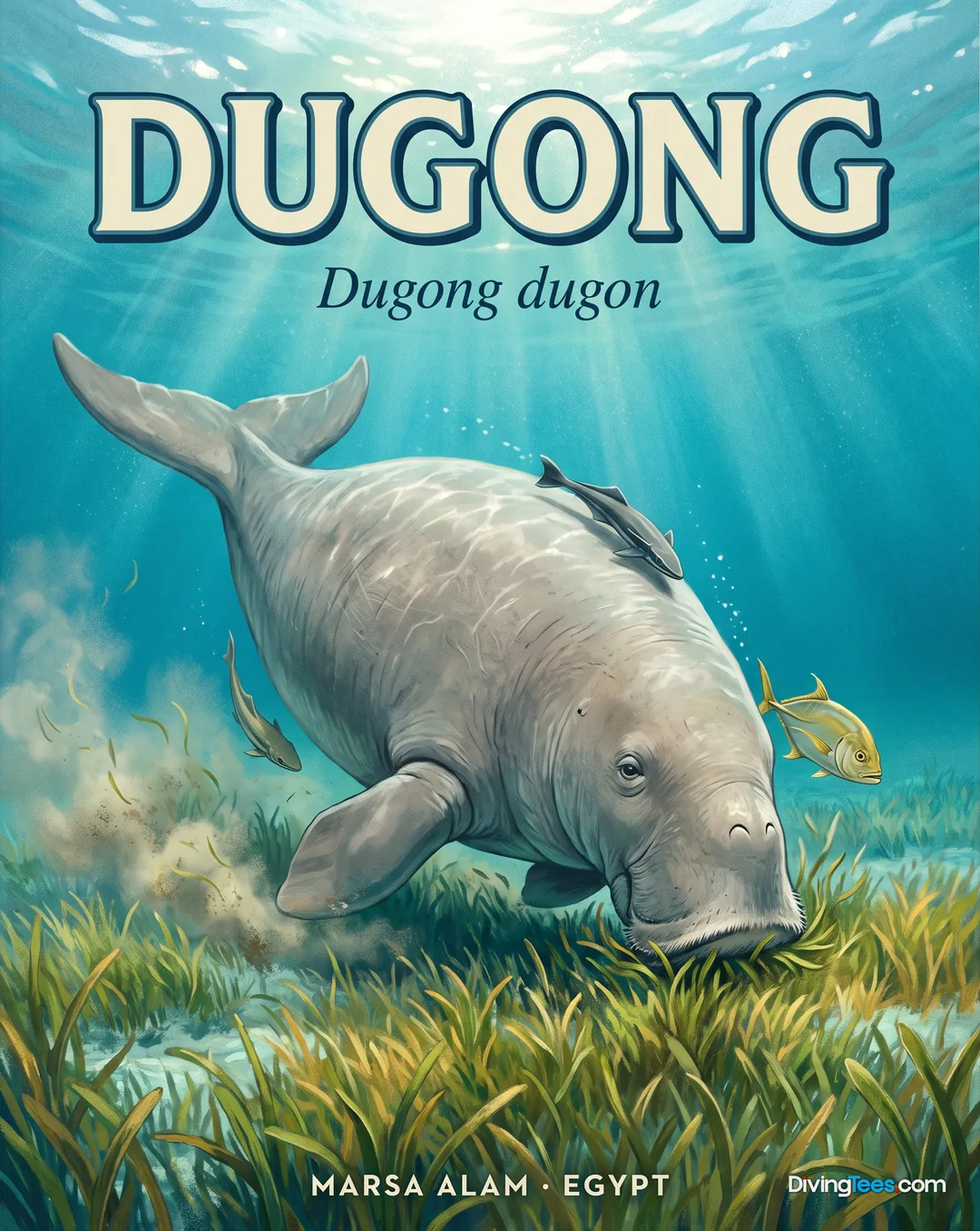
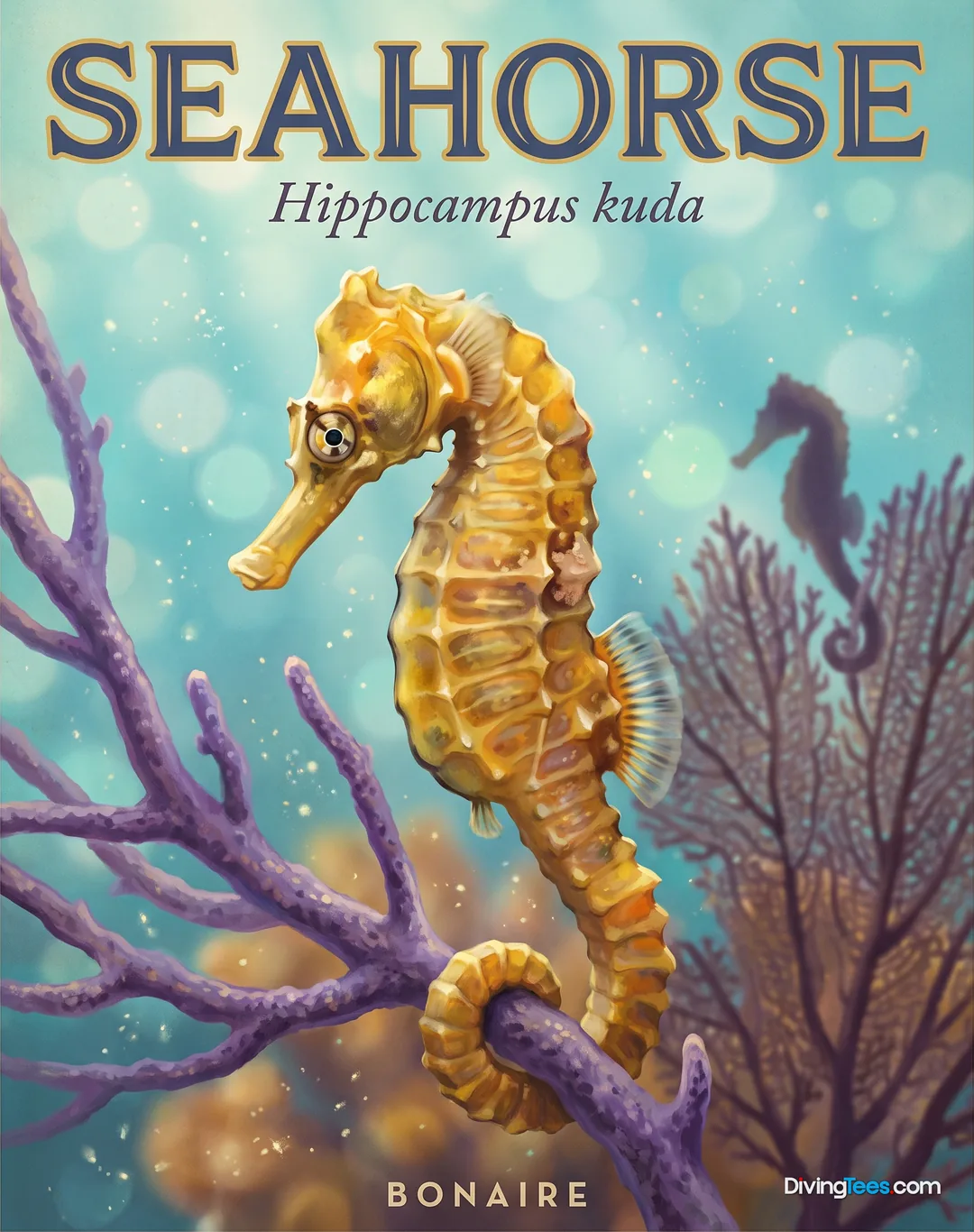
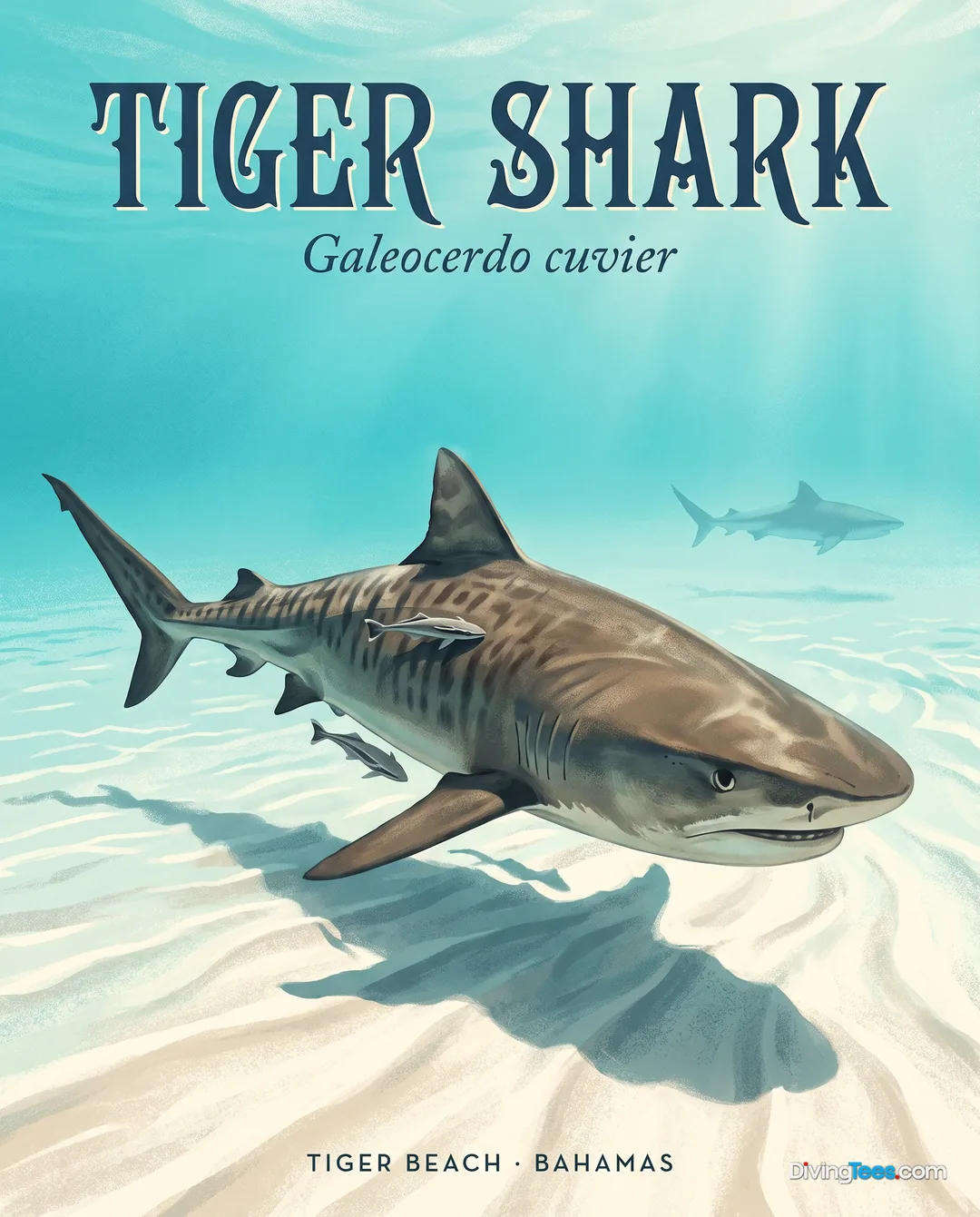
Across this route, the recurring cast is made up of morays, reef sharks, turtles, barracudas, jacks, tuna, anthias and soft corals. Reef sharks are recorded at eight sites and morays at nine, so the everyday spectacle is not dependent on one famous encounter: a wall cavity, a blue-water pass or a school moving over coral can all hold the eye. The site-specific possibilities are what give the itinerary its sharper edges. House Reef is the place to look for a dugong or seahorse. Elphinstone brings the possibility of an oceanic whitetip, blacktip shark, tiger shark, fusilier or labrid, particularly where the wall and open water draw larger animals past the reef. Shaab Ruhr Umm Gamar is the recorded site for giant grouper. Gordon Reef is where garden eels and triggerfish appear in the route records, while Shaab Sabina is associated with damselfish. Woodhouse has the recorded green turtle, and El Fanadir its distinctive sweetlips. None of these animals is promised; the point is that each site offers a different reason to pay attention.
Who puts you in the water
The crew speaks English and combines local and international staff, with a dedicated local team and a naturalist guide supporting the diving. The boat carries oxygen and first-aid kits, and the crew is trained in first aid. Radio, GPS, radar, sonar, emergency beacons and fire systems support operations at sea. Marselia Star is set up for recreational, technical and CCR diving, with guides and instructors working across those forms of diving.
The dive deck and the gear
The dive deck is shaded and built around a platform with a dive elevator, so returning from the water does not depend entirely on climbing a conventional ladder. Two Yamaha 40HP tenders support drop-offs and pickups, bringing divers back to the boat after the ascent. The deck has rinse tanks, including a separate rinse area for cameras, and DIN adaptors are available. Sidemount diving is supported with a single bottle, while the boat also accepts technical and CCR operations. Nitrox is available as an option. Rental equipment is available separately.
Between dives
Between dives, Marselia Star gives people several ways to get out of the traffic of the dive deck. The shaded diving area protects the hours immediately after a dive, while the terraces and observation deck offer sun, air and a wider view when sitting still is preferable. There is an air-conditioned indoor lounge for the hottest part of the day, plus an outdoor dining area and a separate photo space for divers who want to work on images between entries. A camera room and separate camera rinse tank keep photography from becoming a negotiation around the general equipment wash. The boat also has internet access, although the useful reason to come is the water beyond the rail.
A day on board
A day aboard begins with the dive operation rather than a hotel timetable. The first briefing comes before the opening dive, with the compressor and deck team preparing tanks while divers check equipment and form their groups. After the first entry, breakfast and surface time lead into further dives at the points chosen by the itinerary and conditions. Lunch and snacks break up the working rhythm, while the shaded deck, lounge and sun decks give divers somewhere to sit without blocking the next group. The boat may get underway between sites, turning travel into part of the surface interval rather than dead time. A later dive follows, and when the plan allows, a night dive is included as part of the package. Then comes dinner, a debrief and sleep before the next briefing. The exact departure times depend on the route and sea conditions, but the order remains familiar: prepare, dive, eat, recover, and do it again.
What you eat aboard
Meals are served buffet-style, with both local and Western cooking and options for vegetarian and vegan divers. Non-alcoholic drinks, drinking water, tea, coffee and snacks are included, and snacks remain available through the day. On a dive-heavy itinerary, that matters more than elaborate presentation: food arrives at the points when divers need to refill, not as a long interruption to the operation. The table also has to work for different appetites and dietary choices, which is why the range of options is more useful than a single signature dish. Full-board meals are part of the trip, with outdoor dining available when the weather and operation allow it.
Nights at sea
The 12 cabins are arranged as twin or double cabins, with private bathrooms, air conditioning and standard windows; cabins on the main and upper decks have sea views. That placement is useful on a week-long safari because the sleeping areas are not confined to the lowest part of the vessel. Inside, the cabins are a retreat from the dive deck rather than another social space. The air conditioning matters after a long day in exposure protection, while the private bathroom avoids queues when several groups return from the water together. Marselia Star is not sold on decorative luxury. Its appeal at night is having a proper cabin, a view out to sea and enough separation from the working deck to reset before the next dive.
Twin Cabin
Double Cabin
What to know before boarding
Recorded departures and returns are from Hurghada, with some Brothers–Daedalus–Elphinstone trips returning to Port Ghalib. Airport and hotel transfers are included, with the transfer arranged from the relevant airport or hotel. Arriving the night before is sensible so the boat departure is not tied to a same-day flight or road delay.
Deck plan
- Year built
- 2015
- Year renovated
- 2025
- Length
- 40 m
- Beam
- 6 m
- Maximum number of passengers
- 24
- Number of cabins
- 12
- Number of bathrooms
- 12
- Engines
- 2 × Marine man 12 clynders 1360 hp
- Tenders
- 2 × Yamaha 40 hp
- Website
- scubaseekers.com ↗
Hello, I'm Marina, DivingDeal.com's AI assistant. I answer in detail about hotels, dive centres and liveaboards.
Thinking about the whole trip and the flights? Talk it over with Edith →
Marina is an AI. Some links are affiliate links: DivingDeal may earn a commission, at no extra cost to you. Bookings are made with the partner.