
The Asri Dive and Leisure Resort
Google 4.9/5 (98 reviews)
5 km away as the crow flies
Anilao · Philippines · Asia
Max. depth · 27 mA submerged rocky complex where deep channels and steep walls bring dense schools of fish through the Maricaban Strait.
For subtitles in English: start the video firstthen click the gearat the top right of the video, select “Subtitles/CC”, then “Auto-translate” and choose “English”.
Beatrice Rock is a large, fully submerged rocky complex that rises from the seabed to form a prominent pinnacle. The topography is defined by a succession of small drops and narrow channels that guide the movement of water through the site. At the summit, the reef reaches depths of approximately 7 to 8 metres, providing a shallower entry point before the terrain descends. As you move away from the highest point, the relief transitions into a series of undulating slopes and deeper sections that reach 27 metres. This structural complexity creates various micro-habitats, ranging from sunlit upper slopes to more shaded, vertical faces.
The dive profile offers several distinct zones depending on where you position yourself relative to the main structure. One sector of the rock presents a clear slope that transitions into a mini-wall, providing vertical relief for divers to explore. In contrast, another area features a much gentler slope covered in expansive coral gardens. These gardens are built upon a foundation of stony corals and soft corals that thrive in the nutrient-rich water. Navigating between these different zones allows you to experience the transition from open-water approaches to more intricate reef environments.
Because the rock is exposed to the Maricaban Strait, the current plays a decisive role in the site's ecology and the diver's experience. The water movement is driven by tidal shifts, often concentrating nutrients around the rocky edges and through the deeper channels. This constant flow supports a high density of fish, particularly around the drop-offs where the current meets the structure. You will frequently encounter large, active schools of fish that use the reef for protection while feeding in the moving water. The interaction between the topography and the current makes this site much more energetic than the calmer, more sheltered reefs found elsewhere in Anilao.
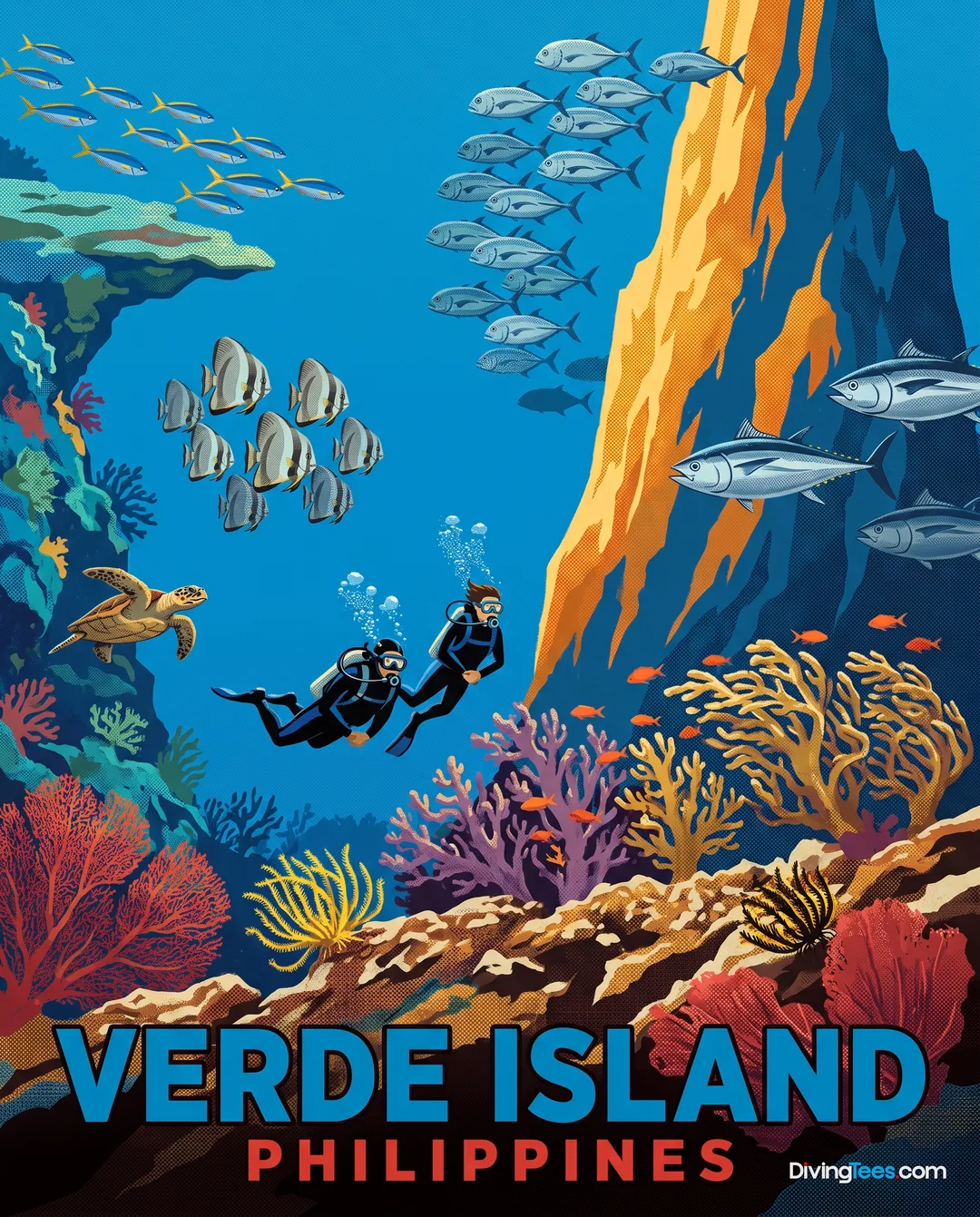
The pelagic and mid-water life at Beatrice Rock is characterized by movement and density. You can expect to see various species of jacks, tuna, and rainbow runners cruising through the channels. Larger animals, such as rays and occasionally whale sharks, are known to move through the area, drawn by the productivity of the site. The presence of Moorish idols and various snapper species adds to the constant motion seen in the water column. These fish often congregate in significant numbers around the deeper edges of the pinnacle, creating a sense of scale as they move past the reef walls.
Closer to the reef structure, the biodiversity is focused on both resident reef fish and specialized organisms. Redtooth triggerfish and surgeonfish are common sights among the coral formations, while wrasse and various species of anthias provide constant color in the shallower sections. In the crevices and along the gorgonian fans, you can find more sedentary life such as frogfish and white-eyed moray eels. The reef is also a productive environment for smaller macro life, including nudibranchs and various sea stars that inhabit the sponges and stony corals. This combination of large schooling fish and intricate reef residents makes the site ecologically diverse.
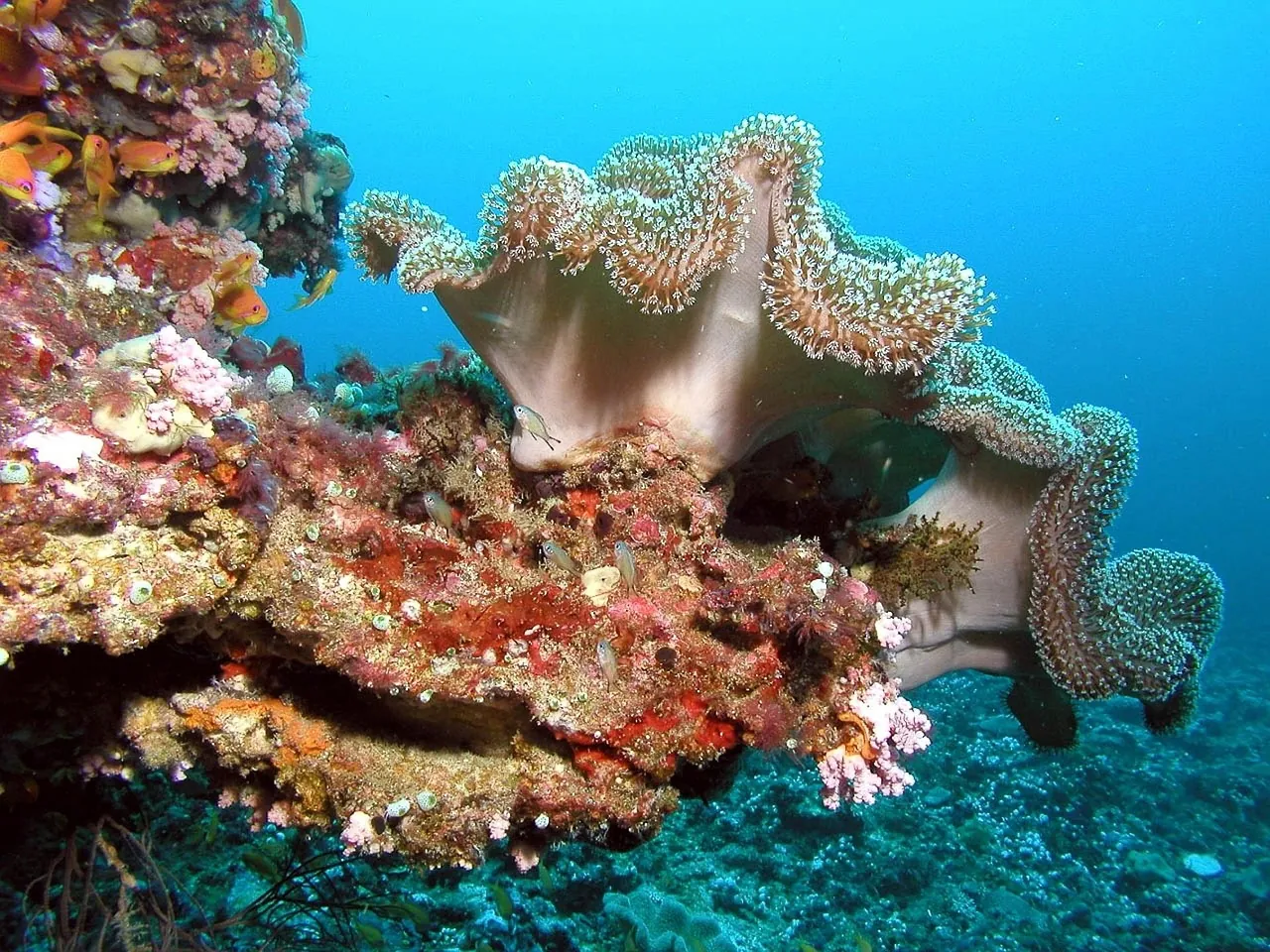
The coral composition at Beatrice Rock is varied, reflecting the different light levels and current intensities across the site. Barrel sponges and large gorgonian fans are anchored to the more vertical surfaces, where they can better intercept passing nutrients. Black coral and various soft corals decorate the deeper slopes, creating a complex texture across the rock faces. These corals provide essential shelter for smaller species, including many of the resident crustaceans and small reef fish. The health of these colonies is directly linked to the steady flow of water through the channels, which keeps the reef well-oxygenated.
Visibility at the site typically ranges between 10 and 20 metres, providing enough clarity to appreciate the scale of the pinnacle. The light penetration changes noticeably as you descend from the 7-metre summit to the 27-metre channels, with the deeper sections taking on a more shaded character. This depth range allows for a diverse range of photographic opportunities, from the brightly lit coral gardens to the more dramatic, shadowed walls. The visibility is generally consistent with the broader conditions of the Anilao region, making it a reliable site for seeing both large pelagics and detailed reef life.
Approaching the site requires an understanding of the boat positioning and the current's direction. Most dives are planned around the tidal cycles to manage the water movement, which can change the site's character significantly. When the current is strong, the site becomes a drift dive where the topography provides the main points of interest. The transition from the shallow plateau to the deeper drop-offs is often where the most intense biological activity occurs. Understanding the relationship between the rock's shape and the flow of the strait is key to a successful dive here.
Depths range from 7 to 27 metres. An Advanced certification and significant experience in drift diving are required due to variable currents that can become very strong during spring tides. Visibility is typically 10 to 20 metres. The best diving seasons are March to May and November to December.
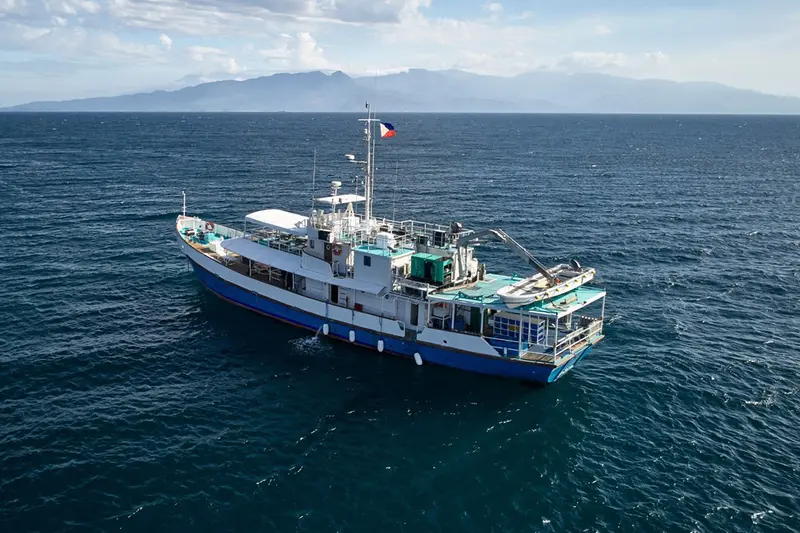
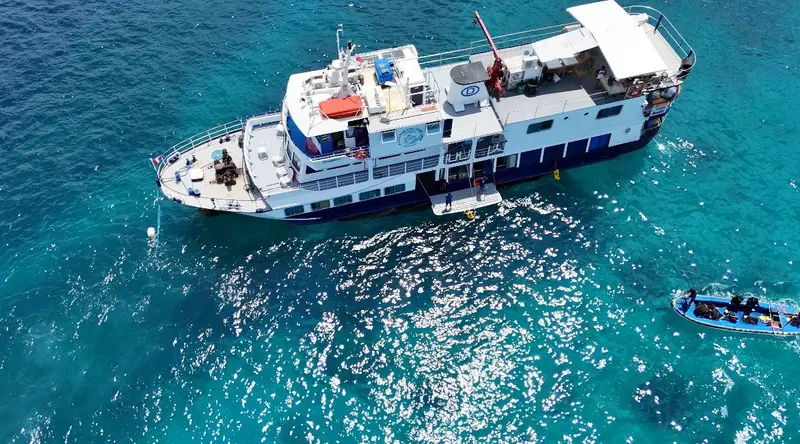
2 liveaboards depart from Anilao another way to explore the region, over several days at sea.
You can plan dives at Beatrice Rock during March to May or November to December, the listed best seasons for this site. Visibility is typically 10 to 20 metres, allowing you to appreciate the submerged pinnacle, coral gardens, vertical mini-walls, channels, and changing light from the summit to deeper sections.
Beatrice Rock requires Advanced certification and significant drift-diving experience. Currents are variable and can become very strong during spring tides, with tidal shifts driving water through channels and around the rocky edges. You need to understand current direction, boat positioning, and how the pinnacle's shape affects a drift dive.
Beatrice Rock ranges from 7 to 27 metres. The submerged pinnacle reaches approximately 7 to 8 metres at its summit, then descends through undulating slopes, deeper sections, narrow channels, and a mini-wall. You can move between sunlit upper slopes, coral gardens, vertical faces, and more shaded deeper terrain.
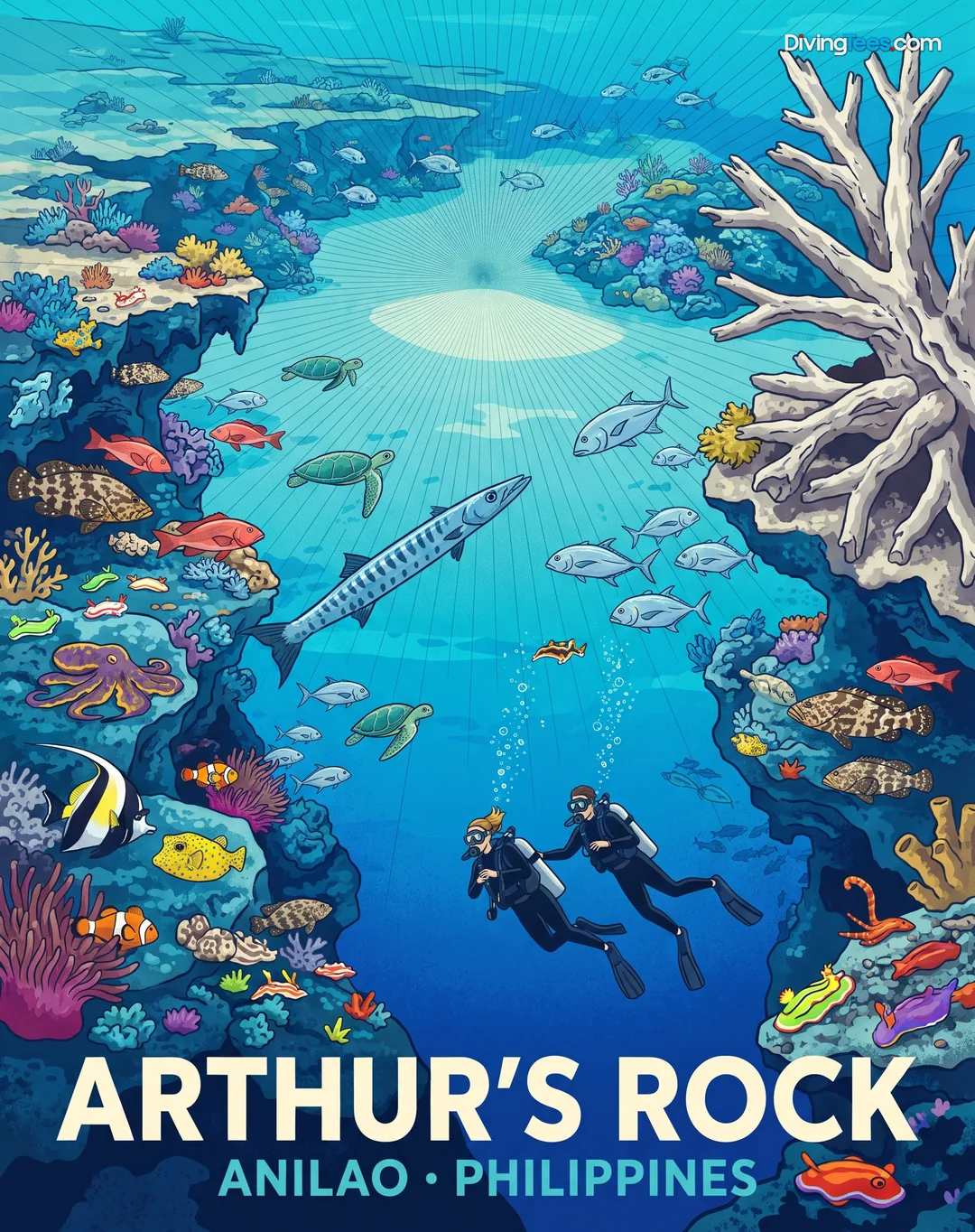
At Beatrice Rock, you may see dense schools of jacks, tuna, and rainbow runners moving through the channels, along with rays and occasionally whale sharks. Coral gardens, gorgonians, black coral, frogfish, white-eyed moray eels, nudibranchs, sea stars, Moorish idols, snappers, surgeonfish, wrasse, and anthias add variety.