Liveaboards · Philippines
Resolute — a working Philippine dive yacht with a long memory
What makes this boat unique
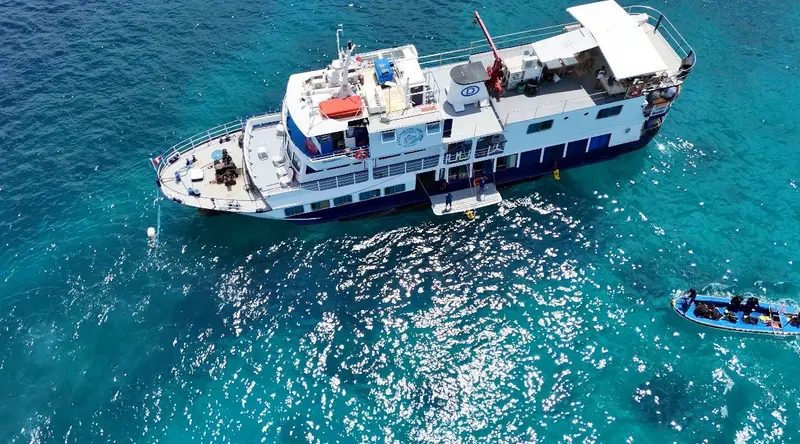
- Resolute is a 34.60-metre Philippine-registered dive yacht built in 1974 and renovated in 1998.
- The Apo Reef–Coron route runs for 7 days and 6 nights, with 17 scheduled dives.
- All eight air-conditioned cabins are on the lower deck and have a private bathroom and porthole.
- The shaded dive deck is served by two Yamaha tenders, with DIN and yoke tank valves, camera rinse facilities and optional nitrox.
- The boat carries up to 16 divers, and the crew speaks English.
For subtitles in English: start the video firstthen click the gearat the top right of the video, select “Subtitles/CC”, then “Auto-translate” and choose “English”.
The invitation
Resolute is for divers who choose a route before they choose a cabin. The Apo Reef–Coron itinerary links big reef scenery, current-swept walls, freshwater oddity and a run of serious World War II wrecks in one week. That variety is the reason to board: one day can be about sharks and manta rays, the next about a frogfish on a silty slope, then a dark hold in a Japanese transport. The boat itself is not trying to be a new floating resort. Its history is part of the proposition. Formerly a Soviet spy trawler from Vladivostok, it was converted into a dive vessel and has worked Philippine waters for decades. The crew is the stronger part of the experience: passenger feedback consistently points to safe dive management, efficient service, good food and practical help when gear goes wrong. Come for the diving, and expect a seasoned working boat rather than polished design.
Boarding
At the dock, Resolute looks like a vessel built to work, not a yacht styled to suggest work. Its past as a Soviet trawler still gives the boat a purposeful profile, while the 1998 renovation shifted the interior towards liveaboard use. Once aboard, the layout keeps divers from being pushed into one crowded room: the common areas are spread through the boat, giving people somewhere to sit after a dive without making the whole group share the same conversation. The diving spaces are arranged for repeated use, with a shaded working deck and separate places for cameras and rinsing gear. The engine, compressors and generators are part of the soundscape of a working ship; nobody should book Resolute expecting silent hotel nights. In return, the hull carries a real range and a crew used to remote Philippine routes. It feels practical, lived-in and made around the day below the surface.
The atmosphere on board
The atmosphere is shaped less by presentation than by the people doing the daily work. Divers describe crew members as efficient and helpful, with dive guides who are considerate about safety and an engineer willing to repair damaged equipment rather than leave a problem for the next port. Common areas are kept clean, and the boat gives passengers enough separate corners to spread out after a dive. Over a week, that creates a social life with room around it: conversations start on the dive deck, continue over the buffet and often break into smaller groups later. English is the working language. The crew’s role is most visible underwater and between dives, when tanks, tenders, cameras and wet divers all need attention at once. The strong crew and food scores matter because the boat score is lower; Resolute’s people make an older hull easier to live with.
The sites you’ll dive
The 7-day, 6-night Apo Reef–Coron route puts 17 scheduled dives between Batangas and the reefs and wrecks of Mindoro and Coron. Apo Reef reaches -40m, with channels through the Philippines’ largest coral reef and wall dives carrying turtles, reef sharks, manta rays, groupers and schools of snapper and trevally. Verde Island reaches -38m, while its near-vertical drop-off reaches -30m; both bring dense reef life, with the drop-off adding tuna, mackerel, fusiliers, sea snakes and hawksbill turtles. Coron changes the subject. Akitsushima, a 118-metre seaplane tender, reaches -38m; the 160-metre Okikawa Maru lies to -26m; Kogyo Maru reaches -36m; Olympia Maru, a remarkably intact 128-metre cargo ship, reaches -30m. Irako is the serious deep wreck at -45m, with deep penetration, while Kyokuzan Maru reaches -42m. Shallower dives include Twin Peaks at -25m, Cathedral Cave at -30m, Lusong Gunboat at -12m and Barracuda Lake at -40m, where freshwater thermoclines build with depth.
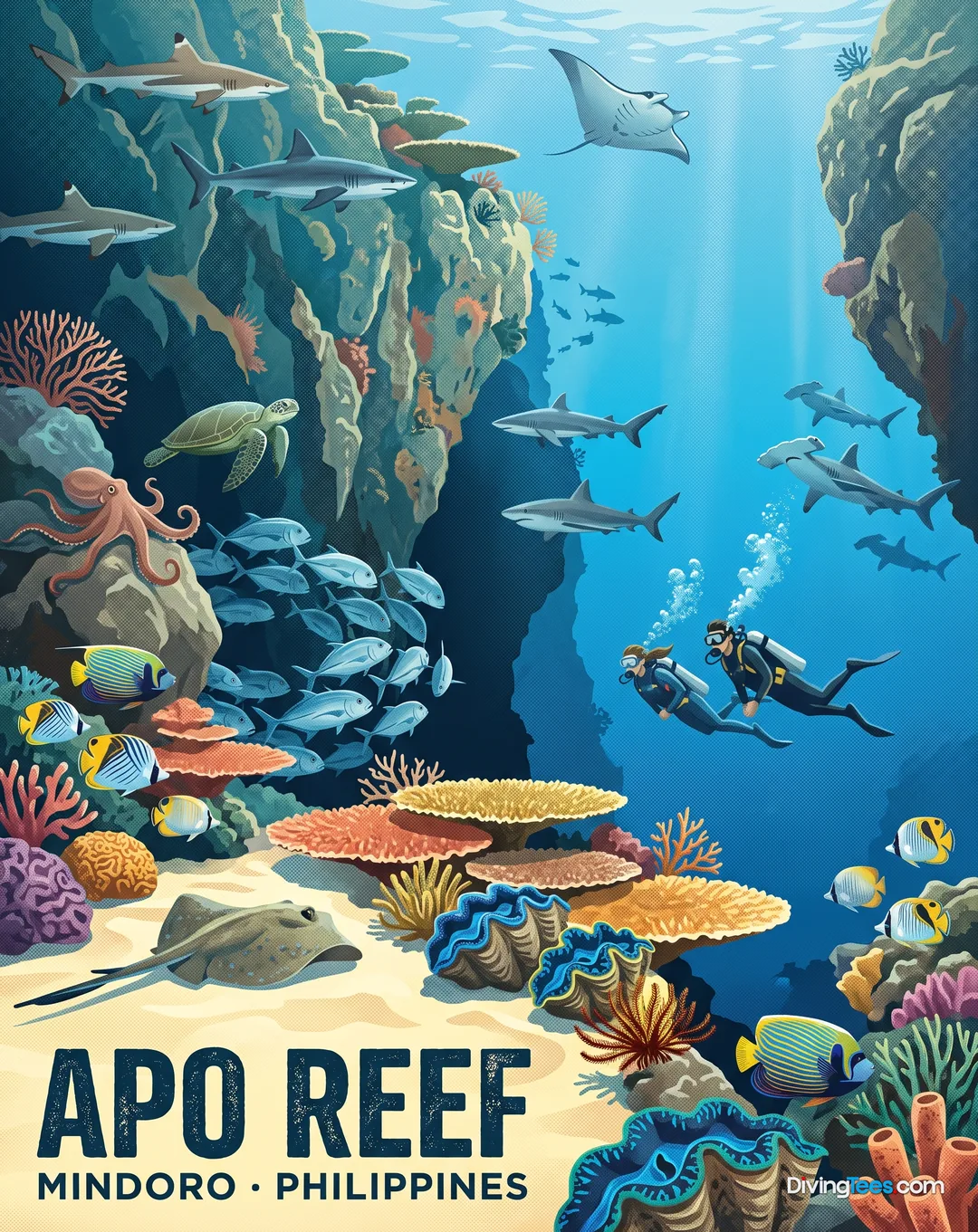
Apo Reef →
Max. depth · 40 m
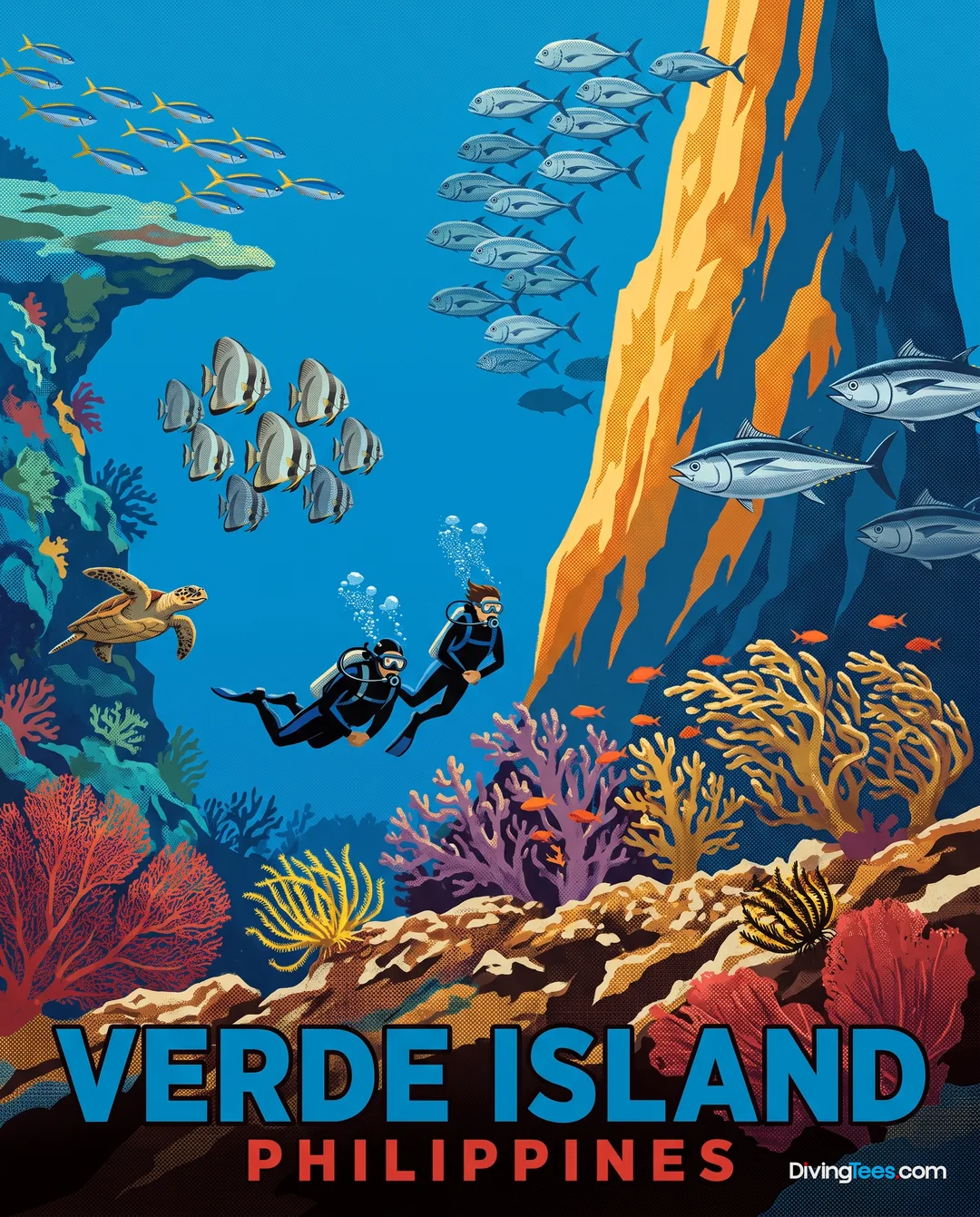
Verde Island →
Max. depth · 38 m
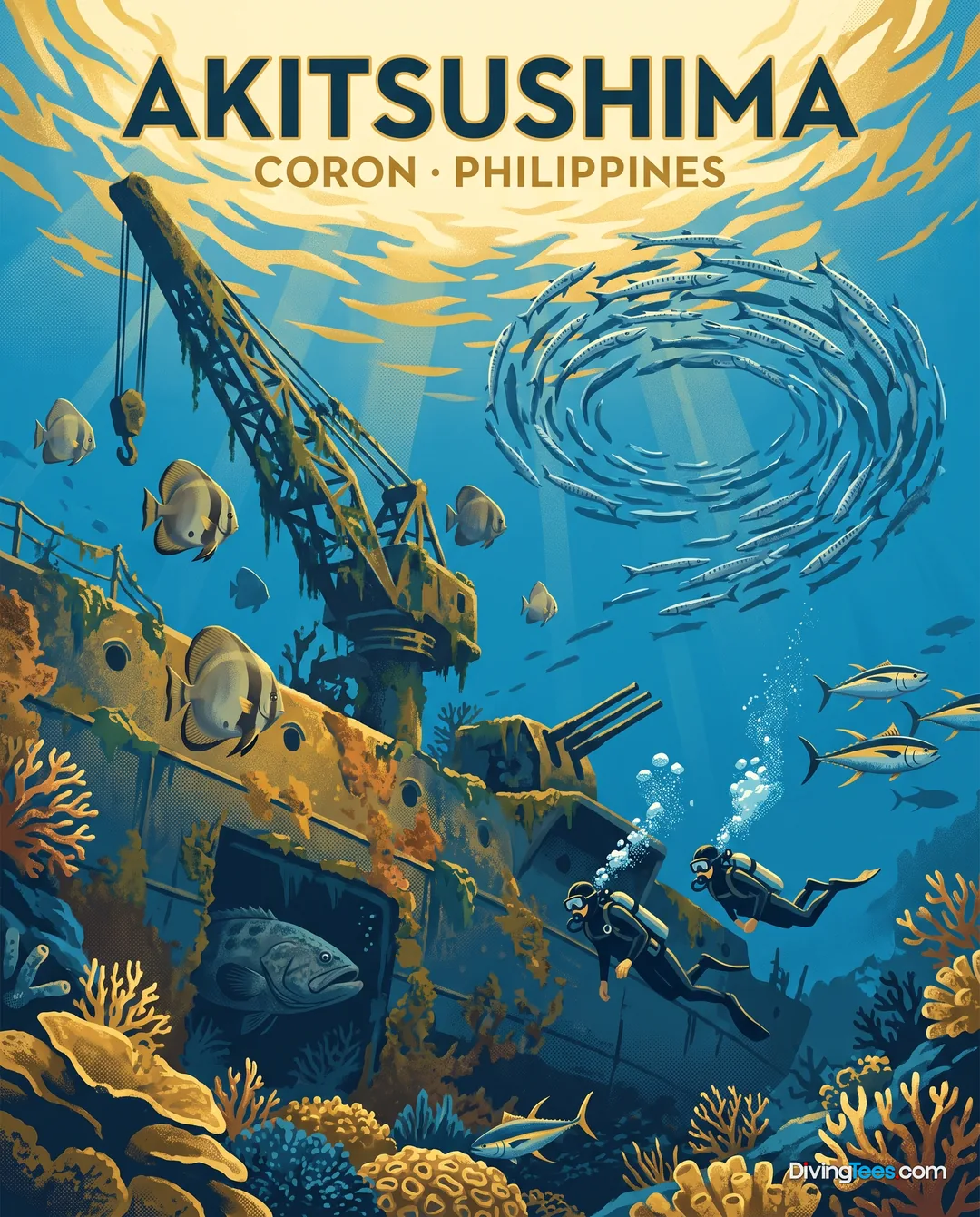
Akitsushima →
Max. depth · 38 m
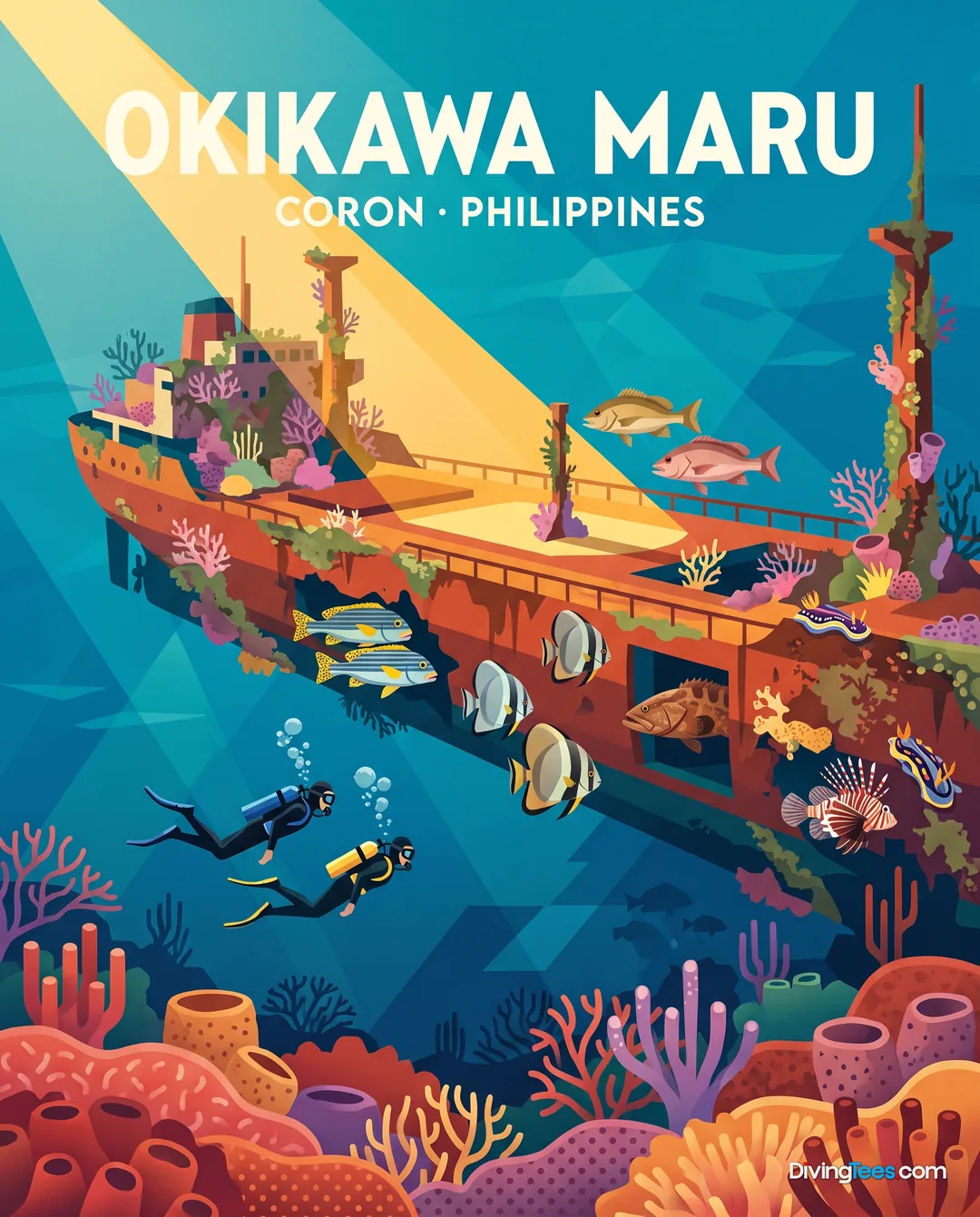
Okikawa Maru →
Max. depth · 26 m
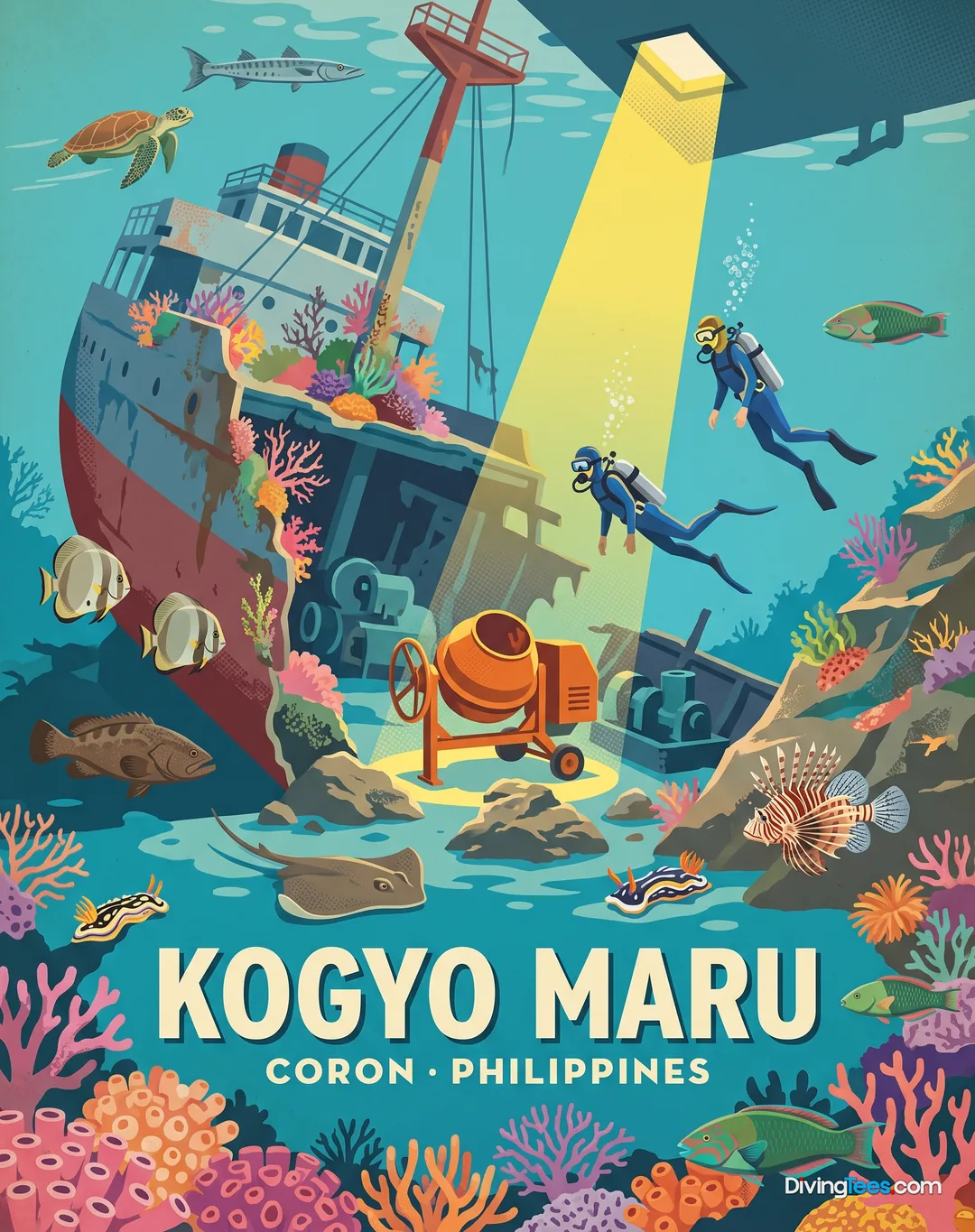
Kogyo Maru →
Max. depth · 36 m
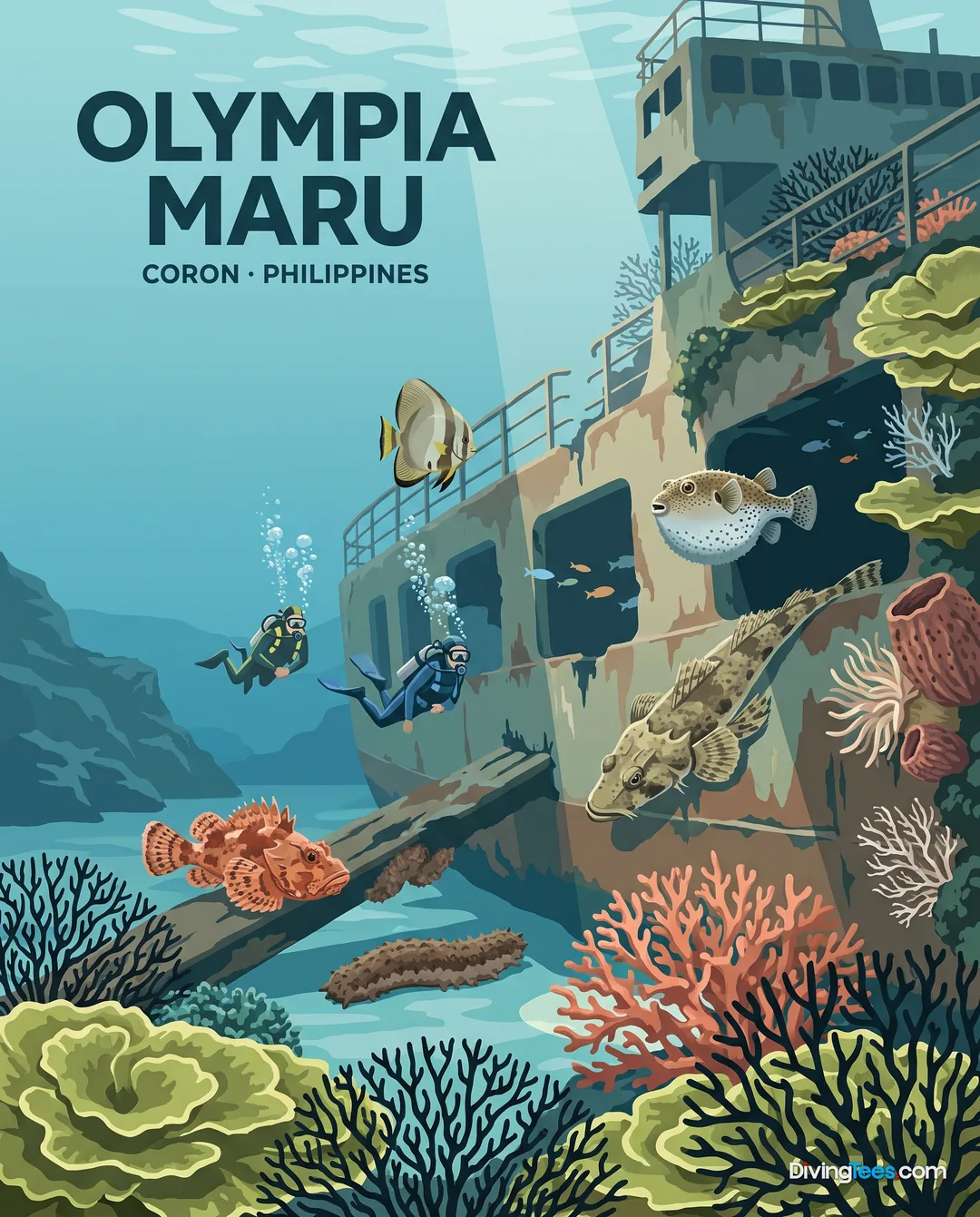
Olympia Maru →
Max. depth · 30 m
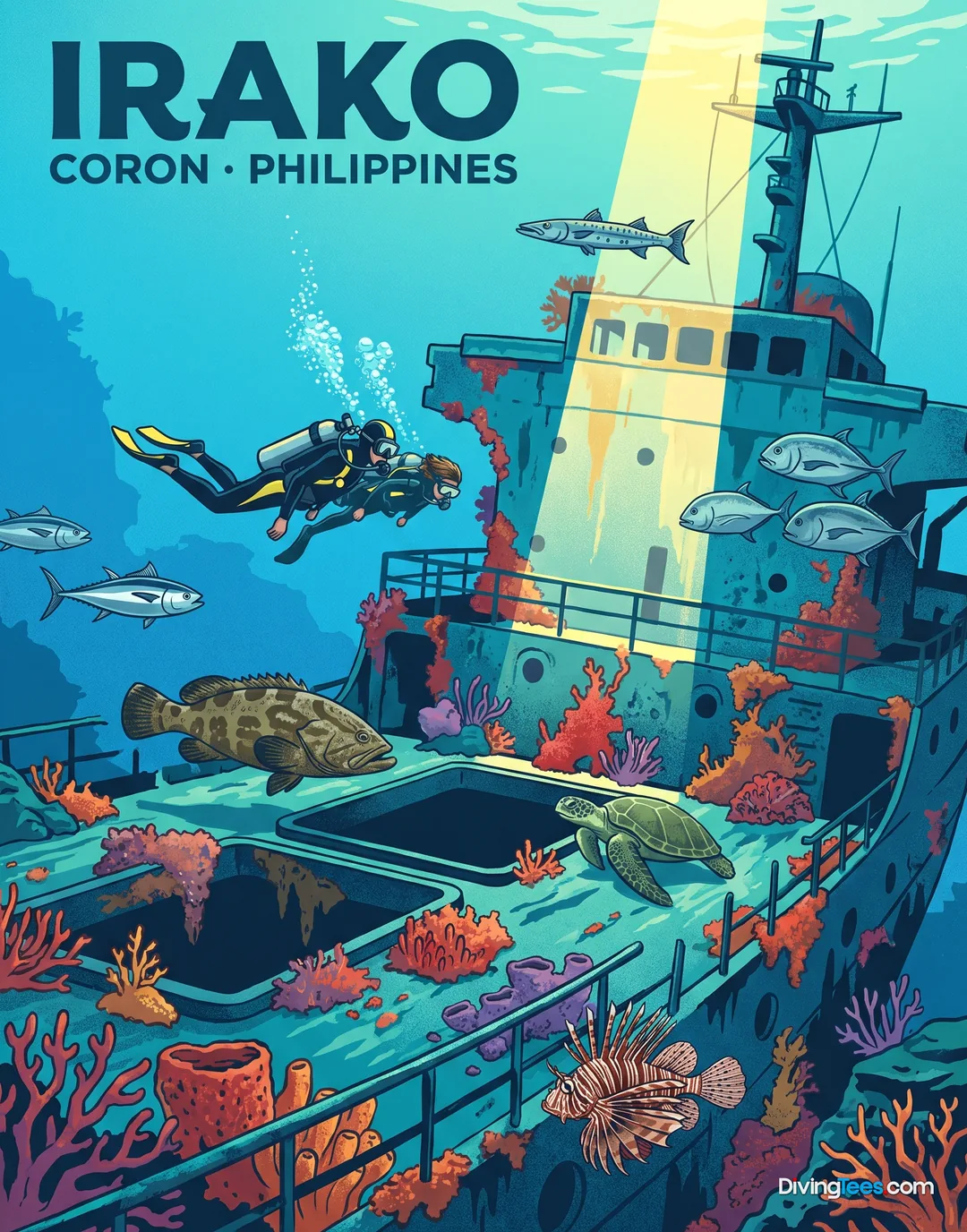
Irako →
Max. depth · 45 m
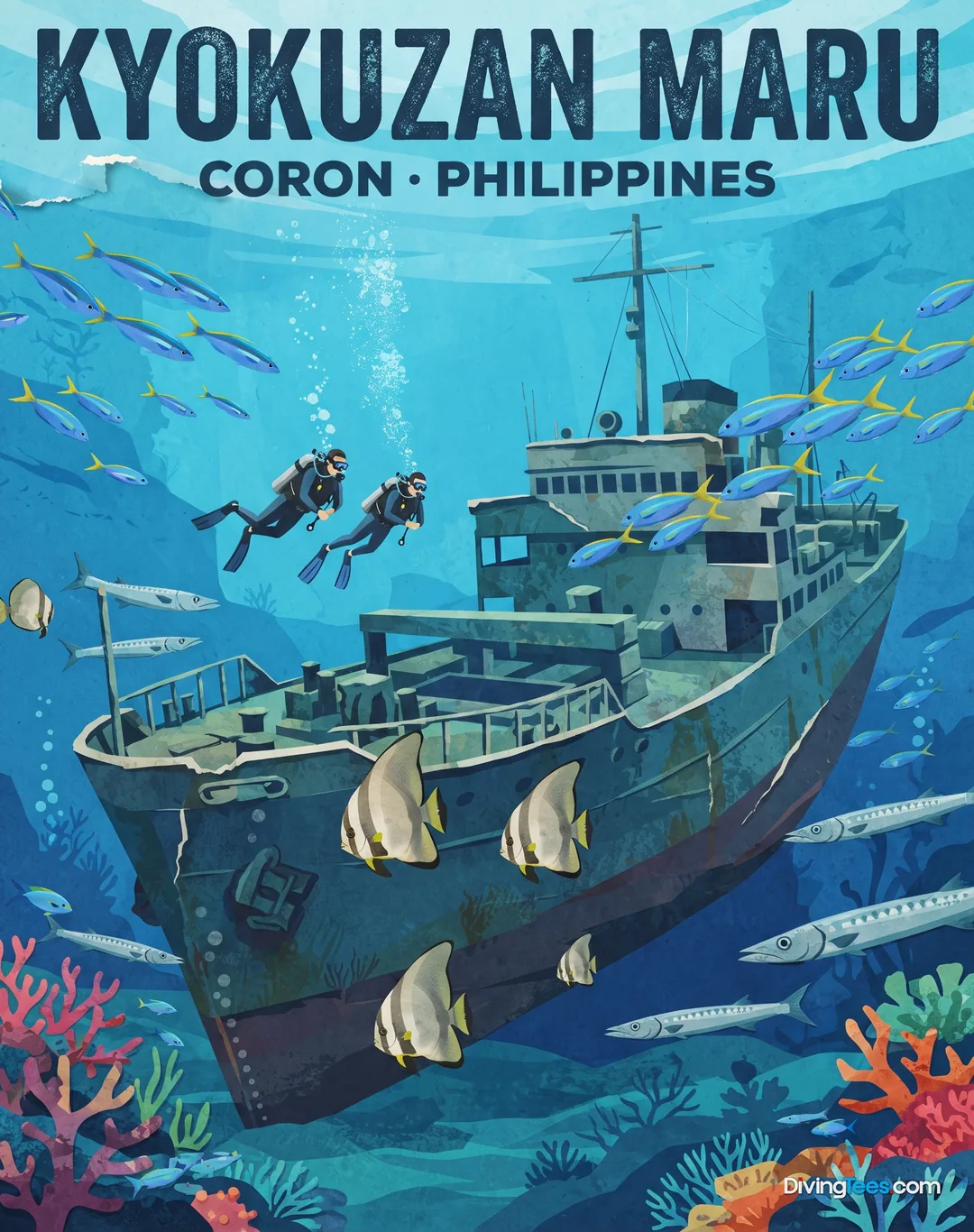
Kyokuzan Maru →
Max. depth · 42 m
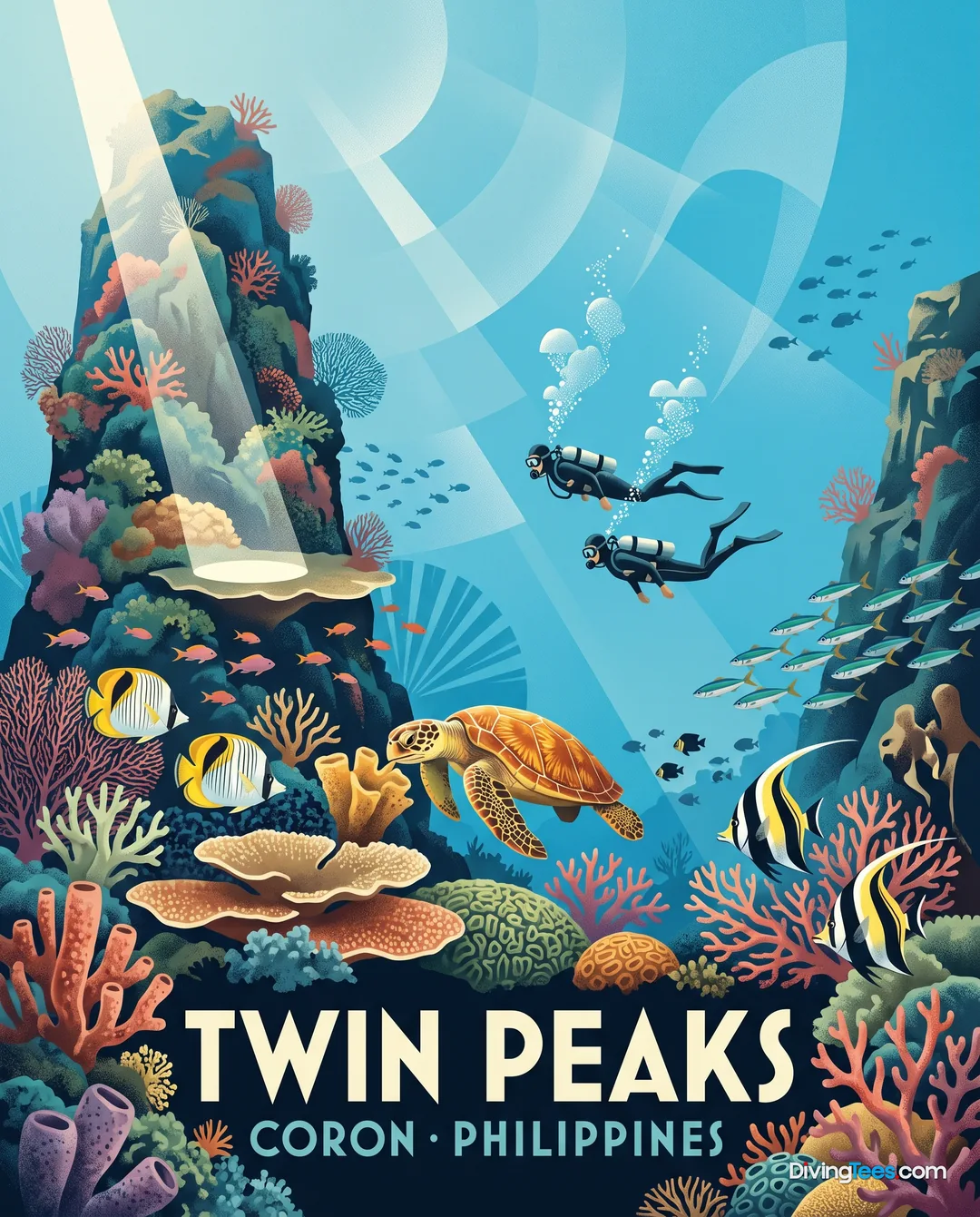
Twin Peaks →
Max. depth · 25 m
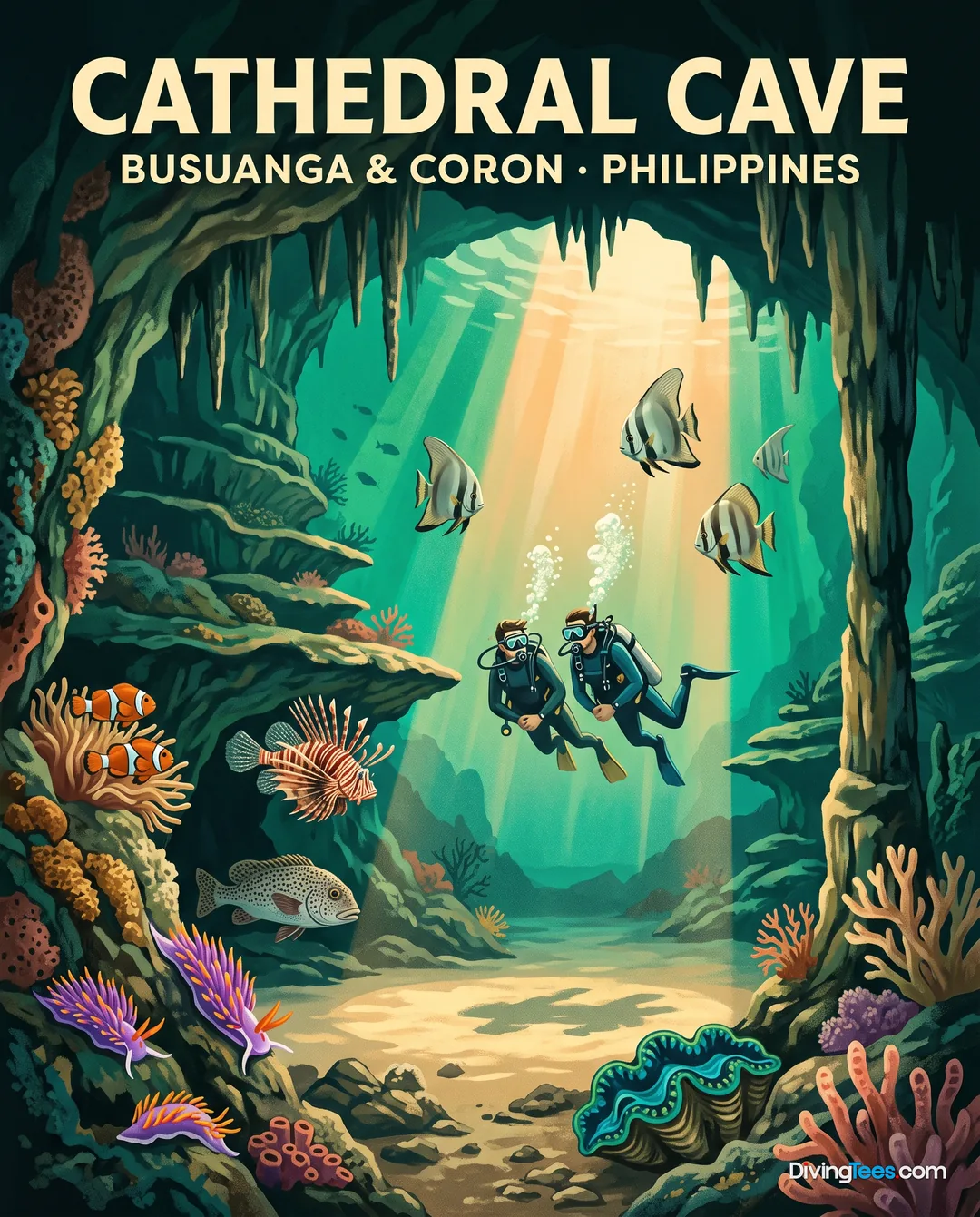
Cathedral Cave →
Max. depth · 30 m
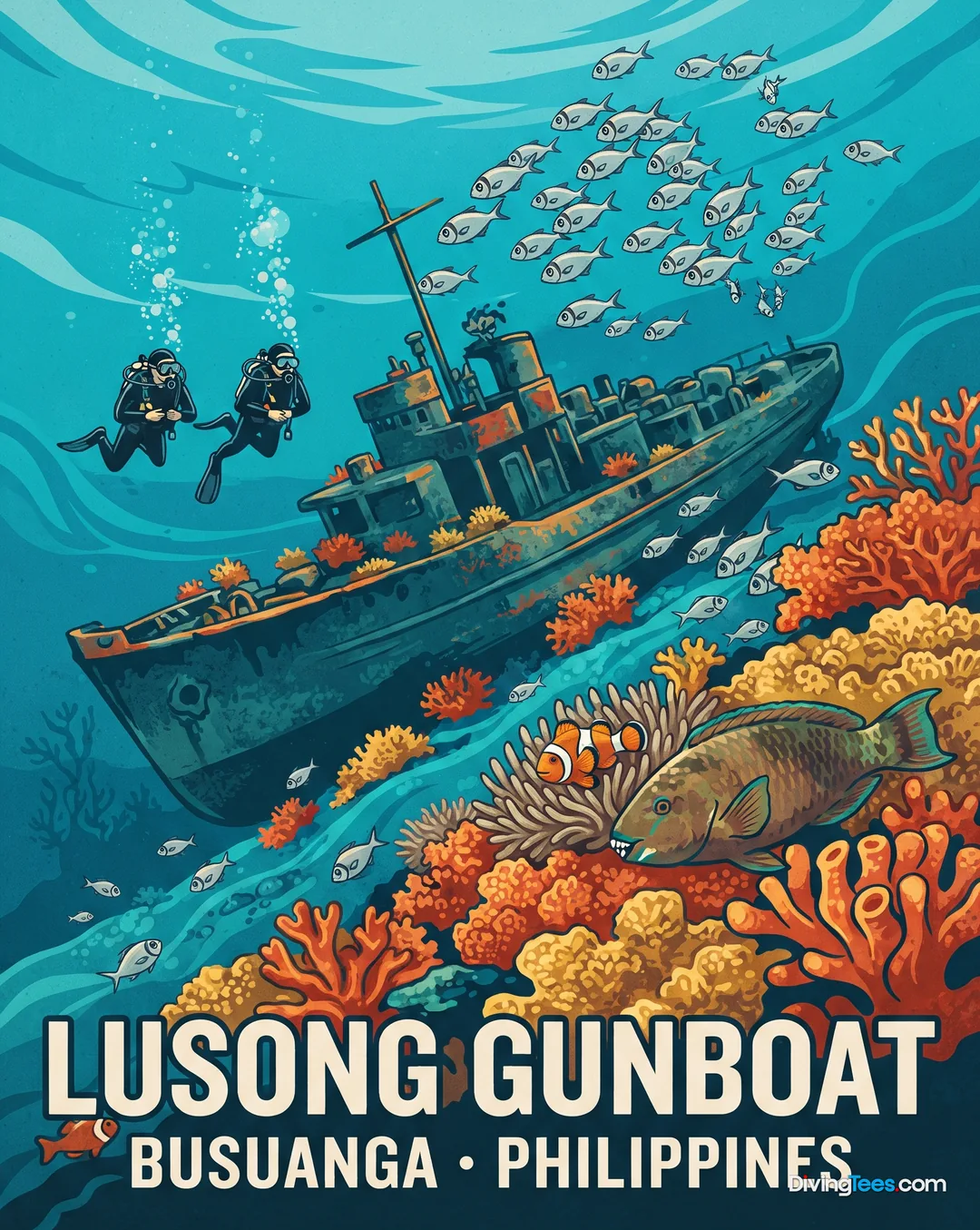
Lusong Gunboat →
Max. depth · 12 m
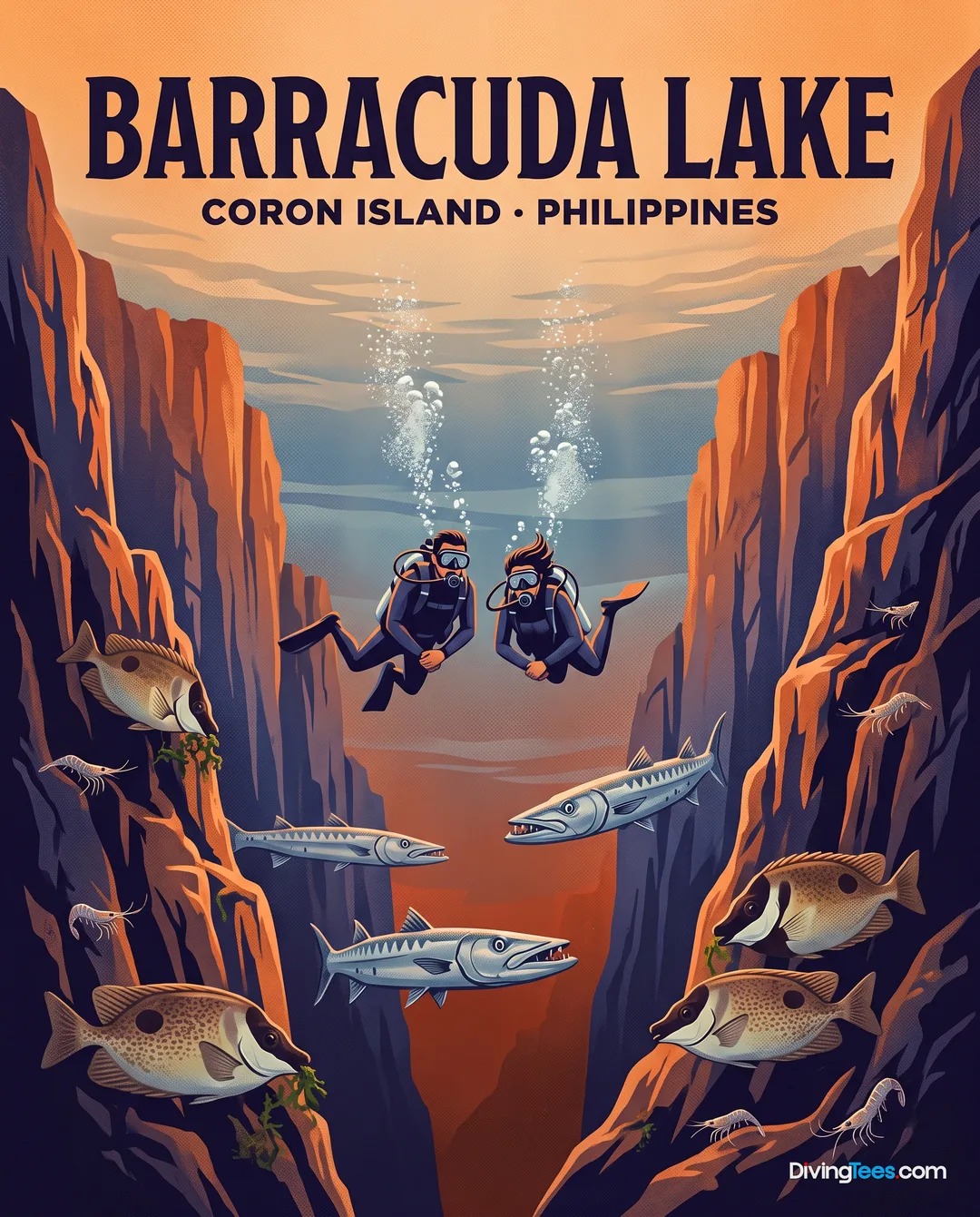
Barracuda Lake →
Max. depth · 40 m
Itineraries, dates and prices
Prices per person. Each month shows its lowest price: click a month, or pick an itinerary.
Next departures · 50 departuresfrom £1,494$1,997€1,784
November 2026
December 2026
See dates and prices
If you click these links and make a purchase on the partner site, DivingDeal may earn a commission, at no extra cost to you.
Dates and prices taken from Divebooker and liveaboard.com, updated 21 October 2026
What you’ll meet underwater
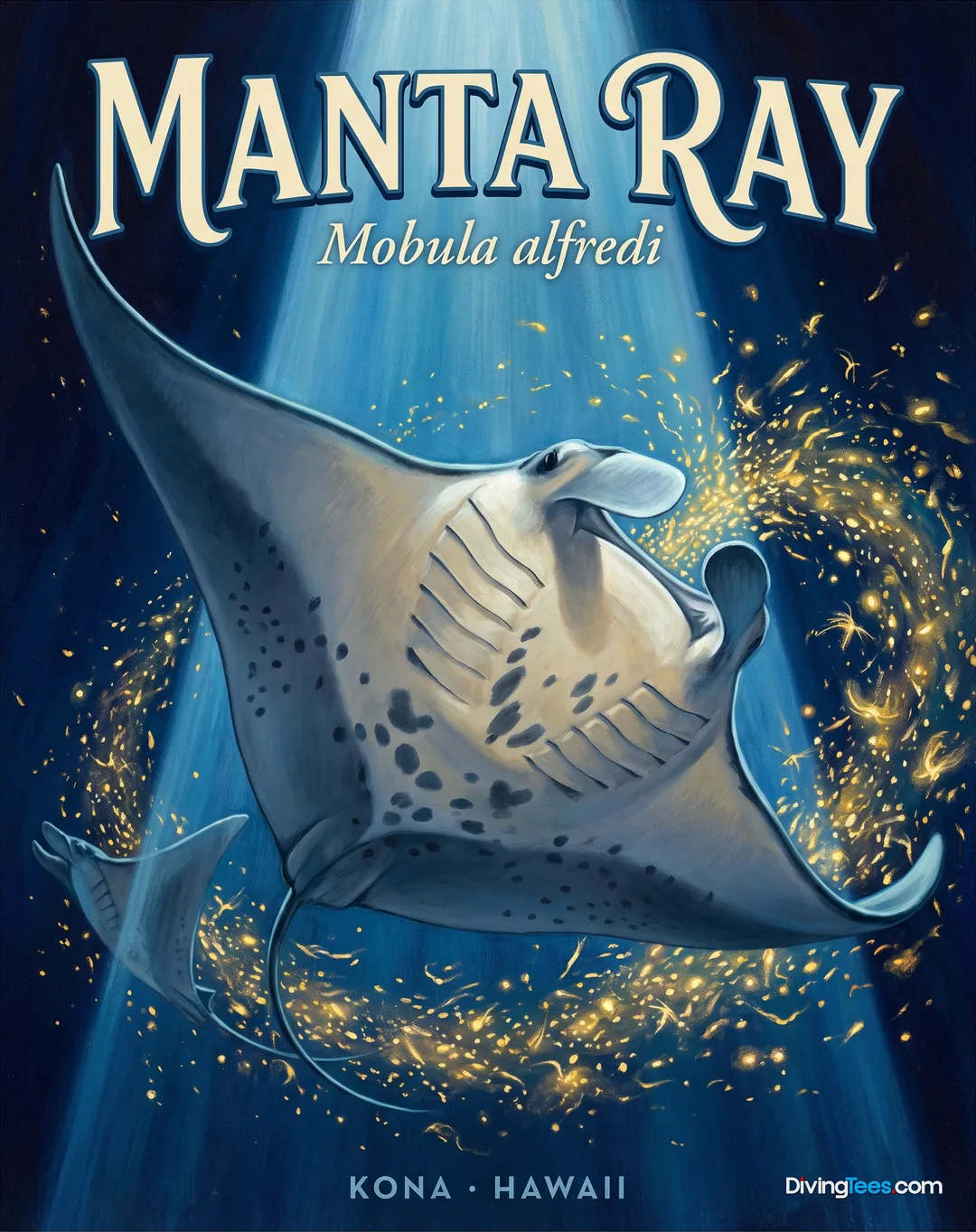
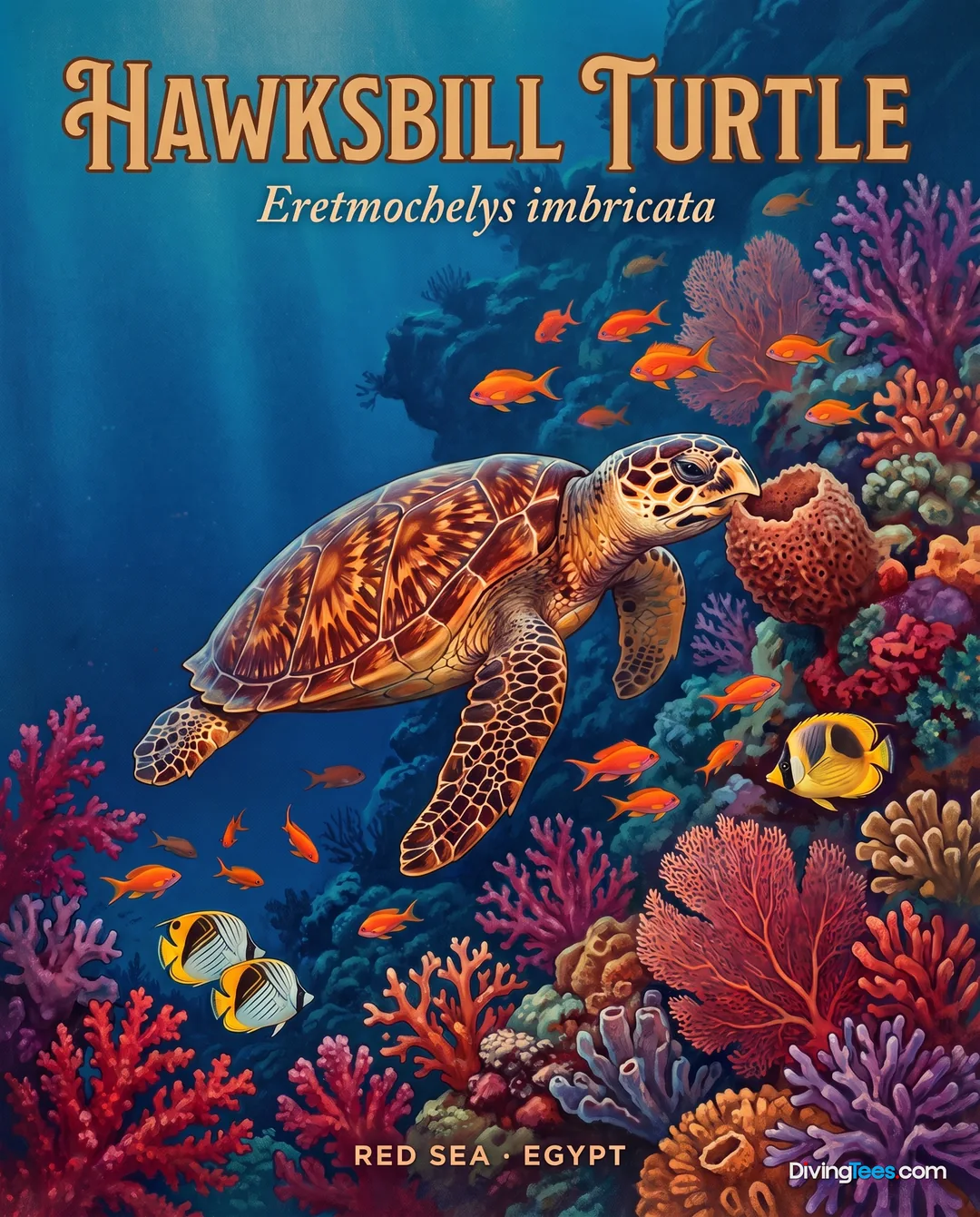
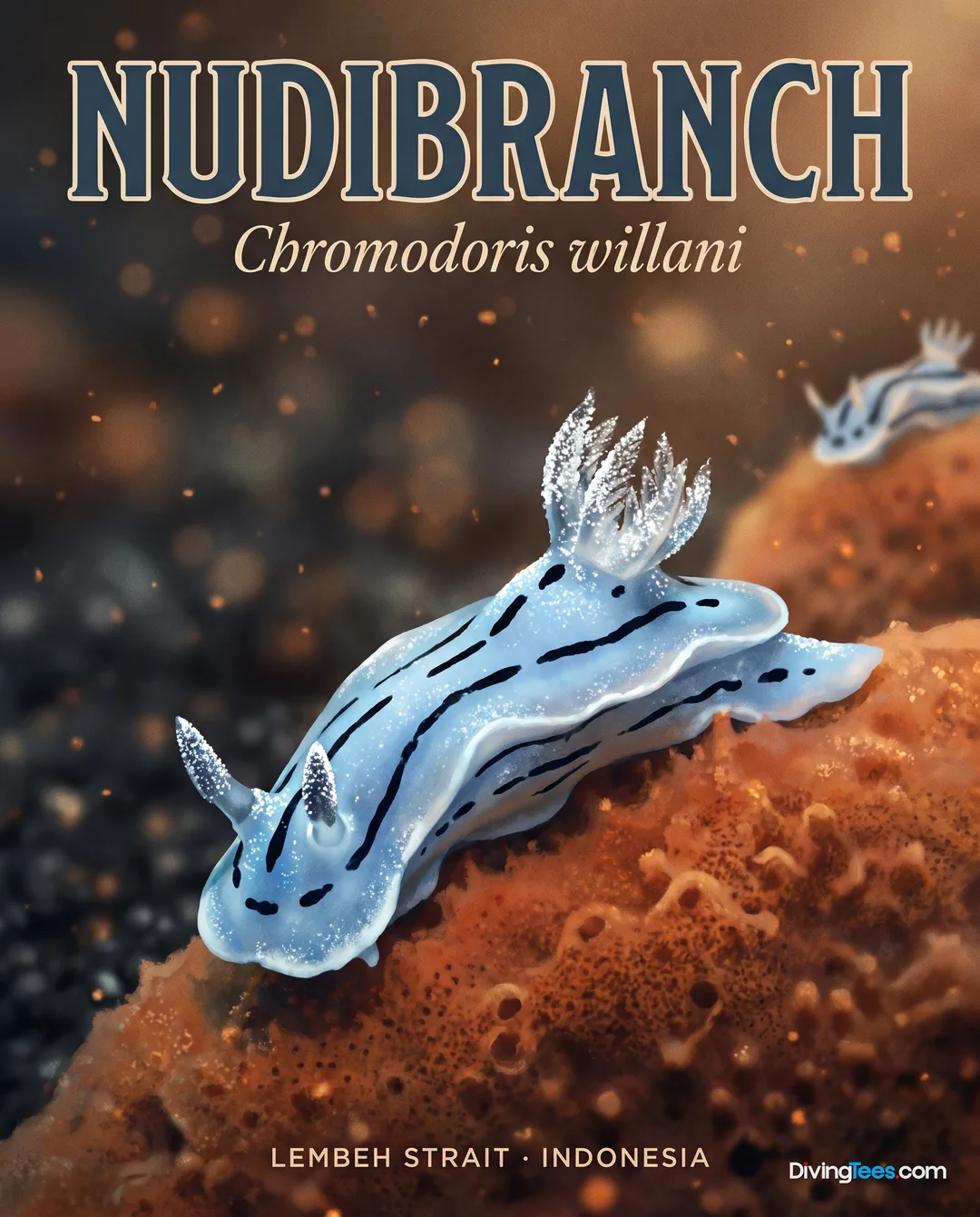
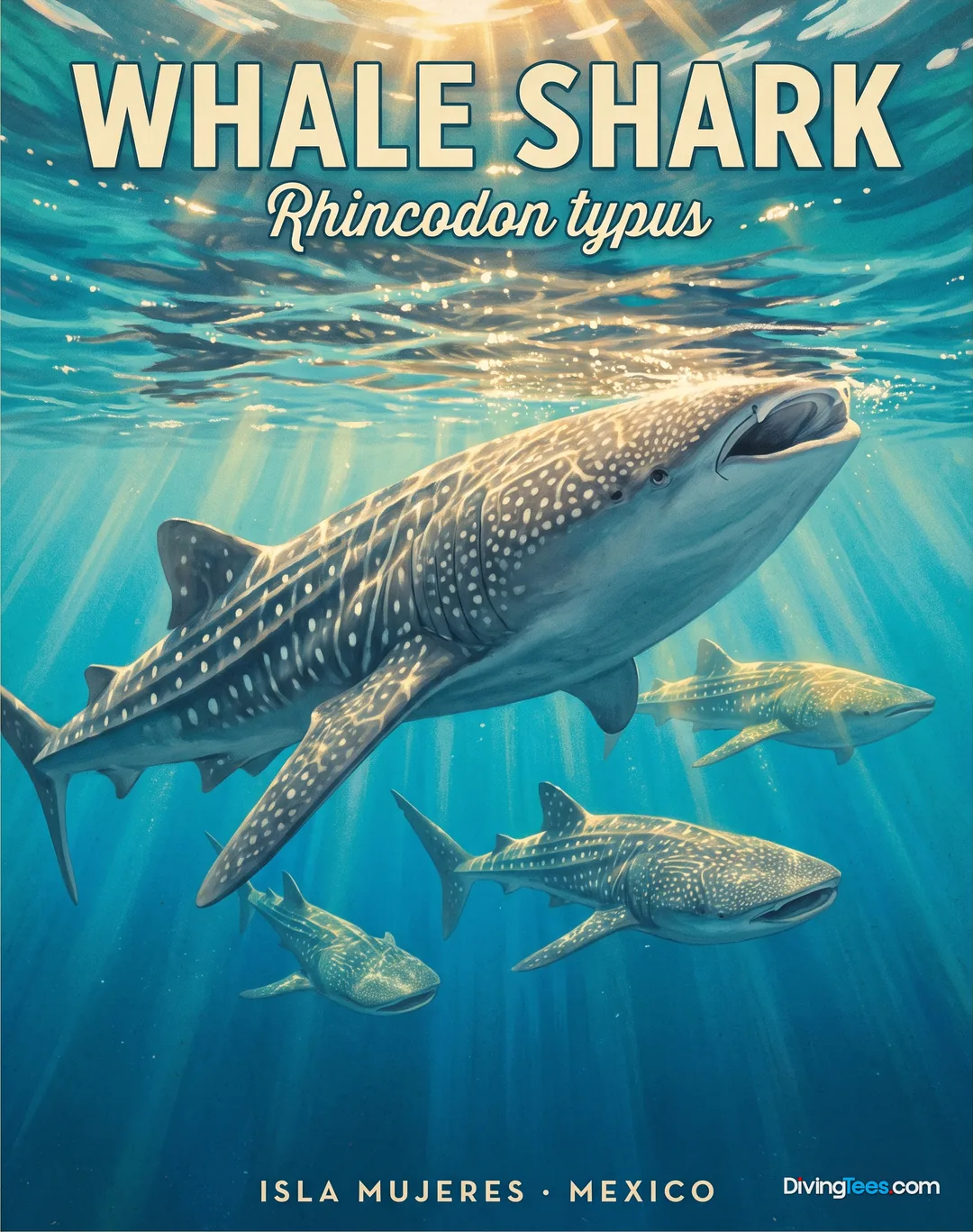
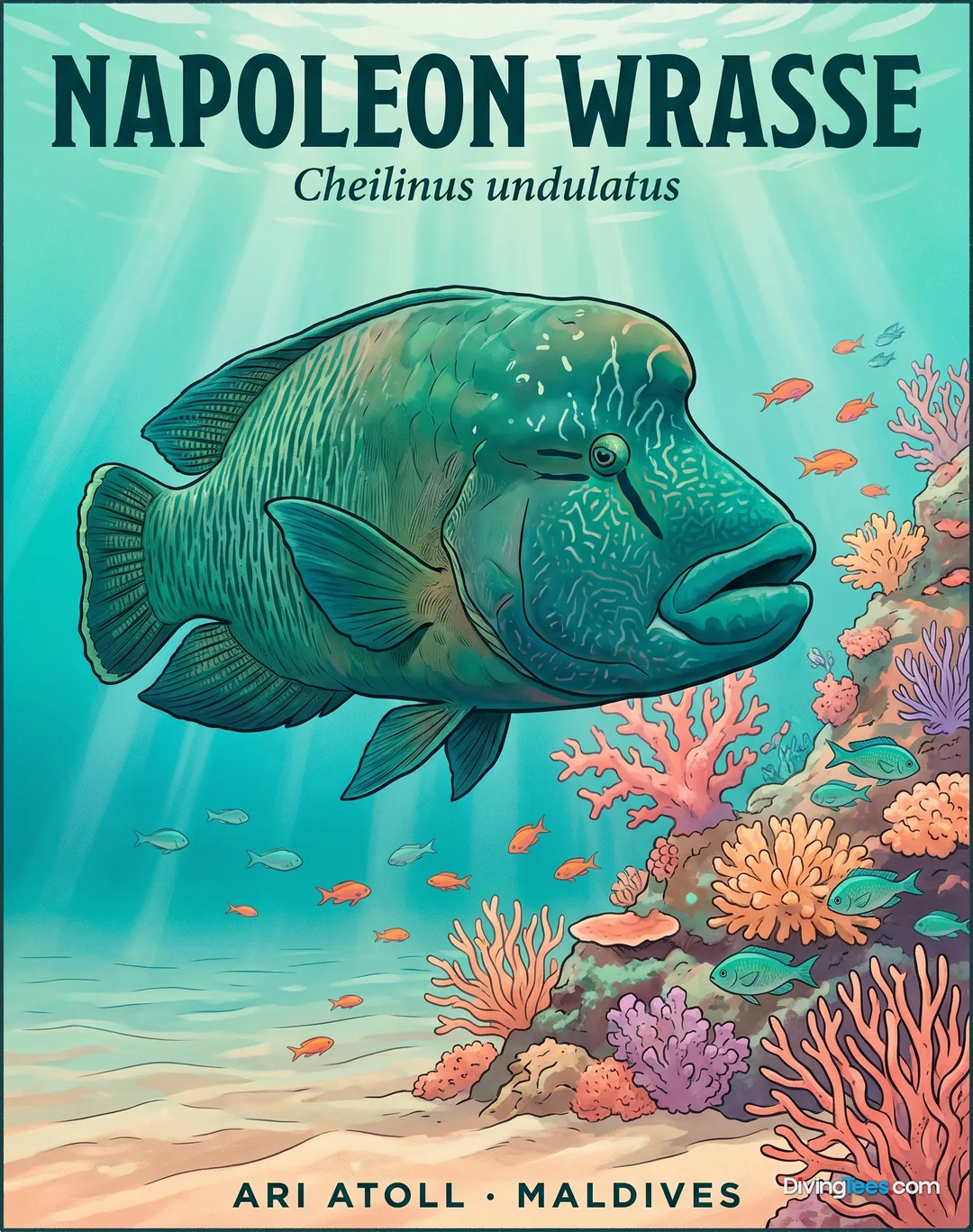
Across the route, nudibranchs, scorpionfish and snapper are recurring possibilities rather than a checklist. The reason to move between sites is the change in scale and character. Apo Reef can bring manta rays, reef sharks, groupers and squid among the channels and walls. At Verde Island, the reef may offer the larger surprise of a whale shark, a Napoleon wrasse or anemones among gorgonians and sponges. Verde Island drop-off adds the chance of a balistid triggerfish, tuna, wide-mouth mackerel, fusiliers and banded sea snakes. Buceo Point is the opposite kind of hunting: frogfish, seahorses, pipefish, ghost pipefish, octopus, scorpionfish and crabs on silty slopes. Barracuda Lake is the only listed site for barracuda. Twin Peaks is the named site for sea turtles, while Lusong Gunboat puts hard coral on a shallow steel wreck. These are possibilities earned by careful looking, current, timing and a good guide—not guarantees.
Who puts you in the water
English is the working language for briefings and daily contact with the dive team. Certified dive masters lead the dives, and passenger feedback consistently describes the guides as safety-conscious, considerate and attentive to the conditions. The crew carries oxygen, first-aid supplies and an AED, alongside the boat’s fire, communications and rescue equipment. Resolute will not proceed when the captain sees a major threat from weather or other conditions. The dive pages describe non-decompression diving, and the Tubbataha rules specifically prohibit decompression dives; the Apo Reef–Coron schedule also lists dives as subject to weather, sea, tide and current conditions. The boat offers certification and specialty courses on board. There is no published guide-to-diver ratio, logged-dive minimum or detailed group structure, so divers who need those arrangements should ask before booking. The tender system brings groups back to the boat after open-water ascents.
The dive deck and the gear
The dive deck is built for repeated operations rather than display. A shaded working area, dive platform, rinse tanks and separate camera rinse facilities keep the essentials close to the water, while two Yamaha tenders handle diver transfers: one 27-foot boat with a 75HP outboard and one 21-foot boat with a 55HP outboard. Divers use the tenders for site drops and collection, then return to the platform rather than climbing a high side ladder. Twelve-litre tanks with DIN and yoke valves, weights, belts, reel and balloon are included. Fifteen-litre tanks, BCDs, regulators, dive computers, wetsuits, masks, fins and booties can be rented. Nitrox is available as EAN32 for an optional fee; the published fill is for four tanks per person per day and does not apply to twin tanks. Two Coltri compressors support filling. A dedicated charging area and camera rinse station suit photographers, but specific camera-table dimensions and equipment brands are not given.
Between dives
Between dives, the useful place is the shaded outdoor area near the dive deck, where wet kit can stay organised and divers can sit without baking in the midday sun. The boat also has an indoor lounge, a library and space set aside for cameras, so a surface interval can be spent editing, reading or simply getting out of the heat. The layout spreads people through different sections instead of making everyone occupy one saloon. That is a real advantage over a week of repeated dives. When Resolute is underway between reef and wreck areas, the boat becomes the quiet part of the trip: a place to dry off, eat, charge batteries and watch the Philippine coast pass. Non-divers and snorkellers are welcome, so the boat can suit a mixed group without turning the diving schedule into a compromise.
A day on board
The day begins with the dive team preparing the first operation before most passengers have fully woken. After the briefing, the first group heads out by tender or enters from the platform, then returns to a substantial breakfast and the work of drying, logging and checking equipment. On the Apo Reef–Coron schedule, the first two diving days carry four dives each; Coron has another four, Calauit has two, and Puerto Galera has three. Meals mark the gaps: light breakfast before diving, heavier breakfast afterwards, then lunch, snacks and dinner. Travel between areas fills some of the longer intervals, shifting the view and the dive environment without pretending every day follows the same clock. The published Apo Reef–Coron itinerary does not set exact dive times. Night diving is not offered, so the final water session is followed by dinner, camera care and sleep rather than another briefing under the stars.
What you eat aboard
Two chefs run a galley that leans Filipino while adding international dishes. Meals are served as five- to six-course buffets, with meat, seafood, soup, vegetables, fruit and dessert appearing across the spread; vegetarian and other dietary requirements can be handled when arranged in advance. Breakfast starts light before diving and is followed by a heavier meal after the first water session. Lunch, snacks and dinner keep the long surface intervals supplied, with snacks available through the day. This matters on a route built around 17 scheduled dives. A good meal is not a backdrop here: it is the first serious recovery stop after getting out of the tender, changing batteries, logging the dive and checking the next site. Drinking water, tea, coffee, juice and full-board meals are included. Beer and other alcoholic drinks are available separately.
Nights at sea
The eight regular cabins sit on the lower deck, each with air conditioning, a private bathroom, hot water, USB and 220-volt outlets, and a porthole rather than a large picture window. Cabins 7 and 8 are the small cabins, so the choice matters if square metres matter to you. The rooms were renovated, and returning divers have found them comfortable and clean, but the boat remains an older working vessel rather than a purpose-built luxury catamaran. A porthole gives a cabin a low, enclosed feel at sea; the air conditioning and ensuite bathroom matter more after four dives than decorative space. Pack soft luggage. Hard cases and sprawling personal kit make any lower-deck cabin feel smaller. Daily housekeeping, cabin towels and beach towels are provided, while laundry is an optional extra.
Regular Cabins
Small (Cabins 7 & 8)
What to know before boarding
The Apo Reef–Coron route embarks and returns in Batangas, Philippines. Travel from Manila to Batangas is arranged independently, or Resolute can help organise a transfer as a paid service; send the detailed itinerary so the pickup plan is clear. Arriving in Manila the night before is the sensible choice, leaving room for flight delays and the road journey to the port. The boat normally departs around 4:00pm, with embarkation beginning around 2:00pm.
Deck plan
- Year built
- 1974
- Year renovated
- 1998
- Length
- 34.6 m
- Beam
- 7 m
- Maximum number of passengers
- 16
- Number of cabins
- 8
- Number of bathrooms
- 8
- Cruising speed
- 9.5 knots
- Tenders
- 8.2 m 75 hp Yamaha; 6.4 m 55 hp Yamaha
- Website
- dive-resolute.com ↗
Hello, I'm Marina, DivingDeal.com's AI assistant. I answer in detail about hotels, dive centres and liveaboards.
Thinking about the whole trip and the flights? Talk it over with Edith →
Marina is an AI. Some links are affiliate links: DivingDeal may earn a commission, at no extra cost to you. Bookings are made with the partner.