Liveaboards · Thailand
Lucky Marine Liveaboard — a practical North Andaman dive boat with a strong crew
What makes this boat unique
- Lucky Marine runs a 5-day, 4-night North Andaman route from Thap Lamu to Thap Lamu, with 14 dives.
- The steel-hull boat was built and renovated in 2022 and carries up to 24 passengers in three cabin categories.
- The diving setup includes a shaded dive area, DIN adapters, nitrox, separate camera rinsing, tech and sidemount support, and diver tenders.
- English-, French-, and Korean-speaking instructors and divemasters guide the trips.
- Non-divers and snorkellers are welcome, with snorkelling equipment and a guide included.
For subtitles in English: start the video firstthen click the gearat the top right of the video, select “Subtitles/CC”, then “Auto-translate” and choose “English”.
The invitation
Lucky Marine is for divers who want the North Andaman route in a boat built around the water rather than a resort that happens to carry tanks. The itinerary links the Similan Islands, Koh Bon, Koh Tachai and Richelieu Rock over five days and four nights, with 14 dives recorded on the standard schedule. That gives the trip a clear purpose: granite boulders, pinnacles, walls, wrecks and the chance of large pelagics, with enough variety to keep the same sea from feeling repetitive. Non-divers are not treated as spare passengers; snorkelling excursions, try-dives and other activities are part of the offer. The strongest case for choosing Lucky Marine is the balance between diving and hospitality. Ratings place the boat at 7.6, but the crew scores 8.8, diving 8.5 and food 9.3. The vessel may not be the polished star of the trip. The people and the time underwater are what carry it.
Boarding
From the dock, Lucky Marine presents as a purpose-built steel-hull liveaboard rather than a converted pleasure boat. Its 2022 build and renovation point to a relatively recent vessel, while the layout keeps the practical parts of a dive trip close at hand: a dedicated dive area, platform, tenders and shaded space for gearing up. Once aboard, the boat is large enough to separate the indoor salon, cabins and open-air areas without losing the feeling that everyone is sharing one working vessel. The salon is air-conditioned, and the upper areas include a terrace and observation space for watching the islands pass. Movement between cabin, dive station and water is the important part here. Lucky Marine is designed to get divers from bunk to briefing to platform without turning each dive into a logistical exercise.
The atmosphere on board
The onboard atmosphere is shaped by a crew that passengers rate more highly than the boat itself. A crew score of 8.8 sits alongside 9.3 for food and 8.5 for diving, while the boat scores 7.6. That difference is useful: Lucky Marine is not being sold here as flawless floating luxury. Its value lies in the way the crew keeps the important parts working—food arriving around the dives, equipment handled, briefings delivered and guests looked after in three working languages. English, French and Korean are spoken onboard. With up to 24 passengers, the group is big enough to bring together divers, snorkellers and non-divers, but the layout still gives people a salon, terrace and observation areas to step away from the main crowd. Evenings follow the last dive, dinner and time on deck or in the salon rather than a forced programme.
The sites you’ll dive
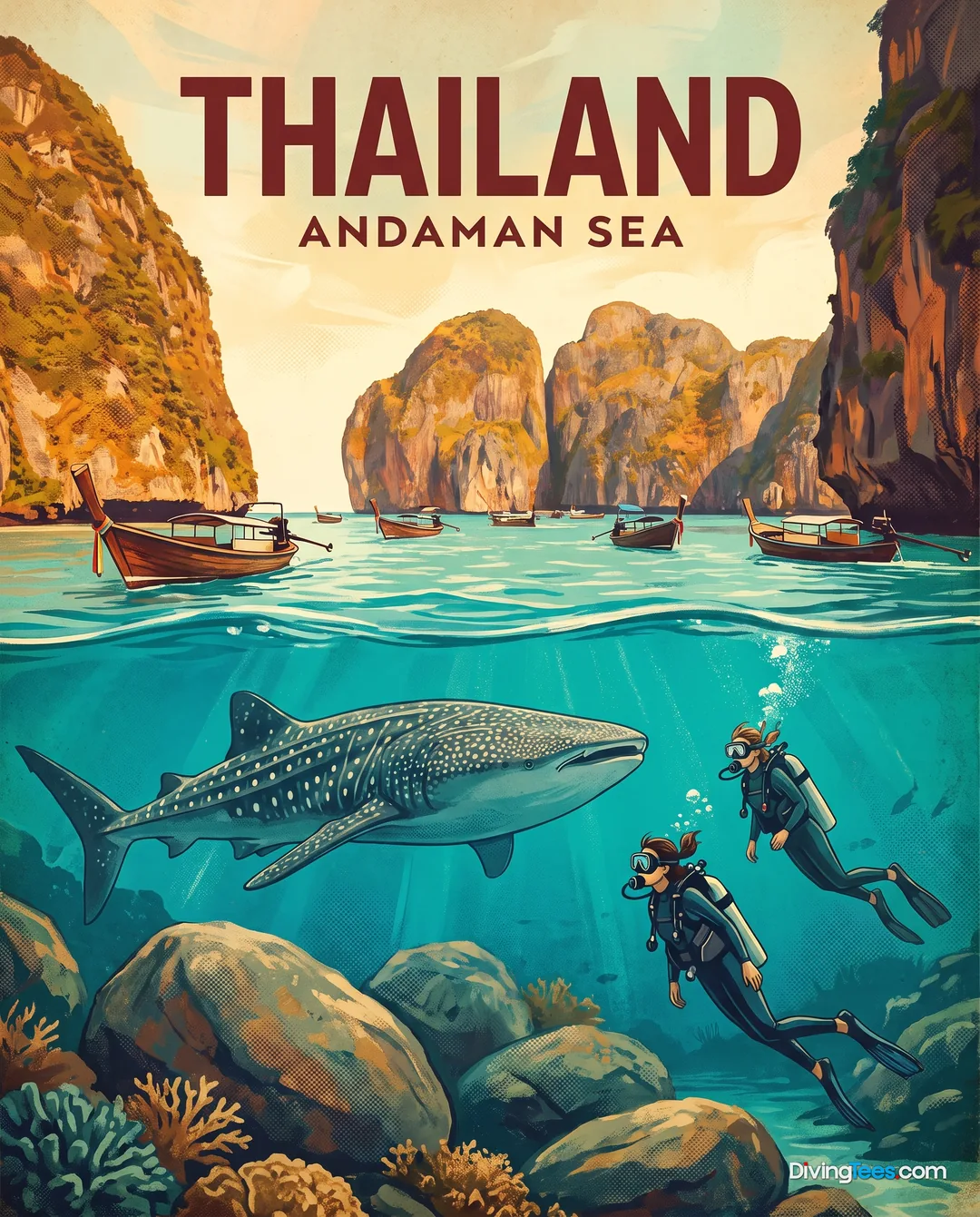
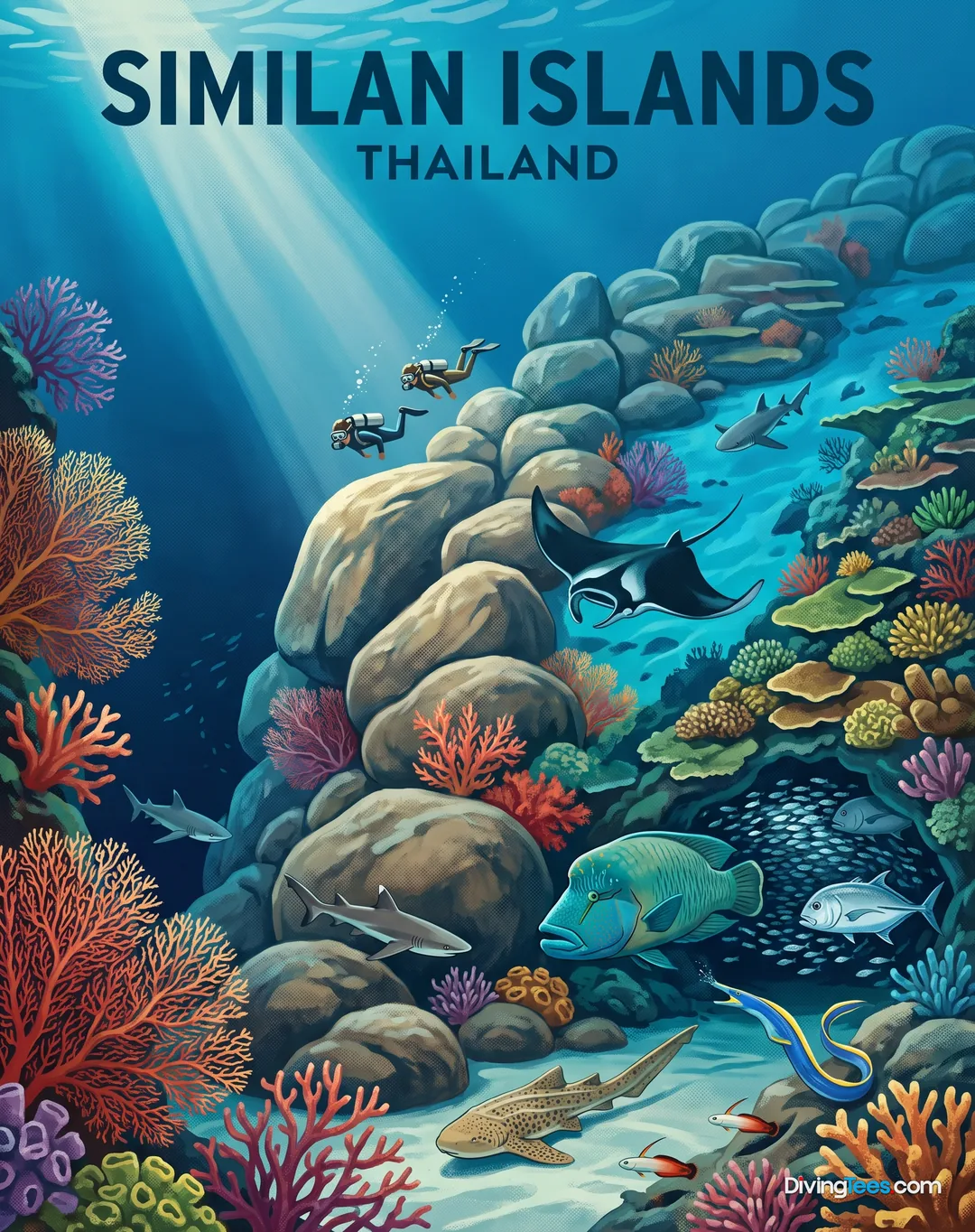
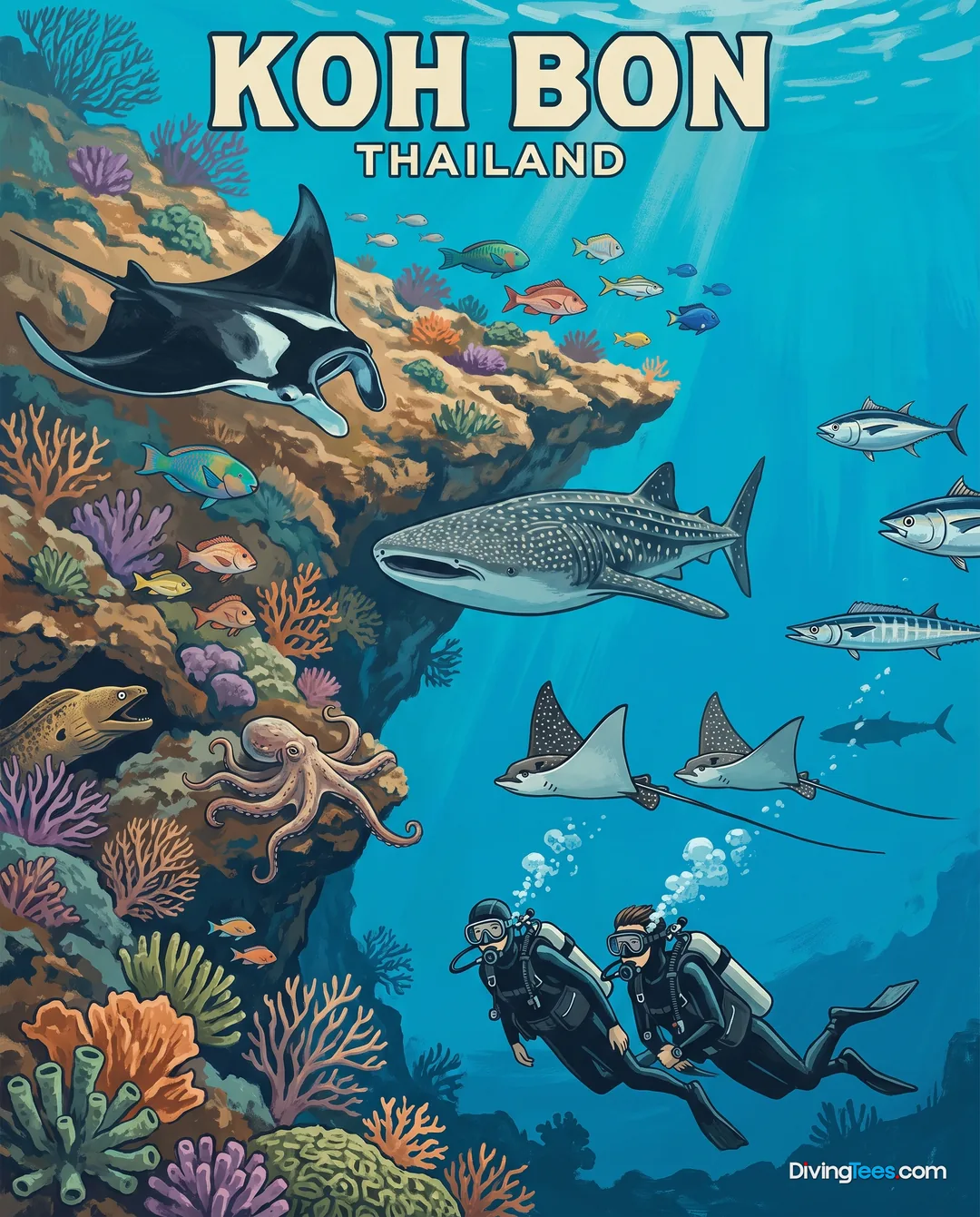
The standard North Andaman trip leaves from Thap Lamu and returns there after 5 days and 4 nights, with 14 dives across the Similan Islands, Koh Bon, Koh Tachai and Richelieu Rock. The Similans move between hard coral and granite boulder formations; Breakfast Bend reaches -35m, while Elephant Head Rock drops to -60m through arches, tunnels and caverns where reef sharks may pass. Christmas Point reaches -40m across granite boulders and archways, and West of Eden reaches -40m through soft-coral and gorgonian-lined canyons. Koh Bon is the manta site of the route, with a cleaning station on its walls. Koh Tachai and Koh Tachai Pinnacle both reach -40m, their submerged pinnacles drawing pelagic life. Boonsung Wreck is an old tin dredger at -18m, now an artificial reef dense with fish. Other verified sites include Surin Islands to -25m, Anita's Reef to -35m, Deep Six to -50m, Shark Fin Reef to -40m and King Cruiser Wreck to -35m. Richelieu Rock is on the route, but no depth is stated here.
Similan Islands →
Max. depth · 40 m
Koh Bon →
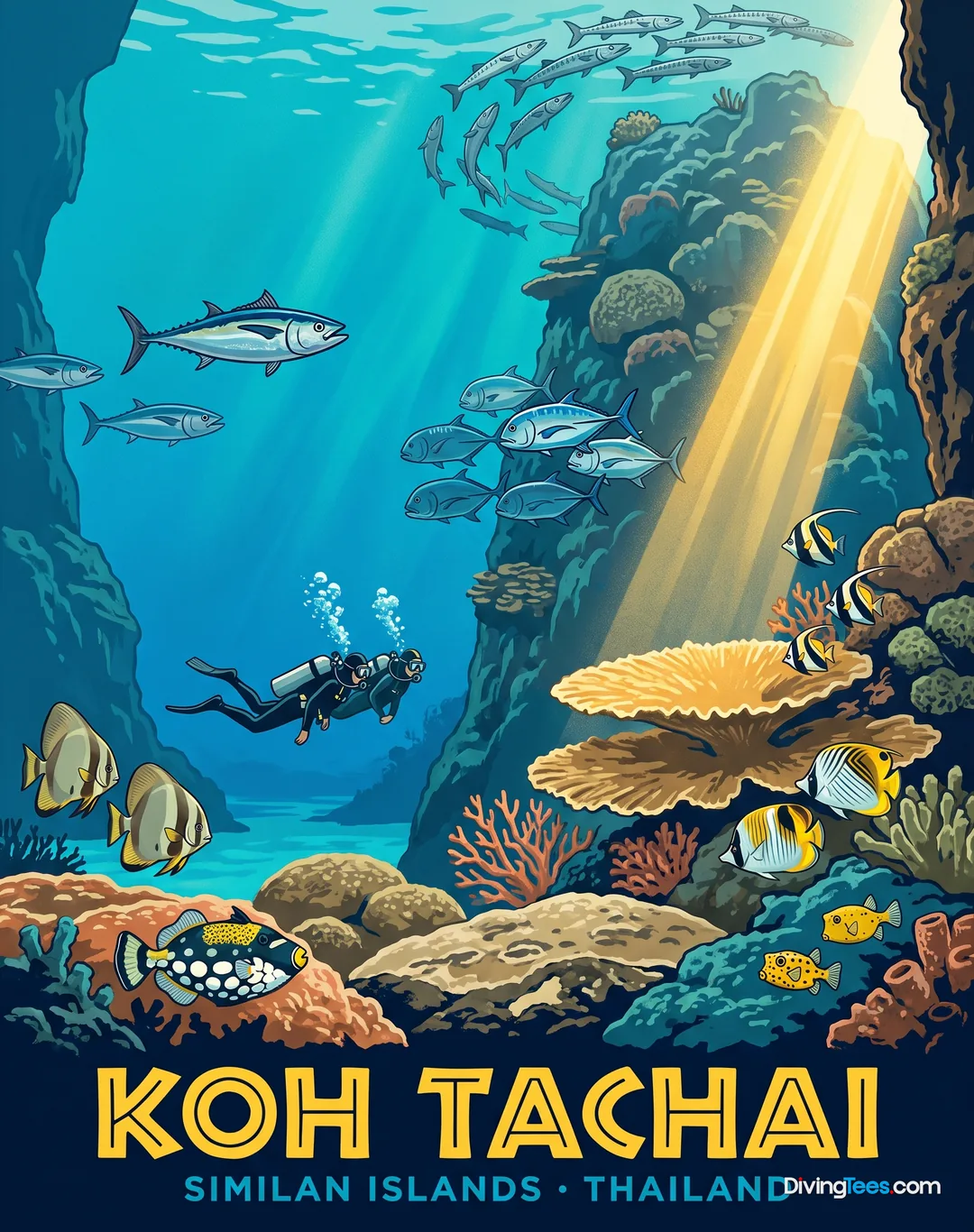
Koh Tachai →
Max. depth · 40 m
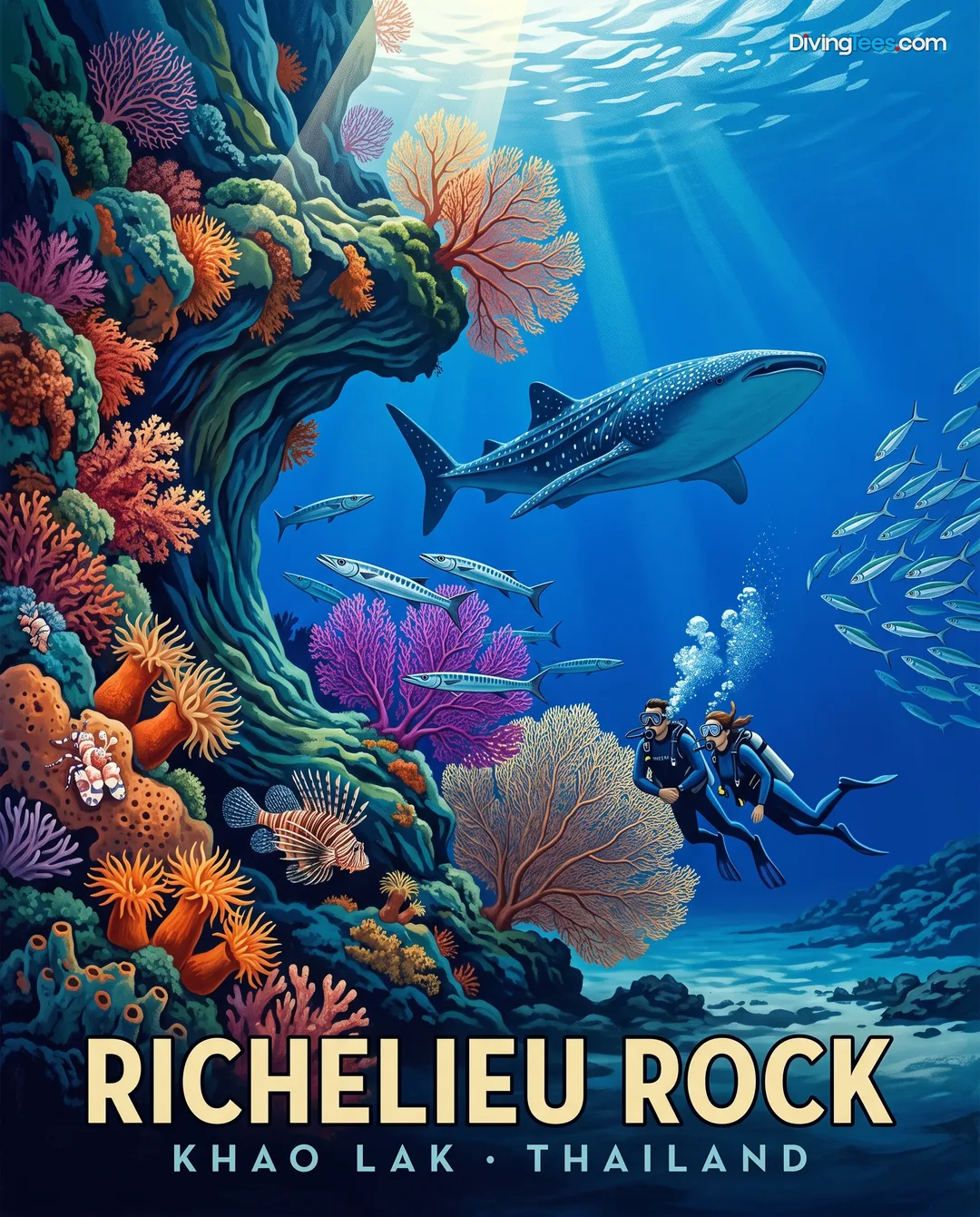
Richelieu Rock →
Max. depth · 35 m
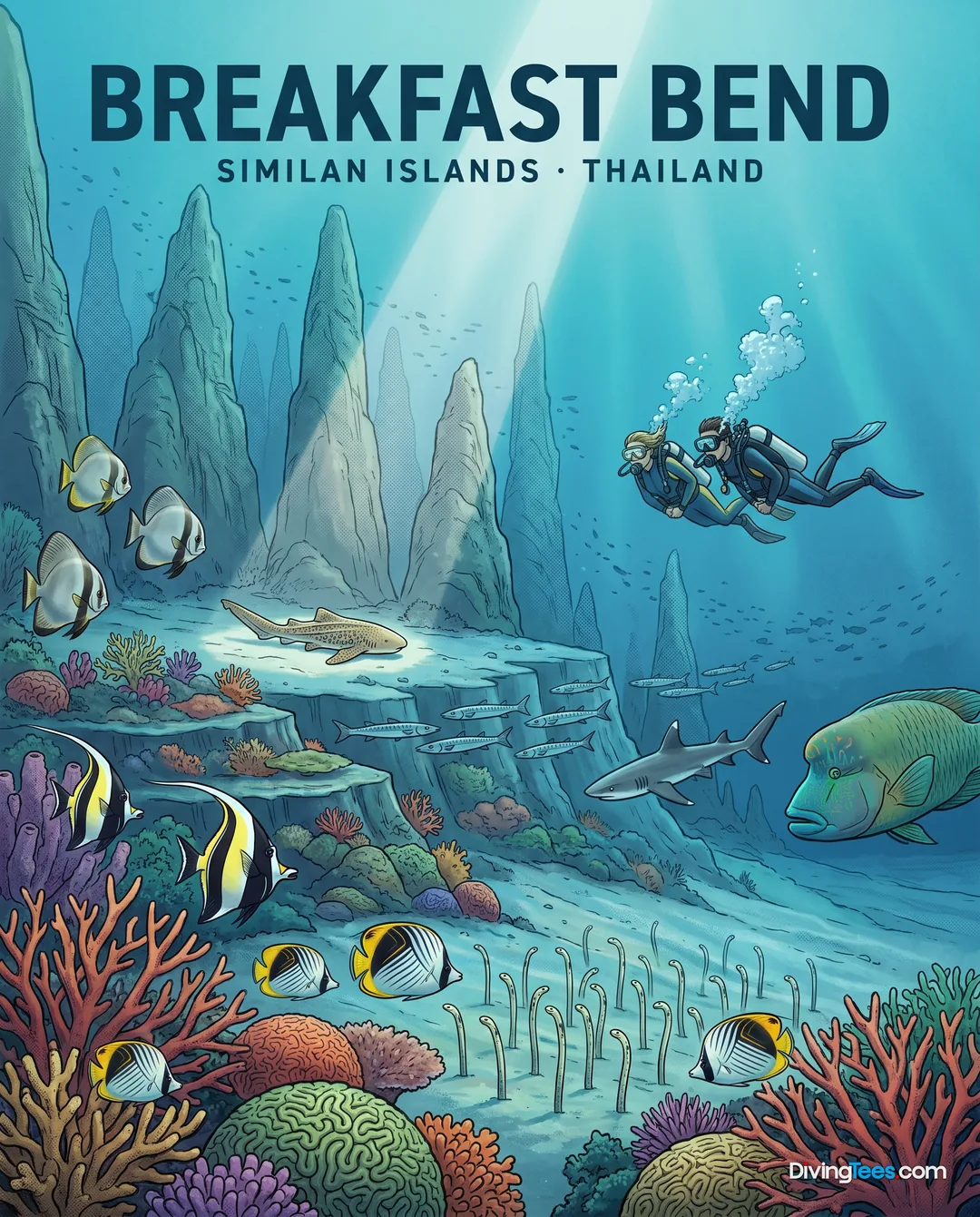
Breakfast Bend →
Max. depth · 35 m
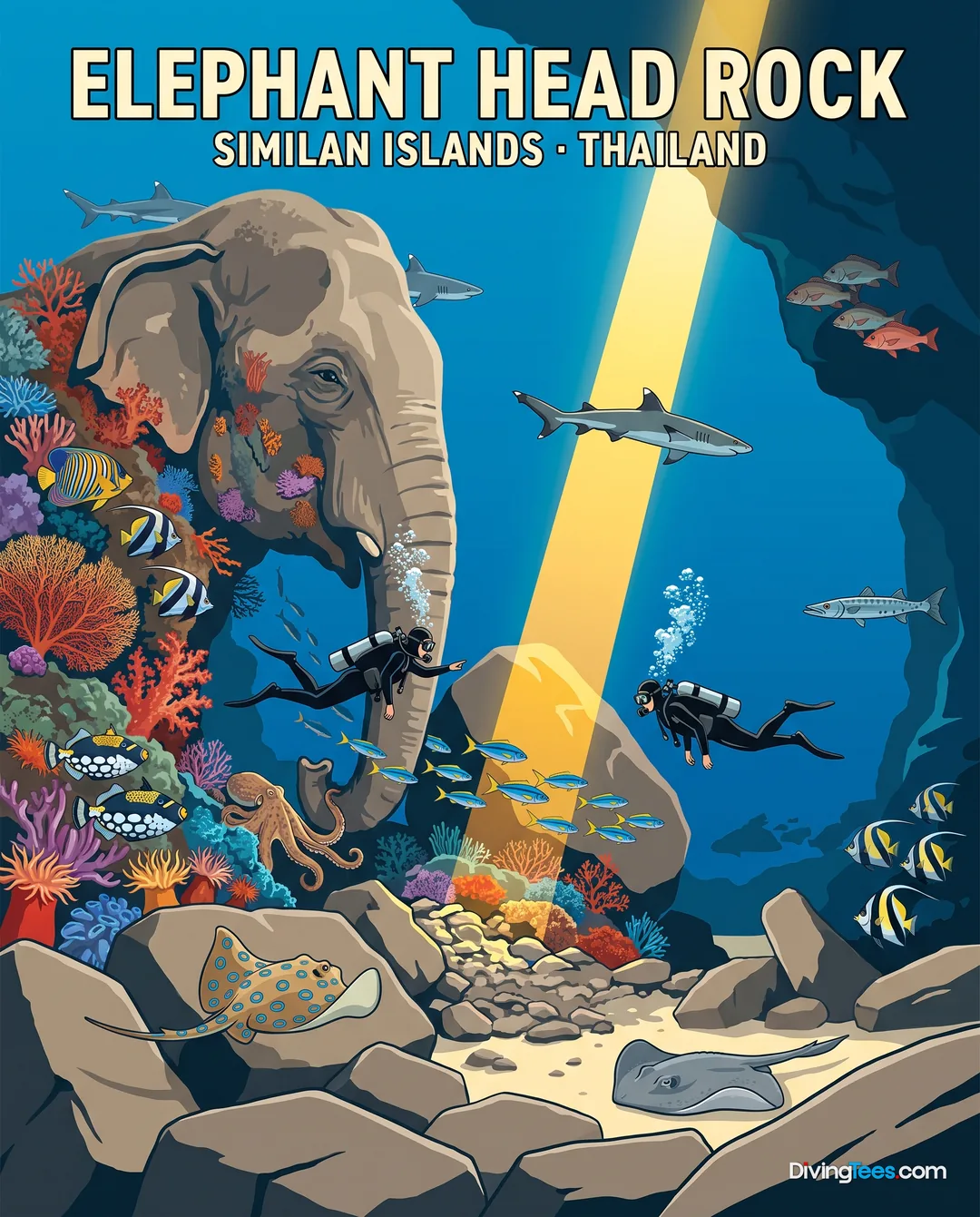
Elephant Head Rock →
Max. depth · 60 m
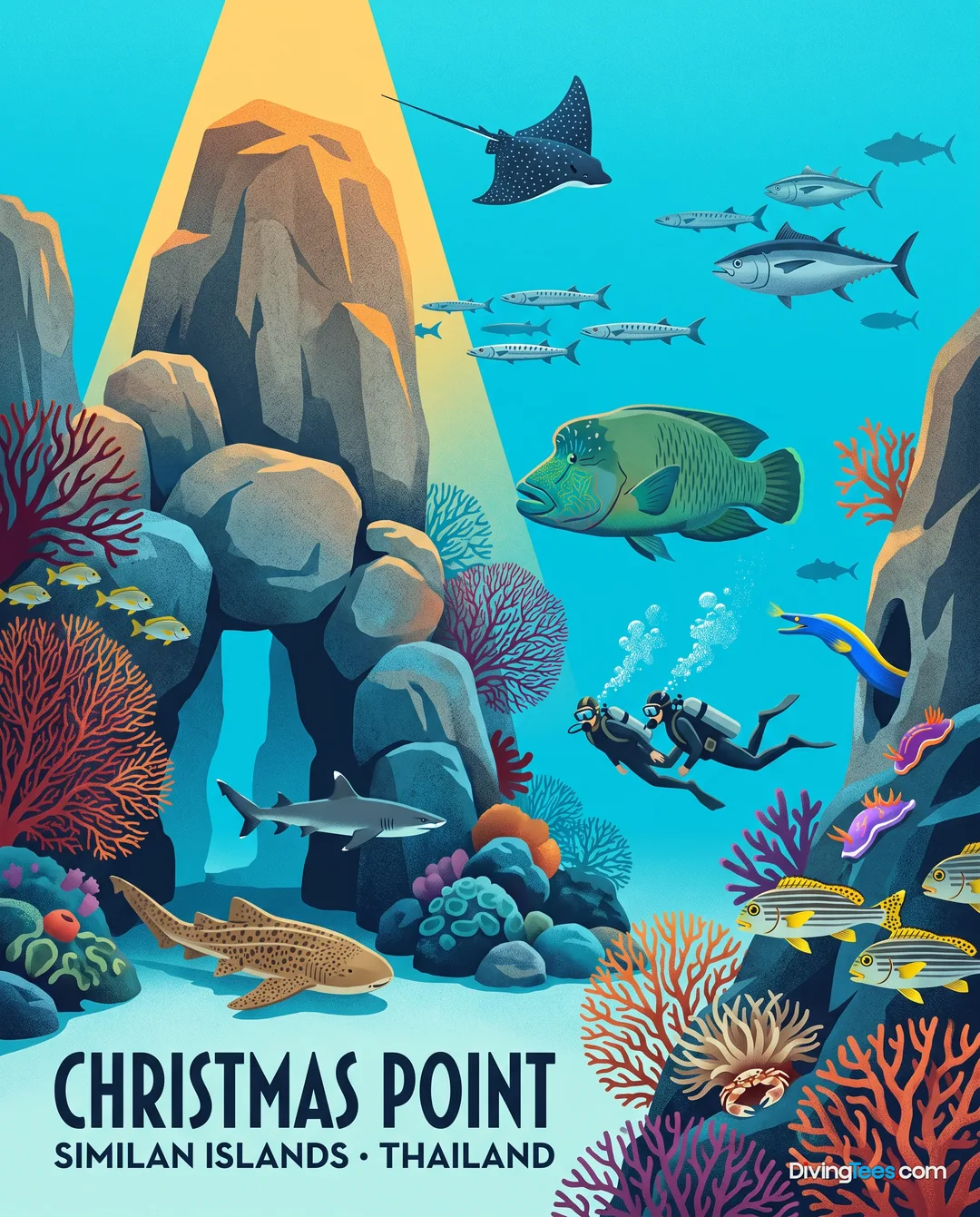
Christmas Point →
Max. depth · 40 m
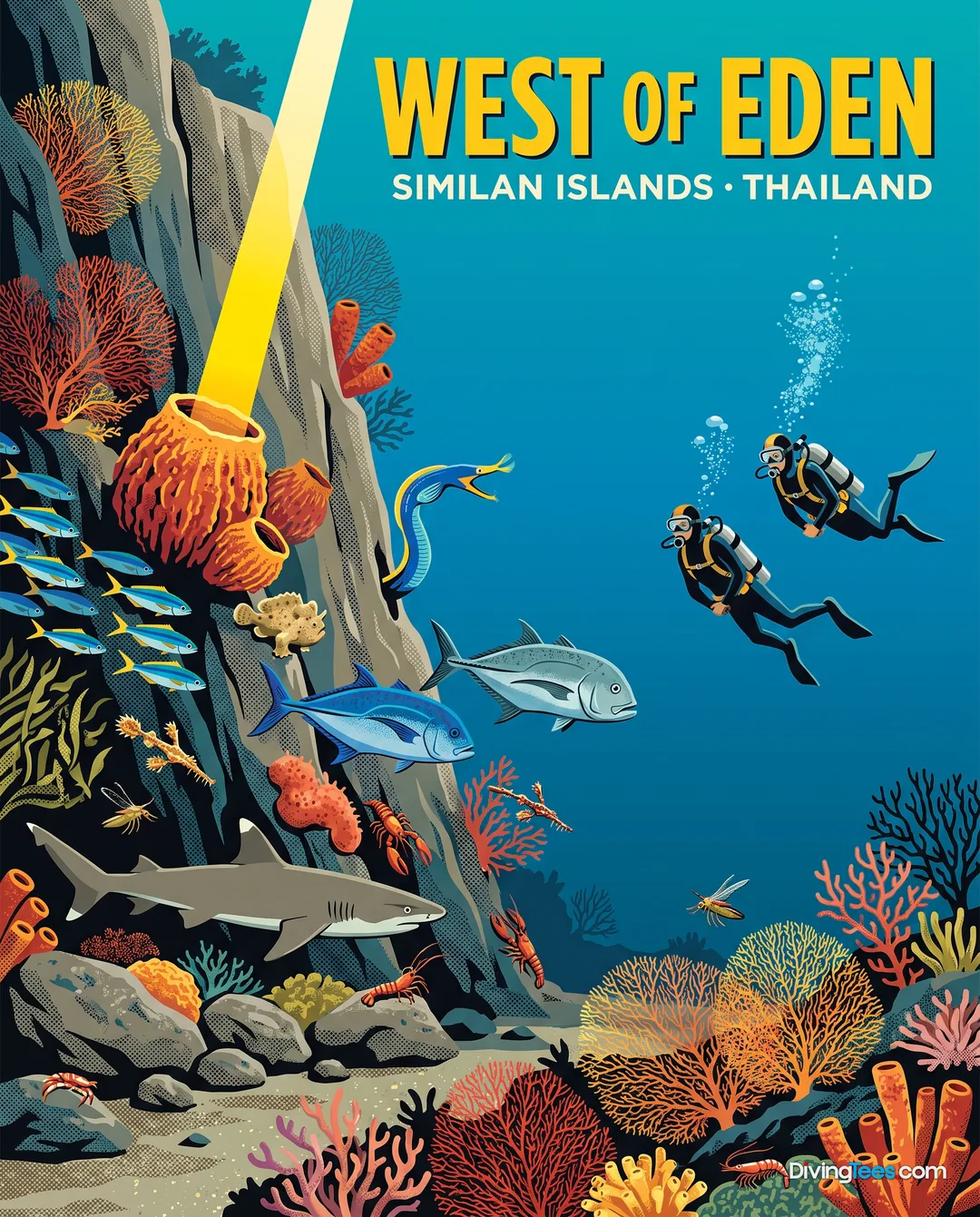
West of Eden →
Max. depth · 40 m
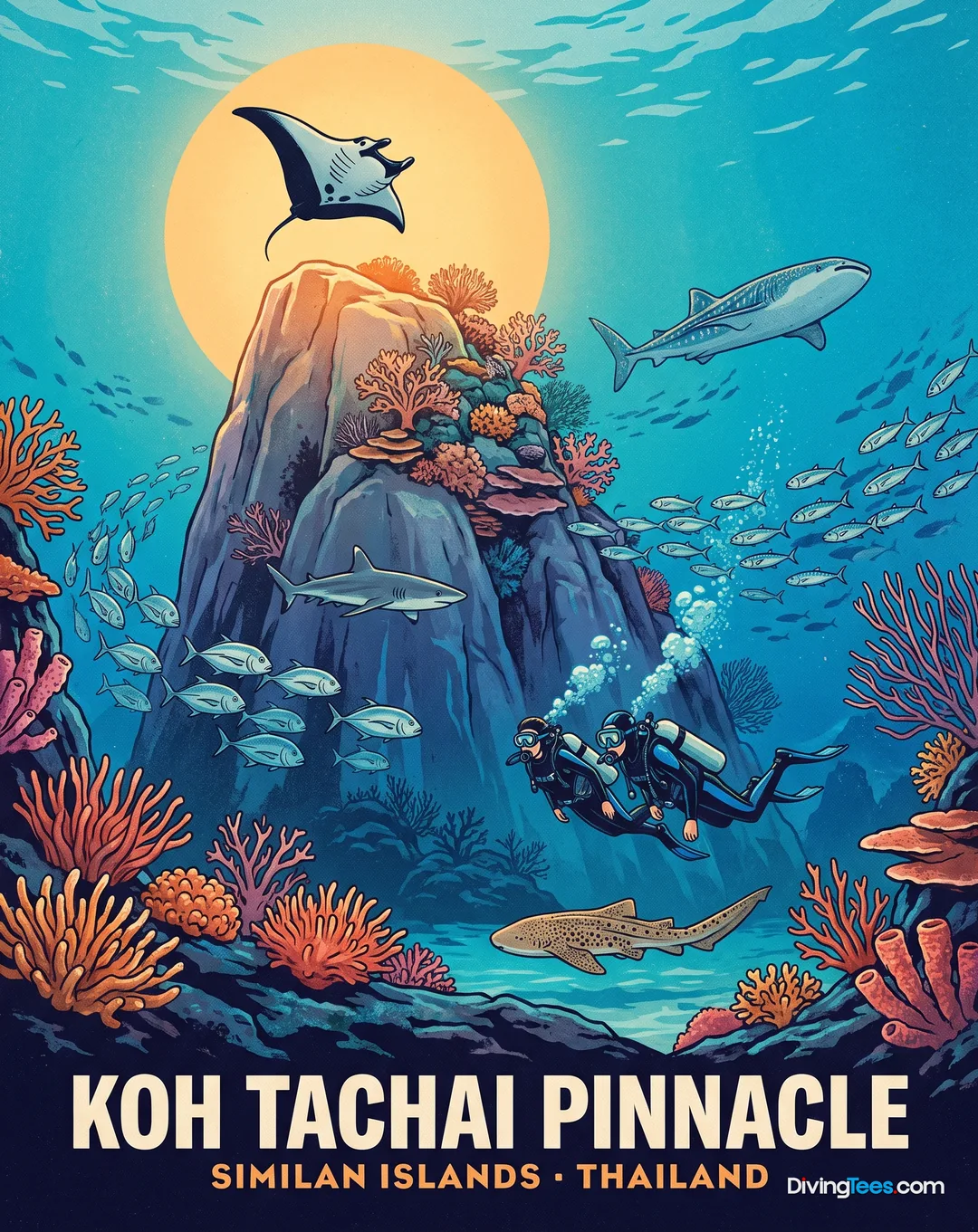
Koh Tachai Pinnacle →
Max. depth · 40 m
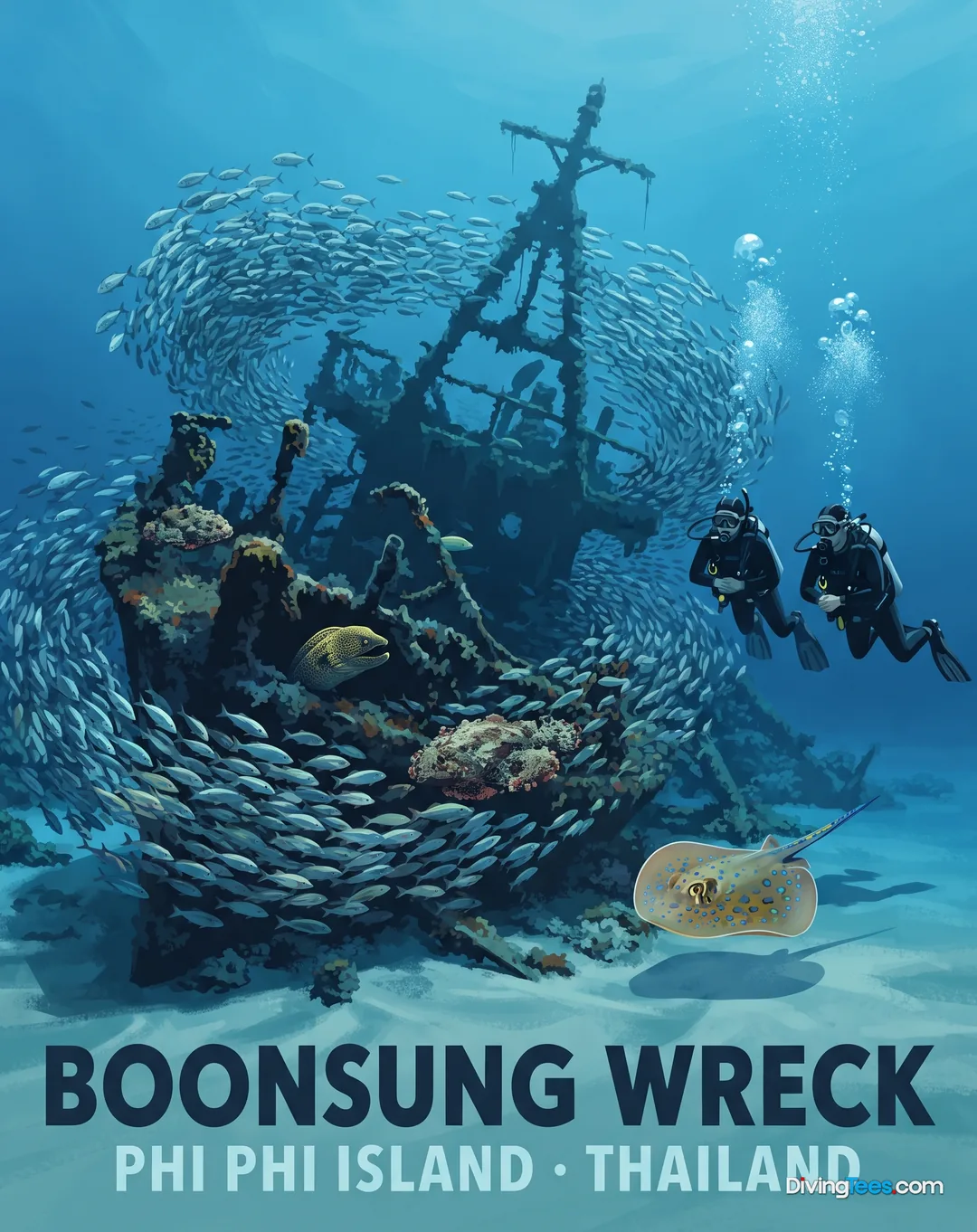
Boonsung Wreck →
Max. depth · 18 m
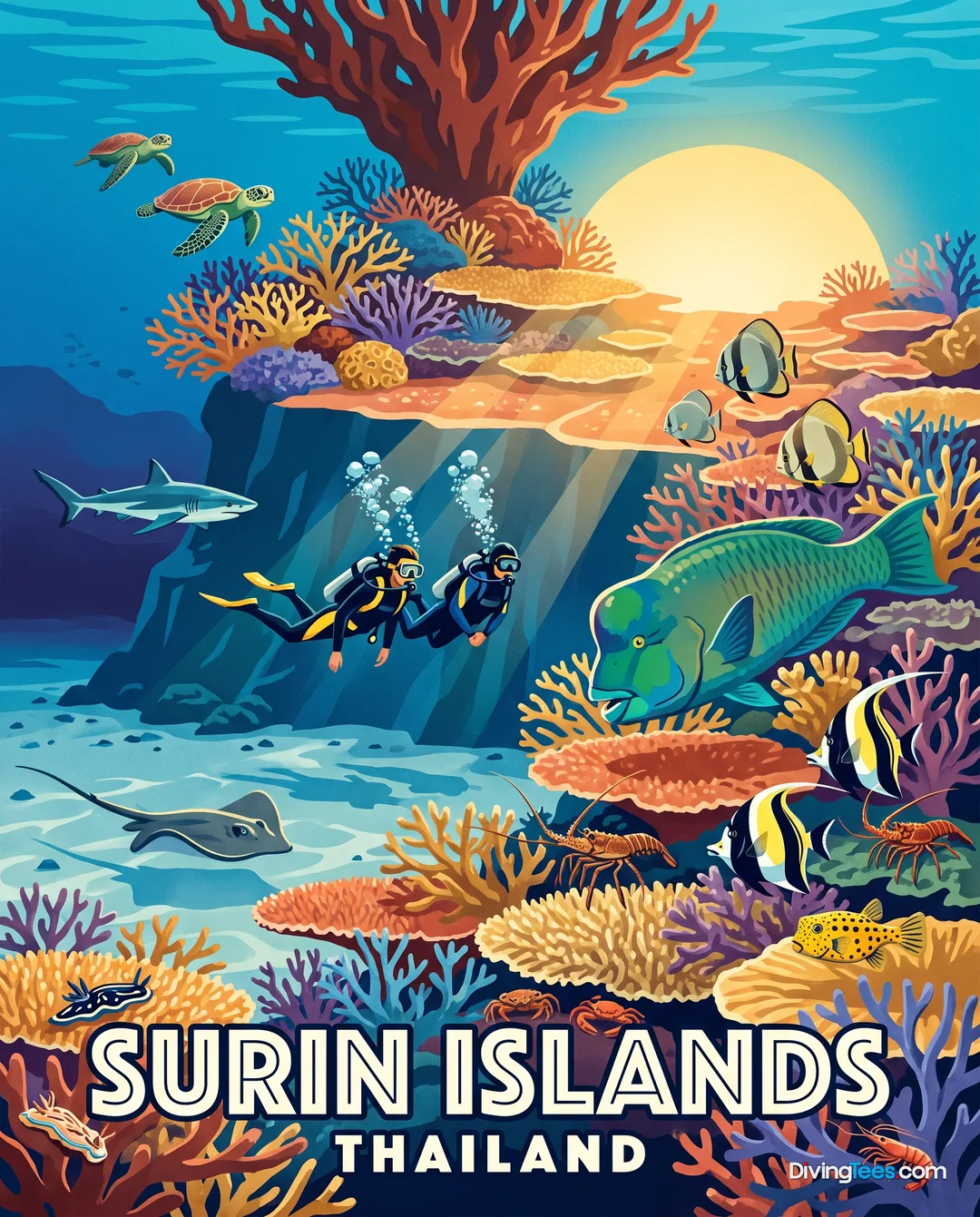
Surin Islands →
Max. depth · 25 m
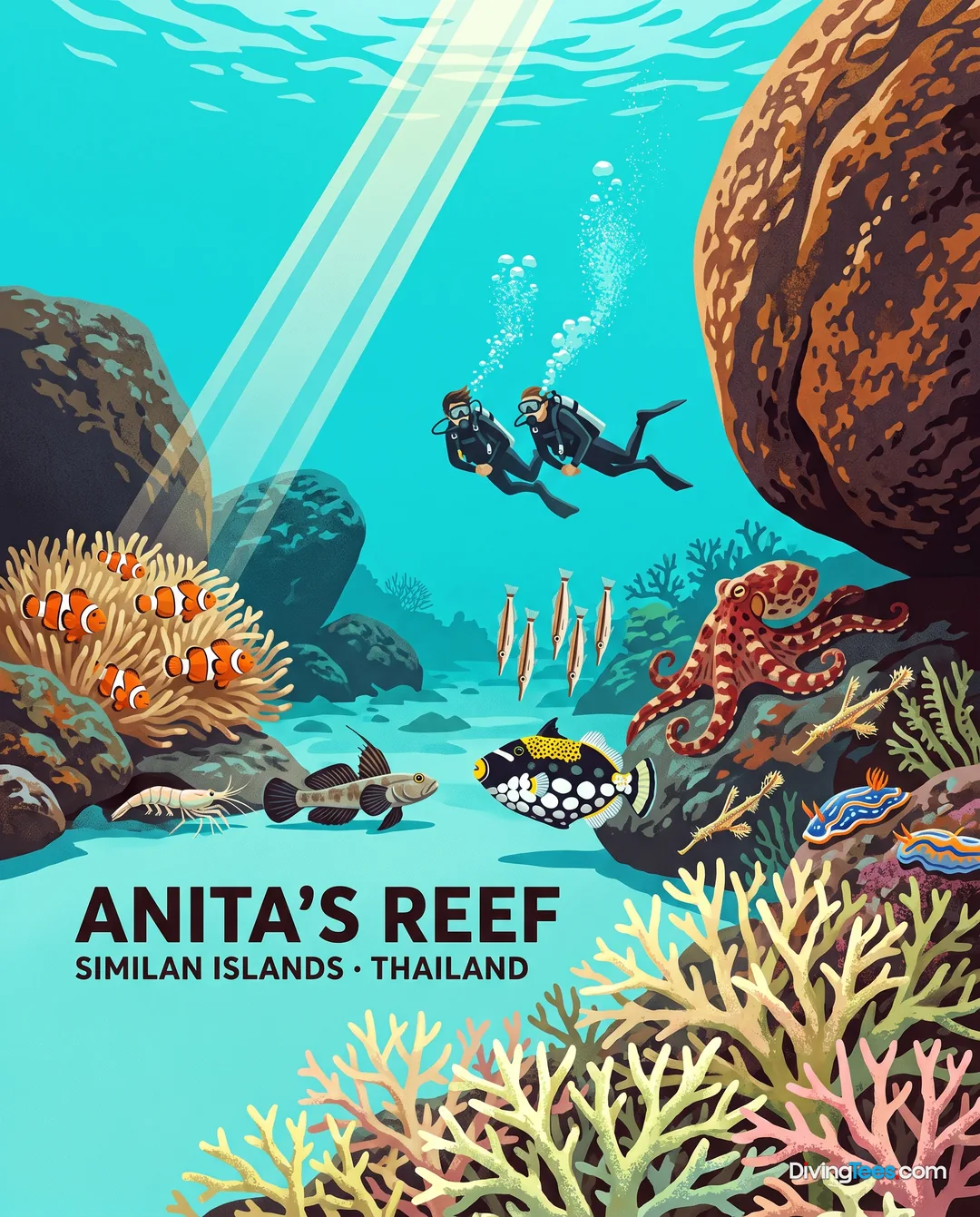
Anita's Reef →
Max. depth · 35 m
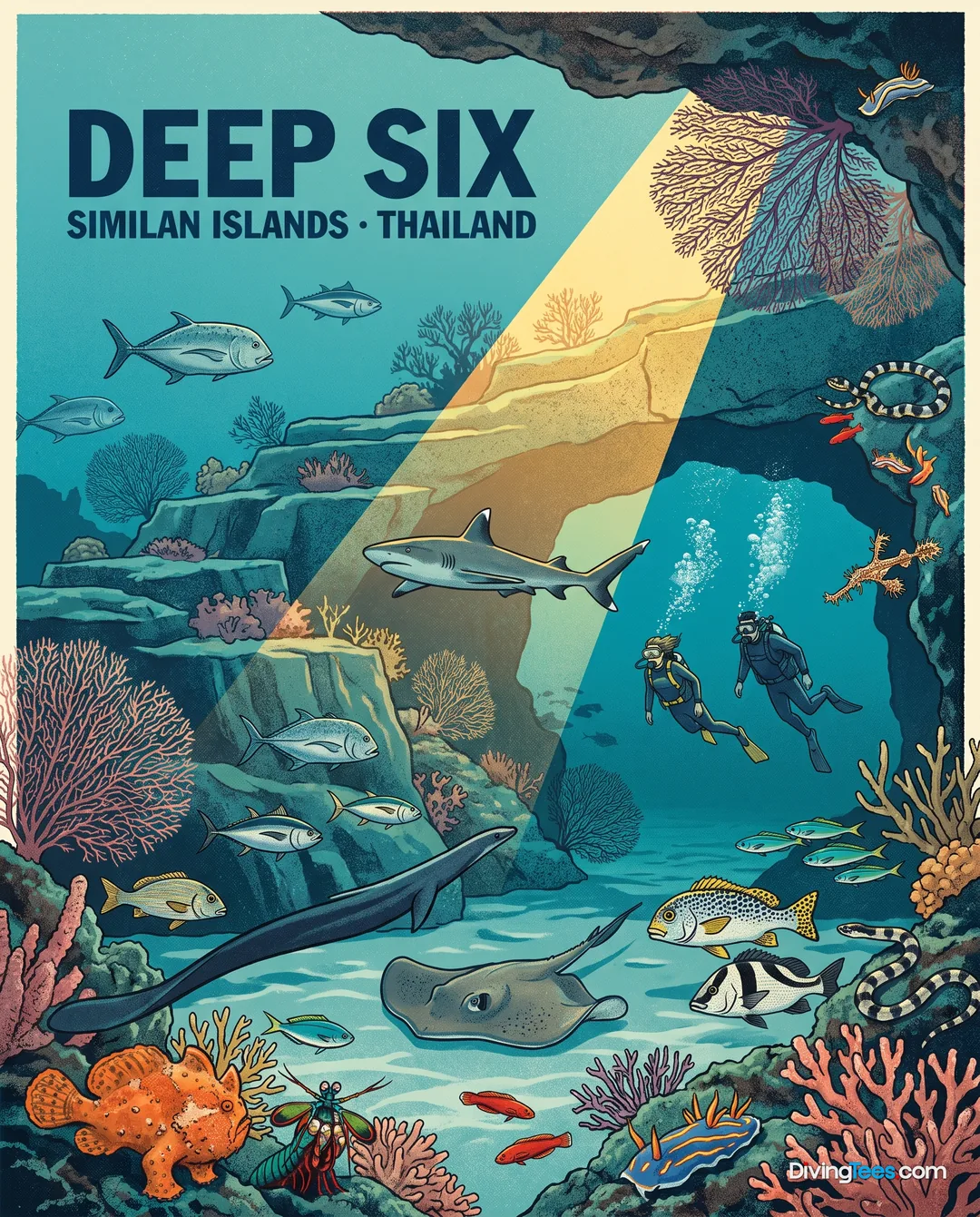
Deep Six →
Max. depth · 50 m
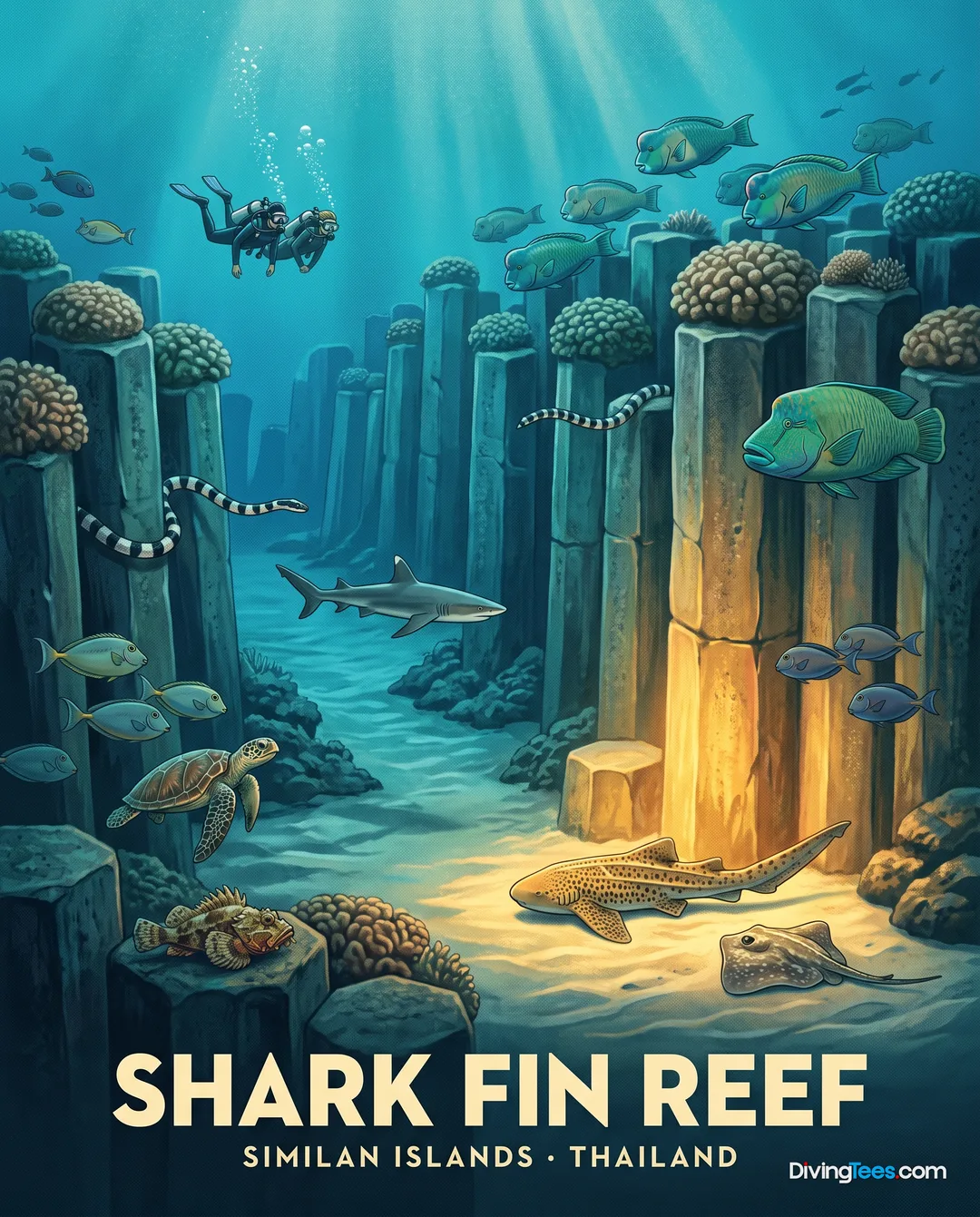
Shark Fin Reef →
Max. depth · 40 m
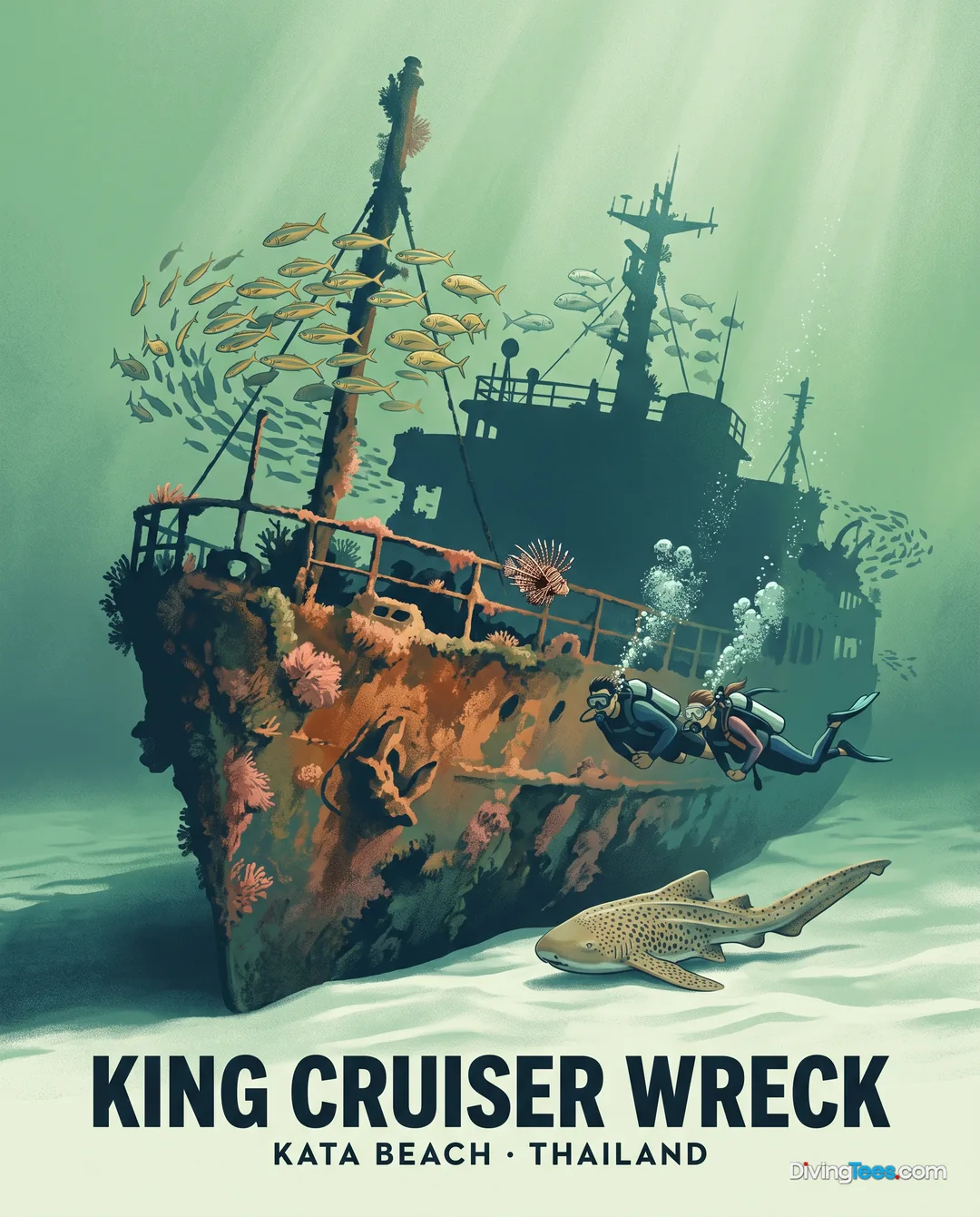
King Cruiser Wreck →
Max. depth · 35 m
What you’ll meet underwater
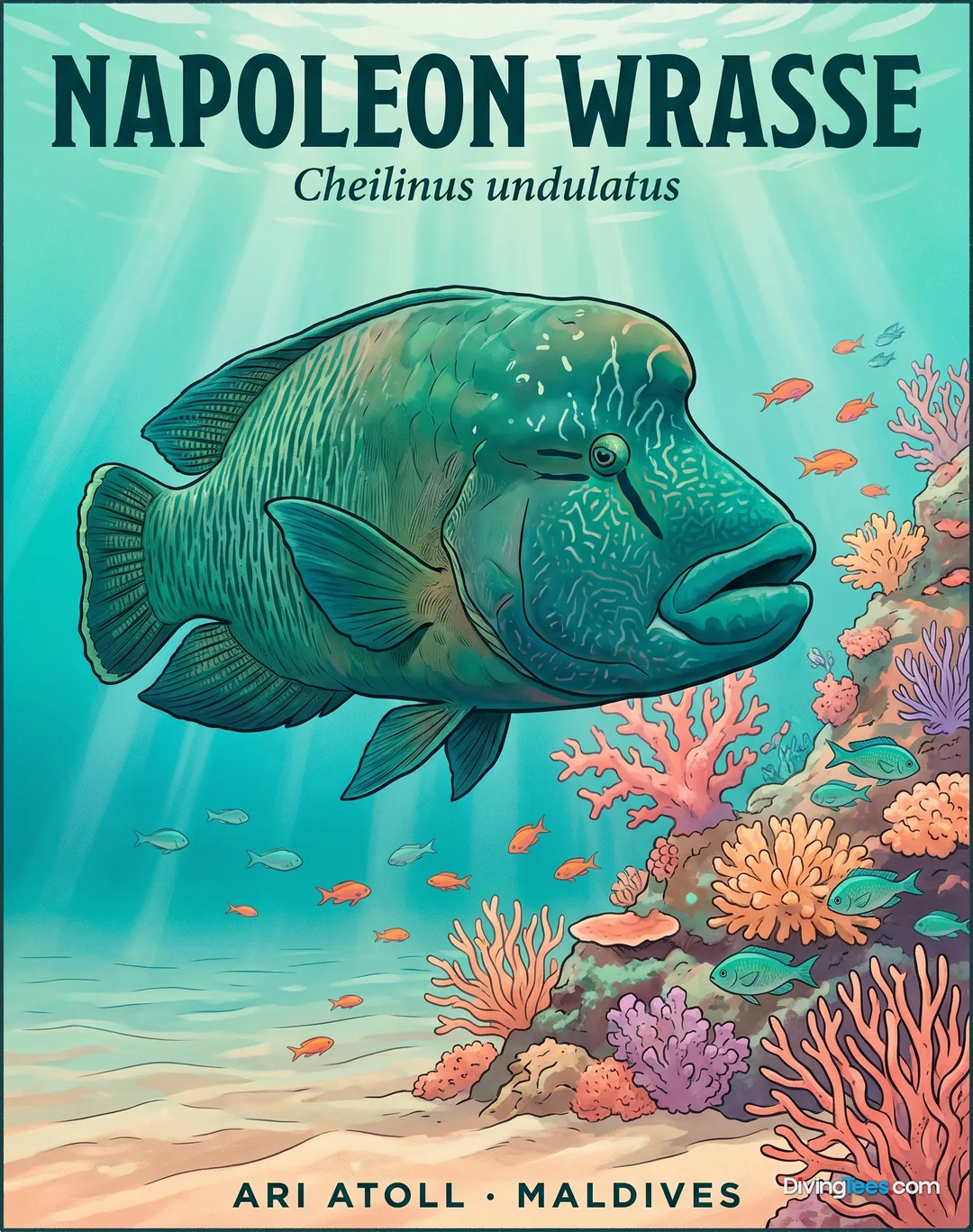
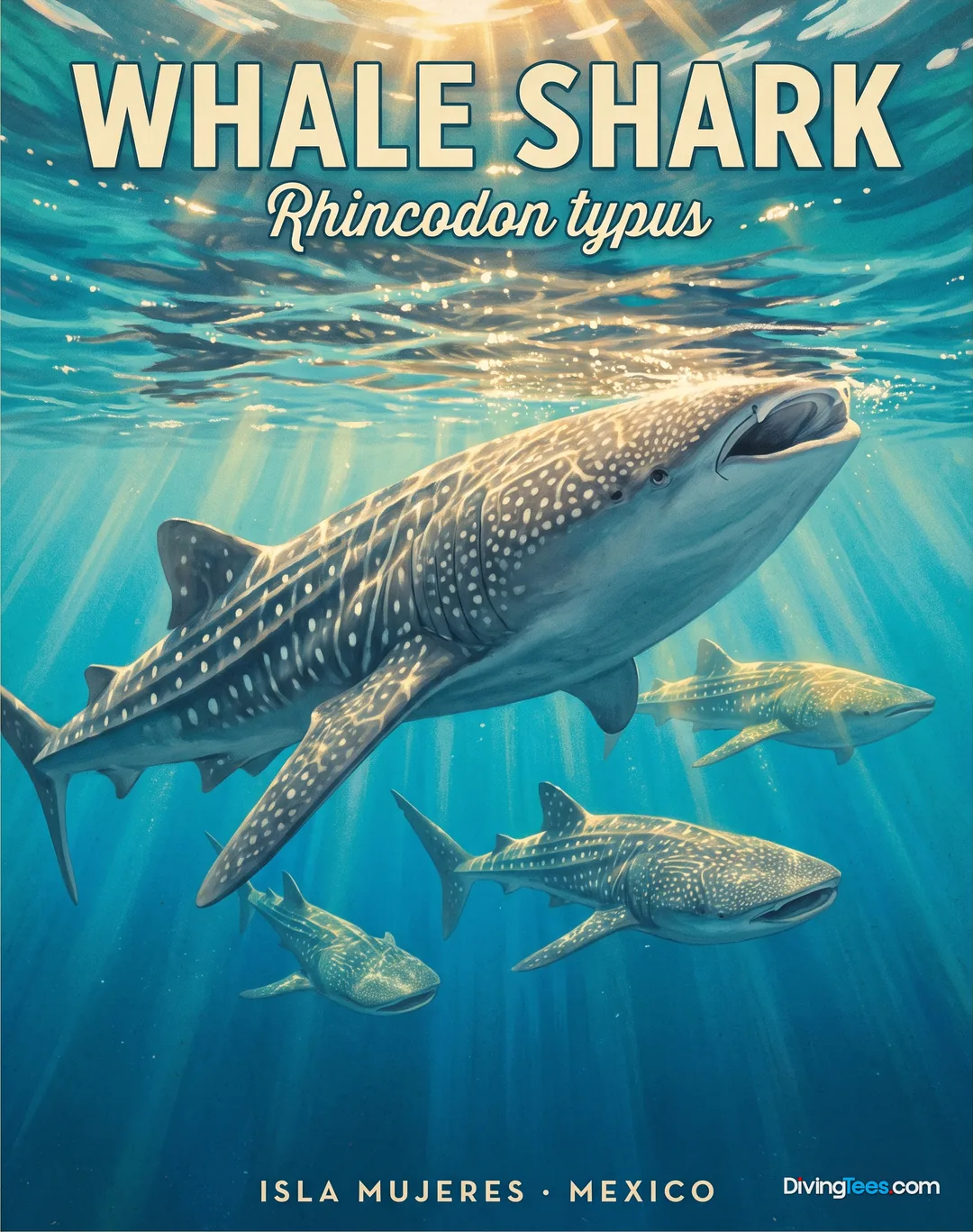
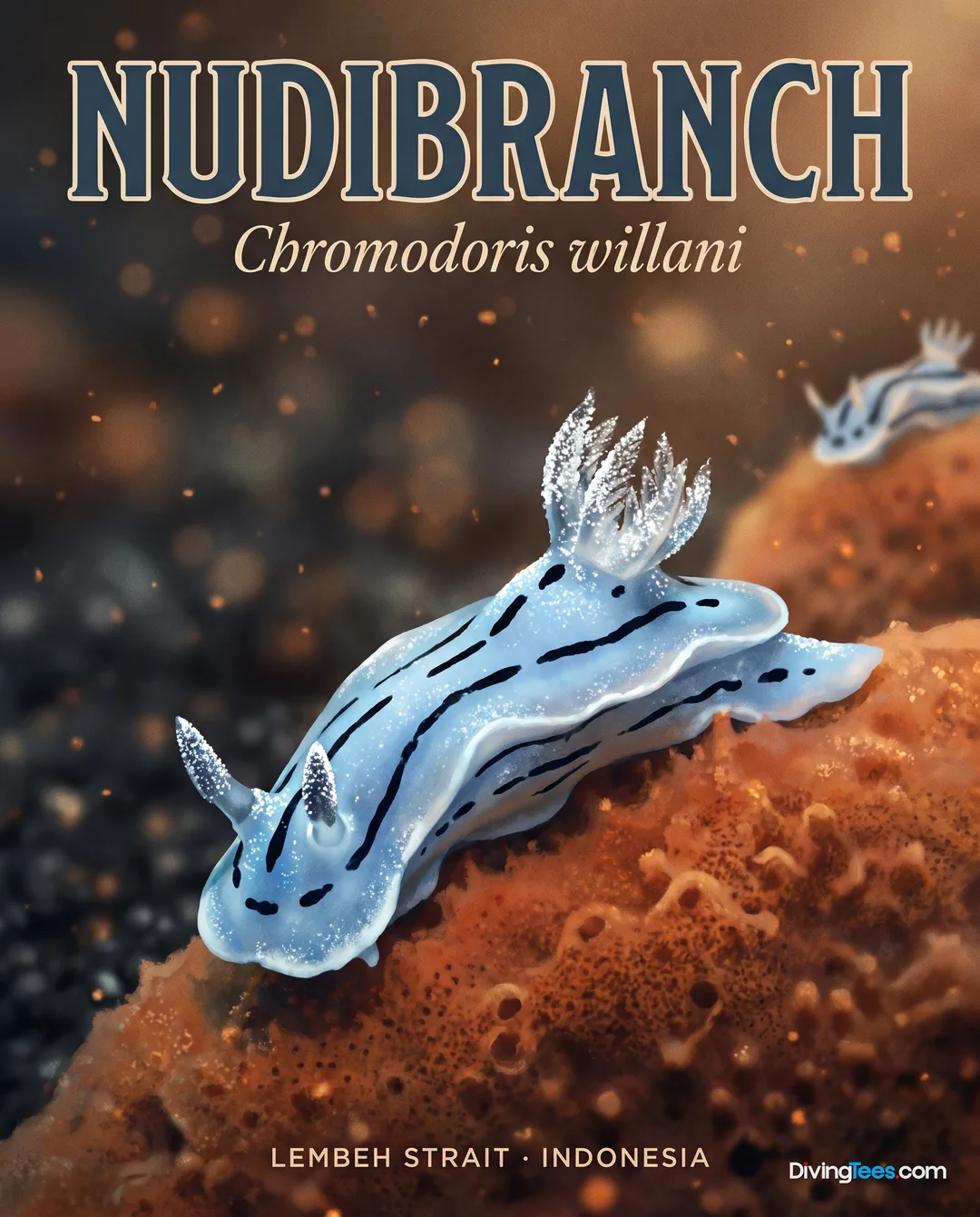
The recurring spectacle is large fish moving through open water and small life holding the reef together. Reef sharks and whitetip reef sharks are recorded across 10 sites, barracuda and leopard sharks across 9, tuna across 9, Napoleon wrasse across 8, turtles across 8 and groupers across 7. Whale sharks are recorded at 7 sites and manta rays at 6, with Koh Bon's cleaning station giving mantas a specific reason to spend time there rather than merely pass through. Currents around pinnacles such as Koh Tachai Pinnacle can bring pelagic life across the reef. The route also rewards looking down after the big animals leave: nudibranchs, fusiliers and morays recur across many sites. Some sightings are tied to one particular dive. The bamboo shark and eel are recorded only at King Cruiser Wreck; garden eels and butterflyfish only at Breakfast Bend; and stonefish and porcupinefish only at Boonsung Wreck. Christmas Point is the sole recorded site for anemones and sharks in the one-site list.

Who puts you in the water
English-, French- and Korean-speaking instructors and divemasters look after the diving, with experience across different levels and abilities. The boat is identified as a PADI 5 Star operation, and an Advanced Open Water course is part of its programme information. Private guiding is available as an optional extra. Group ratios, minimum logged dives, instructor numbers and the exact briefing system are not given, so those should not be assumed from the boat's general promise to cater for all levels. The safety equipment is more clearly defined: oxygen, first-aid kits, life jackets, lifeboats, fire alarms and extinguishers, emergency flares, radar, sonar, GPS and VHF/DSC/SSB radio are carried. A trained first-aid crew is listed. That gives the trip a solid safety framework, while the practical quality of each dive group will depend on the final briefing and guide allocation onboard.
The dive deck and the gear
The dive deck is built for repeated entries rather than one ceremonial splash. Lucky Marine has a shaded dive area, a platform, diver tenders, tank and equipment storage, air compressors, a filling station, rinse tanks and a separate rinse area for cameras. DIN adapters are available. Nitrox is available, and a nitrox certification can be arranged as an optional extra; the blending method is not stated. The boat supports technical diving and sidemount, which is useful for divers bringing a more specialised configuration, although the exact tank volumes and materials are not given. Rental equipment is available as an optional extra, but brands and the availability of specific items are not listed. Stations for charging suit camera and dive equipment, and hot-water showers, are available onboard. Divers return to a working platform and tender operation rather than having to climb a beach or wait for the main hull to manoeuvre directly over the site.
Between dives
Between dives, Lucky Marine gives passengers several different places to disappear for an hour. The shaded dive area is the practical refuge after a long ascent, while the terrace and observation deck suit anyone who wants sun, wind and a view of the islands. The air-conditioned salon is the place for a cooler pause, a film, music or a quiet look at photographs. Camera users have a separate rinse area, so a housing does not have to share the same bath as masks and fins. Non-divers can join snorkelling excursions, and a guide plus snorkelling equipment are included. Massage is also available onboard. The boat's strength between dives is not a long list of diversions; it is having a choice between shade, air conditioning, open deck and the sea itself without needing to go ashore.
A day on board
A scheduled day starts before most people would choose to wake on holiday. The first briefing leads into the 7:00 dive, followed by breakfast at 10:30 after the second dive, then another descent at 14:00 or 14:30. A fourth dive may follow at 16:00, and the night dive is scheduled at 18:30 on the first day. Other days use the same compact sequence: dive, eat, rest, brief, dive again, with the boat moving between sites while passengers dry out, refill cylinders and compare what they found. The recorded route builds from the Similan Islands to Tachai, Richelieu Rock, Koh Bon and Boonsung Wreck. Food punctuates the cycle rather than interrupting it—pre-dive food, breakfast, lunch, snacks and dinner after the night dive. The rhythm is demanding in the right way: the day belongs to the water, and the spaces between dives exist to recover for the next one.
What you eat aboard
Food is one of Lucky Marine's clearest strengths, with a food score of 9.3. Meals are served five times through the diving day: something before the first dive, breakfast after it, lunch after the second dive, a snack after the third, and dinner after the night dive. The galley combines Thai and Western cooking, with buffet service, à-la-carte choices, local dishes, vegetarian options and vegan options. Fresh fruit, cookies and snacks are available between meals, while tea, coffee, drinking water and other non-alcoholic drinks are included. A barbecue may also appear during the trip. That timing matters more than the label “gourmet”: divers do not have to wait until evening for substantial food, and the table keeps pace with the dive schedule. The meals become the reset point between one descent and the next.
Nights at sea
The cabin choice runs from Budget to Deluxe to Master, with the cabins placed on the main deck and fitted with standard windows. Master and Deluxe cabins have en-suite bathrooms, individually controlled air conditioning and sea views; the boat also offers private bathrooms and family cabin arrangements. The difference between categories matters most at night, when a private room and personal climate control are worth more than decoration after several dives. The larger salon is positioned to give panoramic sea views, so the cabin does not have to carry the whole social life of the boat. Budget cabins suit divers who spend their money on the itinerary and use the room mainly to sleep. Master and Deluxe cabins make more sense for anyone who values extra privacy between dives. Internet is available, with both free and paid internet listed among the onboard services.
Master Cabin
Deluxe Cabin
Budget Cabin
What to know before boarding
Lucky Marine departs from Thap Lamu Pier and returns to Thap Lamu Pier on the North Andaman itinerary. Airport and hotel transfers are available as optional services and are not included by default. Arrange the pickup point when booking so the transfer can be organised correctly. Arriving in the area the night before is the sensible choice for a morning departure.
Deck plan
- Year built
- 2022
- Year renovated
- 2022
- Length
- 27 m
- Beam
- 6 m
- Maximum number of passengers
- 24
- Number of cabins
- 10
- Number of bathrooms
- 10
- Engines
- Yuchai marine YC6K600 hp × 2 engines
- Cruising speed
- 10 knots
- Website
- luckymarineliveaboard.com ↗
Hello, I'm Marina, DivingDeal.com's AI assistant. I answer in detail about hotels, dive centres and liveaboards.

Thinking about the whole trip and the flights? Talk it over with Edith →
Marina is an AI. Some links are affiliate links: DivingDeal may earn a commission, at no extra cost to you. Bookings are made with the partner.