
Big Blue Diving, Koh Tao
Google 5/5 (5,713 reviews)
3.4 km away as the crow flies
Koh Tao · Thailand · Asia
Max. depth · 25 mExplore Red Rock's vibrant pinnacles and navigate the Nangyuan Cave passage, offering a distinct alternative to Japanese Garden's shallower sections.
For subtitles in English: start the video firstthen click the gearat the top right of the video, select “Subtitles/CC”, then “Auto-translate” and choose “English”.
Red Rock stands as a prominent pinnacle, its peak reaching approximately 4 metres from the surface, dropping down to a maximum depth of 25 metres. Situated just off the eastern side of Koh Nangyuan island, it forms a natural extension to the Japanese Garden area, allowing divers the option of a dedicated exploration or a deeper route away from the more frequented shallow reef. Your descent typically begins as a 'drop-off' from the boat, putting you directly on the main structure, which is a rich tapestry of coral life from the outset.
The topography here is complex, centred around the main rock formation. You'll find extensive coral gardens adorning the pinnacle itself, and as you move deeper, a large fissure opens up around the east and north sides of the rock at about 16 metres. This crevice acts as a natural habitat for smaller, more reclusive species, providing shelter and cleaning stations. The dive profile allows for flexibility, either concentrating on the immediate vicinity of the pinnacle or extending south towards the Japanese Gardens, depending on your air and bottom time.
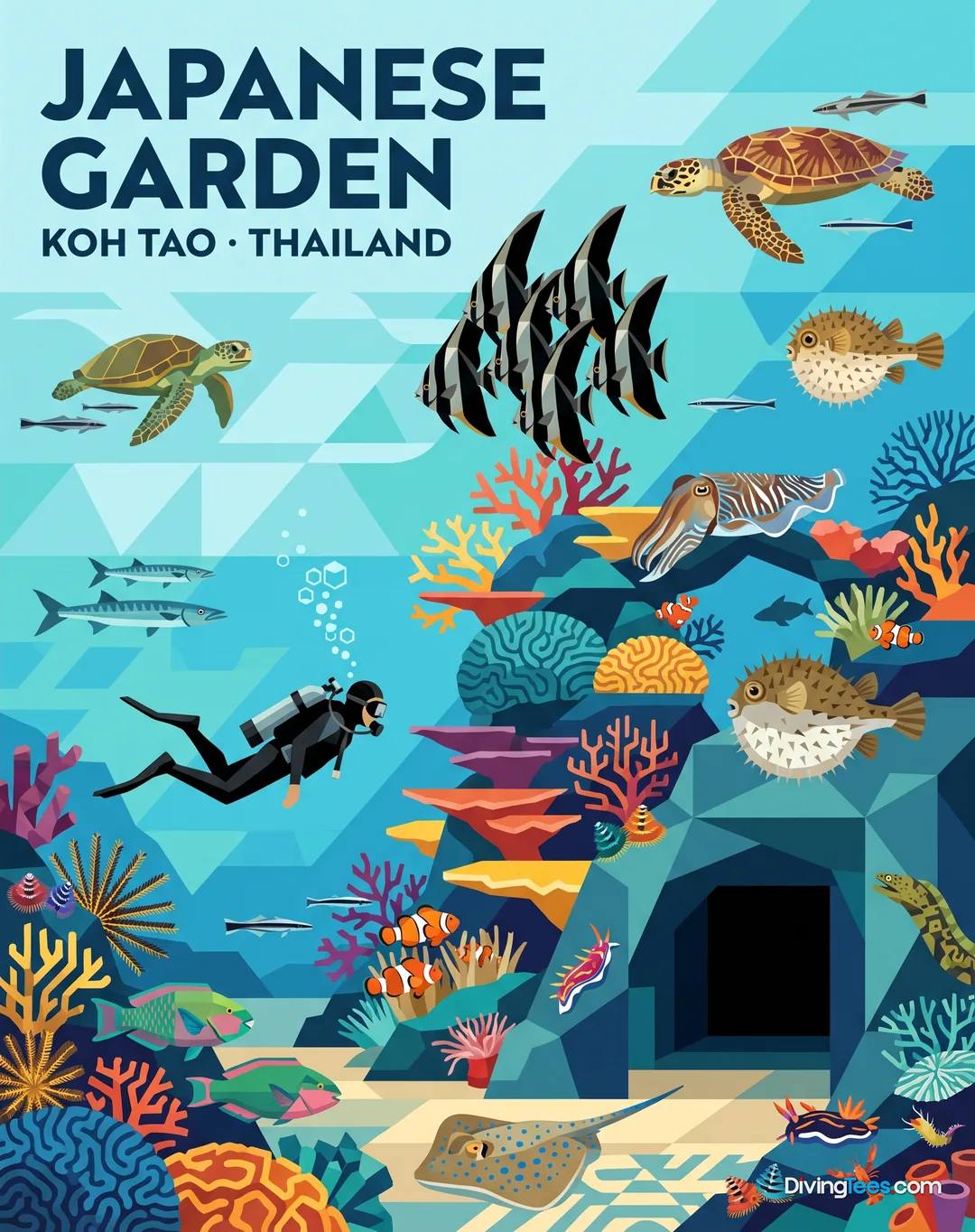
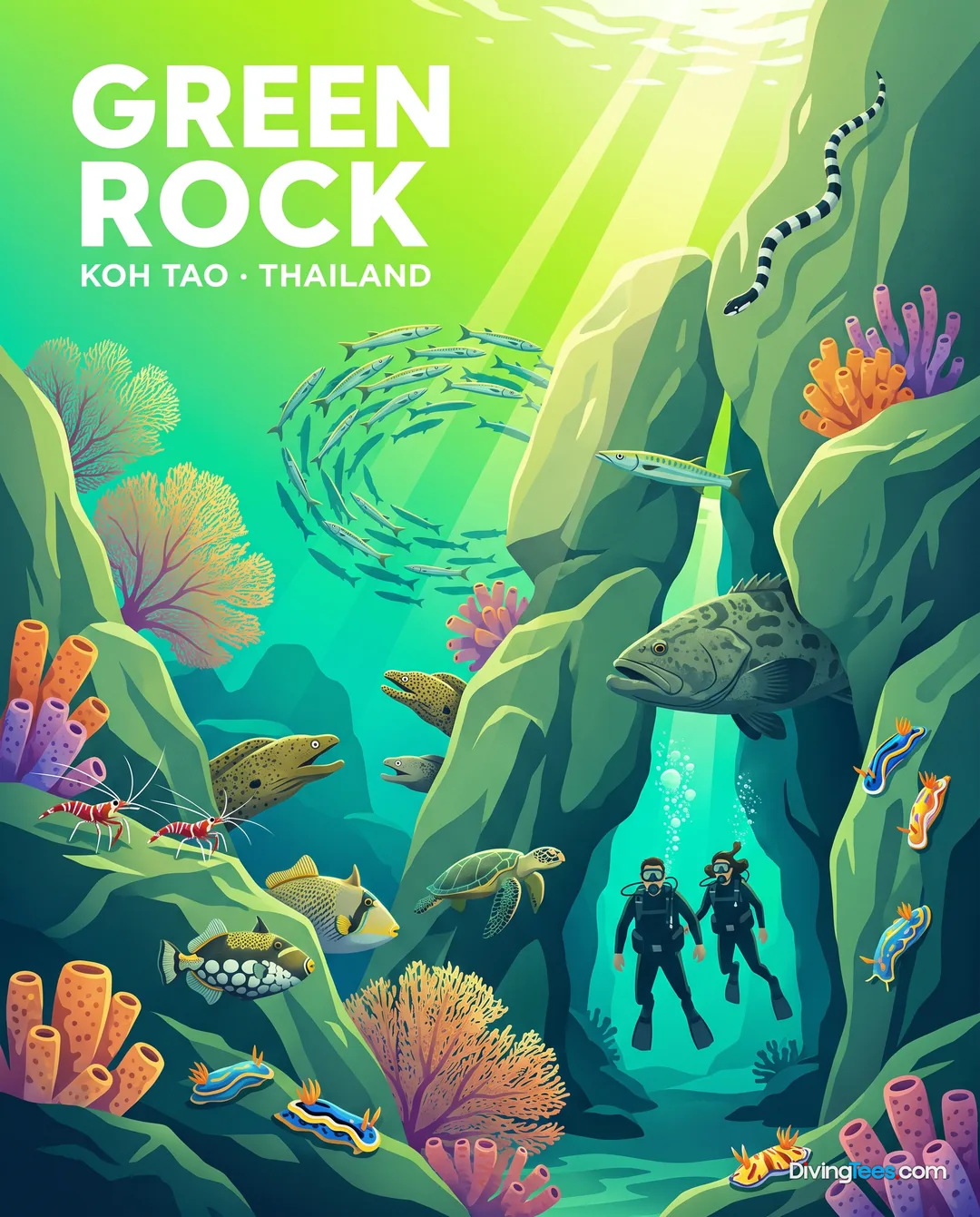
A notable feature of Red Rock is its connection to the Nangyuan Cave, a substantial underwater passage located a short swim to the west of the main pinnacle. This cave offers a unique experience, with light rays sometimes piercing through the water, creating a dynamic visual effect as you navigate through. It's a prime spot for macro life, often revealing numerous nudibranchs, cleaner shrimp, and needlefish tucked within its crevices. The decision to enter the cave depends on your comfort with overhead environments and your dive plan.
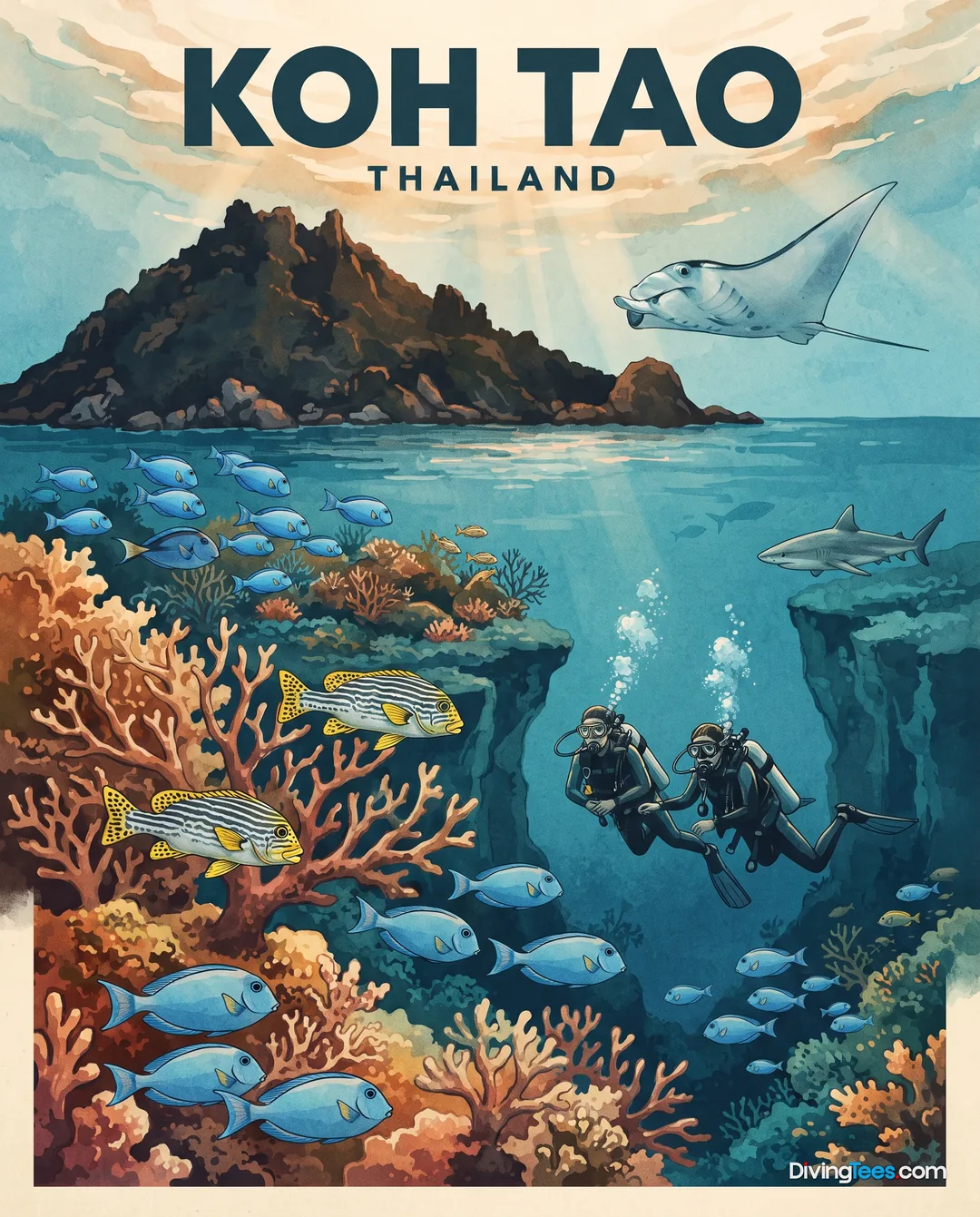
The diverse habitats around Red Rock support a significant array of marine life. Within the nooks and crannies of the main pinnacle and its deeper fissures, you can expect to encounter shrimp, nudibranchs, and moray eels. Blue-spotted stingrays (Neotrygon kuhlii) are frequently observed resting on the sandy bottom sections. As you move along the coral walls, you'll see pufferfish, bannerfish (Heniochus acuminatus), and various snapper species (Lutjanus) schools. The area is also known for sightings of titan triggerfish (Balistoides viridescens), barracudas (Sphyraena), and parrotfish (Scaridae).
Visibility at Red Rock is generally good, allowing for clear views of the extensive coral formations and the dynamic marine activity. While not typically a high-current site, pockets of current can be encountered, especially when transiting between the pinnacle and the cave entrance or along deeper wall sections. These currents are usually manageable, but always assess conditions upon entry. The varied depth range and topographical features mean that even on a single dive, conditions can shift slightly depending on your exact position.
Beyond the smaller reef residents, the site offers opportunities to spot larger pelagics moving through. Reef sharks (Carcharhinus melanopterus) are present, often patrolling the deeper fringes of the reef. Eagle rays (Aetobatus narinari) have been sighted, gliding gracefully in the blue, occasionally joining schools of snapper. Keep an eye out in the middle water column for these transient visitors, as they often make brief but memorable appearances.
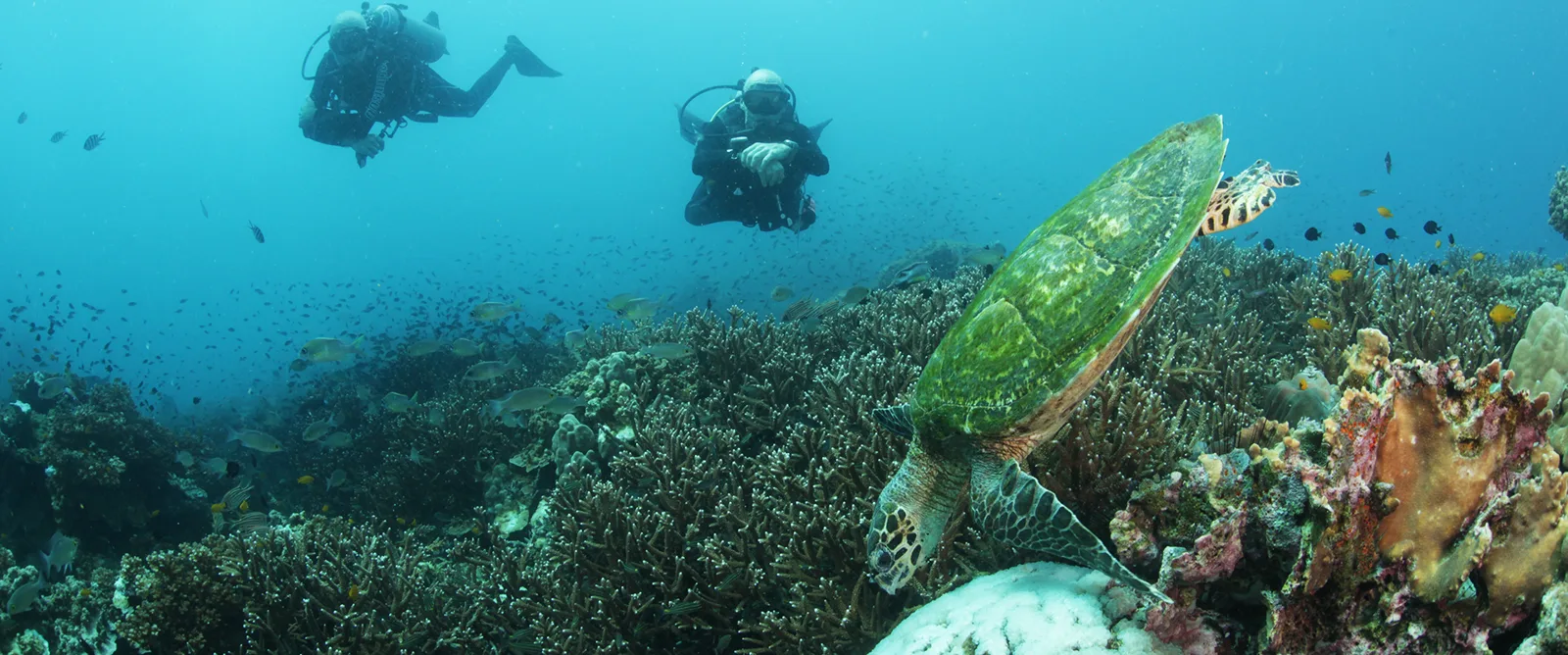
Red Rock also serves as a critical habitat for several other intriguing species. Sea snakes are regular inhabitants, often seen gracefully weaving through the water or resting on the bottom. Turtles, both green (Chelonia mydas) and hawksbill (Eretmochelys imbricata), feed among the corals. While rarer, unicornfish (Naso unicornis) have occasionally been observed closer to the Japanese Garden side, adding to the site's rich biodiversity. The quieter nature of this site, compared to some of its neighbours, often allows for more intimate encounters with marine life.
Red Rock is accessible for divers of all experience levels, from beginner to experienced, with a minimum depth of 4 metres down to a maximum of 25 metres. The site's diverse topography, including a cave system, caters to various interests. While generally calm, currents can occasionally be encountered, particularly around the deeper sections and passages. Visibility is typically good year-round, making it a reliable choice throughout the diving season in Koh Tao.
Red Rock generally offers good visibility year-round, making it a reliable choice throughout Koh Tao’s diving season. Conditions are usually calm, although pockets of current can occur around deeper sections, passages, and the route between the pinnacle and Nangyuan Cave. Assess conditions when you enter the water.
Red Rock is accessible to divers of all experience levels, from beginner to experienced. You can focus on the pinnacle and its coral gardens, while the varied topography offers additional interest for more experienced divers. Entering Nangyuan Cave depends on your comfort with overhead environments and your dive plan.
Red Rock ranges from a shallow pinnacle rising to about 4 metres beneath the surface down to 25 metres. The site includes coral gardens, a fissure around 16 metres, sandy bottom sections, deeper reef fringes, and Nangyuan Cave. Your dive profile can remain near the pinnacle or extend toward Japanese Gardens.
Red Rock is generally calm, but manageable currents can appear around deeper wall sections, passages, and the cave route. Marine life includes blue-spotted stingrays, snapper, barracudas, moray eels, nudibranchs, cleaner shrimp, sea snakes, turtles, and reef sharks. Eagle rays and other visitors may pass through the blue.