Liveaboards · Maldives
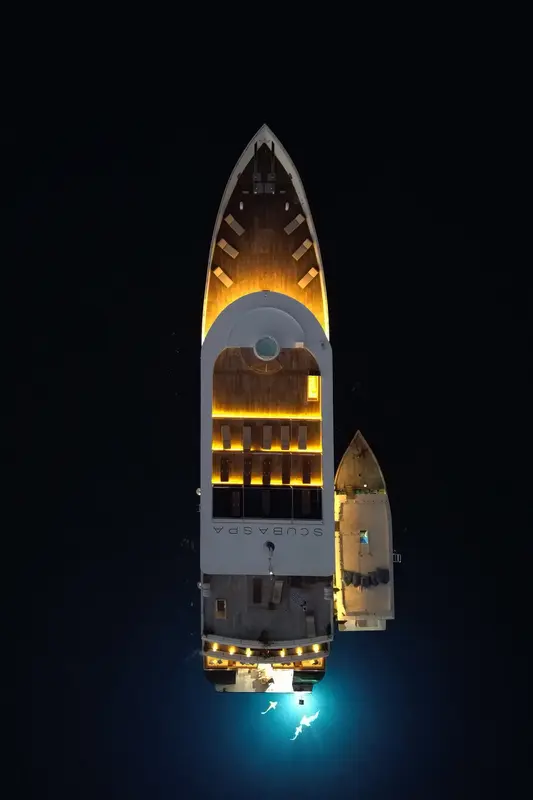
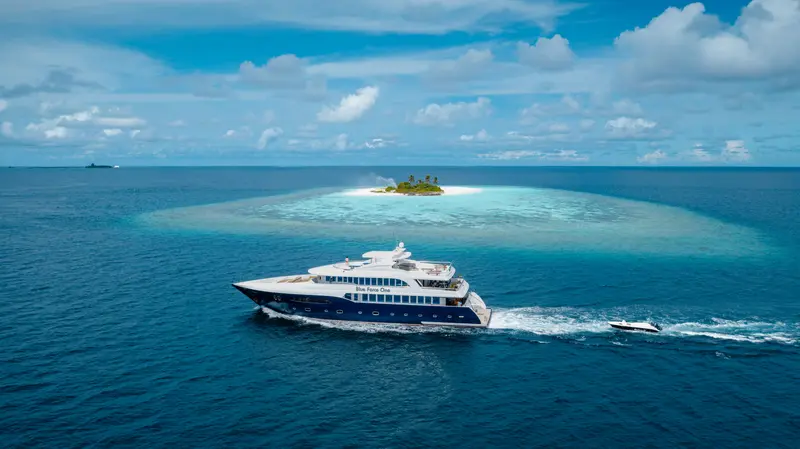
Emperor Explorer II — a spacious new flagship built around the diving
What makes this boat unique
- Emperor Explorer II is a 2026 Maldives liveaboard with room for 26 divers in 13 ensuite cabins.
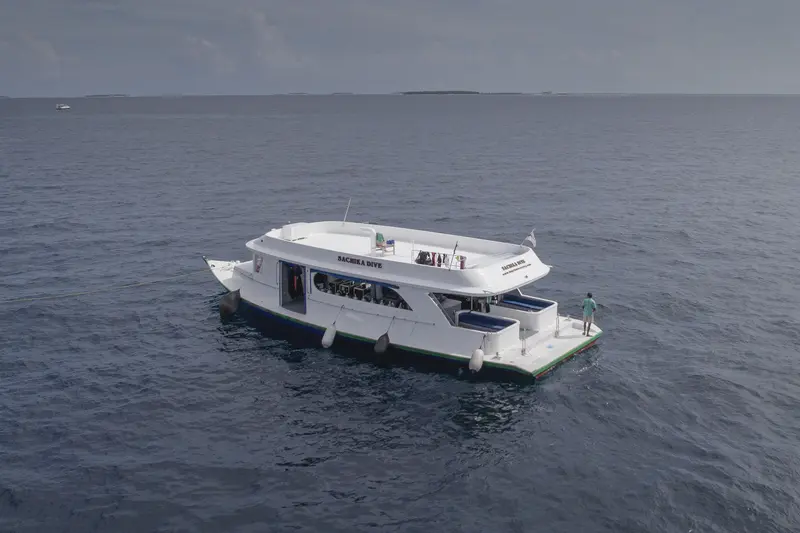
- A separate 24-metre dhoni carries the diving operation, with four dive guides on board.
- Free Nitrox, DIN adaptors and a dedicated camera area support long days in the water.
- Best of Maldives departures run from Malé to Malé over 8 days and 7 nights.
For subtitles in English: start the video firstthen click the gearat the top right of the video, select “Subtitles/CC”, then “Auto-translate” and choose “English”.
The invitation
Emperor Explorer II is for divers who want the Maldives without having the boat feel like an afterthought. It is a new flagship with the space to absorb 26 guests, four dive guides and a full week of kit, cameras and wet towels without turning every passage into a queue. The main reason to choose it is the separation between living and diving: the mothership gives you room to eat, sleep and get out of the sun, while the dhoni takes the working part of the day to the reef. The route is the Best of Maldives, linking Rasdhoo, North and South Ari, Vaavu and both Malé atolls. Expect current-fed channels, pinnacles, manta cleaning stations, sharks and the possibility of whale sharks rather than a resort-style succession of easy house reefs. It suits divers who want serious access to the route, but also care where they spend the hours between descents.
Boarding
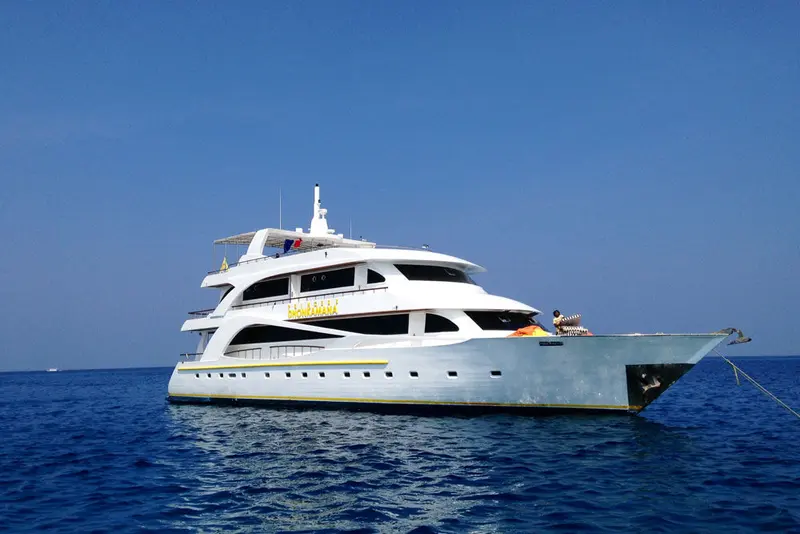
The first impression is of a new, deliberately spacious vessel rather than a converted passenger boat. Explorer II was built in 2026, and that matters here: the fixtures, finishes and open areas are intended for a full liveaboard week, not just a short transfer between islands. Four decks spread the movement out, with the diving work handled away from the main living spaces by the separate dhoni. Boarding should feel orderly: luggage goes below, cabins are assigned, and the boat’s large windows bring daylight into the common areas. The layout gives the group somewhere to go when the sun is high and the dive deck is busy. It is a practical advantage on a route where divers may be wet, salty, carrying cameras and thinking about the next current.
The atmosphere on board
The atmosphere is shaped less by formal luxury than by a crew that stays close to the working parts of the day. The dhoni crew help with kitting up and handle the practical jobs that become tiring after several dives; guests come back to a boat where someone is ready for the next stage instead of having to solve it themselves. English, French and Spanish are spoken on board. With local and international crew together, the social centre is likely to form around the dive operation: briefings, surface intervals, meals and the first look at the day’s photographs. In the evening, the lounge, bar and open decks give people a choice between talking through sightings and finding a quiet corner. The boat is large enough to offer that choice, but not so large that the crew disappear behind a hotel-style service desk.
The sites you’ll dive
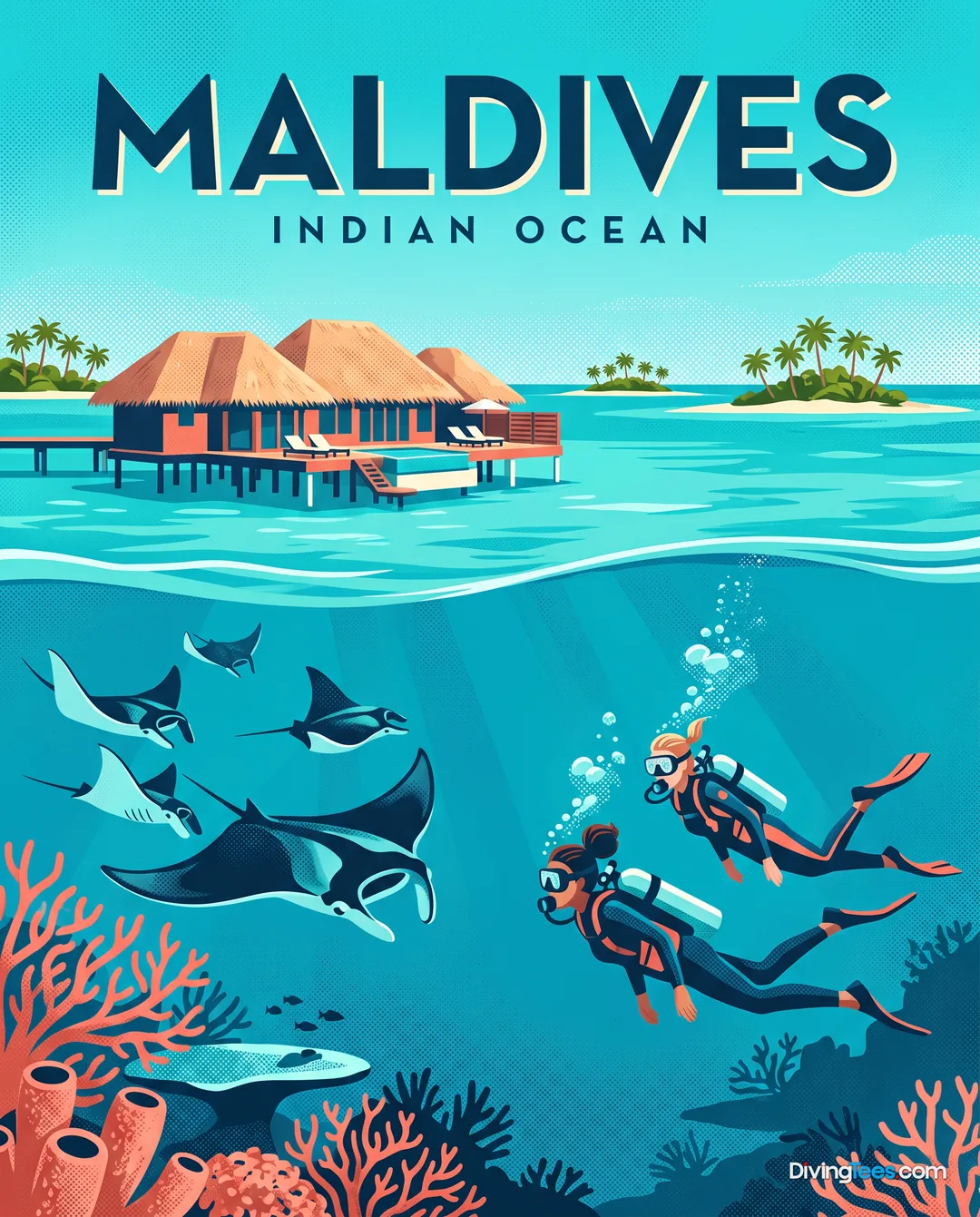
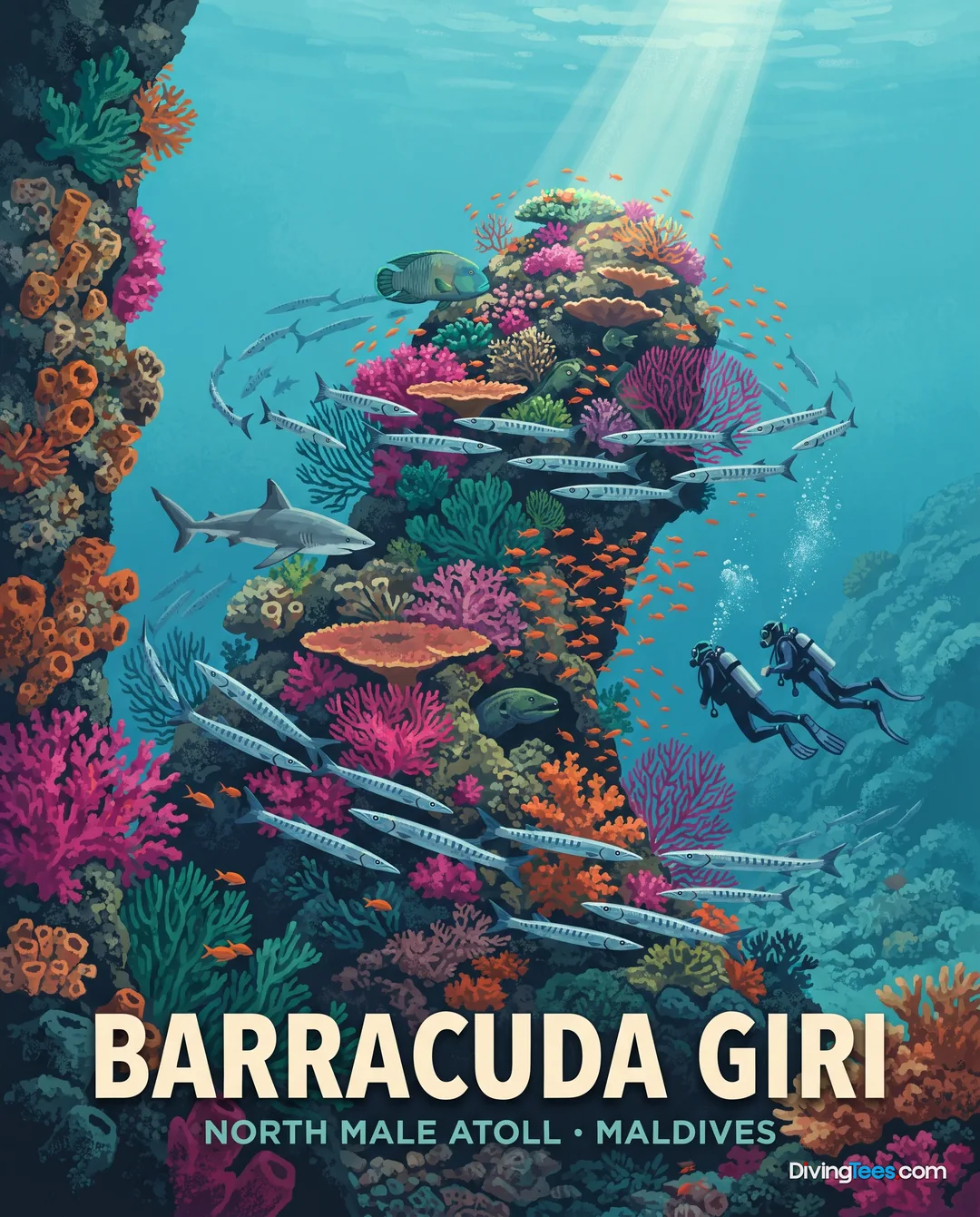
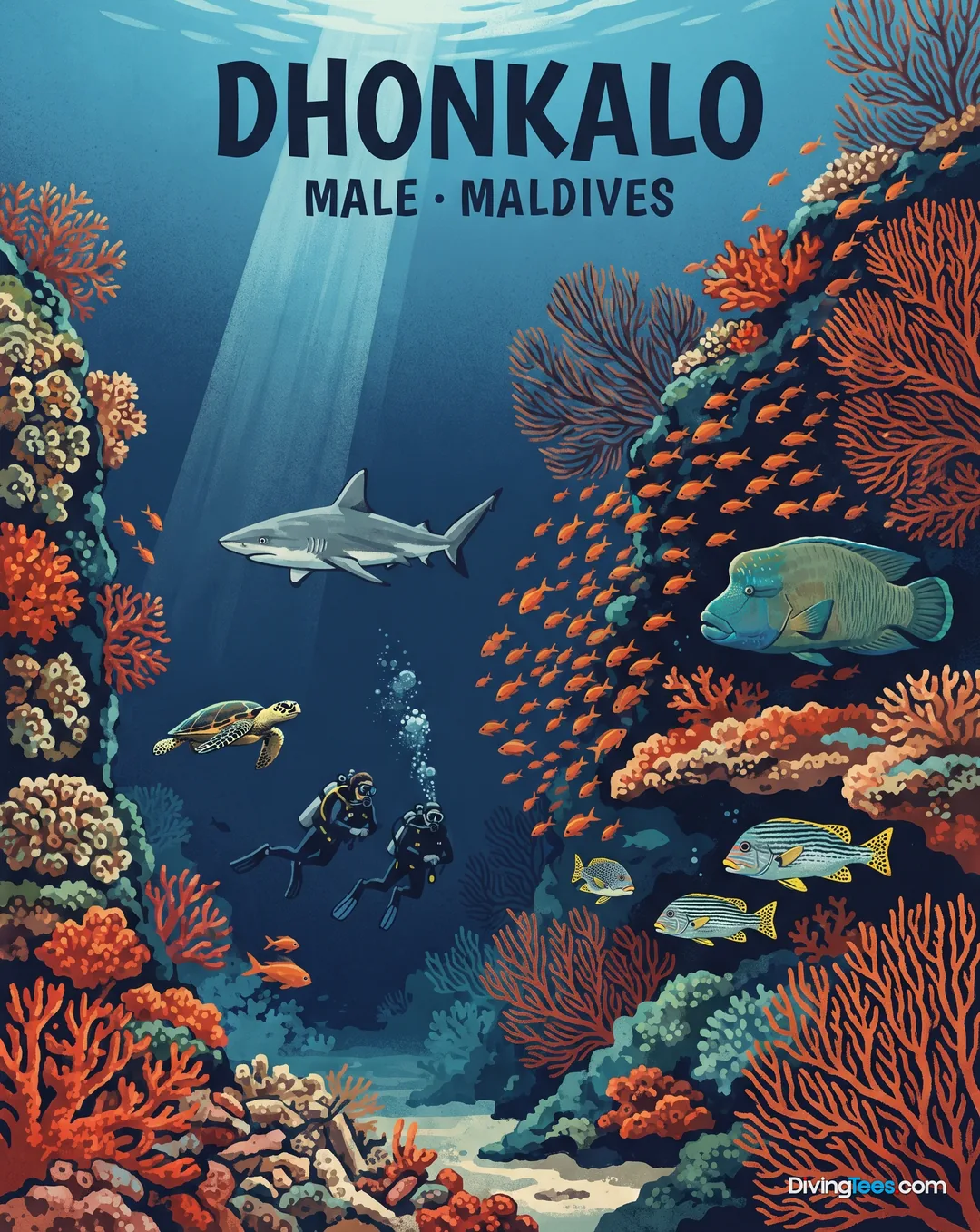
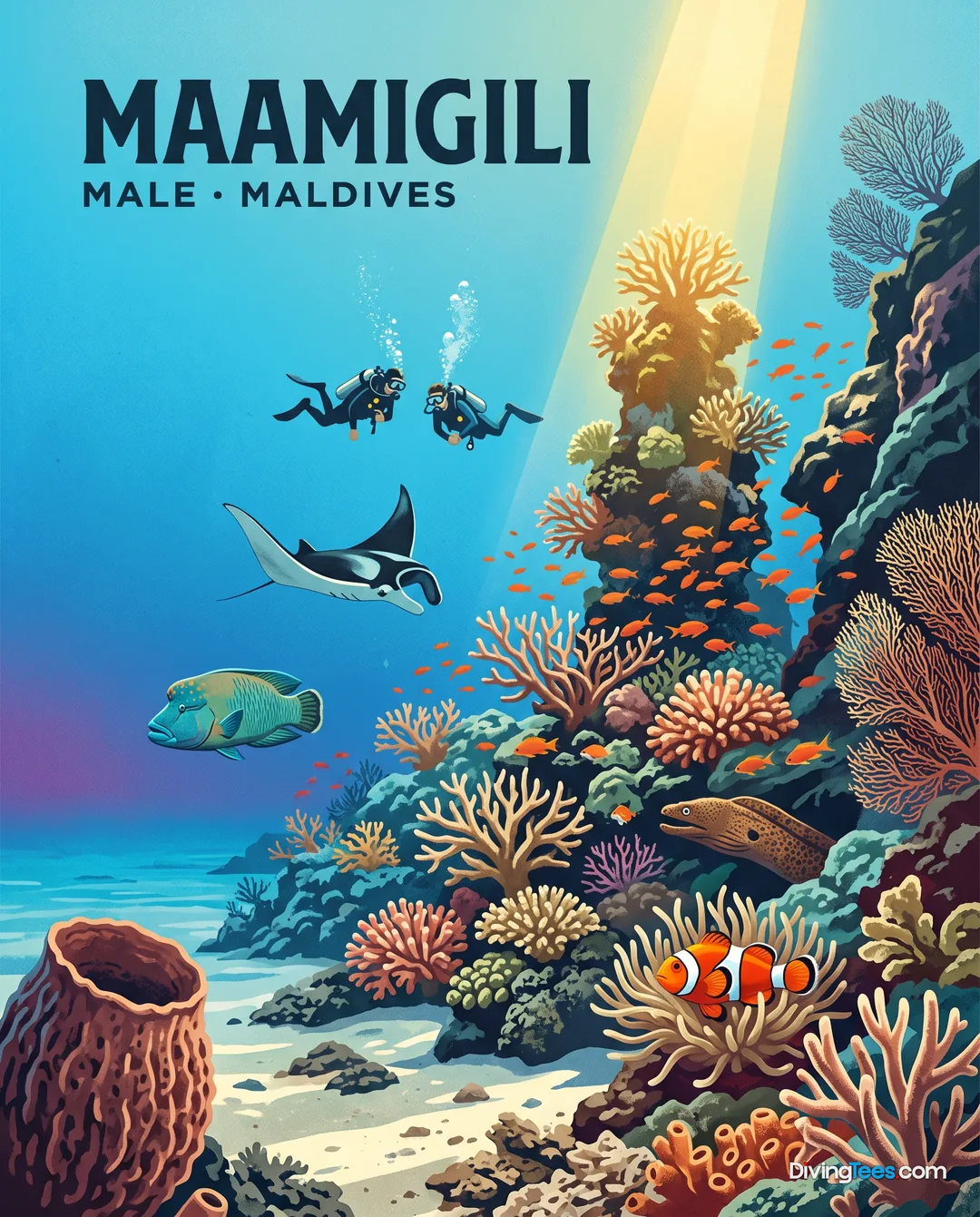
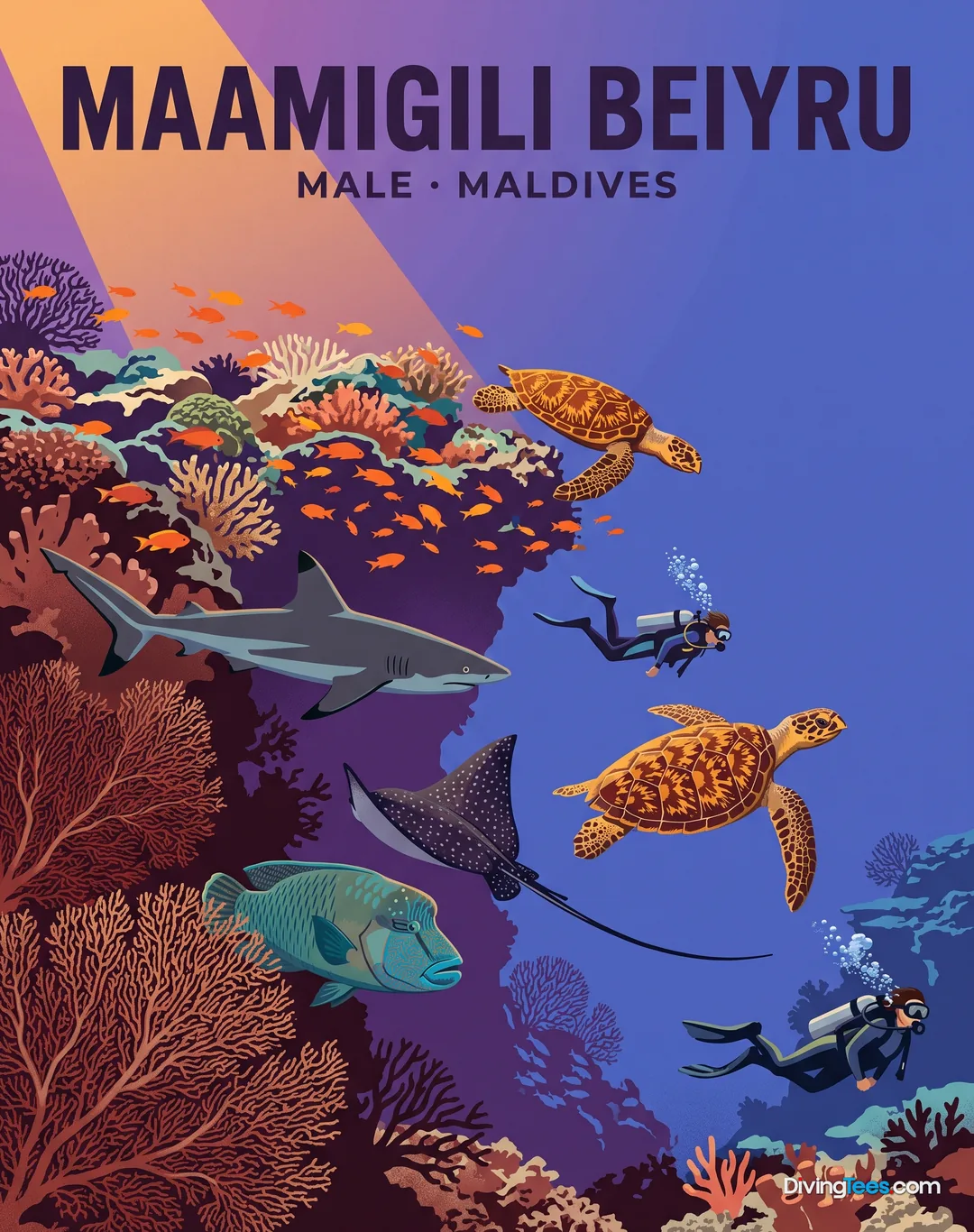
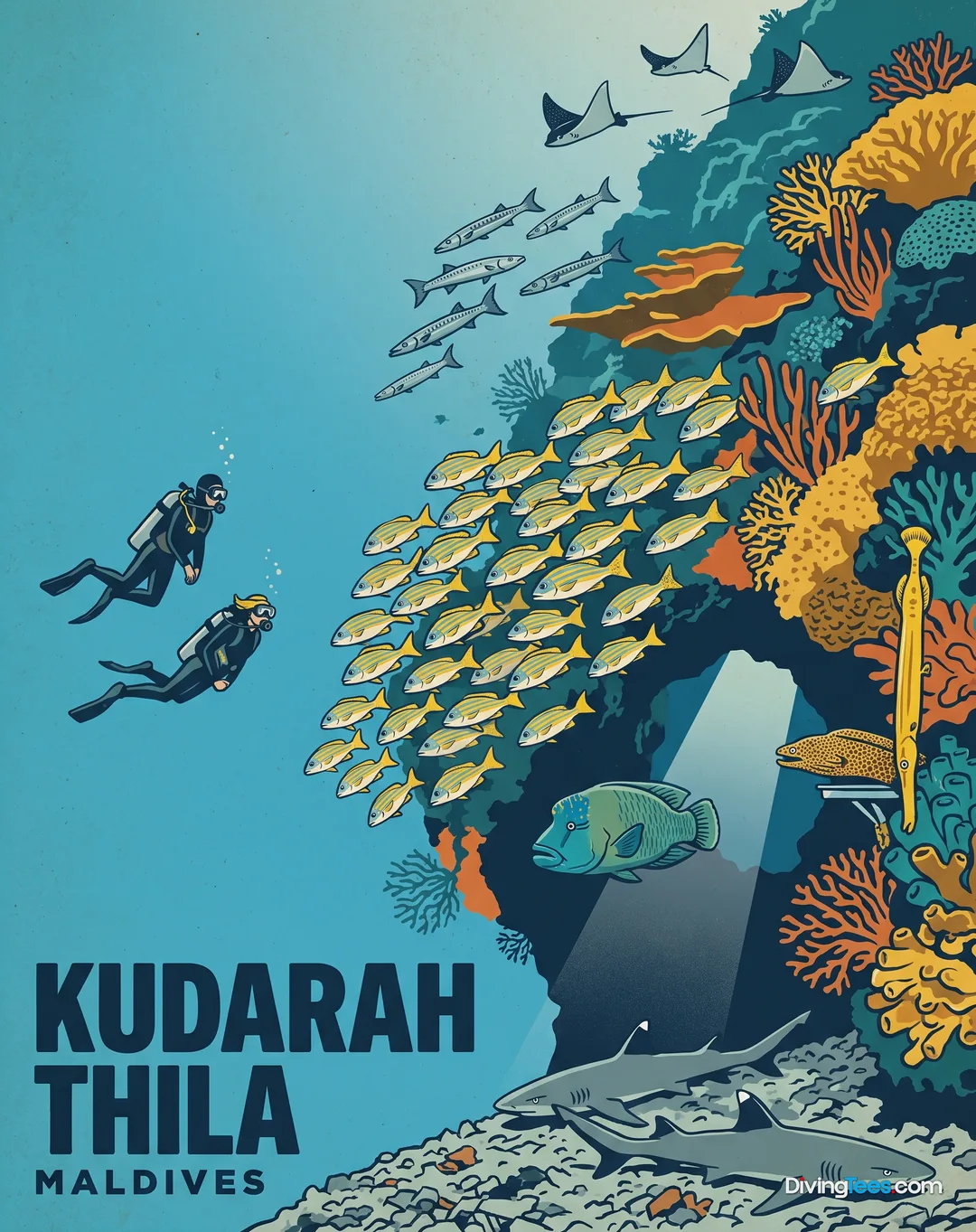
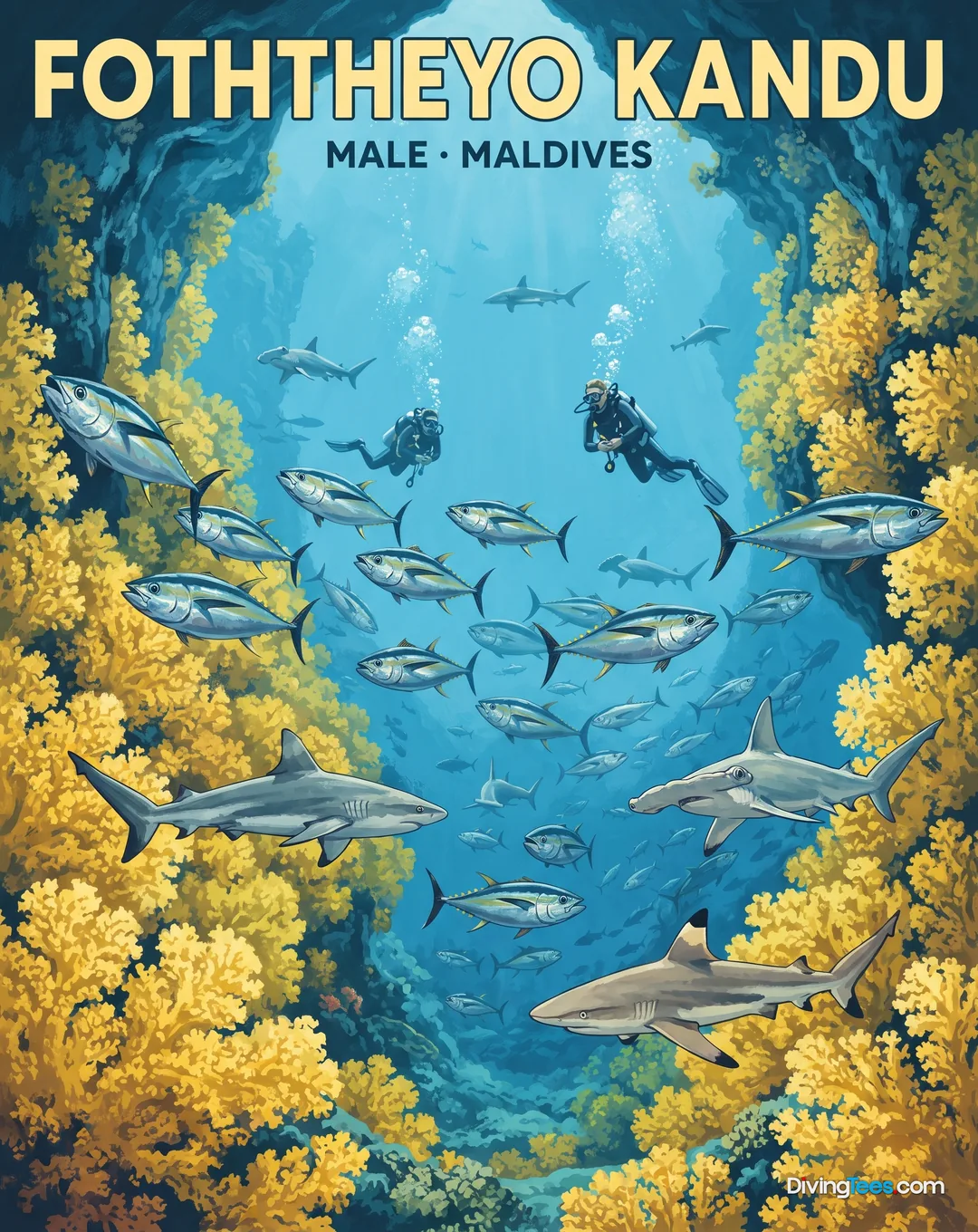
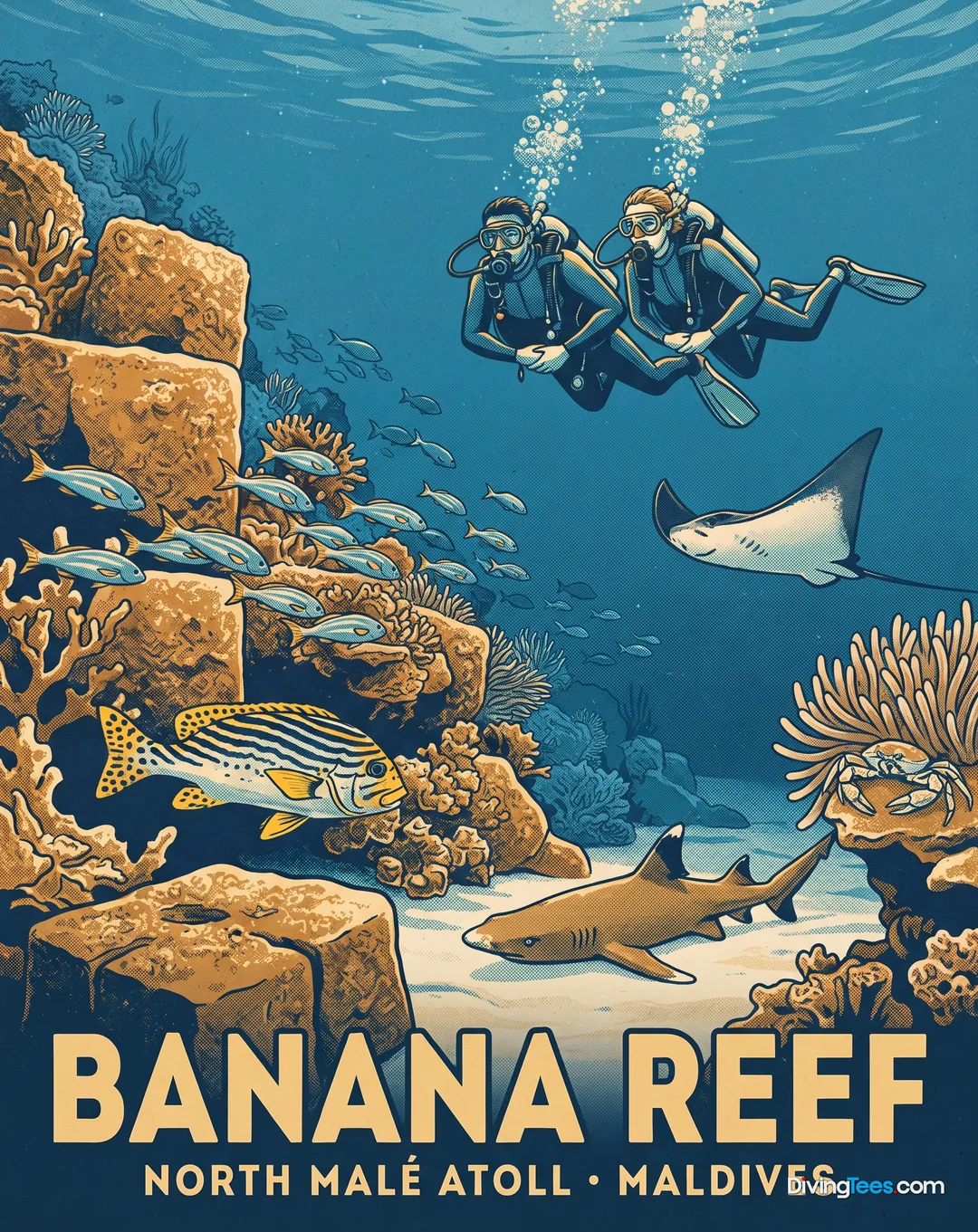
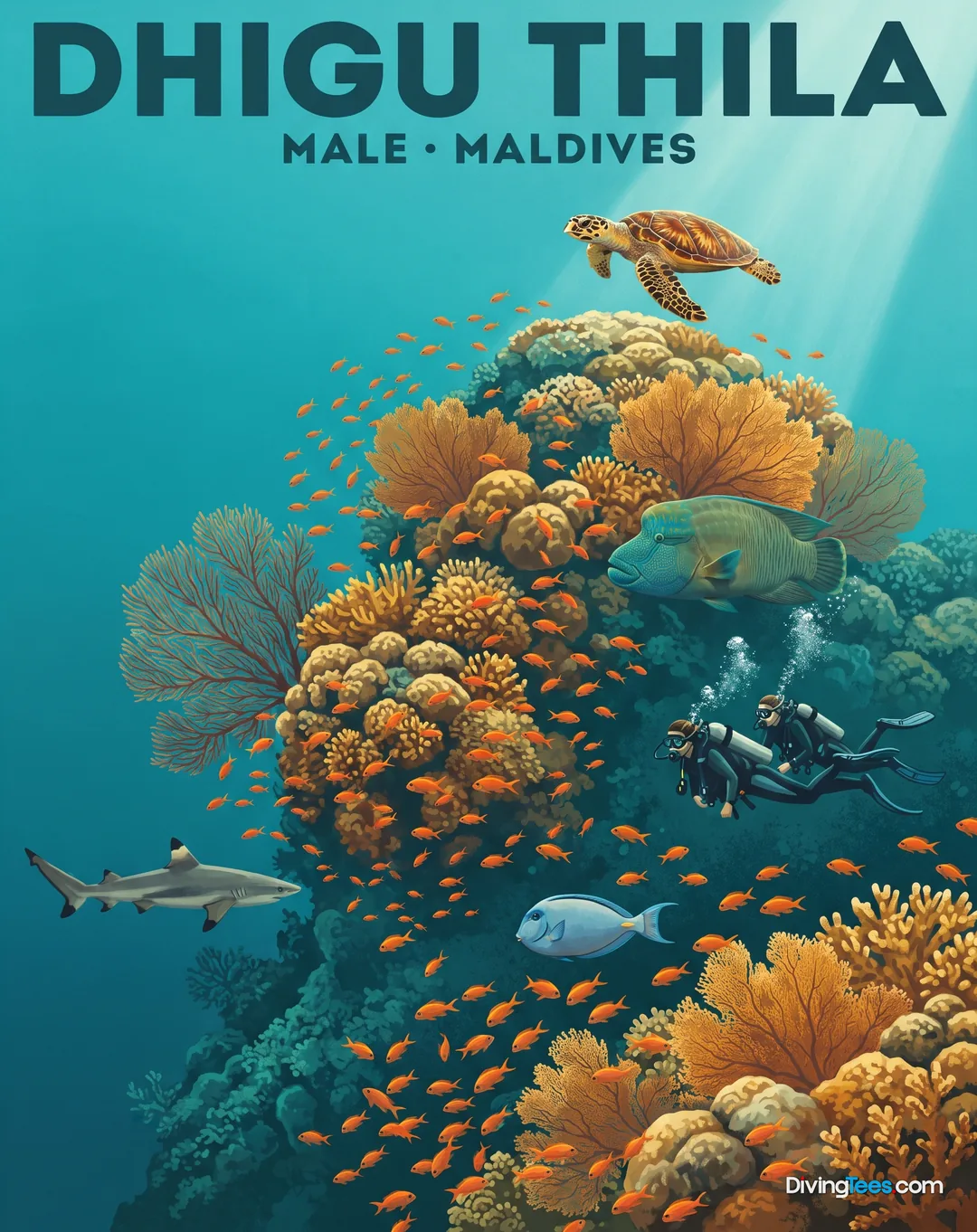
The Best of Maldives route runs from Malé to Malé over 8 days and 7 nights, covering Rasdhoo Atoll, North and South Ari, Vaavu and North and South Malé Atolls. Barracuda Giri drops to three pinnacles, where current brings barracudas, tunas, jacks and schooling reef fish to a maximum of -30m. At Dhonkalo, a sandy channel serves as a manta cleaning station; the site reaches -25m. Mushimasmigili Thila is an isolated North Ari pinnacle known for grey reef sharks at its up-current point, down to -30m. Maamigili and Maamigili Beiyru sit within the South Ari protected area, with whale sharks and mantas as the draw, both to -30m. Kudarah Thila adds clefts, overhangs and caves, with batfish schooling around the pinnacle to -30m. For stronger channel diving, Myaru Kandu reaches -30m with grey and whitetip sharks, while Foththeyo Kandu reaches -40m, combining yellow soft-coral-covered caves with open-ocean pelagics. Banana Reef, Guraidhoo, Dhigu Thila and Fushifaru Thila add reef pinnacles, channels, mantas and schooling fish to the route.
Itineraries, dates and prices
Prices per person. Each month shows its lowest price: click a month, or pick an itinerary.
Next departures · 77 departuresfrom £1,864$2,492€2,226
November 2026
December 2026
See dates and prices
If you click these links and make a purchase on the partner site, DivingDeal may earn a commission, at no extra cost to you.
Dates and prices taken from Divebooker and liveaboard.com, updated 24 October 2026
What you’ll meet underwater
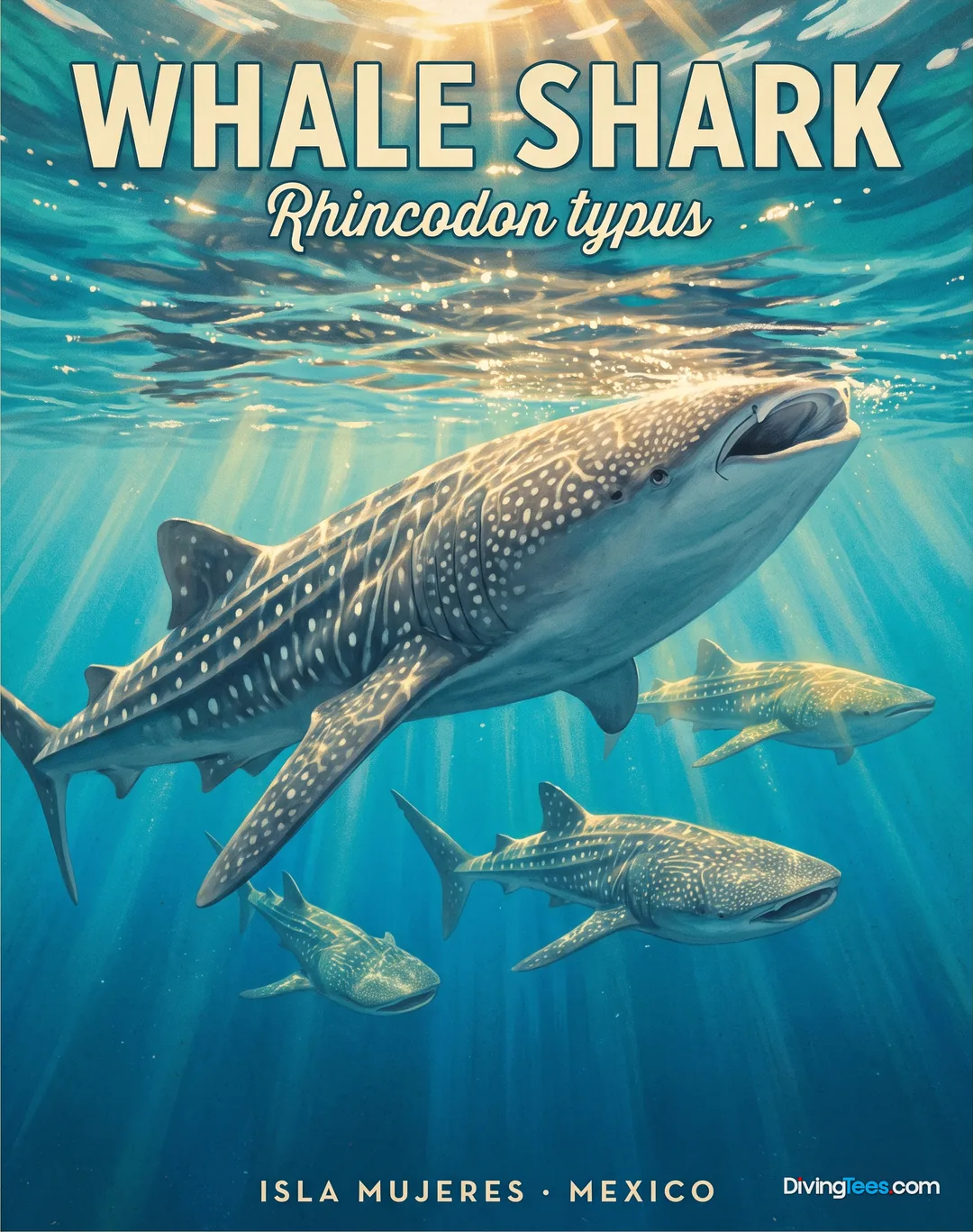
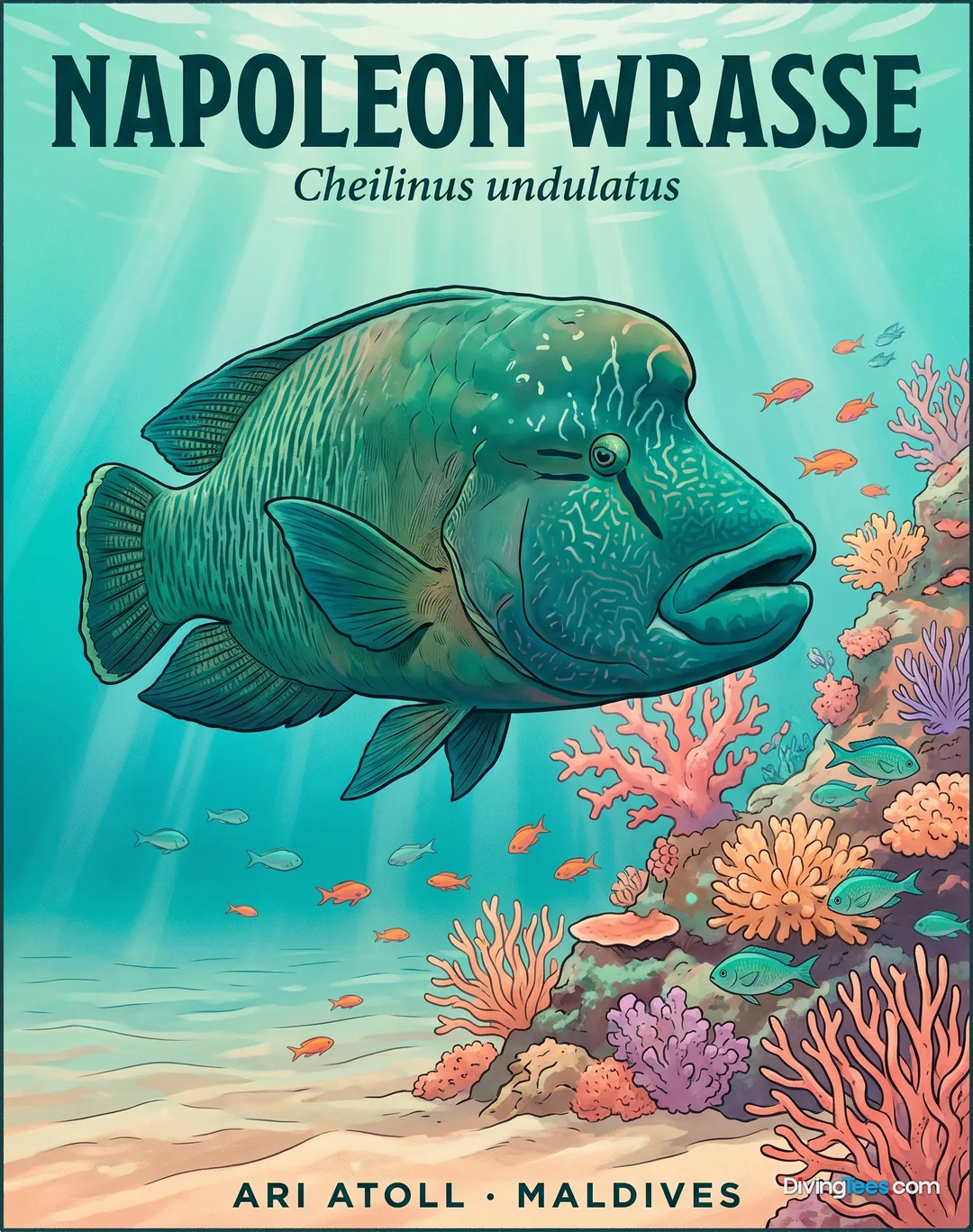
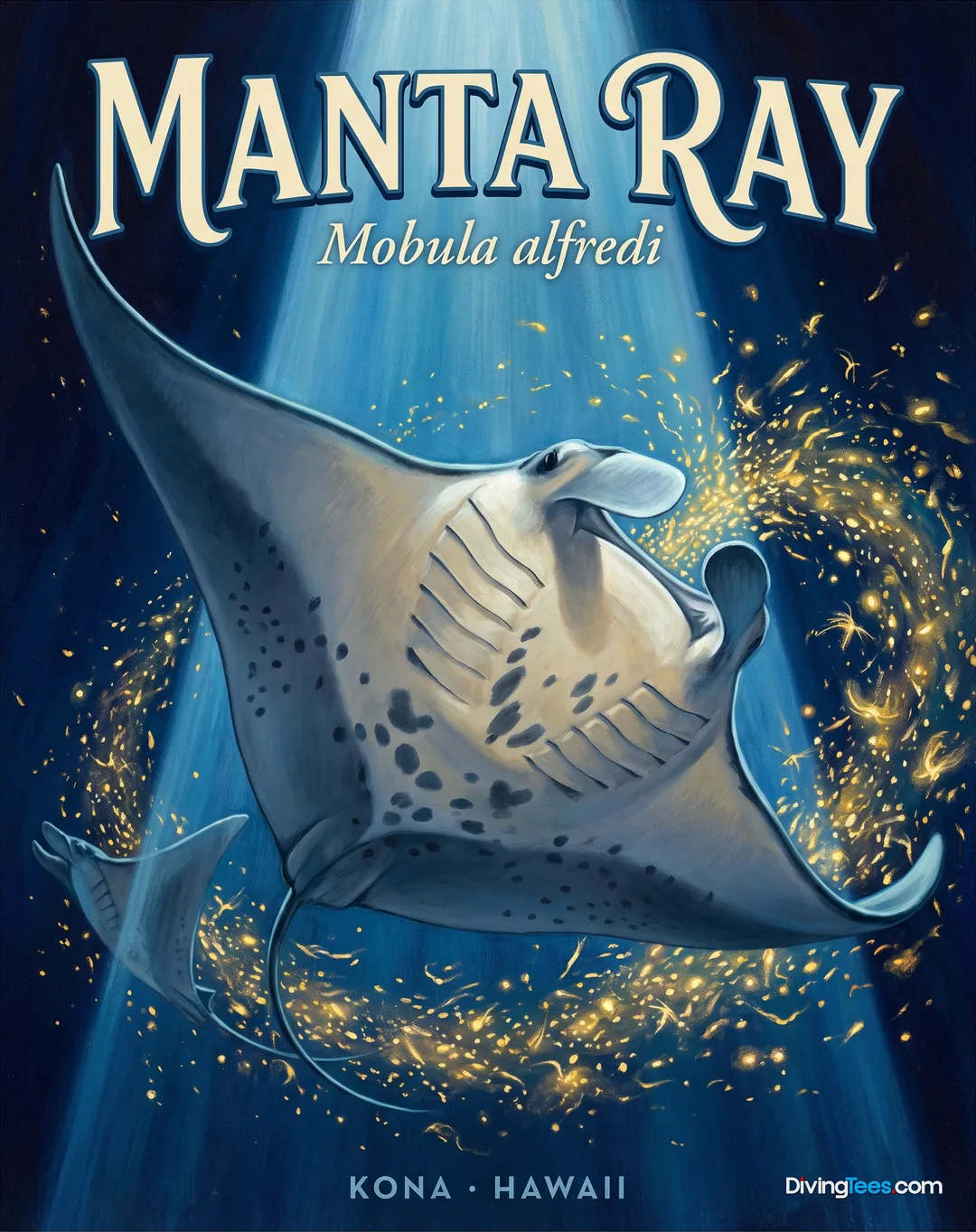
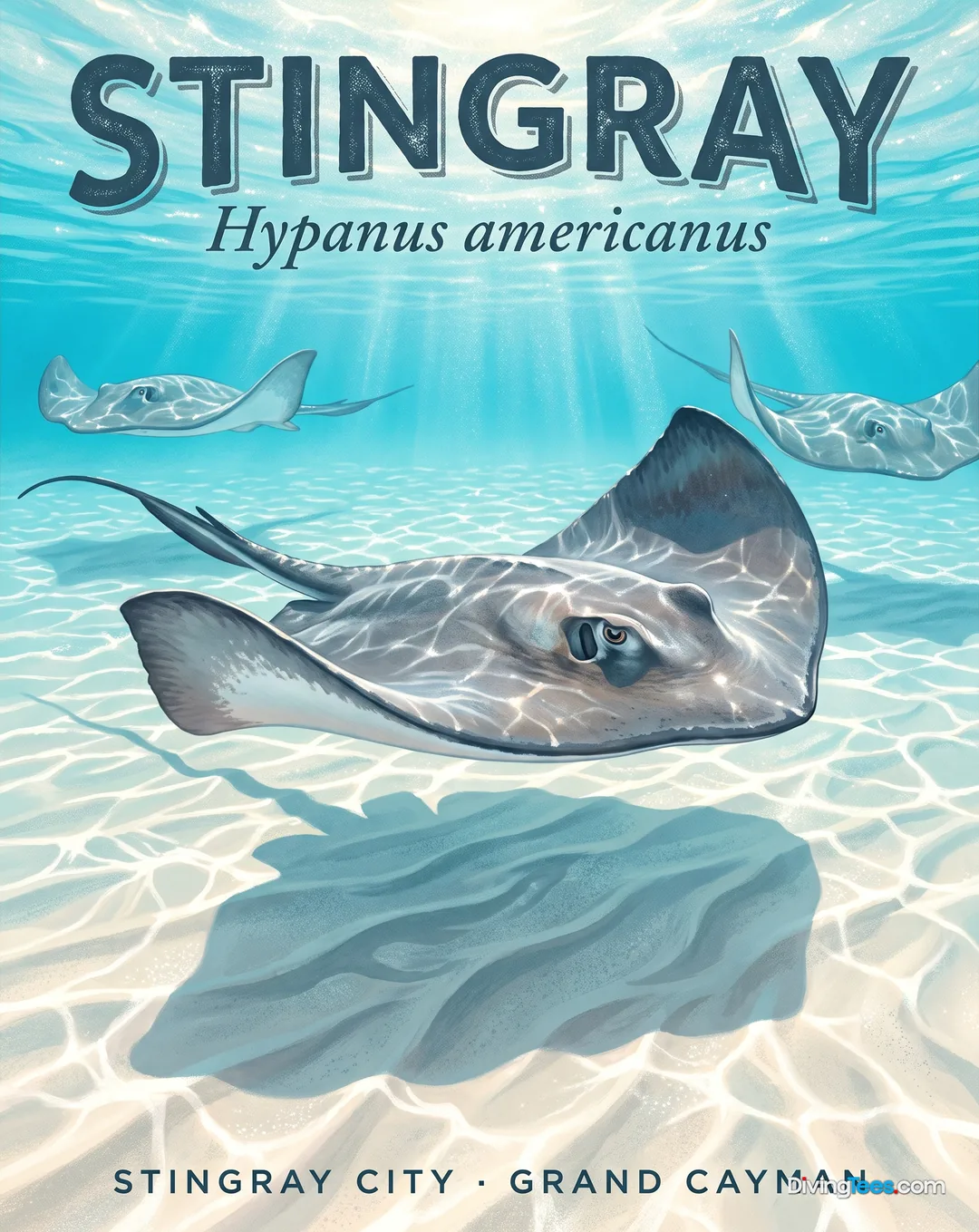
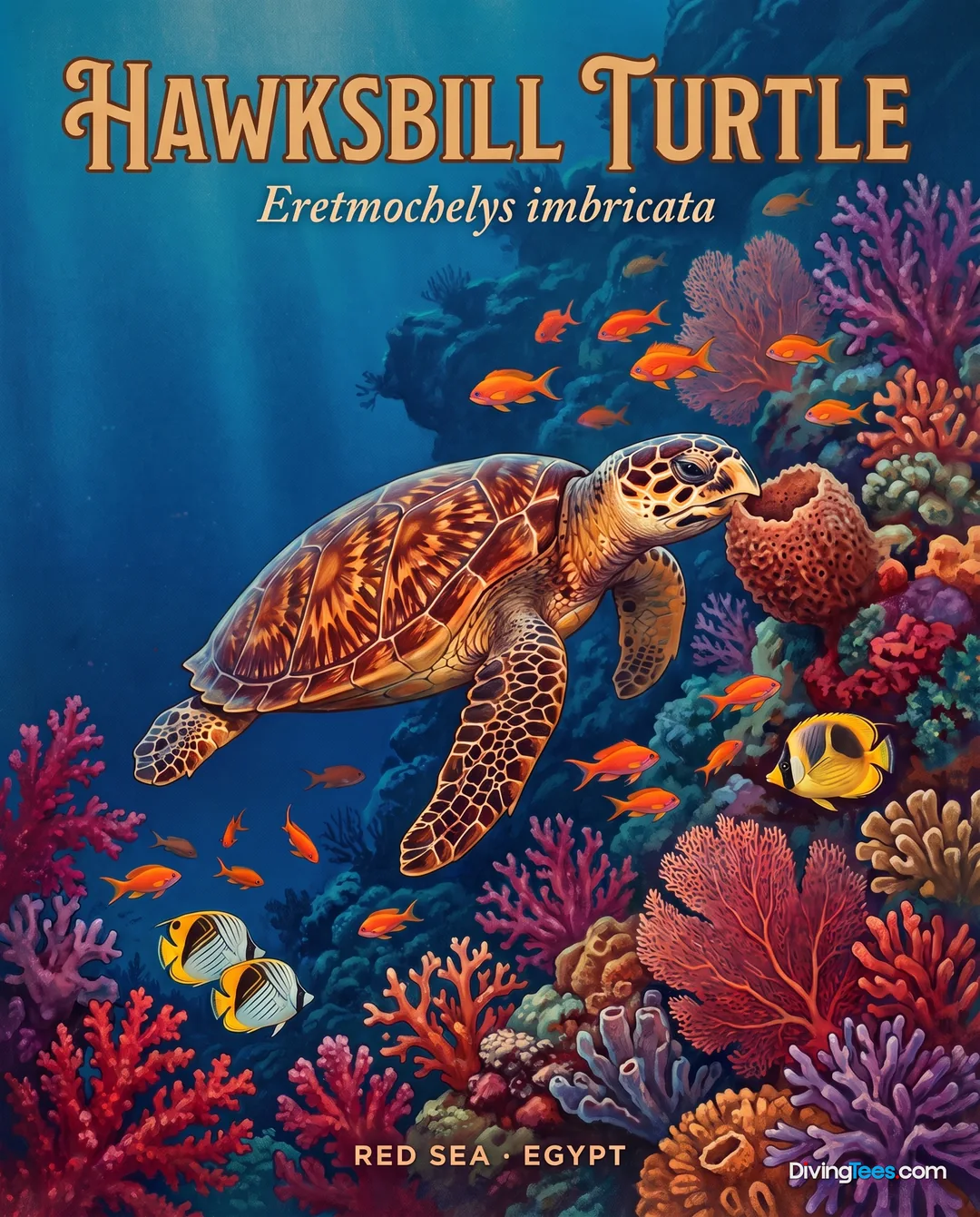
The regular cast is substantial: Napoleon wrasse and fusiliers are recorded at nine sites, grey reef sharks at nine, sea turtles at eight, and barracudas, manta rays and tuna at seven each. Eagle rays occur at eight sites, with jacks, trevallies, moray eels and batfish also recurring through the route. That pattern tells you what the trip is built around: current moving food across pinnacles and channels, bringing sharks, rays and schooling fish into view. The single-site sightings are worth keeping in mind. Barracuda Giri is the place for groupers and anthias; Banana Reef has anemones; Maamigili is where sweetlips and porcupinefish are recorded. Dhigalhi Haa is distinguished by soft coral and gorgonians, Fushifaru Thila by a stingray, and Dhigu Thila by the recorded hawksbill turtle. None is guaranteed, but each gives a particular reason to care which site comes next.
Who puts you in the water
Four dive guides are listed for Explorer II, and the crew speak English, French and Spanish. The Maldives are open to divers from different levels on suitable sites, but currents can be strong and unpredictable; some dives may not suit beginners, and a check dive is required before normal diving begins. A PADI Advanced Open Water course, Adventure Dives, Specialties and Discover Scuba are available on board. PADI Advanced Open Water takes two days and five adventure dives, including deep and navigation dives, and certifies divers to 30 metres. The boat carries oxygen and first-aid equipment, while the dhoni carries its own oxygen and first-aid setup. Technical, solo and decompression diving are not part of this operation.
The dive deck and the gear
Diving is based from a separate 24-metre dhoni with three crew, compressors, oxygen, first-aid equipment and diving towels. The dhoni can stay with the reef and collect divers where the dive finishes, while Explorer II remains the place for meals, showers and rest. Standard tanks are S80 aluminium tanks holding 11.1 litres, with C100 tanks holding 13.2 litres available on request. Free Nitrox is produced through a membrane system, up to 32%, and DIN adaptors are available. Rental equipment can be arranged as an optional extra. Every diver must use a dive computer, SMB and reef hook on each dive, with a torch required for night dives. Photographers have charging stations, an air gun, rinse tanks and a camera table.
Between dives
Between dives, Explorer II gives the group several ways to disappear for a while. The air-conditioned lounge has sofas, a dining area, a television and book, music and movie libraries; the upper deck adds outdoor seating, and the sun deck is set up for loungers and beanbags. The terrace is where the route makes most sense: islands slide past, the dhoni returns with divers, and the next briefing gradually becomes the subject of conversation. Photographers have a dedicated space with charging stations, a camera table, air gun and rinse facilities, so equipment does not have to occupy the dining table. A non-diver can join the trip and snorkel rather than being treated as spare luggage.
A day on board
A day begins with the dive operation rather than with sightseeing. The first briefing comes before the first descent, and the dhoni takes the groups to the reef with equipment already part of its working routine. After the dive, divers return for food, a rinse, a camera check and the next interval; the boat may move while the group eats or rests, placing the next site beneath the same cycle. Briefings divide the attention between the reef shape, current and exit plan, which matters on pinnacles and channels more than a clock on a wall. Later dives build the day around the route, with the spaces on Explorer II filling the gaps between them: shaded lounge, upper-deck seating, sun deck or a quiet cabin. The evening meal closes the working part of the day, followed by photographs, conversation and the next site being discussed before sleep.
What you eat aboard
Meals are served buffet-style, combining Western and local cooking, with vegetarian and vegan choices available. Breakfast, lunch and dinner do the necessary work on a diving boat: they replace what the water takes out of you without making every meal an event. Beer and wine are available, and wine with dinner is included; other alcoholic and non-alcoholic drinks are optional. A beach barbecue is part of the trip when the itinerary allows it. The useful detail is the flexibility around the table. Divers can eat properly after a demanding channel dive, choose something lighter before getting back in, and return to the same shared table with stories, maps and cameras instead of having to leave the boat for meals.
Nights at sea
The cabin choice is straightforward: Upper Deck Suites, Main Deck Suites, Lower Deck Double Cabins and Lower Deck Twin/Double Cabins. Every cabin has air conditioning and a private bathroom; the lower deck cabins use portholes, while the suites sit higher and give more access to the outside light and sea views. The important difference is not decoration but retreat. After a current dive, a closed, cooled cabin is somewhere to reset rather than merely a bunk behind a curtain. Above, the outdoor decks and sun deck give the evening back to the sea. Internet is available as a paid extra, but the boat’s better night habit is simpler: shower, eat, check the day’s images and let the engine carry the group towards the next atoll.
Upper Deck Suites
Main Deck Suites
Lower Deck Double Cabins
Lower Deck Twin/Double Cabins
What to know before boarding
Explorer II departs from and returns to Malé. Airport transfer is included, with the boat’s transfer arrangements used to move guests between Velana International Airport and the liveaboard. Arriving in the Maldives the night before embarkation is the sensible choice, leaving room for a delayed flight without putting the departure at risk.
Deck plan
- Year built
- 2026
- Length
- 44 m
- Beam
- 10.3 m
- Maximum number of passengers
- 26
- Number of cabins
- 13
- Number of bathrooms
- 13
- Engines
- 800 hp Daewoo Doosan
- Tenders
- 1 × 24 Dhoni
- Website
- emperordivers.com ↗
Hello, I'm Marina, DivingDeal.com's AI assistant. I answer in detail about hotels, dive centres and liveaboards.
Thinking about the whole trip and the flights? Talk it over with Edith →
Marina is an AI. Some links are affiliate links: DivingDeal may earn a commission, at no extra cost to you. Bookings are made with the partner.