CMAS
Anaya Plongée
Google 5/5 (383 reviews)
9.6 km away as the crow flies
Marseille · France · Mediterranean
Max. depth · 20 mExplore a sheltered calanque defined by steep rocky cliffs and underwater fissures extending to 20 metres.
The Oule dive site is situated within a deeply recessed calanque, offering a specific topography shaped by the terrestrial coastline. The underwater environment is defined by a steep rocky cliff that has been heavily scored by natural faults and fissures. These cracks in the rock face are a primary feature of the site, often extending from the shore underwater to depths of approximately 20 metres. As you descend, you will notice how these vertical interruptions break up the continuity of the wall, creating small recesses and sheltered pockets throughout the profile.
Moving away from the main cliff face toward the centre of the calanque, the terrain transitions from vertical rock to a more varied seabed. You will encounter large rocky blocks that have settled on the bottom, creating a complex structural environment. Between these boulders, the floor becomes flatter, consisting of sand and meadows of Posidonia seagrass. This mix of hard substrate and soft bottom provides a diverse habitat that supports a range of different Mediterranean species within a relatively small area.
The dive profile is relatively shallow, typically staying within the 15 to 20-metre range. This makes the site accessible for a wide range of divers, though the presence of technical features like a semi-submerged cave at the base of the cliff requires careful buoyancy control. Navigating the transition between the steep rocky walls and the sandy Posidonia beds requires attention to your depth to avoid contact with the delicate seagrass. The combination of verticality and horizontal sandy areas allows for a varied navigation plan during a single descent.
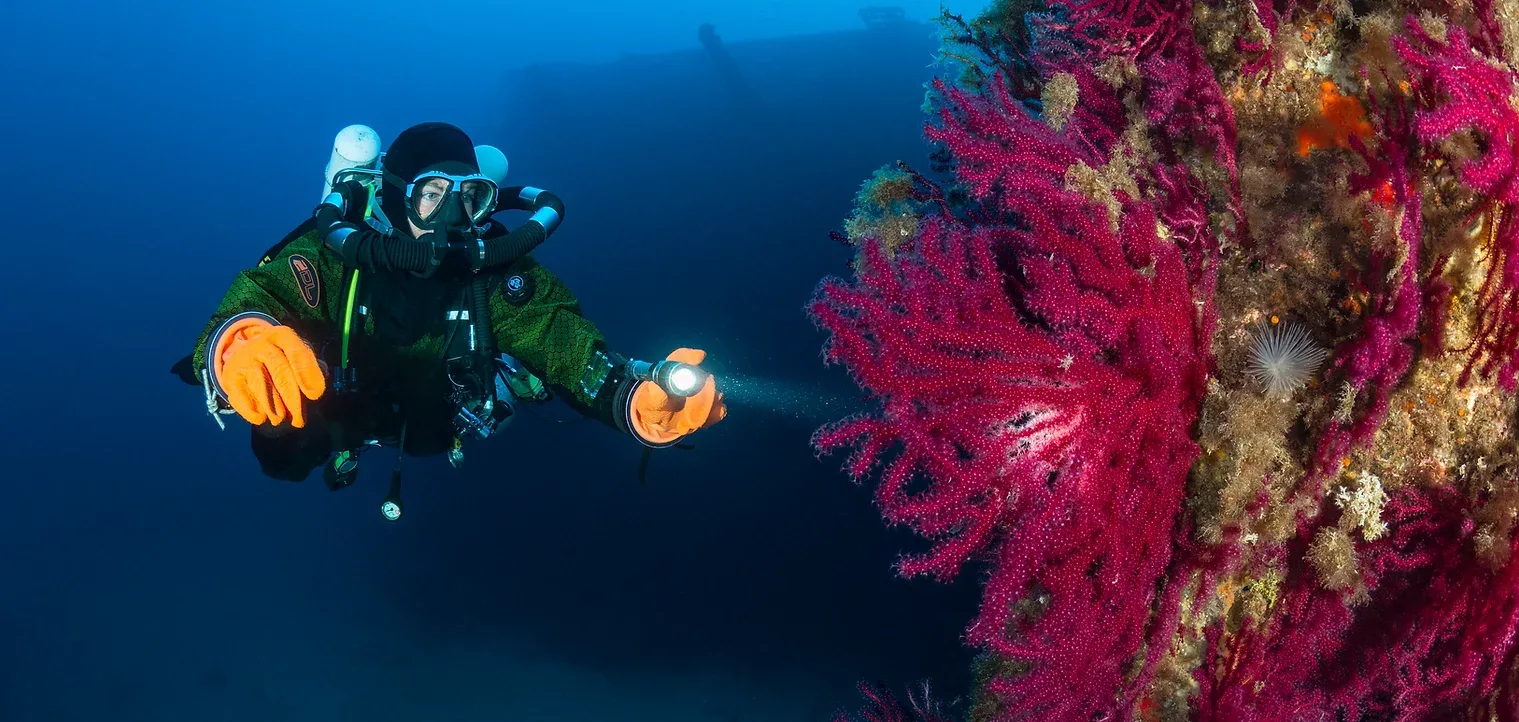
Marine life at Oule is closely tied to the structural complexity of the rock faults and the shelter provided by the calanque. In the crevices and cracks of the cliff, you can find resident species such as the European conger (Conger conger) and various species of moray eels. These predators use the fissures as ambush points and resting sites. The presence of these large eels is one of the more consistent features for those watching the rocky outcrops and deep holes in the substrate.
The mid-water column and the edges of the rocky structures are often populated by schools of salema and two-banded sea bream. These fish move through the water column near the rocky edges, often appearing in groups. You may also see Mediterranean slipper lobsters moving along the base of the rocks or hiding within the smaller cracks. Small shrimp are frequently found throughout the site, inhabiting the smaller crevices that define the cliff's texture and providing movement near the bottom.
One of the primary advantages of diving at Oule is its geographical orientation, which provides significant shelter from the east wind. This makes the site a reliable option when other more exposed locations in the Marseille area are experiencing heavy swell or surface chop. While the calm surface is a benefit, the underwater environment remains dynamic. The interaction between the enclosed shape of the calanque and the surrounding maritime conditions determines the specific experience of the dive.
The site is best approached by boat, allowing for a controlled descent near the cliffs or the central rocky blocks. Because the calanque is so enclosed, the light conditions can change depending on the sun's position relative to the high cliffs. This can create interesting shadow play within the fissures and around the semi-submerged cave. Planning your dive to coincide with optimal light can enhance your ability to see into the deeper cracks where the eels and lobsters reside.
The site has a depth range of 15 to 20 metres. It is accessible to all levels, including Open Water Divers, but buoyancy control is important due to the rocky terrain and seagrass. Current is variable and can change depending on wind and maritime exposure, although the site is generally sheltered from the east wind.
Choose Oule when you want a site sheltered from the east wind, particularly while other Marseille locations are experiencing heavier swell or surface chop. The enclosed calanque can offer calmer surface conditions, while changing sunlight around the high cliffs creates shadows in the fissures and near the semi-submerged cave.
Oule is accessible to all levels, including Open Water Divers, with a relatively shallow profile from fifteen to twenty metres. You need careful buoyancy control around the rocky terrain, cliff faults, semi-submerged cave, and Posidonia meadows, where contact with the rocks or delicate seagrass should be avoided.
At Oule, the current is variable and can change with the wind and maritime exposure. The deeply recessed calanque generally shelters the site from the east wind, but the underwater environment can remain dynamic. You should stay attentive while moving between the cliffs, rocky blocks, sand, and seagrass.
At Oule, you can explore rocky cliffs marked by deep faults, large boulders, sand, Posidonia, and a semi-submerged cave. Crevices may shelter European conger, moray eels, slipper lobsters, and shrimp, while salema and two-banded sea bream move near the rocky edges and through the water column.