



Plongee Tek Marseille
Google 5/5 (429 reviews)
France · Mediterranean
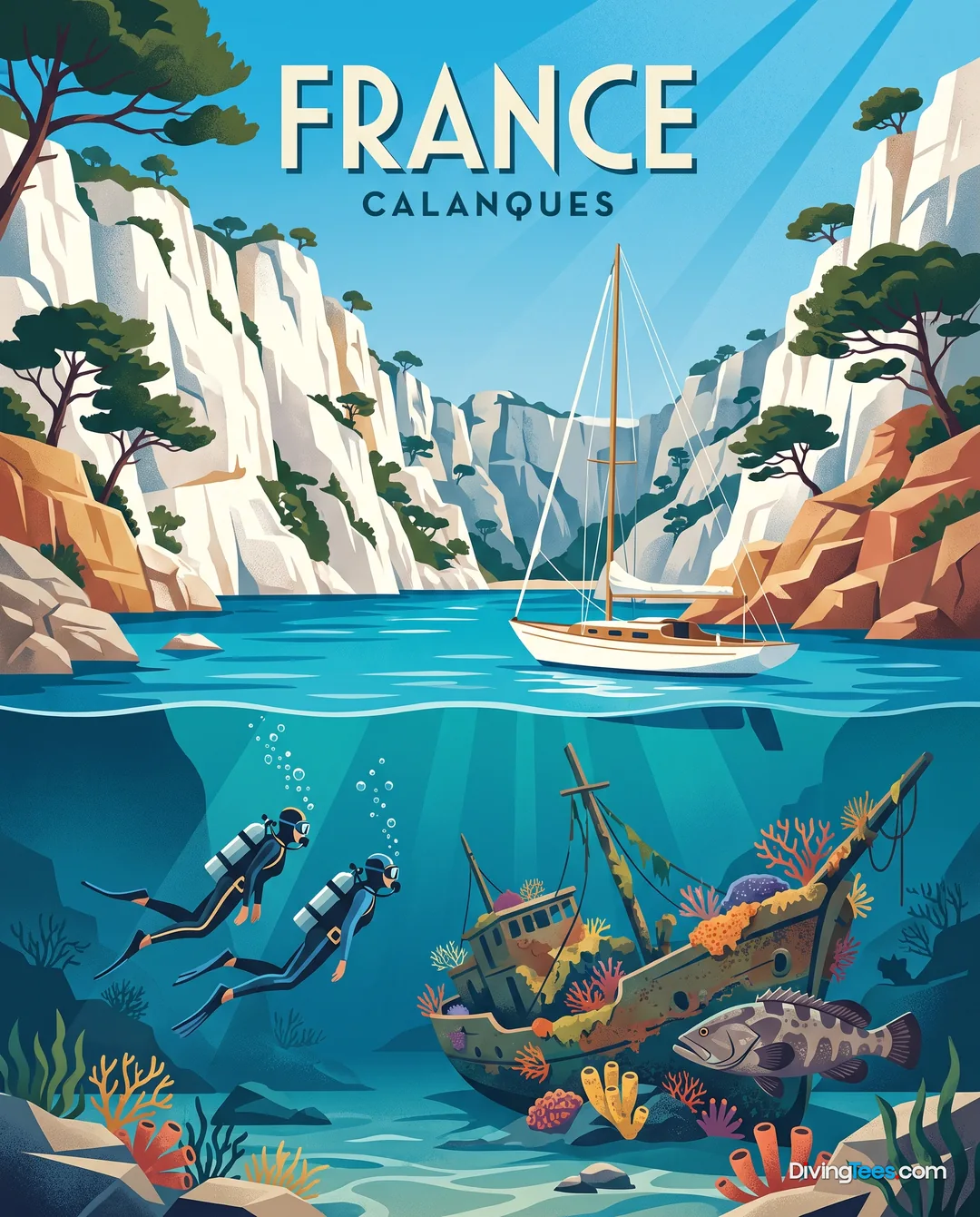
Limestone tunnels, red coral, upright wrecks and walls falling towards 58 metres shape Provence’s boat diving between Marseille, Cassis and La Ciotat.
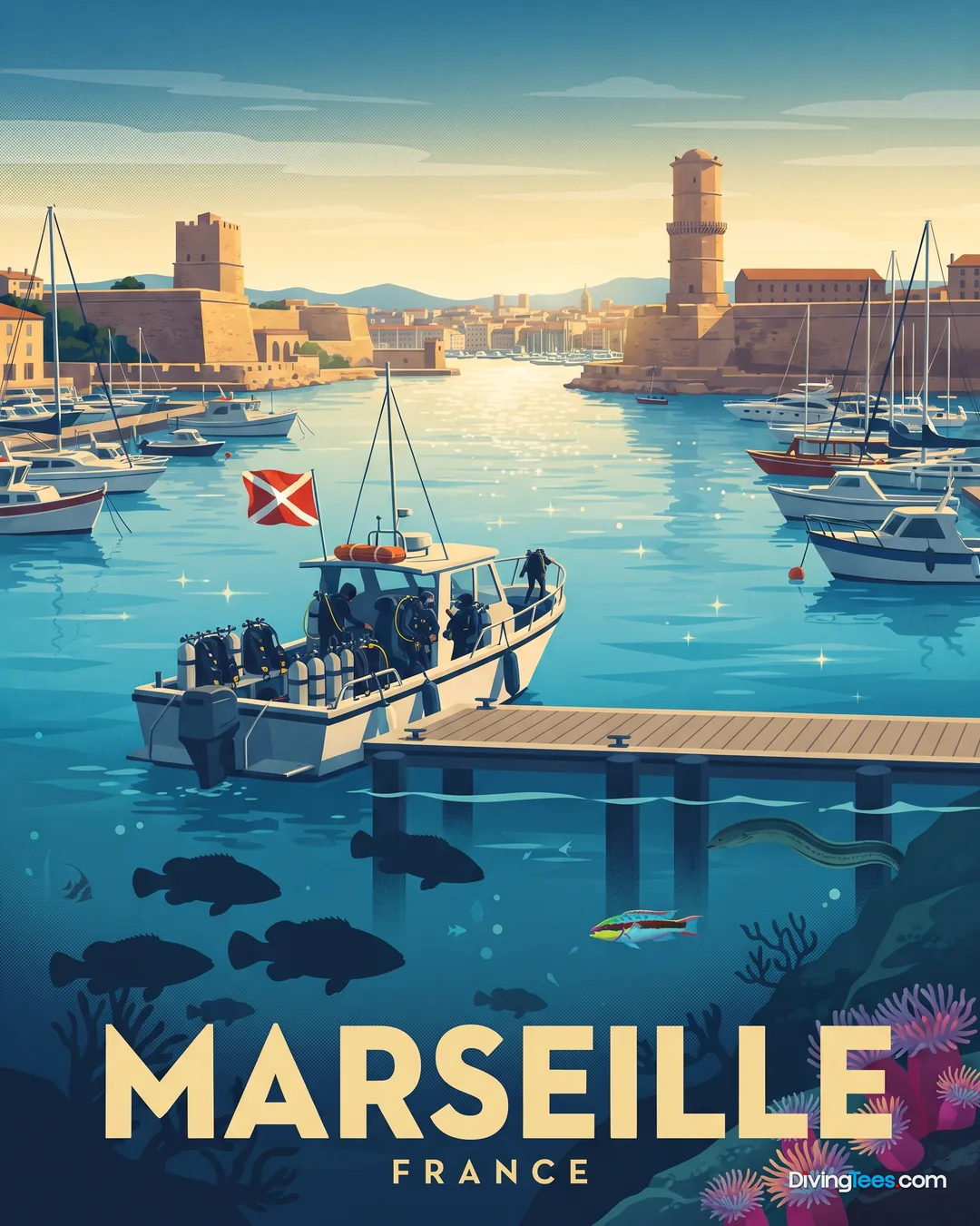
At 58 metres, Le Ker-Bihan rests upright on the seabed, while much shallower sites lead through limestone tunnels, rocky faults and Posidonia seagrass. That contrast is Provence’s appeal: a shore-based holiday with boat diving around Marseille, Cassis, the Frioul and Riou islands, the Côte Bleue and La Ciotat. You can pair a gentle 15-metre reef dive with a serious wreck or deep-wall day, then return to harbours, villages and the Provençal landscape above water.
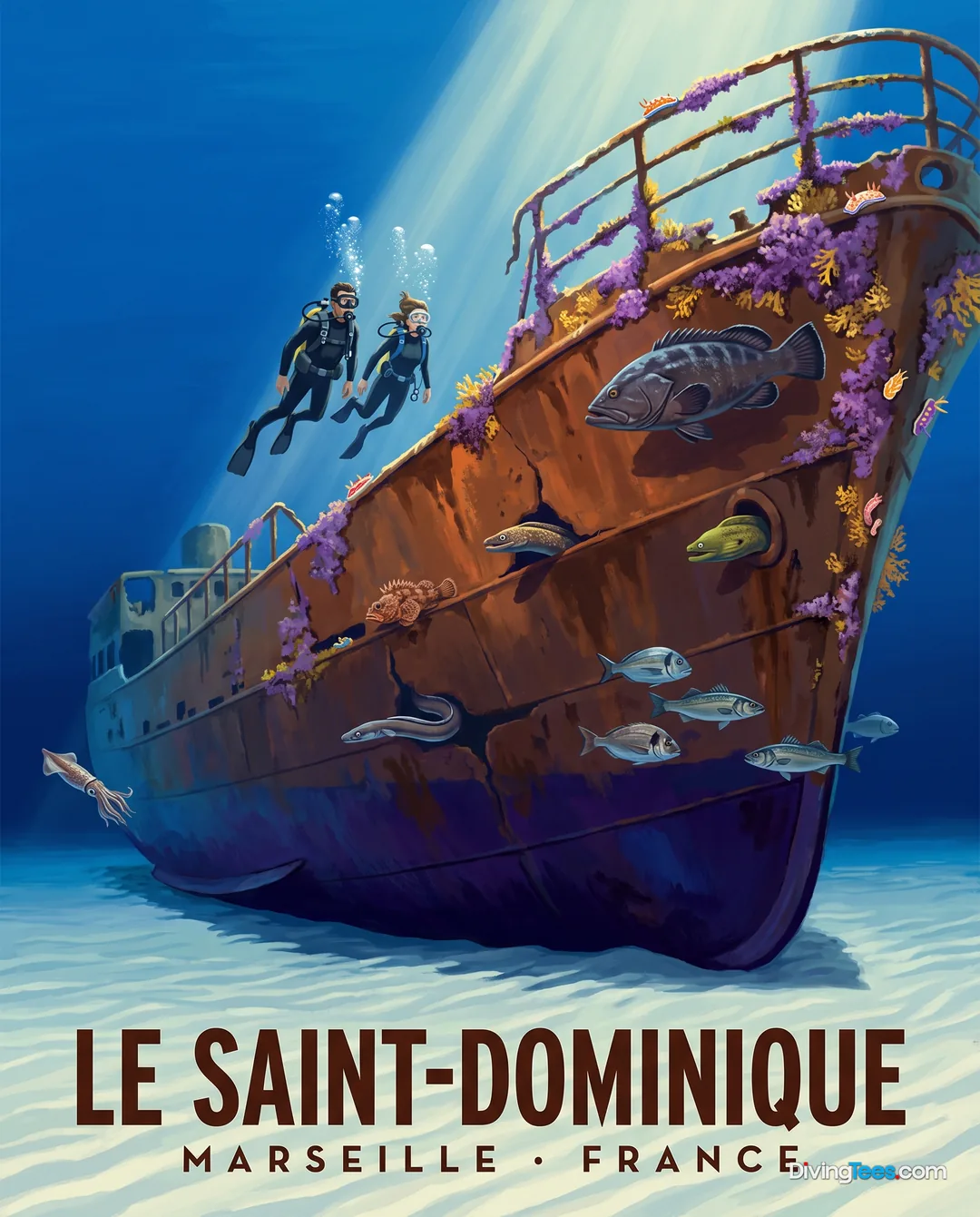
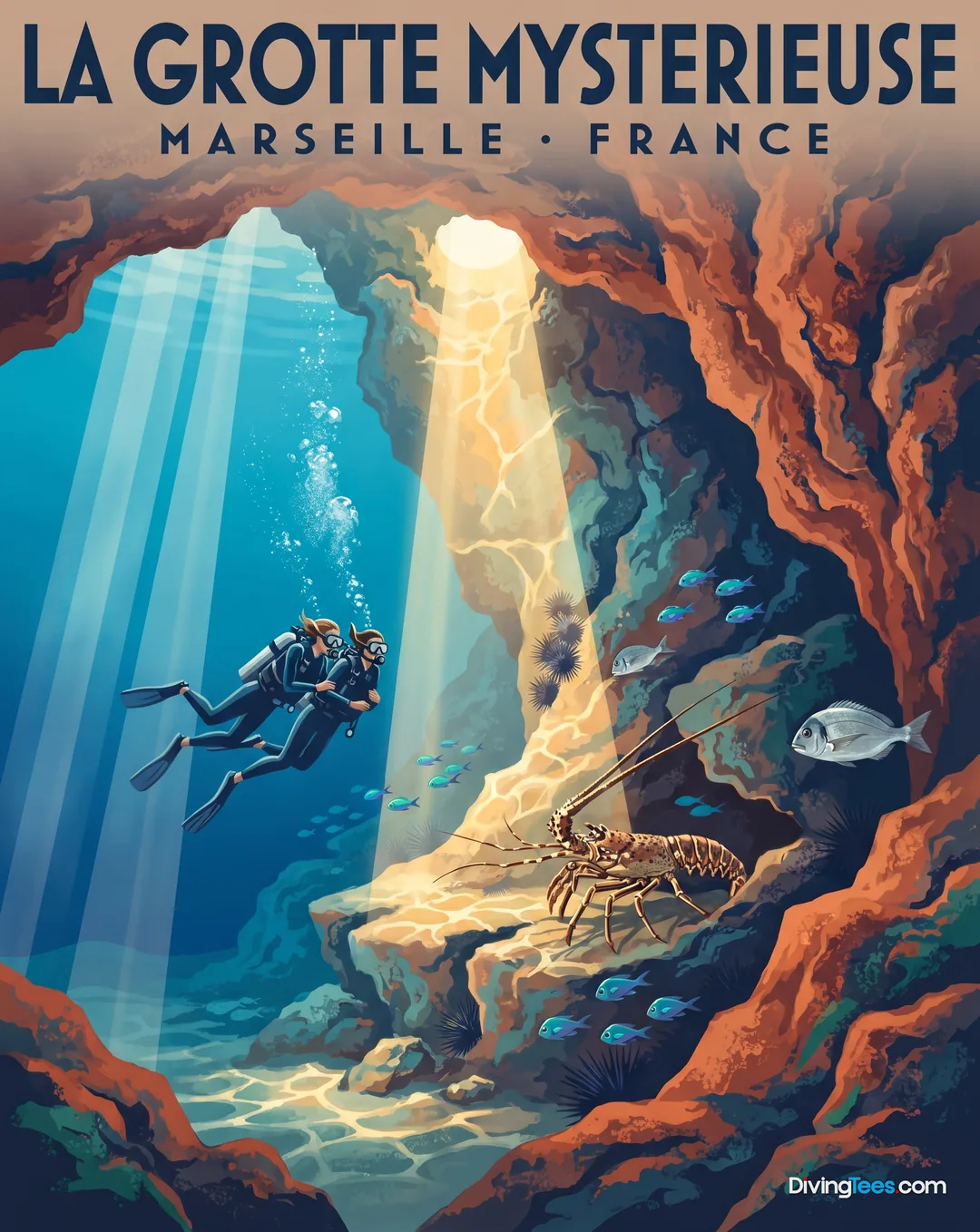
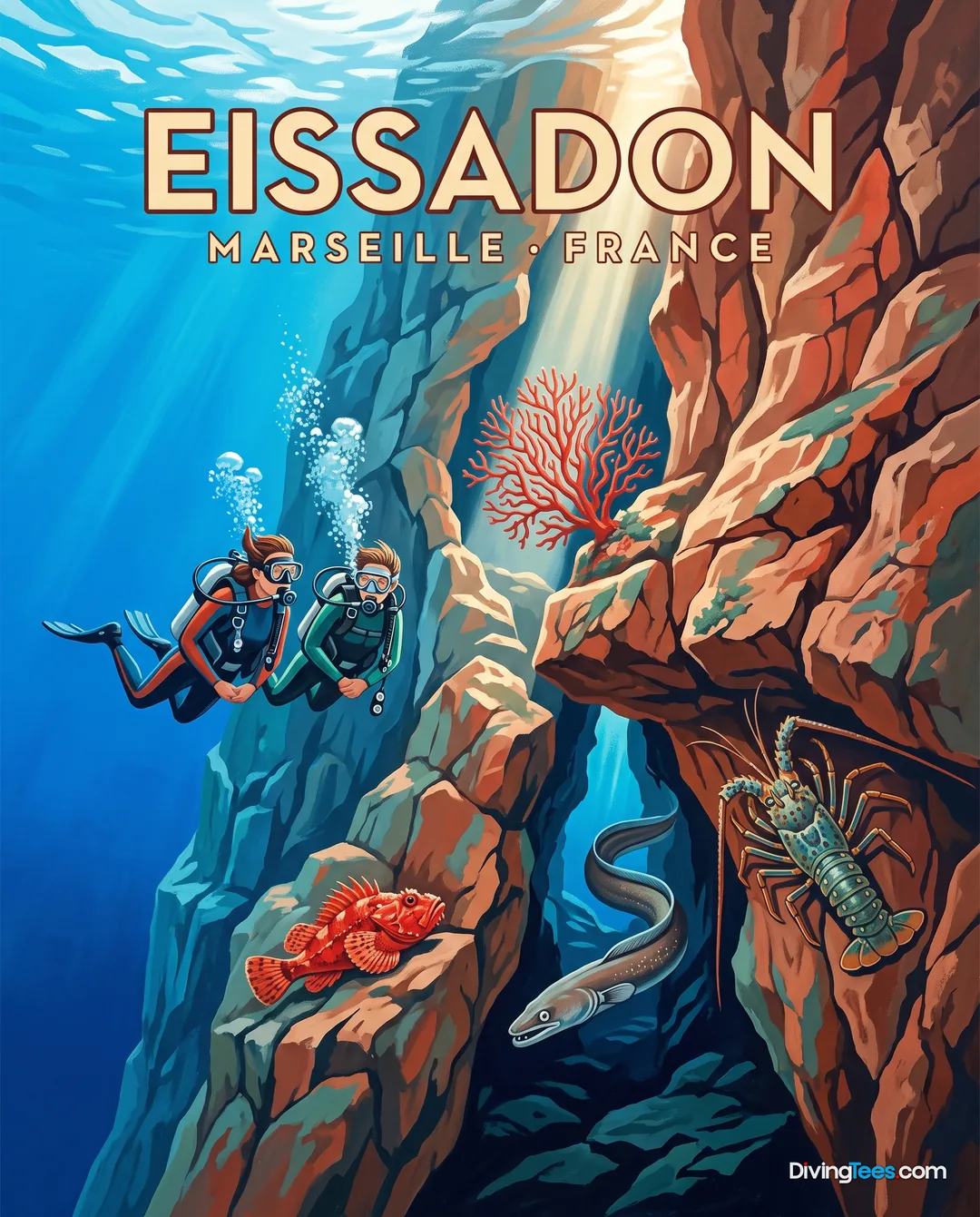
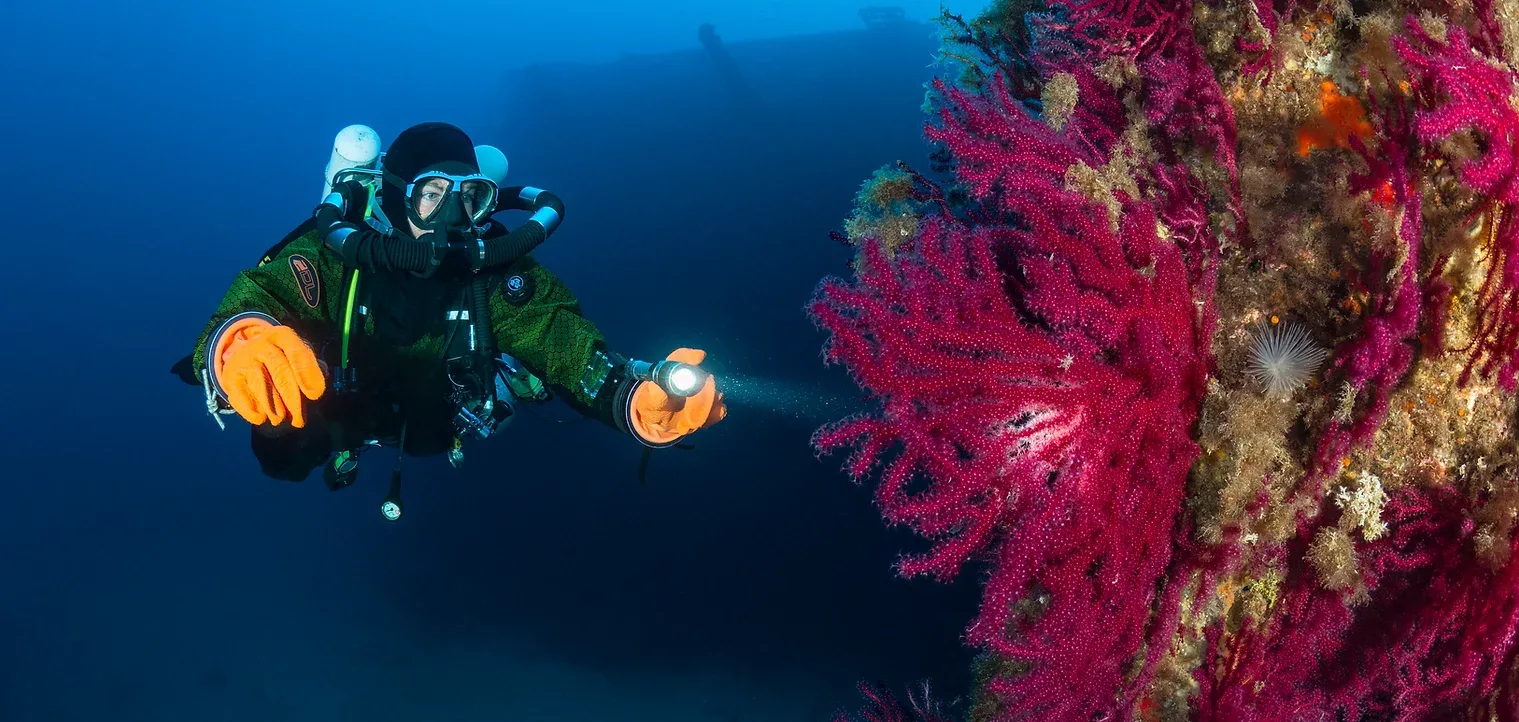
The underwater landscape is limestone rather than tropical reef: calanque walls, narrow faults, caves, sandy patches, seagrass and exposed rock. At Tunnel De La Moyade, a canyon leads from five metres towards 45 metres, with gorgonians and larger fish around the wall. Eissadon and La Grotte Mysterieuse add swim-throughs and shafts of light, while Le Latécoère combines a wreck at 25 metres with cliff topography descending to 40 metres. Wreck divers have Le Saint-Dominique, Le Dalton and Le Liban, with the deepest sections reaching 33 to 36 metres. Currents are variable rather than predictable, and wind can decide whether a site is practical. Visibility may be generous on a settled day, but plankton, swell, wind and coastal run-off can change it. Most worthwhile outings leave by boat, not from the beach.
Look into the shadows of the walls for moray eel, European conger and conger eel, then scan the open rock for grouper, scorpionfish, anthias, damselfish and seabream. White seabream and salema porgy move across the rocky ground, while spiny lobster and European spiny lobster favour holes and overhangs. Gorgonians add colour to deeper walls, and red coral is a particular feature of Grotte A Corail. Nudibranchs reward a slower search among the fixed life. Barracuda are noted around Tunnel De La Moyade, where the canyon, wall and gorgonian formations keep the eye moving. These encounters belong to the Mediterranean structure of the sites rather than a single seasonal spectacle, so the choice of month is driven more by conditions and boat traffic than by a promised migration.
May, June, September and October offer the most sensible balance for a diving holiday. The sea is generally more manageable for repeated boat outings, while the busiest summer period brings more leisure craft and divers around Marseille and Cassis. July and August can still provide good diving, but access and anchoring become more congested, particularly at popular calanques. Spring and autumn also suit a trip built around several harbours and a day ashore, rather than spending the whole visit waiting for the busiest sites to clear. Provence remains diveable for much of the year, but wind and sea state should shape the daily plan.
There is room here for Open Water divers, particularly on sheltered sites such as Oule, Eissadon and the shallower parts of Cap Caveau. Experience with buoyancy and confined spaces matters before entering tunnels or caves, even when the maximum depth looks modest. Deeper wrecks and walls call for appropriate training: PADI, SSI or BSAC qualifications should match the planned depth and wreck environment, with French Niveau 2 or equivalent commonly relevant. Nitrox is useful for repetitive days where offered. Le Ker-Bihan is for Niveau 3 or confirmed technical divers, not a casual extension of a holiday dive.
From London Heathrow or Gatwick, and from Manchester, reach Provence by air, rail or road via Marseille. The air gateway is Marseille-Provence, while rail travellers arrive through Marseille Saint-Charles. Allow a full travel day from Britain once the onward journey to the coast is included. Diving departures are spread between the ports of Marseille, Cassis, La Ciotat, Carry-le-Rouet and Sausset-les-Pins, so the final transfer matters more than the initial arrival. Some harbours and centres can be reached on foot from nearby accommodation, but elsewhere you will need a car or taxi. Choose the port first, then arrange the rest of the journey around it, rather than assuming the whole coastline works as one local base.
Treat Provence as a collection of port areas, not one compact resort. Pick one main harbour and check the exact departure point before booking accommodation, because a room that looks close to Marseille or Cassis on a map may leave you crossing the coast for every boat. Ask which sector is planned each day, especially when wind changes the options. In the Calanques, check the rules for the precise site: archaeological protection zones, including the Cousteau triangle off Riou and Plane and Pointe de la Voile at Cap Morgiou, are off limits to diving. Do not take shells, animals or wreck material. Where an environmental mooring is installed, use it rather than dropping an anchor. Avoid summer weekends if boats are likely to spoil the quieter sites. Keep a non-diving day before a flight, and use it for the calanques or islands rather than squeezing in a final dive. The landscape rewards judgement, particularly around caves, deep walls and changing wind.
A seven to ten-day land-based stay works well. Keep one base near the chosen harbour and make daily boat trips from there, rather than losing time moving between Marseille, Cassis, La Ciotat and the Côte Bleue. Build the programme around a mixture of sheltered limestone sites, wrecks and, if qualified, deeper walls. Leave a day for the calanques, islands or nearby villages, which also gives a non-diving companion a proper holiday rather than a succession of boat departures.
Hello, I'm Marina, DivingDeal.com's AI assistant. I guide you through destinations, areas and countries.
Thinking about the whole trip and the flights? Talk it over with Edith →
Marina is an AI. Some links are affiliate links: DivingDeal may earn a commission, at no extra cost to you. Bookings are made with the partner.