

Easy Dive
Google 4.7/5 (293 reviews)
France · Mediterranean
Posidonia meadows, rocky pinnacles, dark grottos, octopus and coastal fish shape dives around Cap d’Antibes, the Gulf of Juan and the Lérins Islands.
For subtitles in English: start the video firstthen click the gearat the top right of the video, select “Subtitles/CC”, then “Auto-translate” and choose “English”.
Antibes is a shore-based Mediterranean diving holiday built around Cap d’Antibes, Juan-les-Pins, the Gulf of Juan and the Lérins Islands. From sheltered shallows near the Bay of the Billionaires, divers can progress to rocky walls, pinnacles, grottos and local wrecks reached by boat. Light currents keep many outings manageable, while the town supplies beaches, museums, coastal walks and historic streets for non-divers. It suits a four to seven-day stay rather than a dedicated liveaboard trip.
Underwater, Antibes is a mixture of posidonia meadows, broken rock, pinnacles, drop-offs, grottos and occasional wrecks. The shallow coastal sites around Cap d’Antibes make straightforward first dives, while boat trips widen the choice towards the Gulf of Juan and the Lérins Islands. Currents are generally light, although a wall or deeper relief still demands proper control and attention to the guide’s plan. Visibility is often clearest from May to October, but mistral, swell and recent rain can stir the coast and change the day’s site. Most diving is organised as a morning or afternoon boat outing, with full-day trips also available. Night dives and training are part of the local offer. The point is not to chase one headline site, but to match sheltered water, open relief and weather on the day.
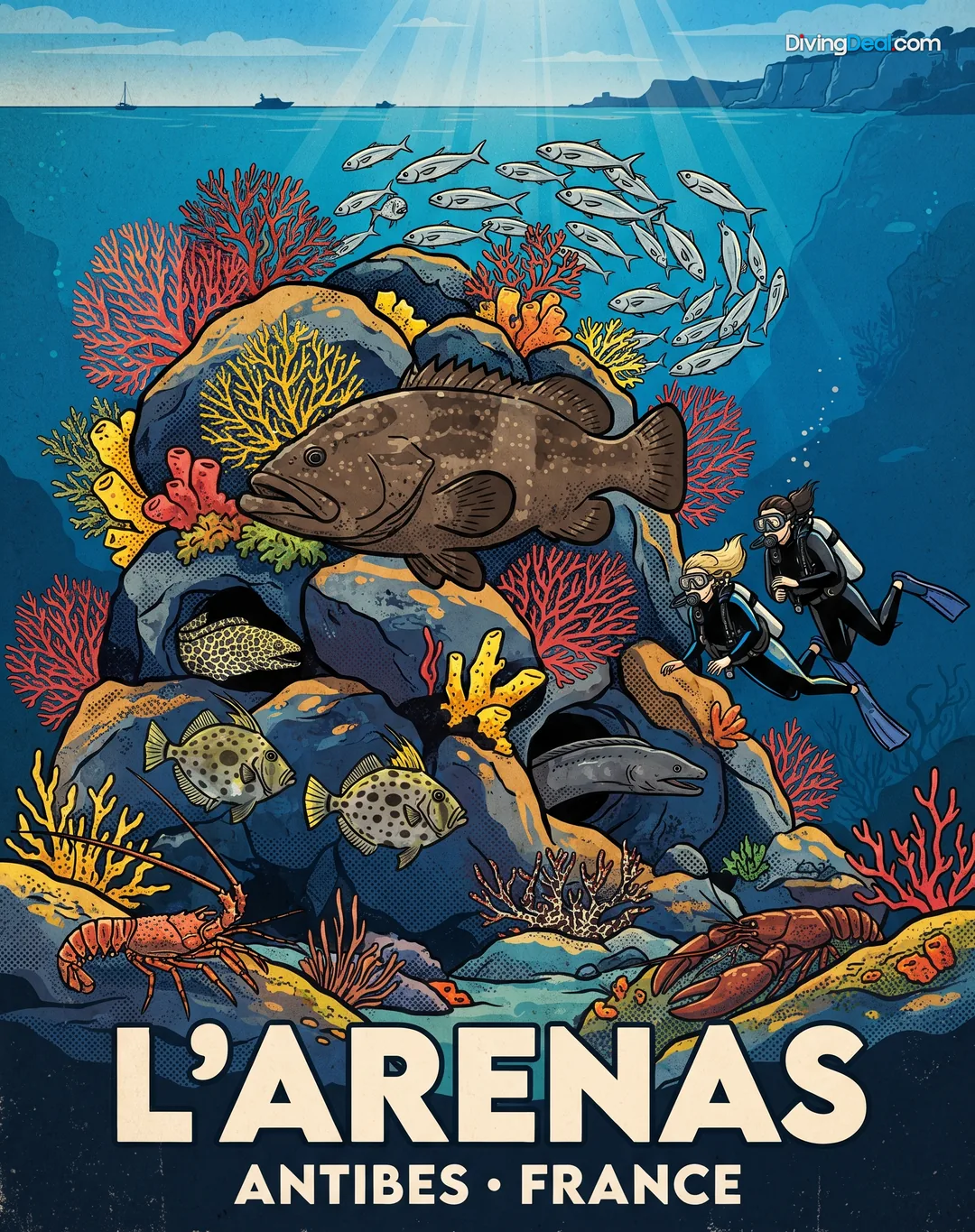
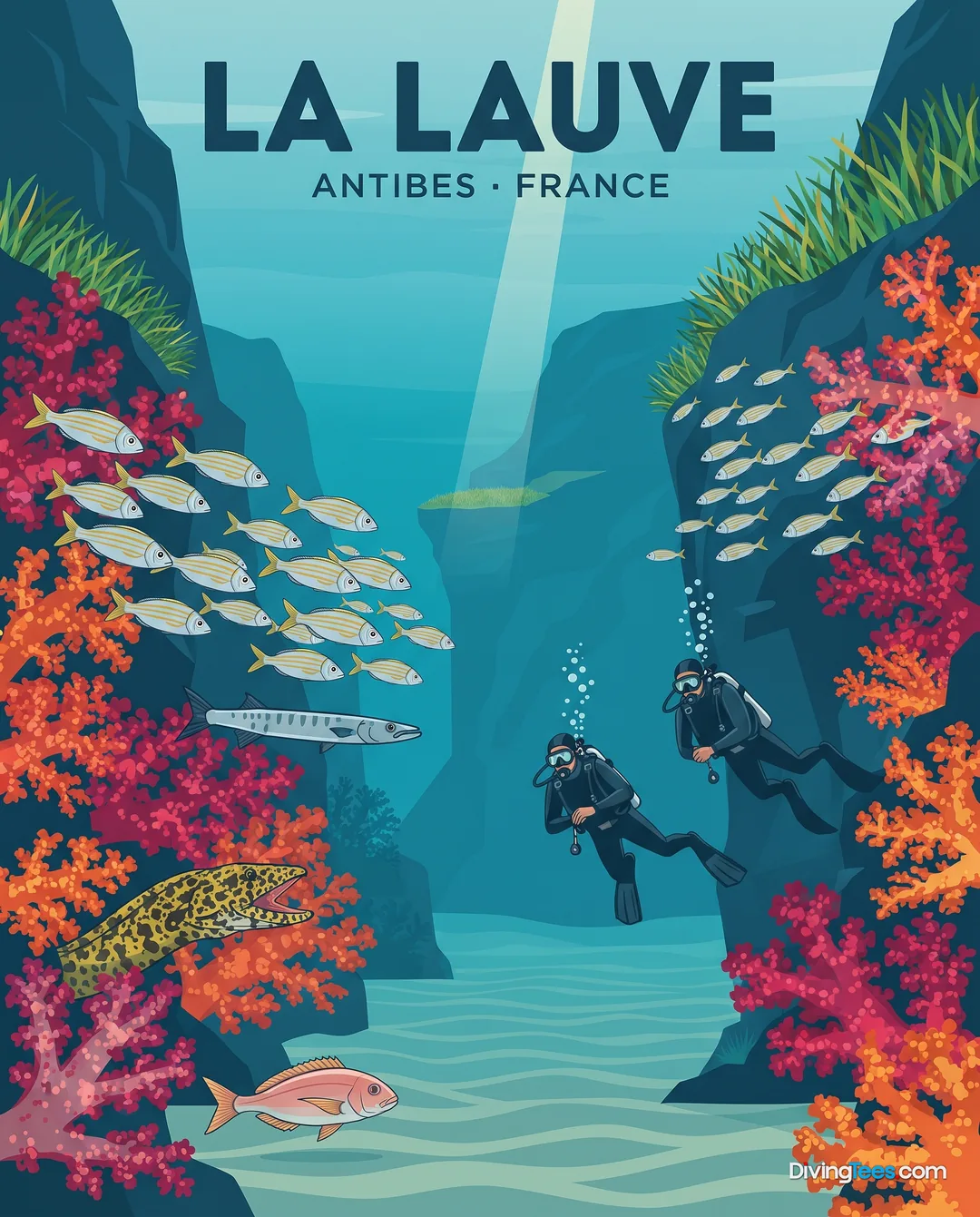
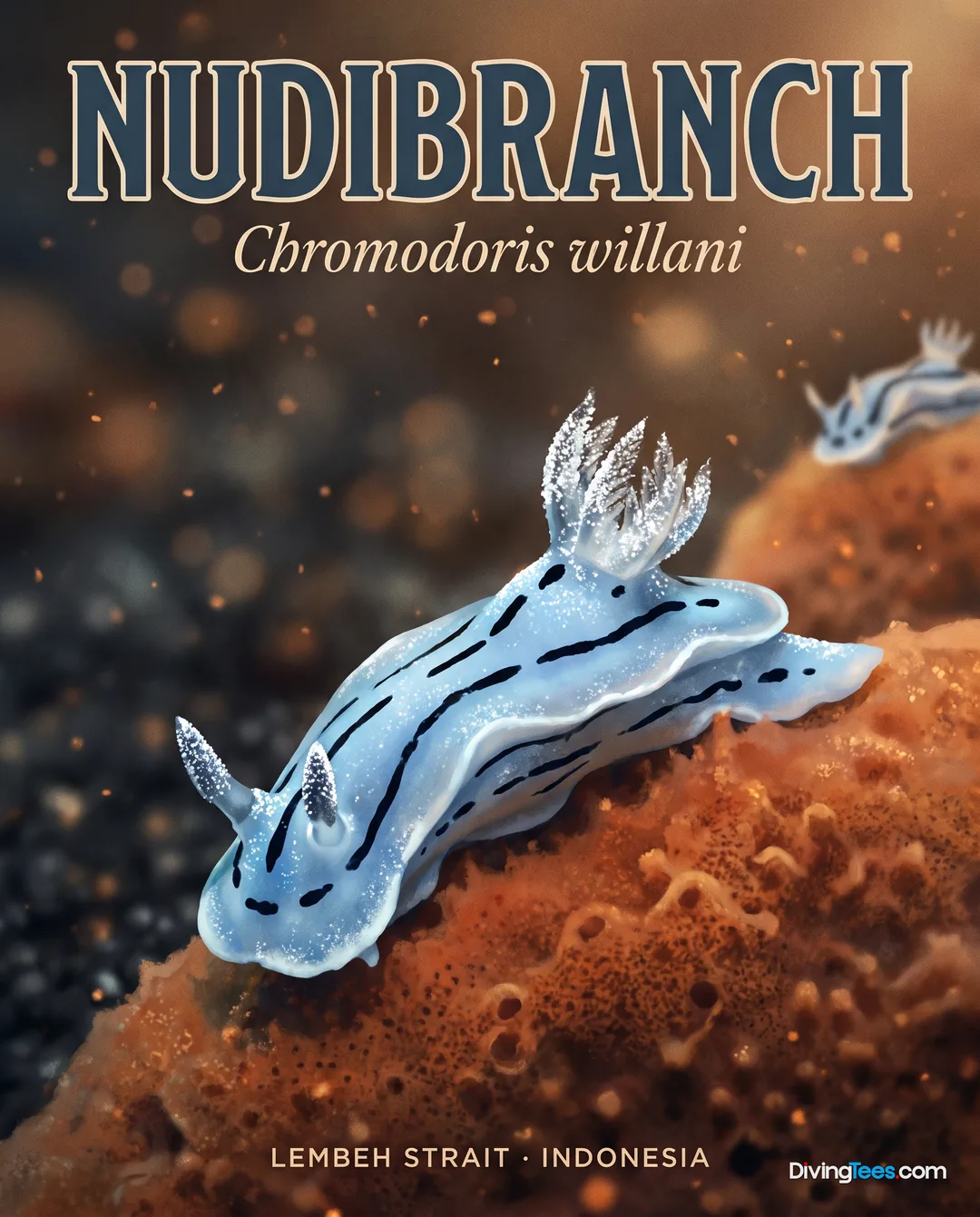
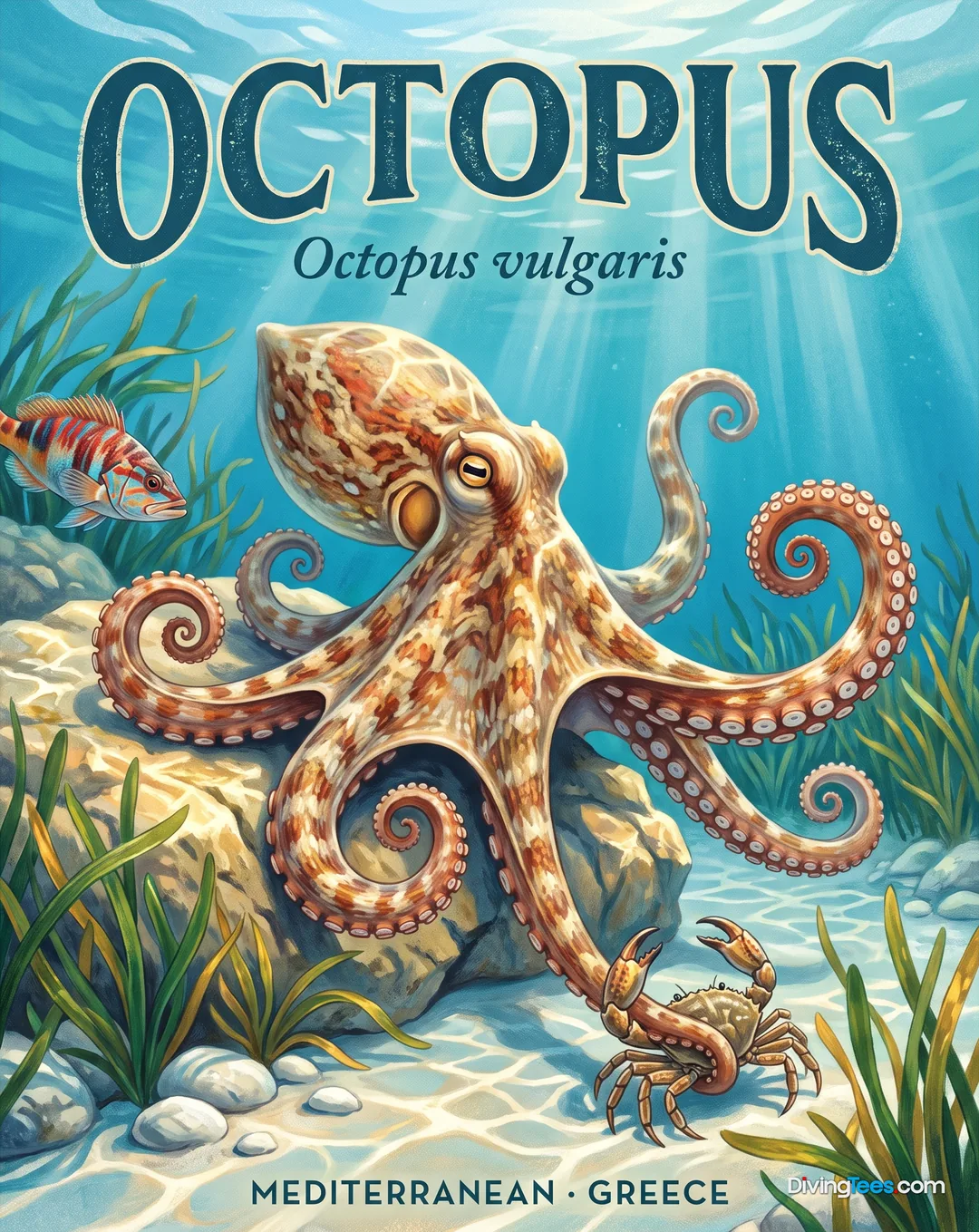
The rocky ground around Antibes supports familiar Mediterranean life rather than tropical reef species. Look for sars, wrasse, labres and octopus among the stones, with conger eels in cracks and lobsters where the terrain becomes more broken. Sponges, gorgonians and nudibranchs add colour to walls, pinnacles and deeper boat sites. Posidonia meadows bring a different character, with fish moving above the leaves and a need for careful finning. Encounters vary with shelter, depth, visibility and the site selected, so a calm shallow dive and a deeper relief dive can feel quite different. The main diving window from late spring into early autumn offers the most favourable combination of water conditions and visibility, while the animals themselves are not tied to a single short season.
Antibes can be dived throughout the year, but May, June, September and October offer the most sensible balance for a diving holiday. From late spring into early autumn, the water is warmer, the sea is usually more cooperative and visibility is commonly better. July and August bring the greatest pressure from beaches and boats, so the quieter shoulders of the season are preferable if underwater space matters. Wind is the important qualification: mistral, swell or recent rain can quickly reduce visibility along the coast. Keep some flexibility in the plan, especially outside the settled summer window, and let the centre move the outing to a more sheltered site when conditions turn.
Beginners and divers returning to the sport can start on the shallow, sheltered sites around Cap d’Antibes, where currents are generally light. More experienced divers have drop-offs, pinnacles, grottos and deeper outings towards the Gulf of Juan and the Lérins Islands. An Advanced qualification or equivalent is useful for deeper walls and relief, while a Wreck qualification is appropriate when an operator schedules an wreck dive. PADI, SSI and BSAC divers should bring certification evidence matching the planned profile.
From London Heathrow, London Gatwick or Manchester, the usual air gateway is Nice. From there, Antibes is reached by road or rail, with dive operations based mainly in Juan-les-Pins and nearby harbour areas such as Port Gallice and Golfe-Juan. Allow connection time between the airport arrival, the train or road journey and the centre’s departure time, particularly when a boat leaves in the morning. No ferry is needed to reach Antibes itself. Boats serving the Lérins Islands depart from neighbouring ports, but those island trips are separate from getting to the town. Once settled, the harbour areas can be reached on foot, by local transport or by taxi, depending on where you stay.
Ask for the site to be matched to the wind and swell, rather than treating the published plan as fixed. After mistral, heavy swell or rain, visibility can deteriorate quickly, and a sheltered Cap d’Antibes site may be the wiser choice. For a first dive, the shallow water around the Bay of the Billionaires is more sensible than committing immediately to a wall, grotto or deeper relief. In July and August, book morning departures where possible, when boats and beaches are generally less crowded. Compare departures from Juan-les-Pins and Golfe-Juan, since they open different routes towards the cap and the Lérins Islands. Pack your own mask, snorkel and fins if you want to snorkel from the cap, where rental is not available directly. Leave a day for the islands or the coast, and remember that Natura 2000 is not automatically a no-take reserve. Keep clear of posidonia and never anchor on it.
Use Juan-les-Pins or a nearby harbour as the practical base, depending on which boat route you want. Centres generally run half-day and full-day outings, leaving the rest of the day for the beach, old Antibes, the Picasso Museum or the Cap d’Antibes coastal path. A four to seven-day stay gives room for several boat trips, a weather buffer and a non-diving day for the Lérins Islands. The arrangement works equally well for a diver travelling with someone who wants land-based activities.
Hello, I'm Marina, DivingDeal.com's AI assistant. I guide you through destinations, areas and countries.
Thinking about the whole trip and the flights? Talk it over with Edith →
Marina is an AI. Some links are affiliate links: DivingDeal may earn a commission, at no extra cost to you. Bookings are made with the partner.
Your last day stays dry: no diving in the 18-24 hours before a flight, the perfect window to see the destination from another angle.
 Culture
⏱ 8 h · ★ 5.0 (107 reviews)
from £544$728€650
see on Viator ↗
 Culture
⏱ 2 h · ★ 5.0 (66 reviews)
from £21$28€25
see on Viator ↗
 City
⏱ 4 h · ★ 4.9 (16 reviews)
from £456$610€545
see on Viator ↗
 City
⏱ 5 h · ★ 4.9 (67 reviews)
from £486$649€580
see on Viator ↗
Ratings and reviews collected by Viator and Tripadvisor.
You can dive in Antibes throughout the year, but May, June, September and October offer a sensible balance of warmer water, cooperative seas and better visibility. July and August are busier around beaches and boats. Keep your plans flexible, since mistral, swell and recent rain can affect visibility and site choice.
Antibes suits beginners and returning divers, who can start in shallow, sheltered water around Cap d’Antibes, where currents are generally light. More experienced divers can explore drop-offs, pinnacles, grottos and deeper sites towards the Gulf of Juan and Lérins Islands. Deeper walls benefit from Advanced certification, while wreck dives require suitable training.
In Antibes, you can explore Posidonia meadows, broken rock, pinnacles, drop-offs, grottos and occasional wrecks. Sars, wrasse, labres, octopus, conger eels and lobsters live around the rocky ground. Deeper boat sites add sponges, gorgonians and nudibranchs, while fish move above the Posidonia leaves. Encounters vary with depth, shelter and visibility.
Base yourself in Juan-les-Pins or near a harbour such as Port Gallice or Golfe-Juan, depending on your preferred boat route. Local centres offer morning, afternoon and full-day outings. A four to seven-day stay allows several dives, a weather buffer and time for beaches, old Antibes, museums, coastal walks or the Lérins Islands.