

Air Dive Alor
★ 4.9/5 (104 reviews)
Alor · Indonesia · Asia
Descend into the rich black and white sandy slopes of Kalabahi Bay to unearth an astonishing collection of camouflaged and elusive macro life.
For subtitles in English: start the video firstthen click the gearat the top right of the video, select “Subtitles/CC”, then “Auto-translate” and choose “English”.
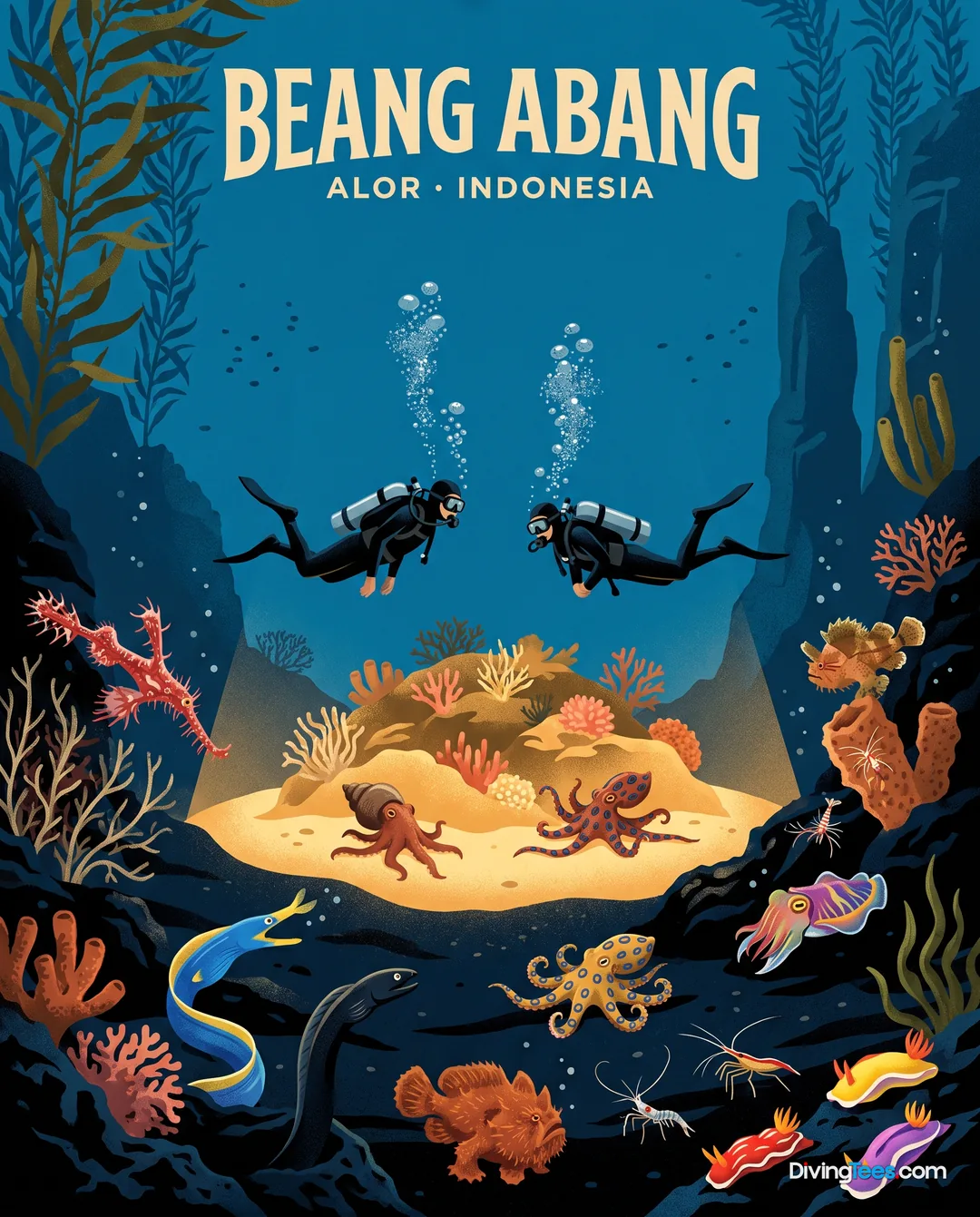
Kalabahi Bay presents a complete departure from the vibrant coral gardens often associated with Indonesian diving. Here, the underwater landscape is defined by a mix of black and white sandy slopes, interspersed with rocky outcrops and intriguing debris fields. This environment is the quintessential setting for 'muck diving', a discipline that rewards patience and a keen eye, as you meticulously scrutinise the substrate for its camouflaged inhabitants. The unique substrate composition creates specific micro-habitats, fostering a density and variety of cryptic species that thrive in these seemingly barren conditions.
Your dive in Kalabahi Bay is a slow, deliberate exploration, often focusing on a small area where life unfolds in intricate detail. This is not a site for covering vast distances but for careful observation, allowing the bizarre and beautiful residents to reveal themselves. You'll spend your time peering under rocks, sifting through detritus, and meticulously scanning the sandy bottom, an approach that rapidly transforms an initially unusual environment into a captivating underwater world of discovery.
The bay is a prime location for encounters with some of the ocean's most sought-after oddities. Expect to find the mesmerising wunderpus octopus (Wunderpus photogenicus), a master of mimicry and shape-shifting, often seen extending its arms from concealed burrows. Frogfish, with their strange appearance and alluring esca, are regular residents, blending seamlessly with their surroundings on rocks and sponges. And for those with a truly sharp eye, the elusive rhinopias scorpionfish (Rhinopias sp.), a master of camouflage, can be spotted swaying gently, perfectly mimicking a piece of algae or coral.
Beyond these stars of the macro world, Kalabahi Bay is a treasure trove of smaller, equally fascinating creatures. Keep an eye out for the vibrant harlequin shrimp (Hymenocera picta), often guarding their star-fish prey, and the intelligent coconut octopus (Amphioctopus marginatus) utilising discarded shells as mobile homes. You might also encounter the tiny pygmy squid (Idiosepius sp.) or the bizarre Halimeda ghost pipefish (Solenostomus halimeda), perfectly camouflaged among the algae it mimics. Each dive offers a fresh opportunity to spot something new and unexpected, constantly challenging your observational skills.
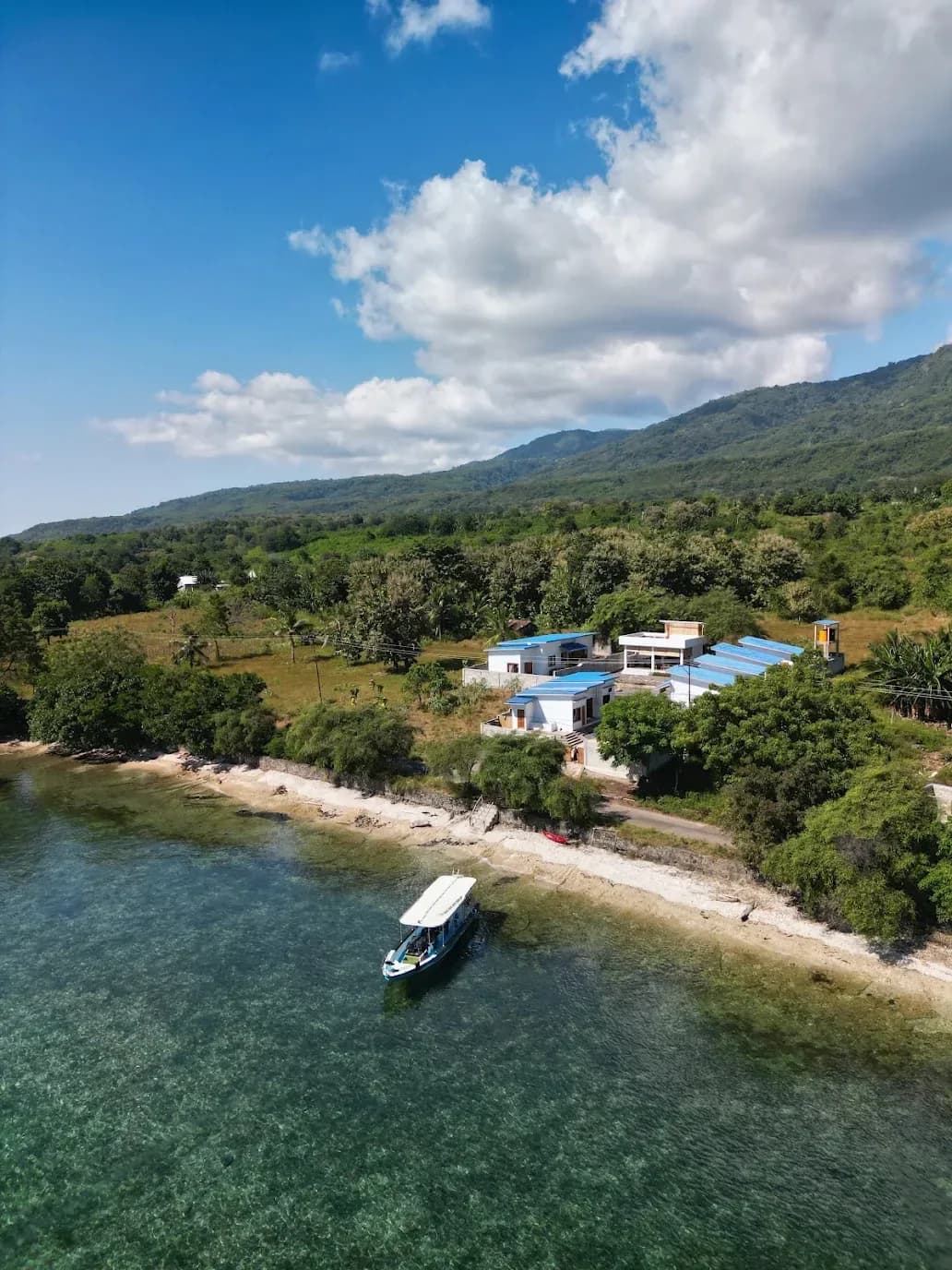
The diverse array of micro-habitats within the bay, from soft coral slopes to silty black bottoms, ensures a variety of sites within easy reach of the Alami Alor resort. These varied landscapes attract different species, meaning that even short 2 to 15-minute speedboat rides can transport you to entirely new ecosystems, each with its own specific collection of tiny and strange animals. This constant variation keeps the diving experience fresh and exciting, making every descent a potential for a new incredible sighting.
Kalabahi Bay is particularly well-suited for afternoon and night dives, when many of its cryptic inhabitants become more active and venture out of their hiding spots. The calmer conditions within the bay also make it an excellent location for snorkeling, allowing you to observe some of the shallower macro life from a different perspective. Whether day or night, the focus remains on the incredible biodiversity found in these seemingly unassuming environments, revealing a vibrant ecosystem thriving just beneath the surface.
This site is accessible to divers of all levels. The best time to dive Kalabahi Bay is between March and December, avoiding the January-February period when the resort is closed. Visibility can range from 15 to 40 meters, offering clear views of the intricate macro life. While the bay itself can be calmer, be aware that the broader Alor region experiences currents influenced by cold-water upwellings, requiring experienced captains and dive guides who understand the local tidal patterns.
2 liveaboards depart from Alor another way to explore the region, over several days at sea.