Liveaboards · Thailand
MV Bavaria — a purpose-built Andaman dive boat with a serious diving routine
What makes this boat unique
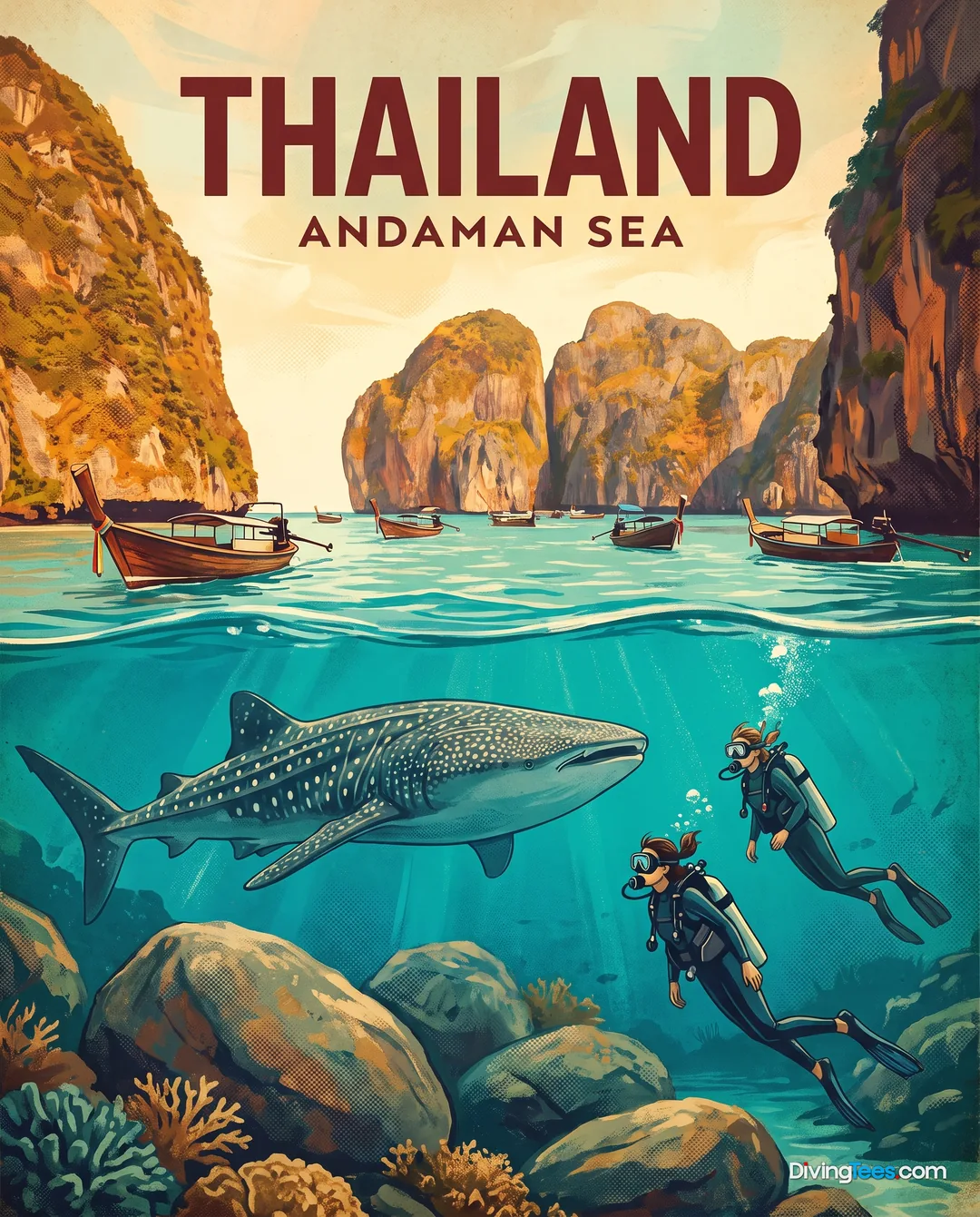
- MV Bavaria runs 4-day/3-night and 7-day/6-night cruises from Thap Lamu to the Similan Islands, Koh Bon, Koh Tachai, Richelieu Rock and the Surin Islands.
- Dive groups are kept to 4–6 divers per guide.
- The diving setup includes 12-litre aluminium tanks with INT valves, DIN adapters, a shaded platform and a separate camera rinse tank.
- Comfort Twin, Comfort Double and Deluxe cabins have private bathrooms; the two Standard Bunk cabins share shower and toilet facilities.
- The boat welcomes snorkellers and non-divers, with vegetarian and vegan food available when requested at booking.
For subtitles in English: start the video firstthen click the gearat the top right of the video, select “Subtitles/CC”, then “Auto-translate” and choose “English”.
The invitation
MV Bavaria is for divers who would rather spend a week moving efficiently between Thailand's best-known sites than choose a boat for decoration alone. It was built in Thailand in 2016 specifically for diving, and that purpose shows in the useful parts: a proper equipment area, a large platform, small dive groups and routes that reach the Similans, Koh Bon, Koh Tachai, Richelieu Rock and Surin. The strongest passenger feedback is not about luxury. It is about the crew, the food and the diving, which score 9.1, 9.6 and 9.0 respectively. That is the reason to book this boat: the operation is organised around getting divers into the water repeatedly, then feeding them well and making the practical side disappear.
Boarding
From the dock, MV Bavaria presents as a working steel liveaboard rather than a converted pleasure yacht. Its 2016 launch date matters here: the boat was designed for offshore diving and built to contemporary safety standards, not adapted later around someone else's accommodation plan. Once aboard, the movement is straightforward, with the dive area doing the hard work below and the saloon, outdoor dining area and partly covered sun deck providing the places to regroup. The boat carries up to 24 guests, so it is not an intimate charter vessel, but the small guide groups keep the diving side more personal than the passenger capacity might suggest. English, German and Thai are spoken by the crew.
The atmosphere on board
The atmosphere is shaped less by formal service than by a crew that keeps the moving parts in order. Passenger feedback gives the crew its highest practical mark after the food, and that fits the boat's format: equipment is prepared, groups are assembled around experience and air consumption, and the same guides see divers through the repeated entries and exits of the trip. With up to 24 guests, the boat is large enough to bring together different languages and diving backgrounds, but the 4–6 diver groups stop the underwater experience becoming a crowd. Evenings can stay quiet in the saloon or move outside for dinner and a drink. The crew's real value is that the next dive remains easy to find.
The sites you’ll dive
The shorter 4-day/3-night routes run from Thap Lamu through the Similan Islands, Koh Bon, Koh Tachai, Richelieu Rock and the Surin Islands, with up to 13 dives on the Koh Bon–Koh Tachai route. The 7-day/6-night Trip C adds more time around the Similans and reaches up to 22 dives; longer special routes cover 5 days/4 nights or 8 days/7 nights. The Similans shift between coral gardens and granite formations: Breakfast Bend slopes to sand and reaches -35m, Anita's Reef follows a gentler coral garden to -35m, while West of Eden cuts through granite canyons to -40m. Elephant Head Rock is the more demanding landscape, with arches, tunnels and caverns down to -60m. Koh Tachai Pinnacle reaches -40m and pulls pelagic life across its coral dome. At Koh Bon, the walls and cleaning station are the point: manta rays come there to be serviced. Surin's hard-coral gardens and granite outcrops reach -25m. For wreck diving, Boonsung Wreck reaches -18m and King Cruiser Wreck -35m; the old tin dredger and the 85-metre twin-hulled ferry are now artificial reefs. Deep Six reaches -50m, Christmas Point -40m, Shark Fin Reef -40m and Richelieu Rock supplies the route's famous mix of small creatures and schooling fish without a stated site depth here.
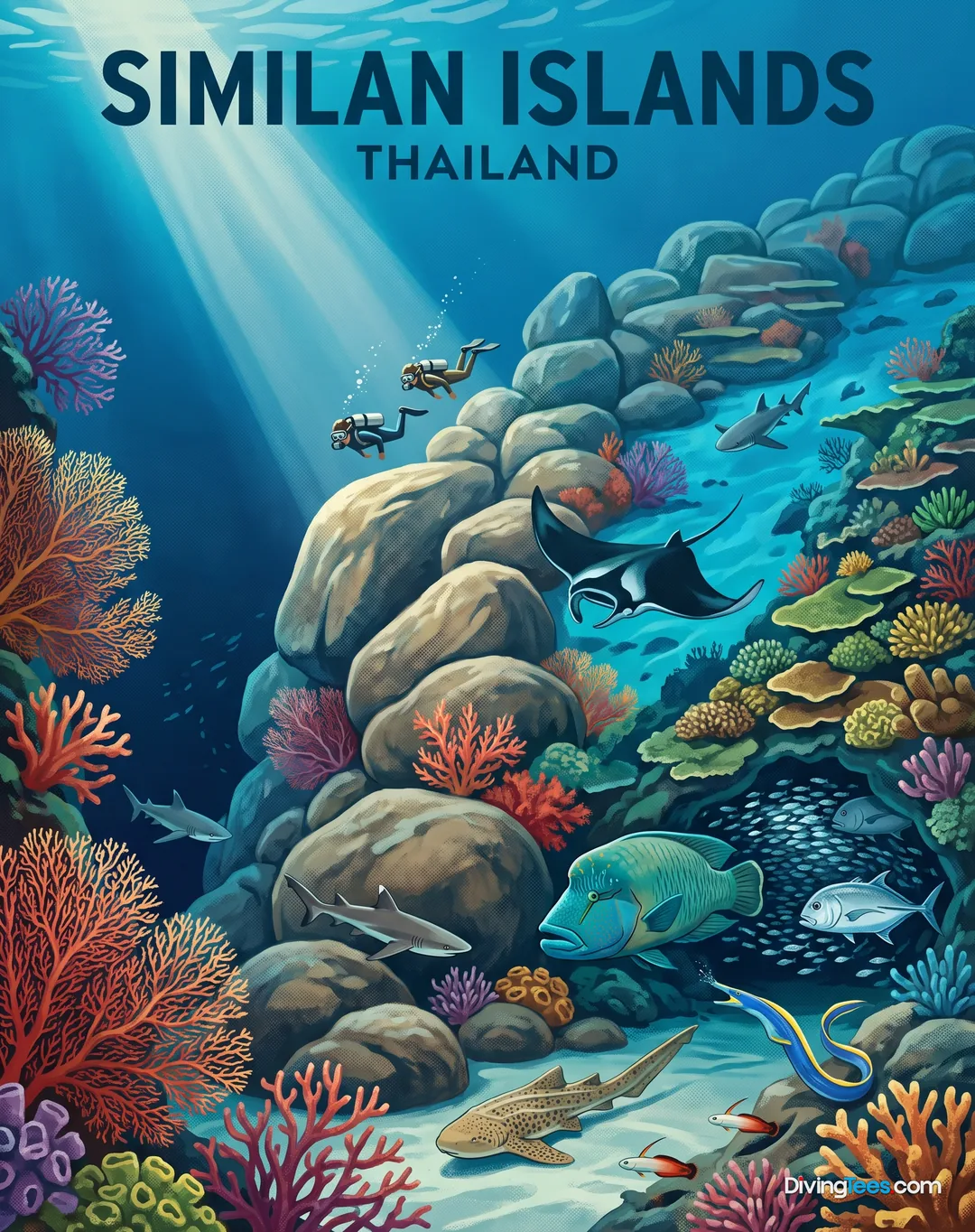
Similan Islands →
Max. depth · 40 m
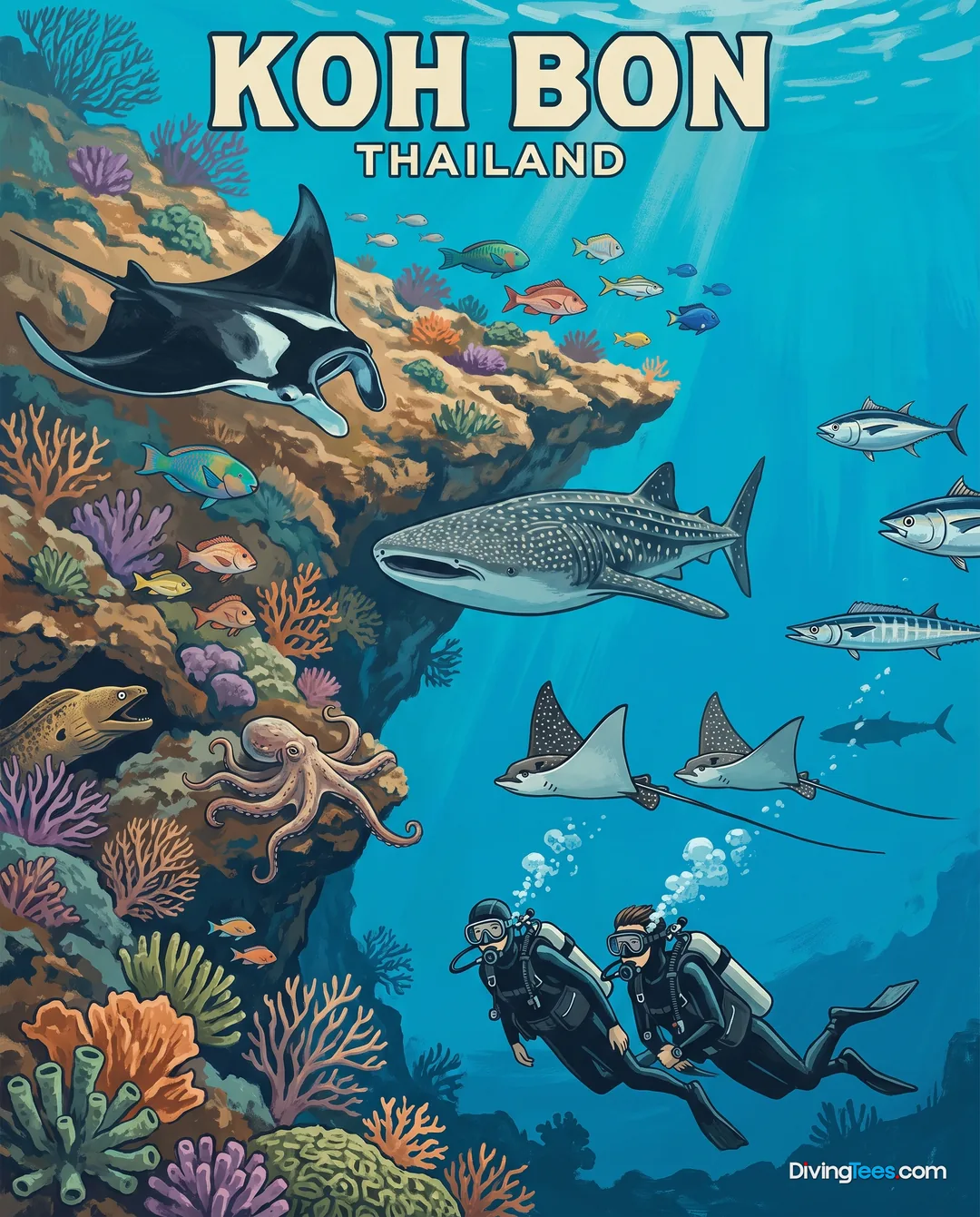
Koh Bon →
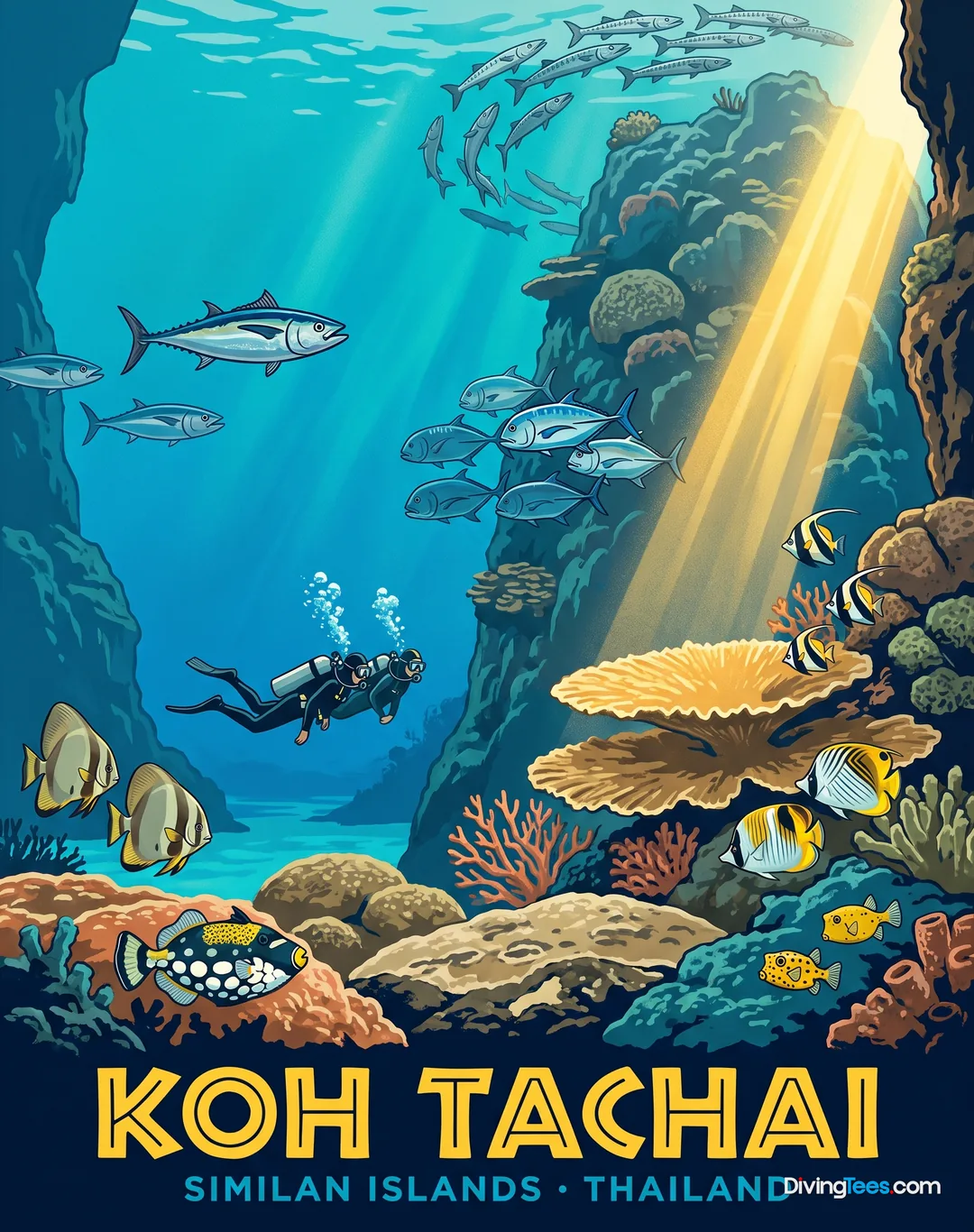
Koh Tachai →
Max. depth · 40 m
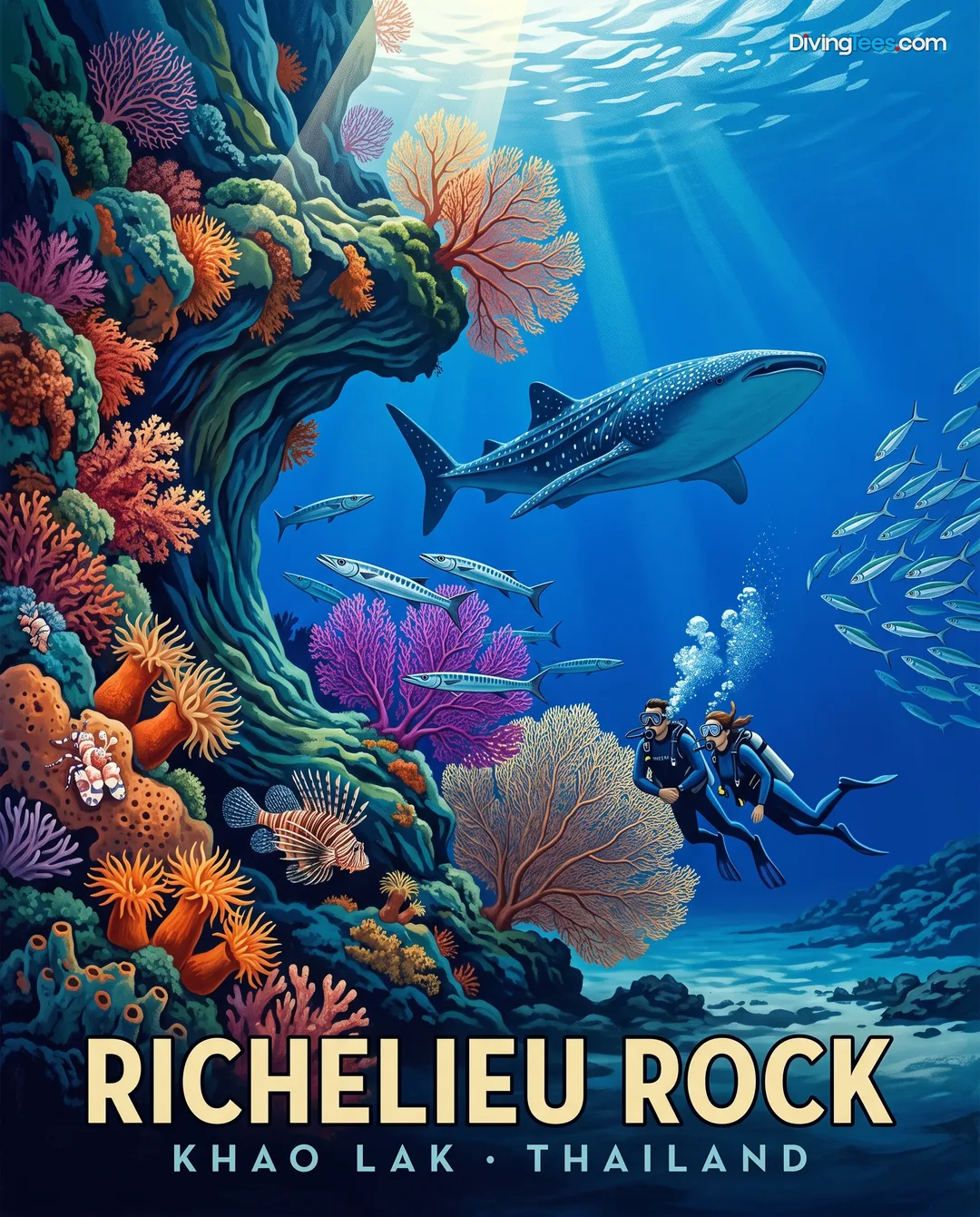
Richelieu Rock →
Max. depth · 35 m
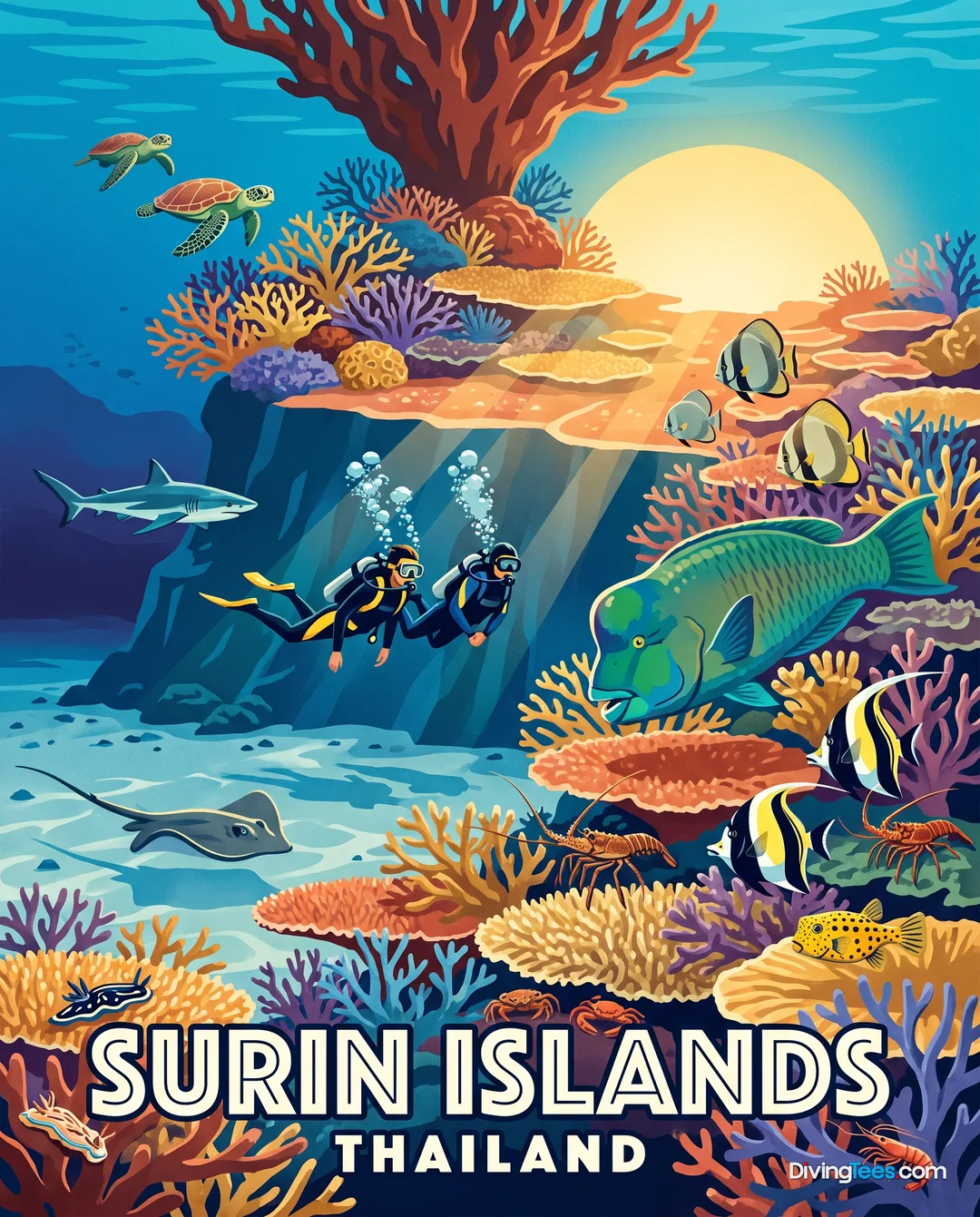
Surin Islands →
Max. depth · 25 m
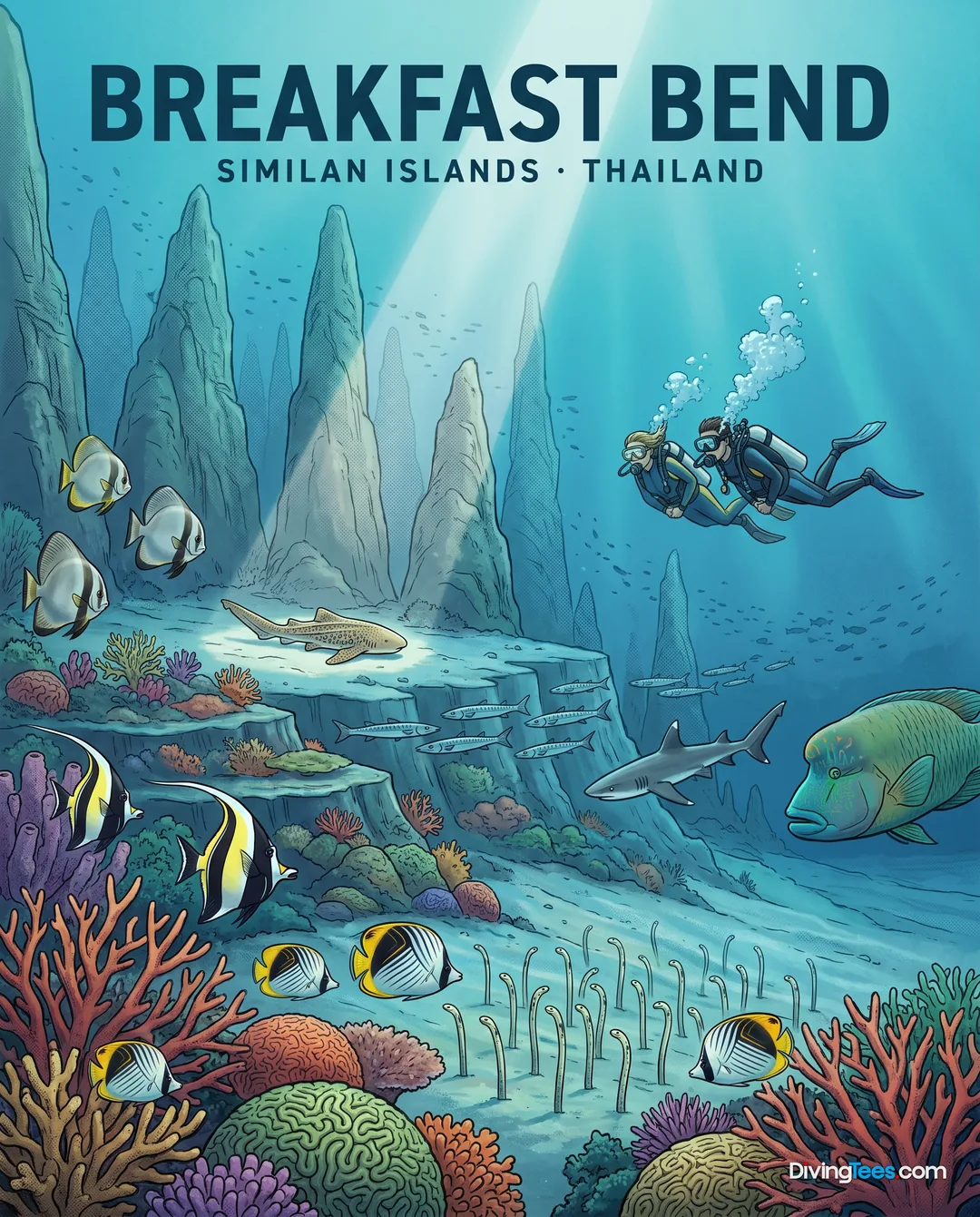
Breakfast Bend →
Max. depth · 35 m
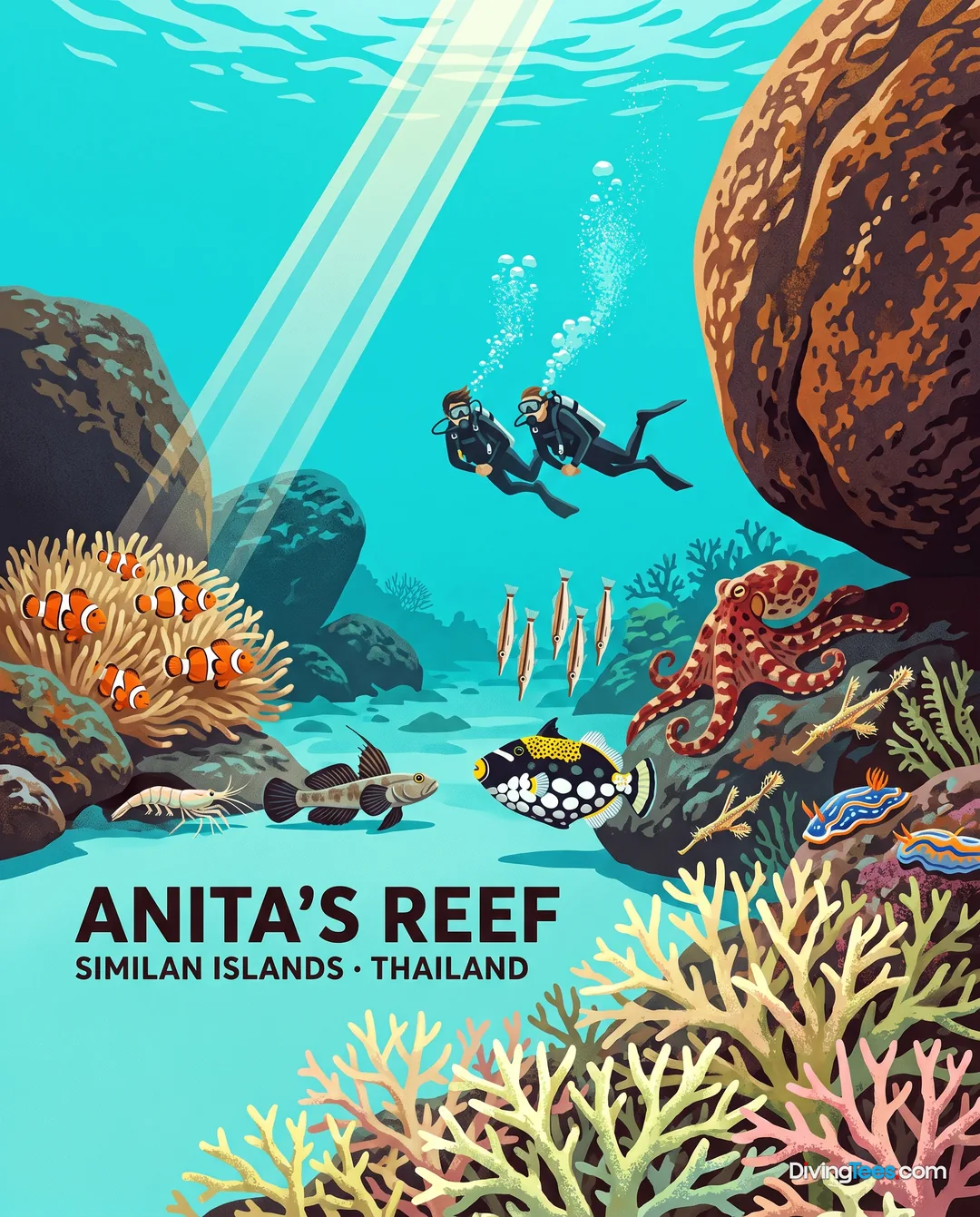
Anita's Reef →
Max. depth · 35 m
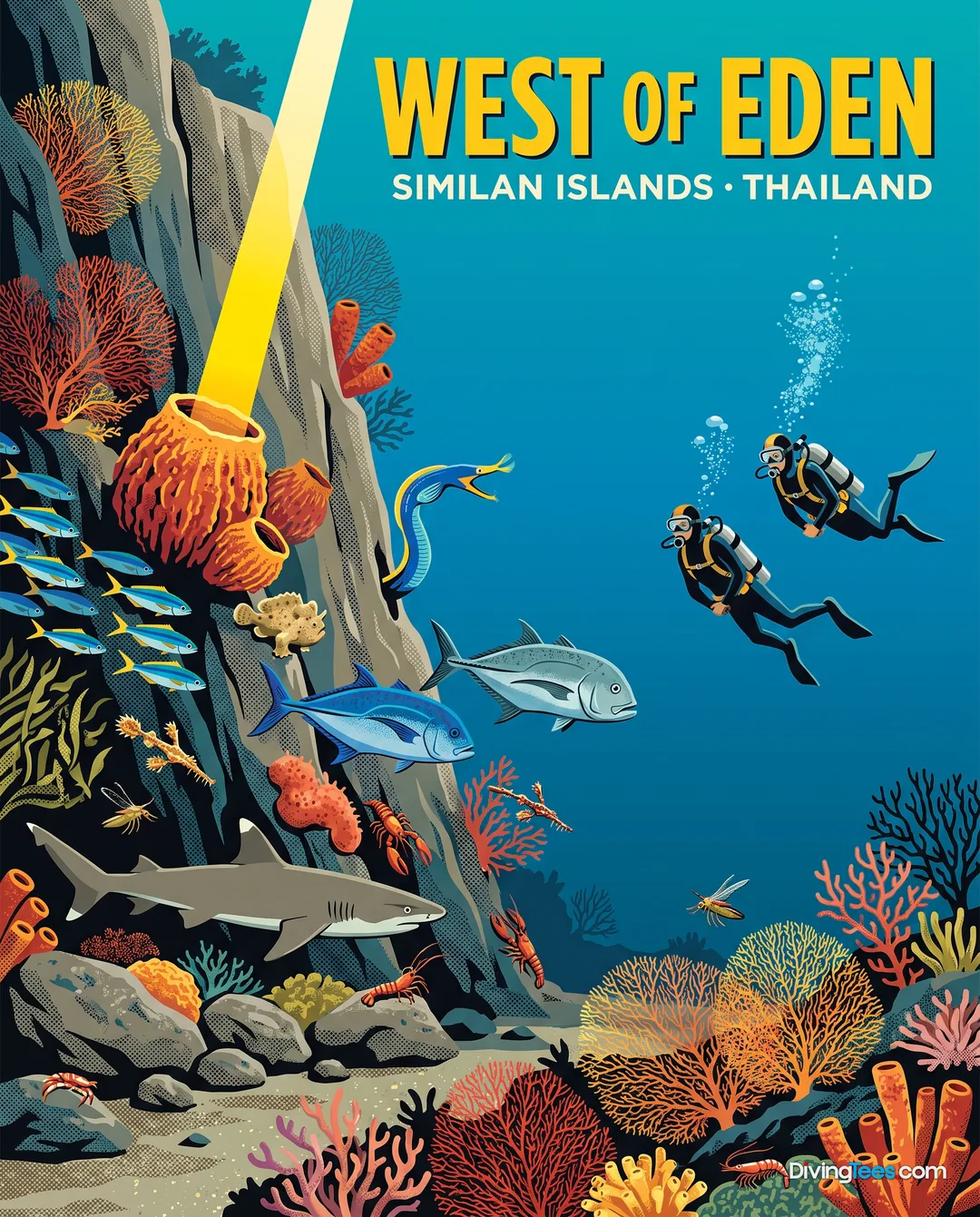
West of Eden →
Max. depth · 40 m
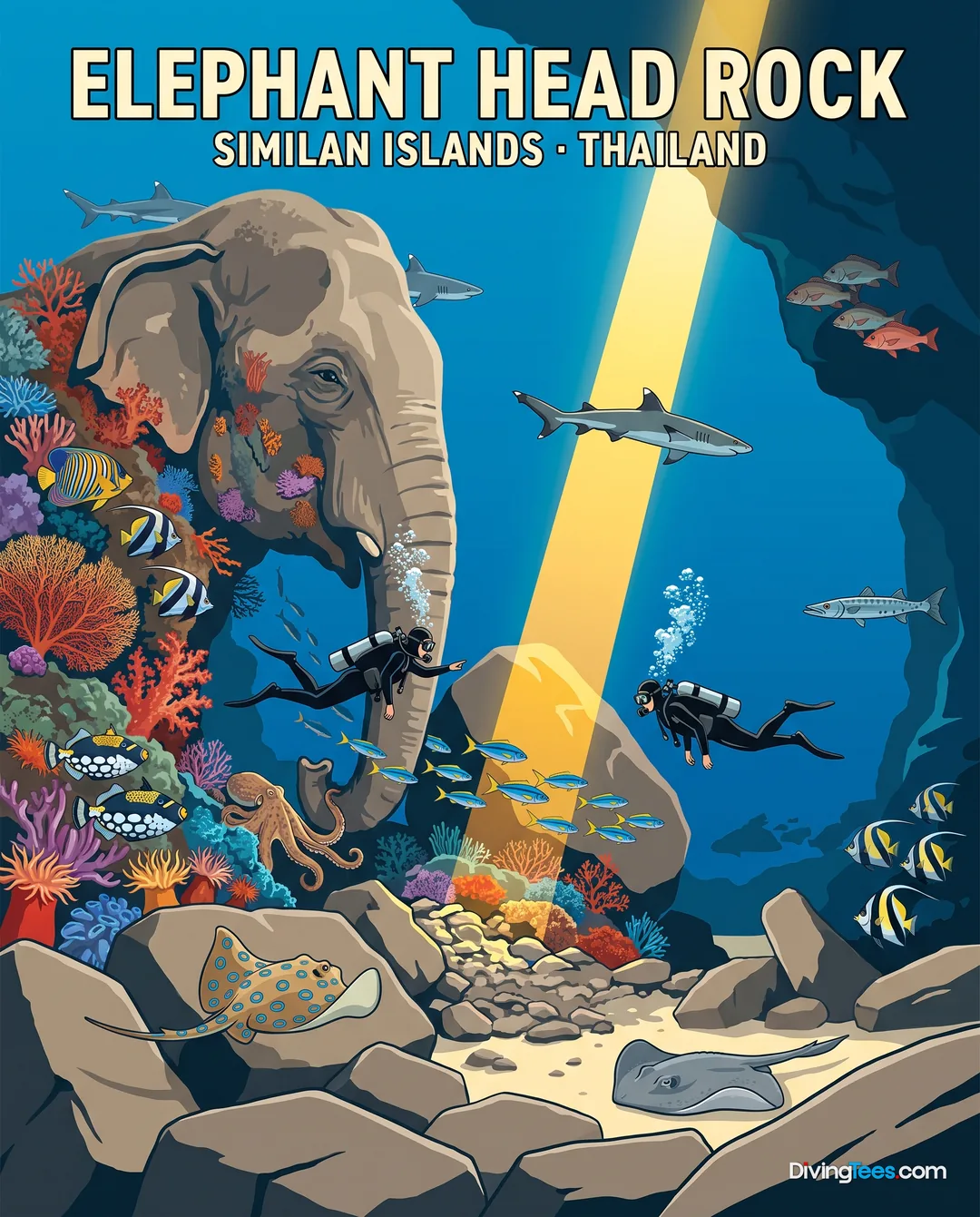
Elephant Head Rock →
Max. depth · 60 m
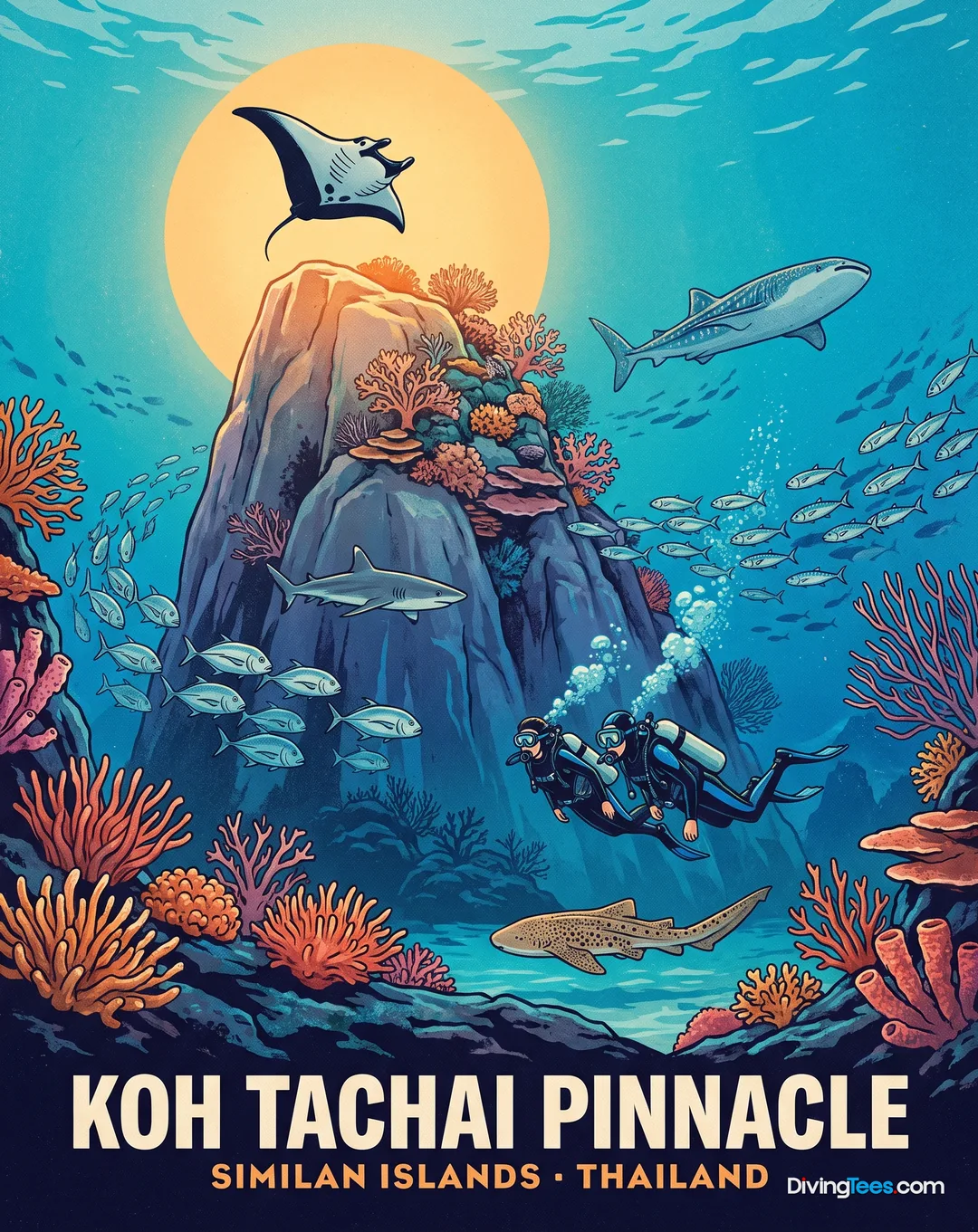
Koh Tachai Pinnacle →
Max. depth · 40 m
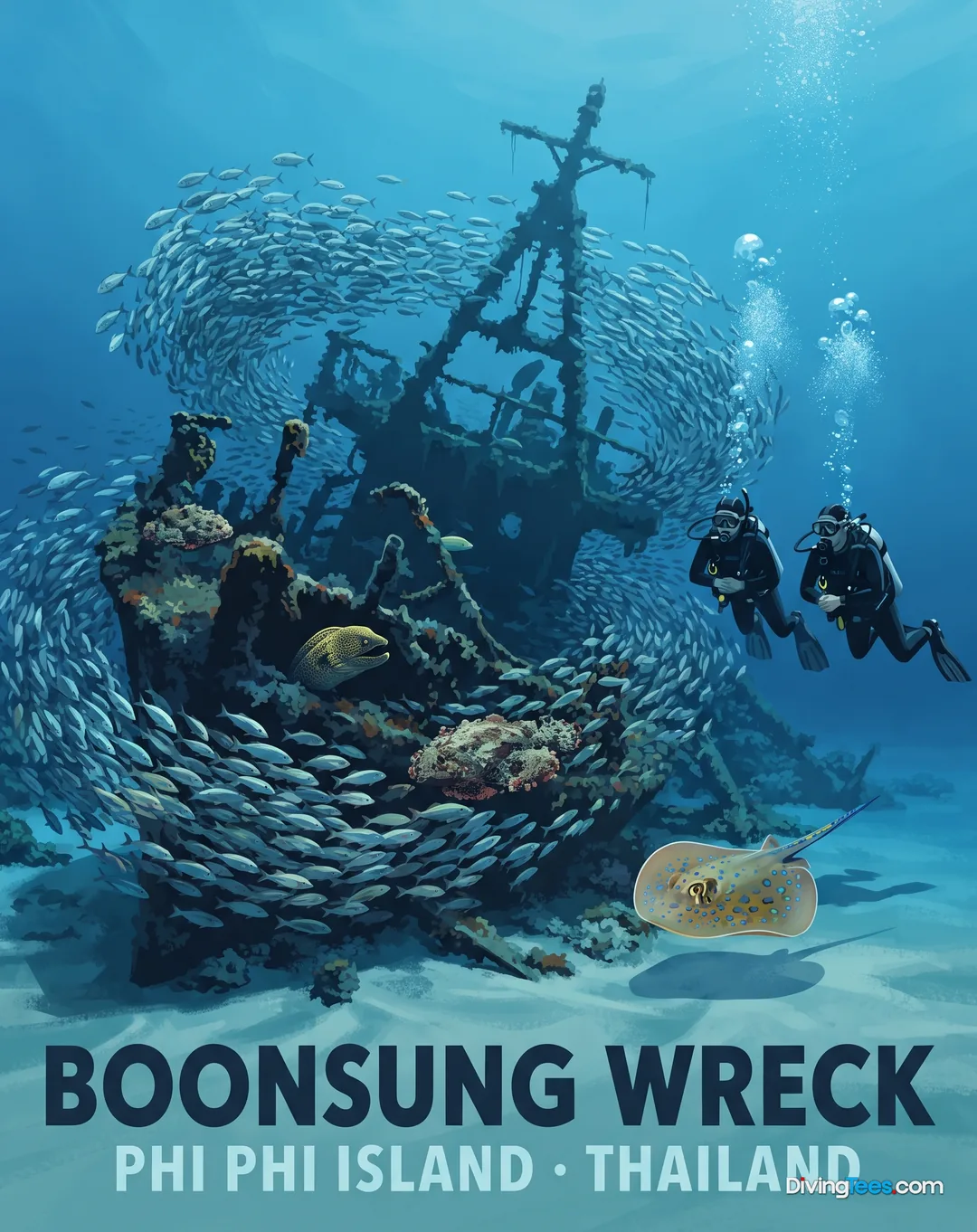
Boonsung Wreck →
Max. depth · 18 m
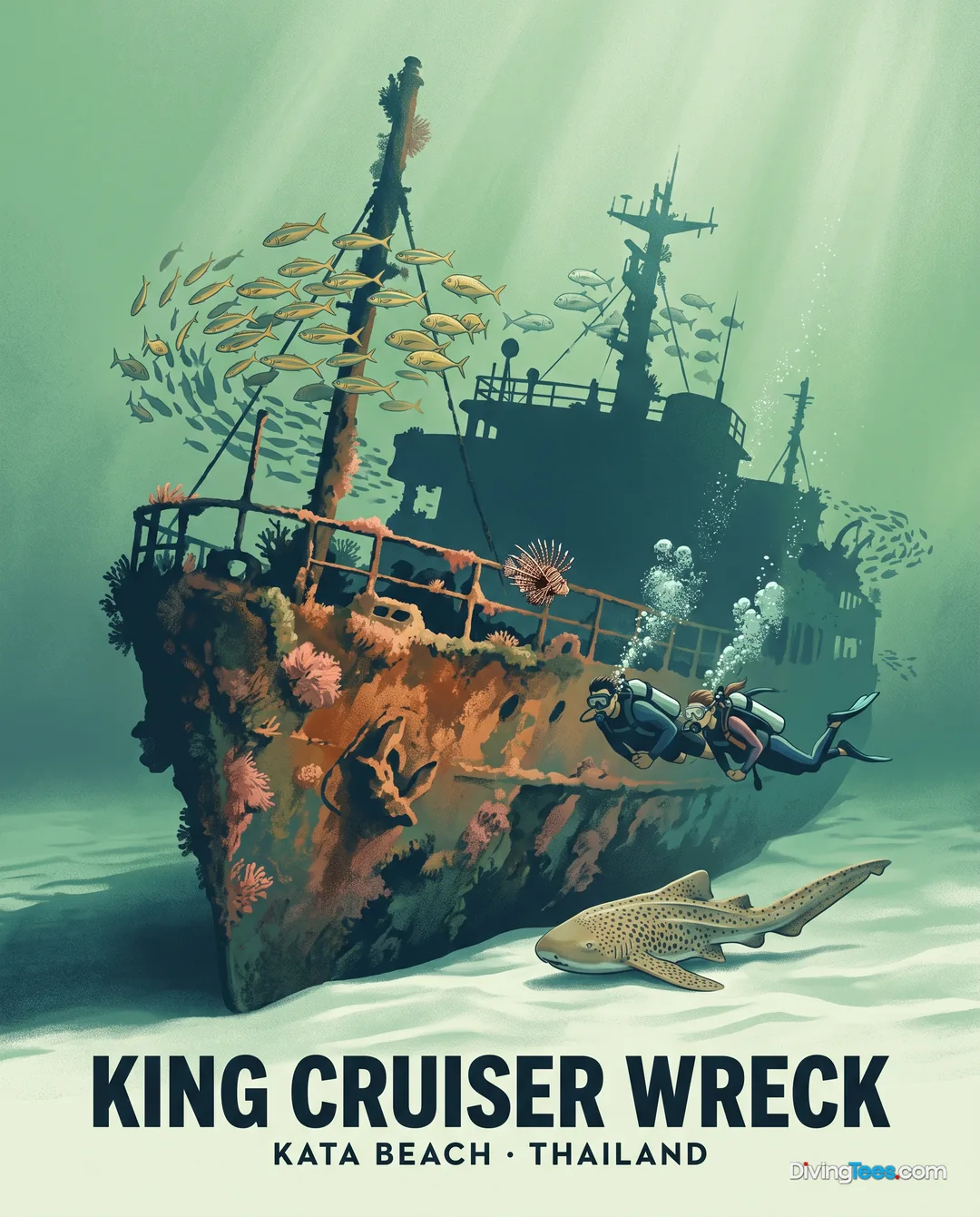
King Cruiser Wreck →
Max. depth · 35 m
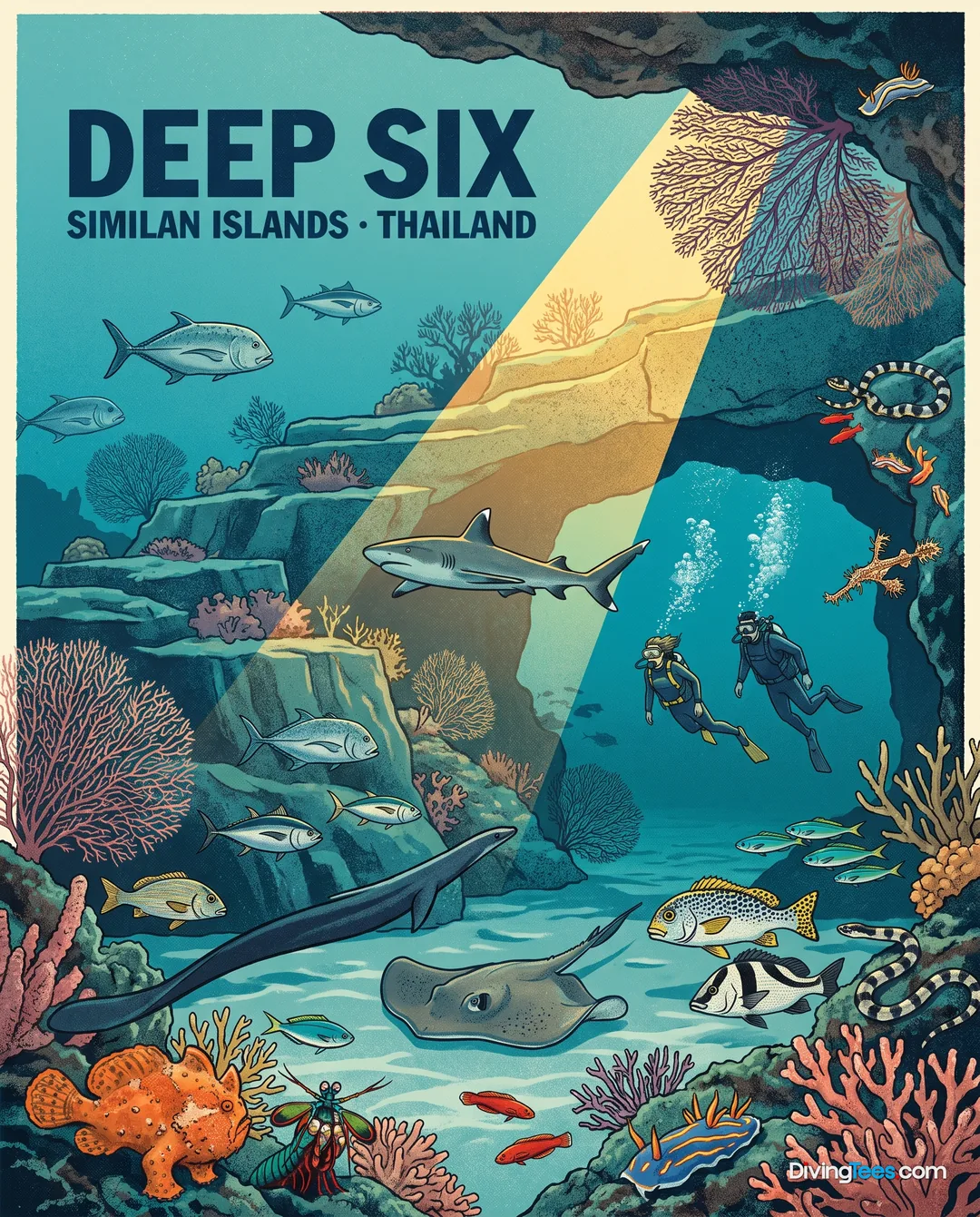
Deep Six →
Max. depth · 50 m
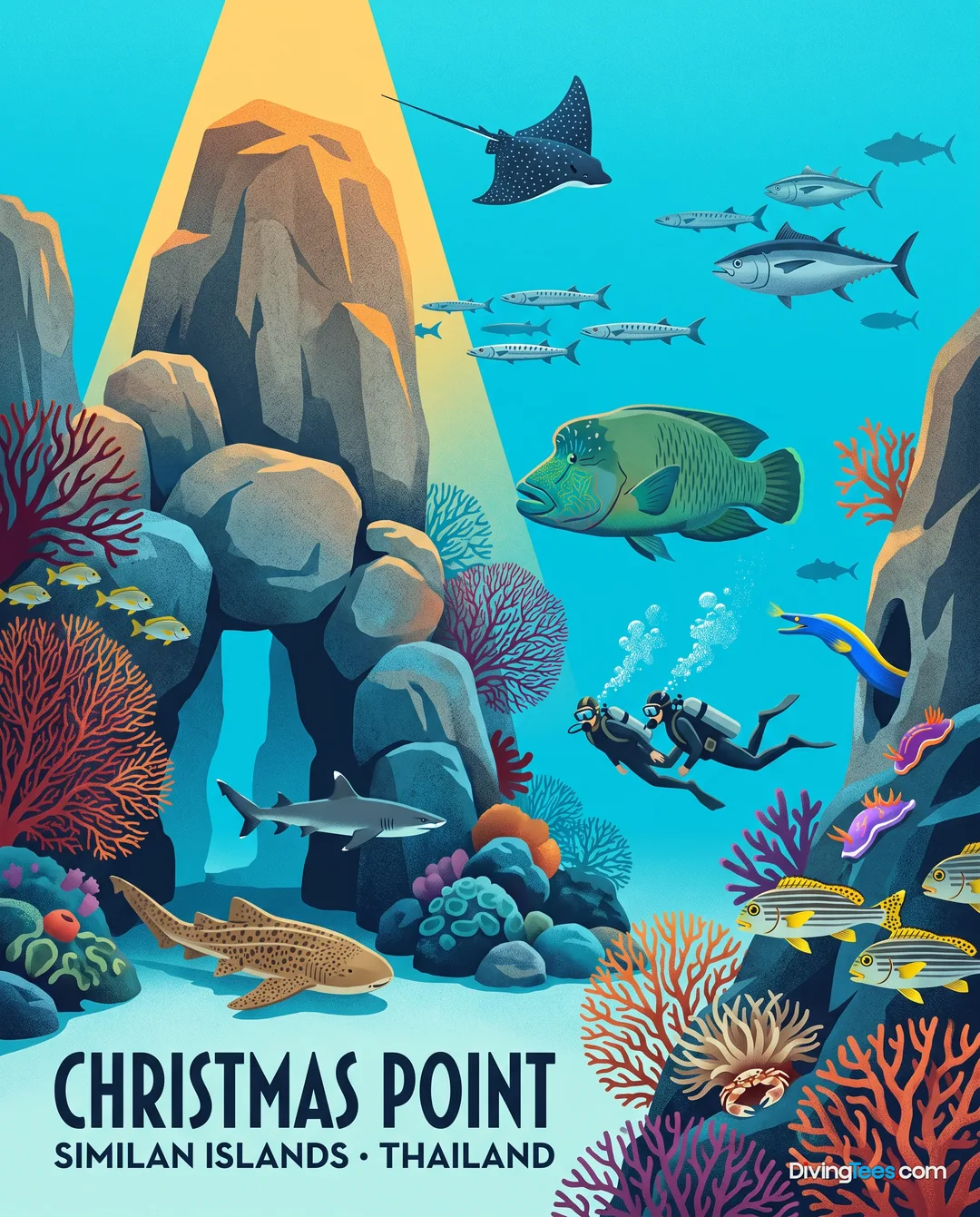
Christmas Point →
Max. depth · 40 m
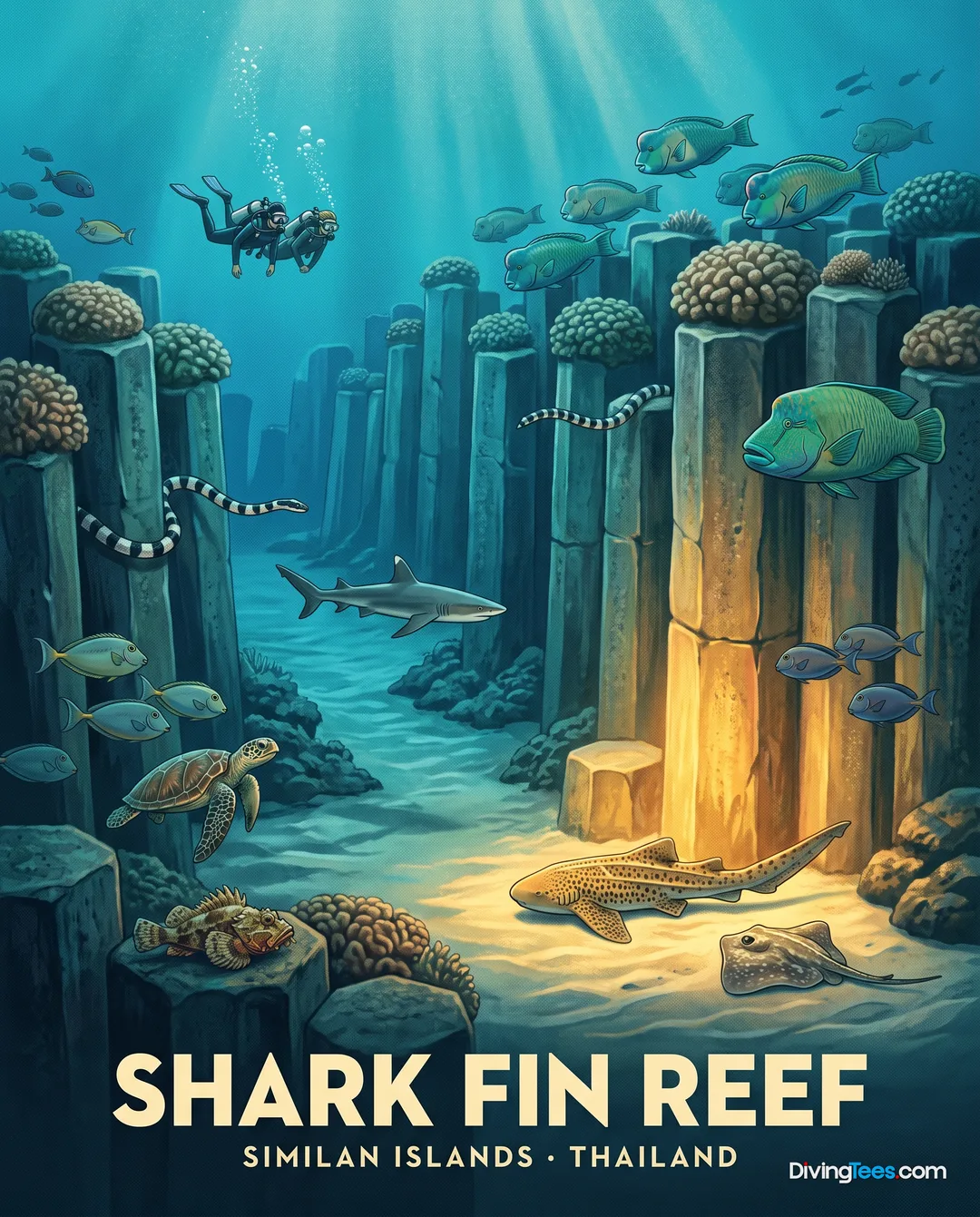
Shark Fin Reef →
Max. depth · 40 m
What you’ll meet underwater
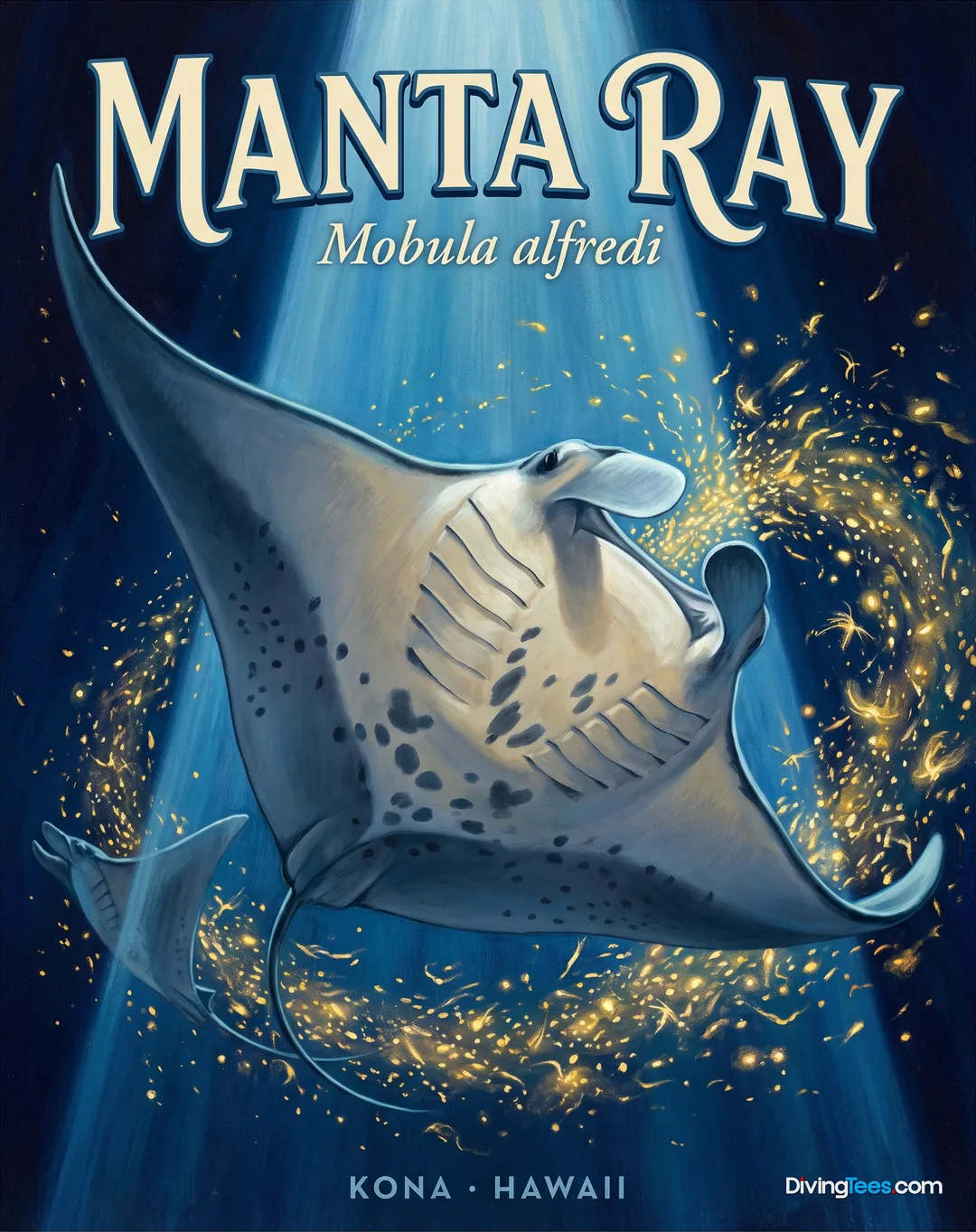
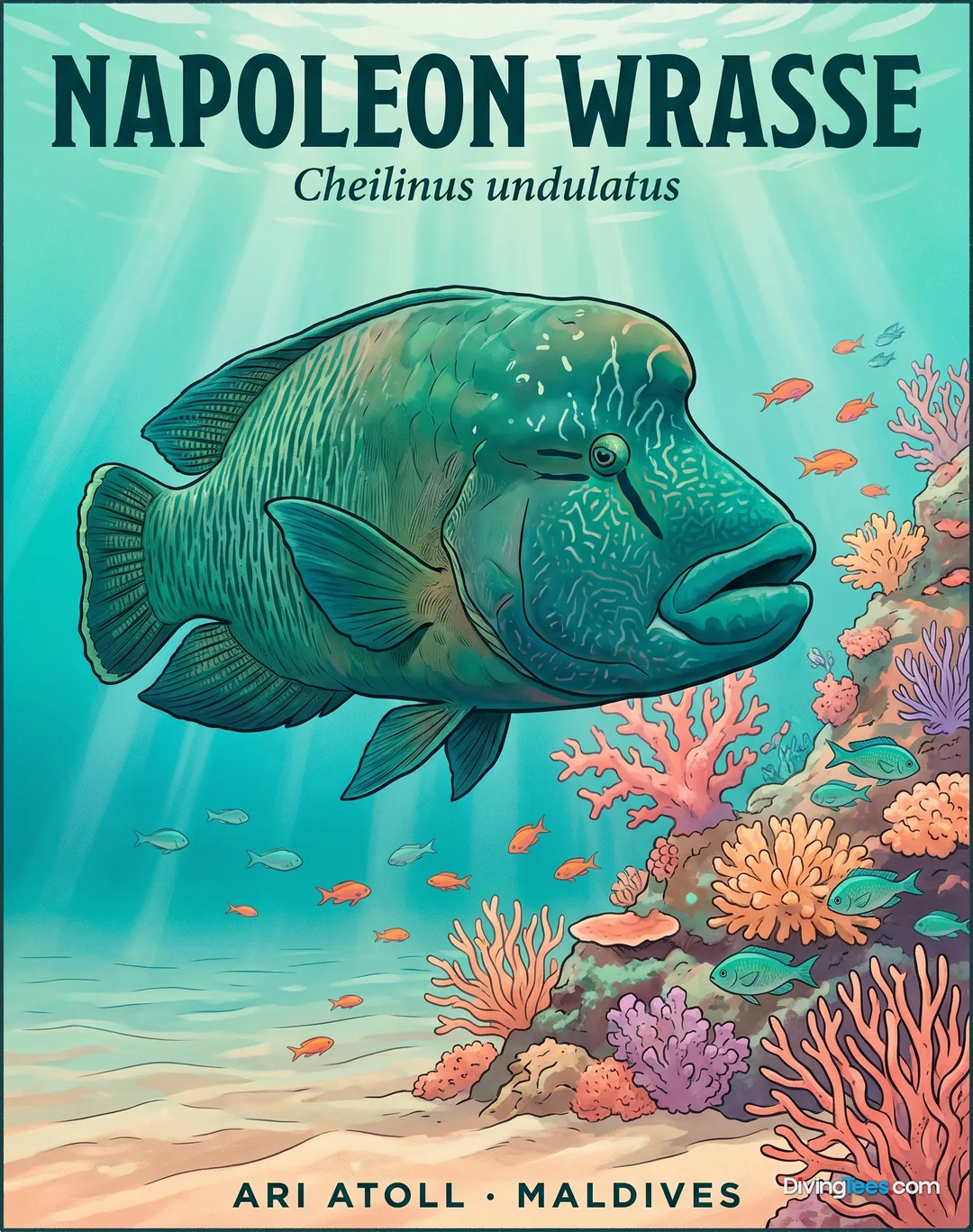
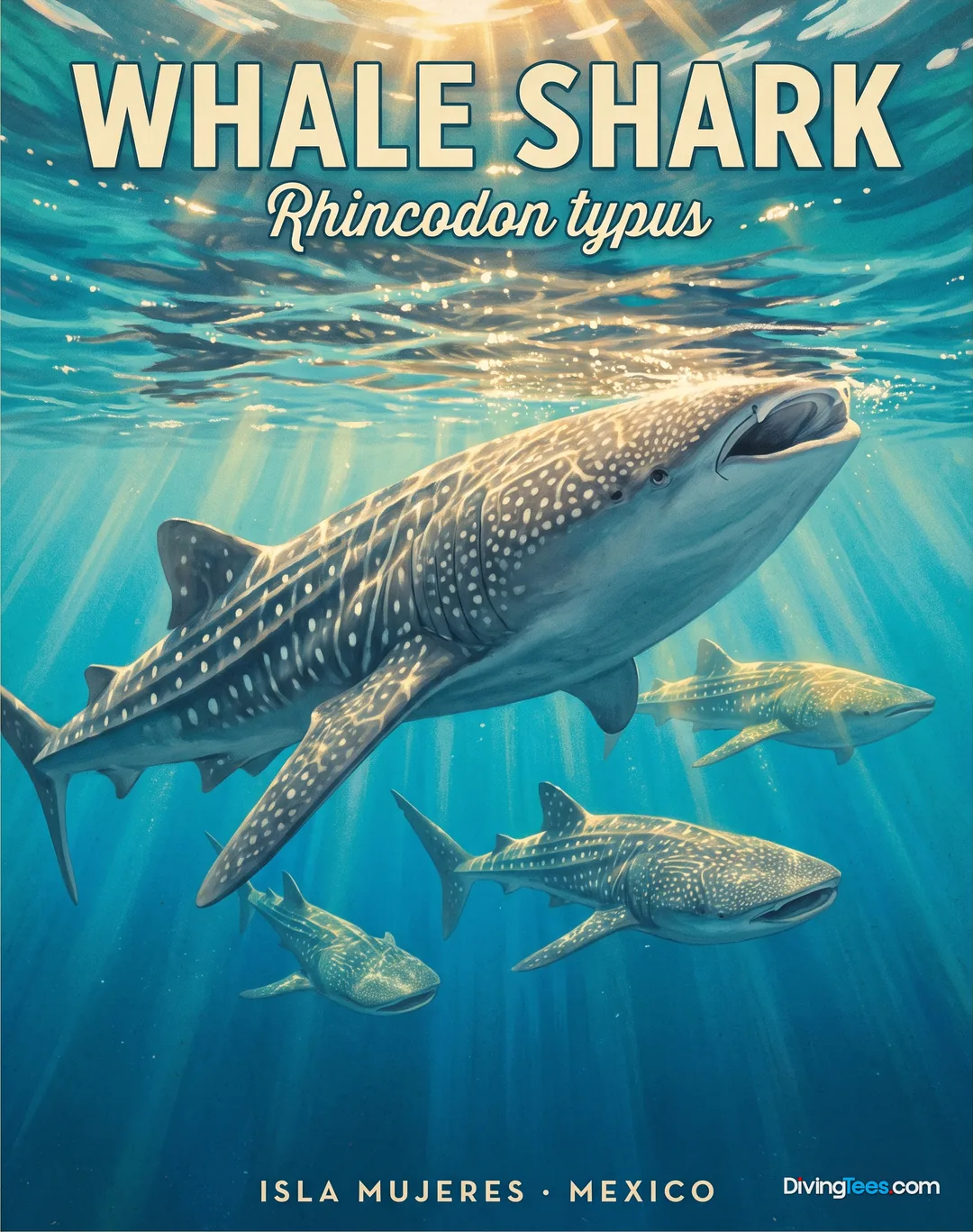
Across this route, reef sharks and white-tip reef sharks are recurring possibilities, alongside barracuda, leopard sharks, tuna, giant trevally, fusiliers, morays and nudibranchs. Napoleon wrasse and turtles also turn up across much of the itinerary, while whale sharks are recorded at seven sites and manta rays at six. Koh Bon gives the encounters a clear purpose: divers descend to the wall and wait around the cleaning station, where mantas may glide in for maintenance; the best chances are from mid-December through April. Current around Koh Tachai Pinnacle can bring mantas and, with luck, a whale shark. The sites also have their one-off reasons to slow down. Garden eels and coachfish are specific to Breakfast Bend; stonefish and porcupinefish are associated with Boonsung Wreck; bamboo sharks and eels are recorded at King Cruiser Wreck; Christmas Point is where anemones and sharks appear only in this route's single-site records. At Boonsung, fish schools can become so dense that they obscure the surface.

Who puts you in the water
The crew speaks English, German and Thai, and dive groups are normally built around both experience and air consumption rather than certification alone. Each guide takes 4 divers in principle, rising to a maximum of 6 under suitable conditions. Briefings lead into a check dive on the longer routes, after which the groups settle according to the divers' actual needs in the water. A private guide can be arranged, and continuing-education courses from PADI, SSI and CMAS are available as extras. Diving insurance that includes decompression-chamber treatment is required for these cruises, and anyone whose last dive was more than a year ago must complete a refresher. Oxygen and first-aid equipment are carried on board, alongside life rafts, life jackets, fire alarms and extinguishers.
The dive deck and the gear
The diving platform is large, shaded and built around a spacious equipment area, so gear can stay organised rather than migrate across the boat after every dive. The standard tanks are 12-litre aluminium cylinders with INT valves; DIN adapters are available, and 15-litre tanks can be arranged as an extra. Nitrox is produced by the boat's membrane system for certified divers and is also an optional extra. Rental equipment is available but is not included by default. There are rinse tanks, including a separate rinse tank for cameras, plus outdoor showers for the first wash after a dive. Sidemount diving is supported. The platform and dinghies are part of the boat's transfer system, but the available information does not describe tender numbers or a specific diver-recall procedure.
Between dives
Between dives, the partly covered sun deck is the natural place to dry off without being left in full sun, with loungers and mats for the long surface intervals. The air-conditioned saloon gives a cooler alternative, with television, DVD, stereo and a library when the weather or fatigue calls for an indoor hour. Outdoor dining changes the feel of the meal without requiring anyone to dress for it. Free Wi-Fi is available when reception allows, but this is not a boat to choose for constant connectivity. The better use of the gaps is simple: rinse a camera, eat, sleep, then listen for the next briefing.
A day on board
The day starts with the dive operation, not with a leisurely hotel breakfast. After the first briefing and check dive, divers work through the planned sequence of two to four dives, with food, snacks and surface intervals filling the spaces between entries. On a 4-day route, the opening day carries three dives, the middle days four, and the return day two; the longer itineraries reach four dives on most full days and finish with two dives before the boat heads back. A night dive is usually part of the daily pattern when the site and conditions allow. Some days move from Koh Tachai to Surin, others from Surin to Richelieu Rock, so the scenery changes while the practical rhythm stays familiar: dive, eat, dry out, brief again. The last dives are often on local wrecks before the run into Tablamu.
What you eat aboard
Full-board meals cover breakfast, lunch, snacks and dinner, with a buffet that combines local and Western cooking. Fresh fruit, snacks and non-alcoholic drinks are available through the day, while beer, wine and cocktails cover the social side for those who want them. Vegetarian and vegan options are available when specified at booking. The food score of 9.6 is the clearest signal about life between dives: meals are not treated as fuel left on a plate, but as one of the fixed points around which a four-dive day is organised. There is also the option of eating outside, which suits the hours when everyone arrives hungry and sun-flushed from the water.
Nights at sea
All cabins are air-conditioned, with individually adjustable cooling, and the cabin deck is the main deck. The two Standard Bunk cabins are on the upper deck and use double bunk beds with shared shower and toilet facilities. Six Comfort Twin cabins on the main deck have twin beds and private bathrooms; two Comfort Double cabins on the lower deck have a double bed and private bathroom, with single occupancy available in these cabins. Two Deluxe cabins on the main deck add a large double bed and private bathroom. The distinction matters after several dives: private bathroom access removes one small queue from the day, while the Standard cabins trade that privacy for a simpler bunk arrangement. Cabins are shared unless single occupancy is arranged.
Standard Bunk
Comfort Twin Cabins
Comfort Double Cabin
Deluxe Double
What to know before boarding
The cruises depart from and return to Tablamu Harbour. Transfers within Khao Lak, including hotel pickup for the relevant routes, are included; transfers from Phuket or other locations can be arranged separately. Check-in and equipment preparation take place at the Loma Diving Adventure dive centre in Khao Lak before boarding, with the required arrival time depending on the itinerary. Arriving in Khao Lak the night before is the sensible choice, since the boat connection begins from there rather than from the airport or hotel in Phuket.
Deck plan
- Year built
- 2016
- Length
- 28 m
- Maximum number of passengers
- 24
- Number of cabins
- 12
- Engines
- 2 × 480 hp
- Website
- mvbavaria.com ↗
Hello, I'm Marina, DivingDeal.com's AI assistant. I answer in detail about hotels, dive centres and liveaboards.

Thinking about the whole trip and the flights? Talk it over with Edith →
Marina is an AI. Some links are affiliate links: DivingDeal may earn a commission, at no extra cost to you. Bookings are made with the partner.