Liveaboards · Thailand
Seatopia — a new, diver-first liveaboard for Thailand’s landmark sites
What makes this boat unique
- Built in 2024, Seatopia carries up to 24 passengers in 12 cabins.
- The dive setup includes a shaded dive area, DIN adapters, rinse tanks, a dive platform and a separate camera-rinse station.
- Nitrox, rental equipment and private dive guides are available as optional extras.
- The route combines the Similan Islands, Koh Bon, Koh Tachai, Surin Islands and other Andaman Sea sites with five-day, four-night trips.
- Meals are full board, with Thai and local cuisine, vegetarian and vegan choices, snacks throughout the day and non-alcoholic drinks included.
For subtitles in English: start the video firstthen click the gearat the top right of the video, select “Subtitles/CC”, then “Auto-translate” and choose “English”.
The invitation
Seatopia is for divers who want Thailand’s recognised Andaman Sea sites without stepping onto an ageing converted vessel. Built in 2024, it is designed around liveaboard diving, with a shaded dive area, a proper platform, camera facilities and space for groups to work through repeated dives. The draw is the route: granite pinnacles, walls, coral gardens, a wreck and cleaning stations where large animals may pass. Five-day, four-night trips cover the Similan–Richelieu route or the South Andaman programme. It suits divers who value a new boat, strong dive organisation and enough room for families, snorkellers and mixed experience levels. The reasons to come aboard are below the surface, but the boat removes several of the small practical irritations that can wear down a week at sea.
Boarding
From the dock, Seatopia presents as a purpose-built modern liveaboard rather than a vessel with a diving operation fitted around an older hull. The newer construction shows in the way the boat is organised: cabins occupy the upper deck, the dive area is shaded, and the route from living spaces to the platform is made for repeated use. There is a terrace and observation deck for looking out over the islands, while the outdoor dining area gives meals a place beyond the saloon. The boat is large enough to carry a full group, yet the layout keeps the important working areas separate from the social ones. Internet, charging stations and daily cabin cleaning belong to the practical side of the design. The first impression is straightforward: Seatopia is built to keep divers moving between cabin, meal, briefing and water.
The atmosphere on board
Seatopia’s atmosphere is carried less by decoration than by the way a full group is looked after through a dive day. The crew speaks English, Chinese and Korean, and the strong crew feedback is matched by high marks for diving and food. Their role is visible in the practical moments: keeping the dive operation moving, making the boat feel safe and comfortable, and taking care of the spaces that have to work after several entries into the water. Meals are a natural meeting point, while the saloon and outdoor areas give divers somewhere to compare sightings, dry off and settle after a long dive. The boat is not presented as an intimate small yacht; it can take up to 24 passengers. Its advantage is a modern, organised setting where the crew’s attention is felt in the details that matter during a repeated-dive trip.
The sites you’ll dive
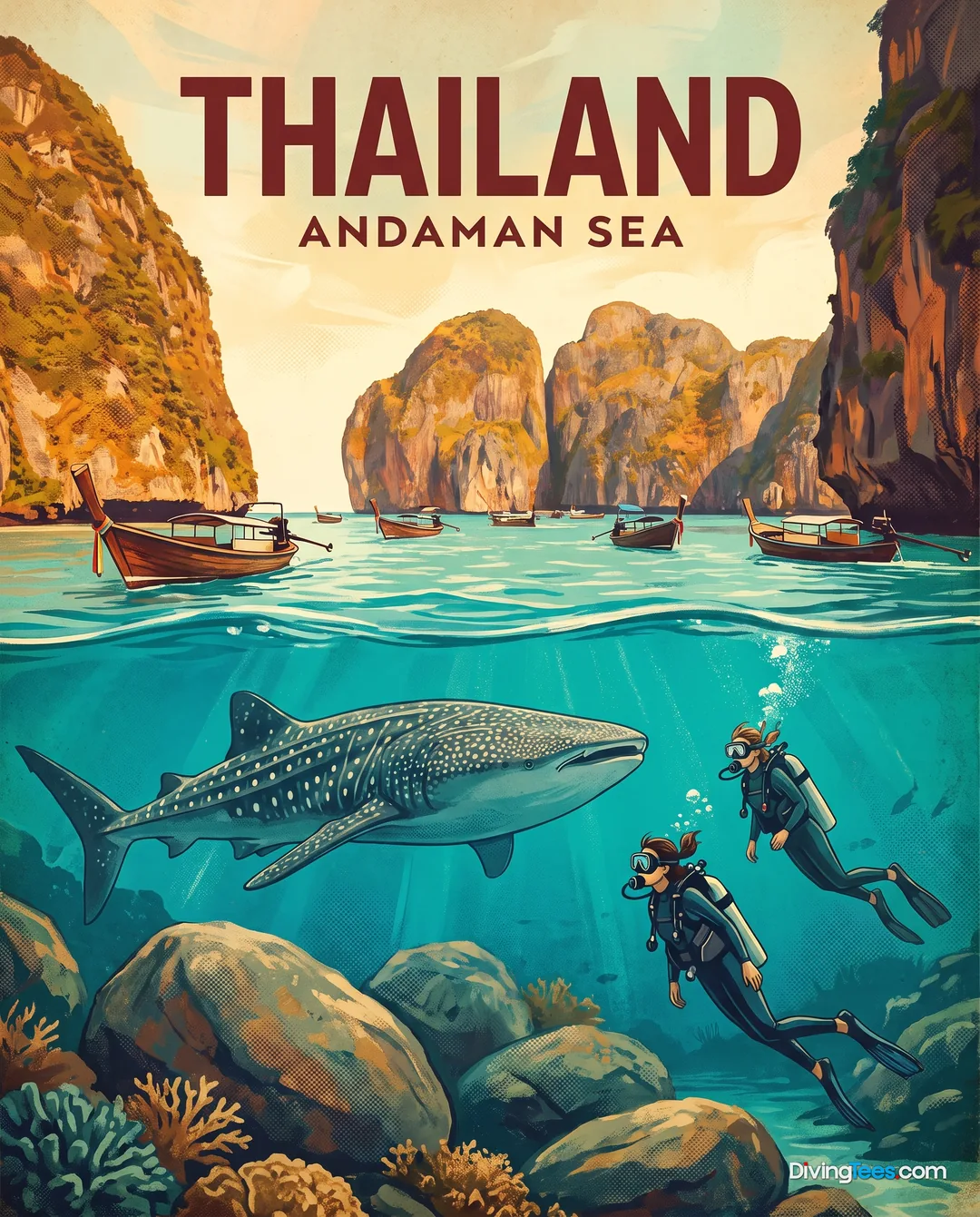
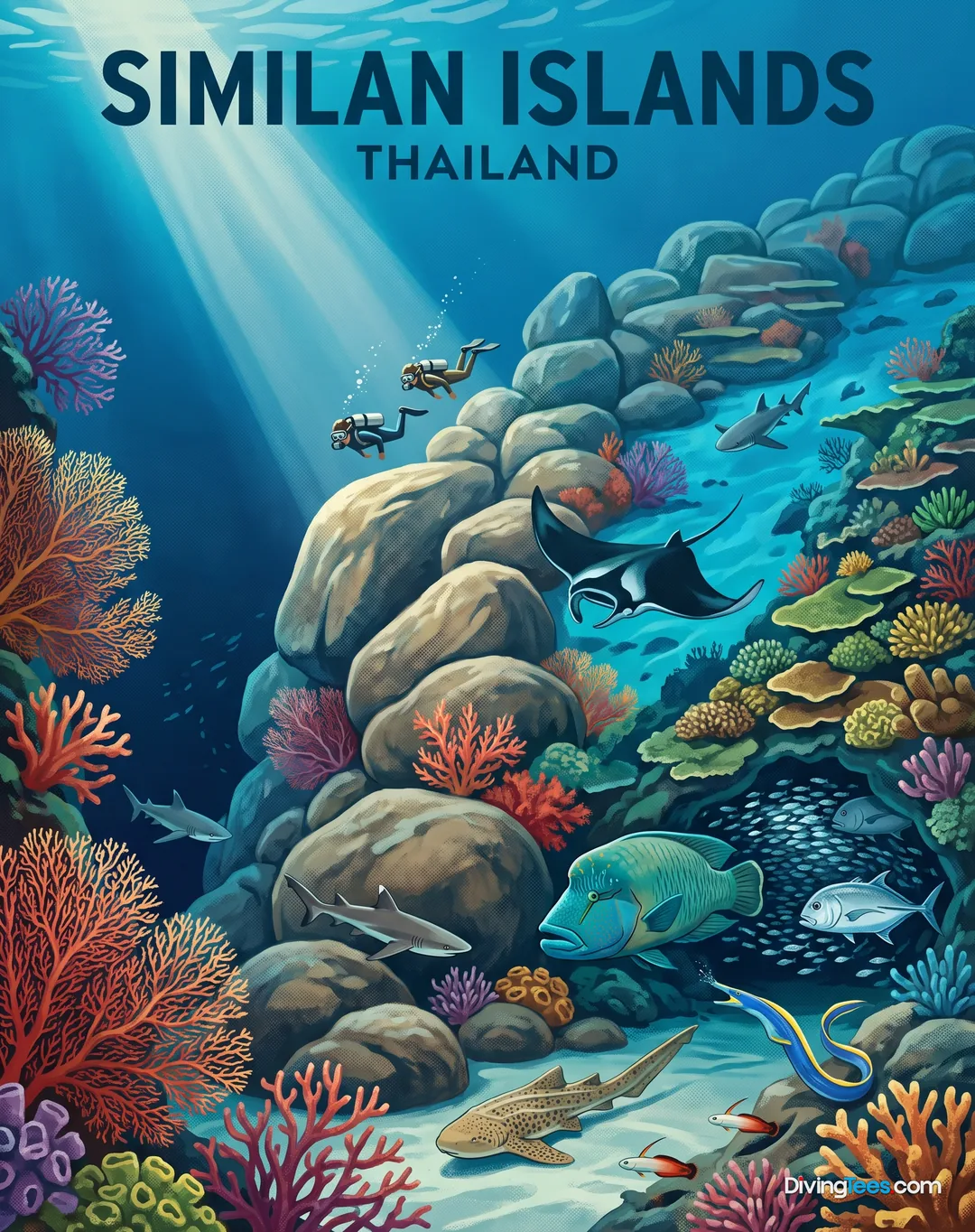
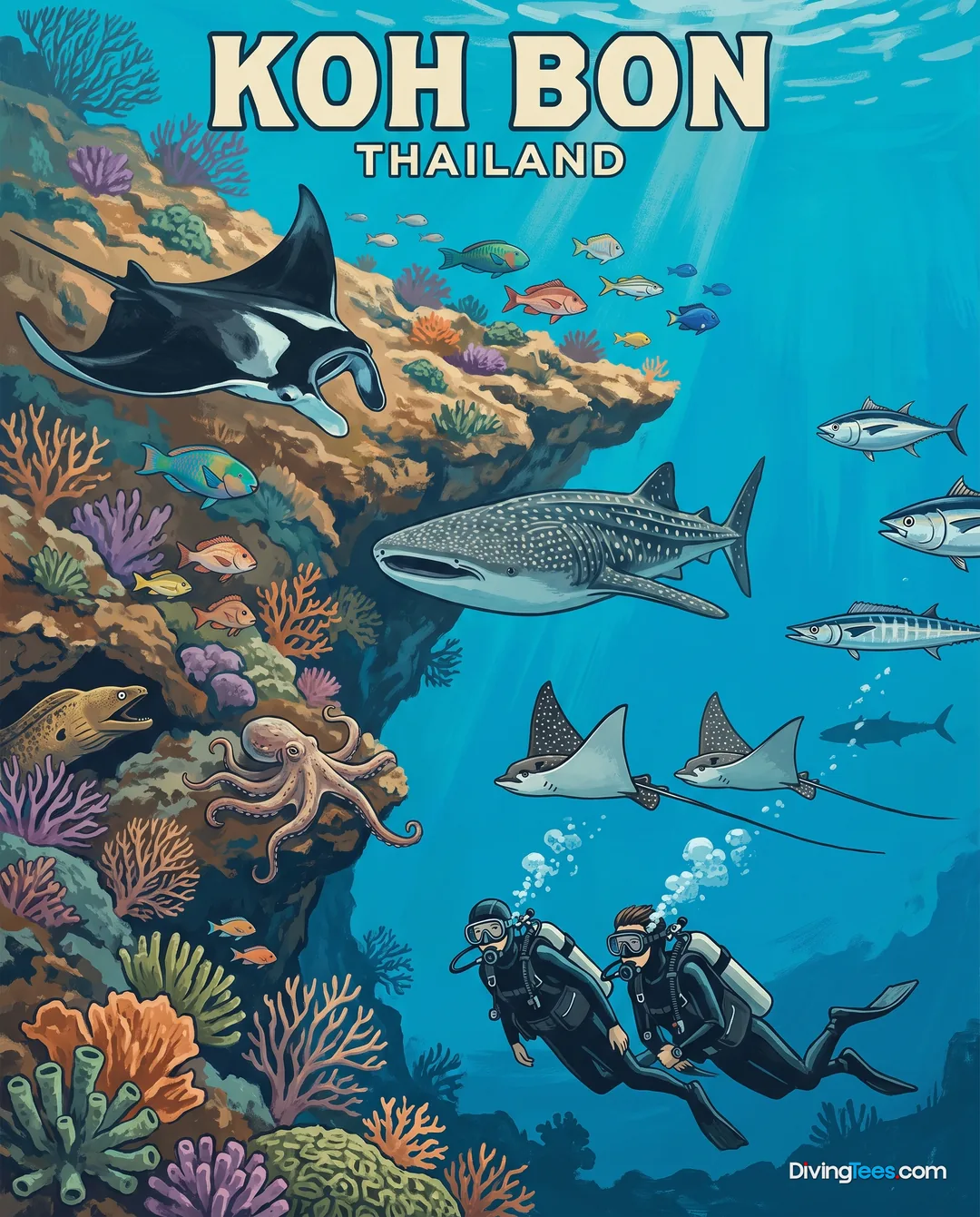
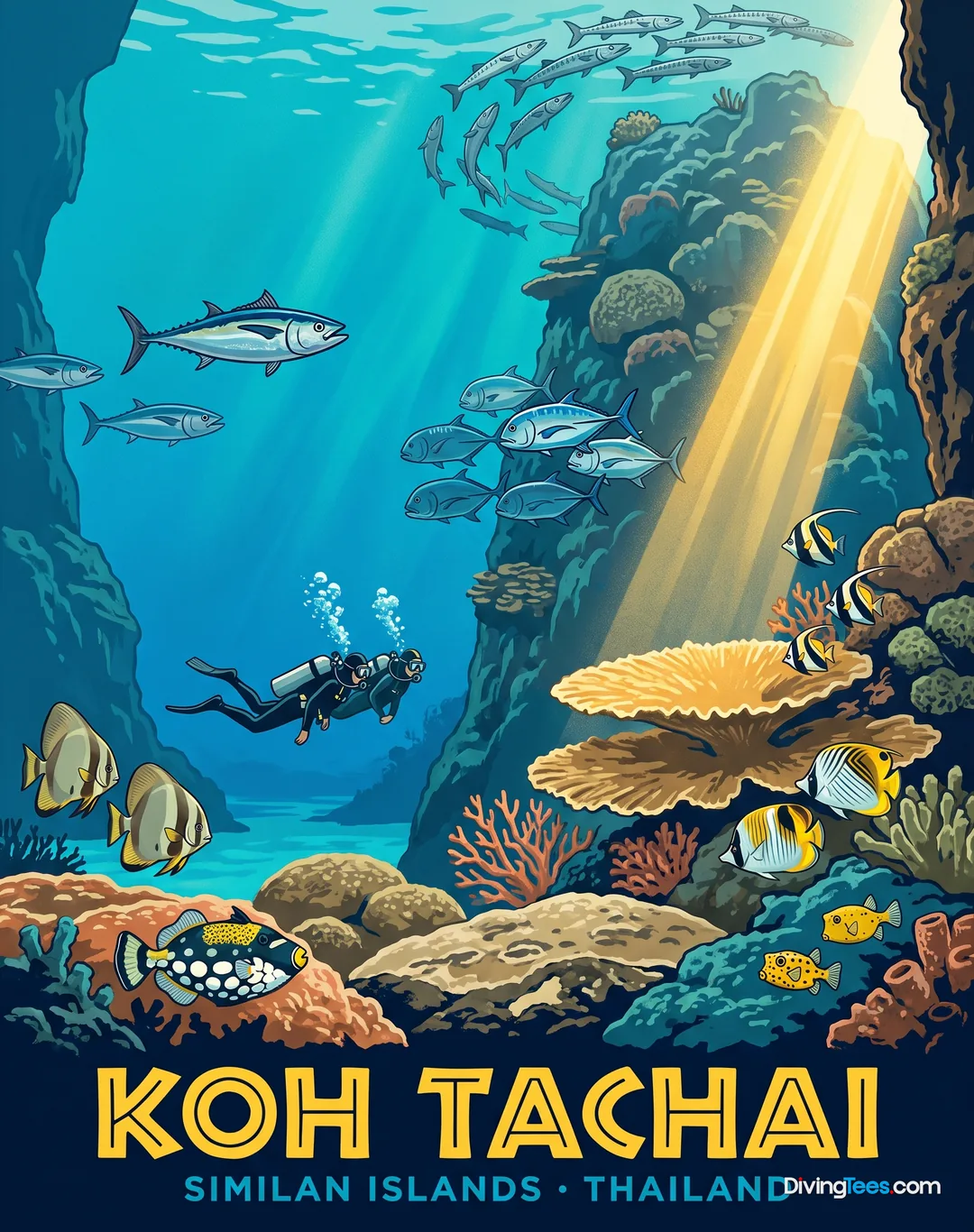
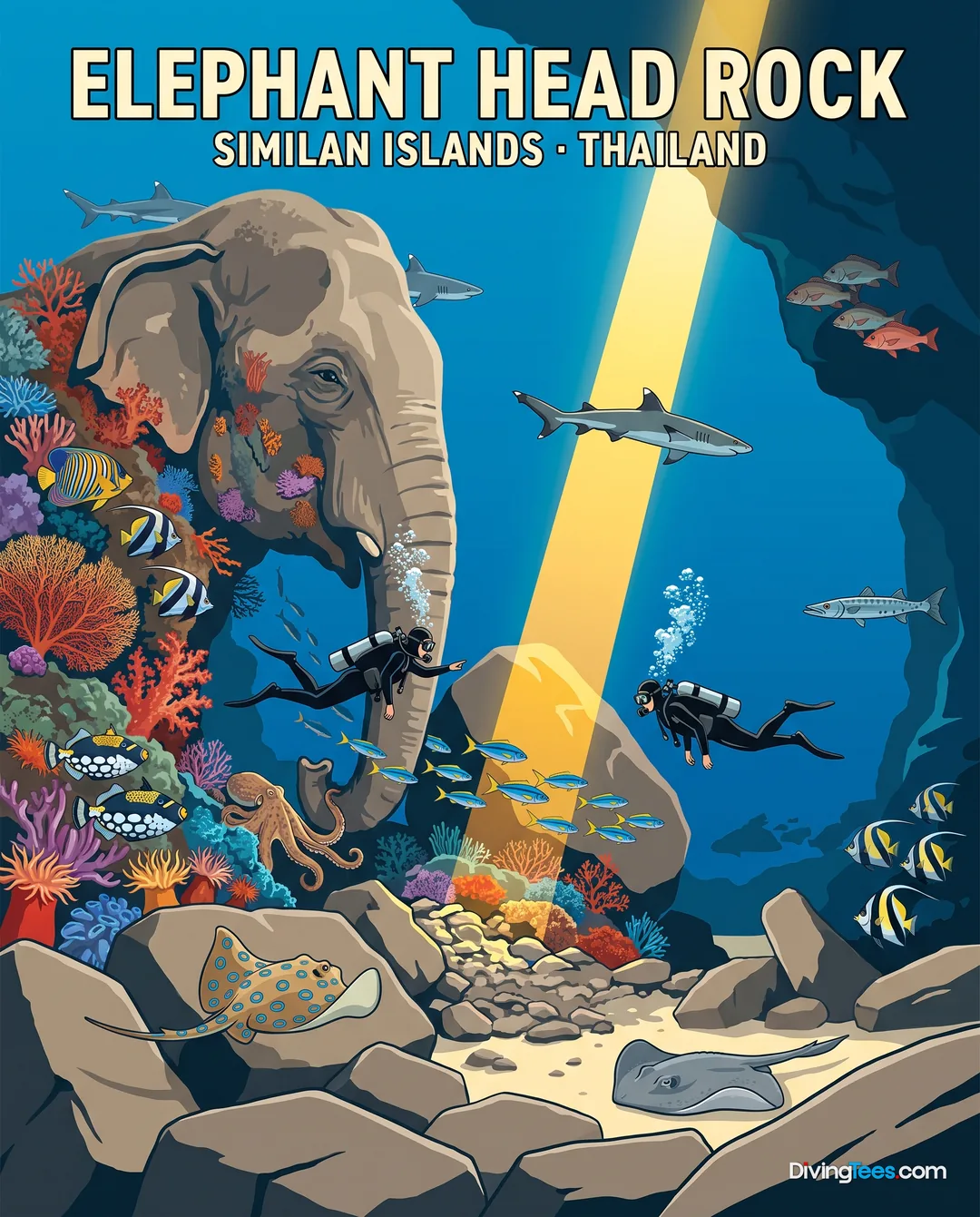
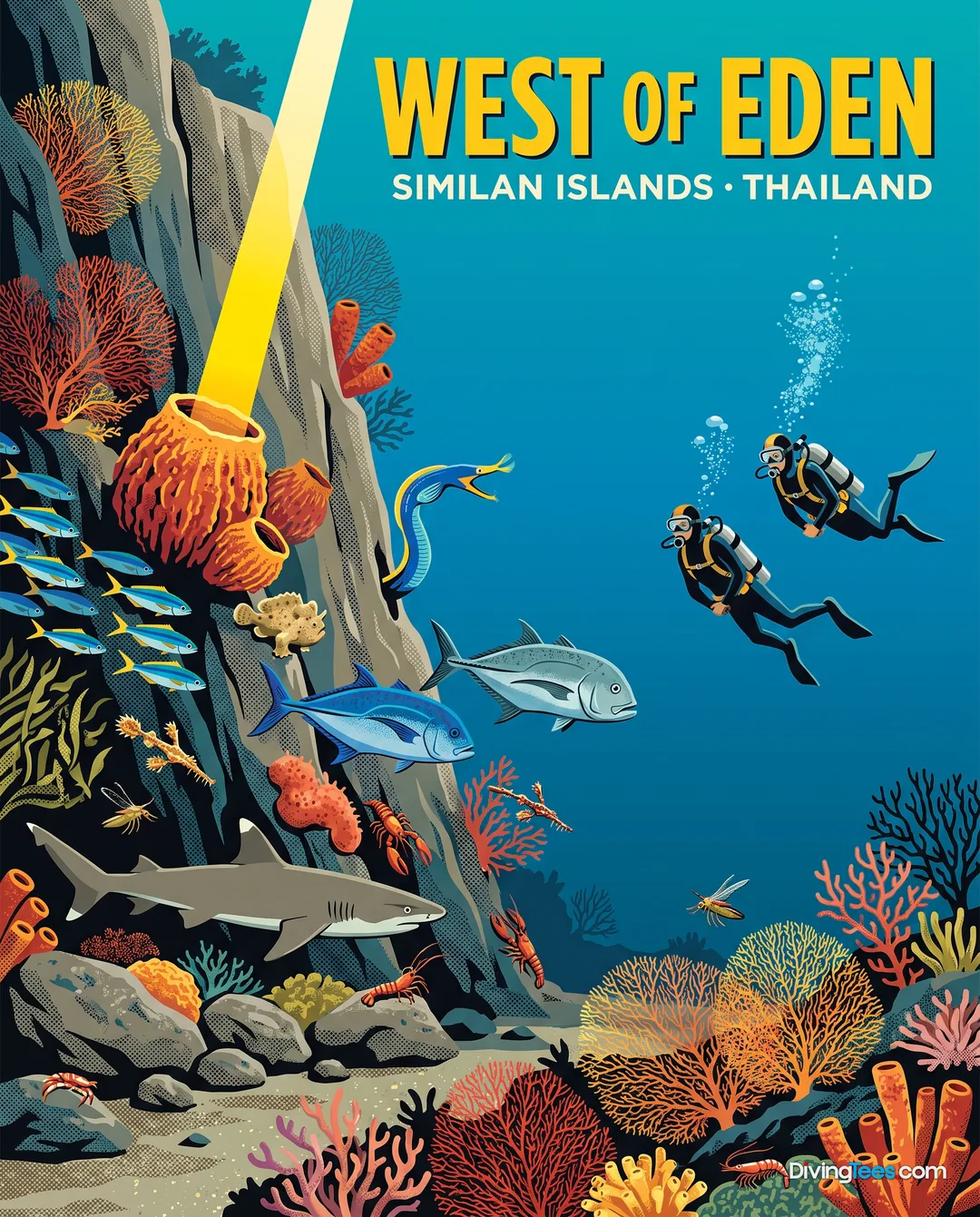
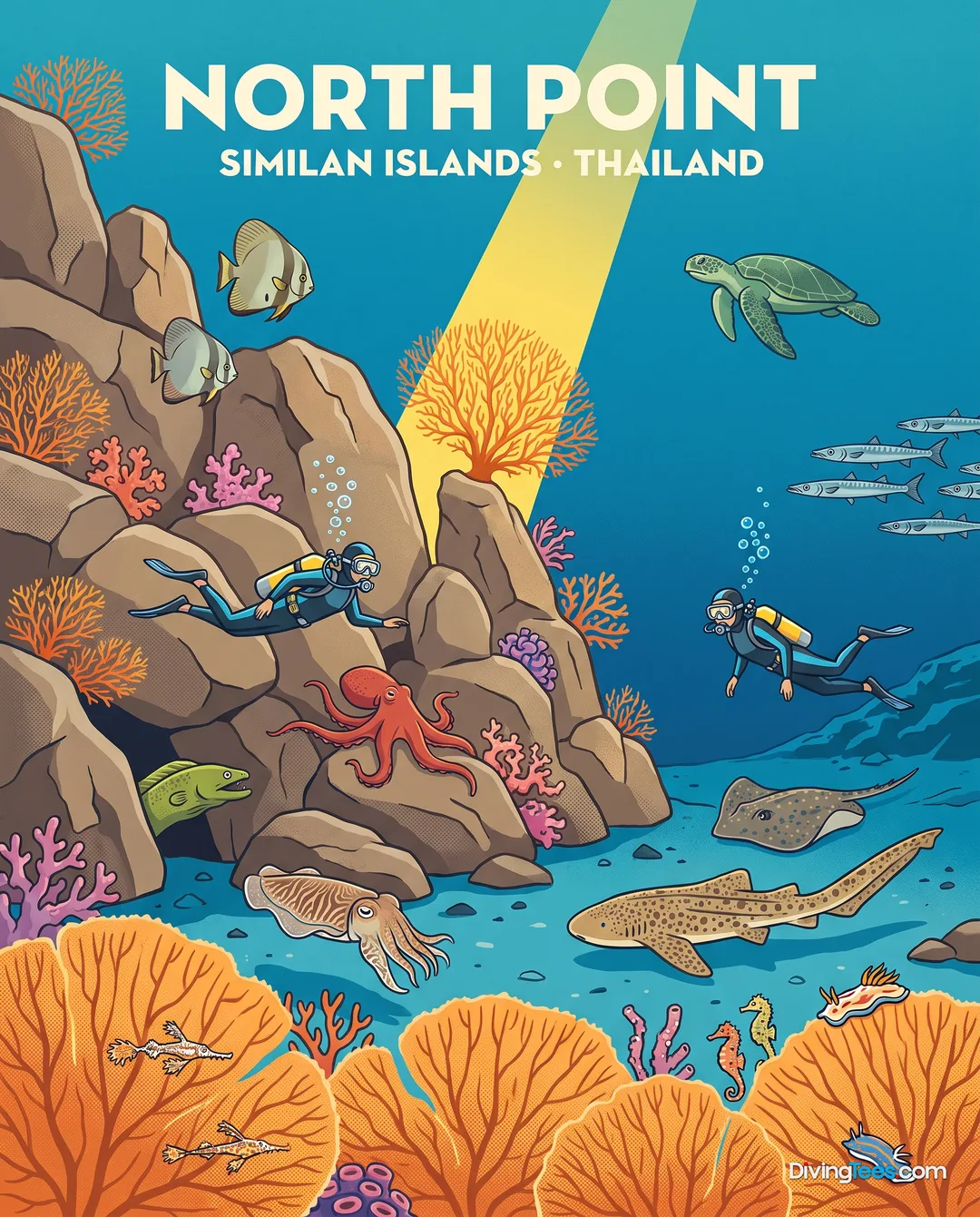
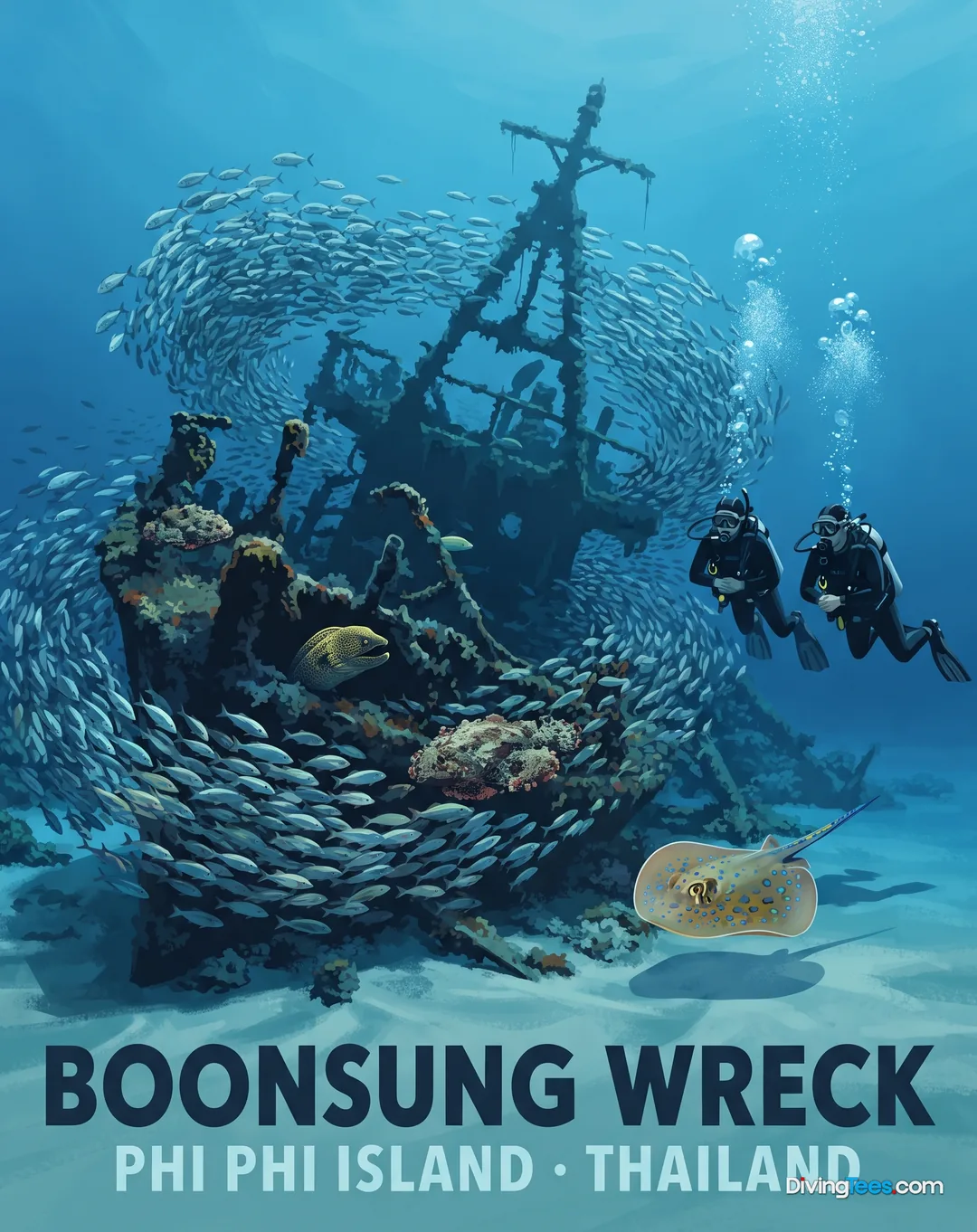
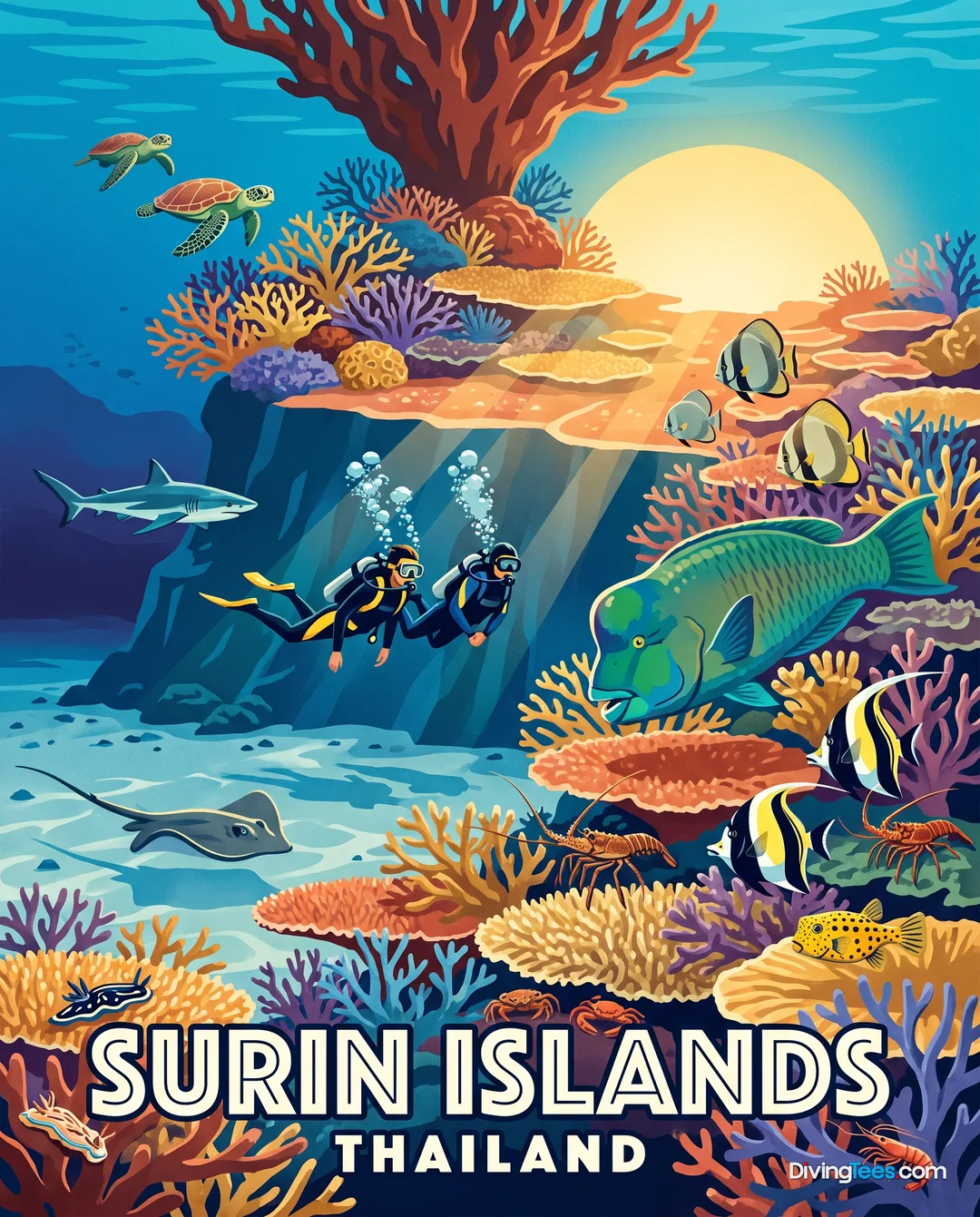
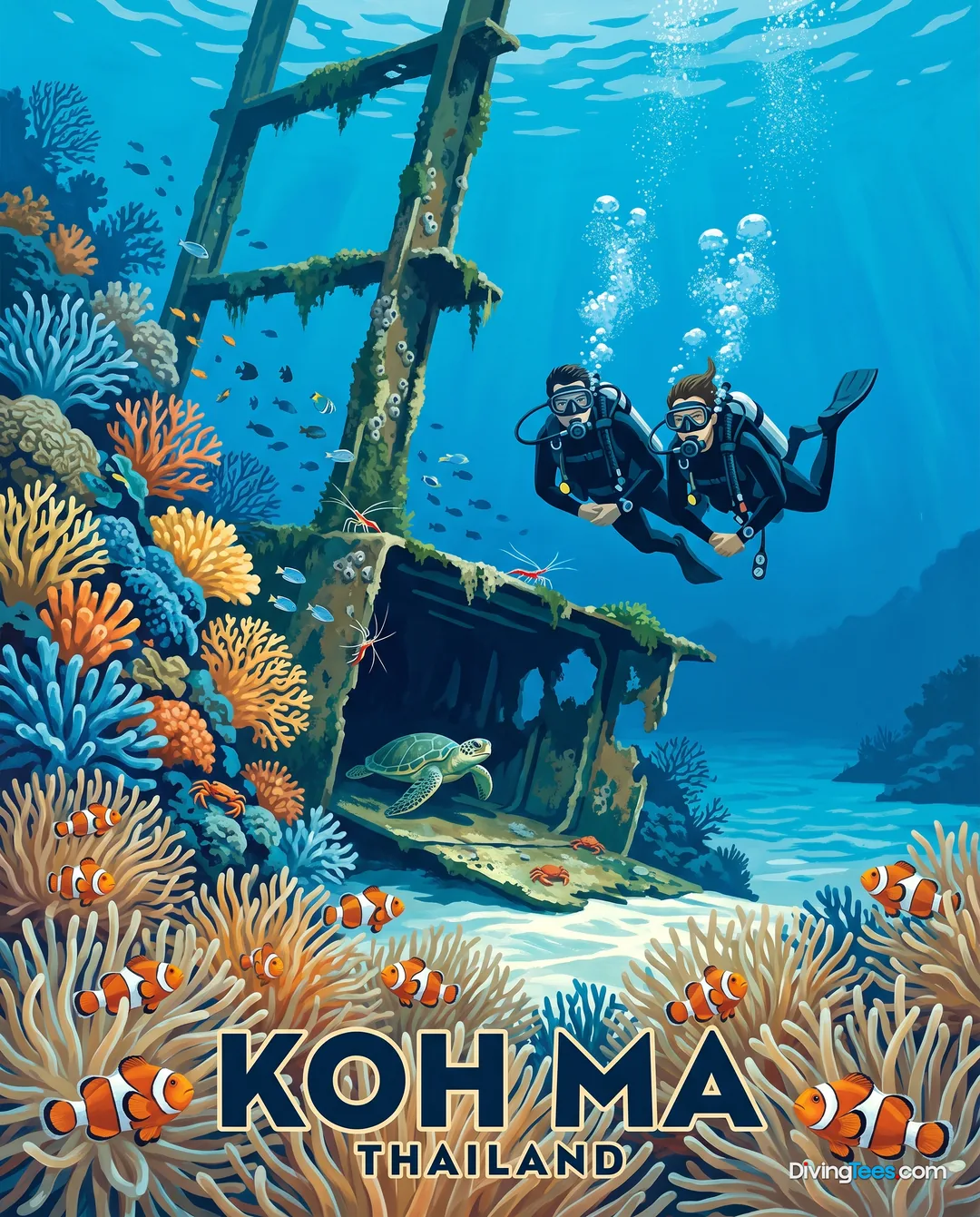
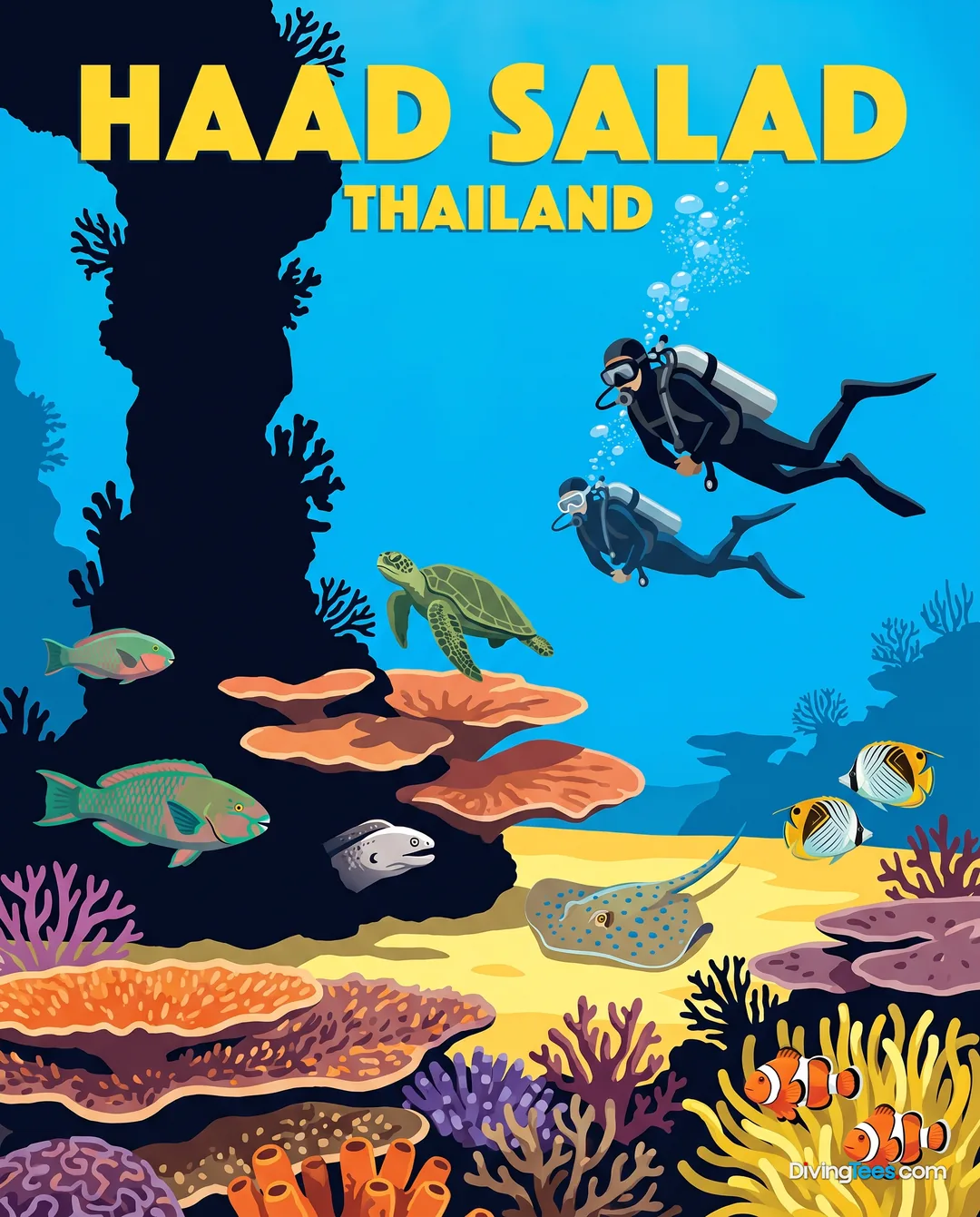
The Similan Islands are the route’s visual foundation: coral reefs give way to granite boulder formations, with pelagic fish and reef life around them, to a maximum depth of -40m. Koh Bon adds walls and a cleaning station where manta rays may glide in, sometimes with pelagic hunters nearby. Koh Tachai is built around submerged pinnacles and coral gardens, reaching -40m. Elephant Head Rock is the more three-dimensional dive, a granite maze of arches, tunnels and caverns to -60m, with reef sharks and schooling fish. Anita’s Reef slopes through coral gardens to sand at -35m, while West of Eden combines granite canyons, soft corals and gorgonians to -40m. North Point has deep channels and coral-covered pinnacles to -35m. Boonsung Wreck is an old tin dredger turned artificial reef, reaching -18m, and Surin Islands offer hard-coral gardens and granite outcrops to -25m. The Koh Phangan stops change the scale: Ang Thong has sheltered reefs, swim-throughs and overhangs to -25m; Koh Ma reaches -30m around coral and artificial reefs; Haad Salad is a protected coral reef to -14m. Departures on record include South Andaman from Coco Pier and Similan–Richelieu from Andaman Pier in Phang-nga, both lasting five days and four nights.
What you’ll meet underwater
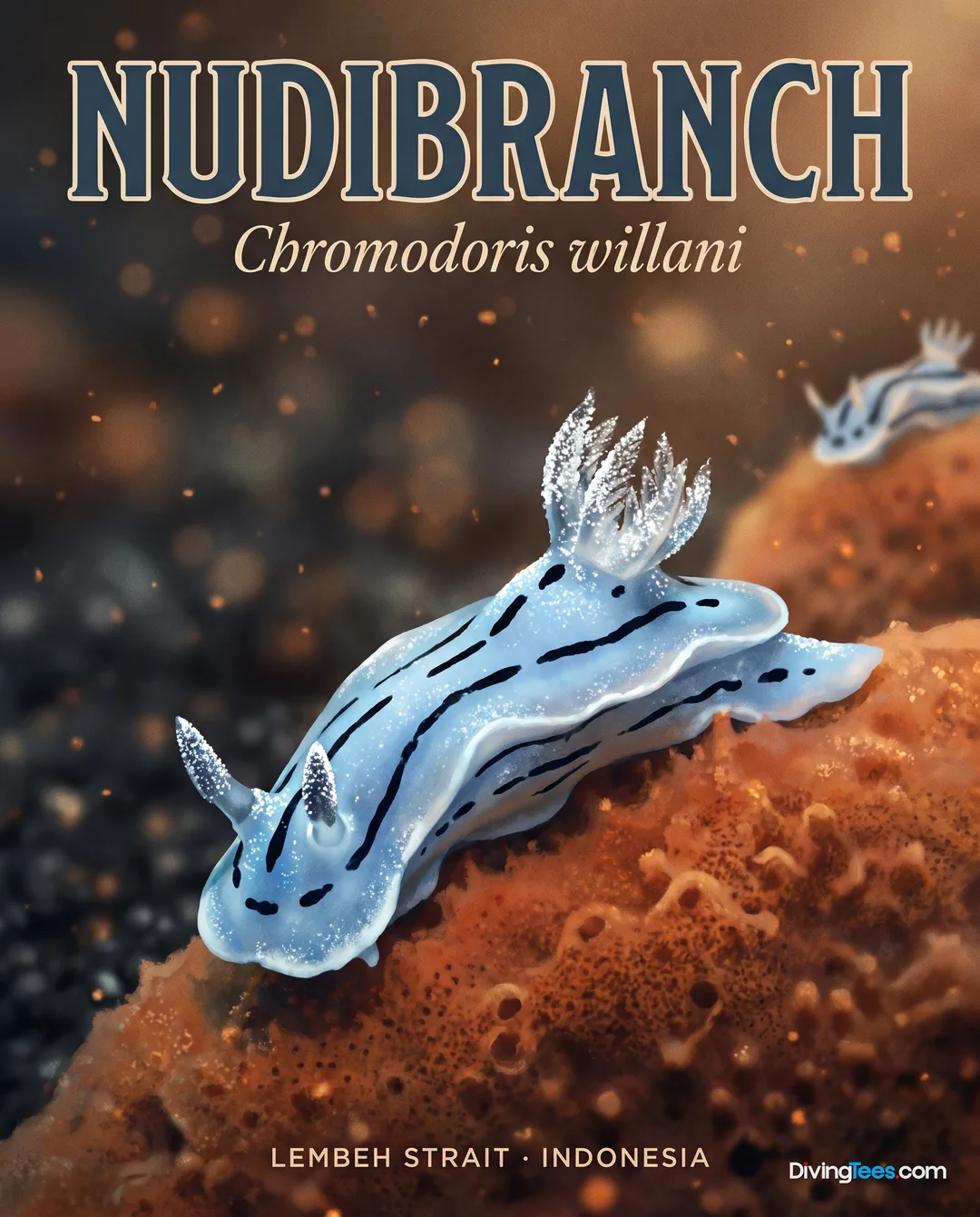
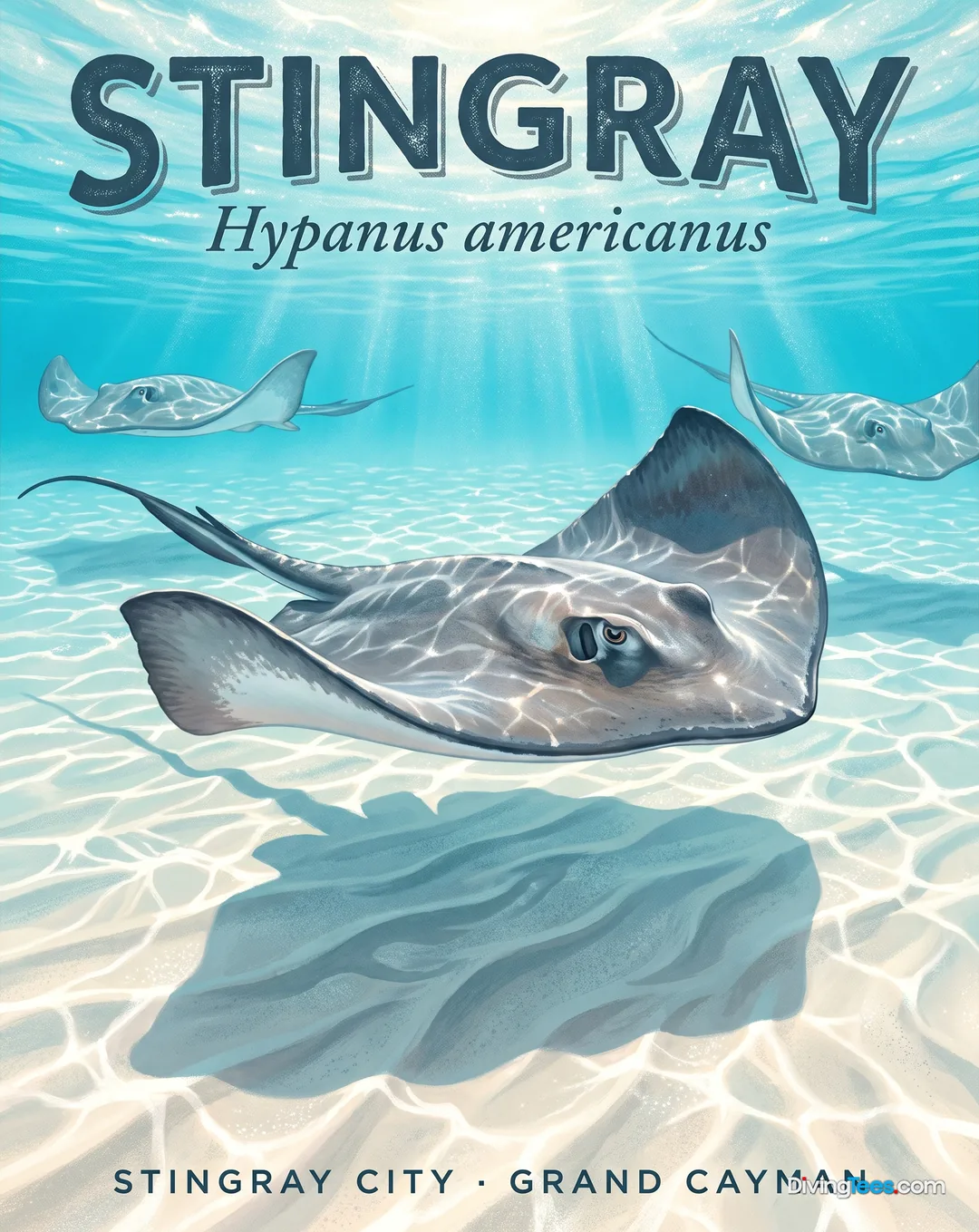
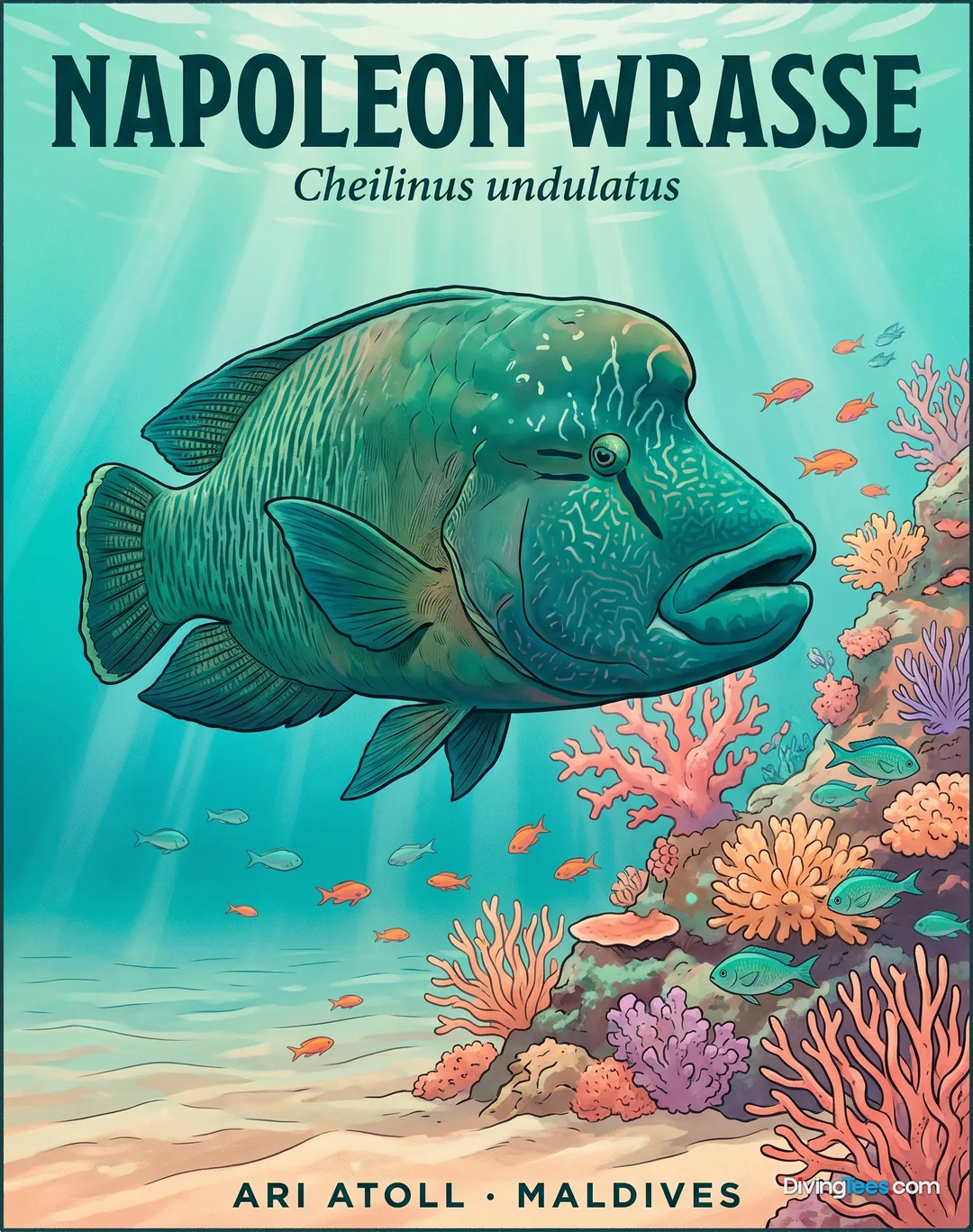
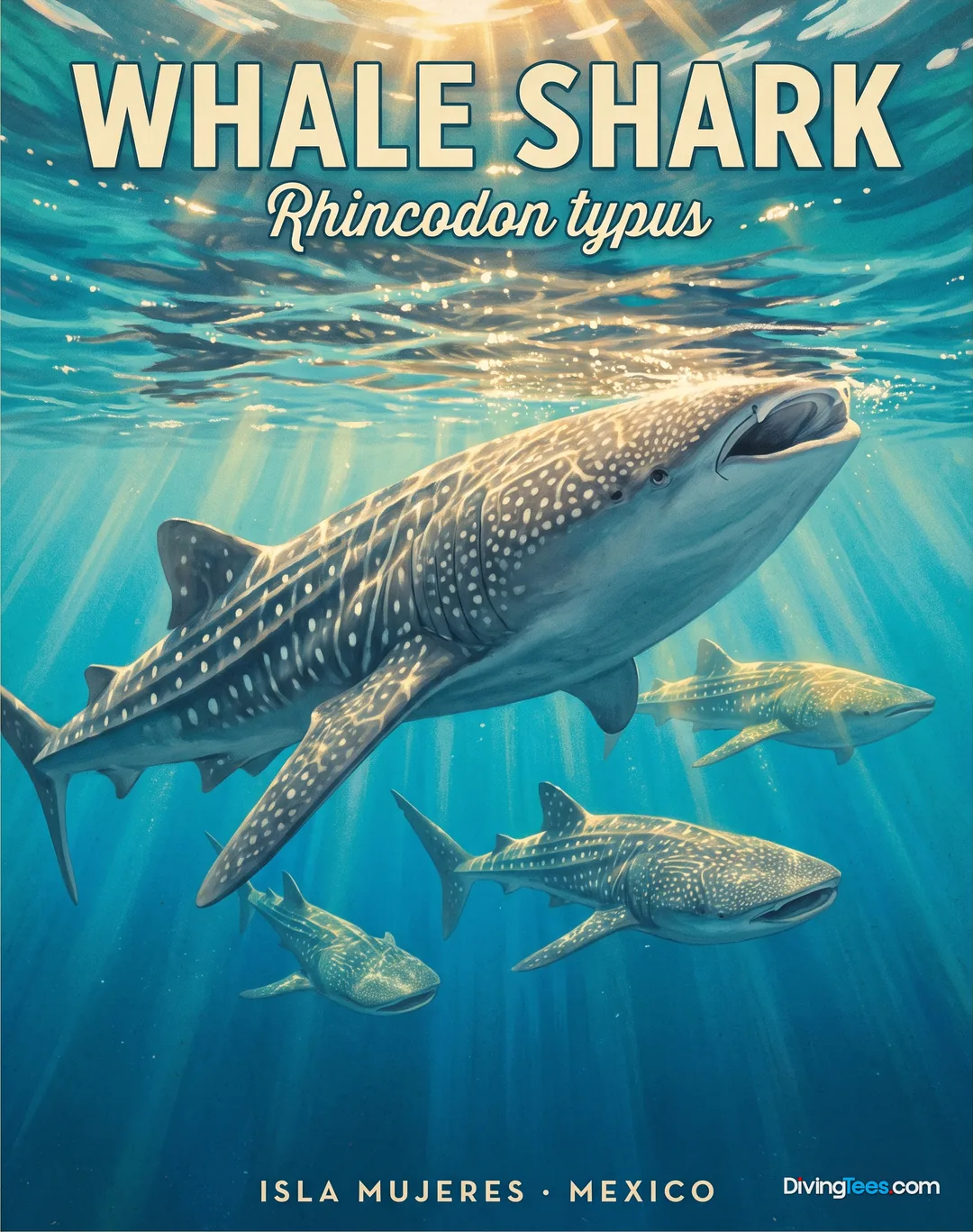
Across this route, nudibranchs, morays, stingrays, barracuda, turtles, reef sharks, white-tip reef sharks, groupers, Napoleon wrasse, trevally and tuna form the recurring cast. Whale sharks and manta rays are possible among the larger pelagics, but the site changes the odds and the character of the encounter. Koh Bon is the place to spend time at the cleaning station, where manta rays may arrive for maintenance. Elephant Head Rock brings the chance of reef sharks among boulders, arches and schooling fish. Boonsung Wreck concentrates fish so densely that the surface can disappear from view; stonefish and porcupinefish are recorded there. Koh Tachai is the only listed site for gorgonians, hawksbill turtles and flatworms. Surin Islands are the reason to look for the humphead parrotfish among hard corals. Koh Ma is quieter and smaller in scale, with anemonefish, shrimp, crabs and juvenile fish around artificial reefs. At Haad Salad, blue-spotted stingrays and white-eyed morays occupy protected coral water. The variety is the point: pelagics, reef hunters and small animals share one itinerary without every dive looking the same.

Who puts you in the water
The guides and instructors are the part of Seatopia that receives the strongest practical praise. The crew speaks English, Chinese and Korean, and the guides are described as excellent. They organise the diving in groups, brief the site and keep the operation moving without making the deck feel chaotic. The available details do not give a fixed guide-to-diver ratio, guide qualifications, a minimum number of logged dives or the structure of the briefings, so those points should be checked against the specific departure. Safety equipment is substantial: oxygen, first-aid kits, fire alarms and extinguishers, life jackets, liferafts, emergency flares, radar, sonar, GPS and VHF/DSC/SSB communications are carried on board. A private dive guide can be arranged as an optional extra. PADI courses from Open Water through Dive Master can be organised by A-One Diving, with training details depending on the trip.
The dive deck and the gear
The dive deck is arranged for regular diving rather than occasional use. It has a shaded working area, a dedicated platform, rinse tanks and DIN adapters, with a separate rinse station for cameras and charging points for photo equipment. One or two tenders support the operation, giving the crew flexibility when the site or surface conditions call for a boat transfer. Divers enter and leave the water through the platform, with exterior showers available after the dive. Nitrox is available as an optional extra, as is rental equipment; the boat does not list tank volume, tank material, compressor type, SMB provision or equipment brands, so those details should not be assumed. The useful picture is still clear: Seatopia keeps cameras, general gear and divers’ post-dive rinse needs from competing for the same space. That is exactly the sort of arrangement that becomes valuable after several dives in succession.
Between dives
Between dives, the shaded dive area is the useful refuge: close enough to the equipment and platform that the next entry never feels far away, but protected from the full strength of the sun. The terrace and observation deck give the surface intervals a different pace, with open views over the islands and room to sit outside when the weather allows. The photo space has charging facilities and a separate camera-rinse station, so a camera does not have to share the routine rinse with general gear. A covered outdoor dining area provides another place to sit, while audio and video entertainment is available when the sea is quiet and nobody wants to talk about the last dive. Land excursions are included on the programme, adding time ashore without changing the boat’s main purpose.
A day on board
A day on Seatopia is shaped by the water rather than by a clock printed on a wall. The first briefing comes before the opening dive, followed by breakfast and the return to the dive deck for the next entry. Later dives are separated by meals, snacks, showers and time in the shade or on the observation deck. The boat may move between sites while divers eat or rest, then settle again for the next briefing. Repeated daytime dives build the day’s main rhythm, and a night dive is included for those who want to see the reef after dark. Dinner gives the group a chance to compare the day’s animals before the boat quiets down. Between the final dive and sleep, the practical work is simple: rinse cameras, leave equipment ready, cool down and recover. Then the compressor, the crew and the sea set the order again.
What you eat aboard
Food is one of Seatopia’s stronger points. Meals are served buffet-style as part of full board, with local cuisine at the centre and vegetarian and vegan choices available. Thai flavours make more sense here than a generic international menu: the boat’s kitchen is part of the trip, not just a place to refuel. Non-alcoholic drinks, drinking water, tea, coffee and snacks throughout the day are included, while beer and other alcoholic drinks are optional. That matters on a five-day schedule of repeated dives. A diver can eat properly after surfacing, take something small before the next briefing and return to the table without having to organise food ashore. The high food rating is consistent with what the operation prioritises: a full, practical table that keeps pace with the diving rather than treating meals as decoration.
Nights at sea
The cabins are air-conditioned and arranged across three categories: en-suite main-deck cabins, upper-deck twin-bed cabins and upper-deck bunk-bed cabins. Some cabins have private bathrooms, while the boat has nine bathrooms overall for its twelve cabins. Upper-deck cabins have bay windows, giving the rooms a stronger connection with the sea than an enclosed inside berth. Nights are therefore less about hotel polish than about having a cool, private place to recover between dives, with hot showers and cabin towels already part of the setup. Non-smoking cabins and daily housekeeping keep the sleeping areas functional during a dive-heavy trip. Outside, the observation deck and terrace offer the better place for a last look at the water before turning in. The cabin choice matters here: couples should look at the en-suite category, while twin and bunk cabins suit divers travelling together who care more about the route and the diving than private space.
Main Deck En-suite Cabins
Upper Deck - Twin Bed Cabins
Upper Deck - Bunk Bed Cabins
What to know before boarding
Departures and returns are recorded from Coco Pier for the South Andaman route, and from Andaman Pier in Phang-nga for the Similan–Richelieu route. Airport and hotel transfers are included, with the transfer arrangements communicated for the individual booking. Arriving the night before is the sensible way to protect the start of the cruise from a delayed flight or a difficult connection.
- Year built
- 2024
- Length
- 24 m
- Beam
- 6 m
- Maximum number of passengers
- 24
- Number of cabins
- 12
- Number of bathrooms
- 9
- Cruising speed
- 9 knots
- Tenders
- 1-2
- Website
- a-one-diving.com ↗
Hello, I'm Marina, DivingDeal.com's AI assistant. I answer in detail about hotels, dive centres and liveaboards.

Thinking about the whole trip and the flights? Talk it over with Edith →
Marina is an AI. Some links are affiliate links: DivingDeal may earn a commission, at no extra cost to you. Bookings are made with the partner.