Liveaboards · Maldives
Conte Max — an Italian-style Maldives liveaboard for serious reef diving and time on deck
What makes this boat unique
- Conte Max combines a dedicated diving cruise with an Ayurveda and wellness concept, and welcomes non-divers and snorkellers.
- The traditional Maldivian dive dhoni carries the diving equipment, while free nitrox, DIN adapters, tech diving and rebreather support are available.
- The nine cabins include twin, double, single, family and upper-deck options, all with private bathrooms and individually adjustable air conditioning.
- Central Atolls departures run from Malé to Malé, with recorded trips lasting from 4 days / 3 nights to 11 days / 10 nights.
For subtitles in English: start the video firstthen click the gearat the top right of the video, select “Subtitles/CC”, then “Auto-translate” and choose “English”.
The invitation
Conte Max is for divers who want the Maldives at both speeds: current-driven channels below, and an unhurried wooden yacht above. The boat was created as an alternative to an island resort, so a non-diving partner is not left with a bare cabin and a bench between excursions. The difference is not a promise of resort polish; it is the way diving, food, scenery and wellness share the same trip. The routes leave Malé for the central atolls, where a week can bring pinnacles, cleaning stations, shark channels and manta sites without moving into a liveaboard built only around tanks and kit. Conte Max suits the diver who wants three dives a day, free nitrox and technical options, but also cares who cooks dinner and whether the boat remains pleasant after the last ascent. Its strongest argument is balance: the underwater programme is the reason to board, while the Italian-international table and Ayurveda concept make the surface hours worth having.
Boarding
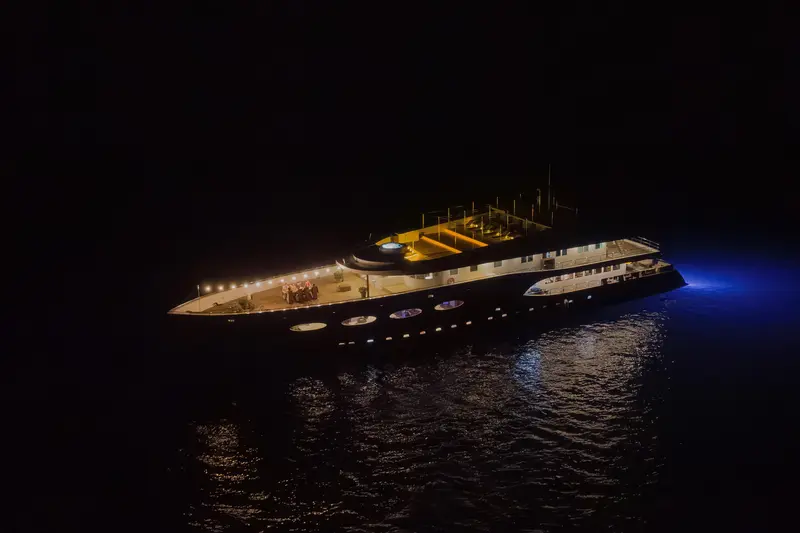
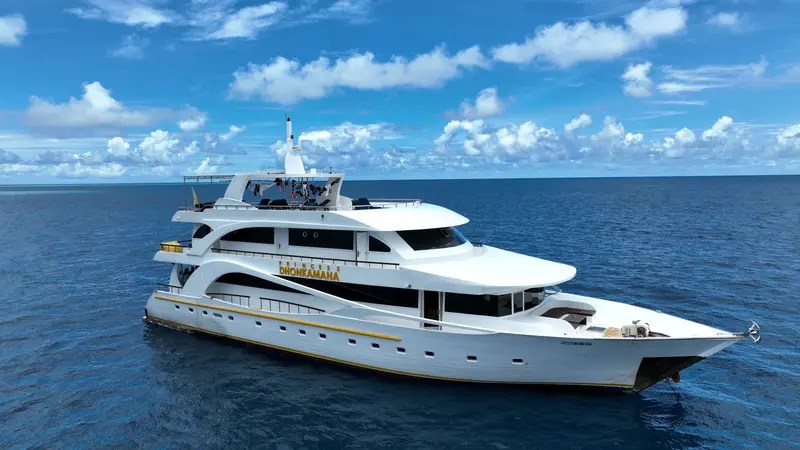
At the dock, Conte Max presents as a substantial wooden yacht rather than a stripped-down dive platform. She was built in 2004 and renovated yearly, and her spaces are furnished with valuable Maldivian wood: an immediate clue that this boat was designed for long stays, not only for the transfer between two dive sites. Once aboard, the indoor saloon gives the group a cool place to gather around the bar, sofas and TV-DVD-stereo area, while the open-air areas spread across three levels keep the sea close when the yacht is moored or underway. The dive dhoni takes the working part of the day away from the main yacht, so tanks, compressors and wet equipment do not dominate the living spaces. A camera recharging area and a separate camera rinse point acknowledge how many passengers will spend their week behind a housing. Conte Max is not a minimalist expedition boat. It is a purpose-built diving yacht with enough domestic separation to make a full week feel considered.
The atmosphere on board
Conte Max has the feel of a small operation inside a yacht built to host comfort. The crew includes European or Italian-speaking staff, Maldivian dive guides and a coach, and the languages spoken aboard include English, French, Spanish and Italian. That mix gives the boat a distinct social character without making it feel like an international hotel with a uniform script. The crew's role is most visible around the transitions: meals arrive without competing with the dive programme, the dhoni is kept ready, cabins are cleaned daily, and the group is allowed to move from a current-heavy dive to a quiet dinner without unnecessary ceremony. Passenger feedback places the crew above the boat itself, while food scores highest of all; that is a useful distinction. Conte Max is a 2004 yacht, not a new floating resort. What passengers gain is the people who know how to run its established spaces, and a dining service that gives the evening more shape than a buffet line.
The sites you’ll dive
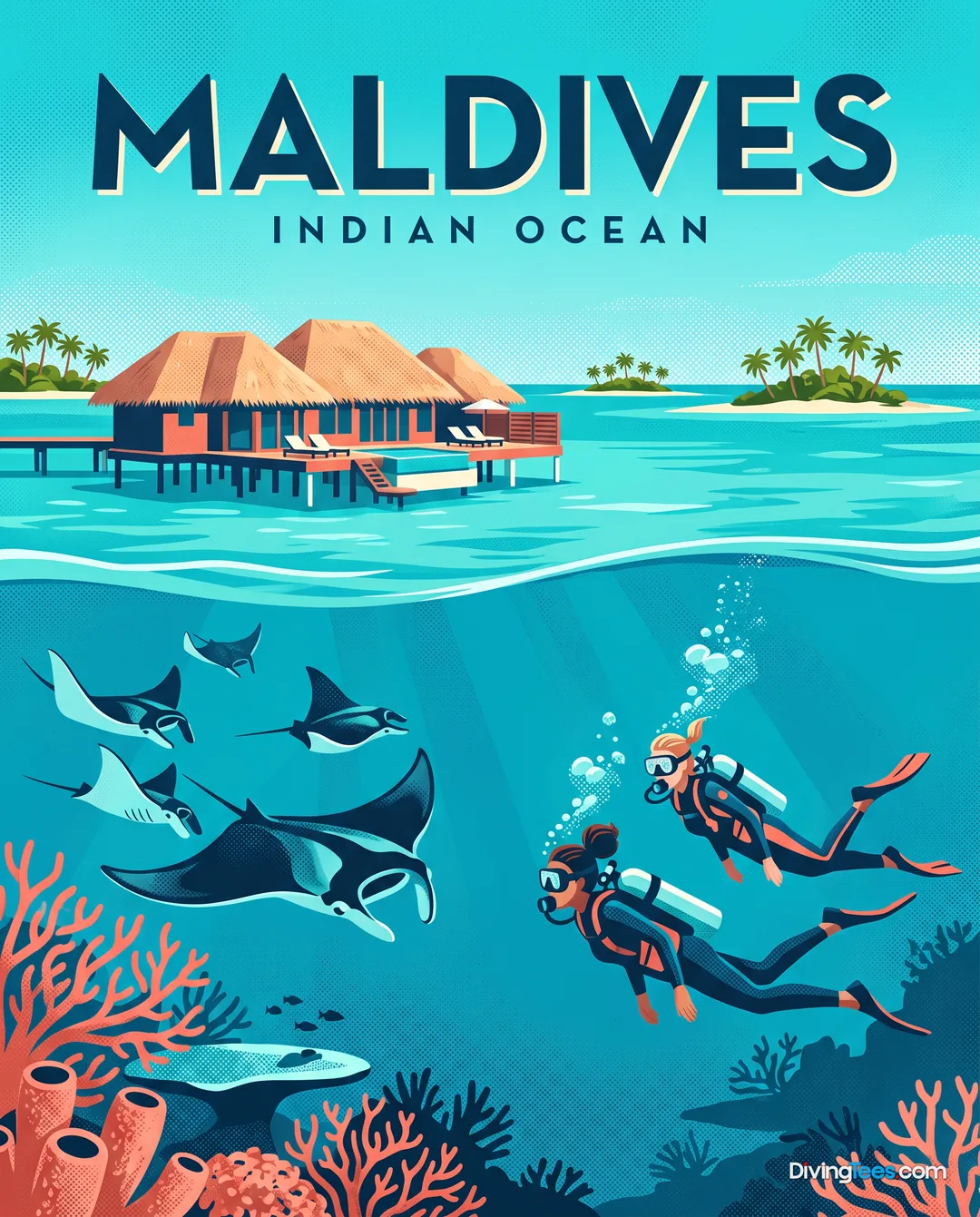
The central-atoll routes are built around channels and isolated thilas rather than one fixed weekly circuit. Recorded Malé-to-Malé departures range from 4 days / 3 nights to 11 days / 10 nights, with longer programmes also linking North Ari, Rasdhoo and Baa. At Barracuda Giri, three submerged pinnacles reach a maximum of -30m, where current concentrates barracudas, fusiliers, tuna, jacks and rays. Mushimasmigili Marine Reserve also reaches -30m and is known for grey reef sharks holding at the up-current pinnacle. Dhonkalo is a cleaning station in a sandy channel where manta rays gather. Maamigili and Maamigili Beiyru, both in the South Ari Marine Protected Area and each reaching -30m, are used to look for whale sharks and mantas. Kudarah Thila, also -30m, cuts through the reef with clefts, overhangs and caves full of batfish. Myaru Kandu is the Shark Channel, with grey and whitetip sharks in the drift. Foththeyo Kandu reaches -40m: a narrow channel of caves covered in yellow soft corals, strong current and open-ocean pelagics. Farther north, Fushifaru Thila Marine Reserve reaches -35m and places manta cleaning stations at the centre of the dive.
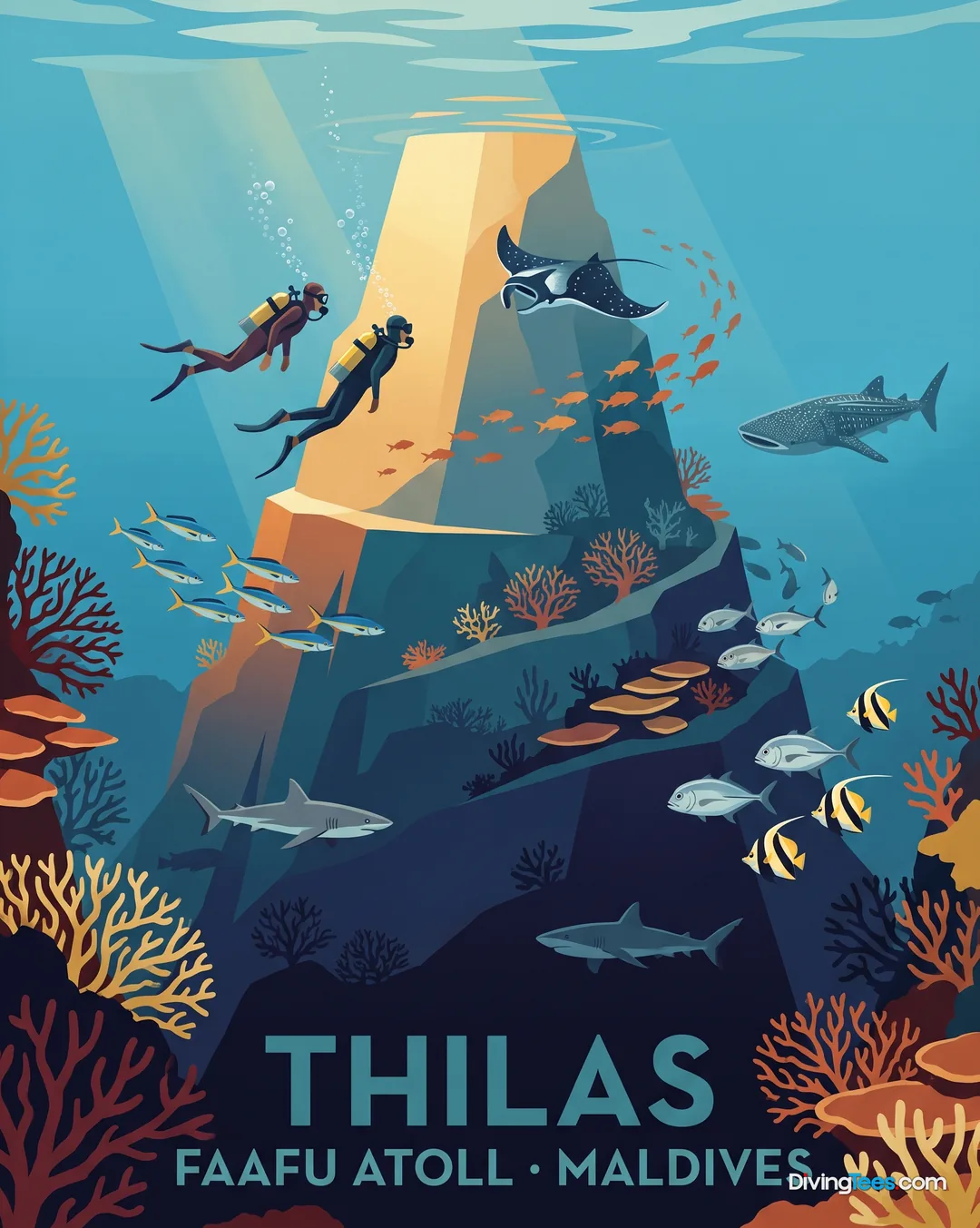
Thilas →
Max. depth · 15 m
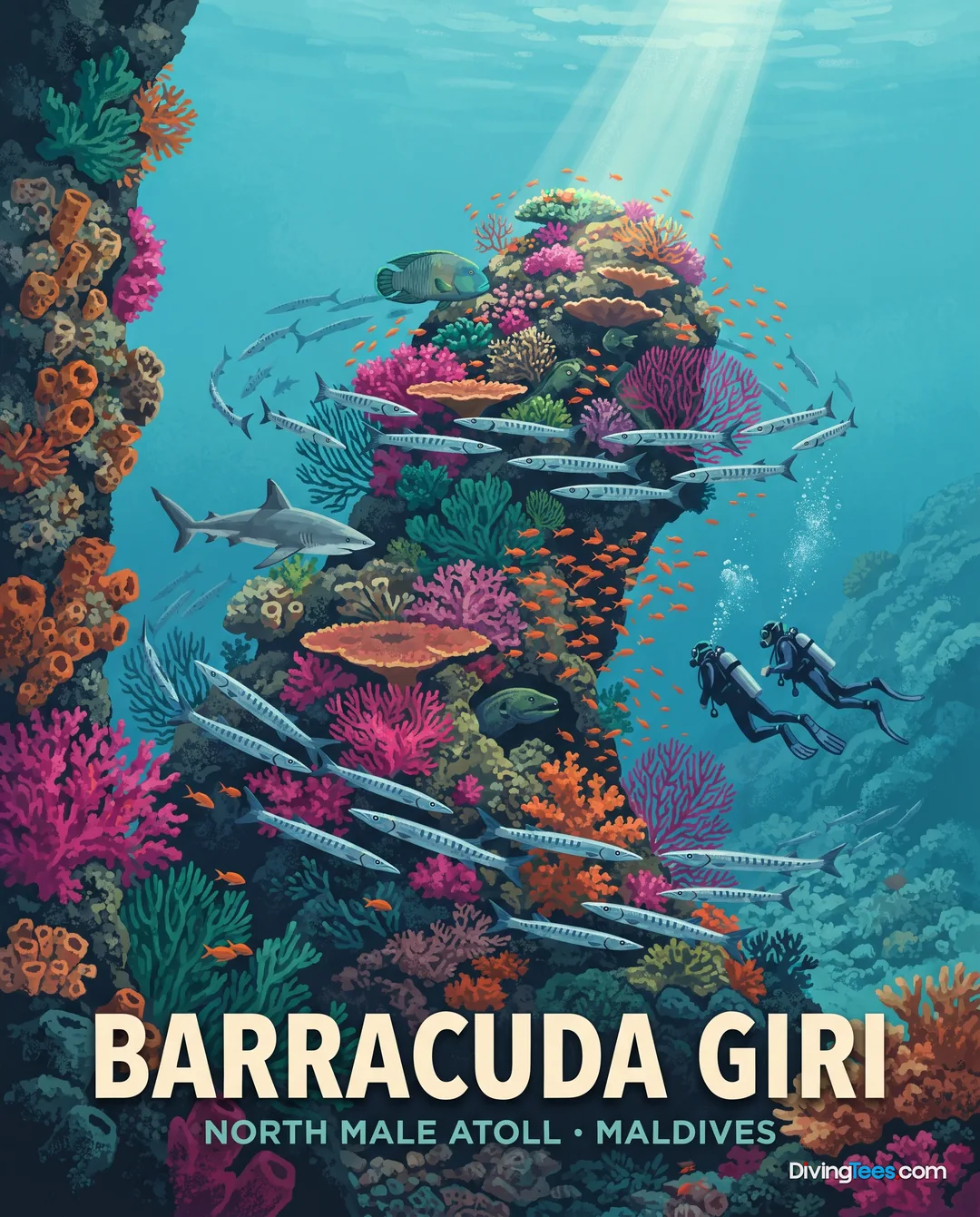
Barracuda Giri →
Max. depth · 30 m
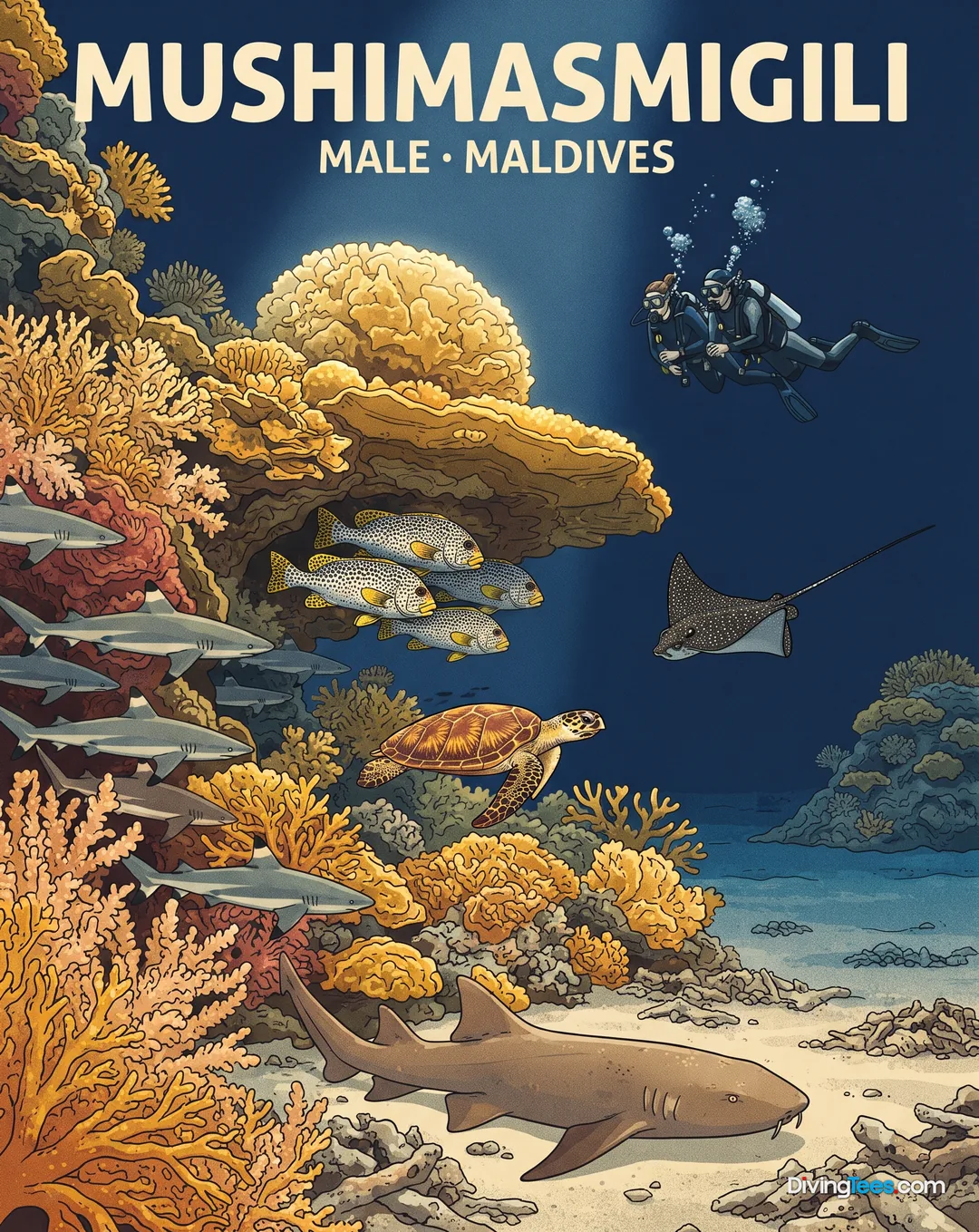
Mushimasmigili Marine Reserve →
Max. depth · 30 m
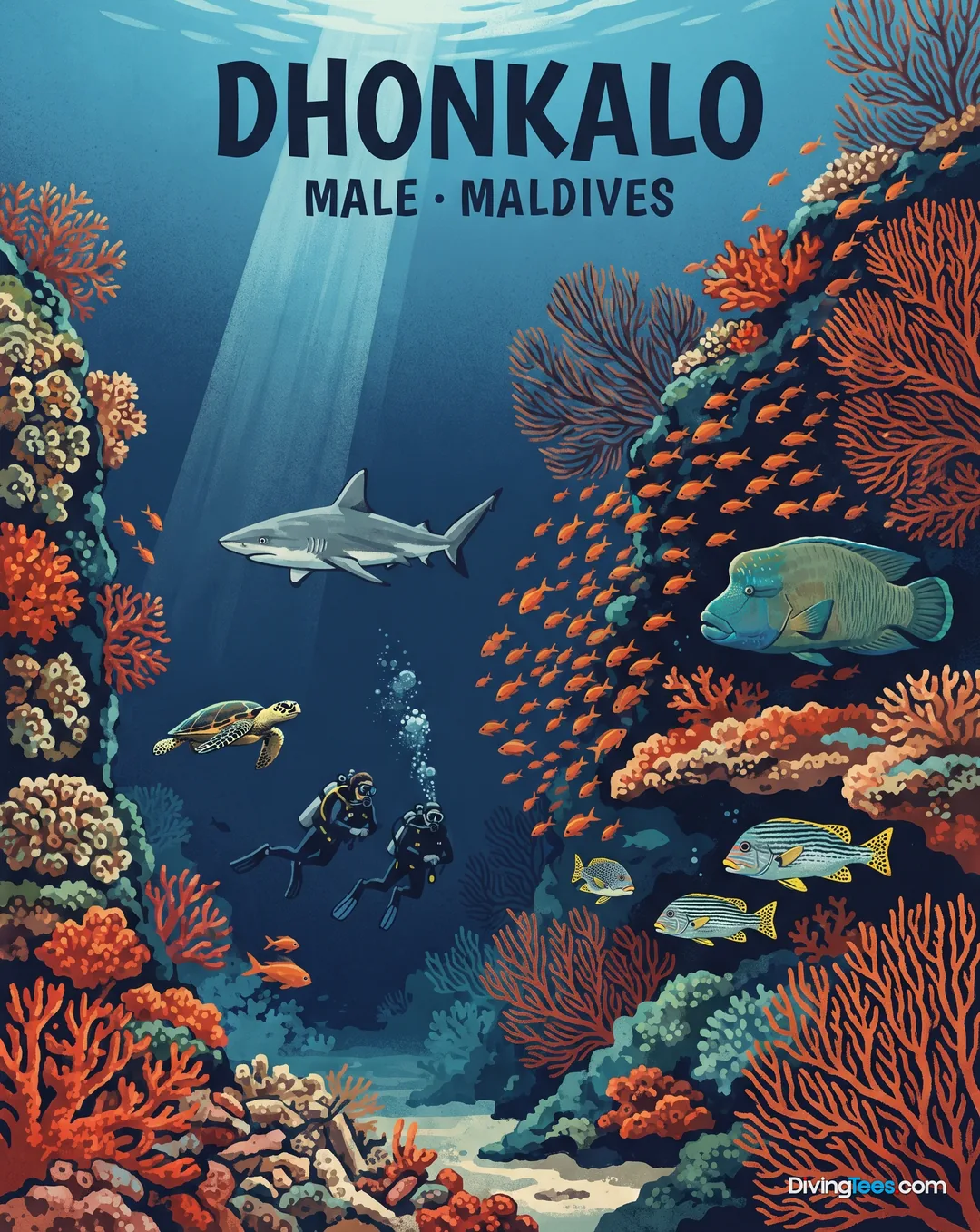
Dhonkalo →
Max. depth · 25 m
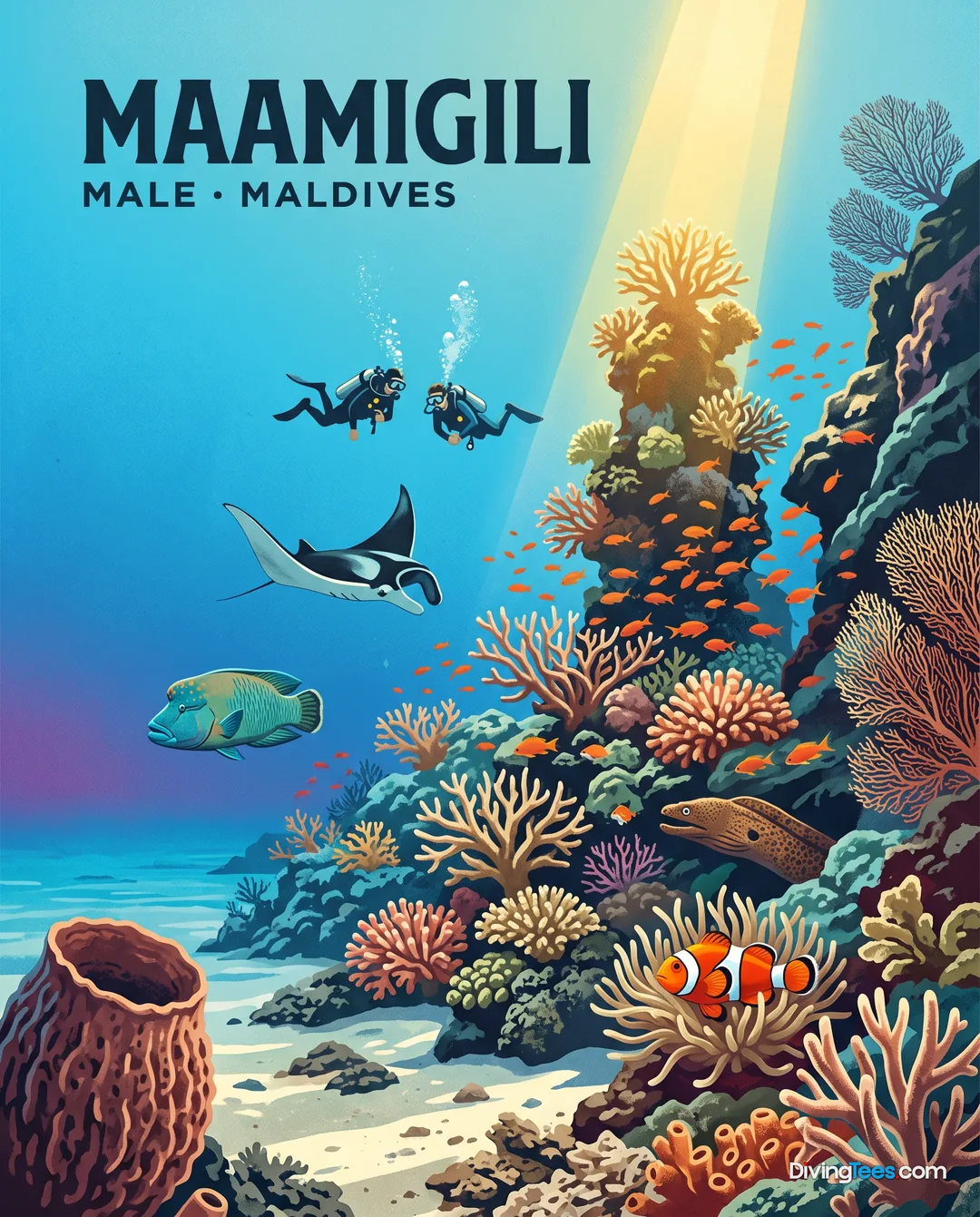
Maamigili →
Max. depth · 30 m
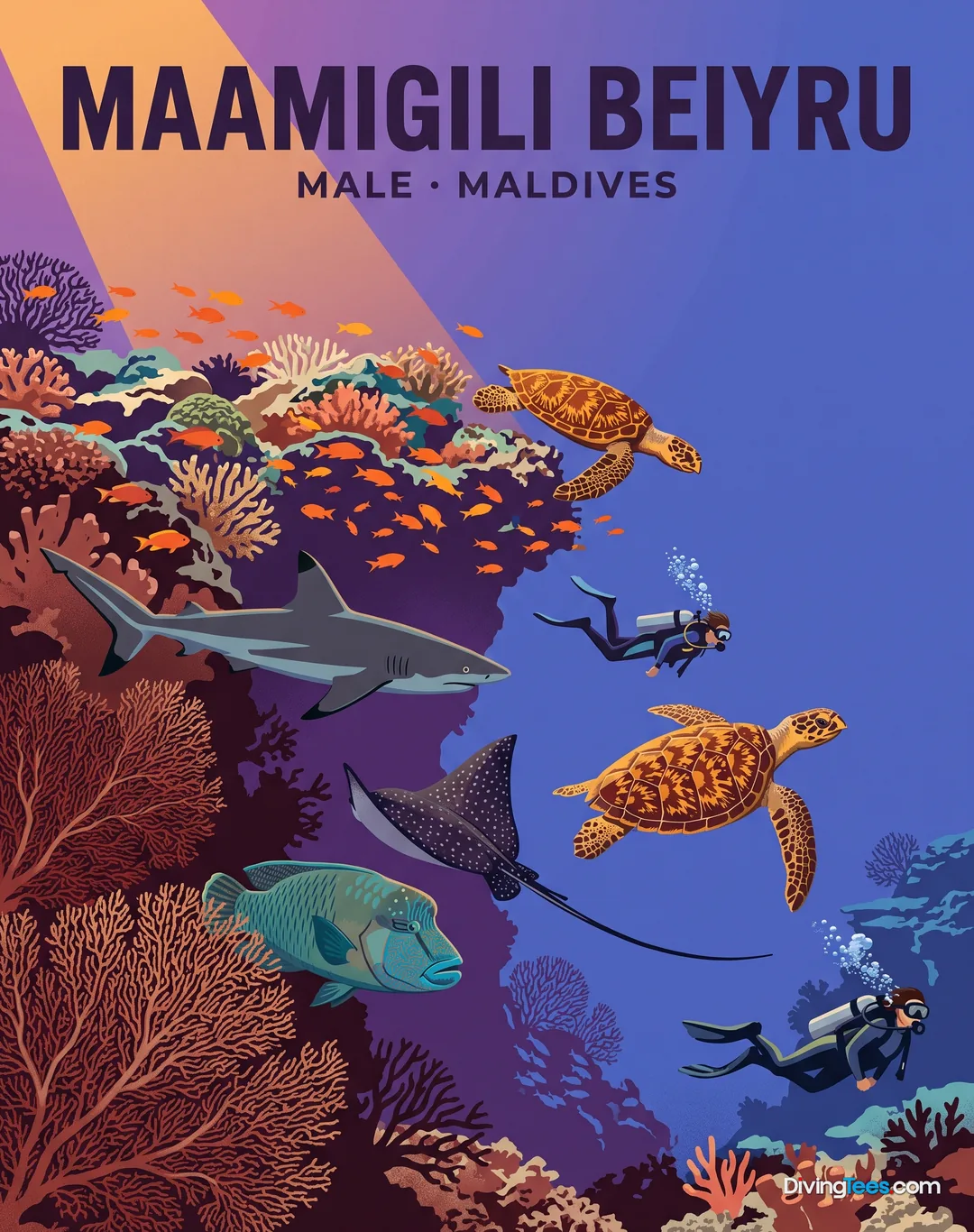
Maamigili Beiyru →
Max. depth · 30 m
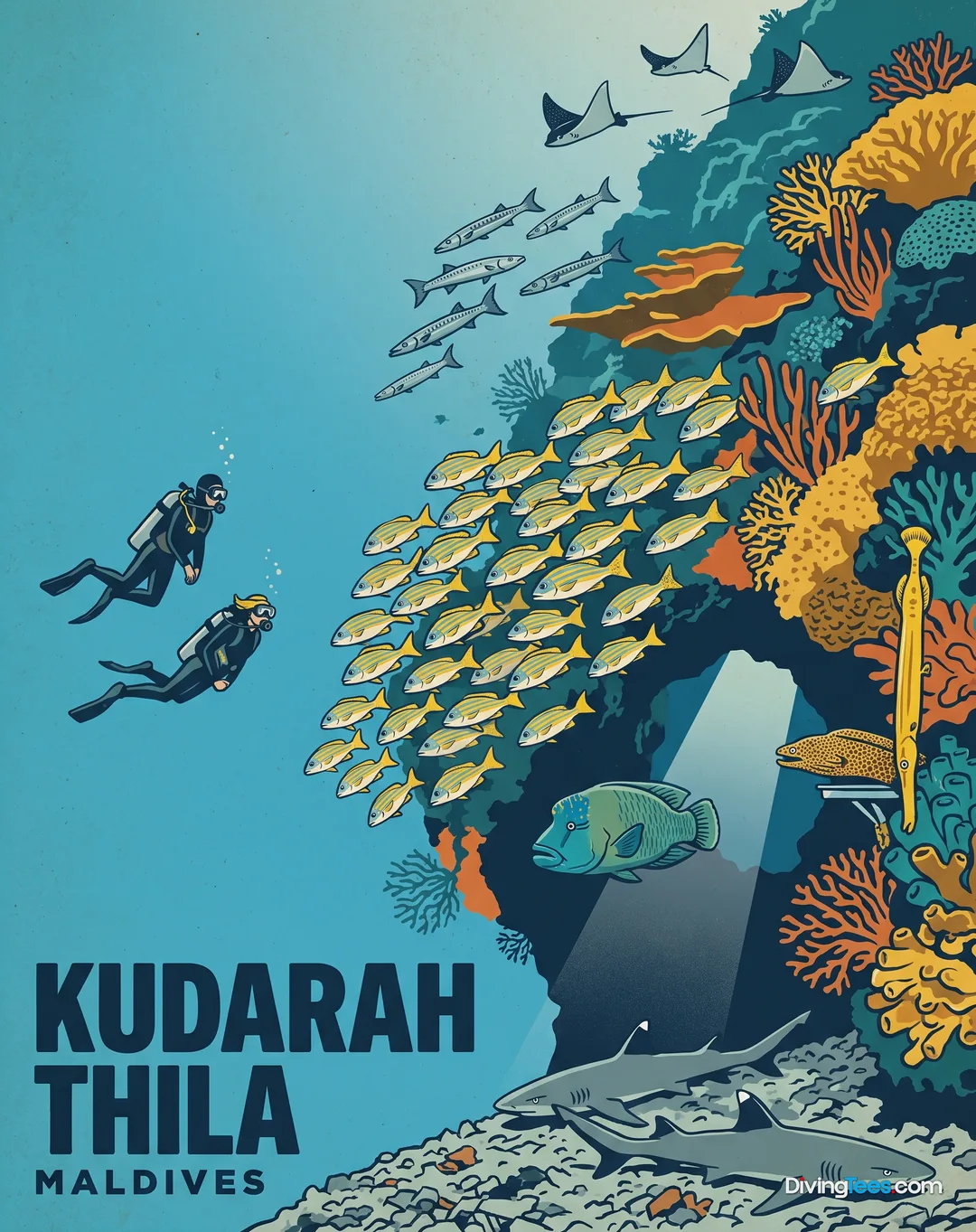
Kudarah Thila →
Max. depth · 25 m
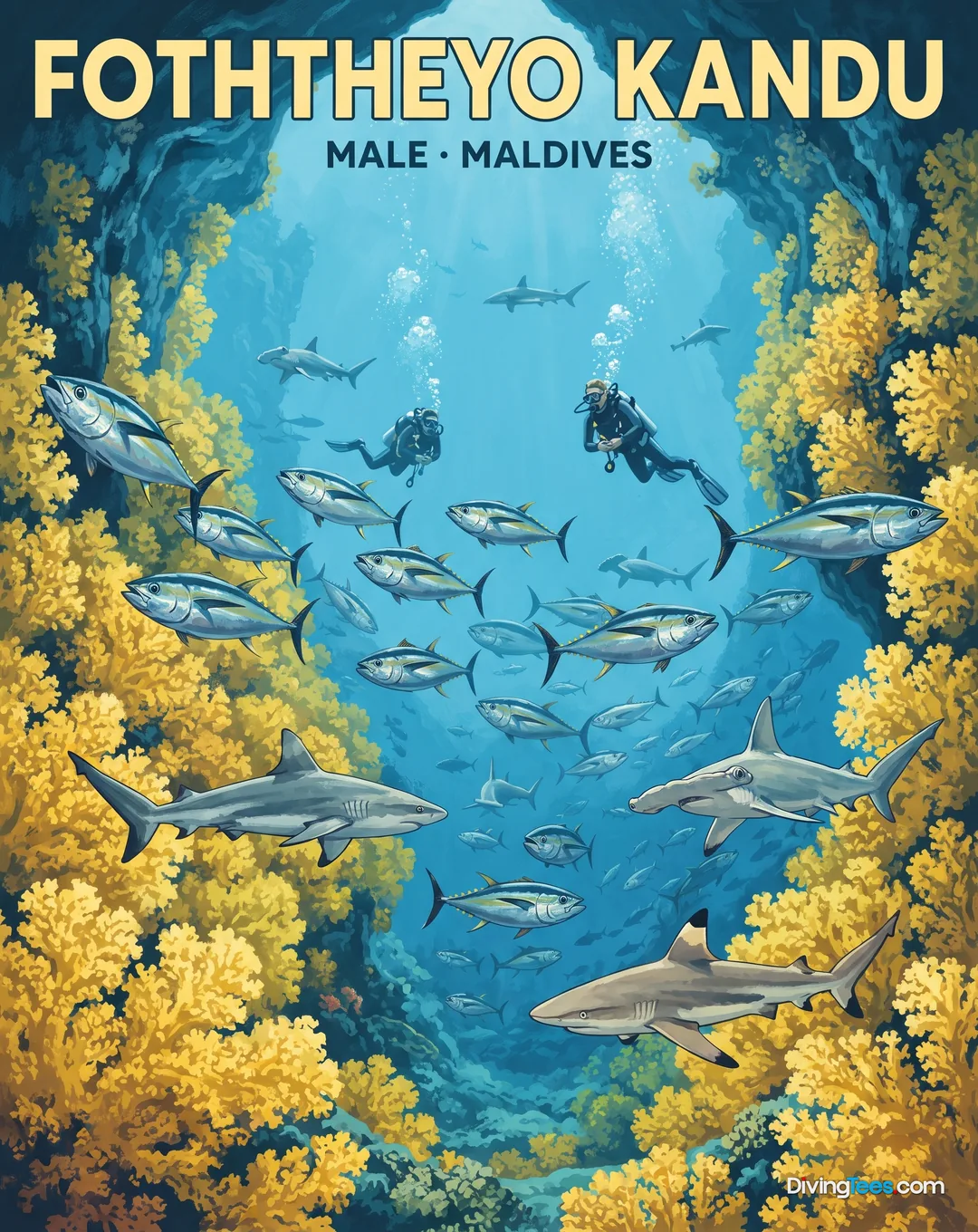
Foththeyo Kandu →
Max. depth · 40 m
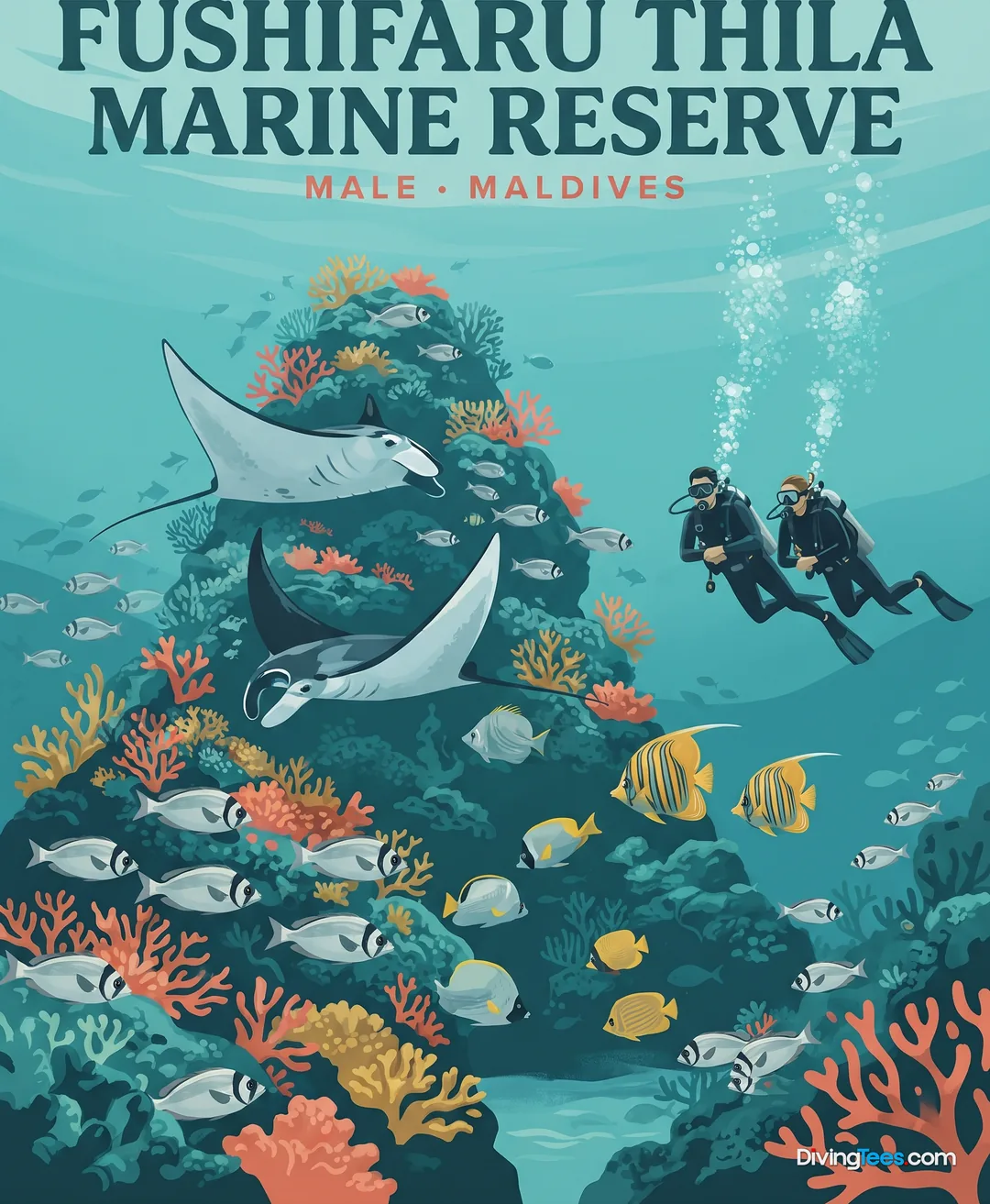
Fushifaru Thila Marine Reserve →
Max. depth · 35 m
Itineraries, dates and prices
Prices per person. Each month shows its lowest price: click a month, or pick an itinerary.
Next departures · 43 departuresfrom £784$1,048€936
November 2026
December 2026
January 2027
See dates and prices
If you click these links and make a purchase on the partner site, DivingDeal may earn a commission, at no extra cost to you.
Dates and prices taken from Divebooker and liveaboard.com, updated 24 October 2026
What you’ll meet underwater
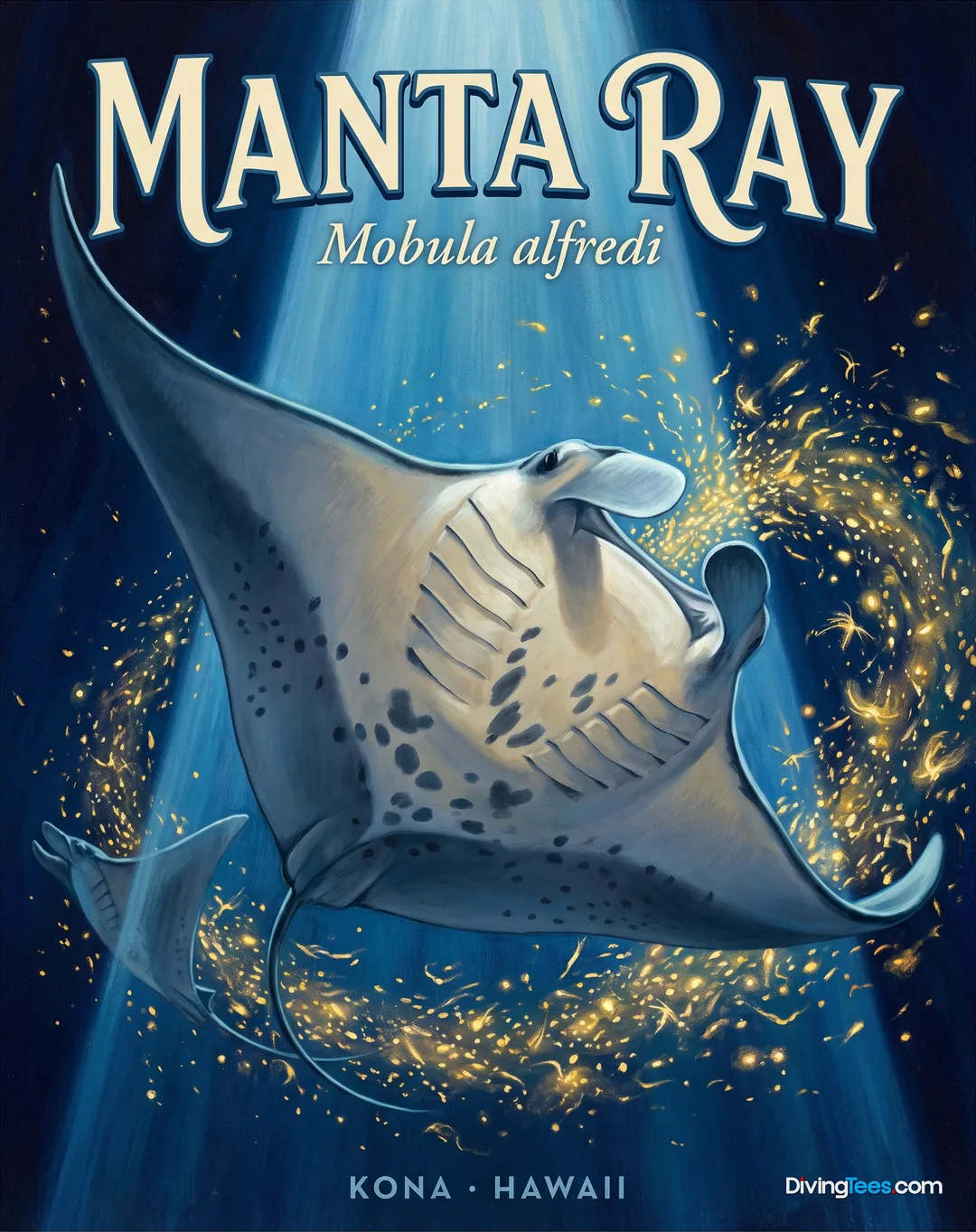
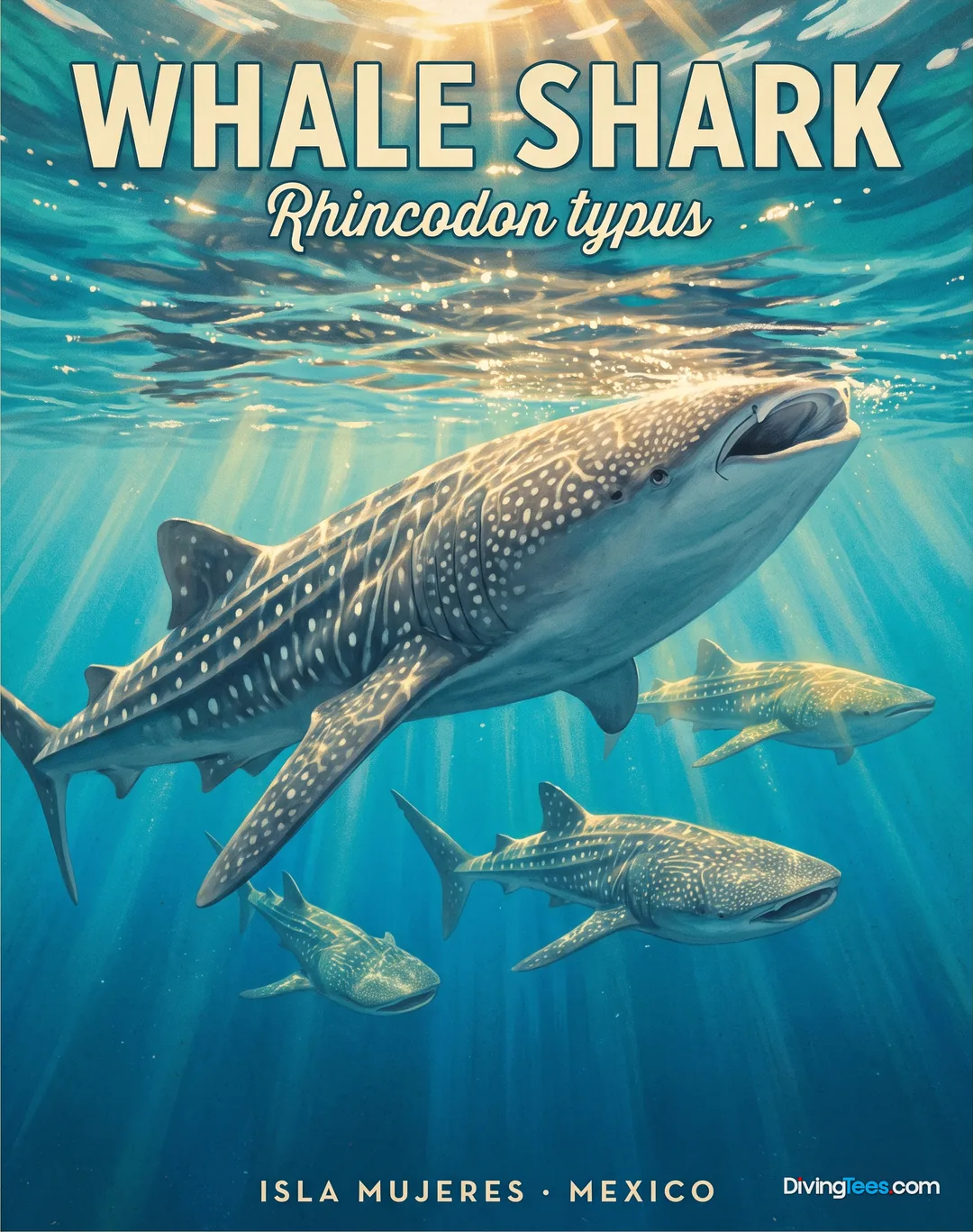
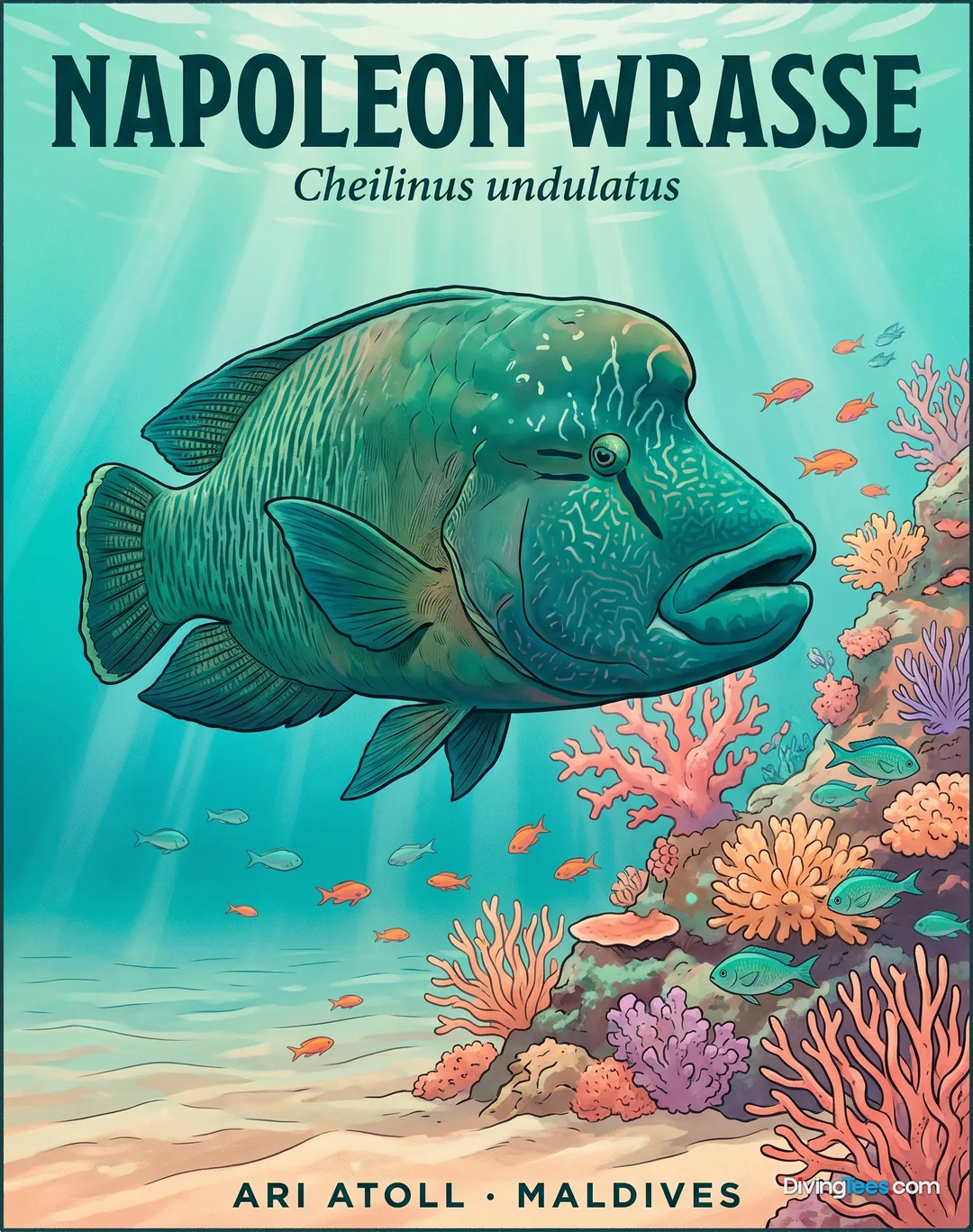
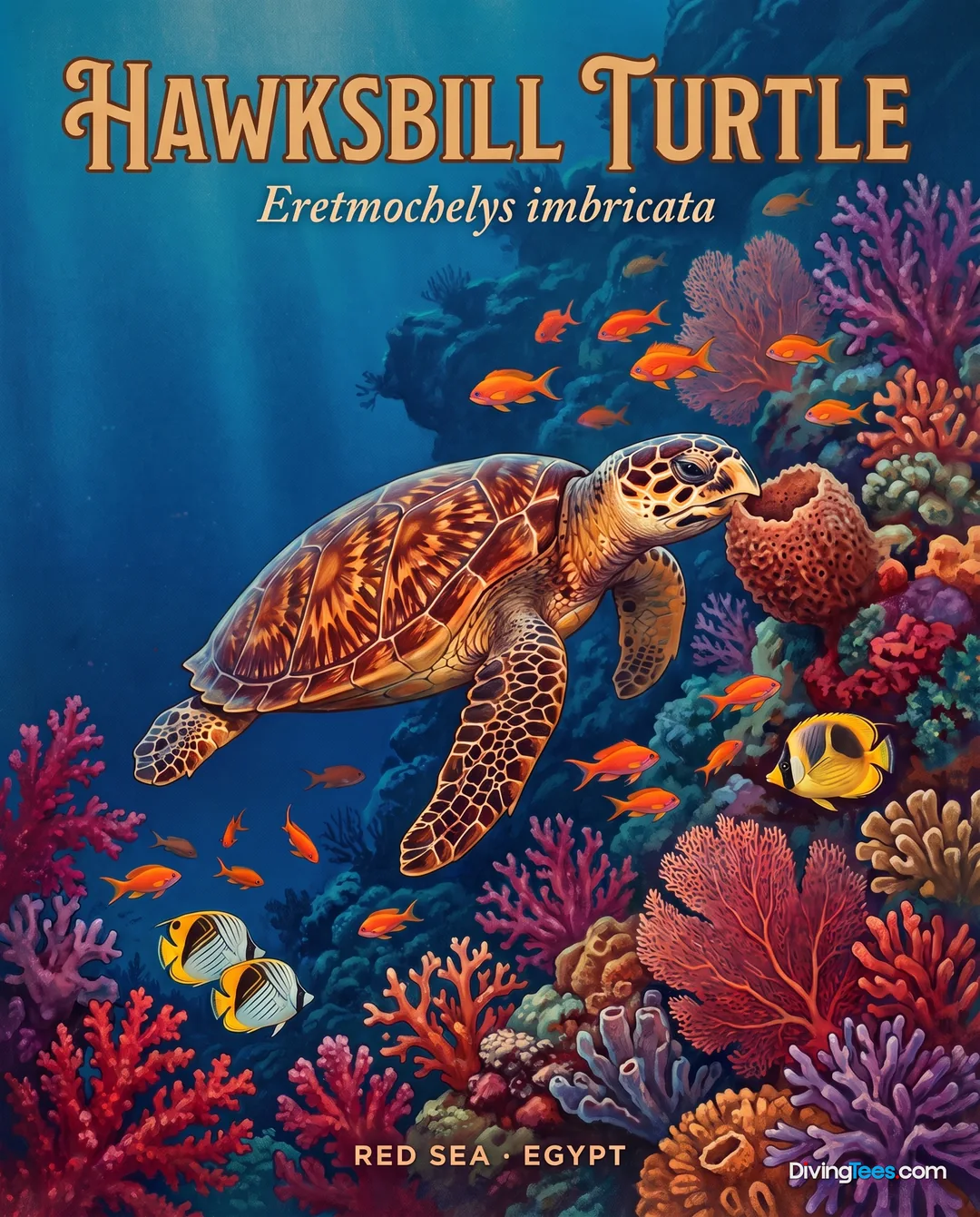
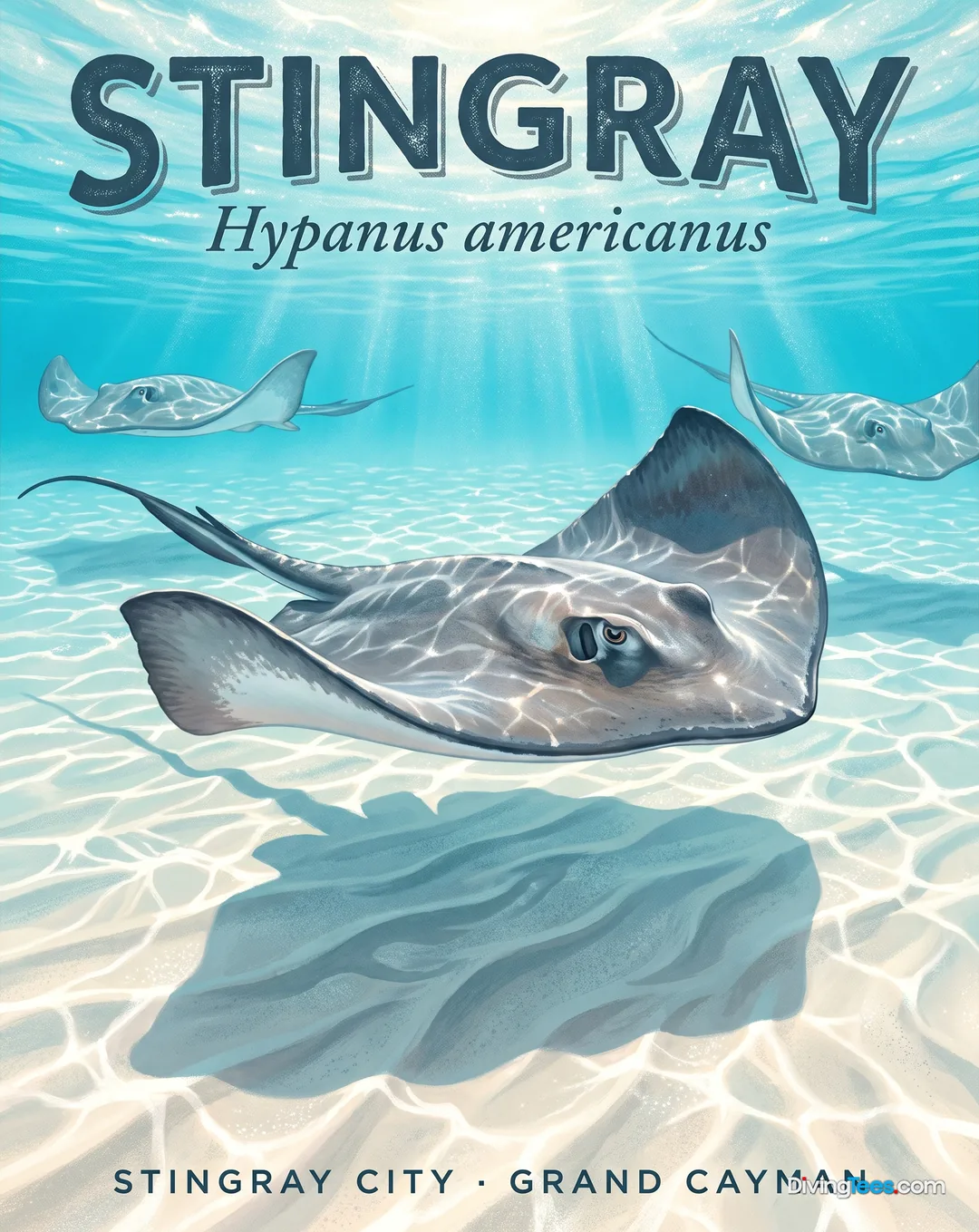
The repeated cast on this route is made of Napoleon wrasse, grey reef sharks, fusiliers, sea turtles, eagle rays, barracudas, manta rays and tuna. They appear across many of the listed sites because the atolls combine reef edges, channels, cleaning stations and current-facing pinnacles; reef sharks and schooling fish use those flows, while mantas come to cleaning stations. Whale sharks are recorded at three sites, especially Maamigili and Maamigili Beiyru, where the South Ari protected waters are the reason to spend the dive looking into blue water as well as along the reef. Myaru Kandu can add hammerheads to its grey and whitetip sharks, while Foththeyo Kandu brings the possibility of silvertips, mobulas and other pelagics around its caves and channel. Some encounters justify a particular stop: groupers and anthias are recorded only at Barracuda Giri; anemones only at Banana Reef; soft coral and gorgonians only at Dhigalhi Haa Marine Reserve; and hawksbill turtles only at Dhigu Thila. Fushifaru Thila is the site for the recorded stingray sighting.
Who puts you in the water
Two Maldivian dive guides work with the crew, alongside instructors and a coach. The boat's published crew languages are English, French, Spanish and Italian, so briefings can be handled across a mixed group rather than reduced to gestures and a hand signal. The diving programme is built around three dives per day, with guides organising divers for the conditions of the site and the experience in the group. The boat offers PADI training from Discover Scuba Diving and Open Water through Advanced Open Water, specialties, Emergency First Response, Rescue Diver and Master Scuba Diver. Open Water certification allows dives to 18 metres; Master Scuba Diver requires 50 logged dives, Rescue Diver or equivalent and five specialties. Technical, drift, deep, marine biology and nitrox courses are also offered. GPS, VHF/DSC/SSB radio, a radio beacon, life jackets and first-aid kits are carried for navigation and emergencies. A private dive guide can be arranged as an option.
The dive deck and the gear
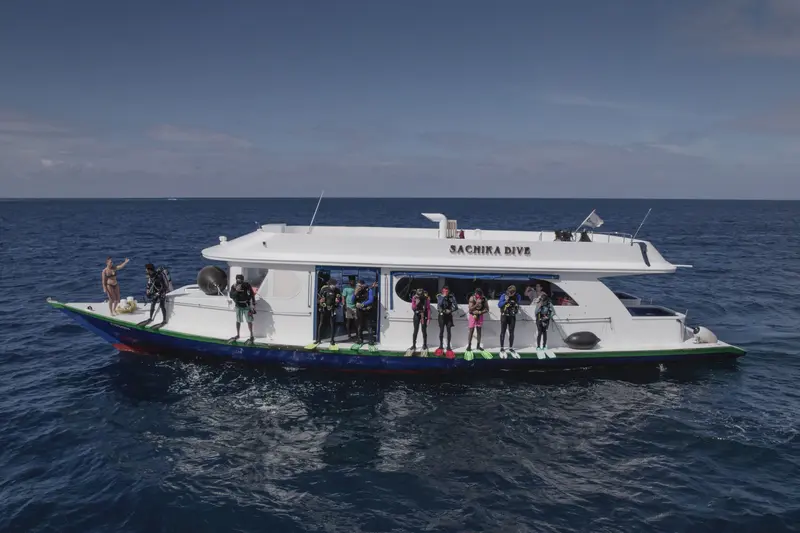
The diving happens from a traditional Maldivian dhoni, keeping the main yacht clear of the wet, noisy work. The dhoni carries two Coltri MCH13 compressors and Catalina C100 aluminium cylinders rated at 227 bar, with DIN and INT fittings and single or twin regulators. Free nitrox is available, and the boat supports tech diving, sidemount and rebreathers; DIN adapters, shaded dive space, rinse tanks and a dedicated camera rinse point are part of the setup. Rental equipment is available when requested at booking. The diving platform and tenders handle entries and pickups, while the dhoni returns divers to the working boat rather than making them climb directly onto the accommodation yacht. The 13-litre aluminium cylinders suit the standard setup. The practical advantage is separation: compressors, tanks and wet kit stay with the dive operation, while the Conte Max saloon and decks remain usable for everyone else.
Between dives
Between dives, the useful choice is not a packed programme but where to put the surface interval. The indoor saloon is air-conditioned and has sofas, a bar, music, films and a small library; outside, three communal decks offer loungers, mats and deck chairs in sun or shade. A camera charging area gives photographers somewhere to deal with batteries before the next entry, while the separate camera rinse point keeps that work away from ordinary equipment. Kayaks, snorkelling gear and guided snorkelling give non-divers a way into the water without joining the scuba schedule. When the yacht is moored in a lagoon for the night, the decks become the place to watch the atolls rather than another room to pass through. Local-island and sandbank excursions are part of the programme, as are fishing and kayaking. Internet is available for a fee, but Conte Max works better when the phone is put down and the surface interval is allowed to remain a surface interval.
A day on board
A day starts with the first briefing before the boat's three-dive programme gets moving. Divers transfer to the dhoni, settle into their groups and enter from the platform while Conte Max remains the place for breakfast, shade and the next surface interval. The following dive comes after the first meal and equipment check, then the third follows another pause for food, water and the simple business of drying off. Between entries, the day divides naturally between the saloon, the shaded outdoor dining area and the open decks, with the dhoni and crew resetting the operation around the next site. Sailing takes place between reefs, channels and lagoons, and some days include a local island, sandbank or other shore excursion. The evening returns to the yacht: dinner at the table, a drink from the bar, conversation in the saloon or a quiet deck above the anchored boat. Night dives are not described as a standard part of this route, so the rhythm is built around three daytime dives rather than an invented fourth.
What you eat aboard
Meals are served at the table, either inside or in the outdoor dining area aft of the first deck when the weather allows. The kitchen works across Italian, international and Maldivian cooking, with fresh fish used often and the chefs prepared to adapt dishes to specific needs. Once during the cruise, a buffet of traditional Maldivian food replaces the usual table service. Vegetarian and vegan options are available, while drinks, beer and wine are handled separately from the included full-board meals. That arrangement suits the diving rhythm: food arrives as a proper pause rather than a pile of snacks beside the compressor. Breakfast follows the first dive, later meals restore divers before they return to the water, and snacks remain available through the day. The very high food score is consistent with the boat's identity; Conte Max is not merely feeding a group of divers quickly. The table is one of the reasons non-divers can enjoy the same cruise.
Nights at sea
The cabins are arranged around the middle of the boat on the cabin deck, with a standard window rather than a large resort-style glass wall. Categories cover lower-deck twin and double cabins, a single cabin, a main-deck cabin and an upper-deck cabin; one cabin has a queen bed and a single bed, and four can take three guests. There are no bunk beds. Each cabin has independently adjustable air conditioning and a private bathroom with a shower cubicle, which matters after a day spent wet, salty and moving between dhoni and yacht. The lower-deck rooms keep the night practical and quiet enough for the next dive, while the higher cabins trade some separation from the main activity for a different position in the boat. Beyond the cabin door, the saloon is furnished in the same Maldivian wood as the rest of the yacht, with sofas and a bar rather than a corridor full of gear. These are comfortable diving quarters, not oversized suites.
Lower Deck Twin Cabins (# 3 & 6)
Lower Deck Double Cabins (# 1, 2, 7 & 8)
Lower Deck Single Cabin (#4)
Main Deck Cabin (#9)
Upper Deck Cabin (#11)
What to know before boarding
Central Atolls cruises depart from Malé and return to Malé. Airport transfer is included; hotel transfers are optional, so the pickup point and arrangements are given with the booking information. Domestic flights are used on some itineraries that finish away from Malé, including routes involving Baa. Arriving in Malé the night before boarding leaves room for a delayed flight without putting the first transfer at risk.
Deck plan
- Year built
- 2004
- Year renovated
- Each year
- Length
- 33 m
- Beam
- 10 m
- Maximum number of passengers
- 20
- Number of cabins
- 9
- Number of bathrooms
- 8
- Engines
- Yanmar 405 hp
- Cruising speed
- 12 knots
- Tenders
- Diving Dhoni
- Website
- luxuryyachtmaldives.com ↗
Hello, I'm Marina, DivingDeal.com's AI assistant. I answer in detail about hotels, dive centres and liveaboards.
Thinking about the whole trip and the flights? Talk it over with Edith →
Marina is an AI. Some links are affiliate links: DivingDeal may earn a commission, at no extra cost to you. Bookings are made with the partner.