Liveaboards · Maldives
Duke of York — a spacious Maldivian liveaboard built around serious diving
What makes this boat unique
- The traditional Maldivian dive dhoni lets divers cross over from the yacht instead of climbing a ladder after most dives.
- Free nitrox is available on board, with DIN adapters, technical diving, sidemount and rebreather support.
- The shaded outdoor dining area serves Italian, international and Maldivian buffet meals, with vegetarian and vegan options.
- Central Atolls and Male–Baa routes run for 8 days and 7 nights, with departures starting on Sunday.
For subtitles in English: start the video firstthen click the gearat the top right of the video, select “Subtitles/CC”, then “Auto-translate” and choose “English”.
The invitation
The Duke of York is for divers who want a proper liveaboard without giving up room to breathe. Its strongest feature is not a spa or a polished lounge, but the separate dive dhoni that stays with the yacht all week. You kit up there, return to it after the dive, and usually cross back to the main boat without hauling yourself up a ladder. That small change matters after several dives a day. The routes move through the central Maldives and toward Baa, where channels, pinnacles and cleaning stations bring the large animals people come here to find. Free nitrox, rebreather support and space for technical diving widen the boat's appeal, while the Italian-led kitchen and broad outdoor decks make it suitable for non-divers as well. It is a choice for a mixed group that still wants diving to remain the centre of the trip.
Boarding
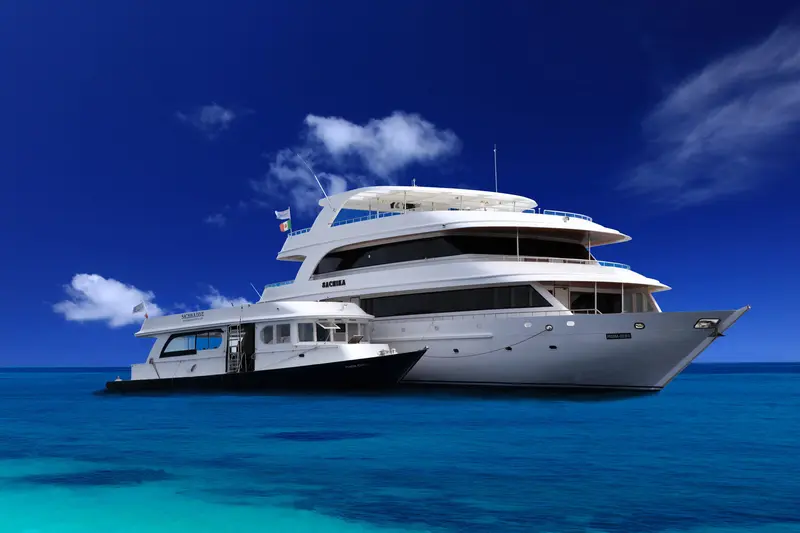
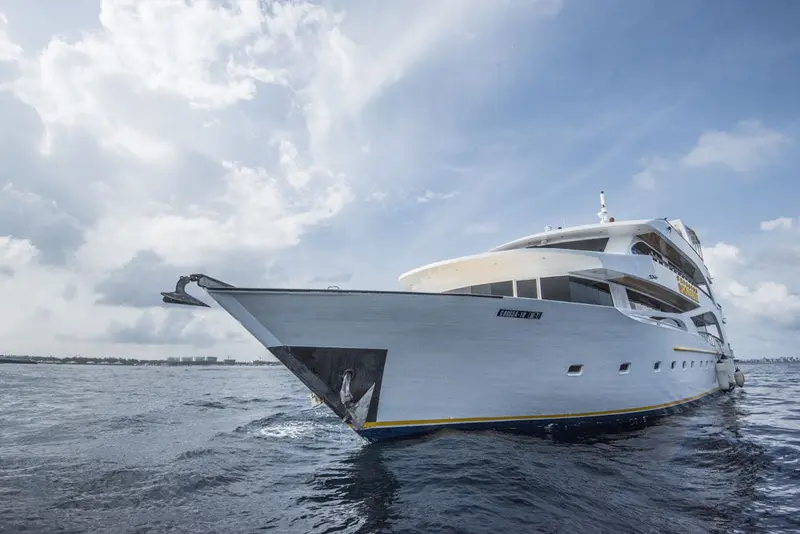
From the dock, the Duke of York presents as a large wooden yacht with four levels and a broad, practical profile rather than a stripped-down dive boat. Indoor parquet flooring and teak on the main deck give the passageways a warmer feel than the usual painted laminate. The annual maintenance schedule shows in the way the boat is kept in service, but the vessel is not trying to look newly launched. Once aboard, the scale spreads people across the saloon, dining area and three open-air decks instead of funnelling everyone into one small lounge. The dhoni sits alongside as the working half of the operation: it carries the diving, snorkeling, fishing and island-landing duties, leaving the main boat quieter between activities. Movement from cabin to saloon to dive boat is straightforward. That matters more over seven nights than another decorative detail.
The atmosphere on board
The Duke of York suits a group that wants comfort without turning the week into a resort stay. The crew includes local and international staff, with English spoken on board, and the diving operation has four dive guides, instructors or divemasters alongside a snorkeling guide. Their role is felt most clearly in the handover between yacht and dhoni, where the day depends on gear, people and boats arriving in the right order. Passenger feedback places the crew above the boat and the diving in its ratings: that suggests an ageing working vessel whose people are the reason the week runs well. Evenings gather around the bar, the saloon or the outdoor tables, with music, a film or conversation after dinner. The boat is large enough for privacy, but not so large that the same faces remain strangers.
The sites you’ll dive
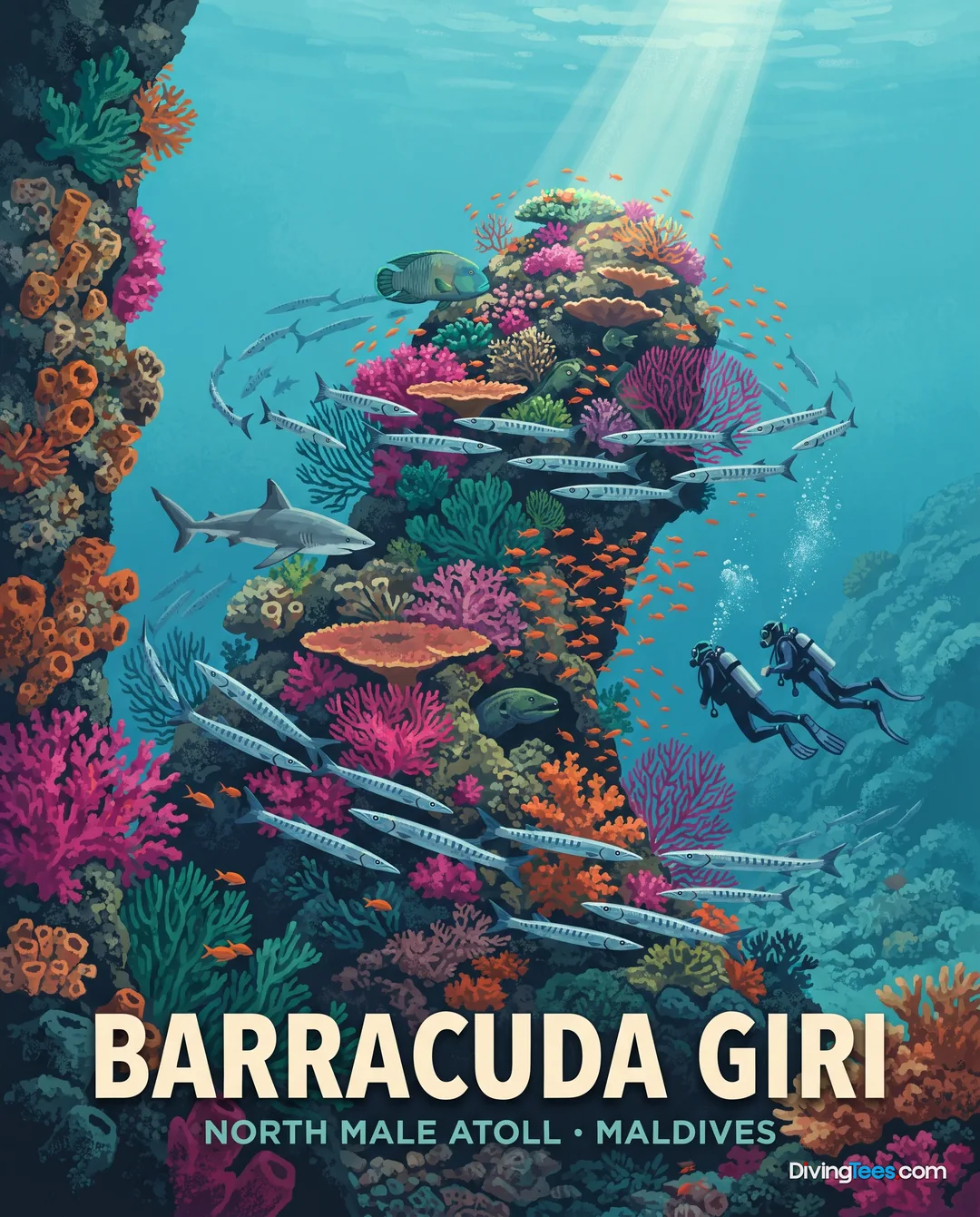
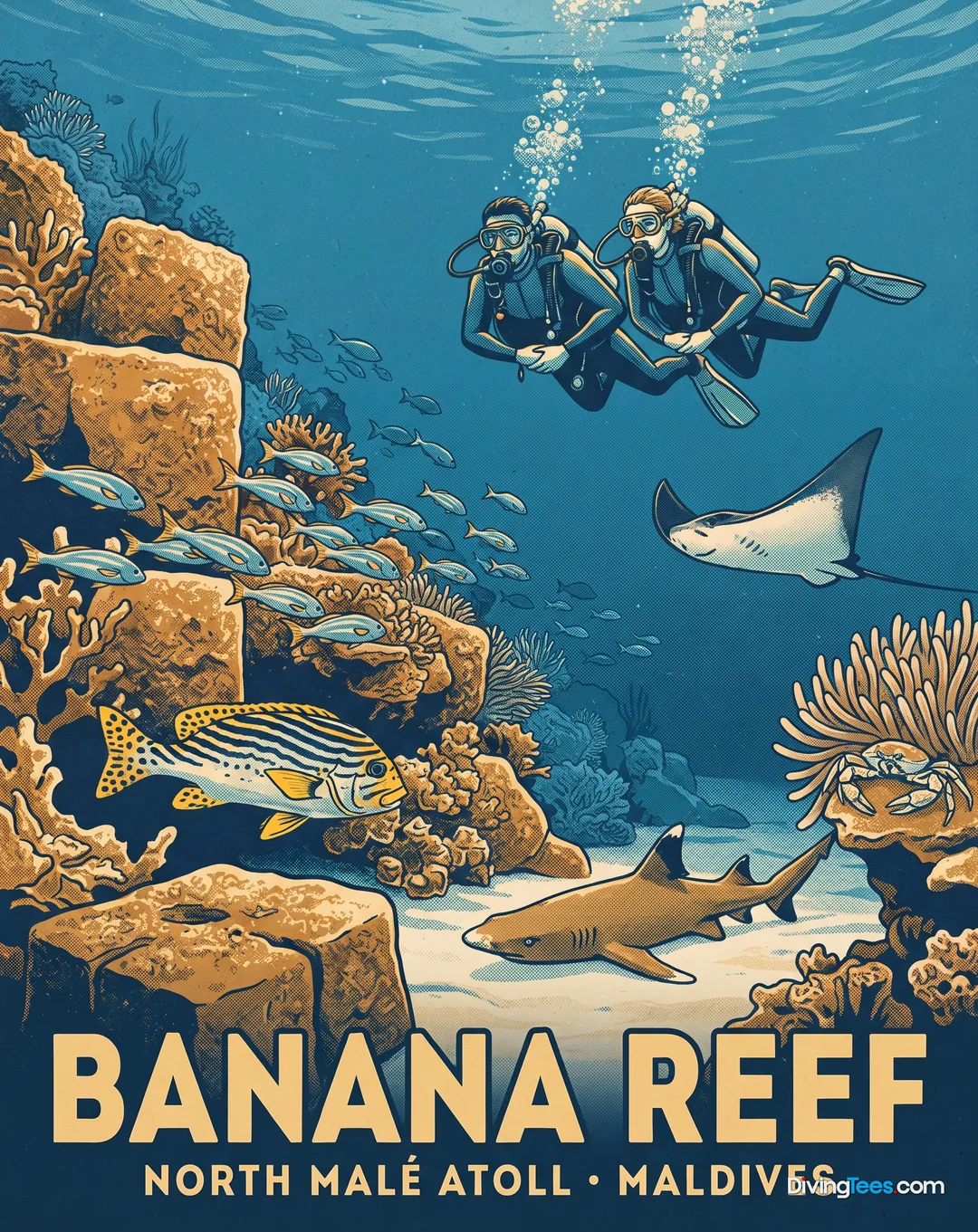
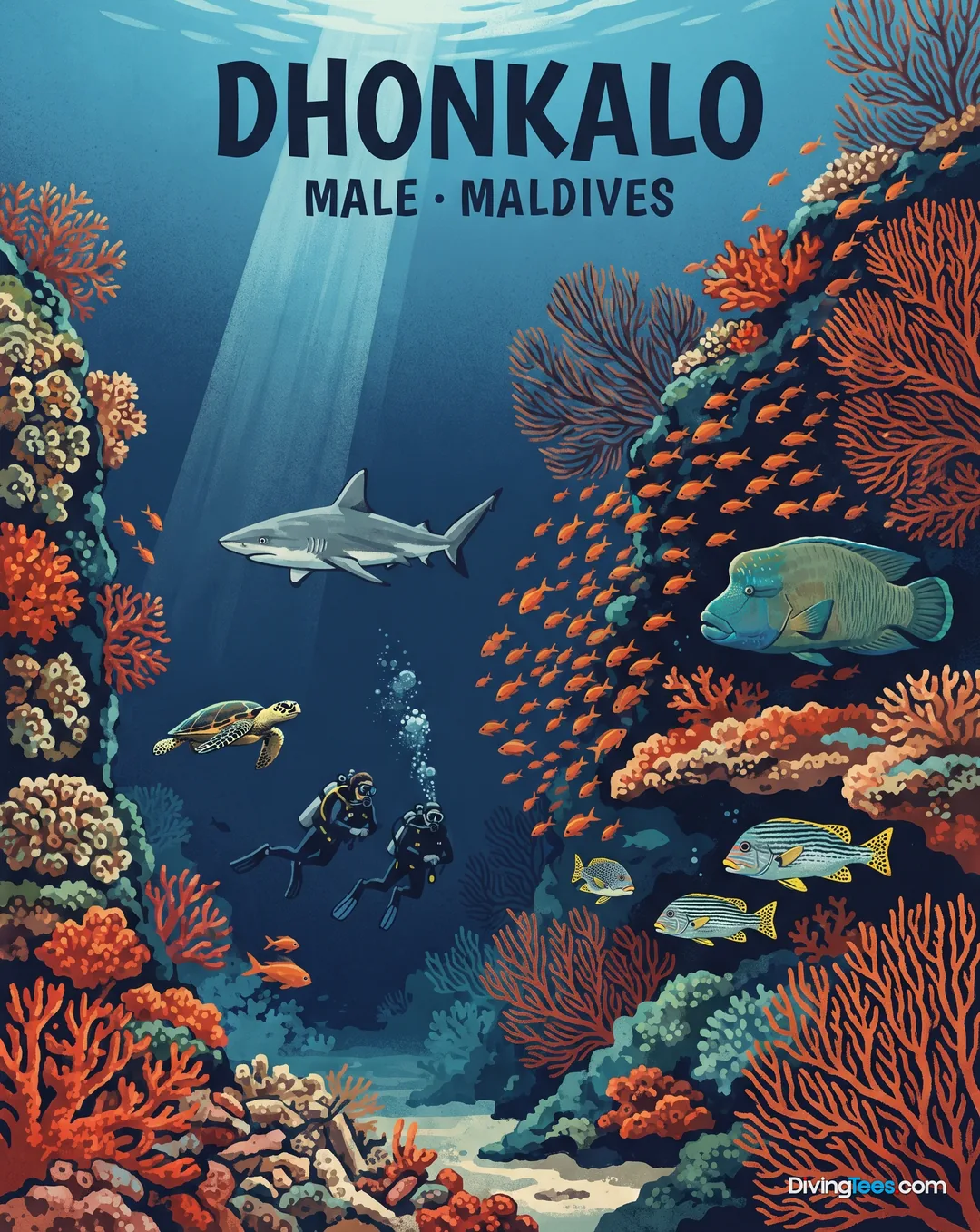
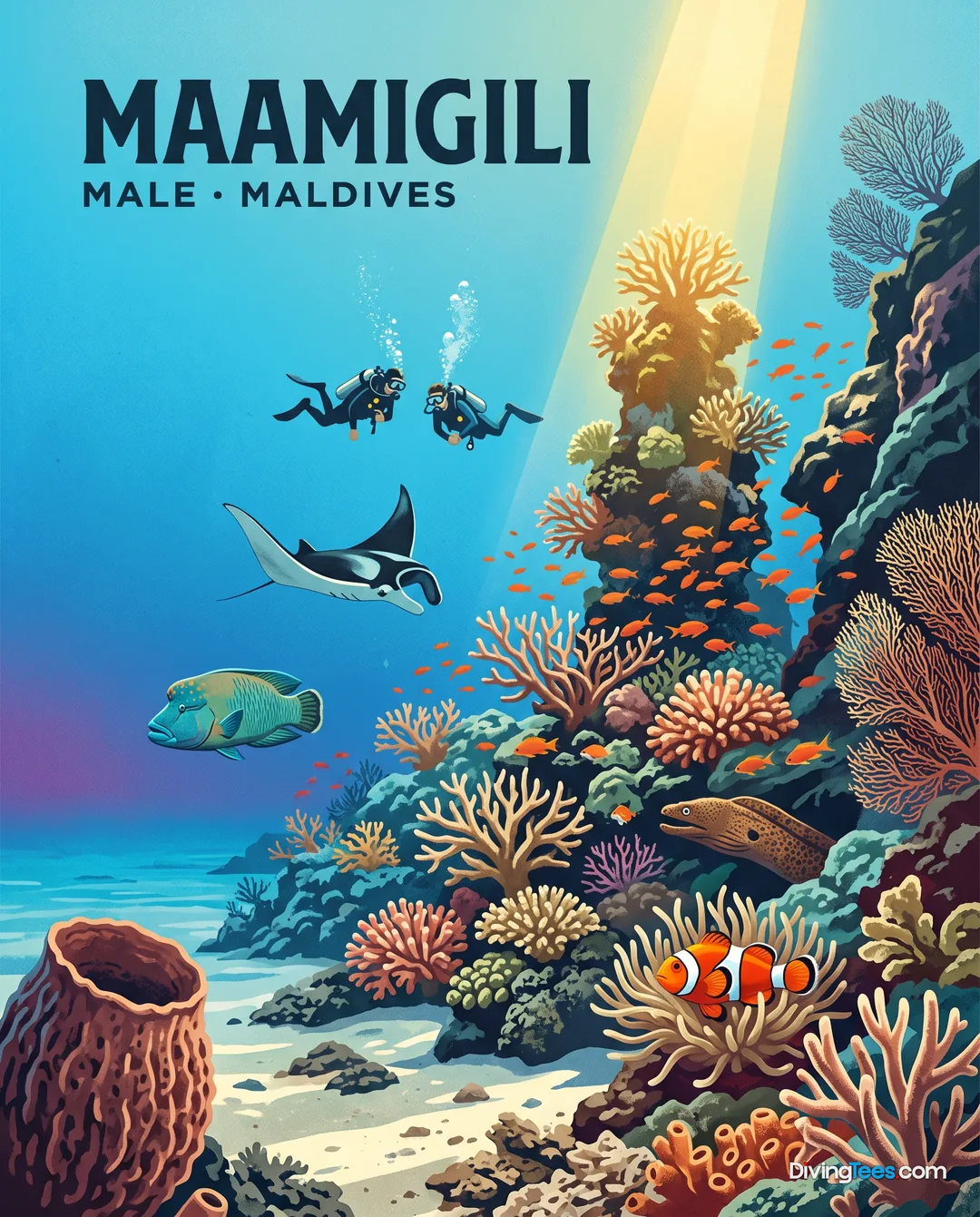
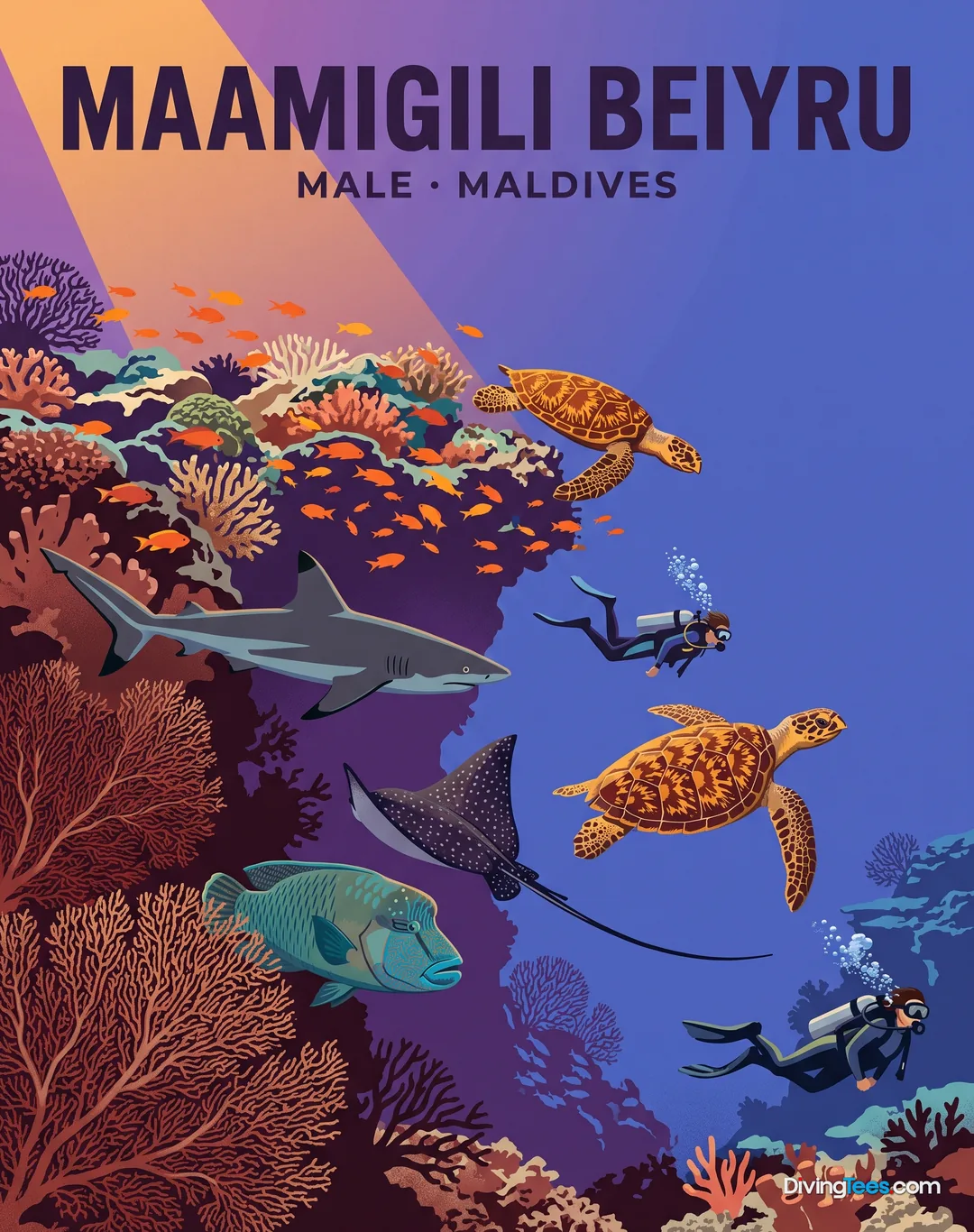
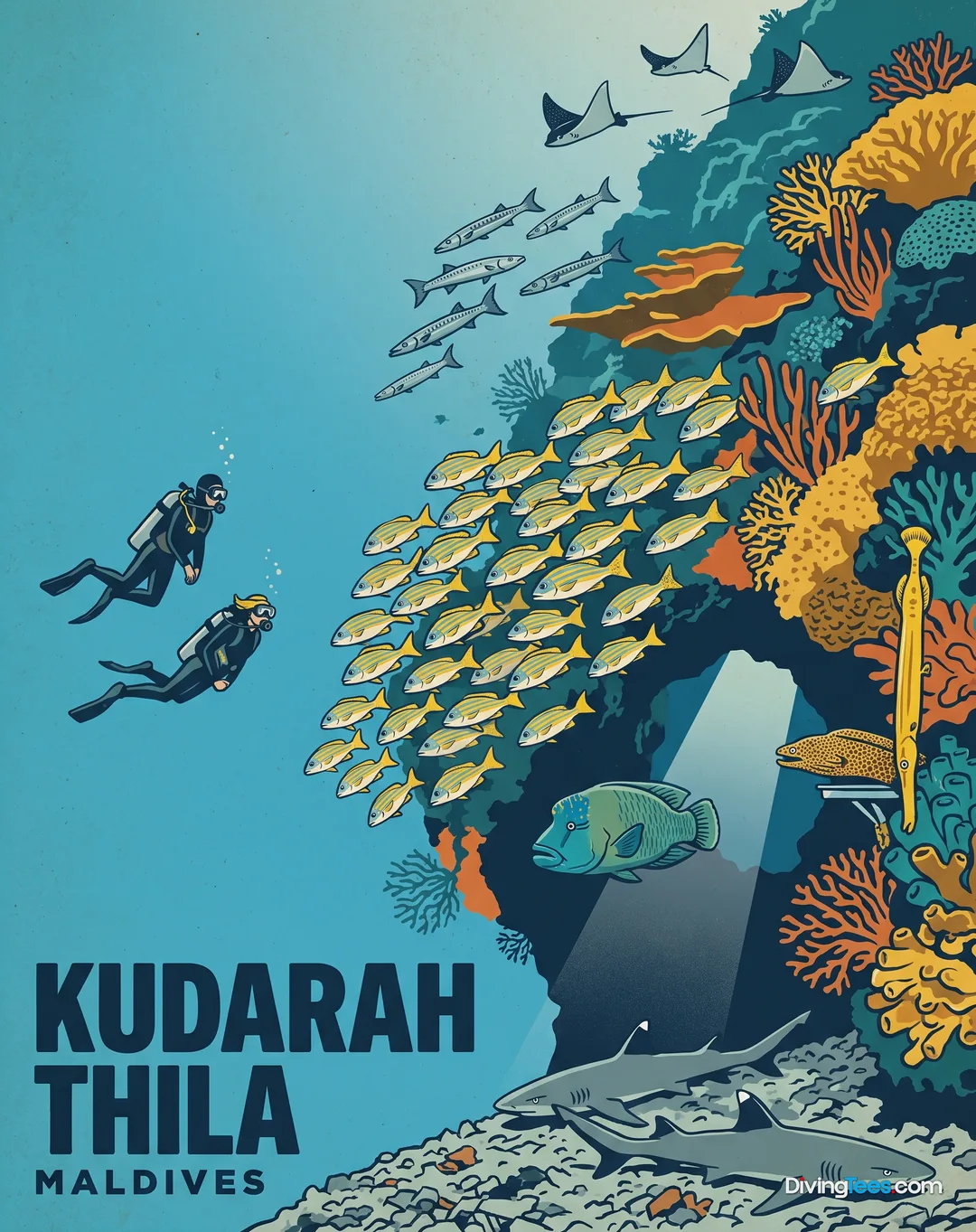
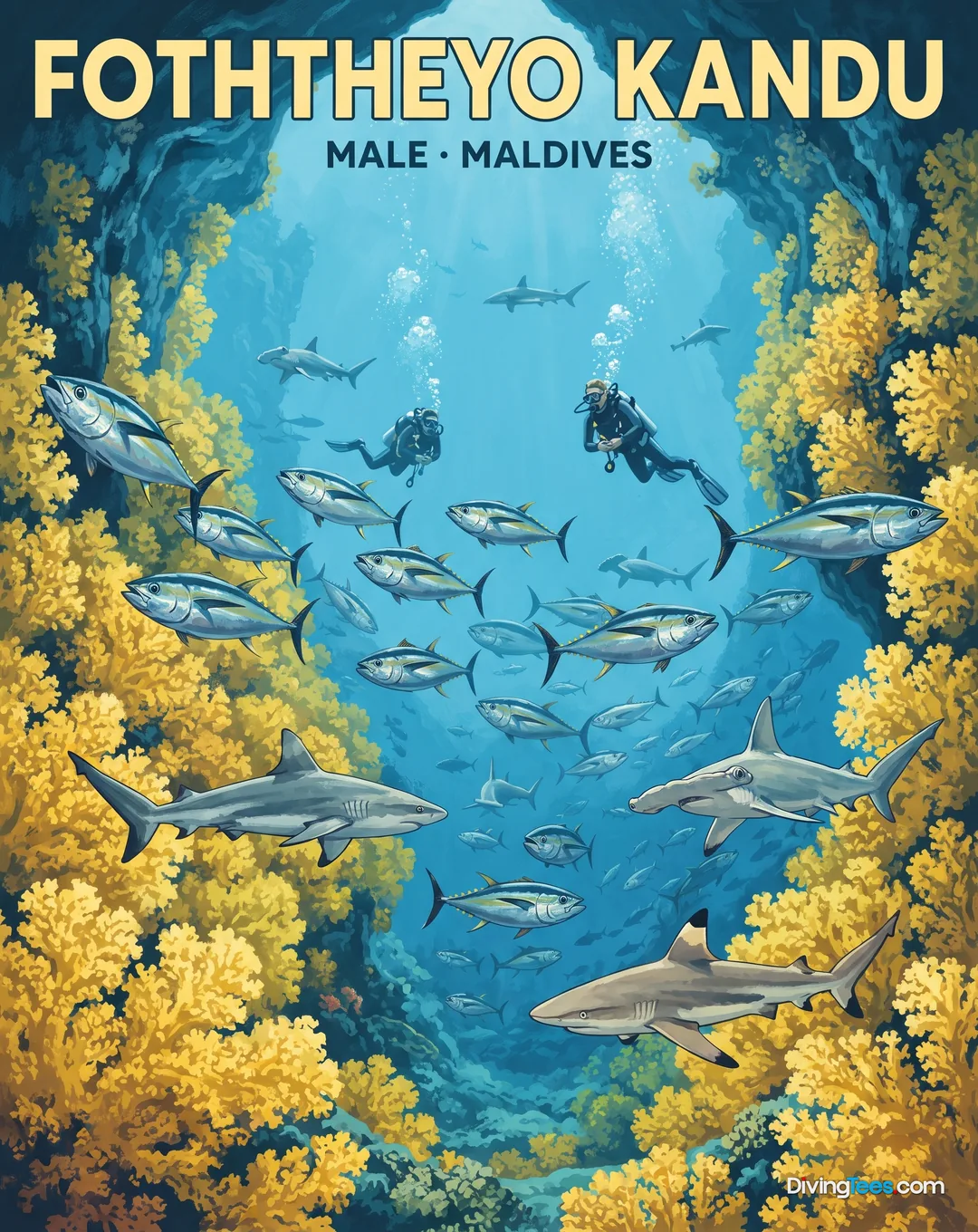
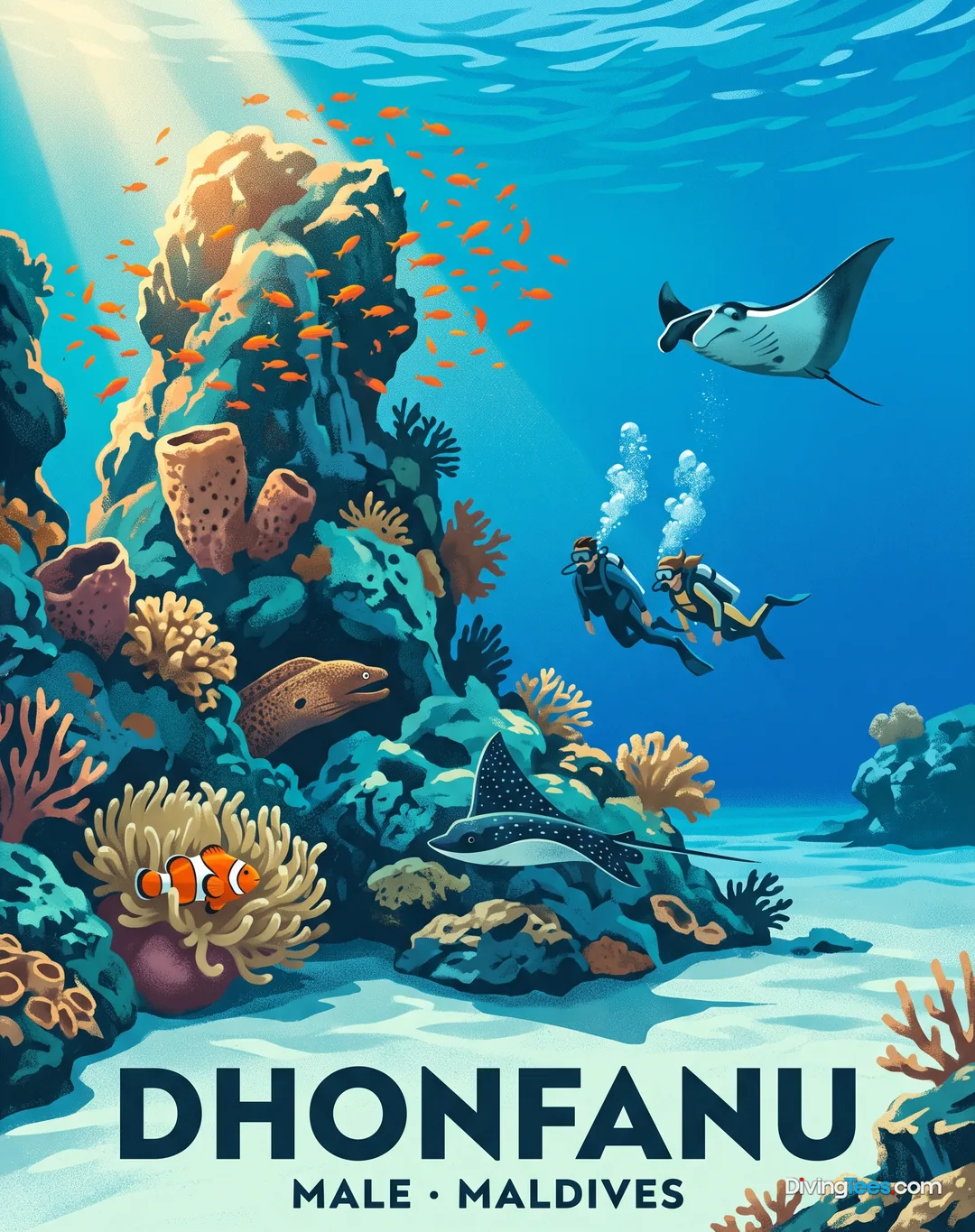
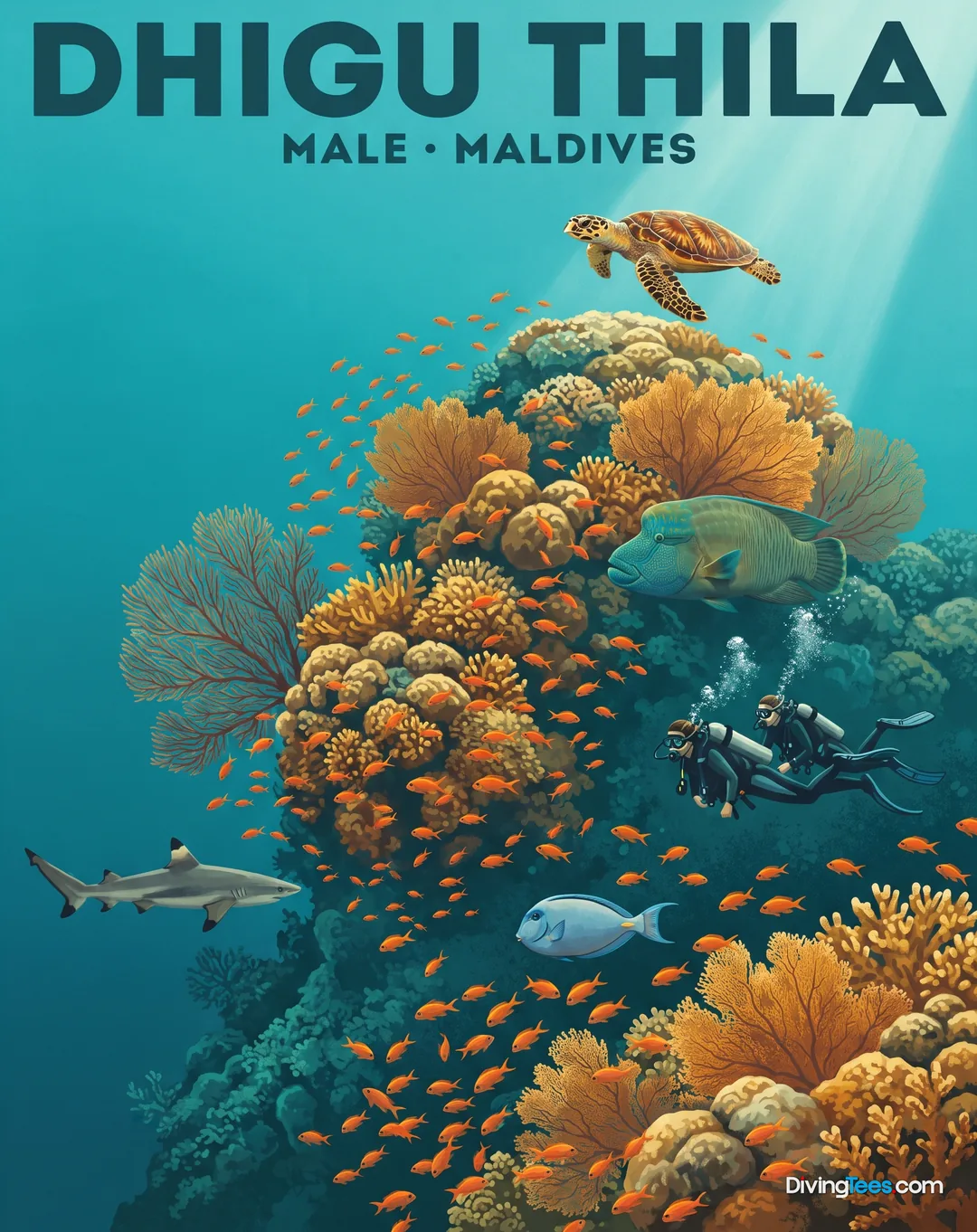
These 8-day, 7-night cruises stay in the central Malé area or run between Malé and Baa, with the exact sequence shaped by the route. Barracuda Giri drops to 30 m across three submerged pinnacles, where current brings barracudas and pelagics. Banana Reef is a lively reef landmark with reef sharks and eagle rays. Mushimasmigili Thila reaches 30 m and places grey reef sharks at its up-current pinnacle; Dhonkalo reaches 25 m and works as a manta cleaning station in a sandy channel. South Ari adds Maamigili and Maamigili Beiyru, both reaching 30 m, for whale sharks and mantas, while Kudarah Thila reaches 30 m through clefts, overhangs and caves filled with batfish. Guraidhoo and Myaru Kandu are current-driven shark channels. Foththeyo Kandu reaches 40 m, with caves covered in yellow soft coral. Northbound sites include Dhigalhi Haa, Dhonfanu, Dhigu Thila, all to 30 m, and Fushifaru Thila to 35 m, a manta cleaning station.
Itineraries, dates and prices
Prices per person. Each month shows its lowest price: click a month, or pick an itinerary.
Next departures · 83 departuresfrom £1,726$2,308€2,062
November 2026
December 2026
See dates and prices
If you click these links and make a purchase on the partner site, DivingDeal may earn a commission, at no extra cost to you.
Dates and prices taken from Divebooker and liveaboard.com, updated 25 October 2026
What you’ll meet underwater
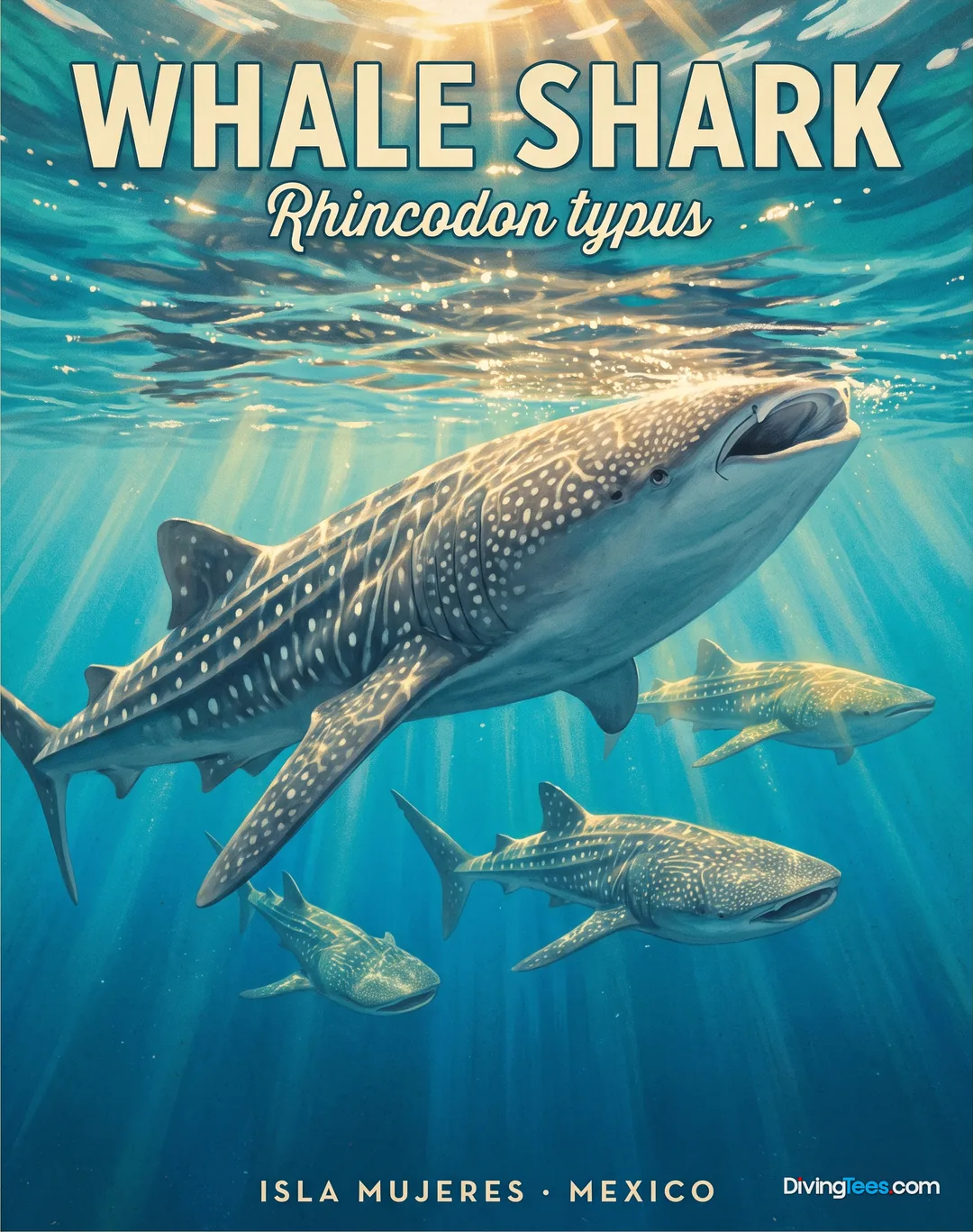
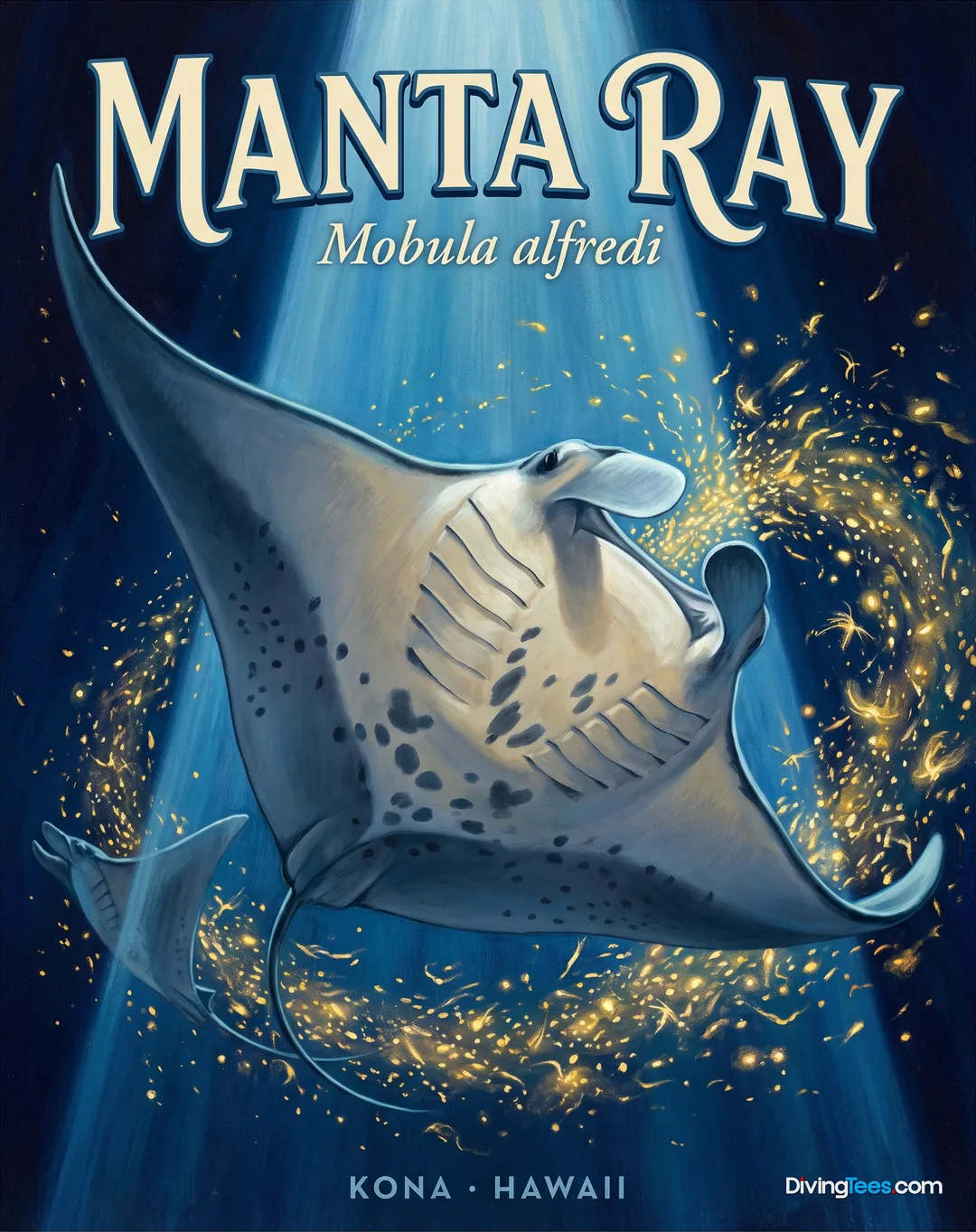
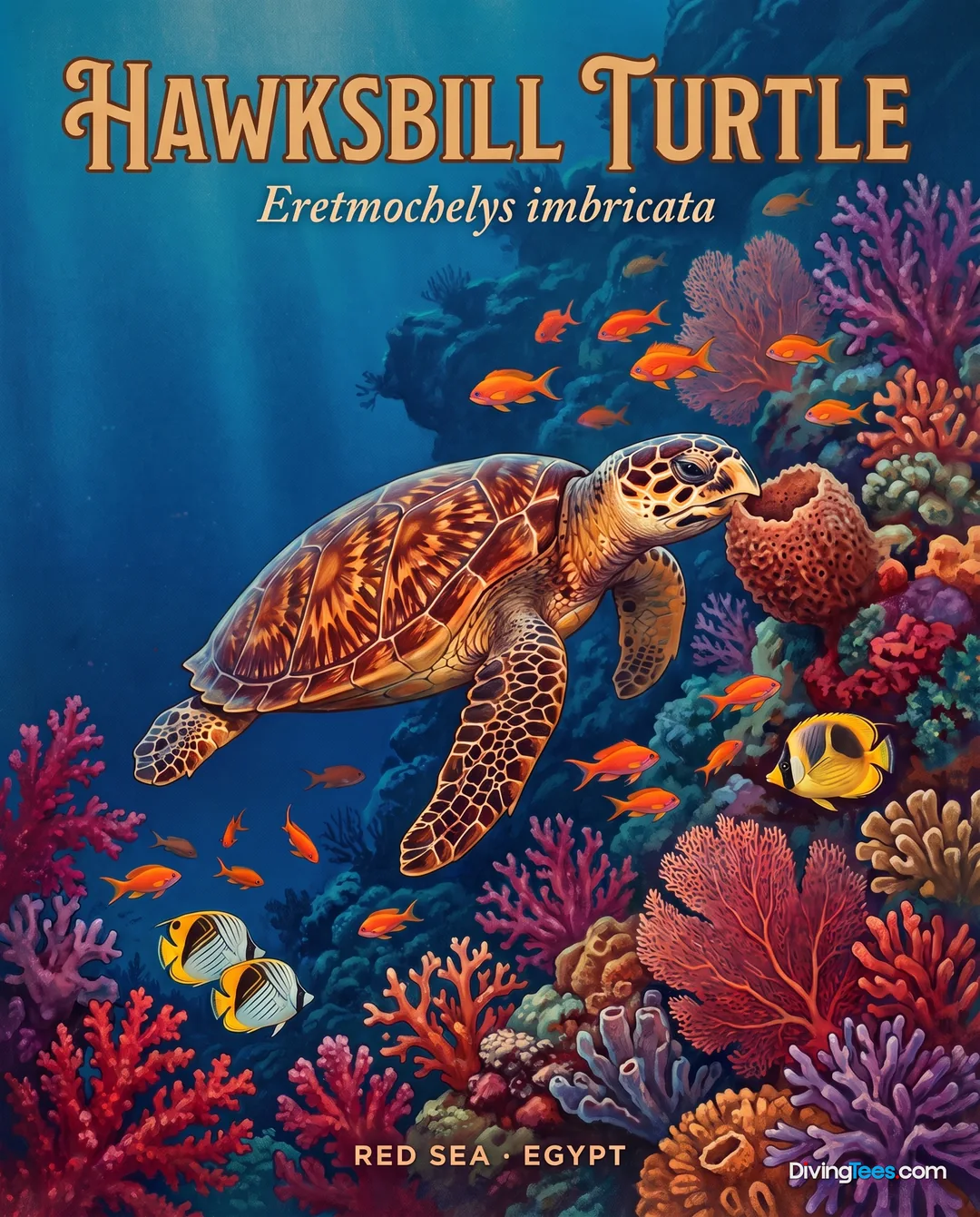
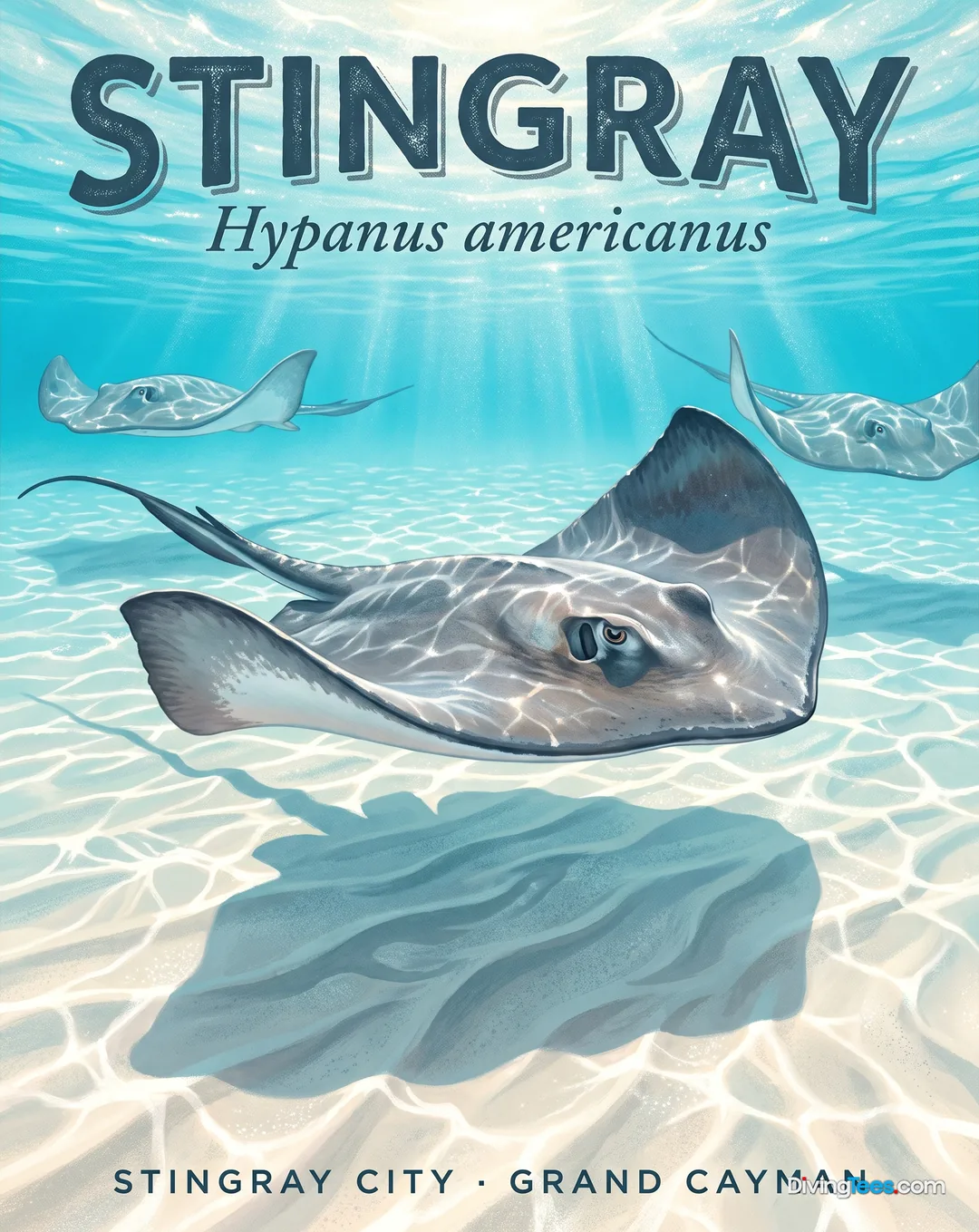
The route is built around large animals: Napoleons, grey reef sharks, sea turtles, barracudas, manta rays, tuna, fusiliers and eagle rays recur across many of the listed sites. Currents explain much of the spectacle. They funnel pelagic fish through Guraidhoo, Myaru Kandu and Foththeyo Kandu, while cleaning stations at Dhonkalo and Fushifaru Thila give mantas a reason to hold position close to the reef. Whale sharks are recorded at Maamigili and Maamigili Beiyru, within the protected waters of South Ari Atoll. The rarer details are site-specific: groupers and anthias at Barracuda Giri, anemones at Banana Reef, soft coral and gorgonians at Dhigalhi Haa Marine Reserve, and hawksbill turtles at Dhigu Thila. Fushifaru Thila is the listed site for stingrays. None of these encounters is guaranteed; the route puts divers where the conditions and habitat can produce them.
Who puts you in the water
The diving team comprises four guides, instructors or divemasters, supported by a snorkeling guide; the crew speaks English. Dive groups and briefings are organised around the dhoni operation and the conditions at each channel or pinnacle, with a reasonable focus on diving safety rather than a promise of identical guiding for every diver. PADI courses from Discover Scuba Diving through Open Water, Advanced Open Water, Rescue Diver and Master Scuba Diver can be arranged, along with specialties such as deep, drift, marine biology and nitrox. Discover Scuba Diving starts at age 10; Open Water requires age 15, or 10 for Junior Open Water, and Master Scuba Diver requires 50 logged dives, Rescue certification and five specialties. Oxygen, first-aid kits, a cardiac defibrillator, fire alarms and extinguishers are carried on board. A private guide is available as an optional service.
The dive deck and the gear
The diving happens from a traditional Maldivian dhoni fitted with three Coltri compressors, including MCH16 and MCH13 units. Nitrox is free on board. DIN adapters are available, and single- and double-valve 15-litre tanks can be requested as a paid extra. The setup supports standard diving as well as technical diving, sidemount and rebreathers; rental equipment is available when requested at booking. There are shaded dive areas, a dive platform, diver tenders, equipment rinse tanks and a separate camera rinse, with charging stations for cameras on the yacht. The practical advantage is the transfer: divers generally cross between the Duke of York and the dhoni rather than climbing a ladder after the dive. The dhoni is the boat's working dive deck, so expect to kit up there and leave the main yacht as the place for recovery, food and shade.
Between dives
Between dives, the Duke of York gives people several ways to disappear without leaving the boat. The three open-air decks have both shade and sun, with loungers, cushions and mats; the shaded dining deck is the natural place to dry off, eat and talk through the last dive. The air-conditioned saloon offers sofas, a bar, music, films and a library when the heat or rain makes the outside less inviting. Sailing time is part of the experience rather than dead time: the dhoni handles the dive operation while the main yacht moves between reefs, channels and lagoons. Kayaks, snorkeling equipment and excursions ashore provide alternatives for non-divers and for divers taking a surface interval longer than usual. A massage is also available on board.
A day on board
A day starts before the heat builds, with the first briefing followed by the first dive from the dhoni. Breakfast follows, then the boat carries the group toward the next reef while divers eat, rinse cameras and settle under the shade. A second dive comes later in the day, with lunch and a further surface interval before the afternoon dive. On itineraries that include it, a night dive changes the pace completely: the same reef becomes a smaller world of hunting fish, sleeping parrotfish and moving crustaceans, without pretending that every night has to include one. Meals mark the structure more reliably than a clock: breakfast after the first dive, lunch between the middle dives, and dinner once the gear is stowed. The yacht may be underway between sites or moored in a lagoon for the night. Then the compressor starts again before the next briefing.
What you eat aboard
Meals are served mainly as buffets, with Italian, international and Maldivian dishes built around fresh fish and other western and local cooking. The shaded outdoor dining area is spacious enough for the group and can be covered when rain arrives, so lunch does not have to move indoors at the first squall. Vegetarian and vegan options are available, and snacks are served through the day between dives. The food is one of the boat's stronger points, although one popular dessert was reported to run out early, before everyone had a chance to take it. That is a small but useful warning for anyone who treats dessert as part of the dive plan. A barbecue on a beach is available as an optional activity; it is not part of every meal.
Nights at sea
The cabins are arranged across the lower, main and upper decks, with the main and upper-deck rooms offering the best chance of looking out over the water. All have air conditioning that can be adjusted independently, a private bathroom with a shower box and a non-smoking policy. There are twin and double/twin rooms, family cabins and a room with a sea view; the cabin categories matter because location changes what the night feels like. The upper-deck cabins give more separation from the working parts of the boat, while lower-deck rooms put the sea closer and the machinery farther from the imagination than from the hull. In the saloon, wood, sofas and low light make a useful refuge when the wind is up. Internet is available for a fee, but the better night usually ends with the phone left charging in the camera area.
Lower Deck Twin Cabins (# 3 & 6)
Lower Deck Double/Twin Cabins (# 1, 2, 7 & 8)
Main & Upper Deck Cabins (# 9, 10, 11 & 12)
Upper Deck Cabin (#14)
What to know before boarding
The recorded cruises depart from Malé and return either to Malé or, on Male–Baa itineraries, finish in Baa depending on the route. Airport transfer is included; hotel transfer is an optional extra. The exact meeting and transfer details are given with the booking arrangements. Arriving in Malé the night before is the sensible choice, especially when an onward domestic flight is involved.
Deck plan
What the boat does for the ocean
The Duke of York carries a dhoni for diving and marine activities, which keeps the main yacht from anchoring directly on every dive site and allows divers to reach reefs, sandbanks and islands from the working boat. The operator also runs themed cruises with Manta Trust and marine biologists, linking some departures to marine-life knowledge and conservation work. The boat's annual dry-dock and maintenance schedule is part of its operating practice.
- Year built
- 2010
- Year renovated
- Each year
- Length
- 36 m
- Beam
- 11 m
- Maximum number of passengers
- 23
- Number of cabins
- 11
- Number of bathrooms
- 11
- Engines
- Daewoo 600 hp
- Cruising speed
- 9 knots
- Tenders
- Diving Dhoni
- Website
- luxuryyachtmaldives.com ↗
Hello, I'm Marina, DivingDeal.com's AI assistant. I answer in detail about hotels, dive centres and liveaboards.
Thinking about the whole trip and the flights? Talk it over with Edith →
Marina is an AI. Some links are affiliate links: DivingDeal may earn a commission, at no extra cost to you. Bookings are made with the partner.