CMAS
Anaya Plongée
Google 5/5 (383 reviews)
10 km away as the crow flies
Marseille · France · Mediterranean
Max. depth · 30 mNavigate through a narrow rocky fault and underwater tunnels at depths of 10 to 30 metres.
For subtitles in English: start the video firstthen click the gearat the top right of the video, select “Subtitles/CC”, then “Auto-translate” and choose “English”.
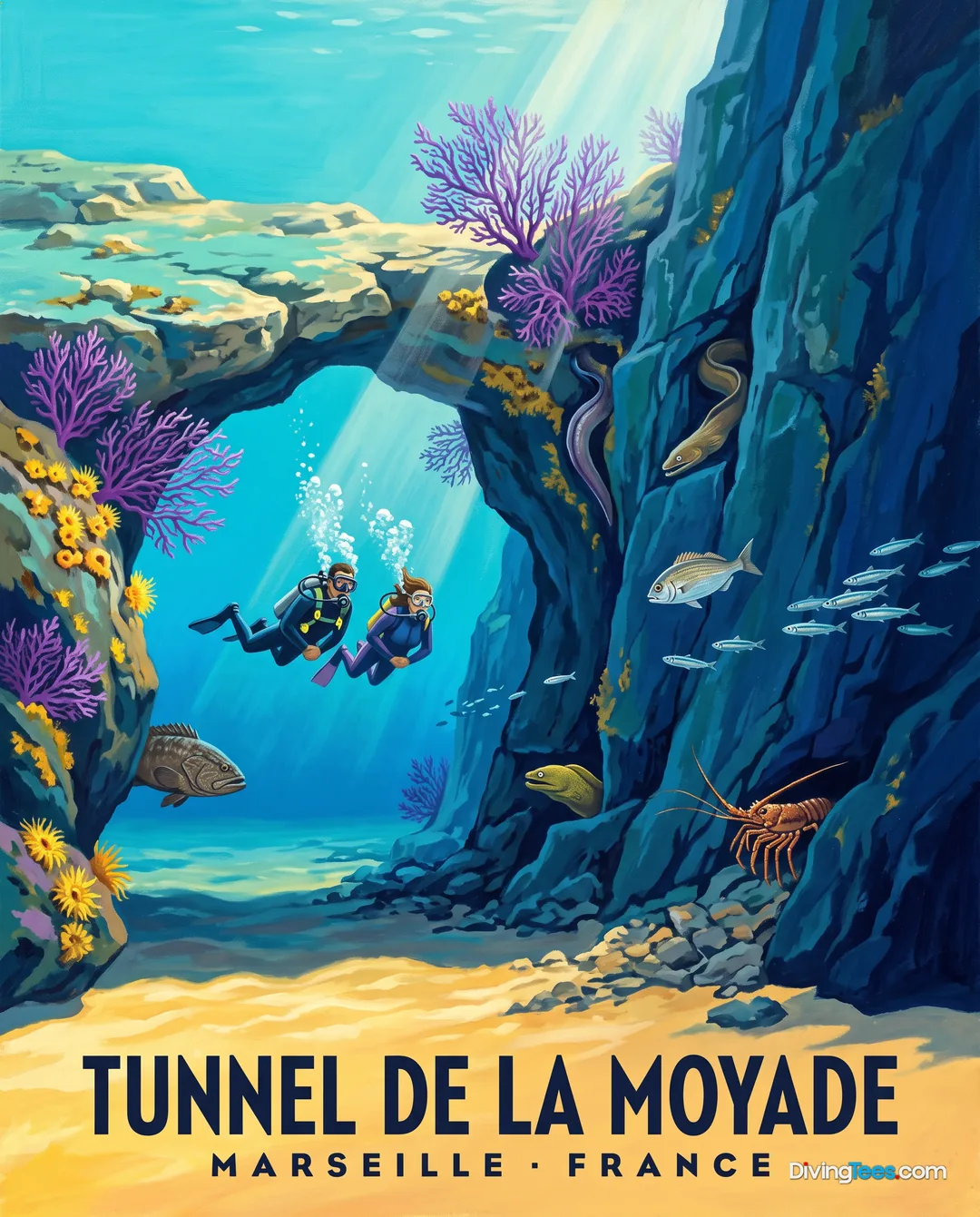
The Eissadon site is defined by its unique geological structure, characterized by a narrow rocky fault that runs between the Eissadon point and the coastline. This topography creates a distinct diving environment where the rock face is broken by several submerged tunnels and through-passages. As you approach the site, you will notice the ruggedness of the limestone formations that form the backbone of the area. The layout encourages a technical exploration of the gaps between the rocks rather than a simple wall descent. You can choose to follow the fault line directly or navigate the perimeter to see how the formations connect.
Approaching the site typically involves a boat trip from Cassis, with the mooring point established near the islet on the Calanque de l'Oule side. The descent usually begins at a depth of approximately 10 to 15 metres, providing a relatively shallow starting point for the dive. From this depth, the terrain quickly becomes more complex as you enter the fault zones. The navigation requires careful attention to your orientation, especially when moving between the different rocky sections. Once you are settled in the fault, the primary focus shifts to the architectural detail of the underwater landscape.
The dive profile is shaped by the varying depths found within the fault and the various tunnels. While the initial stages of the dive are shallow, the deeper sections of the site can reach down to 30 metres depending on the specific path you choose to follow. This depth range allows for different types of profiles, from shallow explorations of the upper tunnels to more controlled descents into the deeper crevices. Navigating these depth changes requires good buoyancy control to avoid contact with the rocky ceiling or bottom. The verticality of the site adds a dimension of complexity to an otherwise horizontal transit through the fault.
Light plays a critical role in the experience at Eissadon, especially when navigating the tunnels. As sunlight penetrates the narrow openings, it creates shifting patterns of light and shadow across the limestone surfaces. These light effects are most noticeable when you are positioned within the deeper, narrower passages where the sun hits the rock at specific angles. The interplay between the natural light from above and the shaded areas within the tunnels defines the visual character of the site. This makes the dive particularly interesting during midday when the sun is at its highest point.
The resident fauna is well-distributed throughout the various rocky niches and crevices. You are likely to encounter the red scorpionfish (Scorpaena scrofa) camouflaged against the rock surfaces in the shallower sections. In the more sheltered areas and larger gaps, the conger eel (Conger conger) is a common sight, often residing within the protection of the rockwork. The European spiny lobster (Palinurus elephas) also makes use of the crevices, particularly in the areas where the terrain becomes more rugged. Finding these animals requires a patient approach and a keen eye for movement within the shadows.
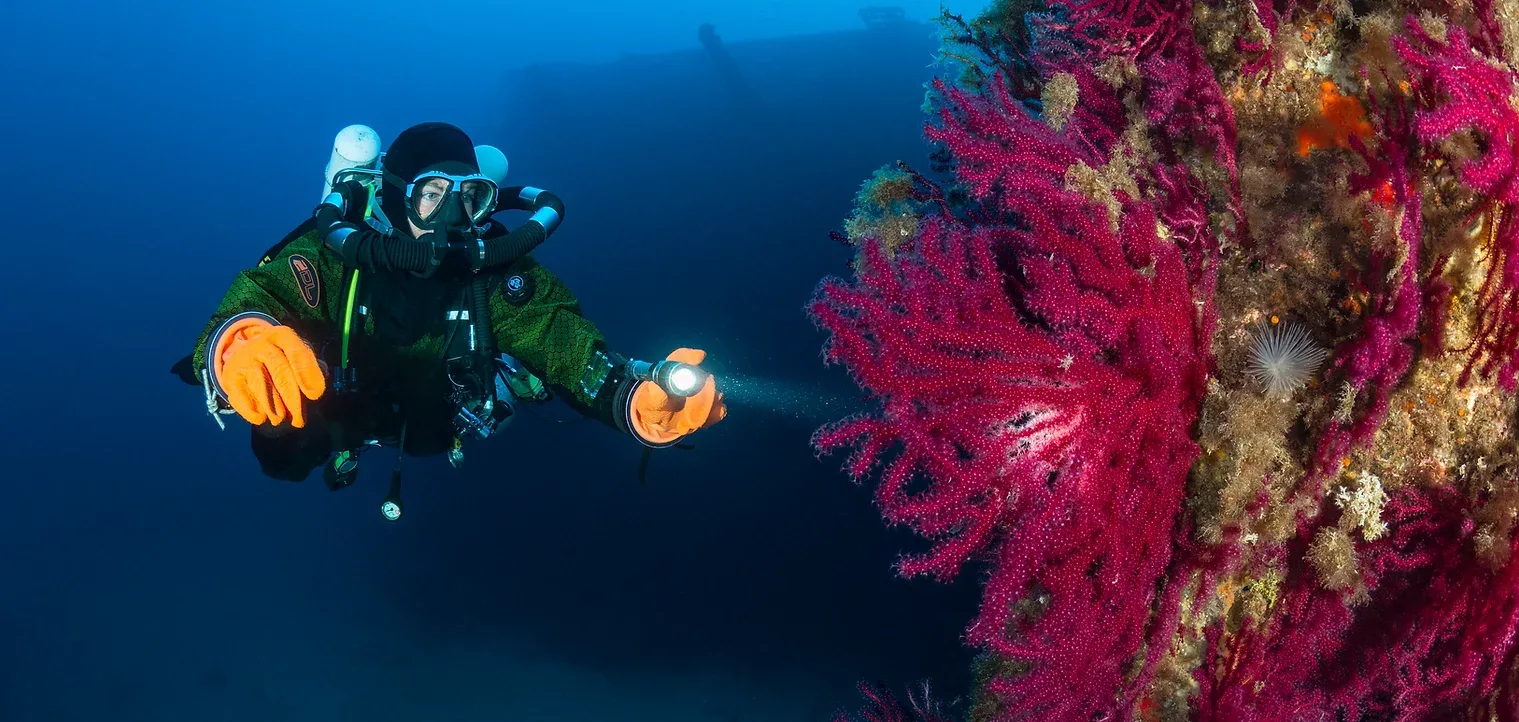
Biological diversity is further enhanced by the presence of red gorgonian (Paramuricea clavata) colonies. These organisms are often found attached to the vertical faces and within the protected parts of the fault where water movement is minimal. Their presence adds texture and color to the rockwork, marking the areas where the local ecosystem is particularly established. Observing these corals requires moving slowly to avoid disturbing the silt or the organisms themselves. The structure of the fault provides the necessary stability for these delicate species to thrive in the Mediterranean environment.
Safety and accessibility are influenced by the local sea conditions rather than internal currents. While the site is generally described as having no significant current, your access and comfort are highly dependent on the wind conditions, specifically the Mistral or winds from the east and west. Even in the absence of a strong current within the fault, surface conditions can change quickly, affecting how easily the boat can approach the mooring. Monitoring the surface state is as important as watching your depth gauge during the dive. A calm sea allows for much more precise navigation through the tighter passages of the site.
Depths range from 10 to 30 metres. The site is accessible from Open Water Diver level. Visibility is typically between 30 and 40 metres. No current is expected, though accessibility depends on the wind and sea state.
Midday can show the shifting light and shadow patterns created by sunlight entering the submerged tunnels. Choose a calm sea for easier boat access, mooring and navigation through tighter passages. Wind conditions, including the Mistral and winds from the east and west, can affect access and surface comfort even when the site itself is sheltered.
Eissadon is accessible from Open Water Diver level. You should still maintain good buoyancy control and pay close attention to your orientation, because the dive leads through narrow rocky faults, submerged tunnels and through-passages. The verticality and changing depth require care to avoid contact with the rocky ceiling or bottom.
Eissadon ranges from 10 to 30 metres. The descent usually starts at approximately 10 to 15 metres, while the route can continue into deeper crevices reaching 30 metres. You can choose a shallower exploration of the upper tunnels or follow a profile involving deeper sections of the fault.
No significant current is expected within Eissadon, although wind and sea state influence access and comfort. The fault contains red gorgonian colonies, red scorpionfish, conger eels and European spiny lobsters. Narrow tunnels, rocky gaps and sheltered crevices create a calm setting for observing these animals and the surrounding limestone formations.