
Fakarava - O2 Fakarava
Google 4.9/5 (604 reviews)
11 km away as the crow flies
Fakarava · French Polynesia · Pacific
Max. depth · 30 mGaruae Pass is French Polynesia's widest pass, offering a dynamic drift dive through a vibrant pelagic ecosystem and intricate coral canyons.
For subtitles in English: start the video firstthen click the gearat the top right of the video, select “Subtitles/CC”, then “Auto-translate” and choose “English”.
Garuae Pass, also known as Passe Nord, is the colossal northern gateway to Fakarava's lagoon and the most expansive pass in all of French Polynesia, spanning an impressive 1600 metres, or approximately one mile. Your dive here is always a dynamic drift, commencing as the incoming current propels you into the lagoon's embrace, ensuring no two dives are truly the same. This sheer scale dictates a dynamic dive experience, where the sheer volume of water sculpts both the seabed and the behavior of its inhabitants.
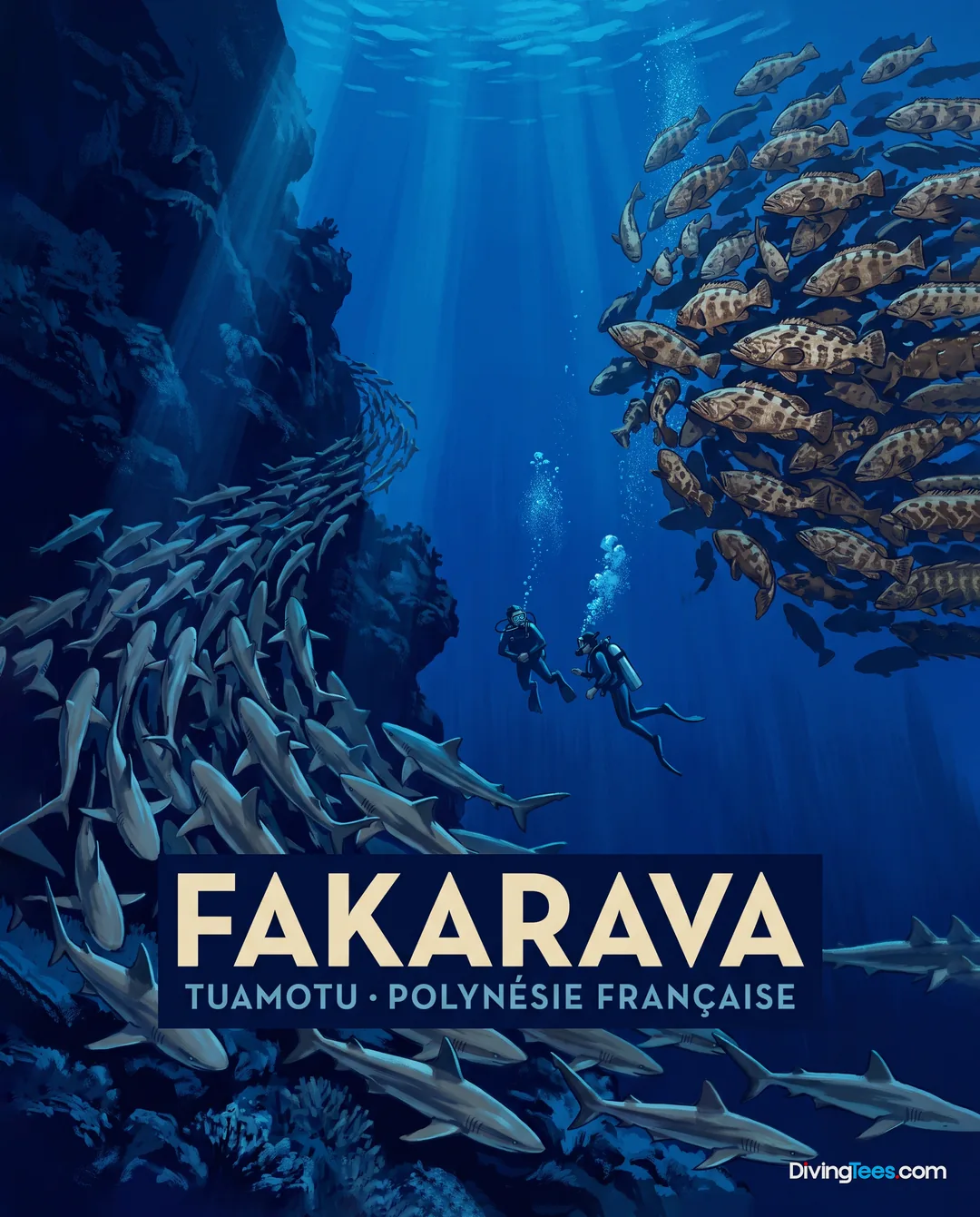
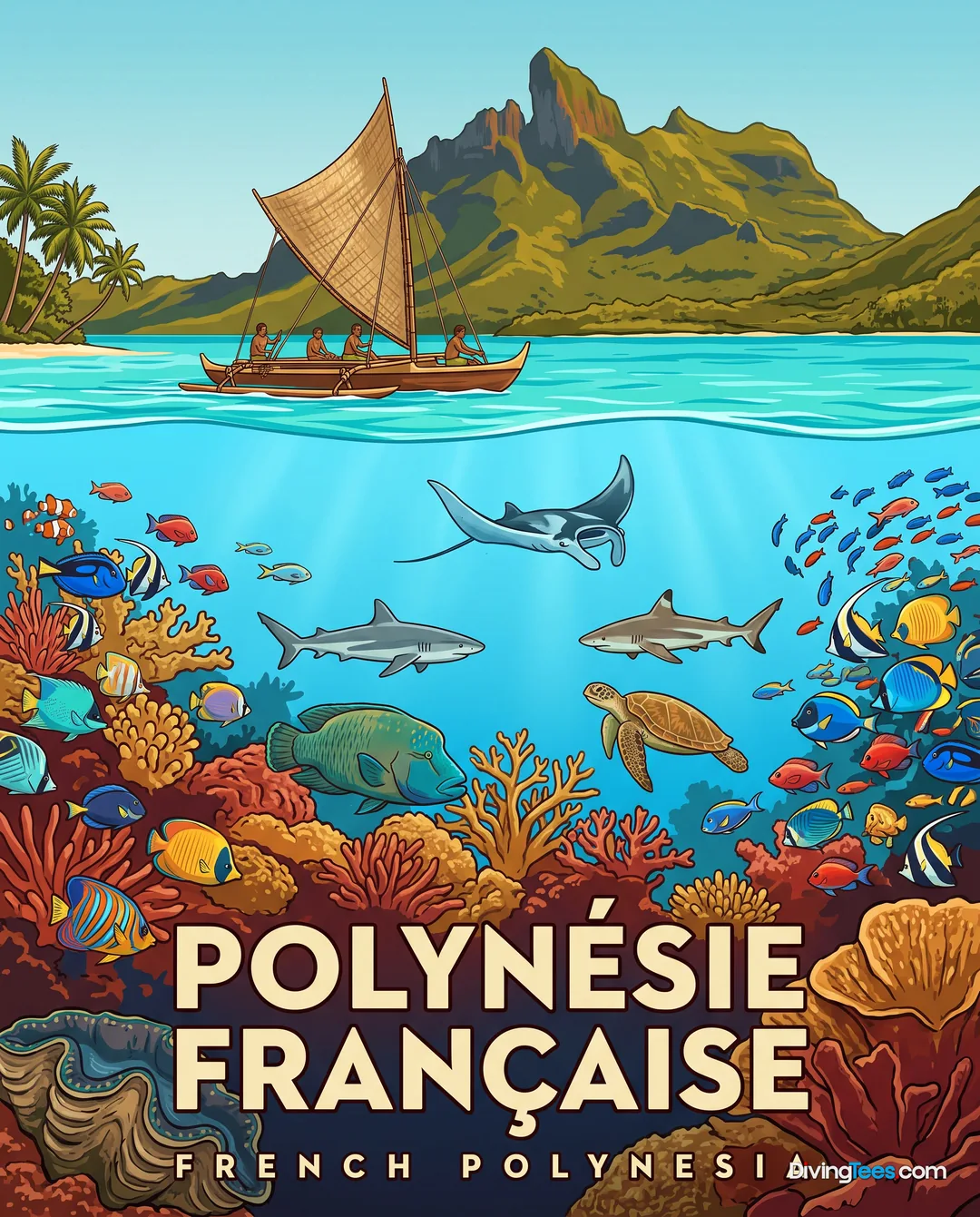
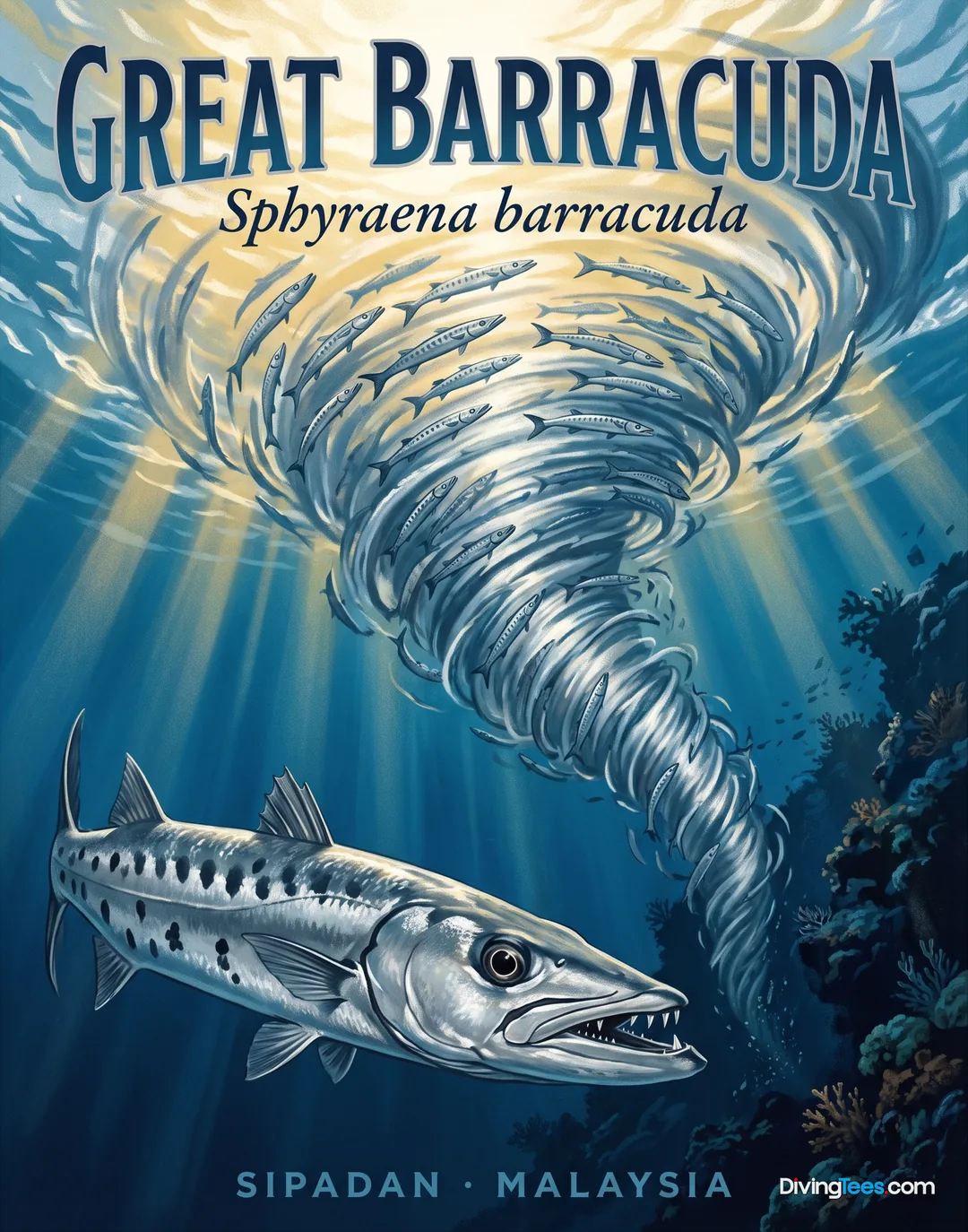
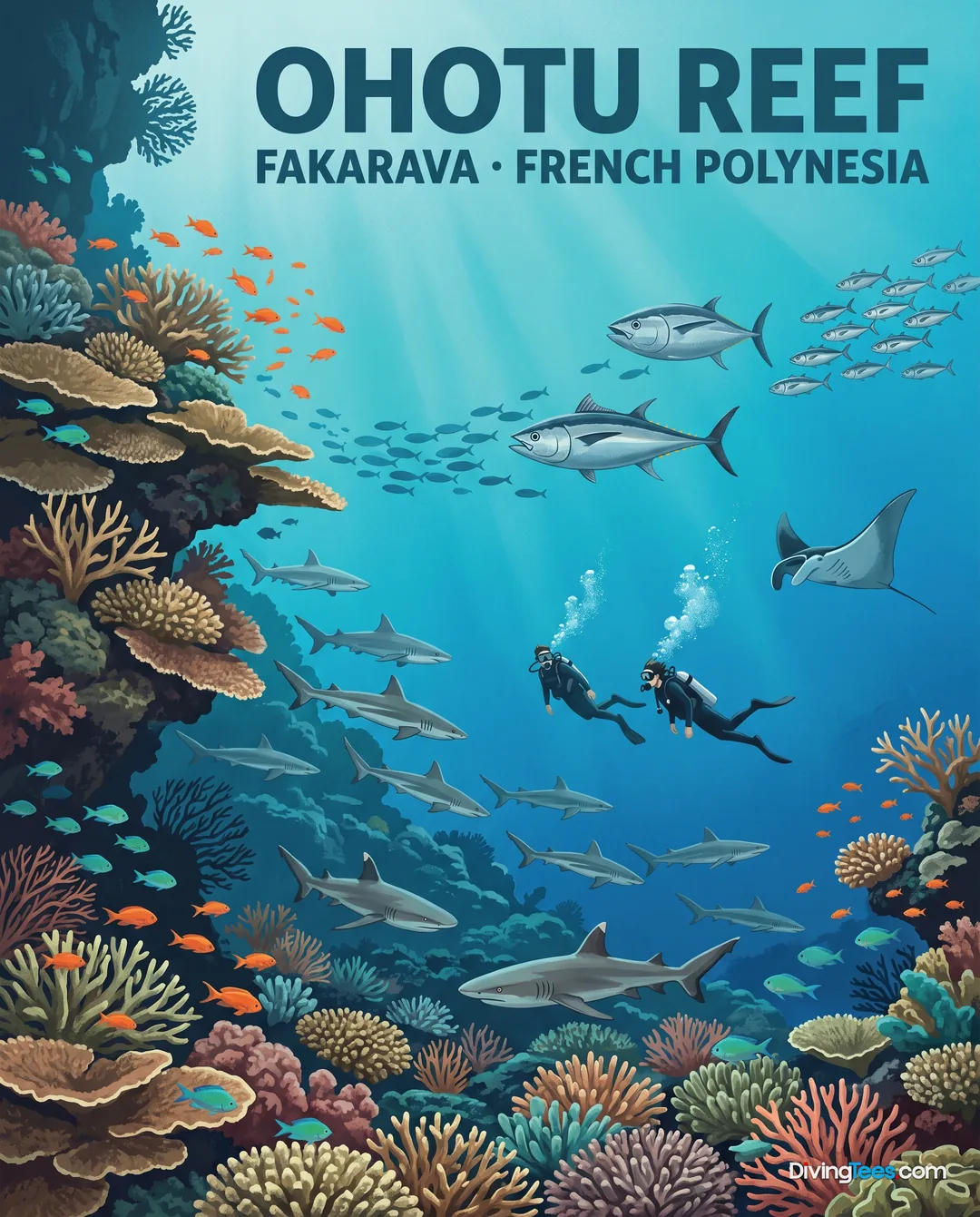
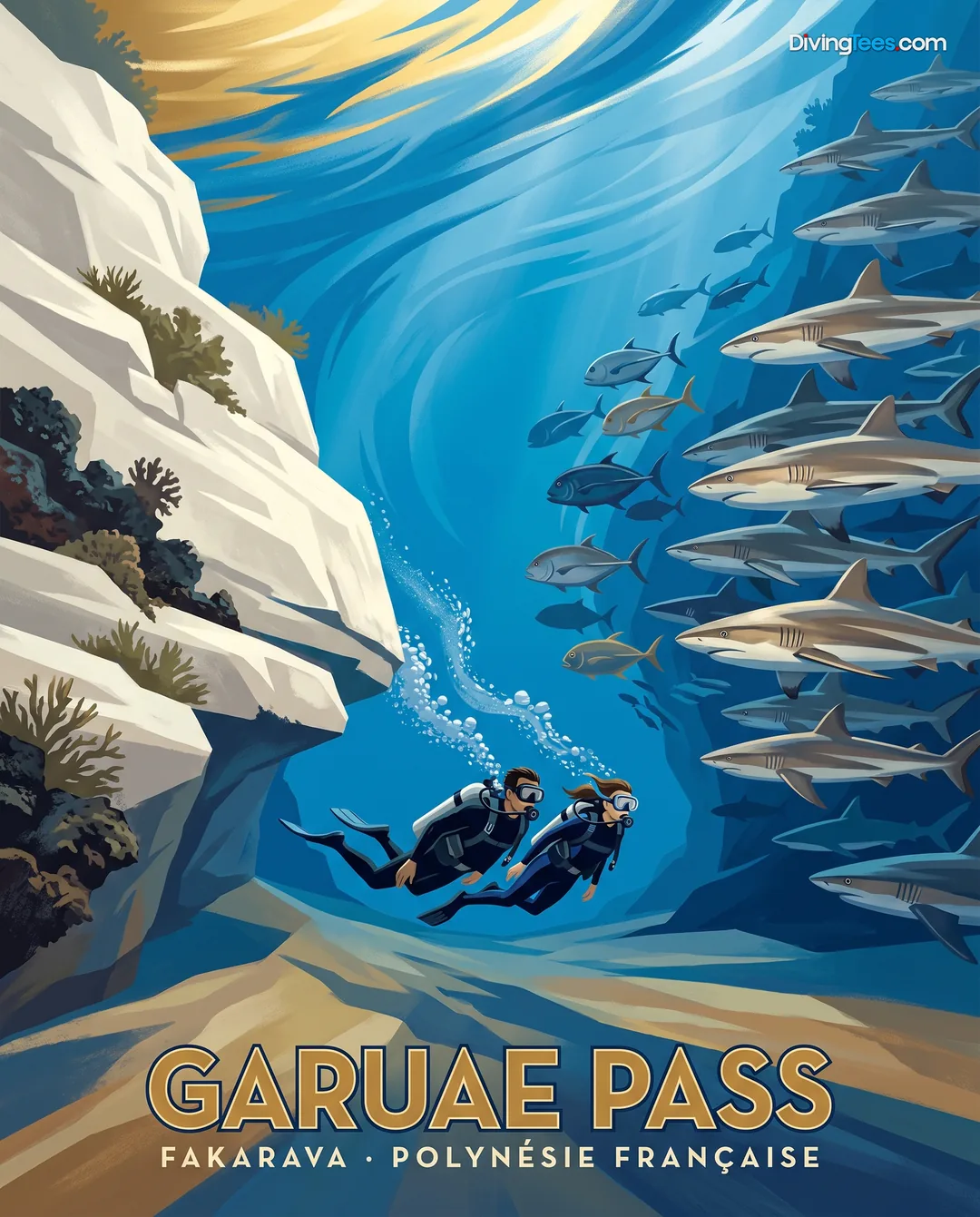
The dive typically begins on the exterior drop-off, a dramatic wall that plunges into the oceanic blue. As you descend, the deep section acts as a natural aggregation point for a thriving pelagic ecosystem. Here, in the dynamic exchange between oceanic and lagoon waters, you will find yourself amidst a constant swirl of activity, with numerous sharks, robust tuna, and impressive barracudas patrolling the current. Grey reef sharks (Carcharhinus amblyrhynchos) commonly demonstrate a bustling 'shark wall' as the pass meets the open ocean, with whitetip reef sharks often present near natural aquariums. They cruise by the dozen, often appearing from a distant haze, their presence a defining feature of the initial moments of your dive into the Garuae. This initial phase of the dive provides an immersive experience within a moving oceanic landscape.
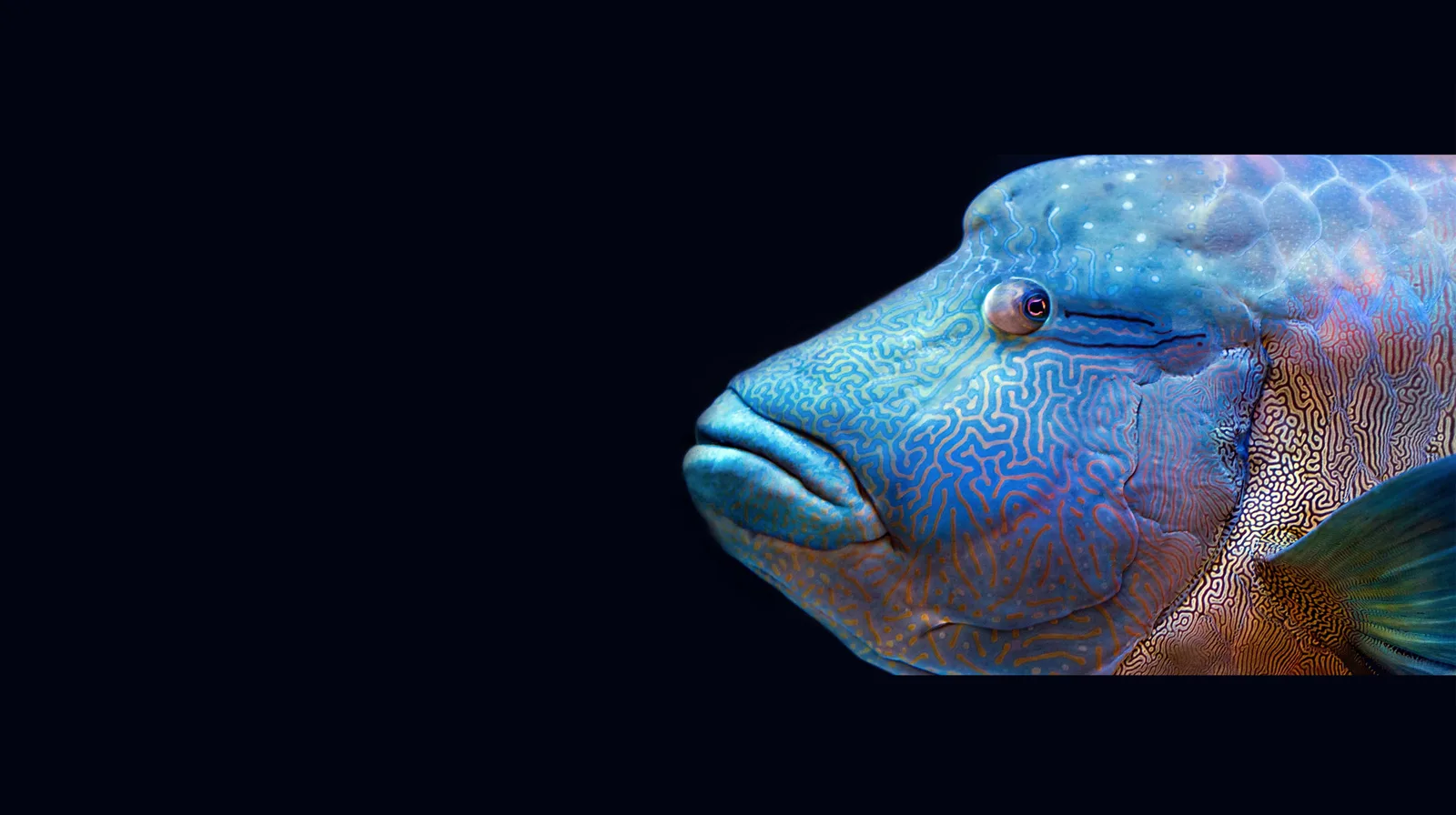
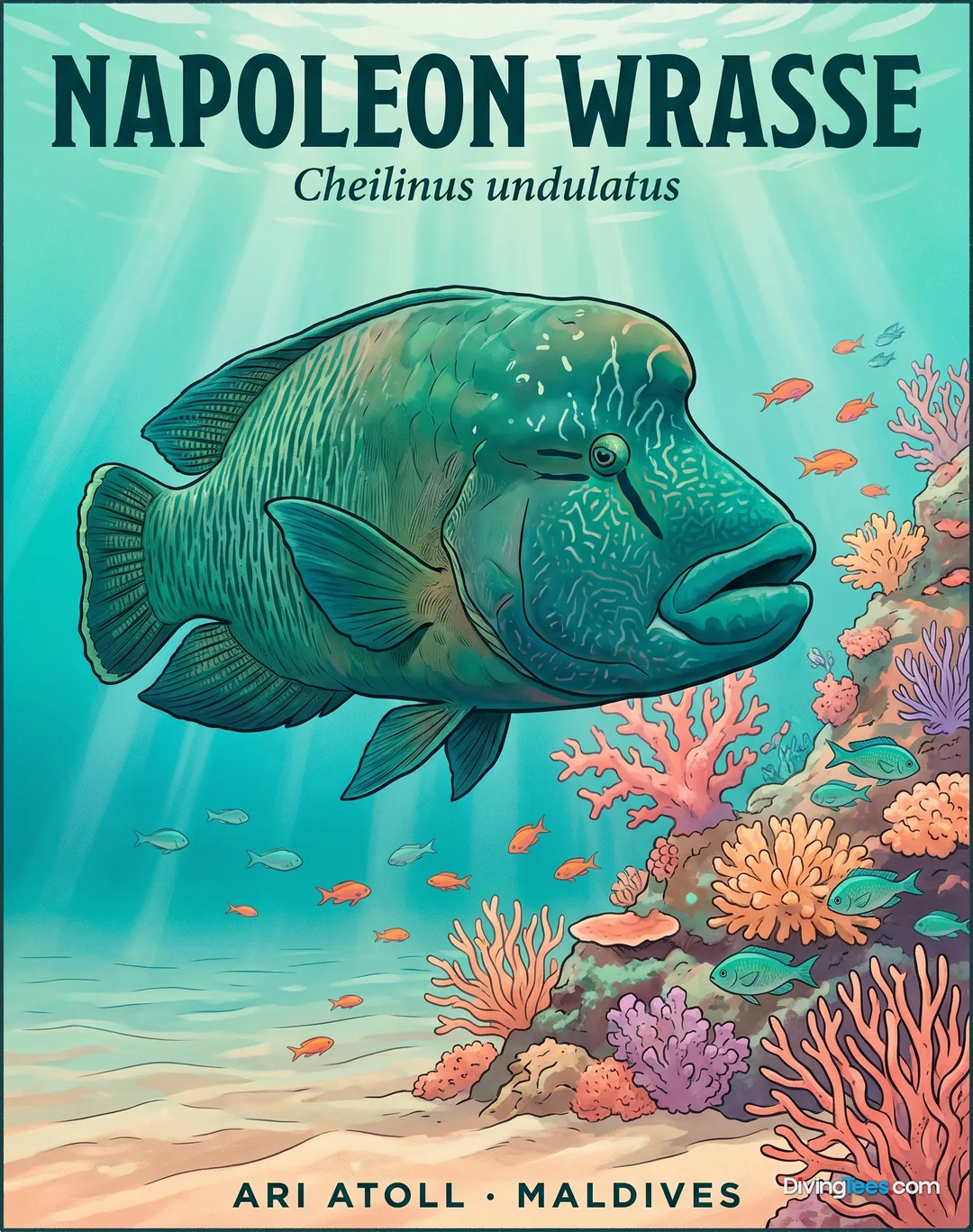
Moving deeper into the pass, the terrain begins to shift. Beyond the initial deep encounter, the dive continues its trajectory through a series of intricate coral canyons. These submerged valleys offer sanctuary from the strongest currents, providing sheltered havens for a myriad of reef species. The current provides a powerful, exhilarating push as you glide past vibrant walls and secluded grottoes, each turn offering a new composition of color and texture. Here, the vibrant colors of parrotfish are a constant presence, alongside the slow, deliberate movements of Napoleon wrasse, and the striking flashes of priacanths.
Many dives in Garuae Pass culminate in natural aquariums like the iconic geological formation known as the Ali Baba canyon, a natural amphitheater where the currents find refuge, creating an essential gathering place for a multitude of reef fish. Here, the current often softens, allowing for closer inspection of the resident fish populations. This shelter becomes a critical point of interest, allowing you to observe the intricate ecosystem at play as smaller species congregate, seeking respite from the powerful flows that define the broader pass. You will encounter countless tropical fish and schooling perches. The interaction of current, topography, and marine life ensures a continuously evolving underwater landscape, sometimes revealing large schools of baitfish, attracting opportunistic hunters, or requiring navigation through swirling eddies.
The current itself is not merely a force to contend with; it is an intrinsic part of the Garuae experience, constantly bringing new encounters to you. Beyond the immediate reef structure, the vastness of the ocean holds the promise of giant specimens appearing at any moment. While specific encounters are never guaranteed, the sheer scale of biodiversity for which this pass is globally renowned makes every dive a unique proposition, with the potential for unexpected and awe-inspiring sightings.
Diving Garuae Pass is a drift dive up to 30 metres, typically taking place between 15 and 21 metres. This site demands proficiency in current diving techniques and significant experience in strong currents. Divers must demonstrate perfect buoyancy control and ease of movement to safely navigate the conditions. While entry-level divers (Open Water) may dive under specific conditions, a minimum certification of Rescue Diver is highly recommended due to the strong and potentially varying currents. Dives are strictly conducted during incoming currents or at slack tide for safety, carefully planned depending on tides and diver experience to maximize safety and visibility. Conditions can change rapidly, and a thoughtful dive plan is essential.
You should dive Passe de Garuae during an incoming current or at slack tide. The dive plan must account for the tides and your experience, because conditions can change rapidly. Planning the timing carefully supports safer navigation and visibility while the current carries you into Fakarava’s lagoon.
Passe de Garuae requires proficiency in current-diving techniques, significant experience in strong currents, perfect buoyancy control, and ease of movement. Open Water divers may enter under specific conditions, but Rescue Diver certification is highly recommended because currents can be strong and variable. A thoughtful plan is essential.
Passe de Garuae is a drift dive that can reach thirty metres, with the dive typically taking place between fifteen and twenty-one metres. It begins on an exterior drop-off and continues through the pass, where coral canyons and natural aquariums offer sheltered areas as the route progresses.
At Passe de Garuae, you drift past grey reef sharks, whitetip reef sharks, tuna, barracudas, parrotfish, Napoleon wrasse, tropical fish, and schooling perches. The route crosses multi-coloured coral canyons and Ali Baba canyon, while changing currents create swirling eddies and may bring baitfish or giant pelagic encounters.