

Rangiroa Diving Center
Google 4.9/5 (378 reviews)
Rangiroa · French Polynesia · Pacific
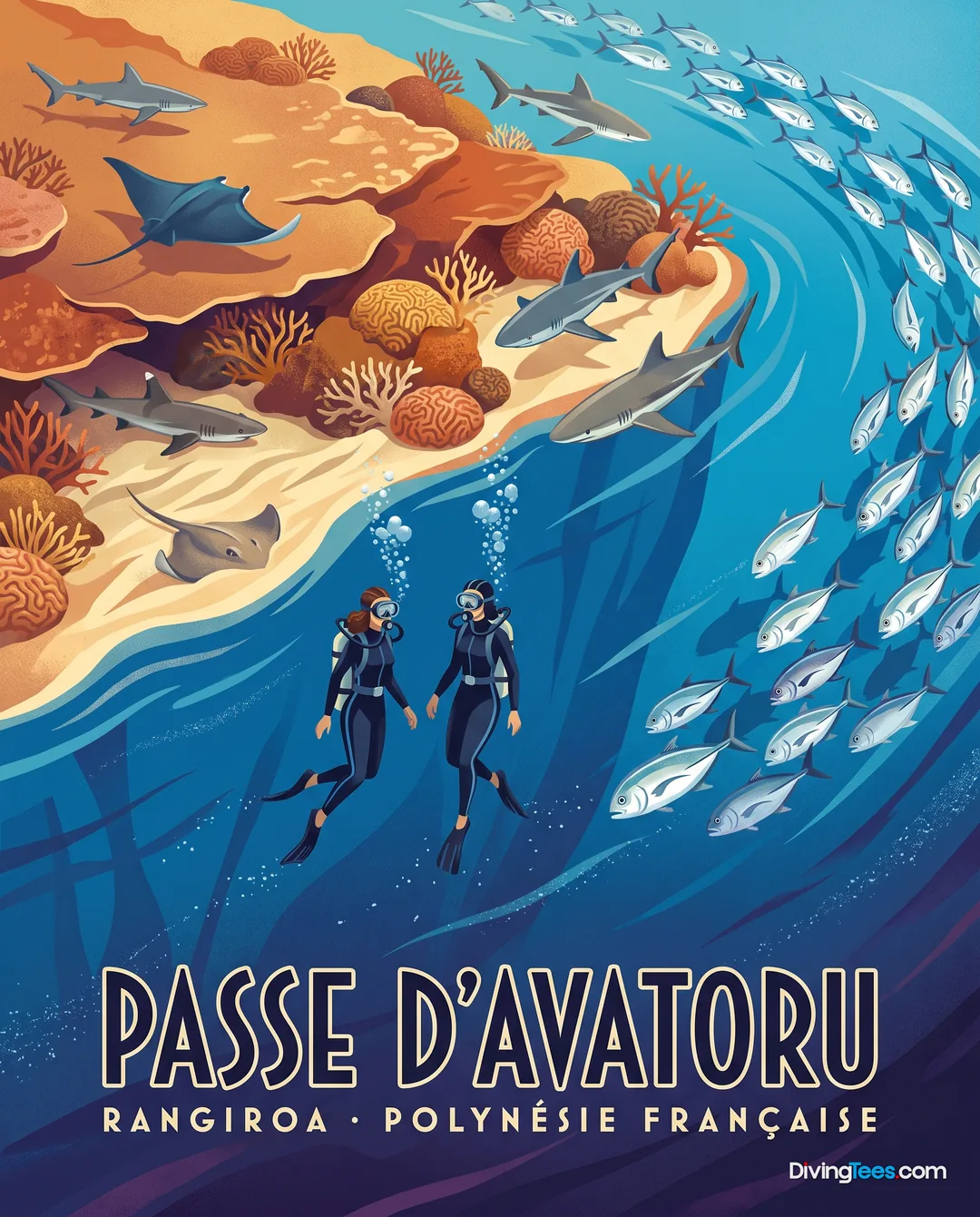
Max. depth · 19 mDescend into Rangiroa's Avatoru Pass and let the powerful inward current carry you through a vibrant channel sculpted with colourful caves.
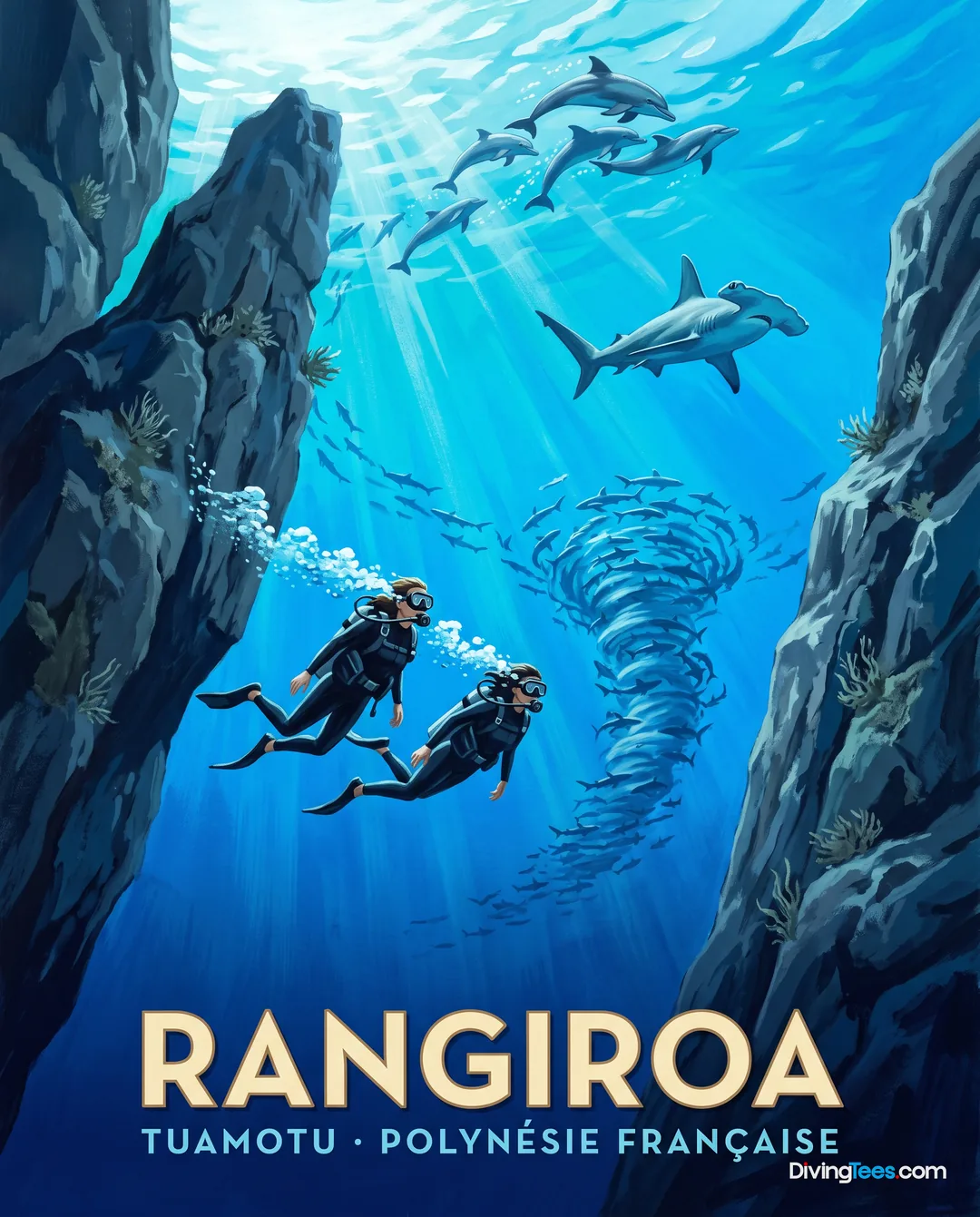
Diving La Petite Passe means entering the heart of Avatoru Pass, specifically its smaller, right-hand channel. This isn't a site for a gradual descent; you'll prepare to be swept into the lagoon by an insistent inward current from the moment you enter the water. The entry point is crucial, typically mid-pass and to the right, positioning you to catch the flow that defines this Polynesian experience. You quickly learn to respect the water's power, a force that shapes both the channel's geology and the dive itself, demanding immediate attention and good buoyancy control.
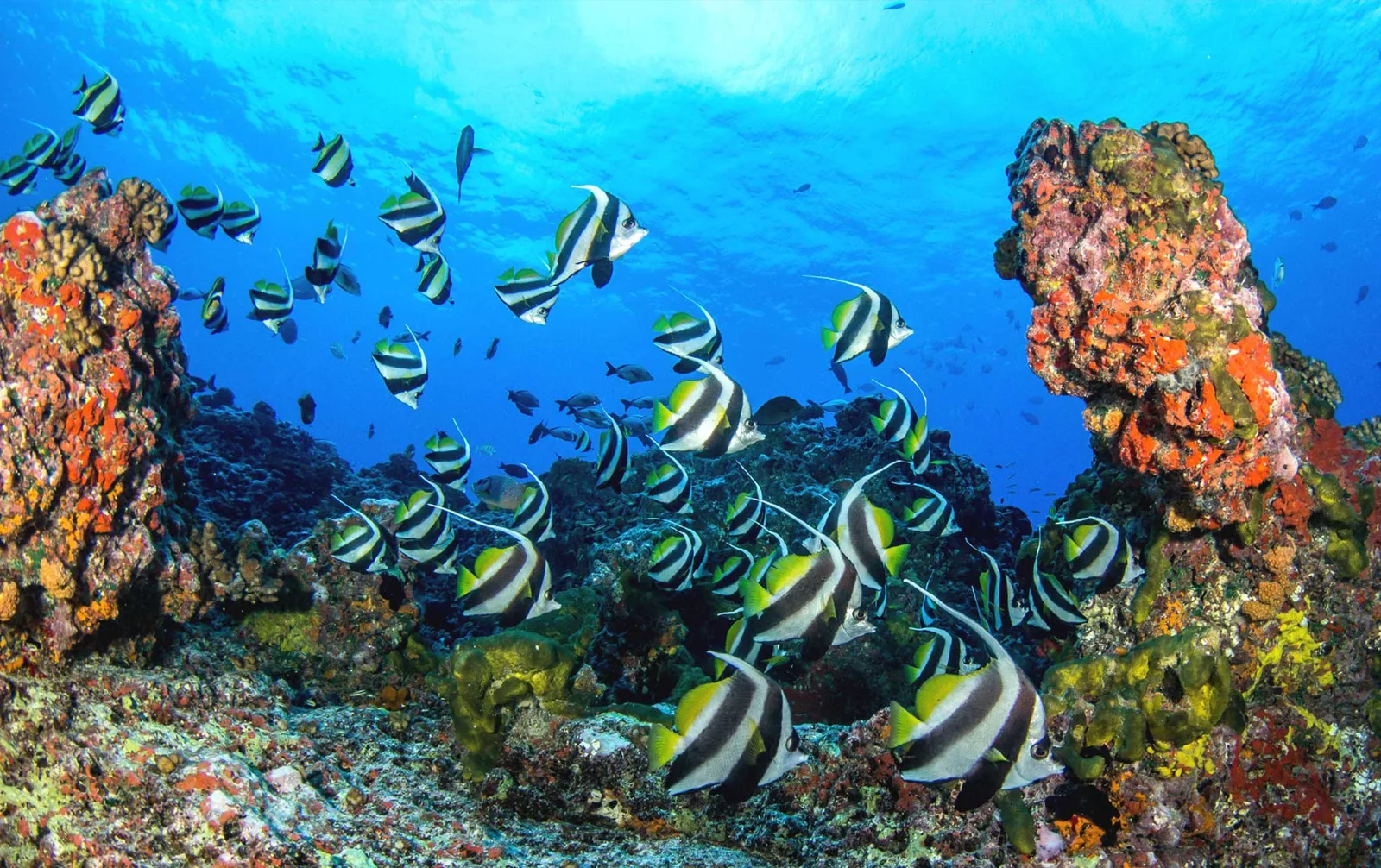
As the current takes hold, the true spectacle of La Petite Passe unfolds along its walls. This is more than just a drift; it's a journey past a series of captivating small caves, each carved by the relentless water flow over millennia. These formations are known for their vivid colours, a kaleidoscope of sponges, corals, and other sessile life thriving in the nutrient-rich current. Maintaining good buoyancy and control is essential to fully appreciate the detail within these geological features as you glide past, allowing you to observe the intricate life supported by the constant flow.
The continuous water movement through this narrow channel acts as a natural magnet for various pelagic species, even though the dive's primary focus remains the unique topography. Keep a watchful eye, as the strong currents create a vibrant ecosystem where encounters are frequent. Whitetip reef sharks (Carcharhinus albimarginatus) are consistent inhabitants, often seen patrolling the reef edges and around the cave entrances, seemingly unfazed by the surge and providing a constant presence throughout the drift.
This dive in La Petite Passe is less about stationary observation and more about embracing a dynamic environment. The currents demand a certain level of comfort and skill, ensuring a constantly changing perspective of the reef and its inhabitants. The challenge of the impetuous current is precisely what makes the rewards – the visual feast of the caves and the palpable energy of the pass – so compelling for those who venture here, offering a unique interaction with the raw power of the ocean.
The experience culminates as the strong currents gradually dissipate, depositing you into the tranquil, sheltered waters of Avatoru Lagoon. This transition offers a serene contrast to the high-octane drift, allowing for a relaxed safety stop and an opportunity to reflect on the exhilaration of the pass. It's a perfect ending, moving from the wild blue into the calm, warm embrace of the inner atoll, providing a moment of peace after the dynamic ride.
La Petite Passe is considered one of Rangiroa's most colourful dive sites, with abundant coral and fish life compared to the wider main Avatoru channel. The narrow geometry of the pass produces strong, sometimes unpredictable currents that create an intense drift experience. This environment attracts dense aggregations of sharks, rays, and other pelagic species, making each dive a unique encounter with the vibrant marine ecosystem of the atoll.
While the site's relatively shallow maximum depth of 19 metres might suggest accessibility, the current conditions are the defining factor. Divers are advised to remain deeper during the drift, as the current is typically much stronger near the surface. This strategy helps manage the flow and allows for a more controlled experience, highlighting the importance of understanding the pass's hydrodynamics for a safe and enjoyable dive.
La Petite Passe is a drift dive with depths ranging from 5 to 19 metres. Due to the strong and often unpredictable currents, particularly during incoming tides, this site is reserved for experienced divers with a minimum of Advanced Open Water certification and at least 50 logged dives. Visibility typically ranges from 18 to 61 metres. The dry season, from April to November, offers the best conditions for diving Rangiroa's passes, with peak pelagic encounters often occurring between July and November.
The dry season, from April to November, offers the best conditions for diving Rangiroa’s passes. Peak pelagic encounters often occur between July and November. La petite passe is in Avatoru Pass, where the dive moves through a narrow channel and finishes in the calmer waters of Avatoru Lagoon.
La petite passe is reserved for experienced divers with at least Advanced Open Water certification and 50 logged dives. You need comfort in a dynamic drift environment, good buoyancy control, and the ability to respond to strong, often unpredictable currents from the moment you enter the water.
La petite passe ranges from 5 to 19 metres. Its relatively shallow maximum depth does not make the site easy, because the current defines the dive. You are advised to remain deeper during the drift, where the flow is typically weaker than near the surface, for a more controlled experience.
La petite passe is a drift dive through Avatoru Pass, with strong and sometimes unpredictable incoming currents carrying you toward the lagoon. Along the narrow channel, you can explore colourful caves, abundant coral and fish life, and encounter whitetip reef sharks, with possible manta rays and grey reef sharks.