
Scuba Life Cozumel
Google 5/5 (1,421 reviews)
13 km away as the crow flies
Cozumel · Mexico · Americas
Max. depth · 40 mExperience the thrill of a classic Cozumel drift dive along the spectacular Santa Rosa Wall, where dramatic coral formations meet abundant marine life in crystal-clear waters.
For subtitles in English: start the video firstthen click the gearat the top right of the video, select “Subtitles/CC”, then “Auto-translate” and choose “English”.
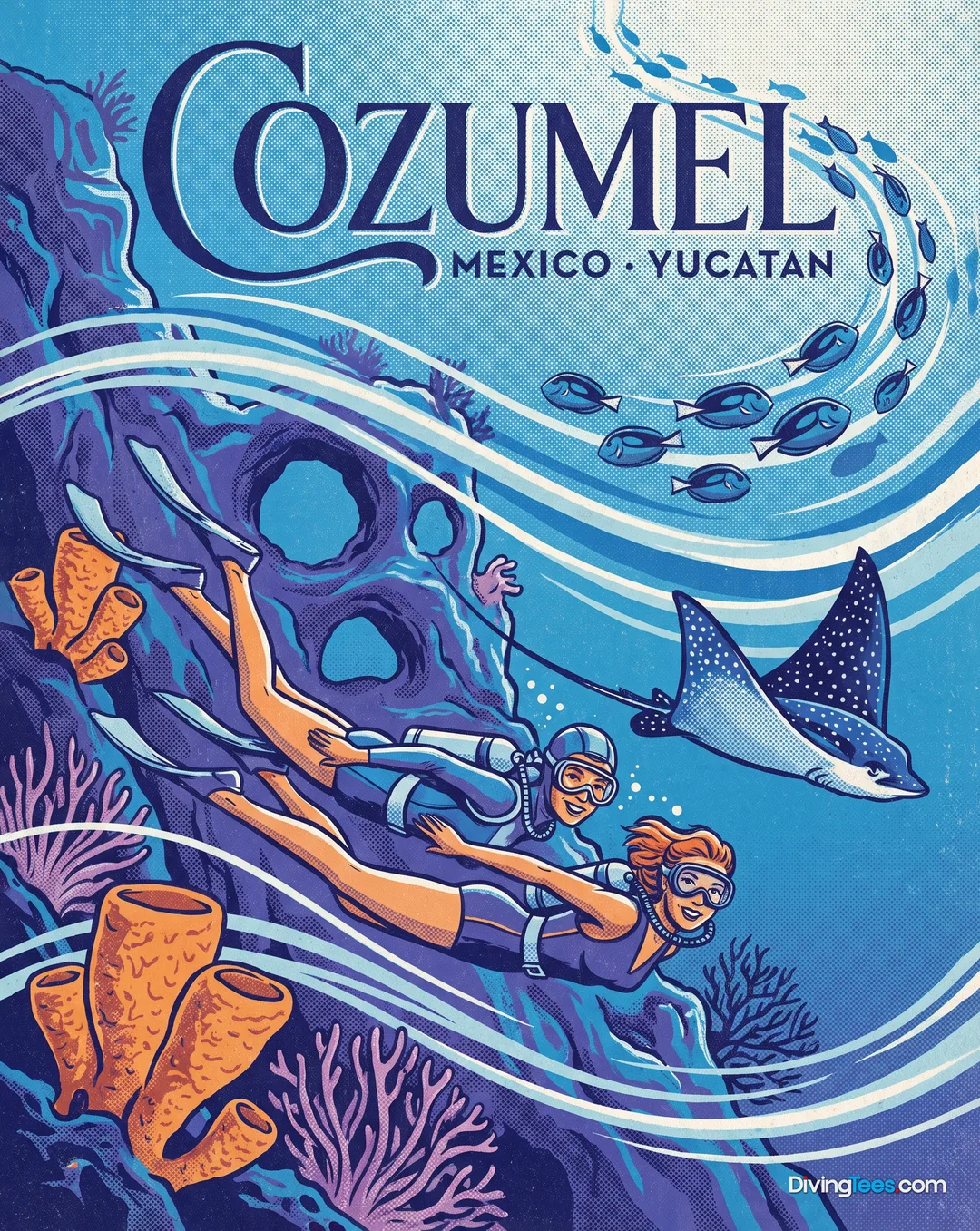
Santa Rosa Wall offers a quintessential Cozumel drift diving experience, where the wall itself begins at a depth of 12 to 15 meters and plunges steeply into the open blue. Divers glide along a near-vertical coral face, with the reef crest creating a dramatic contrast against the deep, all while being propelled by a consistent north-flowing current that is a signature of Cozumel diving.
As the dive progresses, the topography transitions from the vibrant reef crest to more exposed wall sections, often requiring a multi-level computer dive to explore various depths along its contours. The most northerly parts of Santa Rosa Wall are particularly intricate, featuring a network of tunnels, caves, overhangs, and underhangs that demand careful navigation and provide numerous hiding spots for marine life.
The tunnels at Santa Rosa Wall are a distinctive feature, cutting completely through the reef crest and offering significant swim-throughs that reveal the sheer scale of the coral formations. Passing through these natural archways provides a unique perspective on the reef's structure, often emerging back onto the vertical face to continue the drift, feeling the surge of the ocean as you navigate from one section to another.
Visibility is consistently excellent, averaging over 30 meters and often stretching beyond, allowing for clear views of the wall's vastness and the pelagic zone. Keeping an eye on the blue is essential, as the strong currents frequently bring larger species into proximity, making this a dynamic environment for encounters with marine life.
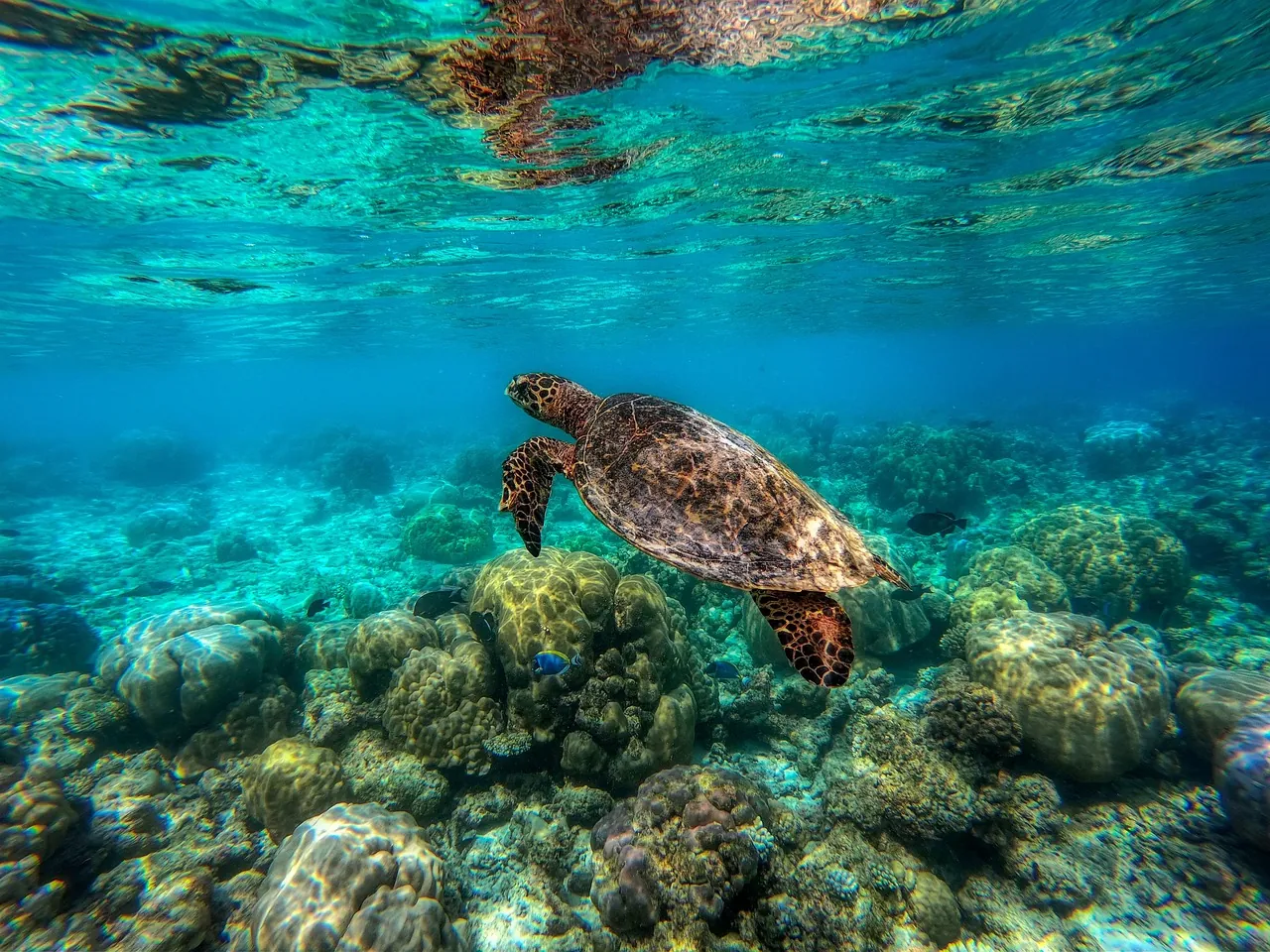
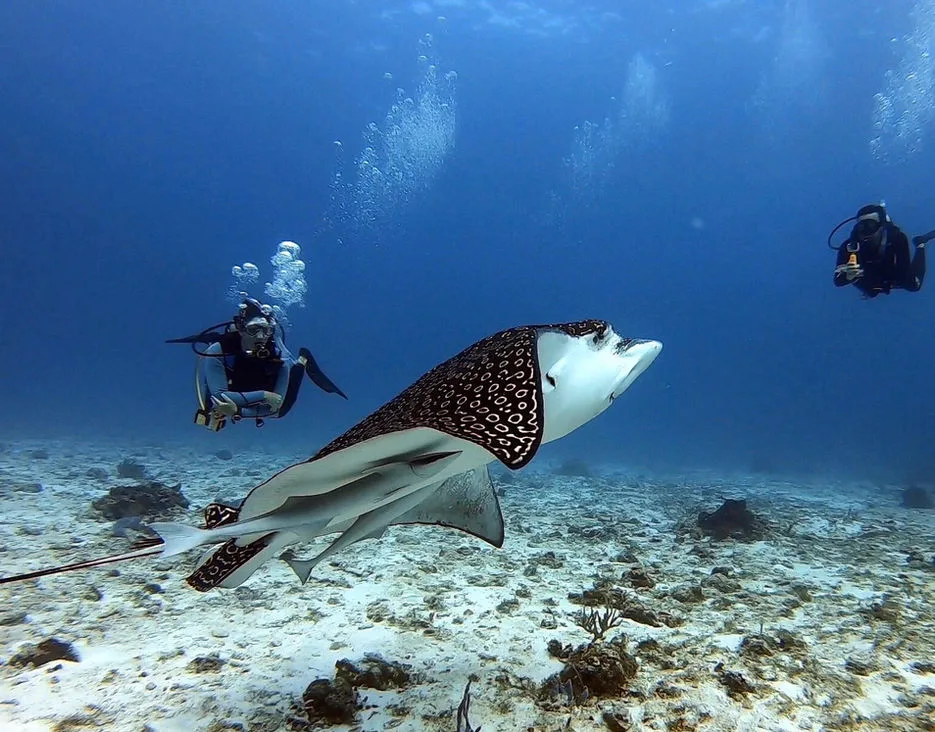
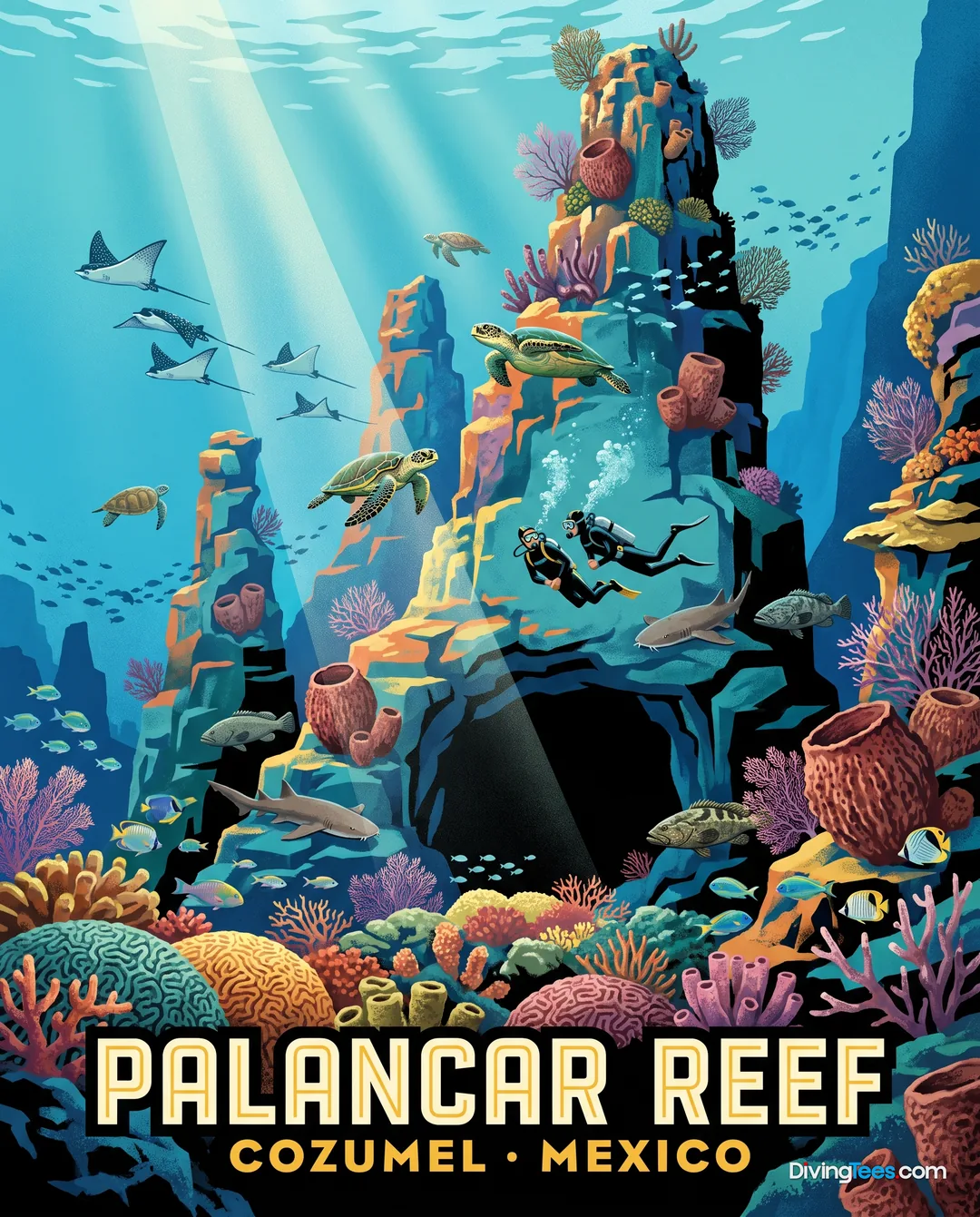
Eagle rays (Aetobatus narinari) are frequent visitors, especially during the winter months from December to March, sometimes extending to November, often spotted cruising gracefully against the current or along the drop-off. Beyond the eagle rays, turtles (Cheloniidae) are commonly seen resting or moving along the reef, while groupers (Serranidae) blend into the coral structures.
Nurse sharks (Ginglymostoma cirratum) are sometimes found resting in ledges or under overhangs, and the deeper sections of the wall, reaching down to 40 meters, often reveal groups of bigeye trevally (Caranx sexfasciatus) schooling against the current. Lobsters (Palinurus elephas) can be found tucked into the numerous cracks and crannies, their antennae waving gently in the flow.
Santa Rosa is also a prime location to spot the elusive splendid toadfish (Sanopus splendidus), an endemic species to Cozumel, whose distinctive facial patterns and peculiar behavior require a keen eye and a slow, deliberate pace to observe. Occasional sightings of more transient pelagics such as tiger sharks (Galeocerdo cuvier) or large hammerhead sharks (Sphyrna spp.) have been reported, emphasizing the dynamic nature of this deep wall.
The constant water movement sustains a rich, colorful array of corals and sponges adorning the wall face, with only robust coral species thriving due to the sheer exposure to the current. This creates a distinct growth pattern that differentiates Santa Rosa from more sheltered reef areas, showcasing intricate ecosystems that are a testament to the health and productivity of the reef system.
Santa Rosa Wall is an intermediate to advanced dive site, primarily due to its strong, consistent current and significant depths, ranging from 12 to 40 meters. Divers should have a solid understanding of drift diving techniques and excellent buoyancy control, with an Advanced Open Water certification recommended and comfort at deeper recreational limits. Visibility averages over 30 meters, and the best period for spotting eagle rays is between December and March.
Plan your Santa Rosa Wall dive between December and March, when eagle rays are especially likely to be seen cruising along the drop-off or against the current. Sightings may also extend into November. Excellent visibility, averaging over thirty meters, helps you scan the blue for passing animals.
Santa Rosa Wall suits intermediate to advanced divers because its strong, consistent current and significant depths require solid drift-diving skills and excellent buoyancy control. An Advanced Open Water certification is recommended, along with comfort at deeper recreational limits and the ability to navigate the wall’s varied underwater terrain.
Santa Rosa Wall ranges from fourteen to forty meters, while the wall begins around twelve to fifteen meters before plunging steeply into the open blue. Its changing contours may require a multi-level computer dive, allowing you to explore different sections while managing the site’s significant depth.
Expect a strong, consistent north-flowing current that carries you along a vertical coral wall, through tunnels, caves, overhangs, and canyons. You may see eagle rays, turtles, groupers, nurse sharks, bigeye trevally, lobsters, colorful corals, sponges, and the endemic splendid toadfish, with occasional tiger or hammerhead sharks.