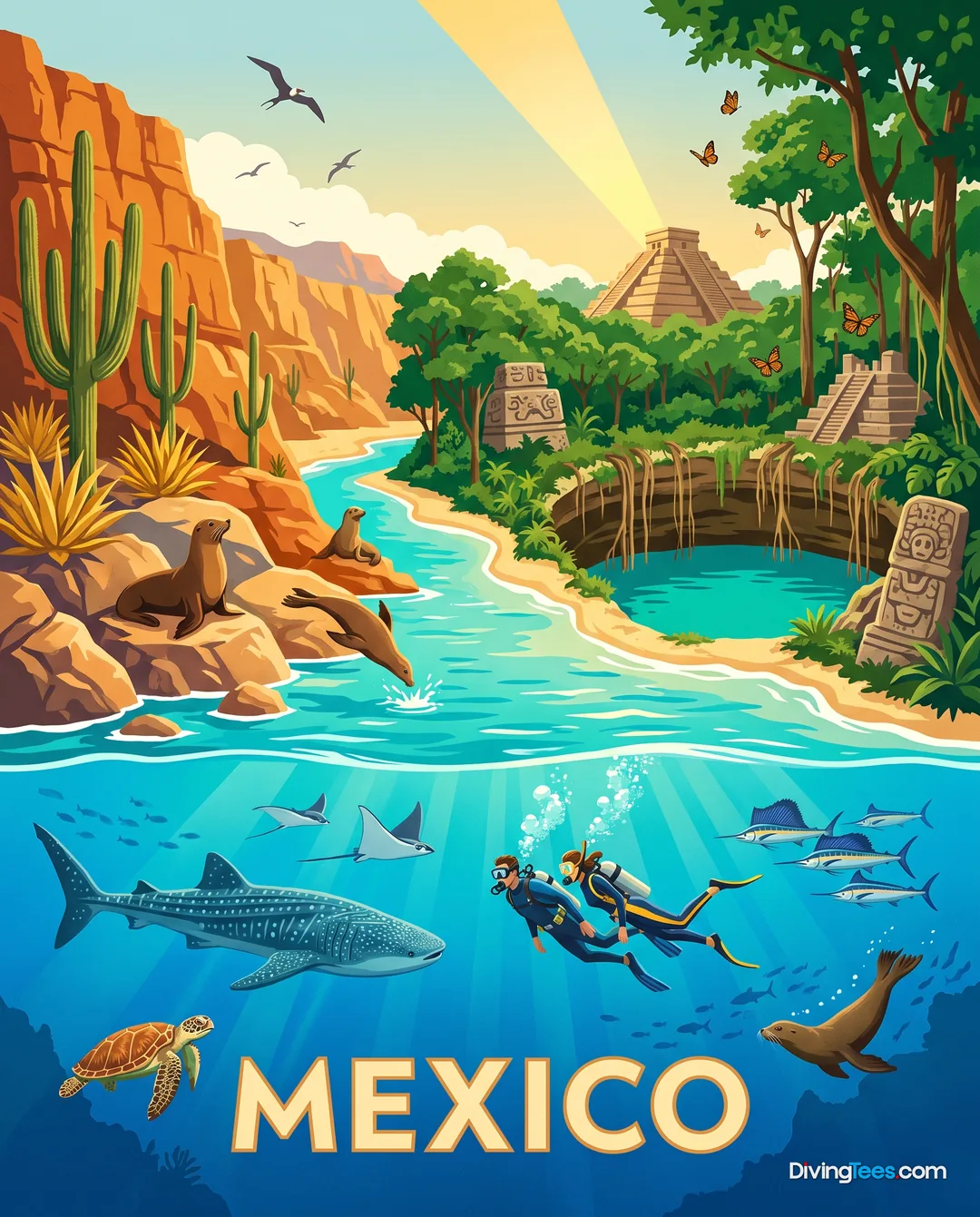
Liveaboards · Mexico
Quino del Mar — a new, diver-built platform for Baja and Socorro
What makes this boat unique
- Quino del Mar was custom-built for divers in 2025 and carries up to 20 passengers in 10 ensuite cabins.
- The boat runs 8-day Sea of Cortez Midriff Islands trips, 13-day Explore Baja crossings, and 10-day Socorro Island itineraries.
- Its dive setup includes a shaded platform, two diver tenders, DIN adaptors, nitrox, camera rinse tanks, and a separate sidemount option for one cylinder.
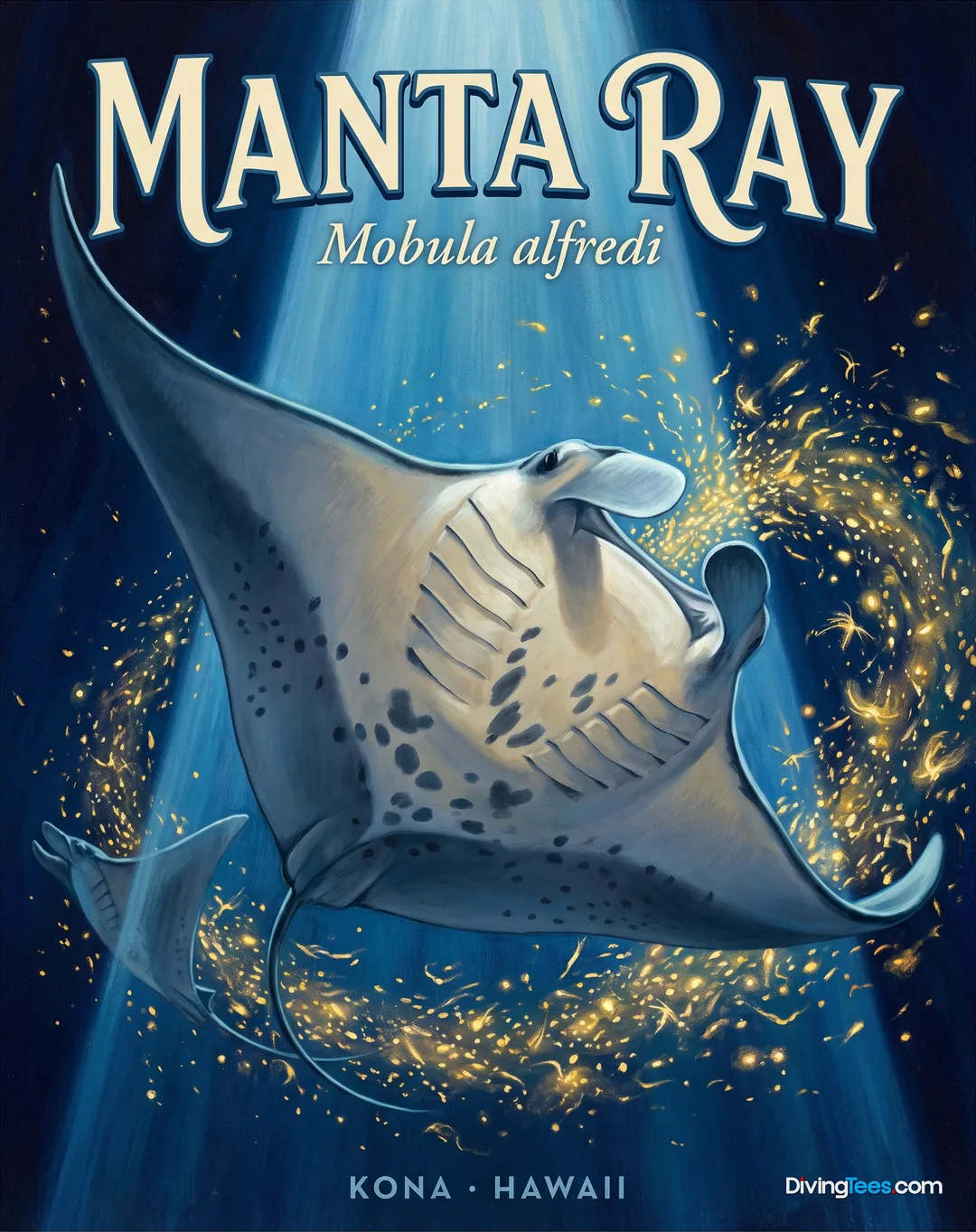
- The route combines California sea lions, wrecks, reefs, pinnacles, caves, mobula rays, reef sharks, and large Pacific manta rays.
For subtitles in English: start the video firstthen click the gearat the top right of the video, select “Subtitles/CC”, then “Auto-translate” and choose “English”.
The invitation
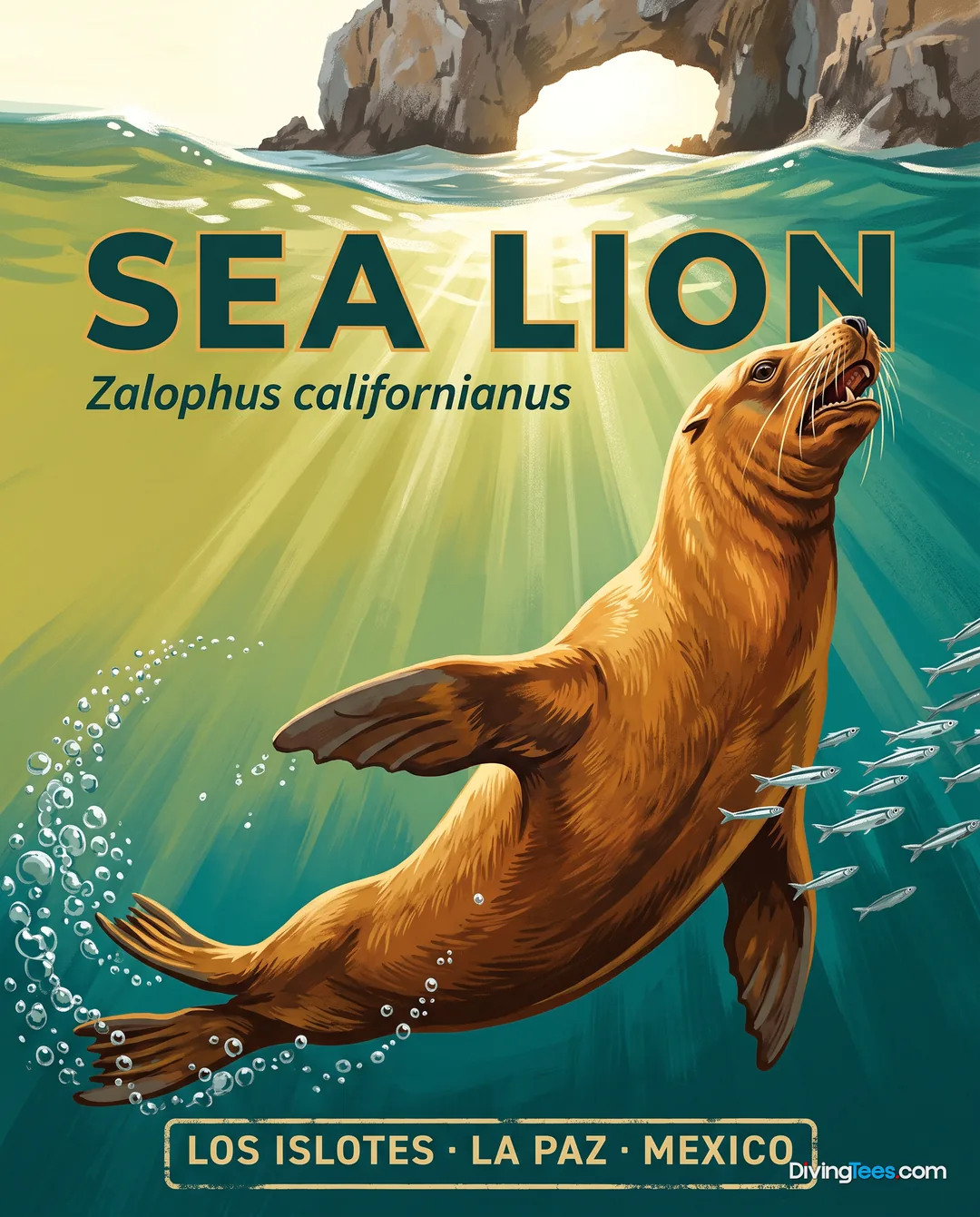
Quino del Mar is for divers choosing range over a single, familiar itinerary. One departure can stay among the Midriff Islands for eight days; another can cross Baja in thirteen, from Puerto Peñasco to San José del Cabo or back again; Socorro runs for ten days from San José del Cabo. That variety matters because the Sea of Cortez changes character from shallow sea-lion encounters and small animals to wrecks, reef walls, and open-ocean pelagics farther south. The boat was built specifically for diving, not adapted from a yacht or fishing vessel. Its working day is organised around the water: shaded dive stations, tenders that take divers away from the hull, a camera area, and a platform made for repeated entries and exits. Choose Quino del Mar when the destination is the main event, but the boat still needs to make long days at sea practical.
Boarding
The first impression is of a purpose-built expedition boat rather than a floating resort. Quino del Mar was completed in 2025, so the spaces have been planned around divers from the start: the route from cabin to dive area is part of the working design, with a shaded dive deck, two tenders, and a platform at the stern. Inside, the boat gives the group a large salon and an air-conditioned indoor lounge; outside, the observation deck and shaded sundeck keep the sea visible between dives. There are ten cabins for twenty passengers, enough for a full boat without turning the common areas into a crowd. The cleanest reason to board is simple: the hull is new, and every important public space has a diving job to do.
The atmosphere on board
The atmosphere is shaped less by formal service than by a crew that knows the boats as working places. Julio began with the company while a boat was being built in 2007, starting as a panga driver and moving through most roles before becoming a captain. Captain Nestor particularly enjoys meeting divers as they return from a dive, which is exactly where a good liveaboard crew earns trust: at the platform, when everyone is tired, wet, and trying to describe what just happened below. Divemaster Axel joined in 2013–2014 and focuses on showing the underwater world to divers at different skill levels. English and Spanish are spoken aboard. In the evening, the large salon, shaded deck, dinner service, and the day's sightings give the group somewhere to gather without turning the boat into a loud party vessel.
The sites you’ll dive
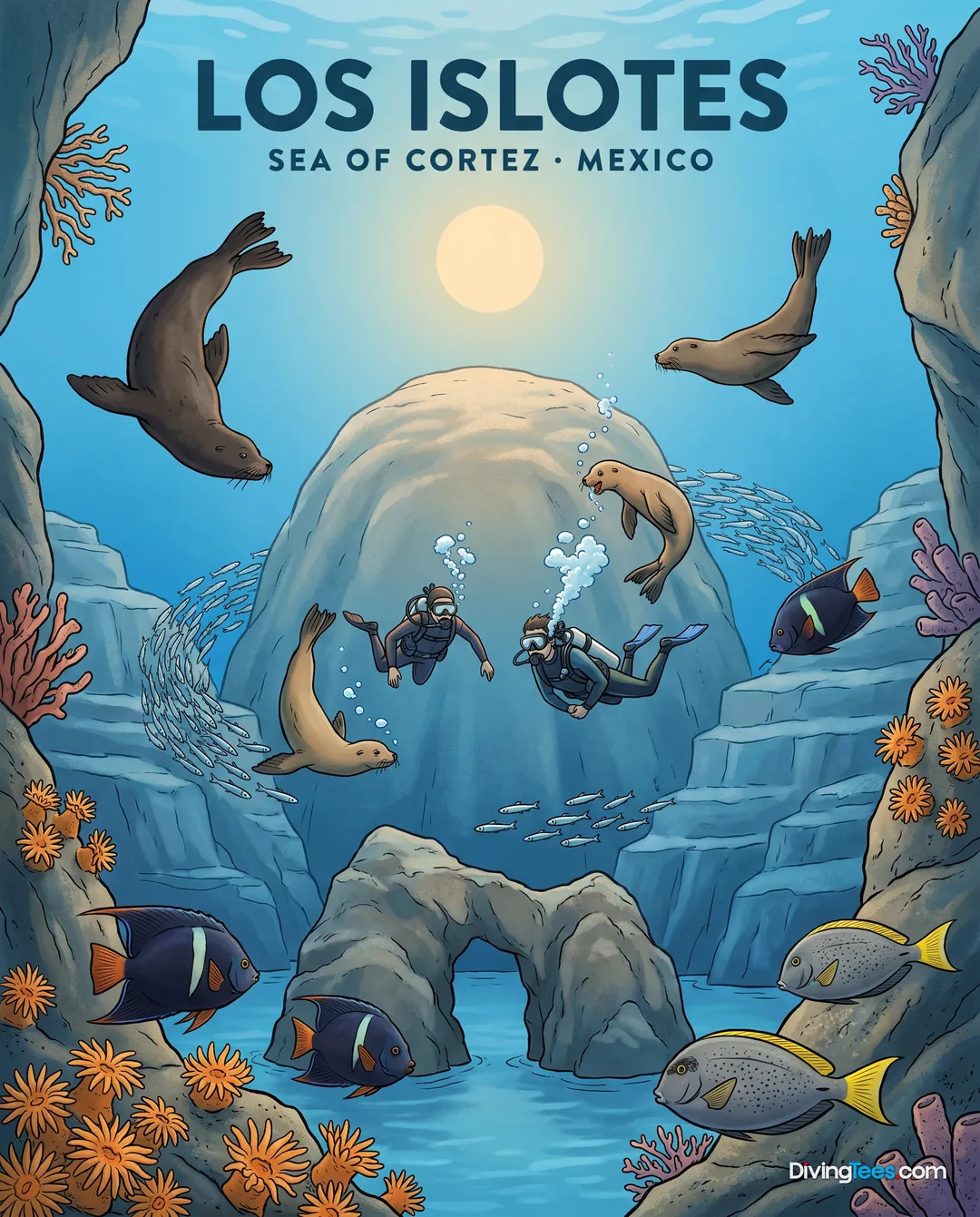
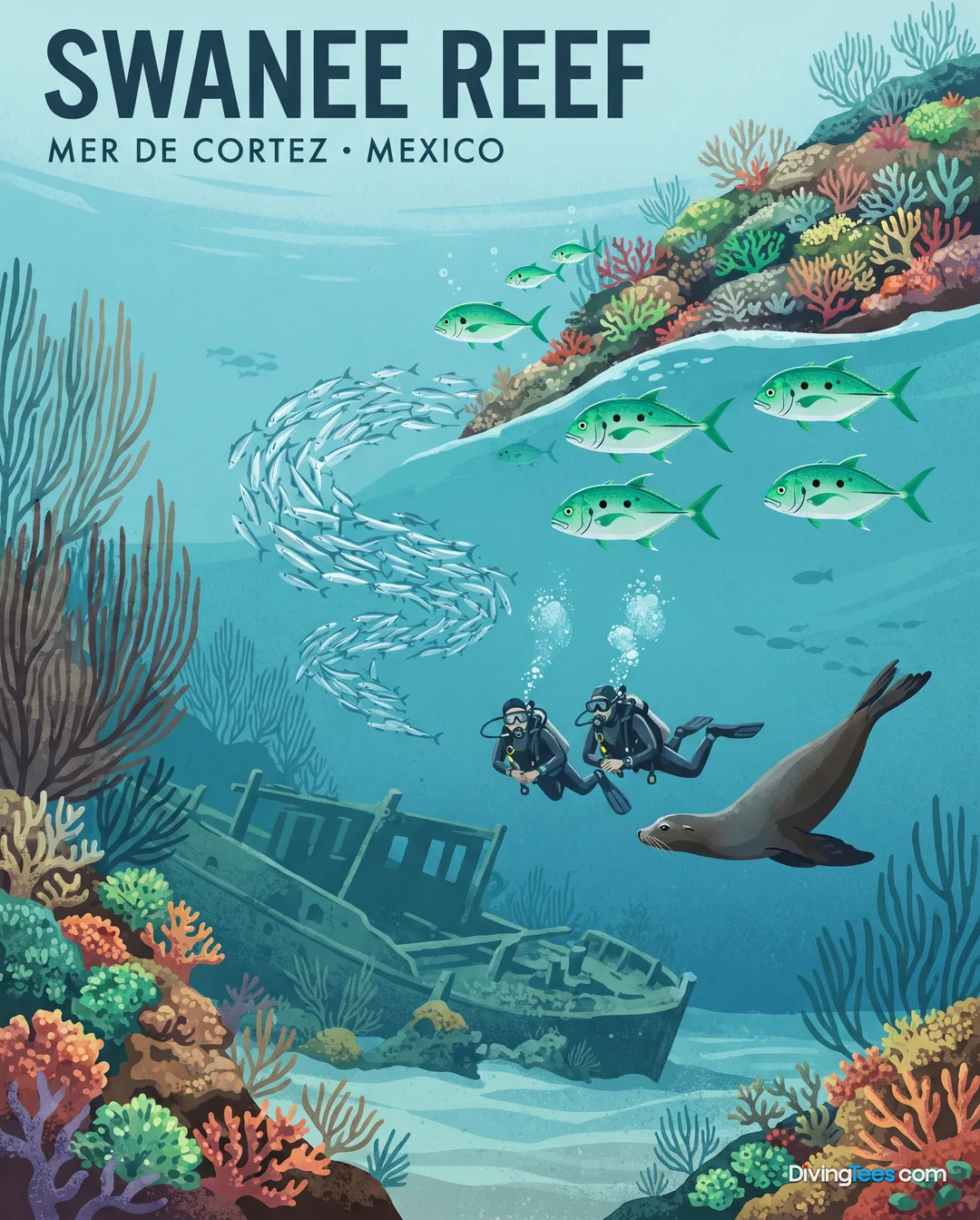
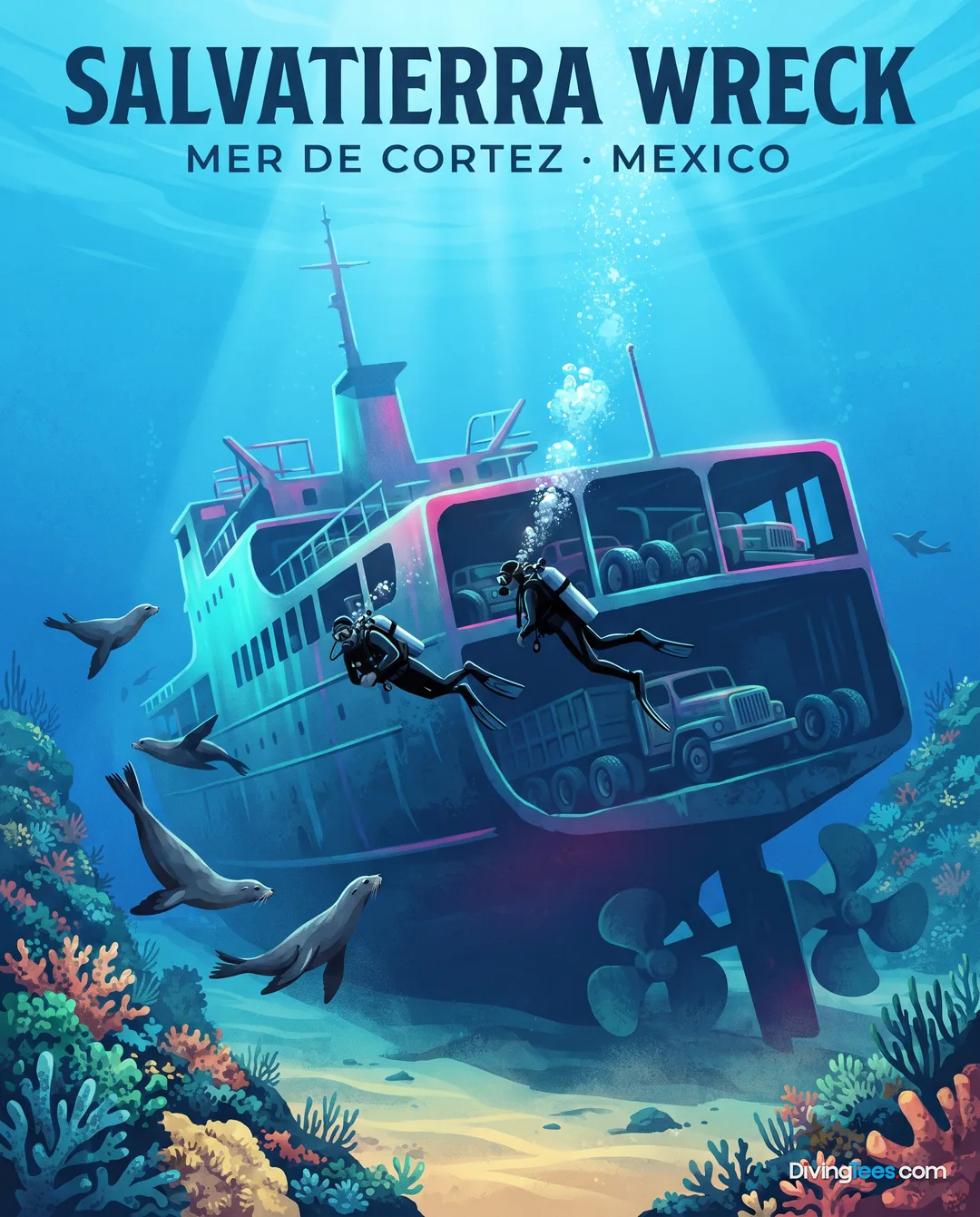
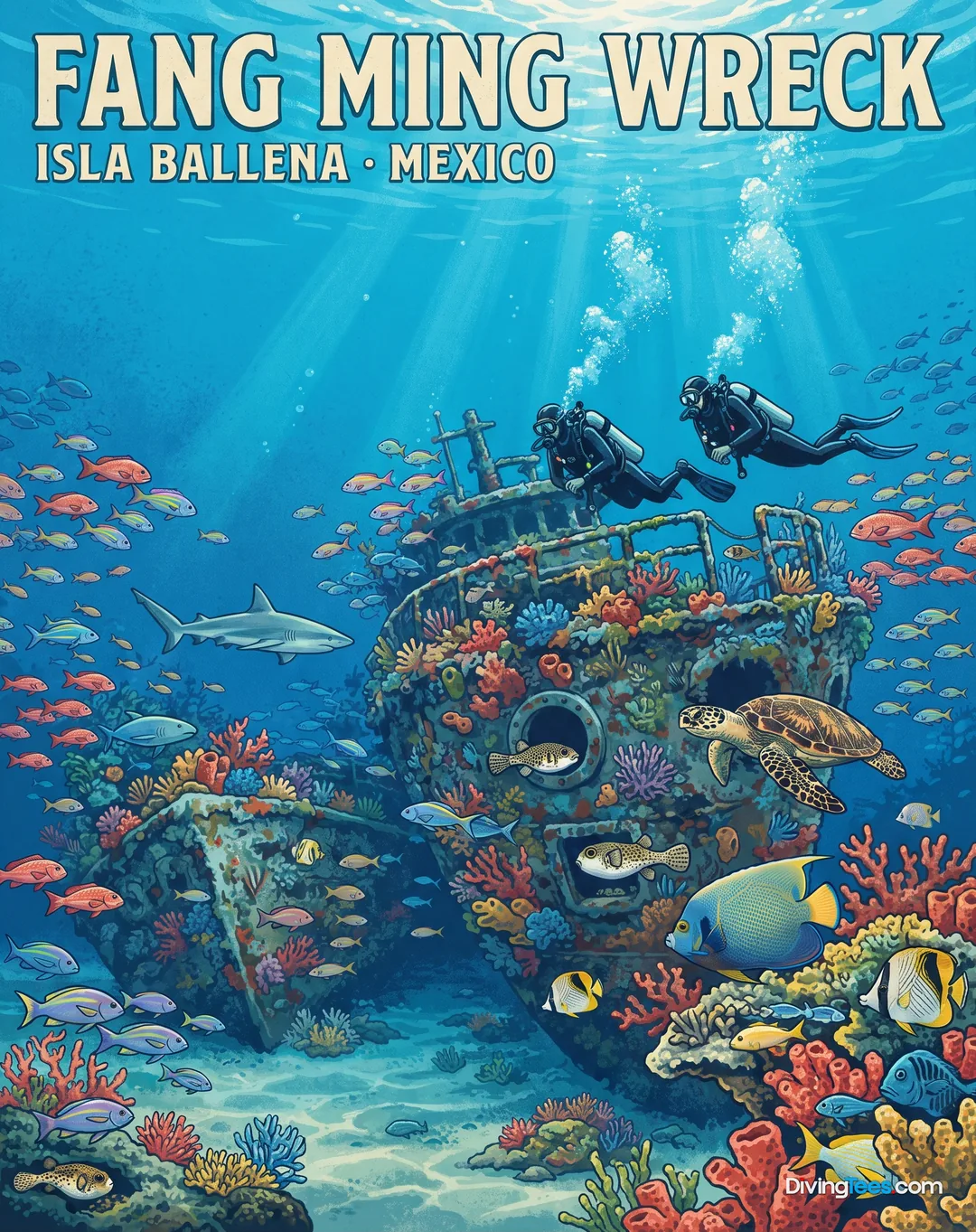
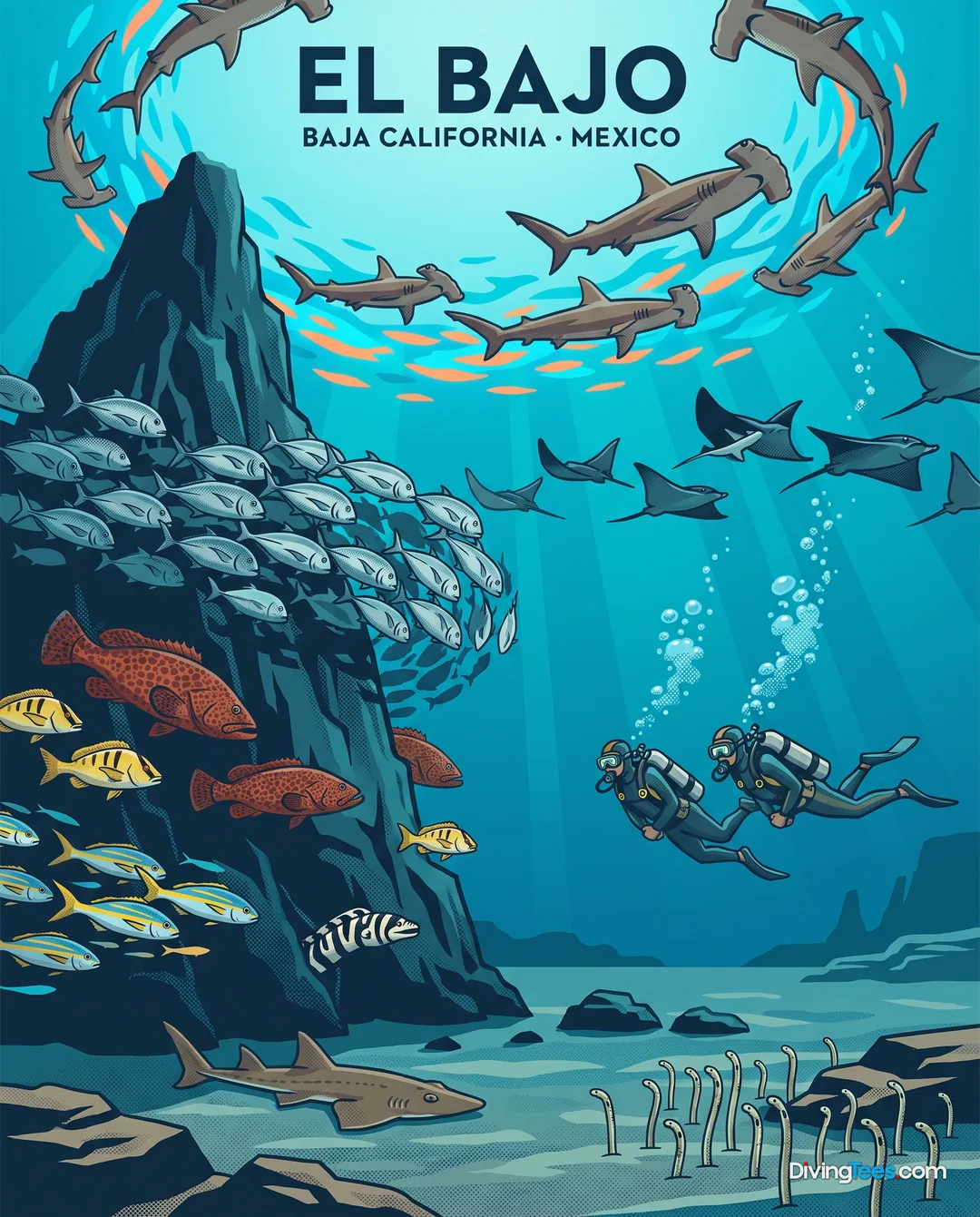
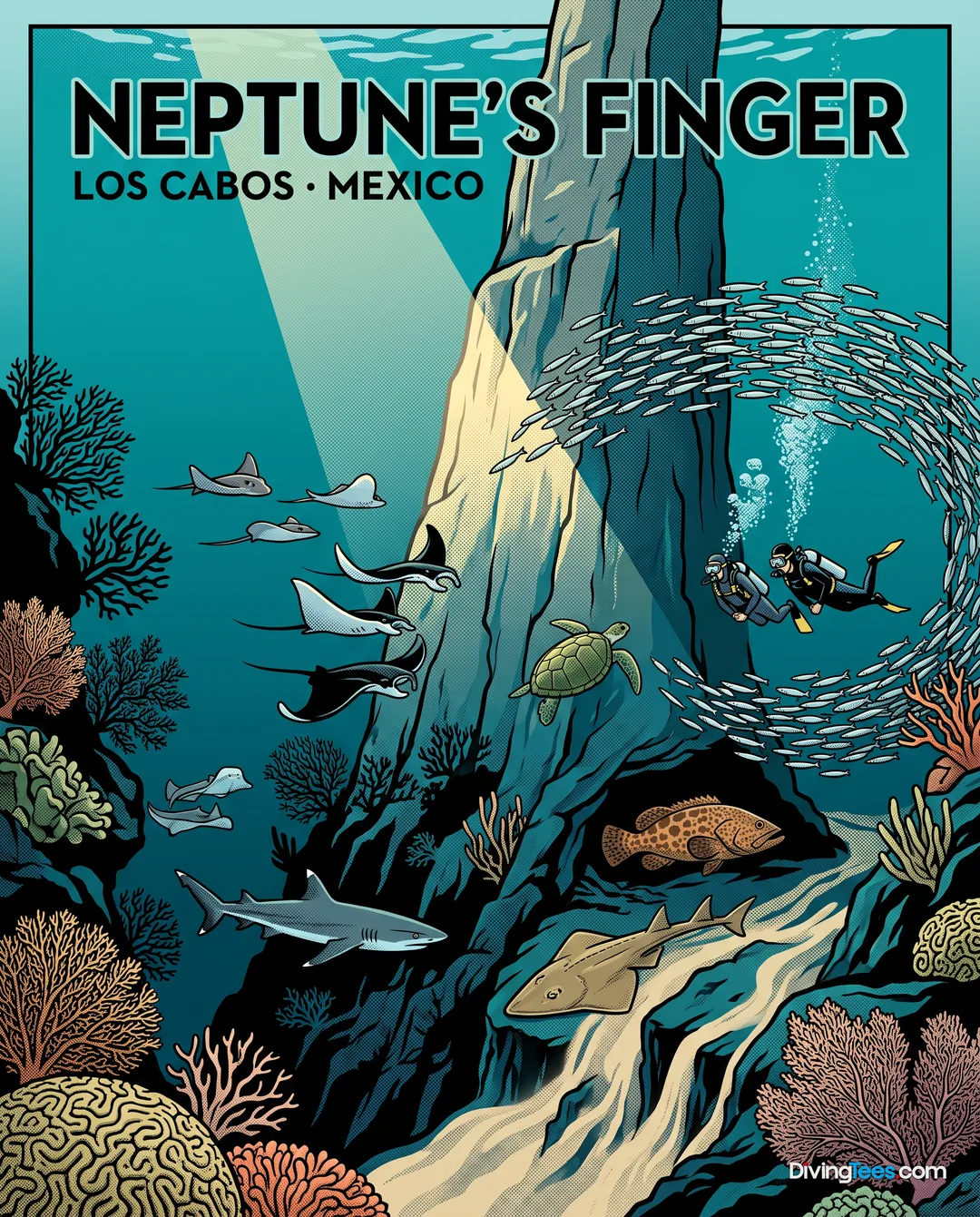
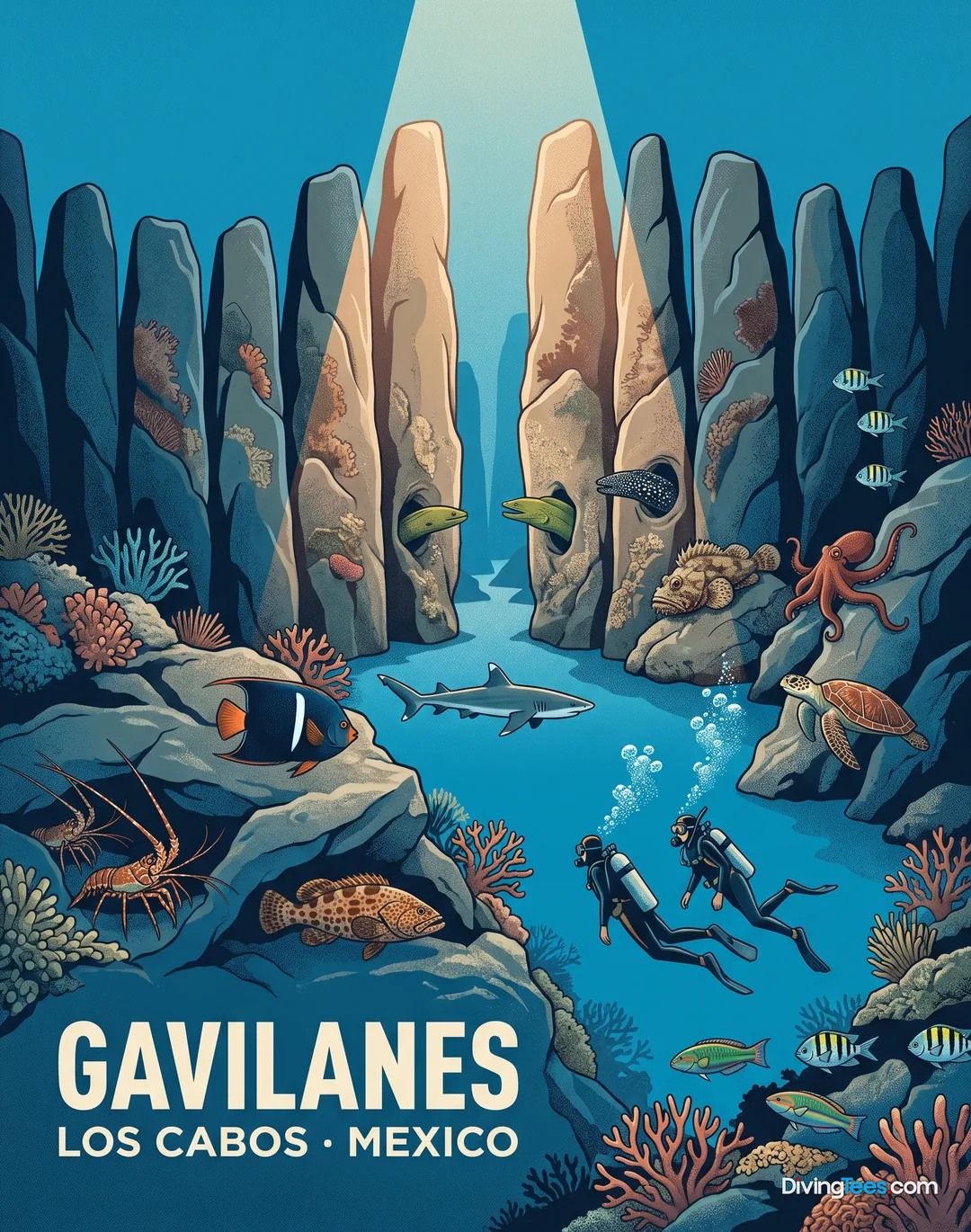
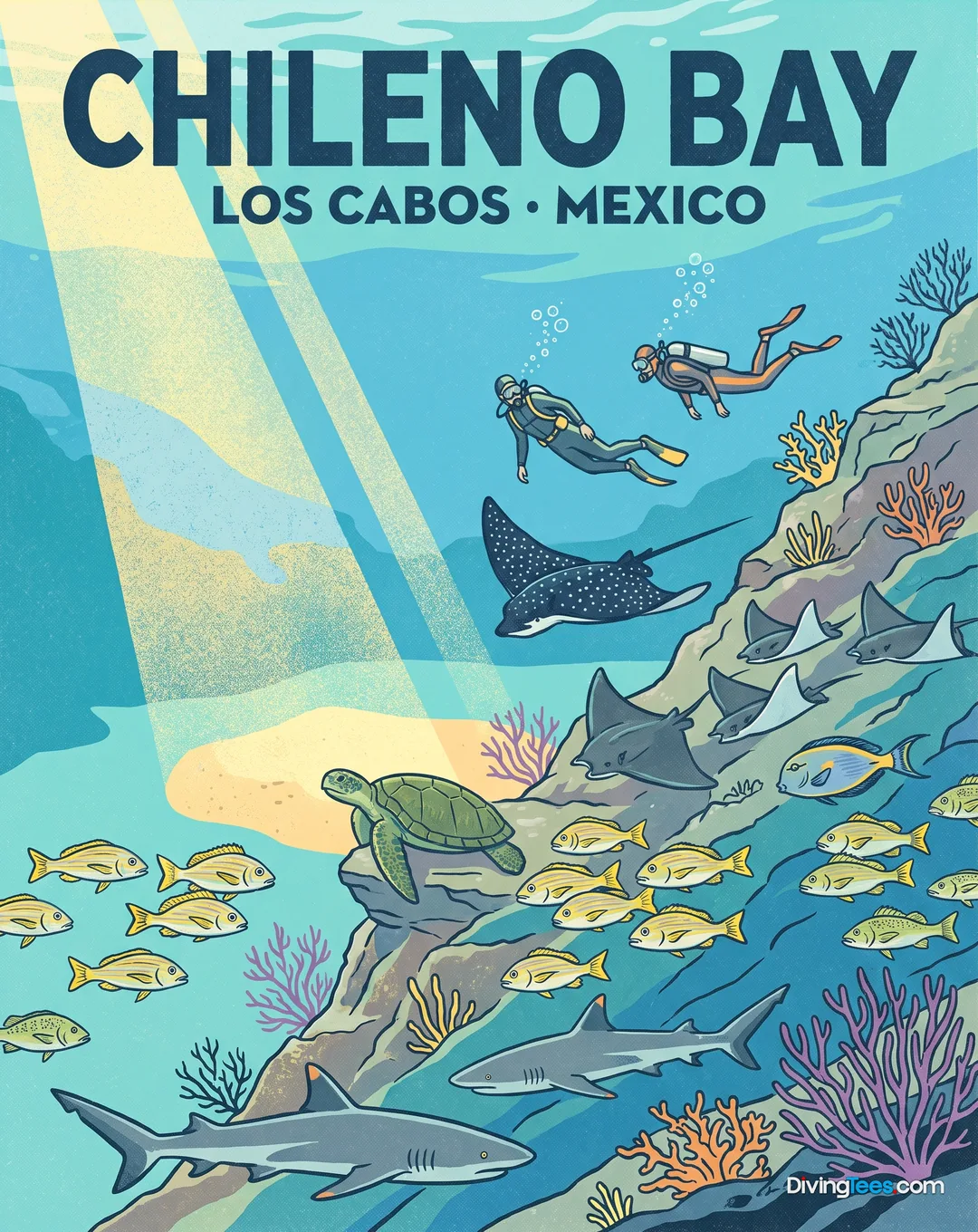
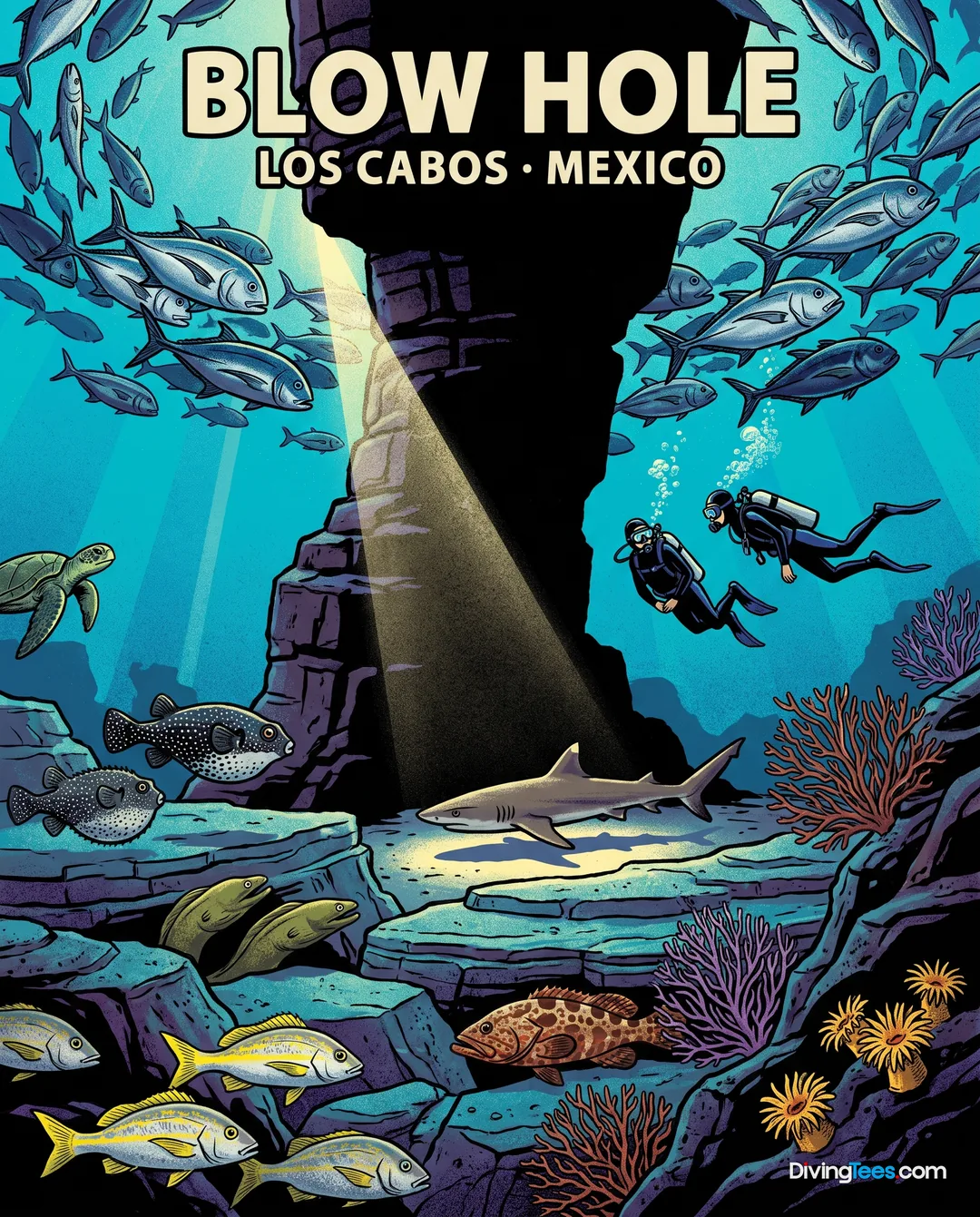
The route changes the kind of diving from one end of Baja to the other. In the Midriff Islands, Los Islotes brings California sea lions into a reef setting, while Swanee Reef combines a shallow reef with the Salvatierra wreck and reaches 11 metres. The Salvatierra itself lies at 18 metres, with cargo trucks still on the wreck and their tyres inflated. Farther south, La Reynita and San Rafaelito both reach 30 metres: one is a rocky pinnacle shaped by current and schooling fish, the other has coral heads and small caves where parrotfish shelter. Isla Ballena reaches 18 metres and offers underwater caves, a hidden air pocket, and sandy garden-eel beds. Punta Lobos slopes to a rocky wall at 27 metres, with giant seahorses, octopus, and seasonal mobula encounters. La Reyna reaches 25 metres at a rocky islet exposed to the open ocean, where giant Pacific manta rays may appear. Other Baja stops include Fang Ming Wreck at 21 metres, El Bajo at 18 metres, Neptune's Finger at 40 metres, Gavilanes and Chileno Bay at 18 metres, and Blow Hole at 35 metres. Explore Baja takes 13 days and 12 nights between Puerto Peñasco and San José del Cabo. Midriff Islands trips take 8 days and 7 nights, while Socorro itineraries take 10 days and 9 nights from San José del Cabo.
What you’ll meet underwater
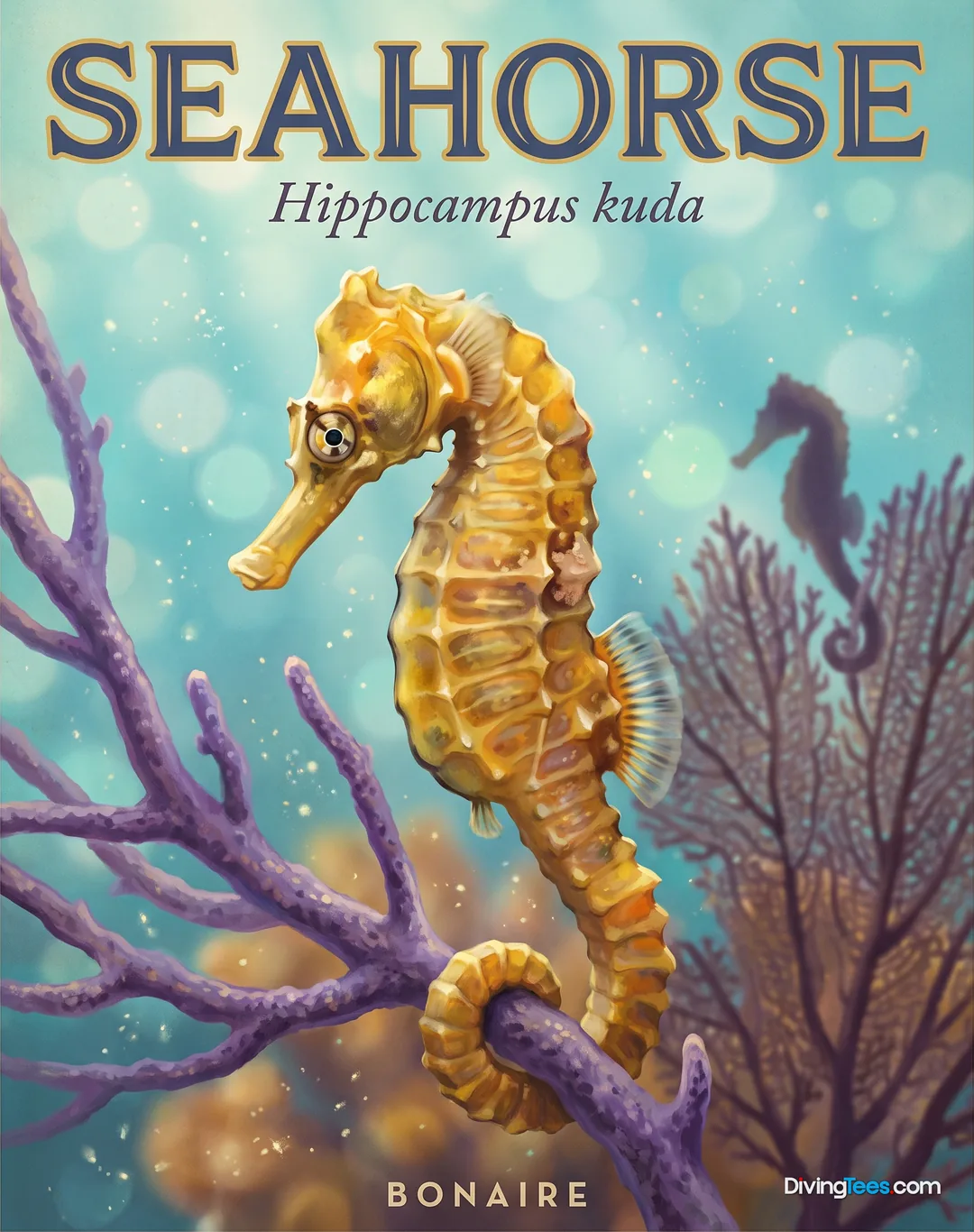
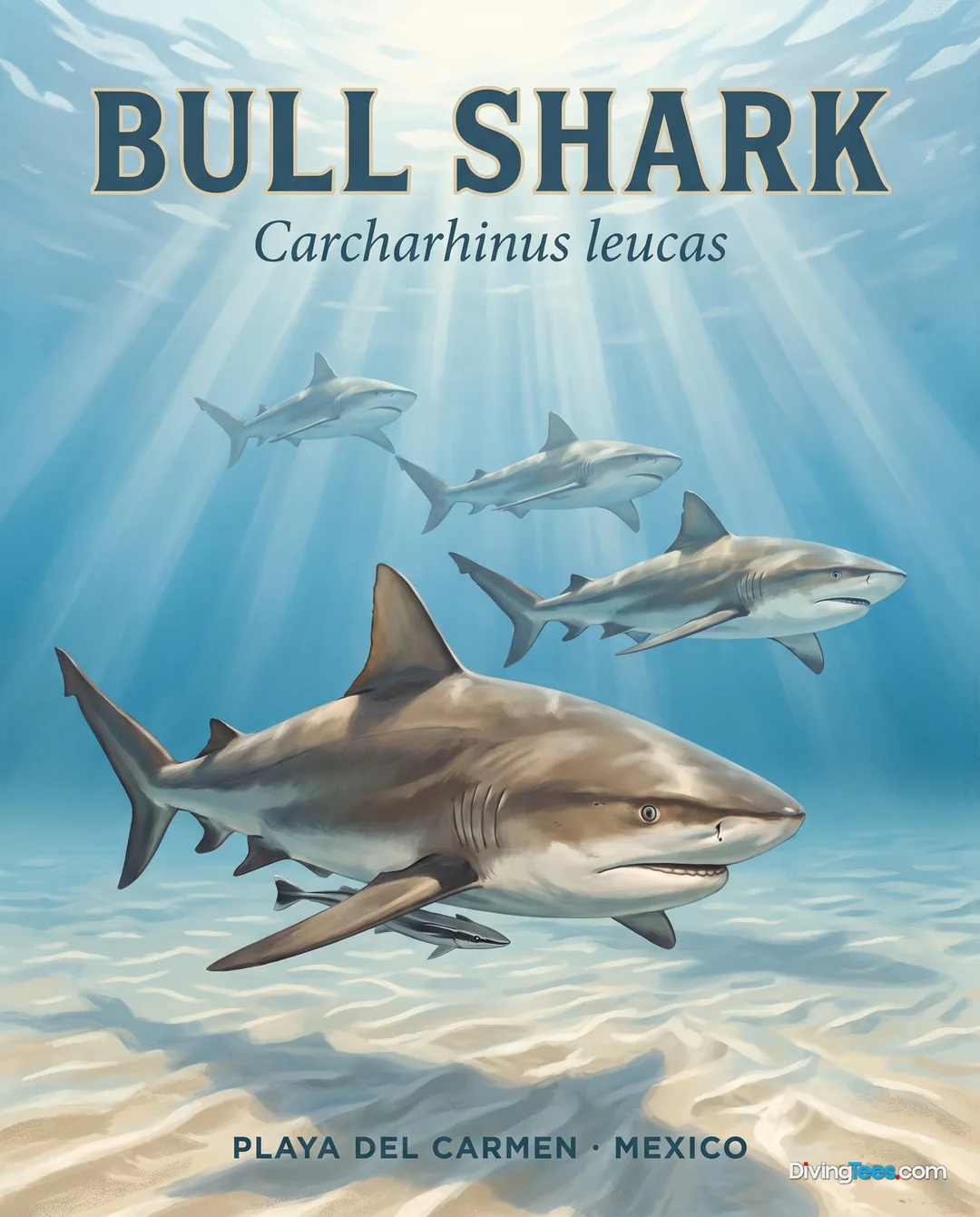
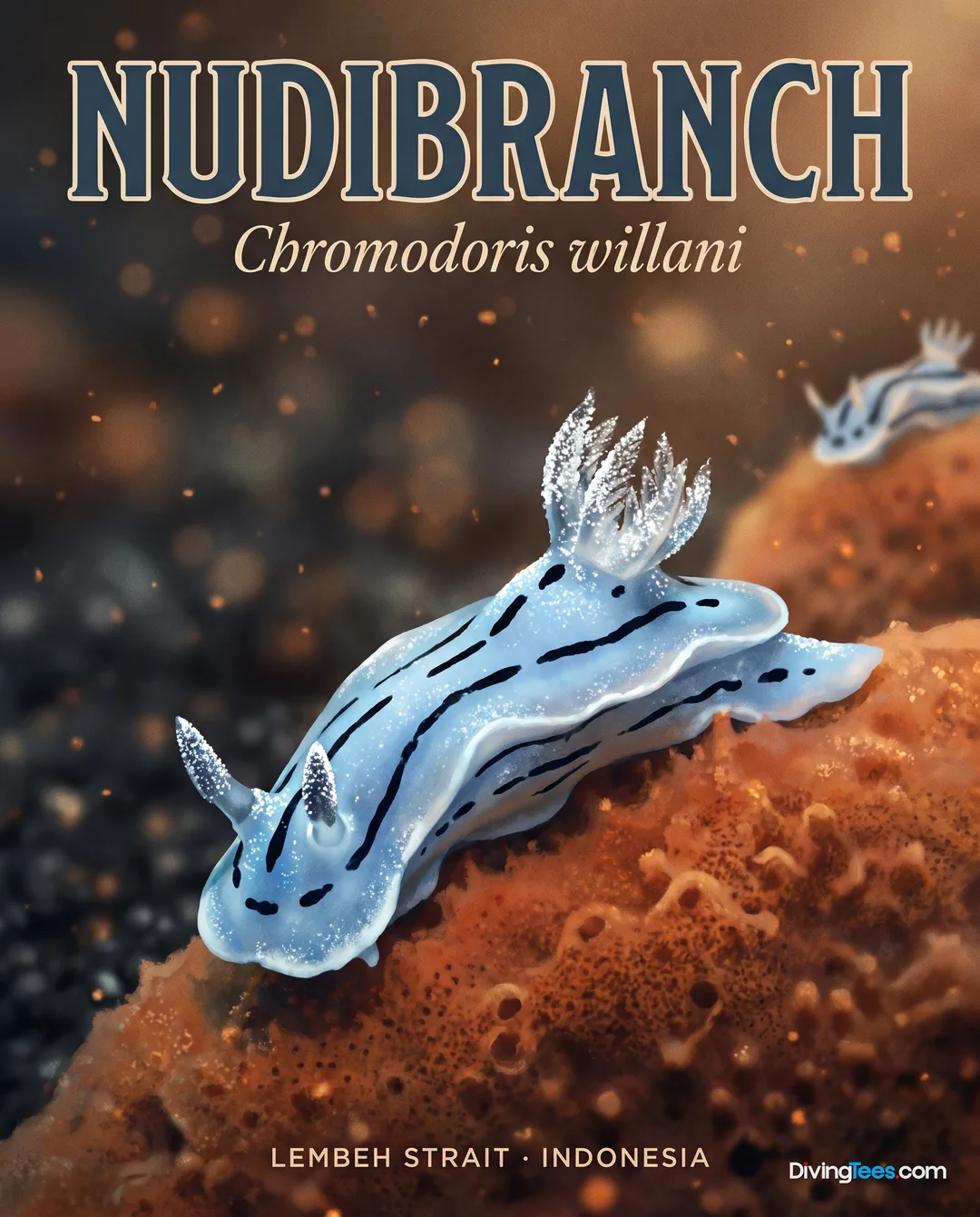
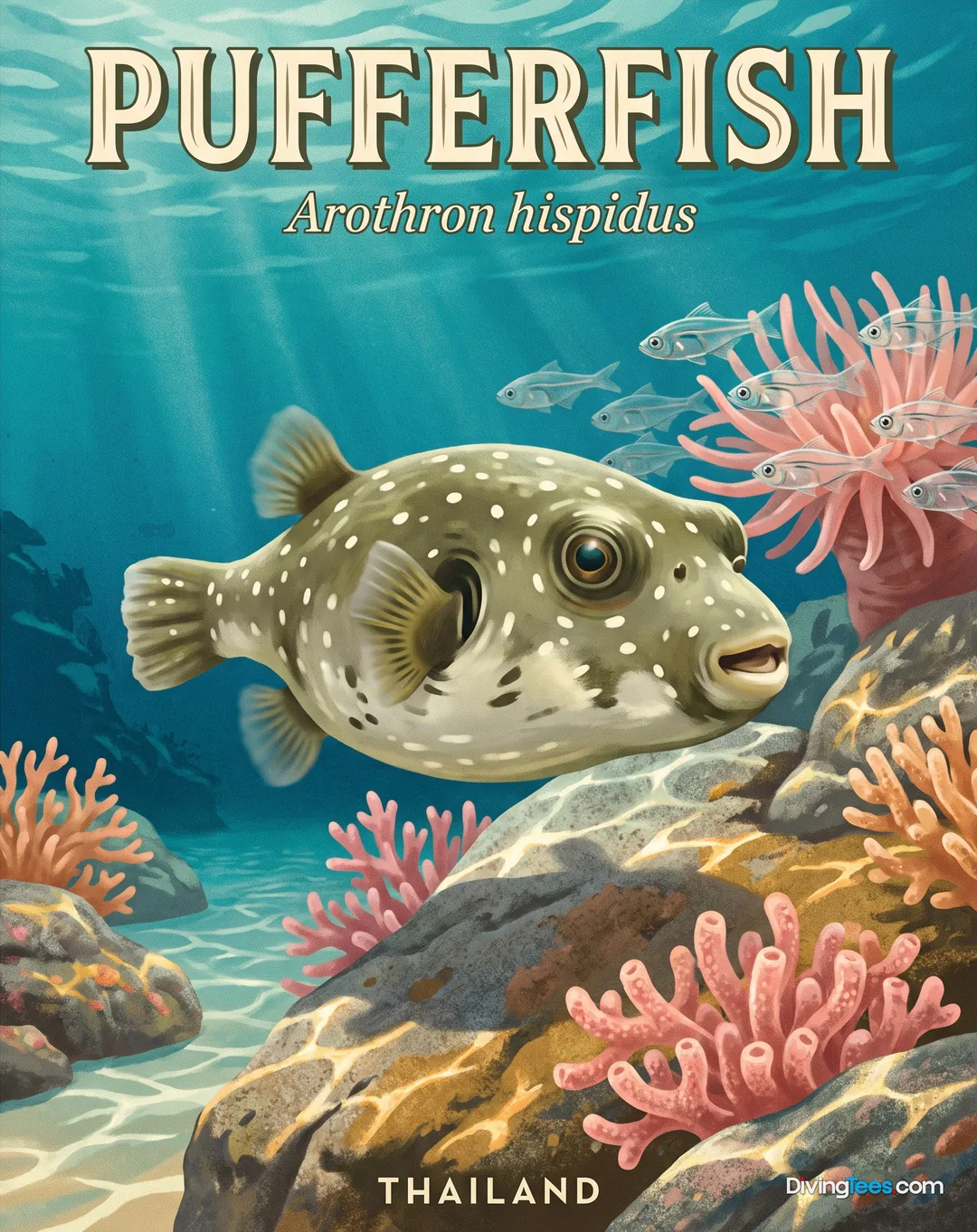
Turtles, groupers, rays, morays, snappers, white-tip reef sharks, and octopus are the recurring cast across this route, with the exact mix changing from reef to wreck and from sheltered water to exposed pinnacle. The one-site encounters are what give individual dives their point. Salvatierra Wreck is the place associated with barracuda; Isla Ballena is where dolphins are recorded; El Bajo is the site for possible bull shark and tuna encounters. Swanee Reef is notable for blennies and seahorses, while La Reyna is the route's named site for green morays and giant Pacific manta rays. Fang Ming Wreck carries soft and hard corals, nudibranchs, reef sharks, angelfish, butterflyfish, and pufferfish on its two deliberately scuttled vessels. At Punta Lobos, giant seahorses share the slope with octopus and mobula rays in season. The animals are the reason to choose the site, but none is guaranteed; currents, visibility, and season still decide what comes past.
Who puts you in the water
The crew speaks English and Spanish, and divemaster Axel is specifically described as working with divers across different skill levels. Briefings and dive-group ratios are not stated here, so the trip should not be sold on a promised ratio or a particular guide-to-diver number. The same applies to minimum logged dives and courses: a Nitrox certification is available as an optional paid course, but no broader training programme or entry requirement is given. Safety equipment includes oxygen, first-aid kits, life rafts, life jackets, fire alarms and extinguishers, emergency flares, VHF/DSC/SSB radio, satellite and mobile phones, GPS, radar, sonar, and an emergency position-indicating radio beacon. That is a solid vessel-level safety inventory; it does not replace a proper dive briefing on the route and conditions.
The dive deck and the gear
The dive deck is shaded and built around a stern platform, with two tenders taking divers to and from the sites. That tender setup matters in the Sea of Cortez: divers can surface away from the main hull and be collected there rather than swimming back to the boat. The deck has tank rinse areas and a separate rinse tank for cameras, plus charging stations and outdoor showers for the return from the water. DIN adaptors are available. Nitrox is available as an optional extra, and rental gear can be arranged; the listed equipment does not identify tank material, tank volume, compressor type, SMB provision, or rental brands, so those details should not be assumed. Sidemount is supported with a single cylinder. The boat is also set up for night dives, which are included in the dive package.
Between dives
Between dives, the shaded sundeck is the natural base: close enough to the dive operation to hear what is happening, but open to the horizon once the tender has gone. The observation deck gives the long crossings a better place to watch Baja pass, while the air-conditioned salon and indoor lounge provide relief when the sun has done enough. A library, audio and video entertainment, and a dedicated photo area cover the slower stretches without forcing everyone into the same activity. Photographers have a separate camera rinse station and charging points; others can leave the cameras alone and simply sit outside with a drink. On the longer Explore Baja route, those spaces matter more than a resort-style catalogue because the boat is moving between regions, not hiding the travel time.
A day on board
A dive day begins with food before the first briefing and entry, then returns to a full breakfast after the opening dive. The next surface interval is long enough for a hot meal later in the day, with soup and a plated lunch followed by substantial snacks such as ceviche or homemade doughnuts. Divers move between the shaded deck, the camera station, the salon, and the open deck while the boat either holds position or travels to the next site. The route can carry several dives in a day, and night dives are part of the included dive package. On the extended Socorro itinerary, the pattern is explicit: four dives on San Benedicto, four on Socorro, two at Roca Partida before the crossing, three or four at Clarion depending on weather, then further dives at Roca Partida and the islands. Dinner closes the working part of the day with three courses; then the boat runs on into the next briefing.
What you eat aboard
Meals are included as full board, with local and Western cooking, vegetarian and vegan choices, and dinner served à la carte. The food is built around a heavy diving day: continental breakfast comes before the first dive, a full breakfast follows it, then homemade soup and a plated hot lunch. Ceviche, chocolate-dipped strawberries, and homemade doughnuts fill the gaps when a full meal is too far away, and dinner is a three-course service of salad, main course, and dessert. The galley also covers more ambitious cooking, including sushi, Italian dishes, and grilled or baked meats. Non-alcoholic drinks, tea, coffee, snacks, and wine at dinner are included; beer and other wine are available aboard. That timing is not a luxury detail. Four dives make a reliable plate between water entries part of the boat's diving equipment.
Nights at sea
The standard cabins are ensuite and air-conditioned, with a standard window; some have sea views. They are spread across the decks rather than concentrated in one single accommodation level, so the boat is lived in vertically as well as lengthwise. After a dive, the useful detail is the private bathroom and hot-water shower, not a decorative room count. The indoor salon gives passengers somewhere cool to retreat, while the shaded sundeck keeps a bunk-sized cabin from becoming the only place to rest. Daily housekeeping, cabin towels, and deck towels are included. Nights are quieter than the dive hours, but a liveaboard still carries the sound of its systems and the movement of the sea; anyone who sleeps lightly should treat the cabin as a working vessel's room, not a silent hotel bedroom.
Standard Cabins
What to know before boarding
Midriff Islands trips depart from and return to Puerto Peñasco. Explore Baja crossings start or finish in Puerto Peñasco and San José del Cabo, depending on direction, while Socorro trips leave from and return to San José del Cabo. Transfer arrangements are not described as part of the boat service, so the departure port should be checked when the trip is booked. Arriving the night before is the sensible choice for any liveaboard departure.
Deck plan
- Year built
- 2025
- Length
- 36 m
- Beam
- 8 m
- Maximum number of passengers
- 20
- Number of cabins
- 10
- Number of bathrooms
- 13
- Engines
- 2
- Cruising speed
- 10 knots
- Tenders
- 2
- Website
- mexicoliveaboards.com ↗
Hello, I'm Marina, DivingDeal.com's AI assistant. I answer in detail about hotels, dive centres and liveaboards.

Thinking about the whole trip and the flights? Talk it over with Edith →
Marina is an AI. Some links are affiliate links: DivingDeal may earn a commission, at no extra cost to you. Bookings are made with the partner.