Liveaboards · Indonesia
Queenesia II — a classic phinisi built around diving and open-air living
What makes this boat unique
- This 32-metre phinisi carries up to 16 passengers in seven air-conditioned en-suite cabins.
- The dive setup includes shaded work space, 12-litre aluminium tanks, DIN adapters, two compressors and two diver tenders.
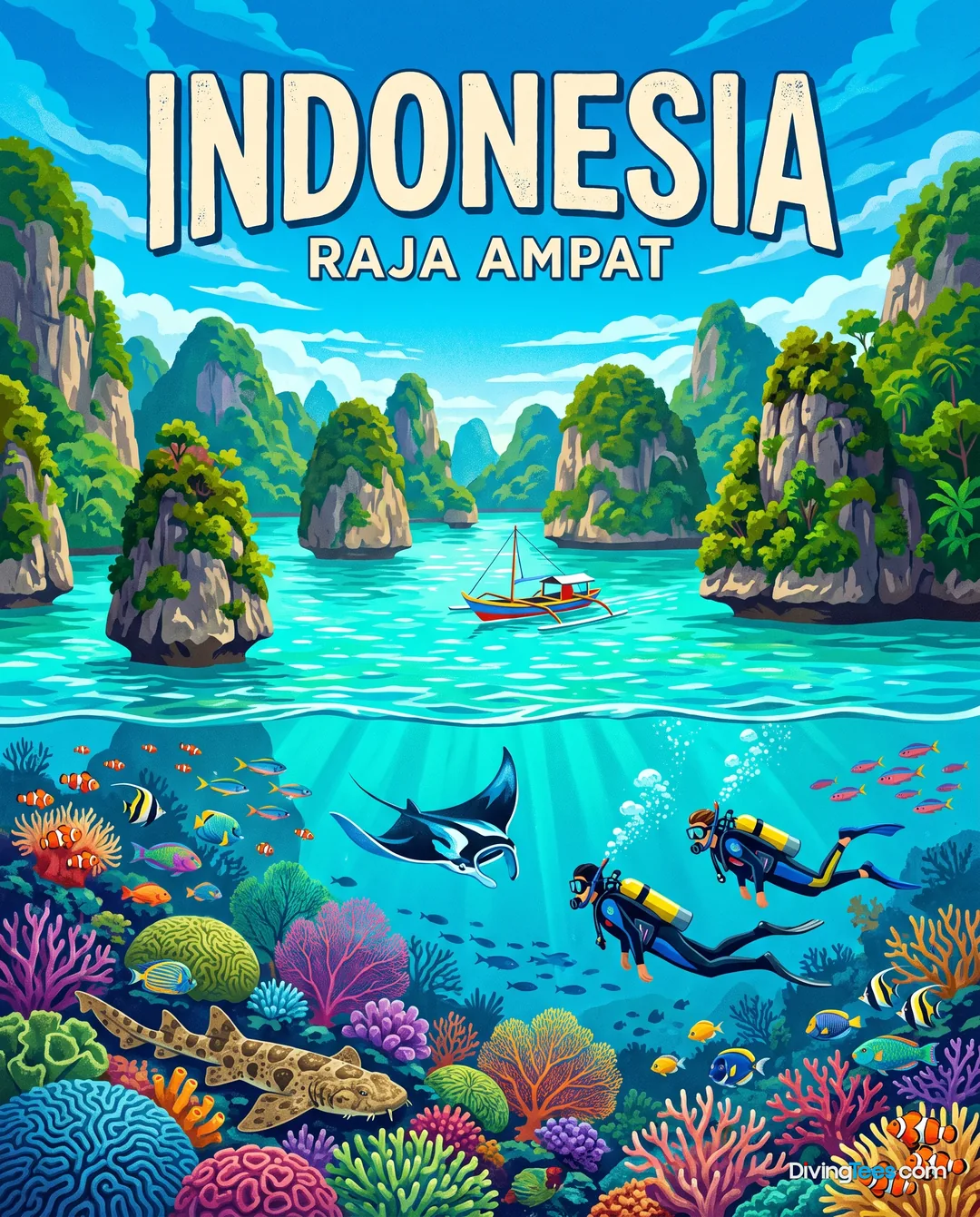
- Recorded routes include the Derawan Islands, Derawan to Bitung, Bitung to Ambon and the Banda Sea.
- English- and Indonesian-speaking crew work aboard a boat renovated in 2022.
For subtitles in English: start the video firstthen click the gearat the top right of the video, select “Subtitles/CC”, then “Auto-translate” and choose “English”.
The invitation
Queensia II suits divers who want a proper phinisi rather than a compact boat built only around the dive operation. There is room for a full group, but the cabin count keeps the boat more personal than a large liveaboard. The appeal is the combination: serious access to remote Indonesian reefs, land excursions, snorkeling and naturalist guiding, then an open-air dinner or a quiet spell on deck. The strongest case is for a trip where diving is central but not the only reason to come aboard. Komodo appears in the boat’s published programme, while recorded departures also cover the Derawan Islands and the Banda Sea. The boat is a good fit for couples, families and groups who want private cabins, air conditioning and a relaxed phinisi setting without giving up a dedicated dive platform.
Boarding
From the dock, Queenesia II presents the shape of a classic Buginese phinisi, built in ironwood and renovated in 2022. The impression is traditional rather than clinical: a working Indonesian sailing boat adapted for liveaboard diving, with a forward leisure area and a sundeck above. Once aboard, the layout separates the practical parts of the trip from the places where passengers spend their surface intervals. The main lobby, indoor dining area, kitchen and crew spaces sit within a boat designed for both diving and island travel. Two tenders support access to reefs and shore activities rather than leaving the boat tied to one anchorage. With 16 passengers at full capacity and a crew-to-passenger ratio close to one, the boat should feel social without becoming anonymous.
The atmosphere on board
The atmosphere is shaped by a small passenger group, open decks and a crew presence that is difficult to miss when the ratio stays close to one crew member per passenger. English and Indonesian are spoken aboard. The crew’s role extends beyond moving tanks: the programme combines diving with snorkeling, shore excursions and naturalist guiding, so the day has more texture than a sequence of deck calls. In the evening, passengers can eat outside, use the bar or settle in the lounge while the boat prepares for the next leg. The food is the clearest passenger strength, while crew feedback also sits above the boat score. That points to a practical advantage: the people running the trip are likely to matter as much as the hull beneath them.
The sites you’ll dive
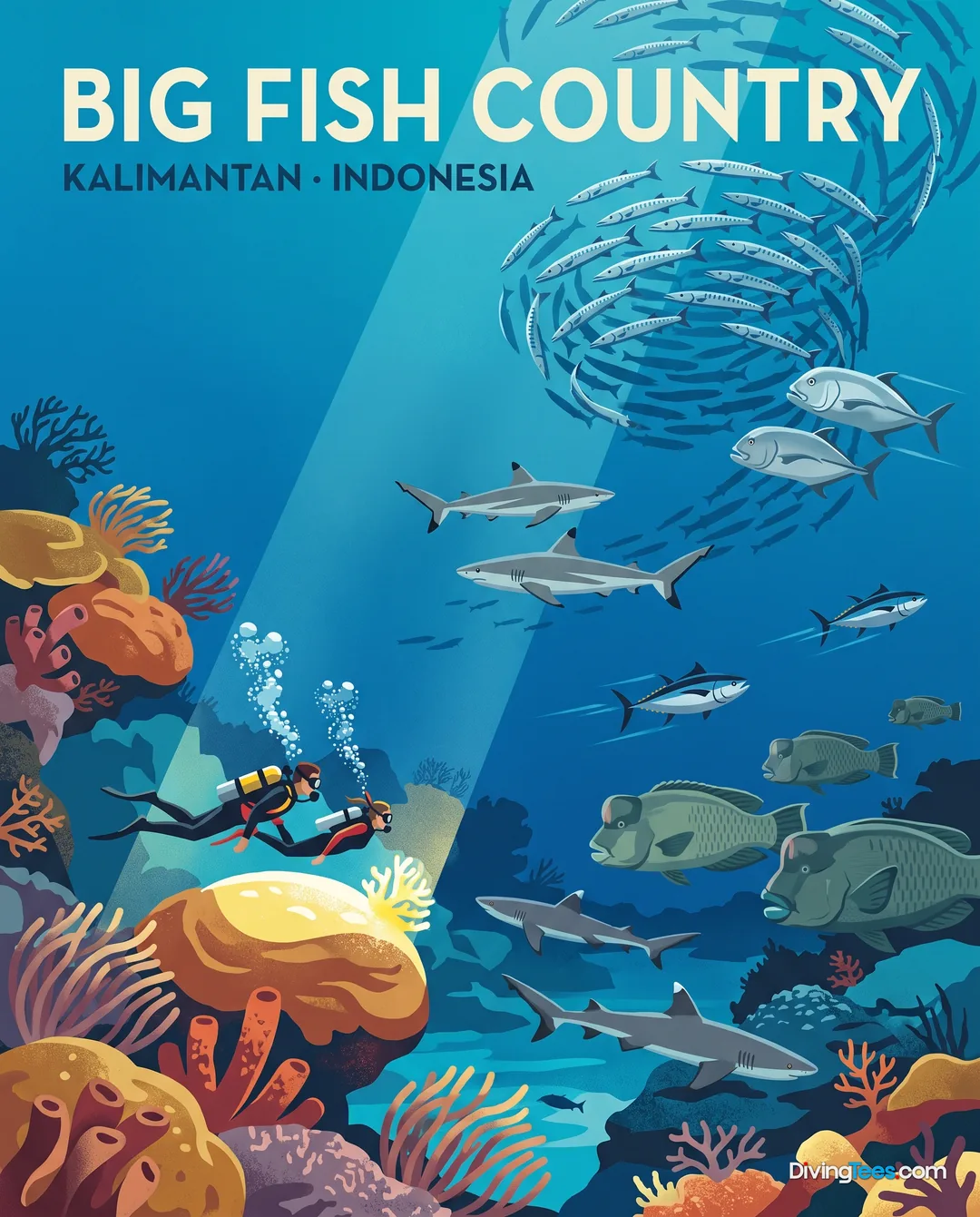
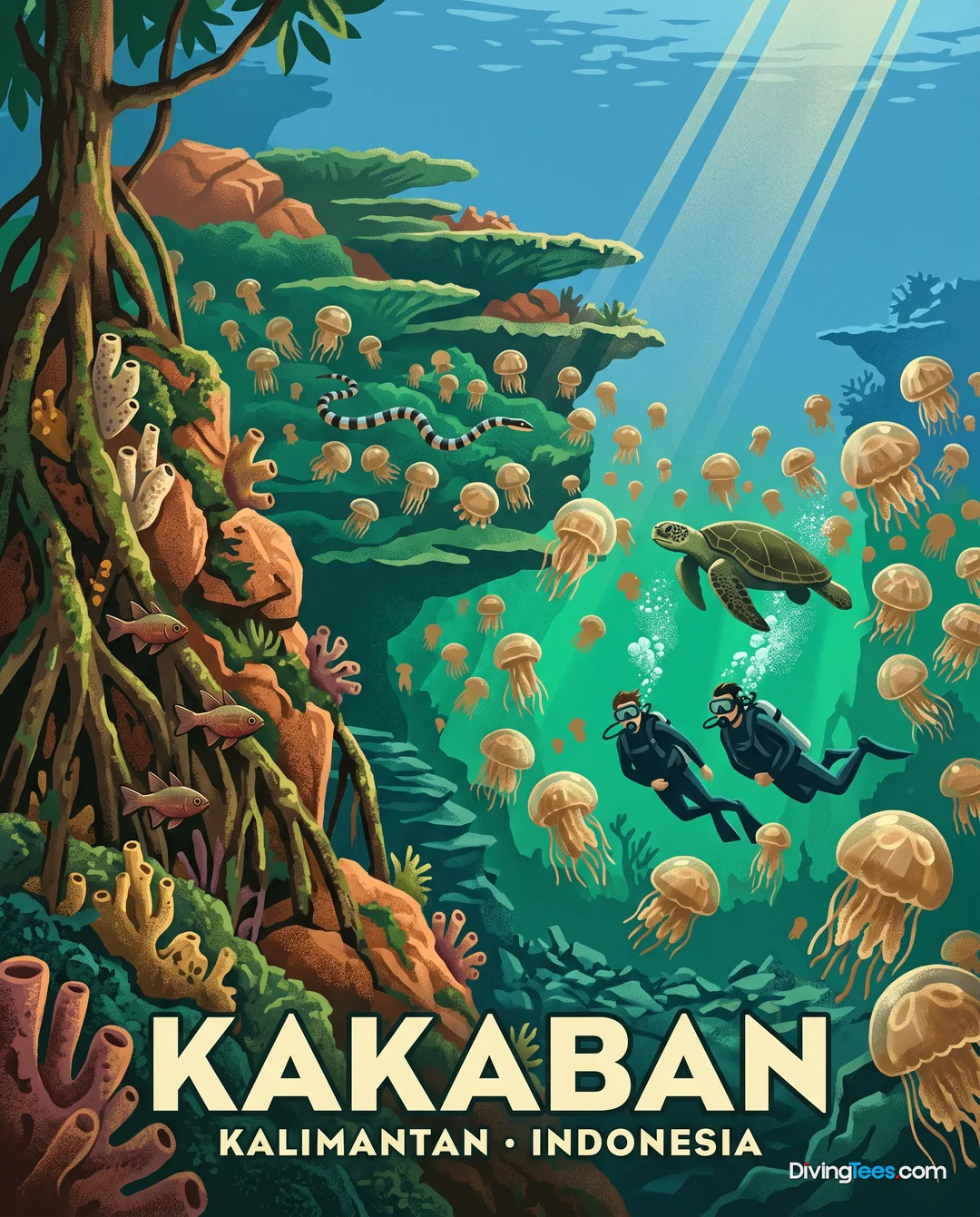
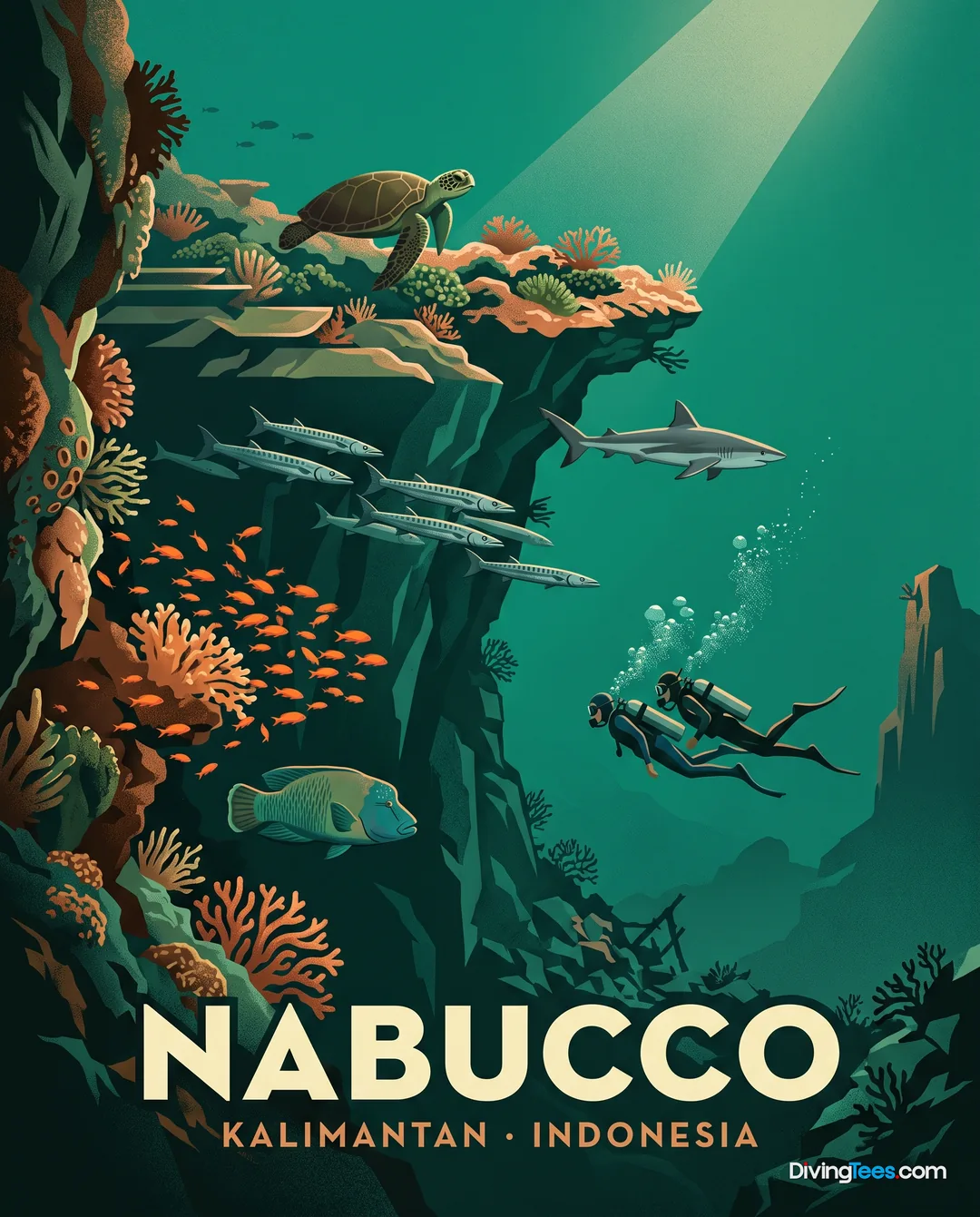
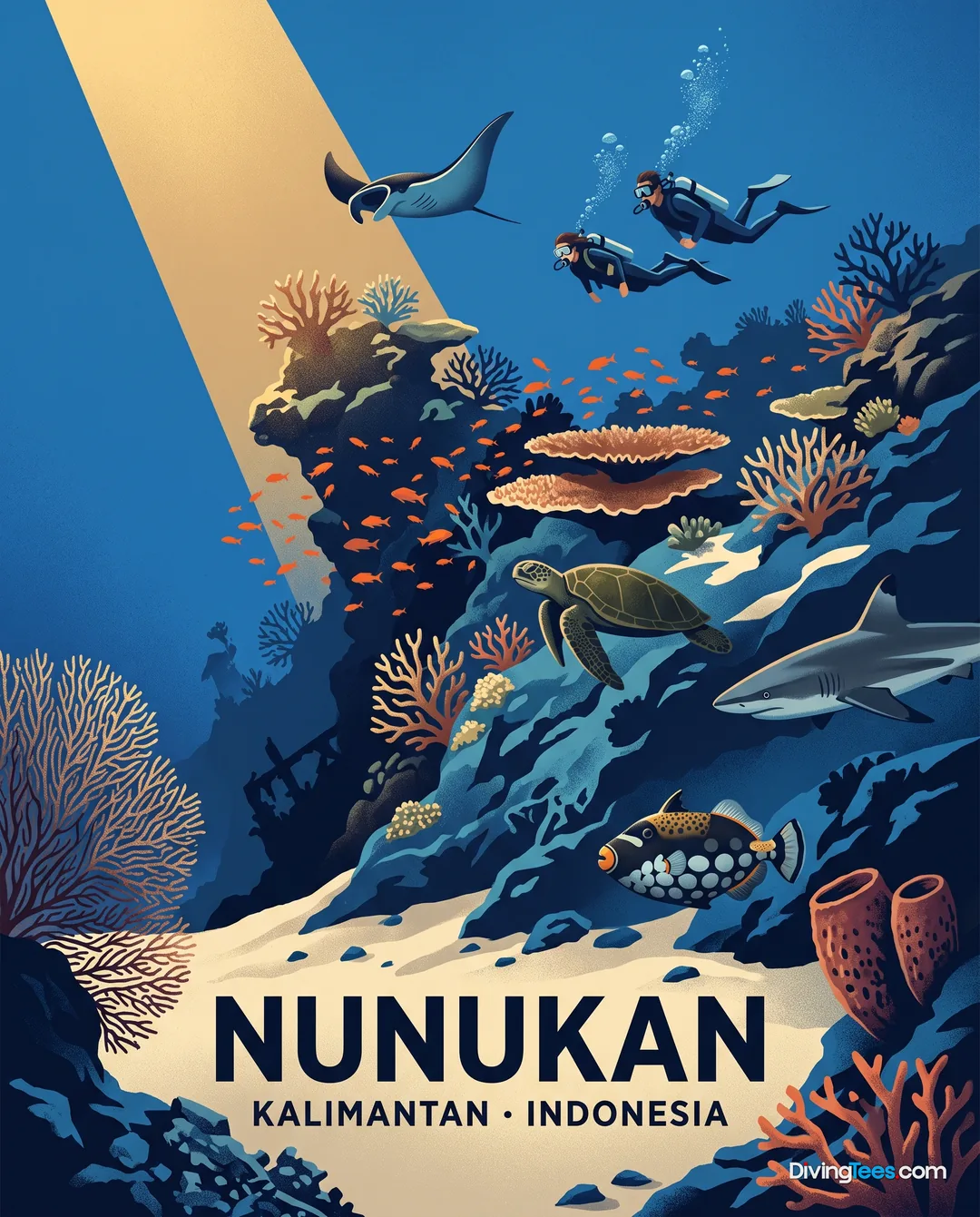
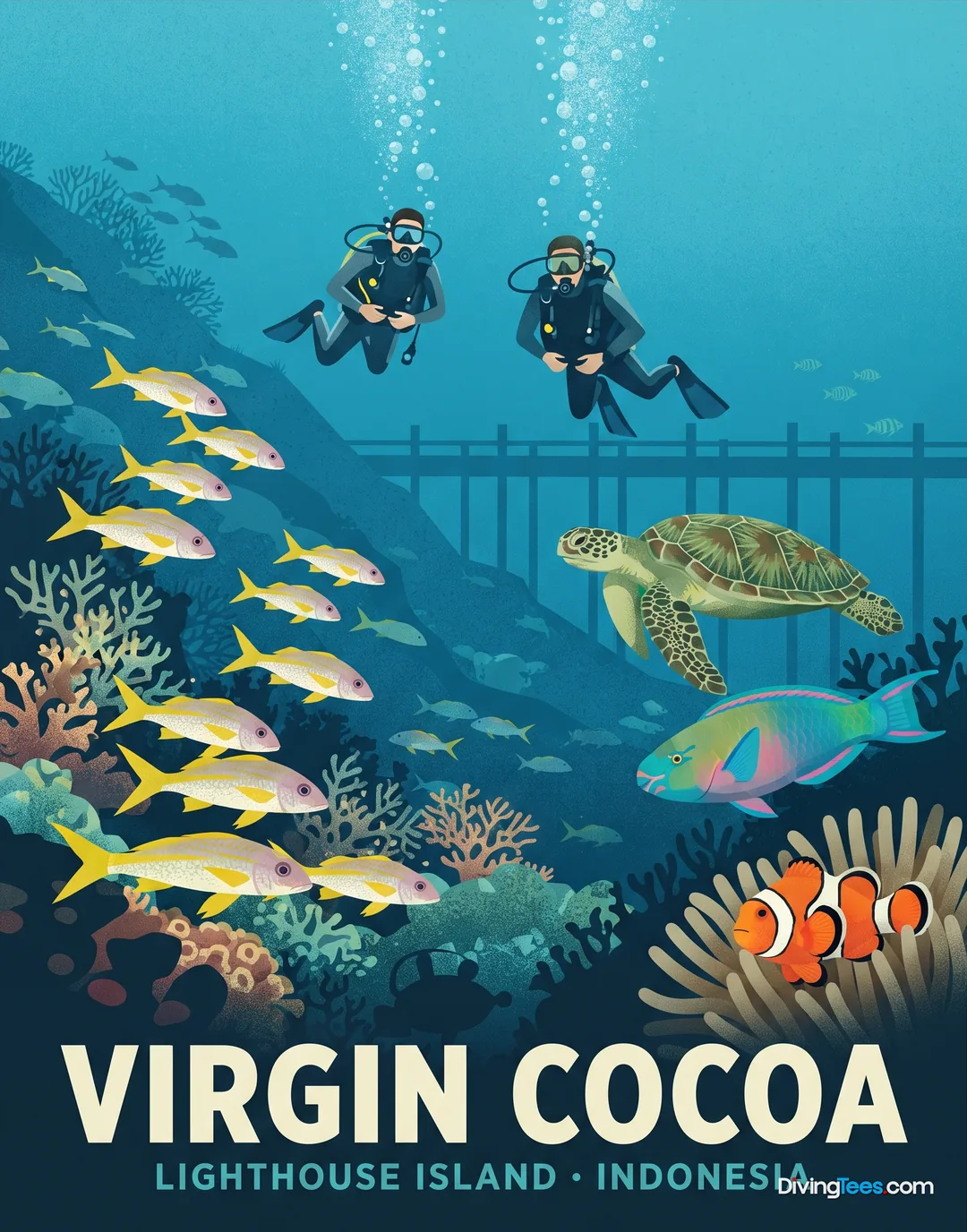
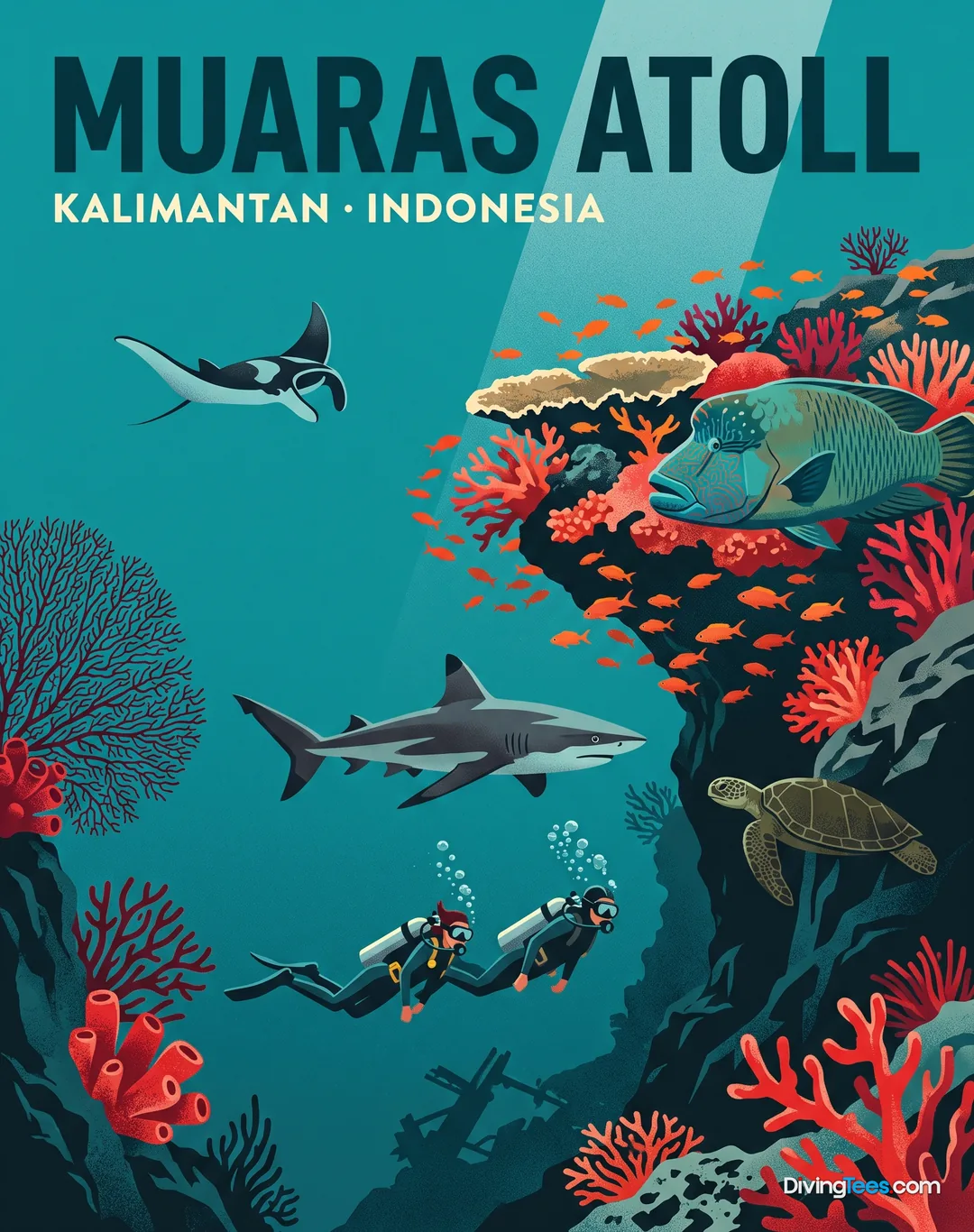
The Derawan Islands route moves through six very different dives. Big Fish Country is a current-running channel in Kalimantan, where barracudas school above deeper water while sharks patrol below. Kakaban combines steep wall diving, strong current and reef life down to -65m; the water can bring pelagics close, with reef sharks, hammerheads, eagle rays and mantas among the reported encounters. Nabucco is known for eagle rays gliding through rich water alongside hammerheads, with turtles, tuna and leopard sharks possible in the same wider picture. Nunukan starts at a vibrant house reef and continues onto a continuous outer wall, with shallow coral gardens leading to deeper reef; its maximum depth is -28m. Virgin Cocoa drops from a private jetty onto a fringing reef of coral slopes and walls, with a maximum depth of -25m. Muaras Atoll is the frontier dive, with steep walls dropping beyond 40 metres and moderate current bringing pelagic encounters; its maximum depth is -40m. Recorded Derawan Islands departures run for 9 days and 8 nights. Other itineraries include Derawan–Bitung for 11 days and 10 nights, Bitung–Ambon for 12 days and 11 nights, and Banda Sea routes from Ambon to Ambon for 8 days and 7 nights.
What you’ll meet underwater
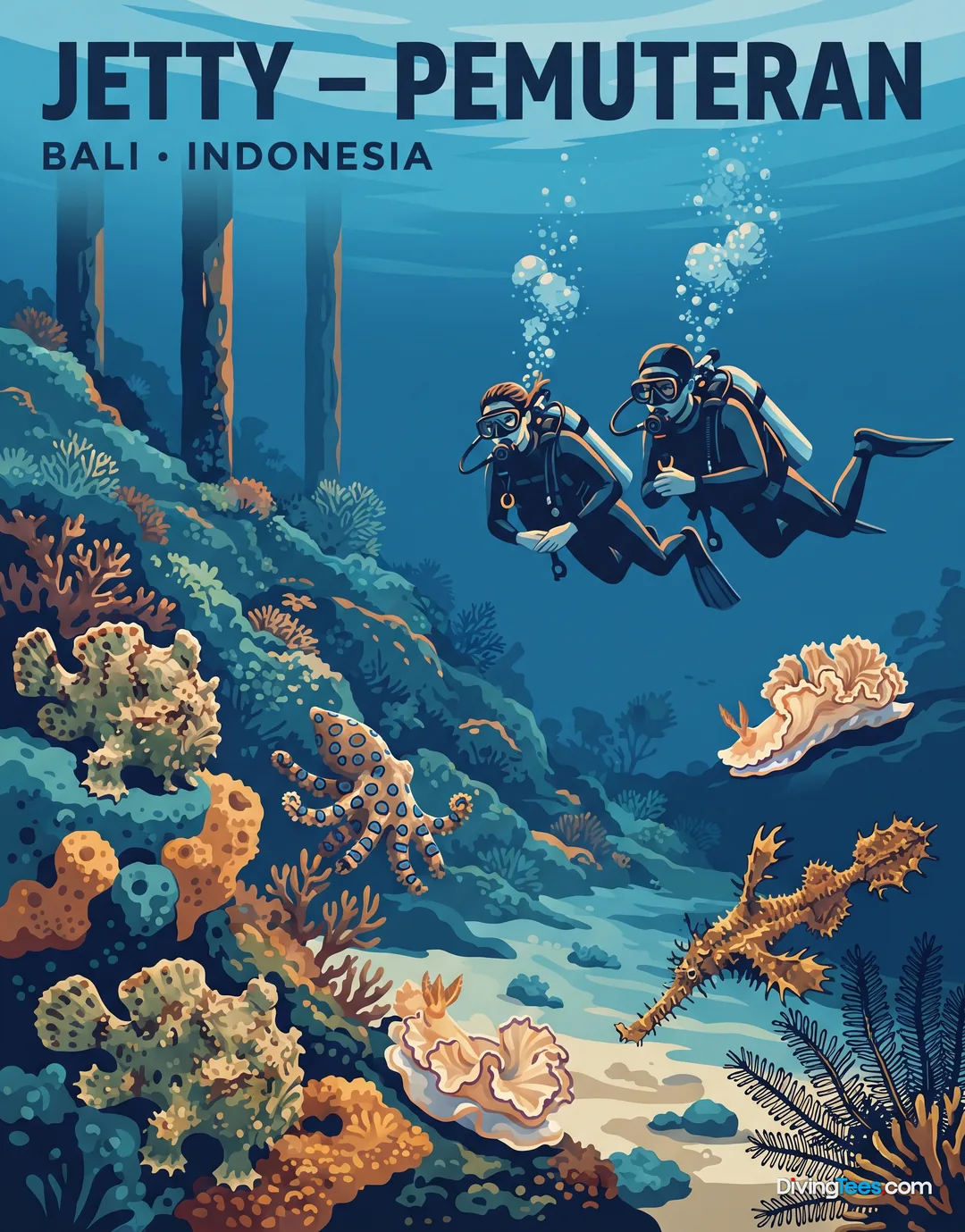
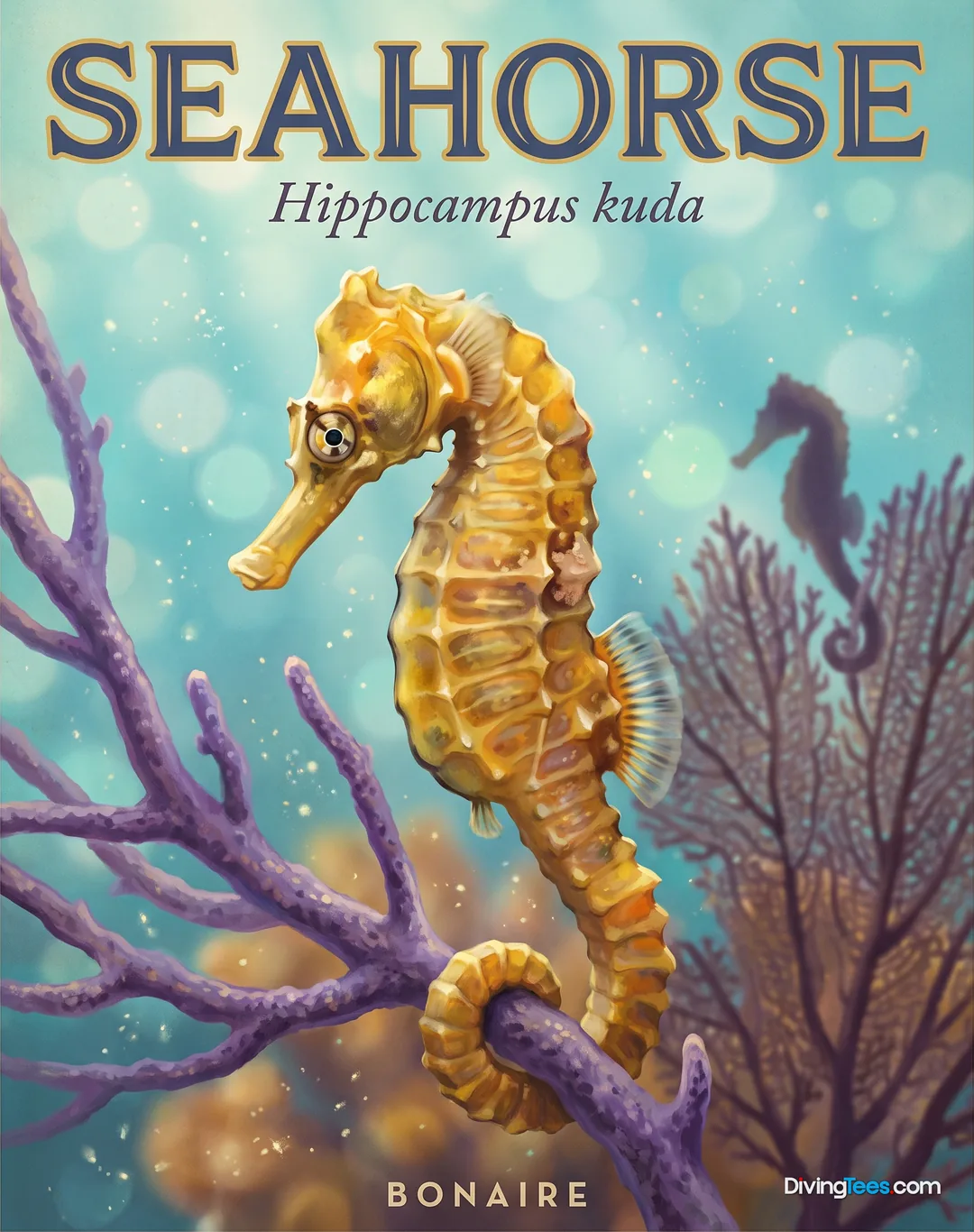
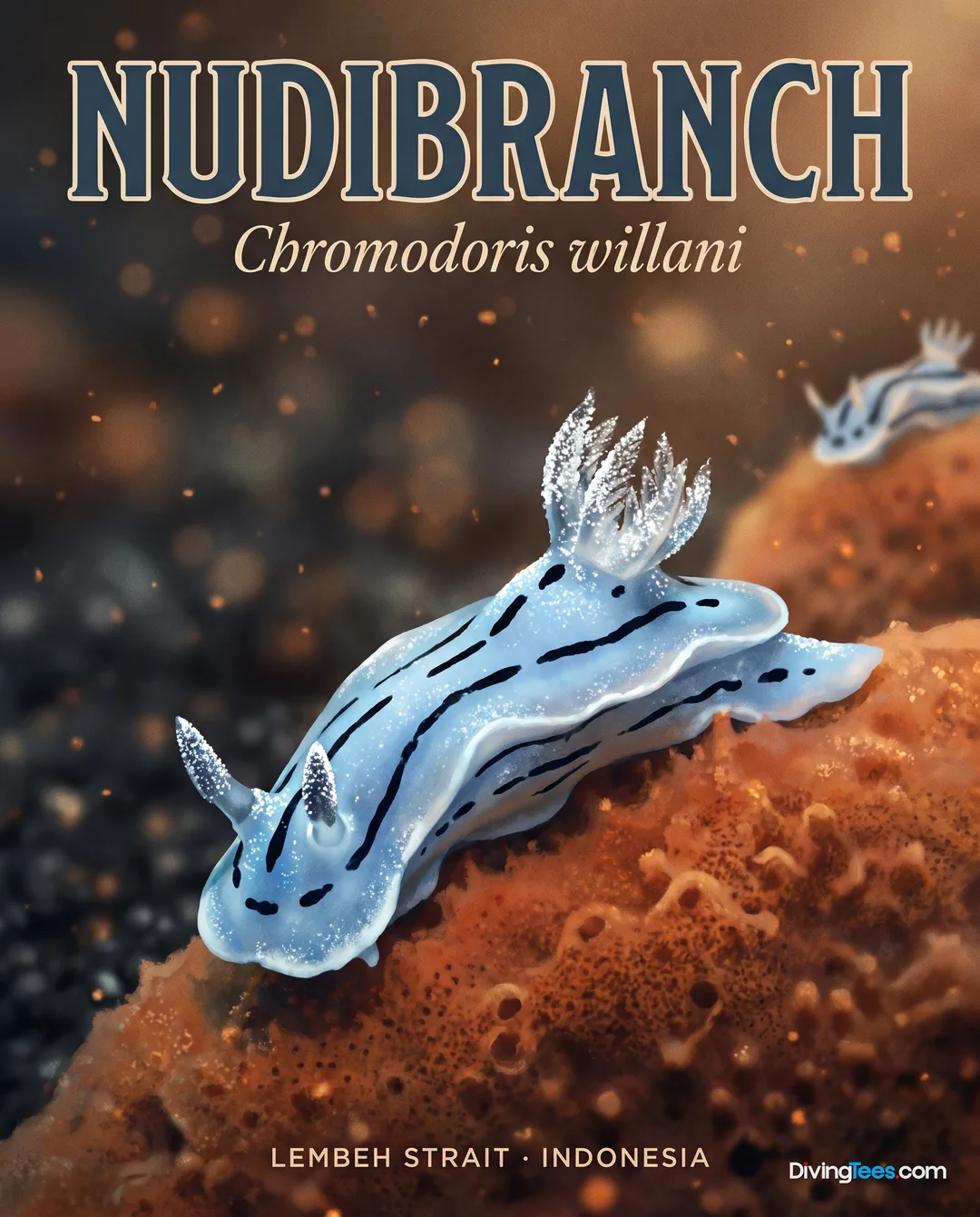
Turtles, barracudas, reef sharks and tuna form the recurring cast across this route, with turtles recorded at five sites, and barracudas and reef sharks at four. The interest lies in what changes from one dive to the next. Kakaban is the place to look for a manta, a grey reef shark, a hammerhead, a pygmy seahorse or a Chromodoris willani nudibranch; its walls and currents are the reason those encounters belong there rather than in a general species list. Nabucco is the site associated with leopard sharks. Nunukan brings the possibility of gorgonians and scorpionfish among the house reef and outer wall. Muaras Atoll is where a marine turtle, triggerfish, butterflyfish and parrotfish appear in the route’s more specific records. None of these sightings is guaranteed. The sites give each animal a reason to be on the page.
Who puts you in the water
English- and Indonesian-speaking crew support the diving, with a guide and a naturalist guide included in the programme. Group ratios, instructor numbers, guide qualifications, minimum logged dives and courses offered aboard are not given, so the booking conversation should establish how groups will be organised for the chosen route. Briefings are part of the operation, and the boat carries oxygen, first-aid kits, emergency radios, satellite communications, an EPIRB, life rafts, fire equipment and navigation systems including radar, GPS, sonar and a fish finder. Those systems do not replace a clear briefing, but they show that emergency equipment is built into the boat rather than added as an afterthought.
The dive deck and the gear
The dive deck is arranged for repeated use, with shaded work space, a dedicated platform, rinse tanks and separate camera rinsing. The standard tanks are 12-litre aluminium tanks, and DIN adapters are available; rental equipment is an optional extra. Two compressors handle filling, while two diver tenders take groups to the site and bring them back after the dive. The tender system is important in current-prone Indonesian diving: the boat can stay clear of the reef while the tender collects divers from the agreed surface point. Hot-water showers are available, and a separate camera rinse keeps salt water and handling gear away from housings. Nitrox, tank upgrades, compressor specifications, SMB provision and equipment brands are not stated, so divers who rely on any of those details should ask before departure. Oxygen and first-aid kits are carried for emergencies.
Between dives
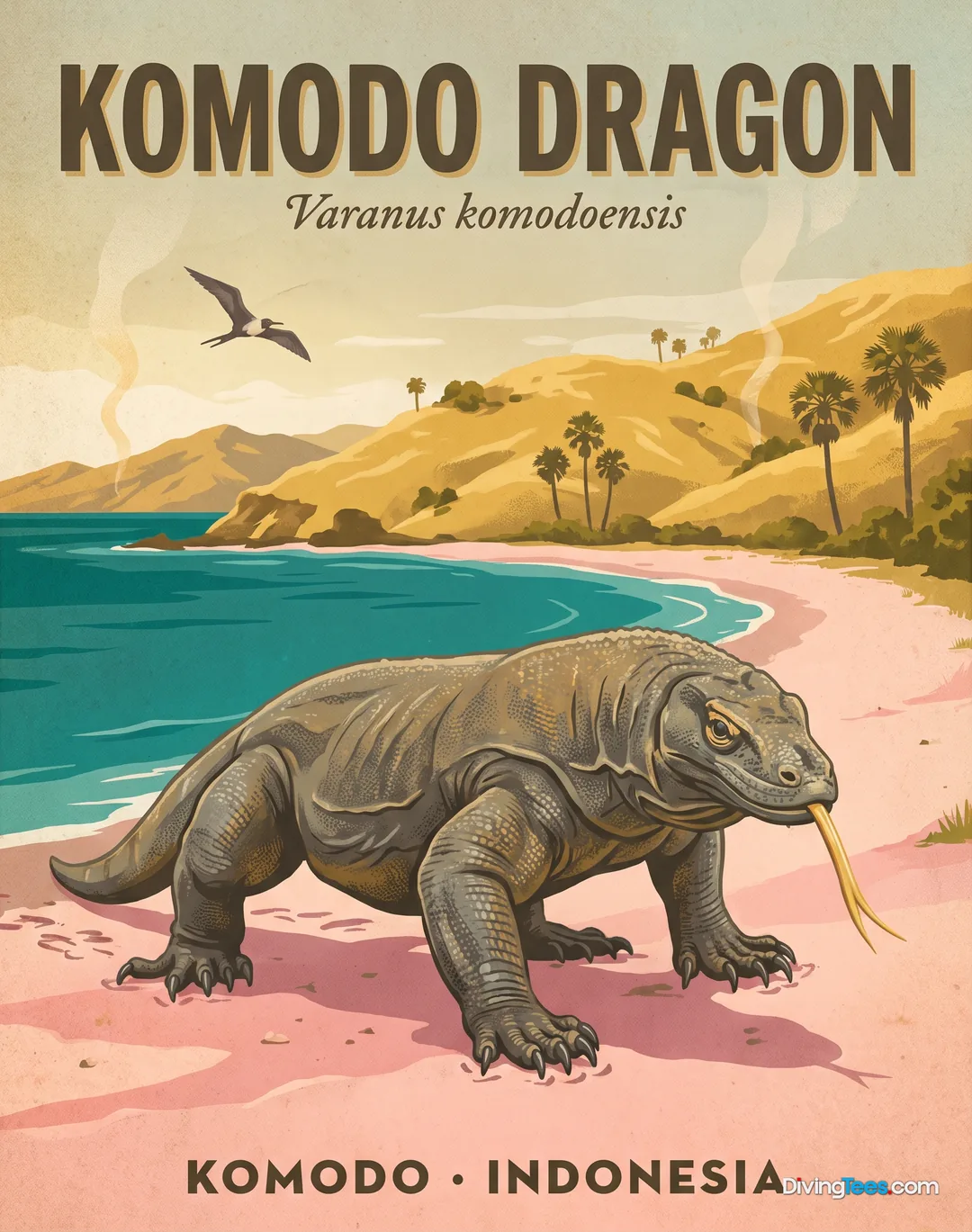
Surface intervals have several places to go. The forward leisure deck and upper sundeck provide shade, sun and a view of the islands as the boat moves between sites. An afternoon can also leave the water entirely: the programme includes beach visits, kayaking, snorkeling, hiking and land excursions with a naturalist guide. The Komodo itinerary pairs dives with Padar sunrise trekking, a Pink Beach stop, a Komodo dragon trek and a visit to see flying foxes. Photographers have a dedicated space and a separate camera rinse tank, so a camera does not have to compete with masks and fins for the same freshwater. On a day without a dive, the boat becomes a base for exploring the coast rather than simply a place to wait.
A day on board
A day starts with the boat preparing the first dive before the group assembles for its briefing. After the check dive or first descent, meals and surface intervals break up the day, with the tenders carrying divers out to the reef and returning them to the platform. The published Komodo programme builds from a check dive into repeated day dives, shore stops and a night dive, reaching four dives on one of its busiest days. Other days trade a dive for trekking, snorkeling, kayaking or a beach visit. The last entry is made after dark when a night dive is scheduled; otherwise the evening belongs to the open-air dining area, the lounge or the deck. The pattern is active but legible: briefing, tender, dive, food, surface interval, then another descent.
What you eat aboard
Meals are served as a full-board programme, with buffet service, local Indonesian dishes and Western cooking. Vegetarian options are available, and snacks are provided through the day—useful on a schedule where the next briefing often arrives before hunger has properly caught up. Open-air dining gives meals a place in the trip rather than treating them as a break indoors. Water, tea and coffee are included; non-alcoholic drinks, beer and a selection of wines are available aboard. The kitchen’s strength is variety rather than ceremony: familiar food when a diver wants something simple, and local dishes when the route calls for a taste of Indonesia.
Nights at sea
The seven cabins are private, en suite and individually air-conditioned, with charging ports and non-sharing bathrooms. The categories range from lower-deck double and twin/double cabins to a main-deck sea-view double and an upper-deck master cabin; two cabins can take three people with one double and one single bed. The distinction matters after several dives a day. A private cabin gives each diver somewhere to shut the door, dry out and sleep away from the saloon, while the panoramic windows and sea-view options keep the boat connected to the water. Balconies are available on selected cabins. Outside the cabin, the boat offers a shaded dive area, an indoor lounge and an observation deck, so passengers can choose between air-conditioned quiet and open air. The cabin is comfortable liveaboard space, not a hotel room.
Lower Deck Double Cabin
Lower Deck Twin/Double Cabin
Main Deck Sea View Double Cabin
Upper Deck Master Cabin
What to know before boarding
Recorded departures and returns include Berau for the Derawan Islands, Berau to Bitung, Bitung to Ambon and Ambon to Ambon for the Banda Sea routes. Airport and hotel transfers are included. Arriving the night before is sensible, especially when the trip begins with a transfer to the boat or when an international connection is involved.
- Year built
- 2016
- Year renovated
- 2022
- Length
- 32 m
- Beam
- 7.5 m
- Maximum number of passengers
- 16
- Number of cabins
- 7
- Number of bathrooms
- 9
- Cruising speed
- 7-8 knots
- Tenders
- 2
- Website
- queenesiafleet.com ↗
Hello, I'm Marina, DivingDeal.com's AI assistant. I answer in detail about hotels, dive centres and liveaboards.

Thinking about the whole trip and the flights? Talk it over with Edith →
Marina is an AI. Some links are affiliate links: DivingDeal may earn a commission, at no extra cost to you. Bookings are made with the partner.