Liveaboards · Indonesia
Solitude Adventurer — a wide, diver-focused catamaran for Indonesia’s reefs and macro life
What makes this boat unique
- This 36-metre aluminium catamaran was built in 2000, renovated in 2017, and carries up to 18 guests in eight cabins.
- All cabins sit above deck, with sea views, standard windows, air-conditioning, and private bathrooms.
- The dive deck has shaded working space, DIN adapters, separate camera rinse tanks, camera stations, and two camera-rinse tanks with air guns and towels.
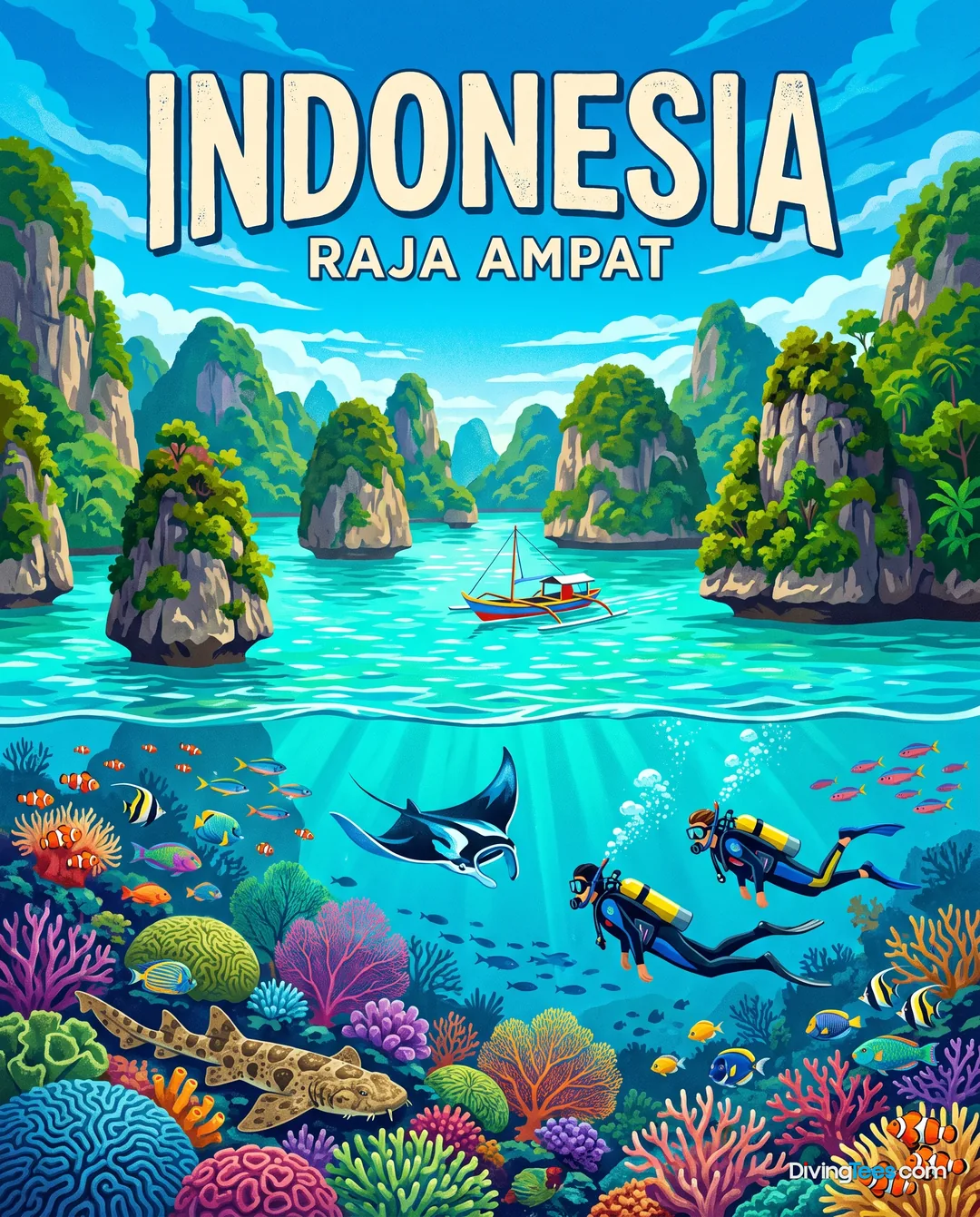
- Raja Ampat routes combine reef walls, strong-current sites, manta encounters, schooling fish, sharks, and macro subjects.
- The crew speaks English and Indonesian; meals include local and international cooking, with vegetarian options.
For subtitles in English: start the video firstthen click the gearat the top right of the video, select “Subtitles/CC”, then “Auto-translate” and choose “English”.
The invitation
Solitude Adventurer makes sense for divers who want Raja Ampat’s current-swept reefs without giving up space between dives. She was designed as a private yacht, and the catamaran layout still shows in the way the boat lives: wide, open, and less corridor-like than many liveaboards. The cabins are above deck, the outdoor areas are generous, and the diving is built around serious reef time rather than a resort-style stay with occasional dives. The route suits a mixed appetite for life underwater. Cape Kri and Blue Magic bring schooling fish, sharks, mantas, and pelagics; Friwenbonda, South Kri, and Yenbuba Jetty reward a slower search for nudibranchs, pygmy seahorses, crustaceans, and other small subjects. A dedicated camera area matters here because Raja Ampat can give a photographer very different work from one dive to the next. The boat’s strong point is the combination: a roomy platform for long dive days, a local and international galley, and a crew whose care is felt most clearly on the dive deck and at the table.
Boarding
From the dock, Solitude Adventurer presents as a broad aluminium catamaran rather than a narrow yacht. That extra width is not decoration: it gives the main living spaces the feel of an apartment laid across two hulls, with room to move after a dive and open views from the upper areas. The boat began life as a private yacht, then underwent a full renovation in 2017 before starting liveaboard operations. The result is practical rather than theatrical. Cabins sit above deck, outdoor space is easy to reach, and the interior is arranged for divers carrying wet gear, cameras, and the fatigue that comes after repeated current dives. The boat can feel surprisingly settled while underway, helped by its width and cruising speed. It is also a working dive vessel, not a polished floating hotel trying to hide that fact. That is the appeal: guests board a spacious platform built around access to remote Indonesian diving, with the sea visible from much of the boat.
The atmosphere on board
The atmosphere is shaped less by formal luxury than by how many small jobs are taken off the diver’s hands. Dive-deck staff handle equipment efficiently, the crew notice what guests need, and meals appear in a rhythm that makes a demanding dive day easier. That care extends to the galley: vegetarian guests have received close attention, not a single substitute dish repeated all week. English and Indonesian are spoken on board, enough to make daily requests and dive logistics straightforward for international groups. In the evening, guests can stay in the saloon with a film, sit outside with a drink, or use the guitars while the crew plays. The boat’s scores reflect this balance: crew 9.5, food 9.9, diving 9.6, and boat 9.6. The numbers are less important than what they point to. The hull is an older working platform, but the people running it are what make the week feel cared for rather than merely accommodated.
The sites you’ll dive
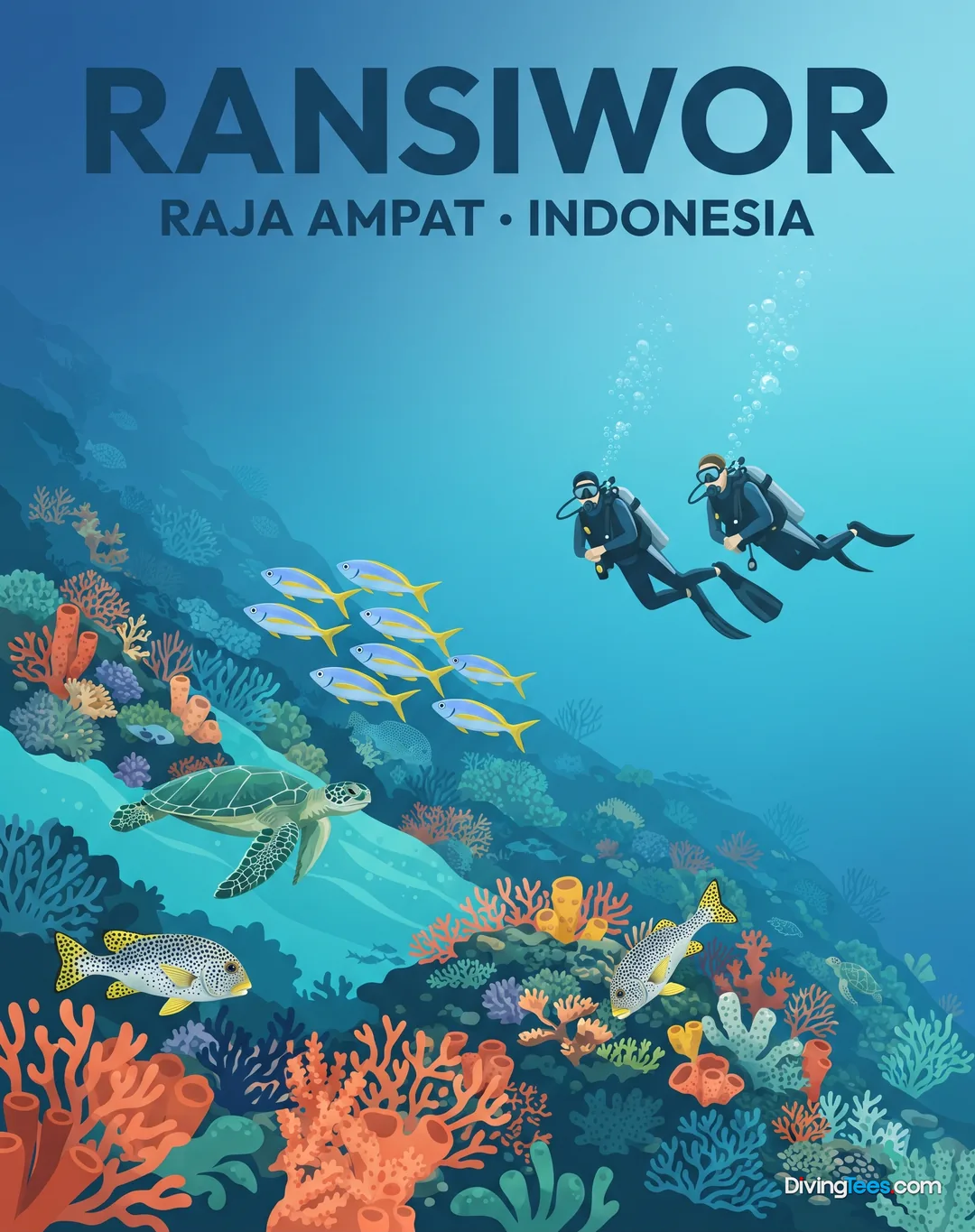
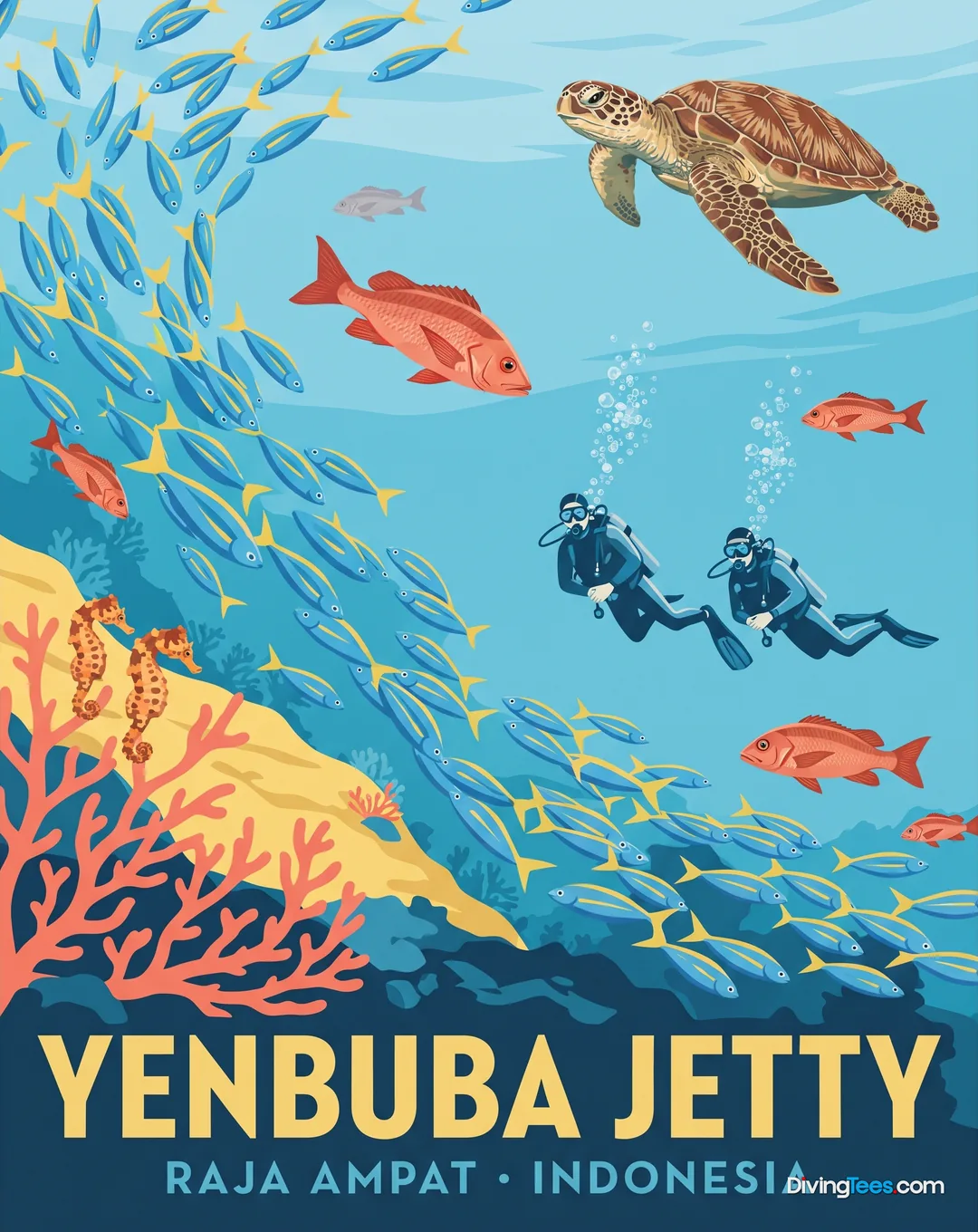
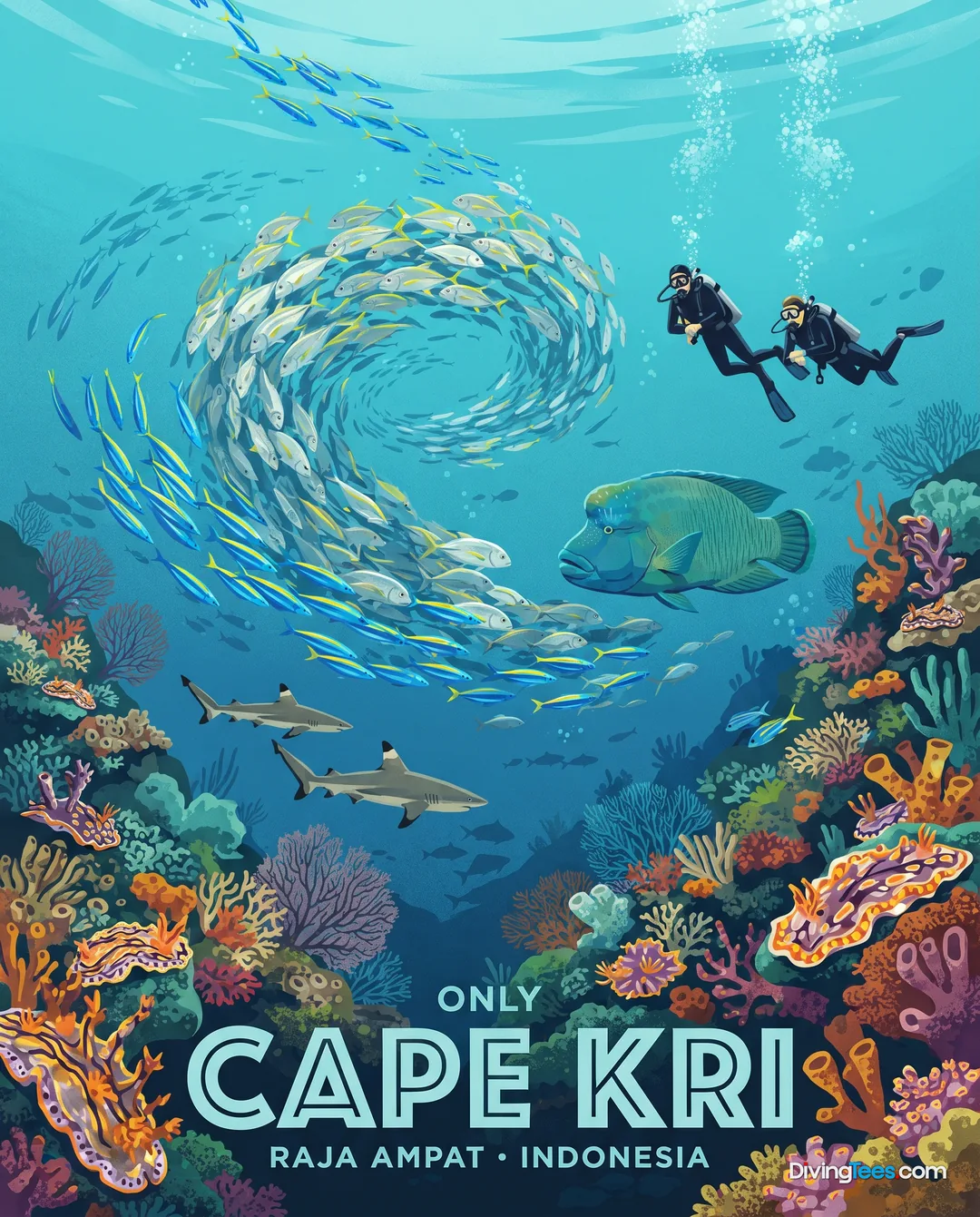
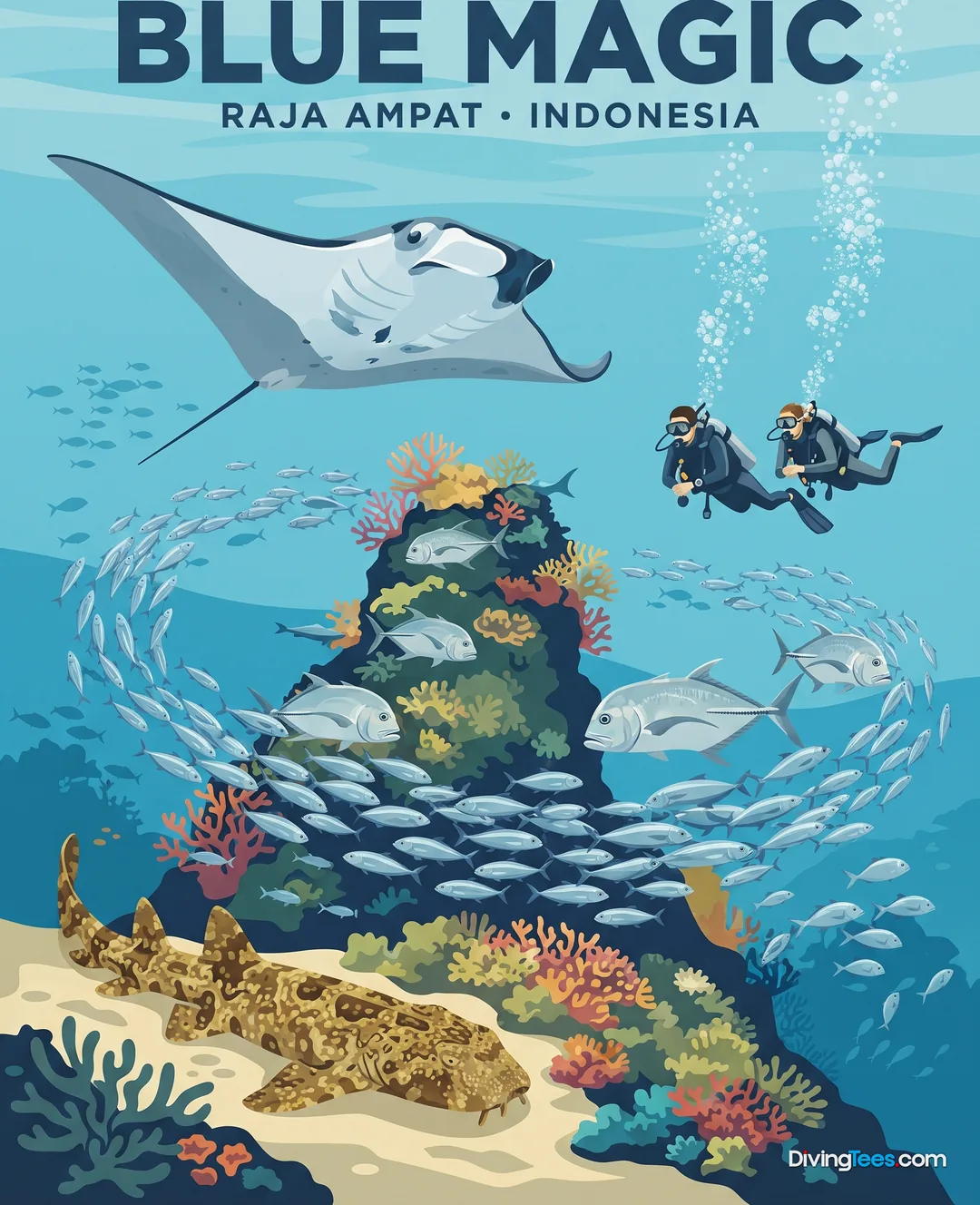
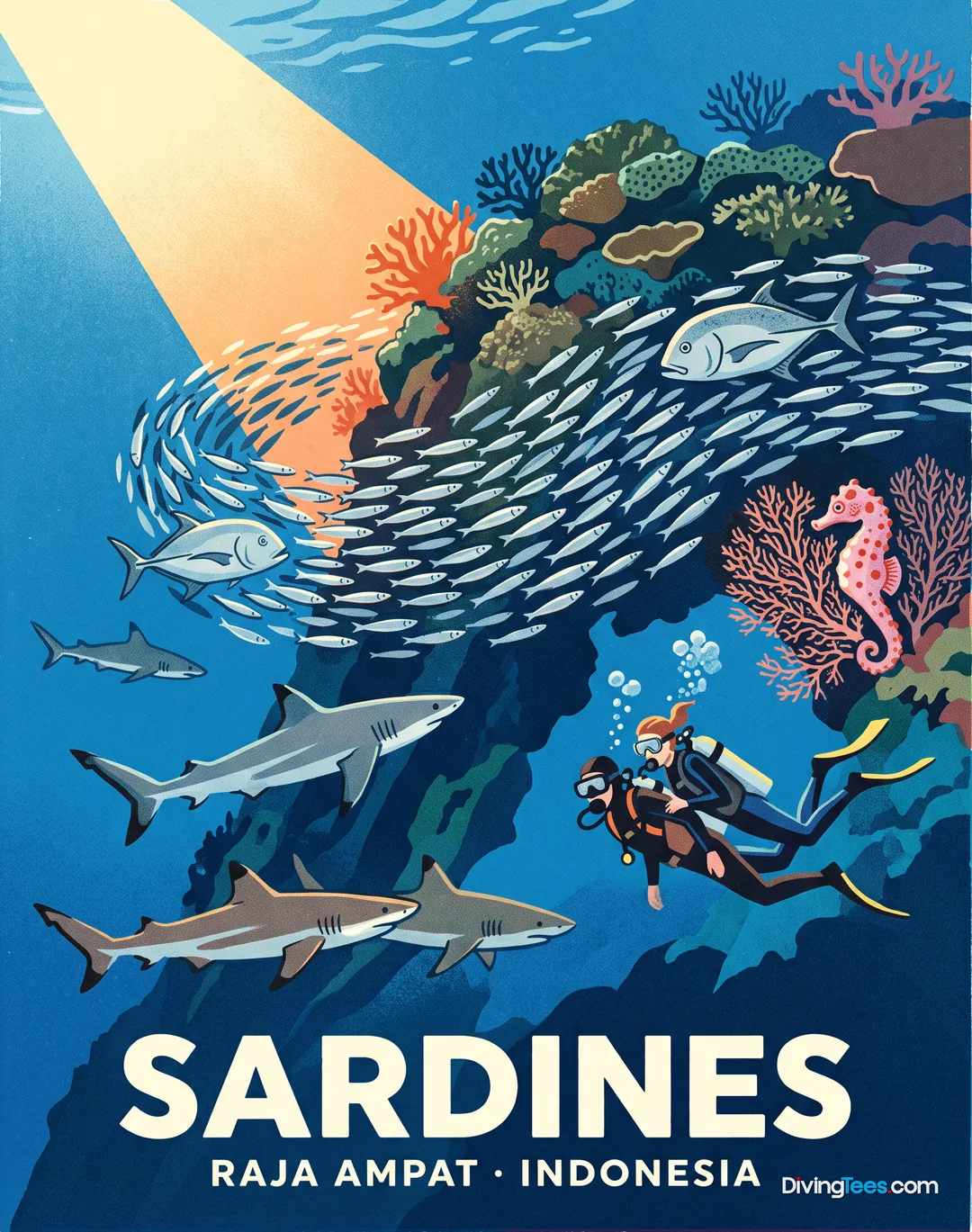
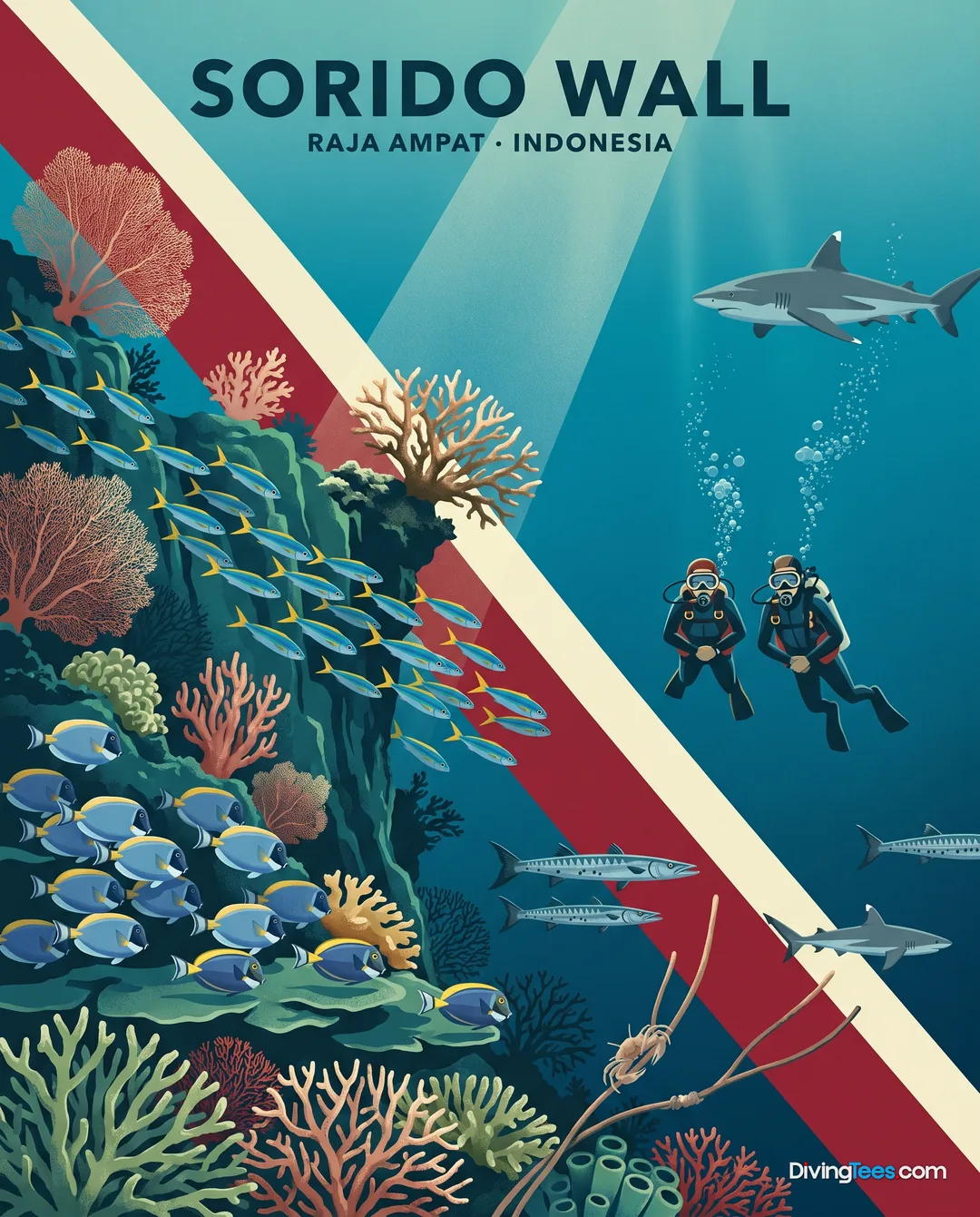
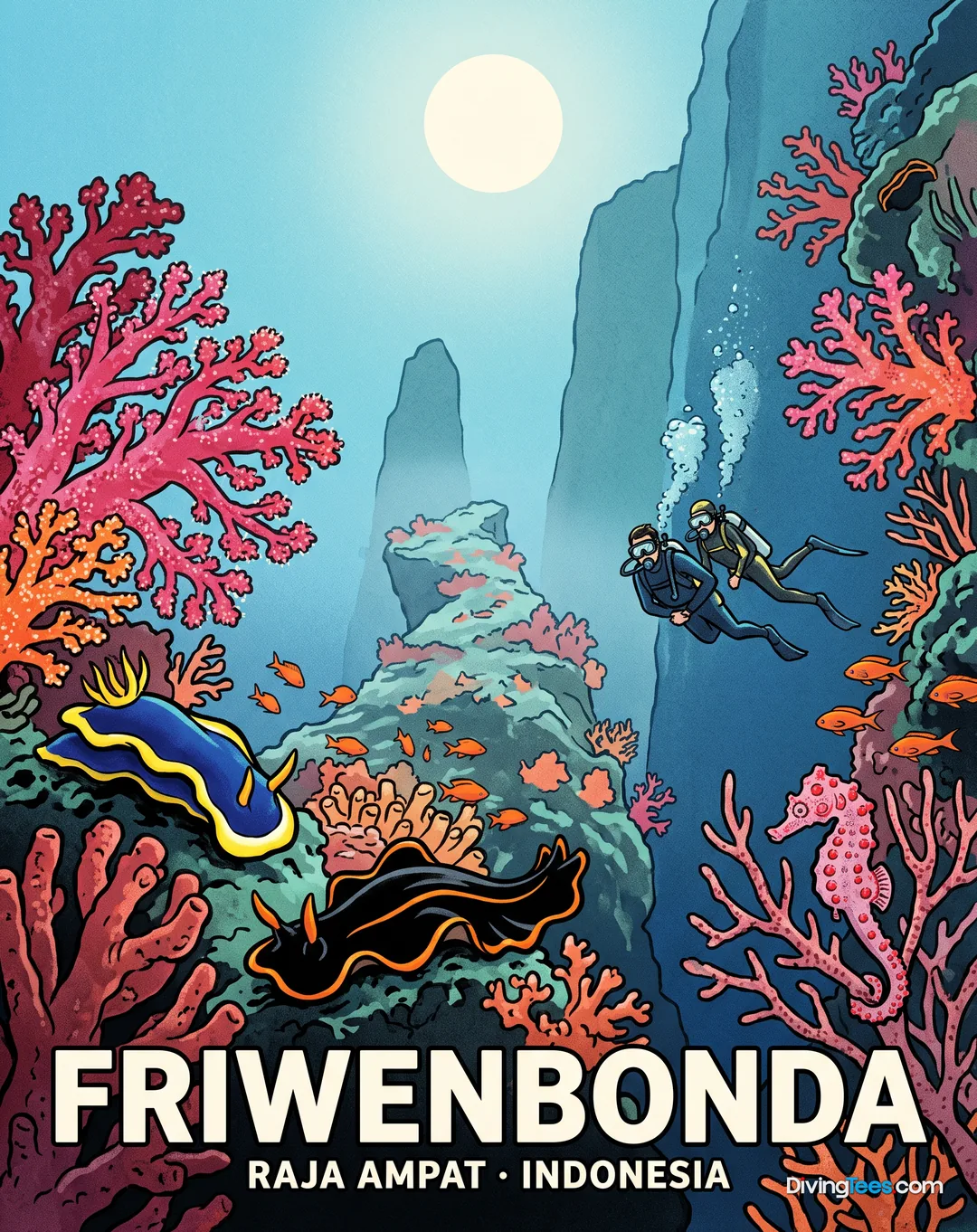
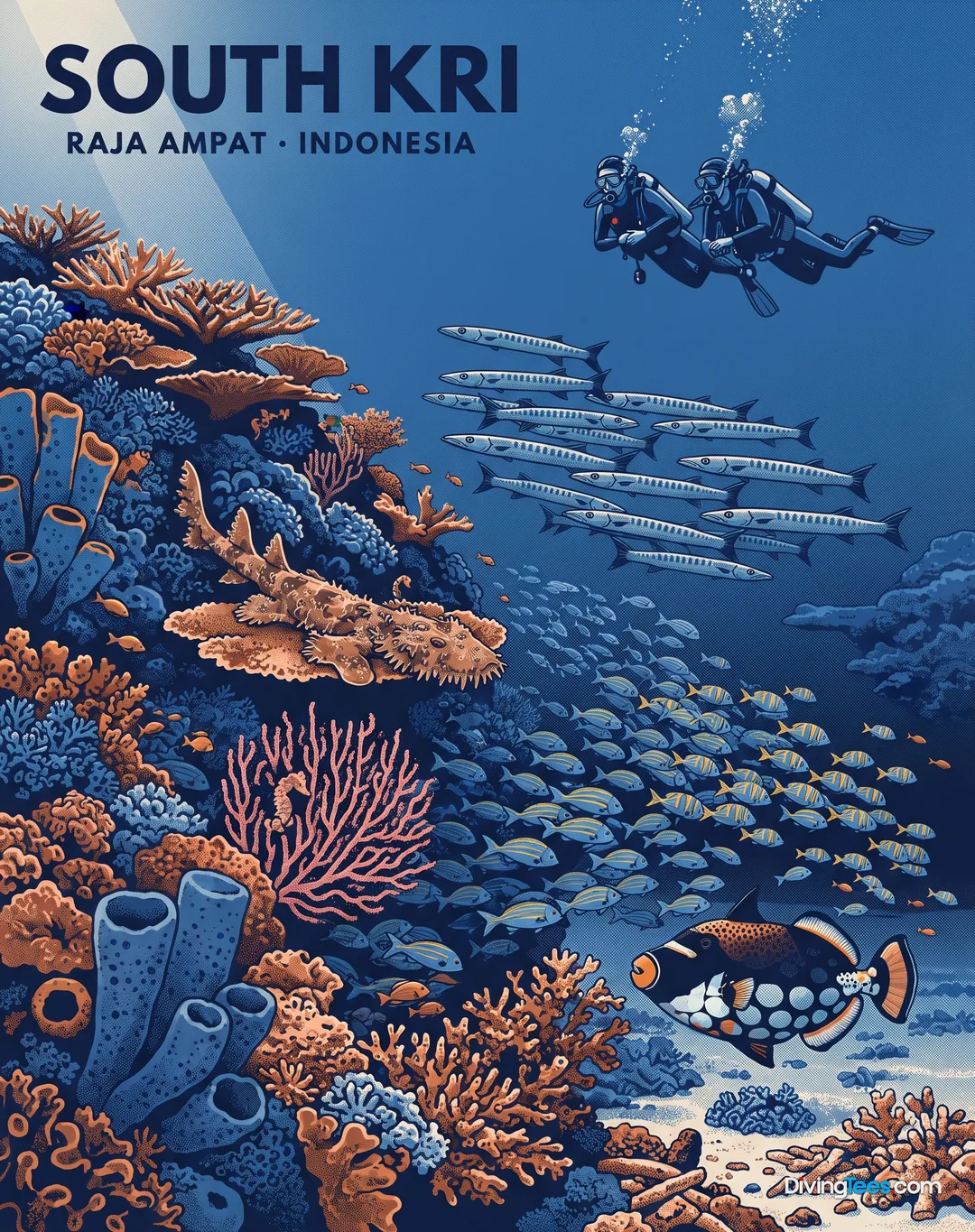
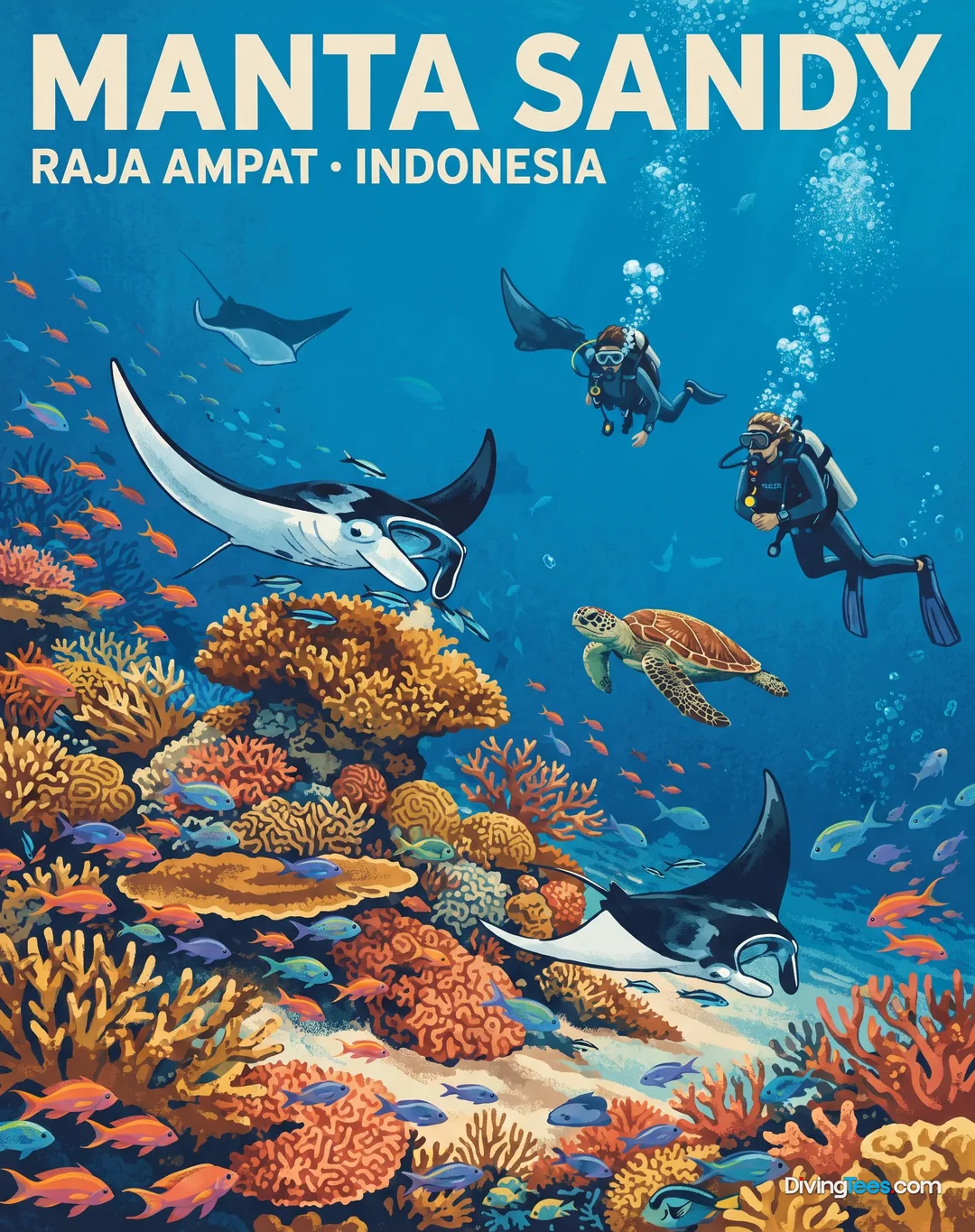
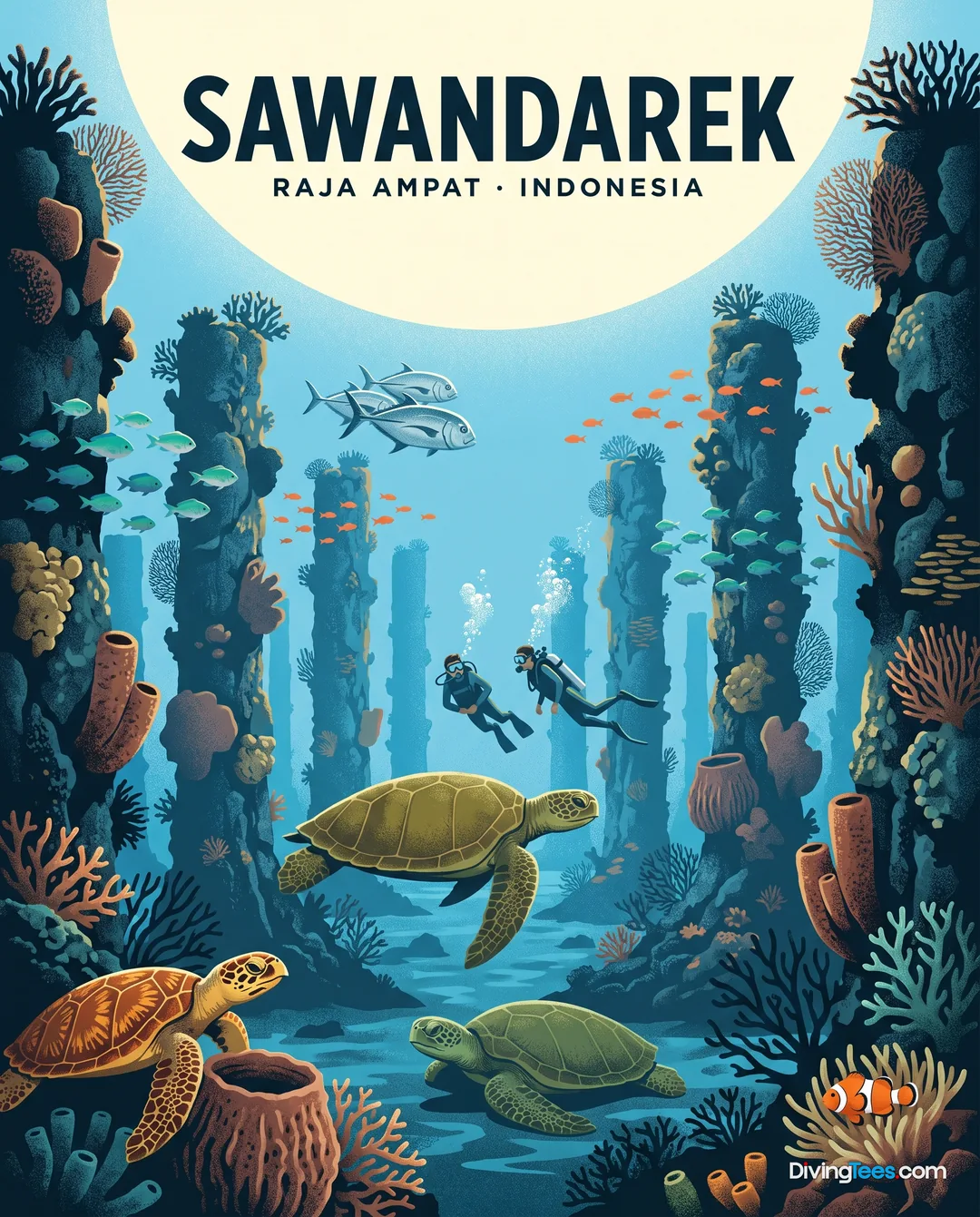
The Raja Ampat and Misool route runs for 9 days and 8 nights, with Sorong as both embarkation and return port. This is reef diving with very different scales in the same trip. Mike’s Point drops to a maximum of -40m around overhangs filled with soft corals and sweetlips, while its plateau can carry eagle rays. Melissa’s Garden reaches a maximum of -35m through soft corals and staghorn formations. Ransiwor slopes to a maximum of -30m past cleaning stations, yellow-back fusiliers, turtles, reef sharks, and octopus; Yenbuba Jetty also reaches a maximum of -30m, beginning beneath fish-filled, coral-covered pilings before easing onto a sloping reef. Cape Kri is the big-fish landmark, with schooling emperors and fusiliers, Napoleon wrasse, and reef sharks. Blue Magic brings schooling fish and oceanic mantas into the blue, while Sardines puts immense concentrations of fish against hunting pelagics. Sorido Wall adds barracudas, reef sharks, fusiliers, and surgeonfish. Friwenbonda’s soft-coral wall is made for colour and small life; South Kri is a current-assisted drift where macro subjects meet schooling fish. Manta Sandy focuses on reef mantas hovering at cleaning stations, and Sawandarek combines giant green turtles with jackfish in the shallows.
What you’ll meet underwater
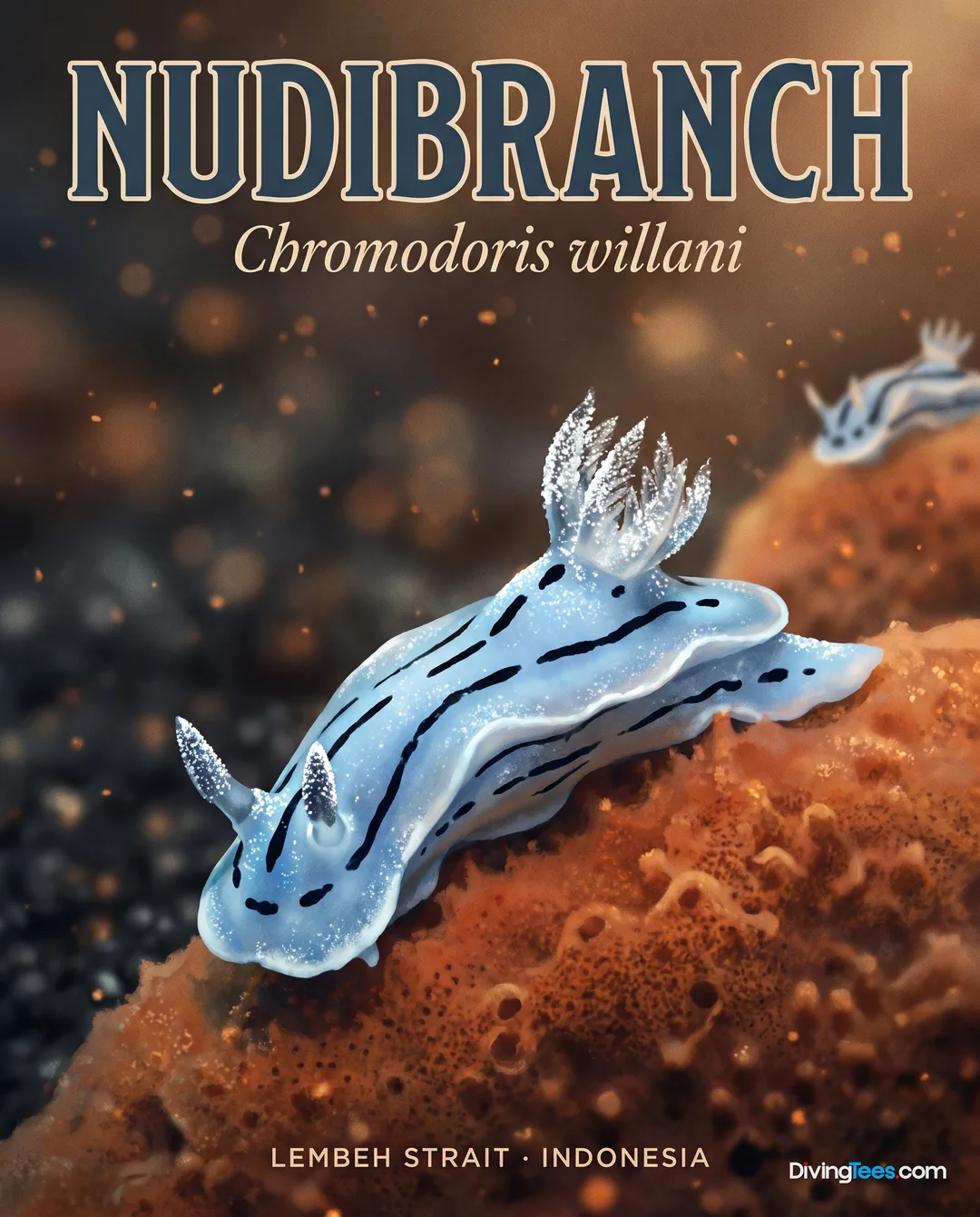
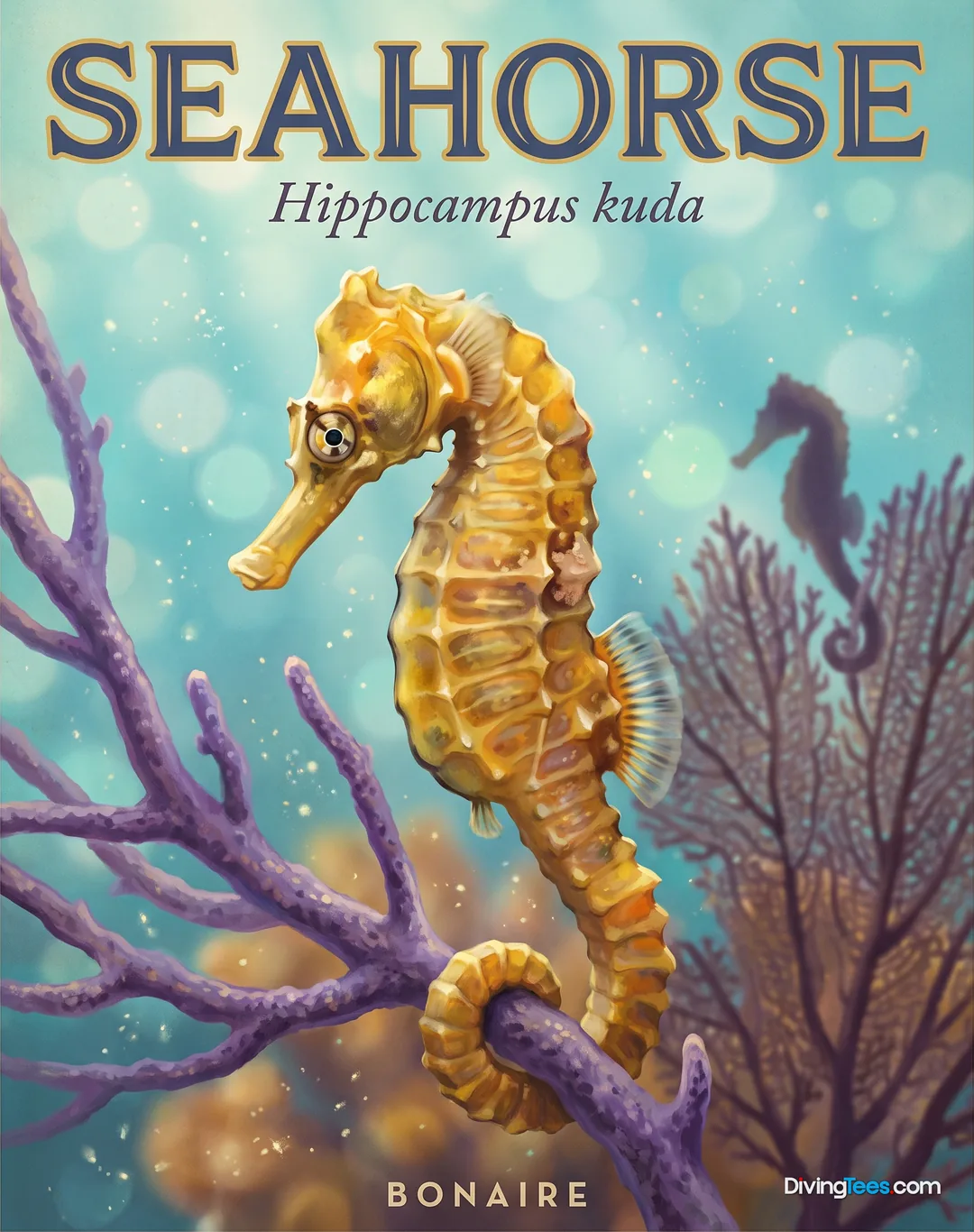
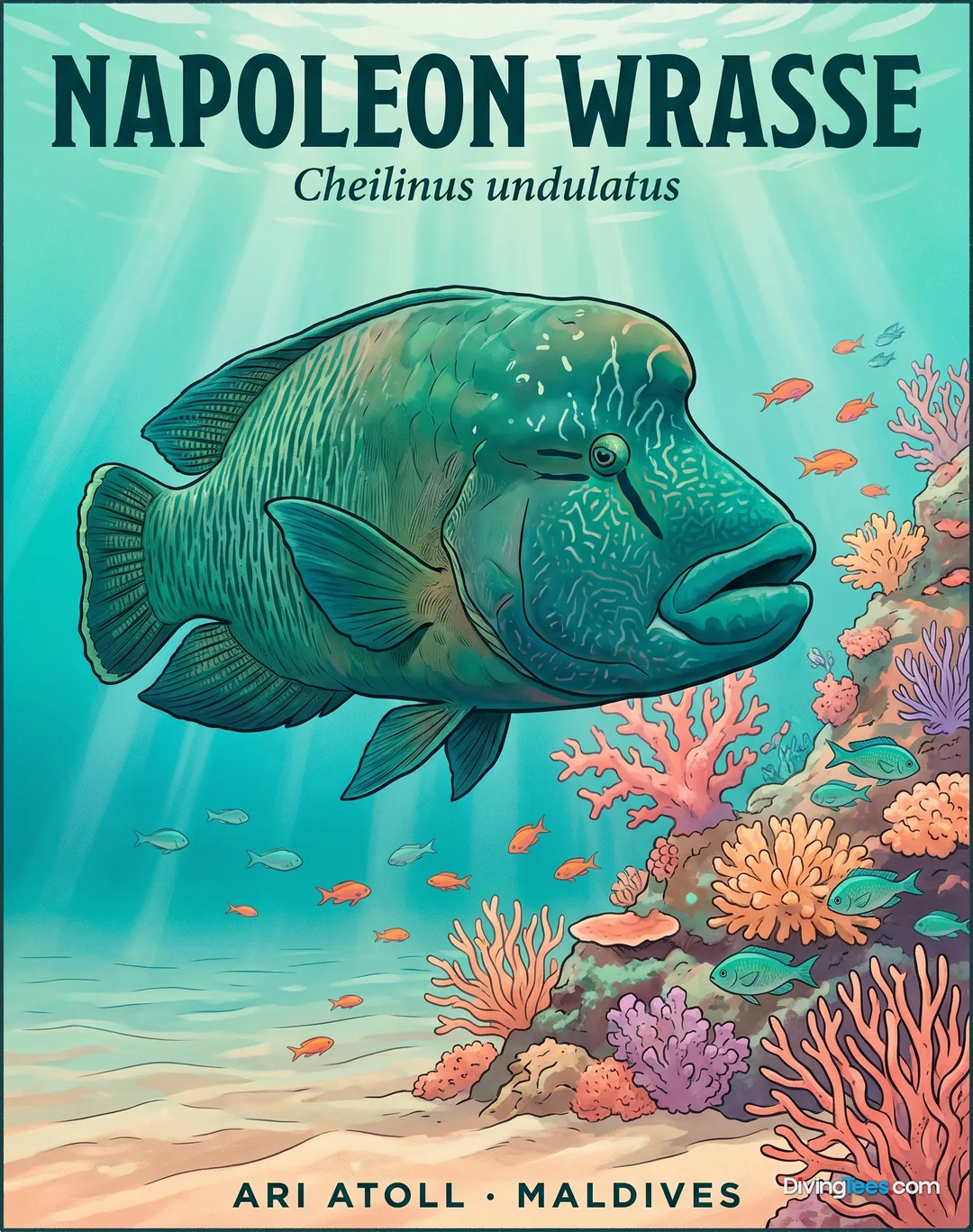
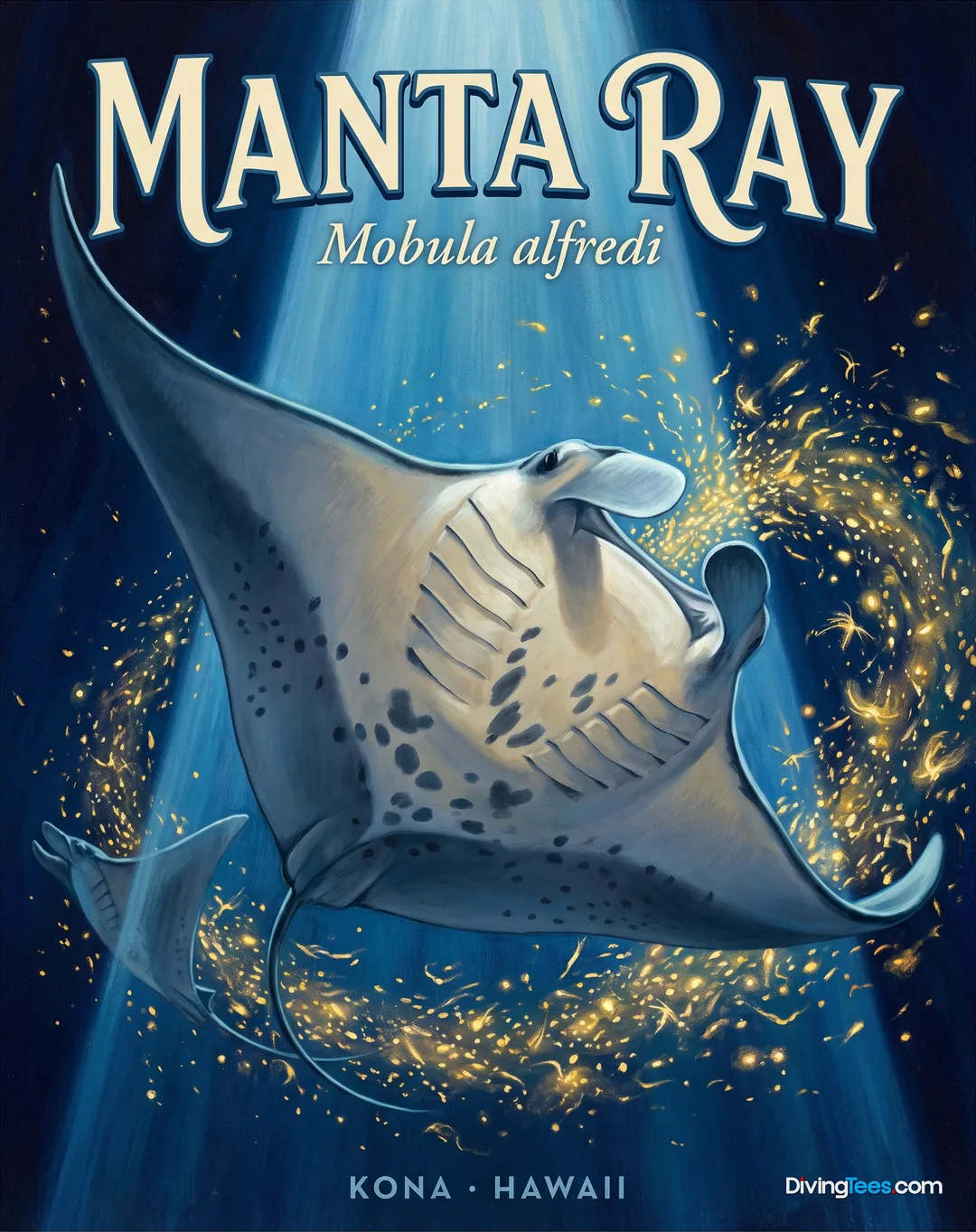
Across this Raja Ampat route, the recurring spectacle is movement: barracudas and reef sharks appear across seven sites, carangids and fusiliers across six, and Napoleon wrasse, turtles, sweetlips, and humphead parrotfish across five. Soft corals and pygmy seahorses keep the reef from becoming only a big-animal itinerary, while nudibranchs are recorded at seven sites. The current often explains the larger scenes. At Cape Kri, schools of emperors and fusiliers fill the water with Napoleon wrasse and reef sharks among them. Blue Magic is the specific stop for oceanic manta rays, oceanic whitetip reef sharks, and tuna, with giant trevally and dogtooth tuna adding weight to the blue-water action. Manta Sandy is about reef mantas hovering over cleaning stations. Yenbuba Jetty rewards a close search beneath the pilings, where anthias and damselfish join pygmy seahorses, pipefish, nudibranchs, and crustaceans. South Kri is the site for bigeye trevally, crabs, and shrimp alongside macro life. Ransiwor can produce an octopus and clownfish; Sorido Wall is the named site for surgeonfish. These are opportunities, not guarantees, and each depends on conditions and animal behaviour.
Who puts you in the water
The dive crew speaks English and Indonesian and works with a boat equipped for remote Indonesian operations. Oxygen, first-aid kits, trained first-aid crew, mobile and satellite phones, GPS, radar, sonar, VHF/DSC/SSB radio, emergency flares, life rafts, and a personal Nautilus Marine Rescue GPS for divers are carried on board. The diving includes a platform and tenders, so groups can be placed at the reef rather than making every diver climb back onto the main vessel at the exact same point. Briefings and group ratios, guide qualifications, courses offered, and minimum logged dives are not given and should not be inferred. The same applies to a defibrillator or a specific recall system. This is a useful distinction for experienced divers: the safety equipment is substantial, but the page does not promise a particular instructional structure. Divers who need a private guide can arrange one as an optional extra.
The dive deck and the gear
The dive deck is shaded and arranged for repeated diving, with gear rinsing, a working platform, and tenders to carry divers to and from the sites. DIN adapters are available, and sidemount diving is supported. The filling operation uses three Bauer HP compressors with a central filtered air system; an AANX550-36 membrane nitrox system produces enriched air in the EAN28 range. Nitrox is available as a paid extra to certified divers. Tank volume, cylinder material, and rental brands are not stated here, so divers should not assume a particular cylinder setup. Cameras have a dedicated bench, two rinse tanks, air guns, towels, and a digital studio with a guest-use desktop computer. Charging is available in cabins and in the camera studio, with 200–220V, 50Hz power and surge protection in the digital area. After surfacing, the tenders collect divers where they finish and return them to the platform, keeping the main boat clear for the next group.
Between dives
Between dives, the wide catamaran layout gives guests several ways to disappear for an hour. The shaded dive area is useful when the sun is high; the sundeck and observation deck open the view when the weather is kind. Inside, the air-conditioned saloon has bean bags, a massage chair, books, guitars, and an audio-video library, so a surface interval can be quiet or social without forcing either choice. Cameras have their own room and charging area, with a desktop computer for basic digital work. A separate camera rinse setup keeps salt water and ordinary dive equipment from competing for the same tank. When the boat is moving between sites, the open deck is the place to watch the islands pass; when there is no dive, the same space becomes a good place to read, dry out, or let the day slow down. Internet is available as a paid extra rather than assumed as part of the trip.
A day on board
A day begins with the dive operation getting ready before the first briefing, then moves from one water window to the next rather than following a clock printed on the wall. The first dive is followed by a light breakfast and then the substantial breakfast that supports the rest of the day. Lunch comes after another dive, with a cooked afternoon snack waiting between later water time and dinner. On a full diving day, up to four dives are part of the operation, with the intervals used for eating, rinsing gear, sleeping, and moving between Raja Ampat sites. The tenders take divers out and collect them after the drift, while the catamaran relocates when the next reef requires it. Some days are about another reef; others leave more room for the deck, the camera room, or a quiet hour in the saloon. Dinner is usually a buffet in the air-conditioned saloon, with an outdoor barbecue possible when weather allows. Then the boat settles, and the cycle starts again.
What you eat aboard
The galley serves five meals a day: a light breakfast, a more substantial breakfast, lunch, a cooked afternoon snack, and dinner. Main meals are generally buffet-style, with à la carte service for some cuisines, and biscuits and instant noodles remain available between sittings. The cooking moves between local Indonesian dishes and Western food, with vegetarian options handled carefully rather than treated as an afterthought. Meals are usually served in the air-conditioned saloon, while weather may move dinner outside to the sundeck for a barbecue. That pattern matters on a four-dive day. The first breakfast follows the initial dive, the larger one replaces what the water took out of you, and the cooked snack arrives when a packaged biscuit would not be enough. Food is one of the boat’s strongest points, and the kitchen’s attention to individual diets has been singled out by returning guests.
Nights at sea
The eight cabins are on the main deck, so a night aboard comes with a proper view rather than a porthole close to the waterline. Large standard windows bring in daylight, while air-conditioning keeps the sleeping spaces and enclosed guest areas comfortable in Indonesia’s heat. Every cabin has a private bathroom with hot and cold water, a separate shower area, WC, shelving, hanging space, towels, hair dryer, body wash, and shampoo-conditioner. The categories are Stateroom, Deluxe Cabins, and Main Deck Twin; one shared Quad Cabin is also available for guests travelling together or willing to share. The Stateroom is the room for a couple wanting the most space, with a king-share bed and daybed. Deluxe Cabins are private twin rooms. Cabins are cleaned daily, and bed linen and towels are refreshed every three days of use, with extra changes available on request. Between dives, the difference is simple: the room is a place to close the door, cool down, and sleep without giving up the horizon.
Stateroom
Deluxe Cabins
Main Deck Twin
What to know before boarding
Raja Ampat–Misool trips embark and disembark in Sorong; Ambon–Banda trips return to Ambon, while the Ambon–Banda–Raja Ampat route runs from Ambon to Sorong. Other departures connect Labuan Bajo with Komodo, Maumere with Alor, or Maumere with Ambon, depending on the itinerary. Airport transfers are included. Arriving the night before is the sensible way to protect the first day from flight delays.
Deck plan
- Year built
- 2000
- Year renovated
- 2017
- Length
- 36 m
- Beam
- 12 m
- Maximum number of passengers
- 18
- Number of cabins
- 8
- Number of bathrooms
- 8
- Engines
- Two MTU 1380 hp / 1015 kW engines
- Cruising speed
- 10 knots
- Website
- solitude.world ↗
Hello, I'm Marina, DivingDeal.com's AI assistant. I answer in detail about hotels, dive centres and liveaboards.

Thinking about the whole trip and the flights? Talk it over with Edith →
Marina is an AI. Some links are affiliate links: DivingDeal may earn a commission, at no extra cost to you. Bookings are made with the partner.