
Plongée au Triton Bay Divers Beach & Dive Resort
★ 4.6/5 (54 reviews)
Kaimana · Indonesia · Asia
Batu Jatuh, Indonesian for 'fallen rocks,' is a living testament to nature's ongoing artistry underwater, where immense boulders cultivate thriving, expansive hard coral gardens.
Diving Batu Jatuh, you descend upon a landscape profoundly shaped by the very forces that gave it its name: 'fallen rocks.' These enormous boulders, which once tumbled into the ocean, now provide the foundational structure for an ever-evolving aquatic world. The site appears to mature and enrich itself with each passing year, making every return a discovery of new growth and expanded marine communities.
The primary draw here is the extensive hard coral gardens, which stretch across the site. These aren't merely patches of coral, but vast, intricate ecosystems of branching, plating, and massive corals that create an ideal habitat for countless smaller species. Photographers will find endless opportunities to capture the intricate beauty and vibrant life that thrives within these immaculate submarine landscapes.
As you explore these coral structures, you'll encounter a constant swirl of activity. Large schools of batfish (Platax spp.) are a regular sight, often hovering gracefully above the corals, their silver forms glinting in the light. Keep an eye out for hunting trevallies (Caranx spp.), their streamlined bodies cutting through the water as they pursue their prey among the reef's inhabitants. Midnight snappers (Macolor niger) add to the busy reef scene, their dark forms contrasting with the brighter corals.
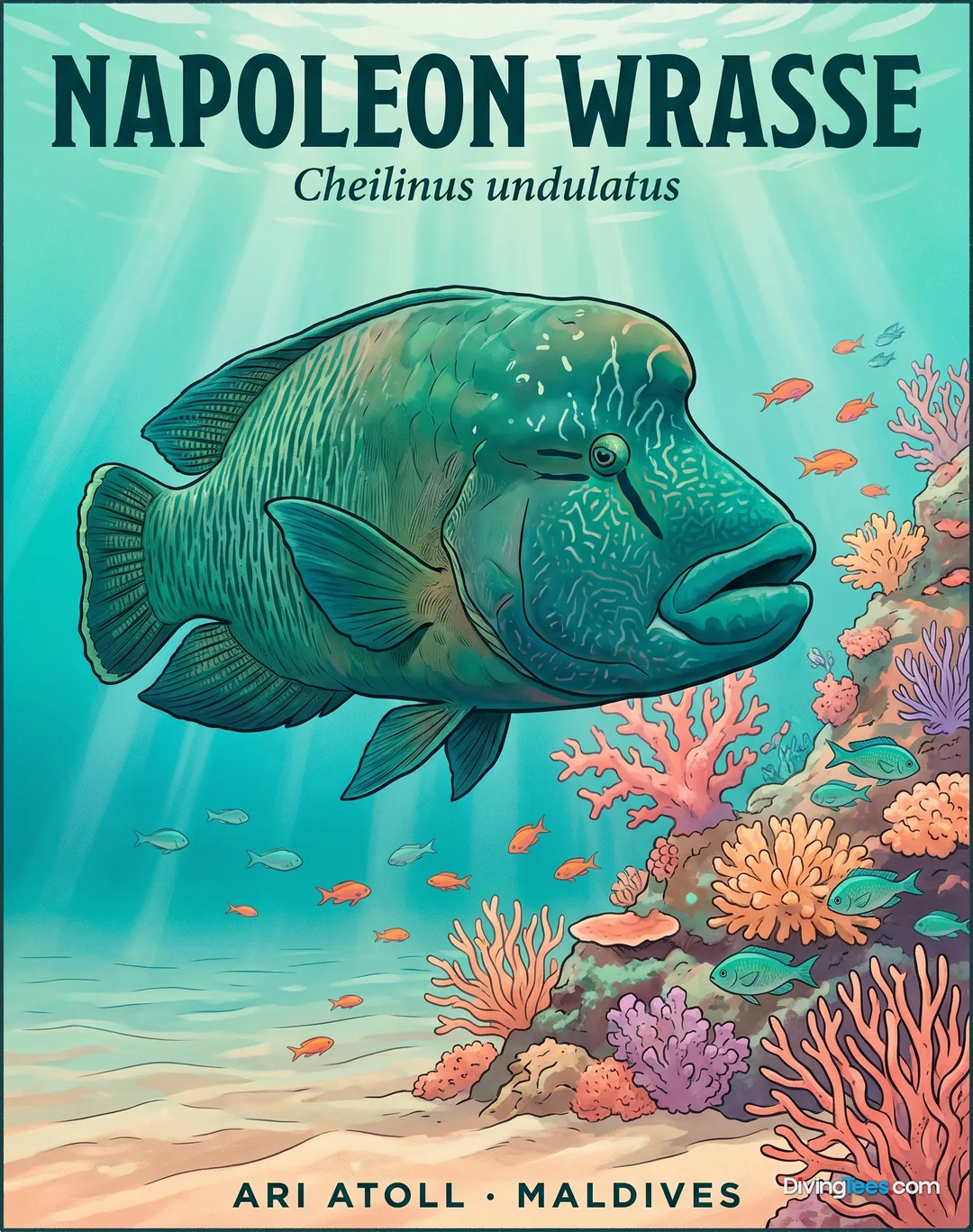
The site also hosts the impressive humphead parrotfish (Bolbometopon muricatum), often seen grazing on the reef, their powerful beaks leaving tell-tale scrapes on the coral. Napoleons (Cheilinus undulatus), with their distinctive forehead hump, patrol the deeper sections of the reef, observing divers with curious eyes. These larger reef residents contribute significantly to the site's palpable energy.
Beyond the immediate reef, the open blue offers potential encounters with larger pelagic visitors. While exploring the vibrant reef, remember to occasionally cast your gaze seaward. Surprising appearances from mobula rays (Mobula spp.), eagle rays (Aetobatus narinari), and even mantas (Manta birostris) are known to occur here, adding an element of grand anticipation to every dive at Batu Jatuh.
Batu Jatuh offers optimal diving conditions from November to April, though the season extends from October to early June. During this period, the water temperature typically ranges between 28 and 30°C. However, it's crucial to avoid the mid-June to August period, as the East Monsoon season brings less favorable weather and water conditions for diving.
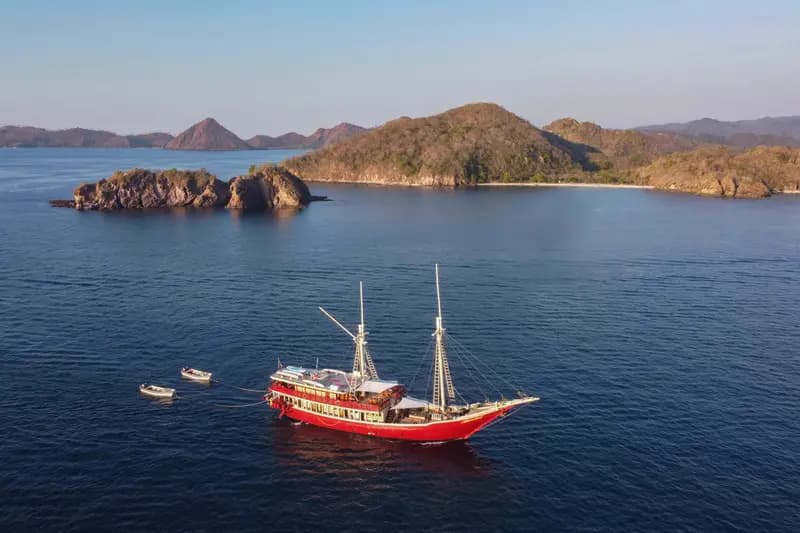
1 liveaboard departs from Kaimana another way to explore the region, over several days at sea.