
Nico Dives Cool Bali
Google 5/5 (1,033 reviews)
2.1 km away as the crow flies
Sanur · Indonesia · Asia
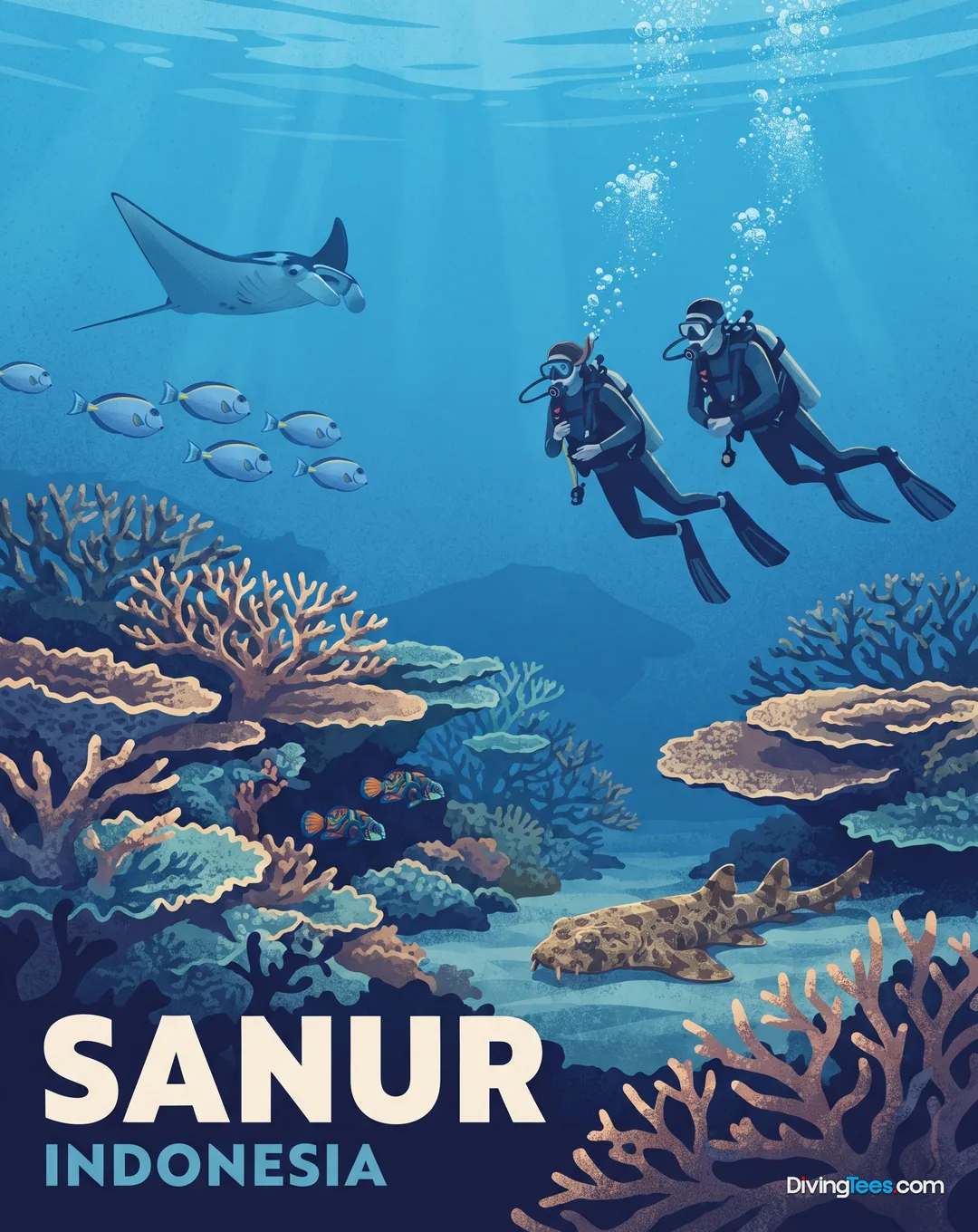
Max. depth · 20 mSanur Channel offers a gentle sandy slope dropping to 20 meters, serving as an ideal training ground and home to diverse reef fish.
Diving the Sanur Channel begins over a sandy bottom, transitioning into a gentle slope that extends down to a maximum depth of 20 meters. This profile makes it a versatile site, particularly for those honing their skills or for divers who appreciate the subtler life found on sand and along the edge of a reef. Light penetration remains good throughout the dive, allowing for clear views of the substrate and any creatures camouflaged within it. You'll typically find yourself navigating the slope at a relaxed pace, following its contours as marine life reveals itself.
The channel's structure, while not a dramatic wall or wreck, creates a unique environment where currents can be a defining factor. While often described as mild, tidal changes directly influence the conditions here, meaning the same dive site can present different experiences depending on the time of day. This variability necessitates careful dive planning from the surface, accounting for entry and exit points to manage potential shifts in water movement. It's not about fighting the current, but understanding its rhythm and using it to your advantage to conserve air and appreciate the drift.
Despite the sandy topography, the site hosts a variety of tropical marine life. You can expect to encounter butterflyfish (family Chaetodontidae) and angelfish (family Pomacanthidae) moving across the soft corals and isolated rock formations that break the sand. Keep an eye out for more cryptic residents like octopus, often found in crevices or partially buried, and sea snakes (family Hydrophiinae) gliding through the water or resting on the bottom. These encounters offer ample opportunities for observation and photography, rewarding patient divers exploring the gentler side of Bali’s underwater world.
Visibility at Sanur Channel can range from 5 to 15 meters, offering adequate light for observation at all depths. This range is common for sites exposed to coastal influences where sediment can be stirred, especially during stronger tidal movements. The overall atmosphere remains one of accessibility and exploration, with the focus less on vast formations and more on the intricate details of a sandy-bottom ecosystem. It's a dive that encourages close looking and an appreciation for the smaller, often overlooked inhabitants of the reef's fringe.
The site's proximity to the coast means that while you're experiencing a dive profile quite different from the dramatic drop-offs of outer reefs, you're still immersed in a functional marine habitat. The interaction between the sand and the scattered growth creates micro-environments where a diverse range of invertebrates and juvenile fish find shelter. This is where the experienced diver often slows down, taking time to watch symbiotic relationships or the subtle movements of cleaner shrimp, providing a different kind of reward than a pelagic encounter.
This site is accessible from depths of 3 meters, gradually sloping to a maximum of 20 meters. While generally suited for beginner divers, including those undertaking PADI Open Water Diver, Advanced Open Water Diver, and Rescue Diver courses, the dive hours are dependent on tidal movements. Currents are typically weak, but understanding the local tide schedule is crucial to avoid unexpected changes. Visibility commonly ranges between 5 to 15 meters.
Dive hours at Sanur Channel depend on tidal movements, so check the local tide schedule before entering. Conditions can vary with the time of day, and stronger tidal movement may stir sediment and affect visibility. Planning entry and exit points around the tide helps you manage possible changes in water movement.
Sanur Channel is generally suited to beginner divers and can support PADI Open Water Diver, Advanced Open Water Diver, and Rescue Diver courses. Its sandy bottom and gentle slope offer a relaxed profile for building skills, while the site also rewards divers who enjoy careful observation along the reef edge.
Sanur Channel begins at 3 meters and gradually slopes to a maximum depth of 20 meters. Currents are typically weak, but tidal changes can alter water movement during the dive. Understanding the local tide schedule helps you anticipate these shifts, conserve air, and follow the slope at a comfortable pace.
At Sanur Channel, you can look for butterflyfish and angelfish around soft corals and isolated rock formations on the sandy slope. Octopus may hide in crevices or partly beneath the sand, while sea snakes can glide through the water or rest on the bottom. Visibility commonly ranges from 5 to 15 meters.