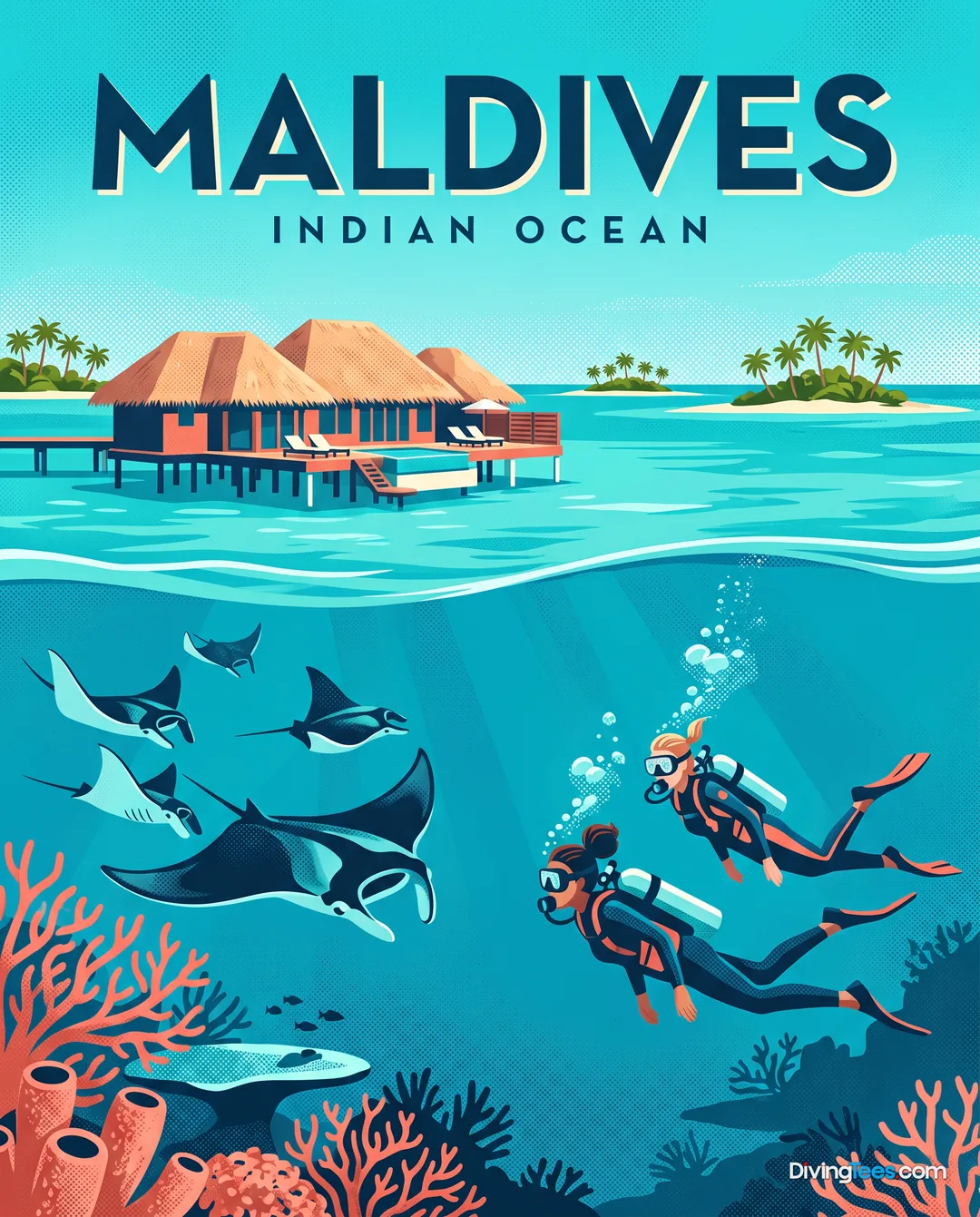
Liveaboards · Maldives
Horizon 3 — a refitted Maldives dive yacht built around big-animal diving
Deal on this boat
Per person
£4,618$6,174€5,516 £2,820$3,770€3,368
Discount calculated by us, against the boat's usual price for a trip of the same length.
See all discounted dates ↓What makes this boat unique
- Horizon 3 was renovated in summer 2025 and carries up to 25 passengers in 12 air-conditioned en-suite cabins.
- The shaded dive area has two compressors, DIN and yoke adapters, camera facilities, charging stations and a platform served by two tenders.
- Five dive guides work at a ratio of one guide to five divers, with English- and German-speaking crew.
- The routes cover Hanifaru Bay, the central atolls and the Deep South, with whale sharks, manta rays, reef sharks and pelagic fish as the main draw.
For subtitles in English: start the video firstthen click the gearat the top right of the video, select “Subtitles/CC”, then “Auto-translate” and choose “English”.
The invitation
Horizon 3 suits divers who want the Maldives as a moving dive program rather than a resort with tanks attached. The choice is between the eight-day, seven-night Hanifaru Bay Manta Madness route, the eight-day central-atolls circuit from Malé through Ari and Vaavu, and longer southern expeditions built around channels, tiger sharks and other pelagics. The boat's strongest case is the combination: five guides, a dedicated dive setup, several atolls in one trip and a crew that passengers remember for its care and food. The hull itself is not the only reason to choose it; the crew and diving score better than the boat, which suggests that the people carry much of the experience. A renovation in summer 2025 gives the vessel a useful reset. Step aboard for access to sites where current, cleaning stations and seasonal plankton decide what appears, not for a static week on one reef.
Boarding
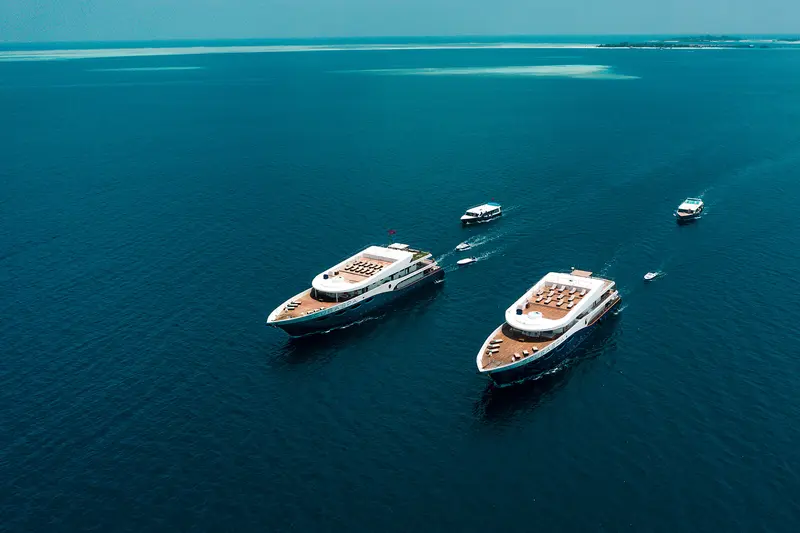
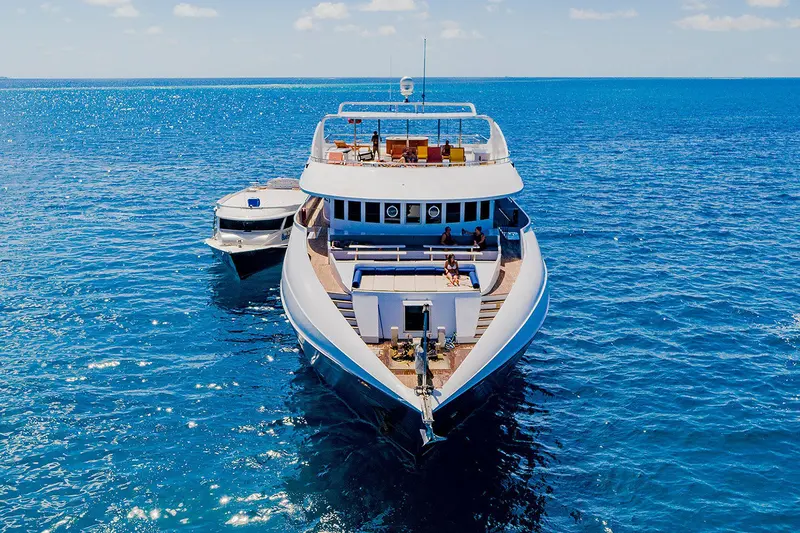
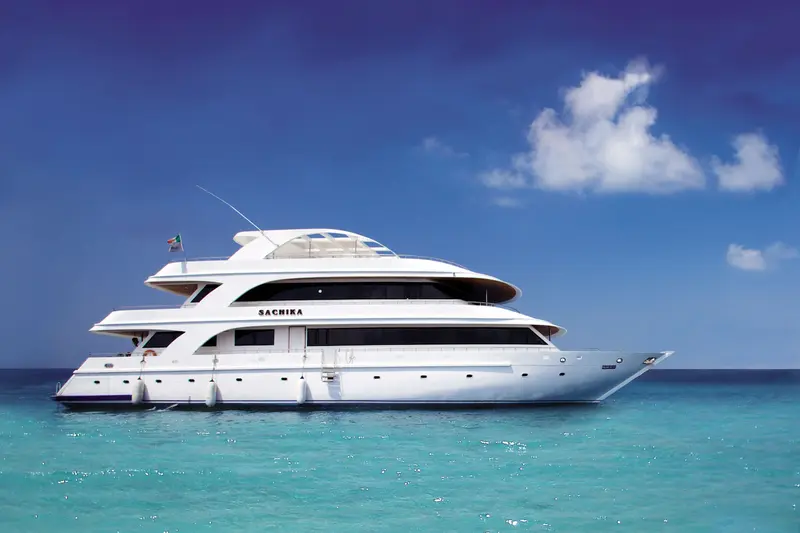
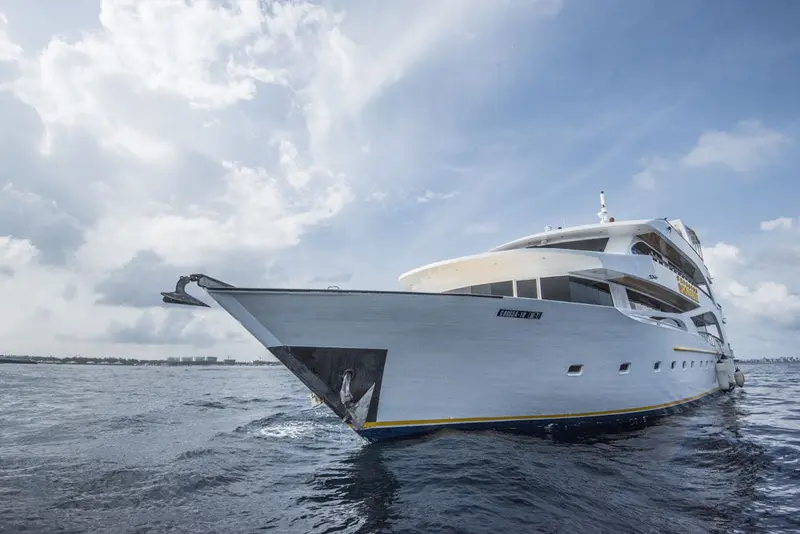
At the dock, Horizon 3 presents as a large fiberglass motor yacht with the practical layout of a boat made for diving. The recent renovation matters because a liveaboard is a working machine: wet gear, compressors, tenders and repeated loading leave their mark faster than a hotel lobby does. Twin engines and two generators give the operation redundancy while the boat moves between atolls, and the vessel can cruise without turning every transfer into a long tender ride. Boarding starts at the airport transfer, then continues on the dive tender, where divers can unpack and assemble their equipment before moving to the mother vessel. Once aboard, the crew shows guests to their cabins and gives a guided tour. The first impression is functional rather than theatrical: a boat organised around getting divers, cameras and tanks through a full week without making each dive an expedition of its own.
The atmosphere on board
The atmosphere is shaped less by formality than by the fact that up to 25 divers share one moving house. People tend to know one another quickly because the same faces appear at breakfast, the briefing, the camera table and the evening bar. The crew's role is practical and visible: helping with gear, keeping the dive operation orderly and making conversation easy across the group. English and German are spoken aboard, and passengers describe the crew as the part of the trip that stays with them. The boat scores lower than the crew, food and diving, so Horizon 3 is not best sold as flawless hardware. Its return is that the people compensate where the yacht shows its age, while the 2025 renovation improves the platform they work from. Evenings can stay quiet after a long dive day, or continue over dinner, photos and a drink; there is no need to manufacture entertainment when the day's sightings give everyone something to discuss.
The sites you’ll dive
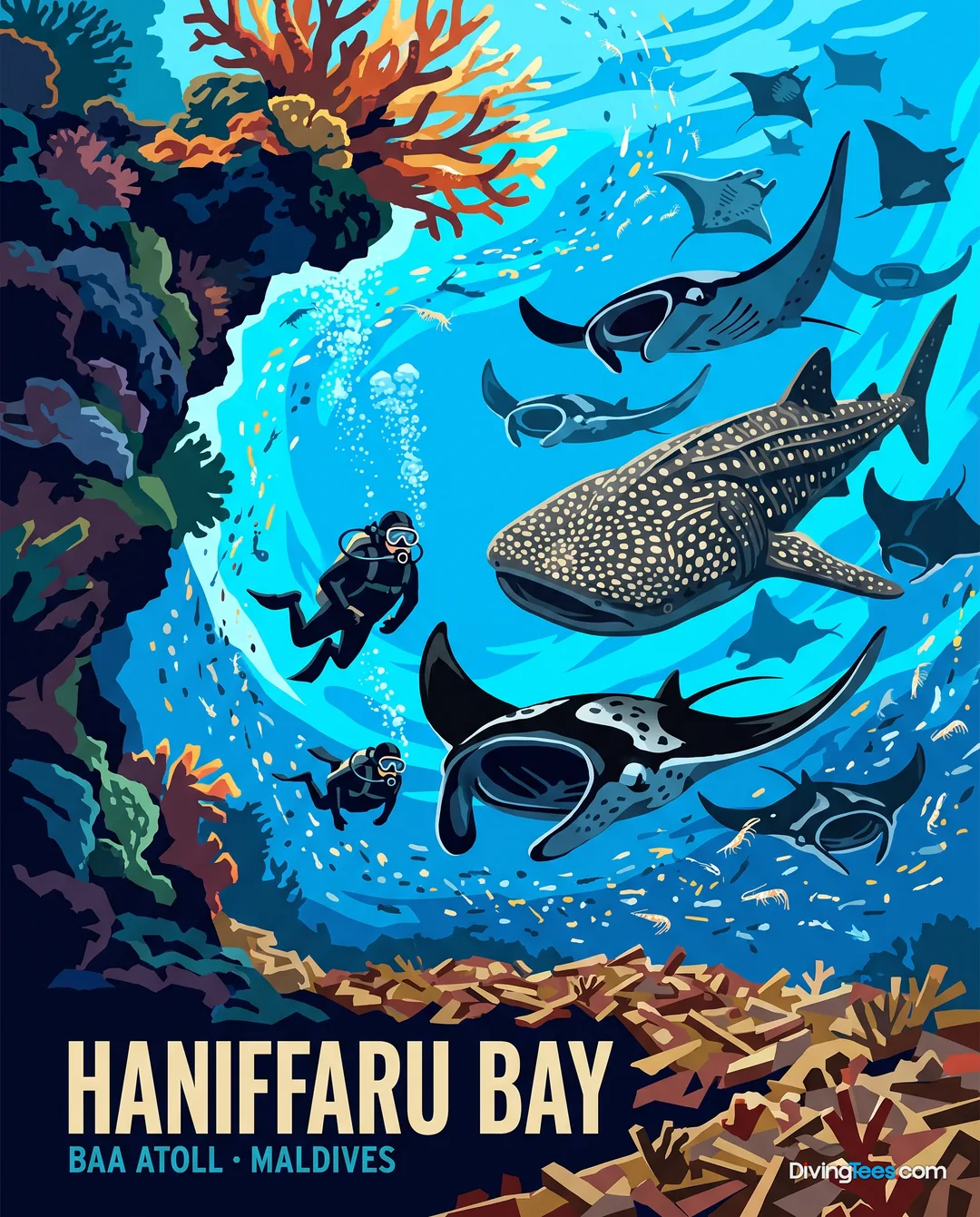
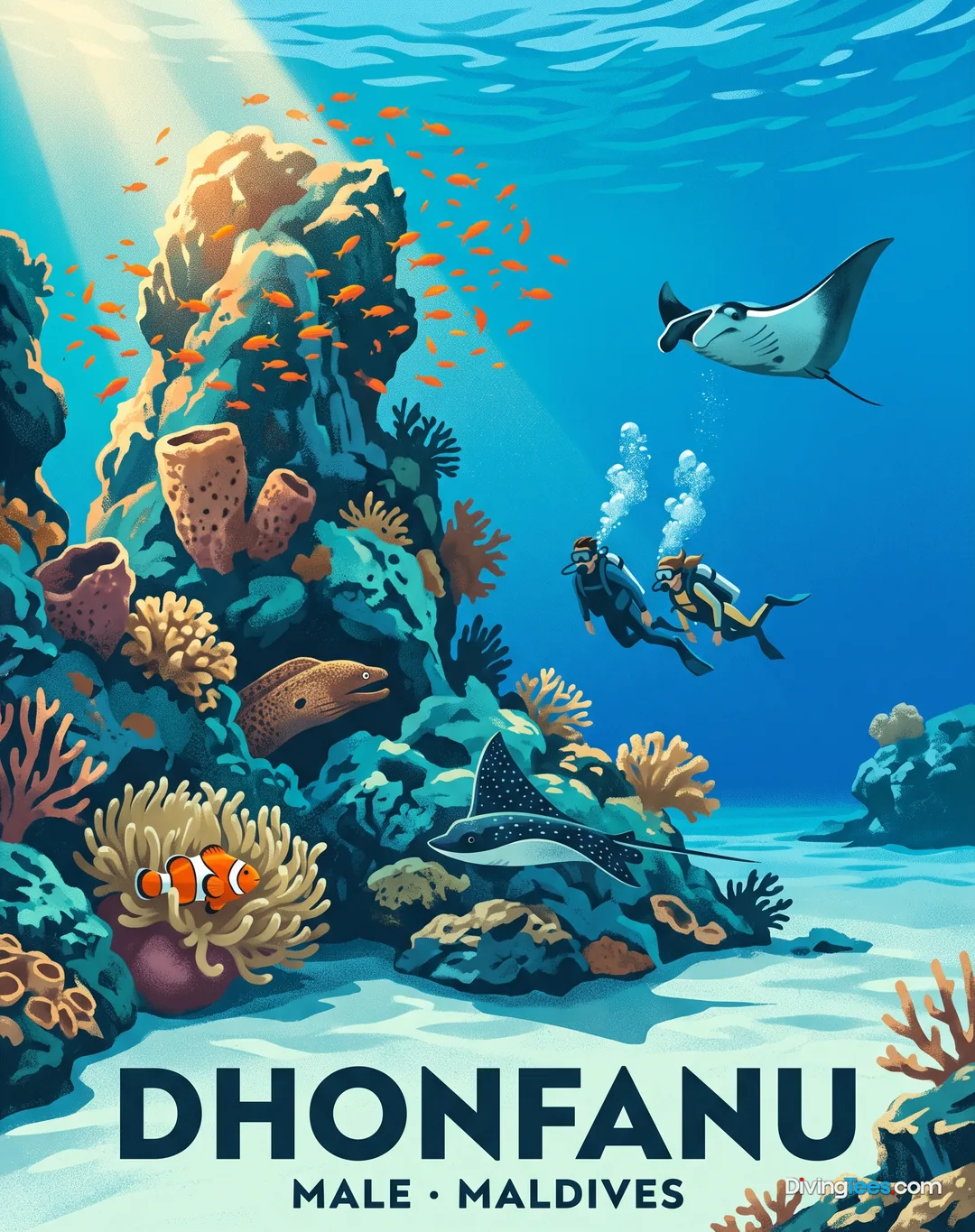
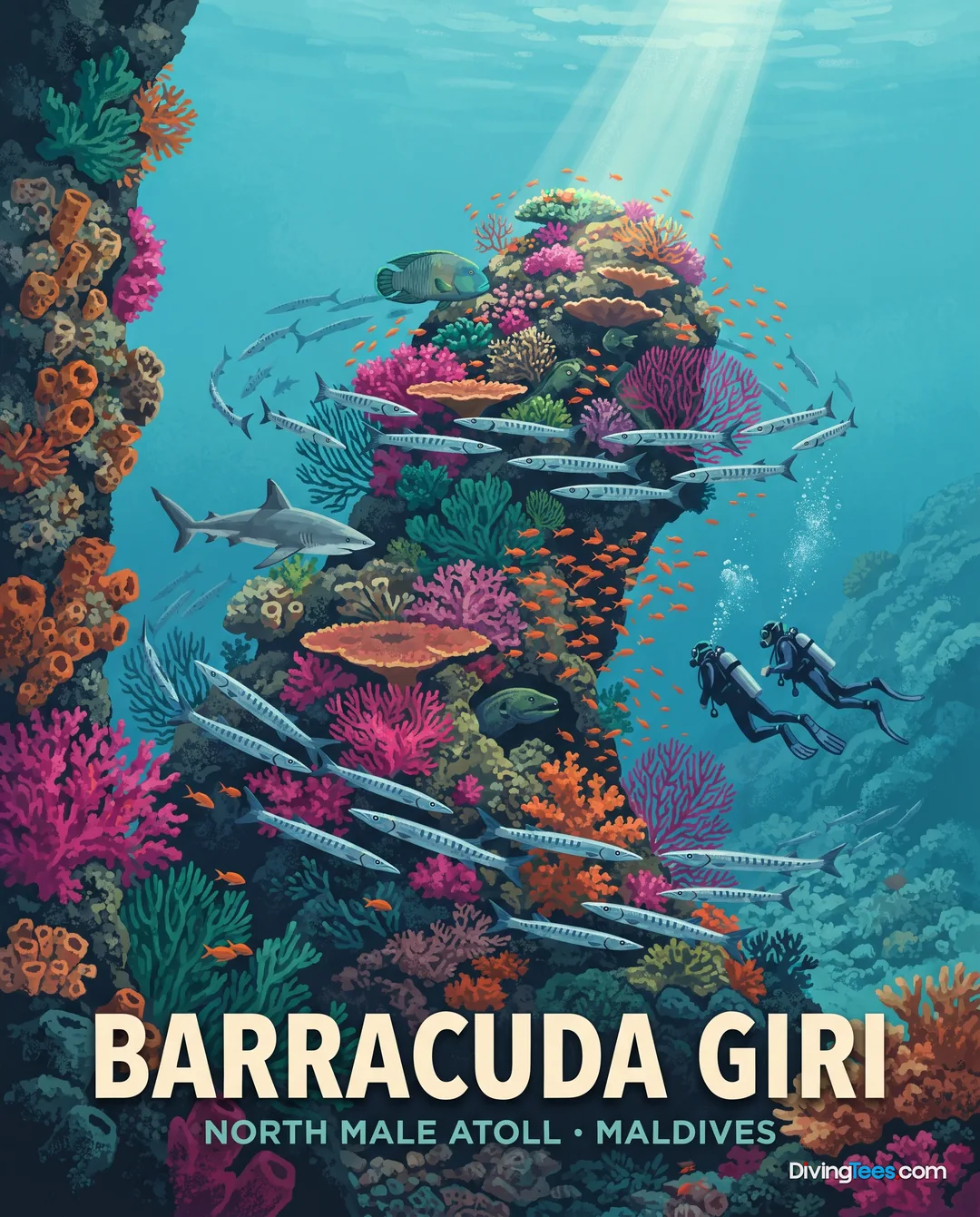
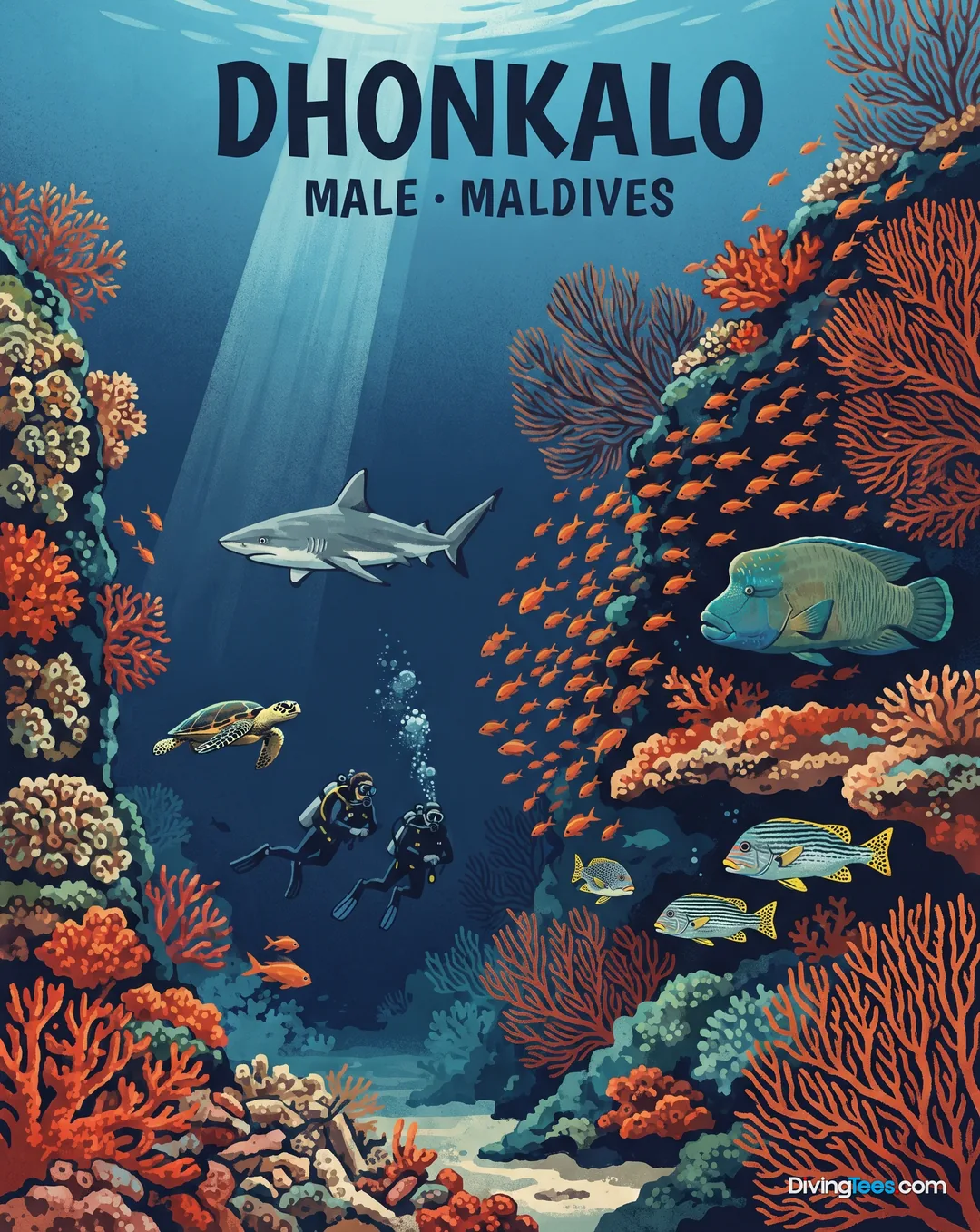
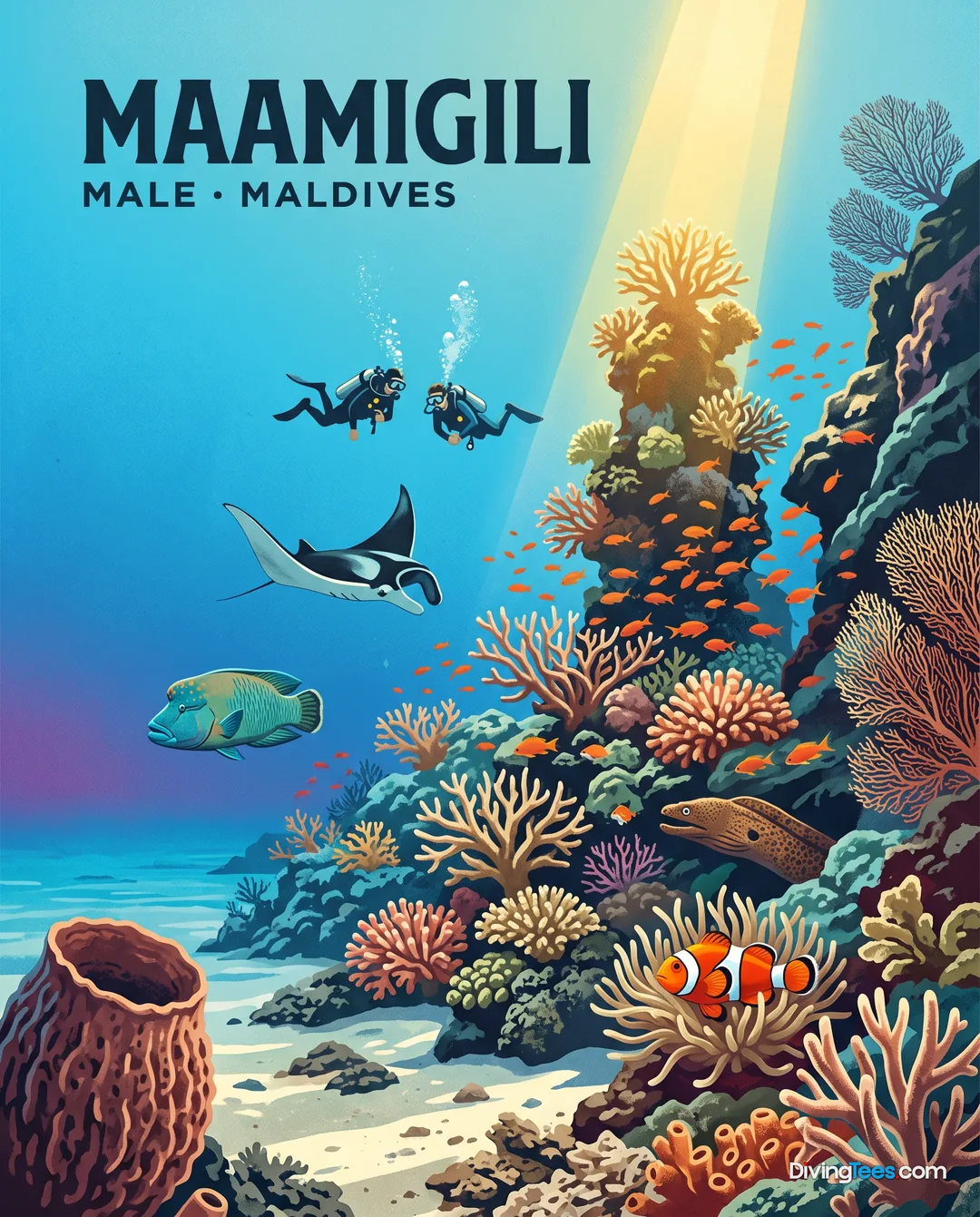
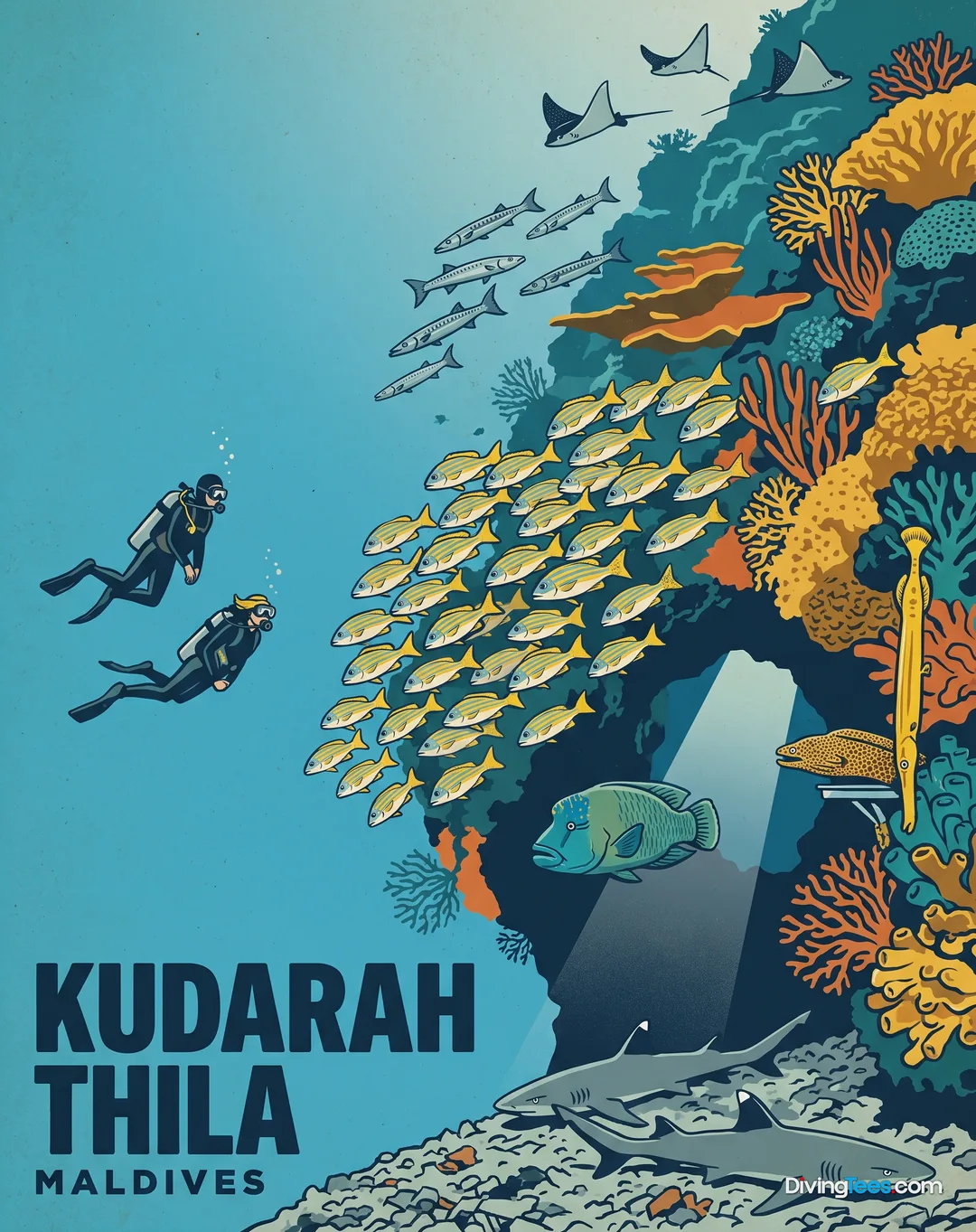
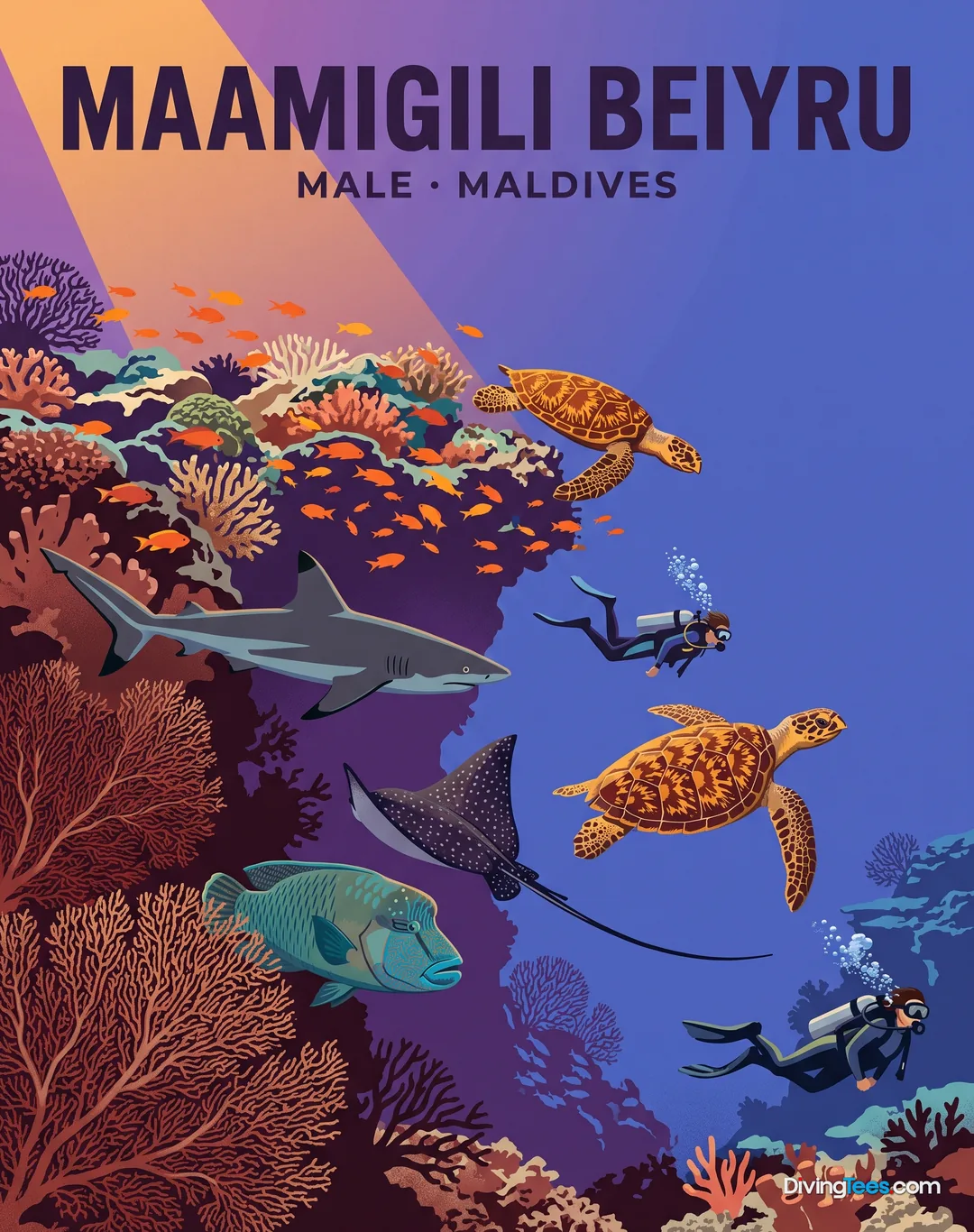
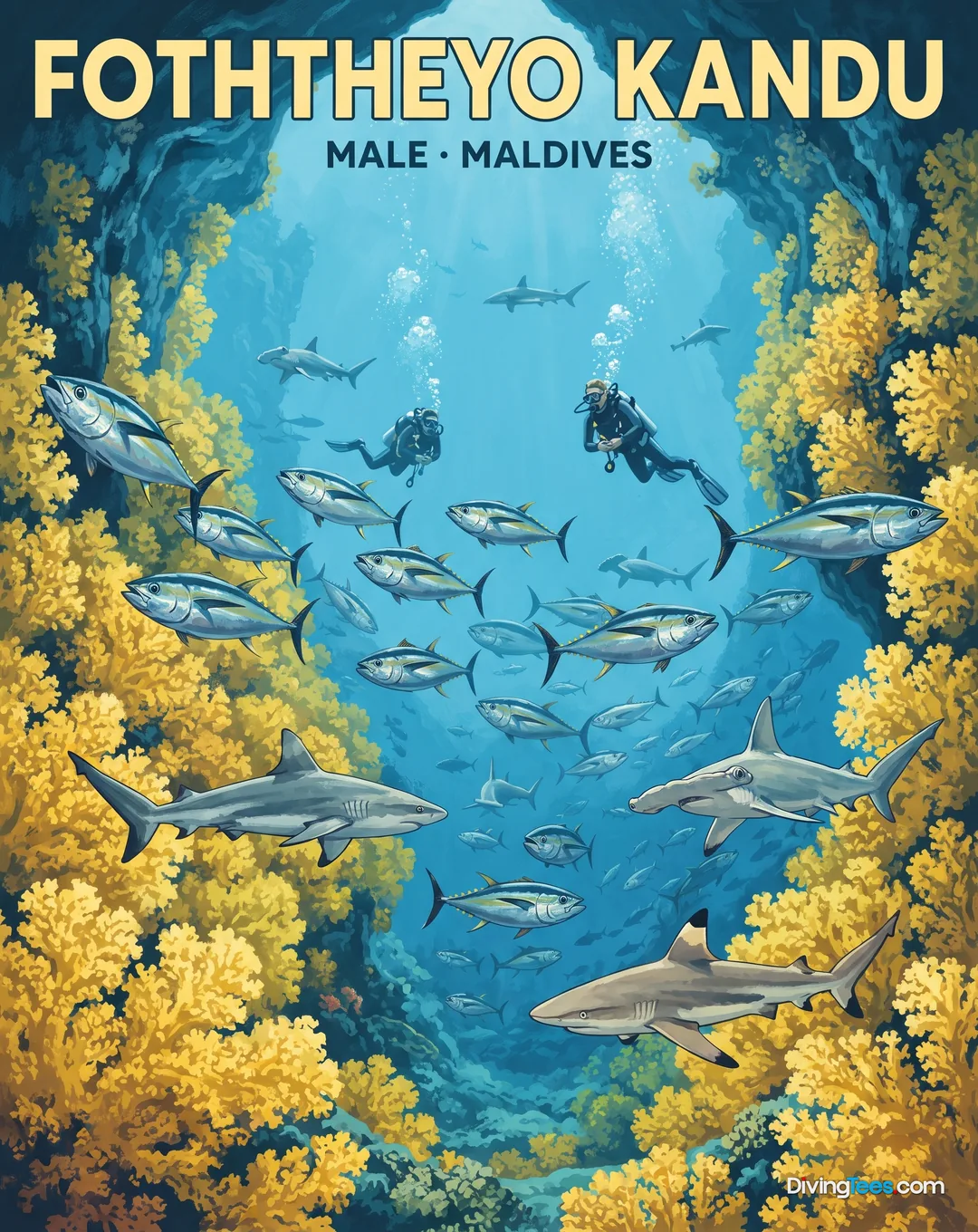
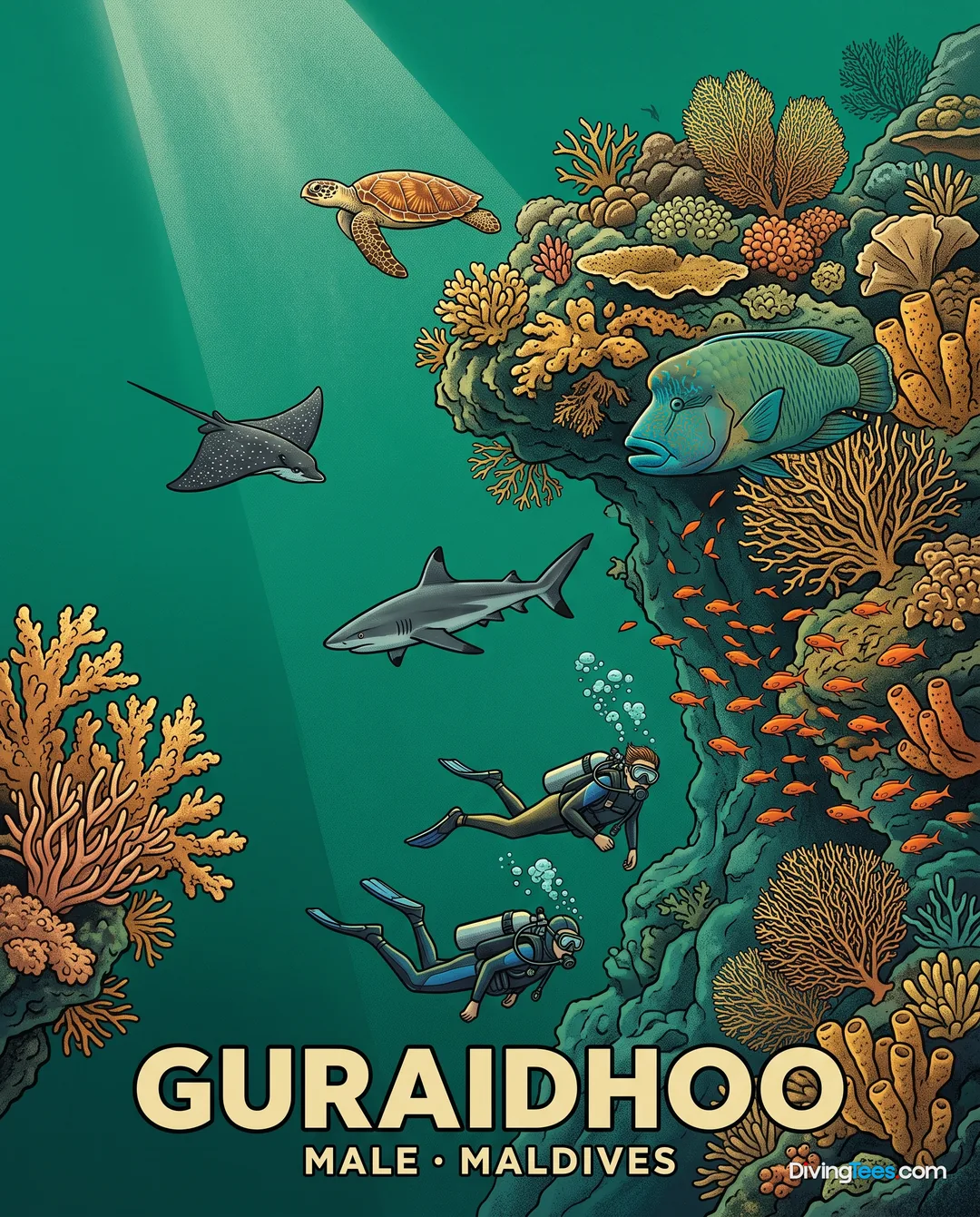
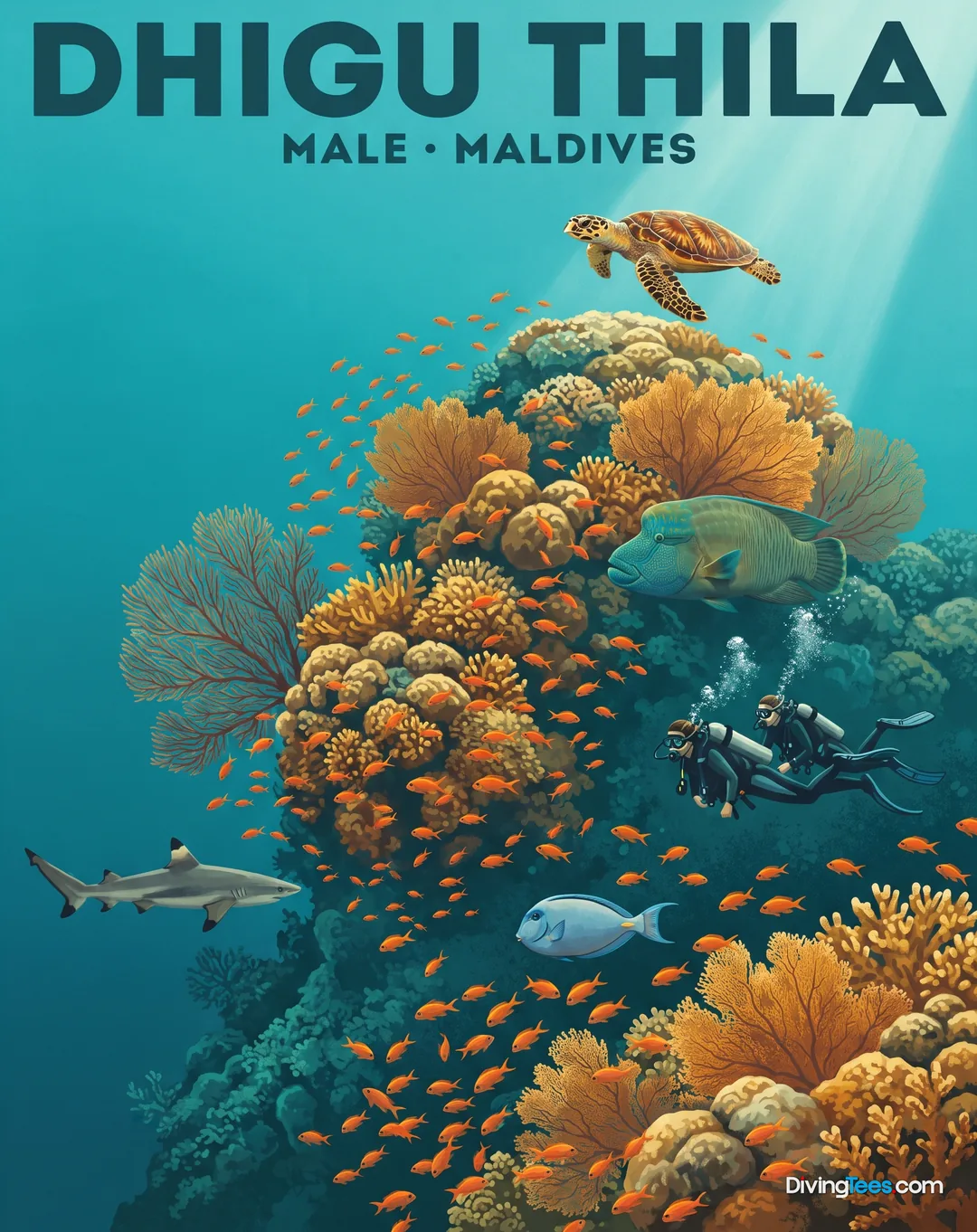
The eight-day, seven-night Hanifaru Bay route is the manta-focused choice: protected Hanifaru Bay in Baa Atoll can fill with hundreds of reef manta rays feeding in cyclone formation, while Dhonfanu Thila combines a manta cleaning station with a narrow swim-through into a sheltered pool. The central-atolls route links Malé, Vaavu and Ari over eight days and seven nights. At Barracuda Giri, three submerged pinnacles drop to a maximum of -30m, where current brings schooling barracudas and pelagic fish. Mushimasmigili Thila reaches -30m and is known for grey reef sharks at its up-current pinnacle; Dhonkalo is a manta cleaning station in a sandy channel. Maamigili, Kudarah Thila and Maamigili Beiyru each reach -30m, offering whale sharks, manta rays, caves, overhangs and schools of batfish depending on the site. Foththeyo Kandu is the deeper, more demanding option at -40m, with caves covered in yellow soft corals and strong current. Guraidhoo Marine Reserve, Myaru Kandu and Dhigu Thila add channel diving, sharks and pelagic traffic. Longer Deep South trips run for 14 nights and about 37 dives, crossing eight atolls and adding tiger sharks, whale sharks, mantas and wrecks.
Itineraries, dates and prices
Prices per person. Each month shows its lowest price: click a month, or pick an itinerary.
Next departures · 116 departuresfrom £1,345$1,798€1,606
November 2026
December 2026
March 2027
April 2027
Green dot: a discounted departure that month. Discount calculated by us, against the boat's usual price for a trip of the same length.
See dates and prices
If you click these links and make a purchase on the partner site, DivingDeal may earn a commission, at no extra cost to you.
Dates and prices taken from Divebooker and liveaboard.com, updated 26 October 2026
What you’ll meet underwater
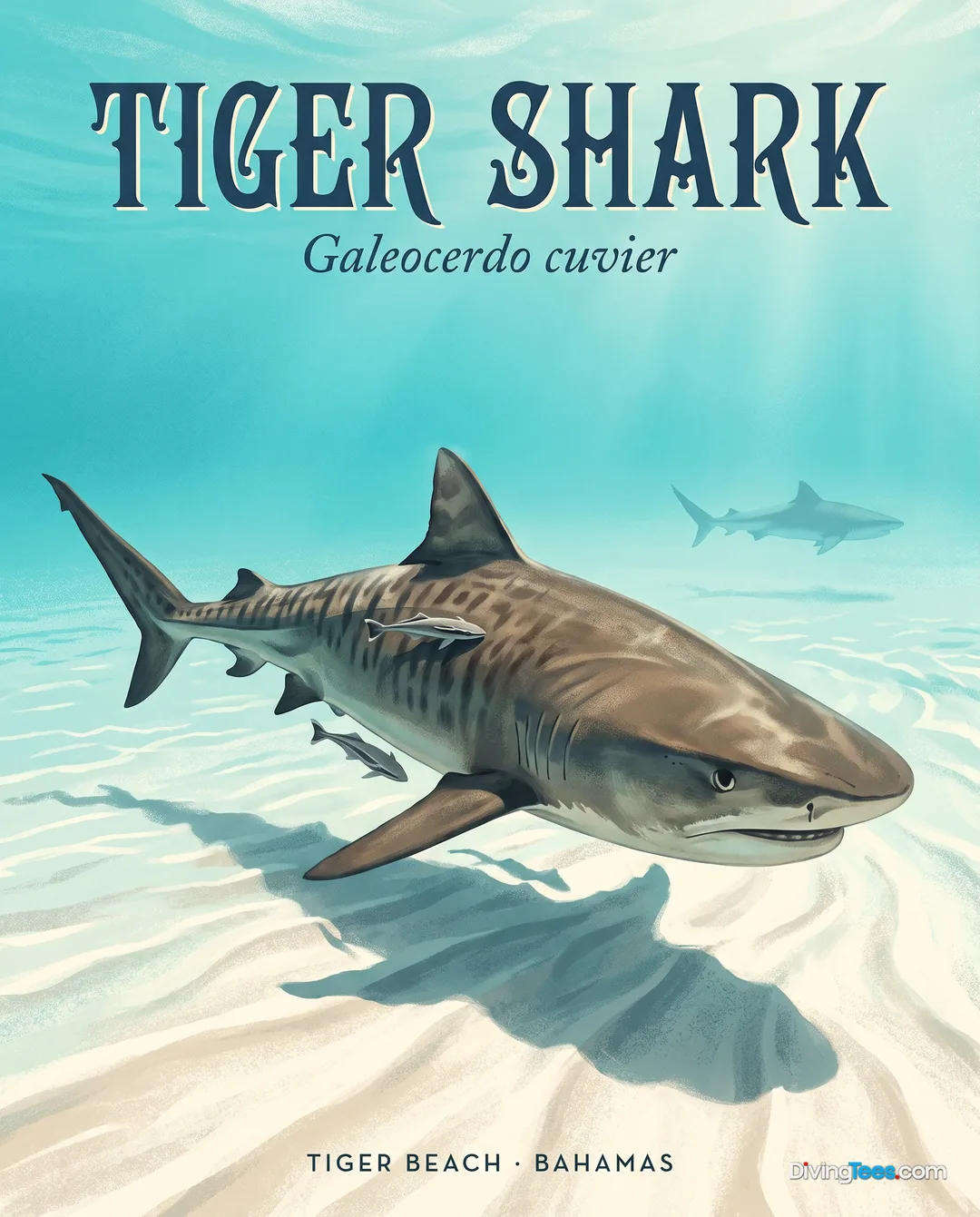
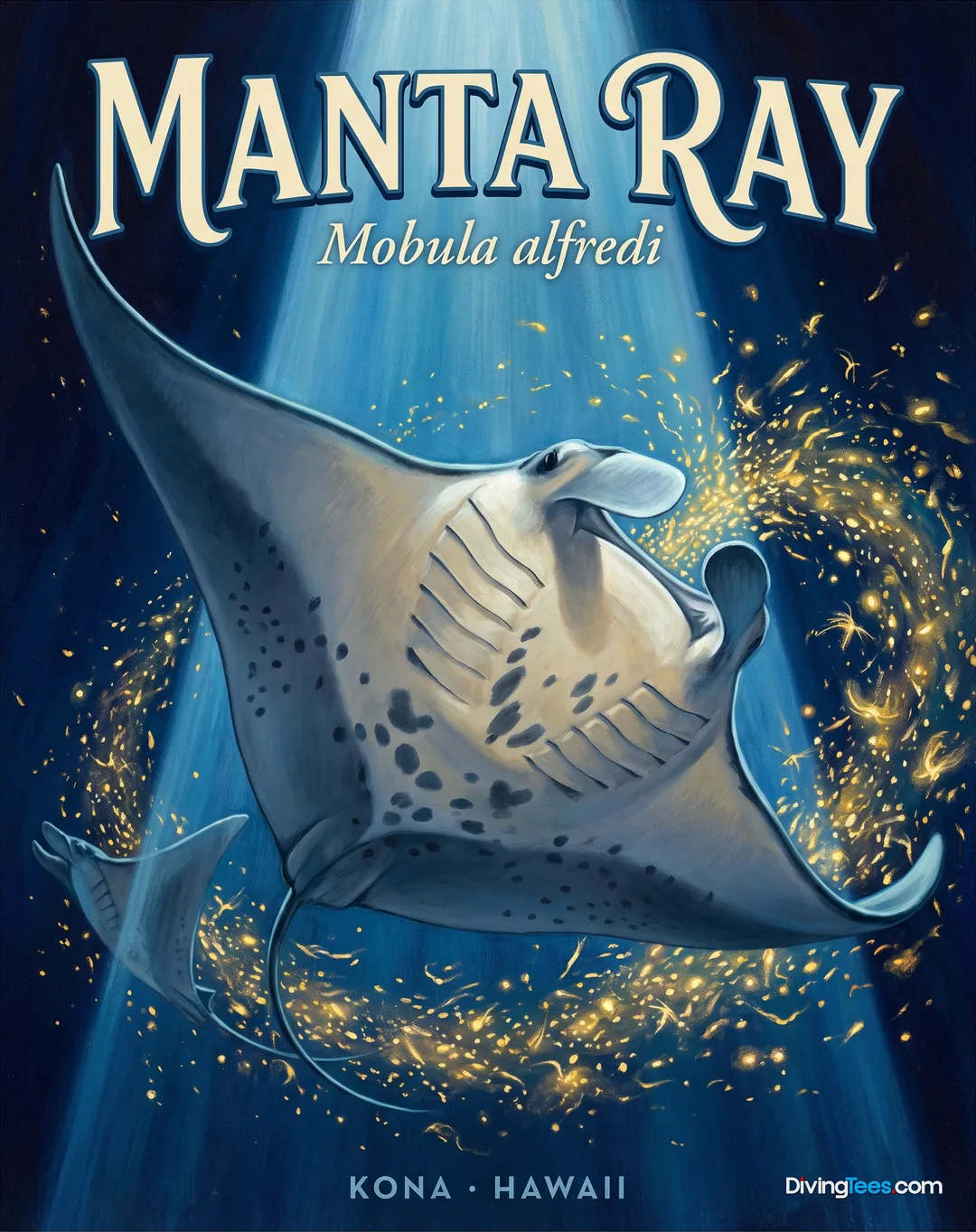
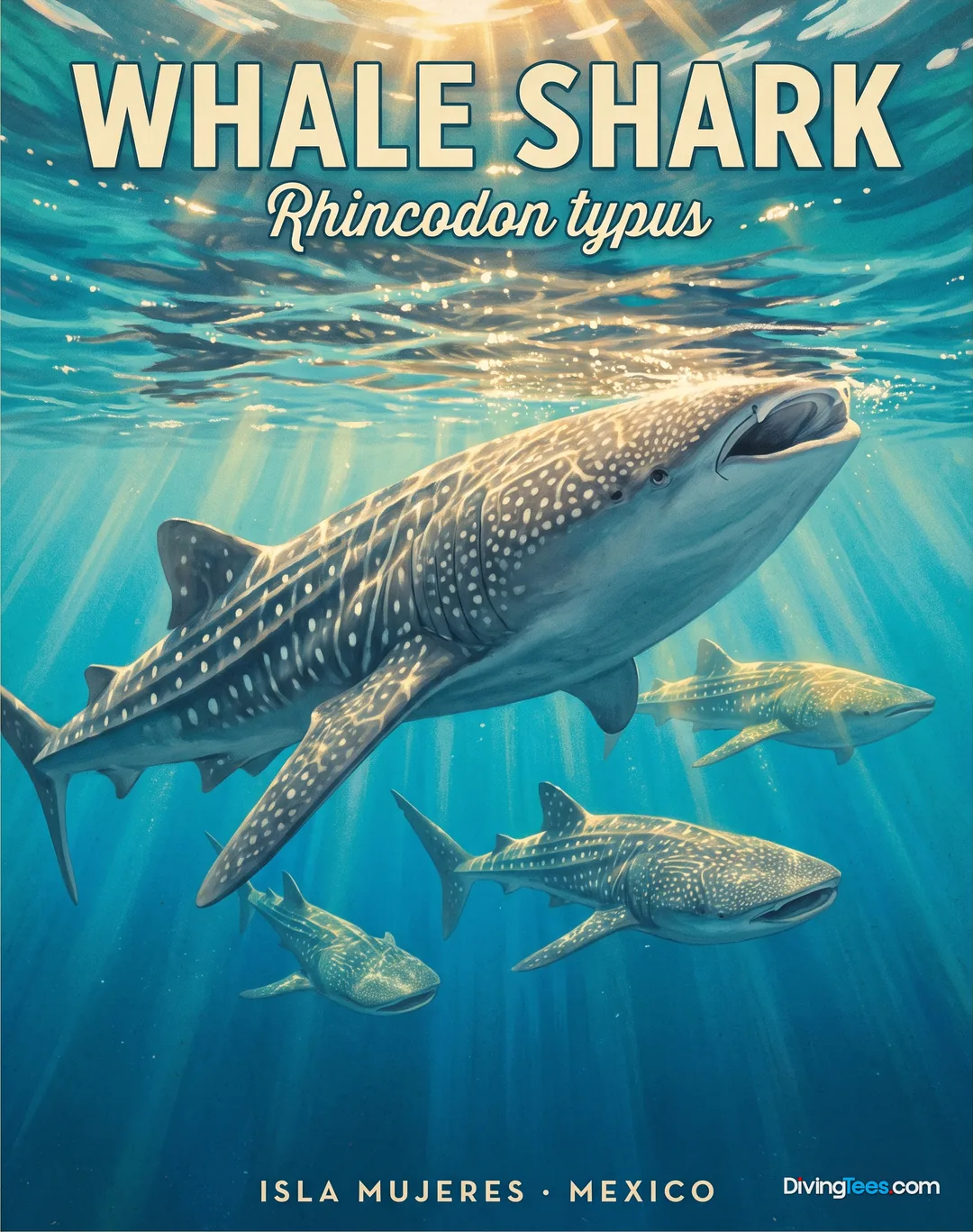
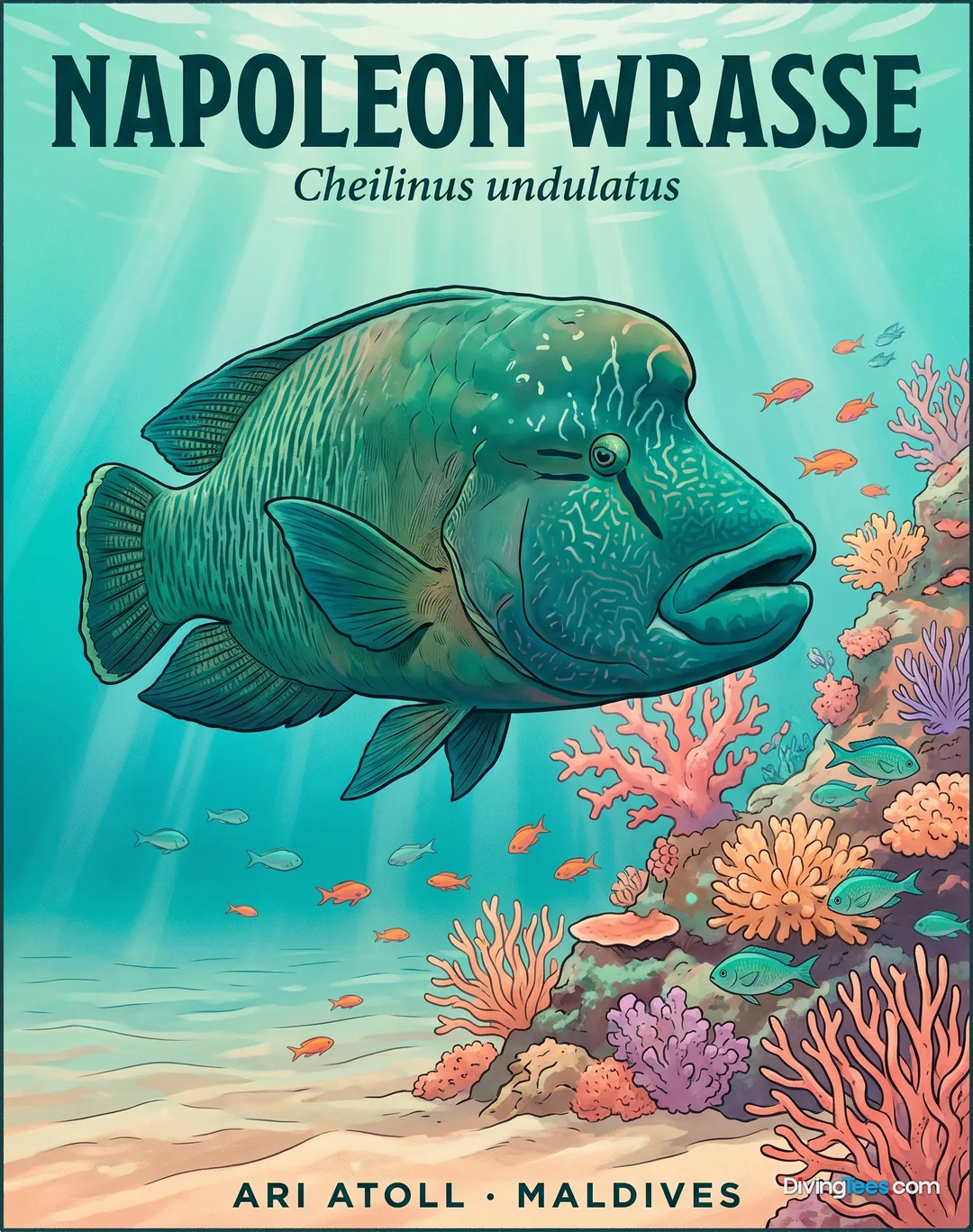
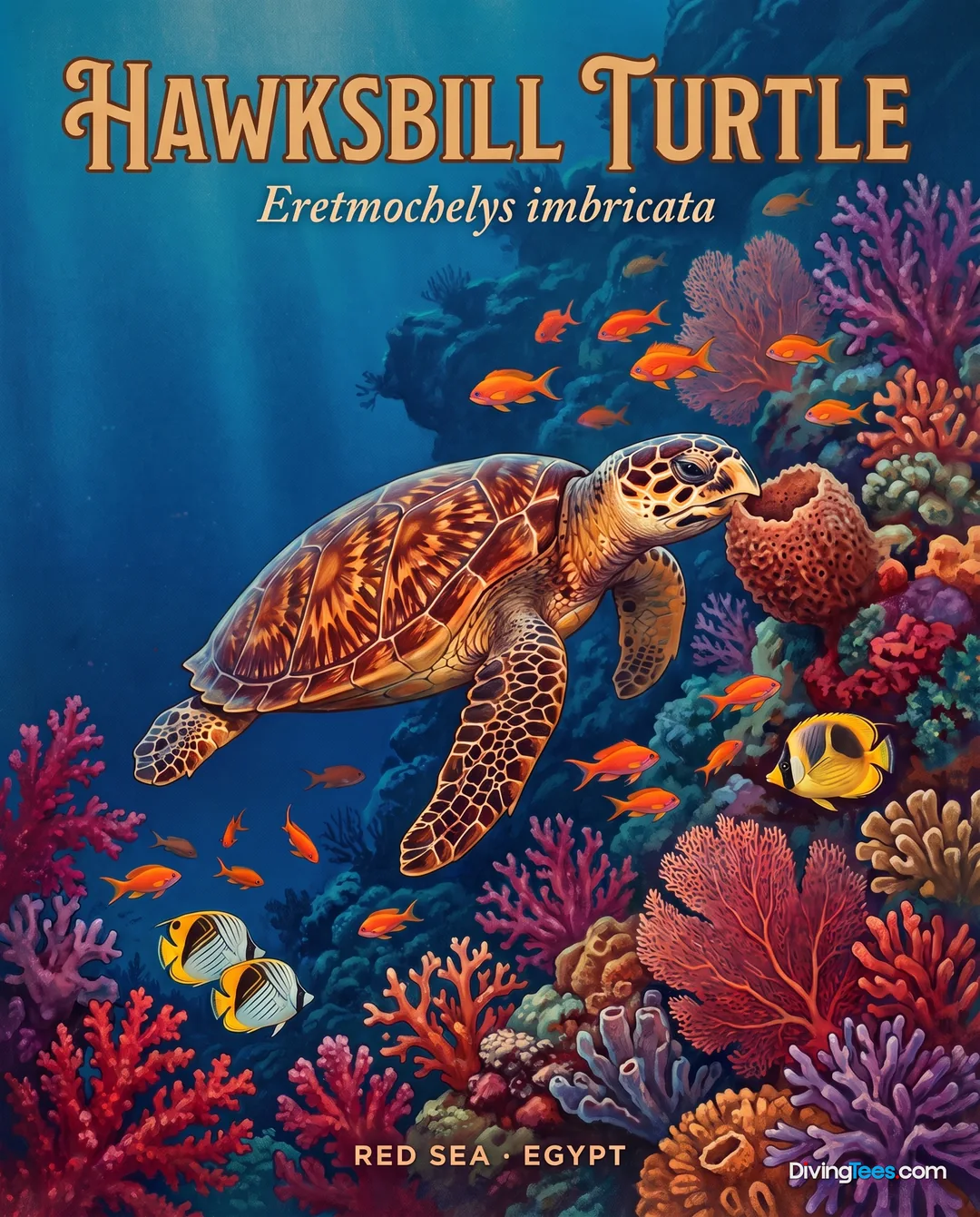
Across this route, the recurring cast is substantial: Napoleon wrasse, fusiliers, grey reef sharks, manta rays, tuna, sea turtles, eagle rays, barracudas, reef sharks, morays, trevally and batfish appear at several sites. The setting changes what those animals are doing. Currents funnel sharks, tuna and jacks through channels; cleaning stations bring mantas close; isolated thilas concentrate schooling fish and reef predators. Hanifaru Bay is the seasonal spectacle, with manta feeding activity strongest from June to November when plankton gathers in the protected bay. Whale sharks are recorded at four sites, including Maamigili, Maamigili Beiyru and the southern routes, but sightings remain sightings, not guarantees. Several animals give a site its particular reason to exist: grouper and anthias at Barracuda Giri, anemones at Banana Reef, soft corals and gorgonians at Dhigalhi Haa Marine Reserve, porcupinefish at Maamigili and hawksbill turtles at Dhigu Thila. The route rewards divers who look beyond the largest animal in the briefing.
Who puts you in the water
Five expert dive guides run the program at a ratio of one guide to five divers. That is a meaningful number in Maldivian channels: the guide can brief a smaller group around the current, the entry point and the exit plan rather than giving one generic speech to the whole boat. The crew speaks English and German. Diving courses are available aboard. The central-atolls route is presented for beginners and up; the Deep South is aimed at more experienced divers and stronger-current conditions. Safety equipment includes emergency oxygen, first-aid kits, an AED defibrillator, life rafts, life jackets, fire extinguishers and VHF radios linking ship and tenders. Site decisions remain with the guides, who can adapt the plan to weather, currents and operating conditions.
The dive deck and the gear
The dive operation is built around a shaded working area, rinse tanks, charging stations, camera facilities and a dive platform. Two compressors support the filling operation, and DIN/yoke adapters cover the common regulator standards. Nitrox is available from a membrane system as a paid extra; certified Nitrox fills can make longer dives less tiring, but they are not included by default. Rental equipment and diving courses are available, while sidemount is supported. The boat carries two tenders, allowing divers to leave from the platform and return from the water without bringing every exit back to the main deck. Emergency oxygen is carried aboard. For photographers, the useful detail is the combination of rinse space, charging points and somewhere to review images before the next briefing.
Between dives
Between dives, the shaded dive area is the practical refuge: a place to strip off a wetsuit, rinse gear and let the next surface interval pass without baking in full sun. The sundeck, observation deck and indoor air-conditioned saloon offer different temperatures and levels of conversation, while the hot tub and onboard massage add recovery options after current-heavy dives. A camera area with rinse facilities, charging stations and photo-review space gives photographers something purposeful to do instead of leaving cameras sealed until the next entry. When the boat is underway, guests can take a kayak or stand-up paddleboard onto calmer water, join a fishing or shore excursion, or simply watch the atolls slide past. Horizon 3 is not trying to disguise the transit between sites; it gives that time places to go. That is useful on routes where the next reef may be several hours away.
A day on board
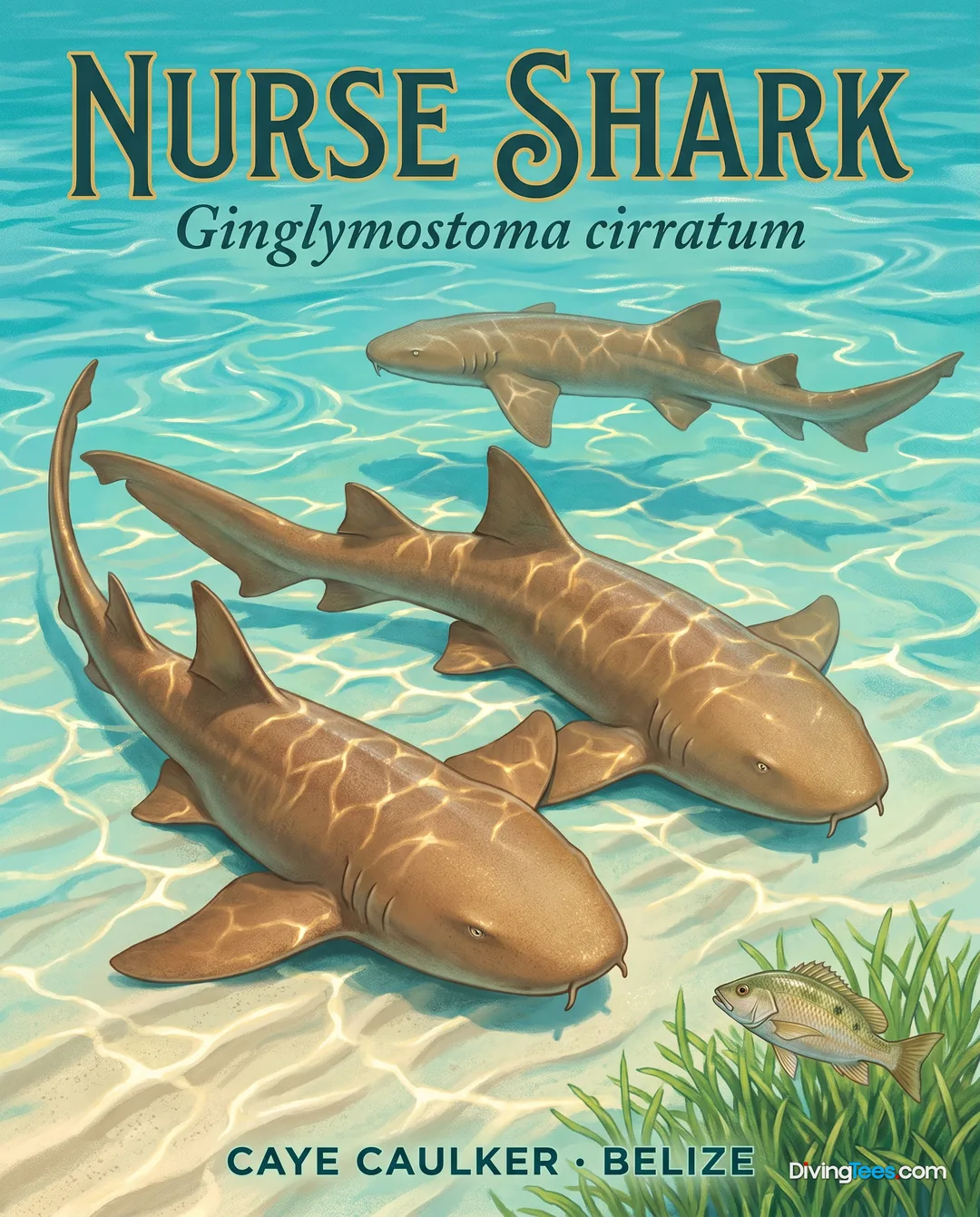
A dive day begins before the atoll is fully awake: coffee, equipment checks and a site briefing come before the first entry. The guide explains the current, the likely route and where the tender will collect divers, then the group moves through the platform and into the water. Meals punctuate the returns, with snacks available between them, and the boat may get underway after a dive to reach the next atoll or channel. Central-atolls schedules commonly build around three daytime dives and may add a night dive; the Hanifaru itinerary includes a manta night dive at Fesdhoo Lagoon, while other routes use night dives for nurse sharks or whale sharks. The exact sequence changes with weather, currents, marine-life movement and operations. That flexibility is part of the Maldives rather than a failure to follow a timetable. By evening, cameras are rinsed, images are reviewed, dinner is served and the deck quiets before the next briefing.
What you eat aboard
Food is one of Horizon 3's clear strengths. Full board brings buffet meals, snacks through the day and a mix of local Maldivian and Western cooking, with vegan and vegetarian choices. The galley also supports beer, cocktails and other drinks, while a glass of wine is offered with dinner. The point is not variety for its own sake; after several hours in current, divers need food that arrives reliably, in enough quantity and with choices for different appetites. Fresh local dishes keep the table tied to the islands rather than making every meal interchangeable with an airport buffet. On suitable trips, a beach barbecue changes the setting, while dinner back aboard closes the more demanding part of the day. The food feedback is notably stronger than the vessel feedback, which is useful information: guests tend to leave talking about what was served as much as where they dived.
Nights at sea
The cabins are air-conditioned and en suite, with hot and cold water, towels, a hairdryer, a safe and a dehumidifier. Six Lower Deck Standard cabins use twin berths, while two lower-deck cabins have a double bed; three Upper Deck Deluxe cabins add ocean views and can take a double bed with a single bed. One main-deck bunk cabin can be used as a family room. That range matters more than the labels: lower-deck twin cabins suit divers who spend most of the day outside, while the upper-deck cabins give more reason to stay near the light and sea. The private bathroom keeps the return from a night dive simple, and the air-conditioning gives wet bodies somewhere dry and cool to recover. Horizon 3 was renovated in summer 2025, but this remains a dive yacht, not a suite hotel. Choose the cabin for how you sleep, not for a promise of silence at sea.
Lower Deck Cabins
Standard Cabin
Upper Deck Deluxe
What to know before boarding
The principal routes depart from and return to Malé, while southern itineraries can use Gan International Airport for boarding or disembarkation. Airport transfers to the boat are included: a Blue Horizon representative meets arriving guests, and the transfer continues by tender to Horizon 3. Check-in from Malé is around 11:30, with departure at noon; for the southern routes, the arrival airport follows the itinerary. Arriving in the Maldives the night before is the sensible choice, especially for a scheduled liveaboard transfer.
Deck plan
- Year built
- 2009
- Length
- 36 m
- Maximum number of passengers
- 25
- Number of cabins
- 12
- Number of bathrooms
- 12
- Engines
- 2 × 360 hp DOOSAN Daewoo (Dual Screw)
- Cruising speed
- 10 knots
- Tenders
- 2
- Website
- blue-horizon.com.mv ↗
Hello, I'm Marina, DivingDeal.com's AI assistant. I answer in detail about hotels, dive centres and liveaboards.
Thinking about the whole trip and the flights? Talk it over with Edith →
Marina is an AI. Some links are affiliate links: DivingDeal may earn a commission, at no extra cost to you. Bookings are made with the partner.