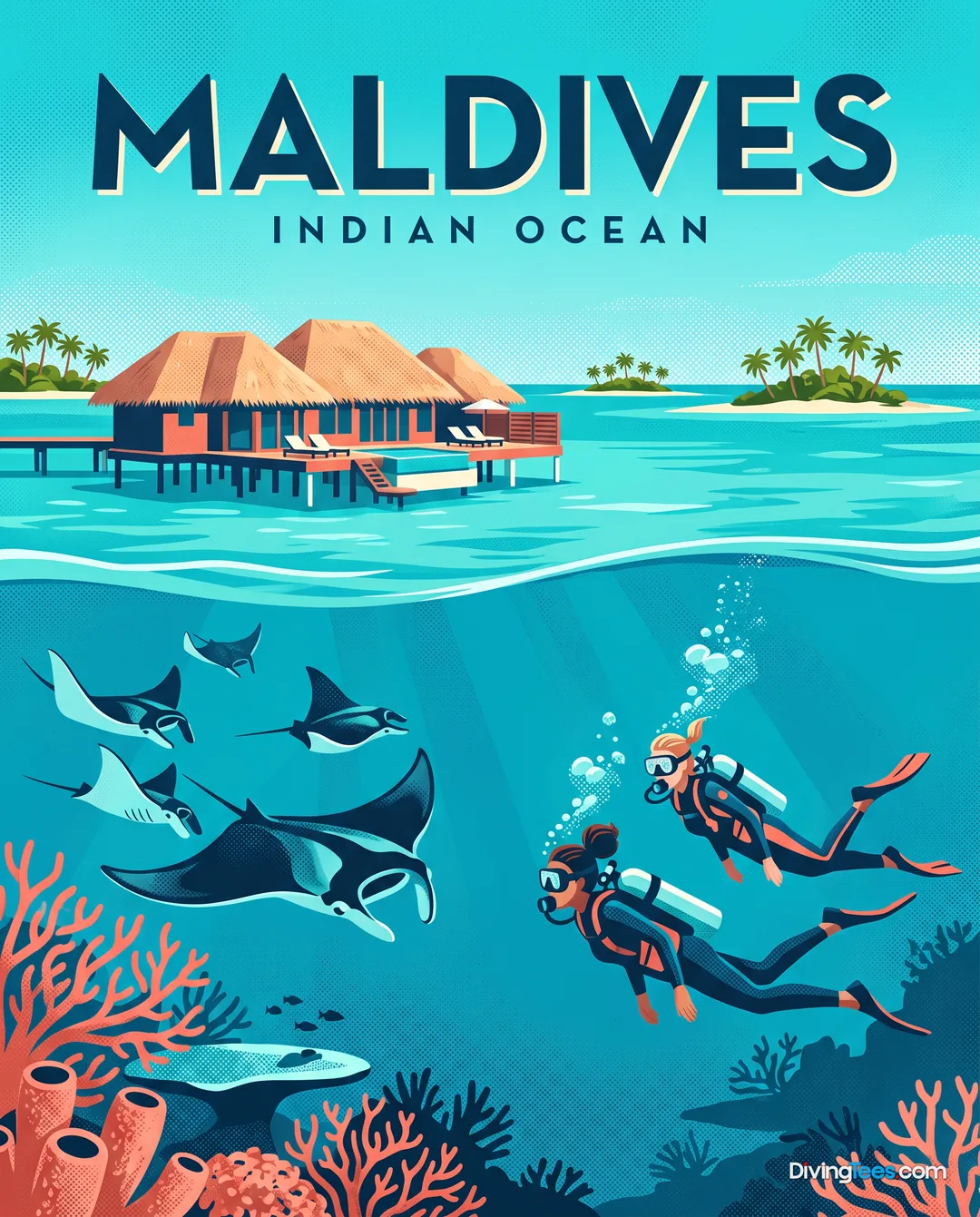
Liveaboards · Maldives
Ocean One — a spacious Maldives liveaboard built around varied diving
What makes this boat unique
- Ocean One is a 37-metre liveaboard renovated in 2024–2025, with 15 cabins for up to 26 passengers.
- The diving setup includes shaded space, DIN adaptors, rinse tanks, free nitrox and a dedicated dive platform.
- Routes cover the central, northern and extreme southern Maldives, with trips from 8 days / 7 nights to 13 days / 12 nights.
- The boat welcomes non-divers and offers kayaks, stand-up paddleboards, fishing, snorkeling excursions and a jacuzzi.
For subtitles in English: start the video firstthen click the gearat the top right of the video, select “Subtitles/CC”, then “Auto-translate” and choose “English”.
The invitation
Ocean One is for divers who want the Maldives in several forms rather than one repeated reef: shark channels, manta cleaning stations, thilas, caves and whale-shark country appear across its central, northern and southern routes. The boat has also been renovated in 2024–2025, so the appeal is not only the itinerary but a liveaboard designed to carry a full group without reducing the trip to a bunk, a tank and a meal. Free nitrox and night dives support a serious week in the water, while kayaks, paddleboards, fishing and snorkeling give non-divers something concrete to do between outings. The route matters most here. Ocean One can run short northern or southern voyages, longer crossings between regions, and a 10-day Best of Center itinerary from Malé to Malé.
Boarding
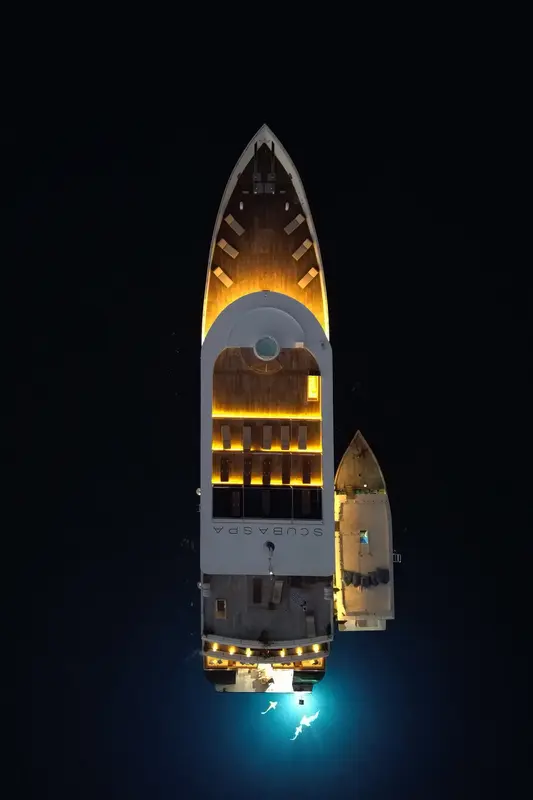
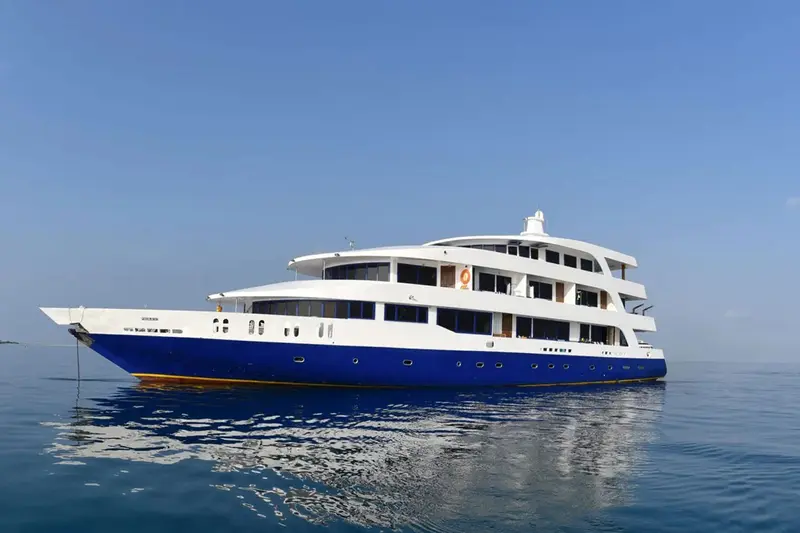
From the dock, Ocean One presents as a substantial four-deck vessel rather than a compact dive boat. Its broad 12-metre beam gives the boat a more settled presence at sea, while the recent renovation keeps the shared areas from feeling tied to its 2015 build. Once aboard, the layout separates the business of diving from the places used for meals and downtime: the dive platform is its own working zone, the interior salon offers a retreat from weather, and the upper decks open the view across the atolls. The boat runs at a cruising speed of 8 knots and can reach 11 knots, enough to make the itinerary about moving between dive areas rather than staying beside one reef. It is a large-group liveaboard, but the passenger capacity is matched by 15 cabins rather than dormitory-style accommodation. The first impression is practical: a boat built to spend days moving divers through the Maldives.
The atmosphere on board
Ocean One carries a local and international crew who speak English, French and Spanish. That language mix matters on a boat where the day depends on quick, clear exchanges: a question about the next dive, a request for help with equipment or a change in plans should not have to cross a language barrier. The crew's role reaches beyond guiding the dives. They run the cabins, meals, transfers and deck work that allow divers to repeat the same basic cycle without having to organise it themselves. In the evening, the boat offers a bar, audio and video entertainment, outdoor dining and the observation deck rather than a single compulsory social space. Guests can stay with the group after dinner or step away from it. Ocean One suits a mixed international group that wants a social liveaboard without making every hour a group activity.
The sites you’ll dive
The route can be as short as Extreme North from Hanimaadhoo to Dharavandhoo, at 8 days / 7 nights, or extend to Best of South–Extreme South from Gan to Malé, at 13 days / 12 nights. Other departures include Extreme South from Gaafu–Gan, Best of North–Extreme North, North, Center / North and Best of Center from Malé to Malé, each lasting 10 days / 9 nights except where stated otherwise. The sites range widely. Barracuda Giri reaches -30m across three pinnacles with barracudas and pelagic fish in the current; Banana Reef is a lively reef near Thulhagiri Island Resort. Mushimasmigili Marine Reserve reaches -30m at an isolated thila known for grey reef sharks at the up-current pinnacle, while Dhonkalo reaches -25m at a manta cleaning station in a sandy channel. Maamigili and Maamigili Beiyru, both to -30m, are South Ari sites for whale sharks and mantas. Kudarah Thila Marine Reserve reaches -30m through clefts, overhangs and caves where batfish gather. Guraidhoo and Myaru Kandu are current-shaped shark sites, with Myaru Kandu reaching -30m. Foththeyo Kandu reaches -40m, combining caves covered in yellow soft corals with open-ocean pelagics. In Baa Atoll, Dhigalhi Haa Marine Reserve and Dhonfanu reach -30m; Dhonfanu adds manta cleaning stations and a narrow swim-through. Dhigu Thila reaches -30m in South Malé Atoll, Fushifaru Thila Marine Reserve reaches -35m at manta cleaning stations, and the route also includes the thilas and channels that connect the Maldives' central, northern and southern itineraries.
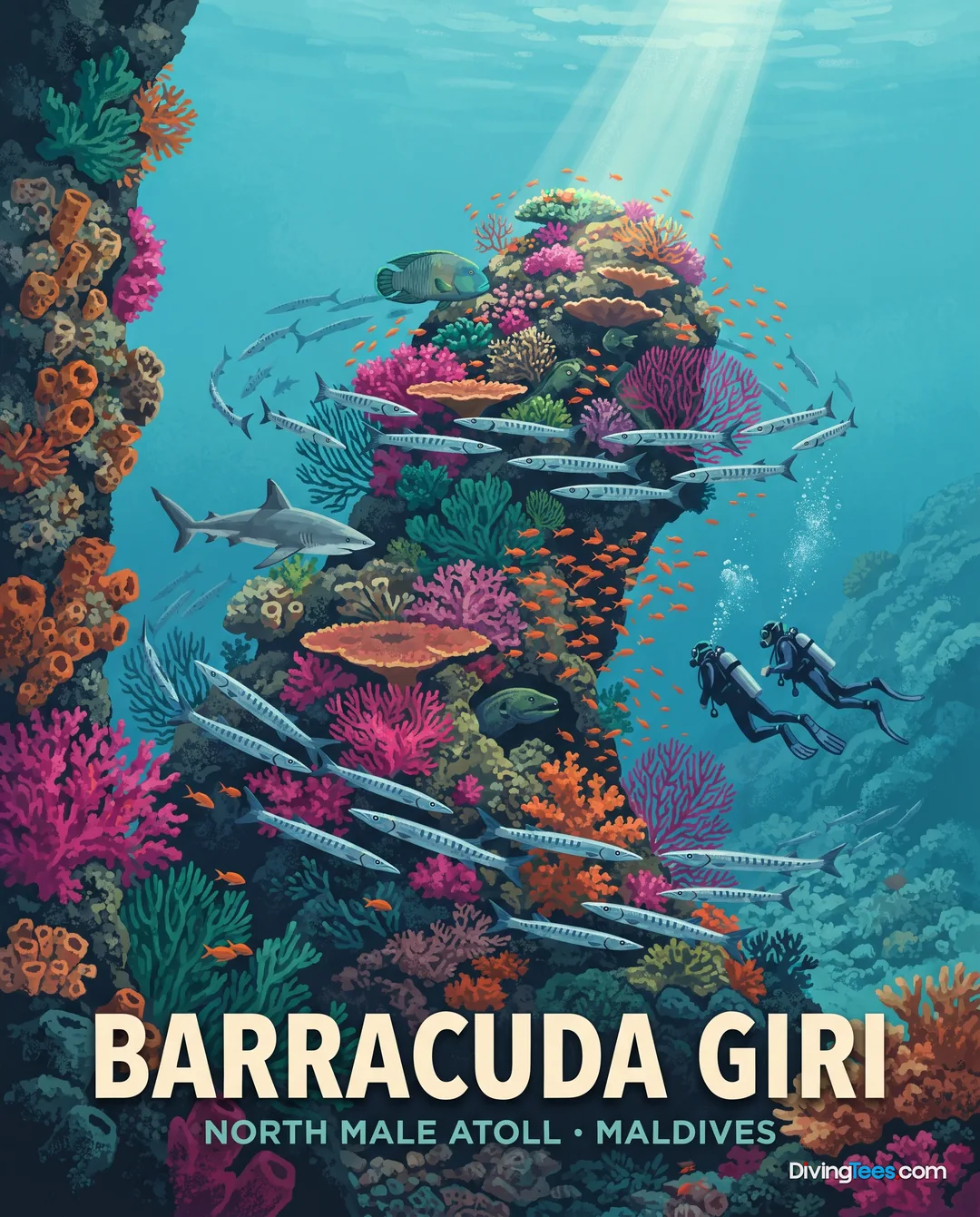
Barracuda Giri →
Max. depth · 30 m
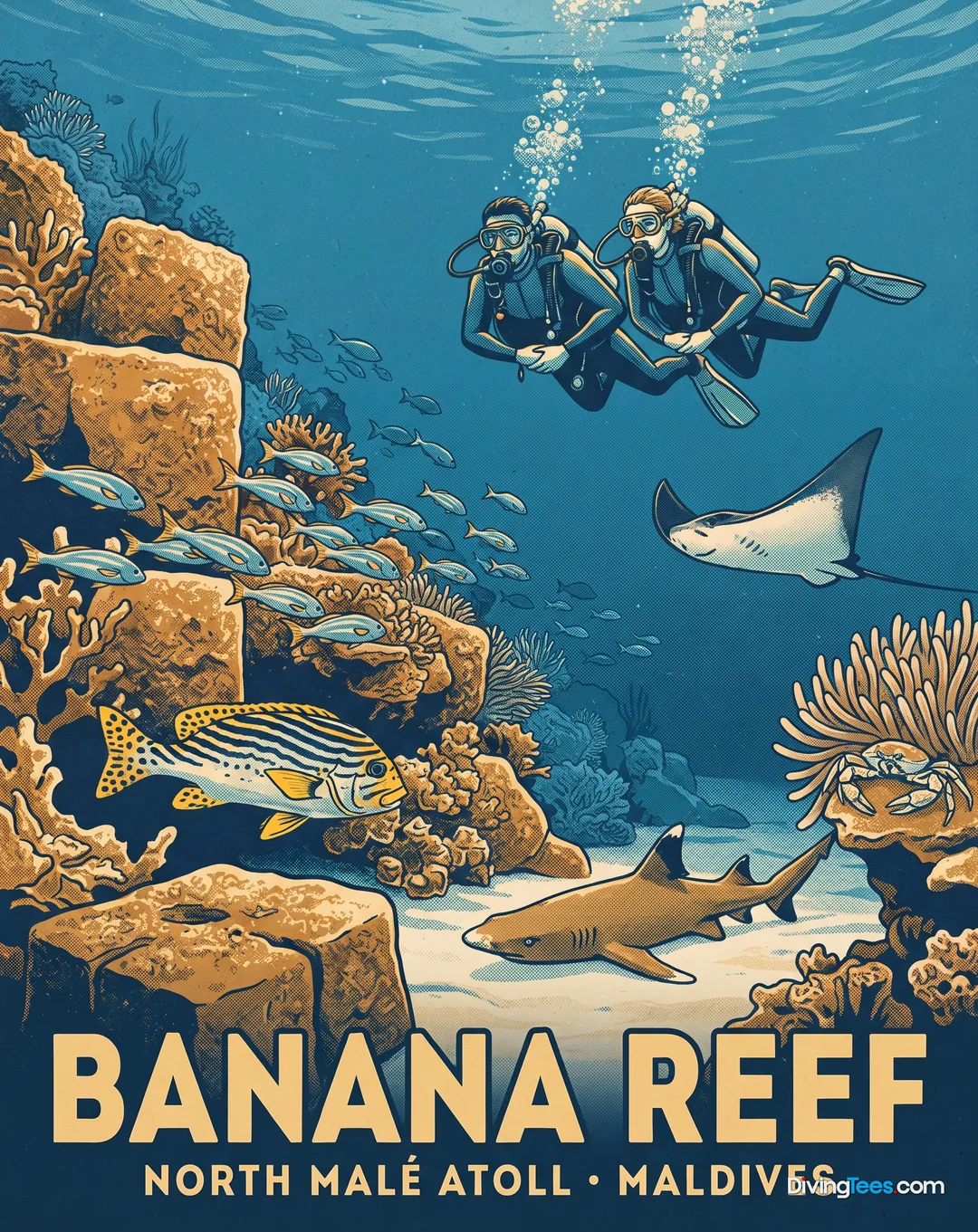
Banana Reef →
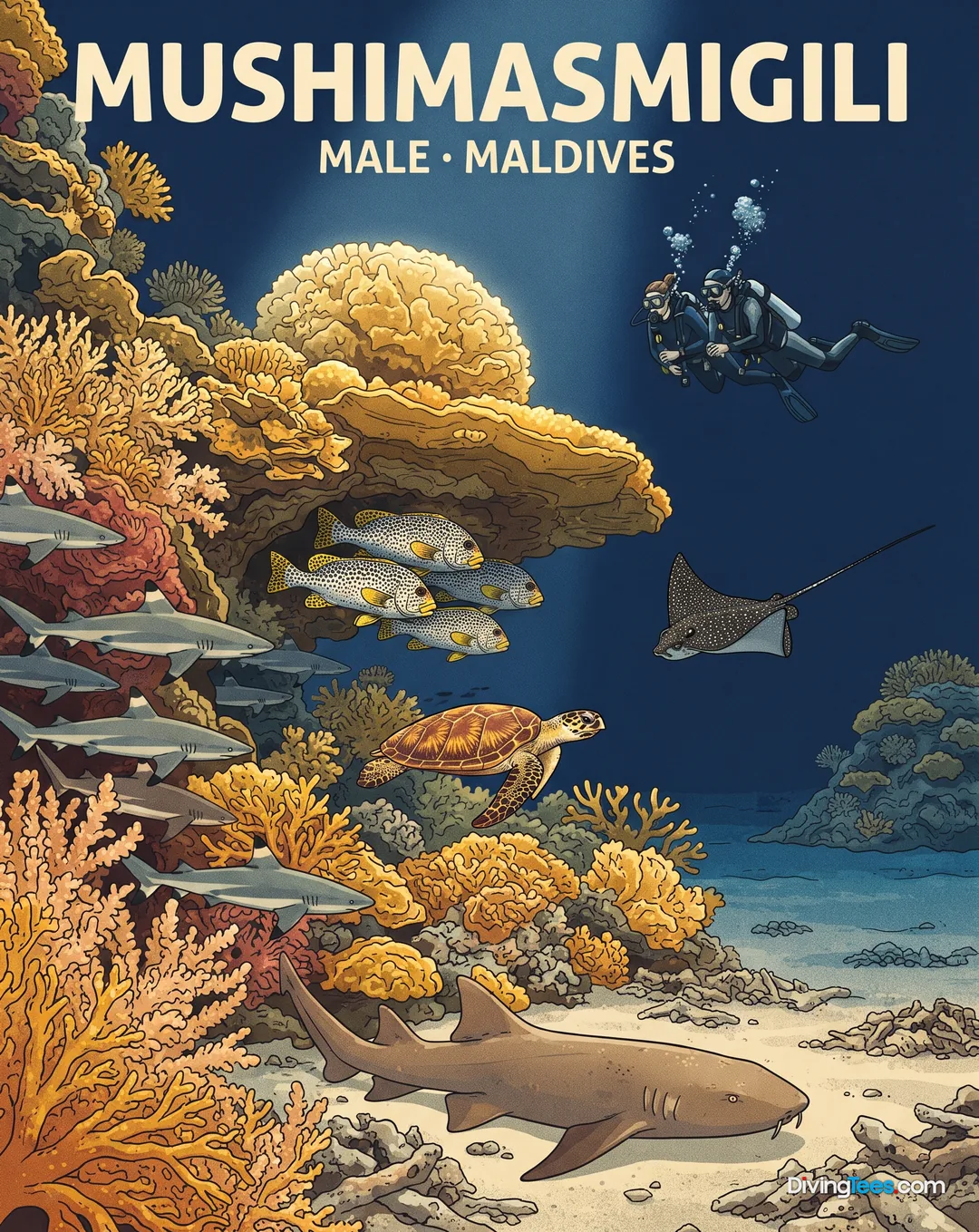
Mushimasmigili Marine Reserve →
Max. depth · 30 m
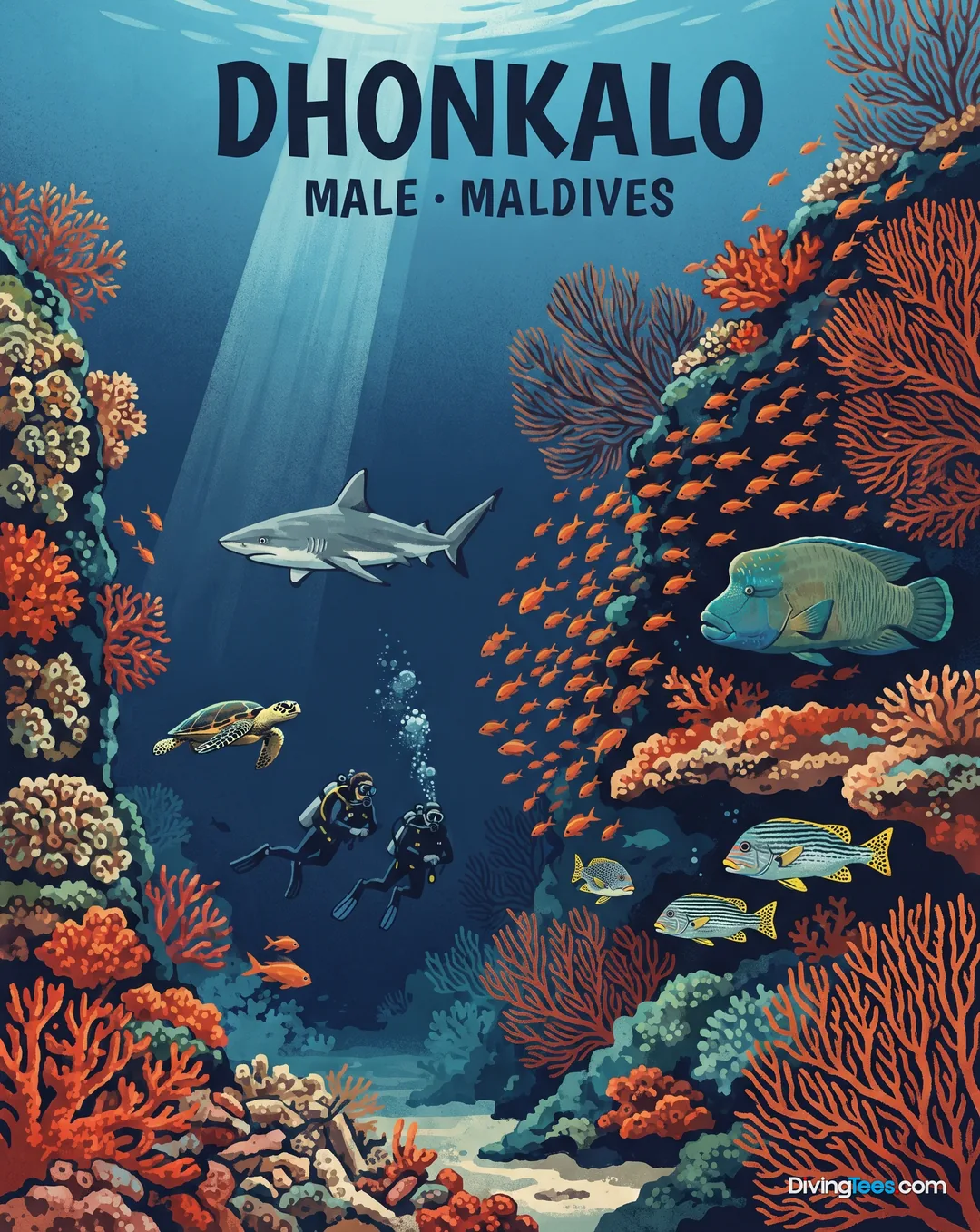
Dhonkalo →
Max. depth · 25 m
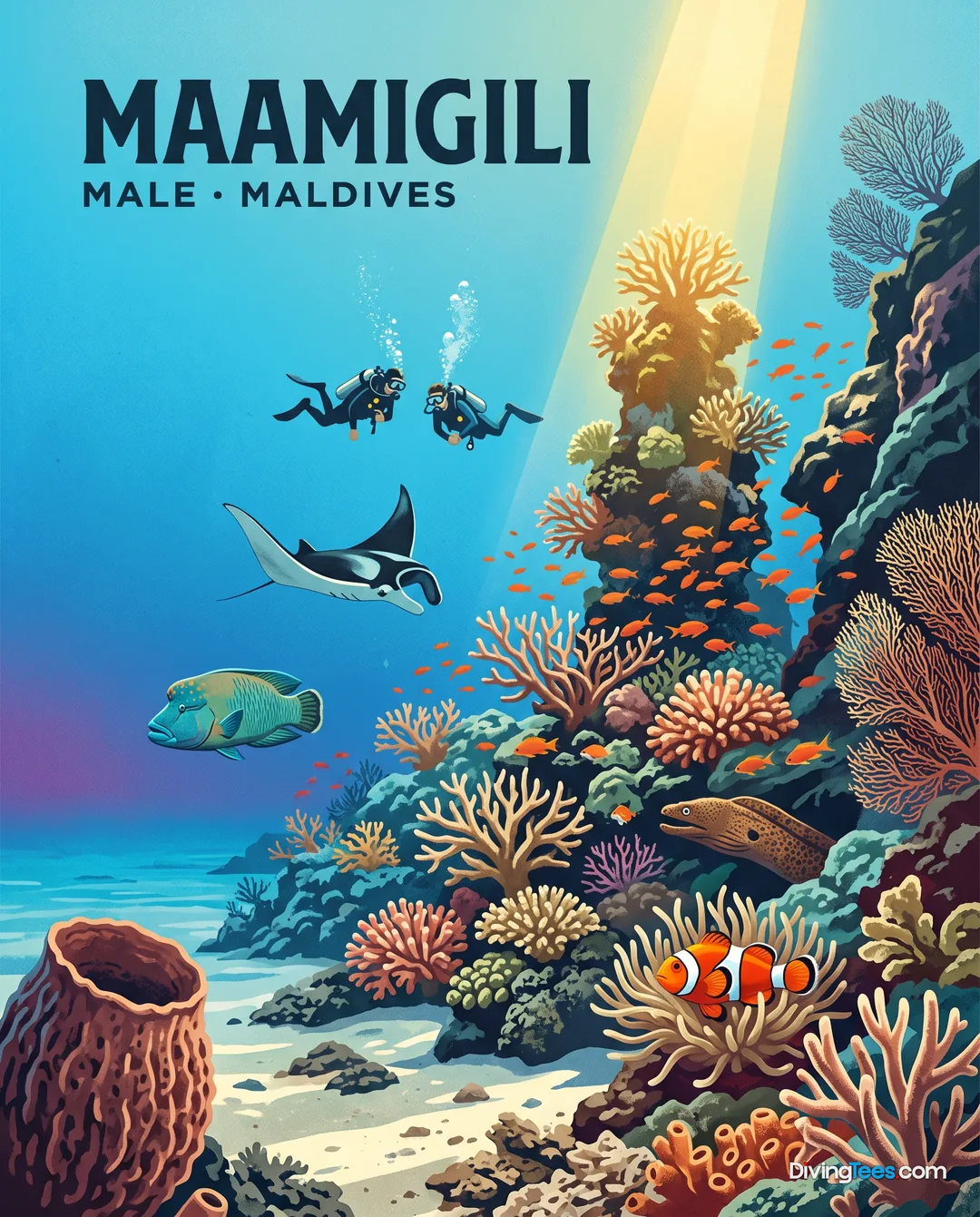
Maamigili →
Max. depth · 30 m
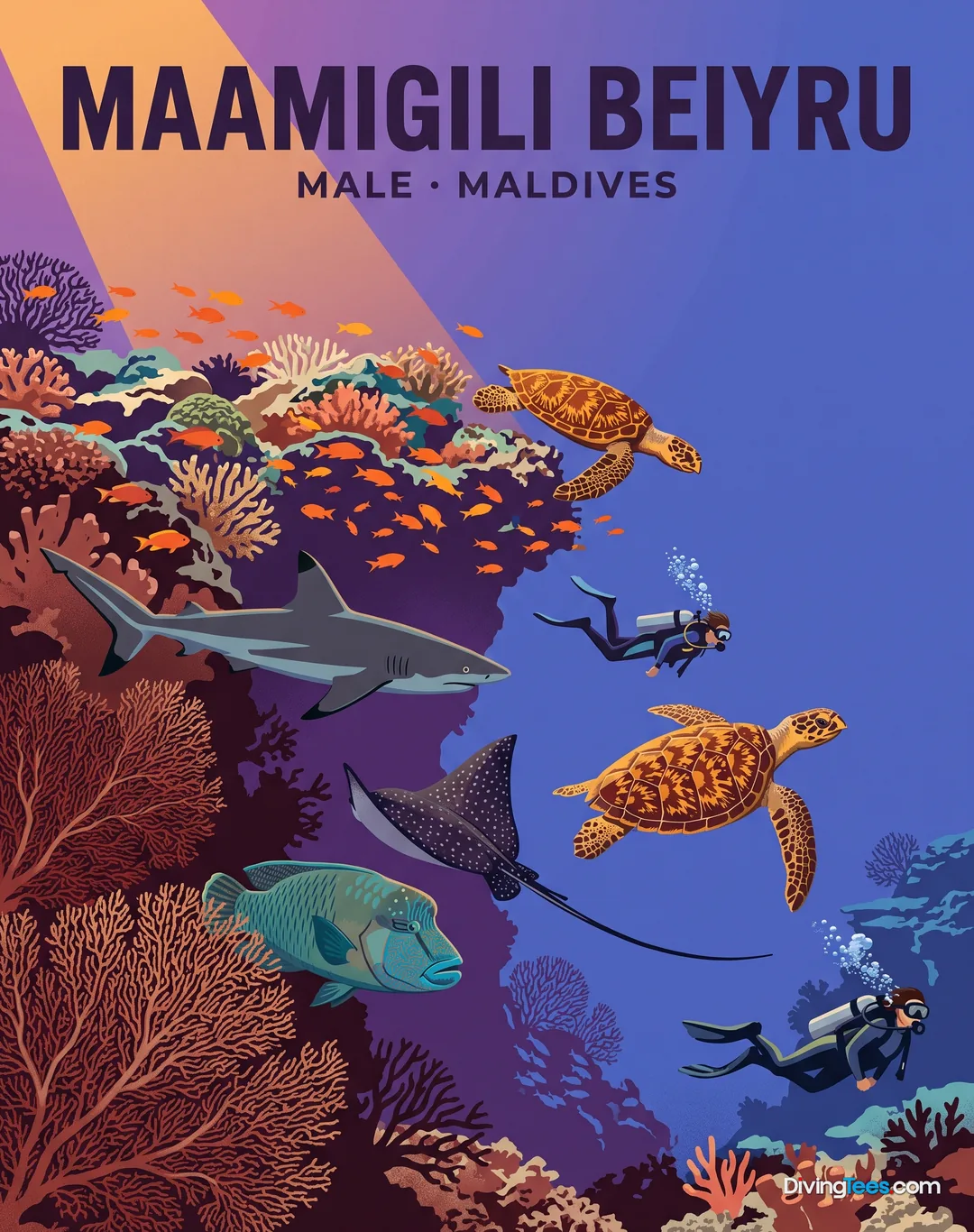
Maamigili Beiyru →
Max. depth · 30 m
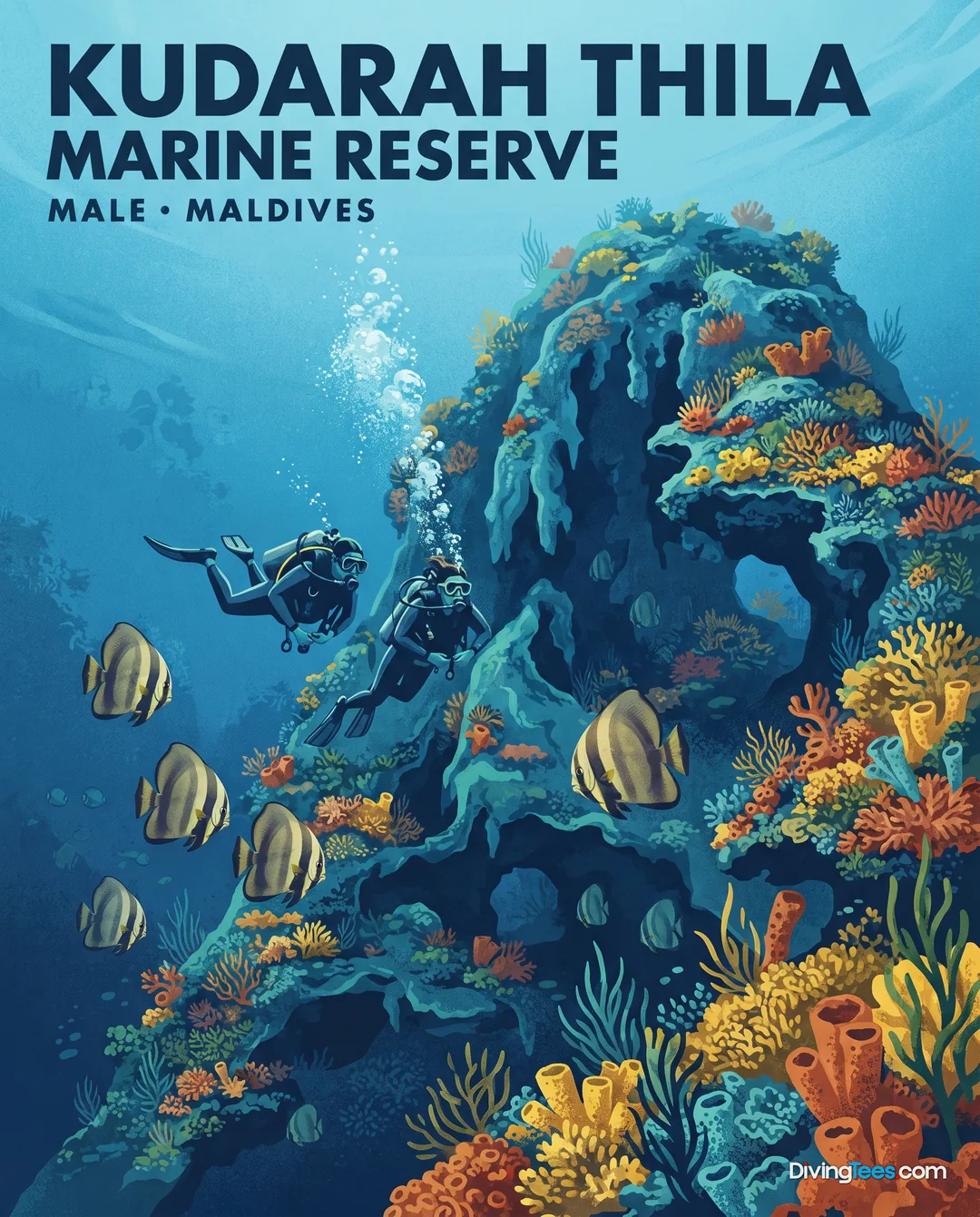
Kudarah Thila Marine Reserve →
Max. depth · 30 m
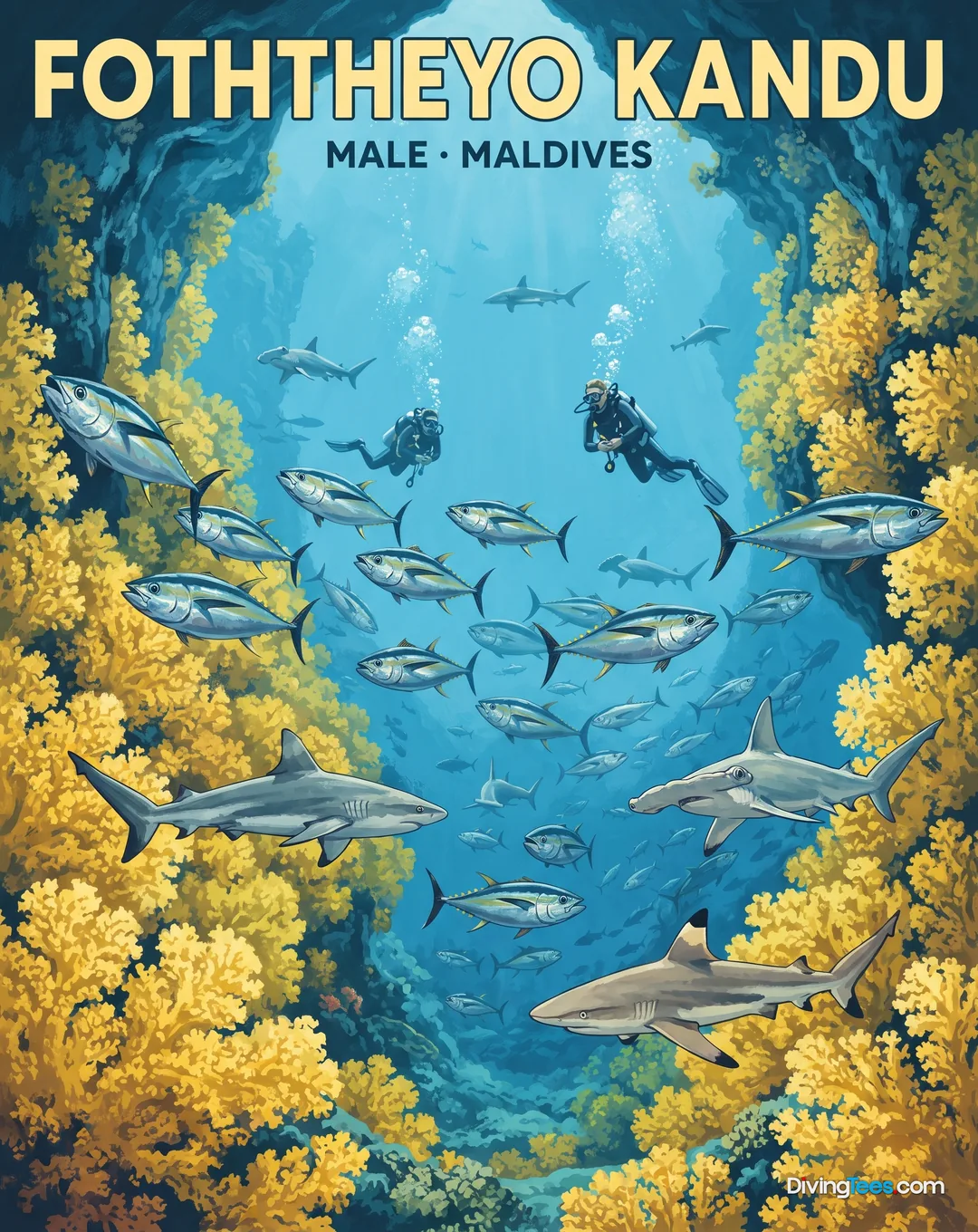
Foththeyo Kandu →
Max. depth · 40 m
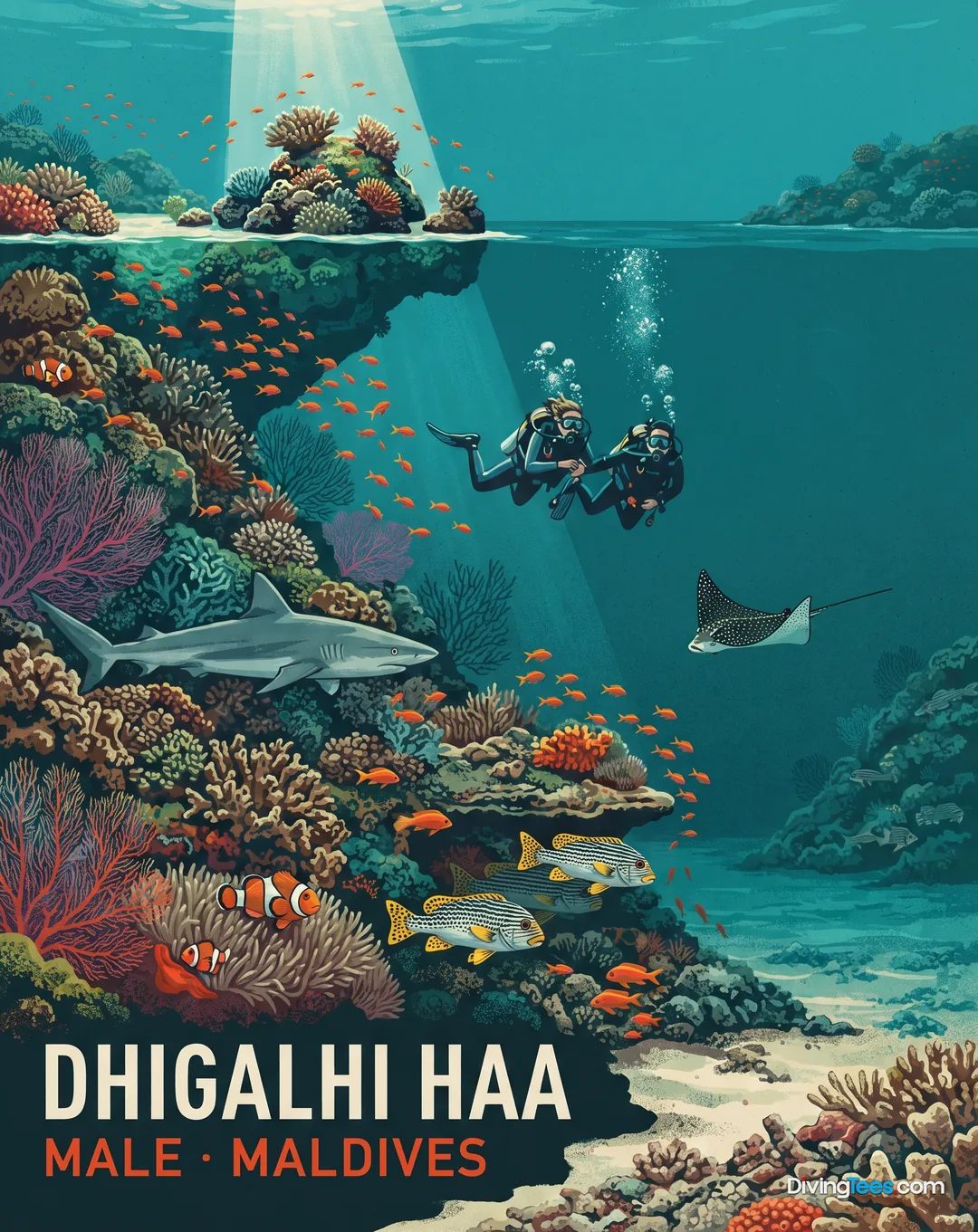
Dhigalhi Haa Marine Reserve →
Max. depth · 30 m
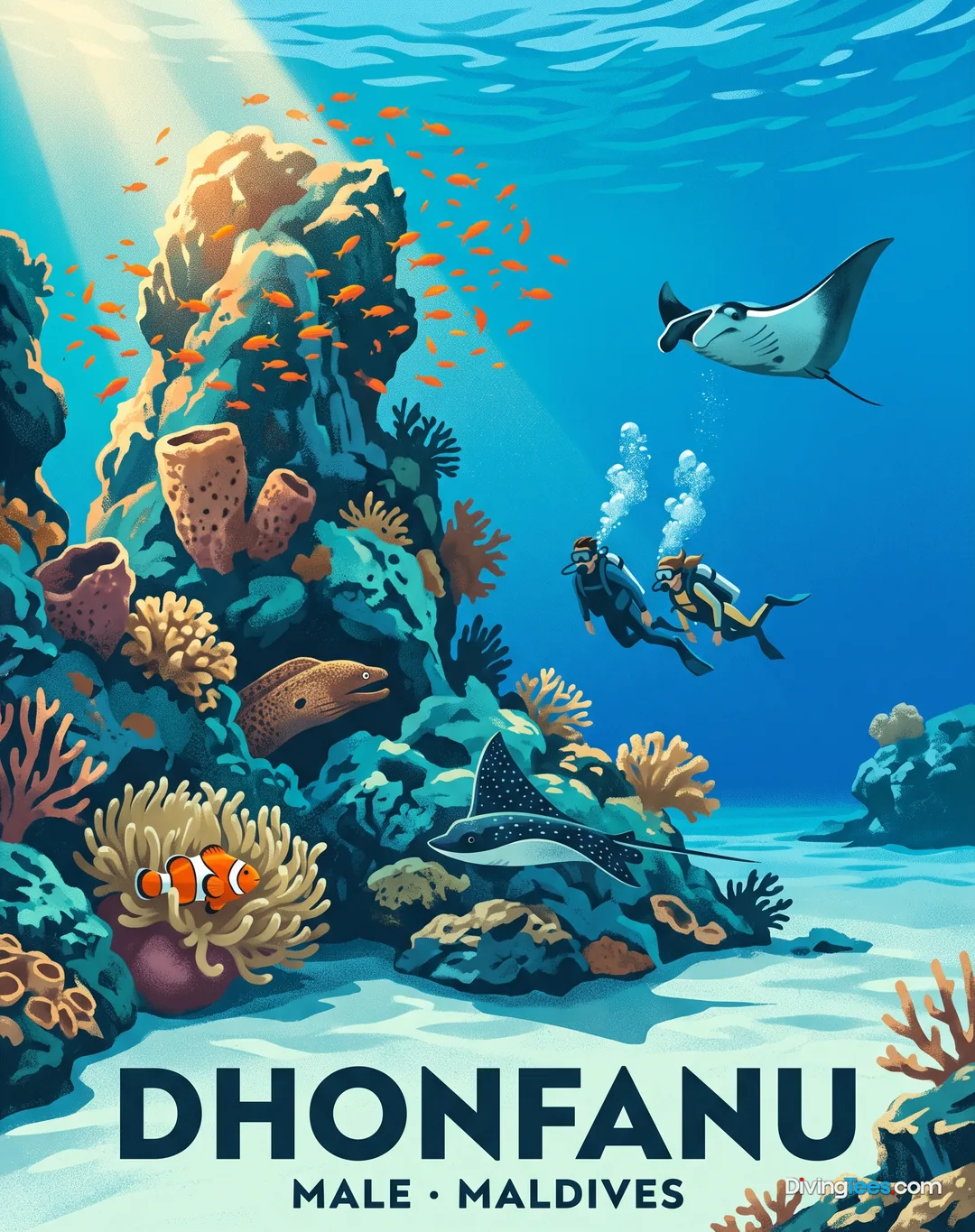
Dhonfanu →
Max. depth · 30 m
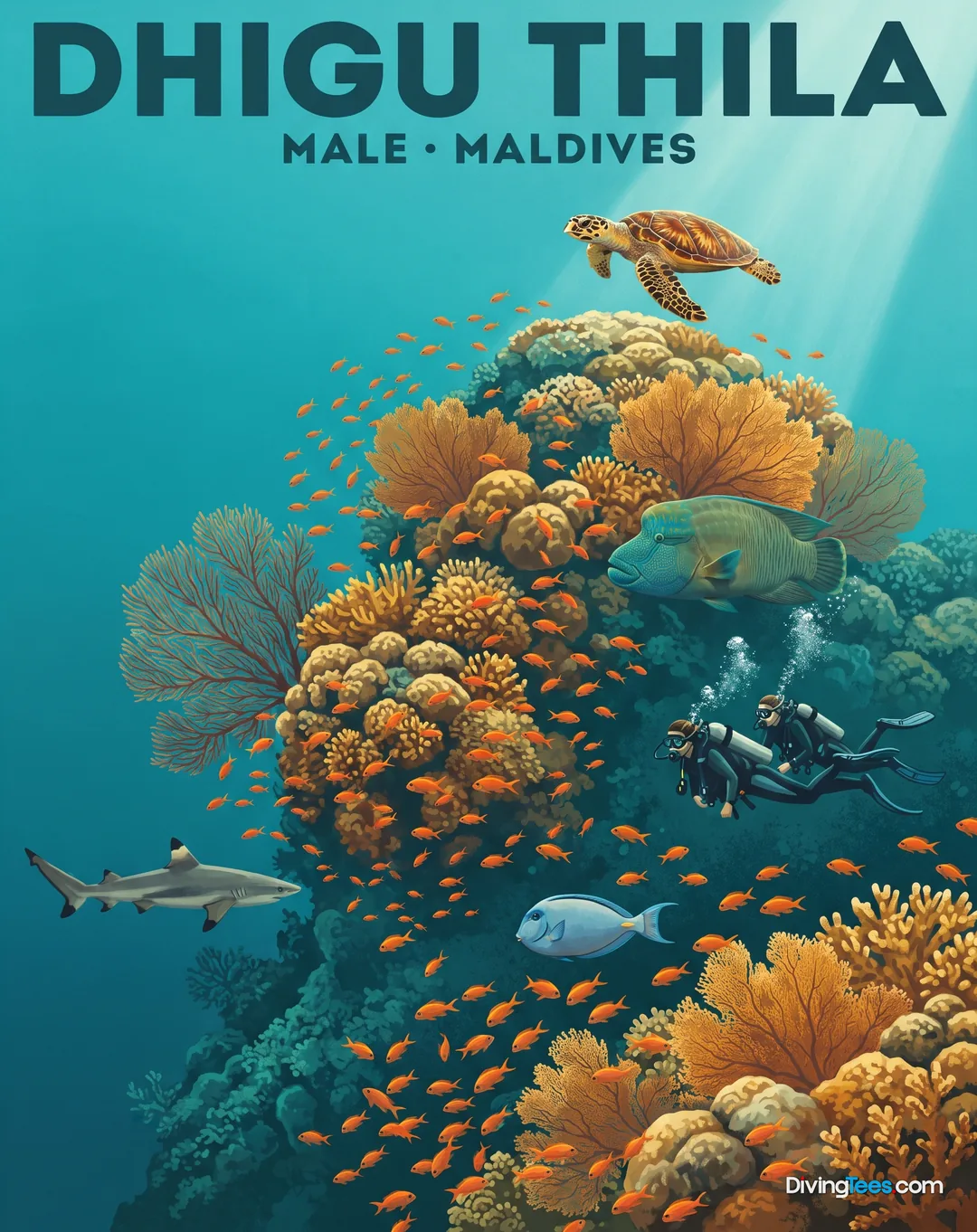
Dhigu Thila →
Max. depth · 30 m
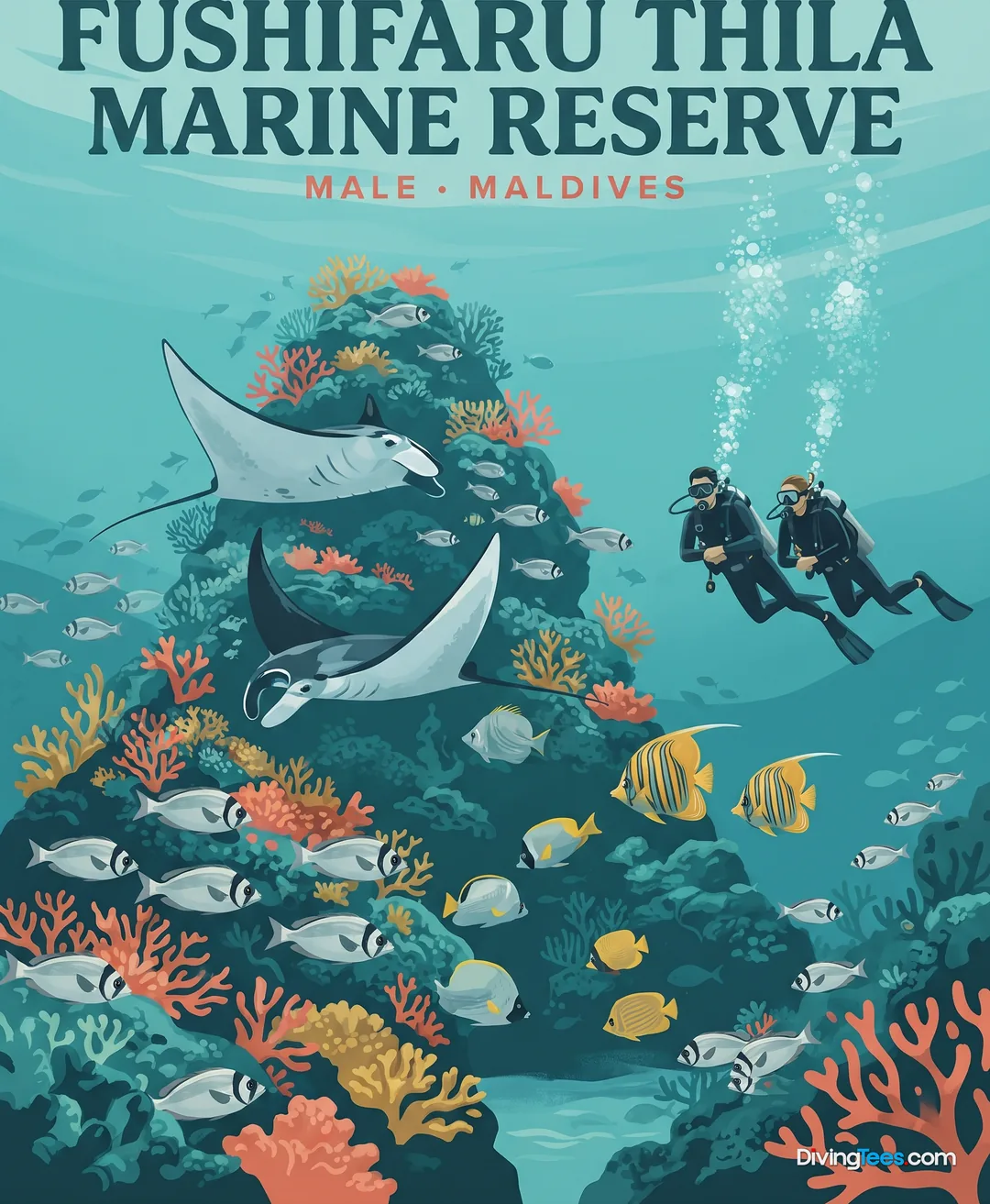
Fushifaru Thila Marine Reserve →
Max. depth · 35 m
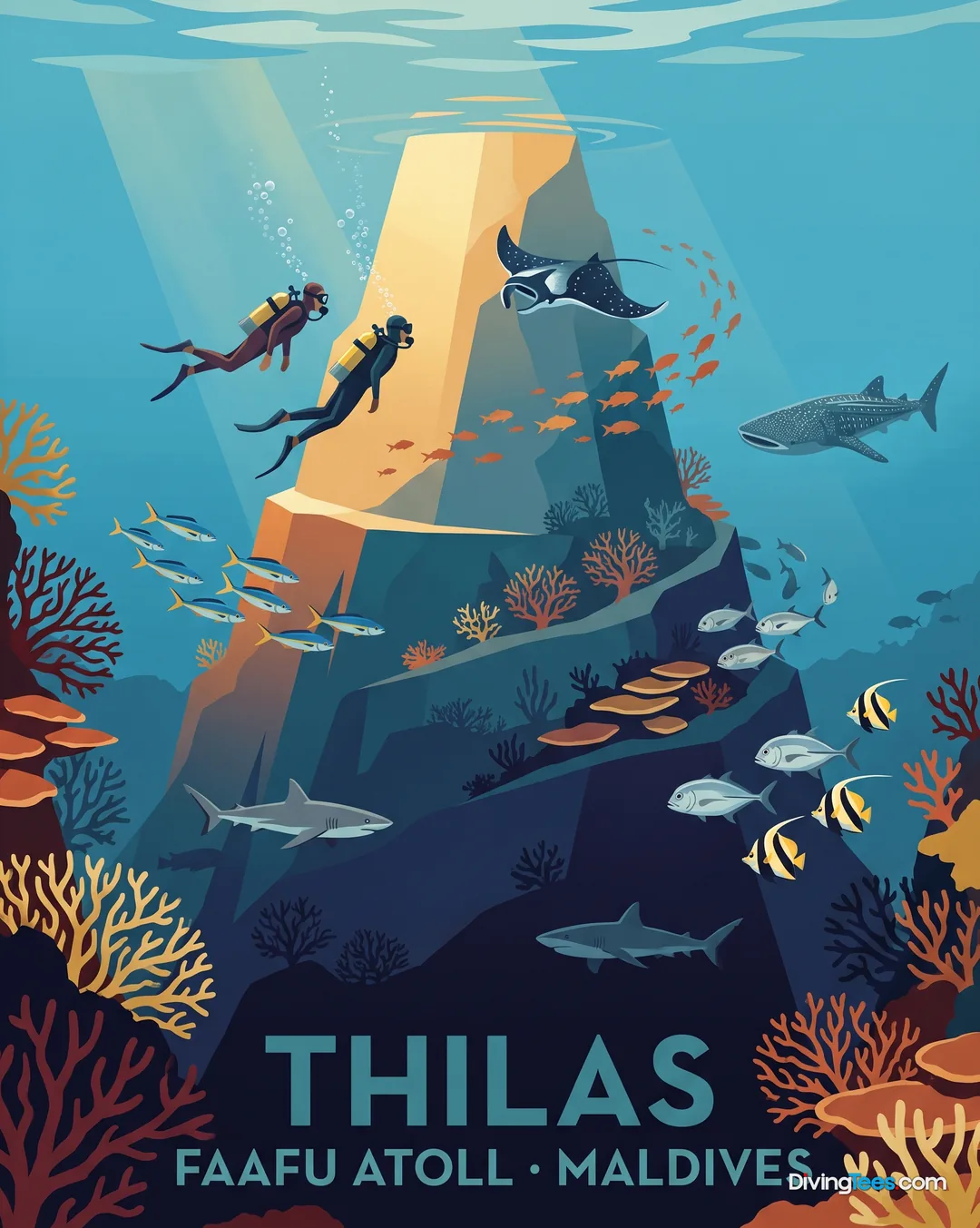
Thilas →
Max. depth · 15 m
Itineraries, dates and prices
Prices per person. Each month shows its lowest price: click a month, or pick an itinerary.
Next departures · 35 departuresfrom £1,722$2,302€2,057
November 2026
December 2026
January 2027
See dates and prices
If you click these links and make a purchase on the partner site, DivingDeal may earn a commission, at no extra cost to you.
Dates and prices taken from liveaboard.com, updated 25 October 2026
What you’ll meet underwater
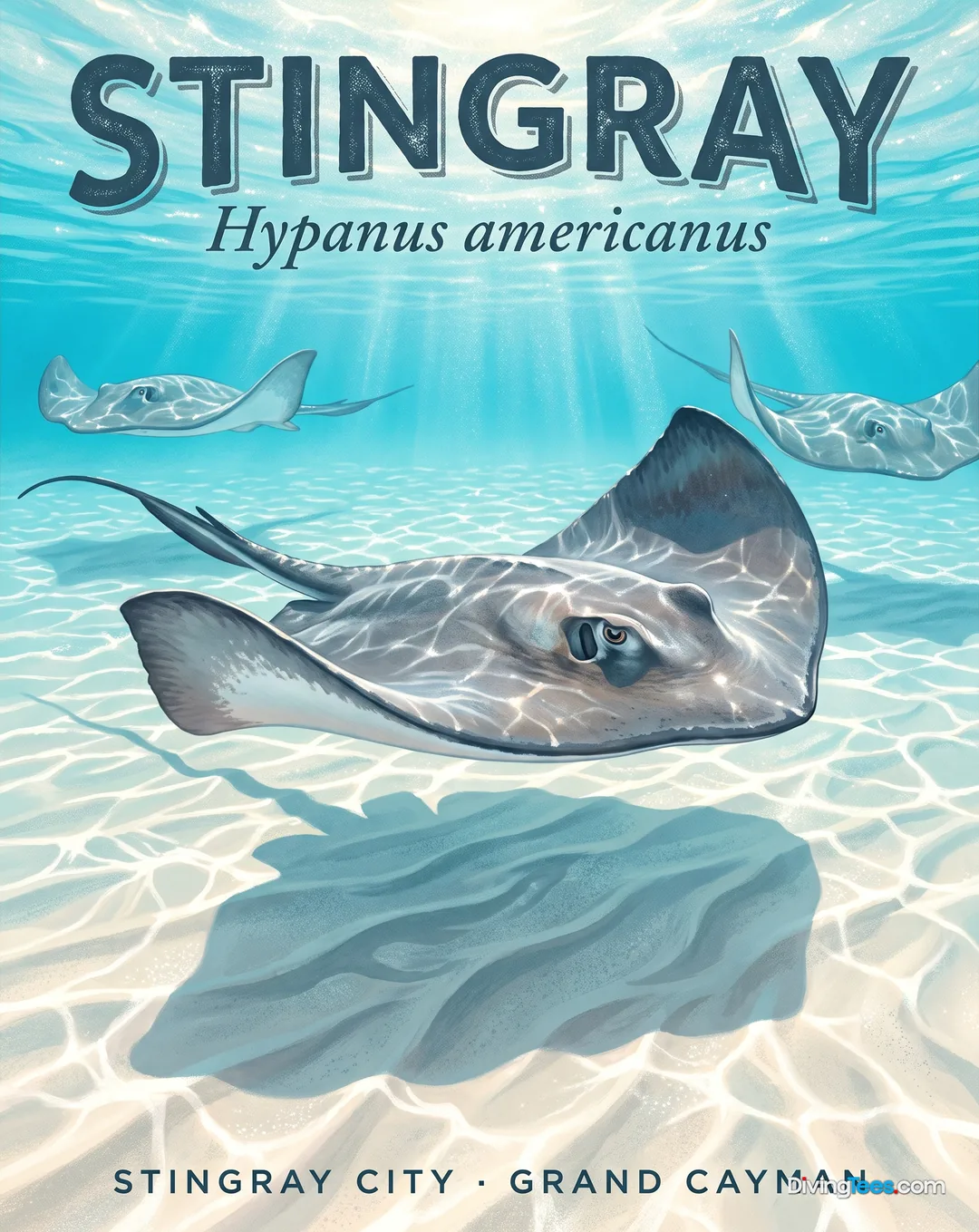
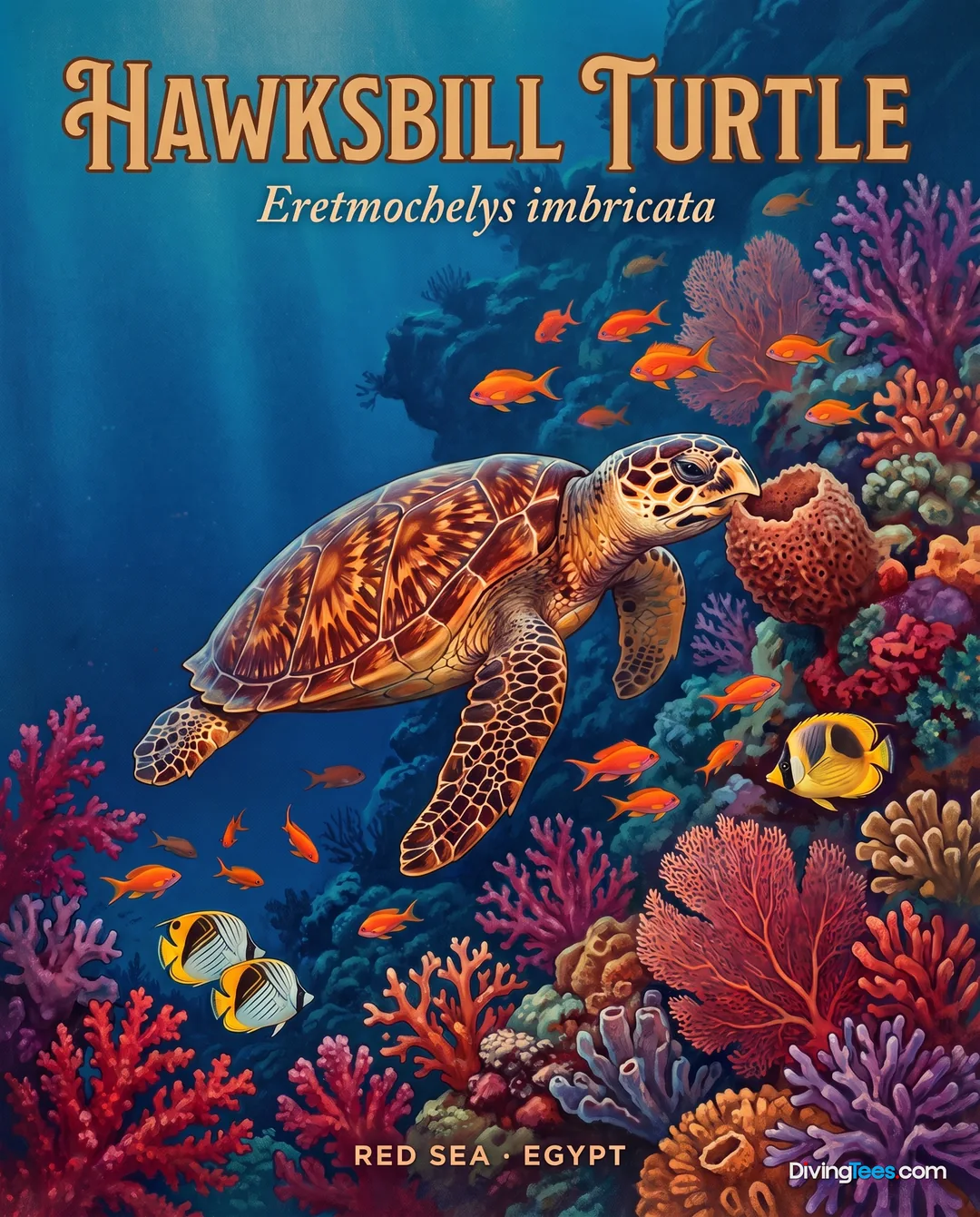
The recurring spectacle is large reef life: Napoleons, grey reef sharks, sea turtles, barracudas, manta rays, tuna, fusiliers and eagle rays occur across much of the route. White-tip reef sharks, reef sharks, whale sharks, green turtles, jacks, trevallies, moray eels and batfish also appear at several sites. The point of the individual dives is what changes from reef to reef. Barracuda Giri is the place for groupers and anthias; Banana Reef is where anemones are specifically recorded. Maamigili adds groupers and porcupinefish, while Dhigalhi Haa Marine Reserve is the site associated with soft coral and gorgonians. Fushifaru Thila Marine Reserve is the listed site for a stingray, and Dhigu Thila for a hawksbill turtle. Current is part of the story: it brings sharks to channels and pelagic fish to pinnacles, while cleaning stations concentrate manta rays at Dhonkalo, Dhonfanu and Fushifaru. Encounters remain wildlife encounters, not guarantees.

Who puts you in the water
The crew speaks English, French and Spanish, and the boat carries oxygen, first-aid kits and a crew trained in first aid. A VHF/DSC/SSB radio, mobile and satellite phones, GPS, sonar and a fish detector support communication and navigation, while fire alarms, extinguishers and engine-room video surveillance cover the vessel itself. Nitrox certification and scuba-diving certifications are available as optional courses. The published information does not give guide-to-diver ratios, instructor qualifications, minimum logged dives, group sizes, a diver recall system or a defibrillator, so the briefing structure and entry requirements should be checked before departure. What is clear is that Ocean One is set up for organised liveaboard diving, with a dedicated platform and the equipment needed to support the boat's listed dive programme.
The dive deck and the gear
The dive deck is arranged for repeated entries, with a shaded working area, a dedicated platform and rinse tanks. DIN adaptors are available, and the boat provides free nitrox for the dives. A separate rinse area for cameras keeps photographic equipment away from the general gear wash, an important distinction when several dives are being turned around in the same space. Surface support includes oxygen, first-aid kits, GPS, sonar, fish detection equipment and radio communications, while the boat's safety systems include fire alarms, extinguishers and a bilge pump. A DPV is available as an optional part of the diving setup, and rental equipment can be arranged. The boat information does not give tank material or volume, compressor type, SMB provision, tender numbers or a hot-water shower on the dive platform, so those details should not be assumed from the general specification.
Between dives
The gaps between dives are built around the upper decks rather than a fixed programme. Ocean One has a terrace, an observation deck, an interior salon, a jacuzzi and shaded space where wet gear and strong sun do not dictate the whole afternoon. Kayaks and stand-up paddleboards let guests leave the boat under their own effort, while fishing and snorkeling excursions offer a different pace from scuba. Land excursions are also part of the included programme. On a non-dive afternoon, that gives the trip more shape than simply waiting for the next briefing: settle in the shade, take the paddleboard out, watch the atoll from the upper deck or use the jacuzzi. The boat also welcomes non-divers, so these spaces matter to the whole group rather than serving only as overflow for divers.
A day on board
A day on Ocean One begins with the first dive briefing, followed by the entry into the water and the return to a meal, a rinse and a place in the shade. The next dive comes after the surface interval, then another meal and another interval before the later diving. The exact timing follows the route and site conditions rather than a clock imposed in advance. Between dives, guests move between the shaded dive area, the terrace, salon, observation deck and jacuzzi, or take a kayak or paddleboard out when conditions allow. When a night dive is planned, it adds a different final chapter to the day: equipment is prepared again, the briefing comes first, and the reef is entered after daylight has gone. The boat may get underway between sites or while guests are eating and resting. Meals, snacks and tea or coffee mark the cycle, but the water remains the centre of it.
What you eat aboard
Meals are served as a full-board buffet, with both local and Western dishes and options for vegetarian and vegan divers. Food is one of Ocean One's stronger practical advantages on a dive trip because the table keeps pace with the diving rather than treating meals as an afterthought: there is a proper meal between water sessions, snacks are available, and a special dinner breaks the routine. Outdoor dining gives the meal a setting beyond the interior salon, while beer, wine and cocktails are available for the hours when the day's diving is finished. The kitchen is not presented as a single-cuisine experience. It is better suited to a mixed group in which one diver wants familiar food, another wants local flavours and a third needs a plant-based plate.
Nights at sea
Ocean One's cabins are arranged across the main deck and upper levels, with Standard Cabins numbered 101–107, Panoramic Suite Cabins 201–202 and Seaview Cabins 301–306. Private bathrooms, air conditioning and daily housekeeping cover the essentials after repeated saltwater entries, while the panoramic windows in the cabins give the sea a proper place in the room rather than leaving it to the observation deck. The suites are the choice for more room; the seaview and standard categories make the main decision one of position and outlook. Nights are quieter when the boat is anchored, but the vessel remains a working liveaboard: engines, water systems and other guests are part of the setting. The reward is waking with the route already outside the window, not returning to a resort after every dive.
Standard Cabins (101-107)
Seaview Cabins (301-306)
Panoramic Suite Cabins (201-202)
What to know before boarding
Departures and returns use Malé, Gan, Hanimaadhoo and Dharavandhoo, depending on the itinerary. Airport transfers are included, including the domestic flights required by the listed routes, and the transfer arrangements are communicated with the booking information. Arriving in the Maldives the night before boarding is the sensible choice, especially for routes starting away from Malé.
Deck plan
- Year built
- 2015
- Year renovated
- 2024 - 2025
- Length
- 37 m
- Beam
- 12 m
- Maximum number of passengers
- 26
- Number of cabins
- 15
- Number of bathrooms
- 13
- Engines
- 650 hp
- Cruising speed
- 8 knots
- Website
- amisdesmaldives.com ↗
Hello, I'm Marina, DivingDeal.com's AI assistant. I answer in detail about hotels, dive centres and liveaboards.
Thinking about the whole trip and the flights? Talk it over with Edith →
Marina is an AI. Some links are affiliate links: DivingDeal may earn a commission, at no extra cost to you. Bookings are made with the partner.