
Plongee Tek Marseille
Google 5/5 (429 reviews)
6.5 km away as the crow flies
Marseille · France · Mediterranean
Max. depth · 50 mA versatile site at the southwestern tip of Pomègues Island offering everything from shallow natural pools to a 50-metre coralligenous drop-off.
For subtitles in English: start the video firstthen click the gearat the top right of the video, select “Subtitles/CC”, then “Auto-translate” and choose “English”.
Cap Caveau is situated at the southwestern point of Pomègues Island within the Frioul archipelago. The site is characterized by its varied topography, which transitions from very shallow, sheltered areas to a significant vertical descent. You typically approach the site by boat, entering the water in the nearby calanque or the shallow natural pool. This initial area provides a calm environment for checking buoyancy and gear before moving toward more complex terrain.
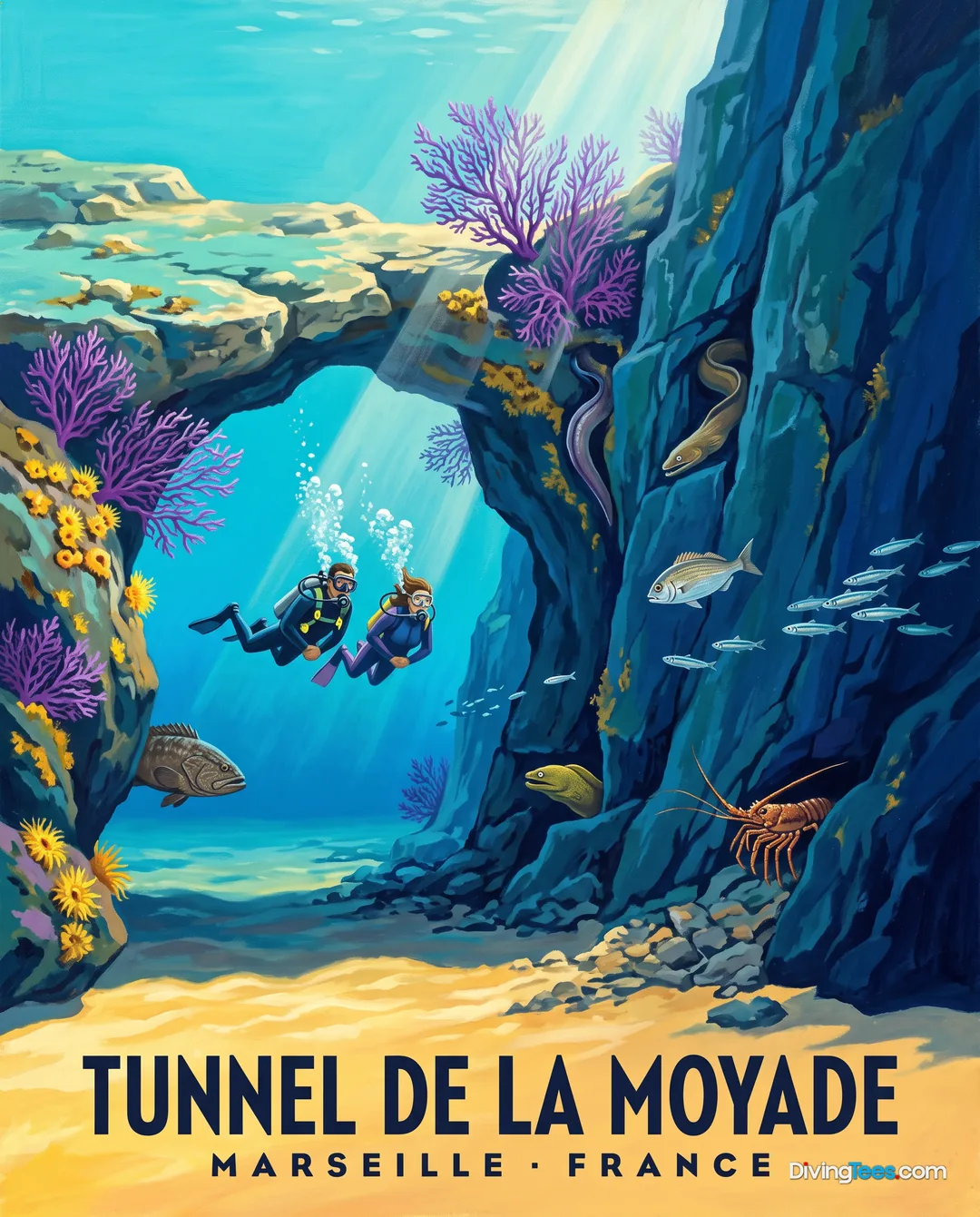
The first stage of the dive involves navigating a plateau composed of large boulders and scree. This section is relatively easy to manage and serves as a transition toward the more structured elements of the site. As you progress, you will encounter a small tunnel located at a depth between 8 and 12 metres. This passage cuts through the point and provides a brief moment of light and enclosure, offering a different perspective of the surrounding underwater landscape.
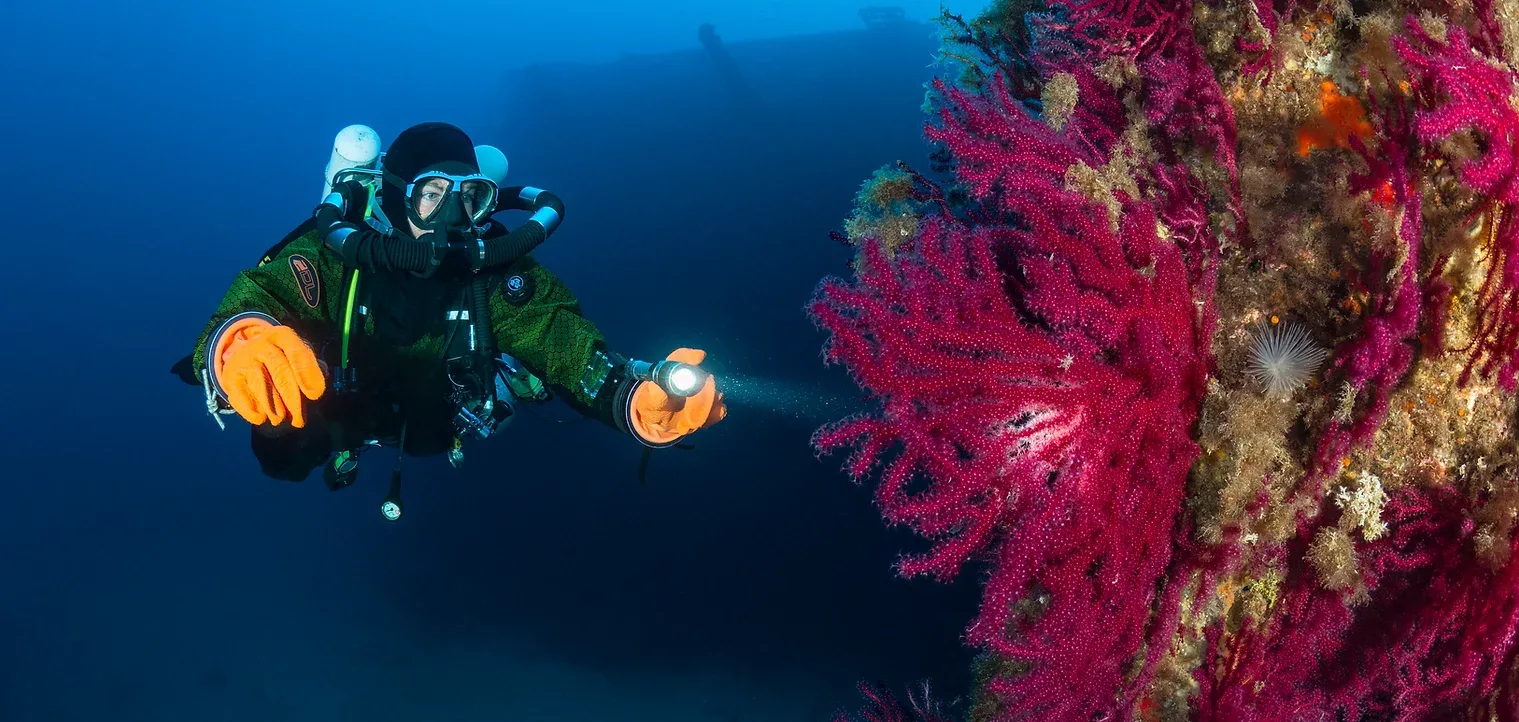
Beyond the plateau and the tunnel, the topography changes significantly as the seafloor drops away. A deep, heavily eroded rocky wall begins at approximately 28 metres and descends to a maximum depth of around 50 metres. This vertical section is the primary interest for experienced divers looking for coralligenous formations. The structure of this wall is complex, with numerous holes, crevices, and overhangs carved into the rock over time.
The site is particularly valued for its protection against the Mistral. When this strong wind blows across the Mediterranean, Cap Caveau often remains sheltered, providing a viable alternative to more exposed locations in the Marseille area. This makes it a frequent choice for dive planners when sea conditions elsewhere are unfavorable. While the surface might be choppy, the underwater environment within the site's topography remains manageable.
The marine life at Cap Caveau is well-distributed across its different depth zones. In the shallower, rocky areas, you are likely to encounter species such as the Mediterranean damselfish and various wrasse. If you look closely into the crevices of the plateau or the wall, you can find the red scorpionfish or a common octopus hiding from the current. These resident species define the character of the reef during a standard recreational dive.
As you descend toward the deeper sections of the wall, the fauna becomes more specialized. The European conger is a common sight within the darker recesses of the rocky structure. You may also spot a gurnard near the bottom or a John Dory cruising through the water column. For those observing the coralligenous zones, the presence of nudibranchs and spiny lobsters adds to the biological diversity found in these deeper, more stable habitats.
The site also holds historical interest, with remnants of pottery found on the seabed. These vestiges are linked to the quarantine period associated with the islands, adding a layer of human history to the natural landscape. This combination of geological variety, biological interest, and archaeological traces makes Cap Caveau a distinct location compared to the more homogenous dive sites found elsewhere in the Calanques national park.
Depths range from 3 to 50 metres. The site is accessible from Open Water Diver level for the shallow sectors, but the deep wall (starting at 28m) is reserved for experienced divers with appropriate depth training. The site is highly regarded as a sheltered option during Mistral winds, though currents can vary.
Cap Caveau is particularly useful when the Mistral is blowing, because the site is sheltered from this strong wind. The surface may still be choppy, while the underwater terrain remains manageable. It can therefore provide an alternative to more exposed Marseille dive sites when conditions elsewhere are unfavorable.
You can explore the shallow sectors of Cap Caveau from Open Water Diver level. The site includes a calm natural pool, a boulder plateau, and a tunnel between eight and twelve metres. The deep wall, beginning at approximately twenty-eight metres, is reserved for experienced divers with appropriate depth training.
Cap Caveau ranges from three to fifty metres. You can begin in the shallow natural pool and plateau, pass through the tunnel between eight and twelve metres, or continue to the rocky wall descending to around fifty metres. Currents can vary, so conditions should be considered throughout the dive.
At Cap Caveau, you can see a shallow rocky plateau, a small tunnel, and a deep wall with coralligenous formations, holes, crevices, and overhangs. Marine life includes Mediterranean damselfish, wrasse, red scorpionfish, octopus, European conger, gurnard, John Dory, nudibranchs, and spiny lobsters, alongside pottery vestiges.