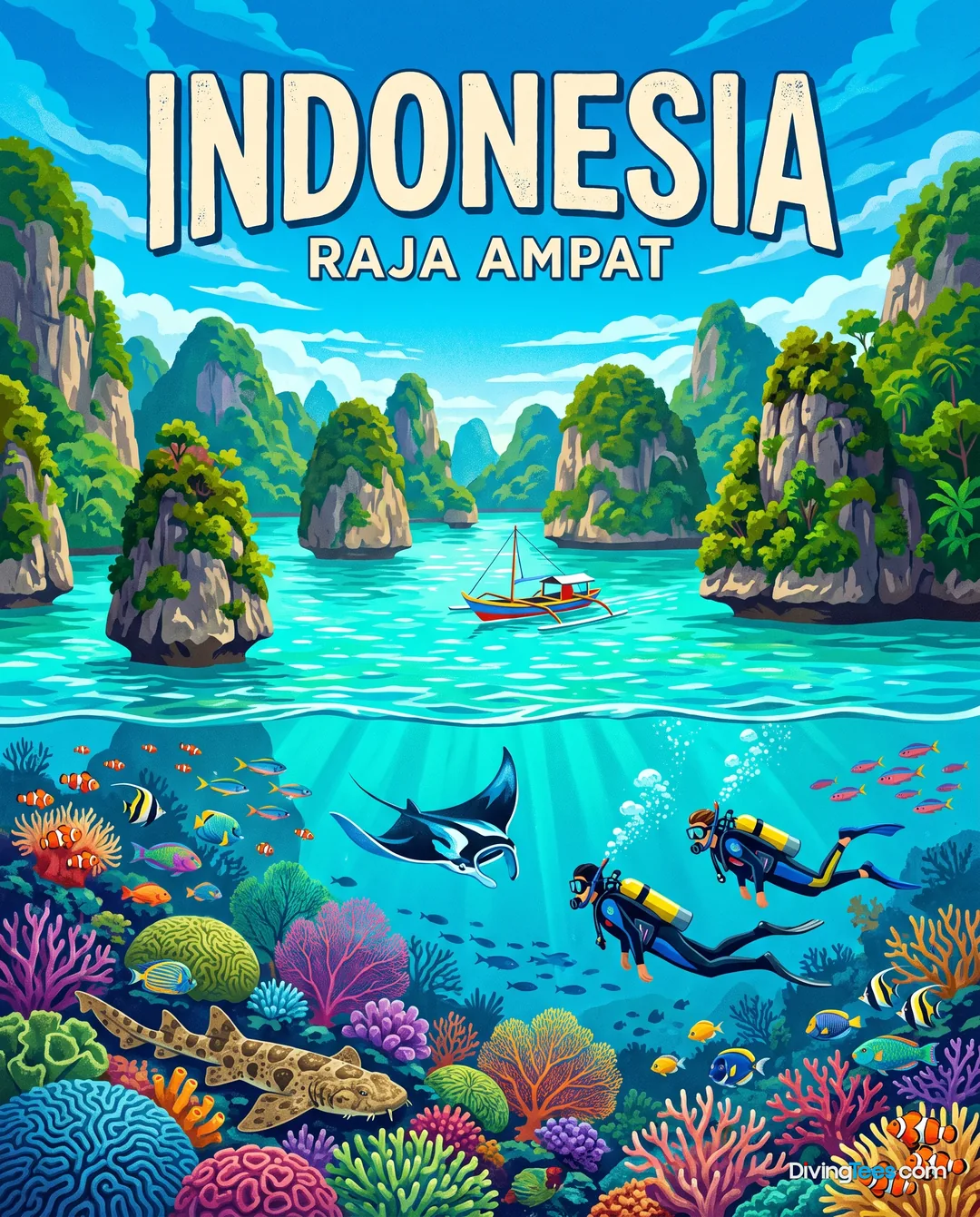
Liveaboards · Indonesia
Capoeng — a small, traditional Komodo liveaboard
What makes this boat unique
- Capoeng carries a maximum of eight guests in four cabins.
- The three-day, two-night Komodo Highlights route runs from Labuan Bajo to the central and northern park.
- The programme includes seven daytime dives and one night dive.
- A local crew, Indonesian cooking and simple modern comforts define the boat more than luxury does.
The invitation
Capoeng is for divers who want Komodo close at hand, without turning the trip into a floating resort stay. With only eight guests, the boat keeps the group small enough for the crew to know who is entering the water, who wants a slower reef tour and who is ready for a current-fed site. The route links the central and northern parts of Komodo National Park in three days and two nights, with seven daytime dives, a night dive and a land visit for Komodo dragons. That is the reason to choose this boat: the diving stays at the centre, while the boat gives the trip an Indonesian character rather than trying to disguise itself as a hotel.
Boarding
Capoeng makes the impression of a working Indonesian dive boat rather than a polished resort vessel. It was renovated in 2025, so the traditional character comes with a more recent layer of comfort. Boarding is straightforward: the dive shop in Labuan Bajo leads directly to the boat, and the compact layout keeps the important places close together. The shared spaces are open to the air, with a sunny deck and a shaded upper area for watching the volcanic islands slide past. Nothing here is built around distance or ceremony. Eight guests, four cabins and a boat designed specifically for diving make it easy to find the deck, the dining area and the water without wasting time.
The atmosphere on board
Capoeng’s atmosphere comes from the size of the group and the way the crew works around it. Eight guests share the boat, so the social side forms quickly without requiring a large communal programme. The crew is described as professional, helpful and genuinely fun, and that combination matters on a boat where the same people handle meals, movement around the dive deck and the small practical problems of a day at sea. The food is one of the strongest parts of the experience, not an afterthought between dives. Evenings are unforced: dinner outside, a walk on shore when the anchorage allows it, or time on deck while the light leaves the islands. Capoeng suits divers who value people and place over formal service.
The sites you’ll dive
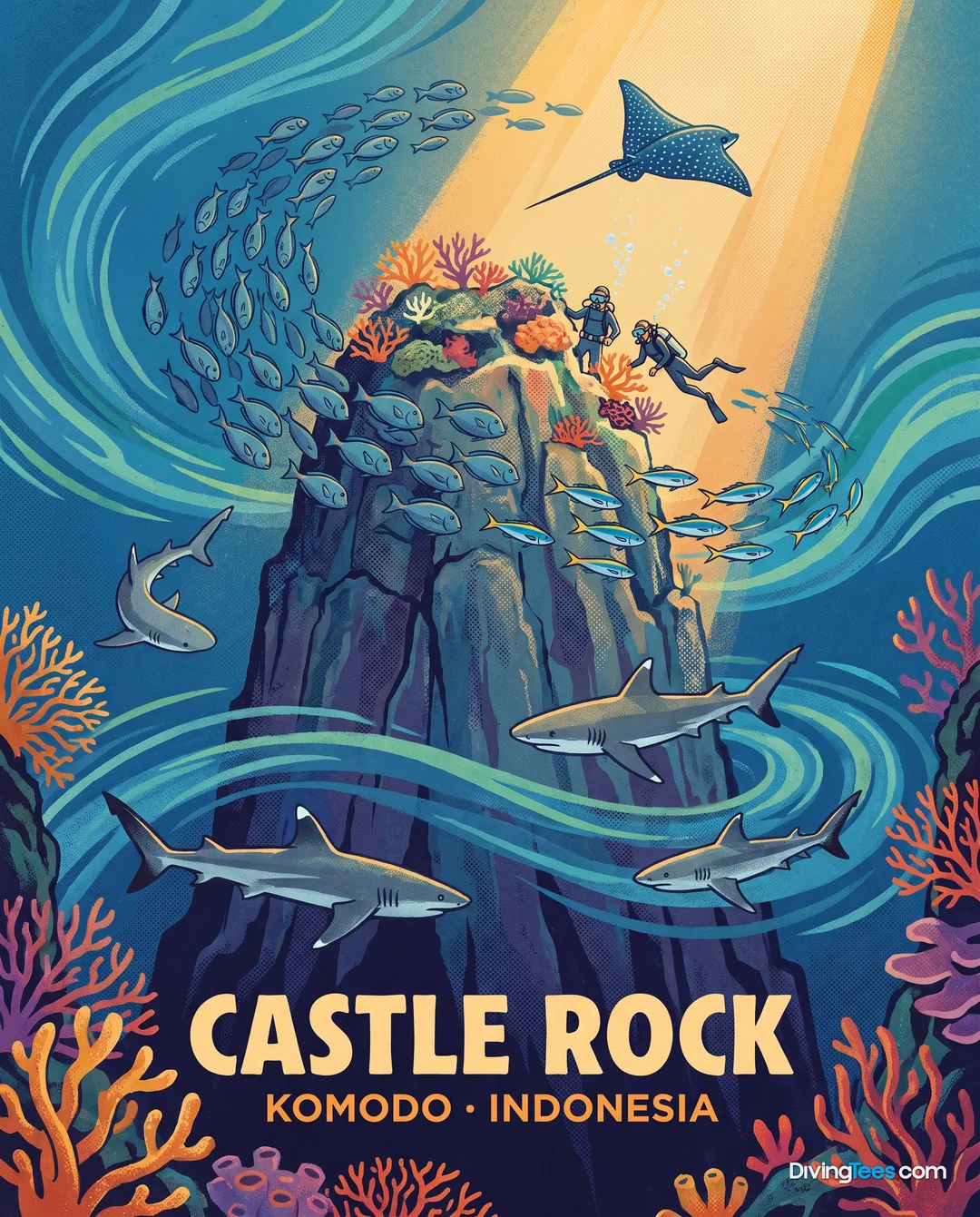
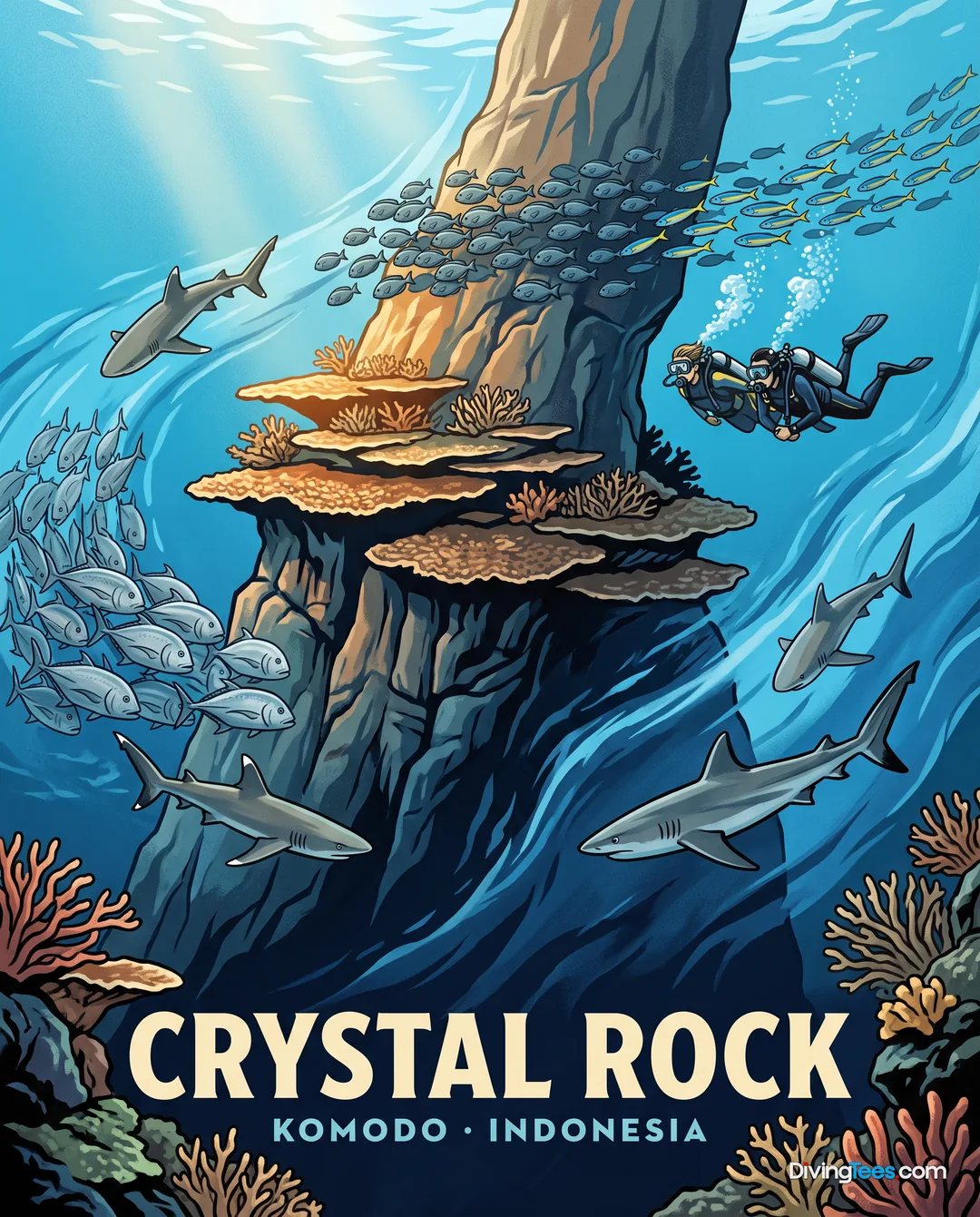
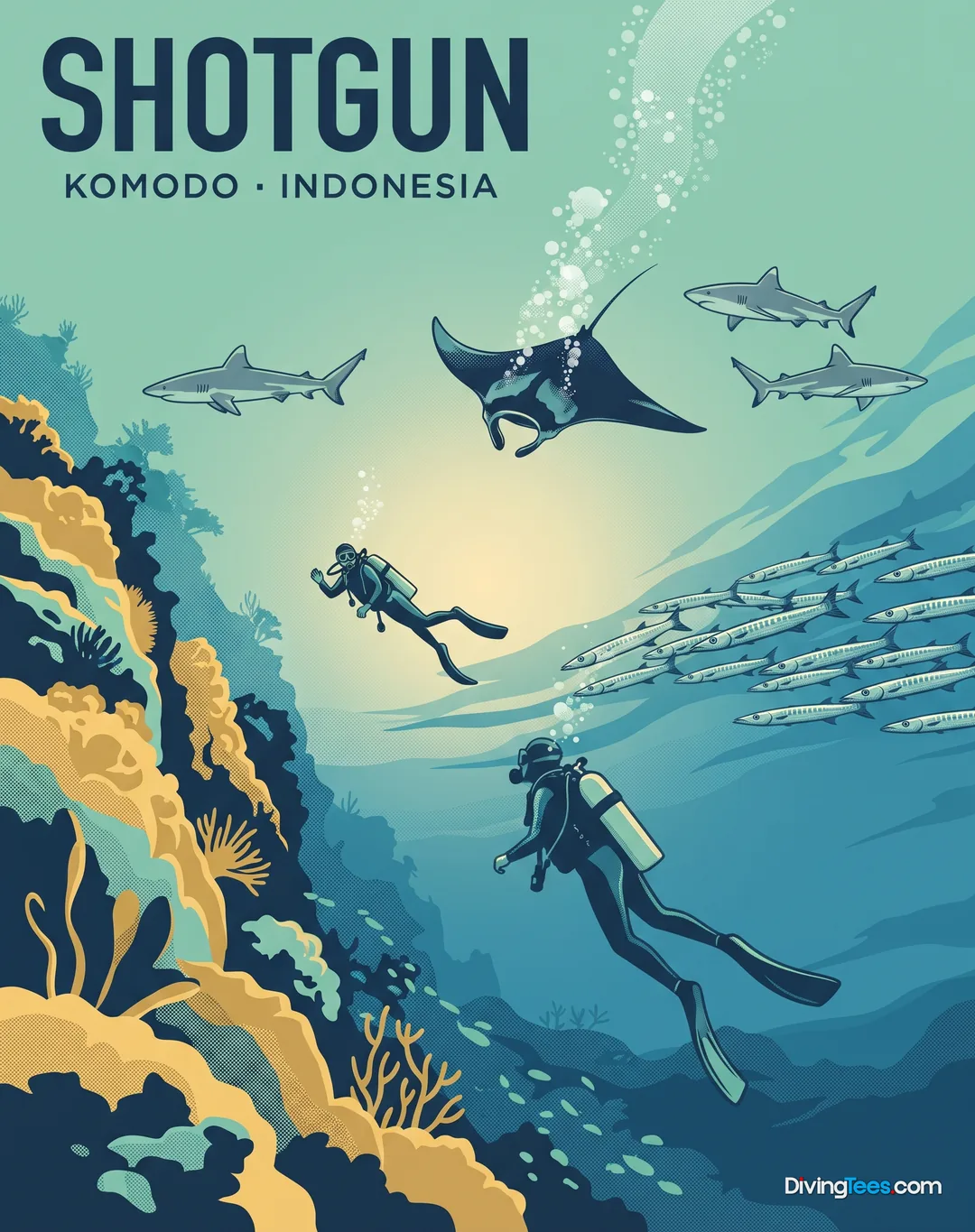
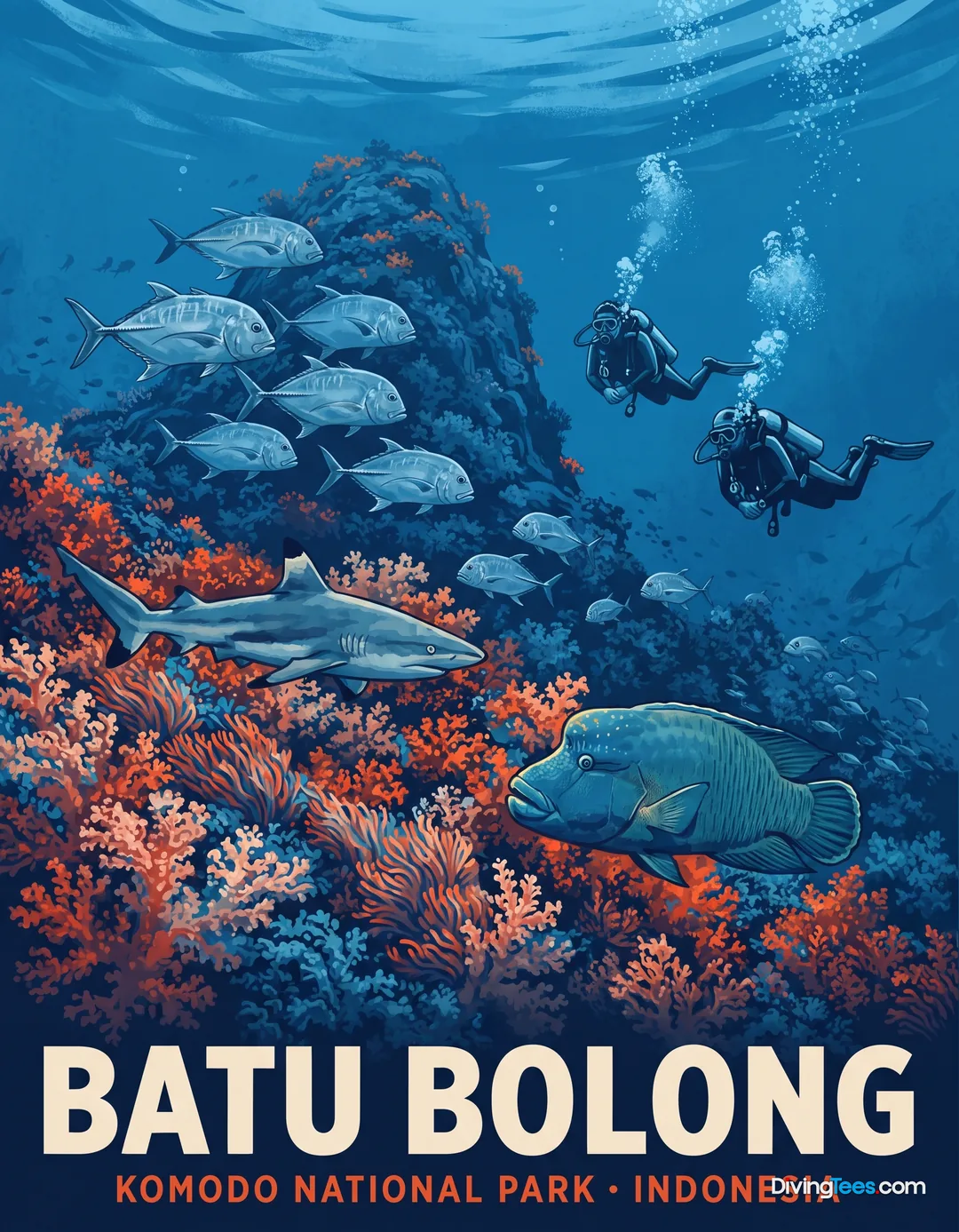
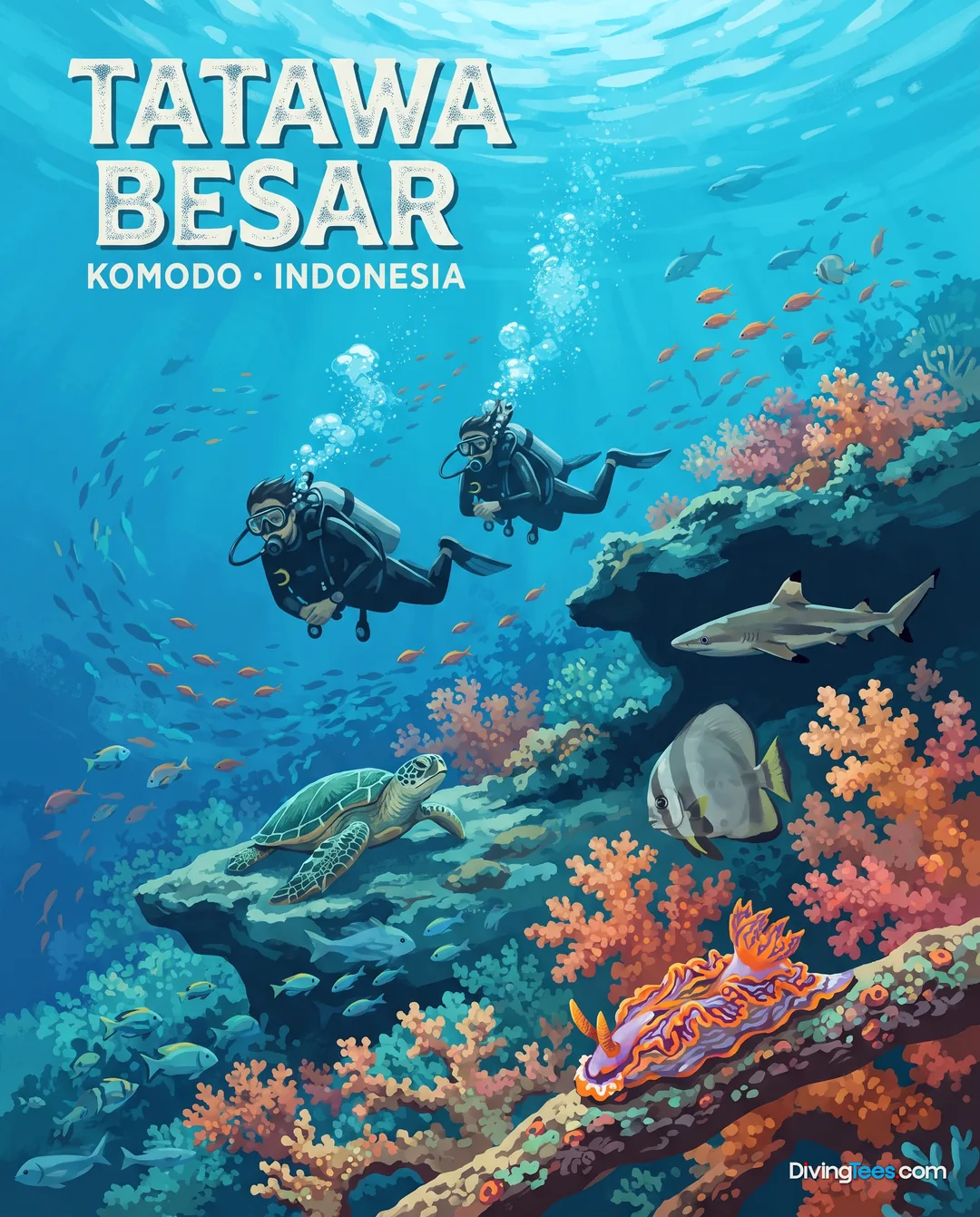
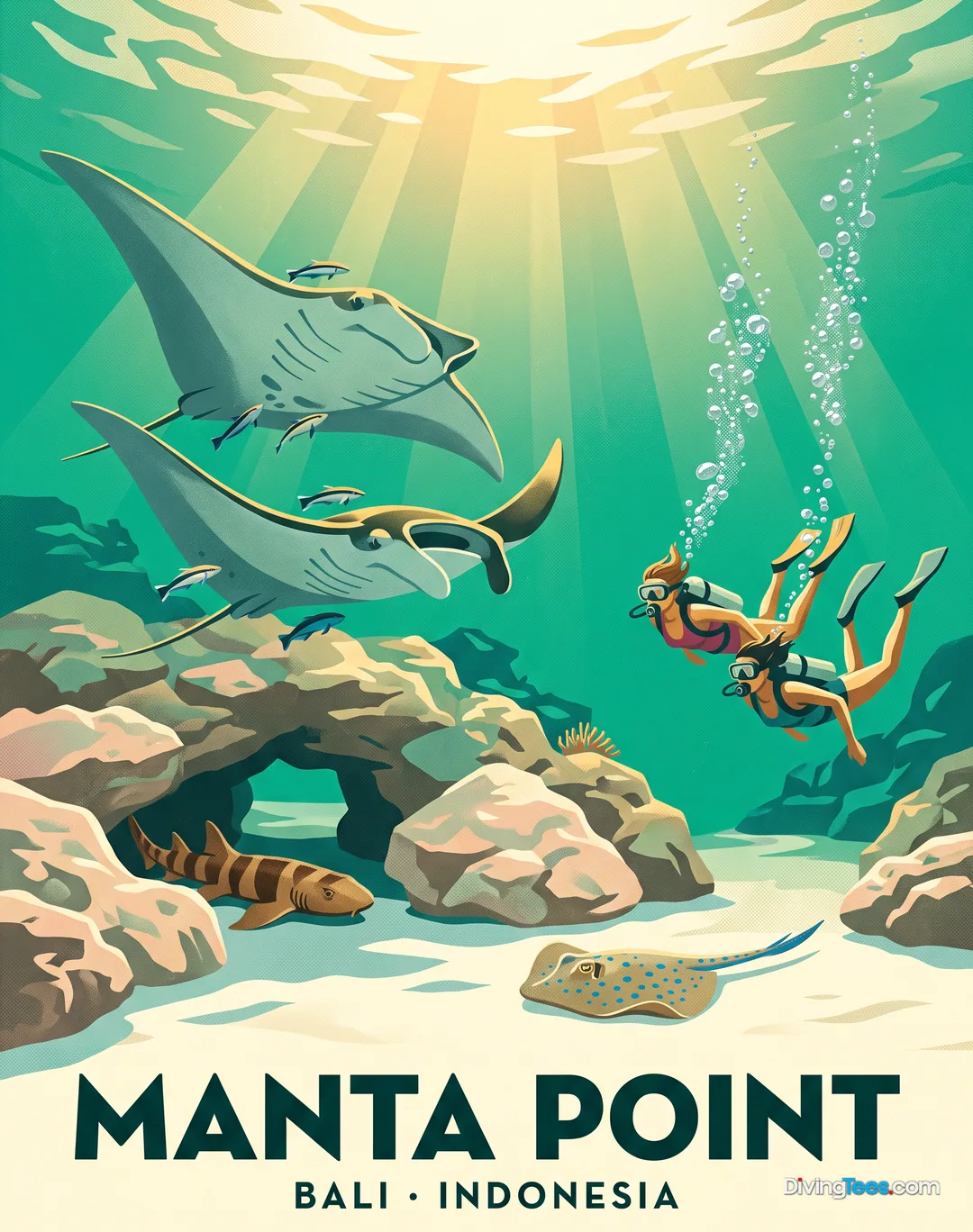
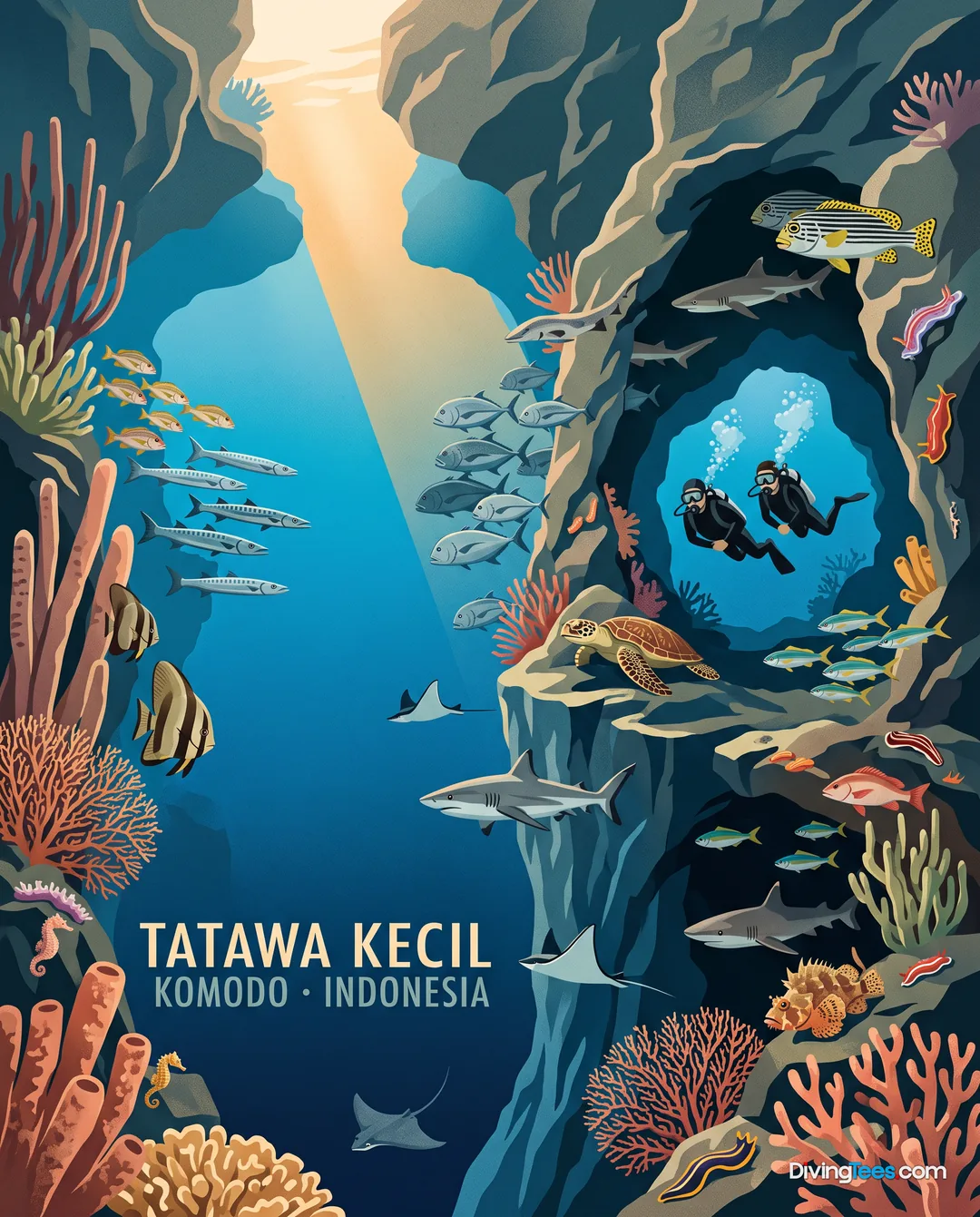
The three-day, two-night Komodo Highlights route leaves Labuan Bajo, reaches the northern sites first and then works back through central Komodo before returning to Labuan Bajo. Castle Rock and Crystal Rock are current-exposed pinnacles where schooling fish and larger hunters gather. Shotgun is the fast section of a drift through a narrow channel, with the current funneling divers into the action before releasing them into shelter. Batu Bolong is the calmer visual contrast: a coral-covered pinnacle described as an underwater aquarium, with reef life extending from the surface down to 30 meters. Tatawa Besar carries the group over a coral garden on a gentler drift, while Manta Point follows channels and cleaning stations where mantas may pass. Tatawa Kecil closes the route with hard and soft corals, schooling fish and another drift. The programme totals seven daytime dives and one night dive, with a Komodo dragon visit on land.
Who puts you in the water
Local guides put guests in the water, and the crew speaks English and Indonesian. The guides bring local knowledge of Komodo’s sites, currents and conditions, while the route is aimed at divers coming for current-fed reefs, drift dives and pelagic encounters. Briefings and group ratios are not detailed, and no logged-dive minimum or course programme is stated for Capoeng. Safety equipment onboard includes oxygen, first-aid kits, fire alarms and extinguishers, life jackets, lifeboats, a VHF/DSC/SSB radio, satellite and mobile phones, a distress beacon and trained first-aid crew. That is the useful distinction: the boat carries the emergency equipment expected for remote diving, while the diving itself is shaped by the guides’ reading of the day rather than by a fixed site list.
The dive deck and the gear
The dive deck is shaded, with a proper entry platform, tank stations and rinse tanks for equipment. DIN adapters are available, and separate camera rinsing protects housings and ports from being treated like ordinary gear. Rental equipment can be arranged as an optional extra, but the specific rental brands and tank materials are not given. Nitrox, tank volumes, compressor details, SMB arrangements, camera-table facilities, hot-water facilities and tender operations are not described. Night dives are part of the package, including the route’s planned night dive. The practical point is clear: this is a compact dive boat with the essentials close to the water, not a large platform with several separate work areas. Divers carrying cameras should still expect to organise their own space carefully.
Between dives
Between dives, Capoeng gives guests two different ways to come off the water. The sunny open deck has beanbags for lying flat, drying off and watching the islands, while the shaded top deck is the practical refuge when the light and heat build. Surface intervals pass with coffee, snacks, conversation or the quiet work of checking cameras and computers. The boat also leaves room for the non-diving parts of Komodo: an evening stop near Pulau Bugis, the sight of flying bats rising from mangroves at sunset and the visit to see Komodo dragons on land. There is no need to fill every gap with an activity. The useful luxury is having somewhere comfortable to sit until the next briefing.
A day on board
The day begins with the meeting at the dive shop in Labuan Bajo before the boat heads into the park. The first day concentrates on two northern dives, then the boat anchors near Pulau Bugis for the evening. The second day carries the heaviest underwater load: three dives, beginning with Shotgun, continuing through Batu Bolong and ending at Tatawa Besar, with lunch and surface time between entries. Sunset brings the flying bats above the mangroves, not another dive. On the final day, the route moves through Manta Point and Tatawa Kecil before the land visit for Komodo dragons. The night dive is the extra change of pace, when the reef’s daytime traffic gives way to hunting and nocturnal life. Meals and snacks sit between the briefings, entries and recoveries.
What you eat aboard
Meals are freshly cooked onboard and draw on local Indonesian cooking rather than a generic international menu. Food is served buffet-style, with snacks available through the day, so a diver can eat lightly after one dive and properly after the next without waiting for a formal service. Vegetarian and vegan options are available, and non-alcoholic drinks, tea, coffee and drinking water are provided. Beer and cocktails are available onboard, while alcoholic drinks are not part of the standard inclusions. Dinner can be served outside, where the table stays connected to the evening instead of being shut away below deck. On a short trip with repeated dives, generous food and easy access matter more than decoration; the galley is part of the dive operation.
Nights at sea
The four cabin categories are Manta, Black Tip, White Tip and Octopus. The sleeping arrangements are simple: two shared bunk cabins, one twin cabin and a small dorm-style cabin, with Octopus accommodating two to three people. Manta has a fan, while the other listed cabins are air-conditioned. Each bed has its own charging point and night light, a small detail that matters when cameras, computers and phones all need power between dives. There is one shared bathroom with a western toilet and a wet-room shower. The boat does not offer private bathrooms, but the limited guest count keeps the accommodation from feeling like a crowded dormitory. These are nights built around sleep, drying gear and being ready for the next dive.
Black Tip
White Tip
Octopus
Manta
What to know before boarding
Capoeng’s Komodo Highlights trip departs from Labuan Bajo and returns to Labuan Bajo. Guests meet at the dive shop in Labuan Bajo at 08:30 before boarding. The trip lasts three days and two nights.
- Year built
- 2021
- Year renovated
- 2025
- Length
- 18.4 m
- Beam
- 3.2 m
- Maximum number of passengers
- 8
- Number of cabins
- 4
- Number of bathrooms
- 1
- Engines
- 80 hp Mitsubishi
- Cruising speed
- 9 knots
- Website
- scuba-republic.com ↗
Hello, I'm Marina, DivingDeal.com's AI assistant. I answer in detail about hotels, dive centres and liveaboards.

Thinking about the whole trip and the flights? Talk it over with Edith →
Marina is an AI. Some links are affiliate links: DivingDeal may earn a commission, at no extra cost to you. Bookings are made with the partner.