
Uber Scuba Komodo
Google 5/5 (1,538 reviews)
36 km away as the crow flies
Komodo · Indonesia · Asia
Max. depth · 30 mDescend onto Castle Rock, a submerged pinnacle in Komodo, and meet the reef's apex predators drawn by the nutrient-rich currents.
For subtitles in English: start the video firstthen click the gearat the top right of the video, select “Subtitles/CC”, then “Auto-translate” and choose “English”.
Castle Rock emerges from the Komodo depths as a truly formidable submerged pinnacle, a geological anomaly that dictates the rhythm of the dive. As you begin your descent, you'll feel the subtle yet persistent pull of the current, a constant reminder of the unseen forces at play. Dropping into the blue, the sheer scale of this underwater mountain becomes apparent, its contours carved by the very currents that sustain its vibrant life. The water clarity often allows for distant views of the pinnacle's structure, hinting at the action below long before you reach it.
The journey along Castle Rock's slopes is a rich tapestry of marine life, beginning as shallow as 10 metres and extending down to 30 metres. This nutrient highway attracts a density of pelagic activity that characterises the site. You'll often find yourself amidst enormous schools of surgeonfish, their collective movements creating shimmering walls of silver. These vast aggregations are a testament to the site's productivity, providing a critical food source and drawing in larger hunters who patrol the water column.
It is here, in the heart of this dynamic environment, that the site's reputation for shark encounters truly comes alive. White-tip reef sharks (Triaenodon obesus) are a regular presence, often seen resting on ledges or cruising the deeper sections with effortless grace. Accompanying them are the formidable grey reef sharks (Carcharhinus amblyrhynchos), whose powerful forms underscore the health and wildness of this Komodo ecosystem. Their consistent patrolling behaviour is a direct response to the abundant prey drawn to the pinnacle.
Beyond the sharks, keep an eye on the open water for other transient visitors. Occasional eagle rays (Aetobatus narinari) glide by, their distinctive profiles a fleeting yet memorable sight against the blue. Their presence is another indicator of the strong, nutrient-laden currents that make Castle Rock such a productive and exhilarating dive. The interaction between these pelagic species and the fixed reef ecology creates a complex and dynamic underwater theatre.
Castle Rock is an advanced dive, with depths ranging from 10 metres to 30 metres. You can expect variable currents here, a defining characteristic that shapes the entire dive experience. The best period to dive this site is typically between April and October. During this time, the visibility can reach up to 30 metres, offering clear views of the abundant marine life.
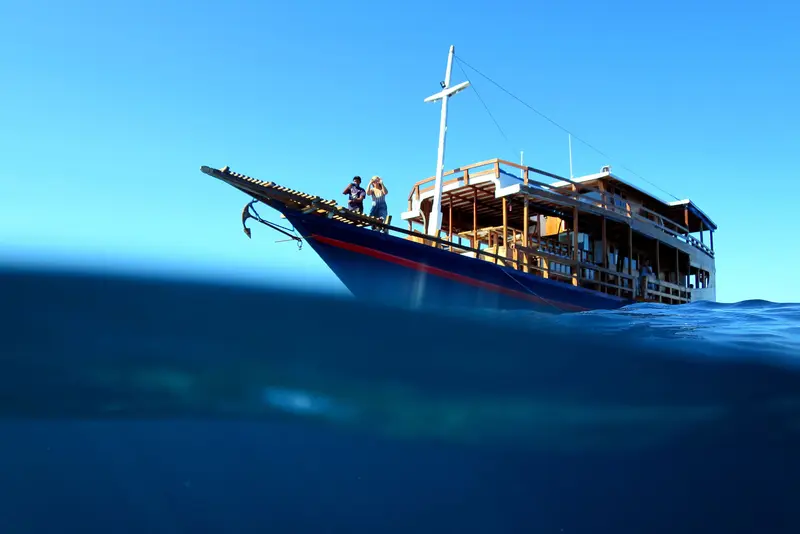
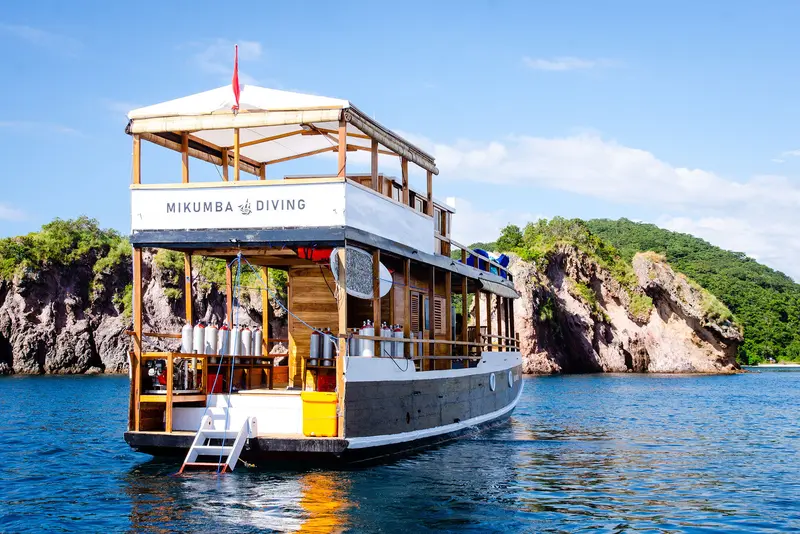
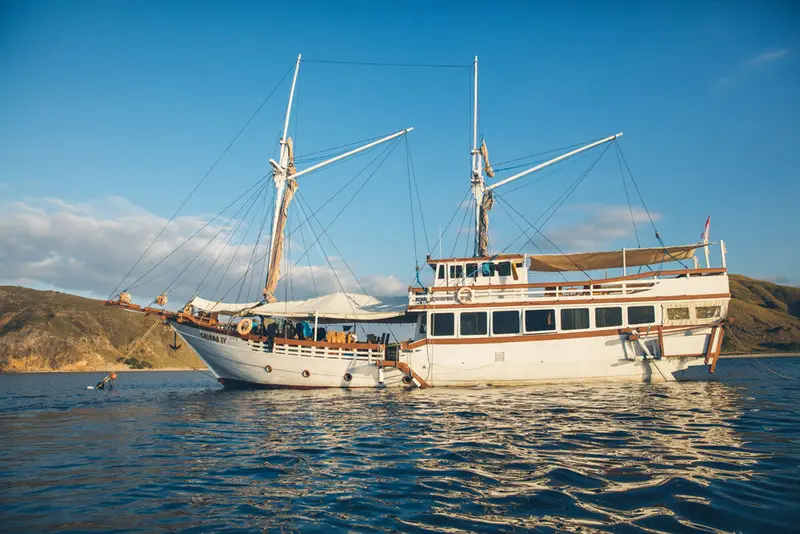
37 liveaboards depart from Komodo another way to explore the region, over several days at sea.
The best period to dive Castle Rock is typically between April and October. During this time, visibility can reach up to 30 metres, giving you clear views of the submerged pinnacle and its abundant marine life, including the activity attracted by the site's nutrient-rich currents.
Castle Rock is an advanced dive. You should be comfortable diving in variable currents, which are a defining feature of the site and shape the entire experience. The submerged pinnacle extends through the water column, with the dive reaching depths of up to 30 metres.
Castle Rock begins at 10 metres and reaches 30 metres along its submerged pinnacle slopes. You can expect variable, dynamic and nutrient-rich currents throughout the dive. These currents influence the experience and support the marine life gathered around the pinnacle and in the open water.
At Castle Rock, you may encounter white-tip reef sharks resting on ledges or cruising deeper sections, along with grey reef sharks patrolling the water column. Large schools of surgeonfish gather around the pinnacle, while eagle rays may occasionally pass through the open water.