Liveaboards · Indonesia
Komodo Sea Dragon — a compact Indonesian liveaboard built around the diving
What makes this boat unique
- The boat carries a maximum of 16 passengers in six cabins, with a crew-to-guest ratio close to 1:1.
- A second boat carries the compressor and diving equipment, leaving the main vessel quieter between dives.
- Two tenders serve the dive sites, with a dedicated dive platform and a separate camera rinse area.
- Nitrox, DIN adapters, night dives, kayaks and naturalist-led excursions are available on the programme.
For subtitles in English: start the video firstthen click the gearat the top right of the video, select “Subtitles/CC”, then “Auto-translate” and choose “English”.
The invitation
Komodo Sea Dragon suits divers who want the scale of a small group without giving up a proper liveaboard routine. Sixteen passengers is enough for a social boat, but still small enough that the crew can recognise who is carrying a camera, who needs help with a tank and who prefers to be left alone between dives. The second vessel carries the compressor and diving equipment. That is the practical difference: the main boat remains a place to eat, sleep and recover rather than becoming a permanent workshop. The diving is supported by two tenders, a platform, night dives and a naturalist guide, while kayaks and shore excursions give non-divers something real to do. Choose it for a week where the animals matter first, but the hours out of the water still deserve care.
Boarding
The first impression is of a purpose-built dive vessel rather than a floating hotel with tanks added later. Built in 2009 and renovated in 2019, Komodo Sea Dragon has the working layout expected of a boat that spends its time moving divers between sites: a dedicated platform, tenders alongside and the equipment kept on a second boat. The main vessel gives a small group room to spread across its decks without losing the useful intimacy of a 16-passenger operation. Its cruising speed is modest, so the boat is about reaching the next site steadily, not racing between islands. Once aboard, the arrangement makes sense quickly. The dive operation sits where it should, and the upper areas are left for shade, open air and the view.
The atmosphere on board
The atmosphere is shaped by scale. With a crew close in number to the guests, the operation can stay personal without becoming intrusive, and English and Indonesian are spoken on board. Meals are a central part of the day rather than something taken quickly at separate tables; the crew's warmth is one of the boat's recognised strengths, while the food is rated even higher. In the evening, divers can move from dinner to the bar, outdoor deck or the salon's audio and video facilities. A library and photo-friendly spaces suit the quieter end of the group. The result is less formal than a large yacht and more organised than a small charter: people meet over the sites, then keep talking because the table is good.
The sites you’ll dive
The recorded departures are round trips from Labuan Bajo through Komodo National Park, lasting five to eight days and four to seven nights. The listed dive programme also includes North Sulawesi sites, with walls, black-sand macro slopes, pinnacles and a wreck. Bunaken Marine Park reaches -40m on vertical coral walls where turtles, reef fish and cruising pelagics may pass; Bunaken Timur reaches -25m, combining a 40-metre wall with juvenile reef life and macro subjects. Murex Bangka House Reef and Murex Manado House Reef are shore-entry reefs at -25m and -20m, while Lembeh Strait is the shallow black-sand hunting ground for rare macro life. Sahaung reaches -35m among pinnacles and boulders, with possible white-tip reef sharks. Lekuan, Sachiko’s and Siladen Wall are -25m wall dives; Batu Mandi is -30m among isolated pinnacles; Bethlehem and City Extra are -20m macro sites. Celah Celah is a cleft in the wall, and The Molas Shipwreck is a World War II cargo vessel resting upright on a sandy slope, down to -40m.
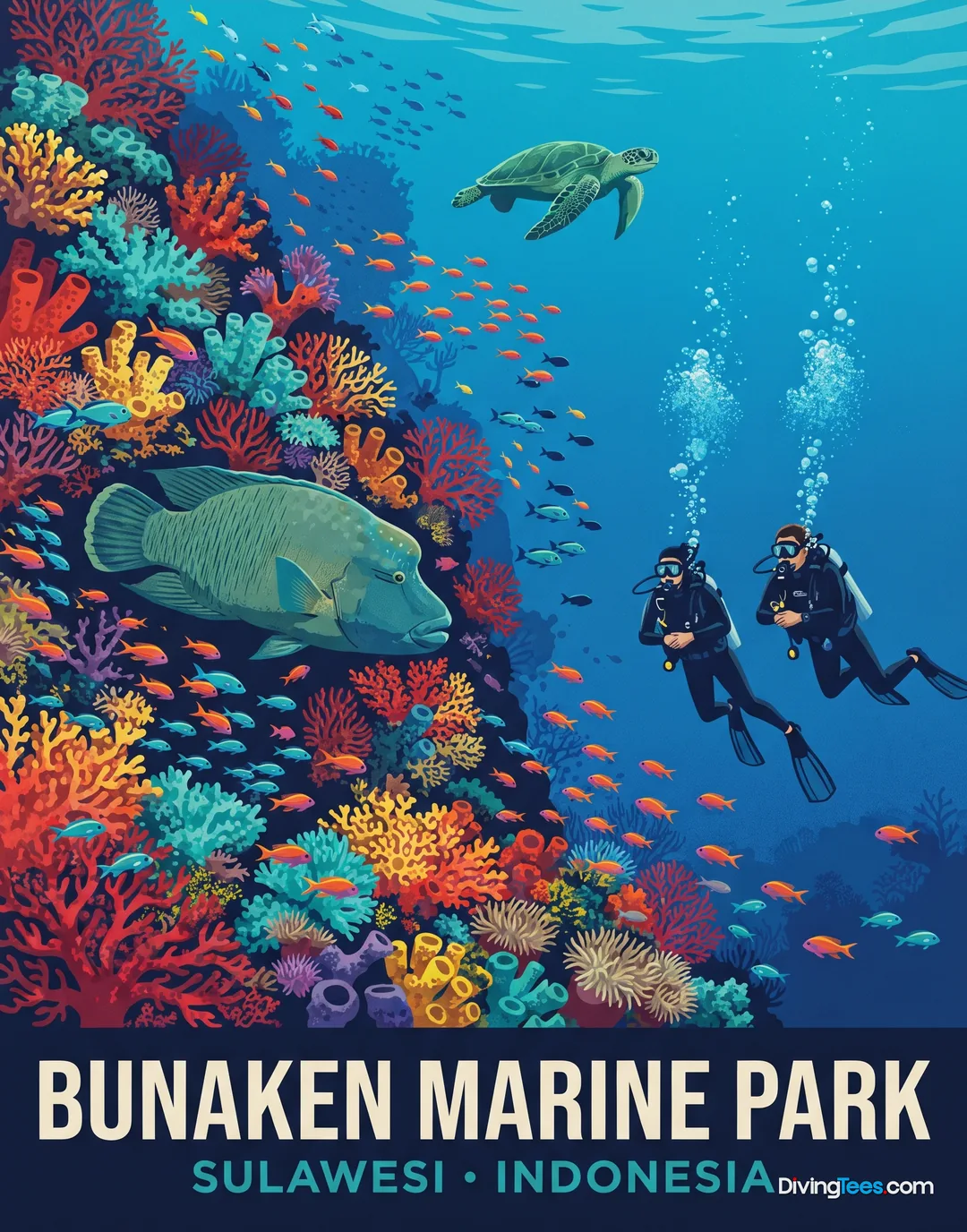
Bunaken Marine Park →
Max. depth · 40 m
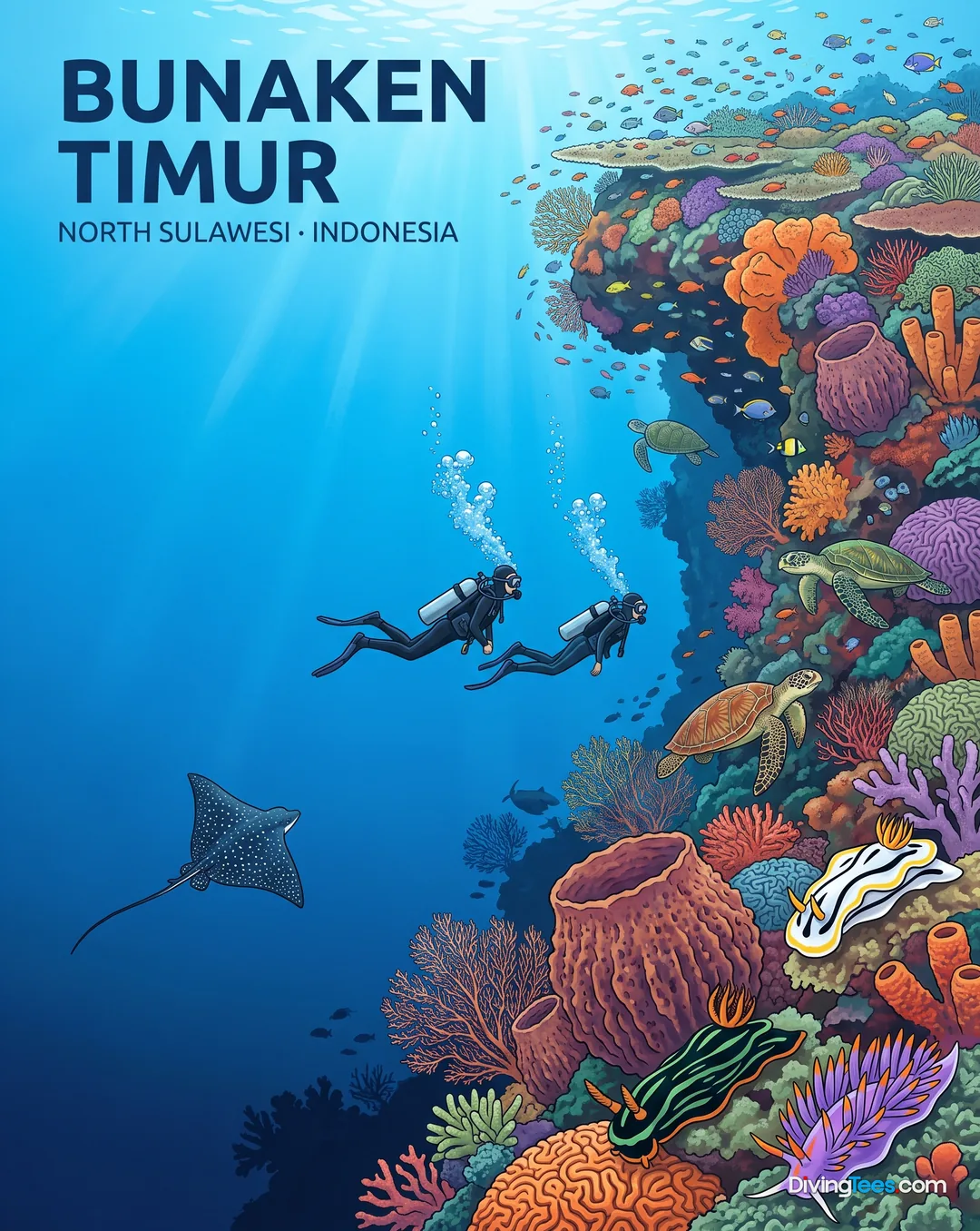
Bunaken Timur →
Max. depth · 25 m
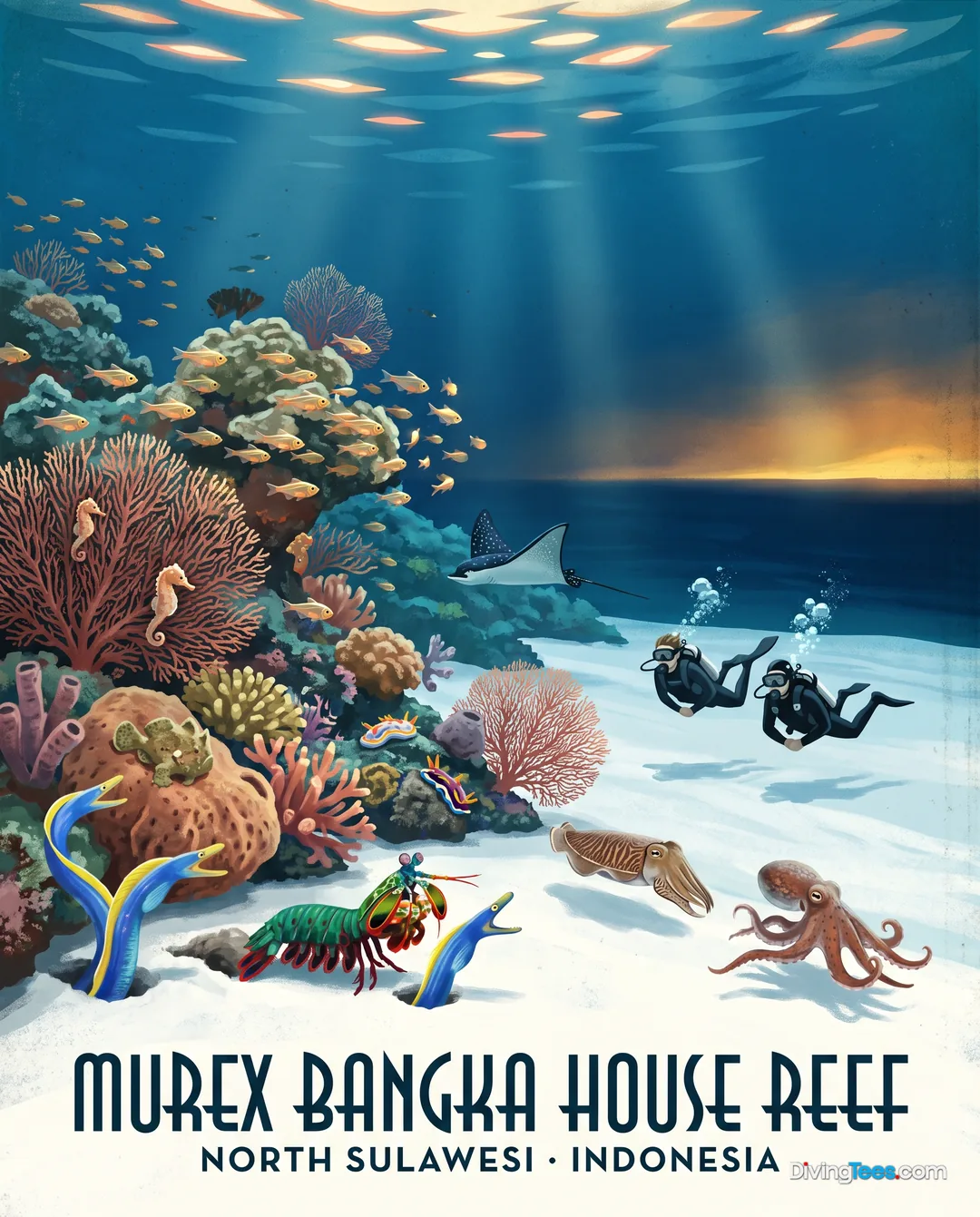
Murex Bangka House Reef →
Max. depth · 25 m
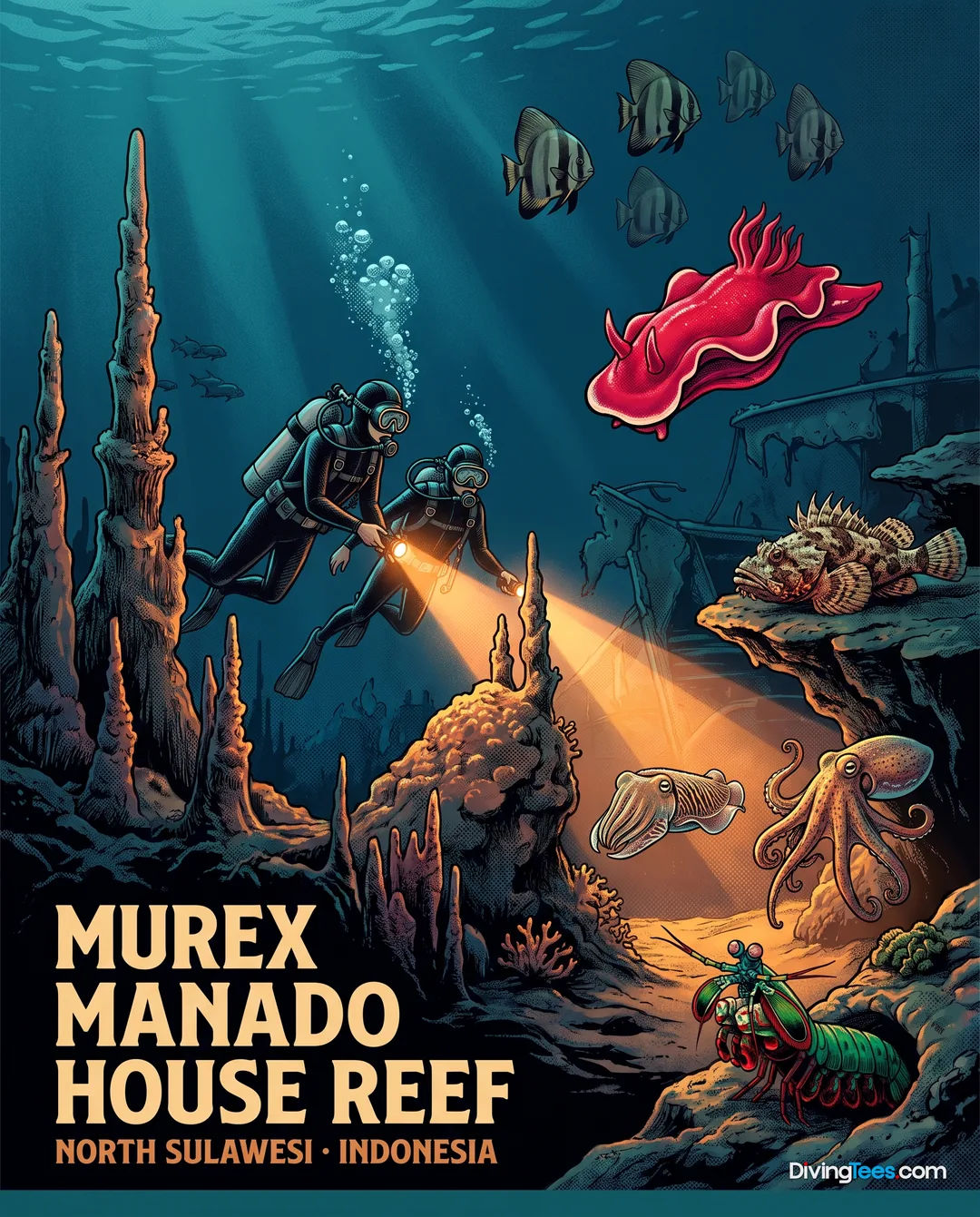
Murex Manado House Reef →
Max. depth · 20 m
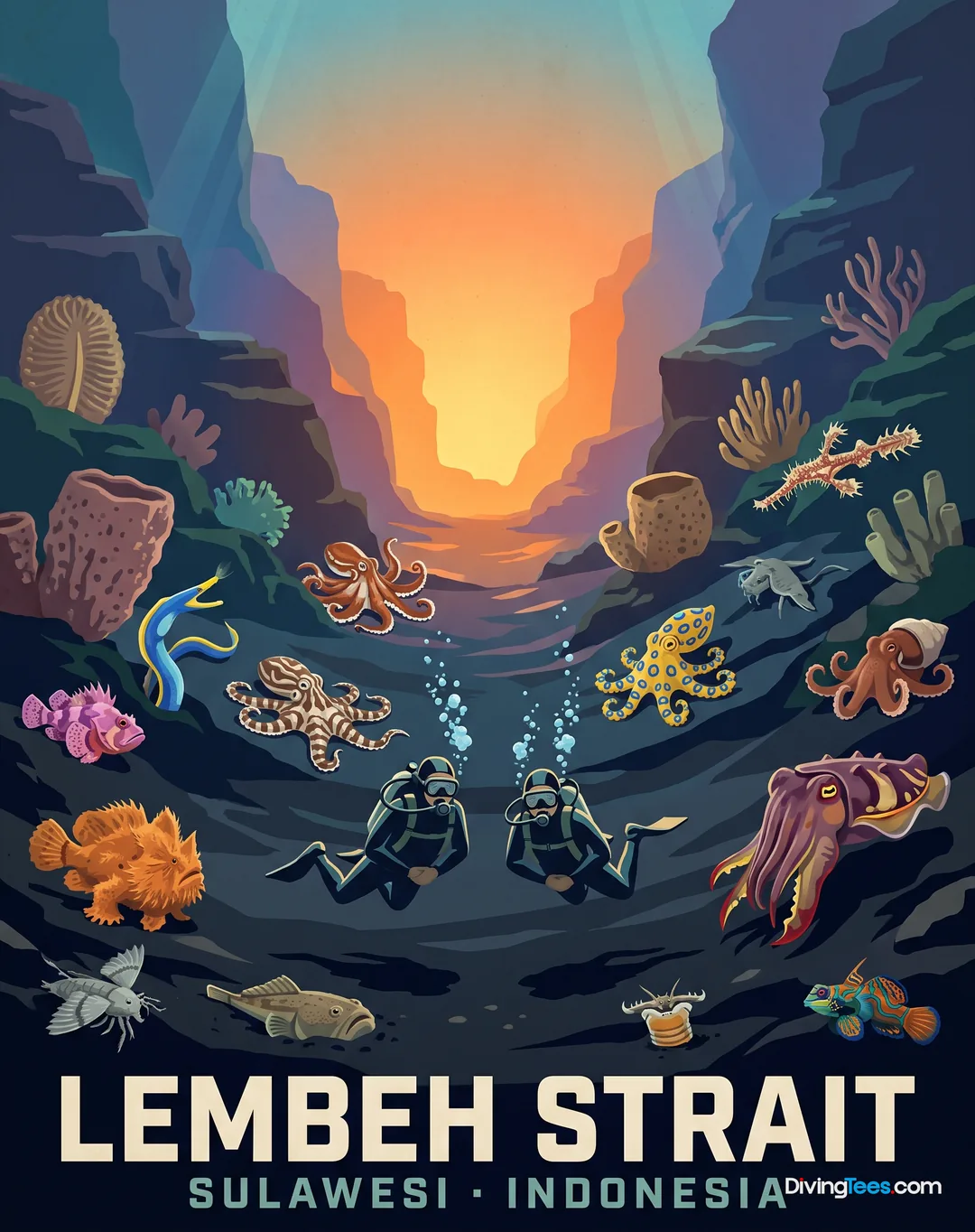
Lembeh Strait →
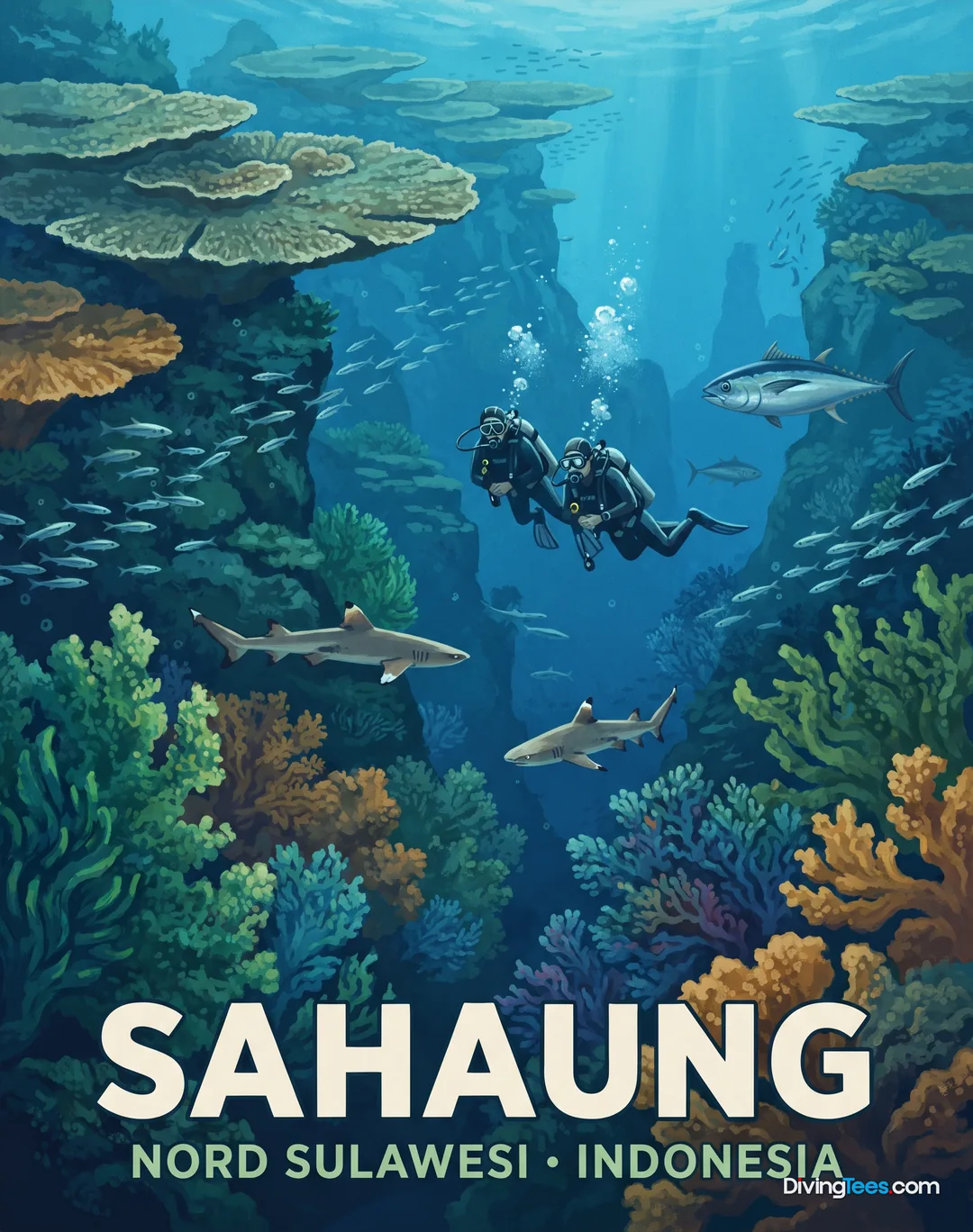
Sahaung →
Max. depth · 35 m
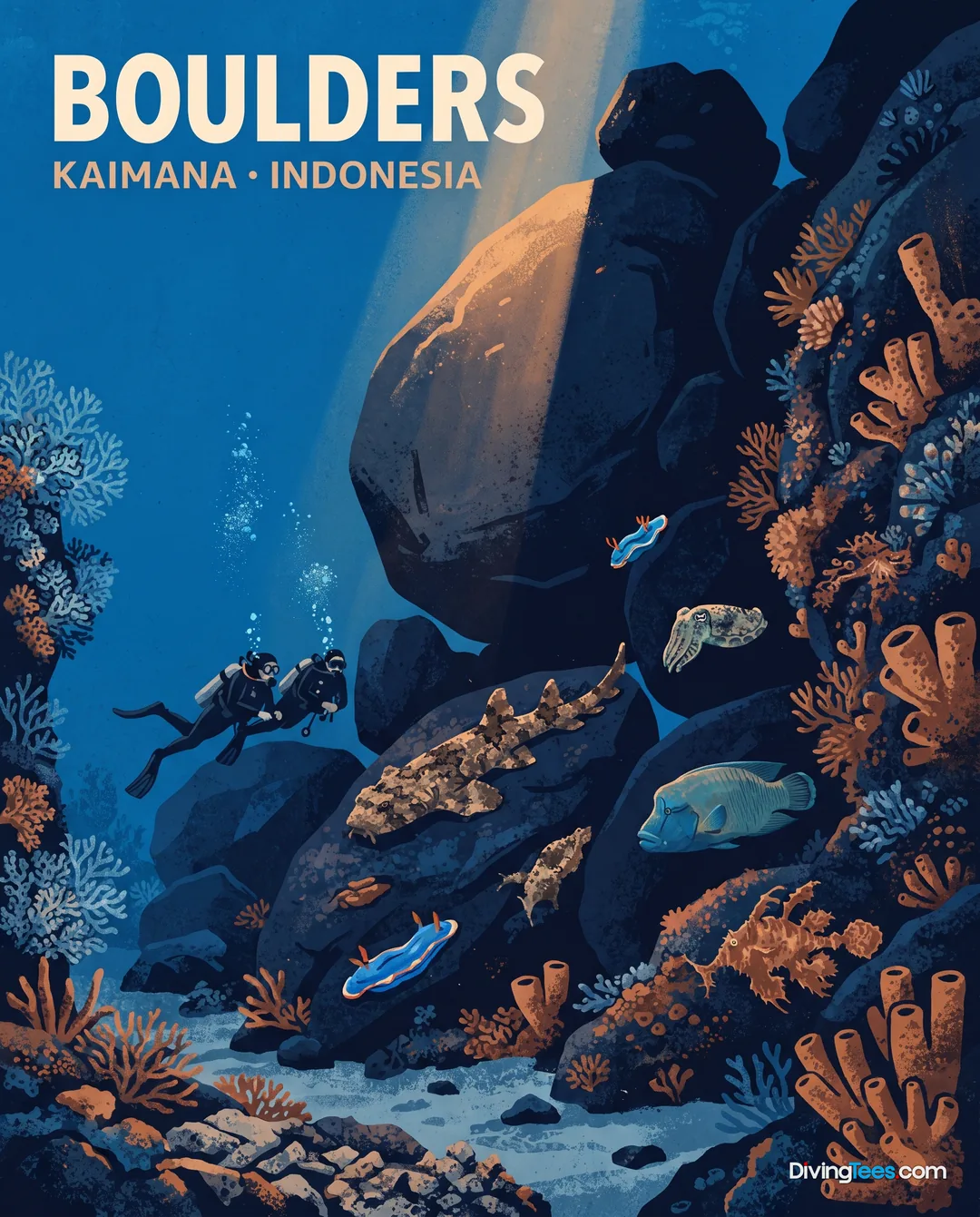
Boulders →
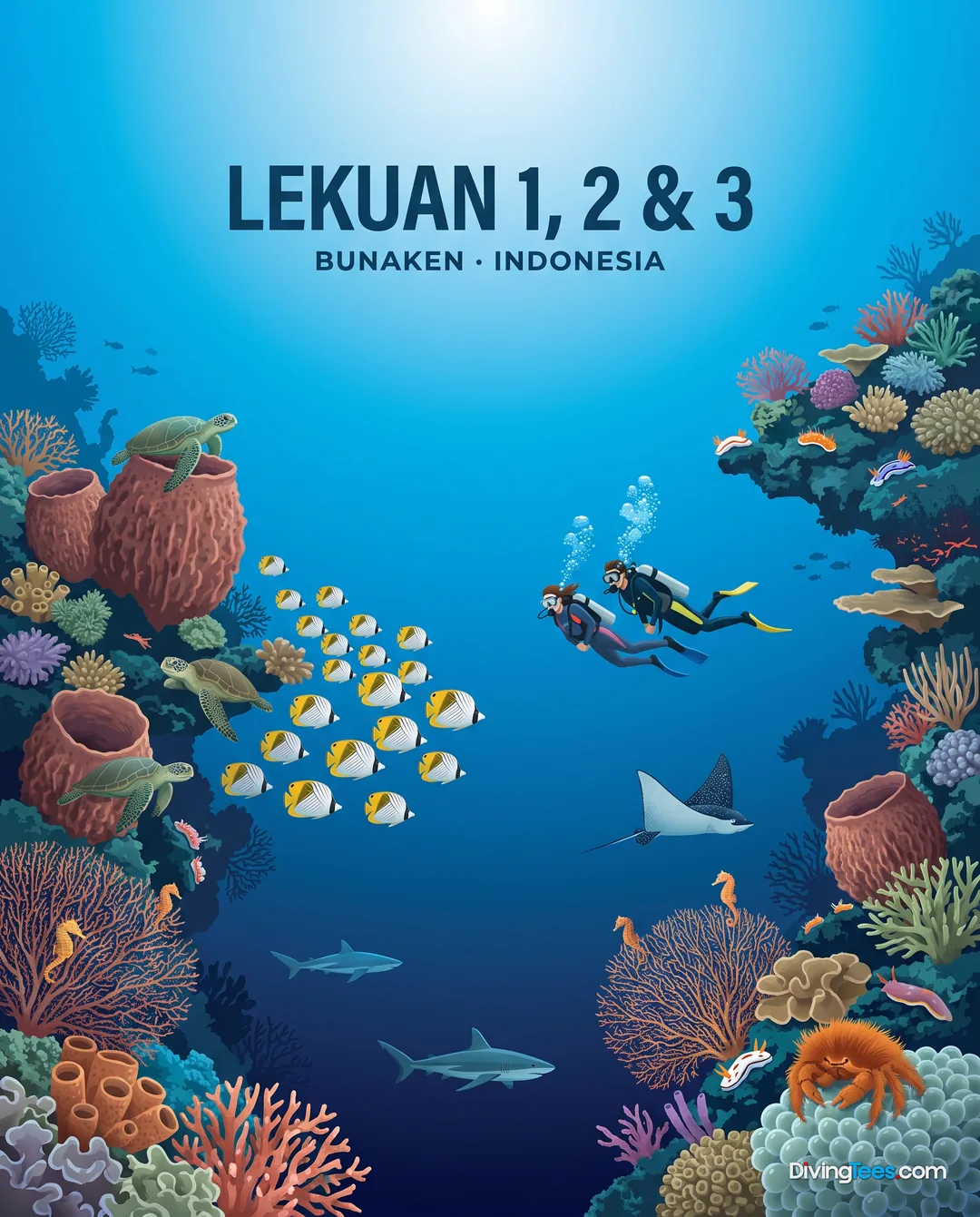
Lekuan →
Max. depth · 25 m
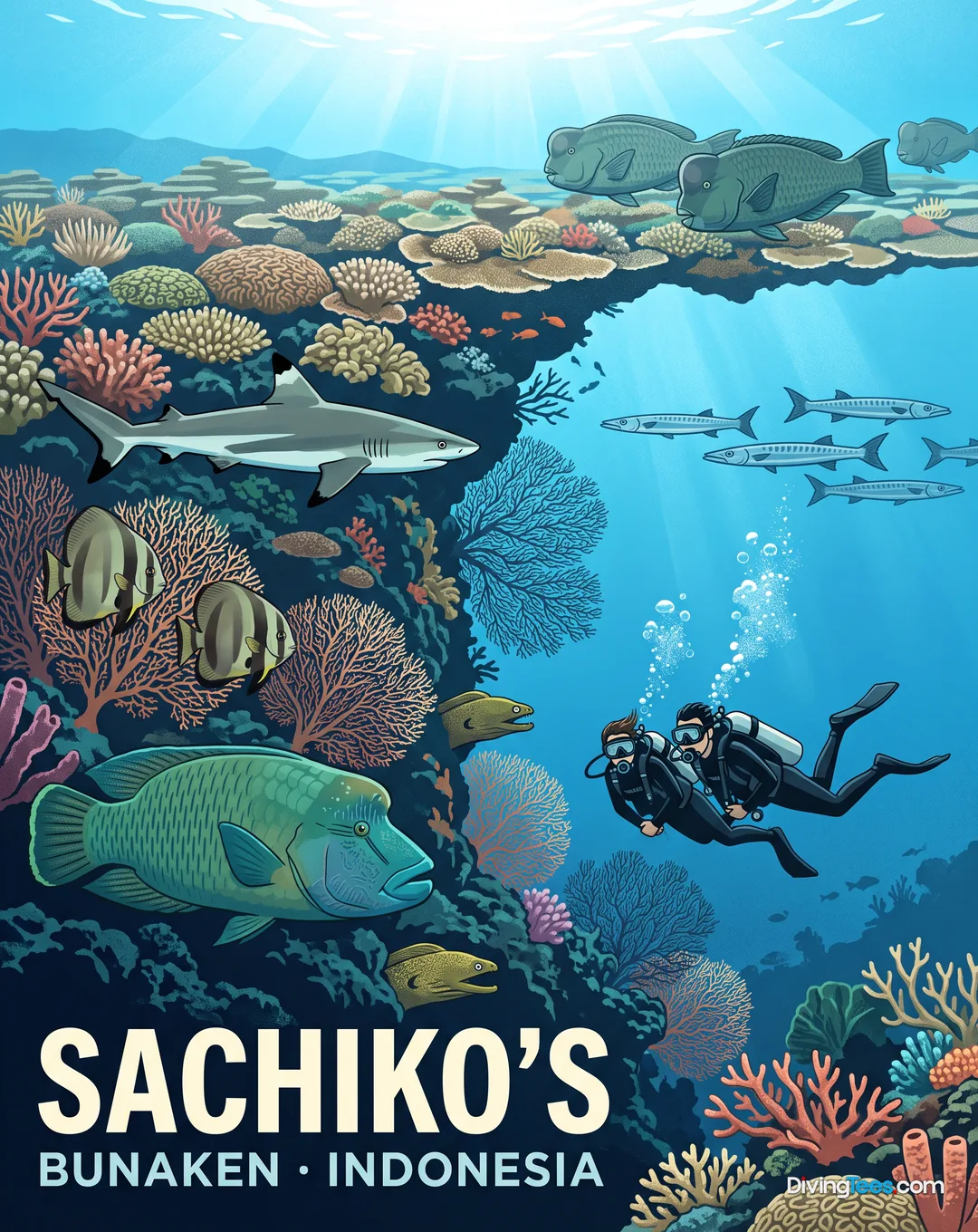
Sachiko’s →
Max. depth · 25 m
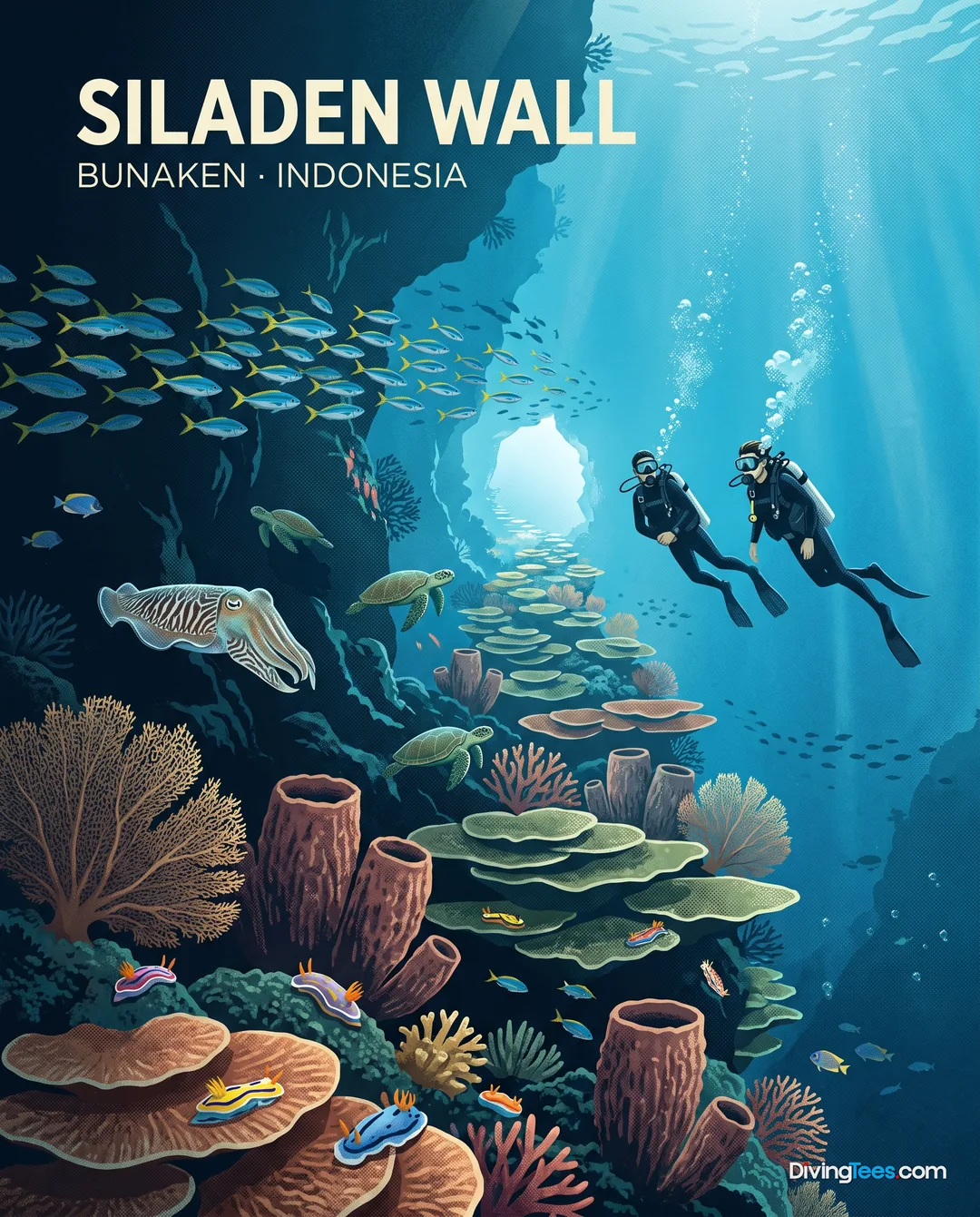
Siladen Wall →
Max. depth · 25 m
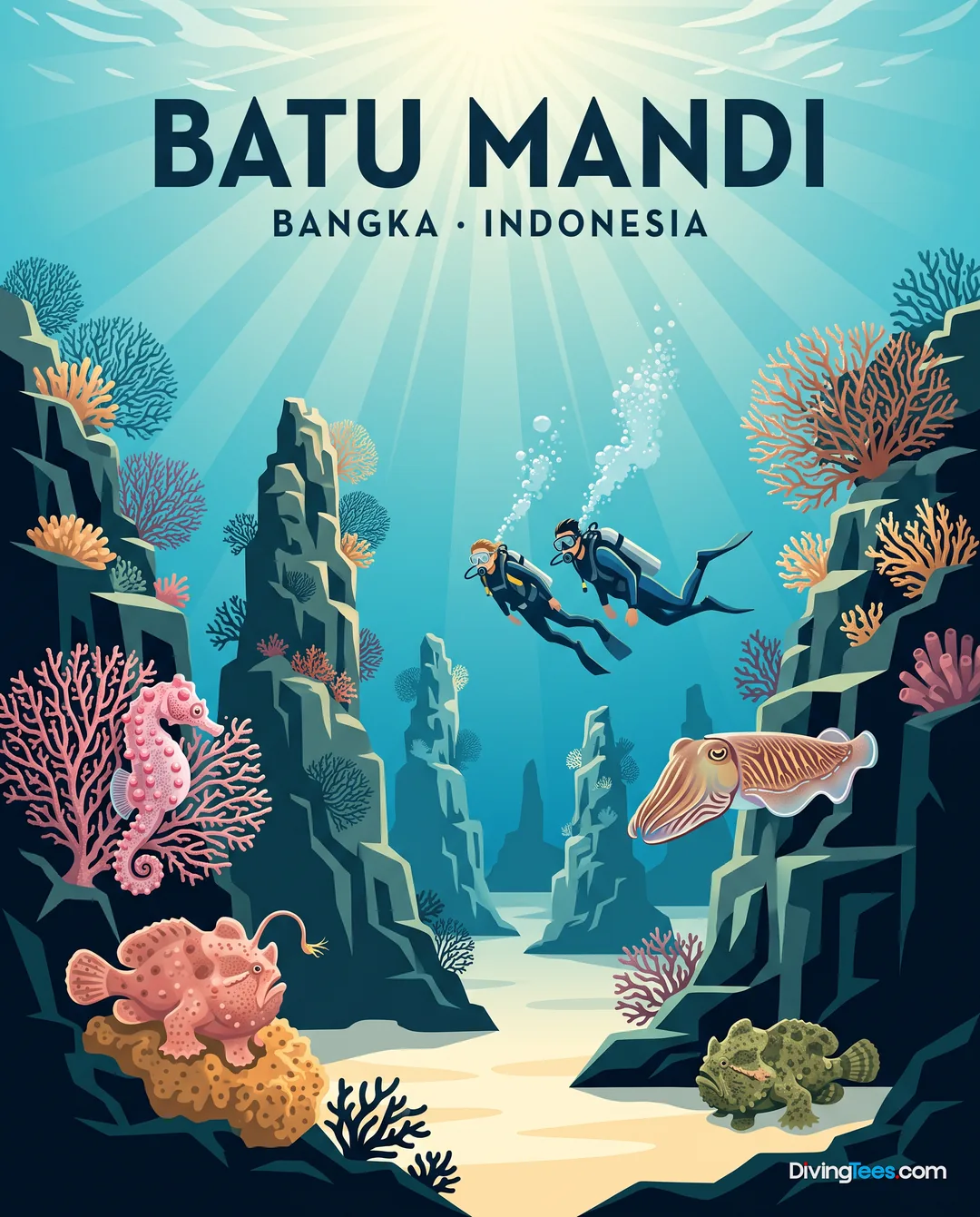
Batu Mandi →
Max. depth · 30 m
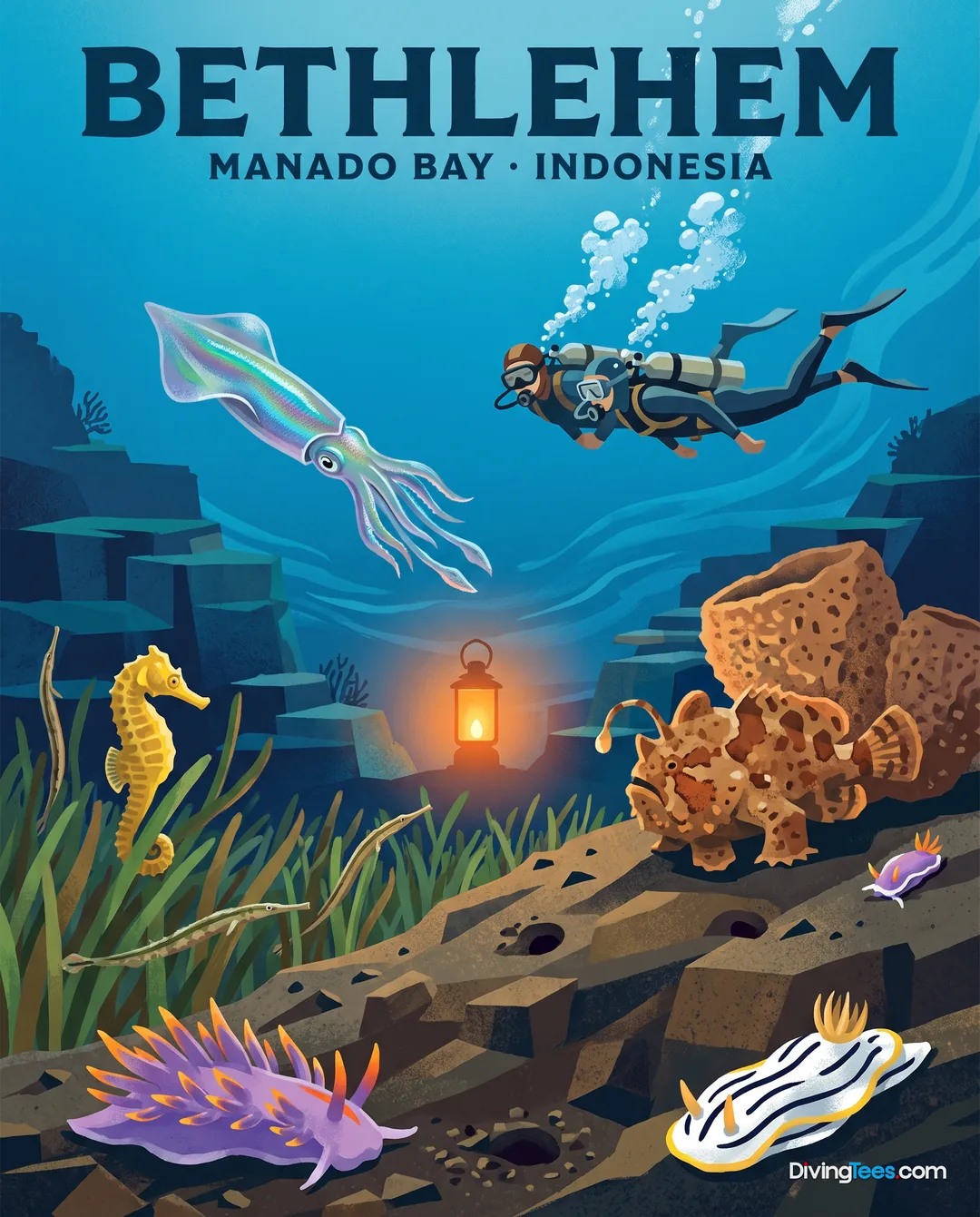
Bethlehem →
Max. depth · 20 m
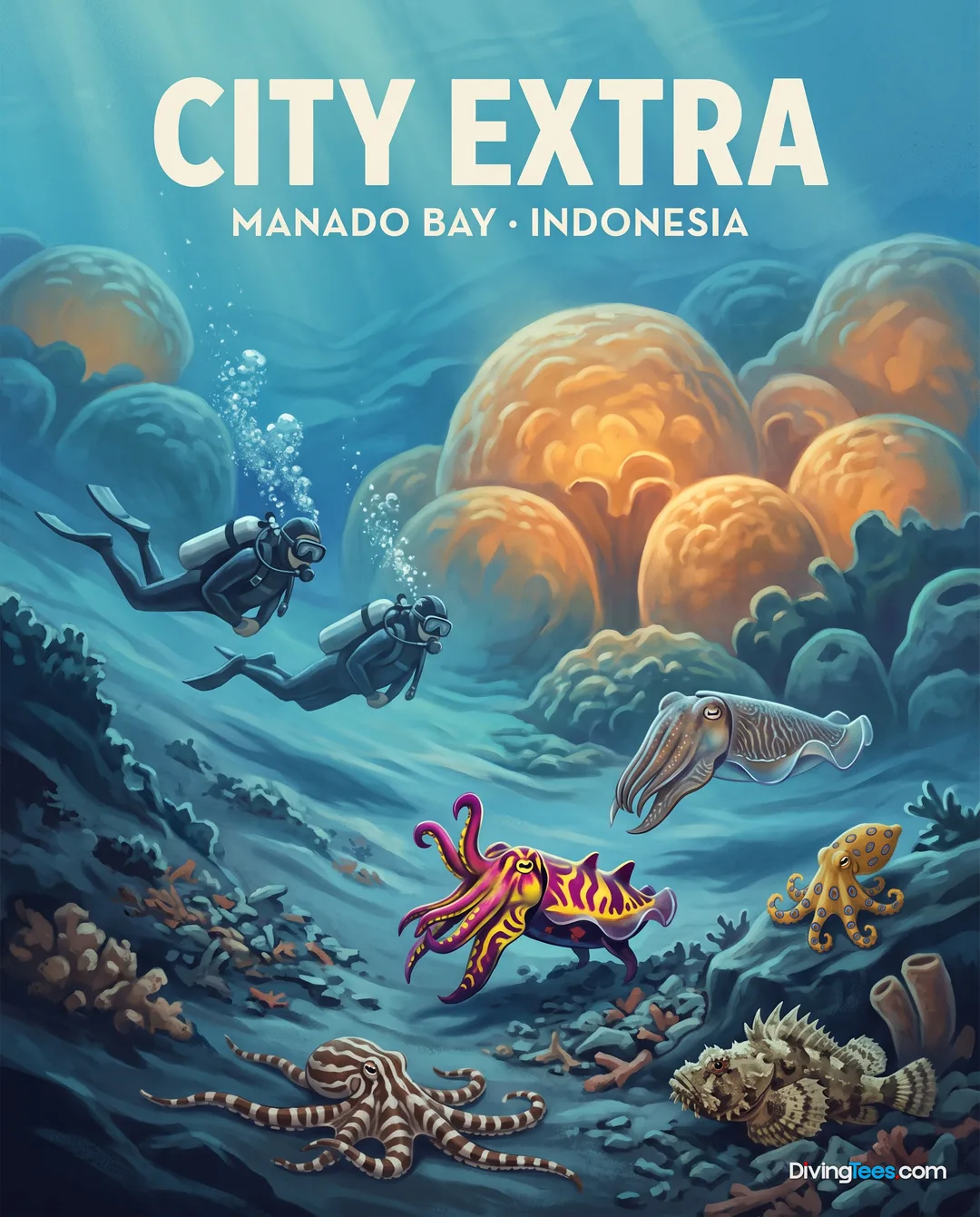
City Extra →
Max. depth · 20 m
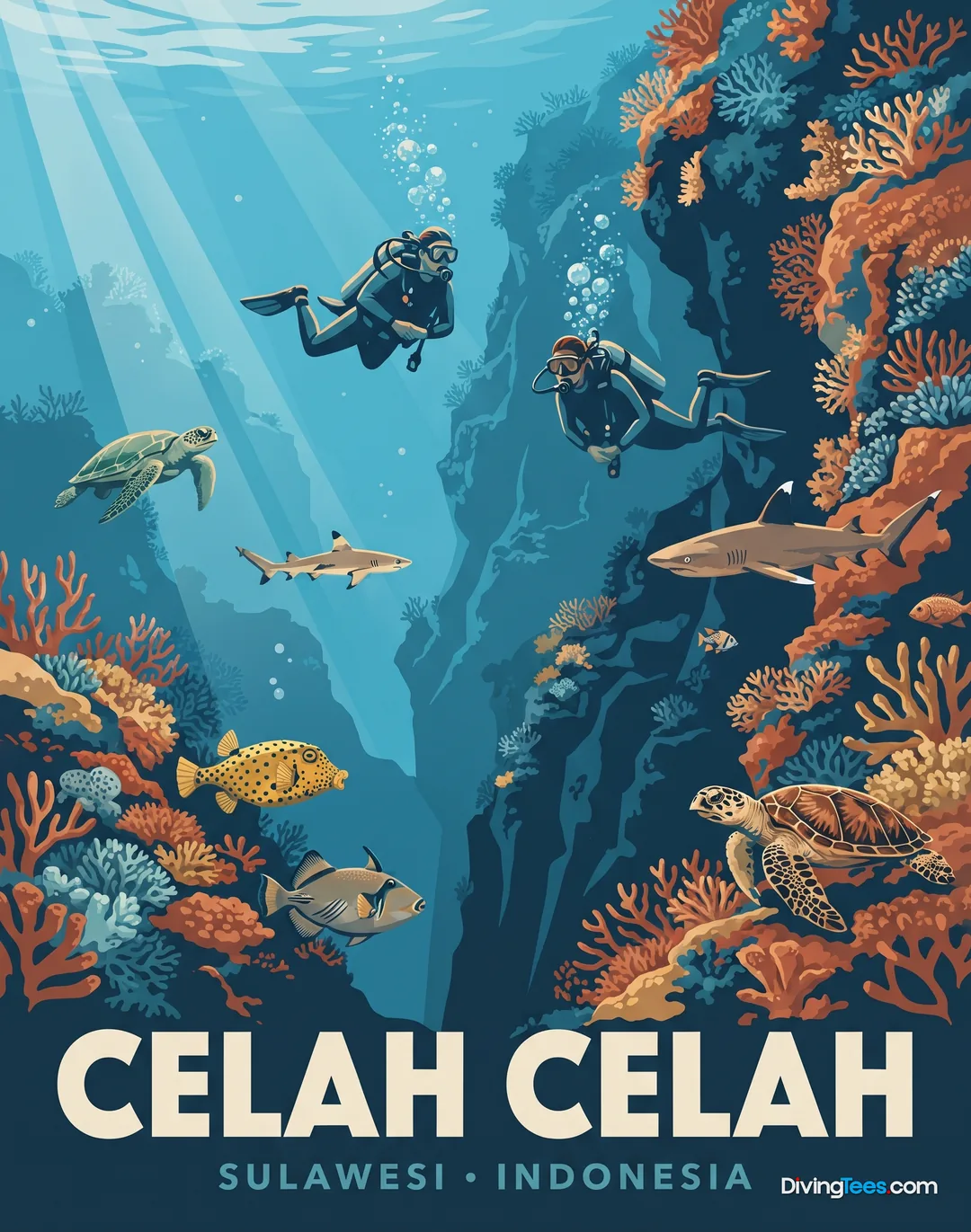
Celah Celah →
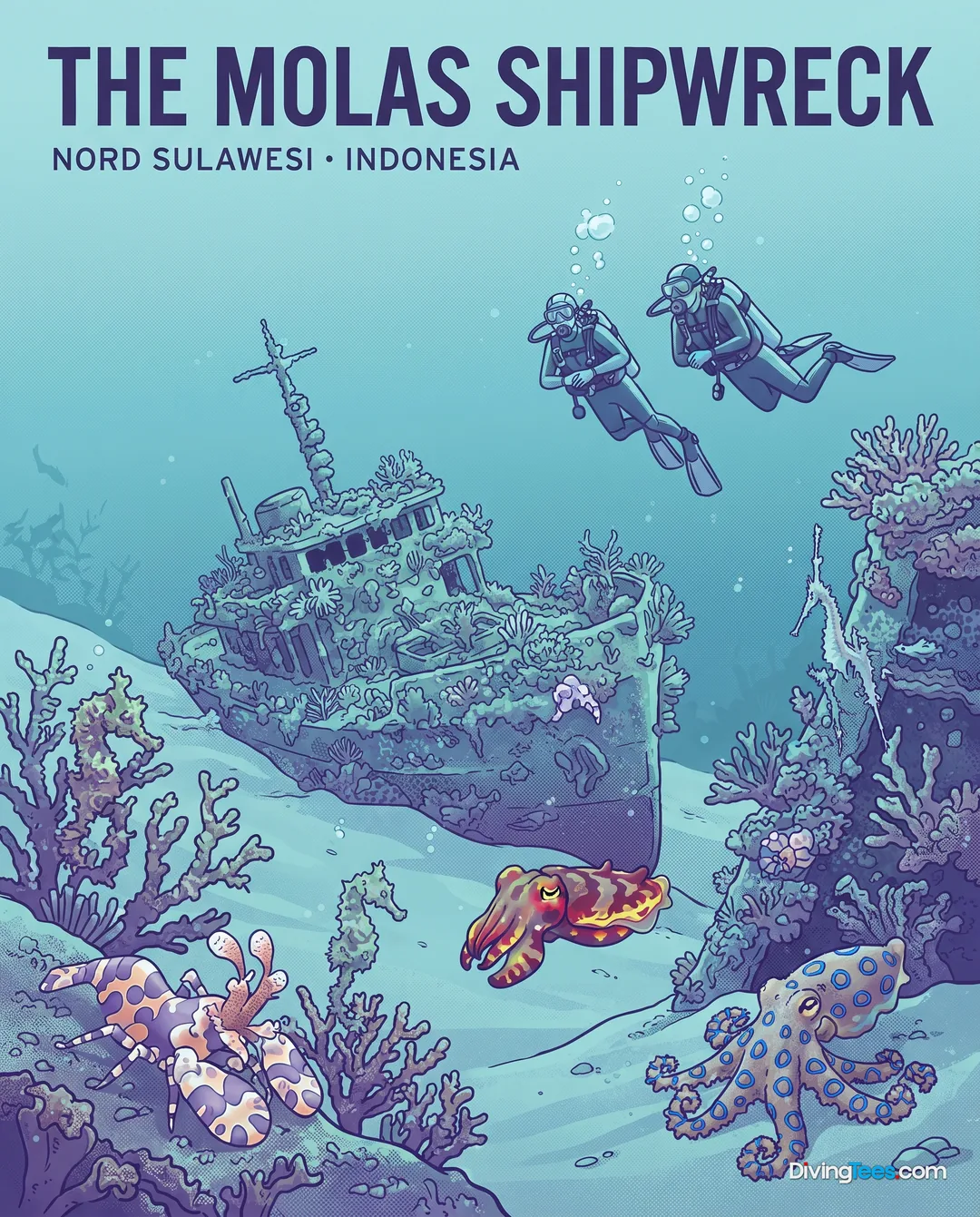
The Molas Shipwreck →
Max. depth · 40 m
What you’ll meet underwater
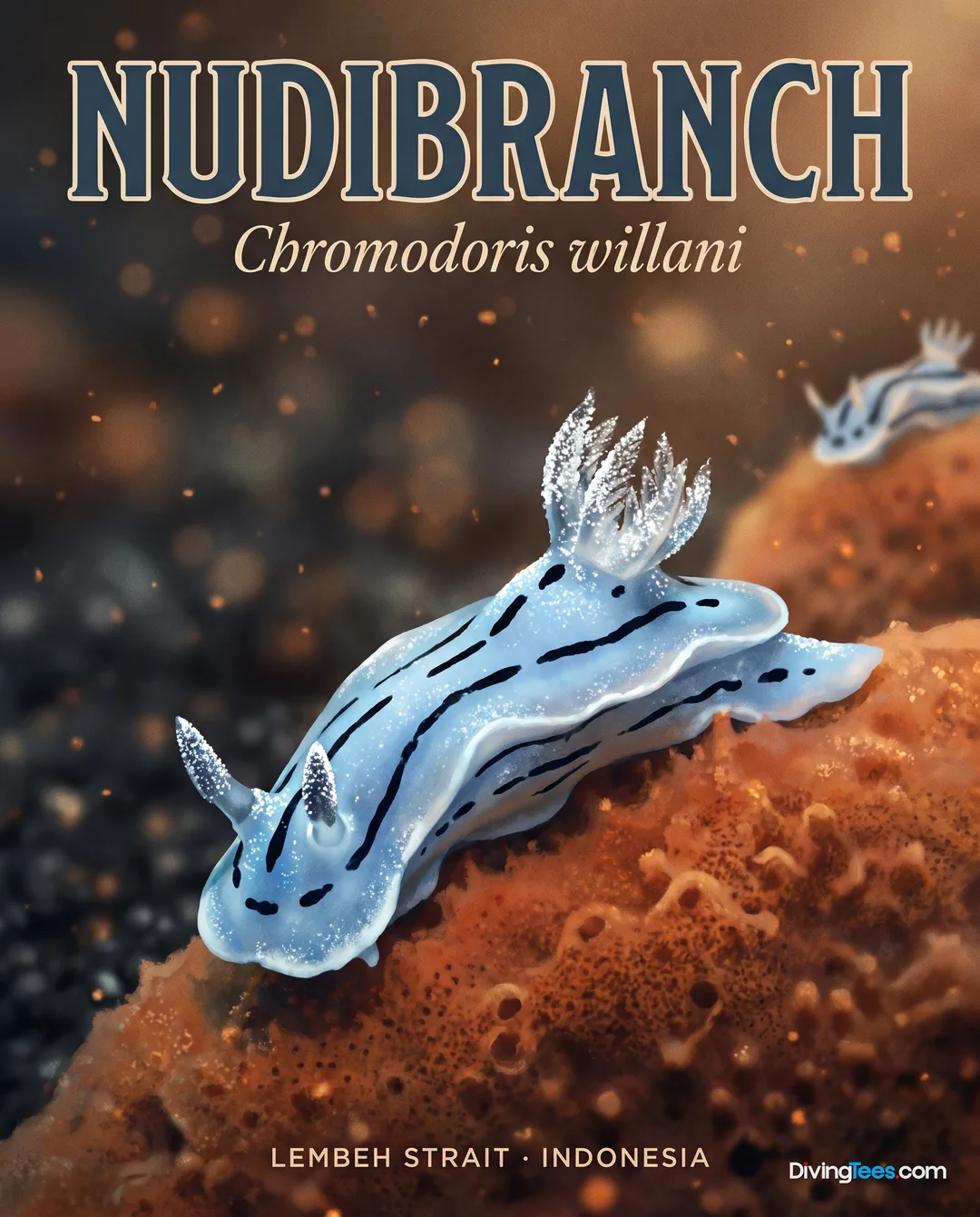
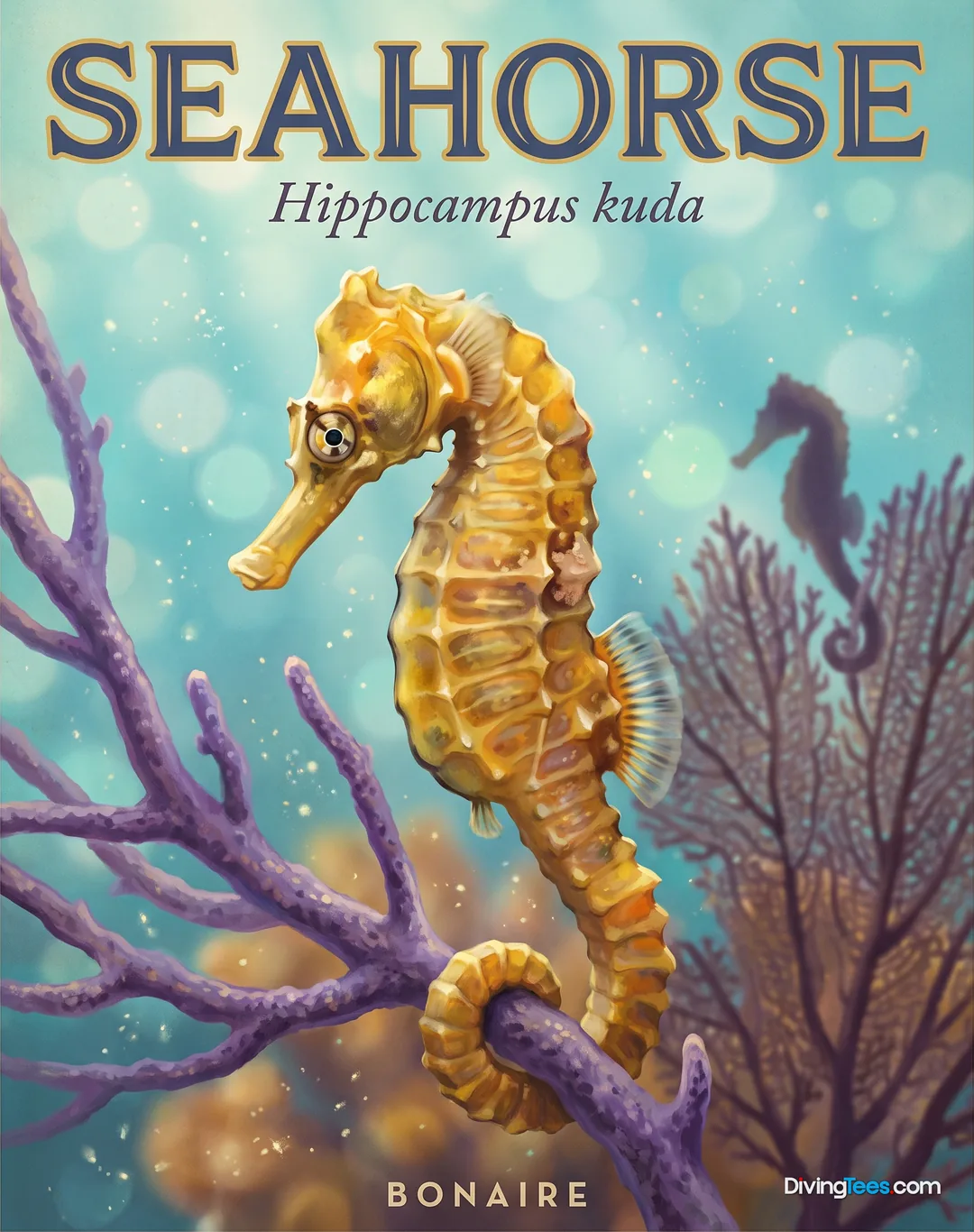
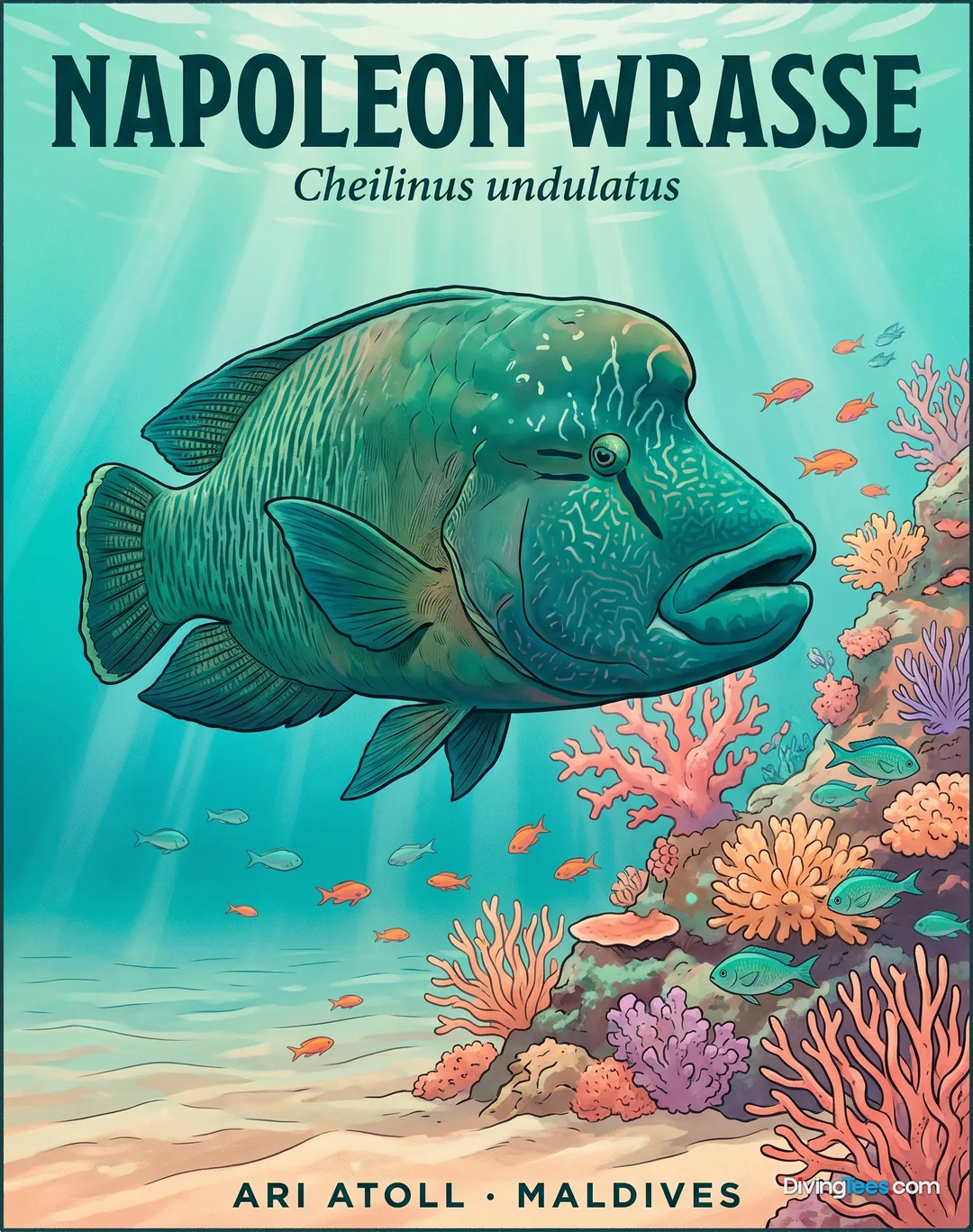
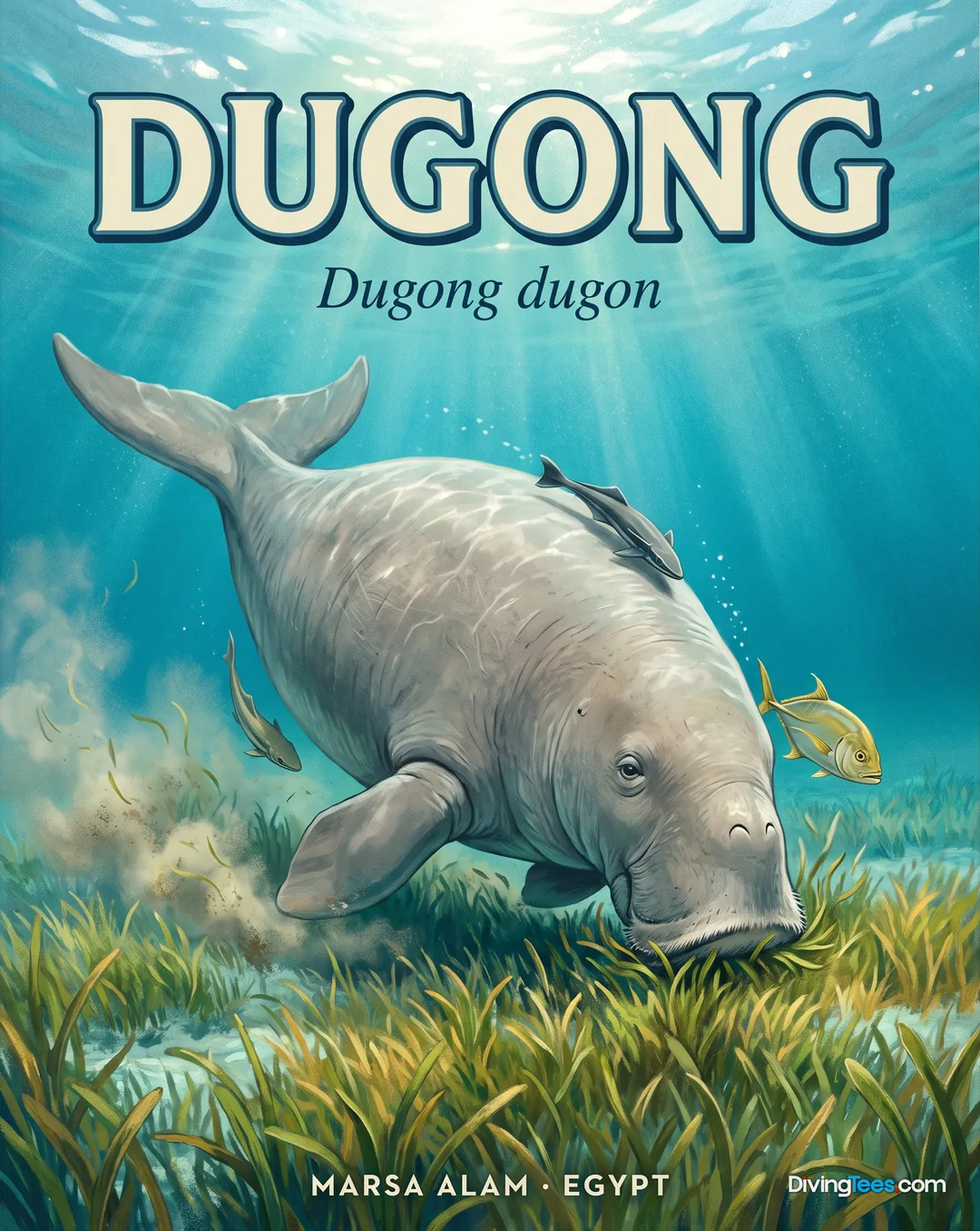
The route is built around two kinds of reward: animals that may appear across several reefs, and one-off reasons to make a particular descent. Nudibranchs, pygmy seahorses, eagle rays, cuttlefish, moray eels and mantis shrimps recur across the site list, alongside turtles, barracuda, Napoleon wrasse and reef sharks, including white-tip reef sharks. The walls give larger animals room to cruise past while the reef holds the smaller subjects photographers stop for. Bunaken Marine Park is the place where dolphins, dugongs, groupers, carangids and angelfish are specifically recorded. Celah Celah adds triggerfish, wrasse and surgeonfish in the fissure itself. Lembeh Strait is the dedicated octopus site, with shallow volcanic sand suited to patient searching. Murex Bangka House Reef is where glassfish are recorded, while Bunaken Timur is the named site for hard coral and unicornfish. Sightings remain conditions-dependent; the value is the range of habitats, not a promise of a particular animal.
Who puts you in the water
The crew speaks English and Indonesian, and a naturalist guide is part of the operation. The crew-to-guest ratio is close to 1:1, which gives briefings and entries a more hands-on feel than a large liveaboard can usually provide. Dive groups can be supported from the two tenders, while the naturalist guide adds context on the reef and surrounding wildlife rather than treating every descent as a route between two GPS points. Safety equipment includes oxygen, first-aid kits, life rafts, life jackets, fire alarms and extinguishers, radar, sonar, GPS and marine radios. The crew is trained in first aid. No minimum logged-dive number, instructor roster, group-size limit, defibrillator or onboard course programme is stated.
The dive deck and the gear
The diving runs from a dedicated platform, with two tenders taking divers to and from the sites. The tender system matters on current-prone walls and scattered pinnacles: the boat can collect divers where they surface instead of asking everyone to swim back to a fixed ladder. The compressor and diving equipment travel on the second boat, keeping the main vessel clear between dives. Nitrox is available, and DIN adapters are carried; Nitrox and rental equipment are optional extras rather than automatic inclusions. Photographers have a separate camera rinse area and charging stations. The setup also includes night dives, oxygen, first-aid kits, outdoor showers and a dive platform designed for repeated entries and exits. Tank volume, tank material, SMB provision and compressor type are not stated here, so those details should not be assumed.
Between dives
Between dives, the boat gives the group several ways to come off the platform without disappearing into a cabin. The terrace and observation deck offer sun and open air, while the air-conditioned salon provides a cooler place to read, review photographs or let a wet wetsuit stop dripping on the furniture. Photographers have a separate camera rinse area and charging stations, so the lounge does not need to become a makeshift workbench. Kayaks are carried aboard for snorkeling and quiet time on the water, and land excursions and naturalist outings are part of the programme. The spa and massage service gives tired backs another option after several days of loading and carrying gear.
A day on board
A day starts with the dive operation rather than with a resort timetable: briefing first, then the first descent while the water and light are still changing. Breakfast follows or frames that opening dive, with further dives built around the day's sites and meals keeping the group moving without turning the schedule into a race. The tenders take divers out and collect them after the ascent, leaving the gaps for food, naps, photographs, kayaks or the observation deck. The second boat handles the compressor and equipment while the main vessel remains a place to recover. When the programme calls for it, a night dive adds a final entry after the daylight work is done. Dinner closes the active part of the day, and the boat starts again with the next briefing.
What you eat aboard
Meals are included throughout the trip, with local cuisine, vegetarian and vegan choices, snacks during the day, soft drinks, tea and coffee. The table is not an afterthought: food scores particularly strongly, and dinner can be served outdoors rather than under artificial light. A full day of diving needs food that arrives without ceremony and without making divers wait hungry for the next briefing. Expect a mix of Indonesian cooking and broader dishes, with beer and wine available and a barbecue on the beach when the itinerary allows. The point is not a long restaurant service between dives. It is having a reliable meal after the water, a snack before the next descent and a proper dinner when the tanks are finally put away.
Nights at sea
The six cabins are on the main deck, with private bathrooms, air conditioning, hot showers and panoramic windows. Double/twin cabins include the main twin cabin and a second twin cabin, so the choice is practical rather than ornamental: a shared room for buddies, or a double arrangement where available. Accessible balconies and sea views make the cabins feel connected to the water, while the limited passenger count keeps the accommodation from becoming a corridor of closed doors. This is still a liveaboard cabin, not a resort room; the useful luxury is returning from a dive to a private bathroom, warm water and somewhere quiet to dry out. The boat also provides daily cabin cleaning, towels and toiletries.
Double/Twin Cabins
Main Twin Cabin
Second Twin Cabin
What to know before boarding
Departures and returns are recorded as round trips from Labuan Bajo. Airport and hotel transfers are included, connecting the boat with accommodation or the airport in Labuan Bajo. The transfer arrangement is communicated with the booking details. Arriving in Labuan Bajo the night before is the sensible choice, giving the trip a margin if a flight is delayed.
Deck plan
- Year built
- 2009
- Year renovated
- 2019
- Length
- 38 m
- Maximum number of passengers
- 16
- Number of cabins
- 6
- Number of bathrooms
- 7
- Engines
- cummings 400 hp
- Cruising speed
- 8 knots
- Tenders
- 2
- Website
- komodoresort.com ↗
Hello, I'm Marina, DivingDeal.com's AI assistant. I answer in detail about hotels, dive centres and liveaboards.

Thinking about the whole trip and the flights? Talk it over with Edith →
Marina is an AI. Some links are affiliate links: DivingDeal may earn a commission, at no extra cost to you. Bookings are made with the partner.