Liveaboards · Indonesia
Malaillo — a traditional Indonesian phinisi built for Raja Ampat diving
What makes this boat unique
- Traditional Indonesian phinisi character with modern diving equipment.
- Up to 14 divers share seven air-conditioned cabins, each with a private bathroom.
- Nitrox is available at no extra charge for certified nitrox divers.
- The Raja Ampat Central–Wayag itinerary runs for 11 days and 10 nights from Sorong to Sorong.
For subtitles in English: start the video firstthen click the gearat the top right of the video, select “Subtitles/CC”, then “Auto-translate” and choose “English”.
The invitation
Malaillo is for divers who want Raja Ampat rather than a generic tropical cruise. The boat keeps the character of a traditional Indonesian phinisi, but the diving operation is set up for repeated entries, camera work and night dives. That combination matters here: the route moves between cleaning stations, current-swept reefs, soft-coral walls and fish-packed jetties, while the boat gives 14 passengers enough room to avoid feeling like a large group. The strongest reason to choose it is the balance. The scenery and hull belong to Indonesia; the diving equipment, nitrox and camera facilities are there for people who came to spend most of the trip underwater. Food is another clear part of the experience, with local and Western cooking, buffet meals, snacks throughout the day and a strong reputation from returning passengers. This suits divers who value the crew and the time in the water more than a polished resort interior.
Boarding
Malaillo arrives as a working Indonesian phinisi: a large wooden liveaboard whose traditional form is part of the trip, not decoration added to a modern yacht. It was built in 2017 and renovated in 2024, so the boat combines that familiar wooden character with a newer, purpose-built diving setup. Boarding leads into a vessel arranged around a small passenger group rather than a floating hotel crowd. The upper deck carries the cabins, and the boat has indoor and outdoor places to eat, sit and watch the islands pass. Underway, the single Mitsubishi engine is the mechanical heart of the boat; there is no second engine to make the machinery disappear from the experience. Malaillo cruises at 6 knots and reaches 10 knots when needed, so this is a boat for covering Raja Ampat waters steadily, not racing between sites. The point of coming aboard is clear once the gear begins moving toward the dive platform.
The atmosphere on board
Malaillo is a small liveaboard by Raja Ampat standards, with 14 passengers and a crew presence close to one crew member for every passenger. That shows in the useful moments of a diving day: equipment is handled, meals appear between entries and the boat is ready for the next group without making passengers solve every practical detail themselves. English and Indonesian are spoken on board, and the crew includes local and international members. The strongest impression left by the boat is not a formal luxury routine but a working team that stays close to the divers. After dinner, the day can move to the bar, the outdoor deck or the camera room, where sightings and photographs become shared conversation. The crew's role is especially important on a route with current dives and repeated site changes. Malaillo's hull may not be the newest-looking part of the experience; the people running it are what give the boat its warmth and keep the operation moving.
The sites you’ll dive
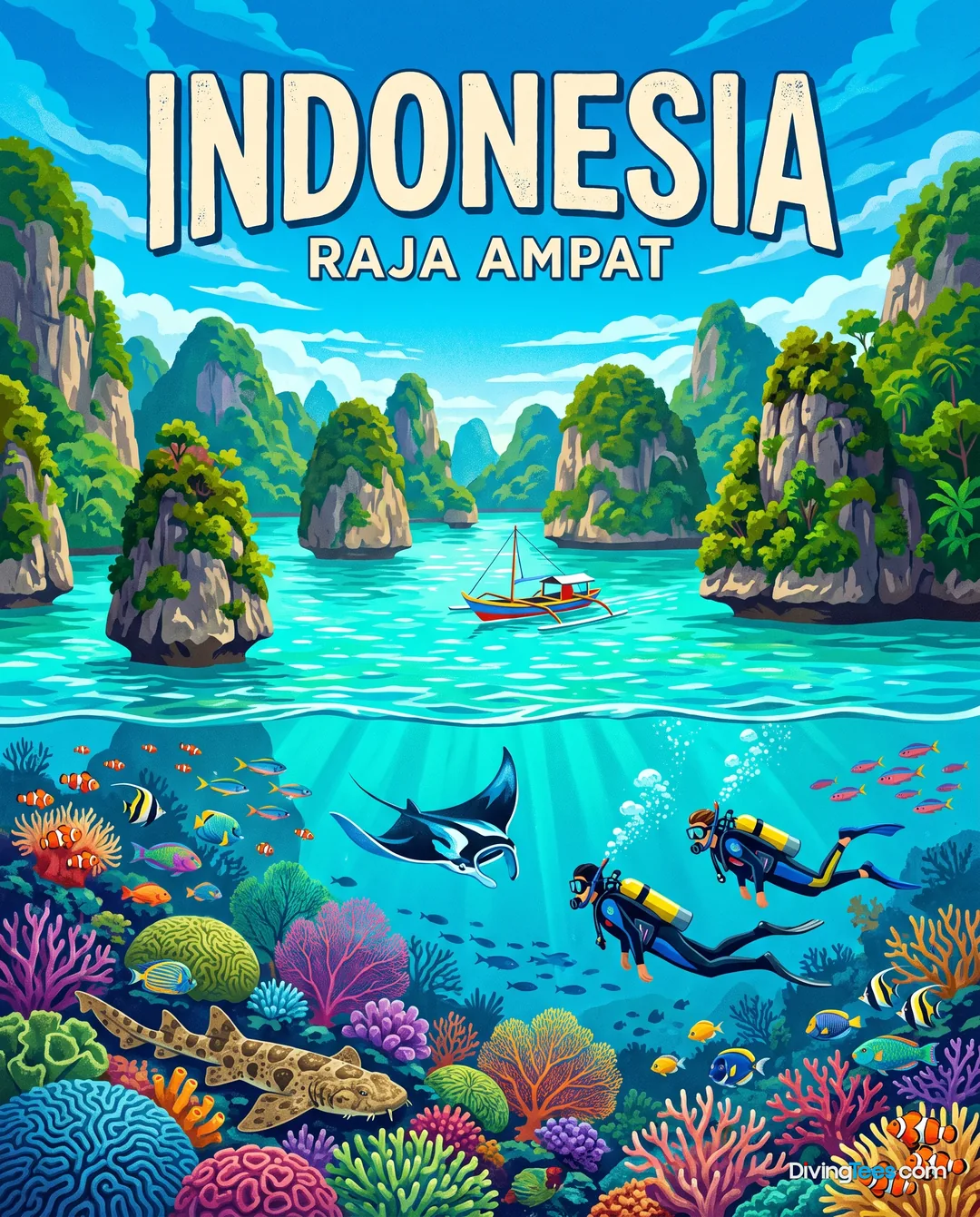
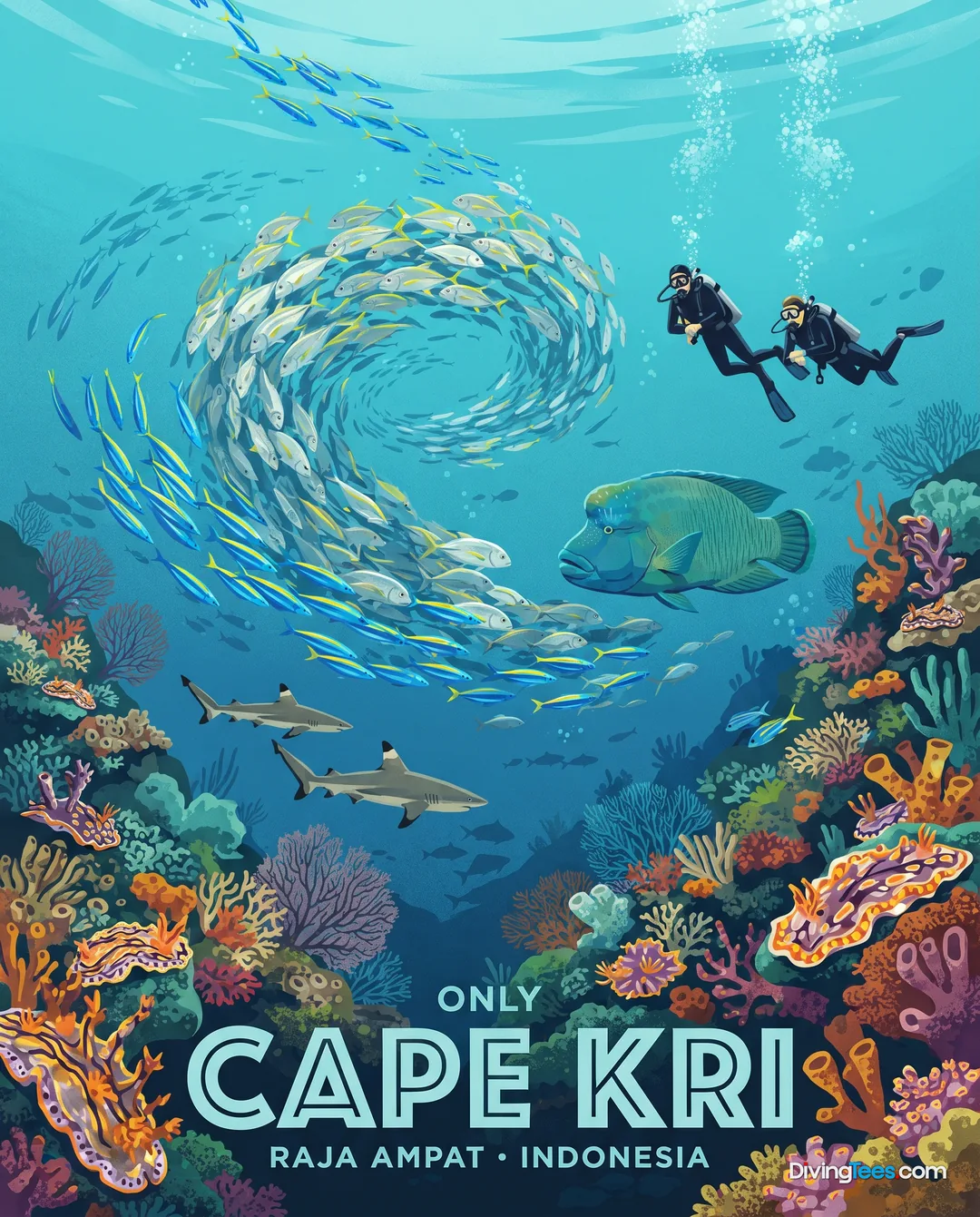
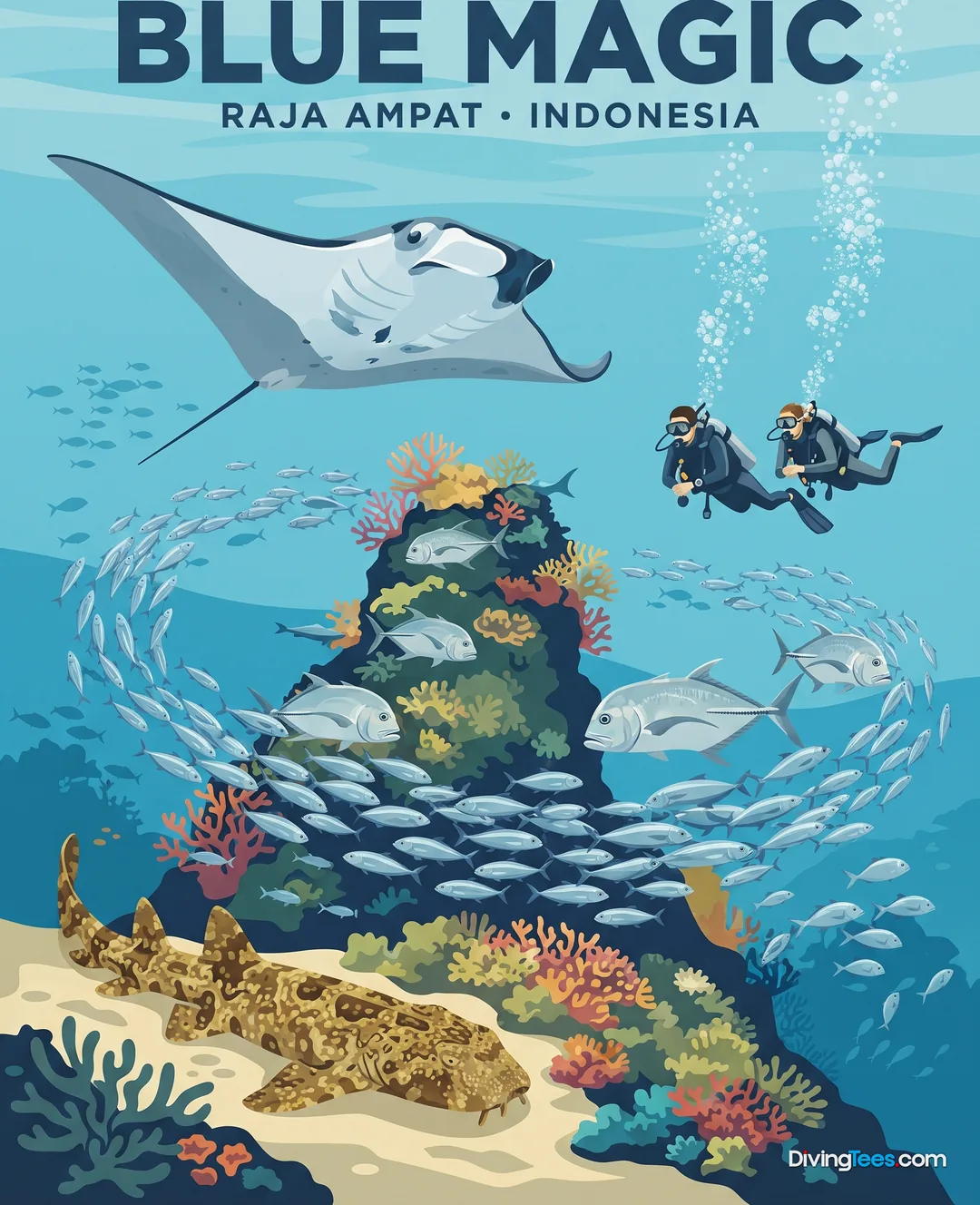
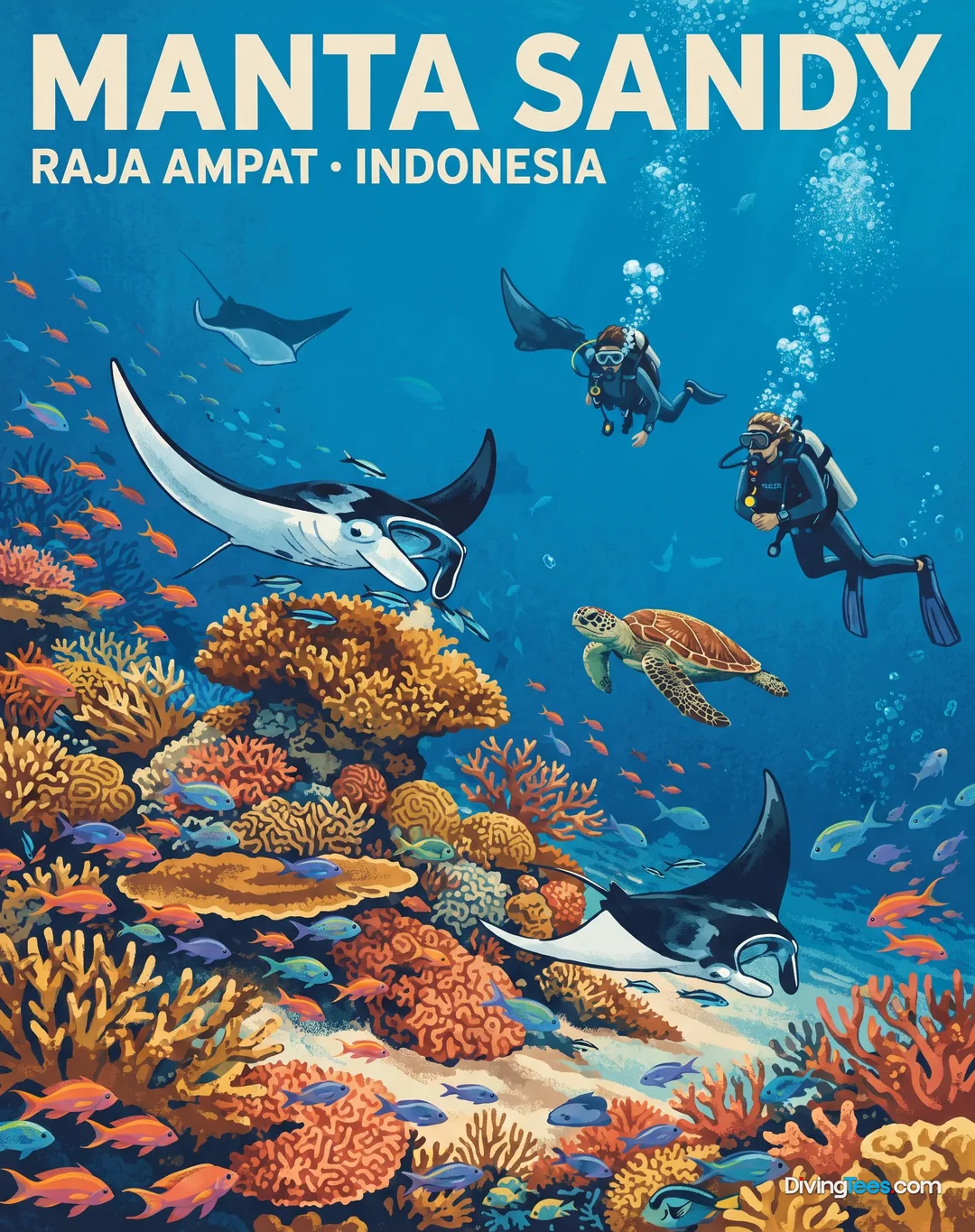
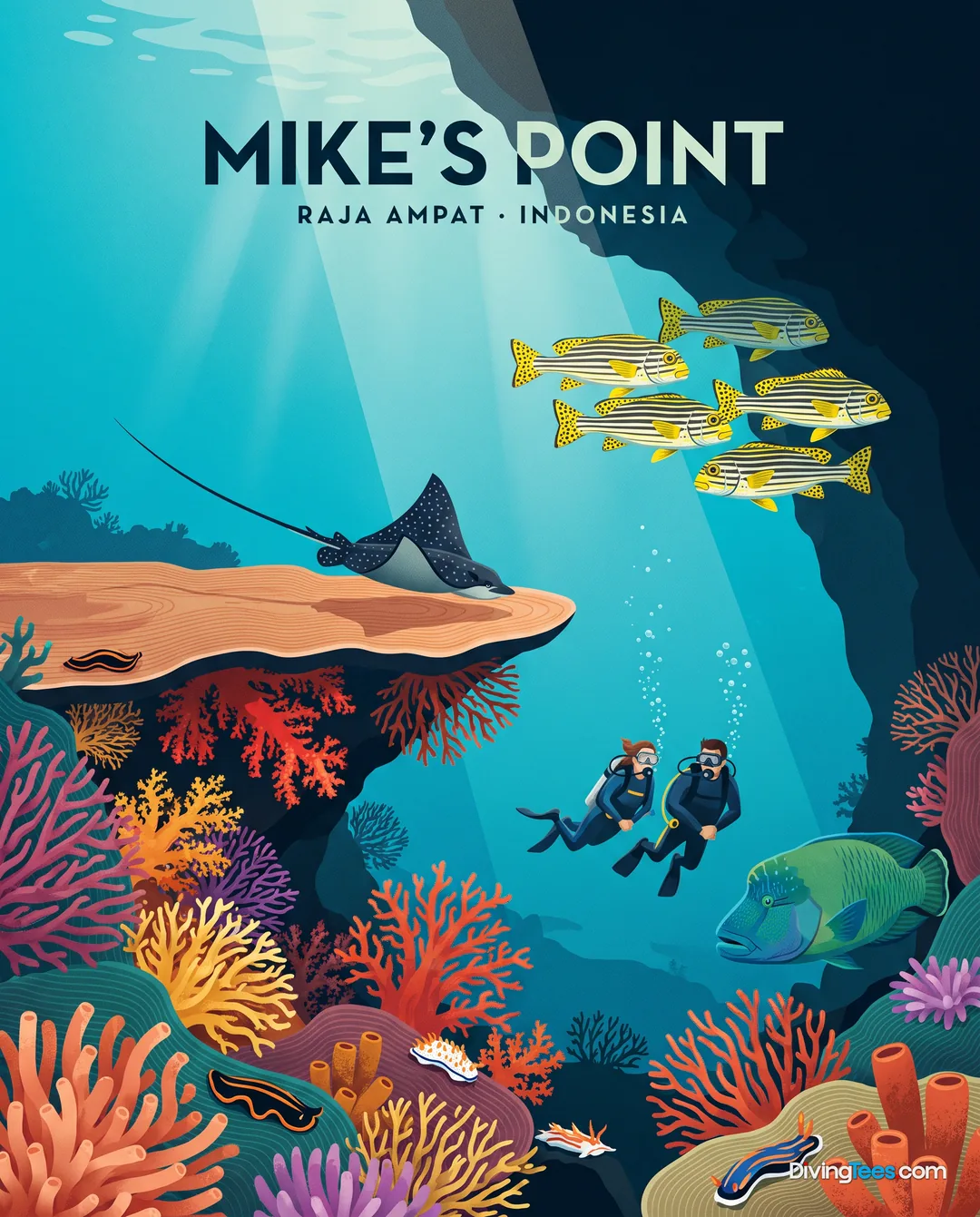
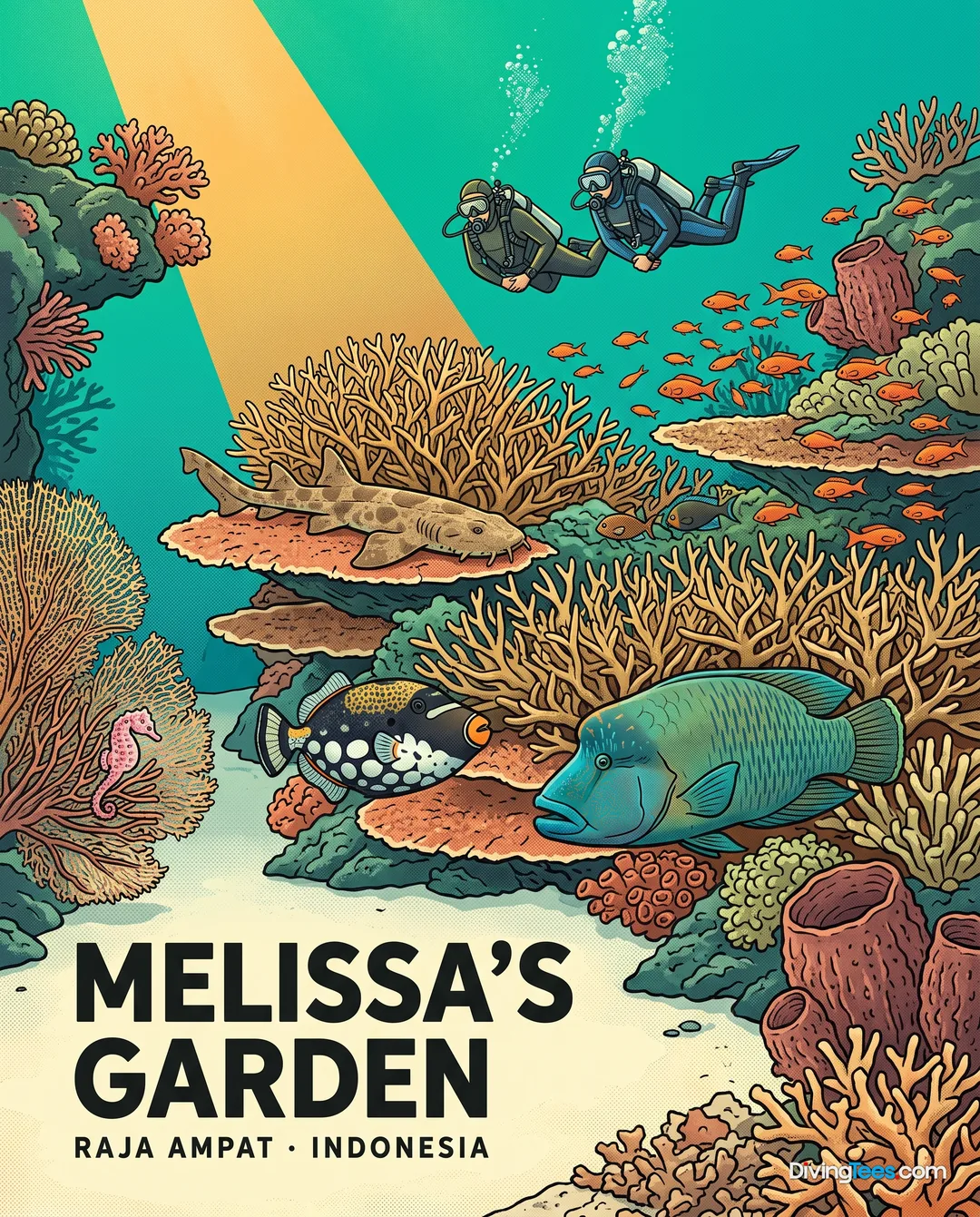
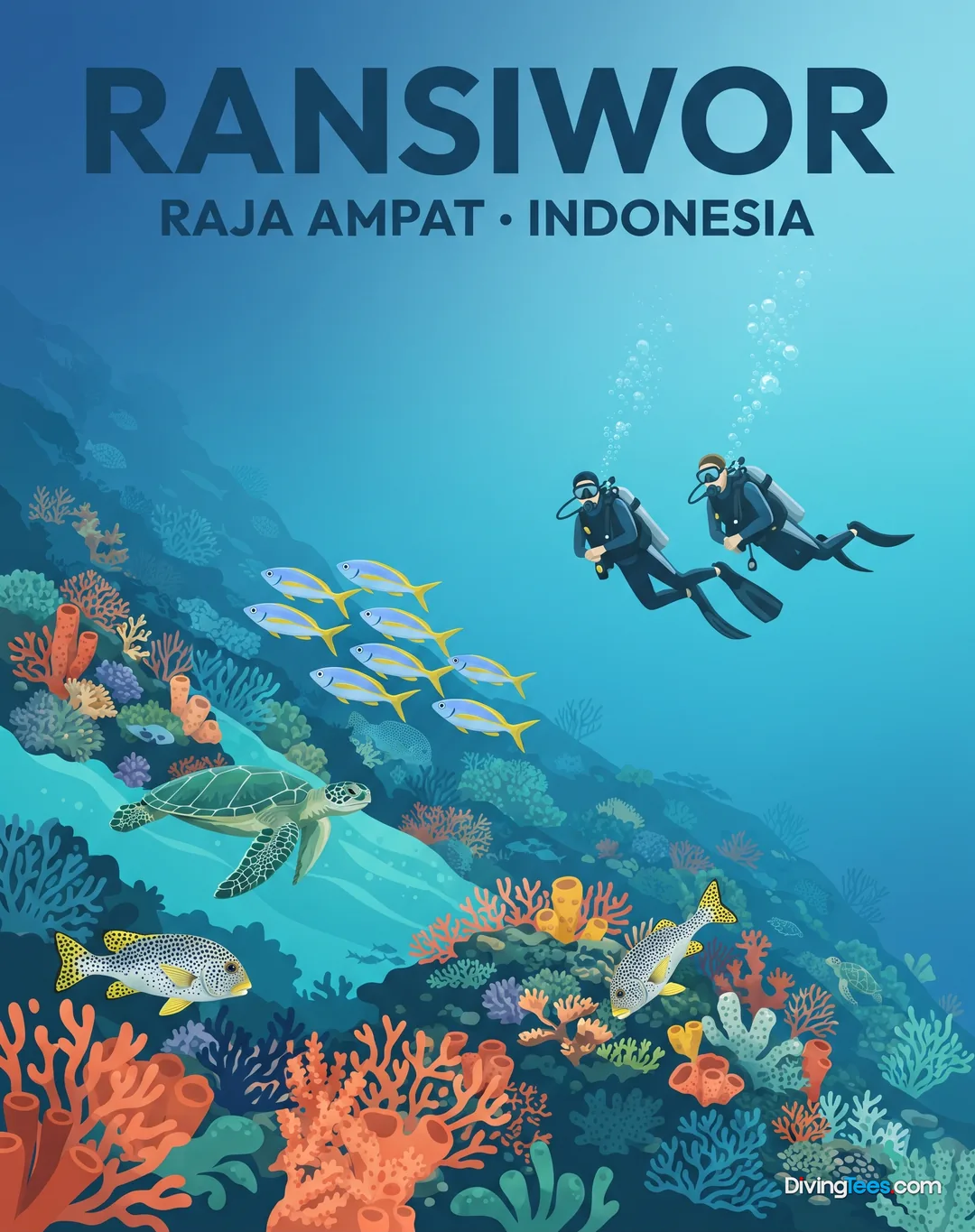
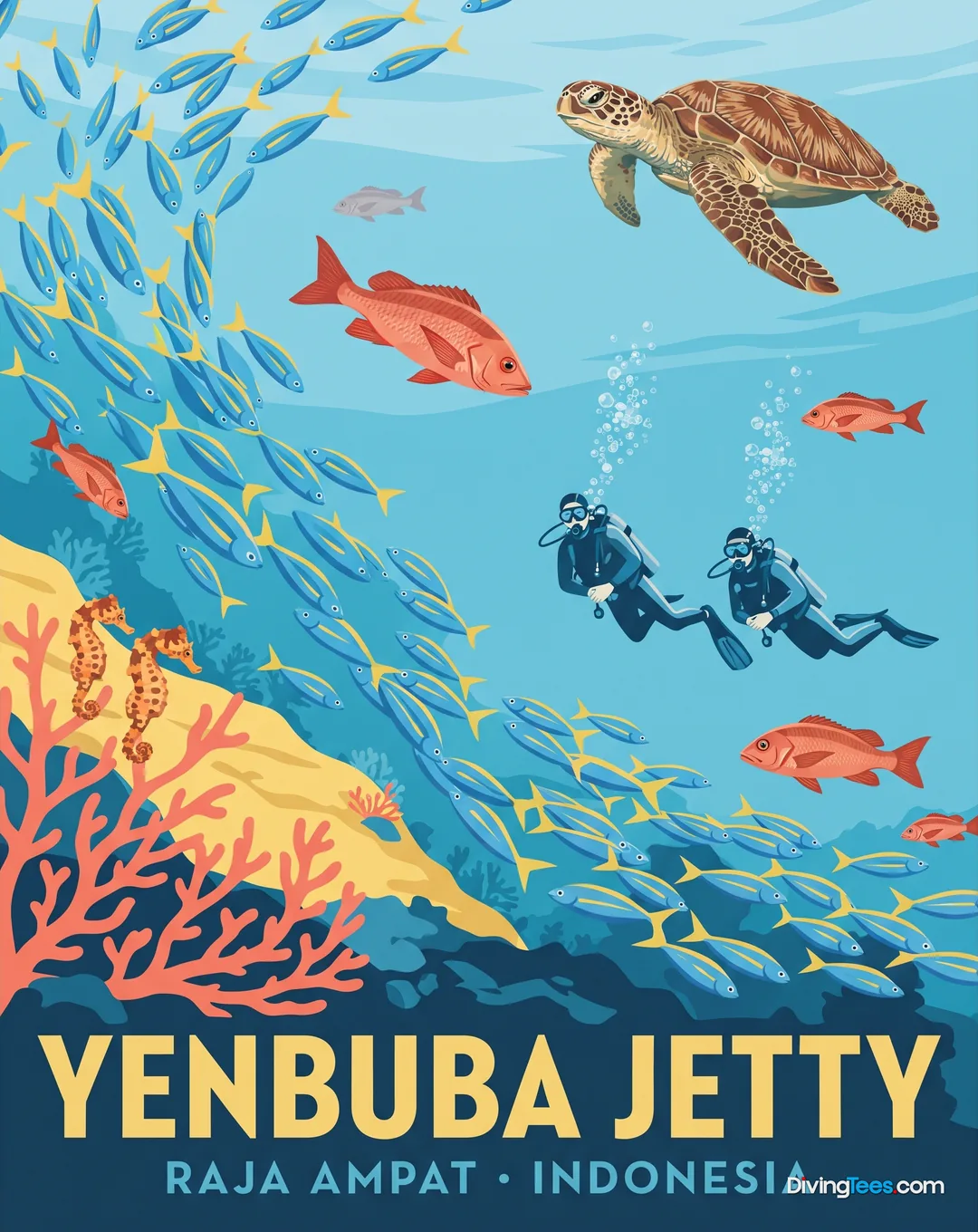
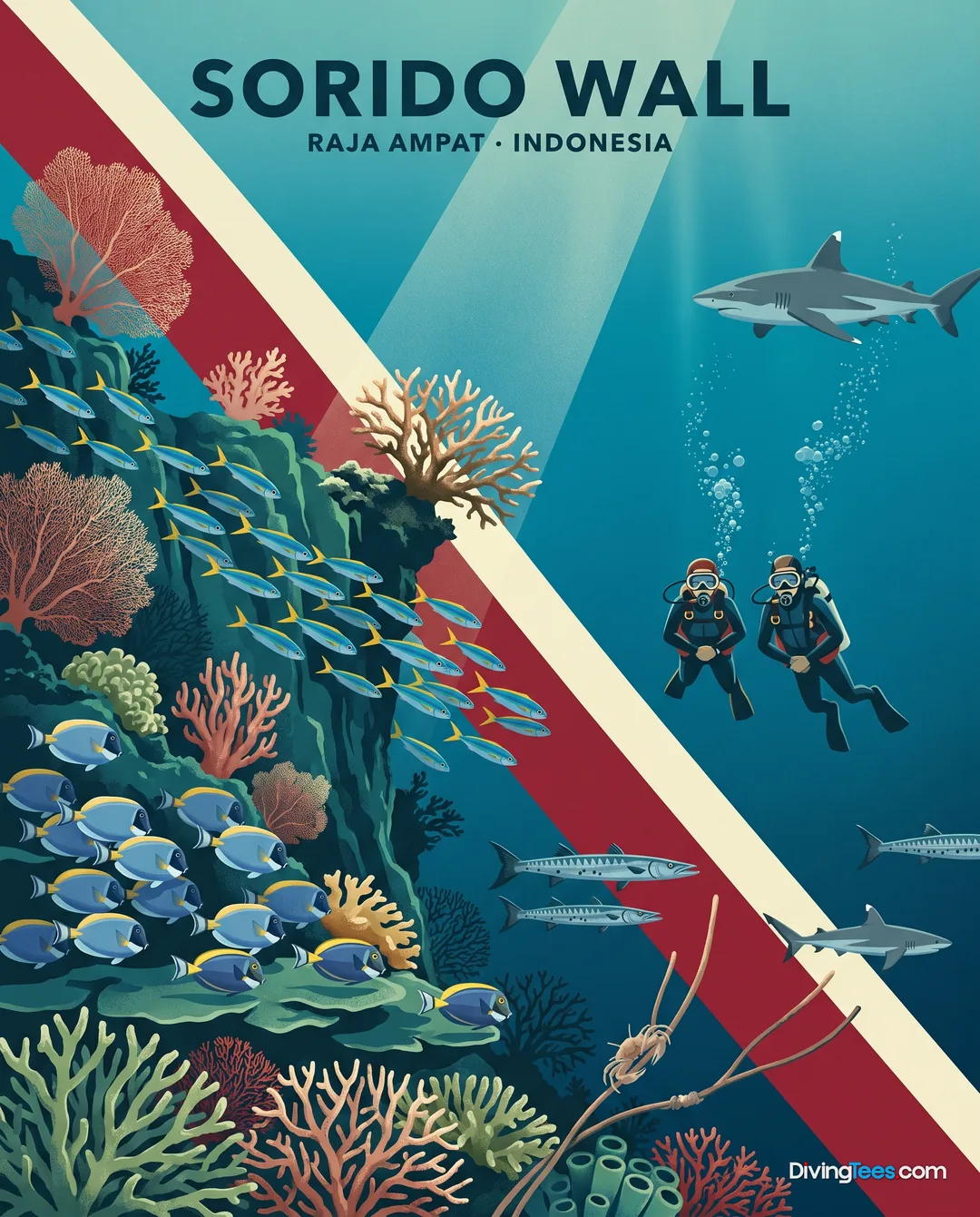
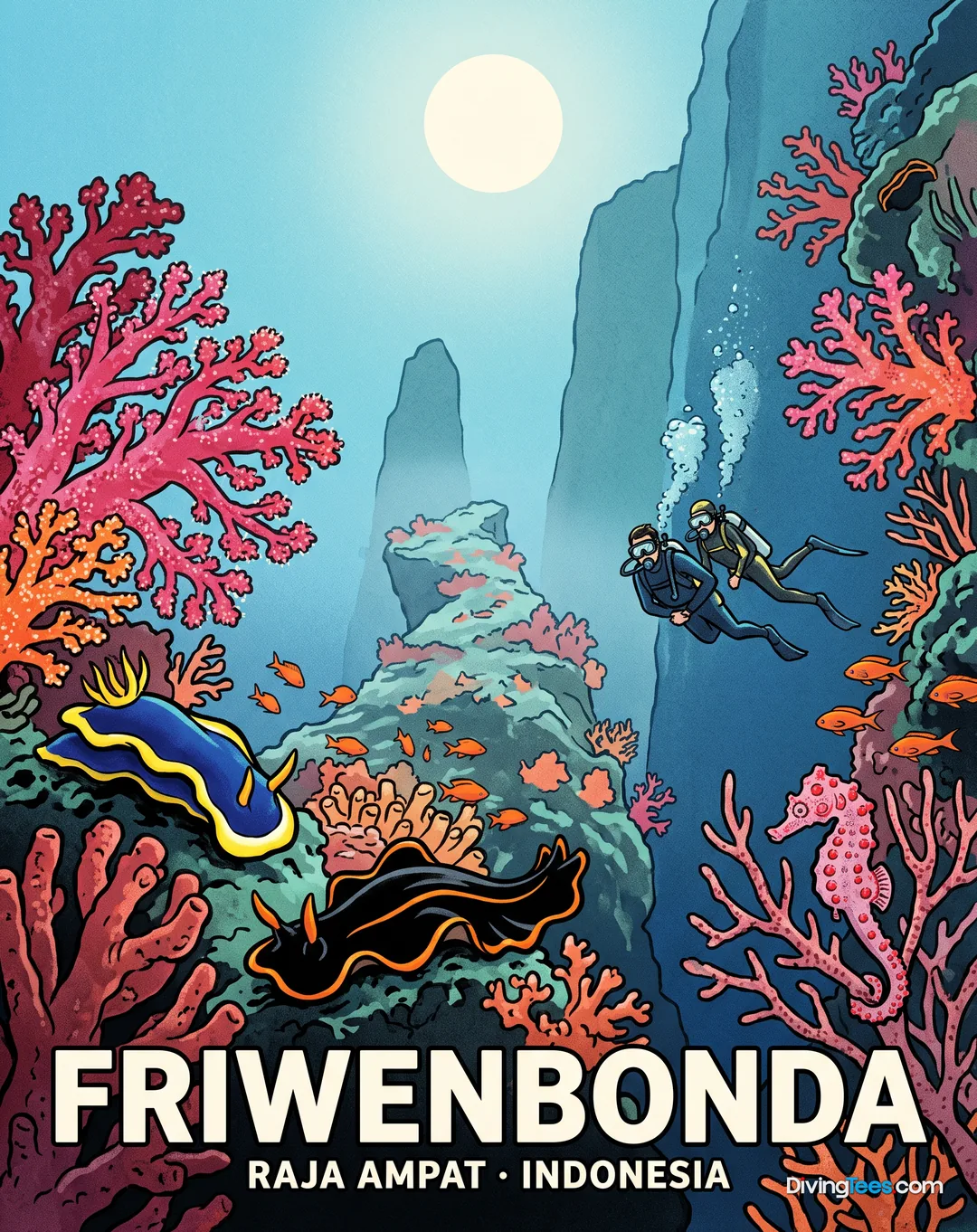
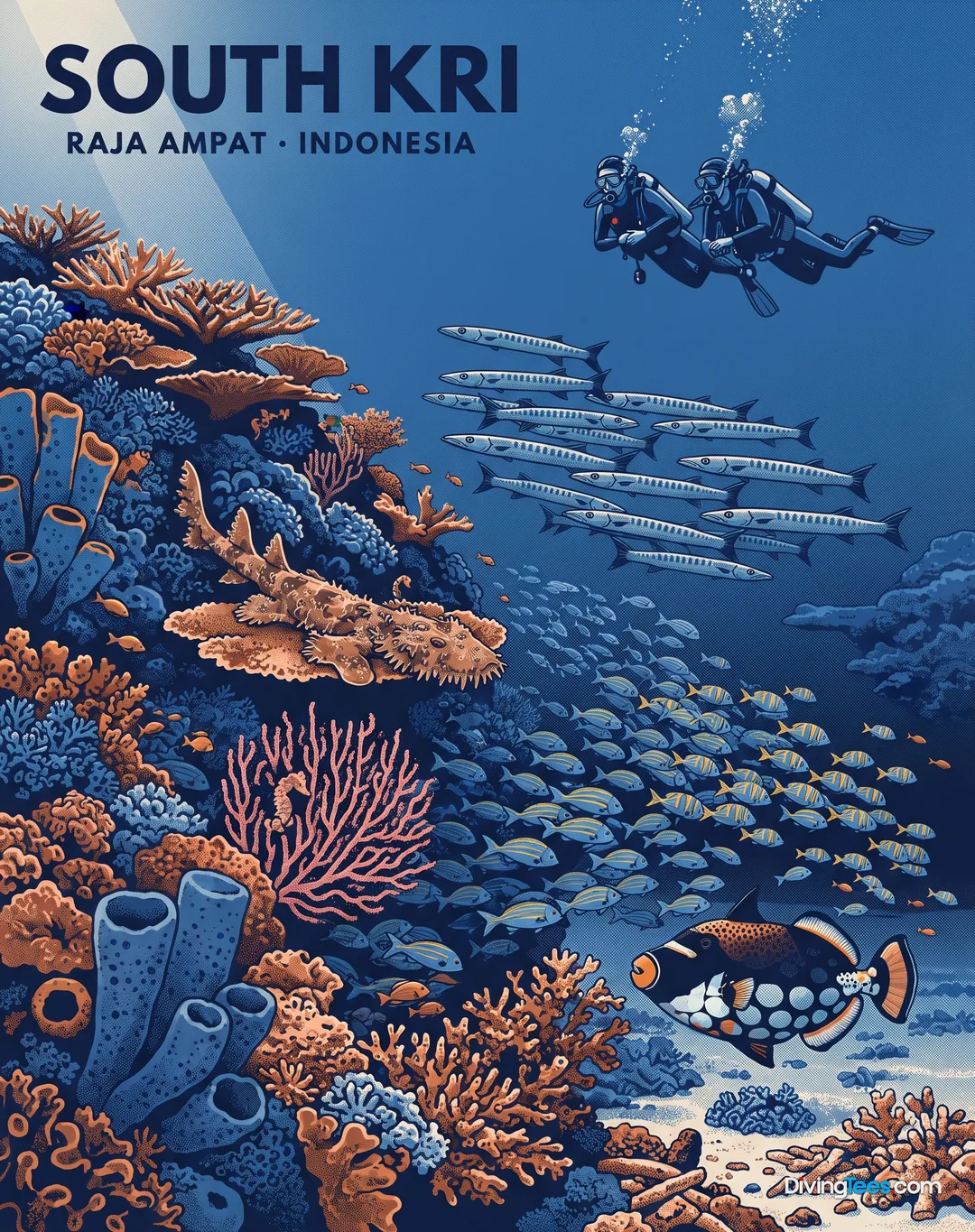
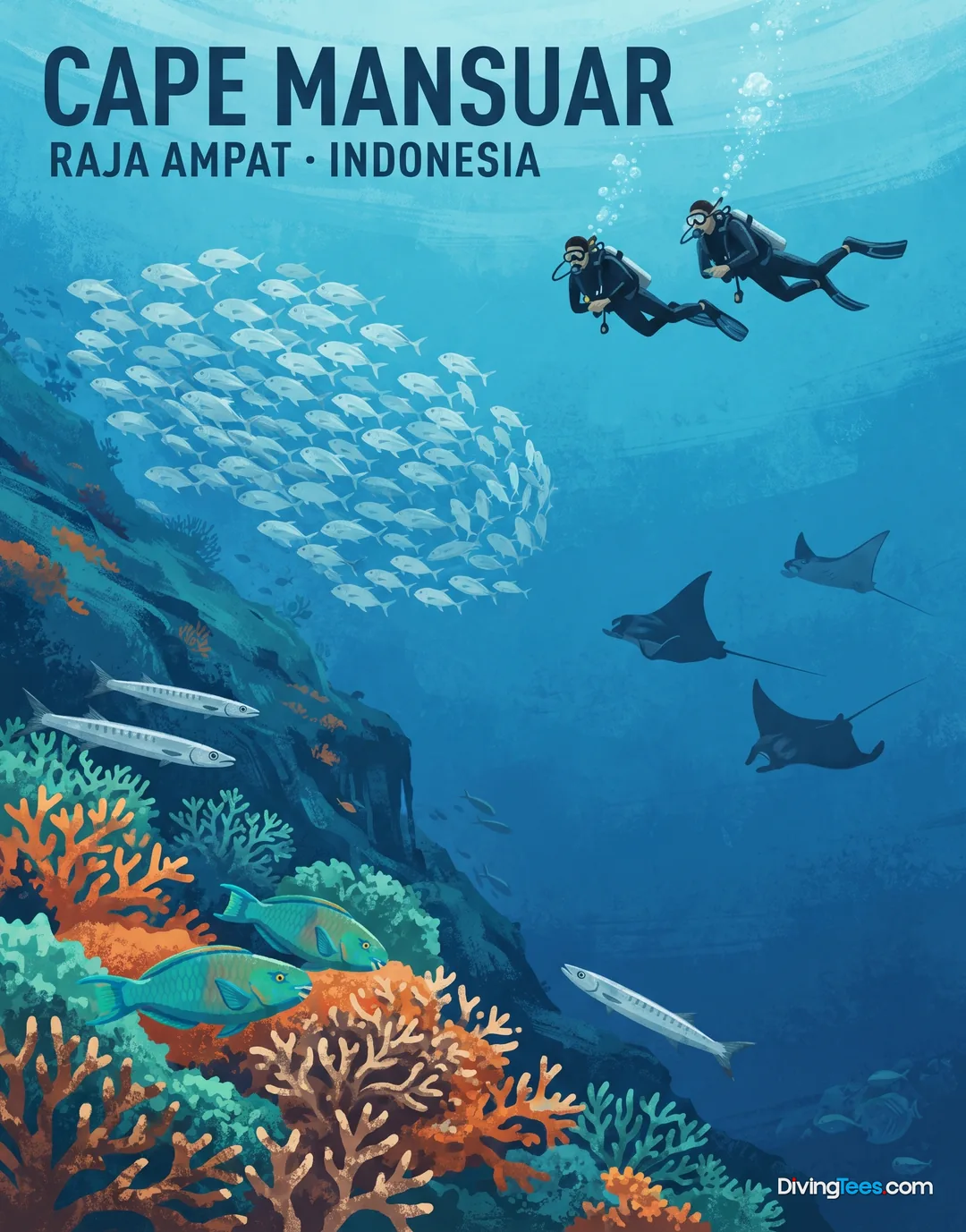
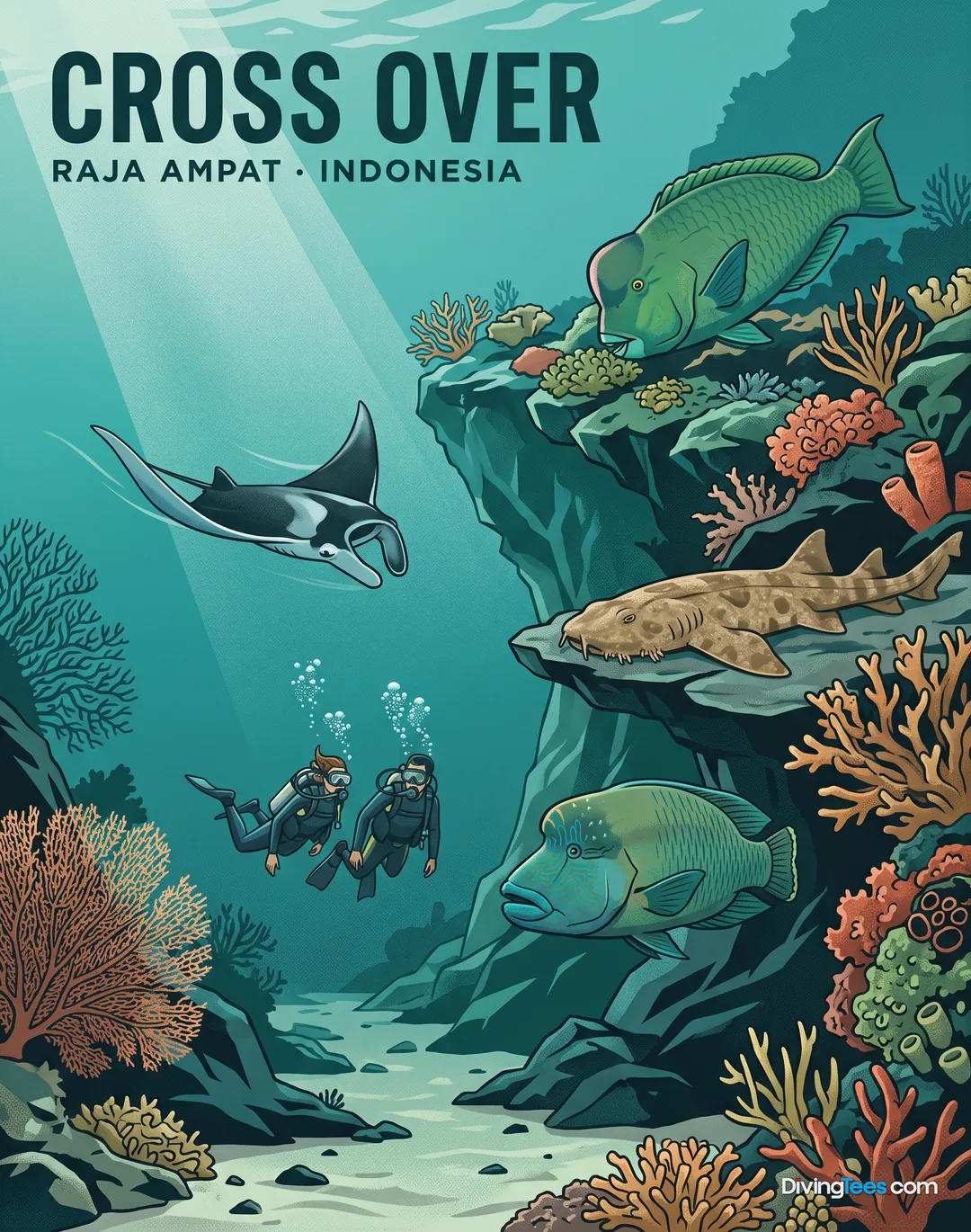
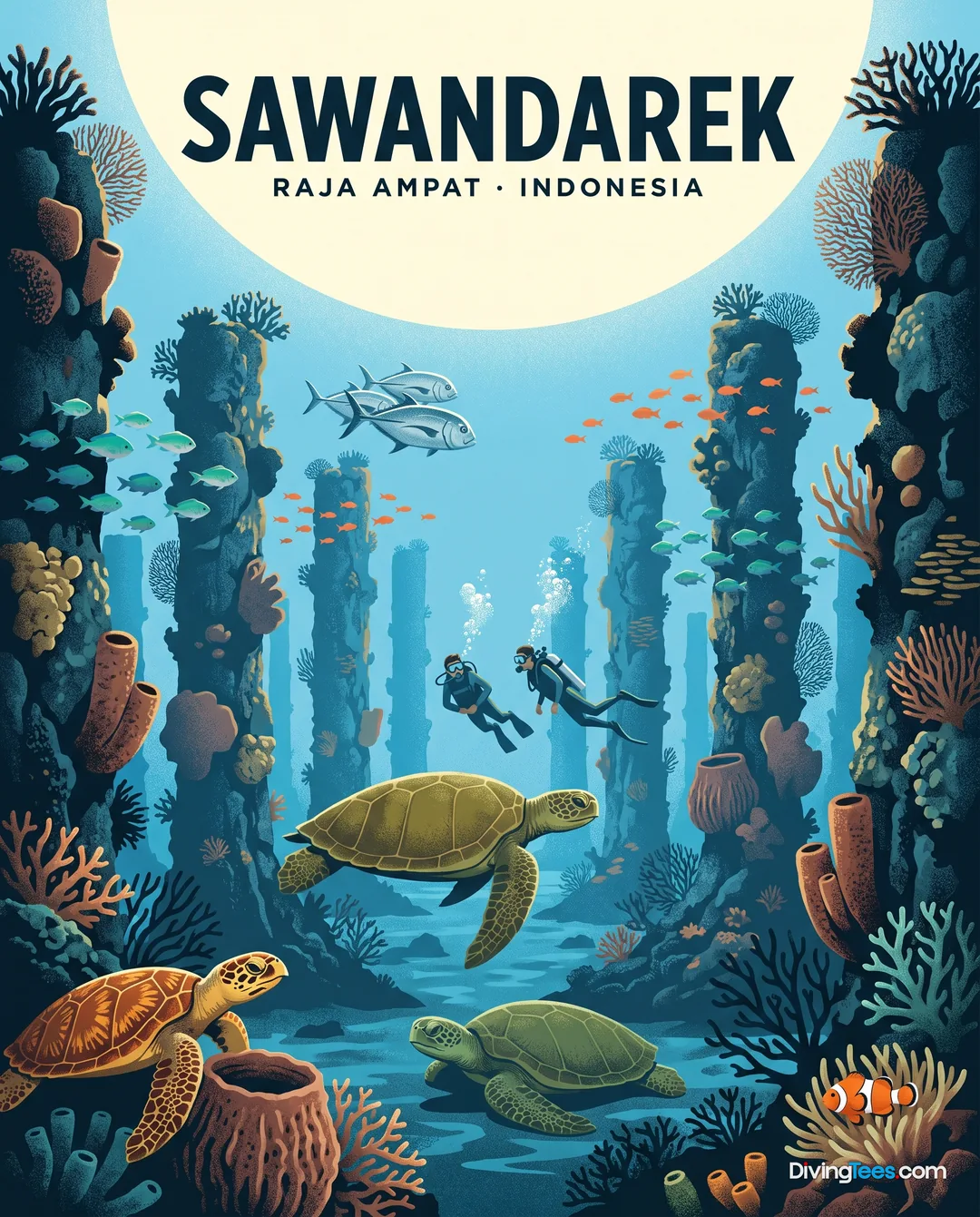
The Raja Ampat Central–Wayag trip runs for 11 days and 10 nights from Sorong to Sorong, and the site list explains why the route deserves that length. Cape Kri is the fish-density dive, with schools of emperors and fusiliers, Napoleon wrasse and reef sharks; 374 fish species have been observed on a single dive there. Blue Magic puts schooling fish, giant trevally, dogtooth tuna, barracuda and oceanic manta rays into the blue. Manta Sandy is built around reef manta rays at cleaning stations, a place that also works for snorkelers. At Mike's Point, soft corals cover overhangs and eagle rays can cross the flat plateau; the maximum depth is -40m. Melissa's Garden reaches -35m through soft corals and staghorn formations. Ransiwor descends gentle slopes to busy cleaning stations and yellow-back fusiliers, with a maximum depth of -30m. Yenbuba Jetty combines fish-packed, coral-covered pilings with a sloping reef and reaches -30m. Sorido Wall brings barracuda, reef sharks and fusilier schools along a wall, while Friwenbonda adds a colourful soft-coral wall and pygmy seahorses. South Kri is a relaxed drift mixing schooling fish and macro life; Cape Mansuar follows current along a rich sloping reef; Cross Over uses strong currents to feed dense coral and blacktip reef sharks; Sawandarek is known for giant green turtles and jackfish in the shallows. Other recorded Malaillo departures include Komodo at 8 days and 7 nights, Alor at 6 days and 5 nights, Alor–Ambon via Banda at 11 days and 10 nights, Banda Neira at 9 days and 8 nights, and Banda Neira–Misool at 11 days and 10 nights.
What you’ll meet underwater
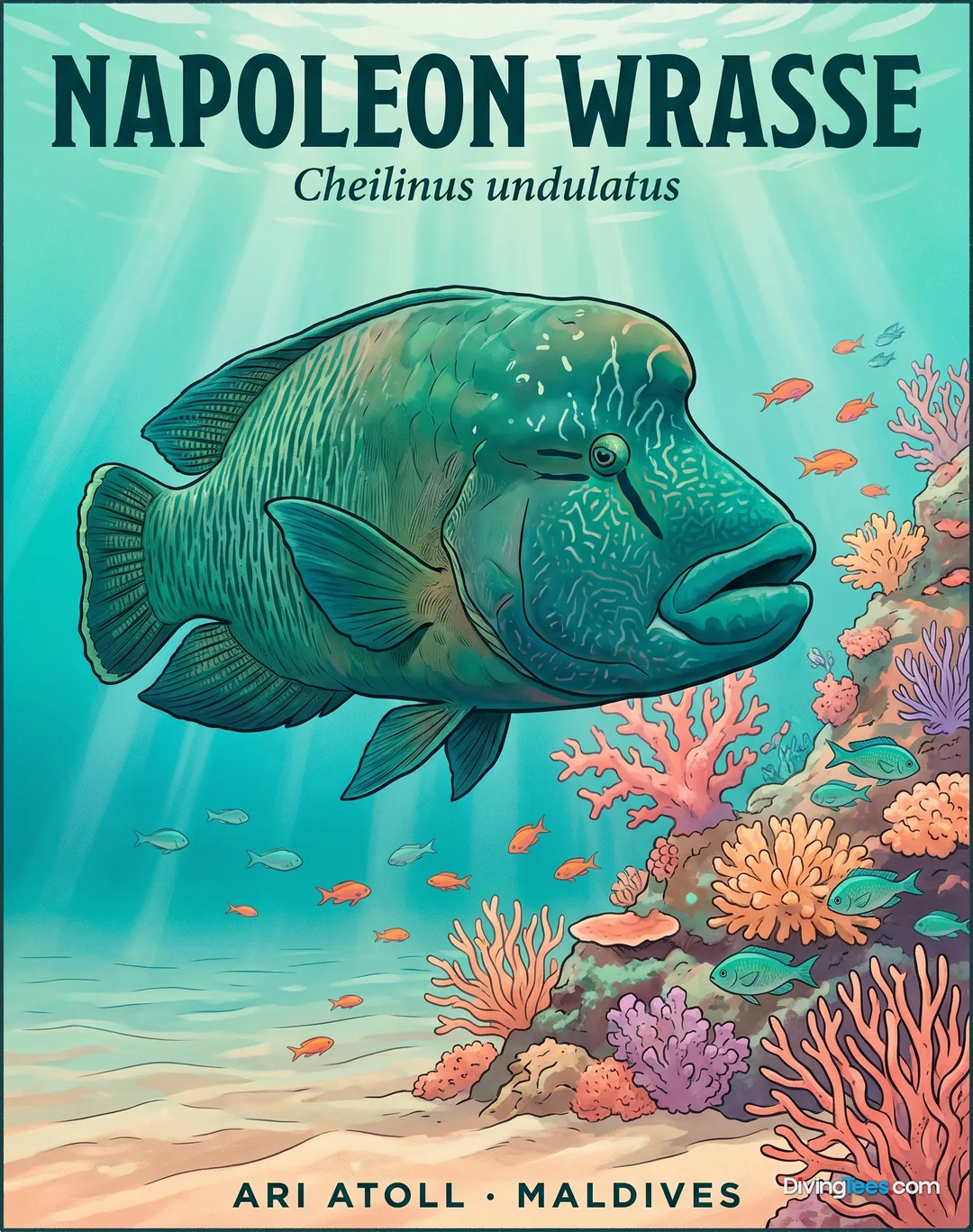
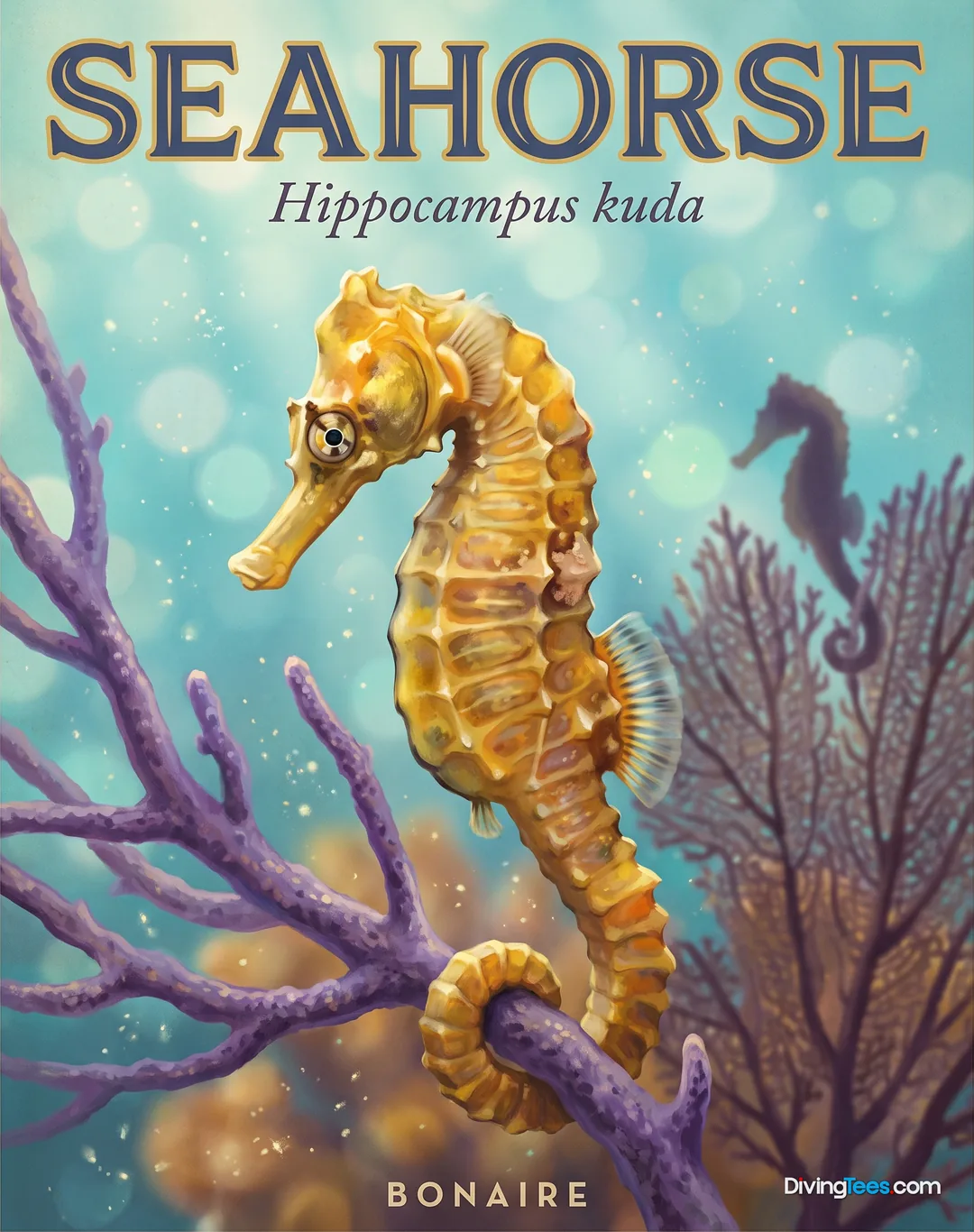
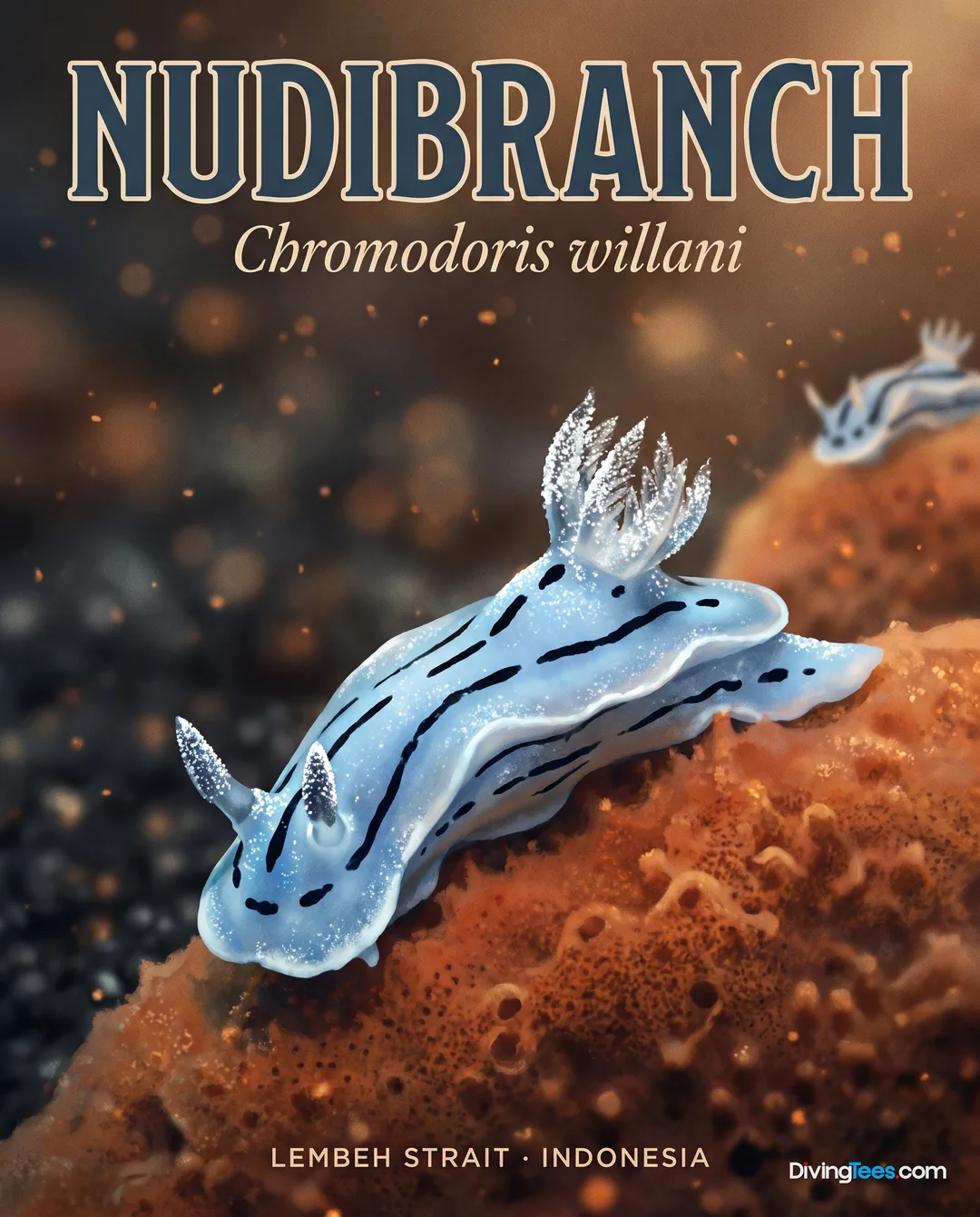
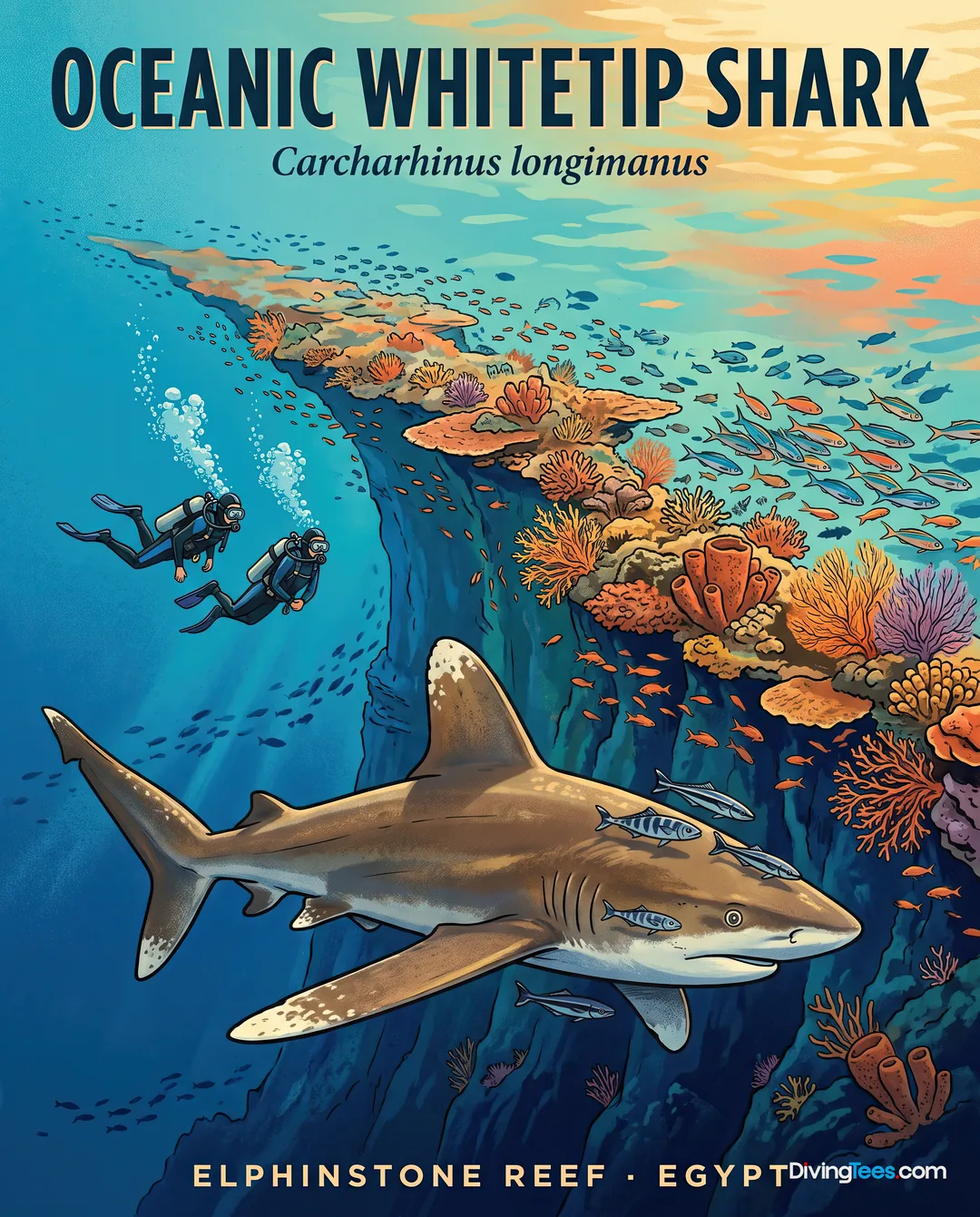
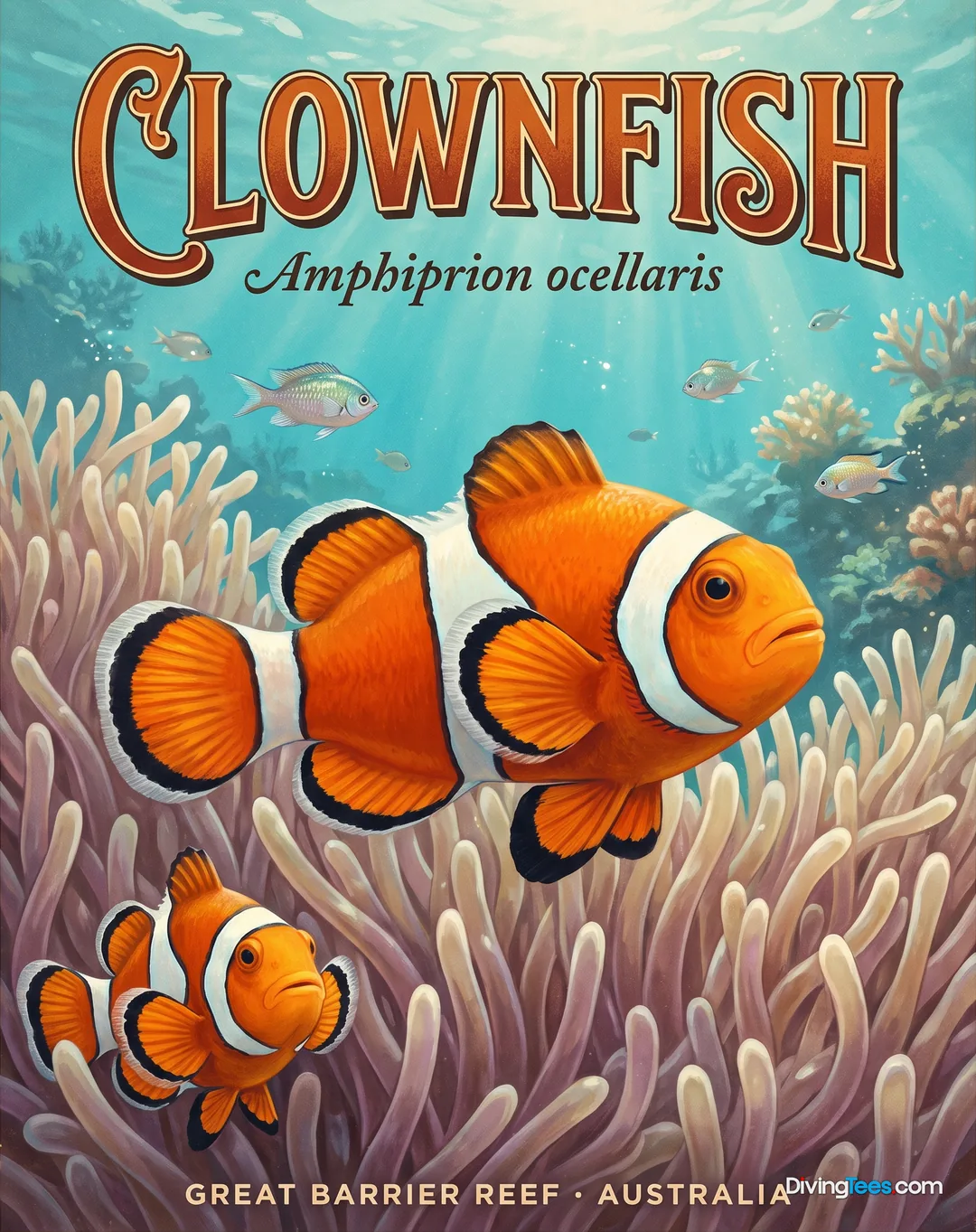
Across this Raja Ampat route, the recurring spectacle is movement: barracuda and reef sharks appear across seven sites, while trevally, fusiliers, nudibranchs, Napoleon wrasse, turtles, sweetlips and humphead parrotfish turn the reefs into busy scenes rather than isolated animal sightings. Soft corals and pygmy seahorses reward a slower look, especially where the reef wall or current gives shelter to small life. Some encounters belong to one particular site. Cape Kri is the place for the giant grouper and whitetip reef shark. Blue Magic is where oceanic whitetip sharks and tuna are recorded, alongside oceanic manta rays and large schooling fish. Yenbuba Jetty is the named site for anthias and damselfish among the coral-covered pilings. South Kri is where bigeye trevally, crabs and shrimp enter the list. Ransiwor is the site associated with octopus and clownfish, while Sorido Wall is the place to look for surgeonfish among barracuda and reef sharks. Cleaning stations at Manta Sandy and Ransiwor give the larger animals a reason to hold position, but no sighting is guaranteed.

Who puts you in the water
Qualified dive guides accompany the dives, with a cruise director on board and a naturalist guide available for the wider Raja Ampat experience. English and Indonesian are spoken by the crew. Briefings and group organisation are handled around the site and conditions, but the exact guide-to-diver ratio, guide qualifications, minimum logged dives and course programme are not stated. That matters on a route containing strong-current sites such as Cross Over and Blue Magic: divers should judge their own comfort with current, drift procedures and surface-marker use rather than treating the itinerary as a beginner-only outing. Nitrox certification is required to use enriched-air fills, and nitrox courses may be available on request. Oxygen, first-aid kits, radio communications, GPS, radar, sonar, emergency beacons, life rafts and fire equipment form the boat's stated safety equipment. A defibrillator and a diver-recall system are not listed, so they should not be presumed.
The dive deck and the gear
The dive deck is the centre of Malaillo. It has a dedicated diving platform, tank rinse facilities, DIN adapters and a separate rinse tank for cameras. Photographers also have a camera room and charging stations, so batteries and images can be dealt with away from the wet working area. Nitrox is available free for certified nitrox divers, which is useful on a trip scheduled for up to four dives a day and night dives. Weights and weight belts are included; rental equipment is available as an option, but divers bringing familiar gear will find the setup more straightforward. The boat carries oxygen and first-aid kits, and the diving operation includes night dives. The deck is purpose-built for the job rather than dressed as a leisure terrace: gear stays close to the platform, cameras have their own handling space and the next entry can be prepared while divers are still returning. The number and type of tenders, tank volume and compressor details are not stated here, so those should not be assumed.
Between dives
Between dives, Malaillo gives the trip several different ways to slow down. The air-conditioned salon is the practical refuge after a hot entry, while the terrace, outdoor dining area and observation deck put the islands and open water back in view. A camera room and separate camera rinse tank let photographers work on images without taking over the general diving space. Others can take a kayak or stand-up paddleboard ashore, join an included land excursion, read from the library or simply find shade with a drink. The boat also carries snorkeling equipment and has a naturalist guide for passengers who are not diving every time. When a surface interval runs long, that range matters: there is somewhere quiet to sit, somewhere social to eat and somewhere active to go. The best non-diving hours here are tied to the landscape, not to a timetable of organised entertainment.
A day on board
A Malaillo diving day is shaped by briefings, entries, food and the short practical work between them. The first dive comes before breakfast, followed by a meal and a surface interval while the boat or the dive team prepares for the next site. Lunch separates the middle dives, and the afternoon can bring another reef, wall or drift before dinner. Up to four dives are scheduled on a full diving day, with night dives included when conditions and the itinerary allow. The gaps are used for eating, resting, rinsing cameras, checking photographs or moving through Raja Ampat waters. A current site may demand a focused briefing and a clean exit plan; a macro reef or jetty asks for a different pace and a closer look. The boat does not dive on embarkation or disembarkation days. By evening, the deck changes from a work area into the place where the day's mantas, sharks and odd small finds are compared before sleep.
What you eat aboard
Food is one of Malaillo's strongest points. Meals cover both Indonesian and Western cooking, usually served buffet-style, with vegetarian choices, drinking water, tea and coffee included and snacks available throughout the day. Breakfast follows the first dive, lunch fills the middle of the diving day, and dinner gives the group a proper pause after the last entry or the night dive. That timing matters more than elaborate presentation when a boat is running up to four dives a day: plates need to arrive reliably, offer enough variety and send divers back to the deck ready for the next briefing. Dinner can be served outdoors, and the boat also offers beach barbecues on suitable excursions. Beer, wine and cocktails are available for those who want them, while the galley keeps the main meals focused on substantial local and Western dishes. Special dietary requirements are best raised before boarding.
Nights at sea
The seven cabins are divided between lower deck, main deck and upper deck categories, with twin, double and master options. All have air conditioning, a private bathroom and hot water, while the cabin deck has panoramic windows and sea views. That gives the nights a practical liveaboard quality: the room is a private place to sleep and dry off between dives, not a suite designed to keep you indoors all day. The upper-deck position can make the sea feel closer to the cabin, while lower-deck cabins put the emphasis on a darker, quieter retreat when the day is over. The salon is air-conditioned, but the boat also leaves space for outdoor dining and an observation deck when the air is cooler. Seven bathrooms for seven cabins keeps the morning queue out of the sleeping spaces. Choose the cabin category for its location and bed arrangement, then spend the daylight where the boat is strongest: outside, at the dive deck or below the surface.
Lower Deck Twin Cabin
Lower Deck Double Cabin
Main Deck Twin Cabin
Upper Deck Twin Cabin
Master Cabin
What to know before boarding
For the Raja Ampat Central–Wayag itinerary, Malaillo departs from and returns to Sorong. Airport or hotel transfers to the boat on embarkation day, and back again on disembarkation day, are included; flight details are provided through the guest booking form so the team can arrange them. Flights into Sorong should arrive by 11:00 AM at the latest on departure day. Arriving in Sorong the night before is the sensible choice, especially with domestic-flight delays in Indonesia.
Deck plan
- Year built
- 2017
- Year renovated
- 2024
- Length
- 45.6 m
- Beam
- 8.5 m
- Maximum number of passengers
- 14
- Number of cabins
- 7
- Number of bathrooms
- 7
- Engines
- 1 × Mitsubishi V10 520 hp
- Cruising speed
- 6 knots
- Website
- malailloliveaboard.com ↗
Hello, I'm Marina, DivingDeal.com's AI assistant. I answer in detail about hotels, dive centres and liveaboards.

Thinking about the whole trip and the flights? Talk it over with Edith →
Marina is an AI. Some links are affiliate links: DivingDeal may earn a commission, at no extra cost to you. Bookings are made with the partner.